Qwertyman No. 54: Two Valedictories

Qwertyman for Monday, August 14, 2023

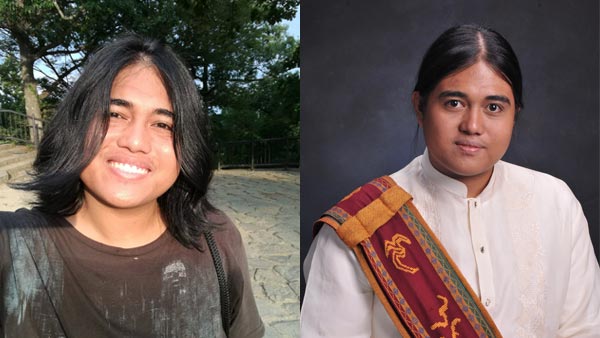
TWO SPEECHES delivered by graduating students of the University of the Philippines made the rounds of social media last week, garnering generally positive responses for their forthrightness. One was more strident than the other, but both carried essentially the same message: we need to reframe the way we look at the education of the poor, and what true success should mean for the working student.

The first was Val Anghelito R. Llamelo, summa cum laude and class valedictorian, Bachelor of Public Administration. The son of an OFW, Val began working at a very young age at a BPO, as a marketing assistant, and as a tutor to support his needs and that of his family’s. He was, almost needless to say, the first UP graduate his family produced, and finishing summa against all odds was the icing on the cake.

He wasn’t there, he said, to deliver the usual valedictory speech you’d expect from a person with his kind of success story. He was grateful for his opportunities, but he didn’t feel like celebrating his hard-won triumph, which people would typically applaud for its sheer improbability. And that, precisely, was the problem, according to Val.

“Why should I be an exception?” he asked in so many words. “Why can’t more Filipinos from my background do well in college and finish like I did? Why does access to a quality education remain the privilege of a few? During the pandemic, how many poor students underperformed because of their lack of access to digital technology?”

Again I’m paraphrasing here, but Val went on to say, “I don’t want to be your inspiration or role model. No one should have to endure what I faced. I want you to be disgruntled enough with the system to demand something better and not settle for less, to yearn for a system where working students, indigenous people, and individuals from impoverished families can have fair opportunities to study and to succeed. Praising us gives politicians in power an excuse to renege on their commitment to improve our lives. We overvalue resilience. Using the familiar analogy of the glass that’s half-full and half-empty, we’re often made to feel that we should be contented with the fact that it’s half-full, but we should focus on the fact that it’s half-empty, and should hold our leaders accountable for filling it up.”

The other speaker was Leo Jaminola, a BS Political Science cum laude and MA Demography graduate who juggled six jobs—as an encoder, transcriptionist, library student assistant, tutor, writer, and food vendor—to complete his bachelor’s degree. 

“Graduating with honors back then was nothing short of a miracle,” says Leo. “In the years that followed, the list of jobs I took just grew longer as I became a research assistant, a government employee, a development worker, and a consultant for different projects with some engagements overlapping with each other.  

“The past years have been a long-winding maze of seeking financial security and I have still yet to find a way out of this crisis. From full-time work, part-time work, and competitions, I did my best to provide not only for myself but also for my family. 

“While some of my peers have hefty investments in high-yield financial instruments, here I am still overthinking whether I deserve an upgrade to a large Coke while ordering at the local fast food chain. 

“During my childhood, I saw how poverty manifested itself in the form of cramped makeshift houses, children playing near litter-filled canals, and senior citizens succumbing to illnesses without even getting a proper diagnosis. Growing up, I thought of these as normal occurrences that should be accepted as it is the way of life. Now, I do not think that this should be the norm. 

“Some people will say that poverty is a personal failure and that the members of my community should work harder but I know better. One of the things that I learned from my experience is that hard work as the primary factor in being successful is a myth. That’s not to say that it doesn’t play a role but privilege and access to resources have greater impacts on whether a person ends up successful or not. 

“If hard work is all it took, then the many young breadwinners I know who continue to support their families while chasing their own dreams would not be constantly organizing their budget trackers to find ways how to stretch their salary until the next payday. 

“Others will read this and use it as some kind of living proof that people, even those from the most marginalized groups, can make it in life simply by working hard rather than addressing structural barriers. But what of those who didn’t make it despite working as hard or even harder than me? How are their experiences not evidence of the continued inaccessibility of education and opportunities in our country? 

“Rather than success, we should see my experience and the stories of so many others as systemic failures. If anything, my story should make us angry and move us to demand a much better society—one that allows our people to live with dignity, dream freely, and enjoy equal opportunities.”

The speeches echo each other, but then so have the “model” valedictories that Val and Leo so forcefully seek to subvert. Indeed, the usual narrative we hear is that of the poor boy (or girl) made good, followed by congratulatory praises for his or her tenacity and faith in Divine Providence. (Some of them, like the poor boy from Lubao, even become President.)

I have to admit that we find such stories inspiring if not necessary, because they offer the possibility of salvation for a lucky and plucky few. But we have to bear in mind as well—as Val and Leo emphasize—that for every summit achieved like theirs lie hundreds if not thousands of others who never got past base camp, not for lack of talent or will but simply for lack of means. To succeed as a nation and society depends much less on producing exceptional one-offs than on leveling the playing field for most.

(Photos from Philstarlife and pep.ph)

Qwertyman No. 53: Too many laudes?

Qwertyman for August 7, 2023

LIKE MANY alumni and casual onlookers, I couldn’t help but be bothered by the announcement that more than half of this year’s graduating class of the University of the Philippines Diliman were finishing with Latin honors—2,243 out of 3,359 undergraduates, 305 of them summa cum laude, 1,196 magna cum laude, and 742 cum laude. Critics were quick to point out that it was a sure sign of grade hyperinflation, that UP had turned into a diploma mill, and that a UP education was no longer what it used to be.

Having taught in UP for almost 40 years, I disagree with the harshest of these conclusions—there are many external indicators to prove that UP graduates and UP as an institution are globally competitive and remain high above national averages in terms of professional certifications and such. 

But the surge in honor graduates is indeed so high that it leads many to worry if a summa today means the same thing it did ten years ago, when only 15 out of 4,365 graduates claimed that distinction. What happened in between? Did both UP students and their professors become so suddenly much better that they outperformed historical expectations? Can we back this up with scientific data, or at least with some reasonable conjectures?

My own guess—and that’s all it is, an educated guess—is that we’re seeing the outcome of an enforced leniency in grading during the pandemic, when the normal grading rules were stretched to be as accommodating as possible to the situation that our undergraduates found themselves in—under lockdown, taking classes on Zoom under highly variable conditions of connectivity, with little or no access to physical libraries and laboratories, with little social interaction face to face, and under the critical eye of hovering parents and siblings at home. 

During the pandemic, in UP (and perhaps in other universities and colleges as well), a “no-fail” policy was put into effect; no student could be given a failing grade, except in cases of intellectual dishonesty. The normal one-year period for resolving “Incomplete” grades was extended. Professors could not “drop” students for absences or lack of communication. Students could opt to have their grades “deferred.” University rules on scholastic delinquency and retention were suspended. And because universities worldwide had to shift abruptly to online teaching, resulting in many adjustment problems on both sides of the video camera, UP decided that numerical grades earned during this adjustment period would not be factored into the General Weighted Average (GWA), on which Latin honors are based. Note that under normal rules—which, to my knowledge, are mostly if not entirely now back in effect—any one of these infractions or deficiencies could have cost you your laude; their relaxation meant that the door was now open for many candidates who might have been disqualified on technical grounds. 

But then again, that’s just my personal explanation for this aberration (which statistically it is, if you’ve seen the charts). I don’t mean for any of this to diminish the pride, happiness, and sense of accomplishment that I saw on the faces of the graduates and their parents that waterlogged morning of July 30 when UP Diliman held abbreviated commencement exercises despite the weather. No speeches were made to put safety over ceremony, but then perhaps none were needed, as the swell of “UP Naming Mahal” rose defiantly over the rain. You could not walk up to any one of those honor graduates and tell him or her “You don’t deserve your medal,” because you had no idea what he or she went through during the pandemic to earn it. If the system failed, then let it be faulted, and let the post-mortem happen, but don’t take it out on the students who only did what they were supposed to do. 

Even as professor emeritus, I’m still teaching after retirement, and last semester I chose to teach Fiction Writing to a class of undergraduates, wanting to see for myself what our young people were thinking and also to give them the unusual experience of being taught by a grizzled old fellow. I was generally pleased with the level of talent and enthusiasm I encountered. As expected, two or three students stood out above the rest, many sat in the middle, and a few lagged behind, not for incompetence but for such other factors as attendance and class participation, both important in a writing workshop. Most did well enough, in my estimation, to earn at least the 1.75 that would have qualified them for honors. Was I part of the grade inflation? But if they did much worse than that, then they had no business being in UP. I didn’t give out any “1.0”s, but I didn’t flunk anyone, either. If anything, my chief complaint would be how alienated our young people are from their social and cultural environment beyond their cohort and from their history. They can write well, but they still have to learn and understand what truly matters.

As far as Latin honors are concerned, it might help to see what the financial website Investopedia has to say on it, adjusting for the fact that it’s US-based:

“While Latin honors can look good on a diploma, college transcript, or résumé, do they make any difference in real life? Two researchers at the University of Illinois at Chicago, Pauline Khoo and Ben Ost, attempted to answer that question in a 2018 paper titled ‘The Effects of Graduating With Honors on Earnings.’

“’We find that obtaining honors provides an economic return in the labor market, but this benefit only persists for two years,’ they wrote. ‘By the third year after college, we see no effect of having received honors on wages, suggesting that firms may use the signal for new graduates, but they do not rely on the signal for determining the pay of more experienced workers.’ They also found that the economic benefit applied only to students who had graduated from selective schools.

“Critics of Latin honors are less concerned with their potential post-graduation benefits than the unintended effect they may have on students while they’re still in school. A 2011 editorial in Harvard University’s student newspaper, the Crimson, called for their abolition at the school.

“By rewarding students who achieve a minimum GPA across classes, the Latin honors system does more to discourage academic achievement than to encourage it. It encourages students to view classes outside of their concentration as a means to an end, the end being the highest possible grade, rather than an opportunity for intellectual exploration.”

Given our Pinoy penchant for titles and distinctions, I don’t see us getting rid of laudes anytime soon, but it may be time to find another and better way to recognize and reward student achievement beyond book learning.

(Photo from upd.edu.ph)

Penman No. 453: The Distance to Brillantes

Penman for Sunday, August 6, 2023

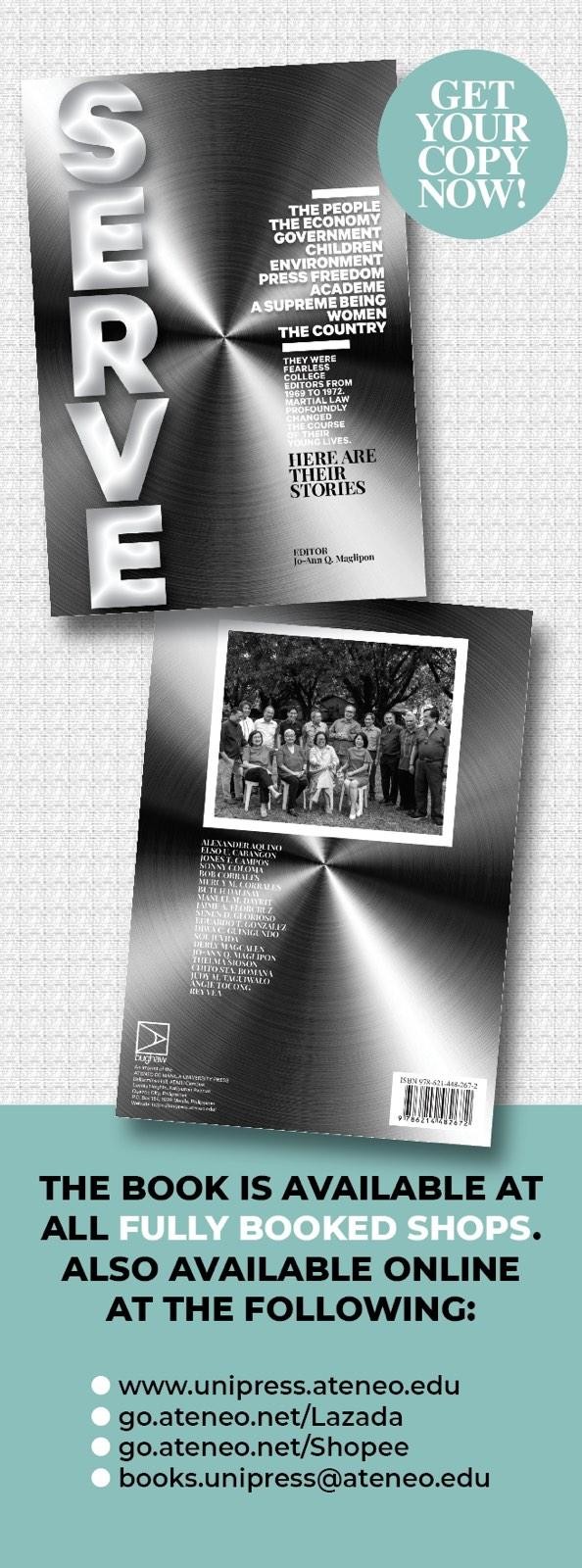
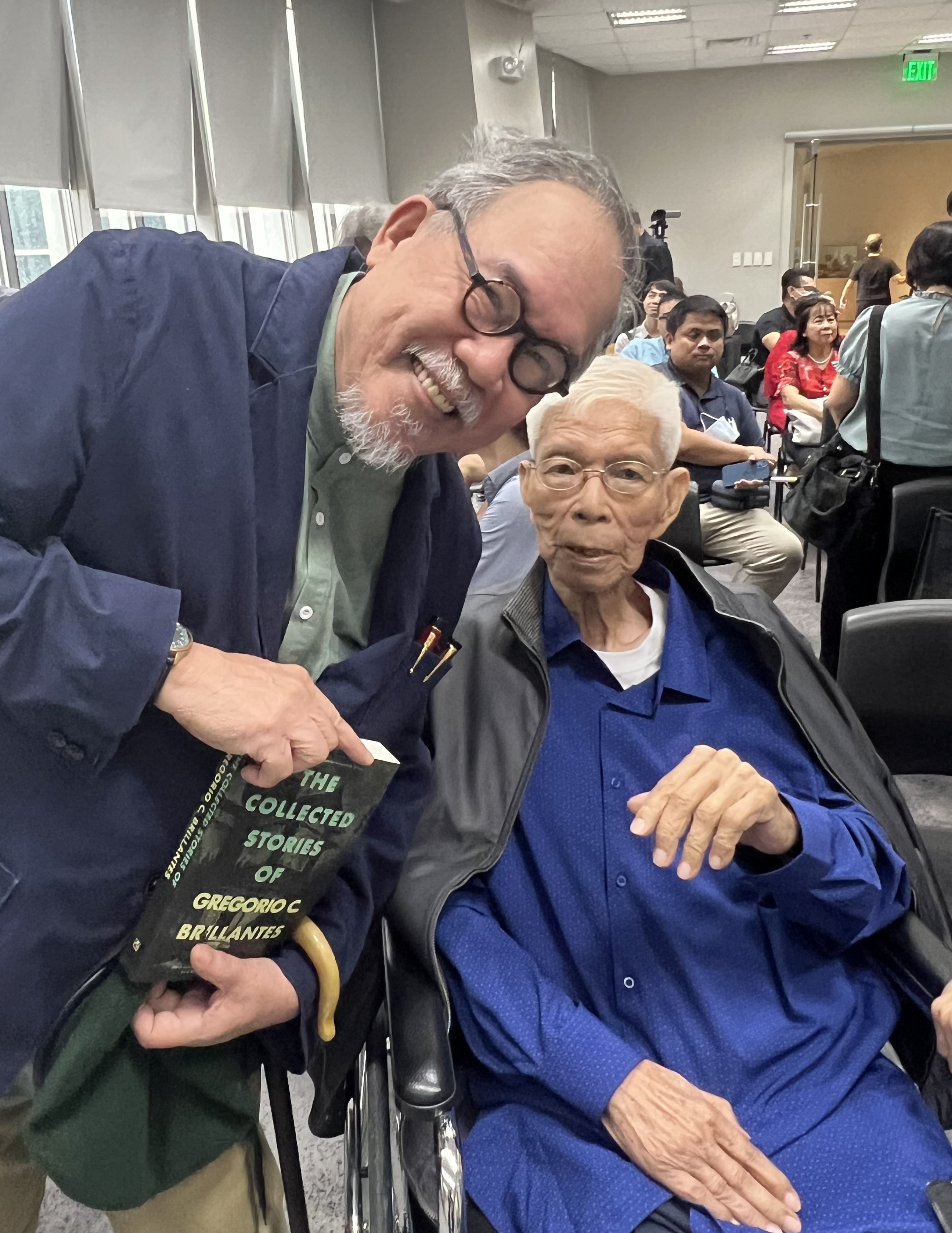
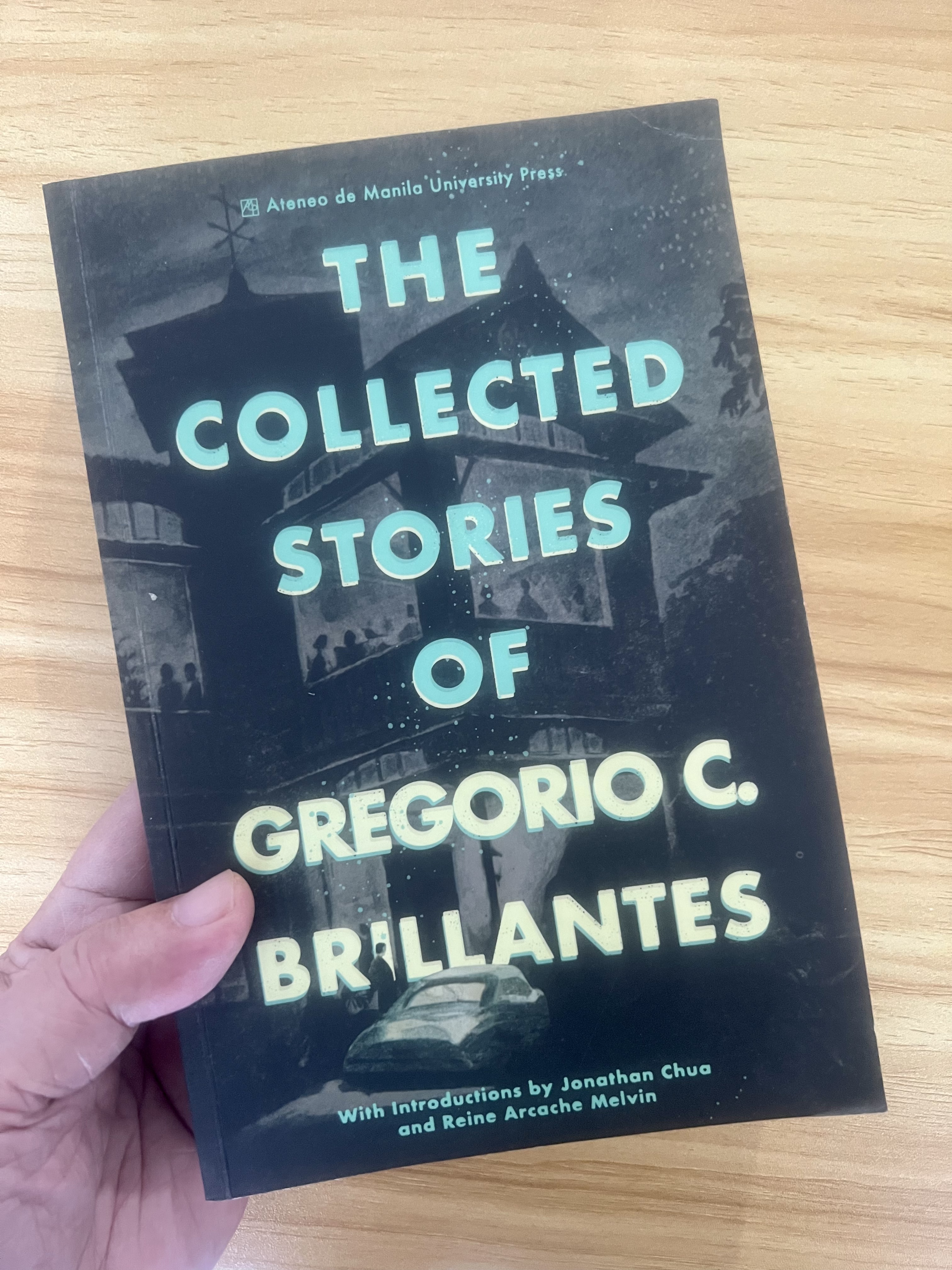
I’VE OFTEN written about how Gregorio C. Brillantes has been the bane of my writing life, a fellow short story writer and Palanca Hall of Famer whom I never had the pleasure of seeing in second place after me (the reverse has been the natural order of things). When the Ateneo Press recently launched his Collected Stories and asked me to speak at the event, I felt like a jealous juvenile again at 69, with the 90-year-old Greg in a wheelchair in front of me, and cheekily boasted that, at last, I had one over him: his collection had 39 stories while mine (Voyager and Other Fictions, 2019) had 44. 

Of course, it was a hollow boast, because any one of Greg’s stories is easily worth two or three of mine. That’s how highly I hold this man in my esteem, and why I wrote this blurb for him: “Few writers turn me into a blushing fan. Gregorio C. Brillantes is one of them. Like his papal namesake Gregory the Great, who wrote a massive 35-volume commentary on the Book of Job, Greg Brillantes has been an untiring and unsparing chronicler of his time and place…. His fiction is infused with power and luminosity; he surprises, but never screams.” 

In an art card that Ateneo Press used to promote the book, I said further: “More than a master of language, Gregorio Brillantes is a master of our Filipino sense and sensibility, particularly those parts we find hard to put into words or to recognize as our truest selves. We see life in his stories as through a gossamer screen that filters out  the harshest light; that screen is his own sensibility, suffused with a deep and tolerant understanding of pain as pleasure’s shadow.”

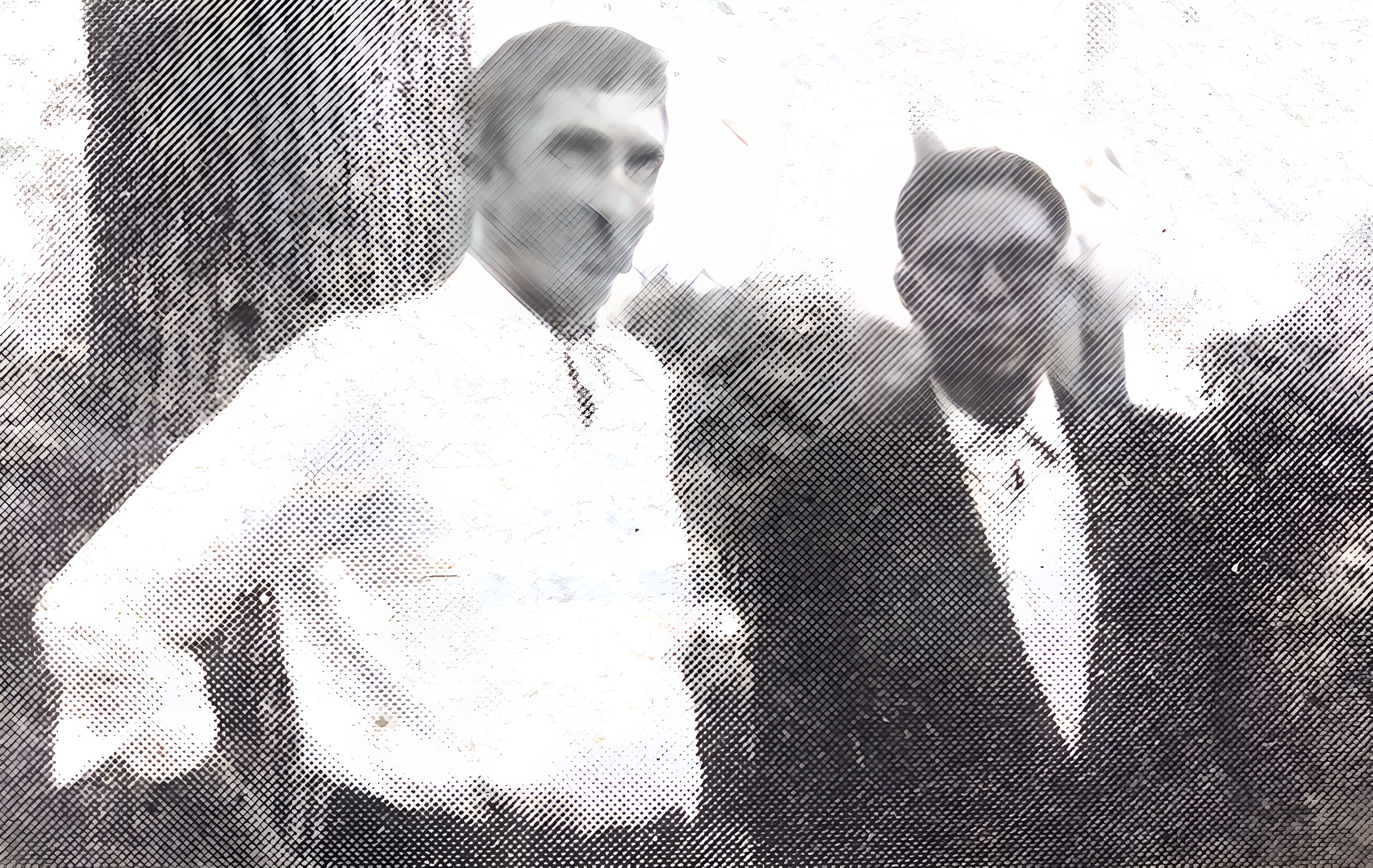
(The young Greg with John Updike.)

But really—putting all the fanboy talk aside—why Brillantes? What did I and my students—and what can every young writer of fiction—learn from him?

To get right down to brass tacks, I’ll take one of his best-known stories and dissect parts of it that should show what not only good but masterful writing is all about. 

“The Distance to Andromeda” has been mistakenly described by some as a science-fiction story, but it is not, although science fiction figures prominently in it. Without going into what the story means, what Brillantes demonstrates here, technically, is his acuity of observation and grasp of relevant detail, which is basic to any writer’s armamentarium. Too many young writers fuss over the elements of what their Ultrawave Galactic Terminator Machine should contain, glossing over the seemingly inconsequential gray matter of daily living that congeals into human drama. 

In “Andromeda,” the boy Ben’s post-apocalyptic fantasies are foregrounded by domestic business. See how Brillantes constructs a scene: “He dribbles an imaginary basketball toward the kitchen, skidding on the floor, feints and jackknifes a neat shot through the door. His sister-in-law Remy is giving her baby his supper of porridge from a cup. The child gurgles a vigorous greeting at the boy, and Remy laughs at the wonder of her son’s knowing the infant-accents of his language. The kitchen is bright and intimate with its rich cooking smells: Pining bustles about the old Mayon stove, and the girl with the pigtails smiles her crooked-toothed smile from the lithographed calendar on the wall.”

It doesn’t seem much and the young reader may feel bored by the lack of “action,” but note how, in fact, the scene is full of action—physical and emotional action, of the kind absent from too many stories being written today about morose characters sipping cappuccinos at Starbucks and ruminating over their wayward romances and work-life balance. “Get your characters off their butts,” I always tell my students, and Brillantes does.

A Brillantes story is an accretion of impressions, ideas, and emotions. It’s that kind of preparation that earns Brillantes the right to orchestrate this kind of paragraph later in the story: “He catches the streak of a shooting star from the corner of his eye. Instantly his waiting becomes a sharp alertness: he holds his breath and the strangeness comes into him once more, the echo of an endless vibration. But it is no longer an abstract aching for the relief of words: it speaks within him, in a language full of silence, becoming one with his breathing, his being, and the night, and the turning of the Earth: incomprehensible, a wordless thought, an unthought-of Word: like the unseen presence of One who loves him infinitely and tenderly. The fear has gone, the lonely helpless shrinking he felt on the bridge, walking home: love surrounds him, and no evil can touch him here, in his father’s house.”

For a story written in the author’s mid- to late twenties, “The Distance to Andromeda” already lays out, in full, Brillantes’ talent and vision, his familiar themes of family and love, of doubt and faith, of Rilke’s God “who holds this falling / Gently in his hands, with endless gentleness.”

It is a story that I myself could not have written, as I inhabit a more sordid and much sadder world in my fiction, with little to draw on but my characters’ residual sense of goodness for their salvation. Brillantes celebrates—consecrates—the mundane joys of the middle class, even as he underscores their fragility and transience. I write as well about these people—doctors, teachers, boys on the verge of manhood—but they tend to be more visceral in their responses. My other literary hero and model is Bienvenido Santos, who can make music of melancholy, and I try to straddle the breach between these two gentlemen, although again my characters prefer the low life.

But young writers: read Gregorio Brillantes. Understand what truly breathtaking means by reading two of my favorite stories of his: “The Cries of Children on an April Afternoon in the Year 1957” and “The Flood in Tarlac.” If you read them and still wonder what good fiction is, then you might as well be looking up at the sky to find Andromeda, because that’s how far you have to go.

Qwertyman No. 52: Joe Biden’s SOTU

Qwertyman for Monday, July 31, 2023

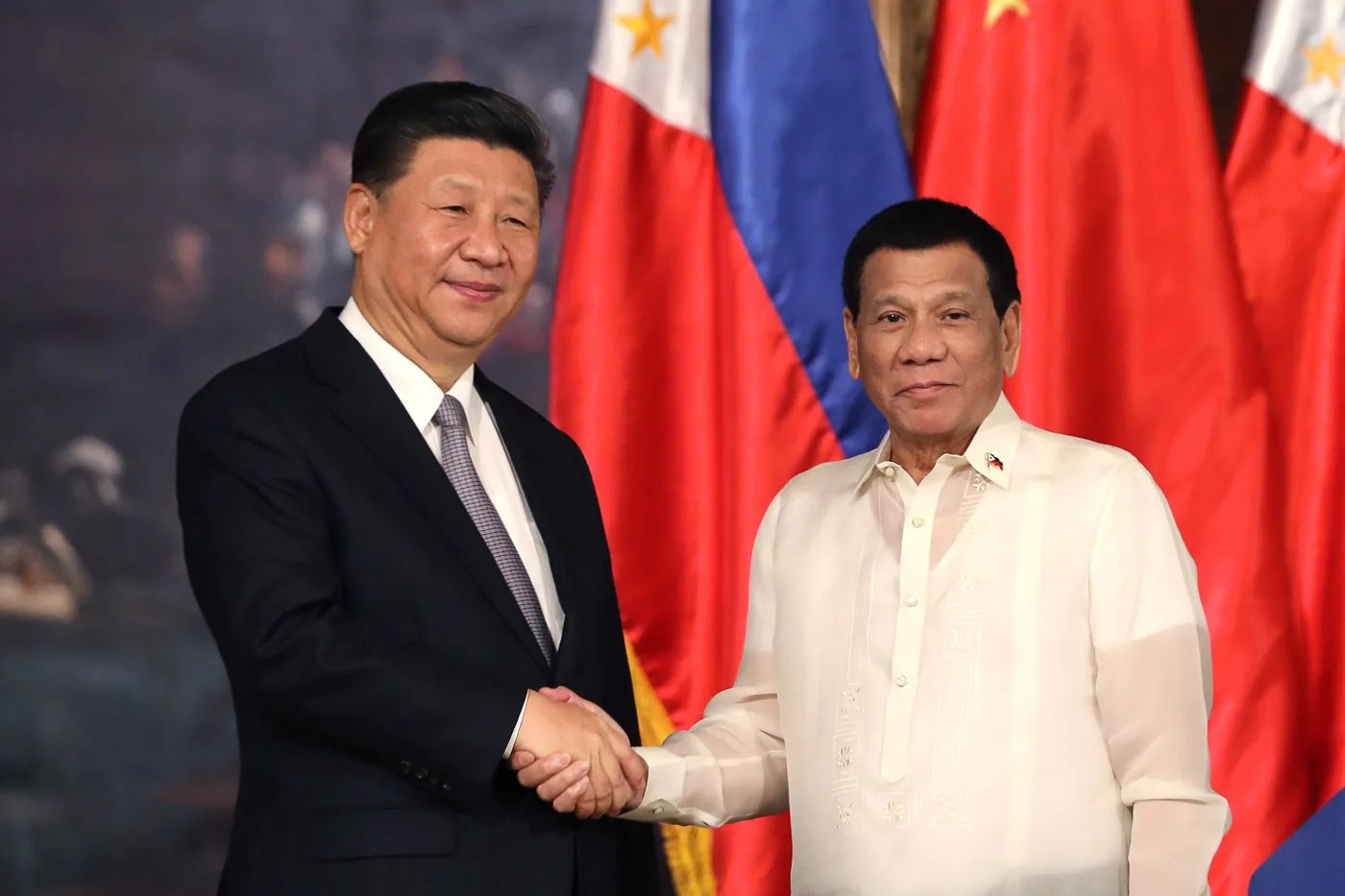
BECAUSE OF a glitch that happened when Chinese hackers tried to hijack America’s C-Span network so they could replace congressional programming with X-rated cartoons (on the theory that no one would miss the analogy), for a few minutes in the early morning of July 24, 2023 (Eastern Standard Time), the channel’s viewers were treated instead to the live coverage of an apparently big event happening in faraway Philippines.

Celebrities and bigwigs were getting dropped off by their limousines and luxury SUVs at some place called the “Batasan,” which a commentator helpfully explained was the building that housed the Congress of the Philippines—the Philippine Capitol, in other words, minus the dome.

House Speaker Kevin McCarthy was just about to go to bed in his home in Bakersfield—he had flown back to California for the weekend to avoid the screechings of the Freedom Caucus in his ears—and he had been having a hard time sleeping, wondering which was worse, having to deal with Joe Biden or with Donald Trump. Just when he was about to drift off to dreamland, his cellphone rang. It was an aide back in Washington, and immediately Speaker Kevin wondered if something earthshaking had happened—like Biden resigning after being diagnosed with dementia or Trump discovering honesty and humility and turning to God. “Boss, you have to see this. Tune in to C-Span!”

Grumbling, the Speaker did as asked and had to rub his eyes as he watched a woman step out onto the red carpet dressed like some aboriginal priestess, complete with warlike tattoos. Others came in headdresses, butterfly sleeves, heavily embroidered gowns, and sashes with pictures of dead people. “What’s going on? What the hell am I looking at? Is this some movie premiere or what?”

“It’s a live feed from the Philippines, what they call a SONA—the president’s State of the Nation Address, their version of our State of the Union. The president’s arriving shortly to deliver his speech.”

“You woke me up to get me to listen to some political crap in some backwater country? Are you out of your mind? Don’t we get enough of this in DC?”

“No, no, boss, it’s not about the speech—that’s the whole point, forget the speech, it’s about the fashions! Look at them, preening like peacocks and peahens. Look at the coverage, I’ll bet you, tomorrow, all the papers and social media in Manila will be talking about the dresses, not the speech!”

“And so?” Kevin got up from bed, sufficiently intrigued to pour himself a scotch in anticipation of a longer chat. This aide was his top PR strategist, and sometimes the guy came up with truly inspired ideas, like plucking Ms. Horseface away from the Freedom Caucus to boost his conservative credentials and keep the restless natives in check. Joe Biden was the enemy, but his own crew members could be a bigger pain.

“Well, don’t you see, boss? Joe Biden’s next SOTU is coming up, and… we need a distraction. We don’t want him lecturing the American people about how we’re stripping women of their rights to safe abortions, or teaching the young that slavery had some real benefits, or carving up congressional districts to make sure that dark-skinned people don’t get too much sun on election day. I mean, he’ll do that anyway, but these Filipinos know something we don’t—it’s not the speech, it’s the party! We can turn the SOTU into a fashion show and no one will care what Old Joe says!”

McCarthy took a closer look at the screen and listened to the commentators blabbering about this and that gown and comparing it to last year’s versions—the more outrageous, the better. He recalled being canceled back in January for appearing in a picture wearing a blue suit with brown shoes—par for the course in cool Europe but never in redneck America!—and smiled in anticipation of his revenge. 

As it turned out, the Speaker and his aide weren’t alone. Before the footage could be pulled off C-Span, it had made the rounds of the bars around Washington, DC, and someone found even more detailed coverage on YouTube, and when daylight broke over the Potomac it was all that the senators, congressmen, and their flunkies could talk about over their morning coffee. 

“So what are you going to wear to the SOTU?” reporters asked Georgia Rep. Marjorie Taylor Greene as soon as she stepped out the door of her DC apartment. She had a ready answer for that, having pondered the question over her Wheaties: “I’ll come in a long black dress,” she said, “with the word IMPEACH running down the front!”

It didn’t take long for Marjorie’s arch-rival on the right, Rep. Lauren Broebert of Colorado, to announce that she was coming “As Annie Oakley, in defense of the Second Amendment, the biggest victim of all the mass shootings happening in America today!”

Even Kari Lake, who was still refusing to accept her defeat for the governorship of Arizona, revealed that she was attending the SOTU as a guest, and that she was coming dressed as a Mexican muchacha—“Not to glorify diversity or any of that woke garbage, but to draw attention to illegal immigration, which is sucking the lifeblood of this great country and its legal, blue-passport-carrying citizens!”

Sen. Tommy Tuberville of Alabama, who had stubbornly and singlehandedly been holding up the confirmation of dozens of generals because he didn’t want the military to pay for the abortions of women in the service, had his own idea: “I’m having myself fitted for the uniform of a Confederate general.” Inspired by something he had seen on a related YouTube clip, he added, “And for good measure, my wife Suzanne will be wearing a gold necklace made from the excavated medals and buttons of Union Army officers!”

Reached for comment at Mar-a-Lago, Donald Trump declared he wasn’t coming, and fumed when a reporter reminded him that former presidents were invited to the event. “Who’re you calling a former president? That thievin’, lyin’ Joe is a never president—never, never, never! I should be the one giving the SOTU, not him—and I will, again!”

Alerted to the SONA brouhaha by his butler, Joe Biden passed the sugar on to Jill as the video played in the background. He listened briefly to the other president’s speech and smiled. “A New Philippines, hmmm…. How does ‘A New America’ sound to you, honey?”

“I think not,” said Jill. “In fact, we rather miss the old one, don’t we? When America was a kinder and gentler place?”

“That’s George Bush Senior’s line, honey. From the 1988 GOP convention.”

“Exactly. Back when even some Republicans got some things right.”

Qwertyman No. 50: Doro’s Times and Ours

Qwertyman for Monday, July 17, 2023

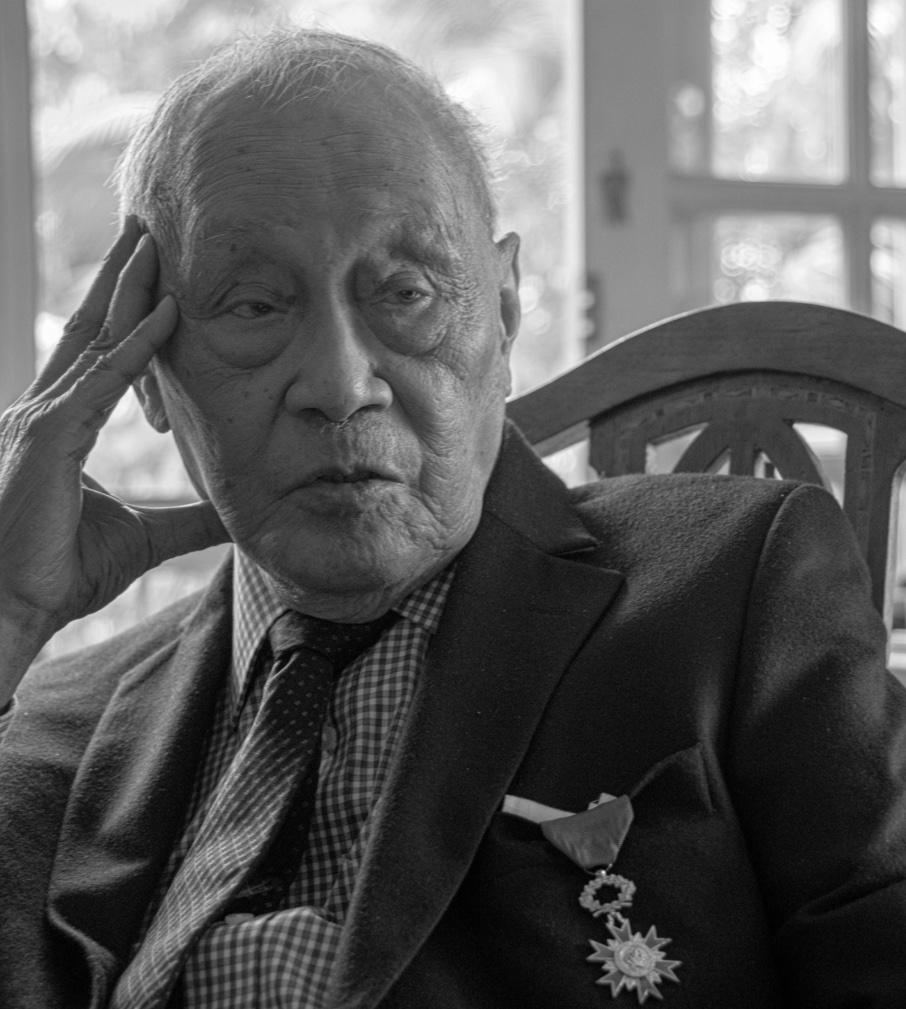
THE NEWS of Amando “Doro” Doronila’s recent passing in Canberra at age 95 marked the end of an era, as Doro was the last of his generation of journalists who made newspapers and their Op-Ed pages compelling reading. Whichever side of the political fence they were on, these journalists and columnists gave it all they had; many reveled in their prominence and some shamelessly parlayed their influence into all manner of profitable enterprise, back when it seemed the sensible thing to do, before the darker complicities of martial law set in.

Doro seemed to me to be above all this. His personality was, shall we say, poorly suited for TV or even radio, which was just as well, because it drew a clear line between journalists who did nothing better than think and write deeply, and those who confused their calling with show business.

I didn’t really know Doro personally. My one memorable encounter with him was when I was 18, a freshman dropout from UP who was dying to get into the newspapers, by hook or by crook. (Like some precocious teenagers, I was convinced I had the writing talent to skip journalism school. I would later pay for that hubris in tearful rewrites in the newsroom.) 

One of the doors I knocked on was that of the Manila Chronicle, which Doro was the editor of in 1972. I remember striding into its office and walking up to Doro’s desk, sucking in my stomach. He seemed puzzled to see my pimply face, which probably belonged to a messenger boy’s, except that I came empty-handed. “Yes?” What did I want? “Sir, I want to apply for a job—as a reporter,” I must have croaked, mumbling something about my writing for the Collegian and my high school paper. “How old are you?” I said that I was “going to be nineteen soon”—“soon” being about nine months away. 

I can’t recall if he looked back at me with pity or sympathy, or if he was laughing inside. I do remember him saying something like “Why don’t we talk again in a few years?” I was disappointed but not dejected; at least he didn’t throw me out of the place, or ridicule me before a roomful of the kind of people I wanted to be—hunched over typewriters, smoking up a storm, shaping tomorrow’s news, their bylines embedded crisply and imperishably on fresh paper.

Eventually, sometime that summer, and through sheer persistence, I did land a newspaper job, as a features writer and then a general-assignments reporter with the Philippines Herald, very likely the youngest fellow working full-time for the papers then. With the Herald and later Taliba  just before martial law, I met all kinds of journalists on the job, and saw how human we all were, the creatures of our noblest ambitions and pettiest grievances. One reporter I was on the police beat with loved playing cop, interrogating suspects each one of whom he was convinced was nursing a confession. Many had an enormous capacity for alcohol and the unapologetically macho bluster that came with it. Despite their gruffness, some had marshmallow hearts; two or three even took me under their wing to spare me from the usual gauntlet that rookies had to undergo. We were the peons of the profession, entry-level Hemingways and Woodwards chasing stories down the city’s tenebrous alleyways, and we loved every minute of it.

That was our world, but when I reported to the newsroom in the afternoon to file my story, I was ever aware that even above the copyeditors’ desk was another tier of men (as they mostly were) who perorated boisterously in a corner office on the day’s politics over scotch and cigars, the people whose opinions mattered and who made opinion matter. Never having worked with or for Doronila, I could only imagine him in that company, sitting sagely with his fingers crossed while allowing the thunder to roll above his head.

Today, half a century later, and finding myself just as old or even older than those titans of Philippine journalism then, I can savor the irony of having the privilege to write an Op-Ed column in times that mirror, in many ways, the early 1970s—with a Marcos in Malacañang, an opposition at bay, a scandal a week, and yet a people hard at work, striving for economic and moral deliverance. 

The great difference is that newspapers no longer have a monopoly of opinion-forming; that ground has been taken over by the Internet and social media (and elsewhere, by early-morning and late-afternoon AM radio, perhaps the hardiest of public platforms). Certainly, some Op-Ed stars remain—again on either side of the political divide—with faithful followers in need of sharper articulation and affirmation of their own sentiments. But even those readers tend to be aged or aging, people with the time and patience to read prose in paragraphs instead of bullets and memes, and who might even look for and appreciate that elusive quality called “style.” (Doronila’s no-frills prose, to be honest, was straight and guileless to the point of being starchy.) These 1,000-word pieces we produce now belong to what they call “long-form” writing, as if to write and read them were a test of endurance. 

But against the cheeky punchiness of Twitter and the ugly street brawls on Facebook, and above all stylistic considerations, I have to applaud this new generation of journalists (not all of them for sure) for their adherence to the truth and to fact-based reporting, and for holding themselves up to a higher standard of ethical behavior than their predecessors. Battling the bots and trolls of disinformation, they put their lives and well-being on the line, story by story, column by column; most are young, many are women, some even gay—the old gray men of the newsroom no longer dictate the headlines or the editorial slant. I think Doro himself would have been happy to see this, having mentored many of his successors.

And so as we grieve Amando Doronila’s demise at an age few of us can hope to approach, we can celebrate the continuity of upholding courage, virtue, and incorruptibility in Philippine journalism, with deepest thanks for the example the man set for us to follow.

(Photo by Pablo Tariman on FB)

Qwertyman No. 49: The Best We Can Do?

Qwertyman for Monday, July 10, 2023

“IS THIS the best we can do?” That question has been ringing in my mind since a couple of weeks ago when two issues came up that, for me and apparently many others, define the level of mediocrity to which governance and decision-making in this country has sunk. Both concerns have already been well ventilated in social media, which is far more scathing and cruel than a Monday column like mine can afford to be—I hate to start my readers’ week with something likely to leave them with an upset stomach—but let’s just think of this as a gargle to relieve our mouths and throats of unpleasant flavors.

First, ex-Atty. Larry Gadon. I don’t know the guy; I’ve yet to meet him and frankly I hope I never have to. I’ve heard the diatribe for which he was rightfully disbarred by the Supreme Court. It’s an awful slurry of verbal excrement that no one but its own source deserves to experience, and there’s doubtlessly more where it came from, disbarment or not. I can live with that, because I know that there’s an even higher court that will render judgment on this fellow and his kind, and it will come with a harshness commensurate to the totality of one’s character. 

What I find more odious is what came after: the Palace’s affirmation of its trust in its appointee as Presidential Adviser on Poverty Alleviation, and Gadon’s own vague reference to certain corporate managerial skills that supposedly qualified him for the job. I had been chatting with a lawyer the day after the disbarment, wondering what Malacañang would do next. “Oh, that won’t get past Justice Bersamin,” he said, adverting to the Executive Secretary. “Just you wait, they’ll take him down.” The next day Bersamin issued a lame press release echoing Gadon’s argument that he didn’t need to be a lawyer, anyway, to take on the Cabinet-level, Salary Grade 31 post, alleviating at least one person’s shortage of cash. (As Full Professor 12 in UP, after more than 30 years of teaching, I retired at Salary Grade 29. Am I envious? Of course I am—shouldn’t anyone be?)

At this point I was pulling hairs off my balding head. So, okay, he doesn’t need to be a lawyer to lead poverty alleviation. But what else does he bring to the job? Is choosing him the best BBM can do? Or does his selection merely confirm what Palace critics believe to be the lack of any genuine commitment to effective and legitimate governance, to give way to the dispensation of favors to political allies? Just when even skeptics were beginning to give their grudging approval to some appointments that made sense—Jimi FlorCruz as ambassador to China and Gibo Teodoro to Defense being two of them—we slid right back into the muck of patronage politics.

Does BBM think so poorly of the poor that he would entrust their fortunes to a man who, using the Supreme Court’s own words, was booted out of lawyering for his “misogynistic, sexist, abusive, and repeated intemperate language”? How will Presidential Adviser Gadon deal with the hundreds of poor women who will be flocking to his office seeking relief for their plaints? Now that he’s beyond the pale of the Supreme Court, will Gadon feel suitably chastened, or will he be emboldened to spread even more nightsoil around the yard? (The dramatist in me is whispering that true character will assert itself, and bring on its own downfall.)

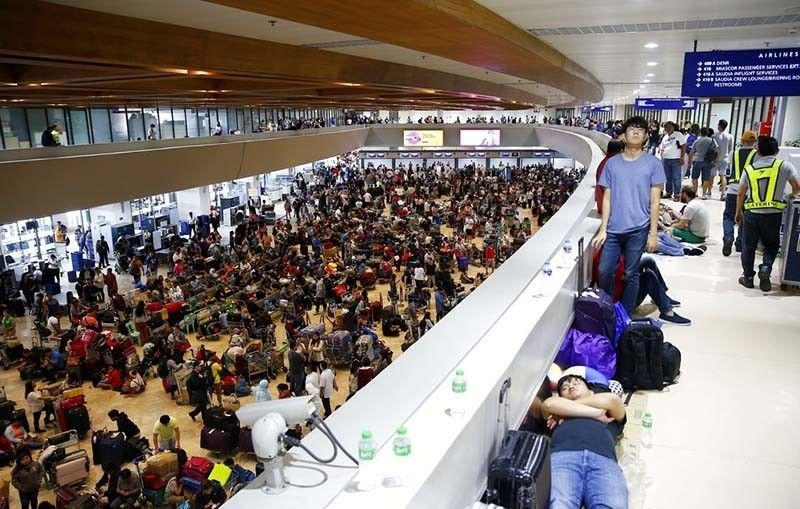
Issue No. 2, the new “Love the Philippines” tourism slogan and the plagiarism mess that followed with its video. I never liked the word or expression “Meh,” which seems a lazy way to express dissatisfaction, but as 99% of social media seems to agree, “Love the Philippines” was triple-meh, totally uninspiring and unimaginative, and visually cluttered. I’m not even complaining about the P49 million reported to have been paid by the government to the ad agency that conceptualized the slogan; we know that the right few words, properly chosen, could make a world of difference in sales, many times more than the investment. (Nike’s “Just Do It” campaign, credited to the American Wieden+Kennedy agency, reportedly boosted Nike’s worldwide sales from $877 million in 1988 to $9.2 billion ten years later. We don’t know how much Nike paid for those three words, but its trademark and stunningly simple “swoosh” was drawn by a female college student who was paid $2 per hour in 1971.)

I also understand that we seem to be too self-critical and terribly hard to please when it comes to tourism slogans, maybe because they’re supposed to encapsulate and project our national identity—on which we have yet to arrive at a consensus, a century and a quarter onward. 

Dick Gordon’s “WOW Philippines” and the subsequent “It’s More Fun in the Philippines” earned their share of brickbats. But whatever those criticisms were, I’d have to agree that either one of them is infinitely better than “Love the Philippines,” whose imperative voice sounds tonally off. (Not to mention its susceptibility to parody, which the Palace’s PR watchdogs should have caught—a “Rob the Philippines” meme has been making the rounds, a tamer verb choice than others I’ve seen.) 

Social media is abuzz with what reportedly happened behind the scenes and what a Palace-favored director supposedly did to screw things up—but again, I’m not even going there, and will limit my dismay to the poor result that often emerges when money, politics, and egos get the better of creatives. The use of video clips from foreign sources to prop up a campaign for Philippine tourism was almost absurdly hilarious and totally inexcusable, and it’s hard to believe that a company as experienced and reputable as the contracted ad agency would have done that knowingly, although it owned up to it. 

At any rate, these missteps don’t do any good for any administration trying to earn the people’s trust, and the ultimate question is, what are they going to do about it? The answer will tell more about those in charge than the minor figures in these scandals.

Penman No. 452: A Cultural Treasure Chest

Penman for July 9, 2023

A NEW book launched last month by the Bangko Sentral ng Pilipinas once again brings up how unlikely—and yet in a way also how logical—it is for a nation’s central bank to be the repository and protector of the country’s cultural heritage. 

Simply titled Kaban (treasure chest), the sumptuous 340-page book offers a guided tour of the BSP’s fabled cultural collections, from pre-Hispanic gold to contemporary art, with each section curated by experts in the field. The book’s writers include Portia Placino, Victor Paz, Dino Carlo Santos, Clarissa Chikiamco, Tessa Ma. Guazon, and Patrick Flores; I contributed a preface, from which I quote some excerpts below. 

Banks represent resources, stability, and continuity, and central banks even more so, for the financial sector. They will often purchase art for décor, and perhaps even for investment; but they will not routinely spend vast amounts on the acquisition, storage, and exhibition of valuable cultural artifacts, as the BSP (and its predecessor, the Central Bank) has done.

Only inspired and visionary leadership can achieve this fusion between the seeming banality of money and the transcendence of art. The Central Bank and BSP have had the good fortune of being led at various times by men who embodied this integration—among them, the CB’s founding father Miguel Cuaderno, a lawyer with a passion for history, culture, and art.

Decades later, Cuaderno was followed at the Central Bank by Jaime Laya—a banker, accountant, writer, collector, and cultural administrator. It was under Gov. Laya that the Central Bank embarked on its most ambitious acquisitions and began to be known for minding more than the nation’s money, but its cultural heritage as well.

Cuaderno and Laya were supported by the likes of Benito Legarda, at one time the Central Bank’s head of research, who was not only an economist but also an avid numismatist and historian who initiated the Money Museum, which became the base for the bank’s later forays into other areas of culture.

The release of Kaban—following a series of other beautifully produced books about the precious objects in its collection—highlights the value accorded by the BSP to the idea of wealth: its generation, propagation, and preservation, which is, after all, the core business of banks. But this isn’t just flaunting wealth for wealth’s sake, an exercise in ostentation and in investment by the numbers. 

The BSP collection is imbued with historical and cultural value, and the objects in its catalogues—from ancient coinage and currency to contemporary art and furniture—are physical embodiments of the things and notions we hold dear, our sensibilities and aspirations as a people, the heritage and the legacy we want to pass on down the generations. It is another bank, a cultural bank, but one whose elements have been carefully chosen and curated to reflect our finest traditions and brightest memories.

It’s interesting and important to note that the BSP is not alone in this extracurricular preoccupation. Beyond the Philippines—where many other banks and financial institutions have been known for their impressive art collections and generous support for culture—banks around the world have associated themselves with art, amassing stupendous collections and employing art to project a positive and more humane image of what most people might otherwise see as cold and soulless financial corporations. Indeed, Professor Arnold Witte of the University of Amsterdam calls banks “the new Medici,” referring to the Renaissance’s most important patron of the arts, Lorenzo de Medici, not incidentally himself a banker. 

Among the world’s most important art collections held by banks, that of the Banco de España in Madrid goes back to the late 15th century and forward all the way to contemporary sculpture and photography. The Swiss UBS holds 35,000 pieces of modern art. JP Morgan Chase, the Bank of America, the Royal Bank of Canada, the European Central Bank, and the Societe Generale have also been leaders in the field. 

Central banks have also been known for their art collections, although their origins, sourcing, and contents vary. According to a report by the Official Monetary and Financial Institutions Forum, “In the US, the Federal Reserve’s fine arts program was established in 1975 by Chair Arthur Burns in response to a White House directive encouraging federal partnership with the arts. Unlike other collections, the Fed relies on donations of artwork or outside funds to purchase works of art. 

“Most European central banks’ art collections consist mainly of paintings, but this is not a global trend. In Colombia, Costa Rica and the Philippines for example, the central banks are also home to museums with exhibits ranging from archaeological treasures to medieval goldwork and pottery.

“The central banks of Colombia, Austria and South Africa, among others, host catalogues of their collections on their websites. The Central Bank of Iran’s website hosts a video documentary on the Crown Jewels collection. Many other central banks including Greece, Hungary, the Netherlands and the Philippines have physical catalogues of their collections, though these have not been digitalized.” It quoted then Governor Amando Tetangco as saying that “The BSP ensures that outstanding examples of Filipino genius in its gold, art, and numismatic collections are shared with the people through exhibits, books, CDs, social media, and provincial lectures.”

This puts the BSP in the fine company of other central banks that have recognized the special relationship between monetary and cultural wealth, and the importance of preserving heritage for the future. If, as Benjamin Franklin once said, “An investment in knowledge yields the best interest,” then an investment in cultural heritage cannot yield any less, as it shows us at our best, for all time.

The arts, indeed, are another treasure trove of spiritual resources needing constant care and replenishment. This long, historic, and mutually beneficial partnership between our central bank and the arts sector makes that reality physically manifest, and we can only hope that it will continue even more strongly in the decades to come.

Tastefully photographed and designed by Willie de Vera and produced by Bloombooks (the publishing arm of Erehwon Arts Corporation), Kaban is a treasure on its own, and is available for sale to the public at the BSP.

Qwertyman No. 48: Beauty and Horror

Qwertyman for July 3, 2023

I WAS surprised, a bit amused, but also deeply bothered by the reactions of Filipino netizens to an event that hogged the headlines two weeks ago—the special exhibit of Juan Luna’s painting “Hymen, O Hyménée.” 

The painting, said to have been lost for over 130 years, was put on display in all its solitary glory at the Ayala Museum, evidently a prize catch and worthy of public attention. The attention came—not all of it positive. Quickly a thread developed online scoring the artist, the painting, the museum, and the curious who trooped to Makati to see the painting. Why, posters asked, was praise being heaped on a deranged man who murdered his wife and mother-in-law? Where was our outrage? Speaking of the painting, why, technically it wasn’t even that good. 

They were, of course, all fair points to raise, designed to provoke some serious re-evaluation of why we like the things (and the people) we do. While there was some quibbling about the aesthetic merits and demerits of the painting, most of the negative reaction was clearly aimed at Juan Luna’s homicidal and presumably misogynistic streak. Just to be clear, he did admit to killing the two women (he suspected his wife of having an affair with a Mr. Dussaq), but was later acquitted on grounds that merely prove how partial to men the old judicial system was.

This brings up the inevitable question—not about Luna’s guilt, which seems to have been settled in the court of public opinion, but about that of those professing to admire Luna’s talent as a painter: knowing what we know now about an artist, should his or her work be judged by his or her character? Can or should we put our blinders on when gazing at a painting or reading a book, and savor the work in denial of its creator’s evil history? Should we resist Google, adopt or feign ignorance, and leave moral judgments to others?

I know that some esteemed writers and artists, like the late F. Sionil Jose who preceded me in this space, were severe and unforgiving in their application of a moral frame to creative work. To Manong Frankie, if you supported the Marcos dictatorship and profited from it, your credentials as an artist were forever compromised. Today we would call this “cancel culture,” which has been appropriated by right-wingers to complain about being punished for being, well, right-wingers.

It seems like a logical proposition: if you don’t like someone for good reason, then reject his or her work, which could be tainted by all manner of subliminal malice. You can stand proud in your clarity of mind and emotion, in your spirited defense of the good and just.

But this also raises a very practical problem: entering a museum or a library, how am I to know which artists or authors led upright lives, and which ones flourished in depravity? If I enjoy a work, only to discover later that its creator attempted to rape a teenage girl (as the Nobel prizewinner William Golding did, and even wrote about it privately) or tortured animals and adored Hitler (like Salvador Dali did), am I supposed to regurgitate my admiration and pronounce the work worthless?

The list of artists and writers who were less than paragons of moral virtue is a long and (dis)honorable one. For this we go to Google, which has been asked the question so often that so-called “listicles” exist of the answers, which inevitably throw up the same names. Paul Gauguin abandoned his family and fled to Tahiti where he took on three child brides, infecting them all with syphilis. TS Eliot and Ezra Pound were Jew haters, as were, for that matter, Richard Wagner, Edgar Degas, and Roald Dahl. Picasso abused his women and drove them mad, calling them “machines for suffering.” Beloved writer of children’s stories Enid Blyton was a terrible mother, neglectful and vindictive, described by her own daughter as “without a trace of maternal instinct.” What am I to tell our daughter Demi, now 49, who grew up on Enid Blyton and who carefully rounded up all her Blyton books and tied them up in a ribbon during her last visit, for passing on to another child?

I recall when, years ago, a renowned actress (whom I need not name, as you can surely guess who she is) was denied the National Artist Award by Malacañang because of her reported use of drugs at some point in her troubled life. (I know, because the Palace official who recommended the disapproval told me the story.) Thankfully this was later rectified.

And as soon as I say that, you can see where I incline in this debate. I hate evil as much as any sane person would, but also recognize and accept that some of that is always latent within me and within others, and that it is my awareness of it—or my guilt when I give in to it—that grounds and deepens my art. I’m not saying evil is a prerequisite for artmaking, as surely saintly folk have produced great art (although I still have to find that listicle); it’s just there, like a shadow in the forest, the Lucifer without which the aura of our angels would dim. 

And what about the deplorable if not detestable excess of it in these aforementioned geniuses? Do we excuse or absolve their failings by accepting their art? I think not. What we are accepting is not their wrongdoing, but rather the fact of how one of art’s and indeed of life’s great mysteries is how often beauty and horror cohabit. Thus we can come to an informed appreciation of a work and its maker, wonder at how so much darkness could produce so much light, and begin to understand our complexity as humans, which artists give form and voice to.

Myself, I like to think of art as a personal act of redemption, or at least of restitution. It will never excuse one’s bad behavior, or repair the damage done. But it will show how capable we are of refined and abstract expression, despite our brutish selves.

The greater problem for me is that, today, we inhabit a moral minefield where art itself has been conscripted to disguise falsehood and deception. Artificial intelligence has neither heart nor conscience, but its manipulators can produce breathtakingly attractive lies. Much more than a long-interred Juan Luna, this worries me.

Qwertyman No. 47: An Open Door

Qwertyman for June 26, 2023

A FEW weekends ago, the traffic was tied up in knots around the University of the Philippines campus in Diliman, where we live, and we knew why. Many thousands of high school seniors hoping to enter UP were taking the university’s UPCAT or entrance exam, which had gone back to its old physical, face-to-face format after two years of being suspended in favor of a statistical formula because of the pandemic. This year, over 100,000 applicants took the UPCAT, out of whom about a tenth will be taken in, the actual number of admissions being determined by the capacity of UP’s eight “constituent universities” like UP Los Bañ0s and UP Mindanao, aside from Diliman, to absorb new freshmen.

As a campus resident and now a retired professor who still teaches a course every semester (an option I avail myself of, just to keep my foot in the classroom and know what the young people are thinking), I witness this ritual every year, and smile every time I see those bright and eager faces, squinting at the sun and looking a little lost; the first challenge every UP freshman faces is finding out where things are and the fastest way to get from Point A to Point B. 

That’s literally thinking on your feet, which is a survival skill we inculcate in our students. If there’s a smarter way to solve a problem than brute force, we’ll find it. (I recall how, in the middle of an exam for a Shakespeare class which I usually aced, I was stumped for the right answer, and in despair just responded with a quotation from A Midsummer Night’s Dream: “So quick bright things come to confusion!” My professor let me off with a 1.25.)

Frankly or perhaps unkindly, UP people are called pilosopomagulang, or maangas by those unfamiliar or uncomfortable with the forthrightness and cleverness that our academic culture encourages. At worst, we’re called “godless communists” by those who don’t see how packed our chapels and parking lots are (although of course, today, the most successful communists are called oligarchs). On this point, I can guarantee you that no one can be more annoyed if not enraged by a UP person than another UP person; our faculty feuds are legendary. Indeed that has become a liability with some employers who prefer to hire graduates who will simply do as they’re told without asking “Why?”

“Why?” may indeed be the wrong entry-level thing to say, but it’s also what has moved science and society forward, quickly followed by “How?” If no one asked it, we’d still be chasing animals over clifftops for food and sacrificing our first-borns for bigger harvests. This urge to apply reason to the most basic of human and natural functions again can be occasionally irritating, especially when it is accompanied by the unflinching (or perhaps juvenile) certitude that one is absolutely right. 

As a teenage activist in Diliman, I was sure that the only way out of the mess we were (and continue to be) in was an armed revolution; Marxist logic said so. Approaching 70, I’m just glad that I lived long enough to reason my way out of it, but looking back at that pimply 17-year-old who carried Harry Shaw’s College English in one hand and Mao’s Little Red Book in the other, I can understand why I thought the way I did. And no, it wasn’t like my professors force-fed me with rebellious notions. I was a reasonably bright kid who read the news—murders and massacres here, extreme poverty and hunger there, corruption and scandal all around, with few of our leaders seeming to care—and I was looking for a comprehensive and compelling framework to explain all this and map out a route forward. The Left offered that.

It’s important to note that then, as now, most UP students and certainly most Filipino students didn’t feel the same way and do as I and my comrades did, which was to put activism over academics. Our protests may have hogged the headlines and typecast UP for good as a school for rebels (although it had been a hotbed of student protest since Quezon’s time), but the majority of UP students then continued attending their classes, turning in their assignments, and picking up their diplomas, as was their right. Like I often emphasize, as vocal dissidents, we were (and are) in a distinct minority. That comes with the territory of resistance—not just in a university but in society as a whole.

Given what’s happened since, were we wrong to protest and did we waste our youth (and, as some politicians and red-tag-happy trolls might say, our people’s money as well)? Some of us persisted and stayed on that path; many paid with their lives, or devoted the entirety of their lives to their cause. Some turned 180 degrees and now rabidly renounce their past, casting their lot with their former enemies. Some, like me, now see moderate liberalism as the only viable way forward—to endure and survive, gaining ground from one generation and one community to the next, instead of in one fell swoop. Somehow I understand all of these outcomes, which are all human, all fallible, and none of them assured of success. I can only be hopeful, and not certain, that my option is the best one.

As I looked at the UPCAT examinees posing for selfies in front of the Carillon and the Oblation in Diliman, I remembered that eight UP students are now facing charges for their recent attempt to storm past a closed door at Quezon Hall to protest an unpopular decision by the Board of Regents. Among the complainants’ grievances, ostensibly, was that the wooden door was part of UP’s heritage, and had to be protected at all costs.

That saddened me, because the last image that one could imagine to stand for a university like UP is that of a closed and impregnable door. UP’s true heritage doesn’t lie in its furniture but in its tradition of free speech, and even of protest, the occasional overflow of passion included. I can only pray that UP’s new and compassionate president, Jijil Jimenez, can draw on his own activist past to see that point, and to keep an open door for his constituents to his mind and heart.