Qwertyman No. 38: Getting into UP

Qwertyman for Monday, April 24, 2023

(For this week, let me offer a little family drama about my favorite school, this being exam season, and before I get the usual calls from anxious friends.)

“HEY, UPCAT is back, they’re holding UPCAT live again!” Marides waved the newspaper in her husband Bong’s face. Bong was watching a car show on TV where they found old cars in barns and turned a bucket of rust into a gleaming, raging roadster. Somehow it gave him hope that, down the road when he became a senior and ached all over, they could ply him full of oils and sealants and make him go like a teenager again.

“What UPCAT?” At least the question proved he was listening. Marides had that godawful habit of intruding on his most blissful moments with some real-world problem, and then getting on his case when he ignored her. Twenty-five years of marriage, four kids, and she still didn’t know when to leave him be. 

“UPCAT—the University of the Philippines College Admission Test, the same one I took and passed thirty years ago, which led to me representing UP and meeting and beating you in an inter-collegiate debate, remember? After which you got my number and asked me out and proposed to me three months later, remember?”

Bong hated it when Marides reminded him of that first encounter and its outcome, which became a given of sorts in their household—she was smarter than him, she had all the better arguments, and who knows what she could have become—a corporate genius, a Supreme Court justice—if he hadn’t saddled her with babies and insisted on working for the both of them. He was good with the money, she had to grant him that, because he was the agreeable type who made all the right connections and who could hustle his way out of a guilty verdict if he had to, as he more than once had to. 

“So what if UPCAT’s back?” he asked for the sake of asking. On the TV, two mechanics were staring at a big hole where a Corvette’s engine should have been.

“Dondon is in his senior year. He’s supposed to be taking it soon. We need to make sure his papers are in order. Where’s that boy? Dondon! Come out for a minute, will you?” 

A teenager with frizzy hair and a phone glued to his ear straggled out of his room and deposited himself in the nearest chair, across the room from his parents, still mumbling on his phone.

“You know UPCAT is happening, right? Have you filed your application yet?”

“Yes, Ma—mumble mumble….”

“Will you please put that phone down while your parents are talking to you? Bong, could you teach your son some manners—”

Bong: “Mumble mumble….”

“I’m serious! You two listen to me—our family’s reputation is on the line!”

“What reputation, Ma?” Dondon grudgingly put his phone aside, and Bong yawned and stretched his arms to acknowledge that he was in for a long spell.

“The one I started, by passing the UPCAT, getting into UP, and serving the people any way I could!”

“But, Ma, all you ever did was to bear us babies, and look what we became—Ate Glo is divorced in the States, all Kuya Jeff does is drive Papa around, and Kuya Milo thinks more tattoos will make him a better rocker. And all of them passed the UPCAT because you told them to!”

“Well—that was my service—to them, and to our people. I give you the opportunity, and what you make of it, well, that’s your business….” Marides started sobbing, and Dondon ran across the room to embrace her.

“Aw, Ma, that’s not what I meant. I just wanted you to see that getting into UP doesn’t guarantee anything.”

“That’s what I’ve been saying all these years!” Bong added. “We’ve been sending our kids to a school for communists, and they don’t even make good communists anymore!”

“No, they don’t,” Marides shot back, “because those communists took the top five places in the bar exams!” She sniffled and Dondon handed her a box of tissues.

“Don’t cry, Ma. It’s all right, it’s all okay. Applications are done online now and my school sent all my papers in last week. I just didn’t tell you both because—well, Papa wanted to explore other options—”

“Other options? Like what?”

“Like sending him abroad to a school of his choice. We have the money—”

“What, you’ll be sending my baby, our bunso, away for the next four years?”

“Or he can pick any other school here he wants to! UP’s not the only good school for engineering or science in this country—”

“I don’t want to be an engineer, Pa….”

“What? You’re a science high school scholar! You have to be an engineer—or a chemist, a physicist, do something with numbers, you don’t have a choice!”

“I never did, Pa, you and Ma chose my high school for me, I just took the exam. Maybe I should have just failed it.”

“So what the hell do you want to do with your life? Who’s going to take over the business when I’m gone?”

“Maybe you should trust Kuya Jeff more. Keep him in the backseat with you. Me, I want to draw, to paint, to design, do something creative. I know I’m good—you’ve seen my sketches, you just haven’t paid much attention to them.”

“We just want you to be happy, son,” said Marides. “We’ll support whatever you decide—won’t we, Bong?”

“Uhm—yes, okay, sure, if it makes you happy, but will you stop crying? I’ll make sure Dondon gets into UP, even if he fails the UPCAT—”

“Pa!”

“I’ll call an old friend of mine, you know me, I know all the right people. He used to be a VP in Quezon Hall, I’m sure he can pull a few strings and get you in—”

“Pa, that’s not how I want to get into UP, that’s not what UP’s about—”

“Oh, you mean that guy who now writes a column about funny things like fountain pens and his wife Weng for a newspaper? Forget it. Chuchay called him last year to ask for the same favor, but he said sorry, no, he won’t do anything of the sort, that it’s just not done in UP!”

“Why, that useless jerk! Doesn’t he know how things work in this country? I’m sure UP’s just as full of jokers and crooks as Customs, Congress, the Palace, you name it! Don’t half the people in those places come from UP?”

“Maybe, Pa—but that’s why I want to go there, because it still has people like your friend who won’t let me in unless I pass the UPCAT! Don’t worry, Ma—I’ll do my best, I promise.”

“Oooh, my son’s going to be the next Amorsolo!” Starts singing: “UP naming mahal, pamantasang hirang….”

“I have a friend who owns a gallery….” Bong began.
Qwertyman No. 37: Time for Winter-Melon Soup

Qwertyman for Monday, April 17, 2023

AS I SHOULD have expected, last week’s Qwertyman piece on a recent visit I made to Taiwan as an ordinary tourist provoked a small firestorm from readers who berated me for my “ignorance” of the “one-China policy,” because I had described Taiwan as a “country” in my column.

I replied politely to these objections, explaining that (1) while I was aware that our government, among most others in the world, subscribed to the one-China policy, I wasn’t the government, and (2) that “country” to this writer was more of a state of mind, if not of fact (and if we have to be persnickety about fact, then consider that Wales and Scotland are accepted as countries within the United Kingdom). 

One of my reactors was gracious enough to yield the point and leave me be, but another insisted that I had China all wrong—that it had no unfriendly intentions toward the Philippines, and that its occupation of what we hold to be our islands in the South China Sea was a mere enforcement of its historic rights to those territories. “Absolutely no intentions of invading the Philippines?” Hasn’t that already begun?

My column also prompted some reflections from an old friend and comrade in the fight against the martial-law dictatorship. Commenting on China’s threats to bring Taiwan under its heel, by force if necessary, my friend remarked: “It’s hard to comprehend how the leaders of big, powerful China could feel justified in unleashing death and destruction against the people of small but proud Taiwan, a country that poses no threat, and against fellow Chinese of near identical racial and cultural origin. After all, isn’t this the China that I, and many of us, not too long ago, emulated as the model for ‘liberating’ our own country, and whose proletarian ideology we embraced as the formula for ushering a new and better age for humanity? How is this a manifestation of Mao’s ringing slogan to ‘Serve the People?’

“But then we’re seeing the same perversion of once lofty ideals in the current behavior of Russia, the progenitor of ‘egalitarian socialism,’ now immersed in a barbaric project to decimate the people of Ukraine, members of their own Slavic family. Yes, Putin doesn’t call himself socialist but it was this system that trained and tutored him, and whose humiliation he’s trying to undo…. However, in light of the current behaviors of Russia and China, the two foremost homes of the Marxist experiment, and in light of the incontrovertible failure of Joma Sison’s project in our country, we who dabbled in this belief system need to step back and take a good hard look.”

I thanked my friend for his ruminations, which I completely identify with. Indeed, as fervent if naïve activists in the 1970s, we looked up to Mao’s China as a beacon of socialist virtue. Today’s Red-taggers would have fulfilled their month’s quota with the likes of me. I kept Mao’s “Little Red Book” in my shirt pocket, and could spout quotations like “Political power grows out of the barrel of a gun” and “A revolution is not a dinner party, or writing an essay, or painting a picture, or doing embroidery; it cannot be so refined, so leisurely and gentle, so temperate, kind, courteous, restrained and magnanimous. A revolution is an insurrection, an act of violence by which one class overthrows another.” 

On my first visit to China in 1987, our guide was surprised that I could sing “Sailing the Seas Depends Upon the Helmsman” and that I wanted to visit Mao’s tomb. “What do you want to visit him for?” our guide asked in consternation. “He killed my father during the Cultural Revolution!” 

In various capacities as a tourist, a journalist, a writer, and academic, I have visited China many times since that first encounter, and have seen how its people—honest, hardworking, hopeful people like us—have managed to survive and prosper under a challenging succession of regimes and global conditions. I observed how the government was intent on modernizing its economic and physical landscape, razing down whole rows of hutongs or old communities in cities to make way for swanky new high-rises. On one visit to Shanghai, I couldn’t resist noting the irony of how the historic site of first National Congress of the Chinese Communist Party—a sacred shrine of that ideology—was located in the heart of what has become one of the city’s glitziest and most upscale districts, Xintiandi, in close proximity to a posh French restaurant.

I don’t think anyone can fault China for its transformation into an economic powerhouse, or even deny that its strong central planning was a key factor in making that happen, especially under Deng Xiaoping. What I’m sad about (and this statement will probably cost me my next Chinese visa, but no matter) is how this China has remained a tyrant to its own people and a bully to its neighbors—something that it doesn’t need to be, except to flex the almighty power of the CCP. 

If it wants to, it could yet become an example of a confident and benign socialism—something the CCP will never dare to embrace, for fear of seeming soft, especially in the face of American, Japanese, Korean, and yes, Taiwanese resistance. I can’t help thinking that while there may be “one China” in whatever configuration the politicians propose, there are indeed two Chinas in our hearts—the one we have been historically and culturally enmeshed with and want to love, and the other that won’t rest until we kowtow to its might.

And before the pro-Beijing troll machine springs into action, let me say this again: I separate governments and regimes from the people they theoretically represent and should be serving. (We also have to be reminded that there are significant political factions in both Beijing and Taipei, and that Chiang Kai-shek’s Kuomintang were no angels when they “liberated” Formosa from the Japanese, only to take it over.)

I have written favorably (and critically when I had to) about both China and Taiwan without any sponsorship from either entity’s government. There are powerful lobbies for both sides right here in this country—one even offered to send me on an “observation tour,” which I gently declined, aware of the political subtext; I would go, I said, on my own dime, and I did. (Which is not to say I will refuse “observation tours” of the south of France, Tahiti, the Nordic fjords, the Patagonian forests, and other bucket-list destinations not likely to invade the Philippines.)

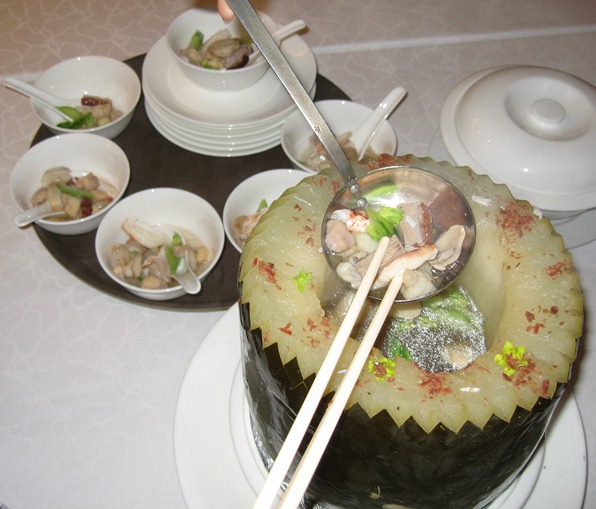
To Beijing’s and Taipei’s cheerleaders, chill out and enjoy the scenery; some calming winter-melon soup might help to keep the vitriol down.

Penman No. 449: Sharing the Joy of Pens

Penman for April 2, 2023

With the successful holding of the 2023 Manila Pen Show last March 18 and 19 at the Holiday Inn Makati, the Philippines firmly established itself as Southeast Asia’s Pen Central—the largest and liveliest marketplace of items and ideas related to one of the world’s fastest-growing hobbies: collecting fountain pens and other writing peripherals (inks, papers, and cases). 

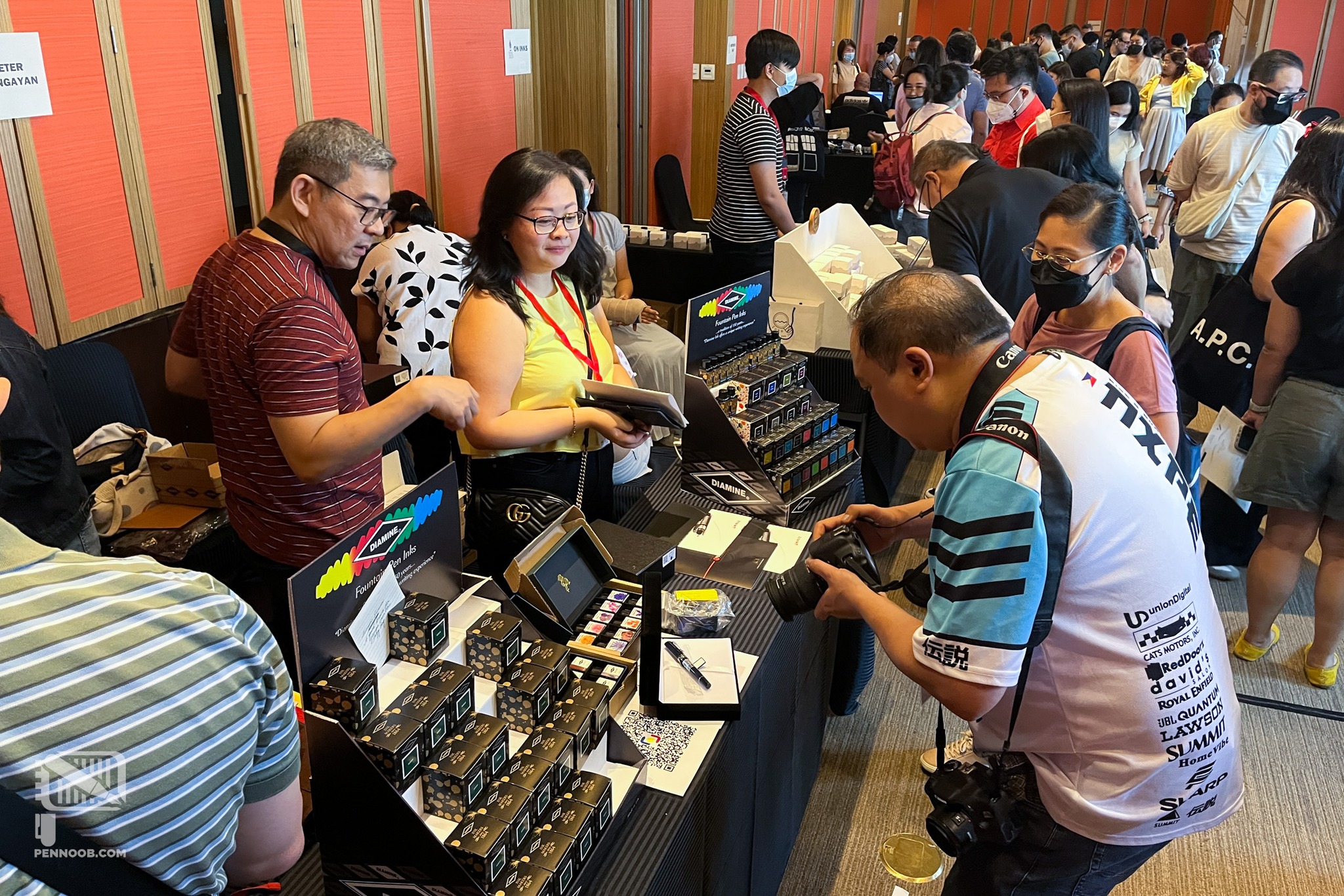
The last MPS in 2019, just before the pandemic, had brought in 700 visitors. This year, that number was eclipsed on just the first day, and by closing time Sunday, over 2,000 pen lovers—from hardcore and advanced collectors picking up $2,000 Nakayas to eager newbies thrilled to get sub-P200 Wing Sungs—had showed up. The turnout wasn’t totally surprising, considering that Fountain Pen Network-Philippines (FPN-P), the pen show hosts and organizers, now counts more than 12,000 members on its Facebook page.

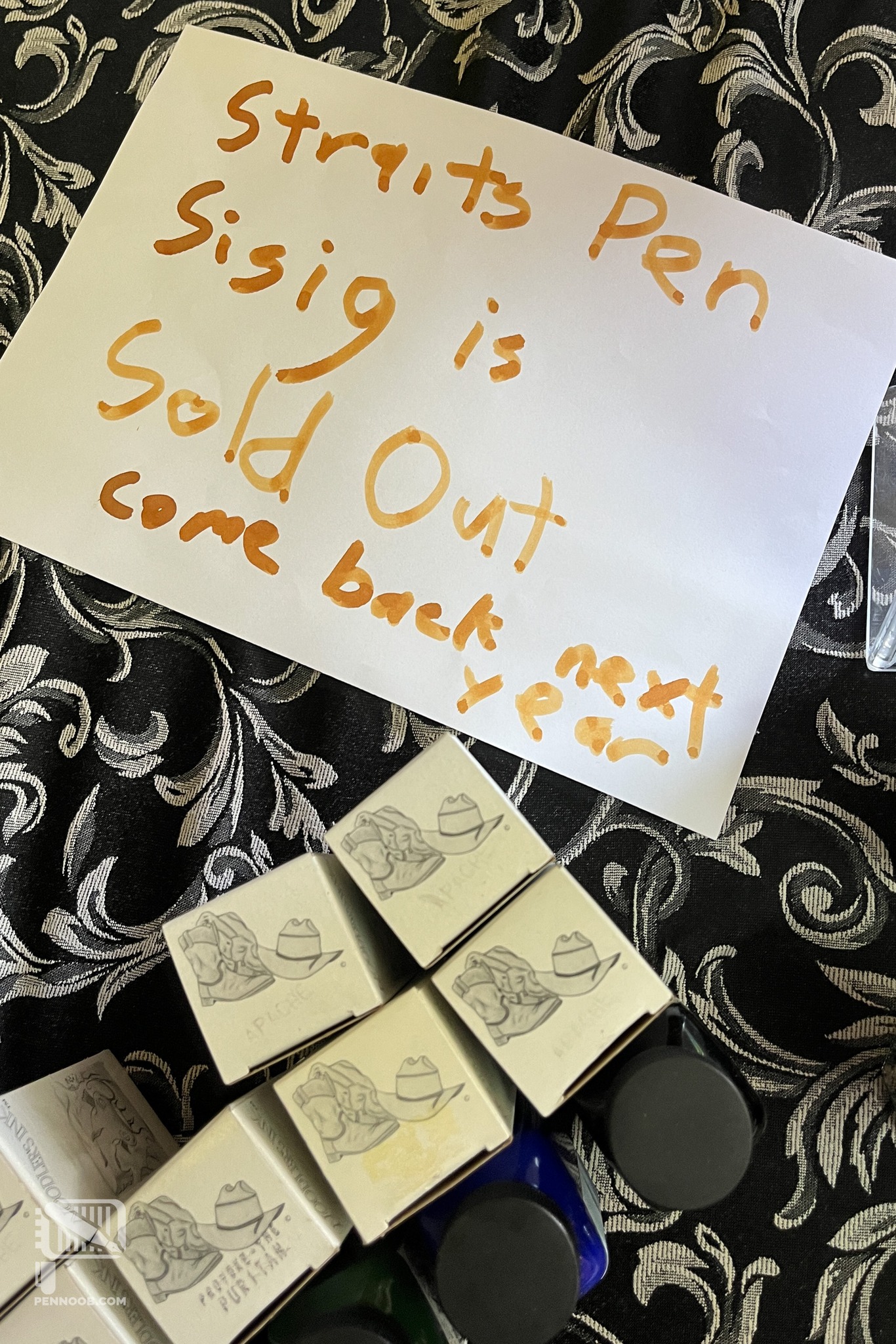
Aside from the country’s leading purveyors of writing paraphernalia—familiar names such as Scribe, Everything Calligraphy, Pengrafik, Stationer Extraordinaire, Leather Library, Leather Luxe, Shibui, Gav N Sav, JumpBid, and Kasama—foreign sellers from Singapore, Malaysia, and Japan such as Aesthetic Bay, Pen Gallery, Straits Pens, Musubi, and Toyooka Craft flew in just for the show. Nearly all the sellers reported robust sales at all price points.

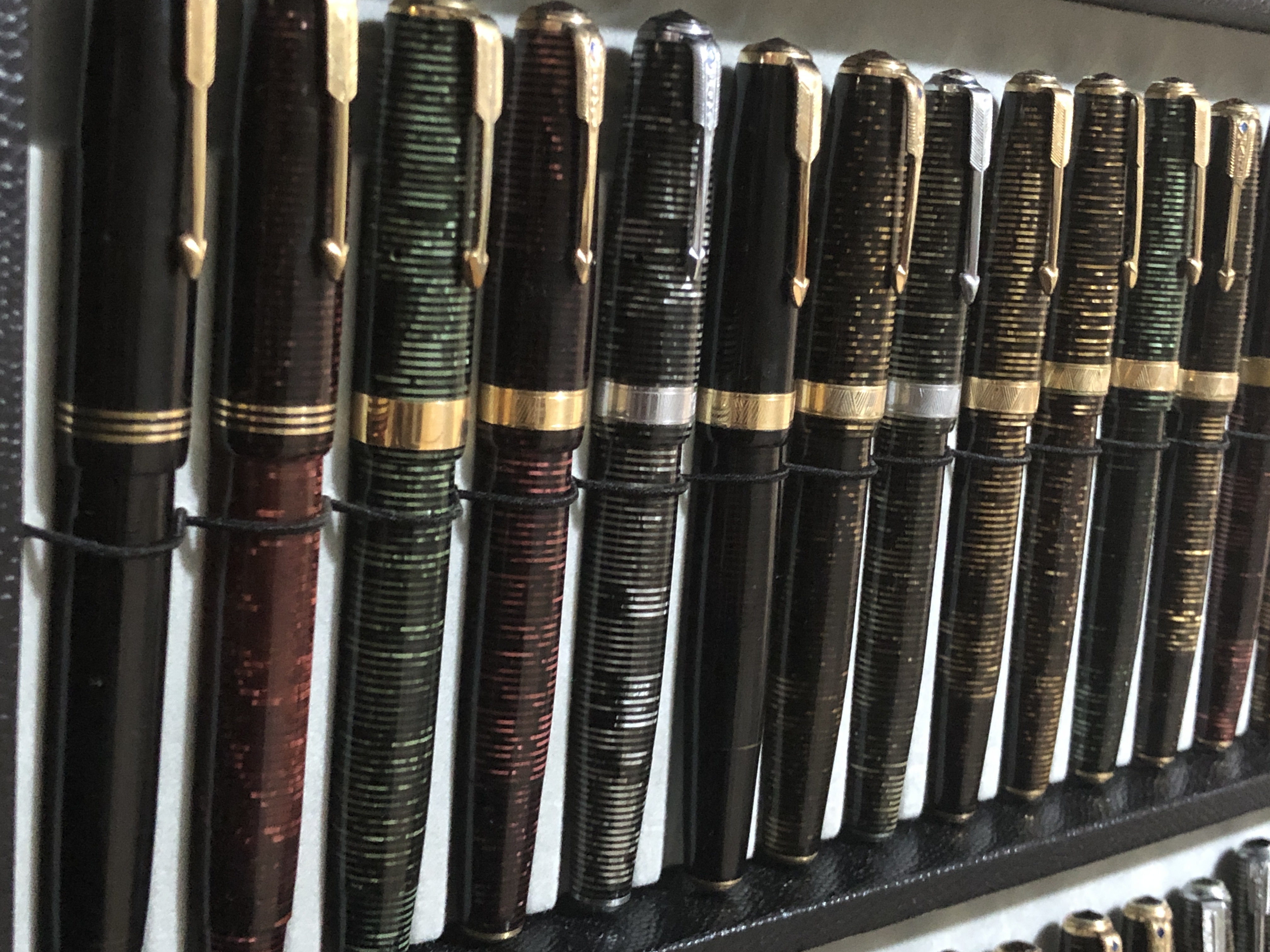
As a longtime pen collector and co-founder of FPN-P, I’m proud of how the hobby has taken off in this country over the past decade, and also frankly amazed by how different our demographics are from the rest of the world. Fountain pen collecting, especially in the West, has long been the domain of predominantly old white men, inclined like I am toward vintage pens and high-end, limited-edition modern pens. 

FPN-P’s profile is distinctly different: mostly young professionals between 20 and 40, with far more women than men, happy to purchase the entire color range of inexpensive Chinese-made Jinhao 82s (and inks to match) but just as savvy about the latest Montblanc release, keen on using and enjoying their pens rather than keeping them in boxes. As the MPS attendance showed, ours is an exuberant, generous, and democratic community, with little sense of entitlement or competition, dedicated to sharing the joy of pens, of expressing your individuality and artistry with the ink on your nib, of doing something personal and authentic in this age of artificial intelligence.

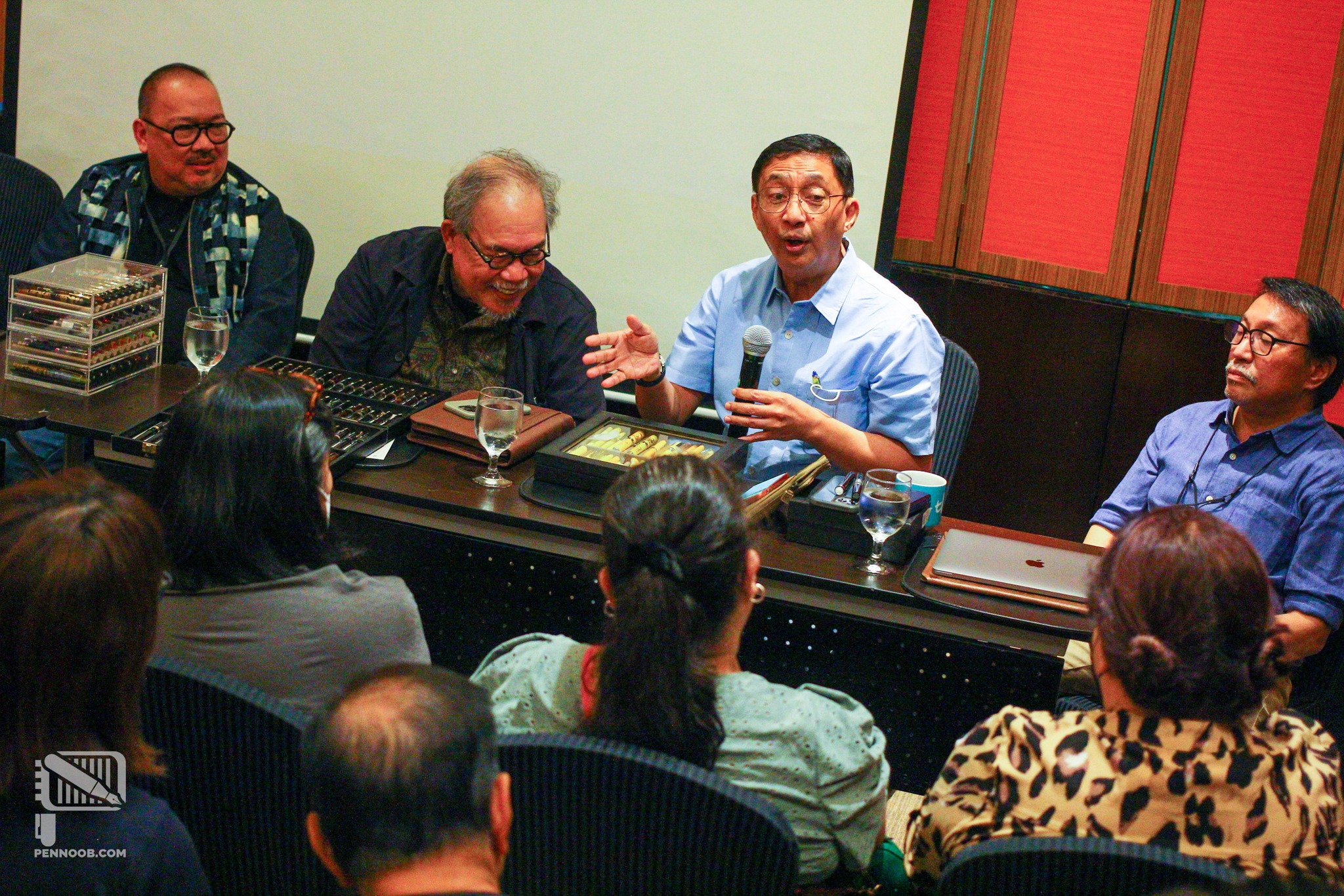
A highlight of MPS 2023 was a panel discussion devoted to the topic of “Curating a Fountain Pen Collection,” and I was privileged to share the table with fellow collectors Reggie Reginaldo, Amanda Gorospe, Jun Castro, Ronnie Geron, and Raffy Aquino. Each of us said a few words about how and why we put our collections together, given that each of us had a different focus: inexpensive pens, high-end pens, vintage pens, yellow pens, and so on.

Before talking about my passion for vintage pens (i.e., pens at least 50 years old, in many cases a hundred years old), I tried to explain what “curation” was all about. Here’s part of what I said:

Every collection begins as most love affairs do—with fleeting glimpses of the loved one, then seemingly chance encounters, then long chats over coffee before the steep and blissful freefall into a dizzying madness. 

For a moment, happiness and contentment reign. And then sadly follow the inevitable regrets, the disaffections, the “It’s not you, it’s me’s,” the parting with the old object of desire and its replacement by a new flame.

Today we’ll try to introduce some sense into this seeming cycle of bliss and despair. Curation means bringing some method into the madness, finding the inner logic that threads many disparate elements together.

The word “curation” is rooted in the Latin curare, “to take care of,” or to treat an illness, and here clearly the illness is in the collector, whom curation treats by providing guideposts to follow and guardrails against excess.

There are several kinds of collectors:

  1. Those who want anything and everything, although they might be more properly called accumulators (this describes 90 percent of us at the beginning);
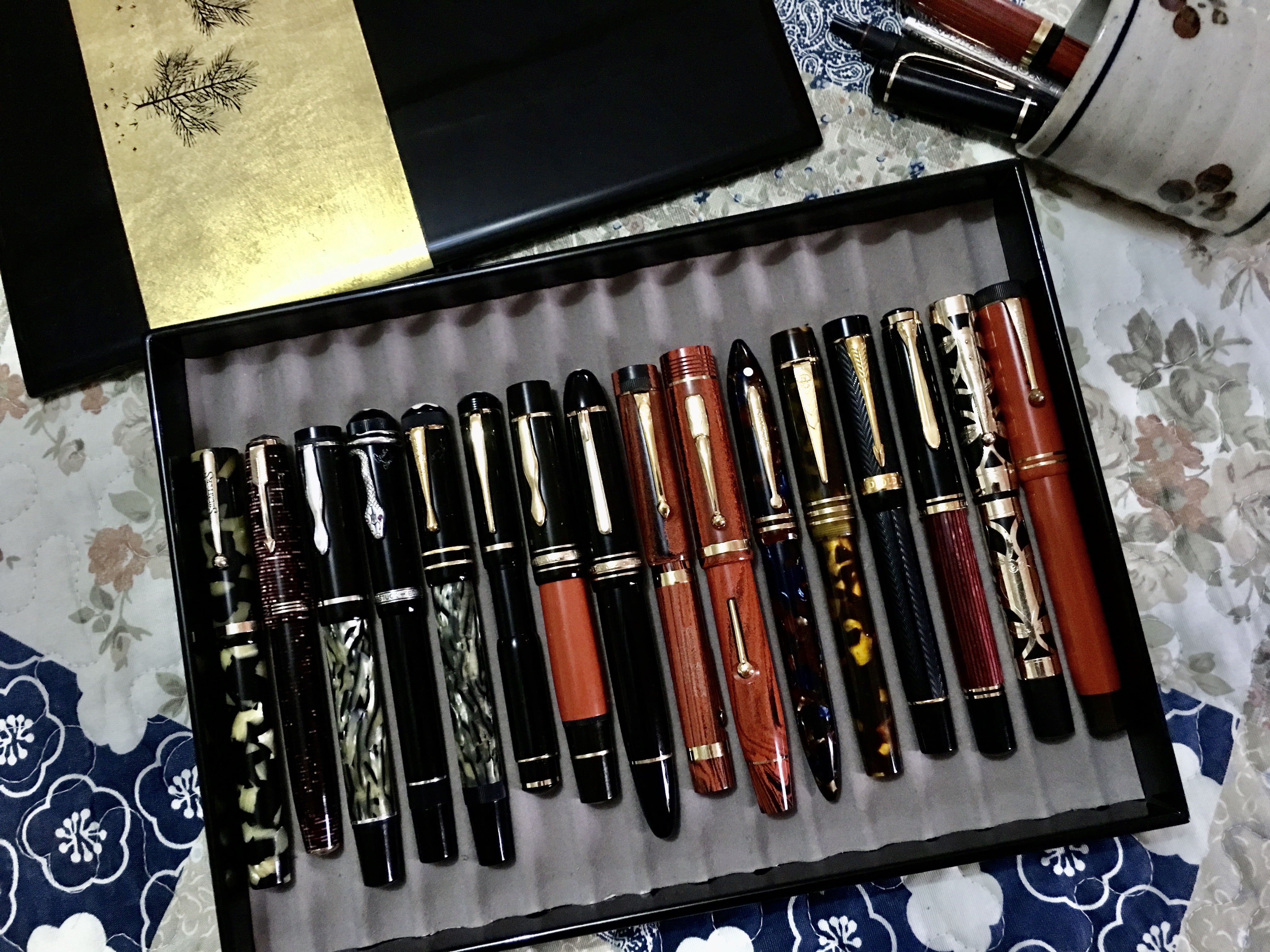
  2. Those who want everything of a kind (this applies to my fetish for Parker Vacumatics);
  3. Those who want the best or the most impressive of everything (this implies having the budget to go with your taste);
  4. Those who want some very specific things, for personal or even idiosyncratic reasons; and
  5. Those who get only what they need or can afford—perhaps the rarest of all collectors, the practical and disciplined kind.

Vintage collecting relies heavily on connoisseurship—on knowing the field and knowing what to look for. Surprisingly, it often involves less money than buying new pens. Of course there’s a cost to factor in for restoration and repairs, but even so few vintage pens reach the stratosphere of the thousands of dollars you would pay for a shiny new Montblanc.

You can collect based on brand, material, filling system, size, and of course price. For vintage you can add age and scarcity. Good working or repairable condition is presumed, although vintage collectors should always be on the lookout for cheap parts pens. 

Every quest for collectibles also involves what we might call “unicorns”—ultra-rare or one-of-a-kind pieces that exhibit some distinguishing hallmark of quality or technical innovation. These could be prototypes, custom jobs, or things in almost mint condition despite their age.

It also helps to know what you don’t like, or no longer like. For example, I generally don’t go for small and light pens, nor for blingy or too colorful pens. My pens are “lolo” pens—staid, conservative, almost severe, corny to most young collectors today.

Culling or cutting down is a good exercise, financially and mentally. I built up my collection over the years by selling five good pens to get one better pen. I have also sold very good pens that I once lusted after, but no longer spoke to me.

Curation, ultimately, is about knowing yourself. At a certain point in your collecting life, you have to take stock of your collection and ask yourself, “What do these objects say about me?” Is this the self-image I want to project, the one I’m happiest with? 

My answer to my own question is, I’m an old guy who likes old things, because they offer physical proof of life after death. We die, but our words—and the wording—go on. A vintage pen is an old guy lucky enough to find a new home. I’m happy to give him a shower and a warm bed, and all the ink he wants to drink.

Qwertyman No. 35: The Ultimate Casualty

Qwertyman for Monday, April 3, 2023

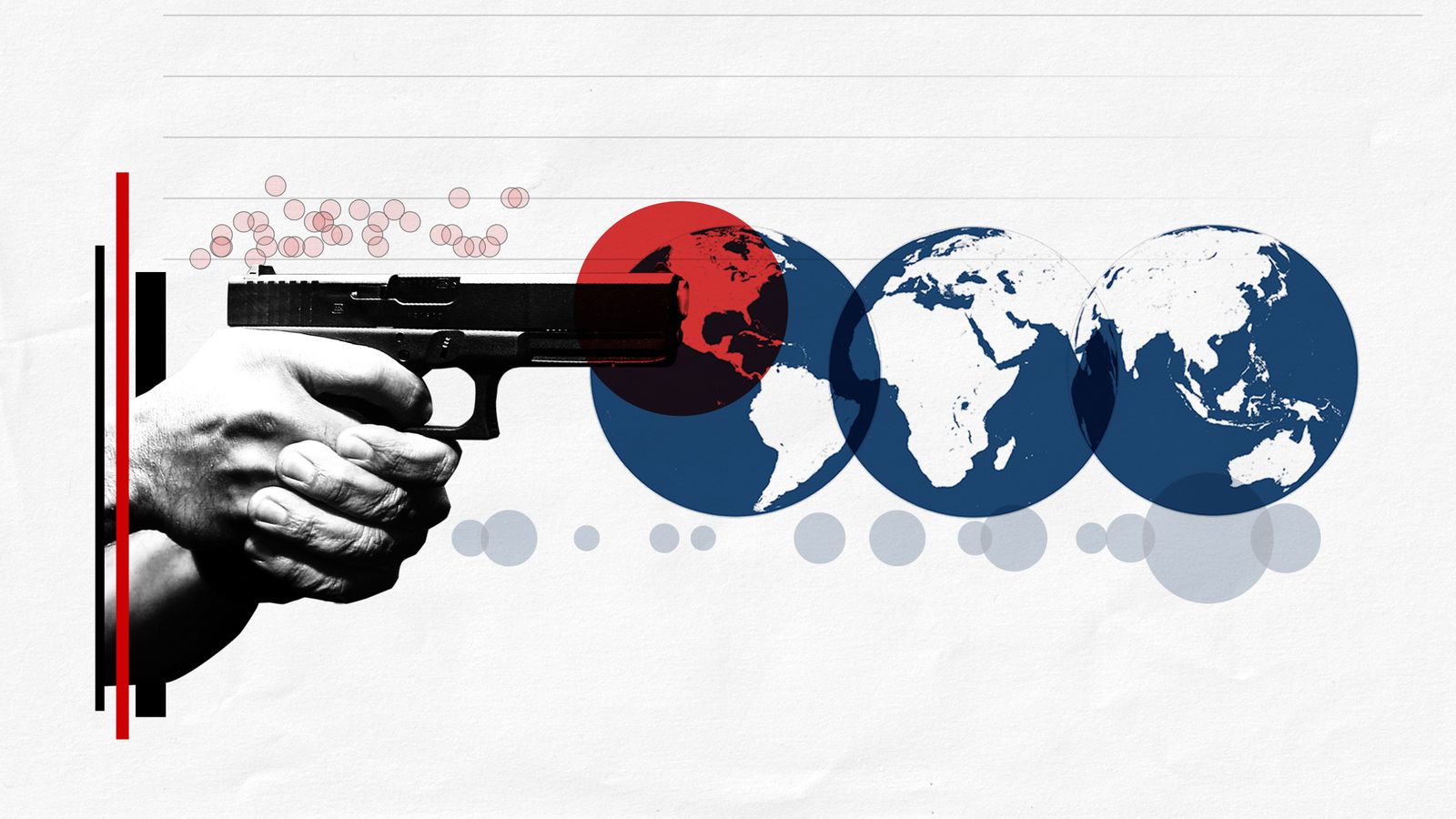
I’M SURE I wasn’t the only one who looked up from his breakfast coffee last week to see, on the morning news, that another mass shooting had ripped through the heart of America—in Nashville, a city that usually brings to mind the twangy plaints of country music, in mournful songs about prison life and cheating hearts. This time the pain was much more brutal and direct, devoid of all poetry: six people were killed, including three nine-year-olds, their bodies savaged by bullets from AR-15-style assault rifles.

According to the Gun Violence Archive—whose very existence should be disturbing—it was the 130th mass shooting in the US in the first three months of 2023 alone. Last year, 647 such events were recorded; overall, more than 44,000 Americans died from gun violence in 2022. At this rate, 2023 will almost certainly be a much bloodier year for America. There will be hundreds more Nashvilles, thousands more families ambushed by unspeakable tragedy, choruses of angry wails to heaven asking God to explain why.

Like any other parent who witnessed that carnage, my wife Beng raised the question on every sensible person’s mind: “How could they let this happen?” 

“This” here would mean not only the mass killing itself, but the means to do it. Two AR-15-style assault rifles were used by the 28-year-old shooter. The AR-15 has been the mass shooter’s weapon of choice. It can rip people to shreds. According to the Washington Post, “The AR-15 fires bullets at such a high velocity — often in a barrage of 30 or even 100 in rapid succession — that it can eviscerate multiple people in seconds. A single bullet lands with a shock wave intense enough to blow apart a skull and demolish vital organs. The impact is even more acute on the compact body of a small child.”


The mere thought of children being mowed down like carnival toys is horrific, but apparently not enough for America’s powerful and richly funded gun lobby, which has insisted on looking the other way, sanctifying the Americans’ Second-Amendment right to bear arms above all other human considerations. 

In Tennessee, where the shootings took place, it is legal for anyone over 21 to carry handguns without a permit; that holds true for 24 other states, making fully half of America gun-friendly. And despite the mounting deaths from mass shootings, politicians in many predominantly Republican states—including Tennessee—are sponsoring even more permissive gun laws, to do away with background checks and facilitate the sale and transport of lethal weapons.

President Biden has rightly said that he has done all he could to help stop the violence by calling for a ban on assault rifles, but the opposition to such gun-control measures has been stubbornly successful. The National Rifle Association (NRA), which has been bankrolled by the gun industry for generations, has lost some of its luster and bluster following the public outcry over the mass shootings, but it still wields enormous political power by supporting gun-supportive candidates in elections.


The gun lobby argues speciously that guns don’t kill—people do; and further, that the problem isn’t that there are too many guns on the streets (there can never be too many), but that mass shooters are certified lunatics who in no way represent the millions more of responsible gun owners who keep their guns for target practice, for the joy of collecting, and for the End of Days, when hordes of zombie-like strangers will come over the hill to invade their homes, steal their food, and rape their wives. Mass shootings, they insist, are a mental-health problem, not something to be blamed on the proliferation and easy availability of weaponry.

Why does this concern us in faraway Philippines? First, because millions of us have relatives in America—who, as minority citizens, are prone to racial violence, as the recent spate of maulings of Filipino-Americans has shown. Many mass shootings have been racially motivated, and it will be only a matter of time before some teenage White Aryan barges into a Pinoy wedding or fiesta to prove his superiority through the barrel of an assault rifle. I fear for our daughter in California, who could be enjoying a night out with friends or shopping for groceries when the shooting begins. (Much to Beng’s and my surprise, our daughter Demi joined the UP Rifle and Pistol Team and became a sharpshooter, but has never felt the need to own and carry.)

Of course, in truth, we knew about America’s bloody history a long time ago, if only from The UntouchablesThe Godfather, and America’s Most Wanted. What was a cowboy, a frontiersman, or soldier without a gun? And let’s not forget that it was the Krag-Jorgensen rifle with which US Army troopers “pacified” Filipino “insurgents” from 1898 onwards.

The second connection is our own gun culture—which, though not as pronounced and as strident as America’s, nevertheless exists, with the gun seen less as a means of self-defense than as a symbol and enforcer of power. With no need for a Second Amendment, our politicians and other bigwigs assemble arsenals for their private armies, such as the cache of arms and ammunition recently uncovered on the property of the Teveses in Negros Oriental. 

Oldtimers will remember when people boarded jeeps and buses with .45s tucked into their waists; congressmen used to enter the Session Hall bringing guns. Ironically, it took martial law to mop up most of those vagrant firearms—when someone decided that only he and his henchmen could carry them—but yet even more ironically, it was the military bullet that assassinated Ninoy Aquino that took the regime down.

I’m not so naive as to believe that we’ll see a gunless world in our lifetime and sing “Kumbaya” until we fall asleep. As societies undergo even more wrenching tests of the values that keep them together, our animal instincts—fear, belligerence, and survivalism—will become even more assertive, and the most brutish and inarticulate among us will let their firepower do the speaking. Unless reason prevails, the insanity will continue.

Abetting the murder of children—whether in Nashville or Bakhmut—means condoning the death of our humanity. That will be the ultimate casualty.

(Image from cnn.com)

Qwertyman No. 34: America the Paradox

Qwertyman for Monday, March 27, 2023

“AMERICA THE Paradox” was the title of an undergraduate paper I wrote on Carlos Bulosan for my class in Philippine literature, in which I observed—as many had done before me—that Bulosan felt deeply conflicted by the two faces that he kept seeing in America. On the one hand, it was the mother with open arms, calling out to the world’s orphans, and accepting of all brave and enterprising spirits. On the other hand, it was the hard fist of racism, viciously averse to all complexions other than white. 

Bulosan arrived in Seattle in 1930, a time of great economic turmoil, and he soon found himself fighting for the exploited poor, becoming a labor organizer and writing radical poetry. He would remain poor for the rest of his short life, despite achieving some degree of literary celebrity following the success of his semi-autobiographical 1946 novel America Is in the Heart. He died of tuberculosis in Seattle in 1956, never having been able to come home. I was so moved by Bulosan’s travails that I gifted our daughter with a signed first edition of his novel as her wedding present, and paid my respects at his grave when I visited Seattle some years ago.

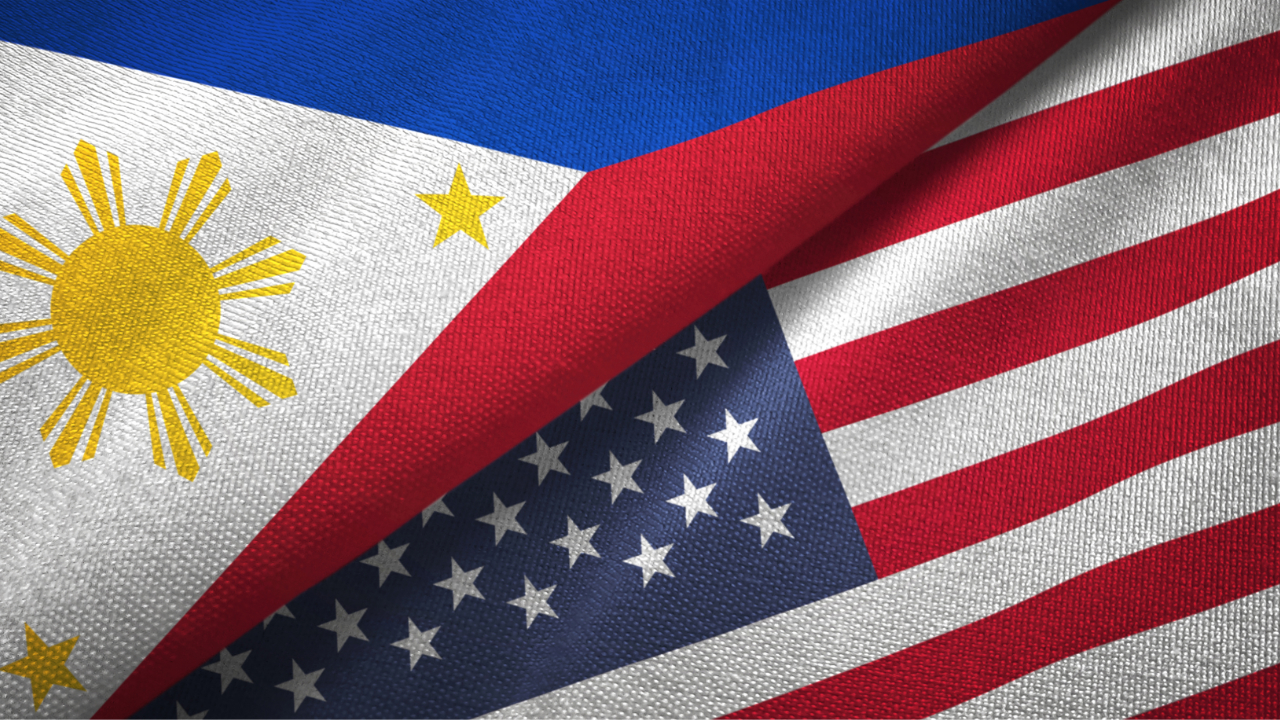
Last Thursday, March 23rd, I joined several hundred other guests for dinner at the Sofitel to celebrate a joyful event: the 75th anniversary of the Fulbright program in the Philippines. Over that period, the Fulbright program, which selects and sends scholars from all over the world to study in the US, has sponsored over 3,000 Filipino scholars and 1,000 American scholars coming to the Philippines. The Philippines—through the Philippine-American Educational Foundation (PAEF)—has the longest-running Fulbright program in the world, dating back to March 23, 1948, hence last week’s big commemoration.

It isn’t hard to see why Sen. J. William Fulbright believed that such a scholarship program was a good idea then, with the Cold War brewing and America projecting itself as the champion of the Free World. For the Philippines, it was a continuation of the prewar practice of sending pensionados to the US, thereby ensuring a cohort of Filipino intellectuals and administrators sympathetic to the American cause.

I myself went out on a Fulbright twice—in 1986, for my MFA at Michigan and then my PhD at Wisconsin, and then in 2014 as a senior scholar at George Washington University. It would be an understatement to say that the Fulbright—especially that first five-year stint—was life-changing for me. The learning was exhilarating, but the living—away from home and family—was fraught with pain.

Still, we Fulbrighters had it much better than Bulosan. Most of our expenses were borne by the American taxpayer (although, because of a budget crunch, I had to teach and also to work part-time as a cook, cashier, and busboy at a Chinese takeout). Our return home was guaranteed (indeed, legally mandated). Most of us enjoyed the hospitality and support of new Fil-Am and American friends. 

Although here and there we had the inevitable brush with racism, we saw America in the best possible light, as a source of knowledge and of the democratic spirit. Arriving in Michigan just after EDSA 1986, I too was seen as living proof of the long and beneficial reach of America’s cultural influence: I could speak English like they did, and (mild boast coming) could write at least as well if not better than they did. 

I recall how, in one Shakespeare class, I was the only one who could explain the difference between “parataxis” and “hypotaxis,” and how, in another class, our professor wrote up a long sentence from one of my stories on the board to demonstrate “Jose’s perfect command of punctuation.” But all that was presumably because of my Americanized education—not even in America, but in the Philippines, where we had seemingly prepared all our lives to come to America, only to find ourselves more indoctrinated than many Americans. (I had memorized all the state capitals in grade school in La Salle, confounding my American friends at Trivial Pursuit.)

Ironically, I also belonged to the First Quarter Storm generation that railed against “American imperialism,” that learned about our colonial exploitation and about the primacy of American self-interest in its transactions with the world. We rallied at the US Embassy against the war in Vietnam and against the US bases in the Philippines. We denounced Ferdinand Marcos as an American puppet, and saw Washington’s hand in every instance of political mayhem around the globe. Where did all that militancy go? Was a scholarship to Hollywood enough to negate these accusations?

Seated at that Fulbright dinner and listening to the speakers extolling our special relationship with America, I thought about Bulosan, the FQS, my Fulbright experience, our daughter in California, my teaching of American literature, and such recent issues as EDCA and the Chinese presence in our territorial waters to sort out my emotions. 

The America that had been such a paradox for Bulosan remains, in many ways, a chimera for us today—speaking with moral authority against the Russian invasion of Ukraine, and yet still enamored in many places of Trumpian demagoguery; espousing peace and human rights while allowing assault rifles on its streets; and promoting education and global literacy while hosting the world’s biggest engines of disinformation. We want to believe in the America that believed in us, although the cynical can argue that “believed” should be taken as “invested,” of whose efficacy this column offers ample proof. 

In the end, I reminded myself of what I tell my students: (1) The American government and the American people are not necessarily the same; (2) The American people are many peoples; there is no single, monolithic America; (3) We study America and its literature not to become Americans, but to be better Filipinos; and (4) We often take the terms “America” and “American” in an ideal or idealized sense, a compound of expectations and aspirations shaped by Abraham Lincoln, Hollywood, cable TV, and Spotify.

We went to America not just to study there, but to study America, and that study continues. 

(Image from pacforum.org)

Qwertyman No. 33: The Gunman

Qwertyman for Monday, March 20, 2023

(This story may seem inspired by recent events, but it has nothing to do with the facts of specific cases.)

CPL. ELMER Kabigting heard the hornbill minutes before he spotted it on his PVAR, a kind of a honk followed by a murmur. He knew the sound from the long days and nights he had spent in forests, an almost hourly reminder of time passing, until human footfalls and gunfire broke the spell and sent the birds and monkeys scattering overhead. Through his gunsight, Kabigting watched the hornbill hop from branch to branch until it found just the right one to perch on, peering down at the landscape over its bright red mouth. 

He tried to imagine what the bird could see. A scientist he had befriended in Bukidnon once told him that birds saw colors that humans could not, and that their eyes worked well in the low light of dawn and dusk, enabling them to hunt while other animals stumbled around or waited for things to clarify. The corporal wondered if a gunsight could be made that could see like a bird. The sun was beginning to drop on the horizon, and in an hour it would be hard to tell one van from another, especially if they came in a convoy—not that it mattered, given what he had to do, but something in him revolted at the thought of unnecessary waste. There were things he did not care to see in sharp detail.

Even without pulling the trigger, Kabigting felt the power of the weapon in his hand. The Pneumatic Valve and Rod Rifle was almost new, and if he had had it in Marawi, he might not have lost so many friends. It was supposed to be superior in so many ways—less recoil, less muzzle rise, better accuracy, lower maintenance—and he had heard that it was favored by the Special Forces, which made him feel like he had been promoted, using it today. He didn’t ask Sgt. Galicia where the cache had come from; even while in service, the sergeant had been remarkably resourceful, finding extra rations, gin, and cigarettes for the men, bringing tears even to Capt. Reyes’ eyes. Reyes was an academy graduate who was honest to the core and whose men rolled their eyes when he spoke of “courage, integrity, loyalty” and had them kneel in prayer, but even he could not and did not ask Galicia to stop what he was doing.

Kabigting turned his eye from the hornbill to the road. He knew that, a kilometer up, where the road ascended from a deep valley, a spotter was waiting to let him—let them—know by radio that the convoy was coming. There were six of them, three on either side, two with grenade launchers, the last men a couple of hundred meters down, a gauntlet through which no one would pass alive. Elmer knew three of those men, Marawi veterans like himself whom Sgt. Galicia had located in the bars and slums of Ozamis and Dipolog, people who no longer had much to lose but everything to gain for themselves and their families. 

“What if we get caught—or if we die?” asked one of the six, when they had gathered together to discuss the operation in a carinderia in Dapitan.

“Then your families get everything. They’ll be set for life. If you don’t talk,” said Sgt. Galicia.

“We might be better off dead,” said another, with a chuckle. “If we die, we can’t talk.”

“I don’t have a family,” said yet another man, stubbing his cigarette onto his plate and burning a scar onto the cheap plastic. 

“Then we’ll divide your share among the others,” said the sergeant. “They’re your family now.” The other men laughed but the ex-soldier remained glum. He was one of those whom Elmer knew, and Elmer knew as well that the man’s wife had left with their children after he had broken her nose once too often. 

Elmer thought about his own family—his mother, his wife, and their five children back in Kabankalan, the youngest not even six, the eldest a high school senior who wanted to be a doctor. His daughter’s ambition made him laugh—they couldn’t possibly afford to send her to medical school—but he stopped laughing when she told him that it was for her to cure him if he ever got shot. He did come home once with a bandaged head, telling the children he had been grazed in a firefight with rebels, but he had been roundly bashed in a brawl with fellow soldiers over a card game debt. It wasn’t long after that incident that he found himself on the street and out of uniform, along with the sergeant and several of his buddies, after a local merchant complained to the governor—who happened to be his cousin—that a group of soldiers had broken into his warehouse and had carted away two truckloads of rice.

Yes—Elmer had admitted to his superiors—they had taken the rice, but everyone knew that it had been smuggled in from overseas, so who was the bigger thief? But nobody heard him, Elmer thought, they weren’t even listening.

So when Sgt. Galicia called for a gang of the boys to get together for some jobs, it was easy for Elmer to convince himself that they were still at war, except that this time the enemy was whoever Galicia said was as bad as the rice merchant, whose children went to private schools in Manila and whose wife served as the hermana mayor in the town fiesta. Their first target was the merchant himself, for no money but just to exercise their trigger fingers and feel good about themselves. This was followed by hits on a couple of rural banks, a vice-mayor, a radio commentator, and a regional bureau director, and despite some touch-and-go moments, it all became more routine, especially as the money flowed in and they began buying motorcycles, fishing boats, flat-screen TVs, and smartphones for the kids. Even Elmer’s daughter began to think he was serious when he teased her about taking up plastic surgery, so she could fix his cauliflower ears. 

But those targets were easy and never shot back. Today was going to be different—an armed convoy of a van and two SUVs, including a police escort. They said the vice-governor was going to be in the van in the middle. They knew he preferred to ride the HiAce instead of his armored Montero when he was with his family. Elmer had seen them in church once, at a friend’s wedding. The older boy had a cowlick in his hair. He heard the hornbill’s call again. His radio crackled. The corporal did not want to see whatever the bird could.

Qwertyman No. 32: This Business of Titles

Qwertyman for Monday, March 13, 2023

THERE’S BEEN a lot of buzz online recently about the use of titles like “Doctor” and “PhD,” a topic of inflammatory interest to Pinoys for many of whom those extra letters before and after one’s name can mean everything between abject inconsequence on the one hand and celestial esteem on the other.

While nobody seems to question why public officials from the president down to the barangay kagawad use their titles with gleeful abandon, academic degrees—which are arguably harder to earn honestly than votes—provoke much hand-wringing, notably among academics themselves who like to worry about things that would make ordinary people happy.

To put it simply, some people like using their titles, and others don’t. Those who do believe that they deserve it, having worked their posteriors off to gain them. Those who don’t apparently think that it’s unseemly to earn an exalted degree like a PhD and then to wear it on your T-shirt so nobody forgets to address you by your honorific, “Doctor.” The only “PhDs” I know who are above all this are those who got them for being, say, a generous taipan, and who feel elated to be called “Dr.” for the rest of their lives.

As it happens, I have a PhD in English, which I got more than thirty years ago from the University of Wisconsin-Milwaukee, after my Master of Fine Arts from the University of Michigan. As soon as I say that, I feel like I’m boasting, which I suppose I am. But I only brought it up to make the point that, well, I hardly ever bring it up. Nobody ever calls me “Dr. Dalisay” or “Prof. Dalisay” except in an academic or professional context (they do call me “the Prof” at my favorite poker hangout, where I play with guys going by monikers like Daga, Todas, Hot Sauce, and Paos). I pull it out now and then when I suspect it will enhance my credibility and maybe even my paycheck by 200 percent. But most of the time I’m quite happy to be just “Butch” or “Sir Butch” (or “Ho-zay” when I’m in the US, to save myself the long explanation for why my father Jose Sr. chose to call his first-born “Butch”). 

So for me, it’s entirely situational, and no one should be made to feel immodest if he or she insists on being called “Doctor,” as Dr. Jill Biden does. The only caveat I’ll make is that, among writers, nobody seriously gives a hoot about academic degrees, unless you plan on teaching, which is really what the PhD is for, practically speaking. In UP these days, particularly in the sciences, you can’t teach for long without a PhD—the idea being that going through a doctoral program pushes you beyond your practical experience and innate talent toward some appreciation of theory and into research. 

In the Philippines, for many reasons, it’s still easier for teachers in many universities to become professors before finishing their PhDs, and so there’s a tendency to value the “Dr.” above the “Prof.”—which is not the case in UP and in most foreign universities, where the title “Professor” (meaning a full professor and not an assistant or associate professor) remains one’s ultimate career goal. The presumption is that a PhD should be an entry-level qualification for higher teaching, an early step in one’s ascent to full professorship. (Which reminds me to say that there’s no such degree as “PhD cand.” or “MA units”, as I’ve seen on some CVs—you’ve either done it or you haven’t.)

Why do we fuss over these titles? Because, in a society that offers few material rewards and consolations for academics, they can assume inordinate importance, and invest their holders with an intellectual and moral authority that demands or at least deserves respect—never mind that academia, like the rest of our institutions, is home to any number of crackpots and charlatans in togas, as corruptible as every other traffic cop. Let’s not forget that Hitler’s propaganda minister, Joseph Goebbels, had a PhD in Drama from the University of Heidelberg, and that PhDs from Stanford and Harvard, among others, greased the wheels of Marcos’ martial law.

But lest we think we’re the only ones seemingly obsessed by the trappings of imagined power, there’s at least one other country more retentive down there when it comes to academic titles, perhaps for the opposite reason—not because they’re rare, but because they’re part of such a long and prolific tradition that an elaborate hierarchy has to be put in place. 

That place is Germany—where, until 2008, and thanks to a Nazi-era law, you couldn’t call yourself “Dr.” unless you secured your PhD in Germany itself or was the kind who could fix broken bones. Ian Baldwin, a molecular ecologist from Cornell, found himself charged with “title abuse” when he put “Dr.” before his name on his card, as were at least six other American PhDs working in Germany. The law was later relaxed, but you get the point—when it comes to degrees, Deutschland still thinks of itself as being über alles.

The Germans make one more formal distinction—the precedence of the professor over the PhD, again on the assumption that while PhDs can be had for a dime a dozen, professorship is a career-capping accomplishment achieved only by exemplary research, publication, and mentorship. And thus, if you were teaching at, say, Humboldt University of Berlin (which as of 2020 had 57 Nobel laureates and almost 3,000 PhD students), your full title would be “Prof. Dr. XXX.” And because some people can’t find happiness and fulfillment with just one PhD, they would be called “Prof. Dr. Dr. XXX.” (I kid you not—go ahead and Google it. The Guinness record stands at 33 PhDs for a guy from Hyderabad, whom I don’t even want to begin to address.) Some titles would include variants like “ir” for “ingeneur” or engineer, and “hc” for honoris causa (often conveniently forgotten by hc recipients). The Austrians, I’m told, can be even more particular than the Germans, and can legally use their titles on their passports. The Dutch, by the way, have a “Drs.” degree which can be a bit confusing—it’s short for doctorandus, which means you’re studying for your PhD.

But who cares, other than the title-holder? Certainly not the Quakers, who value equality between people to the point of eschewing all titles, including (until recently, and only in America) “Mr.” and “Mrs.” If you’re familiar enough with each other, you can use first names. If not, then full names will do. When I visited the Quaker HQ in Philadelphia many years ago, I was “Jose Dalisay.” British Quakers were said to have referred to the late Queen as “Betty Windsor.” 

But something tells me that notion of equality won’t work here, where calling people “Digong,” “Bongbong,” and “Sara” won’t bring you any closer to the kingdom of heaven (or some such dominion). 

Qwertyman No. 31: A Homecoming for Anwar

Qwertyman for Monday, March 6, 2023

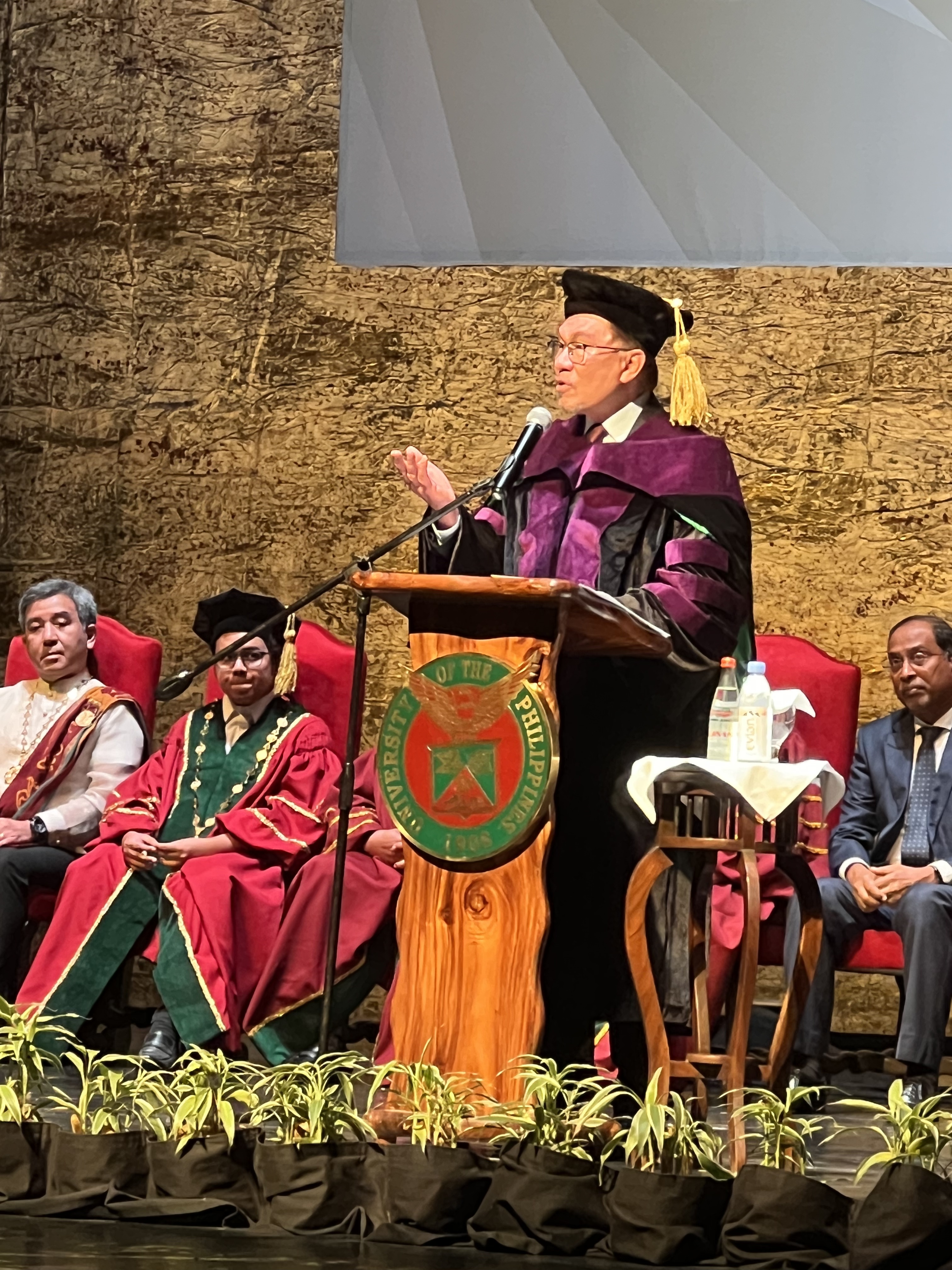
TODAY WE pause our fictional forays to focus on some happily factual news—the visit last Thursday of Malaysian Prime Minister Anwar Ibrahim to the University of the Philippines, which conferred on him an honorary Doctor of Laws degree.

I’ve been missing many university events especially since I retired four years ago, but I made it a point to attend this one because I’ve long been intrigued by Anwar’s colorful if mercurial political career—one that witnessed his meteoric rise from a student leader (who majored, at one point, in Malaysian literature) to minister of culture, youth, and sports, then of agriculture, and then of education, before being named Finance Minister and Deputy Minister in the 1990s.

As Finance Minister during the Asian financial crisis of 1997, Anwar imposed very strict measures to keep the Malaysian economy afloat—denying government bailouts, cutting spending, curbing corruption and calling for greater accountability in governance. His zeal and effectiveness gained him international recognition—Newsweek named him Asian of the Year in 1998—and put him on track to succeed his mentor Mahathir Mohamad as Prime Minister. 

However, his growing popularity came at a steep personal price. In what he and his supporters denounced as political persecution, he was imprisoned twice following a fallout with Mahathir. In the meanwhile, Malaysia sank into a morass of corruption under the since-disgraced Najib Razak, making possible the brief return to power of Mahathir, who enabled the release of his sometime protégé Anwar. Anwar’s eventual accession to the prime ministership in December 2022 was for many a just culmination of decades of near-misses (in our lingo, naunsyami).

His visit to Diliman last week was actually a homecoming. Anwar had visited UP more than once as a young student being mentored by the late Dr. Cesar Adib Majul, our leading specialist in Islamic studies. Like other Malaysian scholars, Anwar has also had a deep and lifelong appreciation for the life and work of Jose Rizal, with whom he shared the notion of a pan-Asian community of interests.

Most instructive was the new UP President Angelo Jimenez’s summation of Anwar’s political philosophy, in his remarks welcoming and introducing the PM:

“Beneath Anwar Ibrahim’s sharp sense of financial management lies a deep well of moral rectitude, a belief in right and wrong that seems to have deserted many of today’s political pragmatists. Much of that derives from his strong religious faith—which, unlike the West, he does not see as being incompatible with the needs and priorities of modern society. To him, this is a native strength that can be harnessed toward an Asian Renaissance.

“Like Jose Rizal, who self-identified as ‘Malayo-Tagalog’ and who was a keen student of the cultural and linguistic connections between Malays and his own countrymen, Anwar appreciates the West as a source of knowledge but cautions against neglecting or yielding our cultural specificity.

“At the same time, he has championed a more inclusive and pluralistic Malaysia, arguing—and here I quote from his book on The Asian Renaissance—’not for mere tolerance, but rather for the active nurturing of alternative views. This would necessarily include lending a receptive ear to the voices of the politically oppressed, the socially marginalized, and the economically disadvantaged. Ultimately, the legitimacy of a leadership rests as much on moral uprightness as it does on popular support.’”

In his talk accepting the honorary degree, Anwar argued strongly and eloquently for the restoration of justice, compassion, and moral righteousness to ASEAN’s hierarchy of concerns, beyond the usual economic and political considerations. He was particularly critical of ASEAN’s blind adherence to its longstanding policy of non-interference in its members’ internal affairs, noting that “ASEAN should not remain silent in the face of blatant human rights violations” and that “non-interference cannot be a license to disregard the rule of law.” 

Extensively quoting Rizal, whom he had studied and lectured often about, Anwar urged his audience to free themselves from the self-doubt engendered by being colonized, while at the same time remaining vigilant against subjugation by their “homegrown masters.” I found myself applauding his speech at many turns, less out of politeness than a realization that I was in the presence of a real thinker and doer whose heart was in the right place. (And Anwar was not without wry humor, remarking that as a student leader visiting UP, “I was under surveillance by both Malaysian and Philippine intelligence. Now I have the Minister of Intelligence with me.”)

Speaking of honorary doctorates, I recall that UP has had a longstanding tradition of inviting newly elected presidents of the Republic, whoever they may be, to receive one, as a form of institutional courtesy. As soon as I say that, I realize that many readers will instantly recoil at the idea for reasons I need not elaborate upon. But let me add quickly that not all Malacañang tenants have accepted the honor. Some have had the good sense to find a reason to decline, knowing the kind of reception they will likely get from Diliman’s insubordinate natives, beyond the barricades that will have to be set up for their security. For everyone’s peace of mind, I humbly suggest that it may be time to retire this tradition, which agitates all but satisfies no one. 

For the record, UP has given honorary doctorates to less than stellar recipients, including the Romanian dictator Nicolae Ceaucescu and the martial-law First Lady Imelda R. Marcos. Even some recent choices have stirred controversy and dismay. 

As a former university official, a part of me understands why and when a state university dependent on government funding employs one of the few tools at its disposal for making friends and influencing people. But as a retired professor who has devoted most of his life to UP and its code of honor and excellence, I find the practice unfortunate if not deplorable. 

I don’t make the rules, but if I did, I would automatically exclude incumbent Filipino politicians, Cabinet members, and serving military officers from consideration. This is not to say that they cannot be deserving, as some surely are, but that they can be properly recognized for their accomplishments upon leaving office. This will also leave much more room for the university to hail truer and worthier achievers of the mind and spirit—scientists, artists, scholars, civil society leaders, entrepreneurs, other outstanding alumni, and fighters for truth, freedom, and justice in our society.

Qwertyman No. 30: Alternatives to Cha-cha

Qwertyman for Monday, February 27, 2023

WE PINOYS know—as night follows day—that every time a new administration comes to power, a fresh initiative emerges to amend the 1987 post-EDSA Constitution. Fidel V. Ramos tried it with his ill-fated PIRMA campaign, followed by Joseph Estrada’s “Constitutional Correction for Development,” the attempt of Gloria Macapagal-Arroyo’s congressional allies to form a constituent assembly without the Senate, and even Noynoy Aquino’s reported openness to giving the President a second term. Rodrigo Duterte included “charter change” or cha-cha in his platform and tried to push it until Covid came.

Most Filipinos, let’s admit it, don’t even know what the Constitution contains, but a few of us seem hell-bent on changing whatever is in there. Never, of course, for selfish reasons like extending term limits (now why would we even suspect our politicos capable of such nefarious designs?) but for “economic provisions only” (although extending one’s term limit is a very healthy economic provision, as far as I can tell). 

Cha-cha is in the air once again, fellow citizens, going around the House and Senate like a marching band, despite President Marcos Jr.’s public disavowal of support for the proposal. 

Even the National Economic and Development Authority’s estimate that cha-cha—the convention and the plebiscite—could cost as much as P28 billion (yes, that’s a B) isn’t likely to deter its proponents from advancing their cause. With more than five years to go under BBM, a lot of plausible reasons could be found for coughing up that money. Why, even the President could change his mind over that period, persuaded perhaps by a groundswell of demand for cha-cha that he can’t possibly ignore. (Why am I suddenly thinking of that pool resort in Cavite with the artificial wave machine that we so enjoyed last summer?)

Perplexed by this insistence on the need for cha-cha now, I turned to my favorite chatmate, sounding board, and political counselor—ChatGPT—for some answers and explanations. (I know what you’re thinking—I’m just making all of this up—but no: I actually paid good money for this app, so I’m going to get  my money’s worth. If you don’t believe me, try asking it the same questions.) Here’s a transcript of my conversation with ChatGPT:

ChatGPT: Hello, How can I assist you?


Qwertyman: How important is cha-cha to the Philippines?


ChatGPT: Cha-cha is an important dance to the Philippines, as it represents their culture and traditions. It holds a special place in the hearts of many Filipinos and is regarded as a national dance. It is often performed in public gatherings and celebrations to bring people together and express joy and happiness.

(Hmmm, I don’t know where you got that, ChatGPT. Pinoys who remember Nestor de Villa and “Dancetime with Chito” might have a hankering for the cha-cha, but I don’t see any great demand for it from millennials or even their parents. Are you sure it’s that special to us?)


Qwertyman: Why cha-cha? Why not the twist or the shingaling?


ChatGPT: The cha-cha is a distinctive Latin dance with an easily recognizable beat, which makes it easy to follow. It’s also more graceful and flowing than other partner dances, making it well-suited to more formal events. In addition, its pattern of three steps forward and two steps back is easy to learn, making it a great choice for beginners.

(That’s what worries me, ChatGPT. As you say, it’s “a great choice for beginners,” which is probably why a rookie senator is on top of the process. Some of us are also worried that cha-cha will mean two steps forward and three steps back.)


Qwertyman: But what if people just want to sit down and not do the cha-cha?


ChatGPT: That’s perfectly fine! There are many ways to have fun and enjoy one another’s company without having to do the cha-cha. You could play board games, cards, watch a movie, listen to music, engage in conversation, etc. Whatever makes you and the people around you comfortable and entertained is the best way to go!

(Totally agree! Someone should tell our esteemed lawmakers that they can do this, too—play board games, cards, watch a movie, listen to music, engage in conversation—rather than tinker with the Constitution, especially if it’s beyond their comprehension.)


Qwertyman: What are the dangers of doing the cha-cha?


ChatGPT: The dangers of doing the cha-cha include: 1. Potential for pulled muscles or sprains due to improper form, which increases the risk of injury. 2. Risk of slipping and falling since the cha-cha can involve quick, sharp movements. 3. Risk of strain on the joints due to the fast, jumping nature of the dance. 4. Risk of overheating due to the amount of movement required for the cha-cha.

(To which we can add: 1. The potential for a further decline in the quality of our leadership, by the extension of political dynasties into future generations of inbred politicians, raising the genetic potential for imbecility. 2. Risk of slipping and falling back into old ways and faces of governance. 3. Risk of strain on the national budget. 4. Risk of overheating the political climate.)

Qwertyman: Is it better to do the cha-cha today or some other time?


ChatGPT: That depends on what you have planned for today. If you have other commitments or would like to save the cha-cha for another time, it is best to choose an alternate date.

(Other commitments? Hmmm, let me think. Defending our patrimony in the West Philippine Sea? Achieving price stability for basic commodities? Fighting corruption? Raising the competencies of our children in STEM? Dispensing justice, especially in long drawn-out cases like the Maguindanao Massacre, the tokhang murders, and Leila de Lima’s incarceration? Providing housing, livelihood, and adequate social security to the poorest Filipinos? Is this list long enough?)


Qwertyman: What are the best alternatives to the cha-cha?


ChatGPT: 1. Bachata 2. Salsa 3. Merengue 4. Cumbia 5. Samba 6. Paso Doble 7. Tango 8. West Coast Swing 9. Bolero 10. Contemporary Latin Dance.

(I have to admit you got me there, ChatGPT. I’ve never heard of the bachata—unless you mean “ban charter talk”?)

(Image from The Adobo Chronicles)

Qwertyman No. 27: The Maalikaya Health Fund

Qwertyman for February 6, 2023

THE HON. Victor M. Dooley, once again, was in a quandary. At the end of his trip to the World Economic Forum in Davos, he was brimming all over with enthusiasm, eager to prove to his constituents that the money spent for his first-class ticket (and for his Chief Political Officer and rumored girlfriend, Yvonne Macahiya) had not been wasted. 

There was a long list of sessions he had planned on attending, identified for him by Yvonne as strategically important, with titles like “What’s Next for Monetary Policy?”, “How to Turbocharge Development Finance”, “Living With Risk,” and “Mapping Russia’s Trajectories.” She had prepared briefs for him, along with a list of intelligent questions he could raise in the open forum, so they could take a picture of him, in his bespoke Senszio suit that he had ordered during his last junket in Brussels, on the floor. But as it happened, strolling up the Promenade on his way to the forum, Sen. Dooley found himself staring at a new Omega Seamaster 300 Co-Axial Master Chronometer at the window of a watch shop. He must have stood there for a very long time, because an unusually friendly salesman stepped out of the shop to invite him in. 

Guten Tag! Bonjour! Buongiorno!” the man said in the city’s three languages. “Good morning! Are you Indonesian?” This year, the Indonesians had put up a large national pavilion along the Promenade. 

“No, no!” cried Victor. “I’m Filipino!” 

“Ah, Filipino! Magandang umaga!” said the salesman. “We love Filipinos! Many of them come to Davos! Many of them come to my store. Come in, come in!”

Victor allowed himself to be ushered into the boutique, which, he had to admit, was warm and pleasant compared to the bitter cold outside. Last night, as he cuddled in bed with the snoring Yvonne, he had wondered why the WEF (which he would often misquote as “WTF,” to Yvonne’s dismay) insisted on holding the forum in the dead of winter rather than in some nice summery spot, like that lakeside place he had seen on “Crash Landing on You.” Why would people even want to talk about something as boring as economics in all that snow? Davos was meant for cuddling—which, sadly, was all he could now do with Yvonne, much to the latter’s dismay, unless he took an overdose of the little blue pills, which dismayed Yvonne even more.

But of course the Hon. Victor M. Dooley couldn’t refuse the President’s invitation. As chairman of the Senate Committee on Basic Education, Culture, and the Arts, he frankly had no idea why he was going to an economic forum in Switzerland, except that he was sure the President’s appointments secretary had a crush on him, and added his name to the list, as she had done for him in Belgium; surely his movie-star looks couldn’t hurt the delegation. 

Naturally, Yvonne found and crafted a plausible reason for him: “Education, culture, and the arts are indispensable in shaping the new post-pandemic economy, especially given the global transition to online instruction and the response of creative industries to new opportunities created by this expanded platform. We cannot underestimate the importance of human creativity to economic growth. If traditional economics concerns itself with supply and demand, then creative industries can exert a powerful influence at both ends—creating new needs, new producers, and new resources that can only spur economic development, especially among sectors often marginalized by industrial homogenization. I would urge all our leaders here in the WTF—most notably those from the developed West—to look to the Philippines for new ideas, particularly in the fields of design, fashion, animation, music, indie filmmaking, food, and graphic arts. These are the growth industries of the 21st century, endeavors that our predominantly young populations can relate to with vigor and enthusiasm.”

Victor had to admit that it sounded good, although he had to have Yvonne explain “industrial homogenization” to him by pointing out that his Lexus looked like Congressman Tungkod’s Genesis G70, which also looked like Mayor Lanzones’ Audi A5, at which point Victor felt deeply depressed. But Yvonne pulled him out of his funk by having him memorize his spiel before a mirror—warning him, like a good coach, not to count off “design, fashion, animation, etc.” on his hand starting with his pinky finger, as Filipinos were wont to do. Victor felt energized; he couldn’t wait to fly to Davos and spring his little speech on the unsuspecting WTF’ers.

But now he was staring at the Omega Seamaster, glowing like a hypnotic planet. The salesman had taken it off the display shelf to cuff him with, and he felt locked to it for life, as if it belonged to him and he belonged to it forever. Why, it was James Bond’s watch, it went to the moon, and the price—well, surely Yvonne could free up half a million from his intelligence fund in the name of cultural diplomacy, which a little Filipino-Swiss transaction promoted. 

“It’s worthy of a president,” the salesman whispered in his ear. 

“I’m only a senator—yet,” said Victor. His throat felt dry. 

“Then it will lead you to your destiny.”

That evening, at the dinner for the delegation, Sen. Dooley was chagrined to find that two other senators and even the president’s third cousin sported the same new watch. And everyone around the table was talking about some “sovereign wealth fund” that was going to save the country, which Victor, sans Yvonne who was consigned to dine with the secretaries, was clueless about.

“I know all about it,” she told him later at the hotel, as they packed for the flight home. “The secretaries told me. It’s big, and it’s as good as done.”

“And I’m not part of it? I have to announce something when we get home!”

“Are you sure you want to? According to ChatGPT, sovereign wealth funds are subject to risk tolerances, liability matches, and liquidity concerns. As it’s my job to protect you, let’s think of something else.”

As they cuddled on their last night in Davos, and as he watched the seconds tick by on his Seamaster, Victor felt an old stirring under the blanket, going back to his misspent youth, that revived long-dormant memories of simpler pleasures. 

“I think I have it!” he told Yvonne. “This will be for everyone’s physical and mental health. We will train hundreds of thousands of masseurs and masseuses. Every Filipino, man or woman, will get a free massage after a hard day’s work.”

Yvonne seemed genuinely surprised. “Hmmm, that’s original!”

“We’ll call it the Maalikaya Health Fund. Our slogan will be ‘Every Filipino deserves a happy ending!”