Penman No. 468: A Game of Prompts

Penman for Sunday, November 17, 2024

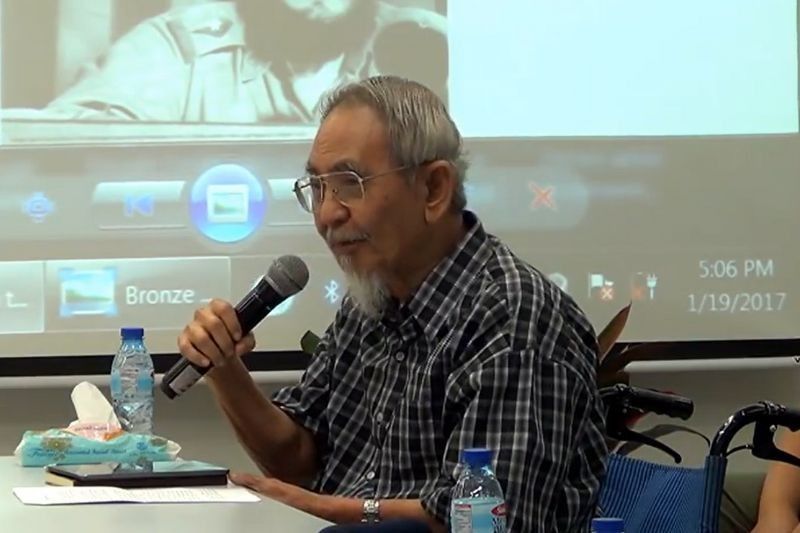
I WAS in Dumaguete recently for a seminar organized by the Intellectual Property Office of the Philippines to encourage local authors and publishers to break out into the international market, following through on our participation at the Frankfurt Book Fair. I was asked to talk about “The Future of Literature,” but I chose to turn that around and talk instead about the literature of the future.

Taking off from the challenges and opportunities posed by artificial intelligence, I put forth a series of “provocations” that writers and publishers could think about. Let me share part of what I said:

My first provocation: the literature of the future, or some part of it, will be a game of prompts: not just or not mainly to copy existing writers, but to produce results that will be a hybrid of the author’s creativity in prompt-making and AI’s selectivity, drawing from its enormous stock of possible responses. This will be writing as a form of play, of co-authorship between man and machine.

Following through from this is Provocation No. 2: Expect the growth of the literature of hybridity—of more crossovers from one genre or form to another, from one language to another, from one sensibility to another. This is by no means new and has been happening for some time now, but there will be an even greater and more deliberate blurring of traditional boundaries, more experimentation.

To some extent, that will be because—and here’s Provocation No. 3, and to use this generation’s favorite trigger-word—there will be less gatekeeping. Or, if not less, then more resistance to or disregard of it. There will be more independent publishing and self-publishing to counter the influence of traditional publishing houses. But this free-for-all will also likely lead to a general decline of standards, as writers forgo the services of editors and the critical evaluations of quality- and market-minded publishers.

Provocation No. 4: The big novel will survive, simply because of the power of inertia, and because there will always be a need for something as capacious to contain and possibly comprehend the ever-growing complexity of human life. Our exposure to the international market at the Frankfurt Book Fair will also provide more impetus to the production of novels, something at which we Filipinos have not been particularly good at, historically speaking. 

On the other hand—Provocation No. 5—there will be a general shortening and simplification of form, as writing seeks to approximate the meme, or Tiktok. I don’t know exactly how this will happen, or what form it will take, but when I look at the frankly scary popularity of Lang Leav, I worry that people will see that kind of poetry as the new standard. Of course Emily Dickinson was just as short if not even shorter 150 years ago; she would have made a fine poet for our time.

Given what the world is going through, and the even bleaker future humanity faces, I propose—Provocation No. 6—that the literature of the future will be one of survival, of coping, of enduring. I have recently been advocating the need to produce a literature of hope, but that will be a difficult ask for young writers just trying to keep their heads above the water, and more understandably concerned with this life than with anything that may follow. Science fiction and fantasy will always go over the visible horizon, anticipating a distant future albeit in often dystopian terms, but for most, it will be the literature of next week.

And in that increasingly diminishing and threatening universe—Provocation No. 7—when our precious selves are all we have left to cling to, the literature of “I am,” the first-person narrative, and the politics of identity will prevail. When we no longer trust the government, business, education, our parents, the Church, and even God, and on the verge of losing control of our own petty lives, we will desperately fight to be recognized, acknowledged, and maybe even loved. We will leave nations and societies to the editorialists and social scientists; in fiction and poetry, we will seek solace and sense.

Let me just say a few words about the Frankfurt Book Fair, the 2024 edition of which I and some of us here attended last month. As you know, the Philippines will be Guest of Honor next year, which will do much to project the visibility of Philippine literature overseas. Even this year, many gains were already achieved by our writers and publishers, with dozens of deals signed for the translation and publication of our books in foreign markets.

Post-Frankfurt, Filipino writers will think of writing for the world—not necessarily in English although that’s always an option, but through translation, which will be the great equalizer. The huge surge in translation coming out of Frankfurt—not just from Filipino to English but from our other Philippine languages, including English, to other global languages—will forever change our literary culture, which has traditionally and quite unfairly favored our writers in English when it comes to recognition beyond our shores.

Also, and this may be a controversial point, I’ve long had this suspicion—and maybe Frankfurt proves it—that the rest of the world doesn’t really care about (because it doesn’t know about nor understand) the differences between Tagalog, Iluko, Bikol, and Cebuano etc. literature. When we reach foreign readers in translation, we’re all Filipino—and only Filipino—just as African or Indian literature  appear to us as cultural blocs rather than deeply variegated constructs. This has its positives and negatives, but I tend to lean on the positives, which are a reminder that our literature helps define a cohesive national experience and identity above the regional and ethnic markers otherwise so precious to us.

In one of my sessions in Frankfurt, I was asked a question, to which I replied: “I will always be more optimistic about literature than politics.” Given what has just happened in America, and what that will mean for the rest of the world, I have to believe this even more than ever.

Qwertyman No. 120: Greatness of Spirit

Qwertyman for Monday, November 18, 2024

AFTER A week marked by sordid political revelations, reversals, and antics that make us despair over the future of democracy in this country and elsewhere in the world, it was refreshing and inspiring to be reminded last Saturday that goodness, reason, and justice still prevail somewhere, even against monumental odds.

Saturday was when the 2024 Ramon Magsaysay Awards were handed out to five Asian champions who made landmark contributions to their societies and the world at large  by manifesting “greatness of spirit,” the lofty benchmark established by the foundation granting the prestigious awards, often referred to as Asia’s Nobel Prize.

I was privileged to attend the award ceremonies at the Metropolitan Theater, and thereby to meet this year’s laureates. There were no Filipinos among them this time around (last year, they had peace negotiator Miriam Coronel-Ferrer), but the causes and concerns that each laureate represented would have resonated well with Filipinos on many levels.

The Thai Rural Doctors Movement (RDM), for example, addressed a problem that has plagued many developing countries around the world: the chronic lack of doctors to provide adequate medical care in the countryside. In the 1970s, idealistic young doctors joined the popular pro-democracy movement in Thailand, but a government crackdown forced them to seek refuge in the rural areas. The doctors formed close bonds with their host communities and attended to their needs. When these doctors later gained national influence, they maintained their focus on the rural poor, to the point that Thailand now has one of the best Universal Health Coverage systems in the world.

In Vietnam, Dr. Nguyen Thi Ngoc Phuong confronted a lethal legacy of the war that had nearly destroyed her country half a century earlier. Despite the passage of so much time, many Vietnamese, including newborn babies, continued to suffer from one of the war’s cruelest after-effects: the damage caused by TCDD or “Agent Orange,” one of the most toxic chemicals known, used freely by the American military to flush out their enemy. Dr. Phuong took it upon herself to discover the truth about Agent Orange, seek justice for its victims, and help the afflicted.

Indonesia’s Farwiza Farhan took on a most formidable challenge despite her relative youth: the environmental damage wrought on the Leuser Ecosystem in her home province of Aceh on the island of Sumatra. Working with fellow activists and especially local women, she founded the Forest Nature and Environment of Aceh Foundation or Yayasan Hutan Alam dan Lingkungan Aceh (HAkA), which has succeeded, among others, in gaining a court verdict that led to USD26 million in fines against a palm oil company that burned forests, and stopped a hydroelectric dam that would have threatened the elephant’s habitat. Most importantly, her organization has trained local communities to protect their environment through sustainable forest management.

Mountainous Bhutan is a country often idealized as an idyllic Shangri-la and prime tourist destination, but it is in fact a low-income country plagued by unemployment, inadequate social services, and threatened traditions and values. Taking these problems by the horns, a young Oxford-trained monk has combined his religious devotion and historical scholarship with modern management to help bring Bhutan into the 21st century. Karma Phuntsho established the Loden Foundation to promote education, practice social entrepreneurship, and document the country’s cultural heritage. Phuntsho himself has written a definitive history of Bhutan, whose next stages he and the Loden Foundation will help define.

And finally, Japan’s Miyazaki Hayao has created some of the world’s most memorable animated films through Studio Ghibli, established in 1985 and today a byword in digital animation. While animated films in the West have fed off a broad audience employing superheroes with lucrative market appeal, Miyazaki and Studio Ghibli have focused on an audience most difficult to please—children. Nevertheless, Ghibli classics such as My Neighbor Totoro have also called out to an adult fan base charmed by Miyazaki’s craft. This director has taken animation beyond entertainment and even education to enlightenment, always in an engaging manner.

That such good people exist and persist in their passions offers a bracing antidote to the creeping pessimism in which we seem to be wallowing today, an easy and perhaps fatalistic surrender to inaction, tyranny, and hopelessness. We Filipinos are no strangers to distress and despair, with millions remaining in abject poverty, left behind by any growth in our economy. Adequate healthcare remains beyond the reach of most of us, with even middle-class families left devastated by just one catastrophic illness. But neither do we lack for champions and heroes seeking to alleviate these hardships.

Instructively, for the Ramon Magsaysay laureates, their life’s mission often began with dark epiphanies. For Dr. Phuong—who would go on to head Vietnam’s largest obstetric hospital—it was her encounter as a young doctor with babies severely deformed by Agent Orange and their mothers’ anguished and then-unanswerable questions. For Farwiza Farhan, it was returning to Indonesia from her studies abroad, only to discover that the island home whose forests she had embraced as a child was now being ravaged by commercial exploitation. For rural doctors in Thailand, it was seeing poor farmers sell their daughters just so they could pay for the medical care they needed. But rather than be paralyzed by the enormity of the challenge, they decided to do something about it, rolled up their sleeves, and have yet to roll them down.

Something that stands out to me is that these Magsaysay awardees were hardly fire-breathing revolutionaries who sought sweeping changes in one convulsive action, but reformers who pursued their objectives over decades with as much patience as passion—and, of course, vision, anchored on a unquenchable faith in the attainability of a better world, starting with one’s own space and sphere. And beyond individual actions, they set up networks of influence to spread the message and the work, and ensure that whatever they began would survive them. It was never about them, and that’s greatness of spirit.

Qwertyman No. 119: The MAGAverse

Qwertyman for Monday, November 11, 2024

IT’S NEVER good to write out of rage, no matter how righteous you think your rage might be; the anger clouds your reasoning and could reduce you to incoherence. So as I’m writing this—on the afternoon of November 6, our time, and early morning in America where Donald Trump has already claimed victory in a bitterly fought election—I’m taking deep breaths and thinking of happy and pleasant things, far away from politics, before returning to the task at hand.

After the initial sting, it isn’t so much anger as sadness and consternation that stay with me, a deep sense of regret over what could have been, had the outcome been different. There are at least 15 million Filipinos who know what I’m feeling, having gone through a similar shock that May two years ago, when what we most dreaded happened.

Of course, to many Filipinos, a Trump return won’t make one bit of difference, and why should it? We have enough of our own problems to worry about. But for those like me who see the world today as a widening battleground between good and evil, November 5 was a loss not only for American Democrats, but for freedom-loving and truth-seeking people all over the planet, whose lives will eventually be affected by whatever comes out of Washington, like it or not.

On the eve of November 5, perplexed and dismayed by the statistical closeness of a fight that good sense should have blown wide open, I sent a message to friends saying that “My inner cynic almost wants Trump to win so Americans will see for themselves exactly what MAGA means over the next four years.” So I guess I got my cruel wish, except that to “America” we can now add “the rest of us.” Welcome to the MAGAverse.

But before this moment passes, let me just put this out there to those whom we should hold responsible for trusting a felon with the White House and for whatever he may do hereon.

If you didn’t vote for Harris and stayed home because of what you saw to be her lack of support for the Palestinian cause, just wait until Trump dances with Netanyahu over the graves of Palestinians in Gaza and the West Bank.

If you thought that voting for Trump was a vote for the precious life forming in an unborn fetus, start counting the bodies of the living that will pile up in Ukraine when Trump greenlights Putin to take what he wants, with America looking on.

If you’re a legal immigrant from Asia, Africa, and Latin America (one of those “garbage” countries, in Trump-speak) who went for Trump because you think he knows and cares about how hard you worked for your citizenship and sees you as his co-equal American, let’s see how well his Justice Department defends you at your next run-in with the police or with a gun-toting redneck.

If you didn’t vote for Harris because you made a fine point of her waffling on the fracking issue, wait till Trump puts climate-change deniers in charge of the Environmental Protection Agency—which he did, by the way, in 2016, when he appointed a lawyer who led 28 states in a fight against the EPA’s Clean Power Plan.

If you’re a normally bright and decent person who chose to overlook Trump’s moral flaws and lack of character because you thought he would stabilize and grow the economy, and appoint geniuses to manage the store, wait until the likes of Elon Musk play with government like he did with Twitter. 

(And never mind national security, with Trump being chummy with Putin, Kim Jong Un, and the Hungarian tyrant Orban, who just congratulated Trump for “the biggest comeback in US political history…. A much-needed victory for the world!” Who needs counterintelligence when these guys have direct access to the White House? Worry about tooth decay, when RFK Jr. pulls fluoride out of your tap water, because it was supposedly part of a Cold War communist plot to poison America.)

If you took pity on Trump because you felt that Joe Biden had “weaponized” the Department of Justice against him (on cases he had only himself to blame for, like sleeping with a porn star and paying her to shut up), wait until Trump unleashes the DOJ on his political opponents, as he has sworn to do, and anything and anyone else that gets in his way—including you. (I thought that the best endorsement for Kamala was the one from Harrison Ford: “Vote for Harris if you want to protect your right to disagree with her.”)

If this is nothing but doomsaying, what do you think Donald Trump did all throughout his campaign? He is doom, and doom won. This round goes to Darth Vader and the Dark Side.

Excepting Ukraine and Gaza, much of the world will move on like it always has, and so will we. America itself already had a foretaste of Trump in his first incarnation; they survived him and the pandemic as well. We Filipinos survived martial law, right? 

The question is, what did people learn? Or, since those who learn anything eventually die, are people fated to make the same mistakes all over again from generation to generation? There hasn’t even been enough time for the generations to roll over in America since Trump 1.0—didn’t those voters learn anything?

With our own midterm elections coming up next year, we could be telling each other the same things. I better keep my inner cynic in check.

Qwertyman No. 118: A Flickering Flame

Qwertyman for Monday, November 4, 2024

TOMORROW, NOVEMBER 5 (or Wednesday, November 6, our time), American voters will choose who between Republican Donald J. Trump and Democrat Kamala Harris will lead them from the White House over the next four years.

For more than four million Filipino-Americans, the outcome will bear a direct impact on their daily lives, their choices, their standing in society, their future. For the rest of the world, including those of us here in the Philippines, the result will shape not only how we see America, but also how America sees us in the global scheme of things.

Only the foolish will think that we have no stake in this election, and that America’s position in the world will be the same regardless of who wins. For the people of Ukraine, a Trump victory might as well be his friend Putin’s; for the Taiwanese, the Filipinos, and others dependent on at least the deterrence if not the active deployment of American military power vis-à-vis Chinese expansionism in Asia, Trumpian isolationism can only invite more unbridled aggressiveness from the region’s bullies.

As I’ve often said here before, like many millions of Filipinos, my stake is more personal than that: our daughter lives and works in California, and my sister is also a US citizen, both of them contributing productively to that country’s economic and social well-being. Both are proudly voting and campaigning for the only candidate who offers real hope for the future of America and the world: Kamala Harris. To them, she represents not just the right political but also and even perhaps more importantly the right moral choice.

Of course, I totally agree. Why anyone would vote for a man who even many of his supporters admit is a convicted felon, a habitual liar, a womanizer, a pervert, a racist, a chauvinist, and a would-be dictator is beyond me. But apparently enough Americans will, enough to make all polls point to a dead heat between the two candidates, with the outcome likely to be decided by voters in a handful of so-called “battleground” states.

Among those many millions of Trumpists willing to overlook his not-insubstantial shortcomings are legions of Fil-Ams who—despite having historically voted Democrat as an ethnic minority—now find common cause with Trump’s blatantly racist anti-immigrant rhetoric (it isn’t even about illegal immigration anymore, but about immigrants from “garbage” countries in Asia, Africa, and Latin America) and his supposed “anti-abortion” stance (since diluted for political expediency). Among other single-issue MAGA voters, “the economy” remains their strongest reason for choosing Trump, despite 23 Nobel-prizewinning economists writing that Trump’s tariff-based economic plans will be disastrous for the US.

Eighty-two Nobel laureates, in fact, are on record supporting Harris, but that clearly matters little in an election driven more by primal fear than by truth and reason. As astrophysicist Neil deGrasse Tyson lamented, “How sad it must be—believing that scientists, scholars, historians, economists, and journalists have devoted their entire lives to deceiving you, while a reality TV star with decades of fraud and exhaustively documented lying is your only beacon of truth and honesty.”

My own sense is that many Trump voters won’t be voting for Trump the man, whom his sharper and more hidebound supporters—many of whom, like Sen. Ted Cruz, he has savagely maligned but who have masochistically endured his insults to ensure their own survival—will admit before God to be the lowest of the execrably low. They will be voting for the deep grievances and resentments that Trump has so craftily stoked in them, and against the idea of an “elite” and a “swamp” that Trump and his new acolyte Elon Musk, strangely enough, represent more visibly than most Democrats.

Thus the very real possibility remains that we may wake up Friday morning to the specter of Trump 2.0 and whatever it will bring. Should that happen, we can imagine the global wave of consternation and dismay that will ensue among liberals and progressives everywhere. On the other front will resound the triumphant cheers and chuckles of global despots and their minions.

All this brings me to what I suspect has been my real worry all along—not the US election, about which we can do nothing, but our own political horizon, on which familiar dangers are looming large.

At least one online pundit with an unusual point of view has lauded the recent performances of Vice President Sara Duterte and her father former President Rodrigo Duterte at their Senate hearings as a kind of resurrection—in the very least, an affirmation of their continuing political viability, if not resurgent power. 

The Dutertes mastered their fumbling inquisitors, this commentator crowed, reporting that the gallery even clapped for the senior Duterte at the end of a raucous session at which he virtually confessed to willfully causing the summary execution of suspects without ever being prosecuted. The Dutertes, he seemed to imply, remain above and beyond the law; with their cohorts in office, they are the law, or shall soon be again.

Indeed Philippine politics has become a theater where bravado, bluster, and buffoonery matter. We cannot even tell the actors from the characters any longer. Lies resound louder than the truth, and the audience rewards the best “hugot line” with wild applause.

The upcoming midterm election already promises to showcase the worst of our political predilections, with family dynasties and patently unfit candidates crowding the top of the poll rankings.

So if the Americans choose Trump over Harris, why should we be surprised? Where character, reason, and talent no longer matter, the tyrants rule with fools at their feet to keep the populace amused.

But if Kamala Harris wins, whatever it brings to America, it will mean for me that, however fragile, hope remains for good sense to prevail even in extremely fraught situations such as ours. If only for that flickering flame, I pray she wins.

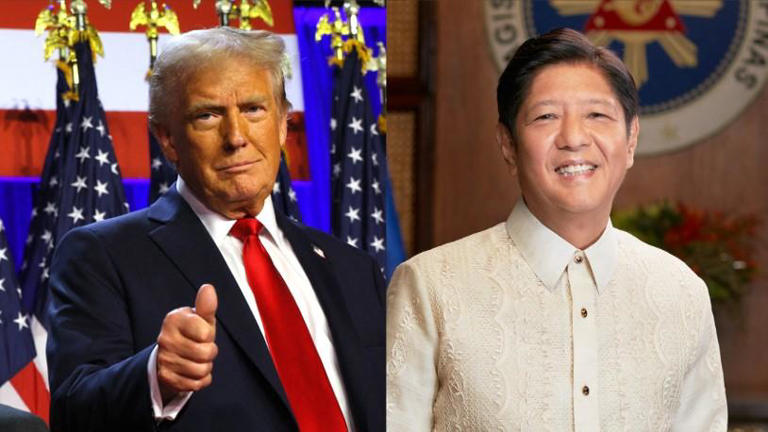
(Image from newsweek.com)

Qwertyman N0. 117: Our Best Books Forward

Qwertyman for Monday, October 28, 2024

NOW ON its 76th year, the Frankfurter Buchmesse (FBM)—better known outside Germany as the Frankfurt Book Fair, the world’s oldest and largest such event—ended successfully last October 20 with a significant representation from the Philippines, which sent scores of authors, publishers, and book industry officials to the fair. All that was in preparation for FBM 2025, when the Philippines will be Guest of Honor (GOH), the country whose literature will be the focus of the fair’s attention.

You can think of the Frankfurt Book Fair as the Olympics of the global book industry, with over 200,000 participants (book industry persons and the public) representing over 100 countries. However, there are no prizes for Best Novel, Best Nonfiction Book, Best Children’s Book, and so on. Everyone is effectively in competition with everyone else, but the real rewards are in the professional and personal connections made between and among authors, publishers, agents, editors, and translators at the fair, connections that materialize into deals for translation and publication rights. Although exhibited books can be sold at the close of the fair, the FBM isn’t meant to sell books, but rights to books, for which it has become the world’s oldest and largest marketplace. This means that, through the right contacts, Filipino books can be translated into and sold in French, Turkish, Spanish, and Urdu editions, etc. and vice versa. 

Becoming GOH is a signal distinction—but it doesn’t come free. Nations vie and pay for the honor, which this year went to Italy and in 2026 will go to the Czech Republic. I’m sure that there have been and will be more criticisms of our participation in Frankfurt, chiefly of the costs of our foreign exposure vs. the local promotion of our literature, but it’s not a zero-sum game. We need both kinds of investments. We have impressive literary production from all over the country—much of it unknown even to ourselves—but we also need to share the best of it with the world, to raise their understanding of the Filipino above the stereotypes they know (Imelda’s shoes, Manny Pacquiao, DHs, cruise ship crewmen, etc.—not all of them bad, for sure, especially our OFWs, but in need of context).

If FBM 2024 was any indication, FBM 2025 will be an even more resounding success for the Philippines. All literary genres were represented this year in terms of books and panel discussions, and valuable connections were made with European publishers, translators, and agents. Philippine literature will never be the same after this. (This year’s upshot for me is that my novel Soledad’s Sister will be coming out soon in Spanish, after its versions in Italian, French, and German.)

Having followed trends in international publishing for some time, I’m particularly impressed by the way the FBM has helped to promote our new writing by young authors in literary categories that have traditionally received less attention compared to what I’ve called “the big white whale” of publishing, the novel. Approach most publishers and agents at the FBM, and what they’ll ask you is, “Where’s your novel?” For primarily commercial reasons, the novel remains the most saleable and traded commodity at book fairs. (I know many who will wince at my reference to books as commodities, but let’s be absolutely clear about this: the bottom line of book publishing and book fairs is business, not “Kumbaya”-type international peace and understanding.) 

Sadly, however, Filipinos have historically not been a novel-writing, novel-buying, and novel-reading people. In this respect, Rizal’s Noli and Fili are aberrations, familiar to us only and thankfully because of the law requiring their study. That said, our writers are masters of the short literary forms—poetry and the short story in particular. I’ve often remarked that we Pinoys are world-class sprinters, not marathoners; our world-view is not Olympian, but pedestrian, formed close-quarters at street level. 

This year, I’m told that over 70 deals were made between Filipino authors and foreign agents and publishers for the translation and publication of works that went well beyond the traditional novel, including children’s stories (another of our strongest suits) and genre and graphic fiction. These authors were young, and some had their works translated from languages other than English. If anything, this surge in translations, long overdue, is one strategic benefit that our FBM participation has enabled, and our GOH status next year should boost it even further.

According to FBM Director Juergen Boos, “I am very excited about the Philippines’ Guest of Honor presentation in 2025. The motto ‘The imagination peoples the air’ resonates with the universality of storytelling. Even though the Philippines is the world’s thirteenth largest nation with more than 109 million citizens, I believe for many of us in Europe, Philippine literature is currently still rather unknown territory. As the country steps into its role as Guest of Honor, we will learn a lot about the importance of storytelling and today’s cultural scene for Philippine civil society. With an incredible 183 different languages spoken on its 7,641 islands, the country’s diverse influences are one of the aspects I am looking forward to seeing in Frankfurt in 2025.”

I did say that there are no prizes awarded at the FBM, but I have to correct that to acknowledge the Diagram Group Prize for the Oddest Title at the FBM, given since 1978 and now voted upon by the public, and won by such books as Proceedings of the Second International Workshop on Nude Mice, The Joy of Chickens, How to Shit in the Woods: An Environmentally Sound Approach to a Lost Art, and If You Want Closure in Your Relationship, Start with Your Legs. This is not a prize to which Filipino writers have so far aspired, but who knows? Pinoy wackiness (alongside wisdom) knows no bounds.

Many thanks to the National Book Development Board, the National Commission for Culture and the Arts, the German literary organization LitProm, culture champion Sen. Loren Legarda, and our other sponsors and supporters for this great opportunity to put our best books forward on the global stage. Mabuhay!

Qwertyman No. 116: Dynasty

Qwertyman for Monday, October 21, 2024

“MAMA, PAPA, I wanna be a congressman!”

Senator Bebot Maybunga and Governor Kikay Maybunga looked up from their dinner plates at Mikmik, who sat at the far end of the table, to where they had deported him for a little peace of mind. Their younger son was given to wild outbursts that disrupted his parents’ serious deliberations about politics, business, and entertainment. Governor Kikay and her friends were planning for Paris Fashion Week, while Senator Bebot was thinking F1 at the Austrian Grand Prix.

“Well it’s about time Hamilton left Mercedes,” Bebot was saying while chewing at his bistek, “after all the crappy cars they built for him. A man’s got to go where he’ll do best. That’s why we joined the Federalistas, right? What’s the use of being a Progresibo if you can’t get any of your projects through? Pity our poor constituents! So we go with the Ferraris of Philippine politics—the Federalistas! And let me tell you something, honey—I’m going to be their Verstappen!”

“Who’s Fershwersh?” asked Kikay. “I want to know what really happened between Nicole Kidman and Selma Hayek. I mean, did Nicole really brush Selma off at the Balenciaga show?” She popped an overripe tomato into her mouth, savoring its sweet-sourness. “The only time I’d swat your hand away is if it was pawing someone else, like that starlet at the XYZ Awards. Don’t tell me you didn’t know she was coming on to you while you played Daddy-o!”

“I want to be a congressman!” cried Mikmik again, this time hitting his plate with his spoon four times for emphasis. Their housemaid Yeye hurriedly mopped the bistek sauce that scattered all around him.

“Stop yelling and finish your food!” said Bebot. “You can’t be a congressman if you don’t finish your food.” That had been Mikmik’s problem since early childhood—half his plate always went to the dogs, so they now had three Rottweilers and three dachshunds, despite which the boy got all puffed up like an Obemio painting. They’d sent him everywhere from the Mayo Clinic to a sanatorium in Switzerland, but all the doctors could tell the Maybungas was that Mikmik had low self-esteem, for which he tried to compensate by eating a little a lot—something called the Schlumpfegel Syndrome, which could be addressed only if the boy succeeded at something truly outstanding, after which he would then complete his meals. It was complicated—and expensive, but thankfully there was all that land that Kikay owned, which Bebot found ways to run public roads and bridges through.

“But what do you want to be a congressman for, hijo?” asked his mama, trying to play the part of the good parent, as Bebot groaned. “It’s a hard job. Look at your Kuya Pepito, he’s always out somewhere with the President, trying to make sure that everything will be okay for—well, everybody.”

“The only thing that bastard is looking out for is himself,” grumbled Bebot. “After everything I did for him, imagine, he goes to Singapore for F1 with the President and leaves me behind!”

“Don’t call him a bastard! He’s our son, he has a father and a mother!”

“Am I a bastard, Mama?” asked Mikmik. Kikay rushed over to where Mikmik sat to wrap her arms around him, as Bebot smirked. Their political enemies had spread the dastardly humor that Mikmik had actually been fathered by one of Kikay’s old flames—something Bebot himself had long suspected, for how could he possibly have spawned such an idiot, but had never pressed because he still needed Kikay’s old-family money for his higher ambitions.

“No, of course not, Mikmik! You too have a mother—and a father!”

“I wanna be a congressman!”

“But your Kuya Pepito is already congressman for the first district, hijo! When his next term ends, Mama will be congressman, because Kuya will be governor.”

“But I can be congressman for the second district, Mama—”

“No, hijo, we don’t live there—”

“But Papa has a house there! A nice house, with a swimming pool!” Bebot nearly choked on his ball of rice, as Kikay’s eyes narrowed into slits. Their political enemies had let it be known to one and all that the senator kept a mistress in the second district, but Kikay decided not to bring it up because, well, she was a firm believer in family unity, and her brothers and sisters would never have forgiven her if they lost their juicy contracts on account of some silly spat over a querida

“I know what we can do, hijo!” Kikay exclaimed, struck by a brilliant idea. “We can make you mayor! This nincompoop mayor of ours has been talking about getting his even more nincompoop wife to run against me for governor, so why not take his job? I agree, it’s about time you joined us in this noble profession!”

“Can a mayor drive a big car and go wang-wang? Because Kuya Pepito does that and it’s why I want to be a congressman!”

“Of course, hijo, you can drive a big car around town all day and go wang-wang if you like. You can even have a police escort and they’ll go wang-wang too.”

“And Papa won’t get mad and hit me over the head like he always does?”

Kikay glared at Bebot who was looking away, whistling.

“No, hijo, even senators can’t hit mayors over the head—”

“But if I’m mayor, then I can hit people over the head, right? Like a, a sheriff, right? I saw it on TV once!”

Bebot finally turned and said, “You can’t be congressman, you can’t even be mayor! The law says you have to be at least twenty-three to be mayor, and you’re only twenty-one—at best!”

“What does he mean by that, Mama? Look, Mama, Papa’s making a face at me again, like he’s going to hit me!”

Again Kikay wrapped her arms around Mikmik and flashed Bebot her meanest look. “No, baby, he won’t, and you’re going to be mayor, Mama will make sure of it. Don’t worry about your age, it’s only a birth certificate, and since when was that piece of paper a problem? Mayor Mikmik Maybunga—let’s not forget your middle name, Mikmik Macatangay Maybunga. Aren’t these people just so lucky to have us at their service?”

Qwertyman No. 114: That Viral Picture

Qwertyman for Monday, October 7, 2024

IT’S TOO bad that we don’t have space on this page for cartoons, because I would have asked for one to illustrate this piece for this week. Imagine this: a scene at the NAIA baggage claim area on a busy day, with throngs of passengers crowded around the carousel, waiting for their luggage. Behind the yellow line stands a slim senior lady in a simple black outfit, holding on to a cart, chatting casually with her companion. Across them, let’s show two other passengers, both watching the woman intently. The elderly man has this thought bubble: “Oh, wow, that’s Mrs. Billionaire CEO, waiting for her luggage.” The grim-faced young woman beside him is thinking: “Heartless capitalist! Too cheap to even pay a porter!” 

Now how and why did image cross my mind?

Last week, a picture I took of that same scene and which I (perhaps stupidly) posted on Facebook went viral. If I got a peso for every time that image was liked and reposted, I could get myself a new iPhone 16. But what really surprised me wasn’t the velocity with which my post went out there, but how sharply it divided the people who responded to it and the intensity—sometimes the vehemence—with which they expressed their thoughts. Maybe I should’ve expected that, knowing how social media works. As psychologists will tell us, the same picture can mean very different things to different people.

Most responses—especially the initial ones—were positive, and praised the subject for her “just-like-us” simplicity and humility. I saw a lot of messages attesting to this being her usual behavior, harking back to her family’s rise from modest and hard-working origins to their present prominence and affluence. Sure, some of the praise may have been effusive, but it was consistent and anecdotal, drawn from personal knowledge of and encounters with the lady (whom, I have to say, I’ve never formally met, although I interviewed her briefly once on Zoom for a book project). 

And then, perhaps inevitably, the backlash came. Someone accused me of being a stalker and a marites, of invading a celebrity’s privacy. And what was the big deal, someone else said, when we all have to wait for our luggage? In other places like Scandinavia, even prime ministers carry their own bags. Why praise a billionaire for doing what the rest of us do? Why get starstruck by the rich and powerful?

That puzzled me, because I thought that was the whole point. The rich are not like you and me, as Fitzgerald said: they have others do their menial chores for them. (When was the last time you saw a senator or a CEO pick up his or her own bags?) This is the Philippines, not Scandinavia, where entitlement is king; the lady’s noteworthiness comes not from her being one of us, but her being one of them doing something like one of us.

It went on from there to a dissection of the lady’s family fortune and how it was allegedly fattened by the blood and sweat of underpaid contractual workers, particularly at her family’s department store chain. “You’re blind to capitalist exploitation!” someone screamed. (I was aware of the labor issues, which have yet to be fully resolved, but all I decided to reply was “If you say so.” I was blind because it wasn’t what I saw at that moment or was looking for.) “How many UP students have been truncheoned by the police because they marched with that company’s striking employees?” another asked. (I honestly don’t know, but UP being UP, it would have been quite a few. “How many UP students shop at that department store?” I had to ask back. I’d be a hypocrite if I didn’t admit to being a suki of that store and a holder of its card; I can’t afford upscale boutiques.) And so on.

I could’ve been snarkier in my retorts, but what for? I’m a quiet and largely benign (I think) presence on Facebook, a platform I eschewed for the longest time before finally giving in a few years ago, out of the need for its marketplace (yes, I was looking for things, not people, which probably tells you something). Since then, despite my natural tendency to stay away from what the Desiderata calls “loud and aggressive persons… vexatious to the spirit,” I’ve run into a good number of them—some even happen to be my friends with good reason to be loud and aggressive over causes they feel passionate about. When you get into social media, that comes with the territory. But at my age, I have to pick my fights, no longer having the kind of moral stoutness that can comprehensively and intensely feel outrage at every instance of perceived injustice; I keep trying to do right, but am happy for small graces in an unkind world.

Much of this goes to how we view the rich from our middle-class perches. There’s a part of us that suspects that all that wealth has to be the fruit of evil, with so many exemplars around to prove it, and another part that yearns for all that ease and comfort (or the lifestyle and the luxury, for the younger set). Having dealt with a number of them because of my work, I’ve come to see the rich and famous as characters in stories with surprisingly unsurprising and fairly predictable arcs, so I’m gratified when now and then I come across an interesting deviation. 

Historians, journalists, and critics will exhaust the complexity of the big picture; they like landscapes. My inner fictionist responds to telling moments in isolation; I draw portraits. To write good stories, we script the unscripted. I often say at lectures that characters become most interesting when they go out of character—when they do something that they were never expected to do, whether good or bad, but which had always been in them in wait for the right confluence of conditions to emerge. I challenge my students to bring their characters out of their usual context to reveal more of their true selves: don’t show a priest in church, but bring him to a fish market, or a construction site (or even a girlie bar, but Somerset Maugham already did that, sort of, in “Rain”).

Social media is a huge lens that hyper-magnifies everything—virtue and vice alike. It’s also a mirror that ultimately tells us that what we see (or decide to see) is who and what we are. My little experiment with a picture that went viral just showed us how.

Qwertyman No. 113: My Lessons from Martial Law

Qwertyman for Monday, September 30, 2024

I WAS recently invited by a student organization at the University of the Philippines to speak to them about my martial-law experience, given that I had been a student activist in UP during what we called the First Quarter Storm, had been imprisoned, and had, against all odds, survived into a reasonably comfortable old age. It occurred to me, as I entered the SOLAIR building in Diliman where the event was going to be held, that I had last stepped into that place as a 17-year-old activist back in 1971 (that’s me in the picture, second from right, in that building). What had I learned since then? Here are some points I raised with my young audience:

1. We were always in the minority. Even at the height of student activism in UP and in other universities, those of us whom you might call truly militant or at least progressive were far smaller in numbers than the majority who dutifully went on with their studies and their lives and saw us as little more than a rowdy, noisy bunch of troublemakers. And the fact is, we were still in the minority in 2022, which is why Leni lost (yes, even in Barangay UP Campus). This bears emphasizing and thinking about, because sometimes we fall into the trap of believing that since we think we’re so right, surely others must think the same way. Which brings us to my next point.

2. We have to learn to communicate with other people with different views. The phrase “echo chamber” often came up in the last election, and with 2025 looming, it’s even more vital that we master modern propaganda as well as the other side does. This means sharper and more effective messaging. Enough of those two-page, single-spaced manifestoes written in the Marxist jargon of the 1970s and 1980s and ending with a string of slogans. Learn how to fight the meme war, how to navigate and employ Tiktok, Twitter/X, Facebook, Instagram, Youtube, and all the arenas now open in digital space.

3. When talking about martial law, don’t just dwell on it as the horror movie that it was for some of us. True, many thousands of people were killed, tortured, raped, imprisoned, and harassed. True, the trauma of that experience has lasted a lifetime for those involved. But most Filipinos never went through that experience, adjusting quickly to the new authoritarianism; many even look back to that period with nostalgic longing. That’s proof of martial law’s more widespread and insidious damage—the capture of the passive mind, and its acceptance or denial of the massive scale of theft and State terror taking place behind the scenes. Martial law imprisoned our minds.

3. People change; you could, too. One pointed question I was asked at the forum was, “Why is it that some very prominent student activists turned their backs on the movement and went over to the dark side?” It’s true—many of the shrillest Red-taggers we’ve seen these past few years were reportedly once high-ranking Reds themselves. So why the 180-degree turn? Well, it’s perfectly human, I said, trying to be as kind as I could, despite being at the receiving end of some of that calumny. People can hardly be expected to stay the same after twenty or forty years. Even if many if not most of my generation of activists have remained steadfast in our quest of the truth, freedom, and justice, one’s definition of exactly what is true, free, and just can change. Some people change their stripes out of conviction; some others do it for the oldest of reasons—money and power, or sheer survival. I’m saddened but no longer surprised by brazen betrayal. I learned from martial-law prison that people have breaking points, and some thresholds are much lower than others. 

4. We have to admit we were wrong about some things. This will vary from person to person, and there’s a line that could even constitute the “betrayal” I mentioned above. Some fellow activists will probably disagree with me on one of these key points: armed struggle didn’t work, and it won’t, not in the Philippines nor anytime soon. However we feel about the subject, the fact is, one armed Filipino revolutionary force or other has been at it for more than 80 years now—“the world’s longest running insurgency” as it’s often been referred to—with little gain to show for it. I don’t mean to denigrate the noble and heroic sacrifice of the thousands who gave up their lives fighting what they believed was a brutal dictatorship—many were personal friends—but how many more lives will it take to prove the efficacy of revolutionary violence, one way or another?

5. That leads me to the last point I made to my young listeners: live, don’t die, for your country. We can and will die for it if we absolutely have to (especially us seniors who have little more to lose), but today’s youth have options we never did. In the 1970s, if you were young, idealistic, politically aware, and daring if not brave, you could not but conclude that something was terribly wrong with Philippine society, and that change was badly and urgently needed. You chose between reform and revolution—and it was only a matter of time before you became convinced that the latter was the only way forward. 

Agreed, the basic problems of Philippine society may not have changed much—but one’s ways and means of addressing them have. The growth of civil society—the proliferation of NGOs covering a broad range of causes and concerns—offers practical, focused, peaceful, and professional alternatives to young people seeking social and economic change. One need not embrace the burdens of the entire nation, only to feel inadequate or ineffectual; one can do much if not enough by improving the lives of families and communities. Beyond feeling sorry or guilty for those who fought and died as martyrs, do what you can as a living, intelligent, and capable citizen to create a better Filipino future to the best of your ability.

If this sounds like the voice of a tired old man, it is. I’m tired of death and despair; I choose to fight for life and hope. 

Qwertyman No.112: Reversals of Fortune

Qwertyman for Monday, September 23, 2024

“ROQUE VS. Roque.” I wish I’d thought up that line, but it was Rappler—yes, that pesky news organization that’s caused many government officials past and present to choke on their soup—that used it for one of their stories on the continuing saga of Atty. Herminio “Harry” Lopez Roque.

In an article posted on September 7, 2020, Sofia Tomacruz reported how Roque had lawyered for the family of Jennifer Laude, the transgender person killed by US Marine Joseph Scott Pemberton in October 2014. On September 3, 2020, Pemberton was ordered to be released by a Philippine court, prompting Roque—still in crusader mode—to recall Laude’s death as “symbolic of the death” of Philippine sovereignty. 

A few days later, however, his current boss, President Rodrigo Duterte, granted Pemberton an absolute pardon, claiming that the convicted murderer had not been treated fairly by Philippine justice (only to add, a few moments later, that as far as drug users were concerned, “Be cruel!”). Spokesman Roque then defended the move as a presidential prerogative—and later rationalized, in his “personal opinion,” that Duterte had made the move to secure American vaccines given the ongoing pandemic. So much for Philippine sovereignty.

It wasn’t the first and certainly not the only time Harry Roque had to eat his own words.

He lawyered for the families of the victims of the 2009 Maguindanao Massacre, where 58 people were killed; eleven years later, as presidential spokesman, he said that “justice had been served” with the conviction of two Ampatuan brothers, despite the acquittal of 56 others. 

But in what has to be the most ironic of these reversals, let’s give a listen to Harry Roque ca. February 2018. Duterte’s nemesis, former Justice Secretary Leila de Lima, had just marked her first year in detention, falsely charged with involvement in the illegal drug trade in what clearly was political vendetta. (The charges would be dismissed and de Lima released—but only after almost seven years.) 

In a news briefing, Roque gloated: “Happy anniversary on your first year of detention. May you spend the rest of your life in jail!” Calling de Lima “the mother of all drug lords,” Roque claimed that “Senator de Lima’s incarceration shows that the criminal justice system in the Philippines is alive, effective and working.” 

Fast forward to September 2024. Asked to explain by a congressional probe how and why his assets in his family business rose from P125,000 in 2014 to P67.7 million just four years later, Roque refused to comply, and was cited in contempt and ordered arrested. On Facebook, he defiantly claimed to be a victim of injustice: “I am not a fugitive because I violated the law. It’s only Congress that considers me a fugitive, and I don’t care. The way I see it, if Congress cited me in contempt, I think Congress is cited in contempt by the people of the Philippines.” 

He had earlier been placed under 24-hour detention in the House, which was investigating him in connection with his ties to a notorious POGO. “I will not wish, even on my fiercest political opponents, to be deprived of their personal liberty and freedom,” he had sonorously spoken of that experience, amplifying his persecution with a reference to a rather more famous political prisoner: “Worse than hunger, said Mahatma Gandhi, is to lose your freedom.”

Let’s forget for a minute that lifetime imprisonment was exactly what Roque had wished on his fierce political opponent, Leila de Lima, who spent 2,454 days in incarceration without even being convicted (even longer than Gandhi, whose total jail time amounted to 2,338 days in colonial South Africa and India). So harrowing must have been his 24 hours in House detention that—faced with the prospect of a few more days in the guest room of an august chamber he once inhabited as a proud member—he declined to yield himself to further scrutiny, and vanished. Given his aversion to discomfort, we can be sure it will only be a matter of time before he resurfaces, perhaps leaner and sexier for the experience.

Indeed, never mind the news, which most people will forget in a week. Worry about scholarship, which, while obscure and often useless, has a way of defining you in perpetuity because of its pre-AI presumption of truthfulness. Harry Roque, I discovered, proved worthy of an academic paper titled “Turn-Taking Strategies of Secretary Harry Roque as a Presidential Spokesperson: A Conversation Analysis” by Janine Satorre Gelaga of Caraga State University, from which I quote:

“Roque had an aggressive and confrontational way of speaking, often responding to criticism or questions from the media with sarcastic comments and eye-rolling…. Roque’s conversation style did not develop understanding, let alone promote public trust…. As Geducos (2021) has put it, “Roque has been at the center of controversy for many remarks that did not sit well with the public.’”

To say the least. How the mighty have fallen, but then again, what can soldiers of fortune expect but, well, reversals of fortune? 

Qwertyman No. 111: Justice Fever

Qwertyman for Monday, September 16, 2024

A DANGEROUS outbreak of justice fever has hit the Philippines these past few weeks, threatening to make that country’s startled citizens believe that their government is intent on doing right by the people, no matter what and come what may.

In quick succession, Bamban ex-mayor Alice Guo, alleged to be a Manchurian candidate, was picked up in Indonesia and flown back to the Philippines; another on the Philippines’ most wanted list, the self-styled “Son of God” Pastor Apollo Quiboloy, emerged from his subterranean kingdom to surrender to the Pharisees, er, authorities; why, even former Palawan governor Joel Reyes, wanted for the murder of an environmental crusader and long out of sight and out of mind, turned himself in; and it should only be a matter of time before ex-Rep. Arnie Teves comes home from his extended Timorese vacation to face murder charges in Negros Oriental. (I don’t think the return of former Iloilo Mayor Jed Mabilog, hounded out of office by the former President on trumped-up charges of drug trafficking, counts in this category.)

What on earth, you might ask, is going on? Is the government running some secret—and wildly successful—“balik-fugitive” campaign? Were there possibly offers and assurances made of kid-gloves treatment, fully furnished jail cells, state-witness options, conjugal visits, and lifetime colonoscopies?

For a while back there, it seemed like the old regime hadn’t completely vanished—you know, the chummy-chummy-with-criminals vibe, which that viral photo with the chinita mayor smiling sweetly and flashing “V” signs between her two captors seemed to suggest. But justice fever is vicious when it takes hold of its victims, and by the time Pastor Apollo Quiboloy was caught in Davao, the afflicted authorities had learned their lesson, and quickly whisked him away in a C-130 to Manila. Why, President Marcos Jr. even fired the chief of the Bureau of Immigration, Norman Tansingco, over the Guo affair. Illegal POGOs were raided, and captives freed.

As if this spate of high-profile catches and prosecutions wasn’t enough, in the Senate and the House of Representatives—once safely Duterte territory—lawmakers were outdoing each other poking holes into Vice President Sara Duterte’s P2-billion budget proposal. Her friend Harry Roque was found in contempt of Congress and served a warrant of arrest for failing or refusing to account for his unexplained wealth. 

Duterte ally Sen. Bong Go also caught the fever, proclaiming in a tweet that he had always been against POGOs, seeing them as a threat to peace and order. “For the record,” he emphasized, “I really hate POGOs.” Justice fever apparently induces amnesia, because the good senator forgot that three years ago, he voted in favor of RA 11591, taxing and effectively legitimizing POGOs in the country.

All this would have been unimaginable then, but here’s something even more incredible: former President Rodrigo Duterte—who routinely ordered his supporters and the police to “shoot” drug suspects without worrying too much about the finer points of the law—seems to have woken up from a kind of coma, suddenly remembering that he was, once upon a time, a lawyer wedded to the idea that people have human rights. 

We know that because Atty. Digong, probably still in a slight daze but overcome with a resurgent sense of right and wrong, filed charges of malicious mischief against Interior Secretary Benhur Abalos, PNP chief General Rommel Marbil, and PNP Region XI chief Brigadier General Nicolas Torre III in the wake of his patron and spiritual adviser’s arrest. 

Not being a lawyer, I had to look up exactly what “malicious mischief” means. Here’s what I found online: “Malicious mischief is a crime of property damage. In order to convict someone of malicious mischief, the prosecutor must prove the damage done to the property was not accidental. A person is guilty of malicious mischief when he or she ‘knowingly or maliciously’ causes physical damage to another person’s property.”

From what I gather, malicious mischief requires a certain, uhm, finesse, a delicacy that appreciates degrees of injury, and even ironic humor. “Mischief” isn’t like the sledgehammer of bloody, first-degree murder; it’s more like a yap rather than a roar, a pinch rather than a punch. You commit malicious mischief by, say, kicking your neighbor’s dog or unpotting his daisies. It’s meant more to annoy and enrage rather than to kill. (Interestingly, under the Revised Penal  Code, “destroying or damaging statues, public monuments or paintings” and “using any poisonous or corrosive substance; or spreading any infection or contagion among cattle; or who cause damage to the property of the National Museum or National Library” also qualify as special cases of malicious mischief.)

I haven’t read the charges in their entirety, so I don’t know exactly what Atty. Digong was complaining about—I’m guessing door locks broken and, okay, egos pricked. But the mere fact of Digong the Terrible sallying forth into a court of law on a matter as grievous as upended flower pots suggests to me—as I wrote about a few weeks ago—that the man has truly undergone the kind of religious conversion that now allows him to believe in, well, judicial justice. He, too, has caught the fever, and now reposes his faith in a judicial system he once decapitated with pronouncements such as this one from April 9, 2018, referencing then Chief Justice Maria Lourdes Sereno: “I’m putting you on notice that I’m your enemy, and you have to be out of the Supreme Court!”

The only problem with this rash of righteousness and conscience is, how long will it last, and what will happen when it wears off and we return to our old jolly, reprobate selves? 

The Dutertes are easy targets, no thanks to their patriarch’s resolve to establish himself as the least presidential president in Philippine history. His successor is reaping the low-hanging fruit of that unpopularity, enjoying, no doubt, the unfolding spectacle. BBM should be warned, however, that like many afflictions, the effects of justice fever can be long-lasting. Once its victims get used to it, their delusions could linger, and they’ll keep expecting and wanting more, and more.

(Photo from dzar1026.ph)