Qwertyman No. 50: Doro’s Times and Ours

Qwertyman for Monday, July 17, 2023

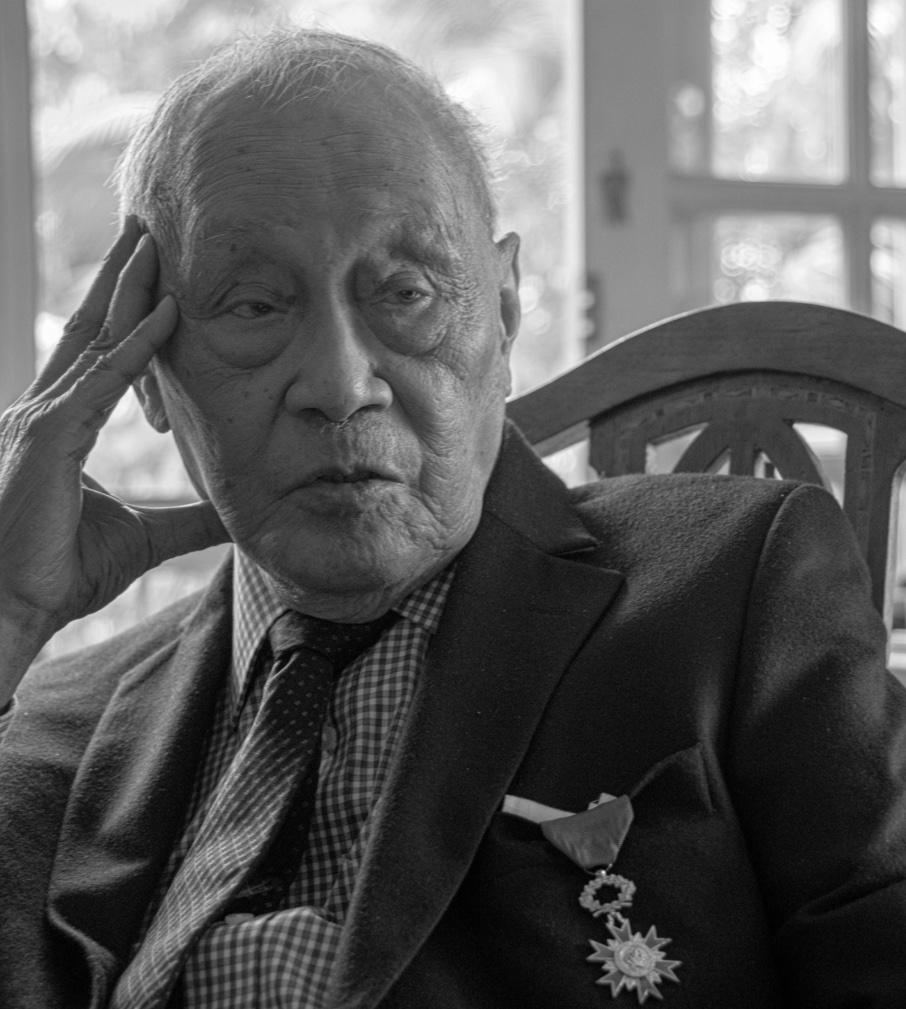
THE NEWS of Amando “Doro” Doronila’s recent passing in Canberra at age 95 marked the end of an era, as Doro was the last of his generation of journalists who made newspapers and their Op-Ed pages compelling reading. Whichever side of the political fence they were on, these journalists and columnists gave it all they had; many reveled in their prominence and some shamelessly parlayed their influence into all manner of profitable enterprise, back when it seemed the sensible thing to do, before the darker complicities of martial law set in.

Doro seemed to me to be above all this. His personality was, shall we say, poorly suited for TV or even radio, which was just as well, because it drew a clear line between journalists who did nothing better than think and write deeply, and those who confused their calling with show business.

I didn’t really know Doro personally. My one memorable encounter with him was when I was 18, a freshman dropout from UP who was dying to get into the newspapers, by hook or by crook. (Like some precocious teenagers, I was convinced I had the writing talent to skip journalism school. I would later pay for that hubris in tearful rewrites in the newsroom.) 

One of the doors I knocked on was that of the Manila Chronicle, which Doro was the editor of in 1972. I remember striding into its office and walking up to Doro’s desk, sucking in my stomach. He seemed puzzled to see my pimply face, which probably belonged to a messenger boy’s, except that I came empty-handed. “Yes?” What did I want? “Sir, I want to apply for a job—as a reporter,” I must have croaked, mumbling something about my writing for the Collegian and my high school paper. “How old are you?” I said that I was “going to be nineteen soon”—“soon” being about nine months away. 

I can’t recall if he looked back at me with pity or sympathy, or if he was laughing inside. I do remember him saying something like “Why don’t we talk again in a few years?” I was disappointed but not dejected; at least he didn’t throw me out of the place, or ridicule me before a roomful of the kind of people I wanted to be—hunched over typewriters, smoking up a storm, shaping tomorrow’s news, their bylines embedded crisply and imperishably on fresh paper.

Eventually, sometime that summer, and through sheer persistence, I did land a newspaper job, as a features writer and then a general-assignments reporter with the Philippines Herald, very likely the youngest fellow working full-time for the papers then. With the Herald and later Taliba  just before martial law, I met all kinds of journalists on the job, and saw how human we all were, the creatures of our noblest ambitions and pettiest grievances. One reporter I was on the police beat with loved playing cop, interrogating suspects each one of whom he was convinced was nursing a confession. Many had an enormous capacity for alcohol and the unapologetically macho bluster that came with it. Despite their gruffness, some had marshmallow hearts; two or three even took me under their wing to spare me from the usual gauntlet that rookies had to undergo. We were the peons of the profession, entry-level Hemingways and Woodwards chasing stories down the city’s tenebrous alleyways, and we loved every minute of it.

That was our world, but when I reported to the newsroom in the afternoon to file my story, I was ever aware that even above the copyeditors’ desk was another tier of men (as they mostly were) who perorated boisterously in a corner office on the day’s politics over scotch and cigars, the people whose opinions mattered and who made opinion matter. Never having worked with or for Doronila, I could only imagine him in that company, sitting sagely with his fingers crossed while allowing the thunder to roll above his head.

Today, half a century later, and finding myself just as old or even older than those titans of Philippine journalism then, I can savor the irony of having the privilege to write an Op-Ed column in times that mirror, in many ways, the early 1970s—with a Marcos in Malacañang, an opposition at bay, a scandal a week, and yet a people hard at work, striving for economic and moral deliverance. 

The great difference is that newspapers no longer have a monopoly of opinion-forming; that ground has been taken over by the Internet and social media (and elsewhere, by early-morning and late-afternoon AM radio, perhaps the hardiest of public platforms). Certainly, some Op-Ed stars remain—again on either side of the political divide—with faithful followers in need of sharper articulation and affirmation of their own sentiments. But even those readers tend to be aged or aging, people with the time and patience to read prose in paragraphs instead of bullets and memes, and who might even look for and appreciate that elusive quality called “style.” (Doronila’s no-frills prose, to be honest, was straight and guileless to the point of being starchy.) These 1,000-word pieces we produce now belong to what they call “long-form” writing, as if to write and read them were a test of endurance. 

But against the cheeky punchiness of Twitter and the ugly street brawls on Facebook, and above all stylistic considerations, I have to applaud this new generation of journalists (not all of them for sure) for their adherence to the truth and to fact-based reporting, and for holding themselves up to a higher standard of ethical behavior than their predecessors. Battling the bots and trolls of disinformation, they put their lives and well-being on the line, story by story, column by column; most are young, many are women, some even gay—the old gray men of the newsroom no longer dictate the headlines or the editorial slant. I think Doro himself would have been happy to see this, having mentored many of his successors.

And so as we grieve Amando Doronila’s demise at an age few of us can hope to approach, we can celebrate the continuity of upholding courage, virtue, and incorruptibility in Philippine journalism, with deepest thanks for the example the man set for us to follow.

(Photo by Pablo Tariman on FB)

Qwertyman No. 47: An Open Door

Qwertyman for June 26, 2023

A FEW weekends ago, the traffic was tied up in knots around the University of the Philippines campus in Diliman, where we live, and we knew why. Many thousands of high school seniors hoping to enter UP were taking the university’s UPCAT or entrance exam, which had gone back to its old physical, face-to-face format after two years of being suspended in favor of a statistical formula because of the pandemic. This year, over 100,000 applicants took the UPCAT, out of whom about a tenth will be taken in, the actual number of admissions being determined by the capacity of UP’s eight “constituent universities” like UP Los Bañ0s and UP Mindanao, aside from Diliman, to absorb new freshmen.

As a campus resident and now a retired professor who still teaches a course every semester (an option I avail myself of, just to keep my foot in the classroom and know what the young people are thinking), I witness this ritual every year, and smile every time I see those bright and eager faces, squinting at the sun and looking a little lost; the first challenge every UP freshman faces is finding out where things are and the fastest way to get from Point A to Point B. 

That’s literally thinking on your feet, which is a survival skill we inculcate in our students. If there’s a smarter way to solve a problem than brute force, we’ll find it. (I recall how, in the middle of an exam for a Shakespeare class which I usually aced, I was stumped for the right answer, and in despair just responded with a quotation from A Midsummer Night’s Dream: “So quick bright things come to confusion!” My professor let me off with a 1.25.)

Frankly or perhaps unkindly, UP people are called pilosopomagulang, or maangas by those unfamiliar or uncomfortable with the forthrightness and cleverness that our academic culture encourages. At worst, we’re called “godless communists” by those who don’t see how packed our chapels and parking lots are (although of course, today, the most successful communists are called oligarchs). On this point, I can guarantee you that no one can be more annoyed if not enraged by a UP person than another UP person; our faculty feuds are legendary. Indeed that has become a liability with some employers who prefer to hire graduates who will simply do as they’re told without asking “Why?”

“Why?” may indeed be the wrong entry-level thing to say, but it’s also what has moved science and society forward, quickly followed by “How?” If no one asked it, we’d still be chasing animals over clifftops for food and sacrificing our first-borns for bigger harvests. This urge to apply reason to the most basic of human and natural functions again can be occasionally irritating, especially when it is accompanied by the unflinching (or perhaps juvenile) certitude that one is absolutely right. 

As a teenage activist in Diliman, I was sure that the only way out of the mess we were (and continue to be) in was an armed revolution; Marxist logic said so. Approaching 70, I’m just glad that I lived long enough to reason my way out of it, but looking back at that pimply 17-year-old who carried Harry Shaw’s College English in one hand and Mao’s Little Red Book in the other, I can understand why I thought the way I did. And no, it wasn’t like my professors force-fed me with rebellious notions. I was a reasonably bright kid who read the news—murders and massacres here, extreme poverty and hunger there, corruption and scandal all around, with few of our leaders seeming to care—and I was looking for a comprehensive and compelling framework to explain all this and map out a route forward. The Left offered that.

It’s important to note that then, as now, most UP students and certainly most Filipino students didn’t feel the same way and do as I and my comrades did, which was to put activism over academics. Our protests may have hogged the headlines and typecast UP for good as a school for rebels (although it had been a hotbed of student protest since Quezon’s time), but the majority of UP students then continued attending their classes, turning in their assignments, and picking up their diplomas, as was their right. Like I often emphasize, as vocal dissidents, we were (and are) in a distinct minority. That comes with the territory of resistance—not just in a university but in society as a whole.

Given what’s happened since, were we wrong to protest and did we waste our youth (and, as some politicians and red-tag-happy trolls might say, our people’s money as well)? Some of us persisted and stayed on that path; many paid with their lives, or devoted the entirety of their lives to their cause. Some turned 180 degrees and now rabidly renounce their past, casting their lot with their former enemies. Some, like me, now see moderate liberalism as the only viable way forward—to endure and survive, gaining ground from one generation and one community to the next, instead of in one fell swoop. Somehow I understand all of these outcomes, which are all human, all fallible, and none of them assured of success. I can only be hopeful, and not certain, that my option is the best one.

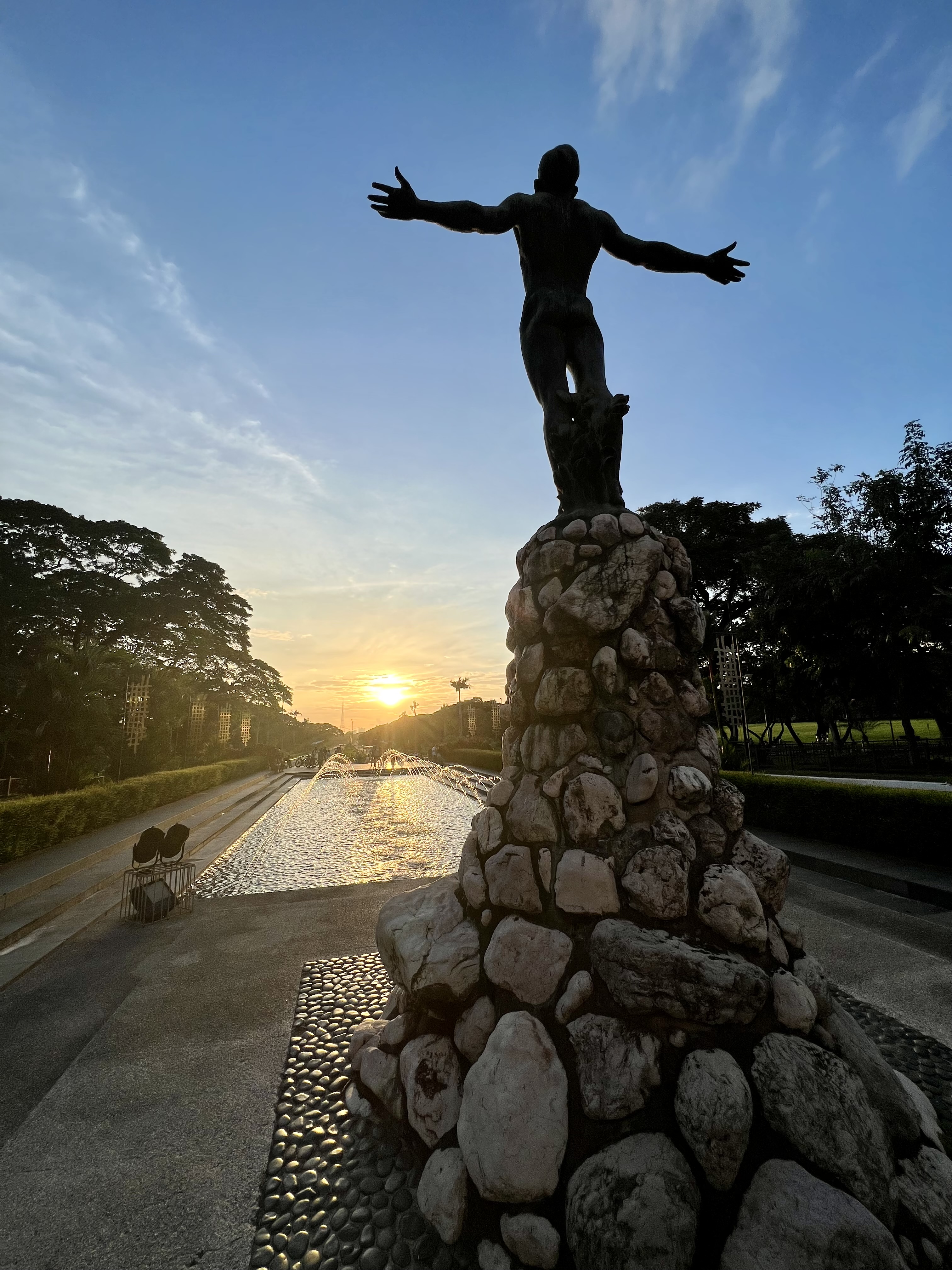
As I looked at the UPCAT examinees posing for selfies in front of the Carillon and the Oblation in Diliman, I remembered that eight UP students are now facing charges for their recent attempt to storm past a closed door at Quezon Hall to protest an unpopular decision by the Board of Regents. Among the complainants’ grievances, ostensibly, was that the wooden door was part of UP’s heritage, and had to be protected at all costs.

That saddened me, because the last image that one could imagine to stand for a university like UP is that of a closed and impregnable door. UP’s true heritage doesn’t lie in its furniture but in its tradition of free speech, and even of protest, the occasional overflow of passion included. I can only pray that UP’s new and compassionate president, Jijil Jimenez, can draw on his own activist past to see that point, and to keep an open door for his constituents to his mind and heart.

Qwertyman No. 45: Onward to Frankfurt?

Qwertyman for Monday, June 12, 2023

IF YOU were at the Philippine Book Festival (PBF) that took place at the World Trade Center earlier this month, you would have been surprised to find how many Filipinos were writing, publishing, selling, buying, and reading books. A project of the National Book Development Board (NBDB), the PBF was the first such event devoted solely to locally produced books—as opposed to, say, the Manila International Book Fair (MIBF) in September, which is open to books and publications from overseas. The NBDB wisely decided to showcase our homegrown literary talents—not only from Manila, and not only from my generation of old fogeys, but from all over the country, and writers of all persuasions and ages (as young as fourteen!).

We Pinoys have become so immersed in Netflix, YouTube, and social media that many of us have forgotten about reading, and what a good book can do for one’s mind and soul. We want everything delivered to us in short sentences—even in acronyms or, if possible, in memes—because long paragraphs (and, God forbid, pages) can only mean a waste of our precious time (which is, of course, best spent posting what we last ate on Instagram, and critiquing someone’s OOTD). Whether fiction or nonfiction, books challenge us to carry ideas through to the limits of our reason and imagination. The difference between a good meme and a good book can be that between wit and wisdom—between the bubbles that rise to the top of your champagne and the notes that linger on your tongue and senses long after you’ve put your drink down.

And despite the death knells that have been tolled for publishing and reading in this country, the droves of people who flocked to the PBF and the MIBF show otherwise; as I’ve noted elsewhere, more new authors and publishers are emerging across various genres and languages than ever before, spurred by writing programs and workshops, new technologies, and more exposure for Filipino writers in international markets.

That last note—the emergence of Philippine writing in the global consciousness—has been a long time coming. We’ve had, of course, writers who’ve been published abroad, most notably Jose Rizal and the late National Artist F. Sionil Jose. In America, both expatriate and US-born writers such as Gina Apostol, Ninotchka Rosca, Jessica Hagedorn, Eric Gamalinda, Zach Linmark, and Brian Ascalon Roley have made important inroads into publishing, some with mainstream publishers. Of course, they were preceded by the likes of Carlos Bulosan, Jose Garcia Villa, NVM Gonzalez, and Bienvenido Santos, in a time when getting published in America seemed to be the apex of a literary career. We’re way past that now, having found our own voice and our own readers right here at home. 

I’ve often remarked that I’d rather be read by 10,000 Filipinos than 100,000 Americans, but I may have spoken too soon, as even those 10,000 Pinoys willing to buy and read a serious novel can be hard to round up. Therein lies the irony: we’re happy to write and publishers seem happy to publish, and the high attendance at the PBF could be a sign that things are changing, but creating a critical mass of local readers for literature remains a struggle. 

Even in America, where we imagine that almost four million Filipinos should be able to clear out an edition of 5,000 books without any trouble, that simply doesn’t happen. I suspect that that’s because we’ve never really been a book-reading culture, unlike the Japanese and the Indians, and the easy availability of entertainment on Netflix and Tiktok just aggravates the situation. (A more disturbing possibility is that our writers still haven’t learned to write the kind of stories with the kind of treatment that Filipino readers—and there are also many kinds of them—expect, without sacrificing literary “quality,” whatever that means. In my old age, this is what I’m aiming for—to give my readers stories that they’d want to see turned into movies.) 

There’s no doubt that we’re producing materials of high literary value—in English, Filipino, and our regional languages; we saw that in the PBF and we see it in our classes and workshops all the time. These works deserve to be shared with a broad audience—not just here, but overseas, where the Chinese, the Japanese, the Koreans, the Indonesians, and the Vietnamese have already made a name for themselves in the publishing world. 

But that takes a network we still have to familiarize ourselves with and learn how to navigate—a network of translators, literary agents, editors, publishers, and booksellers largely unknown and therefore closed to us. We’re not totally clueless. Through the NBDB and local publishing stalwarts such as Karina Bolasco (just recently retired from the Ateneo Press and the founder of Anvil Publishing before that) and Andrea Pasion-Flores (our very first international literary agent, now owner of Milflores Publishing and president of the Book Development Association of the Philippines), the Philippines has been represented over the past few years in such major events as the annual Frankfurt Book Fair, the world’s largest such market of authors, publishers, and agents.

Not meaning to be immodest, thanks to my agents and publishers, I myself have benefited from this kind of exposure, having sold my second novel Soledad’s Sister in last year’s FBF into a German translation and edition, which just came out; before that, it had already been translated into and published in Italian and French, aside from an American edition. Imagine what that network could do for the rest of our writers.

This brings me to an idea whose time, I strongly believe, has come: focal representation in a forthcoming Frankfurt Book Fair as a “guest of honor,” a position reserved for a country wishing to showcase the best of its literary talent across all genres (two years ago it was Canada, followed by Slovenia). This has to be accompanied by a strong effort in translation—from the regional languages to English, and from English to other international languages like Spanish and French, perhaps even Chinese. It will take much planning and a sizeable budget, but as our recent forays into the Venice Biennale have shown on behalf of our leading artists, with the right cultural leadership and vision, it can be done.

Qwertyman No. 44: Again, America

Qwertyman for Monday, June 5, 2023

I HAVE a good friend whom we’ll call Ted, a Fil-Am who retired a few years ago as a ranking officer in the US Navy. He was in town recently on some family business, and like we always do when circumstances permit, we had dinner and a good chat just before he and his wife flew back home.

Most of us have friends if not relatives in America, and all of this would be pretty routine except for one fact: I’m a flaming liberal, and Ted is a Trump Republican. Over the fifteen years or so that we’ve known each other—well before Donald Trump entered the picture—we’ve been aware of those political differences, but rather than politely skirt them in our conversation like many sane people would, we feel comfortable enough with each other to talk at length about them, and even exchange some friendly barbs.

Much of that level of comfort comes from my belief that, in his own way, Ted sincerely and deeply loves his country—and his ancestral home, the Philippines. He’s smart, curious, eager to learn and understand. In his former naval job and as a private citizen, Ted—who was born in the US but spent some of his formative years in his family’s hometown in Bicol, and speaks some of the local language aside from Filipino—has visited the Philippines as often as he can, trying his best to improve relations between the two countries on a personal level. (On this last visit, for example, he also took part in a ceremony to celebrate the commissioning of the USS Telesforo Trinidad, named after an Aklan-born Filipino petty officer who was awarded the Medal of Honor for bravely rescuing his shipmates from an explosion aboard their ship in 1915.)

Given his naval background—his dad joined the Navy in the 1970s—I’m not surprised that Ted is a Republican, like many military Fil-Ams are. (One notable exception is a mutual friend of ours, the former West Pointer, Army Ranger, and diplomat Sonny Busa, as staunch a Democrat as they come, and a key figure behind Filipino veterans’ causes in Washington.) His support for Trump despite the man’s many failings continues to mystify me, but I’m guessing that in his calculations, Ted chose to cast his lot with the man best positioned to thwart the liberal agenda. That includes items that Ted and other Republicans feel extremely uncomfortable with, such as what he calls the “celebration, beyond just acceptance” of transgender rights, and their judicial enforcement.

Perhaps with any other person, my liberal hair-trigger would have fired away at such comments with a fusillade of counter-arguments, but with Ted I find more value in listening and trying to understand a certain mindset, as different as some of its premises may be from mine. In our last conversation, what Ted had to say was profoundly disturbing. I’m paraphrasing here, but essentially it was this: “America is a mess. People can’t talk civilly to each other anymore. When I say I’m a Republican, people instantly assume I’m a racist.” To which I said that people at the top like Trump (and our own version of him here) greenlighted that kind of boorish discourse, with additional pressure brought on by right-wing militias armed with AR-15s. We talked about January 6 (which he opined was not an insurrection) and the Second Amendment (which I said seemed sacrosanct in American politics). “You have cancel culture,” he sighed, “to which the other guy responds by going bam bam bam!” He was deploring, not endorsing it, trying to get a fix on his own society’s ailments. “It’s in our DNA,” he said glumly about guns.

Thankfully Ted and I always have other things to talk about—like the Philippines, in which Ted said he feels much more relaxed than his own country. He knows how worked up I can get about politics and our own leadership (or the lack thereof), but as far as he could see on this trip, I and my fellow Filipinos (including those he met in Bicol) were just chugging along. “We’re survivors,” I said, “and we’ll do what it takes to get by from day to day.”

That brings me to another friend, “Tony,” who messaged me out of the blue the other day, obviously distraught by the Senate vote on the Maharlika Fund bill and asking if it was time for him and his family to leave the country, given how we seem to be back on the road to political plunder and economic ruin. It wasn’t just a rhetorical question; he was really thinking about it. Here’s what I said:

“Hi, Tony—If it’s a realistic option, I don’t think anyone can or should blame you for leaving or wanting to leave. We have only one life and we have to make the most of it in all ways. Politics is important, but it’s only one of many other factors that define who we are—love, art, family, and faith, among others. That said, it can have a way of complicating our lives and life choices. 

“Moving to the US has also been an option for me for some time now. Our only daughter lives in California and has been wanting to petition us. But my wife and I have been strongly reluctant to move there, although we visit almost every year and are familiar and comfortable with living in the US, where I spent five years as a grad student. We are artists, and our work is culture-bound. We feel appreciated here, within our small circle of friends. However good we may be, in America we would be marginalized; we don’t want to become an American minority and deal with all the issues that will come with it. And America has become much less inviting now, with all the intolerance and racial violence provoked by Trumpism. 

“So unless it were a matter of life and death, we’ll stay here, despite the present dispensation and many more aggravations like the Maharlika Fund to come in the years ahead, because I feel that my continued survival and success will be my best way of fighting back. Having survived martial law, we can survive this as well. Everyone’s circumstances are different, and again you should feel free to find your place where you can best live with your family and secure their future. Nothing is ever final anyway, and you can always come back. Follow your heart and conscience, and you should be all right, wherever you may go. All best!”

(Image from bu.edu)

Qwertyman No. 42: Life Lessons for the College Student

Qwertyman for May 22, 2023

TWO YEARS ago, well before I began writing this column, I was asked to share some thoughts with fellow teachers of General Education—that special recipe of college courses in various disciplines meant to give incoming students a basic but challenging introduction to the issues of life and society. Instead of giving a lecture, I decided to come up with a list of 12 “life lessons” that I thought every undergrad should learn, one way or another, over their four years in college. I’d like to share them here as well, with further notes from me in parentheses, to reach a larger audience—and yes, even well beyond college. Here goes:

1. You don’t have to understand everything right away. In any case, you can’t. Some things in life will forever remain mysteries—some of them wonderful, some of them perplexing. Staying curious is what matters to the lifelong learner. (Aside from being usually obnoxious and insufferably arrogant, know-it-alls never learn that they can’t possibly know everything.)

2. Engagement helps—and by engagement, I mean investing yourself, putting in your time, effort, and maybe even money behind some belief or idea or activity that means something to you. Sometimes engagement is the best way of knowing, learning, and finally understanding. (Talk is cheap; get off your butt and actually do something. Remember the “community pantry”? That was because somebody took charge of an idea and put it into action.)

3. Not everything has to have practical value—at least not yet, or maybe ever. Value can mean more than utility or money. Delight and discovery are their own rewards. (All art involves finding beauty in the abstract; even sport is the quest of abstract perfection. Of course both art and sport have ironically become big business, and their best practitioners deserve every reward, but just as ironically, their greatest feats are driven by love and passion, not money.)

4. You are not the center of the universe. Not everything has to do with you. However, every connection you can make to the world around you leaves a mark that you were here—and that, in your own way, you mattered. (Know the difference between history and Instagram.)

5. Learn to see time in years and centuries, not seconds or hours. If you want to foretell the future, look back to the past. We may seem to be headed for the future, but in fact we will all inevitably be part of the past. How will you want to be remembered? (Repeat: Know the difference between history and Instagram.)

6. Intelligence, cleverness, knowledge, and wisdom are very different things. Knowledge without values is worthless and even dangerous. The middling student who has a sense of good and bad and right and wrong is worthier than the summa cum laude who doesn’t. (The people who have methodically impoverished and destroyed this country are no idiots; they are experts at what they do, or can hire whatever expertise they need.)

7. The first thought that comes to your mind may not be the best one. Pause and think before you speak or write, especially in these days of Facebook and Twitter. Speech but also silence can require courage and good judgment. (Live and write as if there were no “delete” or “unsend” buttons at your fingertips.)

8. Learn to love something larger than yourself, your family, and your prized possessions. “Nation,” “freedom,” “justice,” and “equality” are very attractive ideas, but you have to learn to bring these big words down to earth, in concrete forms, actions, and decisions. Can you accept that you are your housekeeper’s equal as a human being? (Good citizenship is always personal. Bad leadership is no excuse; be the example to your family, friends, and community.)

9. Be prepared to take risks and to make mistakes—and even to fail. You can learn more from failure than from over-performance. Everybody—even the very best of us—will fail sometime, and it will be good to believe that we are all entitled to at least one big mistake in our lives. (Being humbled by failure is always a good starting point; as we like to say in Diliman, you have nowhere to go but up!)

10. Be prepared to change your mind. As you grow and learn, some things will become more simple, and others more complex. You are not a fixed entity; you are changing all the time, and you can change faster than the world around you. (In my twenties, I thought I had the world all figured out in black and white, and would have been prepared to die for my causes. I’m glad I didn’t—I needed more time to learn that the world is mostly shades of gray, and that “compromise” is not necessarily a bad word.)

11. Technology can be deceptive. It can lead us to believe that the world is changing very fast and for the better. That may be true for some of us and for the way we live. But for many others left behind, the world is no better than it was a hundred years ago. (Technology, even artificial intelligence, is amoral. It’s only as good as the person who uses it, and his or her intentions.)

12. Competition is good, but cooperation is often better—and necessary. Poems are written by solitary genius, but bridges, cathedrals, and nations are built by many minds and hands. The best way to deal with loneliness is to find meaning in the many—to learn from and to contribute to the experience of others. (And I’m not talking here just about networking online; indeed nothing has made us lonelier in this century than the Internet. Share a cup of coffee, and learn to listen—their causes could be more urgent than yours, and you might even have the answer.)

Qwertyman No. 41: Living up to “Honorable”

Qwertyman for Monday, May 15, 2023

I’VE BEEN following the saga of the Hon. George Santos, the freshman Republican congressman from New York, who’s been caught in a tangle of lies he made about his education and employment on his résumé, and who’s now been charged in federal court on 13 counts from wire fraud and money laundering to theft of public funds and making materially false statements to the House of Representatives. So brazen have been this young politico’s prevarications that even his fellow Republicans—many of whom had forced themselves to swallow Donald Trump’s gargantuan lies about the 2020 election—have called on Santos to resign, if only to spare their party from the prolonged embarrassment of nursing a self-confessed falsifier in their ranks.

Now this is what gets me: Santos had earlier admitted to having fabricated about four-fifths of his CV, an act he called “résumé embellishment” which involved a “poor choice of words.” He said he was sorry—but then just as quickly insisted that he was no criminal and intended to serve the rest of his term, and even run for re-election. He boldly reappeared in Congress—still dressed like the preppy he never was—and acted like nothing happened. Despite the ostracism, he stood his ground, knowing that under its rules, the US Congress couldn’t kick out one of its own—even someone convicted of a crime, unless that crime was treason.

The story fascinates me because it illustrates the utter shamelessness and disregard for the truth that now seems par for the course in politics, and not just in America. The fact that many of his colleagues found Santos’ behavior reprehensible offers hope that some people still know right from wrong. The other fact, that Santos refuses to take responsibility for his actions and resign—and that some people continue to support him nonetheless—reminds us of how degraded the idea of “honor” has become in contemporary society. 

Social scientists tell us that “honor” has evolved over the centuries from the chivalric, even aristocratic notion of responsibility to a community—think of a hero undertaking a noble sacrifice, even at the cost of one’s life, for the common good—to something much more individualized and internalized, to one’s own sense of respect, dignity, and integrity. 

I’d argue even further that for most people today, “honor” has become a much more elastic term, one that allows for a range of justifiable behaviors. I’ll give you an example: would you rat on an officemate, perhaps even your best friend, who’s also your chief competitor for that AVP position? You could, and you would—if you convince yourself that becoming that AVP is a more important honor, something your family and circle of friends would appreciate. This is the difference, as one scholar noted, between “internal” and “external” honor, between integrity and reputation. If we equate, as many might, “reputation” with popularity, with a positive public perception of your image, then it’s easy to see how and why many people find integrity expedient and expendable.

These thoughts ran through my mind when I learned of the recent passing of former Foreign Affairs Secretary Albert del Rosario, and read the many eulogies and encomiums following his death. All of them spoke of him as a man of honor, someone who fought for his country, stood by his word, and conducted himself with dignity. I had only occasional brushes with him, but can agree from those encounters with what was said. Some people communicate their integrity instantly, even wordlessly, just by their very manner. 

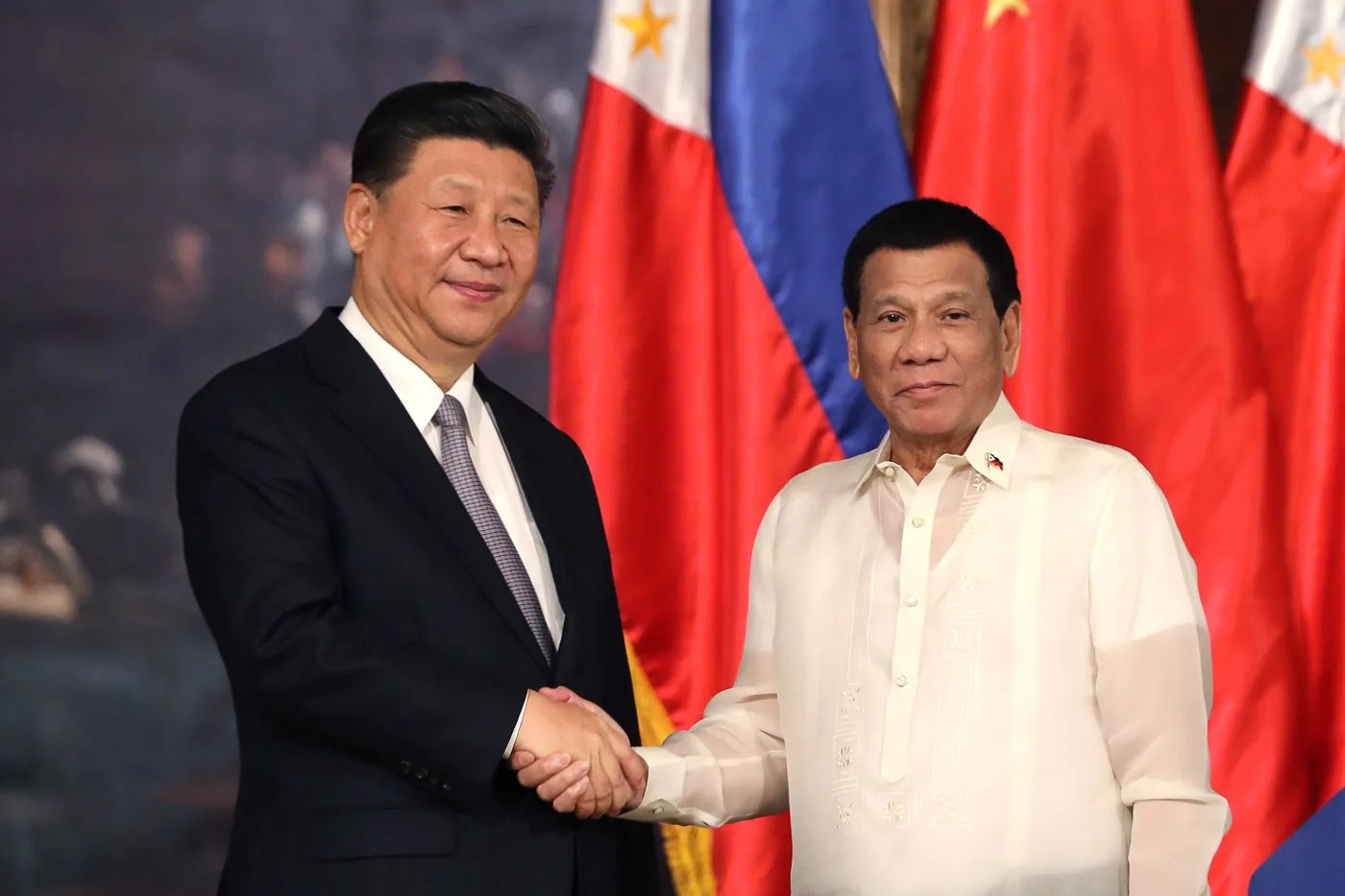
On the other hand, there are people who, by their swagger and arrogance (often a cover for some deeply felt inferiority), immediately invite mistrust if not repugnance. I’m reminded of a man who, from his lofty perch, drenched the good secretary with vitriol, accusing him of being “not a Filipino, you don’t look like a Filipino,” and threatening to “pour coffee on your face.” To which the diplomat merely reiterated the need to defend the country’s interests and to beware of the duplicity of our aggressive neighbor. 

The sad thing is how many Pinoys laughed along with that sneering man and thought that he was doing and saying the right thing. For years, he had fed them a diet of vulgarity, as if to reinforce the idea that that was the Filipino’s natural state and that he was one of them and spoke their language. In fact, he was cultivating and normalizing their basest instincts, an easier thing to do than the nobler alternative: appealing to their better selves, to what they could yet be. I see this innate goodness and decency, this desire for self-betterment, in Filipinos every day, even among the poorest of us. Overwhelmingly, this is still who and what we are. Those who believe otherwise debase only themselves.

But we are short on exemplary leadership—on leaders who value honor and integrity, on leaders who can feel shame, on leaders who can curb their profligacy out of respect for the poverty of the many, on leaders who will be genuinely missed and mourned by the masses when they depart. Our role models have become so few—and our expectations of our officials have become so low—that many of us have forgotten what honor truly means, assuming simply and tragically that it comes with wealth and power. The word “Honorable” is too easily affixed to certain high offices. Are they truly so?

I may be aghast at Rep. George Santos’ behavior in New York, but who knows how many lies are buried in our politicians’ CV’s, how many “résumé embellishments” and “poor choices of words” we have had to swallow?

And then again there’s a part of me that says, forget the résumé; it’s never been a trustworthy predictor of moral intelligence. Ability is the most basic we should expect of our “honorables.” Living up to their titles lies at the other extreme. But still I have to wonder: if a George Santos happened here, would he resign? 

Qwertyman No: 40: Teaching History

Qwertyman for Monday, May 8, 2023

I HAVE a subscription to the New York Times, which I enjoy for its features and commentary as much as its news coverage, and the other day my attention was piqued by a small headline: “It’s Not Just Math and Reading: US History Scores for 8th Graders Plunge.”

According to the article, recent test scores reveal that young Americans (about 13-14 years old for eighth-graders) have become much less knowledgeable about their history and civics over the past decade—with 40 percent scoring “below basic” and only 13 percent ranked as “proficient.” 

I immediately wondered how our students would score given similar tests. Would they be able to answer even simple questions about why Ferdinand Magellan sailed to the Philippines, what prompted Filipinos to revolt against Spain, why the Americans occupied us, what led to our involvement in the Second World War, and what martial law and EDSA were all about? I’ll probably be safe in my prediction that they would score dismally, from what I’ve seen in my own classes in UP (yes, in UP), where I’ve been dismayed to find a yawning ignorance of history and literature among my students, supposedly among the best in the country. 

Don’t get me wrong: these are bright, idealistic kids, desirous of all things good for their people and their families. They perform well in class and will likely succeed in whatever career lies ahead of them. But when I ask a roomful of English majors if they know or have read NVM Gonzalez and only a couple of hands go up, I get worried. When I ask when or what year the Americans arrived to conquer us and I get strange answers like “1945,” I get worried. 

However shocked we may profess to be, we can’t blame the students. In 2014, following the passage of the Enhanced Education Act of 2013 or the K-12 Law, the Department of Education issued Order No. 20, Series of 2014, effectively removing Philippine History as a high school subject and subsuming it as an “integrated subtopic” under “Asian Studies,” supposedly to provide students with a wider global perspective. The idea sounds nifty, but as many educators have since pointed out, its practical effect has been to dilute the teaching of Philippine history to the point of oblivion. The result is that we have young Filipinos with no knowledge of the most basic facts and issues of their past, and no appreciation of how that past brought us to where we are today.

That vacuum has been an open invitation to misinformation and historical distortion, the stock-in-trade of political propagandists, trolls, and spinmeisters. It’s become much easier to sell myths like a golden age under martial law to impressionable youngsters who were never told or taught the truth. Not surprisingly, Order No. 20 has been attacked by its critics as a means to lobotomize the youth and to render them more susceptible to alternative narratives (aka fake news) concerning our history. 

And yes, I have to acknowledge that all this began under the late President Noynoy Aquino, a champion of K-12, whom I prefer to believe had no such nefarious motives in mind, as he and his family would have had little to gain by erasing history. But the policy was upheld and sustained by the following administration, with DepEd Secretary Leonor Briones arguing strenuously that History (including our martial-law experience) was being taught in Grade 6 under Araling Panlipunan, and again in high school as a component of Asian and World History.

Given the current DepEd’s expressed desire to review K-12, it might be a good time to test how effective that policy has been: just how much Philippine History are our high school students learning and retaining? How much should they know by the time they get to college, where thornier issues such as nationalism, agrarian reform, and foreign policy will be threshed out in all their nuances?

Long before these questions arose, it was a common complaint among students and even teachers that our problem with History was how badly it was taught, often as a collection of names and dates rather than a coherent narrative (which I must say I sometimes wonder about, fact often being stranger and messier than fiction). We generally agree that History should involve more reasoning than rote memorization. But as the New York Times reports, “That emphasis can contribute to a troubling lack of background knowledge,” with experts observing a “rapid and very significant decline in what students know about history and geography—like the fact that Africa is a continent, not a country.” So the basics of names, dates, and places remain important—getting the facts straight before getting into more complicated arguments.

It’s even more troubling to note that on top of this decline in historical knowledge and awareness among young Americans, there’s now a ham-fisted effort from conservative politicians to purge school curricula of what they see as “woke” content—subjects that have challenged the longstanding impression of America as a nation forged by whites. Governors like Florida’s Ron DeSantis—eager to present themselves as the flag-bearers of political and moral rectitude—have supported moves to eliminate African-American and LGBTQ studies from the curriculum. Others have called for banning books that threaten their view of traditional America, including books titled “The Infinite Moment of Us” (a young adult novel about love and sex) and “How to Be an Antiracist” (a nonfiction book about racism and ethnicity). This reminded me of how some Philippine state universities, not too long ago, went on their own book-banning spree, on some silly suspicion that books by such authors as National Artist Bienvenido Lumbera were “subversive.”

The New York Times piece came with an irresistible teaser: a brief five-question, multiple-choice history quiz for readers to test themselves on how well they know American history. I scored four out of five (failing a question about post-Civil War reconstruction)—not too bad, I thought, for a guy living seven thousand miles away. But then I come from a generation schooled on American textbooks, who know American history and geography better than many Americans. That’s a topic for another column.

In the meanwhile, let’s ask ourselves: how well do we know our history, and how important is that knowledge to understanding our present and shaping our future? Is “Maria Clara and Ibarra” pointing the way forward?

Qwertyman No. 39: My Mother Emy

Qwertyman for Monday, May 1, 2023

Pardon me if my column this week is a bit personal, because its subject is my mother Emilia, who will turn 95 next week, against all odds and through the grace of the One she prays to every night and every morning, and in the loving embrace of her five children and many grandchildren and great-grandchildren.

In this age of murderous Covid, rampant cancers, devastating disasters, and political turmoil, to reach 95 is extraordinary. To be 95 and be reasonably healthy, free of dementia (but for a few memory lapses that even I at 69 am prone to), able to walk a few hundred meters for her daily exercise, read without glasses, and comment tartly on the day’s political and entertainment news is almost superhuman. 

Like today’s children, my mom Emy can’t be removed from her iPhone and her iPad; she loves to play word games, beats my wife Beng at Scrabble, devours Netflix by the series, and has her telenovela programming graven in stone. She has daily Facetime audiences with our daughter Demi in California and my sister Elaine in Toronto. She even gave up her US green card to spend, she says, the rest of her time at home. In her “Tuesday Circle” of elderly friends, she is now the most senior, but hardly the most infirm. Best of all, she looks forward to reading my books and columns, and although I suspect that they sometimes bewilder her as much as they do my other readers, she invariably likes them because they were written by her first-born, who cannot possibly write anything badly. (This week’s surprise column, I think, will be a hit with her.)

A quarter-century ago, shortly after my father Jose Sr. died, we thought we were going to lose her as well. That’s what they say often happens—one dies, and then the other follows, in the utmost expression of devotion and sympathy. Emy was diagnosed with tuberculosis, so serious and advanced that we felt we were gathering at her deathbed, her sheets spotted with the blood she was coughing up. I had never seen her so frail and so helpless. She was missing my father terribly, and I’m sure she wouldn’t have minded leaving us to join him at that moment. 

Theirs had been a storybook, whirlwind romance. She was the youngest daughter of a landowner in Romblon, the only one in their brood of twelve whom her father had trusted to study and go to college in UP in Manila. She was her father Cosme’s pet, a girl who rode horses on his farm and who accompanied him when he took a boat to the big city to off-load his copra harvest and to buy necessities and a few baubles for his large family. It must have pained him when she decided to finish her high school in Manila (“I was walking on Padre Faura and saw UP High, and so I went in to see how I could study there,” she says) and to stay there so she could study to become a teacher.

My father Joe was the brightest boy in his school and, so the local legend goes, in the whole province. He was an eloquent writer and speaker and cut a dashing figure. The only problem was, his family was poor—his grandfather had been a sharecropper, his father a farmer. His parents had separated shortly after he was conceived—another story that deserves a telling of its own—and lived about a kilometer apart for the rest of their lives. Raised by my grandmother Crispina, Joe seemed destined for great things far beyond Romblon. He already had a girlfriend, among the town’s prettiest bachelorettes (I met her once when I was a boy, unaware of why she was looking at me a certain way.)

One day Emy and Joe met at the pier in Manila waiting for other people and other things. Some sparks must have flown, because not long after, they were together and engaged to be married. I was the first outcome of that improbable union, born in a nipa house in Alcantara, Romblon, pulled out of my mother by a midwife (whom I would meet about twenty years later, walking barefoot on the asphalt road, and whom I would rather awkwardly gift with a pack of Marlboros in token thanks for my delivery).

The decades following would be a mixture of toil and triumph, of struggle and hope. Both my parents had enrolled in law school, but the need to sustain us foiled that dream. Joe had even gone to the police academy, in the class of James Barbers. He clerked for Public Works, became a Motor Vehicles Office agent with a shiny badge, and took on all kinds of jobs to support us. My mother Emy, despite her pride as a UP Education graduate, soldiered on beside him and sold stamps as a postal clerk. We went through some very rough times, constantly moving around the city with all our worldly possessions on the back of a truck in search of more affordable lodgings. Sometimes my father would be gone for long periods, working as far away as Mindanao to be able to send us some money. 

But one thing they always held up for us was the value of education. My parents slaved and my siblings sacrificed so I could go to a private school, thinking like most Filipinos of their generation that a facility in English would be my ticket to success. It was a huge relief for all (and a good excuse to buy our first TV) when I got a full scholarship to the PSHS. So it must have felt like a stab in my mother’s heart when I announced, shortly after entering UP on the swell of activism, that not only was I not going to be a scientist (my Math grades were miserable) but that I was also dropping out of college to find work (which I did at 18, to write for the Philippines Herald). Despite everything, I wanted to follow in my father’s footsteps and gamble on my talent.

But I did come to my senses and many years later returned to school, where I remain to this day, with a lofty title my wife Beng prefers to downplay to “Chauffeur Emeritus.” Instead of following Joe to his grave, my mom Emy fought back, miraculously recovered, traveled the world, and cradled her great-grandchildren. So good things do happen to those who persevere and survive, for as long as we’re willing to give life another chance.

I honestly don’t think I’ll reach 95 myself, but I have the privilege—and the challenge—of living with someone to inspire me every day. Happy 95th, with all our love, Nanay!

Qwertyman No. 38: Getting into UP

Qwertyman for Monday, April 24, 2023

(For this week, let me offer a little family drama about my favorite school, this being exam season, and before I get the usual calls from anxious friends.)

“HEY, UPCAT is back, they’re holding UPCAT live again!” Marides waved the newspaper in her husband Bong’s face. Bong was watching a car show on TV where they found old cars in barns and turned a bucket of rust into a gleaming, raging roadster. Somehow it gave him hope that, down the road when he became a senior and ached all over, they could ply him full of oils and sealants and make him go like a teenager again.

“What UPCAT?” At least the question proved he was listening. Marides had that godawful habit of intruding on his most blissful moments with some real-world problem, and then getting on his case when he ignored her. Twenty-five years of marriage, four kids, and she still didn’t know when to leave him be. 

“UPCAT—the University of the Philippines College Admission Test, the same one I took and passed thirty years ago, which led to me representing UP and meeting and beating you in an inter-collegiate debate, remember? After which you got my number and asked me out and proposed to me three months later, remember?”

Bong hated it when Marides reminded him of that first encounter and its outcome, which became a given of sorts in their household—she was smarter than him, she had all the better arguments, and who knows what she could have become—a corporate genius, a Supreme Court justice—if he hadn’t saddled her with babies and insisted on working for the both of them. He was good with the money, she had to grant him that, because he was the agreeable type who made all the right connections and who could hustle his way out of a guilty verdict if he had to, as he more than once had to. 

“So what if UPCAT’s back?” he asked for the sake of asking. On the TV, two mechanics were staring at a big hole where a Corvette’s engine should have been.

“Dondon is in his senior year. He’s supposed to be taking it soon. We need to make sure his papers are in order. Where’s that boy? Dondon! Come out for a minute, will you?” 

A teenager with frizzy hair and a phone glued to his ear straggled out of his room and deposited himself in the nearest chair, across the room from his parents, still mumbling on his phone.

“You know UPCAT is happening, right? Have you filed your application yet?”

“Yes, Ma—mumble mumble….”

“Will you please put that phone down while your parents are talking to you? Bong, could you teach your son some manners—”

Bong: “Mumble mumble….”

“I’m serious! You two listen to me—our family’s reputation is on the line!”

“What reputation, Ma?” Dondon grudgingly put his phone aside, and Bong yawned and stretched his arms to acknowledge that he was in for a long spell.

“The one I started, by passing the UPCAT, getting into UP, and serving the people any way I could!”

“But, Ma, all you ever did was to bear us babies, and look what we became—Ate Glo is divorced in the States, all Kuya Jeff does is drive Papa around, and Kuya Milo thinks more tattoos will make him a better rocker. And all of them passed the UPCAT because you told them to!”

“Well—that was my service—to them, and to our people. I give you the opportunity, and what you make of it, well, that’s your business….” Marides started sobbing, and Dondon ran across the room to embrace her.

“Aw, Ma, that’s not what I meant. I just wanted you to see that getting into UP doesn’t guarantee anything.”

“That’s what I’ve been saying all these years!” Bong added. “We’ve been sending our kids to a school for communists, and they don’t even make good communists anymore!”

“No, they don’t,” Marides shot back, “because those communists took the top five places in the bar exams!” She sniffled and Dondon handed her a box of tissues.

“Don’t cry, Ma. It’s all right, it’s all okay. Applications are done online now and my school sent all my papers in last week. I just didn’t tell you both because—well, Papa wanted to explore other options—”

“Other options? Like what?”

“Like sending him abroad to a school of his choice. We have the money—”

“What, you’ll be sending my baby, our bunso, away for the next four years?”

“Or he can pick any other school here he wants to! UP’s not the only good school for engineering or science in this country—”

“I don’t want to be an engineer, Pa….”

“What? You’re a science high school scholar! You have to be an engineer—or a chemist, a physicist, do something with numbers, you don’t have a choice!”

“I never did, Pa, you and Ma chose my high school for me, I just took the exam. Maybe I should have just failed it.”

“So what the hell do you want to do with your life? Who’s going to take over the business when I’m gone?”

“Maybe you should trust Kuya Jeff more. Keep him in the backseat with you. Me, I want to draw, to paint, to design, do something creative. I know I’m good—you’ve seen my sketches, you just haven’t paid much attention to them.”

“We just want you to be happy, son,” said Marides. “We’ll support whatever you decide—won’t we, Bong?”

“Uhm—yes, okay, sure, if it makes you happy, but will you stop crying? I’ll make sure Dondon gets into UP, even if he fails the UPCAT—”

“Pa!”

“I’ll call an old friend of mine, you know me, I know all the right people. He used to be a VP in Quezon Hall, I’m sure he can pull a few strings and get you in—”

“Pa, that’s not how I want to get into UP, that’s not what UP’s about—”

“Oh, you mean that guy who now writes a column about funny things like fountain pens and his wife Weng for a newspaper? Forget it. Chuchay called him last year to ask for the same favor, but he said sorry, no, he won’t do anything of the sort, that it’s just not done in UP!”

“Why, that useless jerk! Doesn’t he know how things work in this country? I’m sure UP’s just as full of jokers and crooks as Customs, Congress, the Palace, you name it! Don’t half the people in those places come from UP?”

“Maybe, Pa—but that’s why I want to go there, because it still has people like your friend who won’t let me in unless I pass the UPCAT! Don’t worry, Ma—I’ll do my best, I promise.”

“Oooh, my son’s going to be the next Amorsolo!” Starts singing: “UP naming mahal, pamantasang hirang….”

“I have a friend who owns a gallery….” Bong began.