Qwertyman No. 31: A Homecoming for Anwar

Qwertyman for Monday, March 6, 2023
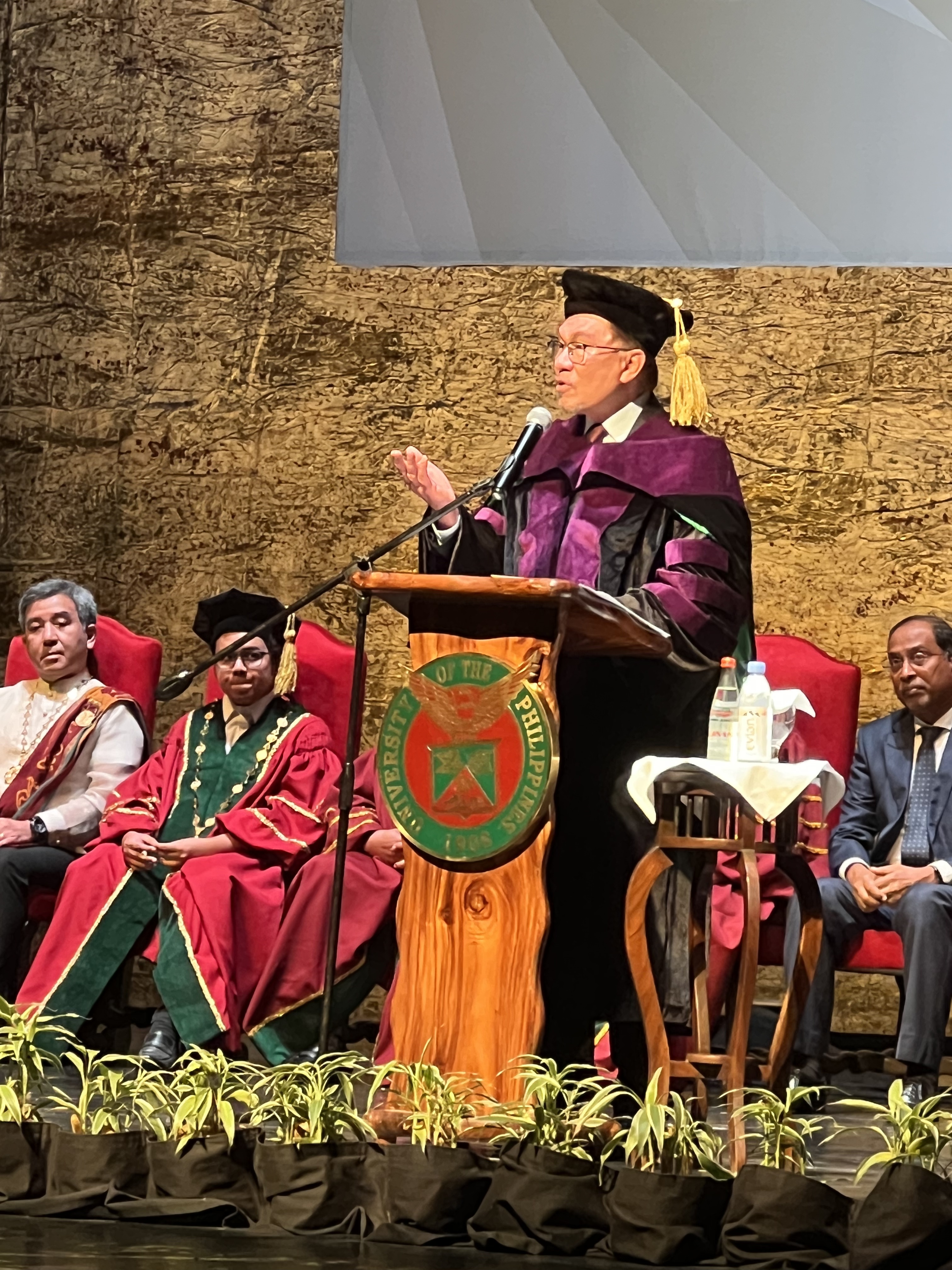
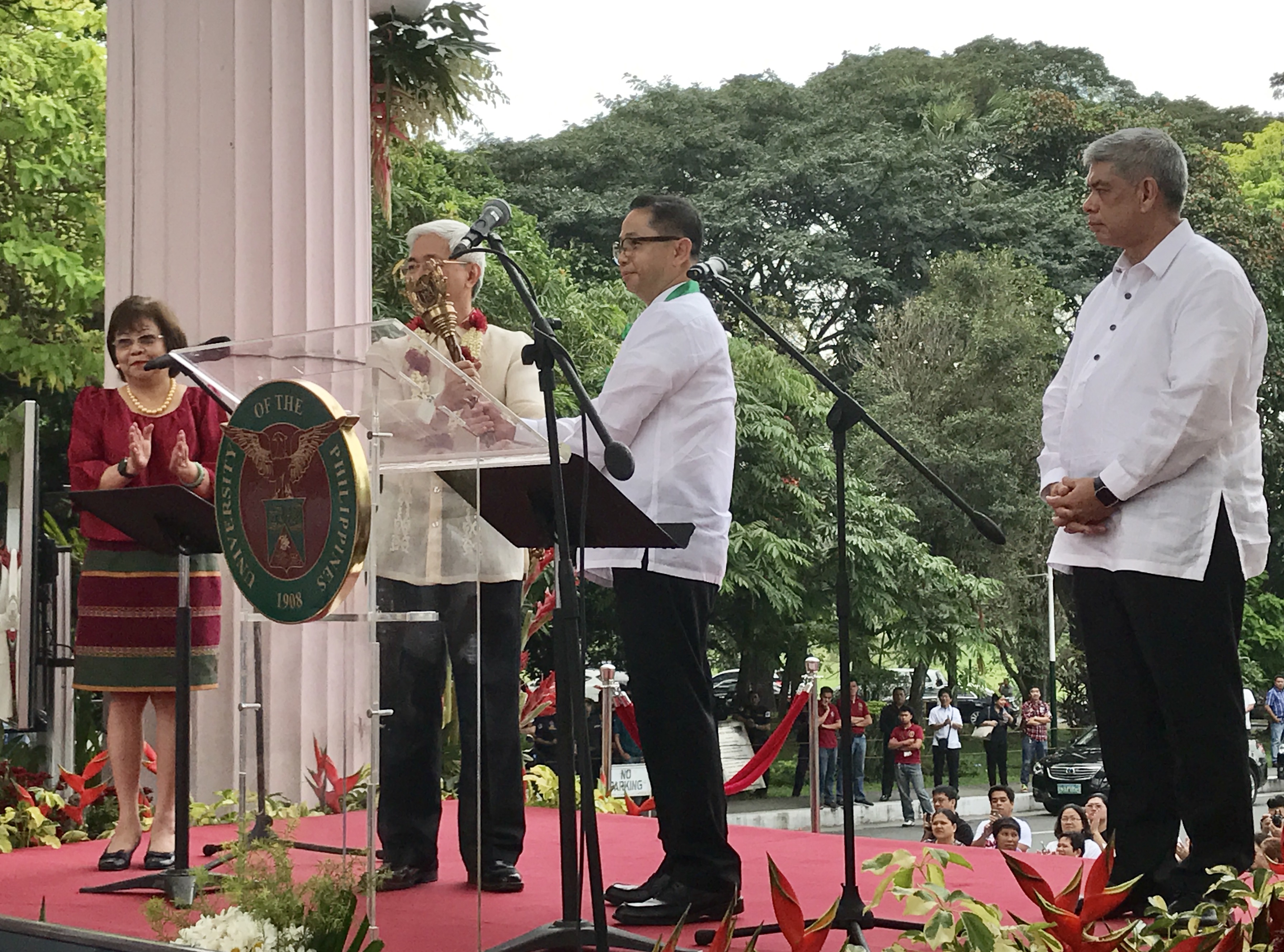
TODAY WE pause our fictional forays to focus on some happily factual news—the visit last Thursday of Malaysian Prime Minister Anwar Ibrahim to the University of the Philippines, which conferred on him an honorary Doctor of Laws degree.

I’ve been missing many university events especially since I retired four years ago, but I made it a point to attend this one because I’ve long been intrigued by Anwar’s colorful if mercurial political career—one that witnessed his meteoric rise from a student leader (who majored, at one point, in Malaysian literature) to minister of culture, youth, and sports, then of agriculture, and then of education, before being named Finance Minister and Deputy Minister in the 1990s.

As Finance Minister during the Asian financial crisis of 1997, Anwar imposed very strict measures to keep the Malaysian economy afloat—denying government bailouts, cutting spending, curbing corruption and calling for greater accountability in governance. His zeal and effectiveness gained him international recognition—Newsweek named him Asian of the Year in 1998—and put him on track to succeed his mentor Mahathir Mohamad as Prime Minister. 

However, his growing popularity came at a steep personal price. In what he and his supporters denounced as political persecution, he was imprisoned twice following a fallout with Mahathir. In the meanwhile, Malaysia sank into a morass of corruption under the since-disgraced Najib Razak, making possible the brief return to power of Mahathir, who enabled the release of his sometime protégé Anwar. Anwar’s eventual accession to the prime ministership in December 2022 was for many a just culmination of decades of near-misses (in our lingo, naunsyami).

His visit to Diliman last week was actually a homecoming. Anwar had visited UP more than once as a young student being mentored by the late Dr. Cesar Adib Majul, our leading specialist in Islamic studies. Like other Malaysian scholars, Anwar has also had a deep and lifelong appreciation for the life and work of Jose Rizal, with whom he shared the notion of a pan-Asian community of interests.

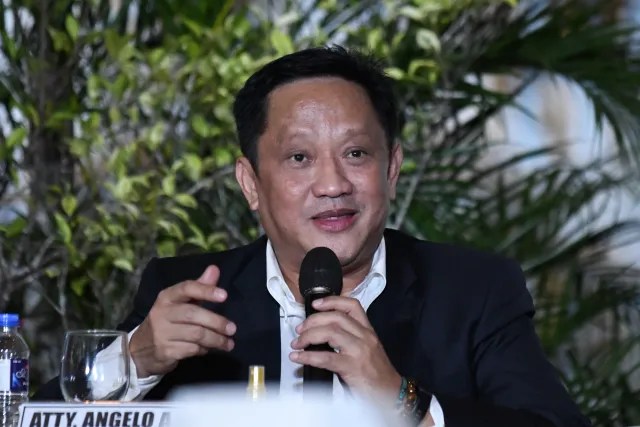
Most instructive was the new UP President Angelo Jimenez’s summation of Anwar’s political philosophy, in his remarks welcoming and introducing the PM:

“Beneath Anwar Ibrahim’s sharp sense of financial management lies a deep well of moral rectitude, a belief in right and wrong that seems to have deserted many of today’s political pragmatists. Much of that derives from his strong religious faith—which, unlike the West, he does not see as being incompatible with the needs and priorities of modern society. To him, this is a native strength that can be harnessed toward an Asian Renaissance.

“Like Jose Rizal, who self-identified as ‘Malayo-Tagalog’ and who was a keen student of the cultural and linguistic connections between Malays and his own countrymen, Anwar appreciates the West as a source of knowledge but cautions against neglecting or yielding our cultural specificity.

“At the same time, he has championed a more inclusive and pluralistic Malaysia, arguing—and here I quote from his book on The Asian Renaissance—’not for mere tolerance, but rather for the active nurturing of alternative views. This would necessarily include lending a receptive ear to the voices of the politically oppressed, the socially marginalized, and the economically disadvantaged. Ultimately, the legitimacy of a leadership rests as much on moral uprightness as it does on popular support.’”

In his talk accepting the honorary degree, Anwar argued strongly and eloquently for the restoration of justice, compassion, and moral righteousness to ASEAN’s hierarchy of concerns, beyond the usual economic and political considerations. He was particularly critical of ASEAN’s blind adherence to its longstanding policy of non-interference in its members’ internal affairs, noting that “ASEAN should not remain silent in the face of blatant human rights violations” and that “non-interference cannot be a license to disregard the rule of law.” 

Extensively quoting Rizal, whom he had studied and lectured often about, Anwar urged his audience to free themselves from the self-doubt engendered by being colonized, while at the same time remaining vigilant against subjugation by their “homegrown masters.” I found myself applauding his speech at many turns, less out of politeness than a realization that I was in the presence of a real thinker and doer whose heart was in the right place. (And Anwar was not without wry humor, remarking that as a student leader visiting UP, “I was under surveillance by both Malaysian and Philippine intelligence. Now I have the Minister of Intelligence with me.”)

Speaking of honorary doctorates, I recall that UP has had a longstanding tradition of inviting newly elected presidents of the Republic, whoever they may be, to receive one, as a form of institutional courtesy. As soon as I say that, I realize that many readers will instantly recoil at the idea for reasons I need not elaborate upon. But let me add quickly that not all Malacañang tenants have accepted the honor. Some have had the good sense to find a reason to decline, knowing the kind of reception they will likely get from Diliman’s insubordinate natives, beyond the barricades that will have to be set up for their security. For everyone’s peace of mind, I humbly suggest that it may be time to retire this tradition, which agitates all but satisfies no one. 

For the record, UP has given honorary doctorates to less than stellar recipients, including the Romanian dictator Nicolae Ceaucescu and the martial-law First Lady Imelda R. Marcos. Even some recent choices have stirred controversy and dismay. 

As a former university official, a part of me understands why and when a state university dependent on government funding employs one of the few tools at its disposal for making friends and influencing people. But as a retired professor who has devoted most of his life to UP and its code of honor and excellence, I find the practice unfortunate if not deplorable. 

I don’t make the rules, but if I did, I would automatically exclude incumbent Filipino politicians, Cabinet members, and serving military officers from consideration. This is not to say that they cannot be deserving, as some surely are, but that they can be properly recognized for their accomplishments upon leaving office. This will also leave much more room for the university to hail truer and worthier achievers of the mind and spirit—scientists, artists, scholars, civil society leaders, entrepreneurs, other outstanding alumni, and fighters for truth, freedom, and justice in our society.


Qwertyman No. 30: Alternatives to Cha-cha

Qwertyman for Monday, February 27, 2023

WE PINOYS know—as night follows day—that every time a new administration comes to power, a fresh initiative emerges to amend the 1987 post-EDSA Constitution. Fidel V. Ramos tried it with his ill-fated PIRMA campaign, followed by Joseph Estrada’s “Constitutional Correction for Development,” the attempt of Gloria Macapagal-Arroyo’s congressional allies to form a constituent assembly without the Senate, and even Noynoy Aquino’s reported openness to giving the President a second term. Rodrigo Duterte included “charter change” or cha-cha in his platform and tried to push it until Covid came.

Most Filipinos, let’s admit it, don’t even know what the Constitution contains, but a few of us seem hell-bent on changing whatever is in there. Never, of course, for selfish reasons like extending term limits (now why would we even suspect our politicos capable of such nefarious designs?) but for “economic provisions only” (although extending one’s term limit is a very healthy economic provision, as far as I can tell). 

Cha-cha is in the air once again, fellow citizens, going around the House and Senate like a marching band, despite President Marcos Jr.’s public disavowal of support for the proposal. 

Even the National Economic and Development Authority’s estimate that cha-cha—the convention and the plebiscite—could cost as much as P28 billion (yes, that’s a B) isn’t likely to deter its proponents from advancing their cause. With more than five years to go under BBM, a lot of plausible reasons could be found for coughing up that money. Why, even the President could change his mind over that period, persuaded perhaps by a groundswell of demand for cha-cha that he can’t possibly ignore. (Why am I suddenly thinking of that pool resort in Cavite with the artificial wave machine that we so enjoyed last summer?)

Perplexed by this insistence on the need for cha-cha now, I turned to my favorite chatmate, sounding board, and political counselor—ChatGPT—for some answers and explanations. (I know what you’re thinking—I’m just making all of this up—but no: I actually paid good money for this app, so I’m going to get  my money’s worth. If you don’t believe me, try asking it the same questions.) Here’s a transcript of my conversation with ChatGPT:

ChatGPT: Hello, How can I assist you?


Qwertyman: How important is cha-cha to the Philippines?


ChatGPT: Cha-cha is an important dance to the Philippines, as it represents their culture and traditions. It holds a special place in the hearts of many Filipinos and is regarded as a national dance. It is often performed in public gatherings and celebrations to bring people together and express joy and happiness.

(Hmmm, I don’t know where you got that, ChatGPT. Pinoys who remember Nestor de Villa and “Dancetime with Chito” might have a hankering for the cha-cha, but I don’t see any great demand for it from millennials or even their parents. Are you sure it’s that special to us?)


Qwertyman: Why cha-cha? Why not the twist or the shingaling?


ChatGPT: The cha-cha is a distinctive Latin dance with an easily recognizable beat, which makes it easy to follow. It’s also more graceful and flowing than other partner dances, making it well-suited to more formal events. In addition, its pattern of three steps forward and two steps back is easy to learn, making it a great choice for beginners.

(That’s what worries me, ChatGPT. As you say, it’s “a great choice for beginners,” which is probably why a rookie senator is on top of the process. Some of us are also worried that cha-cha will mean two steps forward and three steps back.)


Qwertyman: But what if people just want to sit down and not do the cha-cha?


ChatGPT: That’s perfectly fine! There are many ways to have fun and enjoy one another’s company without having to do the cha-cha. You could play board games, cards, watch a movie, listen to music, engage in conversation, etc. Whatever makes you and the people around you comfortable and entertained is the best way to go!

(Totally agree! Someone should tell our esteemed lawmakers that they can do this, too—play board games, cards, watch a movie, listen to music, engage in conversation—rather than tinker with the Constitution, especially if it’s beyond their comprehension.)


Qwertyman: What are the dangers of doing the cha-cha?


ChatGPT: The dangers of doing the cha-cha include: 1. Potential for pulled muscles or sprains due to improper form, which increases the risk of injury. 2. Risk of slipping and falling since the cha-cha can involve quick, sharp movements. 3. Risk of strain on the joints due to the fast, jumping nature of the dance. 4. Risk of overheating due to the amount of movement required for the cha-cha.

(To which we can add: 1. The potential for a further decline in the quality of our leadership, by the extension of political dynasties into future generations of inbred politicians, raising the genetic potential for imbecility. 2. Risk of slipping and falling back into old ways and faces of governance. 3. Risk of strain on the national budget. 4. Risk of overheating the political climate.)

Qwertyman: Is it better to do the cha-cha today or some other time?


ChatGPT: That depends on what you have planned for today. If you have other commitments or would like to save the cha-cha for another time, it is best to choose an alternate date.

(Other commitments? Hmmm, let me think. Defending our patrimony in the West Philippine Sea? Achieving price stability for basic commodities? Fighting corruption? Raising the competencies of our children in STEM? Dispensing justice, especially in long drawn-out cases like the Maguindanao Massacre, the tokhang murders, and Leila de Lima’s incarceration? Providing housing, livelihood, and adequate social security to the poorest Filipinos? Is this list long enough?)


Qwertyman: What are the best alternatives to the cha-cha?


ChatGPT: 1. Bachata 2. Salsa 3. Merengue 4. Cumbia 5. Samba 6. Paso Doble 7. Tango 8. West Coast Swing 9. Bolero 10. Contemporary Latin Dance.

(I have to admit you got me there, ChatGPT. I’ve never heard of the bachata—unless you mean “ban charter talk”?)

(Image from The Adobo Chronicles)

Qwertyman No. 29: Balloon over Boracay

Qwertyman for Monday, February 20, 2023

WHEN THE balloon was first spotted high over Boracay, some people thought it was a new ride, a welcome addition to the banana boats and paragliders that the tourists couldn’t seem to get enough of. 

“How much does it cost? Where does it land?” asked Akmal from landlocked Uzbekistan, whose belly was white as fish and whose hair reminded the locals of the red seaweed that sometimes strayed into the island’s waters. 

“Does it have a basket? I don’t see any people,” said Frida from icy Norway, who had actually flown on hot-air balloons where they were popular, as in Turkey’s Cappadocia and California’s Napa Valley. 

“It’s not from here,” said Gordo, the boy from Manoc-Manoc whose job it was to lash the ferry boats from Caticlan to their moorings and to take the hand of passengers stepping onto the pier. He had seen everything there was to see in Boracay in all of his seventeen years, from the shameless couplings on the surf to the occasional victim washed up on the shore, and all cuts of humankind from cigar-chomping Texans to barrel-chested Samoans, and he knew what belonged and what didn’t. This silver dot in the sky definitely did not. 

As if having a mind of its own, the balloon drifted north of the island to Yapak over Puka Shell Beach, then back down again over White Beach, where it attracted even more observers. Men who had been using their telescopes and cameras to focus on the usual bathing beauties turned their gear skyward to where people were pointing, and those with the longest lenses snapped pictures of the aerial intruder, for posting on Instagram and Facebook as the curiosity of the day.

Unknown to them, however, the balloon had been spotted much earlier by the government’s Aerial Surveillance Bureau, whose chief had hastily summoned his staff to an emergency meeting at the ASB’s secret command center, on the fringe of a golf course in southern Manila. The ASB’s Director O, a retired Air Force general, was still pulling off his gloves when his subordinates dropped into their seats and the lights went out. A blurry image of the drifting balloon appeared onscreen.

“This unidentified object entered our airspace above the Spratlys at 0423 hours, when it was too dark to be seen by our human spotters. It has since set course for Boracay Island, above which it has remained since 0933 hours, when it was finally spotted by one of our boys who was chasing a monkey up a coconut tree. Now the question is, what is it, who sent it, and why is it here? Is it friend or foe? The President expects me to report to him in the Palace in one hour and I need answers!”

“Sir, if I may,” said his Deputy Director M, “it looks exactly like the one they shot down over the USA and Canada. It’s a weather balloon from—from that country—equipped with advanced surveillance hardware and sophisticated communications capabilities.” It had been ordered since the previous administration not to mention “that country” by name in discussions of national security, so as not to give offense to a favored neighbor, and the habit had stuck, even in private conversations.

“Let’s not jump to conclusions!” said Director O. “There are many other countries perfectly capable of sending up these balloons. For all we know it could be a Lithuanian, a Ugandan, or a Wakandan balloon. I’m not going to upset the ambassador from that country with unproven allegations about his country’s behavior—however outrageous, obnoxious, and objectionable its actions are in the West Philippine Sea, just between you and me.”

“But why is it here, sir? And why Boracay?”

“Good question. Don’t quote me on this, but during the last National Security Council meeting, we were told that that country is preparing to reveal a new Thirteen-Dash Line map, supposedly drawn in the 16th century just before the Spanish came, that extends all the way to Boracay!”

“What?! But Stations 1, 2, and 3 are inalienable parts of our national patrimony! As Winston Churchill said, ‘We shall fight on the beaches, we shall fight on the landing ground, we shall fight on the hills, we shall never surrender!’”

“Yes, but in Boracay, people make love, not war. Imagine having to clean up all that white sand after an invasion. Another six-month lockdown! Can Philippine tourism afford it?”

“So what do we do, sir? Do we bring down this balloon?”

“With what? I already called the Air Force to see if they could fly by the object, but all of our fighters are undergoing maintenance—change oil, check battery, adjust brakes, etc.”

“What about kwitis?”

“Are you making a bad joke in a national emergency?”

“No, sir! The DOST and DND have a secret research program based in Bulacan called the Katipunan Weapons Initiative To Initiate Security, or KWITIS. It’s a multi-stage kwitis that can protect the archipelago against missiles, drones, asteroids, and UFOs like the Boracay balloon! It’s totally indigenous and sustainable, because it uses kawayan for the frame and kiping for decoration and employs out-of-work firecracker makers in the off-season—”

Just then another aide burst into the conference room, breathless with news.

“Sir! Turn on the TV! The balloon is down. The balloon came down!”

They switched to a live feed from CNN, which showed the balloon settled on the beach, its silver skin acting like a mirror for the dozens of kibitzers crowding around it, taking their selfies and groufies with gay abandon. A couple of local policemen who had tried to restrain the crowd were taking their selfies as well, flashing the “heart” hand-sign. “The balloon touched down about fifteen minutes ago on its own, and it is quickly becoming the center of what could become the biggest Boracay party ever! There are still no obvious indications of where it came from or why it is here, but this balloon seems to be totally harmless, so far, even ‘cute,’ according to Loujay, who’s visiting from London,” gushed the reporter. 

And then small puffs of red, blue, and yellow smoke came out of the metal box at the bottom of the balloon, and for a minute the people shrieked and began running away, but as the smoke dispersed and the people inhaled the fumes, their faces lit up in ecstasy and they began dancing. Music also poured out of the balloon—the frenetic techno club mix that brought even the masahistas and the barbecue vendors to their feet.

“I know that, sir! That’s Stefano DJ Stoneangels!” said Deputy Director M, whose shoulders began moving up and down. “This is even more mysterious than we thought. We are under attack!”

“Indeed we are,” said Director O. “We need to investigate further. Pack up, boys, and bring your trunks, we’re going to Boracay!”

(Image from madmonkeyhostels.com)

Qwertyman No. 28: Catching Fluffy

Qwertyman for Monday, February 13, 2023

(Disclaimer: Our story today has nothing to do with the recent capture and deportation of the Japanese criminal mastermind known as “Luffy,” for which we congratulate our brave and vigilant law enforcers, although I have to admit to being inspired by that diabolically fearsome alias.)

HIS PHONE rang at the worst possible time. The chief of the Metropolitan Investigation Division was just about to reach the climax of his story—the ladies around him all open-mouthed and wide-eyed in anticipation—when the Tiktok “Moonlight” song, which he had been using as his ringtone, broke the spell, instantly sending some of the girls into their habitual gyrations.

“Chief!” exclaimed Melanie, his special girl in the club, “I didn’t know you liked that song! You’re so cool! Come, let’s dance!” She took his free hand and tried to drag him to the dancefloor, but he resisted. It was unusual for Chief Tiny (short for “Agustin”) to resist Melanie’s persuasions, but she could see from his look that this was something serious.

Chief Tiny had spotted the name on the call—Bungi, his lead investigator—and he knew that Bungi knew not to call him at this hour for any reason less than to report the mysterious sighting of a bearded man walking on the waters of Manila Bay. If this was just to tell him that his wife was at the station looking for him again, for which Bungi was supposed to have had a dozen excuses at his disposal, why, he was going to make sure Bungi was demoted to jail guard in charge of sanitation. Tiny was especially annoyed because he had been trying to impress the girls with his story of how he had found and captured Don Waldo—the country’s most notorious drug and gambling lord, compadre to this senator and that congressman, master of a reputed harem of 100 women, and ruthless widow-maker dozens of times over. Tiny had geo-located him through the Facebook feeds of his then girlfriend, the previous year’s Ms. Matabungkay, and had negotiated his peaceful surrender, much to everyone’s relief. Of course, he wasn’t going to tell them that Don Waldo posted bail one hour after he was arrested, and that the two men had exchanged winks at the station after the media photographers had had their fill. It was all part of his standard MO: catch the bad guy, work out a deal, and let him off the hook on some technicality. 

“Boss,” said Bungi in a whisper over the phone, “we found him—Fluffy.”

“Fluffy!” Tiny screamed with all his 250 pounds, jolting everyone. “Are you sure it’s him, the Fluffy, ourFluffy?”

“Yes, sir. Of course they call him ‘Fruffy’ in Japanese, but I saw him myself—absolutely no doubt he’s our man.”

As Chief Tiny continued to chat with his caller, Melanie shrank back into her seat beside the chief, trying to catch as much of the conversation as she could while collecting her own thoughts. She knew this man called “Fluffy”—personally, professionally, biblically, in all kinds of ways. When the chief wasn’t around, Fluffy took his place in her private quarters, in a condo overlooking the Pasig River, from the other side of which she had triumphantly risen. Initially there had been a language problem—his vocabulary would have been considered coarse even in Japan—but what they needed to communicate did not require too many hand-signs. What didn’t need explaining was his nickname, made obvious by the two clumps of steel-woolly hair on his head, like a poodle.

From his Pinoy bodyguard, Melanie learned that Fluffy ran an extensive Japanese mafia in the Philippines, which controlled the distribution of everything from fake Japanese car parts, Ebisu dolls, Voltes V figurines, and ramen noodles. They competed with an equally vicious Korean mafia engaged in pushing fake Korean car parts, BTS coffee mugs, CLOY T-shirts, and kimchi, as well as a Chinese mafia flooding the market with fake American, European, and everyone-else’s car parts, imported galunggong, POGO workers, and tikoy. Sometimes the rivalry got too hot and blood was spilled on Manila’s streets, giving Chief Tiny unnecessary headaches that required a few hours with Melanie to cure. But now Melanie herself felt the onset of a massive migraine: if her two patrons found out about the other and their common interest, then all hell would break loose.

“Sorry, girls, but I have to go,” Chief Tiny announced, getting to his feet. “I have to catch a master criminal.” With that, he gave Melanie a quick hug, and hurried off.

Melanie had to think fast. Chief Tiny made her feel protected—not only when he encircled her in his ham-like arms, but more importantly when she or her friends ran into trouble or needed a big favor like a police escort for a relative’s funeral. Fluffy was strange but sweet, gifting her with exotic desserts like green tea cookies and mochi; she was scared but also thrilled by his insistence that she take on his tattoos. Whom would she choose? She thought of sending Chief Tiny an anonymous text message telling him where Fluffy was, but then they already knew that. She thought of sending Fluffy another message to tell him that Chief Tiny was on his way to get him, but if he ran away then that would only prolong her own predicament. She decided to let fate take its course and to stick by whoever survived. Meanwhile, she wasn’t going to waste her time, and moved on to the next cubicle to make the acquaintance of a Korean gentleman who reminded her of that oppa Gong Yoo.

Two hours later, Melanie and her new partner were happily warbling BTS’ “Butter” on the videoke: Smooth like butter, like a criminal undercover / Gon’ pop like trouble breaking into your heart like that, ooh!”Suddenly she heard two all-too-familiar voices from the other side.

“You’re very hard to catch, Mr. Fluffy! You’re very good!”

“No, Mr. Tiny, you’re better because you caught me, haha!”

“Next time, don’t hide under the table, haha! That’s the first place we look!”

“Thank you for not shooting me, haha!”

“How can we be friends if I shoot you, haha! Now, let’s have a good time—I will introduce you to my very pretty girlfriend!”

“You also have a very pretty girlfriend, also here? Me, too! But my girlfriend is prettier, haha!”

The Korean gentleman in the next cubicle was perplexed. “Melanie! Where you go? Why you hiding under the table?”

(Photo from bbc.com)

Qwertyman No. 27: The Maalikaya Health Fund

Qwertyman for February 6, 2023

THE HON. Victor M. Dooley, once again, was in a quandary. At the end of his trip to the World Economic Forum in Davos, he was brimming all over with enthusiasm, eager to prove to his constituents that the money spent for his first-class ticket (and for his Chief Political Officer and rumored girlfriend, Yvonne Macahiya) had not been wasted. 

There was a long list of sessions he had planned on attending, identified for him by Yvonne as strategically important, with titles like “What’s Next for Monetary Policy?”, “How to Turbocharge Development Finance”, “Living With Risk,” and “Mapping Russia’s Trajectories.” She had prepared briefs for him, along with a list of intelligent questions he could raise in the open forum, so they could take a picture of him, in his bespoke Senszio suit that he had ordered during his last junket in Brussels, on the floor. But as it happened, strolling up the Promenade on his way to the forum, Sen. Dooley found himself staring at a new Omega Seamaster 300 Co-Axial Master Chronometer at the window of a watch shop. He must have stood there for a very long time, because an unusually friendly salesman stepped out of the shop to invite him in. 

Guten Tag! Bonjour! Buongiorno!” the man said in the city’s three languages. “Good morning! Are you Indonesian?” This year, the Indonesians had put up a large national pavilion along the Promenade. 

“No, no!” cried Victor. “I’m Filipino!” 

“Ah, Filipino! Magandang umaga!” said the salesman. “We love Filipinos! Many of them come to Davos! Many of them come to my store. Come in, come in!”

Victor allowed himself to be ushered into the boutique, which, he had to admit, was warm and pleasant compared to the bitter cold outside. Last night, as he cuddled in bed with the snoring Yvonne, he had wondered why the WEF (which he would often misquote as “WTF,” to Yvonne’s dismay) insisted on holding the forum in the dead of winter rather than in some nice summery spot, like that lakeside place he had seen on “Crash Landing on You.” Why would people even want to talk about something as boring as economics in all that snow? Davos was meant for cuddling—which, sadly, was all he could now do with Yvonne, much to the latter’s dismay, unless he took an overdose of the little blue pills, which dismayed Yvonne even more.

But of course the Hon. Victor M. Dooley couldn’t refuse the President’s invitation. As chairman of the Senate Committee on Basic Education, Culture, and the Arts, he frankly had no idea why he was going to an economic forum in Switzerland, except that he was sure the President’s appointments secretary had a crush on him, and added his name to the list, as she had done for him in Belgium; surely his movie-star looks couldn’t hurt the delegation. 

Naturally, Yvonne found and crafted a plausible reason for him: “Education, culture, and the arts are indispensable in shaping the new post-pandemic economy, especially given the global transition to online instruction and the response of creative industries to new opportunities created by this expanded platform. We cannot underestimate the importance of human creativity to economic growth. If traditional economics concerns itself with supply and demand, then creative industries can exert a powerful influence at both ends—creating new needs, new producers, and new resources that can only spur economic development, especially among sectors often marginalized by industrial homogenization. I would urge all our leaders here in the WTF—most notably those from the developed West—to look to the Philippines for new ideas, particularly in the fields of design, fashion, animation, music, indie filmmaking, food, and graphic arts. These are the growth industries of the 21st century, endeavors that our predominantly young populations can relate to with vigor and enthusiasm.”

Victor had to admit that it sounded good, although he had to have Yvonne explain “industrial homogenization” to him by pointing out that his Lexus looked like Congressman Tungkod’s Genesis G70, which also looked like Mayor Lanzones’ Audi A5, at which point Victor felt deeply depressed. But Yvonne pulled him out of his funk by having him memorize his spiel before a mirror—warning him, like a good coach, not to count off “design, fashion, animation, etc.” on his hand starting with his pinky finger, as Filipinos were wont to do. Victor felt energized; he couldn’t wait to fly to Davos and spring his little speech on the unsuspecting WTF’ers.

But now he was staring at the Omega Seamaster, glowing like a hypnotic planet. The salesman had taken it off the display shelf to cuff him with, and he felt locked to it for life, as if it belonged to him and he belonged to it forever. Why, it was James Bond’s watch, it went to the moon, and the price—well, surely Yvonne could free up half a million from his intelligence fund in the name of cultural diplomacy, which a little Filipino-Swiss transaction promoted. 

“It’s worthy of a president,” the salesman whispered in his ear. 

“I’m only a senator—yet,” said Victor. His throat felt dry. 

“Then it will lead you to your destiny.”

That evening, at the dinner for the delegation, Sen. Dooley was chagrined to find that two other senators and even the president’s third cousin sported the same new watch. And everyone around the table was talking about some “sovereign wealth fund” that was going to save the country, which Victor, sans Yvonne who was consigned to dine with the secretaries, was clueless about.

“I know all about it,” she told him later at the hotel, as they packed for the flight home. “The secretaries told me. It’s big, and it’s as good as done.”

“And I’m not part of it? I have to announce something when we get home!”

“Are you sure you want to? According to ChatGPT, sovereign wealth funds are subject to risk tolerances, liability matches, and liquidity concerns. As it’s my job to protect you, let’s think of something else.”

As they cuddled on their last night in Davos, and as he watched the seconds tick by on his Seamaster, Victor felt an old stirring under the blanket, going back to his misspent youth, that revived long-dormant memories of simpler pleasures. 

“I think I have it!” he told Yvonne. “This will be for everyone’s physical and mental health. We will train hundreds of thousands of masseurs and masseuses. Every Filipino, man or woman, will get a free massage after a hard day’s work.”

Yvonne seemed genuinely surprised. “Hmmm, that’s original!”

“We’ll call it the Maalikaya Health Fund. Our slogan will be ‘Every Filipino deserves a happy ending!”

Qwertyman No. 26: UP’s New President

Qwertyman for January 30, 2023

TWO FRIDAYS from now, a change of leadership will take place at the University of the Philippines, when outgoing President Danilo L. Concepcion turns his office over to Atty. Angelo “Jijil” A. Jimenez. Elected by the Board of Regents last November after what was known to be a tightly contested three rounds of voting, Jimenez will serve for the next six years as UP’s 22nd president. (By tradition, the BOR’s formal announcement of the vote declares it to have been “unanimous” although, to the best of my knowledge, it never has been, at least in modern times.)

Jimenez is no stranger to UP’s political and academic culture. A sociology and law graduate from UP with a master’s in management from the National University of Singapore, Jimenez served twice on the Board of Regents as Student Regent in 1992 and as Regent from 2016 to 2021. 

How he will win over the faculty is something else. It’s no secret that many professors emeriti and other faculty members—myself included—openly declared themselves in support of the candidacy of UP Diliman Chancellor Fidel Nemenzo, whom his supporters saw to have the best academic and administrative experience among all the six candidates for the position. That did not mean that no one else was qualified, and the BOR apparently saw something more in Jimenez that we did not, and so we will have to live with that decision.

The faculty’s chief concern may have been that Jimenez has never taught full-time in UP, raising fears that he might not appreciate or respect UP’s academic culture as strongly as a UP president should.

Academic culture is hard to explain to outsiders, but it is a way of life founded on intellectual meritocracy, on the idea that authority and respect are earned through hard-won knowledge, the currency of learning. And “intellectual” here doesn’t simply mean knowing something and being smart (and in some cases, insufferably arrogant), but actually doing something about it—through teaching, research, or some form of social action. Universities value people who contribute to our understanding of ourselves and to the improvement of human life. This is more than gaseous talk that nobody else can understand. It’s doing the deep thinking that nobody else will do, because they either have no interest or see no profit in it, or because they’re not trained to. A national university like UP, funded by our taxes, applies that thinking and learning to real-world problems and places its resources at the service of society. UP demonstrated this social commitment during the pandemic through the heroic sacrifices of its staff at the Philippine General Hospital and the research conducted by the Philippine Genome Center, among others.

Nonetheless, I can sense that despite their initial misgivings, many members of UP’s academic community are willing to give Jimenez a chance to prove himself as a protector and promoter of UP’s interests rather than someone imposed by the powers-that-be to bring the unruly natives to heel. 

“Jijil knows UP’s academic culture, and he listens. He studies things carefully before making a decision,” a highly respected colleague who knows (and once taught) Jimenez assured me. I have to say that in the few times that I met and observed him when I served as Concepcion’s VP for Public Affairs, I was impressed by Jimenez’s grasp of the issues and his willingness to learn. And this will not be the first time that someone perceived to be an outsider was chosen to sit in Quezon Hall; the most notable and perhaps the most effective of such predecessors was Edgardo J. Angara in the 1980s, who had no qualms about using his powers to modernize and streamline UP’s aging bureaucracy, against stiff resistance from within.

Jimenez has led a colorful life that included being posted as labor attaché in war-torn Iraq and him and his wife adopting a baby girl who was left at their doorstep. As a labor lawyer, he will understand the plight of the disempowered, and know how to speak to power and, just as importantly, to negotiate with it as well. 

Ultimately, it will be his character that will be on trial—how he will perform and decide under pressure from both left and right, what values lie at his moral core, and how he will steer the university and ensure its well-being under an indifferent if not hostile political regime. 

PAAJ, as he will be known in UP (Concepcion was PDLC), will have to contend with the rabid red-taggers at UP’s gates (and some of them well within its campuses), who will expect him to deliver UP, and specifically Diliman, on a platter to Malacañang. Curiously, just before the voting, Jimenez—a Duterte appointee to the Board of Regents—was denounced by another newspaper’s resident canine as a communist, alongside Fidel Nemenzo. UP has never had a shortage of detractors rooting for nothing less than its closure, but expect the troll armies to work overtime the minute PAAJ asserts its academic freedom.

Internally, Jimenez will have to deal with the conditions and demands of a constituency just emerging from the temporary and unnatural constraints imposed by the pandemic and eager to spring back into normal academic life but with even more incentives to work and to teach. Some colleagues will berate me for this, but “serve the people” no longer seems to be reason enough to study and to teach in UP. The sense of entitlement afflicting society at large has also crept into UP’s culture, with students complaining about their grades, freshly hired instructors complaining why they haven’t been promoted, and professors complaining why their work wasn’t given more points in their evaluation. Economic issues are easy to understand in a time of rampant food prices (and gross profligacy on the part of public officials), but this goes beyond a bigger paycheck. 

Given his two stints on the Board of Regents, Jimenez will be familiar with these issues down to their minutiae, as perhaps a lawyer can best comprehend. Appointing a capable executive staff will be key to his success, but again, they can only act on judgments emanating from the president’s fundamental sense of good and bad and right and wrong.

Arguably, the visible function of university presidents has changed in recent times, from being exemplars of scholarship and ideological firebrands to resource generators and managers. (Concepcion was particularly adept at the latter role.) How Angelo A. Jimenez will distinguish himself over the next six years will be a story entirely his to craft. I will be eager to read it, and wish him well.

Qwertyman No. 23: The Glass Sibuyas

Qwertyman for Monday, January 9, 2023

(With apologies to some of our readers who might not catch the reference to Benoit Blanc. A little Googling will help.)

THE INTERNATIONALLY famed detective Benoit Blanc knew immediately what he was up against the minute his airport limousine stopped in Manila’s infernal traffic and he found himself staring at a Burger Queen outlet with an unusual sign: “NO ONIONS TODAY.” It seemed inconceivable that Wimpies could be sold anywhere in the world without onions, but here it was, the living proof of the mystery he had been engaged to figure out. He had initially declined the assignment, being more interested in the case of a dusky Brazilian heiress who had gone missing on a yacht off St. Tropez after imbibing vodka laced with one-carat diamonds—that sort of intrigue being more down his alley—but the anonymous party who had hired him (wiring a million euros into his Bahamian account) had been persistent. 

The sudden shortage of onions in the Philippines was proving to be nothing short of a national embarrassment that was threatening the stability of the new government, and it had to be explained. Local law enforcement could not be trusted because they had long been in the pocket of the onion lobby, explained the other party (whose voice had been digitally distorted, but whose cadence of speech—punctuated with many uhms and uhhs—sounded strangely familiar to Blanc when he looked up some YouTube videos on the Philippines). Blanc didn’t bother to verify his suspicions; detectives of his caliber could not afford to be distracted by politics, which was messier but also simpler than murder, with the perpetrator often in plain sight, and where crime was rarely followed by punishment.

On the first of his three days in Manila, Blanc put on his best disguise as a French tourist in search of the best onion soup in the city. Even in the poshest hotel, all he could find was a tepid bowl of caramel-colored water with a few token rings of the spice and the grainy evidence of flavored powder. When he queried the chef about the omission, the exasperated man urged Benoit to go to the public market and see for himself what the real situation was. 

So the detective got his driver to park a block away from Farmers Market; he could go no further, because large and noisy crowds had massed around the block, bearing placards decrying the severe shortage of onions and demanding social justice. A fat lady in a polka dot dress emerged from within the market nervously clutching a big bag that was clearly marked “RICE,” but the little round bulges in the bag gave the ruse away and before she could make it to her car, the crowd pounced on her and her bag like a pack of wolves, spilling onions that rolled onto the ground, for which grandmothers and little boys socked each other to grab. Benoit gasped as he saw one onion being thrown like a football from a quarterback to a receiver, only to vanish into the heart of chaos as the latter was tackled by a chorus of slipper-shod defensive linemen. Goodness me, said Blanc, something terrible is happening in this country. If I can’t unravel the mystery of the missing onions soon, a bloody revolution could follow.

The following day, Benoit Blanc visited with Dr. Luzvimindo Bimbo, Chief Research Scientist of the Omnibus Institute, to get a more scientific handle on the problem. Dr. Bimbo flashed a series of PowerPoint slides onscreen to orient the detective. “Among 151 countries surveyed, the Philippines ranked 135th among 151 countries in onion consumption per capita, varying from an all-time low of 0.42 kilos in 1964 to 2.47 kilos in 2018, according to Helgi Analytics. Compare that to the Americans, whose consumption rose from 5.53 kilos in in 1982 to just over 9 kilos in 2018. And even that’s nothing compared to the Libyans, who couldn’t survive without consuming 30.3 kilos per person—the highest in the world. On average, people eat 6.2 kilos of onions every year.”

“Well, I’ll be,” said Blanc. “So we can safely conclude that Filipinos actually don’t consume onions as much as most other countries in the world.” 

“Certainly not,” said Dr. Bimbo. 

“And yet there’s a shortage?”

“Apparently so, as we can see from the onion riots that have now led to five deaths and countless injuries. Part of it may be artificial demand—when people hear something’s in short supply, the more they want it—but that doesn’t explain the lack of onions at Burger Queen. Even my wife can’t get onions for my bistek Tagalog!”

“Bustique Tagawhat? Never mind…. Someone’s been hoarding the commodity, for nefarious reasons we have yet to establish. Who, why, where?”

Later that day, Benoit mulled over the possibilities as he nursed his Hennessy in his hotel suite overlooking Manila Bay. Quite likely, the solution was in plain sight—like a many-layered glass onion which you still could see straight through. The plain-sight answer was profit—someone was making a killing retailing the stuff at P1,000/kilo—but it seemed too simple, too prosaic, for him to have been brought into the picture. 

But as the sun dipped into the horizon in a spectacular display of radiance, Benoit forgot all about onions as his memories drifted to another sunset he had spent with his girlfriend in the Maldives, just before he flew off to another mystery in Copenhagen, and before the tsunami struck. His eyes welled with tears at the thought—and then he realized he had his answer.

The next morning, before packing his bags for his flight home, the detective called the number of the one who had engaged him to report on his findings. Again he was answered in a raspy digital voice, but Blanc knew exactly who it was. “You already know who has all the onions, probably stockpiled in a high-security warehouse next to a top-secret manufacturing facility. Syn-Propanethial-S-oxide. Onions release this chemical irritant to produce tears. I estimate that with the onions taken out of the market, you would have synthesized a metric ton of the substance by now. Why did you need to bring me in?” he asked with obvious annoyance.

“Because I wanted someone else to appreciate my predicament,” said the voice after a pause. “It gets very lonely when you and you alone can’t cry. Where have all my tears gone, Mr. Blanc? Answer me that, and I’ll give you another million euros.”

Benoit thought of saying something like “Where has your heart gone?” but it felt too mushy for someone of Blanc’s sangfroid, and he decided that his job here was done, and shut his suitcase for the next flight to Dakkar.

Qwertyman No. 22: The Boss

Qwertyman for Monday, January 2, 2023

(This week, our story deals with two security guards chatting between Christmas and New Year about money, power, and ambition.)

“RUDY! YOU’RE thirty minutes early. My shift doesn’t end until two.”

“Nothing much to do at home, Oca. My wife keeps nagging me about our Christmas bonus—”

“What Christmas bonus? The one we never got? Haha!”

“She thinks I’m keeping it to myself—or worse, spending it on another woman.”

“Which is what you would have done if you got it—”

“And why the hell not? What’s a bonus for but for, uhm, something special? But damn, it’s almost the New Year and I’m not only broke, I’m in the hole by five thousand, which I borrowed from Pedring for noche buena. Of course I had to put something on the table, or Marita would’ve complained even more.”

“Five thousand? That’s a lot of food.”

“Couldn’t be just food, you know how it is…. I tried to see if I could pay it off right away with a few bets at the races, but I swear those horses hate me. At least I had enough left for some small presents for the kids, for Marita, a bottle of perfume, you can get these from Daiso for a few hundred, and I got some pancit and roast chicken and pineapple juice. Everybody was happy, even Marita, and she smelled good, too, all night long, so good I couldn’t believe it was her lying next to me—until she woke up in the morning and asked me for more money, and I had to confess that I’d just borrowed some from Pedring. So she got mad because you know how Pedring is—if you don’t pay up in a week, he or his boys will come over and grab your TV or cellphone or whatever they can get their hands on, or they break your bones to teach you a lesson—”

“Didn’t you use to be one of Pedring’s boys?”

“Yes. I was. No need to remind me, Oca. It was a bad time in my life. Some days, it still is.”

“At least you now have a real job. The both of us. I don’t know what I’d be doing myself if the agency didn’t take us in.”

“Yeah, the both of us. But the big difference is, I have six mouths to feed, and you don’t. You get to keep all of your salary, and to blow it on whatever you want.”

“I’m just not there yet, but who knows, I’ll want a family, too.”

“You don’t know what you’re asking for, Oca. Me, all I ever wanted was to be a boss.”

“Like Pedring?”

“Why not? I’m smarter than Pedring. But I want to be something way bigger than Pedring. I want to be a big boss, like Cong Mando—”

“You want to be a congressman? Representing what? You told me that there are people in your province who would kill you if you ever showed your face there again!”

“Party list, man, don’t you know what a party list is? I can represent people like us—security guards. If not for us, where would people like Cong Mando be, huh, you tell me that. We keep the world safe for people—”

“Even people like Cong Mando, right?”

“Yeah! You and me, Oca, we put our lives on the line every day and every night so he can go to bed with his starlet of the month without worrying about his political enemies—”

“Or worse, his wife!”—”

“Barging through the gate, haha! Over my dead body—our boss should know that, how brave and loyal we are. You know, pards, if Cong Mando was really smart, he should have hired us directly, instead of going through the agency.”

“It’s cheaper for him to pay the agency, which his brother owns.”

“But we could be his bodyguards. We should be the ones with the Uzis, not that idiot Gardo and his gang. Why are we even carrying these silly .38s? We could show them and show the boss what security really means—whap, bak, bam! Bababadabadap!”

“I’m happy I’ve never had to shoot mine. I wonder if it still even works.”

“We deserve real guns, Oca. Like the ones the boss has in his arsenal. I heard he uses them for target practice back in the province. I even heard—don’t tell anyone you got this from me—I even heard he used them on some people he didn’t like. Tied them up to coconut trees and shot them from the hood of his Range Rover. That’s real power, pards—to do that, and to get away with it.”

“So that’s why you want to be a congressman? To show people how powerful you are?”

“That’s the problem with you, Oca—you don’t think big, you’re happy being small and meek and being ordered around. You don’t know how to command other people. That’s why you’ll never be a boss!” 

“I guess not.”

“You need to be more assertive, or people will think you’re a patsy and push you around. That’s why I want to be Cong Mando’s bodyguard and carry some real firepower, so I can get even with people like Pedring who make life difficult for people like me…. Oh God, if I don’t pay him back the five thousand by Friday, he’s going to kill me. You know he’s capable of doing that, Oca. I’ve seen him do it. I’ve helped him do it. I just wanted to get out of that but it seems I can’t, ever…. Can you help me? I’m sure you’ve saved up a bit, you hardly spend on anything—I’ll pay you back as soon as I can—”

“So that’s why you came early tonight? To ask me for some money which both you and I know I’m never going to see again?”

“Since when have I ever let you down, pards? I know I owe you a couple of hundred here and there but what’s that between friends? Come on, Oca, you’re the only decent person left that I know.”

“I’m sorry, but I’m signing the logbook and I’m going home.” 

“For God’s sake, Oca! It’s only five thousand. Come on, I know you have the money, You said you were saving up for a new phone— what kind of a friend are you? Going home to watch porn and jerk off by your lonesome while—”

“I’ll give you the money, Rudy.”

“What? Really? You’re not kidding me? Oh, you’re such a good man, Oca!”

“On one condition—“

“Sure! I know how this goes. Look, I’ll pay you six thousand in one month, I promise….”

“It’s not the money, Rudy. I just want you to do something for me.”

“Name it!”

“I want you to kneel in front of me, and say, ‘Thank you, boss’.”

Qwertyman No. 21: AI in the House

Qwertyman for Monday, December 26, 2022

I’D BEEN wanting to write about this for a long time, since last year when my artist-friends first alerted me to the amazing new possibilities being opened by artificial intelligence (AI) in such traditional fields as painting. Before that, like many people, I’d thought of AI in terms of subjects like warfare, medicine, and gaming. It had to be only a matter of time before the technology was ported over to the arts—not just to painting, but to creative writing and music, among other pursuits.

If you don’t know how AI works, just think of it this way (which is the way a lot of people, many of them not even artists, are having fun these days). You download a software program called an “AI generator” (such as starryai for painting, Rytr for creative writing, and AIVA for music), then put it to work by demanding that it produce “a portrait of Jose Rizal in the style of Van Gogh.” Minutes later (or just seconds if you pay), you’ll get what you asked for. What your computer (or in fact, many other computers working together) just did was to run a search for all the images of “Jose Rizal” it could find, then establish what “the style of Van Gogh” means in terms of brush strokes, colors, and so on, and apply one to the other. It’s all about “algorithms” or instruction sets that get sent out and executed until the desired outcome pops up.

That sounds like harmless entertainment, and much of AI is or appears to be, but it isn’t hard to see how even a touch of mischief (not to mention loads of malice) can quickly change the complexion of things. Driven by a fear of computing or what we might call Faustian science, popular culture is replete with examples of AI gone berserk, from HAL 9000 in 2001: A Space Odyssey to the master kidnapper Sark in Tron. But positive applications such as those employed in medicine, where AI helps analyze CT scans, MRIs, and X-rays with a sharper eye than a human radiologist sees with, continue to push AI research forward. IBM itself declares that “At this point, there is little doubt that AI will become a core part of the digital health systems that shape and support modern medicine.”

My own first brush with AI happened last week when I stumbled on an article in the New York Times titled “A New Chat Bot Is a ‘Code Red’ for Google’s Search Business.” Intrigued, I read on and found out about ChatGPT, one of many new programs that are threatening to replace Google’s famous search engine. We all know how Google works: you enter a search term, you get a long list of links to possible answers. Chat bots cut through that mess and give you a short, clear, grammatically correct answer (although nobody can guarantee that the answer itself is correct). That’s good if you want a quick reply to a question, but I can just imagine the epidemic of college term papers cutting and pasting unsourced chat-bot answers with gay abandon. 

All this led me to wonder how chat bots would respond to truly important questions, so I decided to download ChatGPT to my iPhone, and to ask it some test questions that would tell me about itself as much as what I was asking about. Below are my questions and the answers that artificial intelligence produced, verbatim (I purposely asked the first question to see if AI was capable of some kind of self-awareness):

1. Q. What are the dangers of artificial intelligence? A. 1. Unintended Consequences – Algorithms designed to reach specific goals could have unintended consequences that produce unforeseen results. 2. Job Loss – AI could displace workers by automating jobs, leading to severe economic disruption in the near future if nobody is trained to take over for the machines. 3. Black Box AI – AI systems are often difficult to understand, making it hard to debug the system when something goes wrong. 4. Over-Reliance on AI – Dependency on AI could lead to cognitive laziness, where humans rely too heavily on algorithms for decision-making and problem-solving. 5. AI Biases – AI systems trained on biased data and algorithms can end up replicating the same flawed assumptions and stereotypes. 6. Security Breaches – Malicious actors could exploit vulnerabilities in AI systems to commit cyber-attacks, data breaches and fraud.

2. Q. What’s wrong with the Philippines? A. The Philippines faces a wide range of problems that must be addressed in order to progress forward. These issues include corruption, overpopulation, environmental destruction, poverty, inequality, and unequal access to education. Additionally, Filipino infrastructure and public services are in dire need of improvement in order to create a more livable and equitable society. Other issues such as illegal drugs, crime, and terrorism also remain major problems facing the Philippines.

3. Q. When should a country have a sovereign wealth fund? A. A country should have a sovereign wealth fund when it has a large amount of assets (such as revenues from oil exports) that can be used for investments and for stabilizing government finances during economic downturns.

4. A. How can we reduce corruption in government? A. The best way to reduce corruption in government is to increase transparency and accountability. This could include strengthening laws and regulations to ensure that government officials are held to high standards, creating independent oversight and auditing systems, and engaging civil society and community members in governance processes. Additionally, investing in training for government officials on ethics, anti-corruption policies and procedures, and proper financial management can help to reduce corruption. Finally, engaging the public to report and discuss any allegations of corruption can help to both curb and address existing instances of corruption.

5. Q. Can volcanoes be punctured? A. No, volcanoes cannot be punctured. Volcanoes are made of molten rock, known as magma, that is too hot and too deep to be pierced with any known tool.

Now, you tell me if those answers sound any worse than the malarkey we’ve been hearing from some of our esteemed senators and congressmen, who cost billions to maintain, feel unbound by the rules of logic and grammar, and can take forever to give you a straight answer. Of course, they can well afford to buy a program like ChatGPT in aid of legislation (it’s free for three days, then P499/mo.). But then, why resort to chat bots when there’s already so much artificial intelligence going around in both august chambers?

Qwertyman No. 19: The Real Maria Ressa

Qwertyman for Monday, December 12, 2022

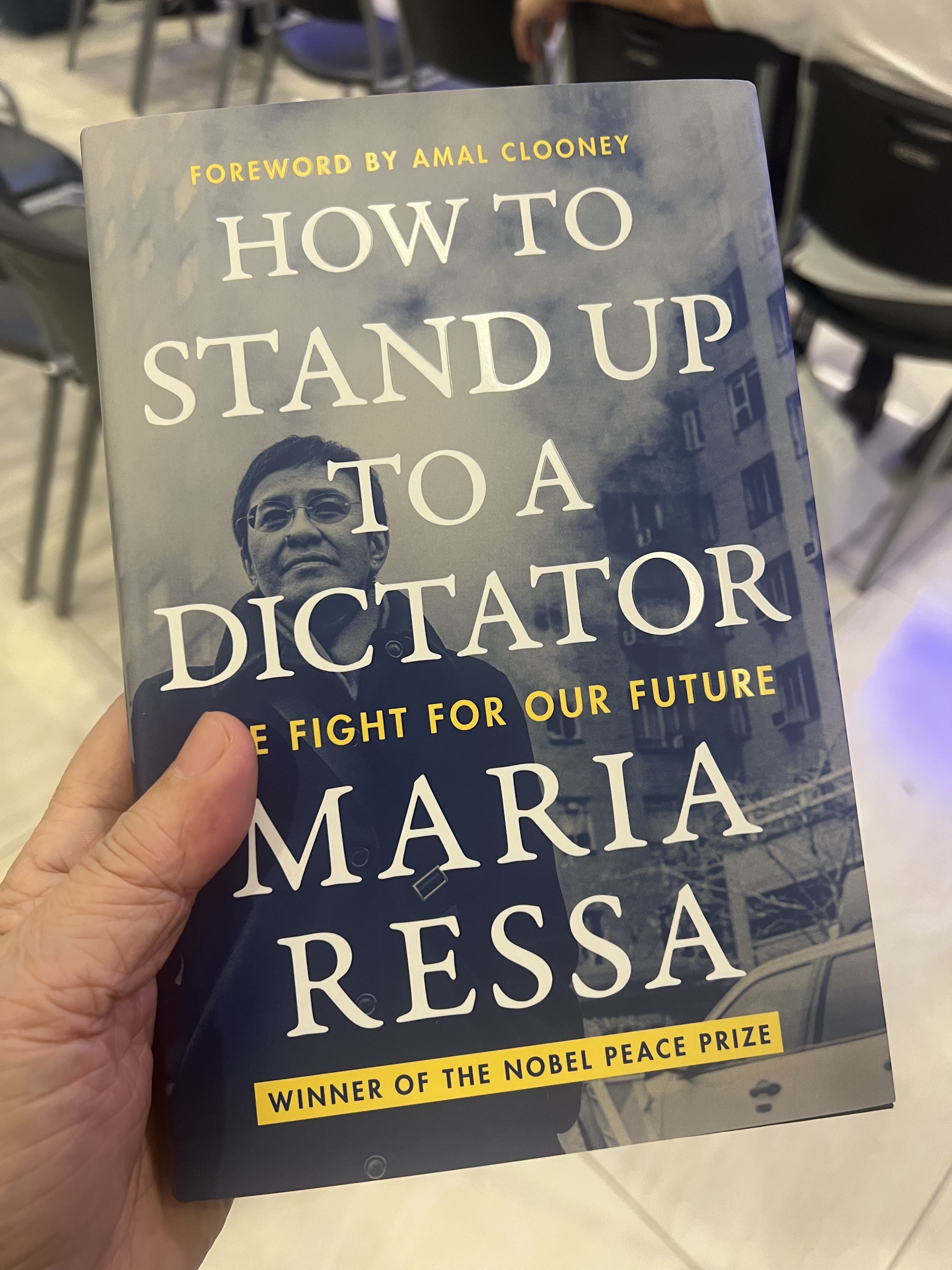
I WAS very honored to speak last Saturday at the launch of Maria Ressa’s new book, How to Stand up to a Dictator: The Fight for Our Future (Harper, 2022). I’d read an advance copy of it a couple of weeks ago, and to cut to the chase, if you’re thinking of buying a book to read for the holidays or to gift to friends, look no further. This book, for me, is among the year’s best in nonfiction.

I have to emphasize that word—nonfiction. As we all know we live in times when fiction has taken over as the most influential form of human discourse, particularly in the political arena. As a practicing fictionist, I should be happy about that, but I’m not and I can’t be, because so much of it is bad fiction, crudely written—and surprisingly, infuriatingly effective, at least with a certain kind of reader. 

Maria’s book cuts through all that. It’s undisguised, old-fashioned, in-your-face truth-telling, told in the same voice and tone we’ve become familiar with over the years of listening to her reportage over CNN. I’m sure that, like me, many of you wondered the first time you heard her: “Who was this little brown-complexioned woman speaking with an American accent?” She looked Filipino, but how come we’d never seen her before?

This was all before she rose to prominence—some would say notoriety—as the moving spirit behind Rappler, and subsequently to global fame as a Nobel Prize winner for Peace. We identified with her travails, shared her anger and sadness at the abuse she has received, and rejoiced in her victories, whether in the courts or in the larger sphere of public opinion. 

But how well do we really know Maria Ressa, and whatever drives her to be who and what she is? This book takes us to the person behind the phenomenon, and answers many questions we may have had about her and her stubborn advocacies.

The book’s title sounds like that of an instruction manual—which it is, and also is not, being part autobiography, part journalism, and part testimonial. As a manual for freedom fighters, it emphasizes the need for collaborative and collective action against seemingly insurmountable forces. Those forces now include the Internet, which, as Maria documents with both precision and profound dismay, has morphed from a medium that once held all kinds of liberative promises into a medium for mass deception and targeted assault. She draws her counsel not from some esoteric guru or academic paradigm, but from some very basic values that have informed her own life—the Honor Code she followed in school, and the Golden Rule.

“That’s what I lay out in this book,” she says, “an exploration into the values and principles not just of journalism and technology but of the collective action we need to take to win this battle for facts. This journey of discovery is intensely personal. That’s why every chapter has a micro and a macro: a personal lesson and the larger picture. You will see the simple ideas I hold on to in order to make what have—over time—become instinctive but thoughtful decisions.”

It’s this constant back-and-forth between the personal and the political—and at some point they become inextricably fused—that forms the fiber of Maria’s narrative and gives it strength. Her convictions are grounded in personal experience; they have not been paid for—as the hacks in the journalistic trade will allege, seeking to bring her down to their own level—except in the coin of personal suffering under the constant threat of imprisonment and violence.

But we learn from this book that trauma is nothing new to Maria. (We also learn that Maria Ressa wasn’t the name she was born into, but to find out her birth name, you’ll have to buy the book.) From her abrupt relocation from Manila to America at the age of ten, to her journalistic immersion in the horrors of conflict and disaster in Indonesia and Ormoc, the book chronicles Maria’s quest for truth, meaning, and purpose in her life, and that of others. She stresses the importance of remembering the past to make sense of the present, quoting TS Eliot’s phrase, “the present moment of the past.”

And so can we, she seems to suggest, even in these times of high anxiety, when we can see the vultures hovering over such once-sacrosanct treasures as our pension funds, while billions more go to feed the dogs of an increasingly untenable counter-insurgent war. The big words we have become used to tossing around—truth, freedom, reason, justice, democracy—they all come down to a personal choice to do the right thing, and the courage to do it. 

Nowhere is this matter of choice more evident than in the fact that Maria is here in the Philippines, having willfully subjected herself to our brand of justice, however imperfect it may be, instead of escaping to the safety of America or another haven, which her dual citizenship if not her celebrity can certainly afford her. She will see her own story through to the end, in the locale where it matters, among the people to whom it matters most.

I’ve often remarked, as a creative writer and professor of literature, that in this country, the writers most in danger of political persecution and retribution are really not fictionists or poets like me. Not since Rizal has a Filipino novelist been shot dead for what he wrote. For sure, we have lost many brilliant writers to the struggle for freedom and democracy—Emman Lacaba, and most recently Lorena Tariman and her husband Ericson Acosta. But they were killed by the State not for what they wrote—the State is illiterate when it comes to metaphor—but for what they allegedly did.

Rather, the most imperiled writers in the Philippines as in many other places are the journalists who speak the language of the people and of their plaints in terms too clear to ignore. They could be radio announcers like Percy Lapid, or the victims of wholesale murder in Maguindanao, or high-profile and exemplary targets such as Maria Ressa. It would have been easy for her to lash back at her critics and tormentors with the same viciousness. But, she says, “I will not become a criminal to fight a criminal. I will not become a monster to fight a monster.”

That, too, is a difficult choice, and one I am sure we are often tempted to cast aside. But Maria’s equanimity in the face of savagery shames us back into our better selves. It will be that kind of quiet resolve that we will need to survive and prevail. After all, we survived martial law. We can survive this regime—with agility, patience, and courage. But don’t take my word for it. Read Maria’s book to know that we can, and why we must.