Penman No. 37: The Rebirth of Joly Benitez

Jana and Joly

Penman for Monday, March 11, 2013

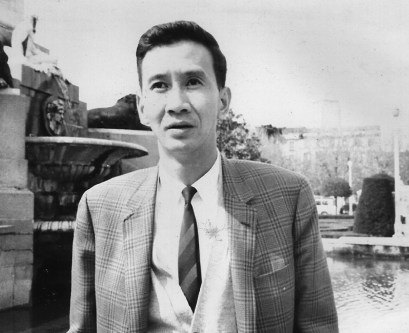
UNTIL VERY recently, the first and the only time I met Dr. Jose Conrado Benitez—better known to many by his nickname “Joly” (yes, with the single L)—was almost 40 years ago, when he visited and spoke to our class in Development Economics at the University of the Philippines.

I was working as a writer then for the National Economic and Development Authority, and my boss—the very supportive Gerry Sicat—had sent me, a college dropout, as a special student to UP to learn some economics quickly. I had been imprisoned under martial law and still carried my leftist sentiments with me, but there being few other options and being newly married, I decided to take my studies as seriously as I could.

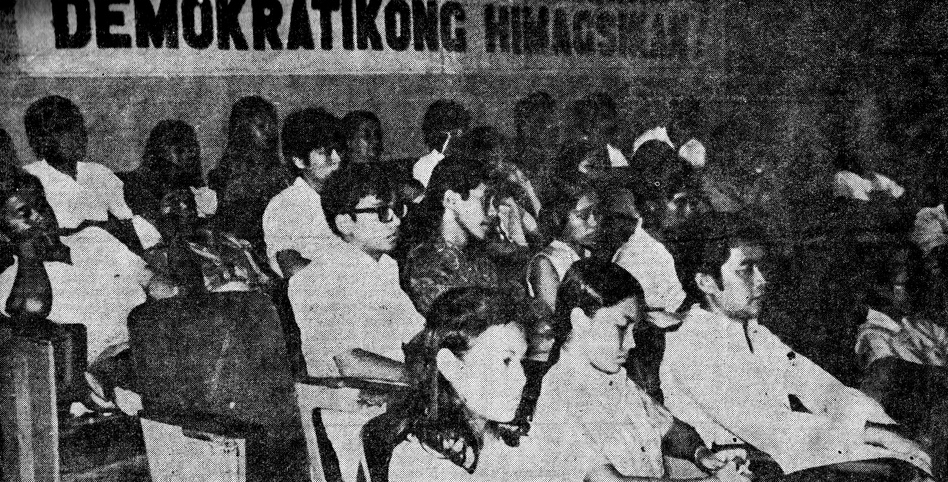
There was something of a rivalry between NEDA on the one hand and the Ministry of Human Settlements and the Development Academy of the Philippines on the other, and Joly Benitez was associated with both latter agencies, so when the young Deputy Minister of the MHS came to our class, I can’t say that I was in a very welcoming mood, his ministry (and its chief, the First Lady Imelda Marcos) being seen then to be the source of some of the strangest ideas to have come out of martial law. Still, I was impressed by Benitez’s energy and enthusiasm, and while I remained a skeptic, I found myself opening up to the heretical notion that—with the right leadership and intentions—martial law was an unprecedented opportunity to get some things done right. (Of course, by and large, that didn’t happen, and I was out of NEDA in 1983 and on the street at EDSA in 1986.)

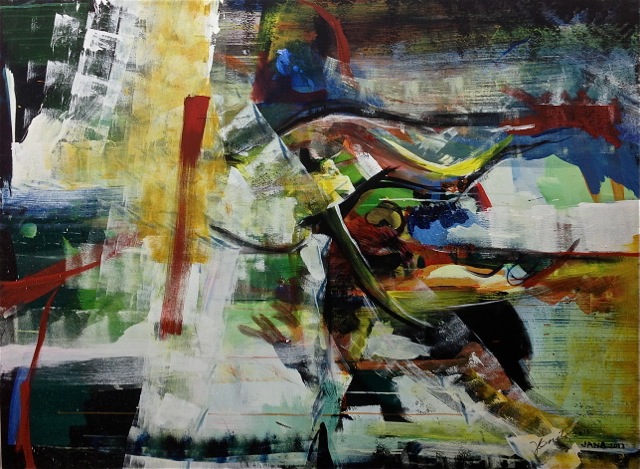
Flash forward to a few weeks ago, on February 21: that evening, a crowd began to gather at the newly established Erehwon Center for the Arts in Old Balara, Quezon City for the opening of “Apple by the Tree,” an exhibition of paintings by the father-and-daughter tandem of Joly and Jana Benitez. I had been invited to the opening by my old friend, kumpare, and Erehwon founder Raffy Benitez, a cousin of Joly. Perhaps ironically, Raffy and I had become friends in martial-law prison; when he later opened a printing press, Raffy drew on some unused paper stock and became the publisher of my first book, Oldtimer and Other Stories, in 1984. In other words, he’s a guy I can’t say no to, and when he invited me to the Benitez exhibit, despite having other plans for the evening, comradeship and curiosity prevailed, and I went.

I came in for a pleasant surprise. Joly’s daughter Jana was already an established New York-based painter, a magna cum laude Fine Arts graduate of Brown University with wide international exposure. Her work, noted the critic Alice Guillermo, “probed the secrets of both the abstract and the figurative, [creating] an art that is young, vital, integral to life and being.” I saw bold splashes of color in the abstract-expressionist style: you step back and translate form and color into thought and emotion.

Joly Benitez was the revelation. The Stanford-trained technocrat may be more at home with economics, but he stood his ground alongside Jana, working in the same style but mainly in black and white. What was even more remarkable was that, six months earlier, he had been close to death, with a debilitating kidney disease that required dialysis four times a week. “People were already calling me a widow,” said his wife, the banker Joanne de Asis. A timely transplant gave him a new lease on life—but it was the return from New York of Jana and their painting sessions that gave Joly a fresh reason to hang on.

Intrigued by this turnabout, I interviewed Joly—who was still visibly weakened by his ordeal but fit enough to climb four flights of stairs—and asked him about his new avocation. It turns out that painting wasn’t all that new to him.

“I had painted before,” he said, “from the time I was a high school teenager, hanging around and going to the PWU School of Fine Arts, after classes from La Salle high school. Even during my stint in government, I did some ten large canvases which I then displayed in the Technology Resource Center. At my home in Cubao, I hosted the Philippine Association of Printmakers, and we had weekly figure drawing sessions. I have painted in brief but intense spurts over various intervals for the last five decades. At this point of my life, I feel more confident and comfortable about displaying my paintings in public, and to continue to explore various modes of abstract self-expression.”

His new work is concerned with perspective, such as how one might see Earth from space. “Sometime ago, I did a series of over ten ‘Earth-scape’ prints and paintings, reflective of my preoccupation with ‘cosmic space’ abstract images.  The predominance of black and white in some of my paintings is the challenge of depicting movement, perspective, texture and expression with a highly and consciously limited palette,” he says.

Working with Jana was “intense and fruitful—a deep conversation in art. We talked continuously and began to appreciate our artistic differences. We sought to elevate our collaborative work to a different threshold. While painting, when she or I would perform brush strokes, or compositional elements, or color hues reflective of our differences, we would consciously attempt to integrate and reconcile them. We had our differences—but in art as in life, mutual respect and appreciation of each other’s idiosyncrasies and differences are paramount.”

After the Marcos years, Benitez served for over a decade as president of the family-owned Philippine Women’s University (his son Kiko now serves in that capacity), where he introduced various ladderized-curricular innovations, including pioneering programs for on-line distance education and continuing education.

The older Benitez is far more mellowed and subdued than the gung-ho guy I recall from the mid-1970s, but he retains a sharp critical edge. I asked him about his views on Philippine development today. “We are highly dependent on the remittances of our OFWs, we don’t have significant industries or manufacturing, our agriculture is in need of major structural changes, and our service sector relies heavily on call centers for employment,” he observes. “We still have to see a national eco-sustainable development strategy that addresses a basic needs approach, with structural changes reflected in locational and spatial dimensions.”

As the architect of many of the Marcoses’ social infrastructure programs, Benitez sees some evidence of a useful legacy left behind from his tenure at the MHS: “Some of our initiatives remain as relevant as ever. They include the establishment and organization of a mass housing system, involving a financial saving system (PAGIBIG), the Home Guaranty Corporation (HGC), the National Home Mortgage Finance Corporation, (NHMFC), and so on, although one would wish that the various housing agencies would operate like a symphony rather than competing and sometimes working at cross-purposes. We also made efforts to promote small- and medium-scale industries, especially focusing on livelihood projects, entrepreneurship, adaptive technology and countryside community organization and development. We sought to introduce a locational and spatial dimension in national, regional, and provincial comprehensive development plans—through the national and regional framework plans, the preparation of provincial atlases and municipal level town plans, and zoning ordinances. We used to say that ‘True structural development should have a face and an address.’ An abstract strategy or a mere compilation of various infrastructure projects do not make for national development.”

At this point of his extended life, Joly Benitez says he’d like “to focus on a few income-generating projects for myself and my family, but most of all I would like to explore and pioneer some ecologically sustainable projects, especially on village level.”

And, of course, produce more art, by himself or alongside Jana. The historians, political scientists, and Filipinos on the street will have their own assessment of the Marcos years and of the role that Jose Conrado Benitez played in it—and I suspect he will not be hopeful enough to imagine that that assessment, given what has happened since, will be largely benign—but the rebirth and refuge offered by art can only sustain this complex man.

Penman No. 25: EQ Yap, a Filipino Patriot

EQYPenman for Monday, Dec. 17, 2012

LAST DECEMBER 9 would have been the 81st birthday of a man named Emmanuel Quiason Yap—a name unfamiliar to most Filipinos, but who deserved more of his countrymen’s attention than they were able or willing to give him when he was around. Yap was one of the last in a distinguished line of nationalist Filipino intellectuals who emerged in the second half of the 20th century, a roster that included the likes of Renato Constantino, Alejandro Lichauco, and Hernando J. Abaya.

More than a year ago, I was asked by Yap’s family to write his biography, and I agreed—first, because he was the father of a former student of mine, and second, because I had met him earlier in the company of the Lavas, a family of committed revolutionaries whom I had also written about. (He was also a Yap, which is my mother’s maiden name, so we might have had a mutual ancestor somewhere back in Fujian.) I had heard of “Manoling” Yap’s own nationalist convictions, but had never really sat down with him to learn how he had acquired them.

I had several meetings with him and had begun on the book—which I’m now a week or two short of finishing—when he suddenly died in September 2011. Thus I begin the book this way:

“When Emmanuel Quiason Yap died all of a sudden on September 26, 2011, very few Filipinos knew what they had lost. It was almost as if a stranger had walked into a sleeping household, had left a precious gift in their midst, and had walked away; waking up in the morning, the family members see the object and wonder what it is and who brought it there, but they cannot recognize its value, and put it aside.

“His peers and colleagues would recognize and refer to him, even within his lifetime, as a visionary, an astute student and critic of his nation’s political and economic fortunes, a shaper of minds whose firm nationalist beliefs might have led the Philippines on to another track of growth and progress. He was an adviser to Presidents, senators, and congressmen; for a time, he headed an economic planning office for the House of Representatives; he helped to foster stronger diplomatic ties between the Philippines and socialist countries; and he founded a popular movement to promote patriotism among Filipinos. In various venues over many decades, including a newspaper column, he campaigned strenuously for a more independent foreign policy, a more self-reliant economy, and for greater justice in a society riven by exploitation and oppression.

“Manoling Yap, in other words, was a reformer, a man who never tired of thinking how life might yet be bettered. And he was no armchair dreamer, but someone who took his battles to the political arena, risking his life and freedom in pursuit of his principles. But as many if not most reformers soon discover, Manoling Yap would often find his idealism opposed, rejected, or even taken advantage of by others resigned to a more pragmatic view of things.”

Few may remember it now, but Yap—born in Angeles, Pampanga to a family of lawyers and entrepreneurs—was instrumental, along with Mayor Rafael del Rosario, in achieving cityhood for Angeles in the early 1960s and for planning its modernization. However, their plans ran afoul of the rackets being run by the notorious Kumander Sumulong, who issued death threats against the mayor and Manoling.

Trained as an economist, Manoling later went to Georgetown for graduate school with the encouragement of former President Jose P. Laurel, who urged him to go to America “to learn how the Americans are fooling us.” Yap took the admonition to heart—this was the time of parity rights—and came home an even more ardent nationalist. He taught at the Lyceum, then a bastion of radical thinking.

He set up the Congressional Economic Planning Office—a forerunner of what today is the National Economic and Development Authority—and worked with the old man Laurel’s son, Speaker Jose B. Laurel, in crafting the Magna Carta for Economic Freedom and Social Justice, which argued strongly for a more independent economic policy and for vigorous industrial and agricultural development. The Magna Carta was signed into law by Marcos in 1969, but languished in implementation, and Speaker Laurel himself fell from power soon afterwards—the victim, Yap was convinced, of imperialist machinations (as was, Yap would later believe, Marcos at Edsa).

Yap was also instrumental in opening diplomatic and trade ties with the socialist bloc in 1967—surprisingly, even as anti-Red rhetoric was escalating along with the Vietnam War, and well before Richard Nixon undertook his own diplomatic initiative toward China. He accompanied Rep. Manuel Enverga, chairman of the House Foreign Relations Committee, on a grueling three-month journey behind the Bamboo and Iron Curtains. Years later, he would also advise Sen. Leticia Ramos Shahani, when she chaired the Senate Foreign Relations Committee, and help her draft a more independent foreign policy moving away from the traditional Philippine-US alliance to stronger ties with our neighbors in the Asia-Pacific, and with countries in the Middle East, the Indian Ocean, and Central Asia.

In the last decade of his life, Manoling Yap devoted much of his time and energy into setting up and promoting the People’s Patriotic Movement, an effort to unite Filipinos from all backgrounds and persuasions behind the fundamental need for a sense of nationhood. “Together,” he wrote, “we will rediscover our common historical truth, rectify the errors of our colonial past, muster the national will to reconstruct the Filipino nation into a strong nation-state which can adequately feed, educate and protect its own people by the sweat of its brow and not from mendicancy and subservience to other nations, and ultimately assure a better future to all our children.”

As with many intellectuals, he was a man of ironic contradictions—an Atenean who sang Latin hymns as a boy with touching fervor, but one who grew into a brooding skeptic; a civil libertarian, but one who imposed strict family discipline; a seeker and defender of freedom and a friend of known Communists, but one who appreciated Ferdinand Marcos as a progressive nationalist; and an astute analyst who predicted the end of the Cold War but who blithely ignored the signs of his own failing health.

Emmanuel Quiason Yap was a complex man; his burning idealism often met with disappointment and disenchantment, and in the end he had very few friends left to talk to—among them his cousin the historian Serafin Quiason Jr., the painter Dan Dizon, and my fellow STAR columnist Billy Esposo. But he had his country at heart and died a patriot, joining the privileged company of his heroes—Rizal, Mabini, and the old man Laurel.

Penman No. 24: The Necessity for Nonfiction

NonfictionowPenman for Monday, Dec. 10, 2012

A FEW weeks ago, in Melbourne, I had the pleasure and privilege of speaking before a global audience of experts in and practitioners of nonfiction—that broad branch of writing that straddles everything from journalistic reportage, history, and philosophical essays to personal memoirs, travelogues, and cookbooks. I gave one of the four keynote addresses in that three-day-long Bedell Nonfictionow Conference; the other speakers were David Shields, on collage and appropriation; Helen Garner, on the central place of the interview in nonfiction; and Margo Jefferson, on the boundary between criticism and nonfiction. I chose to take a less technical and more social tack, and talked about why, more than ever, there’s a need for nonfiction in this age of the Internet, particularly in places off the global literary centers like the Philippines.

I wasn’t alone in representing the Philippines and its literature. Lawrence Ypil, one of our brightest young poets who’s doing a second MFA at the University of Iowa, this time for nonfiction, spoke about using family photographs to solve a mystery, and also introduced the work of Resil Mojares and Simeon Dumdum Jr. from his native Cebu. Longtime activists Bonifacio Ilagan and Marili Fernandez-Ilagan discussed the political possibilities of nonfiction in print, film, and theater; Boni also gave a comprehensive overview of recent political nonfiction from the Philippines. Their talks provoked much interest, and reminded me of just how far ahead of the curve our writing is in many ways, despite the obvious obstacles to writing in a society that doesn’t seem to value books much.

So I used my keynote as an opportunity to reintroduce contemporary Philippine literature to others, highlighting our work in nonfiction, particularly that of the late, great Nick Joaquin. Below is the full text of that 40-minute talk (because of space limitations, I was able to provide only an excerpt for the newspaper column version of this piece):

Thank you all for this great honor of having me as one of the keynote speakers for this conference, and for this opportunity to introduce another literature and another literary experience to a global audience, from which we Filipinos have been largely removed. And who, exactly, are we Filipinos? Just two days ago, a Gallup poll revealed that Filipinos were the most emotional people on the planet. We laugh and we cry with equal facility—so don’t be too surprised if this talk descends from the sublime to the ridiculous within a paragraph of each other.

This being a keynote, let me assure you that this talk will be about more than our domestic literature, and that it will connect to the greater issues of nonfiction in the world. But I have chosen to begin on a point of disconnection, from the periphery, because our vagrant experience presents some interesting possibilities for looking at how nonfiction—if not literature itself—has served self and society outside of the West.

Indeed, these past few years, I’ve traveled around various literary conferences around the world with a stock speech titled “Why You’ve Never Heard of Me,” by way of addressing the relative obscurity in which the Filipino writer has labored—even and especially in the company of our fellow Asians such as the Chinese, the Japanese, and the Indians who have understandably gained much greater international attention and prominence.

In sum, my thesis is that we Filipinos don’t write enough novels, and the novel has been the ticket to literary fame and consequence in 20th century publishing. It also hasn’t helped that, as a former colony of Spain and the United States, we are out of the Commonwealth loop. We no longer write in Spanish, and as for our writing in English—a thriving, century-old literature—the Americans (with the notable exception of Robin Hemley) don’t quite know how to receive it, despite its troubling familiarity, like the bastard child who suddenly appears at the door with an expectant smile. We also have a robust literature in our other national and regional languages, but again they hardly connect to the other native literatures of Southeast Asia, in gatherings of which the non-Bahasa-speaking Filipino has often been the odd person out.

That’s all the more strange when we consider the Filipino diaspora which—like that of the Indians, the Nigerians, and many other ambulatory nationalities—has taken our workers all over the planet. We are you maids, your nurses, your sailors, your entertainers. One-tenth of our population of over 90 million people now live and work overseas, in places as remote to us as Iceland, Angola, and Syria, providing not just the foreign remittances that keep our economy afloat but also a wealth of material for our literary imagination. Indeed it often takes the literary imagination, more than journalistic reportage, to sort out these experiences of dislocation.

But why even go abroad for alienation? If there’s anything colonialism does to the colonized, it’s to leave behind two states of mind, often manifested in two or more predominant languages, one of which represents the colonial elite. That’s American English in our case, and while it’s given us a global edge in the BPO or call-center industry—in which we now rank second, next only to India—it has produced no comparable literary dividends, with our literature in English trailing far behind India’s, and even behind translations to English from the Chinese and Japanese, in the attention of the world.

Thus we represent an insular experience. But like exotic species which—after a geological point of separation—have survived and mutated on their own in some tropical plateau or some literary Galapagos, literatures like ours can be interesting and useful objects of study, because they manifest both fundamental similarities to and striking departures from the biological mainstream. They speak back to the mainstream, as I am speaking today, and offer up a mirror—perhaps a somewhat distorted or distorting mirror—in which others can see versions of themselves.

Our insularity has resulted in some interesting courses of evolution. Given the absence of a market for novels, we have developed our strengths in poetry and the short story. Given further that there is no money to be made either in poetry or the short story—but also that these genres require little material investment—our writers have focused on producing the best art they can, rather than on satisfying a market (and there was, arguably, a market for these in our newspapers and magazines of the early 20th century, when they were part of the entertainment mainstream).

In the case of Philippine nonfiction, curiously enough, more titles have been emerging over the past 20 years—memoirs, biographies, histories, essays, travelogues, cookbooks, and motivational materials for business and religion. Most it not all of this production has been in English rather than in the national language, Filipino—not surprisingly, since books are expensive and considered non-essential items in a country still largely poor, and the people who can buy books at and for their leisure speak and write in English. (Parenthetically, this introduces another interesting element for further thought: if translating language means inevitably translating experience, what goes on in nonfiction in a foreign or borrowed, and especially a colonial, tongue? Whose stories tend to get told, and how, from what perspective?)

There has also been a perceptible rise in enrollments in courses and workshops for nonfiction, seen by many—correctly or otherwise—to be a less formidable and more accessible entry point to writing than fiction or poetry.

The rising global popularity of nonfiction is manifest in the region. A quick glance at the recent titles taken up by the Hong Kong-based Asian Review of Books will reveal a clear preponderance of nonfiction, covering such diverse topics as the undercities of Mumbai, Christianity in Communist China, the Thai monarchy, the Amritsar Massacre, the Jewish community in Shanghai, and Japanese ninjas. Not surprisingly, much of this nonfiction deals with China and India, being both the largest sources of and markets for such work. There is great interest in the West in these two countries, as well as in Japan and Korea, because their economies are umbilically tied to those of the West.

But let me go beyond money and markets, and talk about the necessity for nonfiction in less familiar and less mediagenic countries such as ours.

To state the obvious, nonfiction provides an alternative to fiction and of course to itself. In the first instance, I don’t simply mean the choice the reader faces at the bookshop at any given moment between buying a novel or a book of essays, but as a means to appreciating the truth, in which everyone is presumably interested and invested.

That truth can be particularly elusive in a country and society where there has been a longstanding tradition of suppressing it—in our case, the nearly two decades of the rule of Ferdinand Marcos, carrying over to his successors, one or two of whom turned out to be even more adept than Marcos in kleptocracy and in hiding the truth.

In this experience we Filipinos can hardly be alone, given the emergence and in many cases the continuing rule of autocrats, despots, and demagogues around the world, from Asia and the Middle East to Africa and Latin America. Personal accounts and testimonies are important in such places where an “official version” of events is often promoted, if not enforced.

While fiction might best capture the grotesqueness of life and the absurdity of the truth in many of these places—and I’ll get back to this later—it is nonfiction that bears the burden of presenting the facts on the ground, often at great risk to the author and even to the reader.

It was just a little over a week ago when PEN International marked the Day of the Imprisoned Writer—an issue I could personally relate to, having been imprisoned for seven months in 1973 at age 18 not for writing any earth-shaking novel but rather political flyers and such ephemera. Among those on PEN’s list of “focus cases” was Ericson Acosta, a young poet and activist who had been writing and filing reports on human rights abuses in the Philippine countryside. He has been held without trial since February last year—ironically, under the regime of President Benigno Aquino III, whose family has been canonized for its espousal of civil liberties.

The authoritarian State not only seeks to stifle the truth: it is an active and imaginative producer of fiction. In the Philippines, this was never more palpable than during the long years of martial law, from 1972 until the expulsion of the Marcoses—at least for the time being—in 1986. Let me share a few stories in this regard.

In 1964, just before he first ran for President, Marcos commissioned Hartzell Spence—an American author and editor of Yank magazine, who contributed the word “pinup” to the vocabulary—to write his biography, titled For Every Tear a Victory (later reissued as Marcos of the Philippines), of which a film version was later made. These biographies touted Marcos’ wartime heroism, for which he supposedly received 27 medals, thus becoming the most highly decorated soldier of the war on the American side. Most of these decorations were subsequently proven to be fake. Spence reported that Marcos sustained wounds from singlehandedly engaging 50 Japanese soldiers in a gun battle, a claim Newsweek later disproved. Marcos also claimed to have led a guerrilla force of more than 8,000 men, which the US Army dismissed upon investigation as “fraudulent” and “absurd.”

There was no doubt that Marcos was a brilliant fellow—he topped the bar examinations in 1939, having reviewed for the exams while in prison for allegedly shooting his father’s political enemy at night between the eyes; the young Marcos had been a sharpshooter with the ROTC, and was the natural suspect. He defended himself before the Supreme Court and was acquitted, and the legend was born. Indeed, it was easier to create and to promote the myth because the known facts in themselves seemed incredible enough.

Sometimes the myth was not about himself, but about the nation and its prehistory. In 1971, one of the biggest stories to rock the anthropological world was the discovery of the Tasaday, supposedly a Stone Age tribe that had somehow survived in the Philippine South in benign innocence, well into the 20th century. They made the cover of the National Geographic and were hailed as if Adam and Eve themselves had stepped wild-eyed out of Eden, until skeptical parties spoiled the fun by decrying the Tasaday as an elaborate hoax. As chronicled by Robin Hemley, more responsible investigation has since established that the truth very likely lay somewhere in between—that the Tasaday were neither quite that ancient nor that synthetic, but had lived largely by themselves for a long time. The Marcos government, however, felt deeply invested in validating the notion of a lost tribe, as it seemed to extend the arc of development even farther back, as if to say, “Look how far we’ve come.”

To make sure that the future got things right, in 1977, Marcos published a multivolume history of the Filipino people under his own byline, titled Tadhana, or “destiny,” for which he had actually commissioned some of the country’s most eminent historians.

To reach beyond the range of books, the Marcoses ventured into film. One of the most memorable projects I’ve ever worked on—if only because of its intentions—was an abortive film epic conceived and commissioned by Imelda Marcos, circa 1978, involving the production of a four-hour extravaganza on Philippine history from Ferdinand Magellan to Ferdinand Marcos. This was to be the Marcoses’ version of Hitler’s Triumph of the Will. But instead of having just one Leni Riefenstahl, Imelda wanted eight of the country’s top film directors and their scriptwriters to stitch the opus together, dividing four hundred years of Philippine history among themselves into a half-hour segment each.

As it was the height of martial law, there was no saying no to the Madame, and film director Lino Brocka took me along, as a 24-year-old rookie scriptwriter, to a meeting with Mrs. Marcos in a State guesthouse near the presidential palace where, over bottomless cups of coffee and increasingly crumbly cupcakes, she lectured us for at least six hours on how to make a good movie. The meeting lasted so long that we had to be issued special passes, because a 10 pm curfew was in effect, and we staggered home around 2 am. The movie was done, but for some reason was—and I should probably add thankfully—never shown and never seen in its entirety, not even by its makers. It remains one of the great mysteries of mythmaking under martial law—all those reels of footage devoted to the historical inevitability and apotheosis of Marcos, which must now lie in a warehouse somewhere in Manila and have themselves become historical relics.

But this kind of mythologizing did not begin nor end with Marcos, and it would be naïve to think that other Filipino leaders did not avail themselves of the power of fiction—or, otherwise, the power of silence.

Let me point out here quickly that while repression remains a very real threat in our society, Philippine literature and journalism are wonderfully wanton—we have no sacred cows, no taboos. We feel free to write as we please, if only because we suspect, with some justification, that the government is functionally illiterate, and doesn’t give a rat’s ass about what you say in your obscure novel or inscrutable poem. But this doesn’t mean that there’s no political backlash, when someone upstairs does read or misread your report in the newspaper, the magazine, or online.

Those genres tell us something, by the way—that, at least in the Philippines, nonfiction is a far riskier enterprise than fiction. Statistics kept by the international Committee to Protect Journalists show that 73 Filipino journalists have been killed since 1992. So far, no novelists or poets have figured on the death list.

Some of our journalists eat death threats and libel suits for breakfast. One of them has been Marites Vitug, a groundbreaking magazine editor and investigative reporter whose two books on the Philippine Supreme Court—and the shenanigans within, which culminated in the recent impeachment of the Chief Justice—have become two of the hottest nonfiction titles in town. I copyedited both books—doing the first one anonymously, asking my name to be left out of the acknowledgments—not necessarily because I feared for my life or freedom, but because I knew that the book would result in a libel suit which would be more an annoyance than anything; I had many foreign engagements lined up and a libel suit (two of which I’d already faced myself, one from the former President’s husband) would mean that I would have to secure permission from the court even to spend, say, a weekend in Hong Kong. Sure enough, Vitug got slapped with a libel suit and a death threat, which thankfully went nowhere.

But speaking of journalists, let me introduce a name that will be unfamiliar to most of you, by way of celebrating the indigenous explosion of creative nonfiction around the world.

Born in 1917, Nicomedes Marquez Joaquin, better known as Nick Joaquin, was, by popular acclamation, the greatest Filipino writer of his generation, a man who effortlessly straddled the worlds of street-level journalism and highbrow fiction. He practiced New Journalism well before the term was coined, and wrote true-crime fiction well before Truman Capote put it on the publishing map. To Nick—and to use his own words—journalism was “literature in a hurry,” and Nick Joaquin seemed to be in an awful hurry, producing an average of 50 feature articles a year, according to his biographer. He wrote these under a pseudonym that was also an anagram of his surname, Quijano de Manila. He would also write some of the most memorable Filipino short stories and plays of his time, in an English inflected with the exuberance of the Spanish he also knew and loved, but it was his unique reportage that made him accessible to a broad public. He took on all subjects—politics, crime, showbiz, and sports.

According to critic Resil Mojares, “He raised journalistic reportage to an art form. In his crime stories—for example, ‘The House on Zapote Street’ (1961) and ‘The Boy Who Wanted to Become Society’ (1961)—he deployed his narrative skills in producing gripping psychological thrillers rich in scene, incident, and character. More important, he turned what would otherwise be ordinary crime reports (e.g., a crime of passion in an unremarkable Makati suburban home or the poor boy who gets caught up in a teenage gang war) into priceless vignettes of Philippine social history.”

I’m going to read you a few short paragraphs of his prose, just to suggest his treatment of his material, and also his language:

In “Flesh and the Devil,” published in January 1962 in the Philippines Free Press, Joaquin introduced a story of white slavery by harking back to ancient mythology:

Proserpine, in classic myth the daughter of the earth mother, was kidnaped by the lord of the underworld and carried to hell. Rescued and brought back to earth, she found herself alien to its light and flowers; half of her heart had turned dark; she had eaten of hell’s pomegranates and must ever partly dwell in shadow.

The pomegranates of hell were news last week in the story of four girls who said they had escaped from hell after several months of an evil bondage; their flesh had been made merchandise. Three of the girls are 19 years old, but the fourth is a child of 15, and her name is Proserpina.

But he could be as hard-boiled as they came. In “The Mystery of the Murdered Bigamist,” published in May 1961, he reported on the discovery of a corpse:

He had been stabbed eight times in the left breast, his throat had been slashed, and he had been hit so hard in the face his left eyeball had sunk. He had been trussed up with a rope, his hands and feet bound together behind him, and he had been stripped of his wallet, watch, ring, and shoes…. In the ditch where he was found, the police found the bloodstained fragments of a letter in Pampango. The writing was almost illegible, but the signature was clear: Felino.

And always, Joaquin sets the piece in its larger context, as the enactment of an ageless drama. Reporting in 1963 on the bloody assault of a government office by private security guards gone rogue who had axed the skulls of their victims—also security guards—he would write that:

In the August 26 robbing of the Rice and Corn Administration’s main office in Manila, the security-guard culture, long a-ripening, has burst into saga and epic. The eyer is now the eyed, and the figure that has so long lurked at the edges of our consciousness has moved into the center of our attention. We stare at the symbol of our unsafeness.

Security guards were the victims, security guards were the villains… The tragedy happened within a special sphere, among an esoteric society or knighthood of men bound by their own codes, their own private rituals, a shared lore…. A couple of the invaders had been false to the code of the brotherhood and had been ousted, and returned in stealth and were let in, because they knew the secret words and rites.

Joaquin goes on to chronicle sundry acts of mayhem and mésalliance: the murder of a movie star’s delinquent son; the affair between a Filipino ambassador and a German baroness; an abortive shooting of an actor who later became President of the Philippines. Despite his many awards for his fiction and drama, he never considered journalism beneath him. In 1996, he said that “Journalism trained me never, never to feel superior to whatever I was reporting, and always, always to respect an assignment, whether it was a basketball game, or a political campaign, or a fashion show, or a murder case, or a movie-star interview.”

In 1977, his best journalistic pieces were compiled in several anthologies, under the titles Reportage on Crime, Reportage on Lovers, and Reportage on Politics, and eventually these selections grew to more than ten books; in addition, he wrote histories, almanacs, and a dozen biographies.

I brought up Nick Joaquin (who died in 2004) not just to introduce a name, but also to show that the New Journalism and creative nonfiction were laying down native roots in other parts of the world outside of the West—certainly not only in the Philippines—before we knew them by these terms. Joaquin’s Free Press pieces, which began in 1957, antedated Truman Capote’s In Cold Blood, which was published in 1966. Of course Capote never claimed to have invented the true-crime genre, and neither did Joaquin, and more thorough investigation will easily turn up far earlier examples from all around the world.

Indeed, we are often referred back to the Scotsman William Roughead, who began attending trials at age 19 and, in 1913, published the first of many collections, Twelve Scots Trials, which he called “adventures in criminal biography.” It’s instructive that Roughead lamented his publisher’s choice of that title, which he thought was too dry. He said that “Trials suggested to the lay mind either the bloomless technicalities of law reports or the raw and ribald obscenities of the baser press.”) You’ll note that in this desire to eschew “bloomless technicalities” and “raw and ribald obscenities” lies the fundamental impulse for creative nonfiction.

The highest crimes, of course, are often perpetrated by the State, and this again is where the greatest value of nonfiction lies, in unraveling the truth where the outcome could affect the lives and fortunes of millions. Sometimes the most significant outcomes are no more immediate and practical than an understanding of the past, especially when alternative histories face off against each other.

This is where nonfiction competes against itself, one version versus another. We often speak of nonfiction in the same breath that we say “the truth,” as if nonfiction and the truth were interchangeable, but this is something that everyone in this conference should know cannot always be so. Nonfiction is, in a sense, a process rather than a product, a way to establishing certain verities most of us can accept or agree with or recognize, albeit with some resistance.

Most notably, nonfiction is an arena for competing histories or interpretations of history. This again is particularly important where the formation of a people’s self-image is involved, especially in a colonial or postcolonial context.

Traditional historians, for example, have viewed and represented the uprisings of poor peasants in the Philippines as the epileptic seizures of cultist fanatics, rather than legitimate and inevitable revolts of the feudal oppressed. The communist guerrillas who fought the Japanese in the Second World War and struggled on against the American-supported postwar regime—much like the Vietnamese resistance—were presented as power-hungry troublemakers and stooges of the Soviet Union and Red China, disregarding their deep nationalist and anti-imperialist orientation.

These histories and their alternatives continue to be written in my country and, I’m sure, in yours. In my own nonfictional work, I’d like to think that I’ve contributed to this conversation through the biographies and institutional histories that I’ve been writing, about which I’ll say more in this afternoon’s panel discussion on nonfiction from the Philippines. Nonfiction is even more essential in this age of Facebook and Twitter, when every event is deemed newsworthy within five seconds of its occurrence, for even the worst—or some would say the best—of gonzo journalism bears some of the composure and the composition of art.

Nevertheless, the argument can always be made that sometimes the best response to fact is fiction—not the fiction of the State, but the fiction that emanates from deep within the individual’s heart and conscience, bodied forth by the free imagination. Fiction—especially the kind of realist, pre-postmodern fiction that still predominates in Asia—is relentless in its effort to make sense of events and of the characters who impel them. Our narratives tend to be straightforward, transparent or at least translucent rather than opaque, trading cleverness of presentation and virtuosity of language for what is seen—or hoped to be seen—as honest, heartfelt storytelling, the object of which is the understanding of character and the improvement of community.

Our national hero Jose Rizal was an excellent polemicist who scored the abuses and effects of Spanish colonial rule in one essay after another—but it was his two novels from the 1880s, Noli Me Tangere and El Filibusterismo, that captured both the obviousness of the need for some kind of revolutionary action and yet also the complexity and difficulty of making this choice. His farewell poem, supposedly written in his prison cell on the eve of his execution by firing squad, is impressed in the national consciousness.

Under martial law, when our presses were shut down and all the newspapers and magazines were producing hosannas, it was poetry, fiction, and drama that took up the fight—slyly, stealthily, employing such disguises and devices as we knew would escape the regime’s eyes and yet catch the public’s. In 1983, when Sen. Ninoy Aquino returned from exile in the US, only to be gunned down by an assassin at the airport—thereby precipitating a chain of events that would ultimately lead to Marcos’ downfall and departure—my reaction was to write not an essay, but a novella set in 1883, with a revolutionary agent returning from Hong Kong being assassinated on his homebound voyage.

I’ve also written a novel about those years, about growing up under Marcos and about our complicity in the whole project; but one of these days I’d like to embark on my dream project, which is an oral history of our martial-law experience through the eyes of various protagonists from all the sectors involved—the resistance, the government, the military, the businessmen, the citizens.

And then perhaps we will understand why, 40 years after they virtually proclaimed themselves rulers for life over one of the happiest and yet also the most dolorous people on the earth, and even long after the downfall and the death of their patriarch in 1989, the Marcos family remains staunchly embedded in our political firmament, with Imelda Marcos in Congress, her daughter Imee in the governor’s mansion, and her son Ferdinand Marcos Jr., now a senator, being groomed for the presidency. It was as if martial law never happened—and to many Filipinos, especially the young, it never did.

Simply put, the full story of this most traumatic episode in our modern history has yet to be told. Most of us never knew what happened behind the barbed wire; most of us never understood that the prison began well before the barbed wire, and extended into our homes and our subconscious. We cannot remember what we never knew, and we can never learn from what we cannot remember.

And this, ultimately, is the necessity for nonfiction—whether it comes in the form of personal memoir or national history, of comic musing or tragic reflection, of travelogue or cookbook, of political polemic or erotic encounter: it constrains us to confront the tangible world, reminds us of our vulnerable, mutable, insurgent physicality, and connects us to a shared past, present, and future. Today it connects me to you and our literature to yours, for which opportunity I once again am deeply grateful.

Penman No. 14: Free Ericson Acosta

AcostaPenman for Monday, Oct. 1, 2012

LAST MONDAY, I wrote about recalling the horrors of martial law, which had been declared 40 years earlier. That same day, I had a chance encounter with a young woman named Kerima Tariman Acosta, whose husband Ericson has now been languishing in a Samar jail for a year—a political prisoner under a new regime four decades after martial law.

My interest in the case was piqued not just because of the obvious irony, but because Ericson was a former editor of the Philippine Collegian and a poet—in other words, a brother-in-arms as a writer.

Ericson was arrested on Feb. 13, 2011 by soldiers of the Philippine Army near San Jorge in Samar, without a warrant; Kerima says that he was carrying only his laptop, a cellphone, and some money, having been conducting human rights research in that militarized community on behalf of a peasant group, Kapawa. Later, however, his captors produced a grenade, which they claimed Ericson had in his pocket; they would later charge him with illegal possession of explosives, which Ericson vehemently denies, saying that the grenade was planted to link him to the New People’s Army.

Upon his arrest, says Kerima, Ericson was interrogated for 44 hours, tortured, and forced to admit that he was an NPA member. He was moved from detention in a military camp to the Calbayog sub-provincial jail, but soldiers from the local infantry battalion were sent to camp out in this jail to guard him.

Meanwhile, his case has been crawling through the courts. Prominent legal and artists’ groups have rallied behind Ericson’s release—including the National Union of People’s Lawyers, which has taken on his defense, the College Editors Guild of the Philippines, and International PEN, among others—arguing that he was arrested illegally to begin with and was tortured, and that the charge against him was manufactured on the spot. Still, he remains in prison, despite an urgent plea from his family for his release, or at least for an opportunity for him to be seen by a doctor, because he had been sick with renal and prostate problems even before his arrest.

I’ve been a firm believer in President Noynoy Aquino’s “Daang Matuwid” campaign, but something like this makes me wonder how well we’ve truly exorcised—if we have, at all—the demons of our martial-law past, particularly in terms of reining in the abuses of our military, and of educating them (and thereby ourselves) on the value of respecting human rights.

We’ve let convicted murderers and child-rapists go free, although PNoy’s men can say that that was under a previous and truly morally abominable administration. Ericson Acosta was arrested under PNoy’s watch. What’s worse, it turns out that Ericson is hardly alone. When human rights activists tracked him down in Catbalogan, they found five more political prisoners in the city jail. These activists estimate that more than 350 people still languish in Philippine prisons because of their political beliefs.

The President can reclaim the moral high ground not just by remembering what Marcos and his military did to his father—as he did on the 40th anniversary of martial law—but by acting differently and speedily to bring justice to these cases, as he would have wished someone did for Ninoy, and not simply fall back on the old Palace excuse of “Let the military do its job.” Experience shows that when you do that, you let the butchers loose on the people. I haven’t lost hope in reform within the military mindset, but it takes a Commander in Chief to set the tone and give the orders.

If the government thinks that the evidence against Acosta is strong and irrefutable, it should prove its case, and prove it quickly. Otherwise, it should free Ericson Acosta and the others like him—arrested for patently political reasons 40 years after martial law—to put that era squarely in the past.

* * * * *

ON A happier note, I’d like to mention a new book whose author exemplifies the best of what a Filipino can be and can achieve internationally. Dr. Jojo Sayson is a Fil-Am physical therapist and motivational speaker, a UST graduate who has done pioneering research work for NASA and who heads a foundation that helps children with cancer and other debilitating diseases.

His biography, Springboard to Heaven: The Jojo Sayson Adventure (Image Workshop Press, 2012)—co-authored and edited by biographer and film director James Riordan—chronicles the journey of a poor Manileño boy who leaves to work in the US with $170 in his pocket and who goes on to become a scientist engaged in finding solutions to the problem of lower back pain—not my back or yours, but that of the NASA astronaut, who has to endure weeks if not months of microgravity in space, which puts unusual stresses on the body. To understand this problem more thoroughly, Sayson himself went through microgravity training, and out this came a landmark paper published in Aviation, Space, and Environmental Medicine in 2008. Jojo must have enjoyed the experience, because he subsequently applied to join NASA’s astronaut corps as a mission specialist for 2013.

To quote from the book: “Astronauts report that the ‘fetal tuck or cannonball position,’ with knees-to-chest, relieves their back pain. The article presents research and references to describe the possible reasons for this relief, their clinical consequences and the rationale of the numerous proposed exercise countermeasures suggested for astronauts to perform in space to increase spinal loading. (These countermeasures also may prevent herniated disks which can occur post-flight.) The authors also suggest the possibility of employing, in conjunction with the countermeasures, a harness designed by Sayson to stimulate spinal compression and reduce disc expansion.”

That’s heavy technical stuff, but what’s more interesting and important for most of us Pinoys is to see another kababayan opening new doors abroad not just for Filipinos, but for humanity itself.

The book is now available at National Book Store, Powerbooks, and Bestsellers.


Doy, vic manarang, nilo tayag
gringo, mike defensor, gary olivar, miro quimbo, oying rimon

Randy david, raul pangalangan

Penman No. 13: Random Reflections on Martial Law

HBD

Penman for Monday, Sept. 24, 2012

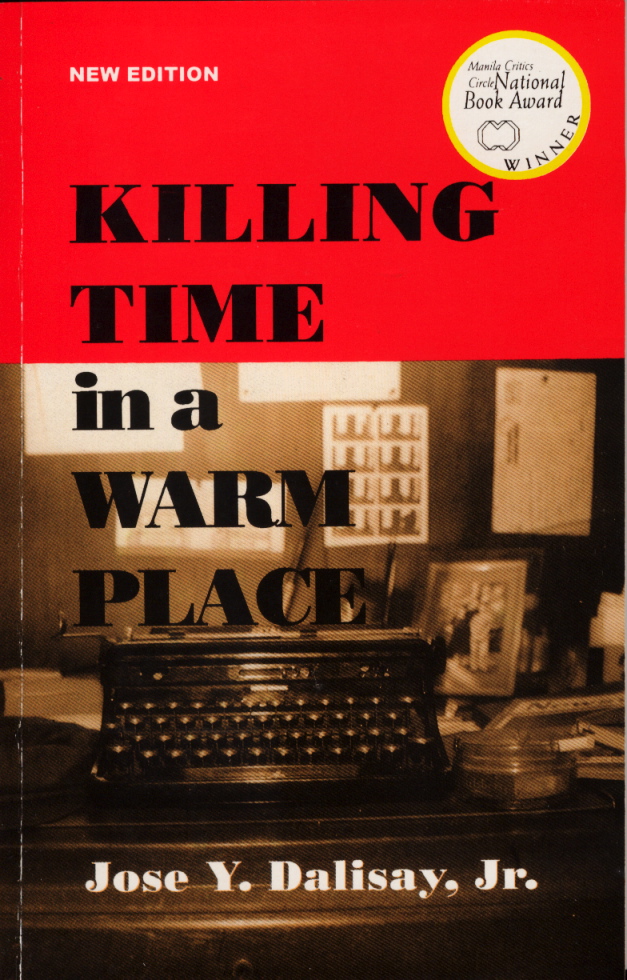
LAST FRIDAY marked the 40th anniversary of the imposition of martial law in the Philippines by Ferdinand Marcos, and the occasion gave rise to much reminiscing among those of us who went through that dark period. I myself was interviewed by a TV station and asked to speak at a forum at the University of the Philippines about my experience with martial law, which I fictionalized in my first novel, Killing Time in a Warm Place (Anvil, 1992).

Of course I’ve never really stopped thinking about martial law all these years, but not until this anniversary did I force myself to sit down and write what martial law really meant to me and what it taught me—the “me” being no longer the 18-year-old boy who was arrested for “subversion” and detained for seven months in Fort Bonifacio, but the 58-year-old man who managed to live far longer and to see more things than he expected.

What I will write down here are entirely my own impressions and conclusions as a private citizen. I am not a political scientist or an ideologue, although I did work as a journalist, and, ironically, as a government PR man in the late 1970s, when there were few other jobs to be had, after my release from detention. I’m sure that some readers and even my friends will find something to quarrel with in these observations, which will be good, because I don’t think we ever really sat down and summed up what that period meant to us, beyond saying—as we should—“Never again!” So, herewith, my random reflections on martial law:

1. It wasn’t as bad as what the Argentines and Chileans went through in their darkest days of state terror. But that comparison’s pointless and even cruel when it’s your body or that of someone you love being laid out in the interrogation room, when it’s your family desperately seeking an abductee, running from prison to prison. The government called it “smiling martial law,” but don’t be fooled—horrific things happened to ordinary citizens in those camps and prisons. It may have been good for business—at least at first—but it was an unmitigated nightmare for designated enemies of the state.

2. An armed forces cannot be at war with its own people. Martial law irreversibly politicized if not corrupted the military, so that it has had to be re-indoctrinated to support the people rather than the ruling elite. I don’t know how far it’s come along in this respect.

3. America can be a great friend, but it will always look out for its own interests first, and those interests don’t always coincide with ours. American politics is coldly opportunistic; the rhetoric of freedom and democracy can easily be used as window dressing for American commercial policy. Ferdinand Marcos and martial law wouldn’t have lasted that long without America’s imprimatur; even though some insist that it was the Americans themselves who took him out—that EDSA was a CIA plot—it was American support that entrenched him in the first place.

4. It takes a people to build a nation—not one leader, certainly not one despot and his cohort. Martial law turned us into blind followers, trusting the leader to make crucial decisions for the rest of us. Except for those who resisted the dictatorship, the rest of us were complicit in it; we wanted it to work and gave it our tacit approval, because it seemed to offer a simple and efficient solution to age-old problems. It also takes a thorough process—not quick fixes like martial law, street revolts, or coups—to secure deep and enduring change.

5. The Church can be a potent and progressive political force when it wants to. Much as I may be dismayed by the intransigence of the Church on social issues such as the RH bill—and indeed I no longer consider myself a practicing Catholic because of this—I acknowledge the contributions and sacrifices of many religious workers to the fight for freedom.

6. We all have our weaknesses and our limits. I saw how people who spoke big words could fall silent at the merest hint of torture, and how even the toughest ones could break at the edge of the unendurable. I have since learned not to demand of others what I could not demand of myself. At the same time, I saw that ordinary people can also be capable of extraordinary courage. Their heroism has made me wonder if I who survived was worthy of it.

7. On a purely personal level, one of post-martial law life’s most awful discoveries was that, incredibly, there were worse things than martial law, worse pains that one could receive, or inflict on oneself and on other people. A government can do only so much evil; the rest you can do yourself. But redemption is always possible for the self-aware, and I suppose that’s what many of us have been striving for these past 40 years.

* * * * *

SPEAKING OF September 21, that was also the day last week when I failed to attend an important book launching in Makati because I was teaching my graduate class in Diliman at that same time. The book was Marites Danguilan Vitug’s Hour Before Dawn: The Fall and Uncertain Rise of the Philippine Supreme Court (Clever Heads Publishing, 2012), which I copyedited, along with its predecessor, the acclaimed and bestselling Shadow of Doubt: Probing the Supreme Court (Newsbreak, 2010).

It’s a copyeditor’s great privilege to read a book—and even reshape it to some extent—before anyone else does, aside from the author and the book designer. With Marites—with whom I worked for many years on Newsbreak—I always know that I’m in for a political junkie’s treat, as she will patiently go behind the scenes to reveal the inner workings of our most important yet also most inscrutable institutions, like the Supreme Court.

Without spoiling the suspense, here’s what I can say about Hour Before Dawn and why you should grab it before they run out of copies: if you’ve ever really wondered why Chief Justice Renato Corona had to be impeached and what the Supreme Court was like under his watch, read this book. If you’ve also wondered what Lourdes Sereno is really like and what kind of Chief Justice she’s going to be, read this book.

As its full title suggests, Hour Before Dawn offers both darkness and light, ample cause for both dismay and hope. It demystifies the Supreme Court and the Justices who preside over our fates, showing them to be as fallibly human as the rest of us, and yet also mindful of the higher judgment of history.

I don’t know if this book is going to earn its author another slew of death threats and libel suits, but I think it should be required reading for every law student, lawyer, and judge in this country—make that every citizen-at-large who hasn’t given up hoping for impartial justice.

Penman No. 5: Encounters with History

Library

Penman for Monday, July 23, 2012

I HAD an unusual encounter with history last week, by way of two sorties to two different exhibits that turned out to have a bit more to do with each other than I might’ve initially thought.

The first trip was something I’d been meaning to do for years but just never came around to doing—a visit to the Presidential Museum and Library at Malacañan Palace. (Our tour guide took pains to point out that “Malacañan” referred specifically to the presidential seat of power and the more popular “Malacañang” to the entire place itself; I think we’ll go with Malacañang for the rest of this piece.)

It’s one of those sad ironies that we footloose Filipinos can make elaborate and expensive plans to visit the White House and Buckingham Palace without ever setting foot on our own presidential abode. It could be that for far too long—particularly all those years of martial law—Malacañang didn’t lend itself to friendly visitations by ordinary citizens. That, plus the fact that we Pinoys have never had much of a sense of history, beyond routine celebrations of Independence Day and tired if not tiresome commemorations of Edsa 1. We’ve been schooled to think of history as high drama, as a calendar of big events, forgetting that those events were forged in offices, classrooms, factories, and the shade of mango trees.

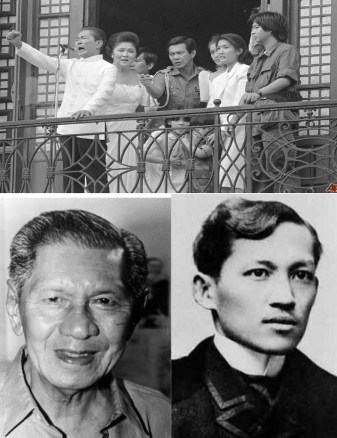
Malacañang is, of course, the perfect theater for high drama—one of the balconies in the museum was the setting for that famous picture of Ferdinand Marcos and his family vowing defiantly to stay and to fight on, shortly before decamping to America in February 1986—but it was also, and remains, home and office to a long succession of men and women who led the country, people doing nothing more earth-shattering on most days than signing letters of condolences and felicitations and proclamations declaring this or that period to be National Fire Prevention Week.

As a museum rat, I’ve always been fascinated by presidential and royal regalia, and by the mementoes left behind by the high and mighty—not to be awed by them, but to appreciate their humanity behind the pomp and the poses. George Washington’s signature blue coat is on display at the Smithsonian, but so are his dentures, which must have hurt far worse than mine, and I don’t even have to worry about putting a country together; the mock pockets on Jose Rizal’s jacket in Dapitan betray a sharp fashion sense even in exile (and the smallness of his body size—a surprise to many Filipinos expecting a titan of a hero—merely accentuates his real stature).

Last week, thanks to the invitation of Ronnie Geron—an undersecretary in the palace and an avid member of Fountain Pen Network-Philippines—our group of over 30 fountain-pen enthusiasts got to visit and tour the Presidential Museum and Library. Since fountain pens themselves are something of an anachronism, stepping back into presidential history was a treat for all of us, and we can’t be blamed for feeling that the highlight of the tour was staring at Emilio Aguinaldo’s pen, or what remained of it—a piece we quickly identified as being very likely a Waterman 52 in mottled red hard rubber (a sorry shell of a pen, in exchange for which I offered to provide a near-mint example from my collection—but no one seemed to be too interested).

There were no other pens to be found that day in the museum and library, but there were roomfuls of other memorabilia, from the time of the Spanish and American governors-general to the prewar, postwar, and recent presidents: photographs, paintings, clothes, books, furniture, documents, and campaign materials. Every president had either a room or a corner devoted to materials from his or her presidency, and our very knowledgeable guide—a young man named Louie—walked us through the history of every room, mindful that the building itself was historic, quite apart from its residents.

The museum and library are located in what is now known as Kalayaan Hall, a 1921 structure used by the Americans as their Executive Building; the Marcoses called it Maharlika Hall, but Cory Aquino gave it its present name. Aside from the Main Hall and Library (or the Gallery of Presidents), the building also contains the Old Waiting Room Gallery, with materials from the Spanish era; the Old Executive Secretary’s Office, with rare Rizaliana; the Old Governor-General’s Office, the Osmeña Cabinet Room, the West and East Staircases, the Quezon Executive Office, the Quirino Council of State Room, the Roxas Cabinet Room, and the Northeast and Southeast Galleries. Plan on spending at least an hour to see and imbibe everything.

What most Filipinos (including many of us) don’t know is that tours of the Presidential Museum and Library are available for a minimal fee to individuals or groups who make the necessary arrangements beforehand. (Call 784-4286 local 4945 or email pml@malacanang.gov.ph for details.) The entrance is through Gate 6, and parking can be had at the Freedom Park just outside the gates.

Another exhibit that I made a point of looking into was one at the Cultural Center of the Philippines Main Gallery, titled “ReCollection 1081: Clear and Present Danger (Visual Dissent on Martial Rule),” co-curated by Marika Constantino and Ruel Caasi, and staged by the CCP in cooperation with the Liongoren Gallery. ReCollection 1081 brings together a selection of artworks produced by Filipino artists during and after martial law, as well as publications produced by both the underground and alternative press.

Those who lived through martial law can’t possibly miss the irony of the exhibition venue—much hated and derided in Imelda Marcos’ time as the domain of the elite, but long since reclaimed by more ordinary folk.

This show was already written about by Constantino herself a few days ago here in the Star, so I’ll just have a few points to add—chiefly, that the artist’s protest against oppression, injustice, and exploitation both preceded and continued after martial law (see Jaime de Guzman’s Sabbath of the Witches, 1970, and Nunelucio Alvarado’s Tunok sa Dahon, 1986).

It was martial law, of course, that provoked both the most explicit and subtlest forms of protest, demanding both courage and wit of the artist, and this range of responses is on full display in the exhibit. Assembling these works was already a feat in itself, considering how many more such works (and their creators) have been lost in the crossfire. Their survival into another century and their installation in the cultural bastion of the dictatorship is sweet poetic justice.

ReCollection 1081 runs until September 30.

Flashback No. 4: What Fil-Ams Can Do

This being the Fourth of July, and my daughter Demi having taken her oath as an American citizen a couple of weeks ago, I thought I’d repost this piece I wrote for the now-defunct San Francisco-based magazine Filipinas a few years ago.

Manileño for January 2007

I HAD a very pleasant and engaging semester as a visiting professor at St. Norbert College in De Pere, Wisconsin, last fall, a welcome break from my teaching duties at the University of the Philippines, where I should be back in harness by the time you read this. Not only did my stint at SNC allow me to introduce the Philippines to about 50 of my own students, only three of whom were Filipino-Americans; I was also able to speak before several groups of students and compatriots in other schools—the University of Michigan, the University of California at San Diego, and Marian College in Fond du Lac, Wisconsin.

With UCSD having one of the biggest Asian-American student populations among US universities, my encounter with the students there after my formal talk proved the longest and most challenging. Here, a student raised a question that I would hear in other places: what was the best thing Filipino-Americans could do for Filipinos and the Philippines?

I’m sure that it’s a question that occupies Filipino-Americans all the time, and for which there are any number of answers, some easier and more obvious than others.

When a supertyphoon hits the Philippines and ravages the land, then relief goods are always welcome; when poor Filipino boys and girls can’t go to school despite their talents, their lives can be changed by scholarships from Fil-Ams who also worked their way up the educational and economic ladder. Many US-based doctors make regular pilgrimages home on medical missions to poor communities. Some Philippine schools receive loads of used books and computers from their alumni in America.

All of these efforts are noble and much appreciated, for sure. A few of them may have been undertaken more to burnish the image of the donor than to uplift the lot of the receiver, but in the end, it doesn’t matter: some public or private good has been done.

At the same time, such humanitarian projects are basically defined by a relationship of dependency, with America as the perennial giver and the Philippines as perpetual receiver. It’s a relationship that, like I told the students in San Diego, can sometimes grate on both sides, with Fil-Ams feeling like the only thing they’re useful for is another donation to another needy cause, and Filipinos feeling like they’re seen as little more than mendicants.

It gets worse when—dependency or not, and whether out of frustration, bossiness, or a genuine concern—some Filipino-Americans dispense quick and easy prescriptions for the cure of Philippine maladies as though nobody back home had the brains or the guts to come up with such ideas on their own.

One such bromide Pinoys often hear is, “Why don’t you just unite behind the President and stop bickering with one another?” Sounds good, but it makes me wonder why more than two million Filipino-Americans can’t get together under, say, just one dozen regional associations and one alumni association for each major university or college, and elect a congressman or US senator among themselves.

The fact is that the best and worst of our culture manifest themselves on both sides of the ocean. Our generosity, our sense of self-sacrifice for the good of the family, our commitment to education, and our industry and resourcefulness have helped us back home as much as they have gained our compatriots a firm footing in American society. On the other hand, the same sorry habits of inggitan, intrigahan, and siraan have fragmented Filipinos in Manila and Manhattan, in Cebu and Chicago, in Davao and Detroit (I’m using these cities metaphorically, but I’m sure you can supply the damning details). One of the worst examples I heard of recently had to do with the visit some years ago of a Philippine president to a Midwestern city—only to find two competing Fil-Am organizations holding two separate programs in two hotels facing each other across the street.

So what did I tell the bright and idealistic Fil-Am students who asked me what I thought they could best do for the Philippines?

Be good Americans, I said—whatever that may mean to each of them. Get engaged in America’s political processes, and make a difference in your own sphere of action. Vote not just for fellow Filipino-Americans—although a few more such voices in high places could help the community as a whole—but for political leaders who will make responsible decisions that will benefit peoples everywhere, including Filipinos.

As the world’s only remaining superpower, America needs all the critical intelligence (and I don’t mean military intelligence) it can muster, and Filipino-Americans can make themselves heard on both domestic and foreign-policy issues, instead of simply going with the flow and making themselves as inconspicuous as possible.

And what’s our claim to being in a unique position to tell Americans and American leaders something they don’t know? Well, we lived with America for half a century. As I often tell my American friends, we were their first Vietnam; and yet we also view America with much greater affection—some would say unreasonably so—than they can ever expect from Afghanistan or Iraq.

Overseas charity is good for the soul and is always welcome; but as they say, it begins at home, as does good global citizenship.