Qwertyman No. 111: Justice Fever

Qwertyman for Monday, September 16, 2024

A DANGEROUS outbreak of justice fever has hit the Philippines these past few weeks, threatening to make that country’s startled citizens believe that their government is intent on doing right by the people, no matter what and come what may.

In quick succession, Bamban ex-mayor Alice Guo, alleged to be a Manchurian candidate, was picked up in Indonesia and flown back to the Philippines; another on the Philippines’ most wanted list, the self-styled “Son of God” Pastor Apollo Quiboloy, emerged from his subterranean kingdom to surrender to the Pharisees, er, authorities; why, even former Palawan governor Joel Reyes, wanted for the murder of an environmental crusader and long out of sight and out of mind, turned himself in; and it should only be a matter of time before ex-Rep. Arnie Teves comes home from his extended Timorese vacation to face murder charges in Negros Oriental. (I don’t think the return of former Iloilo Mayor Jed Mabilog, hounded out of office by the former President on trumped-up charges of drug trafficking, counts in this category.)

What on earth, you might ask, is going on? Is the government running some secret—and wildly successful—“balik-fugitive” campaign? Were there possibly offers and assurances made of kid-gloves treatment, fully furnished jail cells, state-witness options, conjugal visits, and lifetime colonoscopies?

For a while back there, it seemed like the old regime hadn’t completely vanished—you know, the chummy-chummy-with-criminals vibe, which that viral photo with the chinita mayor smiling sweetly and flashing “V” signs between her two captors seemed to suggest. But justice fever is vicious when it takes hold of its victims, and by the time Pastor Apollo Quiboloy was caught in Davao, the afflicted authorities had learned their lesson, and quickly whisked him away in a C-130 to Manila. Why, President Marcos Jr. even fired the chief of the Bureau of Immigration, Norman Tansingco, over the Guo affair. Illegal POGOs were raided, and captives freed.

As if this spate of high-profile catches and prosecutions wasn’t enough, in the Senate and the House of Representatives—once safely Duterte territory—lawmakers were outdoing each other poking holes into Vice President Sara Duterte’s P2-billion budget proposal. Her friend Harry Roque was found in contempt of Congress and served a warrant of arrest for failing or refusing to account for his unexplained wealth. 

Duterte ally Sen. Bong Go also caught the fever, proclaiming in a tweet that he had always been against POGOs, seeing them as a threat to peace and order. “For the record,” he emphasized, “I really hate POGOs.” Justice fever apparently induces amnesia, because the good senator forgot that three years ago, he voted in favor of RA 11591, taxing and effectively legitimizing POGOs in the country.

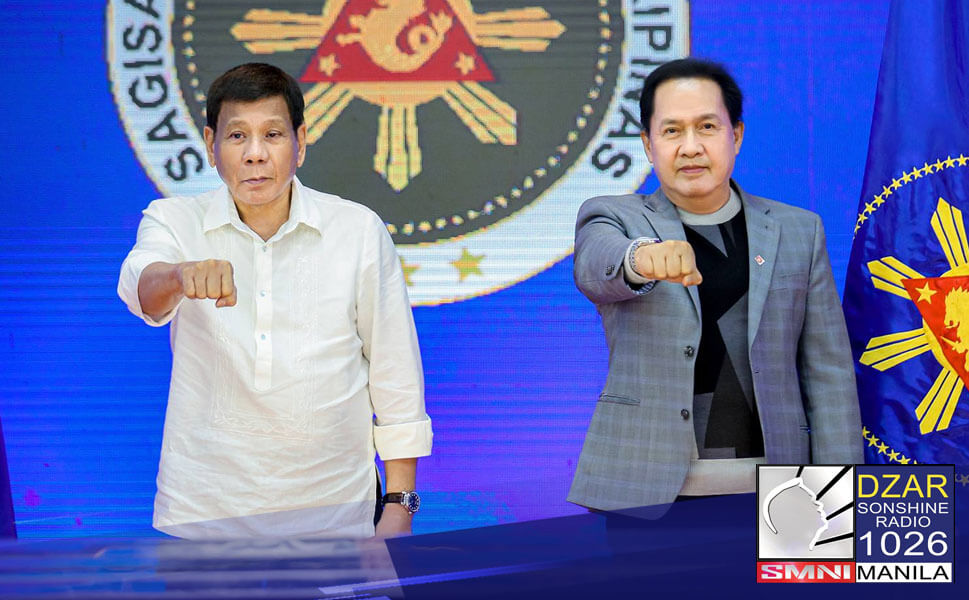
All this would have been unimaginable then, but here’s something even more incredible: former President Rodrigo Duterte—who routinely ordered his supporters and the police to “shoot” drug suspects without worrying too much about the finer points of the law—seems to have woken up from a kind of coma, suddenly remembering that he was, once upon a time, a lawyer wedded to the idea that people have human rights. 

We know that because Atty. Digong, probably still in a slight daze but overcome with a resurgent sense of right and wrong, filed charges of malicious mischief against Interior Secretary Benhur Abalos, PNP chief General Rommel Marbil, and PNP Region XI chief Brigadier General Nicolas Torre III in the wake of his patron and spiritual adviser’s arrest. 

Not being a lawyer, I had to look up exactly what “malicious mischief” means. Here’s what I found online: “Malicious mischief is a crime of property damage. In order to convict someone of malicious mischief, the prosecutor must prove the damage done to the property was not accidental. A person is guilty of malicious mischief when he or she ‘knowingly or maliciously’ causes physical damage to another person’s property.”

From what I gather, malicious mischief requires a certain, uhm, finesse, a delicacy that appreciates degrees of injury, and even ironic humor. “Mischief” isn’t like the sledgehammer of bloody, first-degree murder; it’s more like a yap rather than a roar, a pinch rather than a punch. You commit malicious mischief by, say, kicking your neighbor’s dog or unpotting his daisies. It’s meant more to annoy and enrage rather than to kill. (Interestingly, under the Revised Penal  Code, “destroying or damaging statues, public monuments or paintings” and “using any poisonous or corrosive substance; or spreading any infection or contagion among cattle; or who cause damage to the property of the National Museum or National Library” also qualify as special cases of malicious mischief.)

I haven’t read the charges in their entirety, so I don’t know exactly what Atty. Digong was complaining about—I’m guessing door locks broken and, okay, egos pricked. But the mere fact of Digong the Terrible sallying forth into a court of law on a matter as grievous as upended flower pots suggests to me—as I wrote about a few weeks ago—that the man has truly undergone the kind of religious conversion that now allows him to believe in, well, judicial justice. He, too, has caught the fever, and now reposes his faith in a judicial system he once decapitated with pronouncements such as this one from April 9, 2018, referencing then Chief Justice Maria Lourdes Sereno: “I’m putting you on notice that I’m your enemy, and you have to be out of the Supreme Court!”

The only problem with this rash of righteousness and conscience is, how long will it last, and what will happen when it wears off and we return to our old jolly, reprobate selves? 

The Dutertes are easy targets, no thanks to their patriarch’s resolve to establish himself as the least presidential president in Philippine history. His successor is reaping the low-hanging fruit of that unpopularity, enjoying, no doubt, the unfolding spectacle. BBM should be warned, however, that like many afflictions, the effects of justice fever can be long-lasting. Once its victims get used to it, their delusions could linger, and they’ll keep expecting and wanting more, and more.

(Photo from dzar1026.ph)

Qwertyman No. 110: The Truth Shall Make You Mad

Qwertyman for Monday, September 9, 2024

I’M WRITING this on a Friday morning with no particular topic in mind, threatening to be overwhelmed by a slurry of depressing and outrageous news flooding my inbox. As a news junkie, I get my foreign news in digests from the New York Times and the Washington Post, and of course I look up all the major local news websites. You’d think that would be enough, but of course I have to open CNN and the BBC online as well—and occasionally, when I feel obliged to do so, Fox News, if only to see what those people are saying. And then I turn the TV on to CNN, BBC, Al Jazeera, and Channel News Asia for onsite reportage and commentary, especially from a non-Western perspective. 

For all my efforts, this is what I got today, which I’m sure many of you did as well:

“Ugandan Olympian Rebecca Cheptegai dies after being set on fire by boyfriend” (CNN)

“Accused Georgia school shooter Colt Gray, 14, received gun used in massacre as Christmas gift from dad” (New York Post)

“Israeli attacks in Gaza kill 35 people as polio vaccinations continue” (Al Jazeera)

“Trump says he’d create a government efficiency commission led by Elon Musk” (AP News)

“Woman testifies husband drugged her for years, recruited dozens to rape her” (Washington Post)

“What was behind the viral photo of Guo, Abalos, and Marbil?” (Rappler)

On a day like this, you have to ask yourself, “What has the world come to?” followed quickly by “Do I really want to know?” You emerge with a sense of a world gone mad, a moral universe you no longer recognize, playing by different rules for different people. Each one of those news items I mentioned above was enough to make me retch. 

While the loss of human life naturally rises to the fore of our concerns, how does one diminish the horror of being abused while unconscious over 70 times for years, or the cruel irony of vaccinating children only to bomb them afterwards? On which planet is it all right for a father to buy his young son—already known and reported to be prone to violence—an AR-14-style assault rifle for Christmas? (Answer: Not Mars but the United States, thanks to lax gun laws and even laxer parental supervision.) And speaking of that country, what do Americans think they can expect from a government run by two egomaniacs?

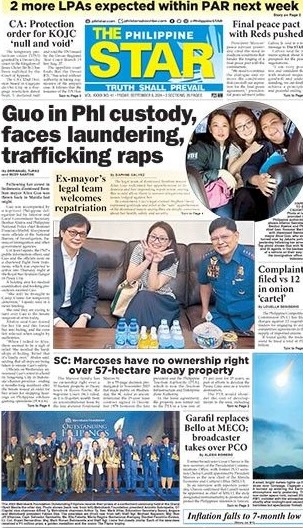
Let’s go to that viral snapshot, which I saw with my morning coffee, when I was still half-asleep and not too sure of what exactly I was looking at—the secretary, the escapee, and the police general seated on a sofa, all smiling into the camera, with a raft of refreshments on a table before them. 

No, I immediately thought, surely this was from the recent past, when all was still peachy between Ms. Guo and the administration. Or could it have been another of those clever AI pastiches, mounted to embarrass our honest and hard-working officials in hot pursuit of a wanted criminal? How else could you explain Alice’s sweet smile and finger gestures, and the equally benign countenances of the gentlemen beside her? Where was even the slightest trace of the loneliness and fear that were said to have driven our favorite chinita into self-exile, which would have left her haggard and despondent? 

Not having read anything else at that point, I almost made a comment on the first FB post of that image to the effect that “No, no, this can’t be true, this is all fake!” Providentially I held back, and looked for what I was sure would be a vehement denial from those concerned that the picture was ever taken. Instead, I found a story and a video of the good secretary explaining that he had no idea what Ms. Guo was doing as their “documentation” photo was being taken. Good Lord, I thought—if that wasn’t the chummiest picture I’d ever seen of captors and their captive, like something from a high-school reunion. So, okay, the smiles can be explained away—Alice was relieved that the Philippine police will now secure her from all threats; Abalos and Marfil were happy to have completed their mission. Does that call for refreshments, for a toast? Where did decorum go?

Sometimes I wonder if we read the news just to get all riled up—like poking yourself in the eye—as proof of life, or of our ability to still think and figure out right from wrong.

There’s a great article by Brett and Kay McKay on a website called artofmanliness.com titled “Is There Any Reason to Keep Up with the News?” It notes that “In The News: A User’s Guide, philosopher Alain de Botton draws on the ideas of Hegel to posit that in fact, the news in modern cultures has in some ways replaced ‘religion as our central source of guidance and our touchstone of authority.’

“Morning and evening prayers have been substituted with checking one’s news feed immediately upon rising and retiring to bed. While the faithful once sought inspiration in scripture, it’s now in the news ‘we hope to receive revelations, learn who is good and bad, fathom suffering and understand the unfolding logic of existence. And here, too, if we refuse to take part in the rituals, there could be imputations of heresy.’

“If the news represents a new kind of faith, it is surely one of our least examined. The media rarely does stories on itself—reports that might examine their actual worth and credibility.”

The article goes on to dissect our hallowed reasons for following the news—e.g., our desire for the truth and for the betterment of humanity—only to show how narrowed and pliable the truth can be, and how the news actually dehumanizes people (quoting Stalin: “The death of one person is a tragedy; the death of one million is a statistic”) rather than sharpens our humanity.

This I know: if the news is still the bringer of truth as I knew it to be, then this morning’s news has made me mad, in both senses of the word.

Qwertyman No. 109: Digong’s Conversion

Qwertyman for Monday, September 2, 2024

RATHER THAN mock former President Rodrigo R. Duterte for his unflinching support for his bosom friend and spiritual adviser, the fugitive Pastor Apollo Quiboloy, I think we should praise and congratulate him for finally seeing the light and acknowledging the importance of human rights.

It must be age, or the reflection afforded by retirement, but the Digong Duterte we heard from last week in the wake of the massive police raid on Quiboloy’s lair was worlds apart from the apoplectic and coarse-tongued person we used to know. It took some time—likely aided by a sobering reversal of political fortunes—but gone is the swaggering Mussolini of the past, prone to profanity and what his apologists liked to call “hyperbole,” replaced by the pained and measured indignation of the aggrieved.

Of course, his statement could have been crafted by one of his former spokespersons, who must therefore take responsibility for the minor grammatical and stylistic infelicities in the text—but how can we even complain about language when gross human rights violations are on the table?

For those of you who missed it because you were wasting your time deploring Caloy Yulo’s filial impiety, here’s what PRRD said, in full:

“Our country has never been in a more tragic state as it is today. Rights have been trampled upon and our laws, derided.

“Early today, elements of the Philippine National Police Regional Office, led by Gen. Nicolas Torre Ill, forced their way into the Kingdom of Jesus Christ compound which resulted to (sic) a violent confrontation and the unfortunate death of one KOJC member and the requiring of (sic) immediate medical attention of many others.

“We sympathize with the members of the KoJC for having become victims of political harassment, persecution, violence and abuse of authority. This certainly puts a dark stain on the hands of those involved in today’s incident, led by no less than the top police official of the region.

“We call on the remaining decent and patriotic members of our government not to allow themselves to be used and to be abusive and violent in enforcing illegal orders.

“We call on all Filipinos, regardless of political persuasion, to offer prayers for peace and justice, and to spare our people of the unwarranted tension brought about by the reign of fear and terror by people sworn to uphold the law and protect the citizens of this country.

“Again, let us ask this administration how it can guarantee the preservation of the constitutional rights of our fellow Filipinos when even the most fundamental of these rights are being blatantly violated? (sic)

Why, minus the edits, this could have passed for something that PRRD’s arch-nemesis, former Sen. Leila de Lima, could have said a few years ago, before she went off to prison. Or it could have been mouthed by the late Chito Gascon, whose Commission on Human Rights PRRD sought to abolish for meddling in police investigations into dastardly drug deals, even getting Congress to pare its budget down to a more suitable P1,000. 

That Rodrigo Duterte could now speak so eloquently and convincingly of the need to uphold human rights is a testament to the possibility and power of redemptive conversion, which such famous miscreants as Paul of Tarsus and Ignatius of Loyola underwent. Gazing out on the horizon on the beaches of Davao (or in the Quiboloy compound, in his new job as its administrator), the former president must have felt a pang of remorse for all the lives that were needlessly lost under his administration—all because his followers in the police failed to understand, as his spokesmen were at pains to emphasize, that he was “only joking” and was given to “exaggerating” for rhetorical effect.

How in heaven’s name could they have taken him literally when he told a controversial police officer whom he assigned to a southern city in 2019, “Go there and you are free to kill everybody. Son of a b****, start killing there. The two of us will then go to jail!”

The following year, at another event in another province, PRRD was quoted by the newspapers as saying, in Filipino, “All addicts have guns. If there’s even a hint of wrongdoing, any overt act, even if you don’t see a gun, just go ahead and shoot him. You should go first, because you might be shot. Shoot him first, because he will really draw his gun on you, and you will die…. Human rights, you are preoccupied with the lives of the criminals and drug pushers. As mayor and as president, I have to protect every man, woman, and child from the dangers of drugs. The game is killing…. I say to the human rights, I don’t give a shit about you. My order is still the same. Because I am angry!”

Now, there’s every possibility that the president may have been misquoted by journalists hungry for incendiary news. But even granting that PRRD did say horrible things like that—perhaps in a fit of desperation over the fact that the drug menace he promised to eradicate in six months was still very much around toward the end of his presidency—that allegedly murderous despot is a ghost in the past. Today’s Digong is a sensitive soul with a nuanced sensibility that understands and will not countenance “abuse of authority” and “illegal orders,” especially when these are implemented by ingrates in the police force whose base pay he doubled (shame on the 2,000 cops who apparently forgot this in their brazen assault).

Indeed, if Rodrigo Roa Duterte can undergo and manifest such a miraculous conversion, then hope yet exists for the rest and the worst of us, who wallow in unproductive cynicism. Indeed it might even be that his resistance to the idea of yielding Pastor Quiboloy to the authorities stems from the deep debt of gratitude he feels toward his spiritual adviser, with whom he must have read and parsed many a Bible story. If there’s anything we Filipinos and especially the Dutertes understand and respect, it’s the value of friendship—right? Something in me already misses the old Digong, but I’ll gladly march with this new one in defense “of the constitutional rights of our fellow Filipinos.” I hope Sen. Leila can find it in her heart to forgive and forget, and link arms with Lady Justice’s latest convert.

Qwertyman No. 107: The Epalympics

Qwertyman for Monday, August 19, 2024

FIRST OF all, a definition of terms, particularly for the benefit of our foreign friends: “epal” is a Filipino word that has nothing to do with friendship over the Internet, although it does presume on some (unearned and likely bogus) level of familiarity between two people—one an achiever (e.g., an Olympic champion) and the other, a politician. The term is rooted in the Filipino word “kapal” or “thickness,” the complete phrase being “kapal mukha” (aka “kapalmuks”) or “thick-faced,” referring to the utter shamelessness some people can be capable of. (EDIT: I’ve been told that “epal” more likely derives from “papel” or “pumapapel” to mean “promoting oneself,” which makes even better sense.)

In the case of “epal,” the specific context is credit-grabbing or publicity-seeking, such as when a politician plasters his or her name all over a civil works project to suggest that it wouldn’t have happened without him or her—or, in recent weeks, when a politician posts a meme supposedly congratulating an Olympic champion, as if he or she had anything to do with that person’s sterling achievement. 

Closely related to “epal” in the Pinoy political vocabulary is “trapo,” which started out as “tradpol” for “traditional politician” but which quickly and sensibly devolved into the Filipino word for “rag”—yes, that piece of cloth you mop up the dirty and yucky stuff with. Trapos will find nothing wrong with being epal—it’s central to their trapo-ness—as they are pathologically incapable of modesty or self-awareness, and equate anything that promotes their well-being with the public good, the people being privileged to be served by them rather than the other way around.

We witnessed this in abundance in the wake of the Paris Olympics, from which the Philippines came home with two golds and two bronzes. In what Netizens quickly dubbed the “Epalympics,” our medalists, especially gymnast Carlos Yulo, were showered not just with congratulatory memes from the usual politicos but with tons of cash and other goodies from both public and private donors. 

There’s nothing, of course, preventing our distinguished and hardworking public officials—and even those seeking to replace them—from sharing in the post-victory jubilation. Lord knows we needed that boost to our spirits, even if our national fantasies still revolve around basketball like nothing’s happened since Berlin 1936 (there’s something to be said here about our propensity for self-punishment and martyrdom, but we’ll leave that for another time). 

It’s possible that Caloy was looking forward to the chorus of fulsome praise from his favorite senators and congressmen, if only as a relief from all the messages urging him to either disown his mother or to find another girlfriend shaped more like, well, a gymnast. A politician, after all, represents a constituency and presumes to speak for them, so it has to be extra comforting to realize that it’s not only Cong. X speaking for himself, but all 250,000 voters in the third district of his province, even if none of the appear in the meme; heck, even Caloy himself may not be in the picture, but does it matter? He has all the glory he needs; let him share it with the less fortunate.

As a writer, however—and speaking on behalf of my fellow artists—I must register my complaint over the apparent partiality of our esteemed epals, who have never congratulated me or my colleagues despite our considerable achievements on both a national and global scale. Not even my local councilor or barangay captain greeted me when my novel was shortlisted for the Man Asian Literary Prize, nor did the UP Singing Ambassadors and UP Madrigal Singers receive online hosannas for their triumphs in Arezzo. (This list can go on and on to include our prizewinners in film, painting, sculpture, etc.) No, sir—our epals are staunchly and singularly sports-minded, perhaps in commiseration with athletes who have to run, vault, gyrate, box, and even shoot their way to victory; politics, after all, is an ancient blood sport, at which not necessarily the best but the strongest survive.

Come to think of it, I can’t recall a senator or congressman congratulating journalist Maria Ressa (save for a few brave souls in the opposition like VP Leni)—let alone give her a million-peso bonus—for winning the Nobel Prize, which will probably take another century for another Pinoy to get. 

Yes, let’s talk about those bonuses—which all of us are happy our sports heroes are receiving and frankly envy them for, there being no such generous windfalls in our line of work. It’s another sure sign of ka-epalan when the “incentive” is given after the fact of victory, and not before when it might have mattered more, and not just to one champion but to an entire program in dire need of such basics as food, uniforms, shoes, and transportation money. (One deathless politico even offered Yulo an extra P5 million if he were to reconcile with his estranged mom—awww, so touching! You can bet he’ll be there with an outsize check when the tearful moment happens.)

Yes, Yulo & Co. did receive government and private help on their way to the Olympics, for which they’ve been properly thankful, and yes, those investments clearly paid off. But where were all these mega-millions for the grassroots sports programs that could have produced a dozen more Caloys? Yulo himself has nobly announced that he will share his bounty with up-and-coming gymnasts, and bless him for that, but that’s not even his job. 

The most cringeworthy prospect yet lies ahead: who among our Epalympians will succeed in getting Caloy Yulo on his or her campaign poster come the elections in 2025? And God forbid, will Yulo himself do a Manny Pacquiao and tumble his way into the political arena down the road? As we say in these drama-dizzy islands, “Abangan.”

Qwertyman No. 106: For Our National Peace of Mind

Qwertyman for Monday, August 12, 2024

FOR A country starved for heroes, Carlos Yulo’s double-gold performance at the Olympics provided a sumptuous feast—a bacchanalian one, to use probably the newest and most notorious word in many people’s vocabulary. In one YouTube replay after another, we marveled at his seemingly magical flips and tumbles, and our eyes welled with tears when the Philippine anthem played over the stadium’s loudspeakers.

The euphoria effectively drowned out the previous week’s near-manic howls over the controversial Dionysian tableau of the opening ceremonies and the chorus proclaiming Paris as the most evil and corrupt city on the planet. Suddenly Paris acquired a golden halo; Yulo was beatified on social media as the exemplar of perseverance and tough-mindedness, and rightly so. His feat—sterling victories achieved despite overwhelming odds—was unprecedented and not likely to be equaled by another non-hyphenated Pinoy anytime soon.

But no sooner had Filipinos united in that moment of jubilation than they, almost by instinct, found cause to divide once again, this time over one’s choice of villainess in poor Caloy’s life: the bitter mother or the sexy girlfriend, behind either one of whom platoons of supporters rallied. Team Nanay exalted motherhood and filial piety above all else; Team GF cheered for the pursuit of happiness. Who will get to the podium remains to be seen.

I’m sure Caloy Yulo isn’t alone in his predicament. An assiduous journalist just has to comb through the life stories of all the 400+ gold medalists in the Paris Olympics to discover that 87.93 percent of them have problems with mothers, fathers, girlfriends, boyfriends, siblings, in-laws, best friends, neighbors, and pets. (For these, I would look most closely into places like Uzbekistan, Uganda, and, yes, Italy, where families seem to be big and noisy.) Statistically speaking, there has to be a champion shotputter or a synchronized swimmer somewhere whose miserable mama hates his shapely squeeze. (I’ve even heard someone posit over breakfast coffee that maybe EJ Obiena needed a mother/girlfriend problem to clear the bar at 6.0 meters.)

The big difference is that no one goes to town with family dramas quite like us Pinoys, especially Pinoys with social-media accounts normally given to showing off what they just ate or their OOTD. To show, at least once in a while, that there’s actually a thinking and feeling person behind the avatar (and online, feeling equals thinking), we post a strong opinion—never mind that it’s the millionth repost of someone else’s meme. We find it important—nay, obligatory—to take sides on vital issues (that do not include PISA scores, ICC probes, or jeepney modernization). We have to decide if the mother or the girlfriend is at fault; our national peace of mind depends on it. Never mind what Caloy Yulo himself thinks—this is bigger than him (like most things are).

And this is just the beginning, although it’s inextricably tied in with the next big question that 115 million Filipinos have to grapple with: what should Caloy do with all his money? (I don’t even want to think about whether he should go into showbiz or politics next—my friend Ige Ramos’ post on those prospects was probably the sanest of the past week, and one Caloy would do well to heed.)

In addition to all the lifetime supplies of ramen, litson manok, and colonoscopies that come with being a Pinoy Olympic laureate, will it be too much to offer Caloy Yulo a lifetime supply of peace? It costs nothing but our willful silence.

Seriously now, silence is a virtue, and withholding opinion can be as valuable and as helpful as giving one. It doesn’t mean you’re dumb or uncaring. On the contrary, it might mean that you know enough to understand that staying out of the fray and keeping your thoughts to yourself is the more sensible if not kinder option. But we Pinoys, the reigning world usisero and pakialamero champions, have never been known for excessive self-restraint, which manifests only when the neighbor’s wife is being beaten senseless by her husband (“Wala tayong kinalaman diyan”) or when witnesses are called to testify to their boss’ or their congressman’s misdeeds.

Sadly, social media has empowered everyone from nitwits to geniuses (and of course, everyone thinks of himself or herself as a genius, especially the nitwit) to hold forth on every conceivable subject, even and especially if the issue at hand is none of one’s bloody business. 

I say that with the ironic awareness that we opinion writers do pretty much the same thing, with some sort of official license; we even get paid for it. Indeed we may even be the ultimate pakialamero, poking our noses into all manner of secrets and scandals, particularly the government variety (or maybe not me, because I don’t hobnob with politicians or their secretaries, and so am useless when it comes to the saucy stuff). But the difference is that having to write 1,000 words instead of a ten-word tweet, we actually have to stop to think about how we feel, to contextualize, and perhaps even to decide that we have nothing truly important or useful or even amusing to say about the matter, and so should move on to something else.

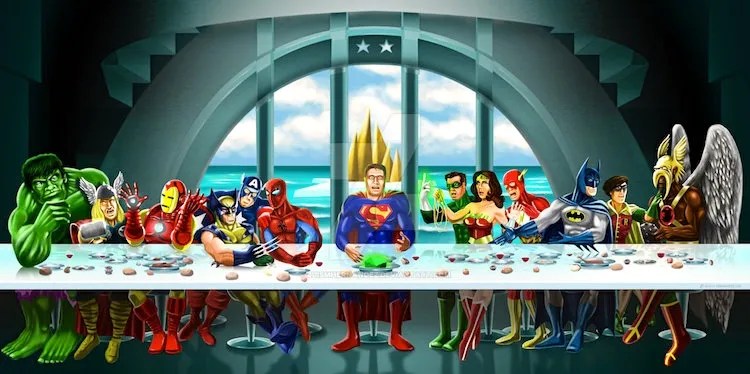
At least Caloy can rest assured that given the nature of the beast, this tempest will blow over soon. (Is anyone still posting about the Last Supper? That’s so last-week!) And before too long, he can rightfully enjoy the pommel horse in his P32-million condo. Wait—it does have a pommel horse, right? If not, it should! What do you think?

(Photo from rappler.com)

Penman No. 465: Back to the Nineties

Penman for Sunday, August 11, 2024

AMONG THIS year’s most interesting new books is one that’s neither a novel nor a political exposé, but a musical chronicle of a decade that many Filipinos now look back on with a certain nostalgia, albeit for different reasons—the 1990s.

Say “the Nineties,” and a range of responses will come to mind depending on how old you were then. For today’s seniors, the core of it was likely FVR’s infectious optimism over “Philippines 2000,” the relative stability we had gained after the anti-Cory coups and in anticipation of our centennial in 1998. For those younger but old enough to drink beer, it was the age of the Eraserheads, Clubb Dredd, the ‘70s Bistro, and Mayric’s, an explosion of OPM like we had seen back in the 1970s but with a harder and sharper edge.

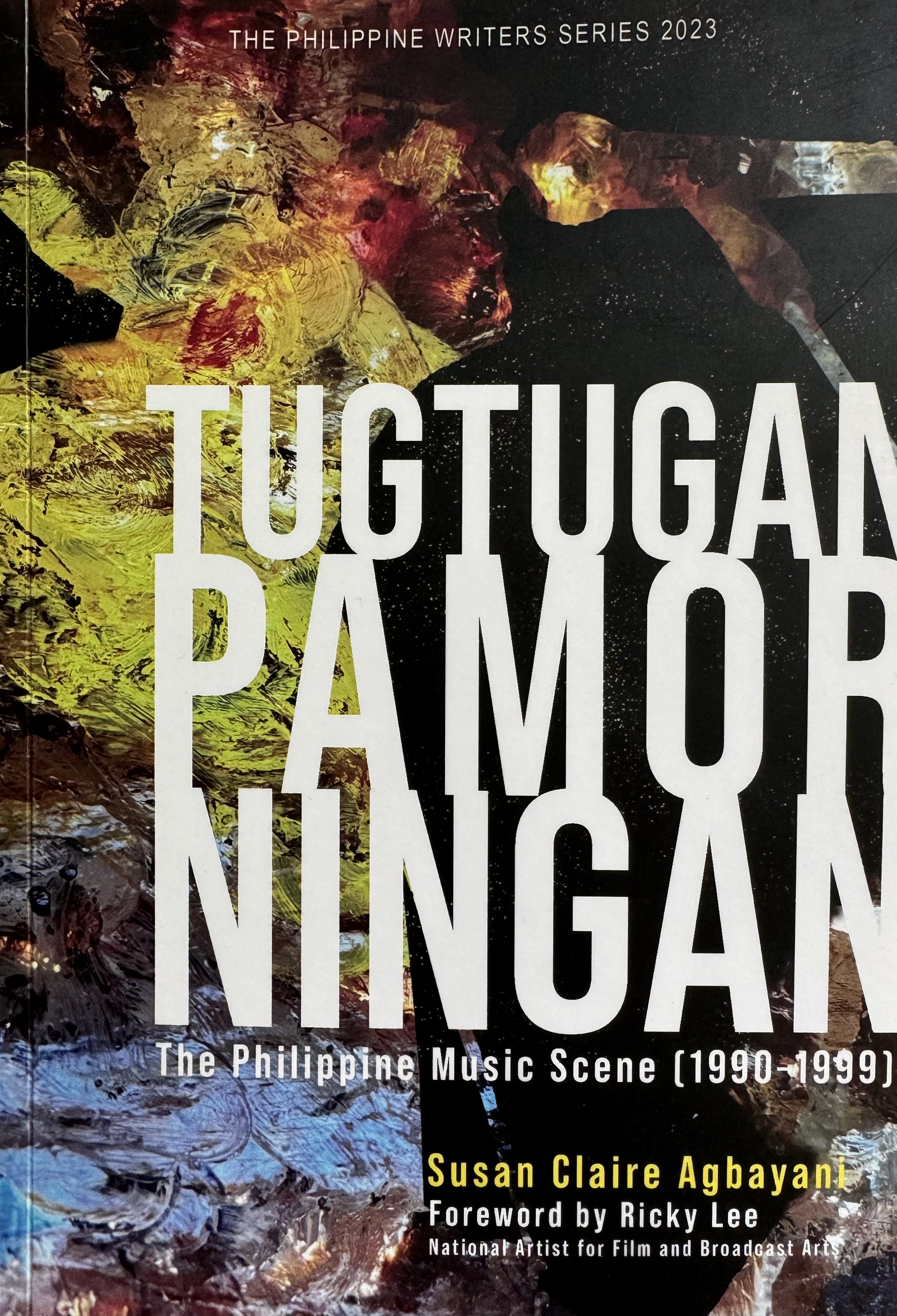
It’s that latter scenario—set against the context of our transition from Cory to FVR to Erap—that’s captured in Susan Claire Agbayani’s landmark Tugtugan Pamorningan: The Philippine Music Scene 1990-1999 (University of the Philippines Press, 2024, part of the Philippine Writers Series of the UP Institute of Creative Writing). An indefatigable cultural journalist, publicist, and sometime concert producer (and also, I must proudly admit, my former student), Claire was among the very few writers who could have undertaken this job (Eric Caruncho, Jessica Zafra, and Pocholo Concepcion, all of whom she cites, would have been the others). 

Comprehensively, the book’s chapters cover bars and concerts, the music scene, personality profiles, duos and trios, pop/jazz/R&B/show bands, alternative/rock bands, the Eraserheads (yes, a chapter all to their own), Mr. and Mss. Saigon, and visiting acts, rounded out by a gallery of period pics.

As a compilation of pieces from Claire’s reportage at that time, the book revives not only the music but also the issues besetting the industry then, such as Sen. Tito Sotto’s wanting to ban the Eraserheads song “Alapaap” for supposedly promoting drug abuse. Priceless vignettes abound, such as that of Basil Valdez singing “Ama Namin” to composer George Canseco’s wife over the phone, three days before she died, and of Ely Buendia telling Nonoy Zuñiga that he had won a singing competition in school with the latter’s “Doon Lang.” We learn about Humanities teacher and all-around performer Edru Abraham’s Lebanese ancestry and how it connects him to world music.

The best scenes, I think, are the saddest ones, such as this piece on a jazz diva:

“She goes around greeting the waiters, then the manager. At last, she sits on a stool, and croons ‘Left Alone,’ the song after which the bar was named. She closes her eyes, closed them more tightly as a couple walks out in the middle of her song. The waiters laugh loudly in the background, occupied with their own concerns. Those who remain inside the bar talk not in whispers. No, they don’t know her. They don’t know Annie Brazil.”

But ultimately it’s the music, the sheer variety and vitality of it, that surges through, so innate to the Filipino and so necessary. If there were an Olympics for music, we’d make the podium in all the categories, and Tugtugan Pamorningan reminds us why. As the title implies, it’s a nightlong festival for us when the music starts. But like night itself, even the Nineties came to an end, with the 2000s bringing in MP3, iTunes, and Spotify, and somehow the smoky, small-bar intimacy that the previous decade connoted gave way to Taylor Swift mega-concerts that people actually flew out to instead of taking a taxi.

I contributed an afterword to the book, so here’s a bit more of what I had to say:

I was a bit too old by the time the ‘90s came along to experience it in the way Claire has so capably and faithfully chronicled in this book, but still young enough to imbibe its energy and its excesses. I was 36 in 1990, finishing my PhD in the States, and when I returned to Manila the following year after five years of being away, I found a radically different scene from the one I’d left just after EDSA. I had a lot to adjust to, and somehow San Miguel beer and the city’s new nightlife seemed to ease those pains, at least until the next morning. 

That was how, despite being too old to know the Eraserheads and their music, I managed to stumble once or twice into Club Dredd, Mayrics, the ‘70s Bistro, and a few other meccas mentioned here, but mostly just out of curiosity. I guess I was looking for something else, and found it on Timog Avenue with my partners-in-crime Charlson Ong and Arnold Azurin, finishing up with some coffee or a beer for the road at Sam’s Diner on Quezon Avenue at 3 am. I wasn’t even a Penguin person—I never thought of myself as being hip or cool—and I preferred hanging out with journos after work in that kebab place on Timog.

That was my life as a barfly—which was also how my newspaper column got that title—and its soundtrack consisted of Basia, Bryan Adams, and “Total Eclipse of the Heart.” I wasn’t much into bands—no one could beat the Beatles—and OPM for me meant APO and Louie Ocampo, whose songs were singable and could make me smile, which I needed a lot. It was a wild time, when I was smoking and drinking and messing around town in my white VW, courting disaster, until one day I found my way home and decided to stay there forever.

That makes the ‘90s sound like some kind of inferno, but now that I think about it, it was the last gasp of innocence before the 2000s and everything we associate with it—9/11, GMA and Erap, the Internet, the iPod, social media, K-pop, tokhang, Trump, the pandemic, the Marcos restoration, and AI—came in. There was a simple-mindedness even to our vices then; truth was truth, fake was fake, and it was easy to tell one from the other. It was rough and raw in many ways—even our 14.4K modems screeched like cats in heat when they connected—but we still got wide-eyed about the possibility of extra-terrestial menace in The X-Files, and we may even have believed that FVR’s “Philippines 2000” was going to be a better place even as we got worried sick over what Y2K would bring, so there remained a tender spot of credulity in us.

That’s all gone now, like Jacqui Magno’s voice, replaced by CGIs, deep fakes, and other synthetics produced by FaceMagic and ChatGPT. 

I can’t honestly say that I miss the ‘90s, and I feel much relieved to have survived them, but there’d be a huge hole in my life—and in the nation’s—if they didn’t happen. What’s in that hole is what’s in the music Claire writes about—and the music often gets it better than even we writers can.

Qwertyman No. 105: Pronouns and Parodies

Qwertyman for Monday, August 5, 2024

SOME DAYS, I swear, when I open my Facebook feed, I’m met by a flood of vexatious opinion certain to trigger my worst reflexes. Much as I’m tempted to respond, I rarely do, knowing that FB comments don’t really soften hearts and minds, but only make them harder. Also, I’m not the witty sort with one-liners that will go viral; my thoughts and words like to ramble and even lose their way, but at least you know it’s not AI or the “Forward” button at work.

Two topics did get me worked up a bit last week, and I’m going to use this column to write the kind of longish social-media comment no one will read. You’ll recognize both issues instantly if you haven’t been living under a rock.

The first was that picture of a seated gay “personality” (I’m never quite sure how persons become “personalities”) lecturing a waiter standing at parade-rest, reportedly for two hours, on gender sensitivity, all because he called her “Sir.” 

There’s a part of me that understands how and why that happened. Some will call this silly wokeness, but in UP, we take our students’ preferred pronouns and names seriously as a sign of respect for the person. 

But what I also know is, when I teach, I stand and my students sit. That’s not to emphasize my authority, but so they can relax, listen, and hopefully imbibe what I’m telling them. I realize that the lady said she invited the waiter to sit down, but I also understand why he declined. Staff don’t sit for a chummy chat with customers. And imagine this: if I (an old man, dirty or not) were the customer and I felt poorly served by a female employee, and I asked her to sit at my table for two hours while I educated her on the finer points of etiquette, would or should she oblige? And I hate listening to or giving long lectures. If I can’t get something across in twenty minutes max, then I’m a lousy teacher.

There’s politics which can be good and right—and people who may not be. Some of the most politically savvy people I’ve met have also been, as some would say, that part of you where the sun don’t shine. 

The other hot topic, of course, was the “Last Supper” tableau at the opening ceremonies of the Olympics in Paris, which allegedly mocked the Lord and Christianity itself by replacing Jesus and his apostles at the long table with a raft of drag queens and other presumably degenerate characters. 

I never saw so many Christians and especially Catholics (some of them my good friends) come out of the woodwork to profess their outrage at what they took to be willful sacrilege. And predictably, like wolves sniffing out red meat, many more friends from the other side piled on the “offendees” with mini-treatises on Bacchus and bacchanals, pagan elements in Christian ritual, art criticism, the French mentality and sensibility, and such other topics worthy of dissertations.

Now, as I’ve often confessed in this column (maybe losing five readers and FB friends every time I bring it up; in this context, maybe more), I’m not much of a churchgoer, and have continuing issues with the religion I was born into—and with all of organized religion for that matter, despite growing up in Catholic school. I prefer to pray on my own. I have nothing against people who stay in the fold, go to Mass regularly, post daily proverbs on Viber, and believe in the Bible as the one and only true source of, well, the truth. If their faith keeps them whole and happy—and I can see in many cases that it does—then well and good. Some may be hypocrites, but I’m sure many or most aren’t—and there are hypocrites as well (and worse) among apostates like me.

But back to Paris. What I’m not going to say is, “You shouldn’t have been offended.” If you were, you were. Even if you later changed your mind after listening to all the learned explanations (to some, I’m sure, excuses), the fact is, you saw something you didn’t like. (I just have to wonder—how many people responded directly to the tableau itself, and how many were nudged into seeing it and later objecting by another post screaming, “Hey, you have to see this! Look what they’ve done to Jesus!”? It works the same way on the right and on the left: a meme cascades swiftly down the Internet, and people react viscerally even before they can think.) 

Sure, the “Last Supper” is only a painting by one Leonardo da Vinci, that smart Italian fellow who also imagined flying machines, tanks, and other wonderful contraptions—so why not Jesus’ last meal? (I don’t think there’s an exact record in any of the four Gospels about how the scene was blocked for thirteen characters, except that Christ very likely sat in the middle for better reach, and certainly nobody knows who sat next to whom and leaned over whom. Some depictions down the centuries don’t even use a straight table but an inverted U, or have everyone reclining on mats and pillows, or sitting in a circle.) But even images and objects have symbolic meaning and power, so it’s easy to get hopping mad if someone, say, spits on a painting of your grandmother, or turns it into an unflattering cartoon. 

I do share the consternation over why a hyper-expensive and PR-conscious global enterprise like the Olympics would risk alienating half of France and a third of the world (presuming all Christians took umbrage at the Blue Guy) by—according to the charge sheet—deliberately, premeditatedly, and maliciously mounting a patently anti-Christian production for the whole planet to see. I know the French eat strange things like sheep testicles and have a law requiring skimpy trunks and head caps (yes, even if you’re bald) in public pools, but really now, mock the Last SupperSacré Dieu! (Or, excuse me, let’s use the milder sacré bleu!)

Given all of that, my only question is, where was all the outrage when that President was joking about raping captive nuns and cursing the Pope? And speaking of the Renaissance and the power of representation, remember that Pieta-like photograph of a grieving mother cradling her murdered son at the height of that same President’s tokhang campaign, that President who called Catholic bishops “gay SOBs”? Where was all the righteousness? But maybe we’re just getting started. There’ll be FB accounts I’ll be checking in on, the next time something wildly repulsive happens.

(Image from arnoldzwicky.org–Please condemn him. not me!)

Qwertyman No. 103: Surviving the Survivor

Qwertyman for Monday, July 22, 2024

WHEN THAT rifle bullet grazed Donald Trump’s ear last week, I’m sure I wasn’t alone in having an equally nasty thought whiz through my brain—and I’ll put this as delicately as I can: would it be un-Christian to wish misfortune on Satan and his minions? And less delicately, why does a God who allows bombs to drop on innocent children in Ukraine and Gaza spare a man who seems the very embodiment of the Seven Deadly Sins—pride, greed, wrath, envy, lust, gluttony and sloth to those who’ve forgotten—and who will most certainly destroy as much of humanity as we know it before he mercifully expires?

To the MAGA faithful, Trump’s salvation could have been nothing less than divine intervention, a virtual endorsement of his worthiness and indeed his destiny to rule. In one of the many ironies to be found in American politics today, Trump was shot at by a registered Republican using an AR-15-type rifle—the serial shooter’s weapon of choice, and the National Rifle Association’s darling—despite which Republican leaders like Marjorie Taylor Greene were quick to denounce the attempt as a plot instigated by the “evil” Democratic Party. The Democrats are now the war freaks, with Joe Biden liable to be charged for “inciting an assassination,” according to Georgia Rep. Mike Collins (the same fellow who has called for the release and pardon of the rioters who attacked the US Capitol on January 6, 2021). Trump marched into the Republican convention with a bandage on his ear and a halo around his head. “He just won the election,” a Wisconsin congressman told the media.

Given the polls, he was probably going to do that, anyway, facing an anemic and increasingly isolated Biden, who was really the one in need of something so theatrical to happen to jolt his campaign. In an environment shaped by media coverage and social-media shares, that picture of a bloodied Trump raising his fist in front of the Stars and Stripes couldn’t have been better produced. Let’s add to the script his big Supreme Court win on immunity and the dismissal of his classified documents case, and the Orange Man is clearly on a roll and on a path back to the White House, no matter what. The stars are aligning, albeit in the wrong direction.

That bodes ill not only for Americans—whose sole business it is to elect their presidents, so there’s nothing we can do if they prove as suggestible as our own electorate has been—but for the rest of the world, where democracies have struggled under a rising class of demagogues and tyrants with whom another Trump administration will only be too happy to do business. The Russian invasion of Ukraine will end quickly, as Trump promised, because he will pull back the aid that allows Ukrainians to fight, force them to yield territory to his pal Putin, and declare himself a peacemaker. (His policy on Israel and Gaza has been consistently inconsistent, defined as much by what Biden does as by what he really thinks, which no one seems to know. “He’s just delusional at this point,” said his former NSA John Bolton. “He doesn’t have any idea what to do in the Middle East.”) So Trump survived; but can the world survive him?

For us Filipinos and the Taiwanese, almost 14,000 kilometers away from Washington, DC, Trump II will likely mean “non-intervention,” i.e., a re-embrace of neighborhood bullies like Xi Jinping and Kim Jong-un at the expense of even the semblance of covering for us in the West Philippine Sea. (A US withdrawal will delight our progressives and nationalists—both the real and the newly-minted—and ironically align them with the most reactionary and despotic American president ever.)

But back to that shooting. I’m not particularly religious nor philosophical, but that failed assassination attempt and its likely aftermath sent me into a deep dive, asking questions I knew had no easy answers. Maybe because of the company I keep, no one I knew, whether here or in the States, dropped to his or her knees in gratitude and relief over Trump’s deliverance. Of course we all muttered in polite agreement with the obligatory PR statements, the kind I could have written myself: “We eschew and deplore all political violence. Violence has no place in a democracy, and our thoughts and prayers are with former President Trump as we reaffirm our commitment to peace, freedom, and justice for all, regardless of their political beliefs or affiliations.” 

But to be perfectly honest, my thoughts and prayers were going another way, which is perhaps the sorriest thing about all this: we begin to entertain brutish notions and expedient solutions. Just as one trigger-happy and foul-mouthed president let out the worst in the Filipino and made it okay to laugh at rape jokes and take murder with a shrug, Trump has conventionalized a movement that will certainly survive him, founded on people’s basest instincts: fear, suspicion, selfishness, and lying to survive. (His VP pick, Sen. J.D. Vance, is said to be even worse—Trump with military chops, just as opportunistic and with much more mileage in him.) Trumpism will not die with Trump, even now a living martyr and saint in his own religion. It’s become too big to kill off with one shot, so it’s probably just as well that that rooftop shooter missed. 

Why? Because if and when Trump wins, then perhaps Americans, and especially Trumpers, will better understand themselves in the man they elected. When I teach literature, I sometimes go back to Aeschylus and Agamemnon to raise the same question I opened this piece with: Why does God (or Zeus) bring suffering upon his people? And the answer in the play is, “Man suffers, so he will learn.” And then again, do we ever? The Germans elected Hitler, only to later realize they had made a grievous mistake, but now Hitler is loose upon the world in his many reincarnations.

The expat Trumpers and MAGA Fil-Ams who regularly excoriate me for meddling in US affairs—but who won’t think twice or even know about America meddling in ours—are probably turning all shades of red and purple as they read this, but do I care? I care for our daughter in California; I hope she follows my sister who moved to Canada after Trump I, before she gets accused of “poisoning the blood” of America. (Both are legal, tax-paying US citizens.)

At least we Pinoys can say we’ve been through all of that, and more—assassinations (our assassins were better marksmen), restorations (our politicos have more patience, and can wait a generation), and Netflix-worthy political drama (next episode: SONA fashions and SONA absentees). Having survived martial law and having our own demons to contend with, we’ll survive Trump II and whatever he does in the sandbox of the White House. The question is, will America?

Qwertyman No. 102: Retaining the Fools

Qwertyman for Monday, July 15, 2024

A RECENT Rappler report on “The Philippine Senate: From statesmen to showmen” by James Patrick Cruz told us much of what we already knew, but didn’t have the exact numbers for—that political families dominate that institution, that most of them come from the big cities, that most of them are men, that older senators (above 50) outnumber young ones, and that many come from the glitzy world of entertainment and media.

Surprisingly (and why am I even using this word?), most senators are highly educated and even have advanced degrees, mostly in law. However, the study says, “the high educational background of senators has not produced ‘evidence-based policymaking.’…  Some lawmakers, for example, have used the Bible to argue against the reproductive health law in a secular setting and have relied on personal experiences in discussions on divorce.”

And not surprisingly, the academics consulted for the study concluded that “If you want better policy, we should go for better inclusion, better representation, and not just be dominated by political families.” Indeed, from the very beginning, it notes that “Political analysts have observed a decline in the quality of the Philippine Senate over the years. The shift from a chamber filled with statesmen to one dominated by entertainers and political dynasties has become evident.”

And then again we already knew all that. What the Rappler study does is provide a historical overview—quantitatively and qualitatively—of how the Philippine Senate has morphed as an institution over the decades, reflecting changes in the electorate and in Philippine society itself. It opens with resonant passages from the speeches of political leaders from a time when the word “senator” bestowed an aura of respectability and consequence upon its bearer. 

It quotes the luminous Jose W. Diokno: “There is one dream that we all Filipinos share: that our children may have a better life than we have had. To make this country, our country, a nation for our children.” Sen. Jovito R. Salonga, another legendary figure and war hero, follows with “Independence, like freedom, is never granted. It is always asserted and affirmed. Its defense is an everyday endeavor—sometimes in the field of battle, oftentimes in the contest of conflicting wills and ideas. It is a daily struggle that may never end—for as long as we live.”

It’s entirely possible—and why not?—that this kind of elevated prose can be uttered today by a senator or congressman backed up by a capable speechwriter, if not AI. The question is, will they be believed? Will the words ring true coming out of their speaker’s mouth—especially if that speaker were one of today’s, shall we say, non-traditional senators, reared more in showbiz and social media than in Demosthenes? 

“Non-traditional” applies as well to political families, which notion we can expand beyond DNA matches to communities of convenience, of shared geographical, economic, and cultural origins—the entertainers, the media stars, business moguls, the Davao boys, and so on. (There’s probably no better guide to how traditional families have ruled the Philippines than An Anarchy of Families: State and Family in the Philippines, edited by Alfred W. McCoy and published by the University of Wisconsin Press in 2009.)

It might also be that the problem lies not so much or not only in the dynastic nature of Philippine politics, as in the fact that the quality of these families has badly deteriorated. And by “quality” I don’t mean anything by way of economic or social candlepower—none of that “de buena familia” silliness. (To be sure, no family—however celebrated—has ever been perfect, coming with its fair share of black sheep, eccentrics, and outliers. Our social lore abounds with barely whispered stories of the abusive father, the spendthrift mother, the gay son—yes, in Pinoy archetype, gay is wayward—and the mad daughter.) 

I suppose we keep looking for some defining virtue, a reputation founded on academic excellence, intellectual prowess, philanthropy, moral ascendancy, and the like. How many families in the Senate and Congress today can lay claim to that kind of legacy? Today, prominent families achieve and maintain their status through their economic and political clout, through popularity or even notoriety, and even through sheer staying power, thanks to the muscle memory of many Pinoys in the voting booths.

In 1998, in my biography of the accomplished, fascinating, and resolutely revolutionary Lava brothers, I noted that “For anyone familiar with the history of the Philippines over these past one hundred years, it will not tax the truth to suggest that so much of that history has been family history. In many ways, modern Philippine history is an extended family picture album in which a few names and facial features keep recurring, with only the characters’ ages, expressions, poses, and costumes changing from page to page. Most ordinary Filipinos have lived in the shadow and by the sufferance of such dynasties as the Marcoses, the Lopezes, the Aquinos, the Laurels, and the Cojuangcos, among others—families which have ritually sired presidents and kingmakers, tycoons, rakes, sportsmen, and society belles. But none of them were like—and there may never be another Filipino family like—the Lavas.”

For those who never knew them, over the mid-20th century, five Lava brothers—Vicente, Francisco, Horacio, Jose, and Jesus—emerged from a moderately affluent landowning family from the heartland of Bulacan to become progressive intellectuals, some of them even leading the Partido Komunista ng Pilipinas. Ironically, these were no workers or peasants. Vicente, a government pensionado, held a PhD in chemistry from Columbia University; Horacio and Francisco also held advanced degrees in economics and law from Berkeley and Stanford, respectively; Jose was a lawyer-CPA whose University of the Philippines thesis was adjudged the best of his class; Jesus was a medical doctor, also graduating from UP.

Just so we know, the Lavas and their comrades were operating legally and openly right after the War, and were even elected to Congress under the Democratic Alliance in 1946—only to be expelled on trumped-up charges of fraud and terrorism, with their votes on the key parity rights issue discounted. Under threat of extermination, they went underground, followed by two decades of bloody struggle.

That’s what happened to one family with real brains and convictions, even pre-NTF-ELCAC; we expel the thinkers and retain the fools.

(Image from constitutionnet.org)

Qwertyman No. 101: The Truth Sometimes Stutters

Qwertyman for Monday, July 8, 2024

LIKE MANY other global citizens with an interest in American politics, I watched the recent presidential debate between President Joe Biden and former President Donald Trump with alarm and dismay, emerging profoundly depressed by Biden’s lackluster performance. His rousing State of the Union speech last March, which I also watched, had raised my expectations, as it surely did the Democratic Party’s, that he would come out swinging and send Trump flying out of that arena with the punch to end all punches. 

He managed to throw a few good ones—I especially liked “You have the morals of an alley cat!” But in the end—or should I say, pretty much throughout the debate–he lost steam, stuttered, and strayed. Fighting Joe stayed home; Soporific Joe turned up. Even Trump, who lied his way through the debate with his customary sneer and swagger, seemed surprised by the win being handed to him by his opponent and by all the media commentators looking on. 

Those commentators would later do the math and conclude that Trump had told about 30 lies and misrepresentations over the 90-minute bout, while agreeing that Biden had also made some false assertions, though none as outrageous as Trump’s charge that Democratic policy included killing babies even after they were born. None of this post-mortem will matter to Trump’s base, used to swallowing whatever comes out of The Donald’s mouth as God’s own truth. It mattered to Biden’s, because it seemed to confirm their deepest fears—and what had until then been a nasty snicker from the other side—that the incumbent was mentally and physically inadequate to the task of leading America for four more years, let alone beating Trump in November. 

When I reviewed the transcript of that debate—which I suspect will rank near the bottom in the history of presidential debates for quality of thought and expression—I had to conclude that the truth was poorly told and the lies came through loud and clear. Biden ran through the numbers with professorial precision: “40 percent fewer people coming across the border illegally… billionaires pay 8.2 percent in taxes… $8,000 per family written off under the Affordable Care Act… everybody making under $170,000 pays 6 percent of their income,” and so on. But Trump’s strategy was much simpler—just repeat the same incendiary claim, over and over again, and don’t bother with the details: “the worst president we ever had, the worst administration in history, we’re no longer respected, they think we’re stupid, we opened our borders to people from mental institutions, insane asylums, terrorists, people are dying all over the place….” 

In rhetorical heaven, the truth would ring like a bell and be heard from sea to shining sea, while falsehood would seethe and slither in whispery incoherence. Instead, what we saw confirmed the opposite—that in today’s media, prone to hyperbole and uncritical amplification, the brazen lie will travel farther than the complicated truth, which can be messy, inconvenient (as Al Gore pointed out), and unpopular. 

Furthermore, and even worse, the truth all by itself won’t win elections. We’ve seen that happen many times, and we don’t even need to cross the Pacific for proof. 

In the second op-ed column I wrote for this corner more than two years ago titled “Myth over matter,” I said that “The most daring kind of fiction today is out of the hands of creative writers like me. It is being created by political propagandists who are spinning their own versions of the truth, and who expect the people to believe them. The short story and the novel are no longer the best media for this type of fiction, but the tweet, the Facebook feed, the YouTube video, and even the press conference.”

“Today’s savviest political operators know this: spin a tale, make it sound appealing, trust ignorance over knowledge, and make them feel part of the story. ‘Babangon muli?’ Well, who the heck who dropped us into this pit? It doesn’t matter. Burnish the past as some lost Eden, when streets were clean, people were disciplined, and hair was cut short—or else. Never mind the cost—’P175 billion in ill-gotten wealth’ is incomprehensible; “a mountain of gold to solve your problems” sparkles like magic.”

Biden isn’t just fighting Trump, but a growing global disdain for intellectual acuity, in favor of populist platitudes and despotic bombast. Sadly none of this analysis, of which Joe Biden surely must be aware more than anyone else, is going to help him and his party defend democracy in America if he sticks to his dated notion of an idealist America that clearly no longer exists. To buy time and opportunity for that hope, he may have to do what he has never done, and yield his place to a fitter champion. (Biden famously labored to overcome a childhood stutter and being bullied for it by reciting Yeats and Emerson in front of a mirror.)

Both the New York Times and the Washington Post have called for Biden to stand down, a rising chorus that has been joined by important leaders and donors of the Democratic Party. There’s wishful speculation that—despite the obligatory public display of bravado and strong familial support—the more sensible Joe will prevail and see the election as being more than a personal Rubicon but indeed, as he himself puts it, an existential battle for democracy itself. If Biden goes down, the chances are he won’t be alone; the Republicans will win both the House and the Senate, giving Trump virtual carte blanche to reshape the rest of America in his own sour image. (And for us Filipinos, a Trump win will mean even less leverage in the West Philippine Sea, not that the US under any president will likely go to war on our behalf for a pot of soil at high tide; but isolationist Trump will be far more willing to bargain our rights away with China for economic and political gain.)

As distant onlookers with a strategic investment in November’s outcome, let’s pray that Sensible Joe will get the better of Fighting Joe, and give the stuttering truth a chance.