Penman No. 479: Postscript to Frankfurt

Penman for Sunday, November 2, 2025

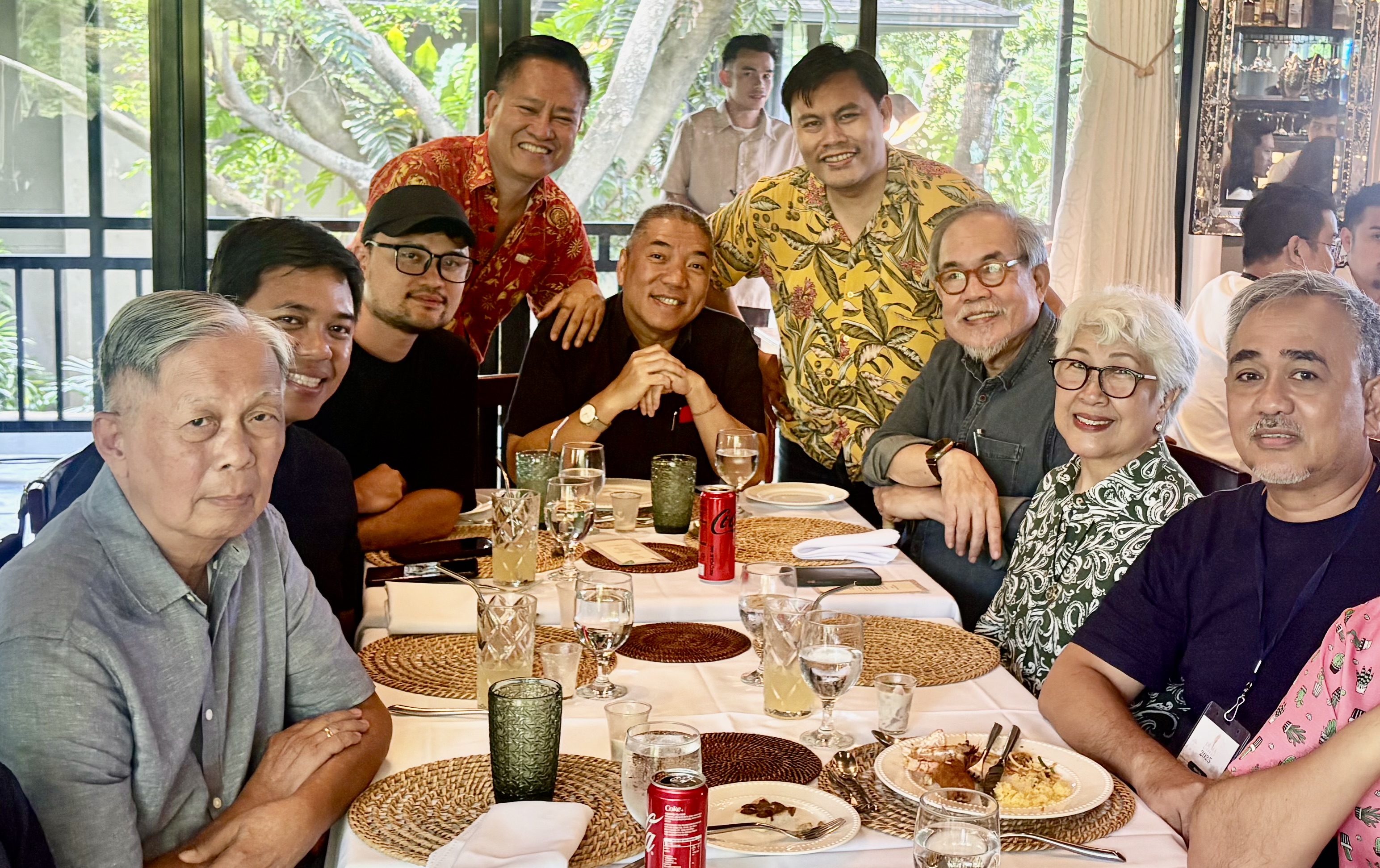
IT WILLl be remembered as one of the largest, most complex, possibly most impactful—and yes, also most expensive and controversial—showcases of Filipino cultural and intellectual talent overseas, and above and beside all else, that fact alone will ensure that few things will remain the same for Philippine literature after Frankfurt 2025: it will be remembered.

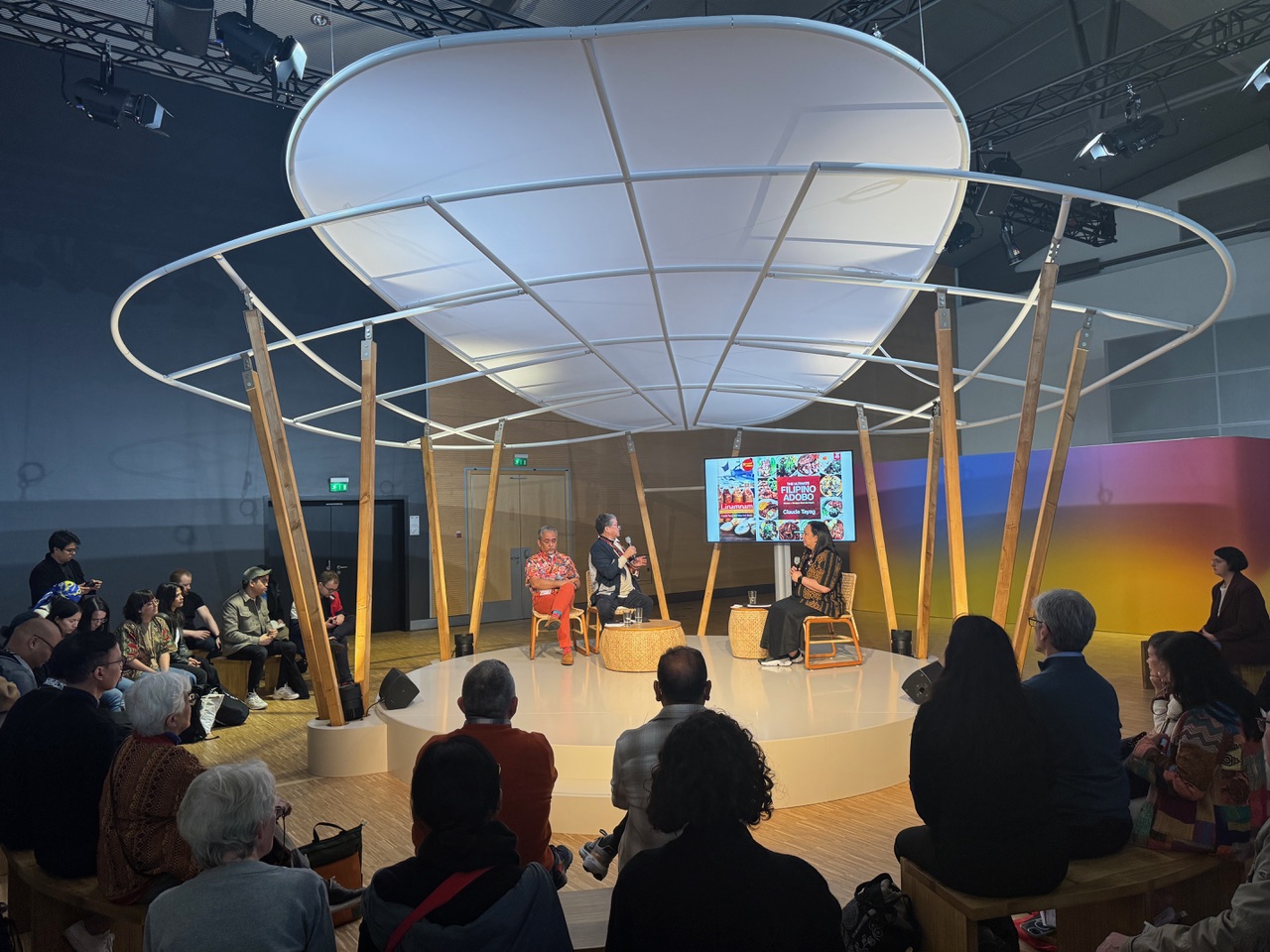
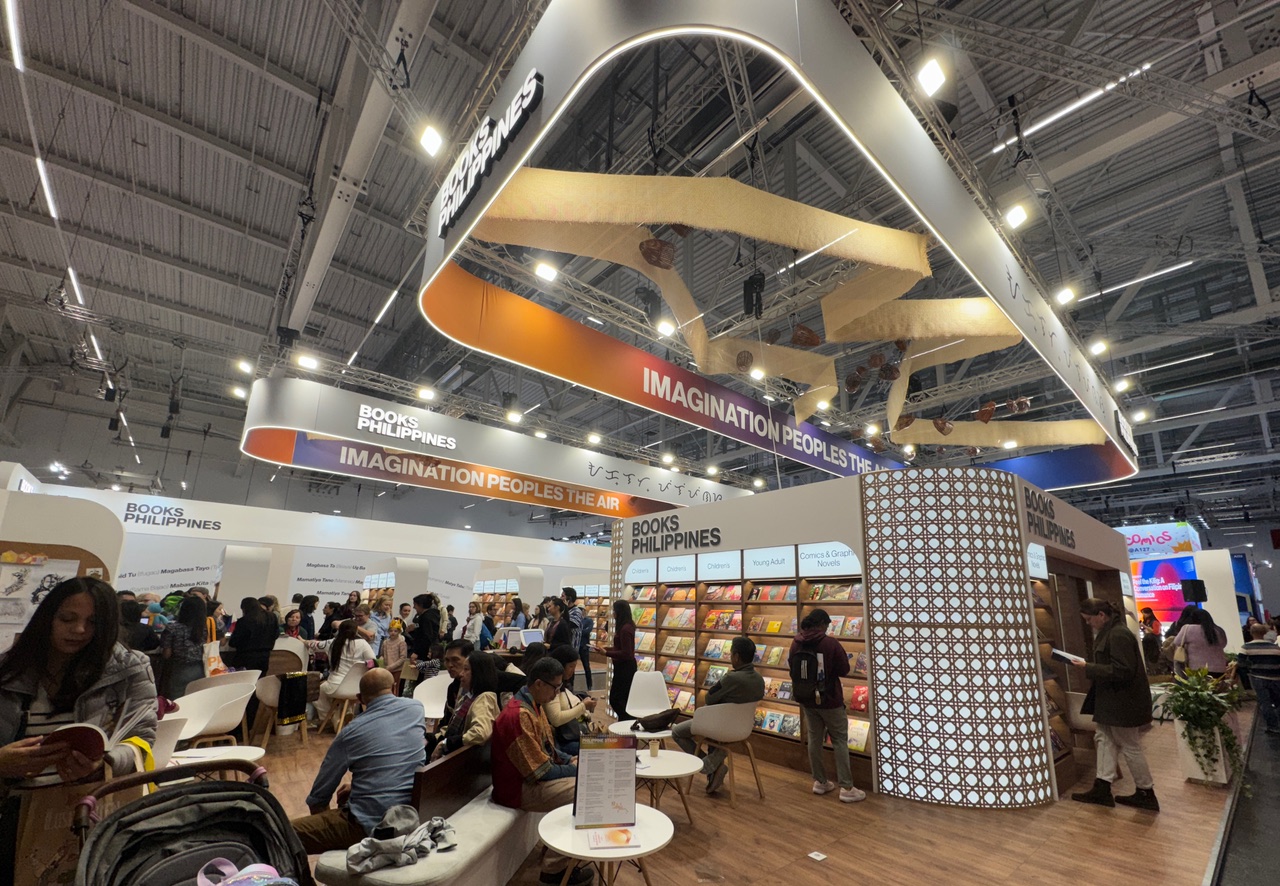
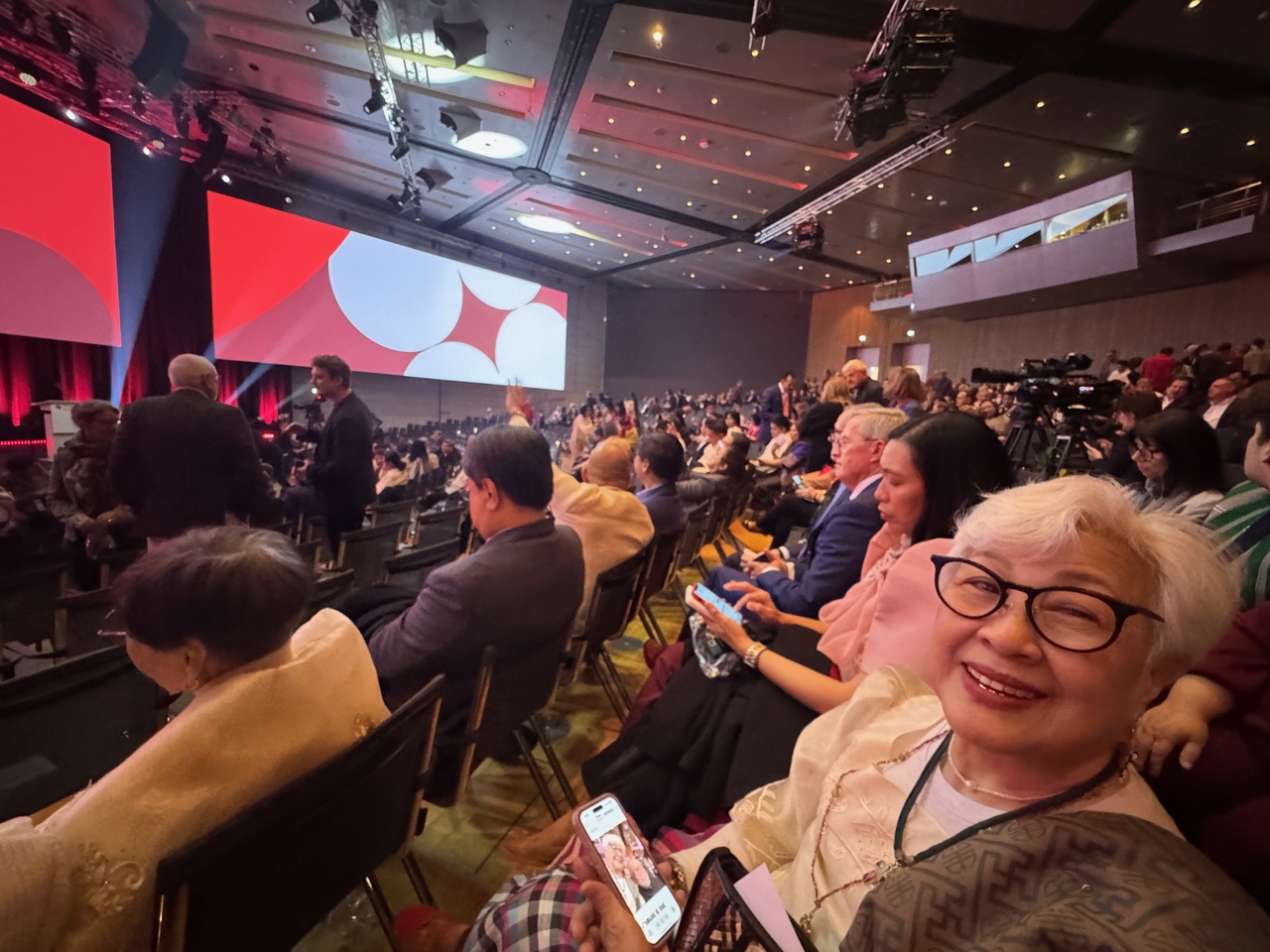
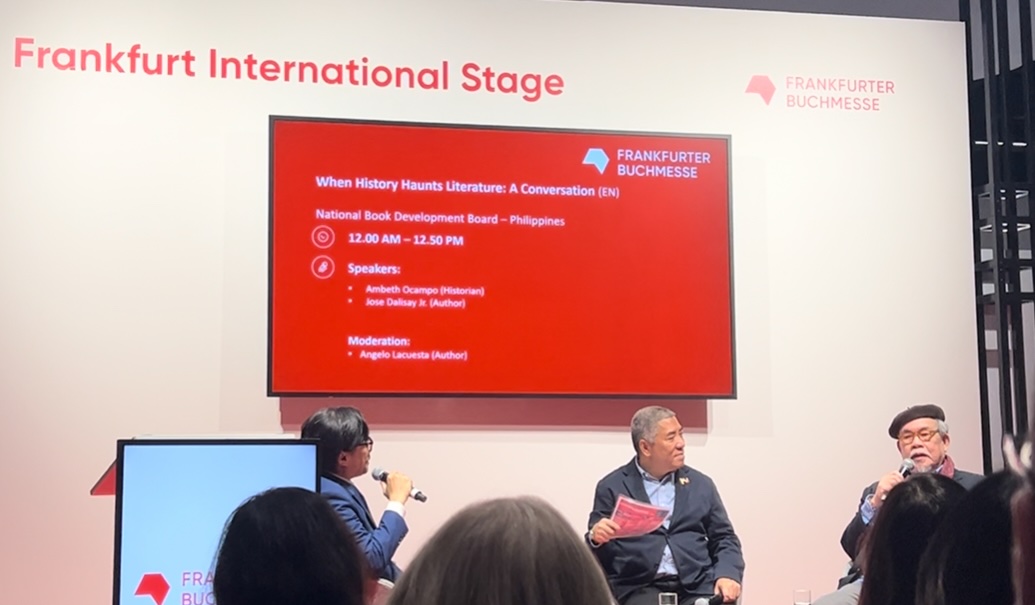
Last month—officially from October 14 to 19, but with many other related engagements  before and after—the Philippines attended the 77th Frankfurter Buchmesse or FBM, better known as the Frankfurt Book Fair, in a stellar role as its Guest of Honor or GOH. Accorded yearly to a country with the talent, the energy, and the resources to rise to the challenge, GOH status involves setting up a national stand showcasing the best of that country’s recent publications, filling up a huge national pavilion with exhibits covering not only that country’s literature but also its music, visual art, film, food, and other cultural highlights, presenting a full program of literary discussions, book launches, off-site exhibits, and lectures, and, of course, bringing over a delegation of the country’s best writers and artists. 

It’s as much a job as it is an honor. Past honorees have predictably come mainly from the West, such as France (2017), Norway (2019), Spain (2022), and Italy (2024); only once before was Asia represented, by Indonesia in 2016. Little known to many then, Sen. Loren Legarda—the chief advocate for the arts and culture in the government—had already broached the idea of pushing for the Philippines as GOH in 2015. It took ten years, with a pandemic and two changes of government intervening, but Legarda finally secured the funds—coursed through the National Commission for Culture and the Arts and the National Book Development Board—for us to serve as GOH this year, announced a year earlier.

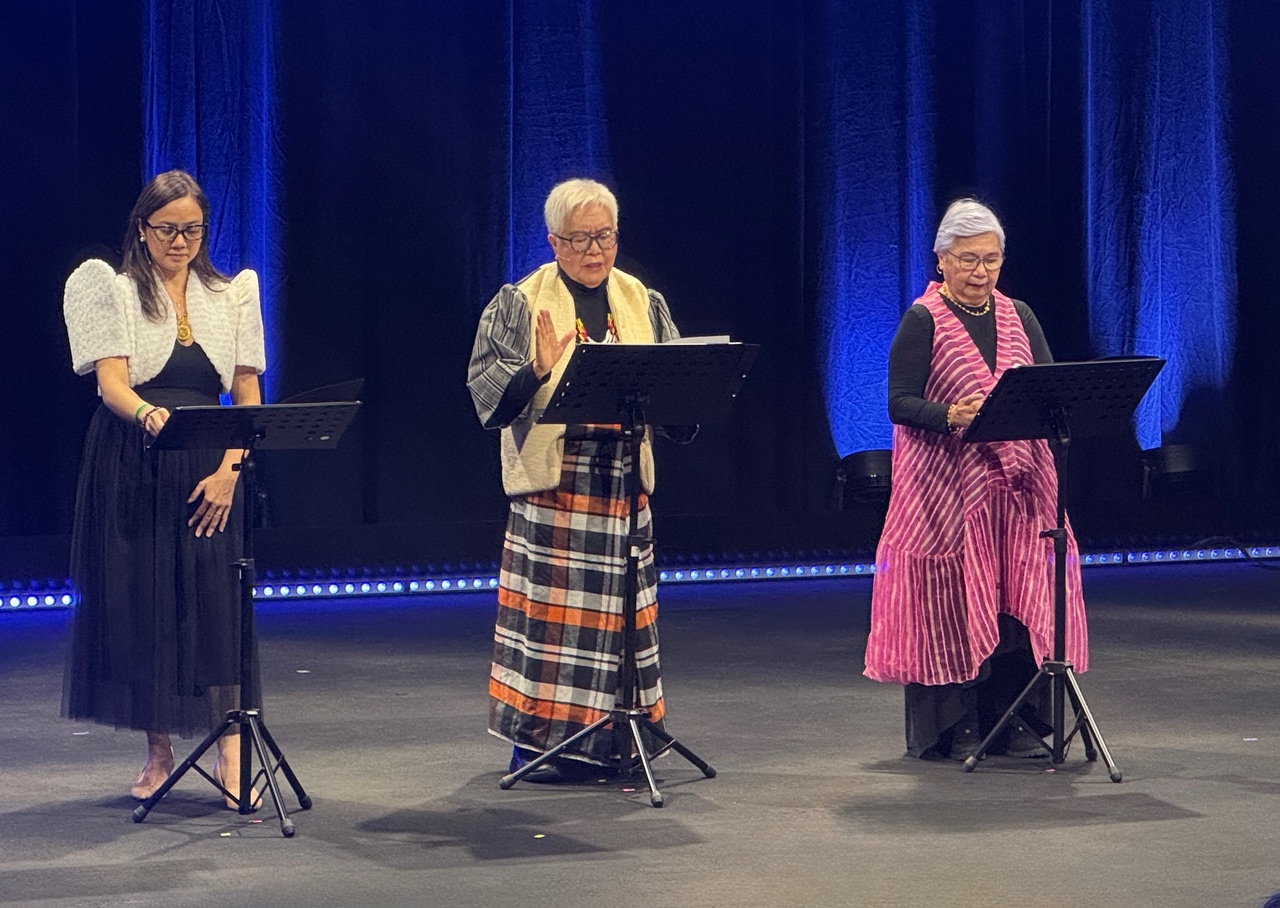
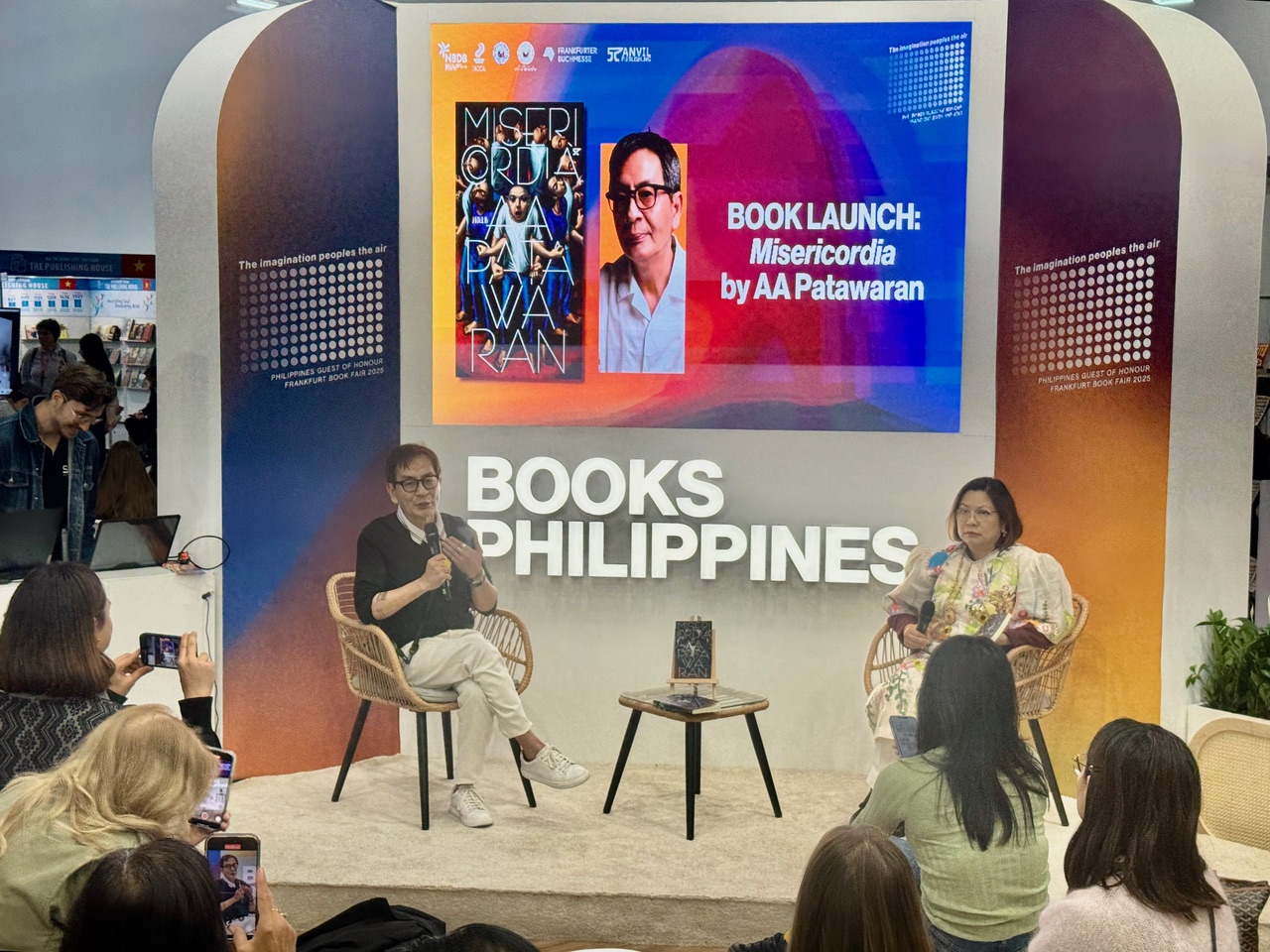
The Filipino delegates, over a hundred writers and creatives and as many publishers and journalists, took part in a program of about 150 events—talks, panel discussions, demonstrations, book launches, and performances—and ranged from Nobel Peace Prize winner and journalist Maria Ressa and National Artists Virgilio Almario, Ramon Santos, and Kidlat Tahimik to feminist humorist Bebang Siy, graphic novelist Jay Ignacio, poet Mookie Katigbak Lacuesta, and fellow STAR columnist AA Patawaran.

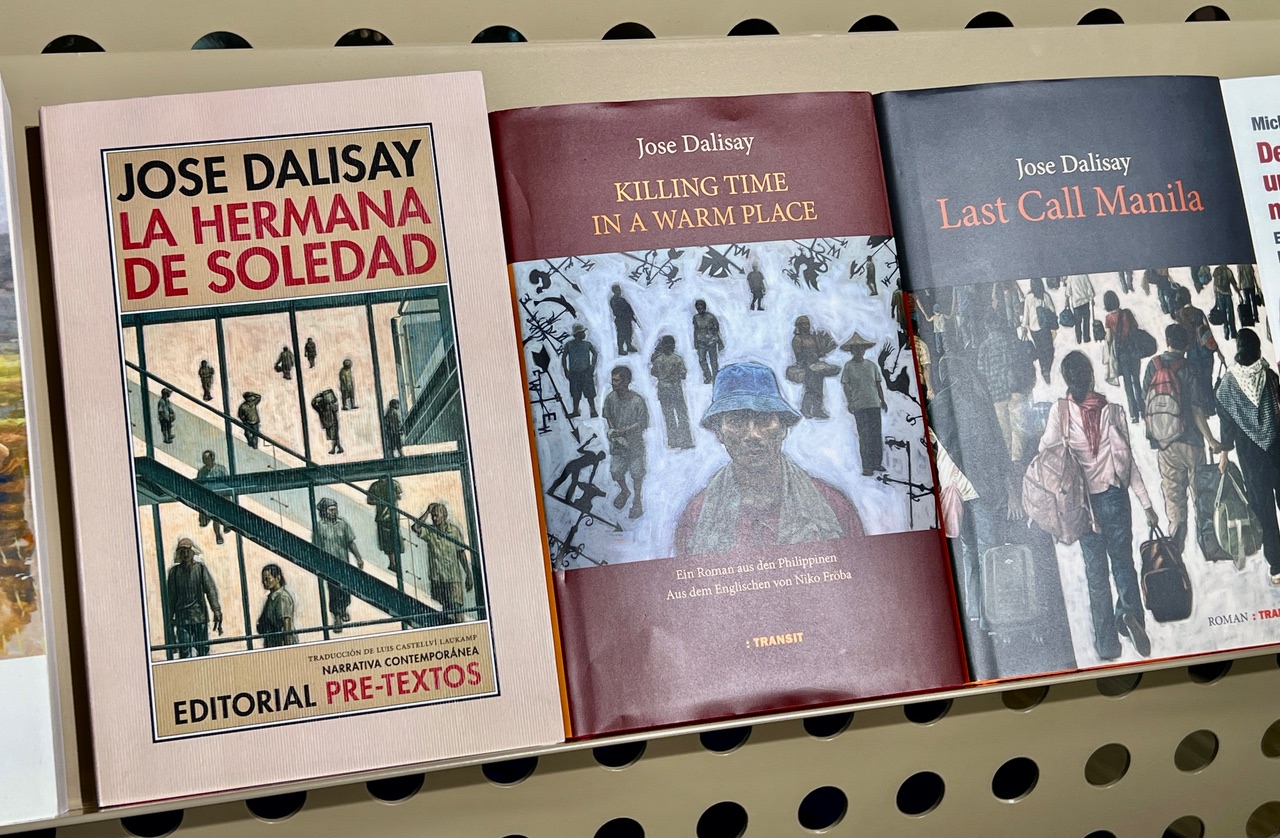
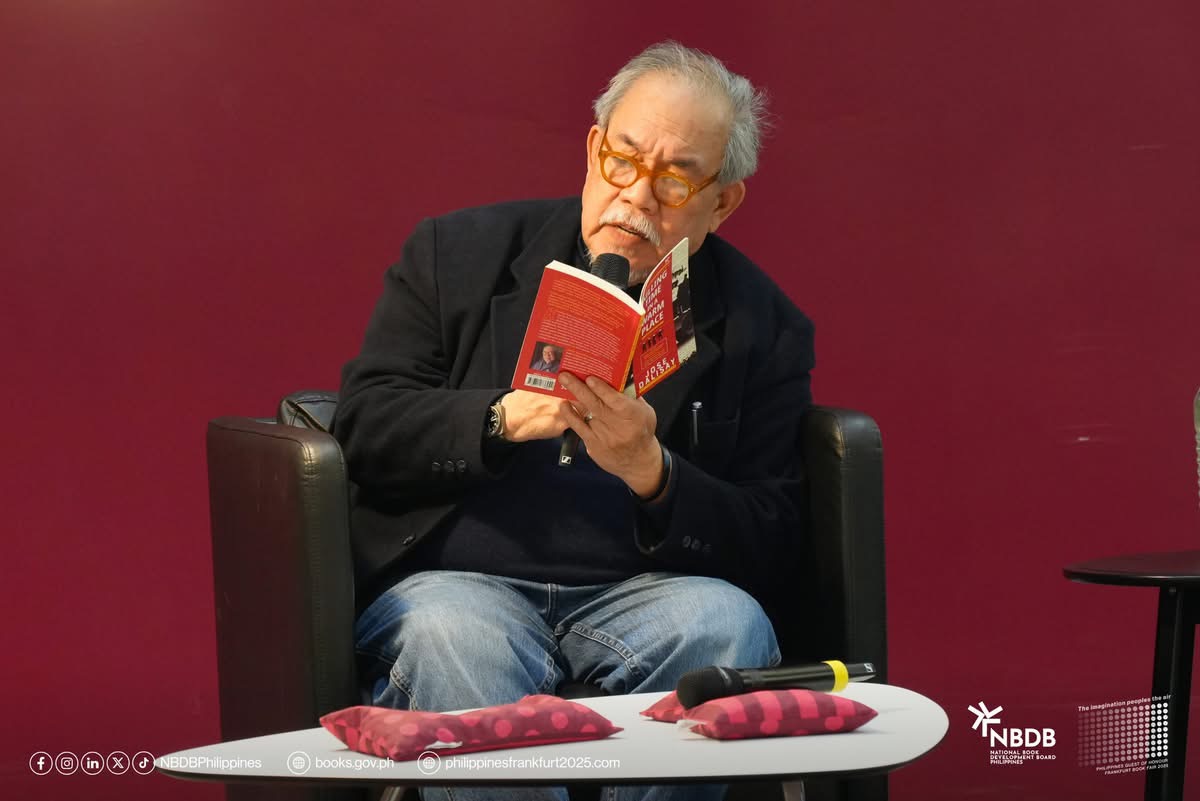
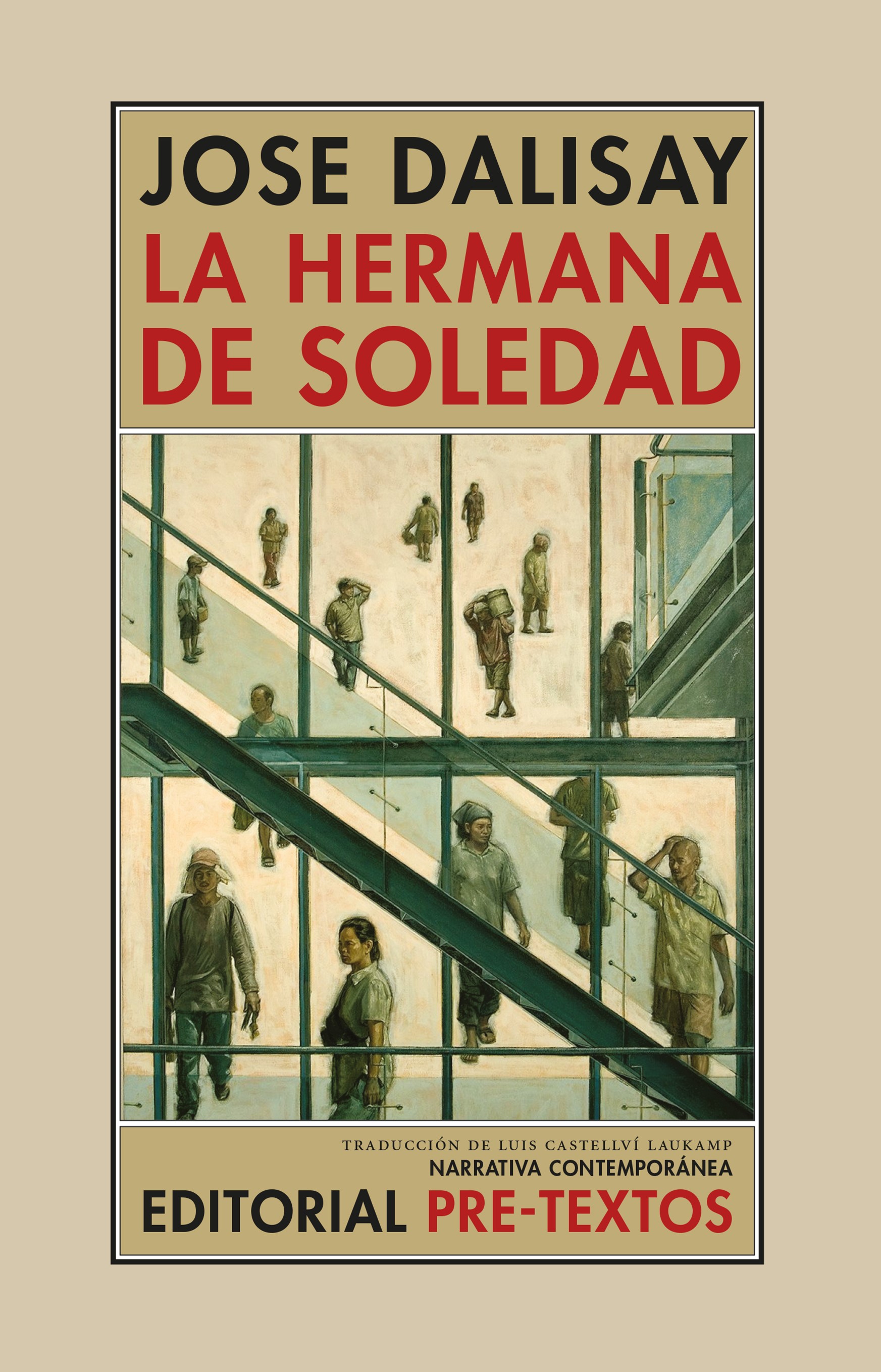
It was my third FBM, having gone for the first time in 2016 and then again last year, when the German translations of my novels Killing Time in a Warm Place and Soledad’s Sister were launched. This year, it was the Spanish translation of Soledad that was set to be launched at Frankfurt’s Instituto Cervantes. 

Those two previous exposures allowed me to appreciate our GOH role for what it was—a once-in-a-lifetime opportunity to put our best foot forward on the global stage. What began in the 1980s as a tiny booth with a few dozen books—which it still was when I first visited nine years ago—had become a full-on promotional campaign, not for the government (which did not object to outspoken critics of authoritarianism being on the delegation) and not even just for Philippine books and writers but for the Filipino people themselves. 

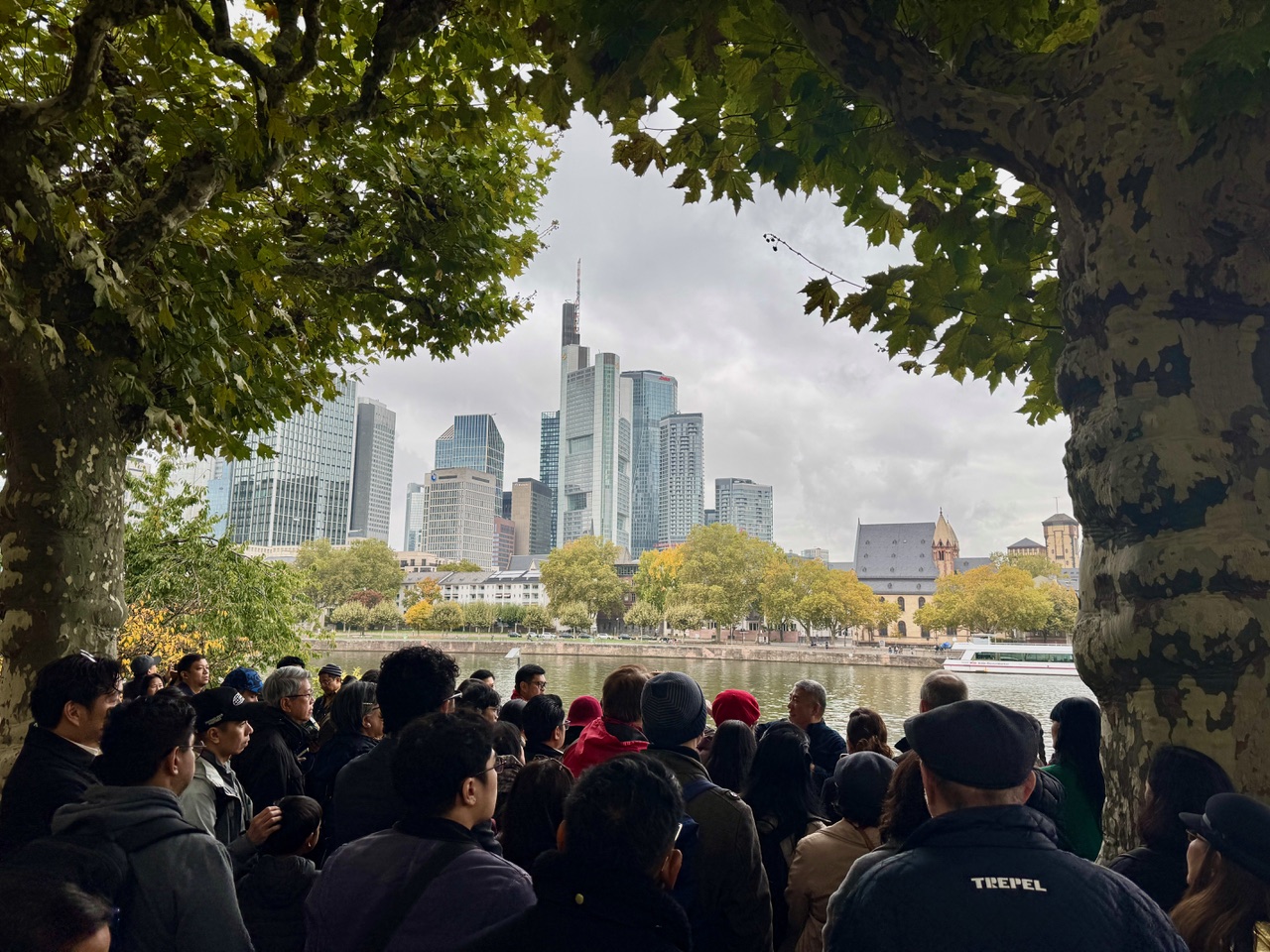
Six out of my eight events took place outside the FBM—two of them involving side-trips to Bad Berleburg in Germany and Zofingen in Switzerland—to bring us closer to local communities interested in what Filipinos were writing and thinking. Indeed my most memorable interactions were those with local Pinoys and with ordinary Germans and Swiss who asked us about everything from the current state of affairs (the resurgence of the Right in both the Philippines and Europe, Marcos and Duterte, the threat from China, the corruption scandal) to Filipino food and culture, the diaspora, the aswang, and inevitably, Jose Rizal, who completed the Noli in Germany and in whose tall and broad shadow we all worked.

Everywhere we went, in Frankfurt and beyond, the local Pinoy community embraced us, eager for news from home and proud to be represented, to hear their stories told in words they themselves could not articulate. “I’ve been living a hard life working here as a nurse in Mannheim,” Elmer Castigador Grampon told me, “and it brings tears to my eyes to see our people here, and to be seen differently.” 

A German lady accosted me on the street outside the exhibition hall and asked if I was the Filipino she had seen on TV explaining the Philippines, and we had our picture taken. A German author in his seventies, Dr. Rainer Werning, recounted how he had been in Manila during the First Quarter Storm and the Diliman Commune, had co-authored two books with Joma Sison since the late 1980s, and had described the Ahos purge in Mindanao and similar ops in other parts of the islands as the most tragic and saddest chapter in the history of the Philippine Left . A sweet and tiny Filipina-Swiss lady, Theresita Reyes Gauckler, brought trays of ube bread she had baked to our reception in Zofingen (the trays were wiped out). Multiply these connections by the hundreds of other Filipinos who participated in the FBM, and you have an idea of the positive energy generated by our visit.

From our indefatigable ambassador in Berlin, Susie Natividad, I learned about how Filipino migrant workers have to learn and pass a test in German to find jobs in Germany, a task even harder in Switzerland, where Swiss German is required. Despite these challenges, our compatriots have done us proud, as the maiden issue of Filipino Voices (The Ultimate Guide to Filipino Life in Switzerland) bears out. 

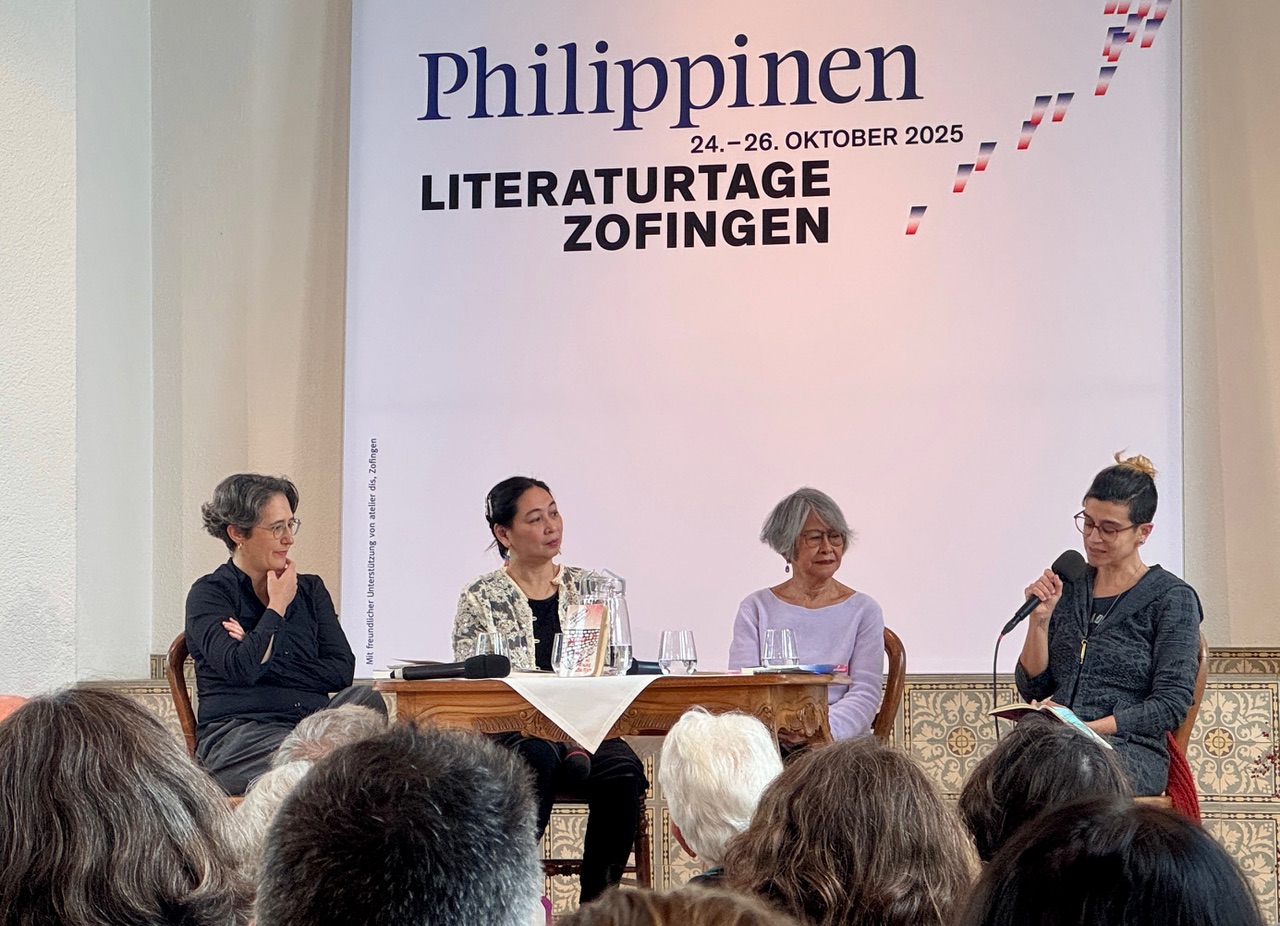
The FBM was as much a learning as it was a teaching experience for us, for which we all feel deeply grateful. By the time our group took our final bows on the stage in Zofingen—a small Swiss city that hosts writers from the GOH after the FBM as part of its own Literaturtage festival—I felt teary-eyed as well, amazed by how a few words exchanged across a room could spark the laughter of recognition that instantly defined our common humanity. 

I am under no illusion that GOH participation will dramatically expand our global literary footprint overnight, but it has created many new opportunities and openings for our younger writers to pursue in the years to come. It is a beginning and a means, not an end. The greater immediate impact will be to spur domestic literary production and publishing, to have a keener sense of readership, and to encourage the development of new forms of writing.

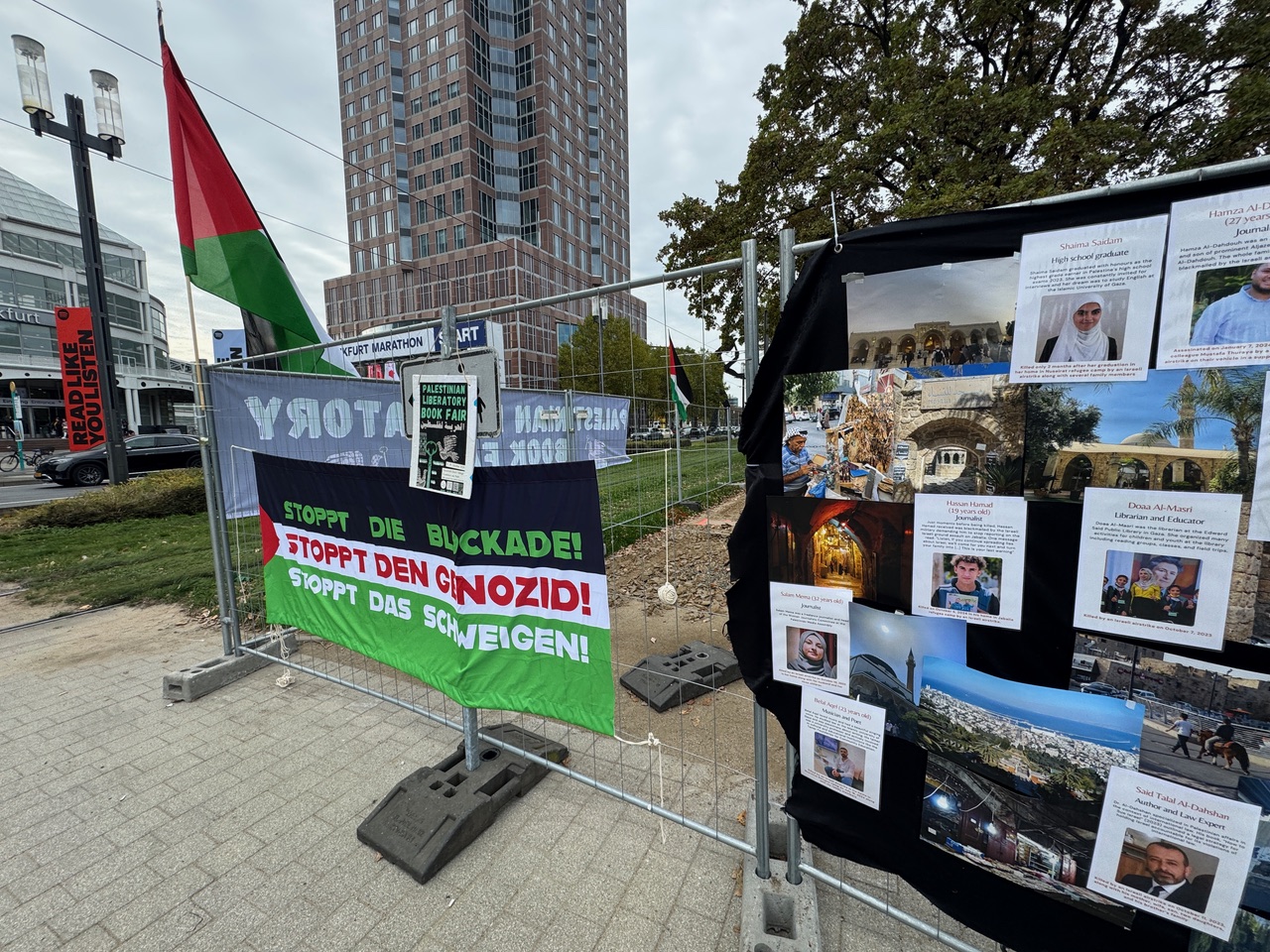
Sadly, a move to boycott the FBM by Filipino writers protesting what they saw to be Germany’s complicity with Israel’s genocidal war in Gaza has also impacted our literary community. (For the record, there were Palestinian writers—and even an Iranian. delegation—at the FBM, with whom Filipino writers interacted in a forum. There was also a Palestinian book fair across the fairgrounds.)

I have long taken it as my mission to promote an awareness of our work overseas and had opposed the boycott from the very beginning for reasons I have already given many times elsewhere. Many hurtful words have been spoken and many friendships frayed or broken, to which I will add no more, except to quote the Palestinian-Ukrainian refugee Zoya Miari, who visited the Philippine pavilion and sent our delegates this message afterward:

“I’m on my way from Frankfurt back to Zurich, and I’m filled with so much love that I can’t stop thinking about the love I felt in the Philippine Pavilion. I came back today to the Pavilion to say goodbye, not to a specific person, but to the whole community. This space became a safe space for me, one where I deeply felt a sense of belonging.

“I’m writing these words to thank you and your people for creating a space where

I, where we, felt heard and seen. That in itself is such a powerful impact. I know some people decided to stay in the Philippines to show support for the Palestinians, and I want to say that I hear and see them, and I thank them. And to those who decided to come, to resist by existing, by speaking up, by showing up, by connecting the dots, by being present and by sharing stories, I also hear you, see you, and deeply thank you.

“We all share the same intention: to stand for justice, to fight against injustice, and we’re all doing it in the best way we know how. I truly believe that the first step to changing the world is to create safe spaces where people are deeply heard and seen. When stories are heard and seen, we begin to share our vulnerabilities and showing that side of ourselves is an act of love. Through this collectiveness, this solidarity, we fight for collective liberation.”

Qwertyman No. 168: A Vote at the Vatican

Qwertyman for Monday, October 20, 2025

iN GERMANY right now attending the 77th Frankfurter Buchmesse or Frankfurt Book Fair as a member of the Philippine delegation, I’ve been fortunate to engage in many interesting discussions with German journalists and fellow writers from all over. But one of the most important and frankly troubling conversations was one I had with a Filipino writer now based in Italy, someone with a deep knowledge and understanding of the political situation in his home country and particularly in Mindanao.

“There are two Philippine embassies in what most of us simply call Italy,” my source explained to me. “One is in Rome, and the other, called the Philippine embassy to the Holy See, is in Vatican City, which is a sovereign city-state. Most overseas Filipinos in Italy—over 100,000 of them, mostly domestic helpers and nurses—cast their votes for Philippine elections in our embassy in Rome. Those in the Vatican—priests, nuns, and other religious workers—vote there.”

“And so?”

“This is where it gets interesting. During the most recent midterm elections, where OFWs could vote for senator, there were 23 votes cast at the Vatican for Apollo Quiboloy.”

I had to let that sink in for a moment. “Wait a minute—you’re telling me that two dozen Catholic priests, nuns, and whoever at the Vatican voted for a disgraced and now imprisoned cult leader who calls himself the Appointed Son of God and New Owner of the Universe? Are you sure?”

“I couldn’t believe it myself,” he answered, “so I double-checked that with our embassy there, and they confirmed that it was true: Pastor Quiboloy got 23 votes in the Vatican. Now, I can try to understand if some Filipino Catholics would still vote for Duterte despite everything, but Quiboloy?” He shuddered. “That shows how far we have to go, and how we can’t assume that the Dutertes are spent as a political force.”

I had to laugh at his story, but it was laughter of the nervous kind, born out of irony than mirth. “Here we are in Frankfurt,” I said, “attending the world’s largest and oldest fair devoted to books and literature, to novels and fiction of the most imaginative variety, with many of us having a hard time selling our stories, and then comes along this Quiboloy tale that seems to show that people will believe the craziest things. This is fiction, popular fiction!”

You had to see the humor in the situation—I can easily imagine a cartoon depicting a soutaned priest receiving absolution from Quiboloy garbed in, well, shiny robes befitting a New Owner of the Universe—but its implications were anything but comic. It meant that presumably sane deeply spiritual men and women, living and working at the very heart of the Catholic faith that defined their lives, had found common cause with an accused sex trafficker and abuser of minors. Sure, the accusations remain just that until they’re proven, and sure, these Vatican voters were merely exercising their democratic rights. 

But really? Quiboloy? Might the pastor’s claim of bearing “the exact DNA of the Almighty Father and the New Jerusalem” and of being “the bodily manifestation of the unseen God” have resonated with them? Could they have been enticed by his devotion to “enthroning prosperity and abundance, and (being) a trustworthy steward of the Father’s financial business on earth”? 

Whatever the reason, it’s clear that the Pinoy’s political imagination is capacious enough to combine disparate perspectives and philosophies into one noggin. Pope Leo? Sure, obey. Senator Quiboloy? Sure, support. 

All throughout my talks here in Frankfurt, I’ve been asked who and what the modern Filipino is, and my best response has been to assert that the Filipino (and the Filipino nation) continues to be a work-in-progress, a compound of various historical and cultural influences contending for primacy. An example I conveniently cite is that of a New People’s Army cadre, presumably Marxist, who remains a practicing Christian and prays to Jesus, but who also begs the indulgence of resident spirits when he passes an anthill in the forest. We’re seguristas, investing in alternative fortunes. 

That’s not to say we don’t have people who think only one way and not the other—thankfully many if not most of us still stand on some kind of principle—but the exceptions make more interesting subjects of study. In this regard, Quiboloy’s Vatican voters may have been DDS who saw no contradiction between their Catholic faith and Dutertismo (something we’ve seen and continue to see among the religious, especially in Mindanao). 

I suddenly recalled an article published on Rappler in July 2020 by Fr. Amado Picardal, CSSR, who wondered aloud why so many of his colleagues, including a university president, openly rallied behind a man who cursed God and the Pope. He wrote: “In the religious community where I was living, most supported his candidacy, and I felt like a lonely voice warning them about the dire consequences…. One confrere proudly told me to my face that he was voting for Duterte, knowing my stance. A seminarian wore a Du30 bracelet. There were three confreres who posted their photos on Facebook doing a fist bump. A contemplative nun campaigned on Facebook for him and even made her pet dog wear a Du30 collar.” Fr. Amado offered some explanations: regionalism, the Left’s deluded belief in Duterte’s progressive pretensions, his strongman appeal. 

Given these, the Vatican result makes more sense, without offering any comfort to those of us who might have been under the illusion that proximity to the Vicar of Christ and Successor to the Prince of the Apostles induced enlightenment. Being the New Owner of the Universe apparently exerts more power, even from prison, and we should be afraid, be very afraid.

(Image from aleteia.org)

Penman No. 478: Best Foot Forward in Frankfurt

Penman for Sunday, October 5, 2025

ON MONDAY next week, several hundred Filipino writers, publishers, artists, journalists and other workers in the book trade will be flying off to Germany for the Frankfurter Buchmesse (FBM), better known as the Frankfurt Book Fair, running this year until October 19.

Led mainly by the National Book Development Board (NBDB) and the National Commission for Culture and the Arts (NCCA), it will probably be the largest cultural mission ever sent out by the country to an international event—the equivalent of an Olympic delegation—and for good reason. This year, the Philippines is the FBM’s Guest of Honor (GOH), an annual distinction designed to draw attention to that particular country’s literature and culture, chiefly through its books. 

As GOH, the Philippines will have its own pavilion of curated exhibits highlighting our literary history and production, as well as the diversity of our works from historical novels and crime fiction to children’s stories and comic books.

Going back over 500 years, the Frankfurt book fair is the world’s largest gathering of publishers, authors, and booksellers, drawing thousands of attendees from all over the world to what is essentially a marketplace for publishing and translation rights. For countries like the Philippines, far away from the global publishing centers in New York and London, it is a matchless opportunity to showcase the best of one’s work. 

Looming largely over our GOH presence will be the work and legacy of Jose Rizal, whose deep personal ties to Germany—where he studied ophthalmology and completed Noli Me Tangere—continue to inform our relationship with that country. Indeed, our GOH slogan—“The imagination peoples the air”—is drawn from Rizal’s Fili, turning Sisa’s frantic search for her missing sons into a metaphor for the power of words to create moving realities.

There are hundreds of events on the Philippines’ official FBM schedule, both onsite and off-site. They range from panel discussions on “Our National Literature: Filipino Spirit and Imagination” with Merlie Alunan and Kristian Cordero, “Women’s Fiction from the Global South” with Cecilia Manguerra Brainard, Jessica Zafra, and Ayu Utami, and “Dismantling Imperial Narratives” with Filomeno Aguilar Jr., Lisandro Claudio, and Patricia May Jurilla to performances by National Artist for Music Ramon Santos and the Philippine Madrigal Singers, a demonstration of Baybayin by Howie Severino, and a book launch of the German editions of the Noli and Fili with historian Ambeth Ocampo. (For the full program, see https://philippinesfrankfurt2025.com/events/)

I have eight events on my personal calendar, ranging from the launch of the Spanish edition of my novel Soledad’s Sister to readings at the Union International Club and Bad Bergleburg, so it’s going to be a hectic time for this septuagenarian. This will be my third and likely my last sortie into the FBM, and I know how punishing those long walks down the hangar-sized halls can get. 

Practically all aspects of Philippine art and culture will be on display in Frankfurt, going well beyond books and literature into theater, film, music, dance, food, and fashion. In short, we will be putting our best foot forward on this global stage, although there will be no papering-over of our political and social fractures and crises. (Journalists Maria Ressa and Patricia Evangelista will be there to make sure of that.)

As with any large-scale national enterprise, our GOH effort has not been without controversy. A campaign by cultural activists to boycott the FBM—premised on Germany’s and the book fair’s perceived support for Israel in its genocidal war on Gaza—took off earlier this year and gained some traction, leading to the withdrawal of some authors from the delegation. There was spirited and largely respectful debate over this issue, but it was clear to both sides from the outset that a complete disengagement from the FBM—for which we had planned for many years running—was not going to happen. (I argued, like many others, for our critical participation, minding Gaza as one of the foremost issues facing humanity today. Not incidentally, on the Philippine program is a panel on “Writing Through the Wounds: Filipino and Palestinian Literatures in Relational Solidarity” with Nikki Carsi Cruz, Dorian Merina, Tarik Hamdan, Atef Abu Saif, and Genevieve Asenjo, among other initiatives in support of Palestinian freedom.)

Another criticism raised was the cost of our GOH participation—an effort bannered and sustained by Sen. Loren Legarda, the chief and most consistent supporter of the arts and culture in the Senate. Why not just pour all that money, some have said, into publishing and printing more books for Filipinos? There’s no argument that Philippine education needs more support (the trillion-peso infrastructure scam tells us the money was always there) but the targeted exposure that the GOH opportunity provides comes once in a lifetime, and Sen. Legarda wasn’t about to let it pass. 

As she noted in recent remarks, “When I first envisioned the Philippines as the Guest of Honor at the Frankfurter Buchmesse, some felt that it was far too ambitious, that we were too diverse and too complex for the world’s largest book fair to embrace. But I believed then, as I believe now, that our diversity is our greatest advantage, a gift and never a hurdle.

“The Philippines is more than an archipelago of 7,641 islands. It is a vast constellation of ideas and innovation, of ingenuity and distinct cultures and traditions joined together by the tides of hope and resilience. The 135 languages identified and described by the Komisyon sa Wikang Filipino turn into the voices and stories of Filipinos resonating around the world, reaching across cultures, transcending borders, challenging assumptions, and expanding the boundaries of human empathy.”

Let those voices and stories fill the air in Frankfurt, and spread around the planet.

Qwertyman No. 151: For Don, a Meditation

Qwertyman for Monday, June 23, 2025

(Photo of Los Cabos by Kurt Nichols)

I WAS looking for a topic for this column last week when it occurred to me that I had been staring it in the face, in the news and in the Facebook feed that, like for many, my days begin and end with. It was the omnipresence of death, in its many forms and guises, swift and slow, painless and agonizing, arriving on whispery feet and crashing through one’s roof or window. 

“A screaming comes across the sky,” the line with which Thomas Pynchon famously begins his novel Gravity’s Rainbow, was how death and destruction came last week to hundreds in Kiev, Tehran, and Tel Aviv, in missiles and drones designed and manufactured for but one purpose: to deliver death by inexact algorithm to place-names plotted on digital maps. 

In India we marveled at the horror and the mystery of one survivor escaping a catastrophic plane crash barely a minute after take-off: a moment when most of us would have just begun to fidget with the entertainment controls, wondering whether to take in a comedy or a thriller for the next two hours and what the meal choices will be. 

In Minnesota, a MAGA gunman stalked Democratic lawmakers and their families, shooting four and killing two on a long list of intended targets—murders that a Republican senator reflexively attributed to “Marxists not getting what they want.”

Most appalling was the report of Israeli tanks firing into a crowd of Palestinians lining up for food in Gaza, an incident that led to about 60 deaths and more than 200 wounded, for which the Israelis apologized with this statement: “The IDF regrets any harm to uninvolved individuals and operates to minimize harm as much as possible to them while maintaining the safety of our troops.”

As if the news isn’t enough, every time we scroll through our social media accounts, more deaths emerge, in the now-familiar solitary-candle meme and in the garlanded portraits of the recently departed. Facebook has become our new obituary page, our book of condolences, our virtual wake. The friend or the kinsman in us takes the loss with the requisite pain and grief; the enemy with muttered thankfulness, or more rarely forgiveness; the human with relief, that we are reading and not being read about.

Death in the news is meant to outrage us, and it still does, at least for a while, especially senseless and preventable death, willful murder, and patent genocide. But sadly we can only take so much, even with the keenest of consciences; there is something in our brains, a control or shut-off valve, that says “Enough” and leads us back into the immediate and comprehensible present, back to chocolate cupcakes, Torx screwdrivers, tomorrow’s court hearing, and Lola’s birthday. This, we remind ourselves, is life, the only one we have, our chief responsibility above all others to live and to give meaning to. 

We try to make sense of death as much as we do of life, and for those of us of a certain age, that means the acceptance of its inevitability. I suspect that those of my generation who came of age under martial law and fought it, who saw dozens of our comrades die, can do that with more equanimity than most, never having expected to live beyond twenty-five; every year and decade since has been a grace note, a blessing we have been careful not to waste. We are lucky to have come this far, and can leave without regret.

The Buddhists have what they call maranasati, the practice (says Google, meat-eating me being decidedly non-tantric) of contemplating one’s own mortality to cultivate mindfulness, reduce fear of death, and appreciate the present moment. The practical Swedes have döstädning, celebrated in The Gentle Art of Swedish Death Cleaning: How to Free Yourself and Your Family from a Lifetime of Clutter by Margareta Magnusson, a Nordic Marie Kondo who advises us to downsize and clean up our mess before we croak to save some grumpy nephew the trouble of sorting out which things go to the trash and which go to the resale shop. 

Speaking of which, my devotion to Japan-surplus stores and their wonderful bargains is tempered by the knowledge that most of these items were likely made available by the peculiarly Japanese practices of hikikomori, or withdrawing from society and living alone, and the even sadder kodokushi or “lonely death,” where the bodies and belongings of the forgotten might be found days after their passing. But then, as a collector of vintage fountain pens and antiquarian books, I am well aware that these precious objects have passed through many lives and survived their owners, and will certainly survive me, which is strangely reassuring. They offer proof of an afterlife—maybe not paradise, but the life of the people and things you leave behind.

In a way, death’s predictability (or the illusion thereof) is comforting, because we think we can therefore prepare for it, as for the coming of a friend who will lead us away by the hand, down to the smallest detail. Despite her surprisingly good health, my 97-year-old mother has written out her DNR instructions, and a year ago we made a light-hearted trip to the mall to pick out her funeral dress, in a deep, pacific blue. Well before my father died of an aneurysm almost thirty years ago—he was a chain-smoker and a candidate for early passage—I had written out a scene in my first novel where the protagonist comes home to his father’s wake, which was my way, the privilege of imaginative writers, of cushioning the real pain when it struck; when it did, I still wept like my father’s child.

I’m writing this because I’m actually not very good at dealing with death and processing grief, as detached or as flippant as I may sound about it. I avoid or don’t stay long at the wakes of friends because I tend to say the lamest things. 

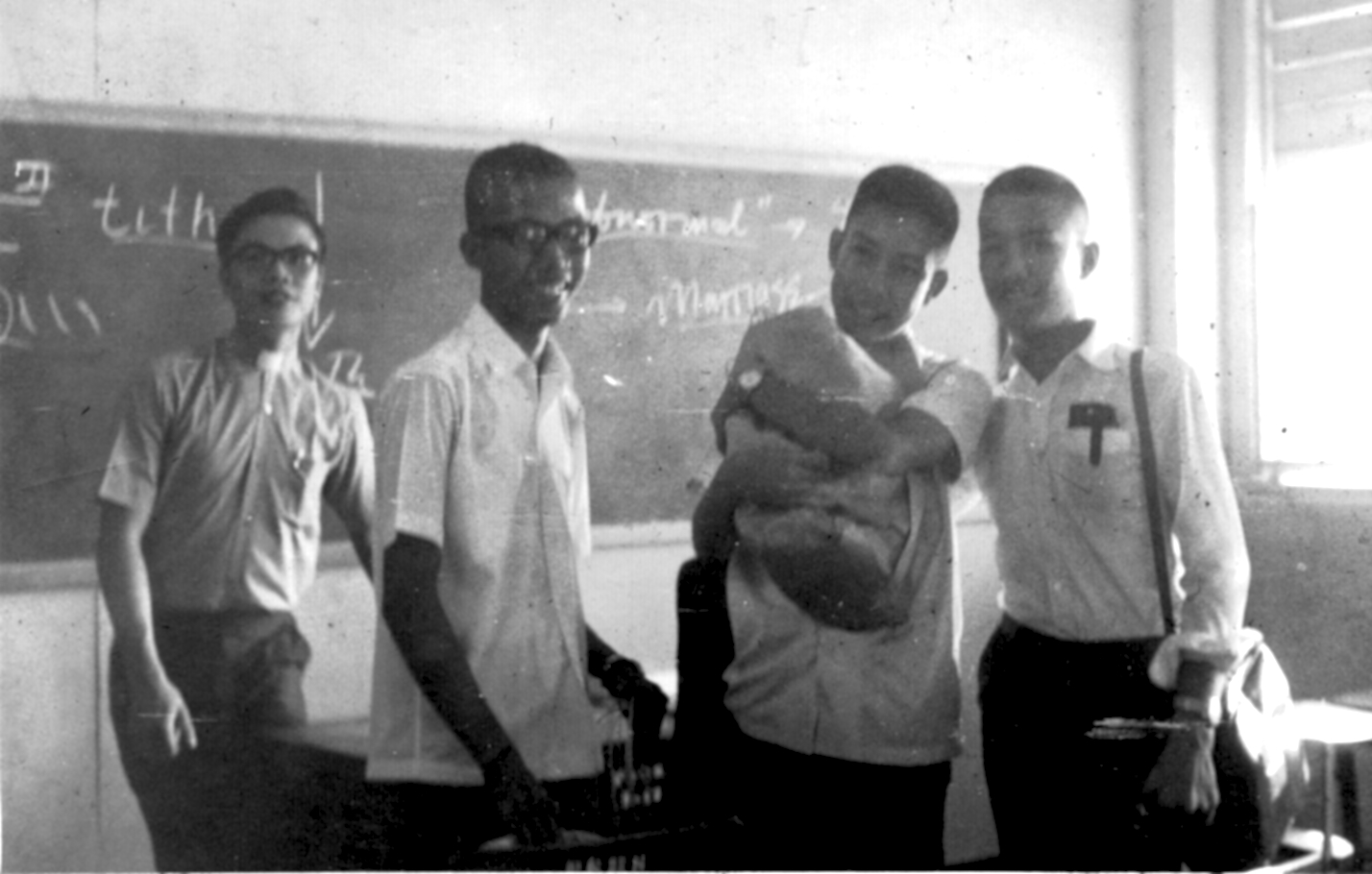
Last week I lost good friend—a high-school classmate named Don Rodis, brother to lawyer Rodel and producer Girlie, whom more people know—our Philippine Science High School batch’s livewire and indefatigably perfect host, to those visiting him in San Francisco. On vacation with his family in Los Cabos in Mexico, Don was strolling on the beach when a rogue wave known by the locals as the mar de fondo caught and swept him out to sea. Despite a massive search, his body has yet to be found. We are all stunned and awash with grief, but what struck me was how pretty that beach was from all the pictures, how blue and inviting its waters. And now I’ll say a stupid thing, for Don: rather than dying from a rocket to your head, or rotting from within, or freezing alone in Yamagata, sometimes we die in beauty’s arms. 

(Don Rodis, 1954-2025, with his wife Jocelyn)

Qwertyman No. 147: Literature Has Many Flags

Qwertyman for Monday, May 26, 2025

IT WILL be a tempest in a teapot to most Filipinos still caught up in the aftermath of the midterm elections, a topic of interest to a limited few, but I’m bringing it up this week because it’s important enough for larger reasons.

The Philippines will be Guest of Honor (GOH) at this October’s Frankfurt Buchmesse (FBM), the world’s oldest and largest book fair. Being GOH means that the Philippines—its literature, culture, history, and politics—will be foregrounded in Frankfurt, through the dozens of writers, thousands of books, and the many exhibits and presentations that will be brought over to the FBM, through the combined efforts of the National Book Development Board (NBDB) and the National Commission for Culture and the Arts (NCCA), among other organizations. 

Much of the groundwork for this initiative, which began well before the pandemic, was laid by Sen. Loren Legarda, the principal advocate of arts and culture in the Senate. GOH status is an honor given every year to a different country, but it doesn’t come free; the project involves hundreds of millions of pesos, which its proponents see as a worthwhile investment in raising the global profile of the Philippines through its culture and expanding the international market for Philippine books and authors. The past two years have seen intensive efforts made by the NBDB and the Philippine GOH Committee to prepare the program, select the delegates, and arrange the logistics for our historic participation in October at the FBM.

Comes now a move, led by some prominent Filipino writers and activists, to boycott the FBM for various reasons, including what some see as the government’s misplaced priorities in funding our GOH participation, but primarily in protest of the FBM’s alleged support for Israel in its war in Gaza, and also of Germany’s complicity as an Israeli ally in that conflict. At the moment, it hasn’t gained much traction, but I wouldn’t be surprised if, in the intervening months between now and October, it gathers some steam—likely not enough to stop us from going, but enough to cause some dismay and dissension within our ranks.

I’m not in favor of this boycott, for reasons I’ll shortly explain, but first, full disclosure: I have been formally invited to attend the FBM as a delegate, and have accepted the invitation; I will be involved in several events—a launch of the new Spanish translation of my second novel Soledad’s Sister, several book readings, and possibly some panel discussions. All my expenses will be answered for. This will be my third (and at my age, likely my last) participation at the Frankfurt book fair, as an author whose books have been translated into Italian, French, German, and Spanish editions. In other words, I have a vested interest in going to Frankfurt. (To those who have never been to the FBM, it is no junket; expect long hours manning the booths, talking to people, selling book rights, and walking kilometers of hallways on the enormous fairgrounds. Frankfurt is not a particularly scenic city, although a side trip to nearby Heidelberg and its Rizal connections will be a welcome break.)

Some readers might find the connection between the FBM and Gaza tenuous and the call for a boycott bewildering, but it does have some basis worth serious consideration. The relationship between Germany and Israel, or the Germans and Jews, is long and complex (highlighted by the Holocaust before Israel even came to be, and the 1972 Munich Olympics massacre, among others), but the immediate trigger for the outcry was the FBM’s controversial cancelation of an awards ceremony for the celebrated Palestinian writer Adana Shibli in the immediate wake of Hamas’ attack on October 7, 2023. 

The outrage is justifiable and widely shared. In this column and other media, I myself have written against Israel’s assault on the Palestinian people (see “The Country I Wanted to Love,” from April 19, 2024), as have many other commentators. Indeed, I know of very few Filipino writers who have cheered the onslaught on—typically those holding orthodox Catholic views upholding Israel as God’s chosen nation. 

Israel’s relentless pounding of Gaza, resulting in the wanton slaughter of innocents, has long outlived its excuse of neutralizing Hamas. It is genocidal butchery by any standard, this calculated starvation of Gaza’s remaining residents, the killing of aid workers, and the mechanical attribution of atrocities to “operational errors.” Netanyahu’s encouragement of Trump’s crass and bizarre proposal to depopulate Gaza so he can turn it into “the Riviera of the Middle East” reveals the utter moral depravity of these two men. 

Israel’s barbarism in its campaign of terror and annihilation has now exceeded Hamas’ own (yes, unlike many protestors, I hold Hamas accountable for its own brutality—something that will surely not endear me to the far Left on this issue). Those of us who study Elizabethan revenge tragedy know this only too well: the line beyond which the revenger no longer seeks justice but mindless retribution, and becomes a horrifying, blood-soaked caricature of the very object it opposes.

The question for us writers is: will any of this be helped by withdrawing our participation from one of the world’s largest (if arguably not freest) exchanges of ideas through books? Will we prevent ourselves at Frankfurt—should the need and opportunity arise—from expressing our opinions on Gaza, among a host of other global issues concerning human rights? (Current German rules restrict financial support to artists seen as anti-Israel, especially those identified with the Boycott, Divest, and Sanctions movement or BDS, among other repressive measures.)

My answer is no. I stand for peace and justice for both the Palestinian and Israeli people—indeed, for all oppressed peoples of the world, including our own. But divesting ourselves of a historic opportunity to express our collective resistance to injustice—not just in Gaza or over this one issue, no matter how pressing, will only be counter-productive. Unless it catches fire (other prominent authors elsewhere, as in Indonesia—which was GOH some years ago—have expressed support), a symbolic boycott will be as deafening and as consequential as a tree falling in the forest.

In the end, this will come down to an individual act of conscience, however one decides, for which we must reserve our respectful acceptance. Whether one goes or stays, one’s reasons or motives have to be clear, so the gesture will not be wasted. I will go to Frankfurt proudly, with neither guilt nor shame, to speak about our people and our struggles for freedom through my books. Engagement, not withdrawal, will be the best service writers can perform for their country and for all oppressed and silenced people everywhere. 

Politicians like to wave one flag—Filipino, American, Israeli, Palestinian. Literature, like all art, has many flags: peace, justice, freedom, equality, truth, love, beauty, and harmony. Let all these fly in Frankfurt.

(Image from Studio Dialogo)

Penman No. 473: Taking Care of Emy

Penman for Friday, May 9, 2025

MY MOM Emy turns 97 today, May 9. Some years, her birthday coincides with Mothers’ Day, saving us a celebration. But that’s a bit deceptive, because when you have a parent this old living with you, every day is a blessing worth celebrating. 

It’s hard to believe that Mommy Emy is a lot healthier than she was a quarter-century ago, when we all feared that we were about to lose her, just a few years after our dad Joe Sr. passed away in 1996 from a ruptured aneurysm. After all, the stories usually went that way—one spouse dies, the other follows soon after, out of grief or a sense of life suddenly losing its purpose and meaning. Whatever caused it, Mom fell ill with tuberculosis, with the disease progressing so devastatingly that she was coughing blood and feeling terribly weak. Luckily, her doctor put her on a menu of cutting-edge pills that, over two years, miraculously banished the TB, well enough for her to secure a US visa to join my sister Elaine in California.

Over the next decade, she regained her strength, and even as she sorely missed our dad, indulged in a newfound zest for life—traveling with my sisters in the US, Canada, and Europe, visiting glaciers, going up the Tower of Pisa, and settling into in the quiet suburbs of Virginia just outside of DC with Elaine and her husband Eddie. She stayed there long enough to gain a green card, and we would visit her every now and then, sensing that, despite Elaine’s and Eddie’s loving care, she was pining for home. Eventually she did return to Manila, giving up her green card. “I want to die here,” she stated with finality, and that was that. 

One thing I love about my mom is her eminently practical sense. Since at least five years ago, she has written out clear instructions about what to do in case she was dying—no intubation, no extraordinary efforts to prolong her life, just as quiet and as painless a departure as could be managed. Last year we went out with her to the department store to pick out her funeral dress—a macabre chore to some, but for us, and especially for her, a cheerful excursion, with much discussion about this cut or that shade of blue (yes, she’s going in blue). 

She was born in Romblon a landlord’s youngest daughter, the apple of his eye, the only one to go to UP in Manila, from where she graduated with an Education degree. Growing up, she rode a horse on the farm and accompanied my Lolo Cosme on his trips to Manila. She remembers how easy and provident life was back then: “We would go to the beach and Papa would throw a net into the water, not far from shore, and it would come up teeming with fish, and the fish were everywhere, jumping in the air.” 

My father was a sharecropper’s grandson, too poor to finish college but with a sharp mind and a gift for words that must have swept Emy off her feet. Like many couples of their time and place, they decided to seek their fortune in Manila a few years after I was born. Their love was deep but often tested, given that there were five of us to raise. There was even a time when Dad was a barker for jeepneys, and Mom worked as postal clerk for minimum wage. Life sometimes felt like a soap opera, but we all pulled through, and often it was Emy’s internal toughness that made sure we were fed and ready for school.

Since her return from Virginia, my mom has been staying with us in UP Diliman, occasionally spending time with my three other siblings (Elaine is now in Canada). Still figure-conscious despite her age, she watches what she eats, but we indulge her every whim. It doesn’t take much to make her happy—almost daily Facetime calls from Elaine in Canada and our daughter Demi in the US, a weekly manicure, visits from her brood, and Tuesday Circle get-togethers with her group of neighborhood friends, among whom she is now most senior. 

What surprises people who meet her for the first time is how strong and alert she is. She uses a cane and a walker (but only because we insist), but she takes long walks daily around the yard and just outside the house. Her steps are getting slower and harder, but she marched for Leni in 2022, in gratitude for which the VP sent her a video greeting on her 95th birthday. She reads without glasses, and plays word games on her iPad with a passion; she follows Netflix, and watches the news with tart commentary. She’s as prayerful and religious as they come, but is staunchly liberal in her politics. “All my friends are dead” is her frequent complaint, quickly balanced by “But I’m so thankful for my children!” She and Beng share long meals and laughter-filled conversations. We have no doubt that as long as she takes her maintenance meds and doesn’t suffer a bad fall, she’ll live to be a happy hundred. 

Emilia Yap Dalisay’s name will never make it to the society pages, but she’s the biggest star in our small stretch of sky, and taking care of her has been our grandest privilege. Happy birthday, Mommy Emy, and may you have as many more years to come as God’s kindness will allow.

Qwertyman No. 140: The City of Stories

Qwertyman for Monday, April 7, 2025

THIS PAST weekend, I was down in Dumaguete City with National Artist for Literature Resil Mojares, historian Ambeth Ocampo, and scores of other writers for the 2nd Dumaguete Literary Festival. At my age, I’ve frankly tired of going to literary festivals, conferences, and workshops, preferring to work quietly at home—Dr. Mojares apparently feels the same way—but we couldn’t resist the allure of Dumaguete, a city central to the development of Philippine postwar literature, and always well worth visiting on its own for its gentle charms.

I personally have much to thank Dumaguete for, for what it contributed to my own budding literary and academic career. Early in 1981, shortly after I had returned from my first visit to the US, I received an invitation from Dr. Edilberto Tiempo to join the Silliman Writers Workshop which he and his wife Edith—the poet and future National Artist—had started two decades earlier upon their own homecoming from America. 

I had dropped out of college for a decade by then, and was working at NEDA, which had sent me to the US for an observation tour. What that trip to the American Midwest—mainly the campus of Michigan State in East Lansing—did for me was to rekindle my interest in learning. Dr. Tiempo’s invitation could not have come at a better time: a summer devoted to talking about poetry and fiction at Silliman University felt dreamlike, and by the time the workshop ended, my head spinning with magical lines from Robert Graves, I had resolved to quit my job, go back to UP, and just study, write, and teach for the rest of my life. And that’s what happened.

I wasn’t alone in that kind of transformative experience; as the country’s oldest writers’ workshop, the Silliman summer workshop became a virtual rite of passage for young writers, especially in English (some writers in Filipino have also attended, with works in translation). Silliman itself (older than UP by several years) has produced many of the Philippines’ finest writers, aside from the elder Tiempos—among them Ricaredo Demetillo, Aida Rivera-Ford, Merlie Alunan, Leoncio Deriada, Cesar Ruiz Aquino, Elsie Coscolluela, Rowena Tiempo-Torrevillas, Marjorie Evasco, Lakambini Sitoy, Artemio Tadena, and Myrna Peña-Reyes. It also has a strong performing arts tradition, contributing the likes of National Artist Eddie Romero, Gilopez Kabayao, Amiel Leonardia, Junix Inocian, and Elmo Makil, among others.

For all these, Dumaguete has been formally nominated to be designated as a UNESCO City of Literature—one of many such distinctions listed under UNESCO’s Creative Cities Network program that was launched in 2004 to recognize and celebrate cities around the world—350 of them form more than 90 countries to date—for their signal achievements in Crafts & Folk Art, Design, Film, Gastronomy, Literature, Music, and Media Arts. So far, 53 cities in 39 countries have been named Cities of Literature—among them Barcelona, Heidelberg, Iowa City, Lahore, and Norwich. (Iloilo has already been named a City of Gastronomy, and Quezon City is vying to be designated a City of Film.) With the Philippines serving as this year’s Guest of Honor at the Frankfurt Book Fair, Dumaguete’s recognition as a UNESCO City of Literature will raise our global cultural profile even higher, and let the Philippines be known for more than Boracay, Manny Pacquiao, and Imelda’s shoes.

Leading that charge for Dumaguete is Silliman University literature professor Ian Rosales Casocot, one of our best fictionists and co-director of the festival with Gayle Acar. Working with the Dumaguete City government, the Department of Trade and Industry, and the Buglas Writers Guild which Ian heads, Ian notes that aside from developing writers, “Dumaguete itself has been a constant subject of many literary works, from novels to poetry, from essays to plays. It is high time that Dumaguete is recognized for its role in shaping literature in our corner of the world.” The well-attended Dumaguete Literary Festival, now on its second edition, offers proof positive of that city’s continuing centrality to our literary life and culture. 

We had been invited to share our views on various aspects of Philippine literature in this age of artificial intelligence. I joined a panel of writers dedicated to that specific topic—or, as they put it, “Can AI Win a Nobel Prize for Literature?”—which happened to be something I’ve given much thought to.

Understandably, there’s been a lot of fear and anxiety—even outright hostility—generated by the emergence of AI in nearly every aspect of human life and society. Studio Ghibli’s Hayao Miyazawa, for example, has forsworn the use of AI in his work, calling it “an insult to life itself.” While it has been hailed for its contributions to such fields as medicine and criminology—shortening diagnostic procedures and sharpening digital forensics—AI’s application to less mechanical endeavors is more fraught with both ethical and technical questions. 

In previous lectures and again in Dumaguete, I showed how—at this point—AI poses little threat to the writer of truly good and imaginative literature, by yielding execrable responses to such prompts as “Write a paragraph about a summer night in Spanish Manila in the style of Nick Joaquin.” It’s worth a laugh, but I’m not sure how long we’ll be laughing; AI’s present ineptitude simply means it has a lot to learn—and it will, with the kind of training it’s being fed off our books, our texts, our manner of writing. It will only be a matter of time—I’d say less than a decade—before AI can mimic the best of global writing. For me, the best response is neither to hate nor to ignore it, but to understand it and employ it for helpful uses we have yet to find. (We’re already tapping AI every time we use Google, and no one seems to mind.) It should even be possible for authors to creatively interact with AI in what I’m calling a game of prompts.

What we can reasonably certain of is that while literary styles can be copied, the human imagination is far richer and stranger than we think. AI tends to homogenize; the good creative writer strives to be unique. Like Dumaguete, there’s a whole city, a labyrinthine cosmopolis, of stories in every writer’s mind to be discovered and explored.

Qwertyman No. 138: Dutch Entertainment

Qwertyman for Monday, March 24, 2025

AS I’VE mentioned here before, I was a prisoner once—under martial law, for more than seven months, when I was eighteen. I had been arrested without a warrant for unspecified offenses against the State, on the strength of an Arrest, Search, and Seizure Order (ASSO) issued by Defense Secretary Juan Ponce Enrile. ASSOs were literally a catch-all piece of paper, meant to capture anyone whose face the regime didn’t like. I was sleeping at home when military agents barged in, and scooped me up in front of my terrified parents.

Our prison stood on a patch of land where the upscale BGC stands now; when we looked out at night we could see the neon lights of Guadalupe flashing. We had a small library in the back, TV in the mess hall, chess, calisthenics, and rumor-mongering for entertainment. It wasn’t too bad when there were just 40 of us occupying two Army barracks in the early months of martial law, but when we grew to over 200, the harsh realities of prison life set in, and people began escaping through the barbed wire.

These recollections came back to me last week as I thought about the surprise arrest and deportation of former President Rodrigo Roa Duterte to a holding cell in the Netherlands while awaiting trial by the International Criminal Court.

By any legal reckoning, he’s going to be there for a while—he won’t be arraigned until September—so like it or not he’s going to have to adjust to his new abode over the next few months, like we had to in Bicutan.

His subalterns and supporters can make all the noise they want outside his prison, in the Philippines, and wherever in the world a DDS chapter exists, but RRD’s time ahead in Scheveningen will be largely spent in quiet and solitude.

From what we’ve seen online of his holding cell, Digong’s digs aren’t plush by any standard, but seem fairly adequate and comfortable—just spare enough to suggest to its occupant that he is in some kind of retreat, where he can ponder his worldly actions and contemplate the afterlife. Indeed the room—with its military cot and washbasin—evokes priestly economy, in stark contrast to the sybaritic excesses its previous tenants must have been accustomed to in their prime. In fairness to the incumbent, that lifestyle is something he has never been associated with; part of his popular appeal stems from his image as a man used to sleeping on hard beds and dining on the simplest fare.

There is a large flat-screen TV in the room, through which Digong can follow the news of the world and—given the way that world is going—feel upheld in his conviction that a hard fist and a knock on the head always makes things right. His heroes—Donald Trump, Vladimir Putin, and Xi Jinping (notably the same despots “quoted” by his trolls as expressing their support for him, like character references)—seem to be doing all right, keeping the world safe from the rule of law.

He might learn that the Dutch music industry is undergoing a boom on the strength of songs like “Anxiety” by Doechii and “Guilty” by Teddy Swims. Football, tennis, and golf are the favorite sports of the Dutch, although Digong might also be amused by a Frisian sport called klootschieten, which involves throwing a ball and sometimes drawing blood. Dutch cinema is a small industry, but The Punisher should still be thrilled by local crime classics like “Murder Story” (1989), “Gangsterboys” (2010), and “Accused” (2014).

Should RRD prefer interesting human conversation, I doubt he’s going to get it from the likes of Harry Roque, whose own tribulations must be coming out of Digong’s ears (“I want to go home, and you want to come here?”). If there are any CPP-NDF holdouts left in Utrecht, I’m sure they’ll have  a lot to talk about on a prison visit, going back to the Left’s early flirtation with their “nationalist” ally.

But truth to tell, if I were the former President, I would spend my time in Scheveningen writing my memoirs. I wrote a novel about my government-sponsored Airbnb experience, but given his bluntness, fiction probably won’t be RRD’s best suit.

I suspect Digong is a lot more articulate and maybe even more urbane than he lets on, because no Chief Executive could possibly be that vulgar and that ill-mannered without it being an act (you can imagine him rehearsing those PI’s before the SONA and turning up his collar to look even more roguish). All his life, he has presented himself to be a man of menace, projecting unforgiving brutality, steeping his hands into a cauldron of boiling blood to strike fear into his foes—but couldn’t all that have been just a show in the name of, uhm, good governance? 

The alternative narrative could go thus: In truth and deep at heart, all by his lonesome in his corner of the darkened Palace, he may have been a sensitive and tortured soul whose conscience reared and roared with every fresh report of another tokhang victim, who felt the anguish of every wife and mother like a stab to his own tender heart. He had done what he had to do for the noblest of purposes—the salvation of his suffering people from the stupor of narcotics (about which he knew something himself, but it was only to ease the pain from a motoring accident—all other uses were criminal).

RRD’s memoirs would not only be a spirited defense of his life—an apologia pro vita sua, as they used to be called—but a full, tell-all accounting of everything everyone ever did: henchmen, enemies, beneficiaries, and erstwhile allies alike. If he says he can’t get justice at the Hague, then at least he can dispense some of it from the safety of his albeit involuntary confinement.

Now that would not only be edifying but entertaining, wouldn’t it?

Qwertyman No. 127: From St. Louis to San Diego

Qwertyman for Monday, January 6, 2025

I’M WRITING this on New Year’s Day in San Diego, California, where we’ve been visiting our married daughter Demi, who’s been living and working here for the past seventeen years. It was our first Christmas in America in ten years, and our second visit since the pandemic ended. 

Last night, just before midnight on New Year’s Eve, I watched a long and fascinating documentary on cable TV on the 1904 St. Louis World’s Fair, also known as the Louisiana Purchase Exposition, which ran from April to December that year. We Filipinos recall that event for its importation of over 1,000 of our countrymen to demonstrate what “savagery” meant—specifically, through the public butchering and eating of dogs. 

That bloody sideshow raised an outcry even then among both Filipinos and Americans, a pain we still feel more than 120 years after. Lost to many of us as a result of that diversion was the magnificence of the fair in many other respects, especially in terms of advances in science and technology. Many necessities and amenities we associate with the 20th century—electrical lighting, wireless telegraphy, the X-ray machine, baby incubators, and tabletop stoves, among others—were first shown to the public at the fair. 

But the fair, above all, was meant to showcase American ascendancy in politics and culture and in military and industrial might. America had just defeated Spain and had become a global maritime power, and was eager to flex its muscle, so this triumphalism underscored the great urge at St. Louis to introduce the world to America, and America to the world.

Just a few days earlier, we came out to San Diego’s famous waterfront to watch a parade to celebrate the Holiday Bowl, a football game scheduled for the Christmas break, with floats, balloons, marching bands, and military vehicles. It was a moment of pure Americana, brimming with Christmas cheer. I did my best to keep politics out of my mind for that golden hour, but of course it was never far away—especially in San Diego, a border city that could soon find itself caught in the mass-deportation drama promised by the incoming Trump administration, which takes office in less than three weeks.

This morning we woke up to the news of at least ten people being killed and dozens more injured on the street in New Orleans by an ISIS sympathizer plowing into a crowd of New Year revelers. That could very easily have been us at the parade, and again I had to wonder if—despite all the bad press the Philippines gets, with some reason—the US was truly a safer place, given its new realities of normalized and often racist violence. 

It doesn’t even take a bearded terrorist to wreak havoc in American life; as of December 17 last year, 488 mass shootings had been recorded in the US, so often that they’ve become a news staple eliciting just about as much outrage and action as another mugging at Central Park. Anti-Asian violence—to include both physical assaults and verbal or online abuse—has been on the rise, with Southeast Asians reporting the highest number of threats, despite polls showing most Americans believing that anti-Asian-American attitudes are on the wane, post-pandemic. 

That’s not going to deter the hundreds of thousands of Pinoys who, like us, still need or want to visit America each year—mostly as tourists who just want to see Disneyland, the Golden Gate Bridge, and the Empire State Building, aside from picking apples in Michigan, tasting wine in Napa Valley, and skiing in Colorado. The magic of an America we fantasized about—growing up watching Hollywood movies, listening to American songs, reading American books, and following American idols—remains powerfully attractive, enhanced by an image we retain of America as an innocent, benign, and giving place. This might be especially true of us Boomers who learned about snow and white Christmases long before we came across the real thing.

I doubt, of course, that our forebears who stood half-naked in their tribal garb for the delectation of the crowd in St. Louis saw anything so warm and fuzzy about America. Instead they saw curiosity, pity, and revulsion. American “innocence” was always a romantic illusion; America the Beautiful can turn on a dime to become America the Ugly.

When I put all these things together in my mind, I wonder if we 21st-century Filipinos identify more ourselves today with those “savages” on exhibit or with their onlookers, particularly those Pinoys who have crossed over to become Americans—in some cases, even “more American than the Americans,” as I’ve heard it said, proud of their assimilation into a mainstream moving farther than ever to the political right. 

As a teacher of American literature and society—who also studied, taught, and worked in the Midwestern heartland for many years—one thing I always remind my Filipino students is that there’s no such thing as a single, monolithic America, and that, whatever its current majorities might say, American society is diverse and ever more diversifying. To the American right, that’s the “great replacement theory” at work, the horrifying possibility that non-whites—the carnival freaks—are taking over the country, prompting the Trumpist turnaround from “diversity, equity, and inclusion” or DEI policies. To me, diversity offers both challenge and hope.

Out of respect for my hosts and friends here in San Diego—some of whom, for their own reasons, voted for Donald Trump—I’ve held my tongue for the time being, telling myself that it’s their country and their choice, although that choice will inevitably affect our lives halfway around the world. 

Among my liberal American friends, I sense an urge to disconnect at least temporarily from political reality and to go into passive resistance while they regroup. It’s a position that I can identify and sympathize with, as we sort out our options in the Philippines of 2025. We survived martial law; you’ll survive Donald Trump, I tell them. To survive may well be our best New Year’s resolution: against the aggravations and vexations of the world we’ve come into, survival is the best revenge.

Penman No. 470: A Collector’s Christmas

Penman for Sunday, January 5, 2025

MY WIFE Beng and I in San Diego, California for our first Christmas in the US in ten years, visiting our daughter Demi and her husband Jerry. San Diego’s one of those perennially pleasant places where the weather seems to be perfect almost all year round. You don’t come here for a white Christmas—although there’s snow up in the mountains not too far from town. It’s still sunny and warm enough in late December for people to be going around in T-shirts and shorts in the daytime, but for us Pinoys who love to freeze, sweaters and jackets are de rigueur.

We’ve been coming here for twenty years now, and while San Diego is chockfull of attractions—this is, after all, where Comic-Con happens every July (been there, done that twice) and where the waterfront boasts a flotilla of historic ships from a life-size Spanish galleon to the USS Midway—I have to admit that the collector in me loves San Diego for its antique malls, flea markets, and thrift shops, of which scores can be found in the city and its suburbs. I’ve found many a prize piece in these places—such as a working gold-plated 1930s Hamilton “Curvex” watch in a basket marked “Any item $5”—which, for me, beats walking into a boutique and plunking down your credit card to pay full price.

I guess I’m a cheapskate at heart, which is why everywhere Beng and I have gone around the world, flea markets and thrift shops—aside from museums—are at the top of our to-do list. The thrill is even less in the purchase itself than in finding something old, beautiful, potentially valuable—and at a bargain. 

Collectors everywhere know the feeling—that tingle in your bones and at your fingertips when you step into a shop and scan the territory, and notice something in the hazy distance that seems to look like your obscure object of desire. As a collector of vintage fountain pens, I naturally gravitate toward small tubular shapes in black, silver, or gold—which was how, last March, I spotted and bagged a gold “safety” French-made pen from the early 1900s, sitting all by its lonesome at a table at the Porte de Vanves flea market in Paris, a 40-euro find for something easily worth five times as much. 

Everyone has his or her strategy, but mine has always been to do a quick march down and around the street or aisle, just to see what’s out there and to catch obvious standouts, before taking a more leisurely and more probing walk back, peering into corners and at the details of particular pieces. It pays to come early—flea markets open as early as 5 am—and we’ve been lucky to bag early-bird bargains at cock’s crow in a barn in Ohio and the flea market at Covent Garden in London.

Unfortunately, flea markets of this sort have yet to become a regular feature of Filipino life, unless we count the Bangkal used-goods market in Makati and the plethora of Japan-surplus stores that have sprung up around the country. 

Fortunately, there’s a global flea market that’s accessible to nearly everyone and which doesn’t even require you to fly overseas and deal with visas, airfares, and airports. That market is eBay, which I like to call the great equalizer, since anyone with an Internet connection and a bank account can tap into the millions of items that eBay has online at any given second.

To my great wonderment and not a little horror, I realized as I was writing this that I’ve been on eBay for 27 years now, having signed up with the website just three months after it changed its name to eBay from Auction Web in September 1997. My first buy was a 1950s Pelikan 140 fountain pen from Germany, and since then I’ve made almost 2,000 purchases covering all my collecting passions, from pens, typewriters, and Apple computers to antiquarian books, paintings, and clothes. (Clothes? Yes! If you’re a rather large man like me who has difficulty finding his size in local stores, you’ll have lots more choices on eBay for less as long as you’re sure of your shirt, blazer, pants, shoe, and hat sizes.) 

Shipping each item to Manila directly from the US or the UK (another eBay paradise) will be too costly, so what I and other experienced collectors do is to open an account with a forwarder like ShippingCart or Johnny Air Cargo, which gives you a local address, wait until the items pile up, and then ship them in a box to Manila. (Check with each shipper’s website for their specific insurance and customs policies.) I generally get my goods within two weeks of shipping them out.

I began by mentioning that we were in San Diego because this ties in with another twist to the Pinoy collector’s and shopper’s strategy: if you know you’re going to be in the US and will be staying with a relative or friend, you can have your eBay or Amazon items shipped to that address over, say, the preceding month, and bring everything home with you in the second suitcase you’re entitled to, saving a ton on air freight costs. 

This time around, to give you an idea of what my Christmas loot has been, I’ll be filling up a suitcase (or more likely my carry-on) with some small things of little commercial value but of great interest to hopeless hoarders like me. They’ll include:

– A copy of The Gentleman’s Magazine from April 1825, in which an article predicts that “It appears that Spain is likely to lose her possessions in the Eastern, as well as the Western world” because of rebellions and crimes in the Philippines as well as at home, including “ravages committed (in Catalonia) by wolves within the last twelve or fifteen months…. The last was a young girl who, on the 18th instant, was almost entirely devoured by the wolves” (which, according to the monks, were “animated by the souls of defunct Constitutionalists”);

– A first American edition of Paul Proust de la Gironiere’s Twenty Years in the Philippine Islands, published in New York in 1854;

– A lovely Art Nouveau rocker ink blotter from around 1915, once used to mop up excess ink from fountain pens; and

– A Parker Duofold Senior fountain pen in pearl and black from around 1929, once owned by a “Francis J. Keefe” whose identity will be another mystery to explore.

If Christmas was this bountiful, I can only imagine what the New Year will be like.