Penman No. 457: The Actor as Painter

Penman for Sunday, December 3, 2023

A FEW months ago, I had the good fortune of coming into ownership of four watercolors by Juan Arellano (1888-1960), the famous architect of such landmarks as the Metropolitan Theater, the Post Office Building, and the Legislative Building (now the National Museum). Less known to many was that Arellano’s first love was painting, and it was a passion he pursued throughout his life. 

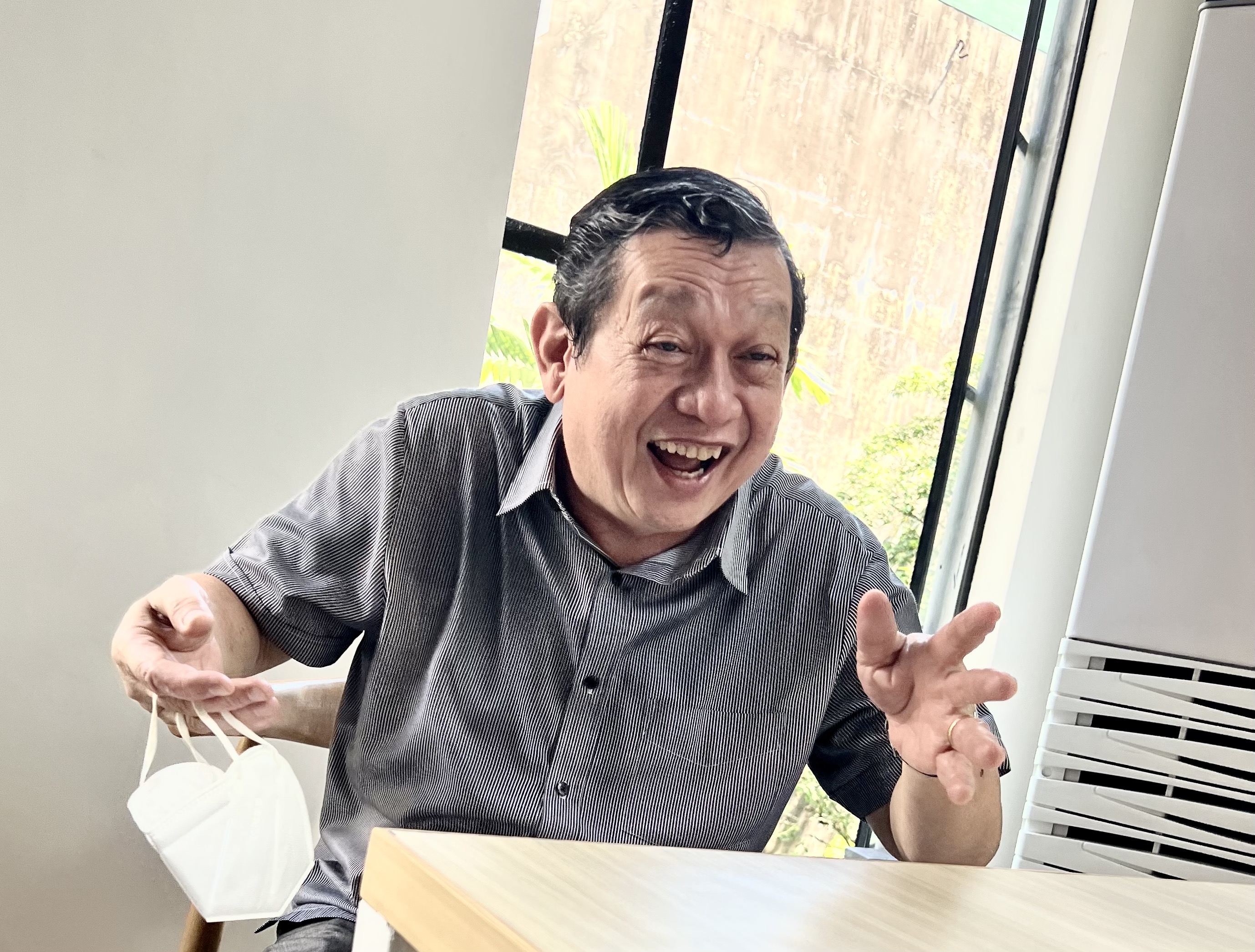
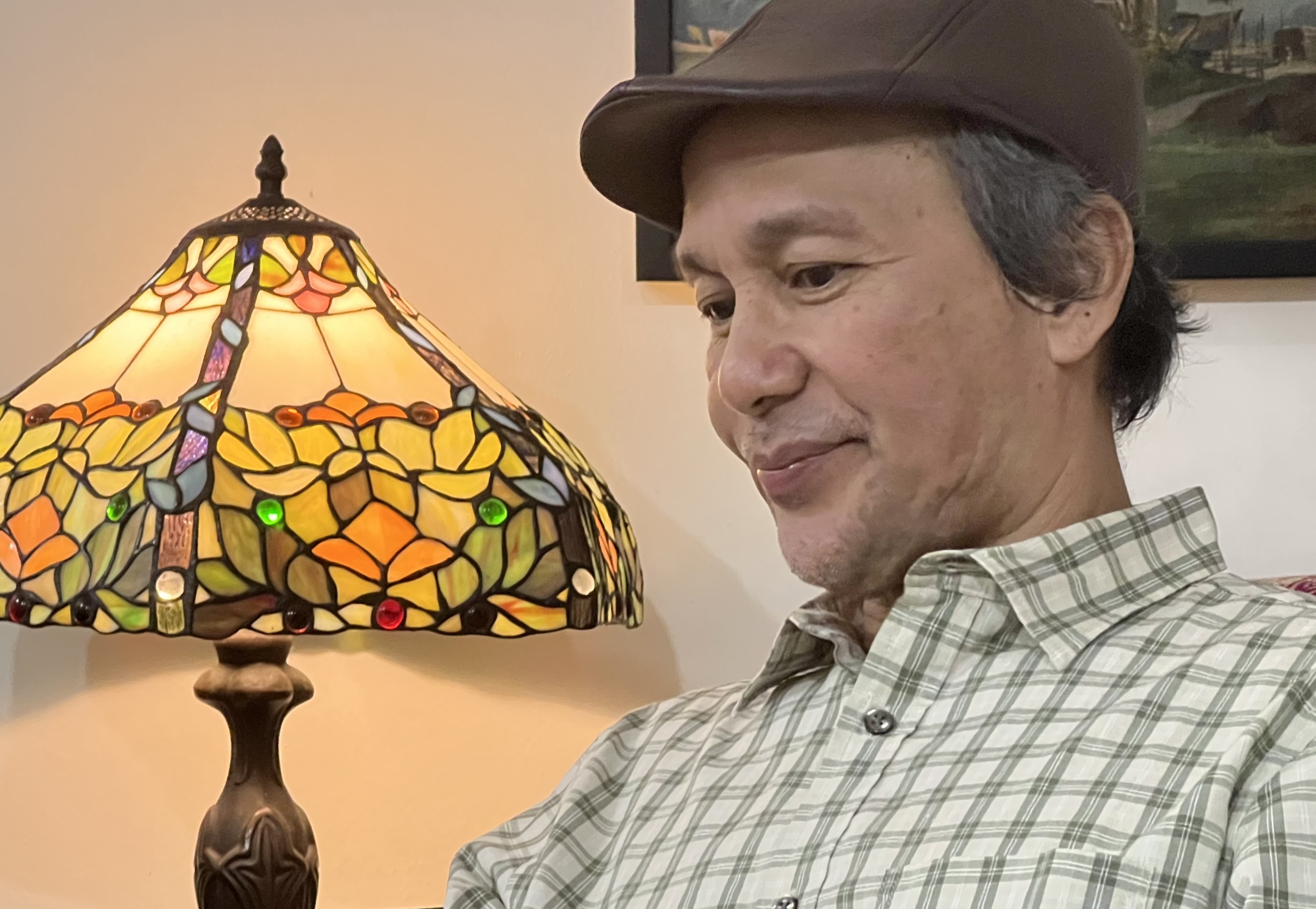
My inquiries into the background of my paintings led me to cross paths—initially online—with Juan’s grandson Raul Arellano, who turned out to be an accomplished painter in his own right. Born in Cagayan de Oro, Raul has been based for almost 30 years now in the United States, but he has recently been returning to the Philippines more often. When, one day, he messaged me to ask if we could meet up, I said yes, eager to learn what he could recall of his grandfather but also to get to know him and his art. 
I’m by no means an art critic, but my wife Beng (a professional art conservator and watercolorist) and I are museum rats and enjoy both traditional and modernist art, and peek into the local art scene when we can. There’s a lot of brilliance and energy out there to be sure, but also much safe and tiresome repetitiveness from artists who’ve settled on a commercial formula, such that their work no longer exudes emotional power. Many young painters—like their writing counterparts whom I meet at workshops and teach in school—also seem to think that the only worthy subject is death and despair, which invariably means dark canvases devoid of any suggestion of wonder and mystery, let alone delight.

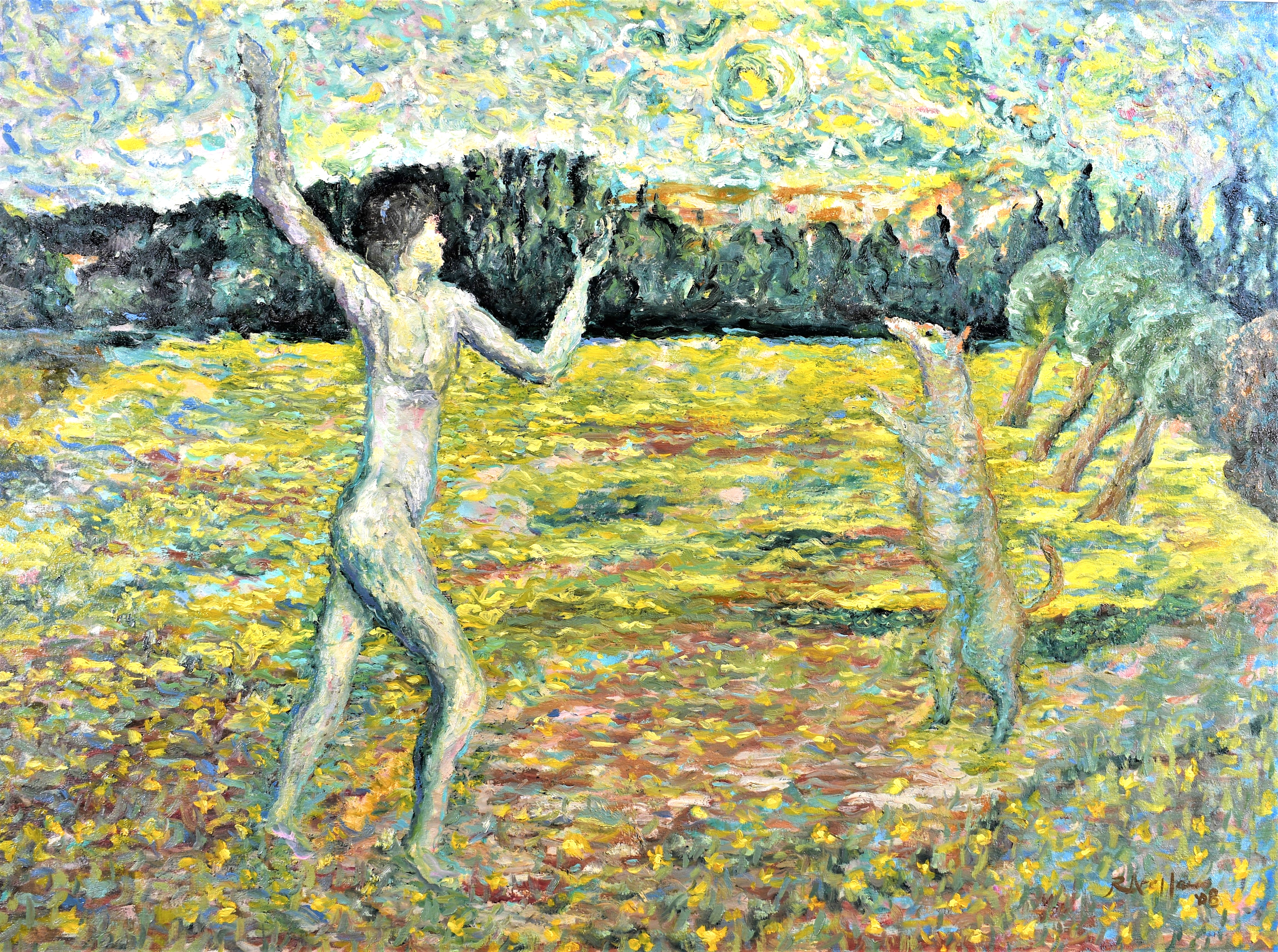
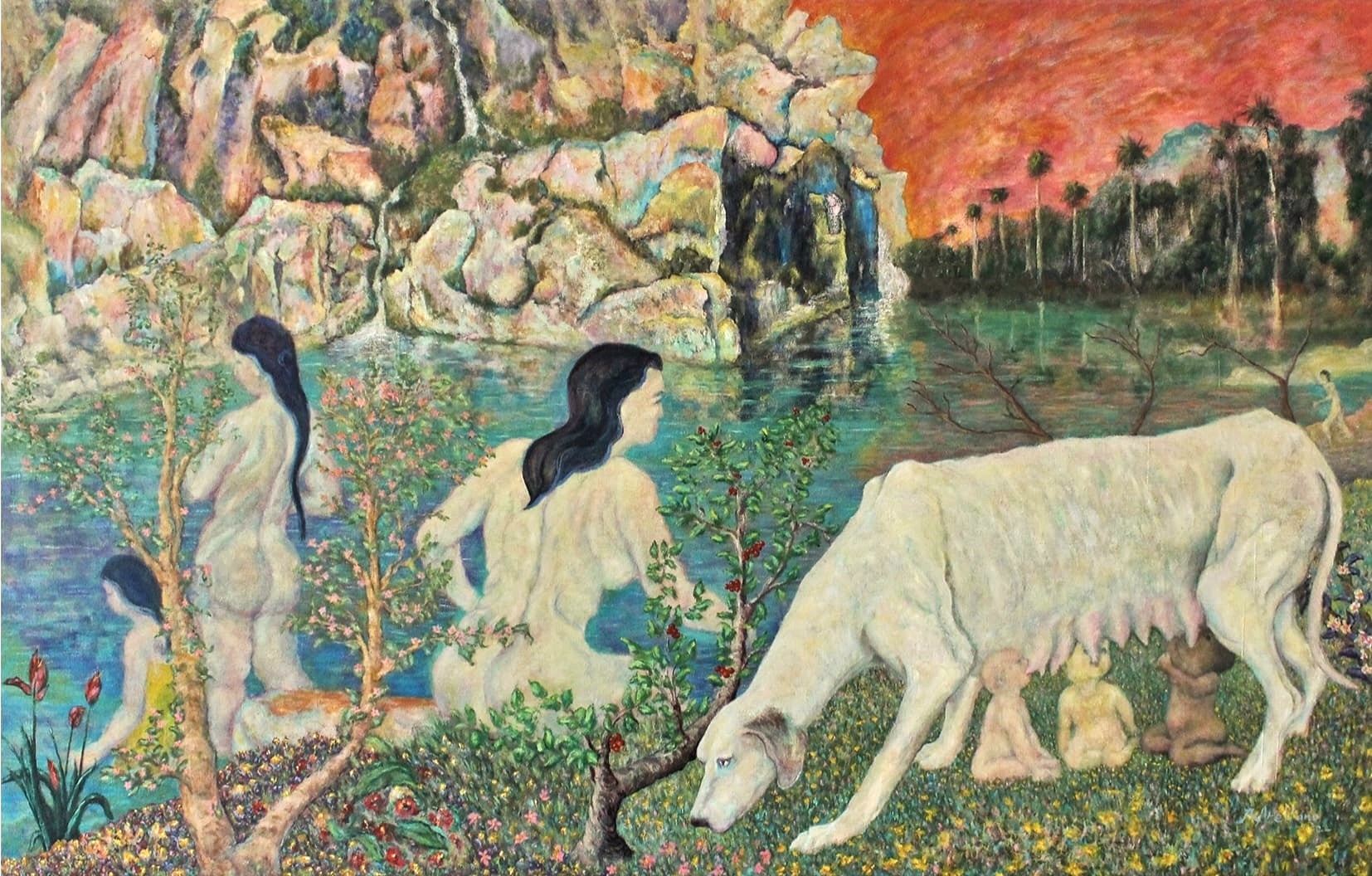
When I saw Raul’s work online, even before we met, what leapt out at me was exactly what I found missing in many others—an element of metaphysical magic, fantastical but relatable, the kind of paintings you want to return to over and over again. I saw flashes of Henri Rousseau, Van Gogh, and William Blake, among others, but it was still all him—not his grandfather, for sure—trying to tell me something I hadn’t really thought much about before.
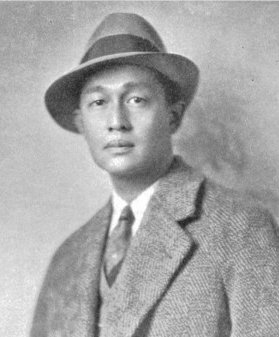
As it turned out, Raul never met his grandfather, who died five years before Raul was born in 1965 (Raul’s father was Juan’s third son Cesar). All he has of him is a self-portrait—and, of course, a passion for art that runs in the family; his cousin Carlos or “Chuckie,” the son of architect Otilio, was a formidable art patron and collector; Chuckie’s younger sister Agnes remains one of the country’s leading and most imaginative sculptors; Cesar’s brother Salvador or “Dodong” Arellano became a well-known painter of horses and game fowl in California.

Raul’s path to painting was neither straight nor easy. His first great obsession was acting, to the point of becoming a resident actor of Tanghalang Pilipino at the Cultural Center of the Philippines, playing a smoldering Tony Javier in a production of Nick Joaquin’s “Portrait of the Artist as Filipino.” “We were trained in method acting,” says Raul, “and it got to the point that I became so immersed in my character that other people on the set found it unnerving.” He would go on to act in the movies, in the crime drama Akin ang Puri(1996) directed by Toto Natividad, Batang West Side (2001) directed by Lav Diaz, and Himpapawid (2009) directed by Raymond Red. Of his performance in Himpapawid, reviewer Jude Bautista noted that “Raul Arellano as the main character is able to show the frustrations of the common man without going over the top. There is a quiet intensity in his performance.”

That intensity had been brewing in Raul the person for some time, leading to and compounded by domestic problems. In 1995, he took the opportunity to go on a film fellowship at the Art Institute of Chicago. The Midwest was too cold so he later moved to California, and quickly realized what all dreamseekers in LA wake up to: that he had to start all over again at the bottom rung of the ladder. “I swept floors. I learned how to operate a forklift. When the big steel container that you’re lifting comes crashing to the ground, you can feel the jolt running down your spine. I was in a lot of pain, but I kept on. When I left, my boss was very sorry to lose me.”

He set up a business restoring American muscle cars. “I had a Russian mechanic, but I took care of the interiors myself. I specialized in Mustangs—you could show me a Ford screw and I could tell you the year and model it came from. I had a fastback Mustang but my best sale was a Shelby Cobra.” But again another personal crisis blew up and he enrolled in a community college to study painting. He left school once he felt he had learned enough about the history, the theory, and the techniques of art to express himself. “Something in me was always wanting to come out, and I found that release in painting. I had no models or artists I looked up to. I just wanted to express myself, to work from my subconscious. I found that I could work best in a cemetery, because it was so peaceful. I still like working in the open, in plein air.”

The lure of painting proved irresistible. He worked in oils, and one of his favorite paints was lead white, popularly used in the past for its visual qualities and permanence. However, it was banned in the 1970s because of the danger of lead poisoning—a danger Raul was well aware of but embraced. “I found a stash of old paint and bought it all up. I was inhaling it every day and I could feel it doing strange things to my head.”
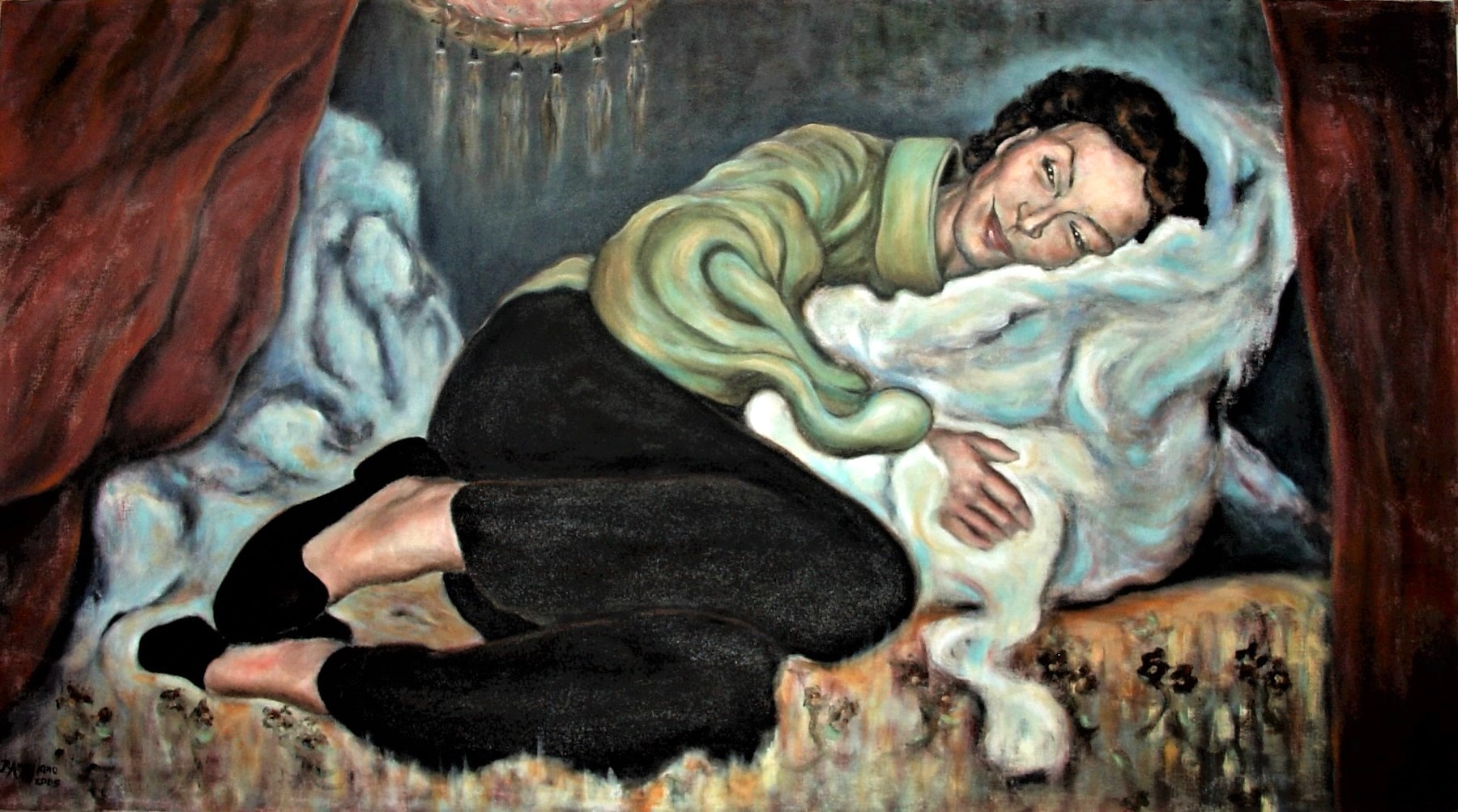
He returned to Manila every now and then and even resumed acting, but the death of a close friend shook him up badly. “I was all set to come out with an exhibit of traditional, representational paintings, but I was overcome with grief over the loss of my friend, and I just had to express that feeling in my work. So I put all my old work aside and began ‘Crucifixion.’” That work is one of his most impressive and a personal favorite, painted in 2004 at the outbreak of the war in Iraq.
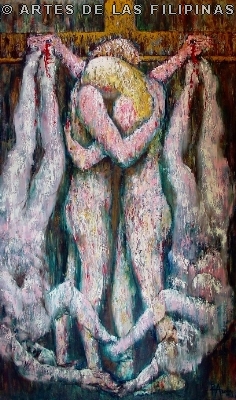
(Image from artesdelasfilipinas.com)

Today Raul spends time in a small farm in Batangas, enjoying quick sketches in the sylvan scenery, and contemplating the possibility of exhibiting in his homeland. With him having gone from peace to pain, from calm to conflict and back again, one can only wonder what new work will emerge from this phase of his life. I find myself wishing for his playfulness to return, but that of course depends on what Raul Arellano is feeling inside.

(More here on Raul Arellano: https://artesdelasfilipinas.com/archives/85/the-art-and-thought-of-raul-arellano-original-)
Penman No. 437: Cherubs, Columns, and Capitals

Penman for Saturday, April 2, 2022

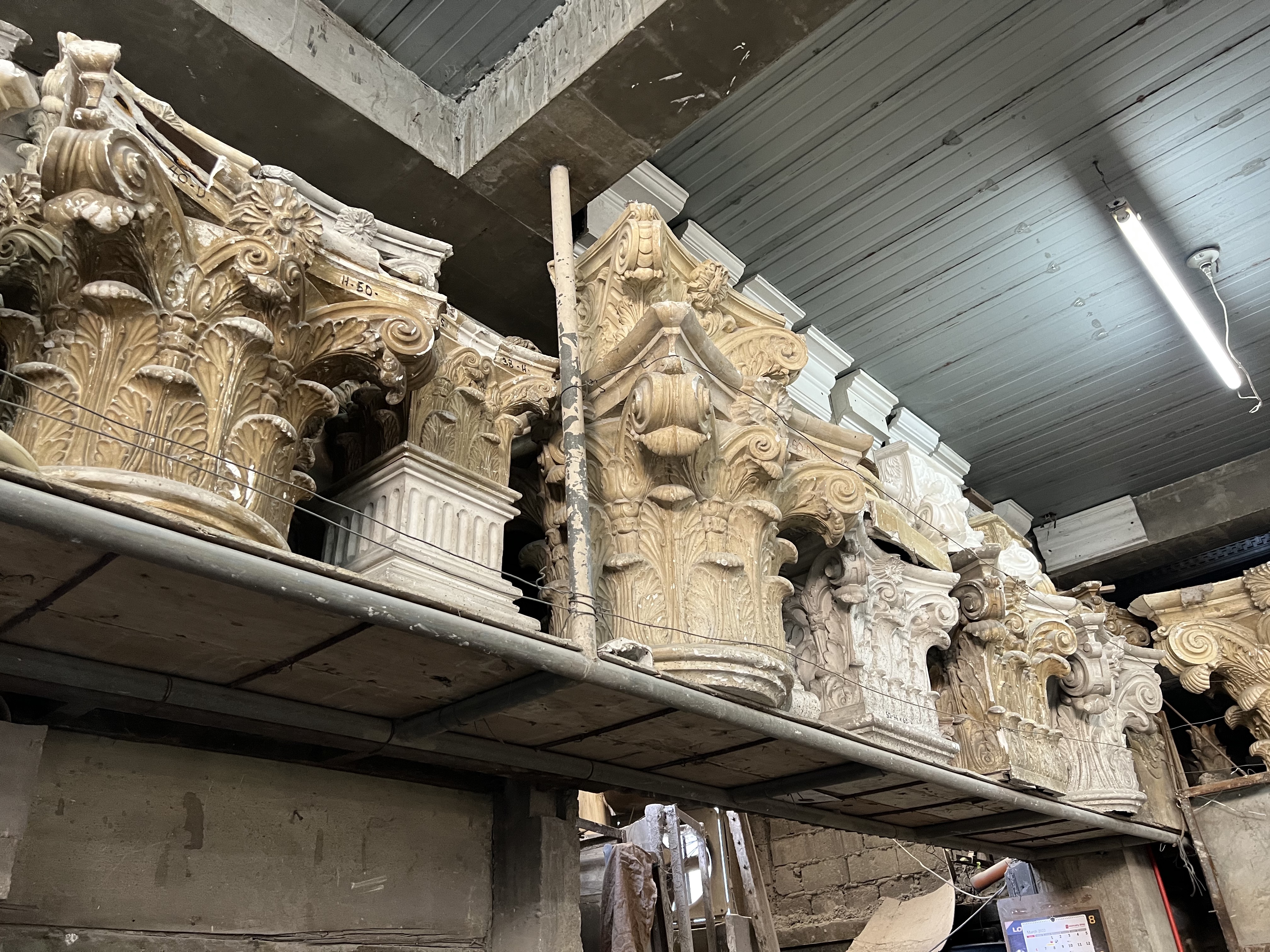
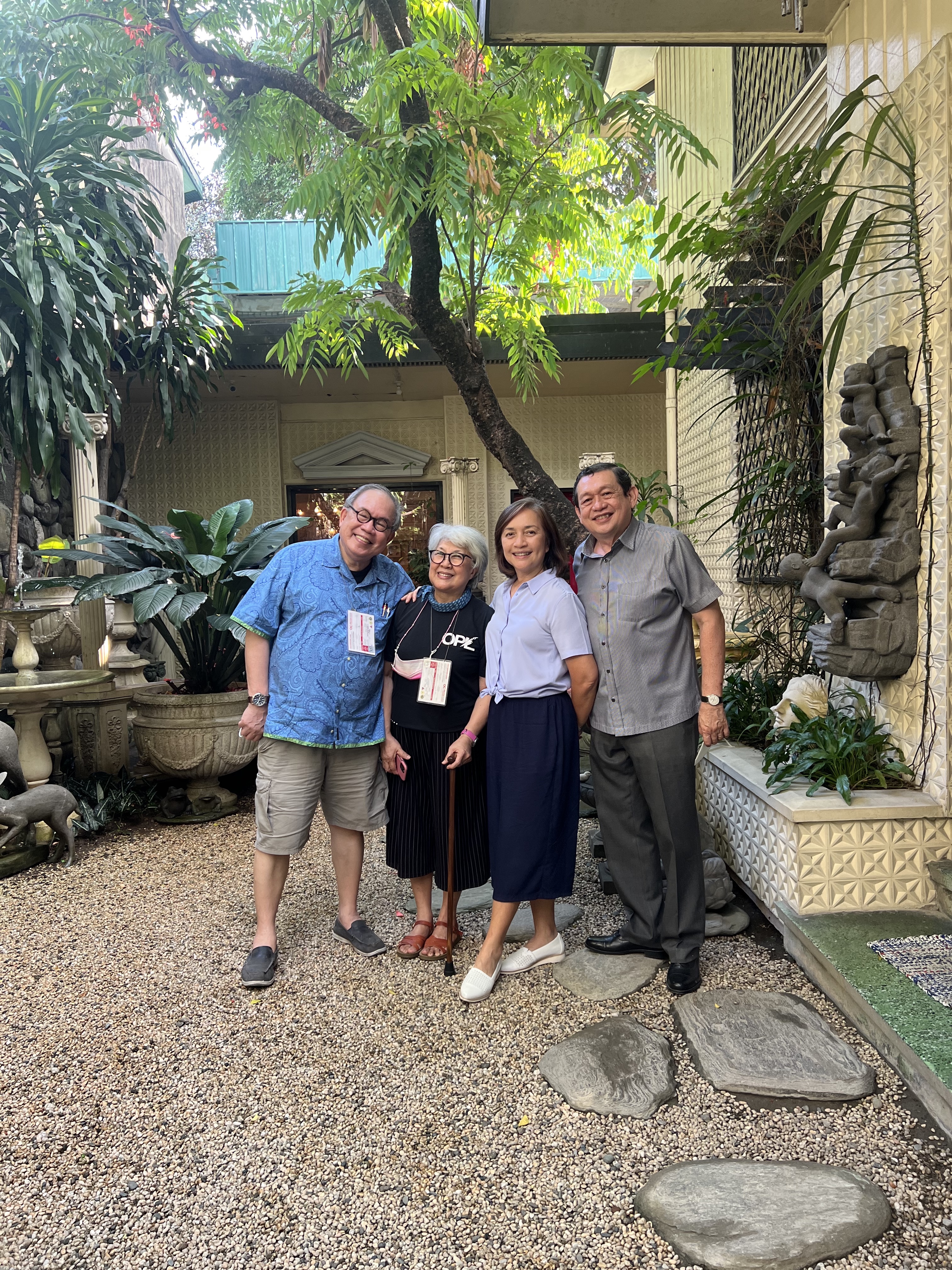
IT’S NOT very often that I stumble on a new source of beauty and wonder, especially not too far from where I live in Quezon City. But sometime last month my wife Beng and I drove out for just about half an hour to a place on the periphery of old Cubao and stepped back three-quarters of a century into a line of work that hasn’t changed much in all that time. What was especially delightful about this encounter was that, as a collector of all kinds of old things, this was new to me.

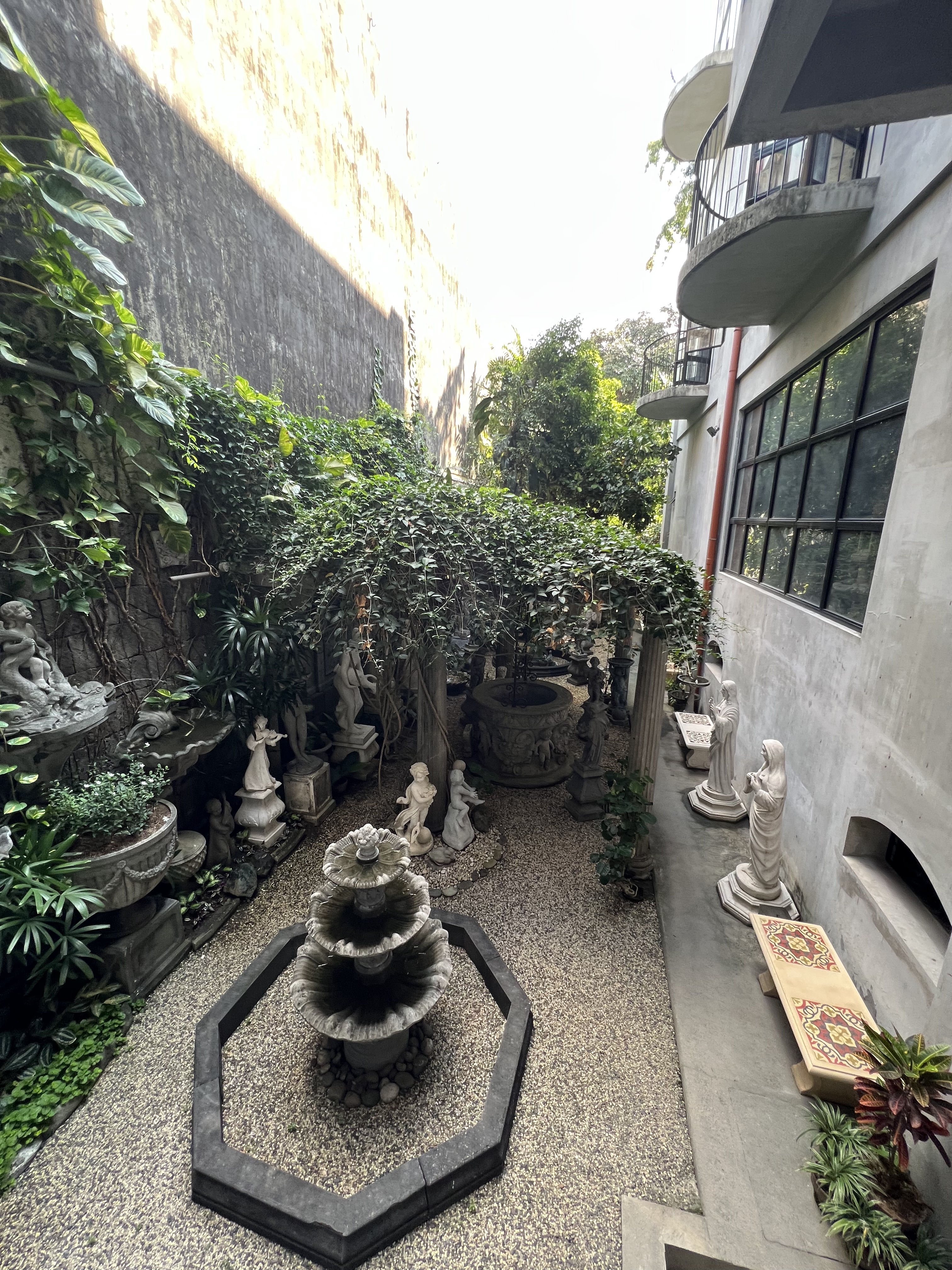
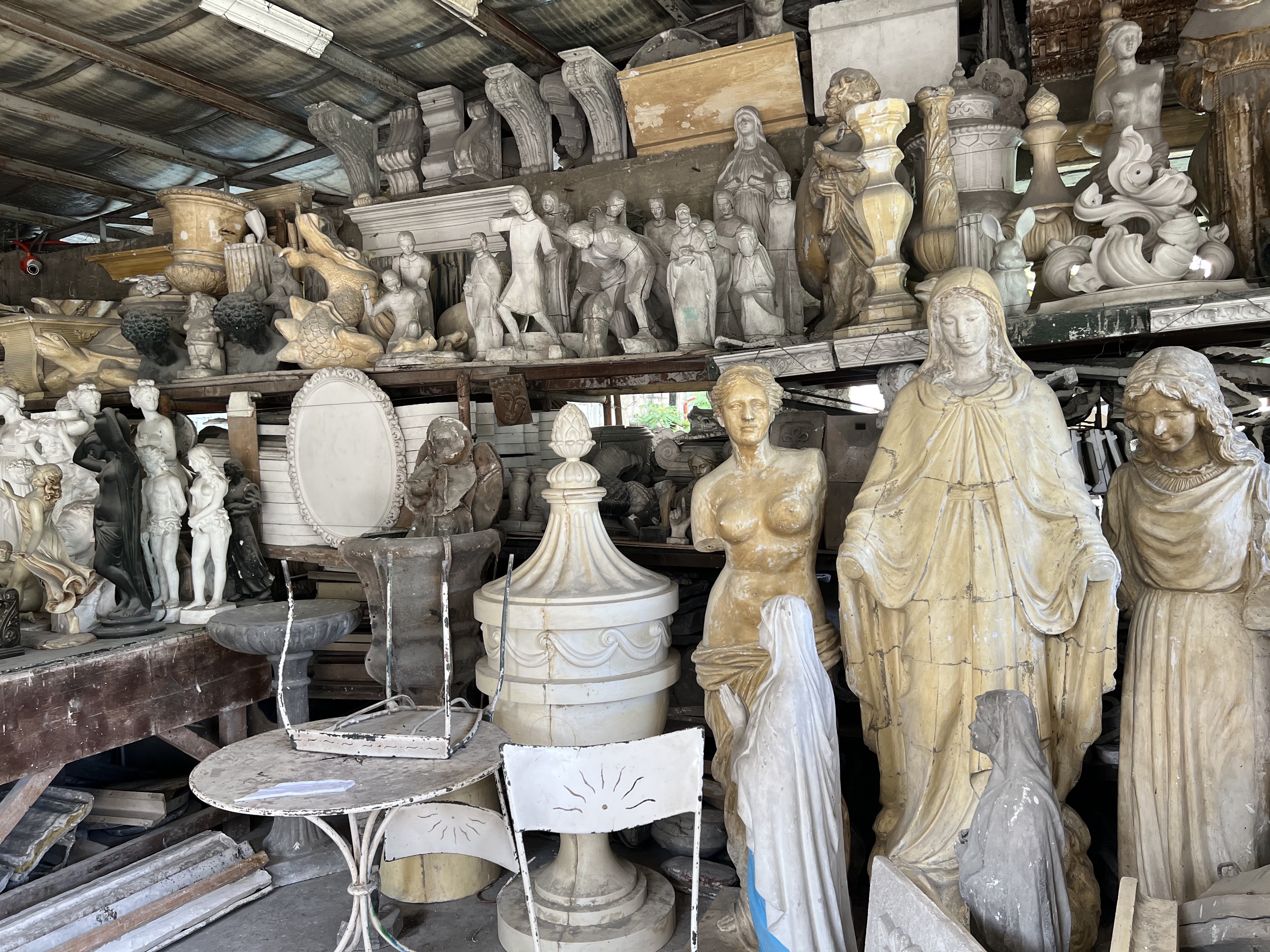
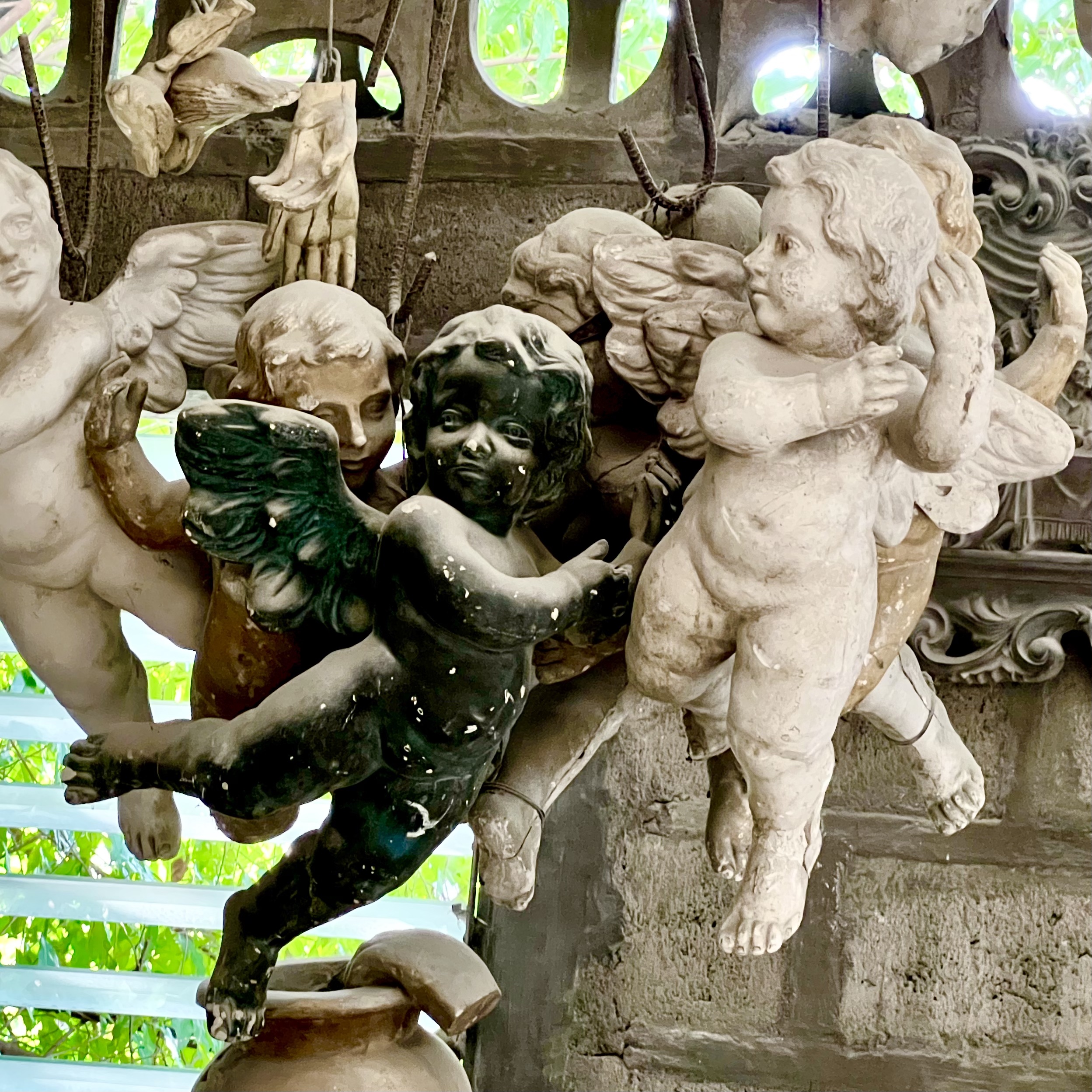
If you’ve ever looked around in church to see a fat little cherub on a pillar, or spent quiet time in a garden mesmerized by water cascading down a wall fountain, or walked down the stairways and corridors of old buildings appreciating the corbels and the balustrades—the fine, graceful touches of a bygone age—then you’ve seen the products of The House of Precast, the pioneer and still the leader in its field.

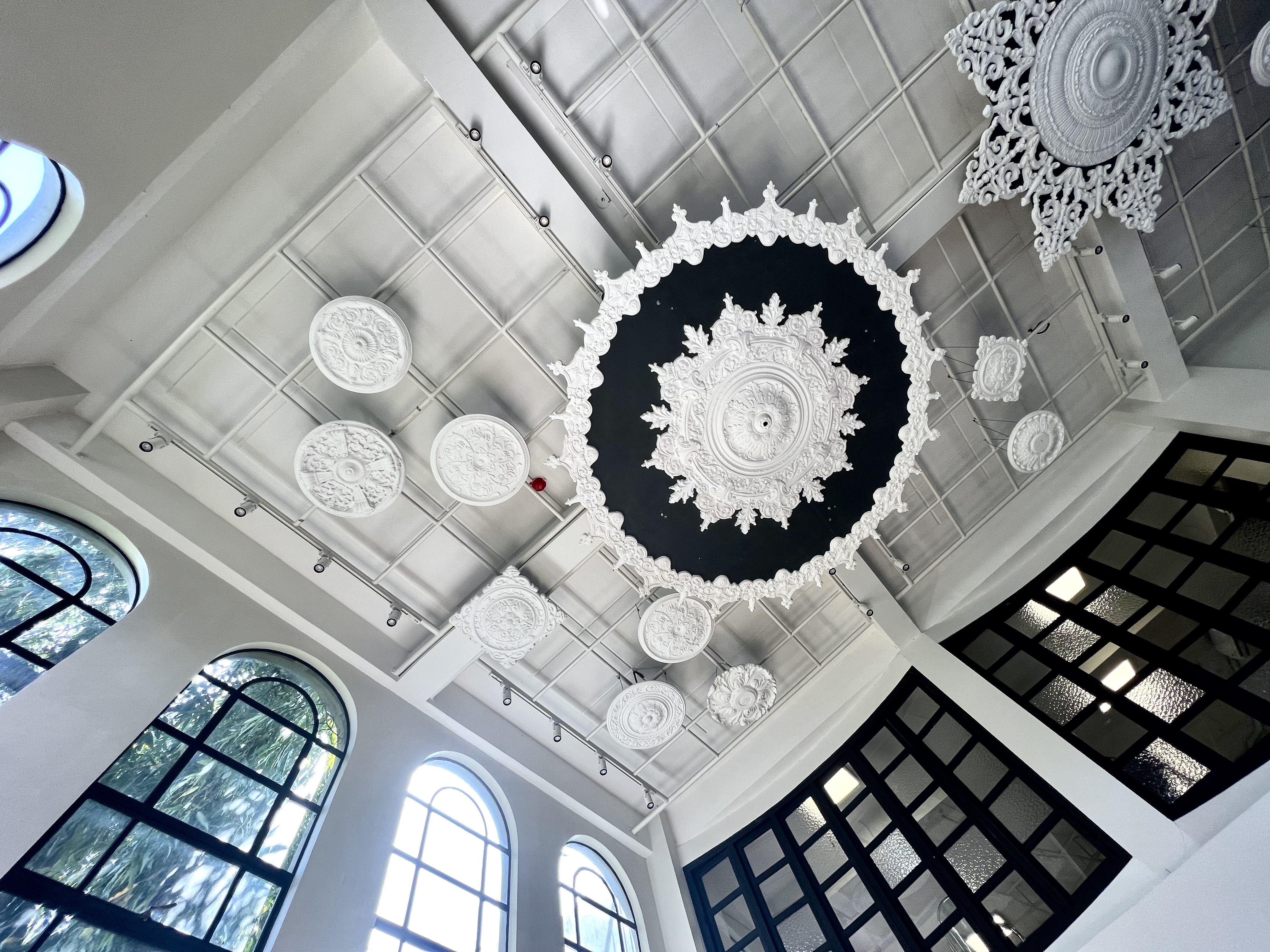
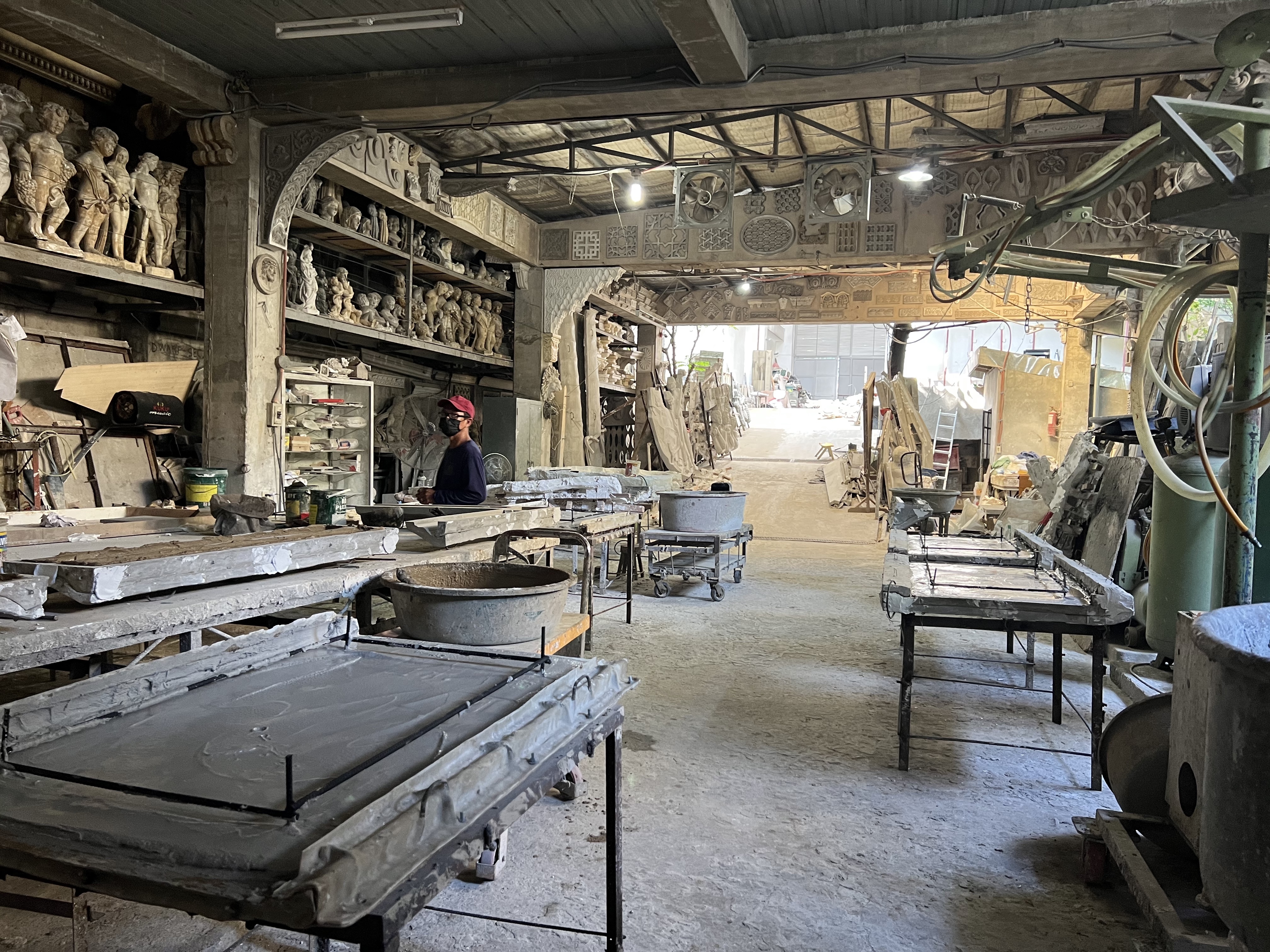
From the outside, its new office building along E. Rodriguez Avenue speaks of the modern efficiency with which its business is conducted, but its interiors quickly lead to the heart of the ancient art that still thrives within: the crafting and production of precast, or molded concrete, for architectural ornamentation and other uses. Behind the building can still be found the postwar home and workshop that started everything.

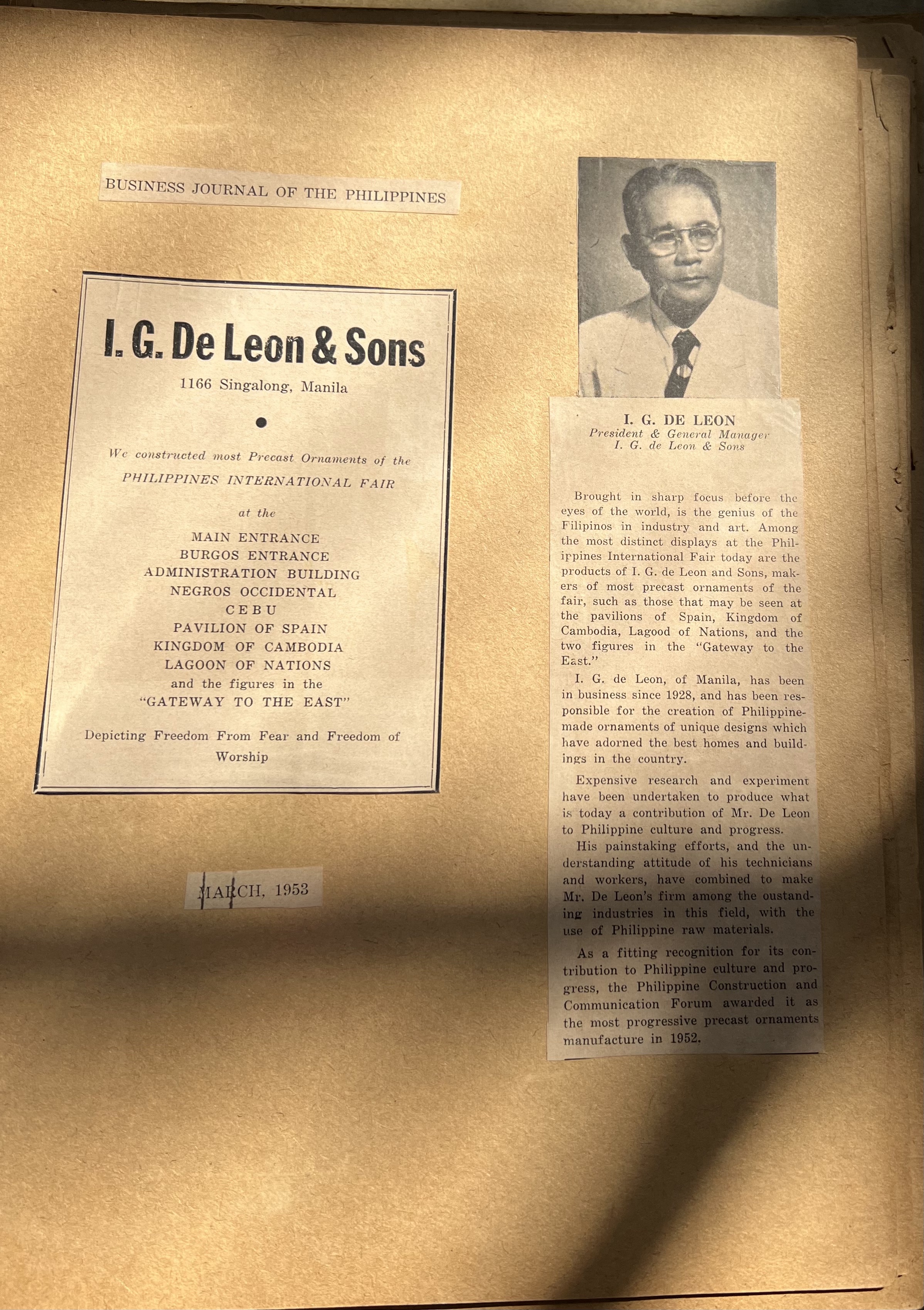
“This place dates back to 1948,” said Martin C. Galan, who runs The House of Precast with his lovely wife Michelle. Martin had met Michelle when they were both law students at UST. (Martin’s grandfather was the distinguished lawyer-banker Miguel Cuaderno.) How they got into the business is a story unto itself. Michelle’s dad, Conrado de Leon, was the son of master artisan Inocencio de Leon, who had worked with the renowned sculptor Isabelo Tampinco, a contemporary of Rizal’s. When the Americans came, they brought concrete, which Tampinco and his associates began to use for their commissions. 

A student of architecture, Conrado apprenticed with Don Isabelo’s son Vidal and later with Guillermo Tolentino, learning the craft and imbibing the high standards of quality and craftsmanship he would bring to his own trade. “He worked for Tolentino on the Bonifacio Monument. They used each other as models. They slapped on the clay and the old man finished it up. The statues were bronze but everything began as clay. They made a mold, which was brought to Europe for casting,” Martin explained. Another important mentor was the Italian sculptor Francisco Monti, who escaped the brownshirts in Italy and was on his way to Australia when he was enticed to go to the Philippines instead. “Monti had his own studio, but he came here to work so Conrado could make his molds for him. There were chickens here, so Monti would get six eggs and drink their contents, and start flinging mud as he sang an operatic aria.”

In 1950, Conrado opened The House of Precast where it remains today, and began filling orders for such premium clients as Malacañang Palace and the mansions of New Manila, Bacolod, and Davao. “When he did well, Conrado hired Vidal Tampinco, as a way of thanking him for his earlier mentorship, and also to learn more secrets of the trade,” said Martin. 

Conrado de Leon died in 1988, and was followed shortly after by his wife; by this time, Martin had married Michelle, and at her deathbed, Michelle’s mother implored the young couple to carry on the business. Despite coming from a very different background and knowing next to nothing about precast, the couple agreed, and have been at it ever since. “We began with a month’s capital and five old employees. We faced many challenges. No one knew us except the old architects. Internally, I had to deal with resistance to change, to modern techniques and methods of management.” 

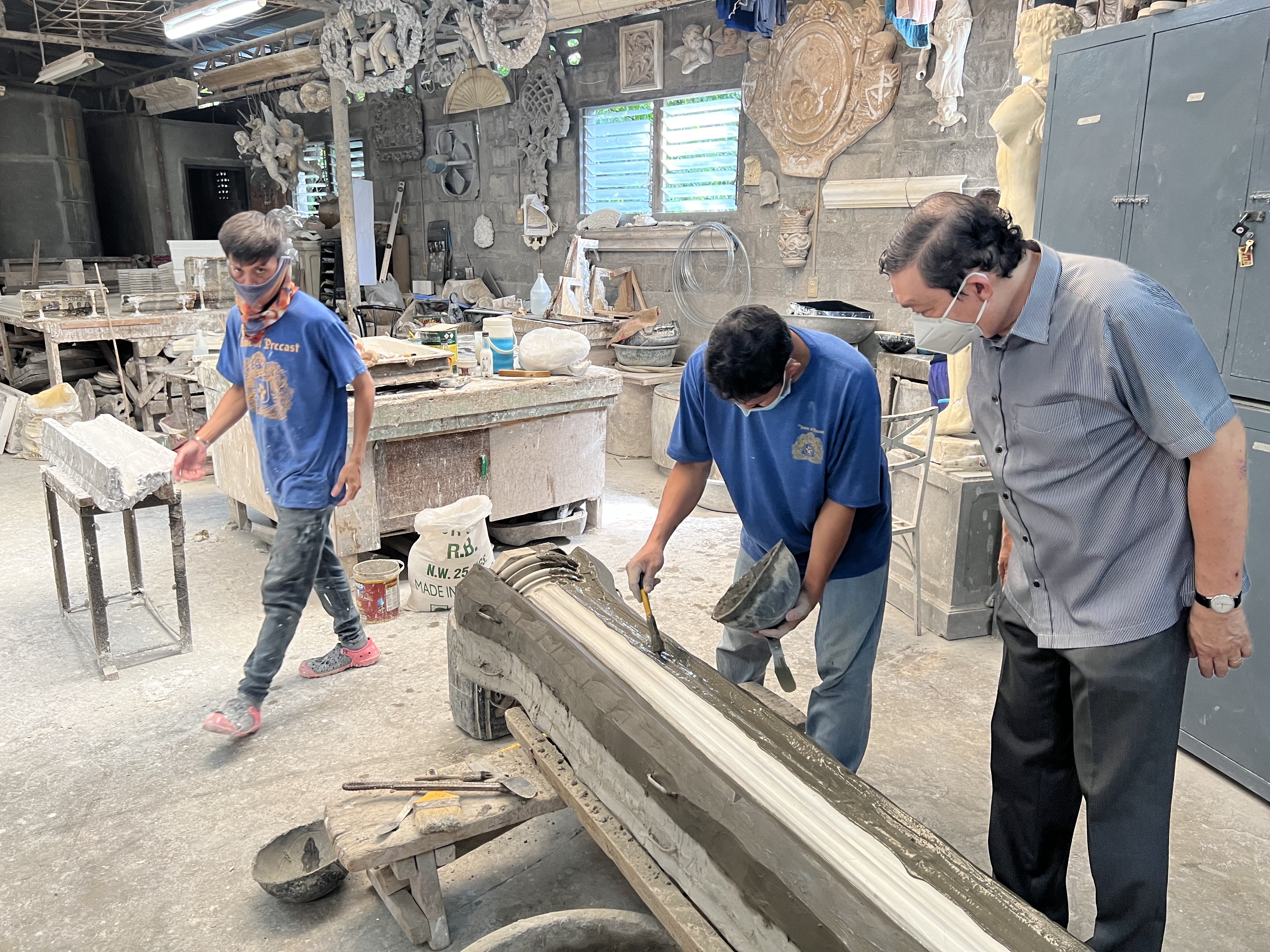
Martin brought in new knowledge, and also began training a new generation of apprentices. “When Michelle and I went to London in the mid-‘90s, I took the opportunity to learn how to make a rubber mold. Today I use three types of rubber as well as cement, and sometimes I mix wood, rubber, and cement. It depends on the job. You can innovate—you can use glass fiber instead of jute–but the basic processes remain the same. Our advantage is that we still know how to do it the old way. I made sure of that.”

The idea of precast can be traced to as far back as the Romans, who used a form of it for their famous buildings, but its modern version really takes off in the late 1890s and early 1900s with the growing use of precast and prestressed concrete in construction and ornamentation (the first recorded use of reinforced concrete, by Joseph Monier in 1867, was for a flower pot). The larger part of the precast industry today involves the production of structural elements for bridges and other infrastructure, so Martin’s and Michelle’s corner of it—architectural ornamentation—is relatively small, but the combination of tradition and technology that it demands also allows for the kind of artisanal care and excellence that only love and practice can create.

“The basic idea behind precasting is to make the object somewhere else and then bring to the site,” explained Martin. “The architects or clients can show us their designs, and we make their vision a reality. We make molds out of concrete, plaster, or rubber. Some molds are for one-time use—the molde perdido, or lost mold. But we can do what others can’t. Today we use CAD, and we work interactively with the client in developing the project. We have references for things like columns and capitals—there are equations and formulas for these classical forms. But for things like how a leaf should turn, our people rely on direct observation. Others might use pictures, and the two-dimensionality shows. To make a good mold, your mind has to think in three dimensions. You’re doing it in reverse—you’re making a negative. So we talk about the alsa and lubog, the rise and fall of the figure. We ask, what does the leaf want to do?”

Quality is The House of Precast’s topmost consideration. “We don’t scrimp on materials, and we abide by international standards.” This quality is evident in the high-ceilinged office that also showcases some of their finest creations.

But the workshop at the back, beside the old house and garden, is the heart of the operation, where skilled hands turn plaster and water into cherubs, columns, and capitals, among dozens of other shapes, familiar adornments often taken for granted that please the eye and tease the imagination. Stepping into it, I began to understand the Galan couple’s commitment to their craft, and to sustaining it into a future more concerned with cost than culture. 

The pandemic hit the business hard—“We’re ornamental, so we’re an expendable item in the budget,” Martin said—but they’ve survived and should recover. Their son Diego—a familiar figure in the watch and pen forums online—is learning the ropes. Martin has ambitious plans for the new building, which he wants to transform into “a venue for the humanities.” He has another business as a consultant in acoustics, and swears that he can see sound moving around in space—nothing strange for a man who fusses about how leaves should curl and open in nature. As long as the Galans find wonder in the world around them, so will we.

Penman No. 194: A Tree Grows at the Met

IMG_8118.jpg

Penman for Monday, April 4, 2016


THE FIRST and last time I saw a show at the Manila Metropolitan Theater must have been in the 1990s, for a production of Nick Joaquin’s “Portrait of the Artist as Filipino.” The theater was in fine shape then, and I recall being as enthralled by the place itself as by the spectacle onstage.

As a young boy in the early ‘60s, my father had worked at the old Department of Public Works building across Plaza Lawton (before they became the Post Office and Liwasang Bonifacio), and I had often tagged along to play with his red-and-blue pencils and his swivel chair. The most entrancing element in that locale, truth to tell, was the giant pot above the old Insular Ice Plant that spewed what seemed to be a steady stream of boiling water into a waiting coffee cup; but my eyes would stray to the strange pinkish building in the distance and I would wonder what went on there and what it held.

I got my answer, thanks to Nick Joaquin, but a few Sundays ago, I had an even more amazing opportunity to know the Met more intimately than I would ever have imagined. Sadly the intimacy was that which might exist between a doctor and a patient, like a probe of cold steel into some tubercular organ.

My wife Beng belongs to Kasibulan, a group of women artists, and they had been invited to do a sketching session at the old theater that Sunday morning, alongside a cleanup operation to be undertaken by volunteers. Did I want to come along, perhaps to take pictures, or at least hold bags and run errands for the ladies as they drew arches and vanishing points? Of course I did.

But before I go any further, especially for the benefit of our millennial readers, let me give a backgrounder on the Met and its sorry fate.

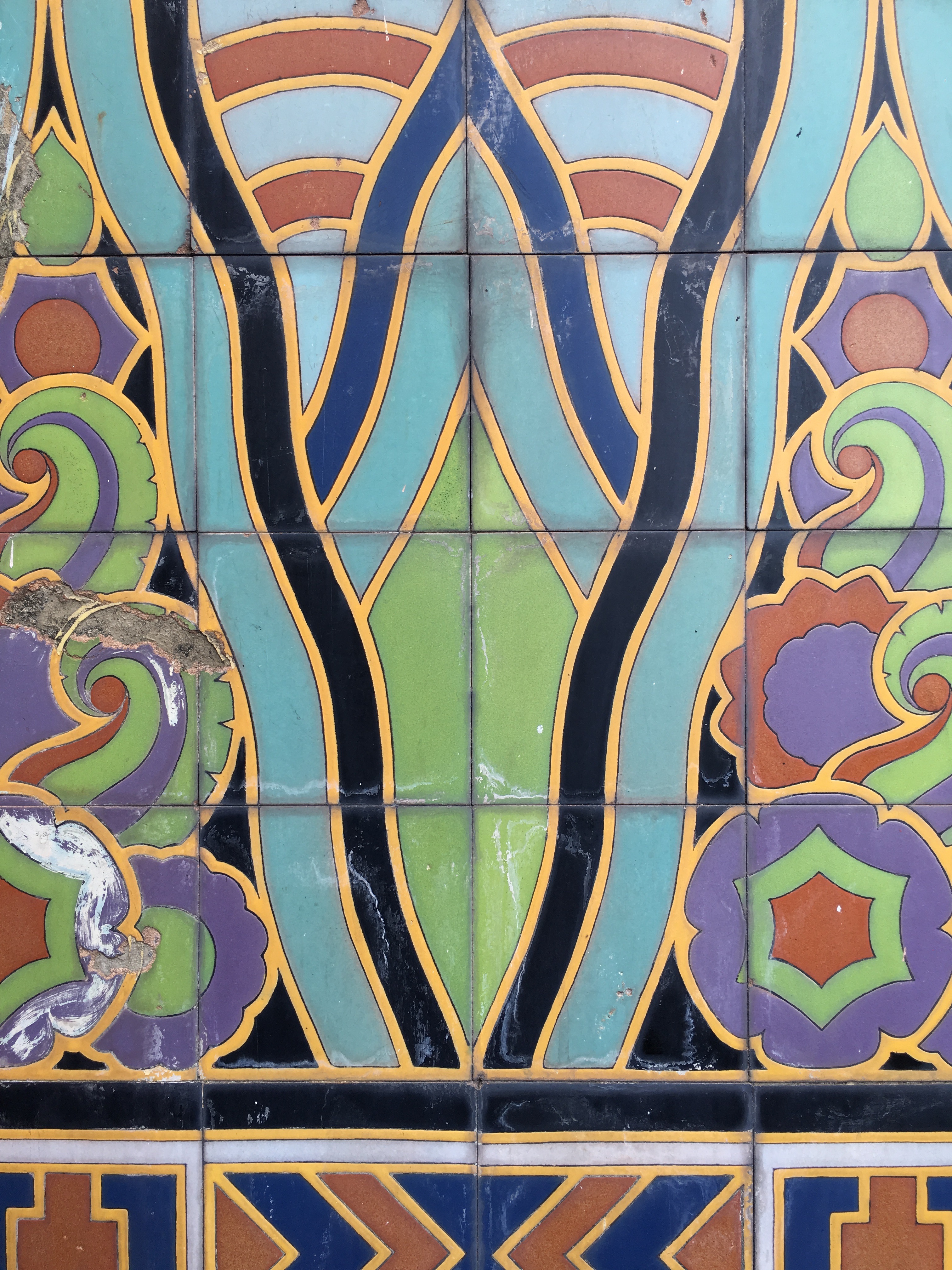
When the Manila Metropolitan Theater opened on December 10, 1931, it was an architectural wonder to behold and to step into—an Oriental palace in pink coral, crowned by exquisite minarets, statues, sculpture, and tilework. The overall style was Art Deco, the rage at the time, spilling over from the West but adapted to its new setting in the East. It could seat almost 1,700 people, and it had been put together and adorned by some of Manila’s finest architectural and artistic talents—designed by Juan Marcos Arellano, built by Pedro Siochi and Co., and decorated by the Italian sculptor Francesco Riccardo Monti, the sculptor Isabelo Tampinco, the future National Artist Fernando Amorsolo, and by Juan Arellano’s brother Arcadio.

IMG_8086.jpg

Erected near the site of its predecessor, the Teatro del Principe Alfonso XII which burned down in 1867, the Metropolitan was meant to be the city’s premier cultural venue, a showcase of the Filipino artistic genius. In its heyday, it hosted celebrated singers such as Jovita Fuentes and Atang de la Rama; from highbrow opera to the more popular zarzuela and vaudeville, the Met had the best to offer. Though damaged during the war, it was rebuilt and continued to be a haven for artists and entertainers until it began to decline in the 1960s, as other venues—and the growth of moviehouses in such places as Avenida Rizal, Escolta, and Cubao, followed by the establishment of the posh and modern Cultural Center—gained primacy among audiences.

At one point or other in its slide to abject decrepitude, the Met became a boxing arena, a movie set, a martial arts studio, a gay bar, an ice cream parlor, a TV stage, and a refuge for the homeless, among other incarnations. In 1978, Imelda Marcos took an interest and had the theater restored to its old glory, but then it fell again into disrepair, and was shut down in 1996 in a wrangle over ownership between the city government and the GSIS. Gloria Macapagal Arroyo and Mayor Fred Lim renovated and reopened it in 2010, when it was declared a “National Treasure” by the National Museum, but yet again it succumbed to politics, bureaucracy, and benign neglect; after a concert by the rock band Wolfgang in mid-2011, it was locked up by the GSIS.

In July last year, the ownership question was finally settled with the GSIS selling the property off to the National Commission for Culture and the Arts (NCCA), and shortly after the NCCA received P270 million from the Department of Budget and Management (DBM) for a fourth and hopefully final restoration, which the NCCA expects to complete by 2017.

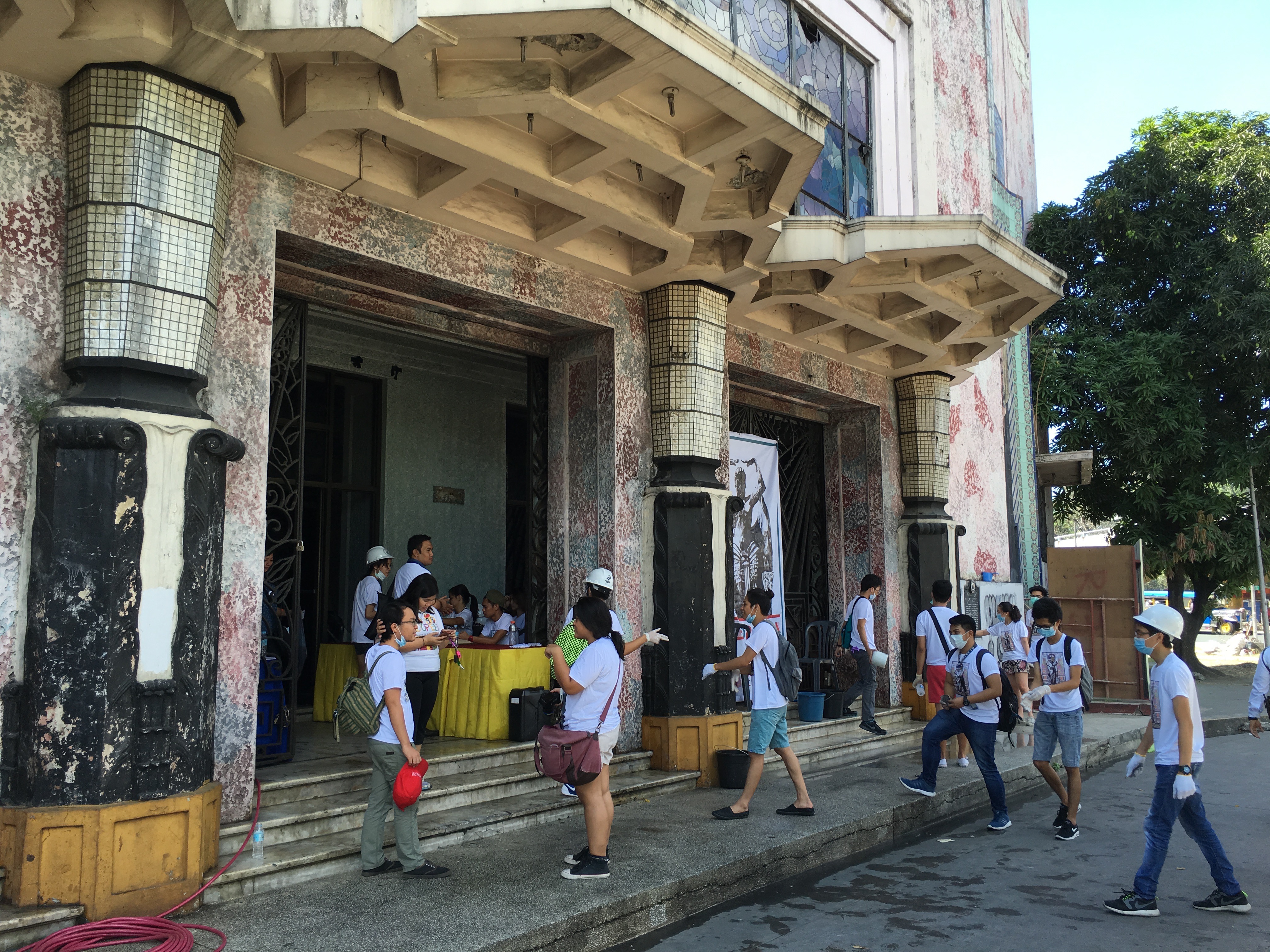
It was this Met that we entered that Sunday. We were greeted by my UP colleague and one of the restoration project’s consultant-architects, Gerard Lico, who assigned two young but very capable juniors to guide our group on an all-access tour of the building. The lobby was buzzing with the enthusiasm of student volunteers from National University who, after an orientation and a safety briefing, filed into the structure behind their team leaders.

We followed them into a dark and cavernous hulk (the electricity had yet to be brought back), and encountered a touching mix of fragility and resilience. The Met had to be cleaned prior to restoration, and thus we were being privileged to see it at its most hapless state. There was dust and rust everywhere, and the wooden floorboards, reduced to a pulp, were crumbling beneath our feet.

Even so it demanded attention and respect, and we trod slowly, reverentially. Through the squalor emanated a lingering magnificence—the echoes of long-stilled operas, the footfalls of performers scurrying down the corridors. In one room was a tangled mass of costumes—a sailor outfit unmistakably from The Sound of Music—and when we stepped out onto the broad stage, you almost expected the spotlights to burst into life and the phantom audience to roar in approval. There was a hole in the stage floor and water in the orchestra pit, but nothing, it seemed, beyond repair, beyond human care.

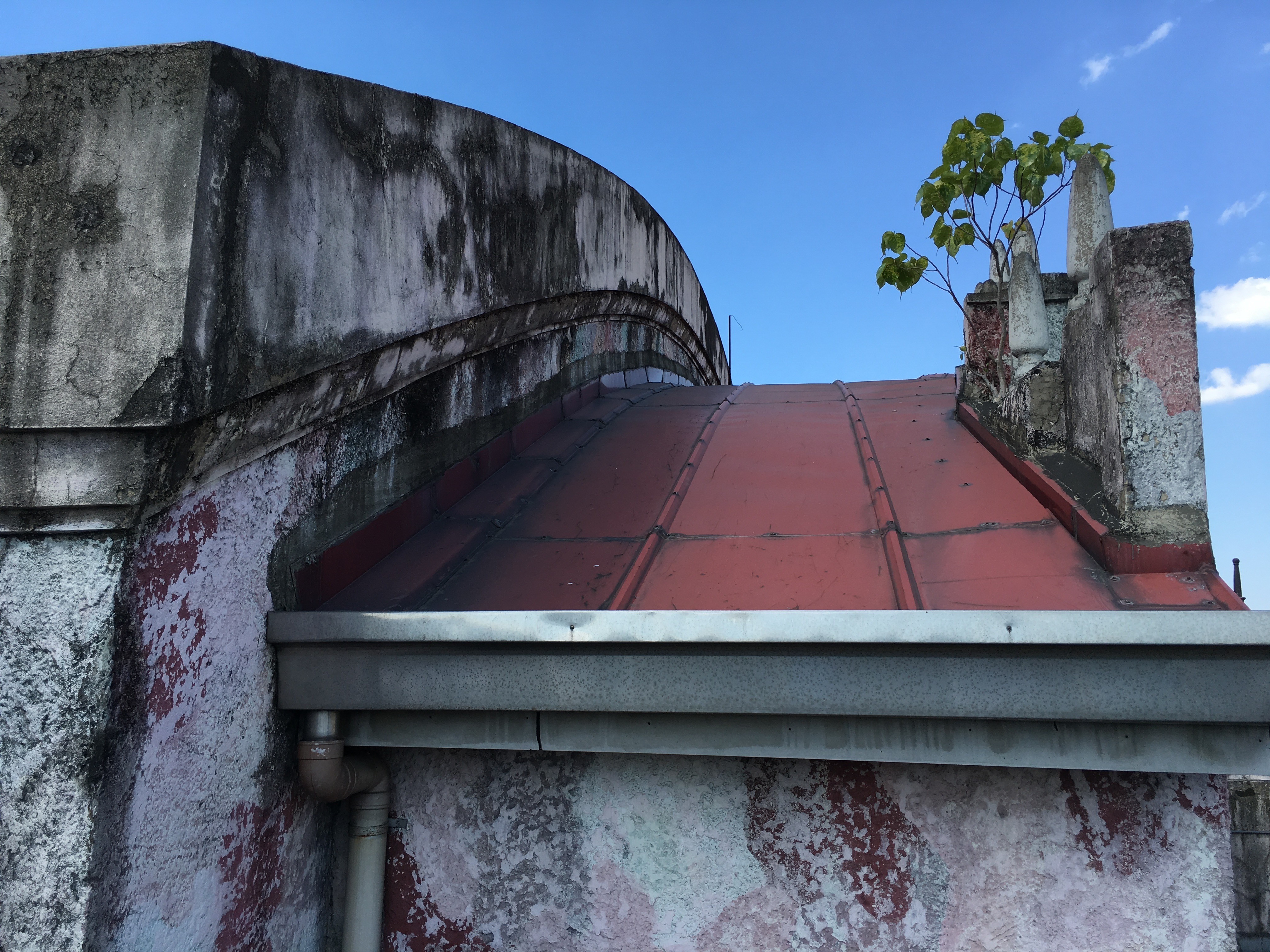
Out on the roofdeck, beneath the Moorish spires and the batik-inspired tiles, a small tree had sunk its rope-like roots into the masonry. I found myself hoping that it would be spared the restorer’s saw. Reprieves beget reprieves, and it would provide a fine organic testament to the Metropolitan’s endurance. (See more pics from our walking tour here.)

IMG_8072.jpg