Qwertyman No. 125: The Young Dodong Nemenzo (1)

Qwertyman for Monday, December 23, 2024

IT WAS with deep sadness that we received the news last week of the passing of Francisco “Dodong” Nemenzo, the staunch Marxist, nationalist, and former president of the University of the Philippines. My wife Beng and I are spending Christmas with our daughter in the US and being an all-UP family, we all knew Dodong and were much affected by his loss. Beng had been a student of Dodong’s at UP, and I was privileged to serve under him as his Vice President for Public Affairs twenty years ago. But long before this, I had met him as a student at the Philippine Science High School where his wife Princess taught us History; he came to pick her up in the afternoon in his Volkswagen Beetle whose door was emblazoned with the Bertrand Russell “peace” sign.

We will be missing the many memorial events that will surely be held in his honor these coming days, so I thought of recalling Dodong in a different way from what most of his colleagues and comrades will be speaking about him. More than ten years ago, I interviewed Dodong for a book I sadly have yet to finish, and he spoke with me about his life before he became the fighting ideologue everyone now remembers him to be. Let’s hear him in this abbreviated excerpt:

“We went back to Cebu after the war. Everything was still in turmoil. I enrolled at the Miraculous Medal School, a Catholic school, and completed my third and fourth grade there. By the time I reached fifth grade, Cebu Normal School was opened so I graduated from there. After sixth grade, I spent a year in the seminary in Cebu. That was my parents’ plan ever since I could remember. I was the only boy among three children, and the eldest. My parents were devout Catholics, and they considered it an honor when a member of the family became a priest or a nun. Since I was an only boy they wanted me to become a priest. I stayed there for only a year, and then I quit. That was probably the beginning of my radicalization. The seminary back then was run by Spanish or Vincentian priests who were supporters of Franco. They looked down on Filipinos and despised Rizal. 

“I went to the University of San Carlos. It was a Catholic school but my father was unhappy with the Science instruction. Our science textbook used the question-and-answer method and my father didn’t like that. He examined my notebooks every day and corrected what my teacher said. He got mad when we were taught creationism, and he lectured me on Darwin and evolution. I answered my teacher back and the principal reported me to my father for my heretical tendencies. My father decided to free me from this nonsense and transferred me to the Malayan Academy, a private non-sectarian school that had very good teachers. I finished near the bottom of my class, failing in Conduct and Tagalog. 

“I entered UP Diliman in 1953. The rule then was that you were exempted from the entrance exam if you had an average of 82, but my average was around 77 so I had to enroll in a summer institute that was like a backdoor into UP if you passed 6 units there. I didn’t know what course to take. My father didn’t want me to take up Law and wanted me to become a scientist like him, but I reckoned that if I did that, I would always be compared to him and come up short. So I chose a course called AB General. 

“The advising line was a mile long. Jose ‘Pepe’ Abueva, a friend of my father’s, passed by and saw me in the queue. He asked after me and I told him that I couldn’t think of a course I really wanted. He tried to sell me on Public Administration, but I didn’t like to serve in a bureaucracy. He said there’d be a lot of opportunities abroad, scholarships, and if I did well I could join the faculty. He had a lot of arguments, but the one that persuaded me was ‘If you join Public Ad right now, I’ll sign your Form 5 right away, and you won’t have to join this crowd.’ 

“That’s how I ended up in Public Ad. When the dean of Business Administration tried to recruit me and my (Pan Xenia fraternity) brod Gerry Sicat who was then in Foreign Service to go into Economics for our master’s, Pepe Abueva again swooped in and told me to take up an MPA instead, and to join the PA faculty immediately. So I became a faculty member in my senior year, just before my graduation, as an assistant instructor. I probably had the longest title in UP: ‘research assistant with the rank of assistant instructor, with authority to teach but no additional compensation.’ I really wanted to teach, but had no actual assignment. I only took over the classes of professors who went on leave. 

“I never joined the UP Student Catholic Action or UPSCA. Well, maybe for one year, but I was never active and then I got out of it. I joined only until I met an UPSCAn named Princess. We always met in Delaney Hall. We were together in the student council. She was representing Liberal Arts, I was representing Public Ad. I joined in 1955, my third year, along with Gerry Sicat, Manny Alba, and Jimmy Laya. I became a liberal and distanced myself from UPSCA. 

“I idolized (Philosophy professor) Ricardo Pascual. I was looking for a cause, but these liberals were just fighting for academic freedom with no purpose. It seemed empty. I was under the influence of Pascual for some time, but we had no advocacy. I joined a short course in Social Order at Ateneo on the papal encyclicals on labor. My liberalism and my growing social consciousness merged and I started reading Marx and Huberman on my own, to find out what we were fighting for. There were a couple of professors like Elmer Ordoñez and SV Epistola who according to Bill Pomeroy had already reached that level of consciousness, but when he left they became liberals, they weren’t really organized.” (To be continued)

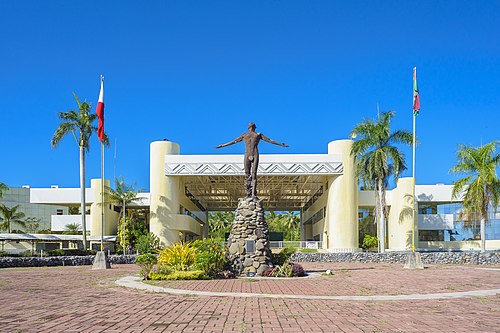
(Photograph by Rick Rocamora, used with permission)
Qwertyman No. 80: Bringing UP to the People

Qwertyman for Monday, February 12, 2024

SINCE IT was established in 1908 as a “university for Filipinos,” the University of the Philippines has grown into a system of eight “constituent universities,” each with a certain degree of autonomy but all of them unified by a common vision, shared practices, and high academic standards. UP began in Manila, followed by Los Baños and then Diliman, which became UP’s flagship campus after the war. 

Of course, as the country’s premier public university and with its relatively hefty budget, there was pressure on UP to go out even farther, especially beyond Luzon, to become truly more representative of the Filipino people. In the past, that form of democratization was achieved to some extent by UP’s old policy of accepting valedictorians and salutatorians from high schools all over the country; once in UP, these provincianos did well, and many went on to positions of national leadership. 

But the general decline in public education and UP’s more stringent admissions policy have changed all that, so that the majority of successful UPCAT applicants now come from private high schools in the big cities. As nearly everyone agrees, that’s not what a presumably “national” university is supposed to do—meaning, giving quality education to the children of the affluent at the expense of ordinary taxpayers (I say “nearly,” because there are a few on the “excellence” side of this “excellence vs. equity” argument who also argue that the State’s best strategy going forward is simply to fund and support the country’s best minds, no matter where they come from—kind of Singapore-style, but then we’re no Singapore). 

Also, a UP education doesn’t happen just with a student’s admission. Even now that the law has made public university education free (ironically, again, subsidizing rich metro kids), many UPCAT passers from the regions never show up, or drop out early on, because of the prohibitive costs of living and studying in Manila, especially. They could have gone to UP if it were closer to where they were, pointing to the continuing need for more UP units to be opened in our far-flung regions. (To this day, for example, no UP has been established in Bicol, although to be fair, that region is already being served by many excellent universities.)

The traditional reluctance by the UP Board of Regents to open UPs here and there has been based on sound academic reasoning: building and opening a physical school is easy, but establishing academic programs with qualified faculty is much harder, especially in so-called “hardship” posts, to which presumably Manila-based faculty will have to be enticed to relocate until enough local capability is built up. A UP education should come with a guarantee that a degree earned, say ,in Baguio or Iloilo is equivalent in quality and efficacy to one earned in Diliman or Manila. 

There were early attempts to “democratize” UP by setting up teaching outposts as far north as Vigan, where a UP Northern Luzon Junior College was opened in 1930, complementing a similar Junior College in Cebu. (That college in Cebu, interestingly enough, was almost shut down shortly after it opened for lack of funding. Then UP President Jorge Bocobo was too proud and proper to accept a P5,000 donation from Cebuano UP alumni, because it had been raised from sweepstakes. Politicians jumped into the fray, with some arguing that Cebu needed support as a “moral alternative” to Manila, only to be reminded that Cebu was no prelapsarian paradise, with at least “three cabarets and five moviehouses,” according to an unofficial history of UP. The day was saved only when Gov. Mariano Cuenco threw P8,000 into the pot.)

In the late 1950s, President Vicente Sinco set up a Department of Extramural Studies to undertake extension classes in Iloilo, Davao, Zamboanga, San Pablo, Subic, and Clark Airforce Base. 

Thus were the seeds sown for today’s full-blown UP System, which has Diliman, Los Baños, Manila, Visayas, Mindanao, Cebu, Baguio, and the Open University among its constituents.

Each of these CUs has its own specific strengths, history, and traditions—Manila is also UP’s and the country’s health sciences center, with the Philippine General Hospital as its crown jewel; Los Baños celebrates Loyalty Day, which began in honor of faculty and students who took part in World War I (yes, I). UPOU is a regional leader in distance learning, providing a UP education even to OFWs abroad.

A particularly bright spot in this stellar array is UP Mindanao, which is marking its 29th anniversary later this month. When it was established by RA 7889 on February 20, 1995 under President Fidel V. Ramos, it was met with much skepticism even from within UP, and there were dire predictions that it would fail within a few years. The indifference was caused by the fact that UPMin was the first CU to come into being through legislative fiat, rather than the usual process of study and approval by the Board of Regents. What had happened was that UP alumni from Mindanao had banded together to demand a UP on their island, given its economic and political importance. Mindanao’s political leaders led by Reps. Prospero Nograles and Elias B. Lopez rallied to their cause, and UPMin was born.

Almost three decades later, it’s clear that that decision was the right one to make. Despite many teething problems—the path to UPMin’s hilly campus in Mintal was so rough that people took to calling it “Abortion Road”—UP Min has gone on to become an educational powerhouse in the region, particularly in such specializations as Agribusiness Economics. On the cultural front, UPMin leads in such studies as “Mindanao epics as pre-colonial roots of Philippine nationalism” and “Planning and architecture from the vernacular dwellings of Mindanao.” Its writers such as poet and former Chancellor Ricardo M. de Ungria and fictionist and Dean Jhoanna Lynn Cruz are nationally renowned. 

It was no accident that, when he was choosing a site for his investiture last September as UP’s 22nd president, Atty. Angelo A. Jimenez—UP’s first Mindanawon and lumad president, having been born a Manobo in Butuan City—chose UP Mindanao. Keenly conscious of his opportunity to make historic changes, Jimenez has pledged to improve access to a UP education even further, especially for the poor and the underrepresented. 

We look forward to a time when the children of farmers, fisherfolk , and factory workers can walk UP’s hallways again with their heads held high—if not in Diliman, then in a capital city closer to home. It will go a long way toward making UP a truly “national university,” and help build a stronger and more cohesive nation.

.

Penman No. 408: Windows on the Filipino Soul

Penman for Monday, March 1, 2021

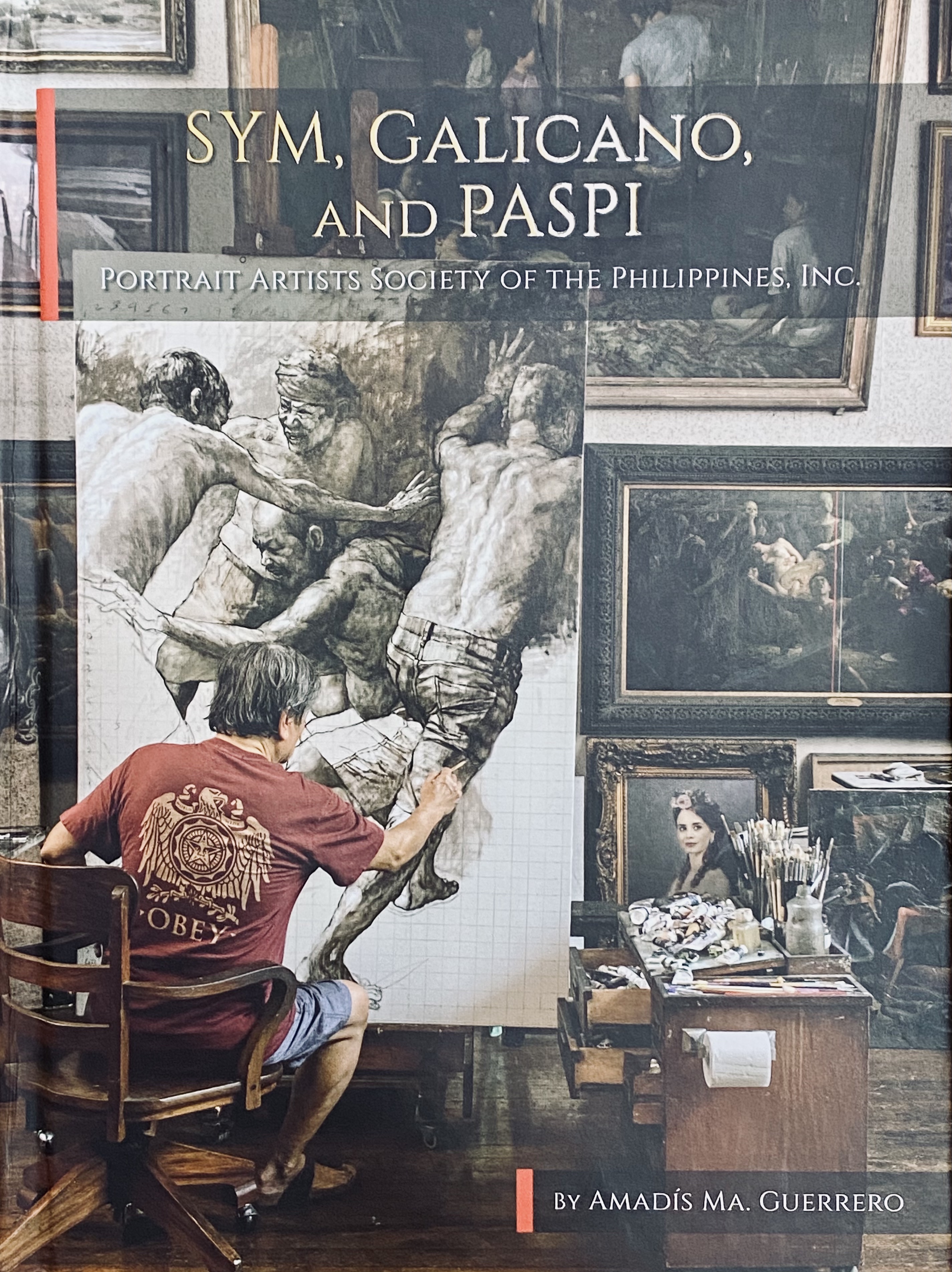
SOON TURNING 80, the veteran journalist and fictionist Amadis Ma. Guerrero has added another feather to his cap as one of this country’s foremost chroniclers of culture, particularly the visual arts. Less than two years ago, he gave us the splendid book Philippine Social Realists (Quezon City: Erehwon Artworld Corp.), where he reviewed ten of the country’s most accomplished advocates of social realism, prompting our own Juaniyo Arcellana to call him “a master of reportage, which he puts to good use in this series of portraits of the artist as Philippine social realist.”

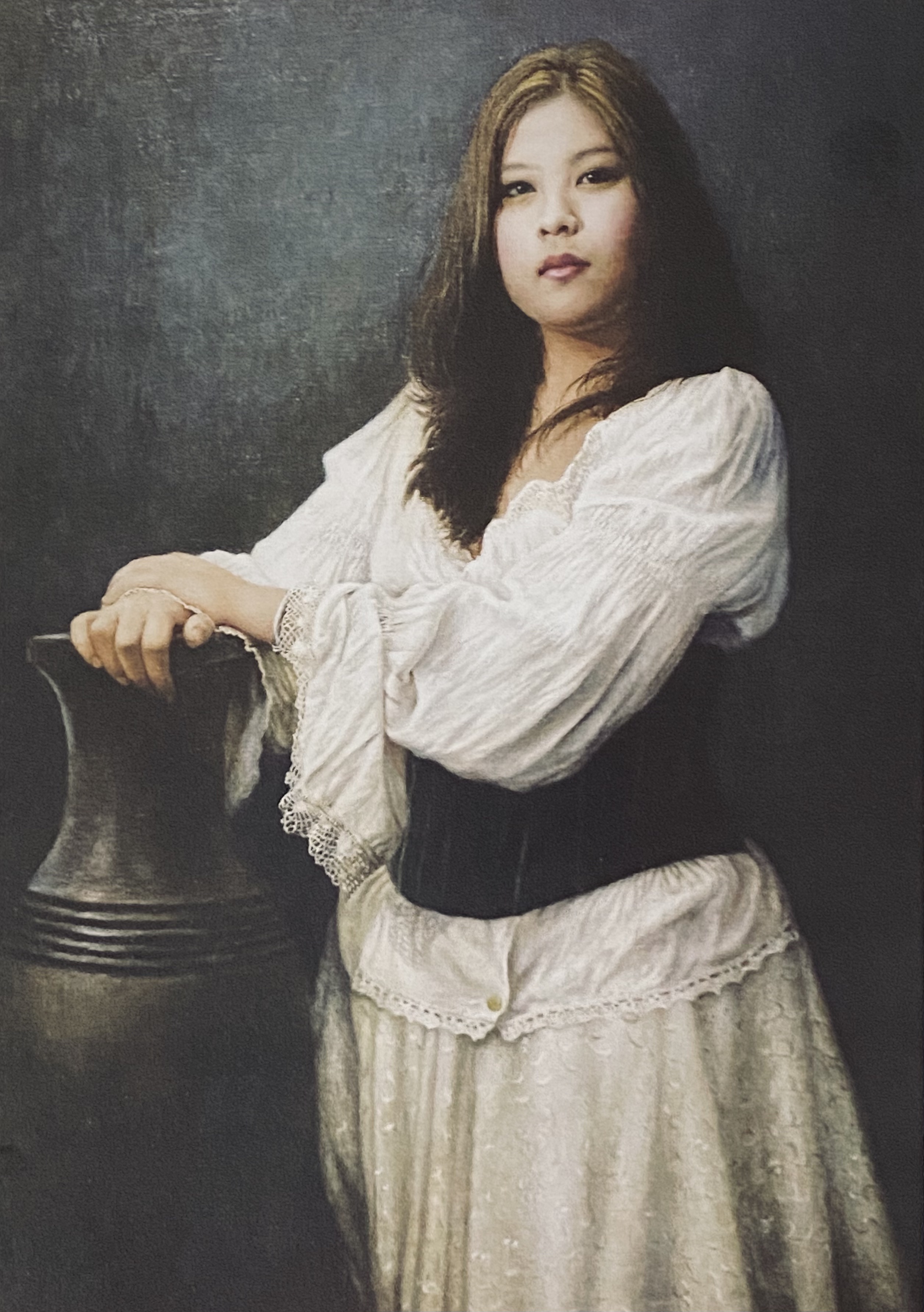
This time, with the launch last week of SYM, Galicano, and PASPI, also published by Erehwon, Guerrero takes on the art of portraiture itself, and the Filipino artists who have devoted themselves to—and distinguished themselves in—this most difficult of artistic challenges.

Say the word “portrait” and what will likely spring to mind for most Filipinos—excluding the “Mona Lisa”—is Jose Rizal looking pensive and noble, as he should, frozen in a print that has become almost obligatory in most government offices (at least until certain Presidents and lesser politicians deemed themselves worthier of that spot on the wall). The older and well-heeled crowd will default to Fernando Amorsolo, who seems to have painted everyone’s rich and famous grandfather or grandmother. The more art-savvy might bring up John Singer Sargent, Lucien Freud, Andy Warhol, and Frida Kahlo. 

Indeed, portraits have served throughout history to glorify the sitters and their families, made to order by the most talented painters of their time, and paid for by the most powerful patrons of that same era. They were, and still are, quite frankly made for money, which usually meant a softer line here and a scatter of stardust there to idealize the hopefully happy subject. Occasionally and perhaps increasingly, they have also been made for love—if not love of art itself, then (to venture sideways into more theatrical territory) of the subjects who became their artists’ muses if not their lovers, such as Andrew Wyeth’s Helga Testorf or Gustav Klimt’s Adele Bloch-Bauer.

In his overview of contemporary Philippine portraiture, Guerrero provides us not only with a visual feast of styles and talents but also with—in his own way—verbal portraits of the artists themselves: their back stories, their struggles, and how they came to see and use portraiture as their window on the Filipino soul. 

The title of the book may be cryptic to many, so let’s explain that “SYM” is Sofronio Y. Mendoza, the brother-in-law of fellow portraitist Romulo “Mulong” Galicano, and that “PASPI” is the Portrait Artists Society of the Philippines, Inc., whose members the two masters have mentored. 

In his typically well-wrought foreword, Dr. Patrick Flores notes how important it is that “the story of art that this publication tells does not begin in Manila, perceived to be the center of the solar system of the Philippine art world. It rather unfolds in Carcar in Cebu. This in itself contributes to the body of literature on a species of Philippine art that takes root in and flourishes beyond the metropolitan privileges of Manila.” Carcar was where both Mendoza and Galicano studied at the foot of Cebu’s pre-eminent postwar painter, Martino Abellana, the so-called “Amorsolo of the South.”

Both men have since overtaken their teacher to become mentors to a new generation of gifted portraitists in PASPI, and the book offers glimpses into the life and works of many of its members—Wilfredo Baldemor, Romeo Ballada, Publio Briones, Jr., Carlos Cadid, Wilfredo Cañete, Jr., Ariel Caratao, Ramon de Dios, Efren Enolva, Carlos Florido, Alvin Montano, Maridi Nivera, Joemarie Sanclaria, Dante Silverio (yes, the Dante Silverio), and Lita Wells. 

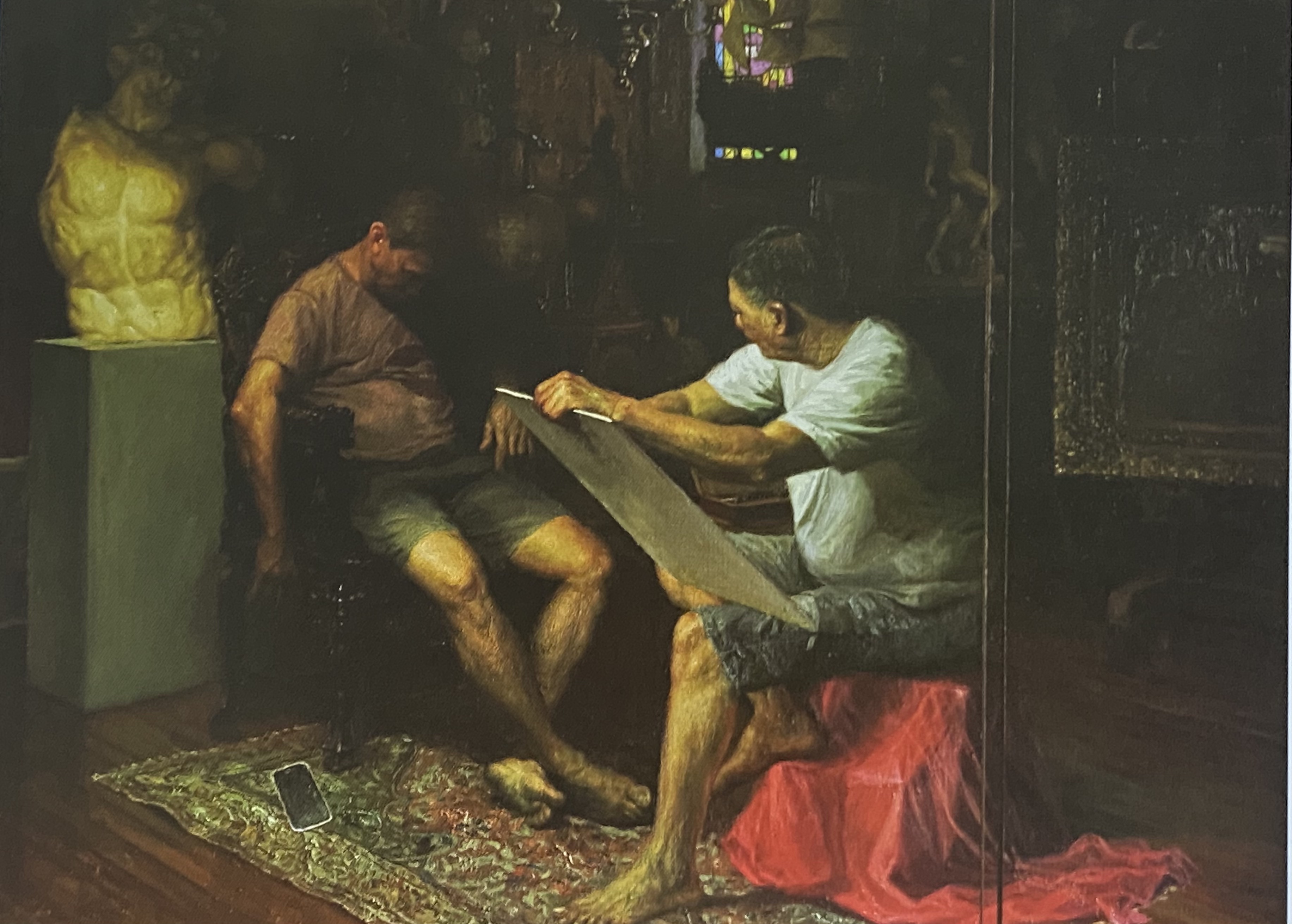
With the exception of the former Toyota coach and long-time art enthusiast, few of these names will be familiar to most Filipinos, although many have attained some degree of professional accomplishment. Some, like Romy Ballada and Boboy Cañete, never went to art school (born poor, Cañete didn’t even get to high school), but their work is suffused with what matters most in portraiture: character—which, as a fictionist, I take to be the promise of a deeper story beyond the picture. The stylistic range presented runs from the classically posed to the problematic postmodern, but I enjoy it best when the painter takes a break from his or her usual material, such as Galicano’s decidedly anti-romantic “The Sleeping Model.” (The book also explains why Galicano adopted his trademark stripe in his paintings.)

Amadis Guerrero tells well-framed stories of the artists and their passions with great empathy and efficiency, and I hope that he will be commissioned (as this is the only way this will happen here) to do full-length biographies of our National Artists such as Botong Francisco and Mang Enteng Manansala. Also praiseworthy is Erehwon’s continuing commitment to art publishing, and to producing such handsome volumes (this one was designed and photographed by Willie de Vera). A recent winner of Quezon City’s Gawad Parangal for its leadership in the arts, Erehwon and its visionary founder, Raffy Benitez—who has sunk millions into his baby knowing he’ll never get it all back—deserve our gratitude and admiration. 

Penman No. 240: Cebu Goes MAAAD

img_0860

Penman for Monday, February 27, 2017


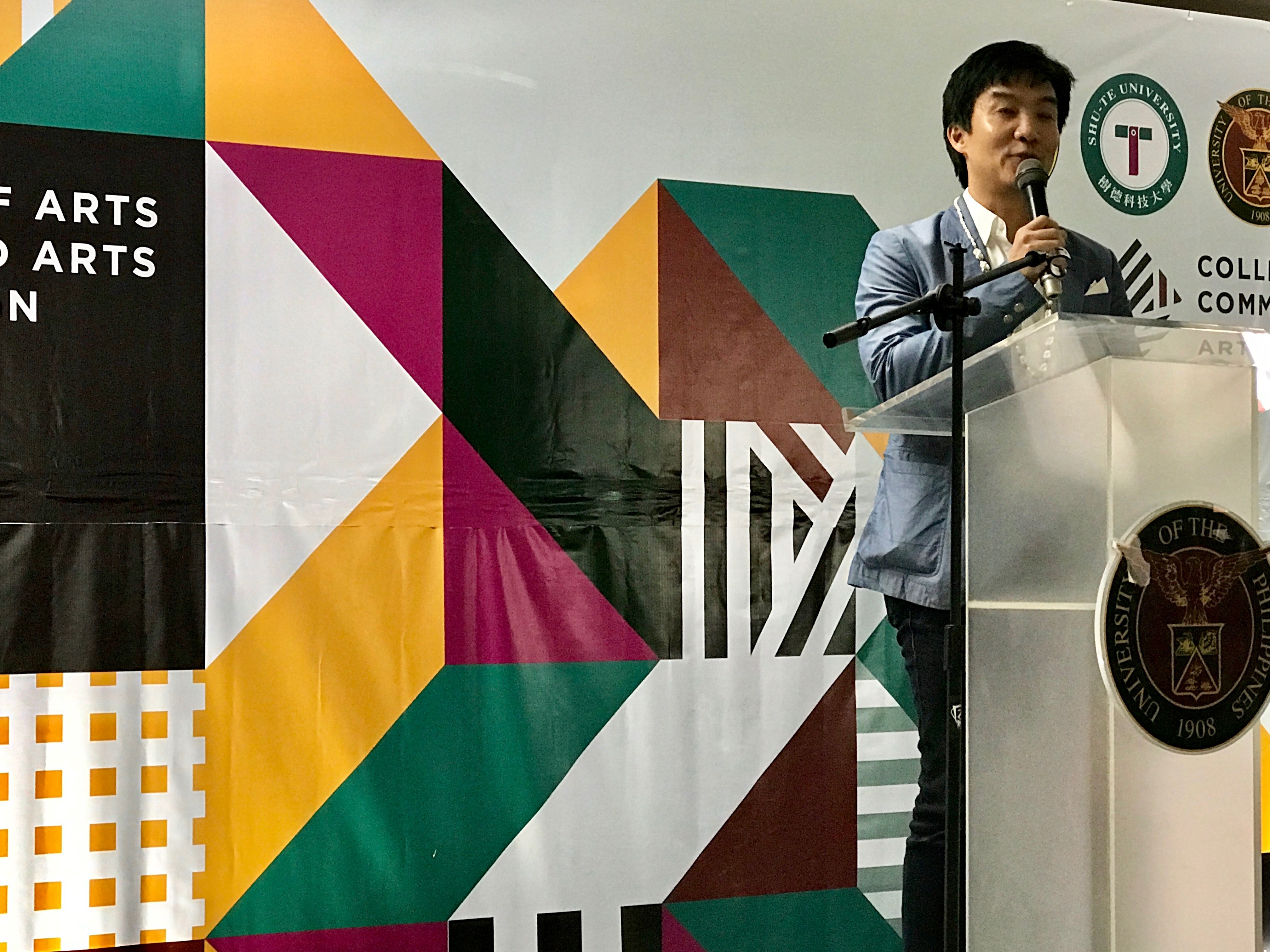
THAT’S MAAAD as in “Master of Arts in Applied Arts and Design,” a new degree program recently launched by the University of the Philippines Cebu in collaboration with Taiwan’s Shu Te University (STU).

And what’s the big deal about this new offering? Well, it taps into one of Cebu’s native strengths—its deep roots in artistic expression, coupled with cutting-edge technology—while bringing Cebu in direct contact with leading global knowledge centers like STU.

Cebu, of course, isn’t just one of the country’s major economic and political capitals. It’s also home to rich cultural traditions in painting, literature, music, dance, theater, and film, among other genres. It’s no surprise that it gave birth to a world-class talent like furniture designer Kenneth Cobonpue, who graced the launch of the MAAAD program along with Cebu City Mayor Tomas R. Osmeña, UP President Danilo L. Concepcion, UP Cebu Chancellor Liza D. Corro, and CCAD Acting Dean Jocelyn Pinzon. STU was represented by its former President Dr. Chu Yuan Hsiang and Dr. Eing Ming Wu, among others.

The cooperation between UP Cebu and STU is no accident. Cebu and Kaohsiung are sister cities, an unusually strong relationship made visible by the proliferation of modern “Kaohsiung” buses in Cebu. It implements the Taiwan-Philippines Academic Networking Platform which was forged in May last year between UP and the Southern Taiwan Universities Alliance, following a visit to Kaohsiung by a UP team led by then President Alfredo E. Pascual and UP Open University Chancellor Grace Javier Alfonso.

“We in Taiwan have usually focused on Western countries like the US, Canada, Australia, and New Zealand, neglecting an English-speaking country much closer to Taiwan, the Philippines,” noted the ebullient Dr. Wu, who would email me upon his return to Kaohsiung to report that “I am overwhelmed by the new momentum created by our partnership. At this moment, ten UP Cebu students plus one chaperone have arrived to visit physiology labs in three different distinguished universities. They will be staying at the UP Guest House in Kindness Hotel, a facility we set up to host our Filipino visitors. Another batch of six UP Diliman faculty members will be in Kaohsiung to seek matches with Southern Taiwan universities for their PhD degrees from February 28 to March 3.”

UP Cebu is uniquely positioned at the nexus of tradition and innovation. It’s the UP System’s eighth and newest constituent university, but it will be celebrating its centennial as an educational institution next year. The age shows in the old college building along Gorordo Avenue, but don’t let the antique charm fool you—a laser cutter and 3D printer are busy at work in another wing next door. For its part, and although relatively young, STU has already won prestigious international awards for its students’ work in communications and design, including the iF Student Design Award in 2016.

The new MAAAD program promises to be both challenging and rewarding. To be administered by UP Cebu’s College of Communication, Art, and Design (CCAD), the 36-unit, four-semester program will cover courses in research, digital content design, product design, fabric design, technology, and art, among others. Classes will be taught by instructors from STU at UP Cebu’s new campus at the South Road Project—a huge reclamation area that promises to be the city’s new boomtown—but students will defend their theses and receive their diplomas at STU in Kaohsiung. (Mayor Osmeña had made the five-hectare SRP lot available to UP.)

MAAAD faculty and students can bank on laboratories and facilities comprising UP Cebu’s FabLab (put up with DTI support), fine arts workshops, and the CCAD’s computer laboratory. It won’t be cheap, with tuition running at nearly P60,000 per semester, but a scholarship scheme is being discussed. Besides, explains Chancellor Corro, “We expect many of our students to be working professionals for whom the program will present expanded opportunities for further growth.”

In his remarks, Kenneth Cobonpue made a wry reference to the fact that UP turned him down years ago when he applied to its Fine Arts program after failing his drawing exam. He later found his true calling in industrial design. The MAAAD program should now make sure that no design geniuses are turned away at the door, ever again. For more information, email maaad.upcebu@gmail.com. The deadline for applications is July 15.


ON BEHALF of my old office, the UP Institute of Creative of Writing (UPICW), I’m also glad to announce the fellows to the 56th UP National Writers Workshop to be held on March 12-19, 2017 at the BP International Makiling, Los Baños, Laguna. Twelve writers have been selected for the workshop, to be led by this year’s workshop director Vladimeir Gonzales.

The 2017 fellows are Arbeen Acuña (Fiction, Filipino), Christa de la Cruz (Poetry, Filipino), Zeno Denolo (Fiction, Filipino), Rowena Festin (Fiction, Filipino), Rogene Gonzales (Fiction, Filipino), Arvin Mangohig (Poetry, English), Arnie Mejia (Creative Nonfiction, English), Paolo Enrico Melendez (Creative Nonfiction, English), Charisse-Fuschia Paderna (Poetry, English), Wilfredo Pascual (Creative Nonfiction, English), Karren Renz Seña (Fiction, English), and Alvin Ursua (Poetry, Filipino).

See you all next month in Los Baños!


SPEAKING OF Cebuano artists and writers, I was very sad to hear about the passing after a long illness of a colleague and friend—and one of UP’s and Cebu’s most outstanding art scholars and critics—Dr. Reuben Ramas Cañete. Reuben was also one of the stalwarts of the Erehwon Center for the Arts, and we went to the US together last July on Erehwon’s behalf to pitch hard for the establishment of the American Museum of Philippine Art. More than that, he had been one of my daughter Demi’s favorite teachers when she was an Art Studies major, and my wife Beng was a dear friend of his to the last. Reuben left an indelible impression on everyone he met with his prodigious knowledge, his acerbic wit, and his passion for books and learning. Godspeed, Reuben, and see you in that great gallery in the sky!