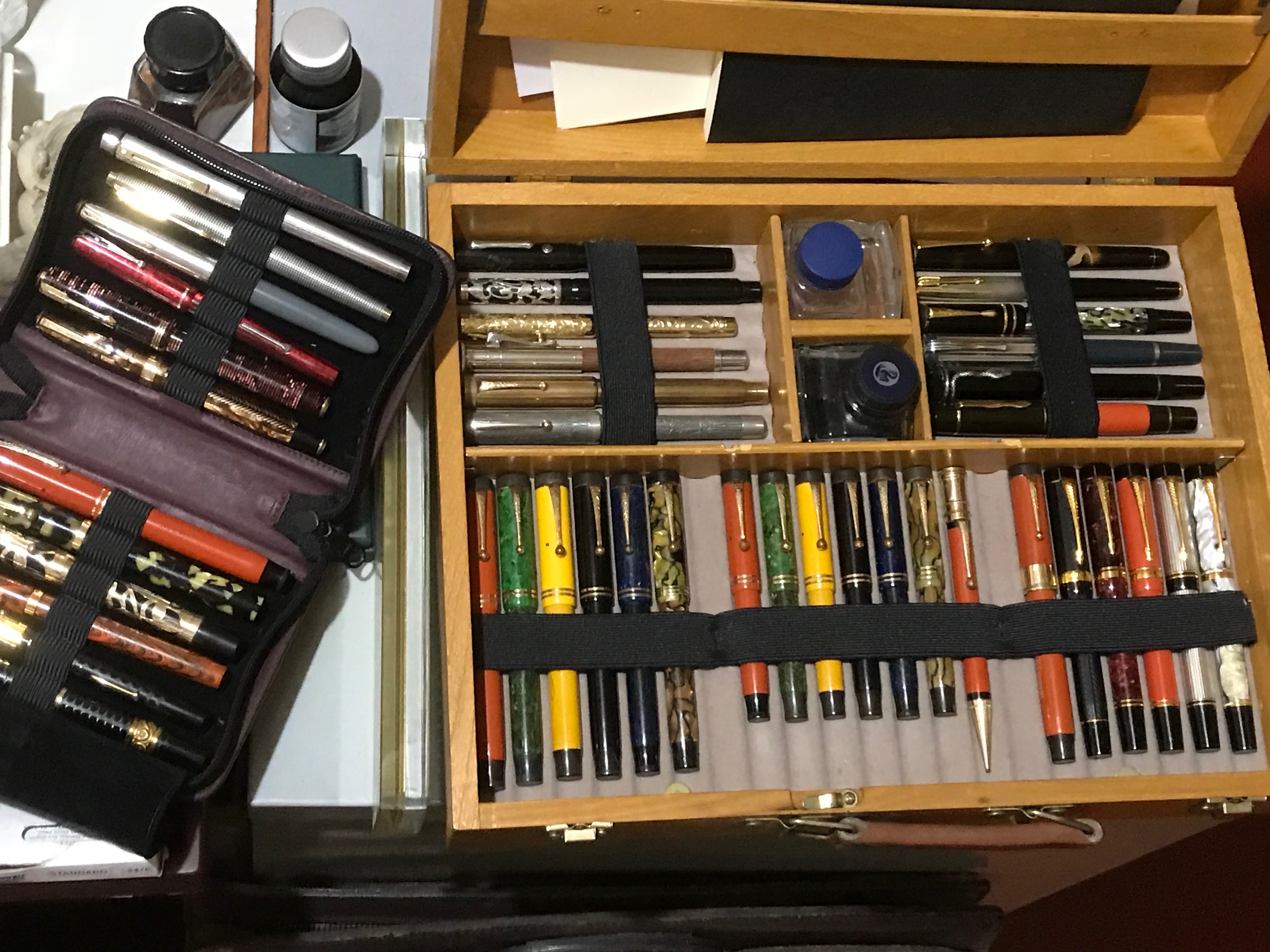
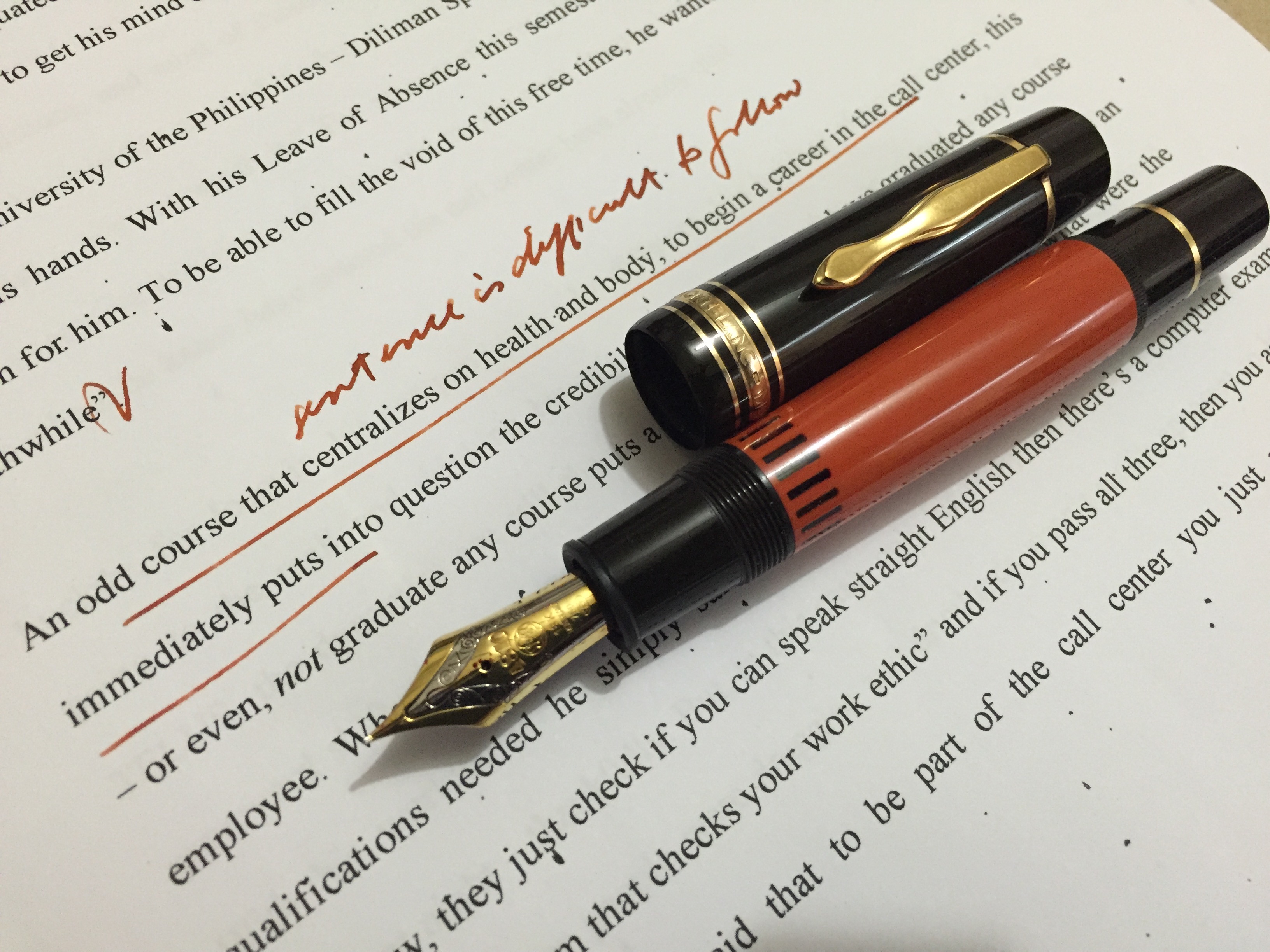
Penman No. 472: Manila Pen Show at Manila Pen

Penman for Sunday, March 9, 2025

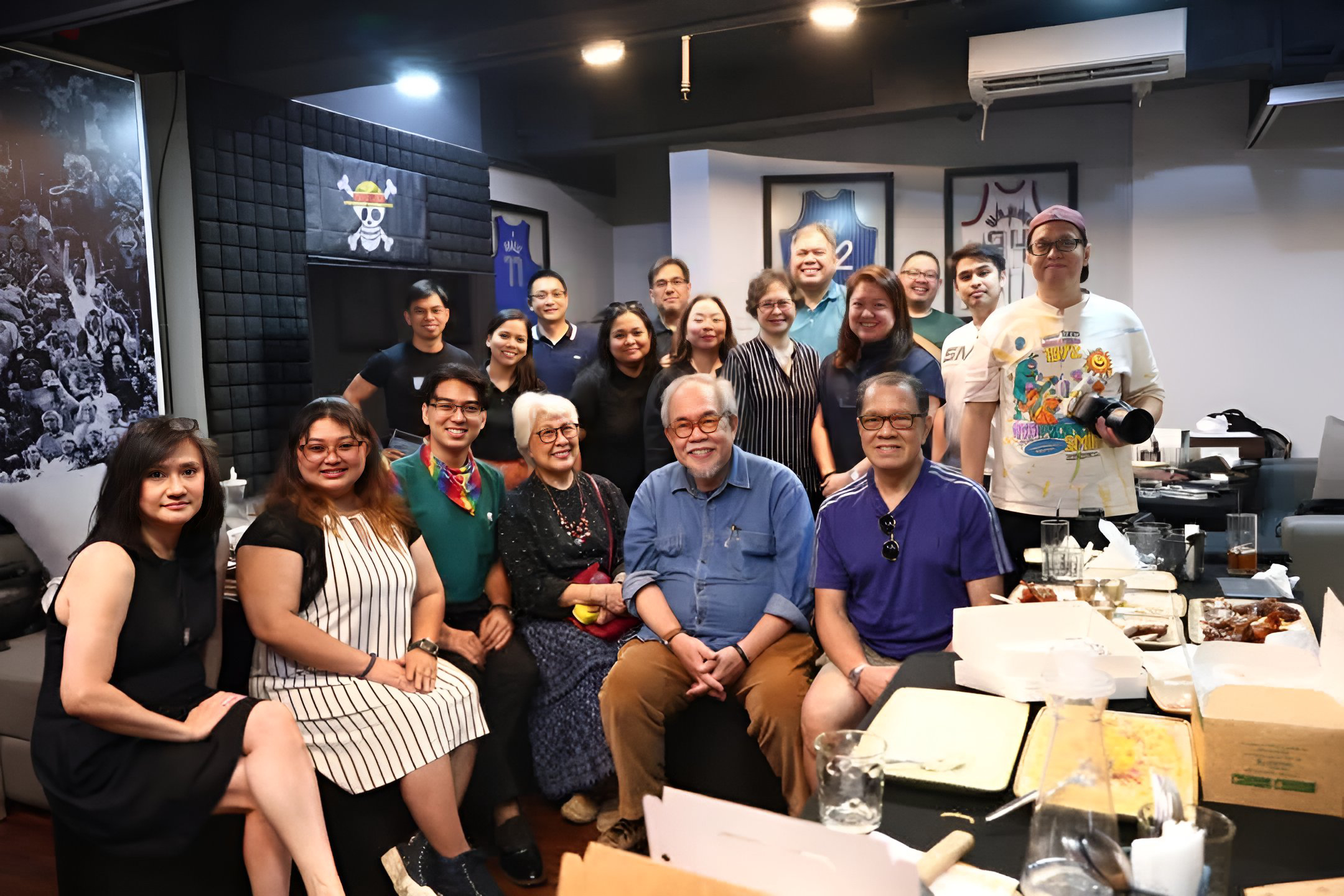
FOR A group that began in our Diliman front yard with less than 20 people almost 17 years ago, the Fountain Pen Network-Philippines (FPN-P) has come an awfully long way. With over 14,000 members online, meeting physically by the dozens in regular “pen meets” held in hapless cafes and restaurants, and thousands more informal recruits among families and friends, FPN-P should really register soon as a partylist devoted to “spreading the joy of handwriting with fountain pens.” We have active chapters in Baguio, Bacolod, and Davao, among other places; quite a few members even reside abroad but keep in regular touch through the group’s FB page.

As I’ve often written here before, the allure of fountain pens lies in their rediscovery by digital natives as a means of self-expression—of recovering one’s uniqueness in a universe homogenized and anonymized by computer code. Our ranks include Supreme Court judges, Cabinet undersecretaries, artists, professors, doctors, and lawyers, but most of our members are young professionals in their twenties and thirties for whom writing in cursive is itself an adventure. There are probably hundreds of thousands of pen fanciers (as they used to be called) around the world, mainly in the US and Europe, but what distinguishes FPN-P is its youthful vibe and the infectious fanaticism of its members.

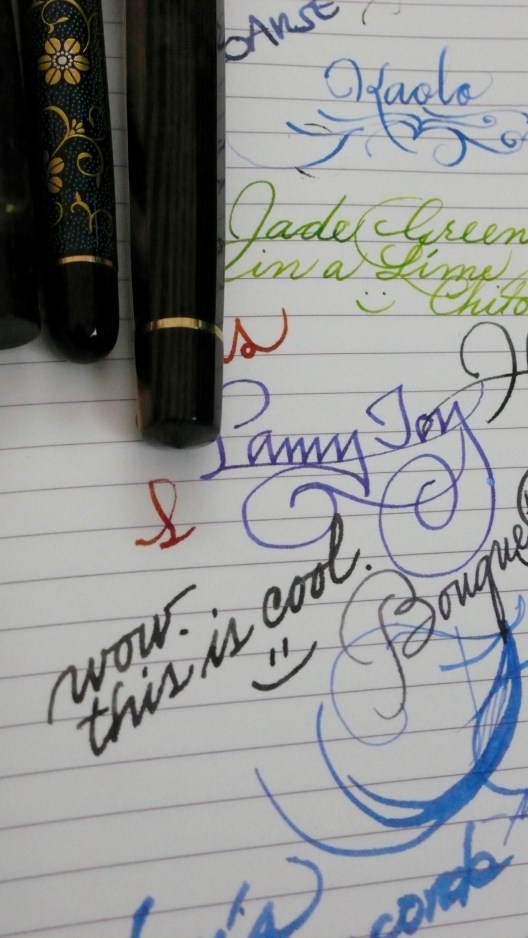
Some fall in love not just with the pens but with penmanship itself, and become calligraphers. Others grow enamored of inks and papers of a bewildering assortment—inks that shimmer and sheen, combining lustrous gold with a deep oceanic blue, and papers that range from silken smoothness to almost parchment-like toughness.

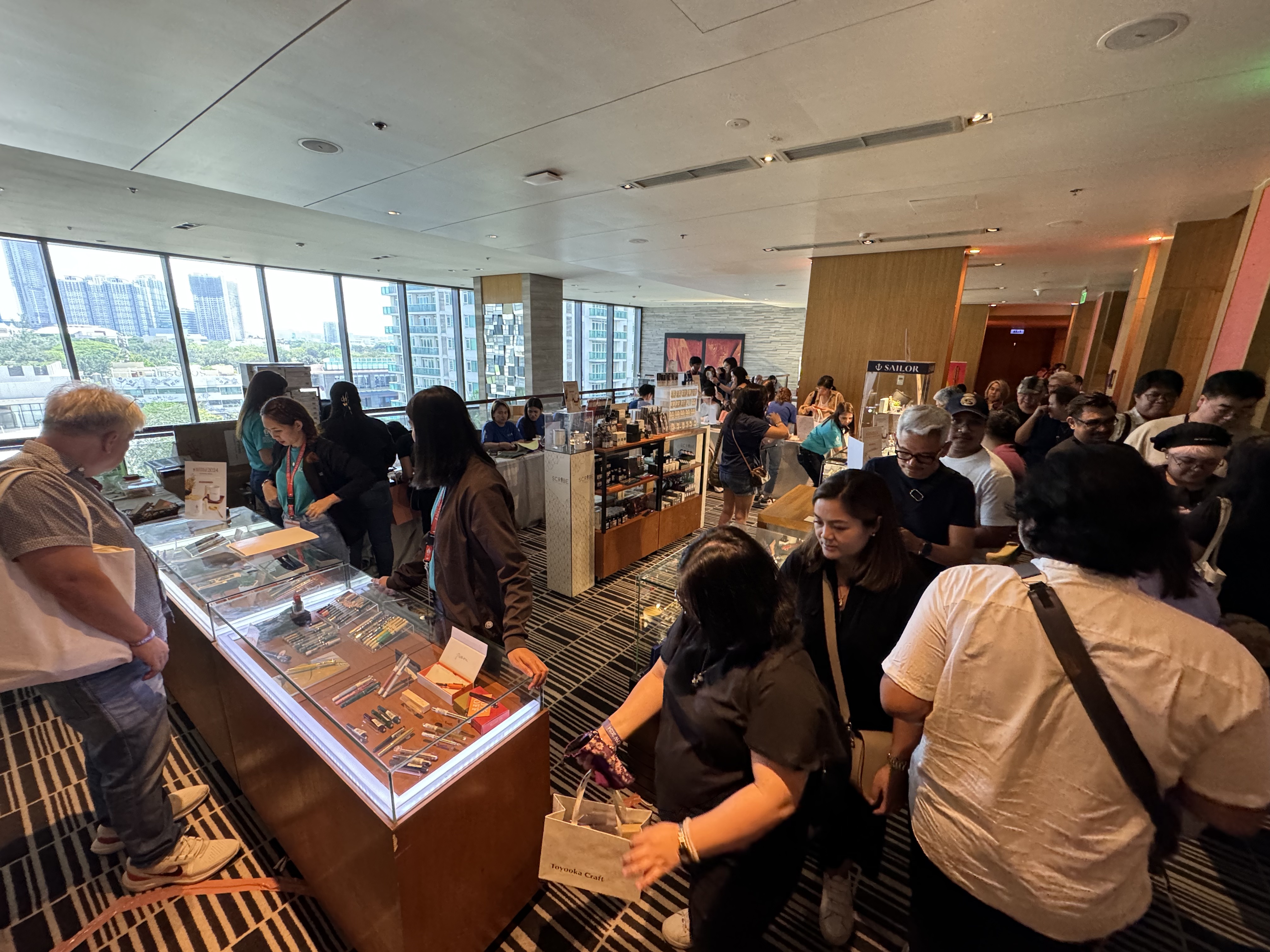
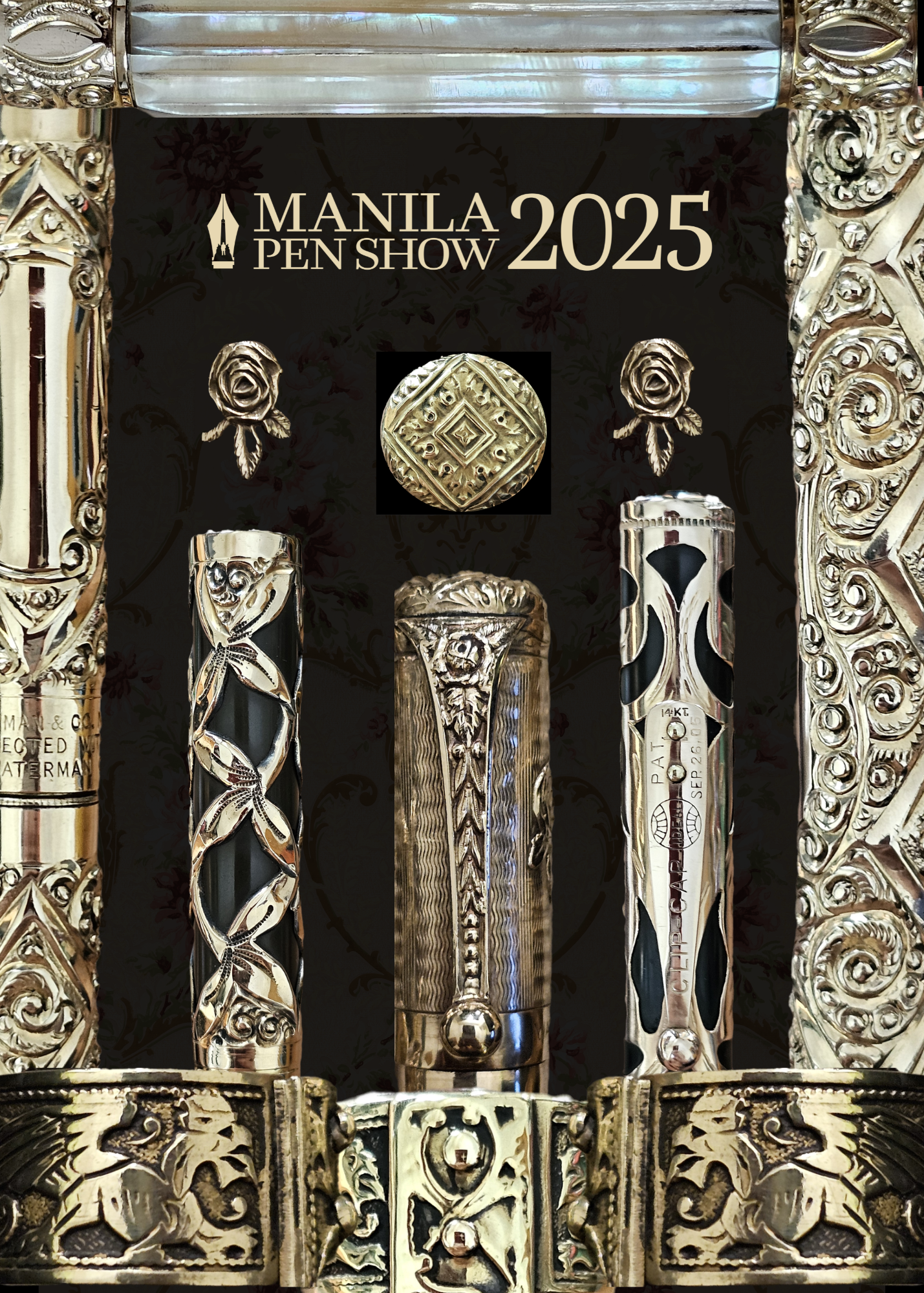
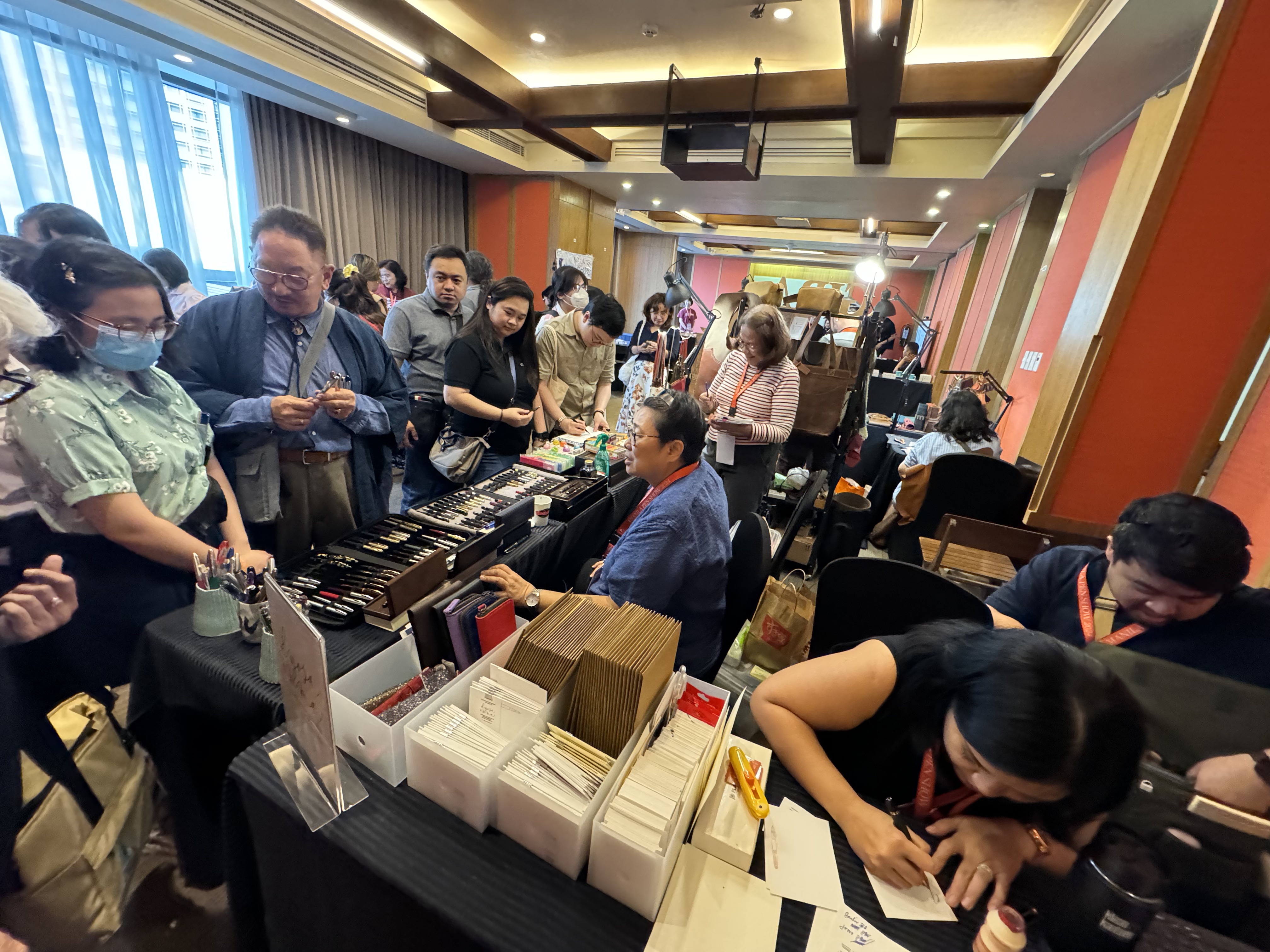
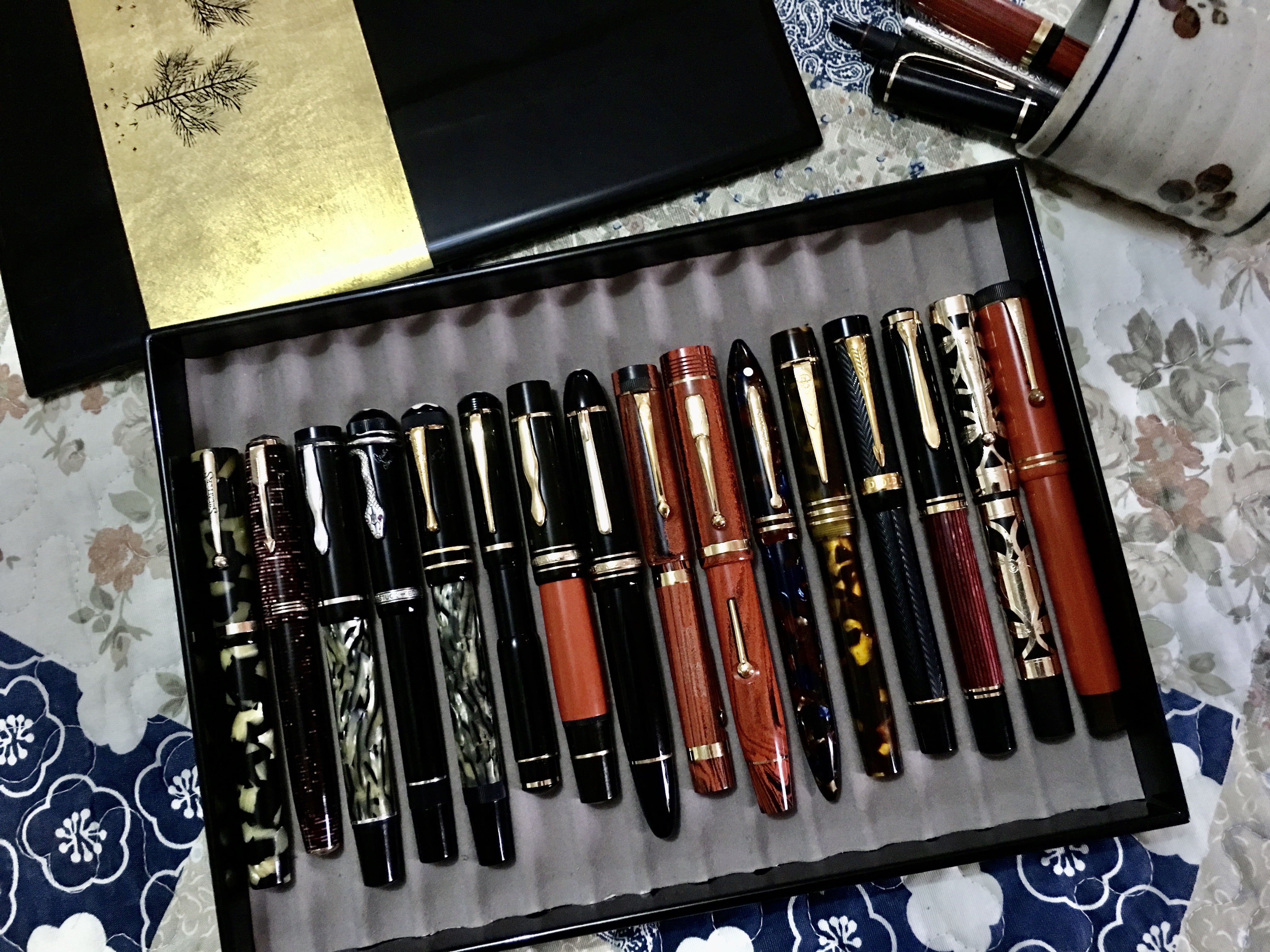
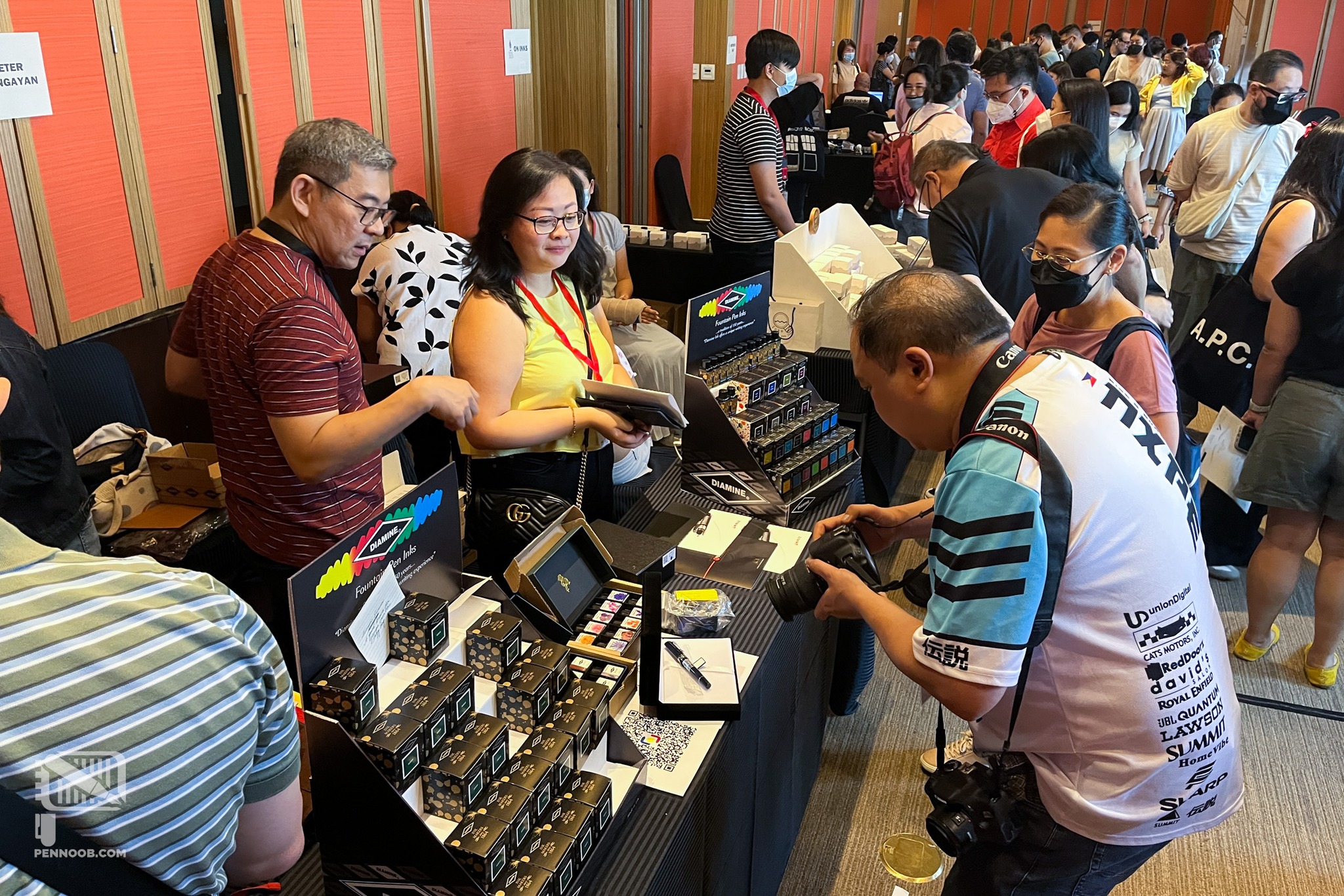
Next weekend, hundreds of these penfolk (and the general public) will converge at the 5th Manila Pen Show that will be taking place March 15 and 16 at—fittingly enough—the Peninsula Manila. 

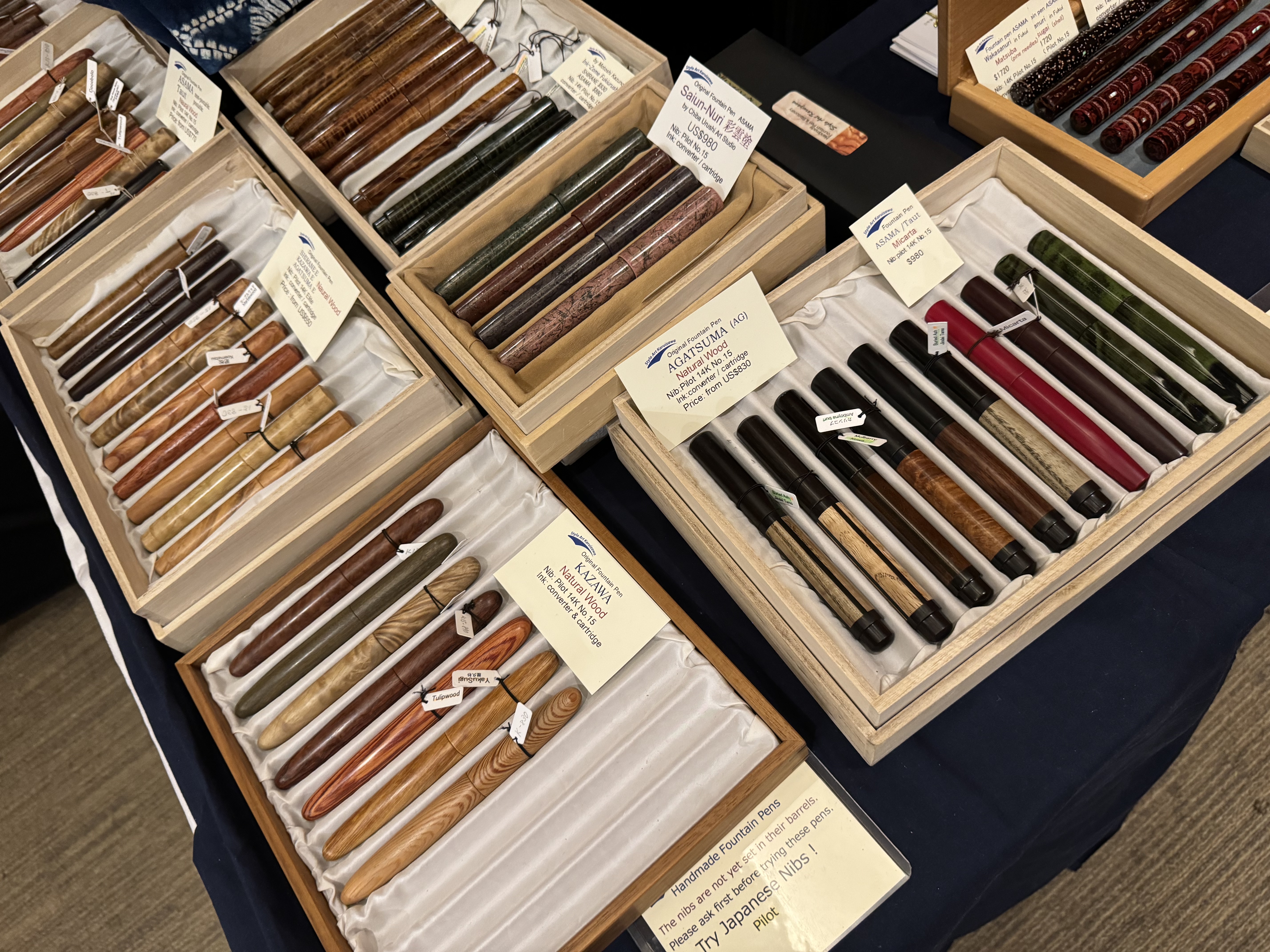
Top pen makers and dealers from Japan, Hong Kong, Singapore, and Malaysia have been coming to the MPS, attracted and impressed by the level of sophistication—and the deep pockets—of Filipino pen collectors. While the MPS has pens for everyone at every price point—from the low hundreds for students to six figures for the big guns—Filipino pen collectors and users at any level have been known for their deep knowledge and obsessive familiarity with all aspects of the hobby. 

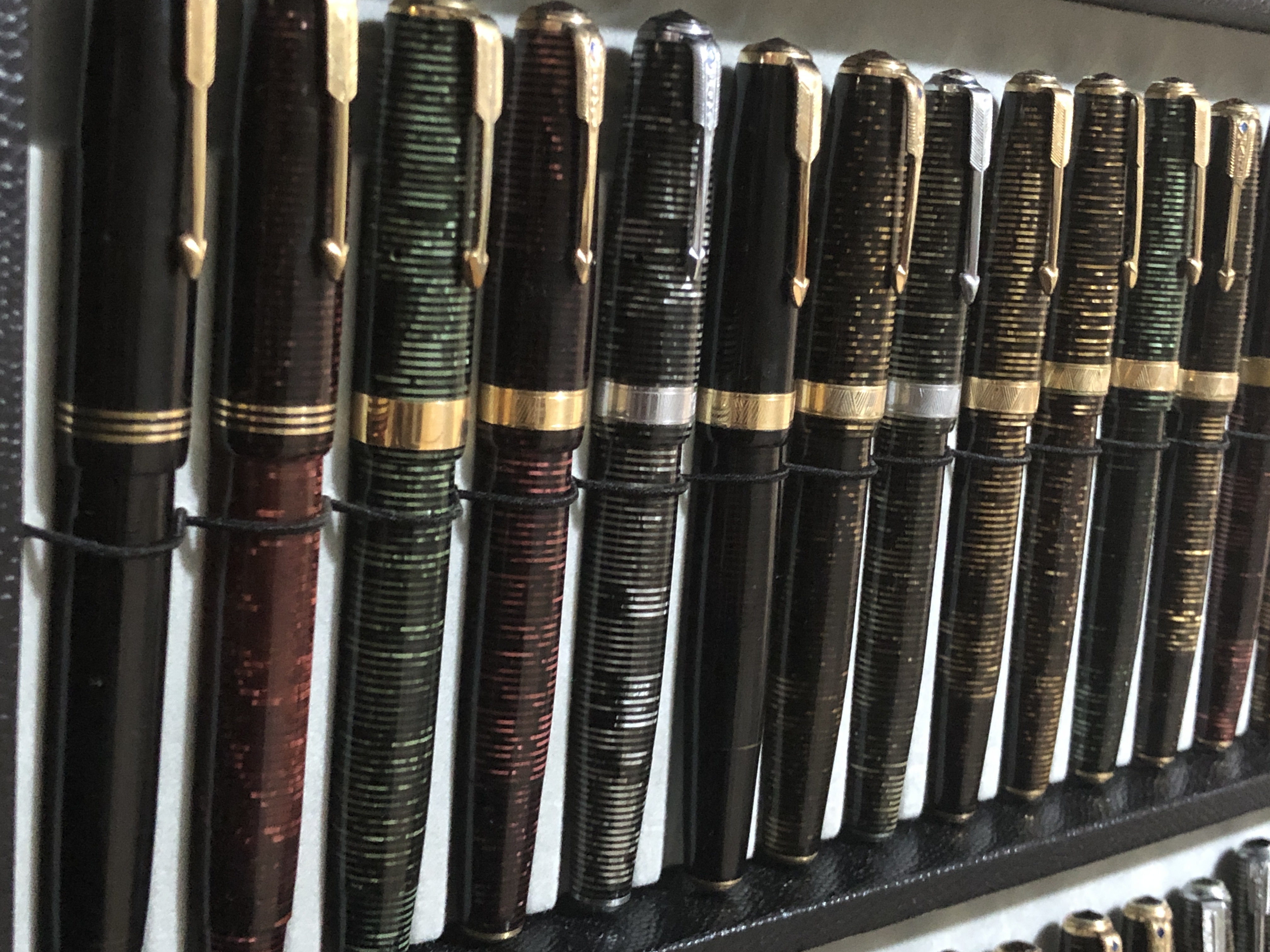
They can tell you how Japanese artisans produce the various kinds and textures of urushi resin that renders pen surfaces impermeable to even acid. They can discuss minuscule but hundred-dollar differences in Parker Vacumatics from the 1930s, or argue passionately for vintage Pilot Myus and exotic inks like the perfume-scented De Atramentis.

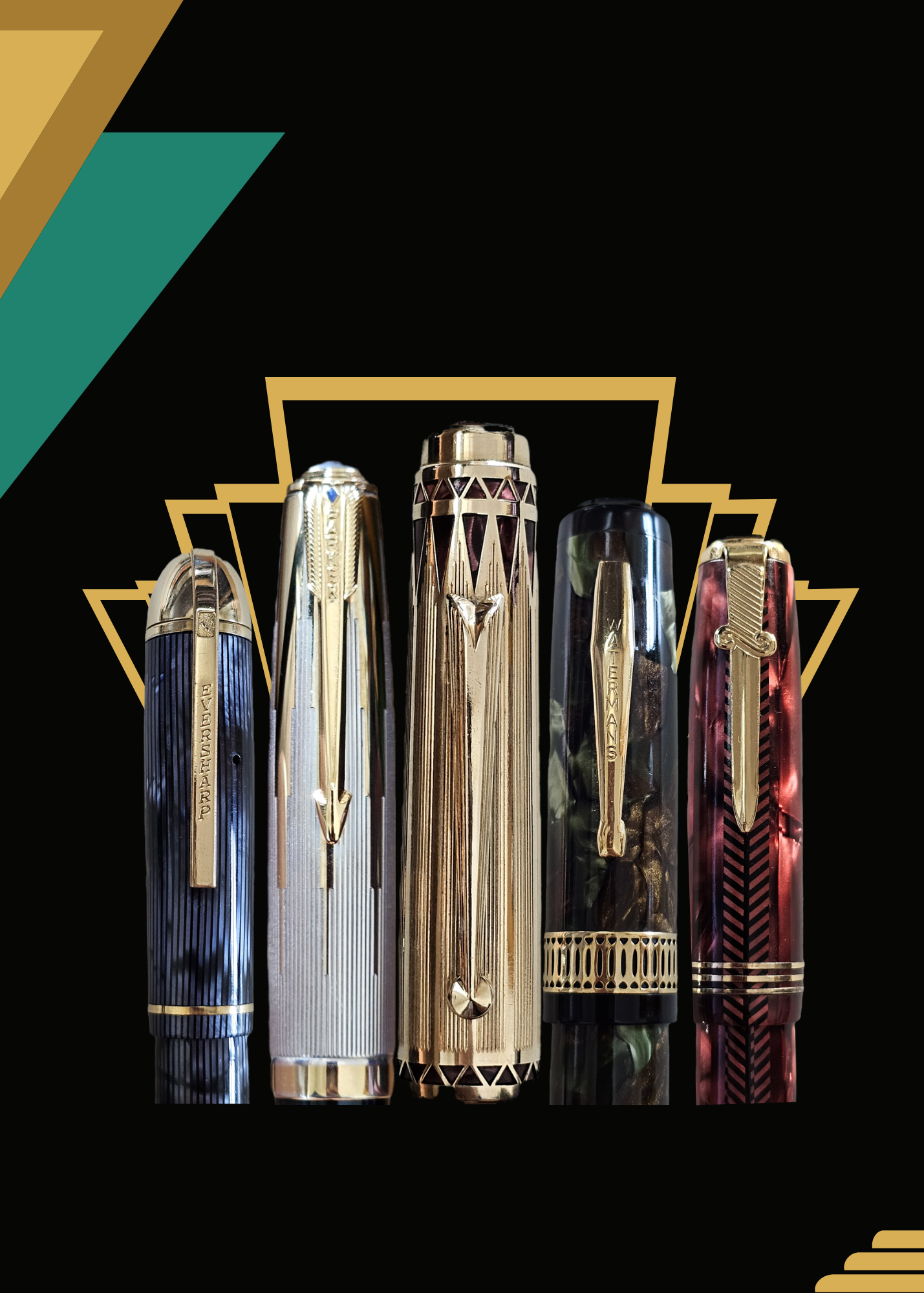
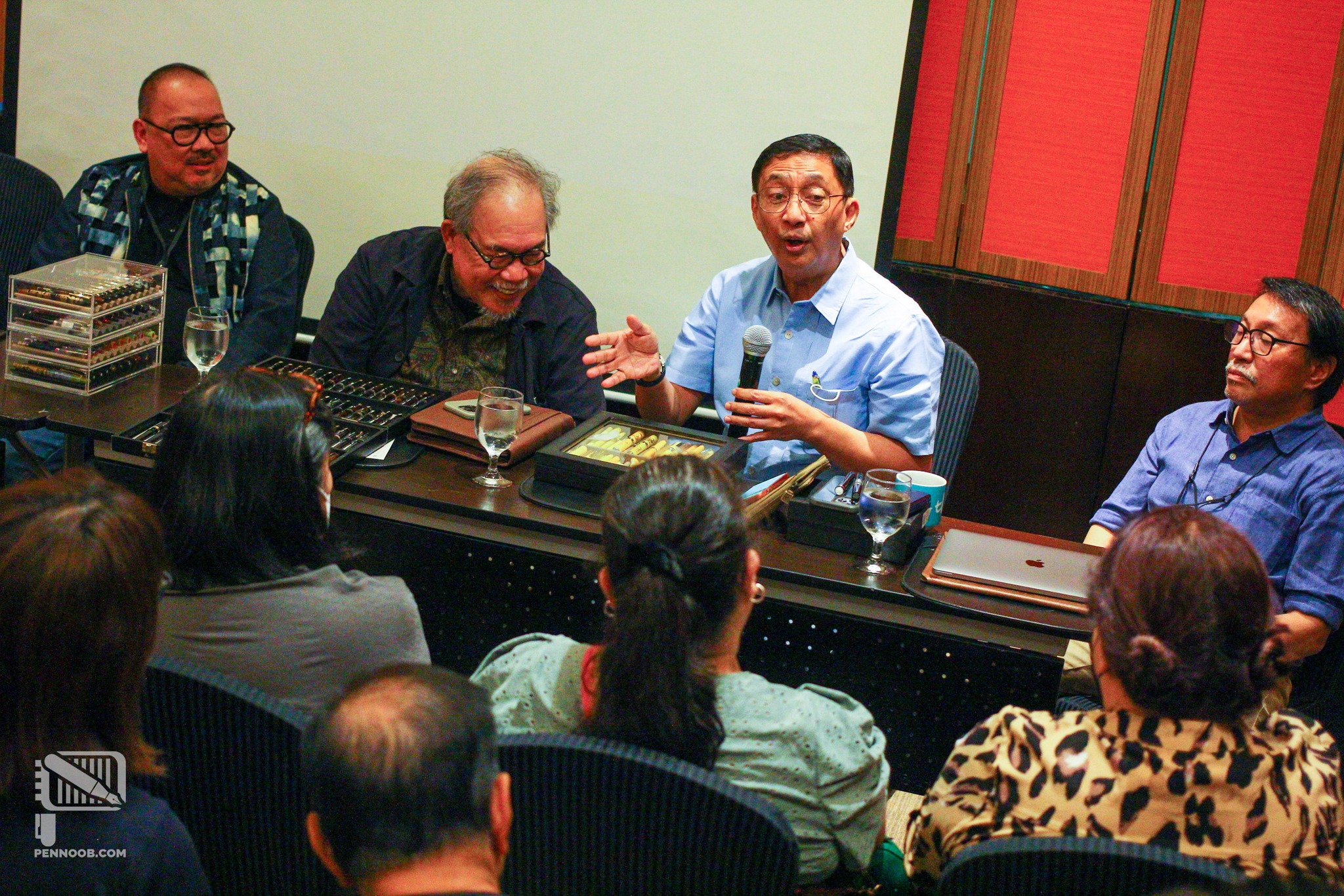
This year’s MPS will not only bring sellers of pens and assorted writing paraphernalia, but also feature workshops and panel discussions on topics ranging from nature journaling and nib care to Art Nouveau and Deco pens (and, most intriguingly, “Your Pen and Your Brain: A Love Story,” to be conducted by Gang Badoy Capati). A group of advanced collectors will discuss the finer points of pen connoisseurship (including that point when pens stop just being writing instruments but become jewelry or even art). 

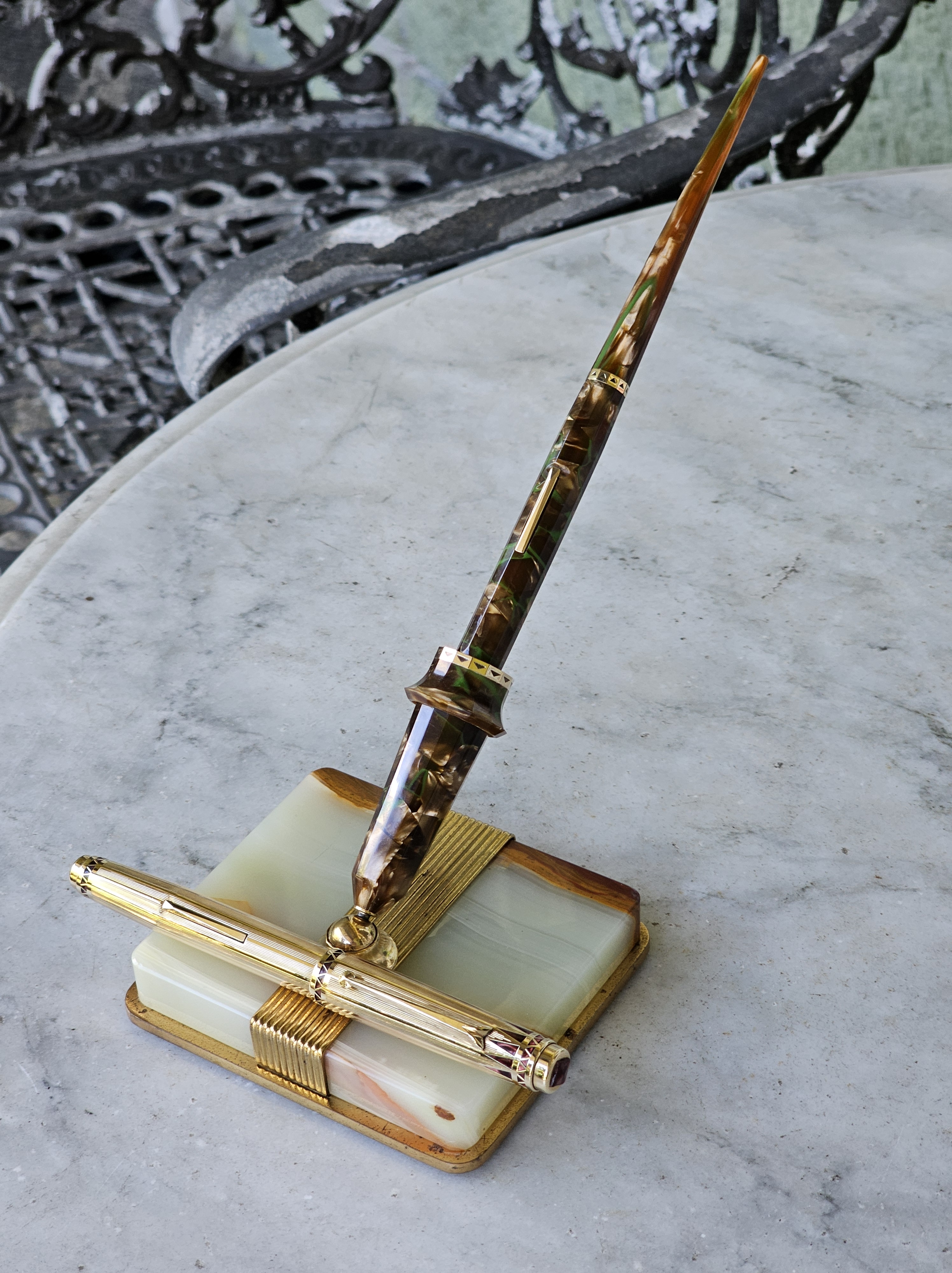
I’ll be on the Art Nouveau and Deco panel, but this time, instead of discussing pens (which others will do this time, all of them experts at particular models and periods), I’ll talk about the peripherals and accessories of the writing trade—the desk pen sets, inkwells, and ink blotters of the kind you would have seen in a typical office desk of the 1930s. 

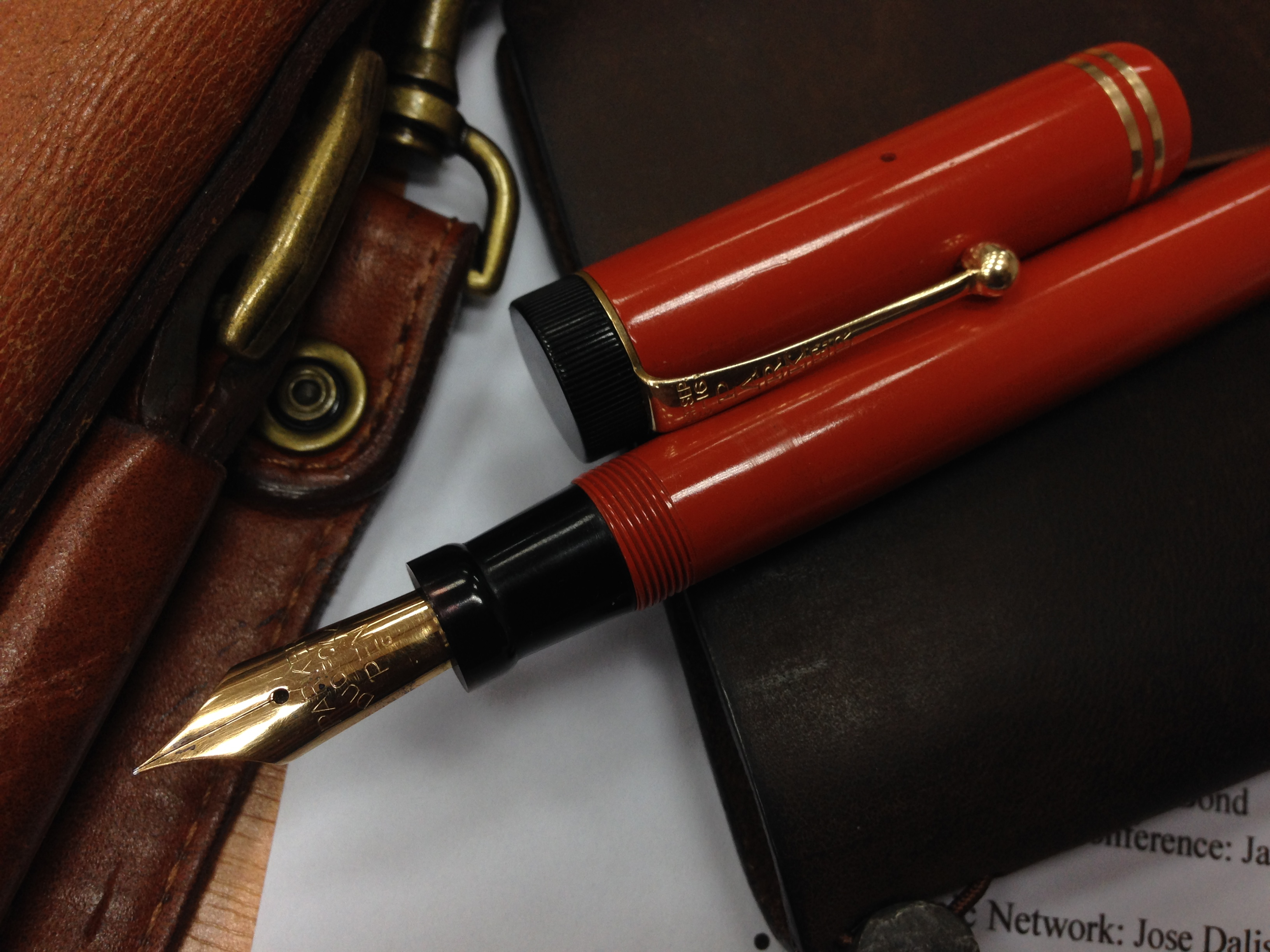
As with past Manila Pen Shows, nibmeisters or professional pen repairmen will be around to fix that Montblanc nib you dropped on the kitchen floor or your Lolo’s gunked-up Sheaffer that’s been lying in a drawer since he died. One thing most people don’t realize is that most pens, no matter how old, can be fixed (I myself routinely revive 100-year-old Parker Duofolds among other vintage pens in my workshop—you’ll need some special skills and parts, but it’s not rocket science).

You don’t have to be an FPN-P member or even a current fountain pen user to come and enjoy the show. Indulge your curiosity and feel free to see, touch, and test the pens on display (with the exhibitor’s permission, of course, as some pens may require very careful handling). Most sellers will take credit cards or online payment. There will be a modest charge for entry and for the presentations, but all funds raised will be donated after expenses to the Save the Children Philippines, FPN-P’s sponsored charity for the past MPSes. You can find more details about the show at https://manilapenshow.helixpay.ph.

(Image thanks to Raph Camposagrado)

Penman No. 458: An Artist in Leather

Penman for Sunday, January 7, 2024

FEW WILL remember this, but one of the very first things I wrote about when I began this column for the STAR back in mid-2000 was my passion for leather. By that I mean good, well-crafted leather briefcases, bags, watch straps, and such accessories beloved of both men and women seeking a timeless alternative to today’s synthetics. There’s still nothing like leather to suggest authenticity, tradition, pedigree, and care—care because it requires skillful crafting as well as devoted maintenance by its user.

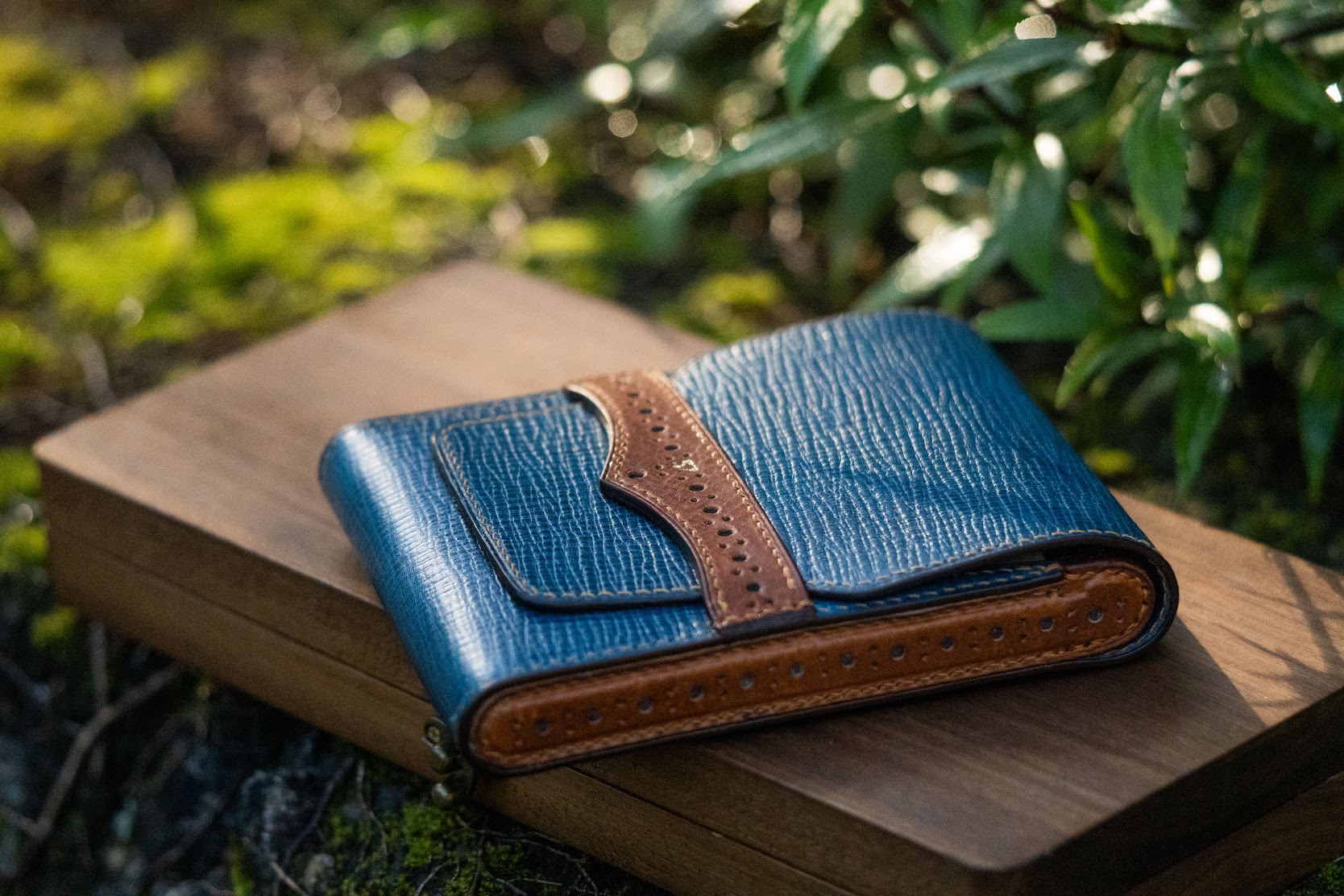
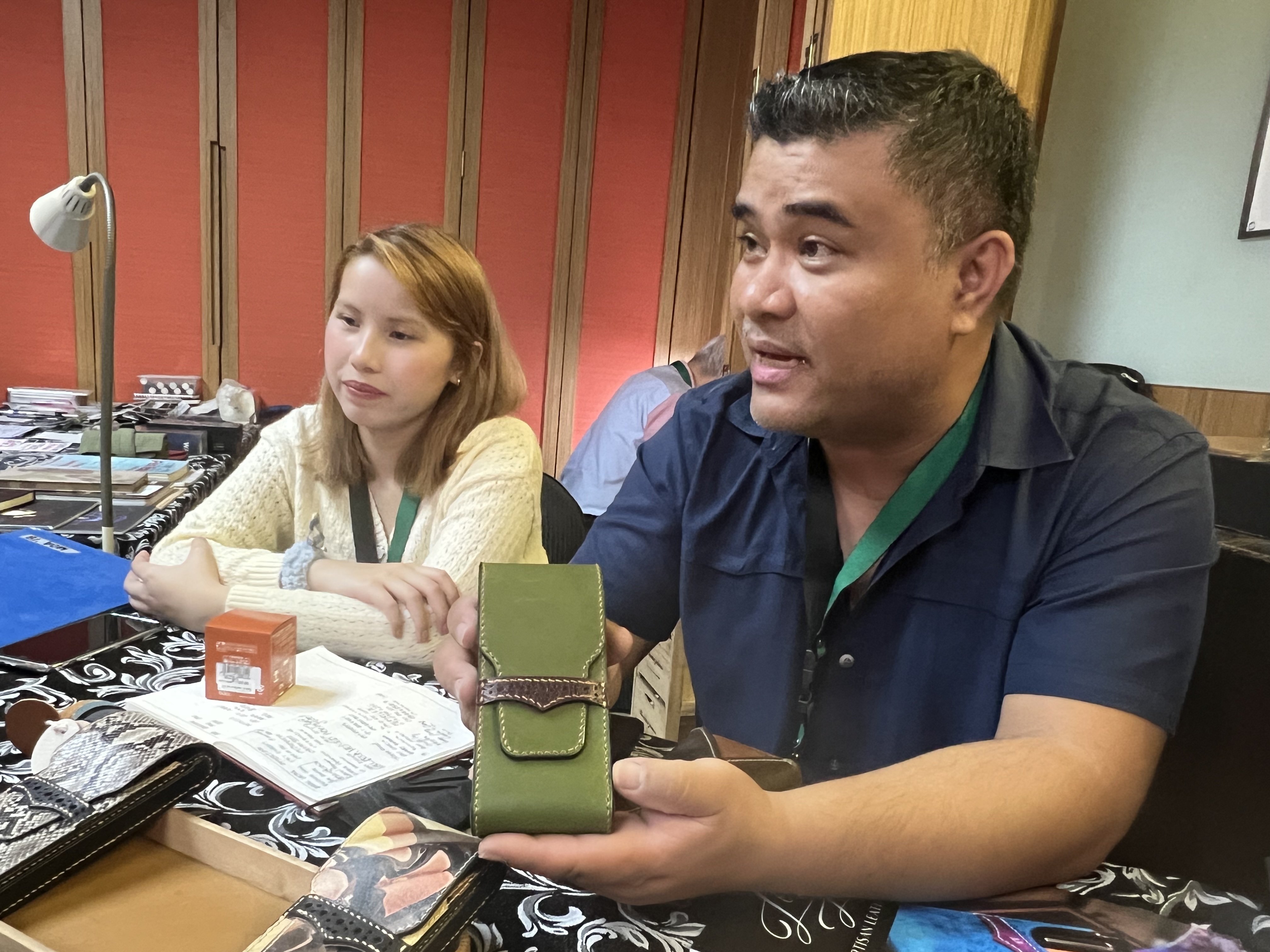
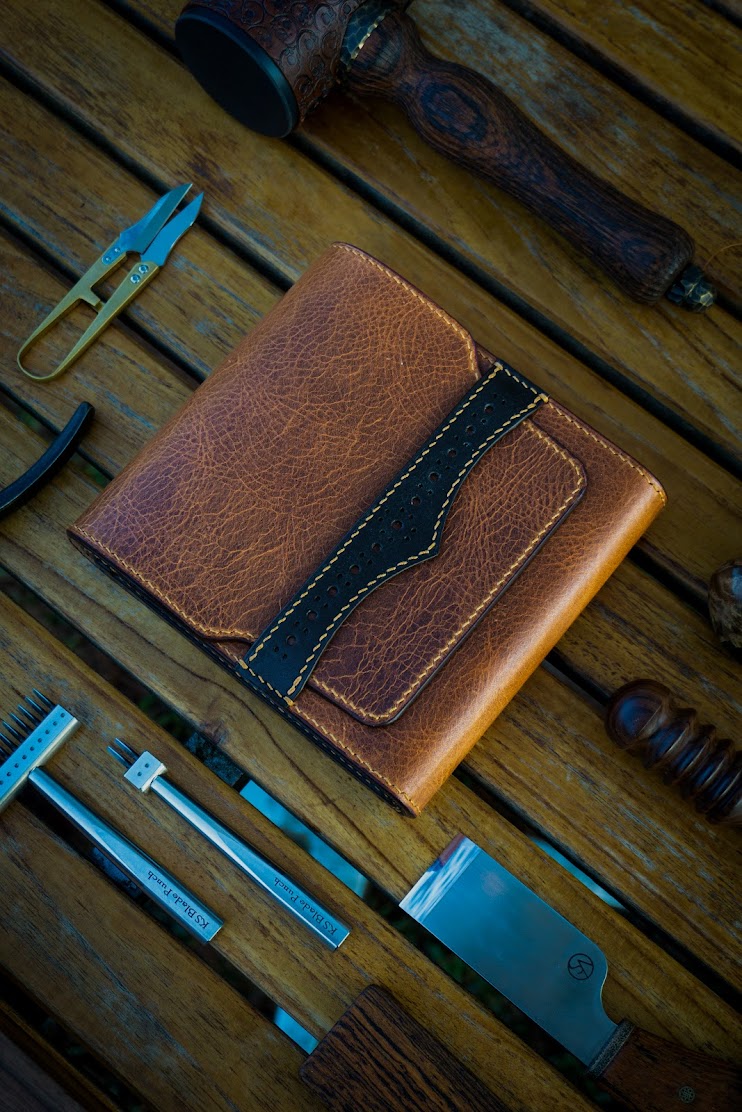
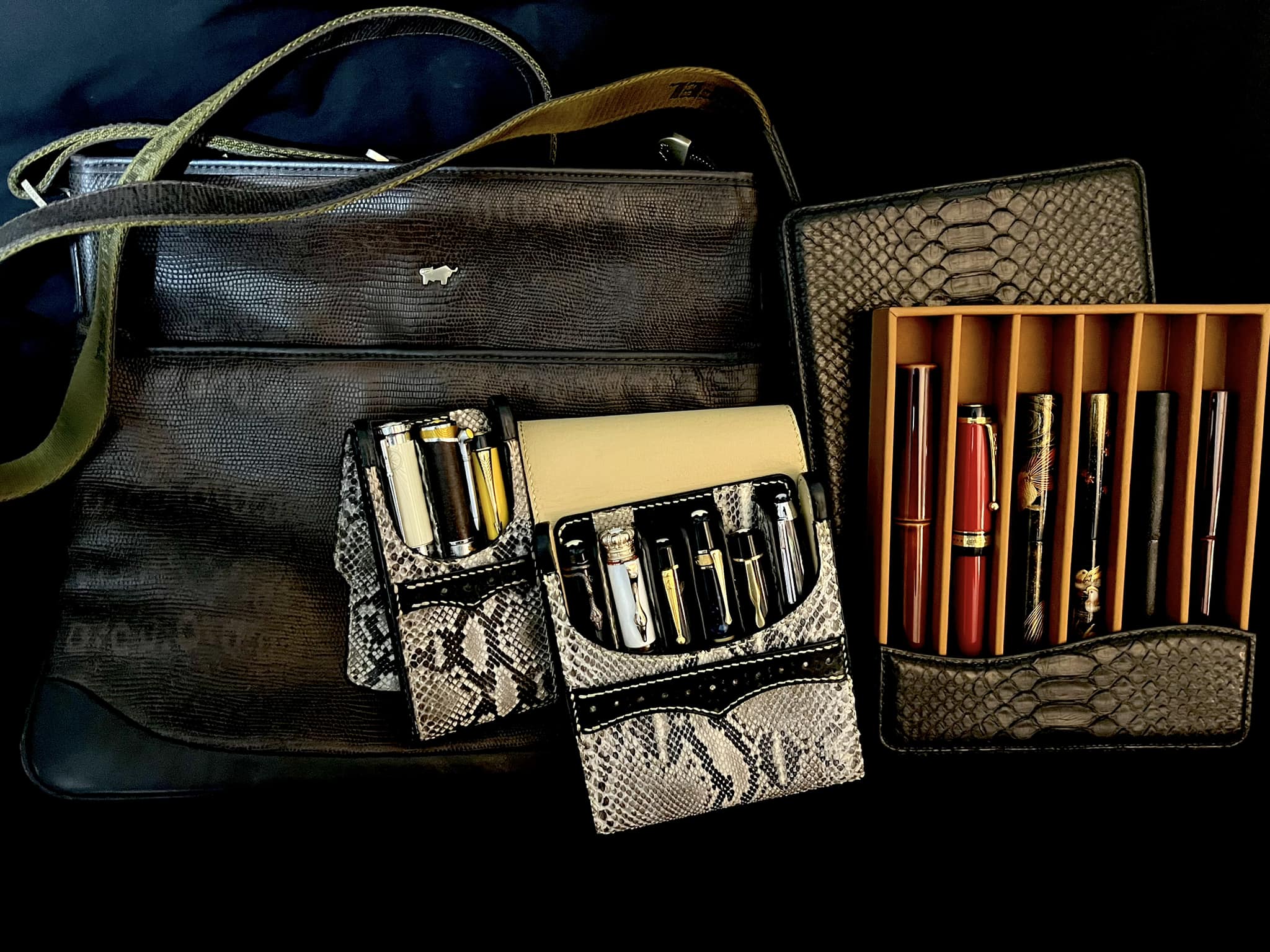
All these came to mind when I first met Raymund Nino Bumatay, who goes by the trade name “Amon Ginoo,” at the Manila Pen Show last March, where he introduced his Leather Luxe line of luxury pen cases. At my age, and having seen quite a bit of what’s out there, I’m a difficult man to please, but Amon’s work ticked all the boxes (except perhaps one—affordability, which we’ll get to later), particularly the quality and craftsmanship that connoisseurs demand. He catered to a highly specialized clientele, so I wanted to know how he could merge art and business and succeed on both counts. 

Amon was engaged in graphic design and marketing when the pandemic hit, hitting his profession badly. Over the long lockdowns, he began thinking of ways to both express himself creatively and make some money. That was when the idea of making leather cases for fountain pens came to him, spurred on by instructional YouTube videos. Why pens?

“I have been a fountain pen enthusiast since 2015,” Amon told me. “I started out with a simple and reliable Lamy Safari that’s still with me, and while journaling and writing were a common pastime during the lockdowns of 2020, I yearned to make something by hand that would house my humble fountain pen collection. This was why the very first and noteworthy leathercraft that I successfully completed was a fountain pen case.”

Amon, it must be said, is but one of a new generation of fountain pen collectors and users, among whom Filipinos now rank among the world’s largest and most enthusiastic communities. The Fountain Pen Network-Philippines (FPN-P), which I helped found in 2008, began with 20 members but now counts more than 13,000 in its Facebook group, most of them successful young professionals between 30 and 45, along with more senior CEOs, Cabinet undersecretaries, topnotch lawyers and doctors, and aging professors like me. 

This was Amon’s ready-made market. Most people will do with just one pen that they’ll typically clip into their breast pocket or toss into a bag, but for fanatical collectors who amass hundreds of pens and carry a dozen of them around to pen meets, good cases are de rigueur. For everyday use, a three-pen leather case is normal. 

Amon wouldn’t be alone in supplying this market. Aside from imports, some other local artisans have been making quality pen cases. But Amon’s are on a whole other level, employing the choicest leather and featuring exquisite and even bespoke designs, which account for their premium pricing. His cases are, to put it plainly, truly world-class.

First, of course, he had to learn his craft. “After making a couple of leather fountain pen cases with one of my daughters, my wife asked what I was planning to do with all those prototypes. I explained that those were just practice pieces that I wanted to perfect and play around with. She insisted that I sell them so I could make this venture sustainable. My wife urged me to start branding these handmade pieces, saying they would serve as great homes for the pen collections of other enthusiasts. It took me a year and a half to muster the courage to finally put a brand to the craft I started and to begin offering my goods to FPN-P members. Thus was LeatherLuxePh born.” 

He was soon spending long hours trying out new methods and designs, aside from amassing leathercrafting tools from around the region and from Europe. And then there was the key aspect of the leather itself. “When I was just starting, I got my leather from Marikina, but when things began to get serious, I had to resort to Italian and French leather, sourced from distributors in Singapore, South Korea, and Hong Kong. I’ve also sourced leather from Brazil and Indonesia.” Aside from top-grade hides, he also uses exotic leathers such as snakeskin, ostrich, and stingray. “Each pen case is meticulously handcrafted, handstitched, and assembled by hand. The hand stitching alone needs a calm and steady hand, but I find it relaxing. We have spared no expense in choosing the best leathers, tools and supplies available and continually reach out to our clients to be able to share in their experience and further improve on what we have started.”

Amon found a receptive audience among FPN-P’s advanced collectors, whose five- or even six-figure Montblancs and Nakayas couldn’t just be carried around in pedestrian plastic or cardboard boxes. Among Amon’s repeat clients is CEO Jun Castro, who says that “I need a pen case for my big pens. Normal size pen cases would not fit them or be too tight to easily take them out.” Amon, who is based in Baguio, would even come down to work with clients to make sure he meets their very specific needs.

Of course, I had to ask Amon if he planned to expand LeatherLuxePh’s line beyond fountain pen cases, given the narrow niche it occupies. Yes, he says—but not too far from his base that he would compromise quality. “I’ve noticed that most Pinoy leathercrafters flock to bags, wallets, belts, and the like. New entrants usually resort to pricing that tends to undermine the artisan side of the craft. We decided to focus on pen cases precisely because very few of us do it. But we’ll venture into related items such as leather covers for journals and even a traveler’s kit for fountain pen enthusiasts. We’ll also tap the international fountain pen market this 2024 as a proud Pinoy brand.”

The upcoming 2024 Manila Pen Show on March 16-17 should be the perfect venue for LeatherLuxePh’s new products and designs. Can’t wait to see what this artist in leather comes up with next! (Meanwhile, check out LeatherLuxePh on FB and IG.)

Penman No. 449: Sharing the Joy of Pens

Penman for April 2, 2023

With the successful holding of the 2023 Manila Pen Show last March 18 and 19 at the Holiday Inn Makati, the Philippines firmly established itself as Southeast Asia’s Pen Central—the largest and liveliest marketplace of items and ideas related to one of the world’s fastest-growing hobbies: collecting fountain pens and other writing peripherals (inks, papers, and cases). 

The last MPS in 2019, just before the pandemic, had brought in 700 visitors. This year, that number was eclipsed on just the first day, and by closing time Sunday, over 2,000 pen lovers—from hardcore and advanced collectors picking up $2,000 Nakayas to eager newbies thrilled to get sub-P200 Wing Sungs—had showed up. The turnout wasn’t totally surprising, considering that Fountain Pen Network-Philippines (FPN-P), the pen show hosts and organizers, now counts more than 12,000 members on its Facebook page.

Aside from the country’s leading purveyors of writing paraphernalia—familiar names such as Scribe, Everything Calligraphy, Pengrafik, Stationer Extraordinaire, Leather Library, Leather Luxe, Shibui, Gav N Sav, JumpBid, and Kasama—foreign sellers from Singapore, Malaysia, and Japan such as Aesthetic Bay, Pen Gallery, Straits Pens, Musubi, and Toyooka Craft flew in just for the show. Nearly all the sellers reported robust sales at all price points.

As a longtime pen collector and co-founder of FPN-P, I’m proud of how the hobby has taken off in this country over the past decade, and also frankly amazed by how different our demographics are from the rest of the world. Fountain pen collecting, especially in the West, has long been the domain of predominantly old white men, inclined like I am toward vintage pens and high-end, limited-edition modern pens. 

FPN-P’s profile is distinctly different: mostly young professionals between 20 and 40, with far more women than men, happy to purchase the entire color range of inexpensive Chinese-made Jinhao 82s (and inks to match) but just as savvy about the latest Montblanc release, keen on using and enjoying their pens rather than keeping them in boxes. As the MPS attendance showed, ours is an exuberant, generous, and democratic community, with little sense of entitlement or competition, dedicated to sharing the joy of pens, of expressing your individuality and artistry with the ink on your nib, of doing something personal and authentic in this age of artificial intelligence.

A highlight of MPS 2023 was a panel discussion devoted to the topic of “Curating a Fountain Pen Collection,” and I was privileged to share the table with fellow collectors Reggie Reginaldo, Amanda Gorospe, Jun Castro, Ronnie Geron, and Raffy Aquino. Each of us said a few words about how and why we put our collections together, given that each of us had a different focus: inexpensive pens, high-end pens, vintage pens, yellow pens, and so on.

Before talking about my passion for vintage pens (i.e., pens at least 50 years old, in many cases a hundred years old), I tried to explain what “curation” was all about. Here’s part of what I said:

Every collection begins as most love affairs do—with fleeting glimpses of the loved one, then seemingly chance encounters, then long chats over coffee before the steep and blissful freefall into a dizzying madness. 

For a moment, happiness and contentment reign. And then sadly follow the inevitable regrets, the disaffections, the “It’s not you, it’s me’s,” the parting with the old object of desire and its replacement by a new flame.

Today we’ll try to introduce some sense into this seeming cycle of bliss and despair. Curation means bringing some method into the madness, finding the inner logic that threads many disparate elements together.

The word “curation” is rooted in the Latin curare, “to take care of,” or to treat an illness, and here clearly the illness is in the collector, whom curation treats by providing guideposts to follow and guardrails against excess.

There are several kinds of collectors:

  1. Those who want anything and everything, although they might be more properly called accumulators (this describes 90 percent of us at the beginning);
  2. Those who want everything of a kind (this applies to my fetish for Parker Vacumatics);
  3. Those who want the best or the most impressive of everything (this implies having the budget to go with your taste);
  4. Those who want some very specific things, for personal or even idiosyncratic reasons; and
  5. Those who get only what they need or can afford—perhaps the rarest of all collectors, the practical and disciplined kind.

Vintage collecting relies heavily on connoisseurship—on knowing the field and knowing what to look for. Surprisingly, it often involves less money than buying new pens. Of course there’s a cost to factor in for restoration and repairs, but even so few vintage pens reach the stratosphere of the thousands of dollars you would pay for a shiny new Montblanc.

You can collect based on brand, material, filling system, size, and of course price. For vintage you can add age and scarcity. Good working or repairable condition is presumed, although vintage collectors should always be on the lookout for cheap parts pens. 

Every quest for collectibles also involves what we might call “unicorns”—ultra-rare or one-of-a-kind pieces that exhibit some distinguishing hallmark of quality or technical innovation. These could be prototypes, custom jobs, or things in almost mint condition despite their age.

It also helps to know what you don’t like, or no longer like. For example, I generally don’t go for small and light pens, nor for blingy or too colorful pens. My pens are “lolo” pens—staid, conservative, almost severe, corny to most young collectors today.

Culling or cutting down is a good exercise, financially and mentally. I built up my collection over the years by selling five good pens to get one better pen. I have also sold very good pens that I once lusted after, but no longer spoke to me.

Curation, ultimately, is about knowing yourself. At a certain point in your collecting life, you have to take stock of your collection and ask yourself, “What do these objects say about me?” Is this the self-image I want to project, the one I’m happiest with? 

My answer to my own question is, I’m an old guy who likes old things, because they offer physical proof of life after death. We die, but our words—and the wording—go on. A vintage pen is an old guy lucky enough to find a new home. I’m happy to give him a shower and a warm bed, and all the ink he wants to drink.

Penman No. 374: A Pen-Filled Weekend

35808325815_67799625b6_o.jpg

Penman for Monday, November 11, 2019


IT’S BEEN a while since I’ve written anything about the original inspiration behind this column and its title—my longtime passion for collecting and using fountain pens—so please indulge me as I return to it this week with a big announcement: the holding of the second Manila Pen Show this weekend, November 16-17, at the Holiday Inn and Suites Makati.

But before we go to the show, let me make my standard pitch for fountain pens, for readers new to them. To younger generations weaned on ballpoints, rollerballs, gel pens, and other disposable writing instruments, fountain pens may be strange anachronisms—colorful (and often expensive) metal or plastic tubes filled with ink that could make an awful mess on your paper (or worse, on your shirt or dress). Why even bother with them when there are far more convenient and cheaper writing tools around (and why even bother with physical writing in this age of digital ink)?

It’s because—given the times we live in, when computer fonts and emoticons can make us write and sound alike—many people have begun to feel the need to express their individuality, to step out of the crowd and say “This is me!” in a very visible way. And nothing achieves that better than handwriting, which is best undertaken with a fountain pen.

Of course you could also write with a pencil or a Bic ballpoint and say the same thing as you would with, say, a Parker 75 or a Sheaffer Balance fountain pen. But pencils and ballpens have hard, stiff points which, like rollerballs, leave even and uniform lines. Fountain pens can have softer “nibs” (the business end, either steel or gold, where ink touches paper) which allow for line variation—i.e., very thin or “fine” to very thick or “broad” lines—depending on the pressure you apply. Some so-called “flexible” nibs can even go from Extreme Fine (EF or XF) to Double Broad (BB). All of which means a lot of writing fun—and sometimes you don’t even have to write anything that means anything, as the doodling alone can bring hours of therapeutic pleasure.

2638972860_d5312f71b9_o.jpg

Not surprisingly, according to The Telegraph of London in an article from March 2018, “The fountain pen is enjoying a fresh renaissance with sales of the classic writing instrument rising, a trend which experts are crediting to youngsters wanting to find an ‘antidote’ to their increasingly digital lives.” The Washington Post agreed last December, in a column titled “The handwriting is on the wall: fountain pens are back!” Indeed, all over the world, fountain pen sales are soaring, with younger people rediscovering—sometimes as “fashion statements”—what their grandparents carried daily in their pockets or purses as work tools.

One important shift from the past to the present has been the disappearance or sidelining of the major vintage brands such as Parker, Sheaffer, Waterman, and Wahl-Eversharp in favor of upstarts such as TWSBI, Franklin-Cristof, and Moonman. While some of the old brands have resurrected themselves, and other standouts such as Montblanc, Pelikan, and Pilot have never gone away, it’s the availability online of colorful, inexpensive, and surprisingly well-built pens from such places as China and India that has moved the market for pens from middle-aged executives to college students and young professionals.

Many such youngsters comprise the 8,700-strong membership of Fountain Pen Network-Philippines (https://www.facebook.com/groups/159754404054904/), an organization of FP collectors and enthusiasts which I helped found in my backyard with 19 other pioneers eleven years ago. Like the pens themselves, some of us old fogeys are still around, nursing our collections of pre-war Parker Vacumatics (my specialty) and Waterman 52s, but we’ve happily been overtaken by a younger set obsessed with not just the pens but with inks and papers.

Now, about the Manila Pen Show: for veterans and newbies, and even with the proliferation of pen products on the Web, there’s nothing like going to a pen show to enjoy the whole carnival. The best way to choose and buy a pen is still to hold and feel it and see how it writes. I’ve been to pen shows in Chicago, Baltimore, Ohio, Singapore, and Detroit, among others, and you can imagine how exhilarating (and financially debilitating) those sorties can be, with thousands of glittery pens to choose from within so many square feet.

We held the first MPS last year at SM Aura to mark FPN-P’s tenth anniversary, and it was so successful that we decided to hold another one this weekend, this time for two days, from 9 am to 6 pm. Raffle tickets will be issued in exchange for donations to charity, in lieu of an entrance fee. According to our spokesperson and calligrapher extraordinaire Lorraine Marie Nepomuceno, “Modern and vintage pens will be available, as well as fountain pen inks, paper products, and accessories. Participating international retailers include Aesthetic Bay (Singapore), Atelier Musubi (Singapore), Newton Pens (USA), Pengallery (Malaysia), Pierre Cardin (Hong Kong), Regalia Writing Labs (USA) and Straits Pen (Singapore). Local retailers and brands represented at the pen show include Calibre and Friends, Cross Pens, Everything Calligraphy, Faber-Castell, Gav ‘n Sav, Guia’s Vintage Pens, Inks by Vinta, Kasama Pens, Lamy, National Bookstore/Noteworthy, Pengrafik, Peter Bangayan, Scribe, Shibui, and Troublemaker Inks. Enthusiasts with minor repair needs or who require nib regrinds can visit the booths of nibmeisters John Lim or JP’s Pen Spa. Workshops, as well as talks by special guests, have been organized for both days of the show.”

One of those special guests will be, ahem, me, to give a talk on collecting vintage pens on the afternoon of the 17th. See you at the Holiday Inn!

10155727165_7828cbd961_o.jpg


Penman No. 345: Sheening, Shimmering, Splendid

Inks.png
Penman for Monday, March 18, 2019


I’VE BEEN writing in this column about the recent resurgence of fountain pens, a phenomenon well documented by mainstream, social, and business media like the BBC, the Chicago Tribune, and the Advertising Specialty Institute, which have noted that a whole new generation is turning on to the vintage vibe, of which pens are a part. That vibe, in turn, comes from the need—especially among the young—for more self-expression in an increasingly homogenized and digitized world.

There are few things more personal and more personalized than writing with a pen—and not just with any pen but a fountain pen. Ballpoints and rollerballs will yield the same F, M, or B line, with the same black or blue inks. But with fountain pens, you have a wide range of nibs—the writing point of pens—to produce different results and experiences, from extra-fine to triple-broad, from stiff and stingy to flexible and flowy. In the end, the pen you choose and use, both in terms of form and function, will be distinctly and distinctively you.

And it doesn’t stop with the pen itself, which is popular enough (on any given day, on eBay, you will find more than 100,000 fountain pens listed). To customize the writing experience further, you can now choose from hundreds of inks on the market, a sub-industry also re-energized by the fountain pen revival.

46673693611_1dafa07e34_o.jpg

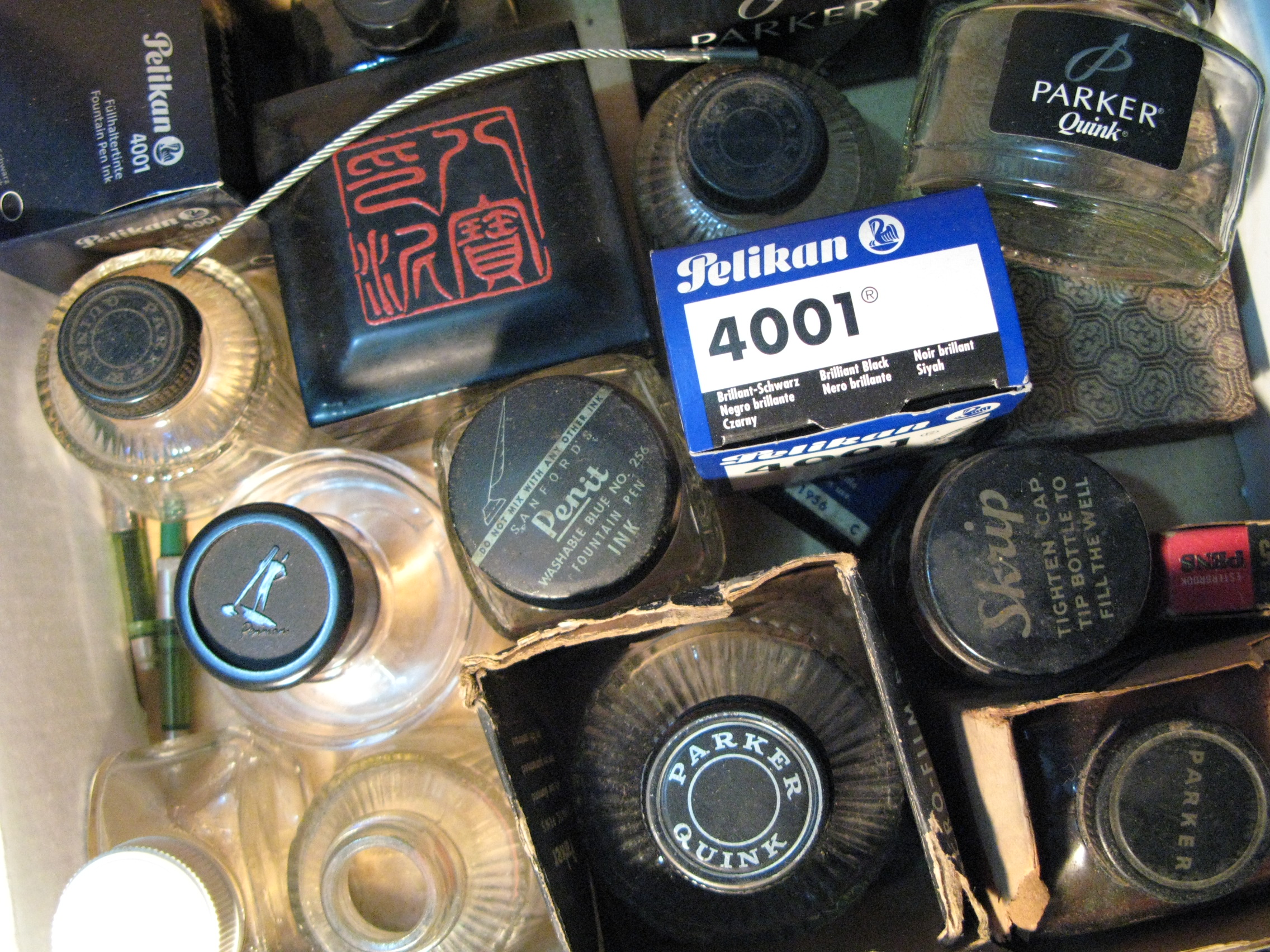
We seniors will remember that, when we were growing up and working on our first jobs, we never had much of a choice in inks—it was either Parker Quink or Sheaffer Skrip (both of which are still being produced, by the way), in black or blue-black, and occasionally green, red, or royal blue. Pens and inks were meant for use at work, in school, and at home, not really to be enjoyed or collected, although some esoteric inks, like Sheaffer’s gorgeously vivid Persian Rose from the 1950s, are now regarded like rare fine wines.

With fountain pens becoming more of a lifestyle choice or fashion statement than everyday tools, inks have acquired designer status as well, and more than a dozen companies now manufacture and distribute their inks worldwide to cater to users looking for ever more unique swatches and signatures. Brands like Noodler’s, Diamine, Rohrer & Klingner, Akkerman, Private Reserve, J. Herbin, Iroshizuku, Organics Studio, de Atramentis, and Robert Oster compete with the more familiar in-house inks of major pen companies like Parker, Sheaffer, Montblanc, Pelikan, Waterman, Aurora, Pilot, and Sailor, among others.

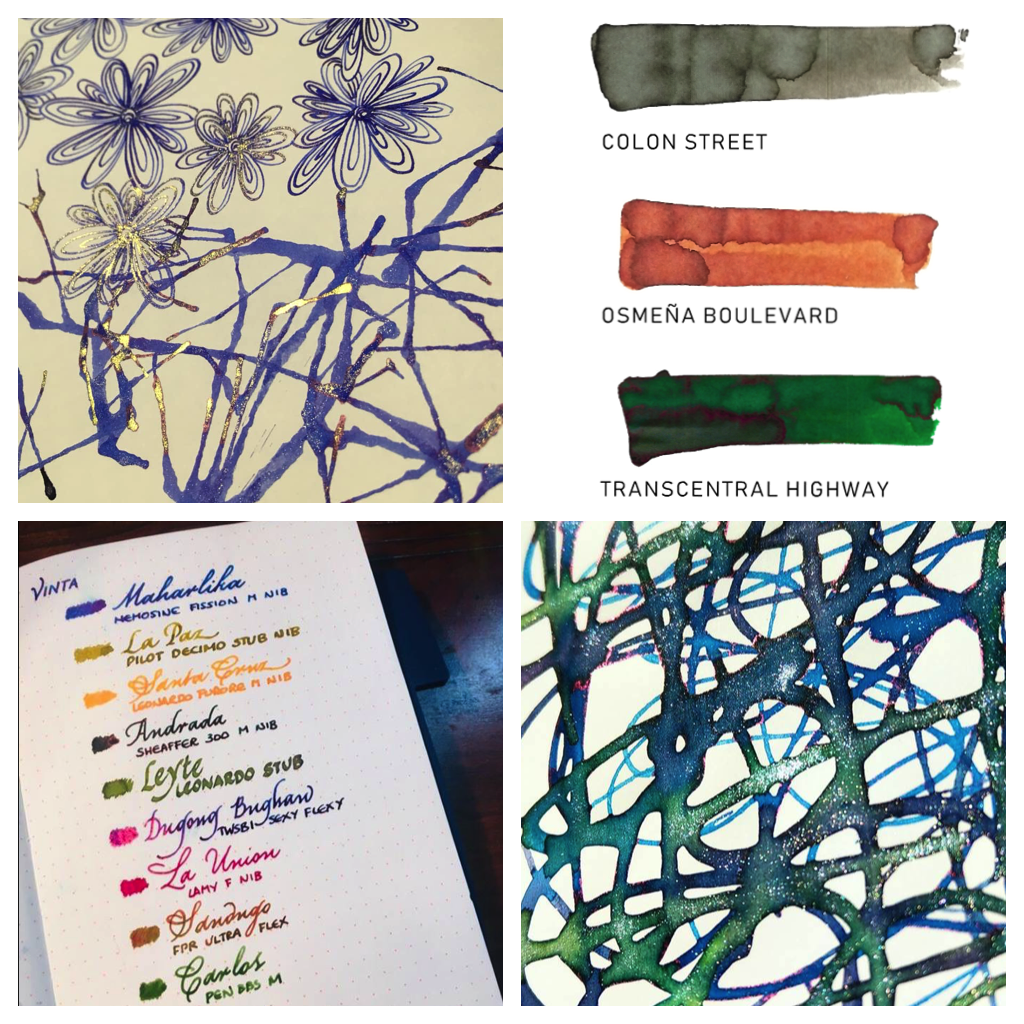
Color is, of course, the most important determinant of choice. Fogies like me tend to stick to the old black, blue-black, and brown, but millennials prizing individuality won’t think twice about—and will even seek out—splashy hues and special effects. Where we just wanted our inks to be either washable or indelible, the new inks offer add-on qualities and properties previously unheard of. Two of those most popular features are sheen and shimmer—sheen (as in Robert Oster Fire and Ice) being the presence of more than one color in the same bottle of ink, with one color serving as the base and another as a shiny highlight, and shimmer (as in J. Herbin’s Rouge Hematite) being the addition of glittery metallic particles to the ink. These two can even be combined in some inks. The result will often be more art than penmanship, an enjoyment of colored ink almost for its own sake above anything else. (You’ll also note that ink names have gone far beyond “Permanent Blue” to something as flamboyant as Noodler’s purplish Black Swan in Australian Roses and J. Herbin’s orangey 1798 Cornaline d’Egypte.)


IMG_9684.JPG

It’s liberating, in a way, because people—especially young students and professionals who have yet to get their first Montblanc—can indulge themselves in ink-play without splurging on high-ticket pens. For a thousand pesos, you could get a fistful of entry-level pens (easily available on Lazada and Shopee, among other sources online, aside from local retailers like Scribe Writing Essentials, Pen Grafik, and NBS) and focus your spending on a menagerie of inks. Do note that milliliter for milliliter, a bottle of specialty ink could cost much more than an equivalent volume of quality wine or scotch.

Color aside, other factors come into play in ink selection. How “wet” or “dry” is the ink? Will it “feather” or “bleed through” on cheap paper? (Paper deserves its own column, being another key factor in the writing experience; happily, inexpensive but fountain-pen-friendly paper can be found in local bookstores). Even bottle design matters—you might buy Iroshizuku and Akkerman inks as much for their iconic bottles as for their contents.

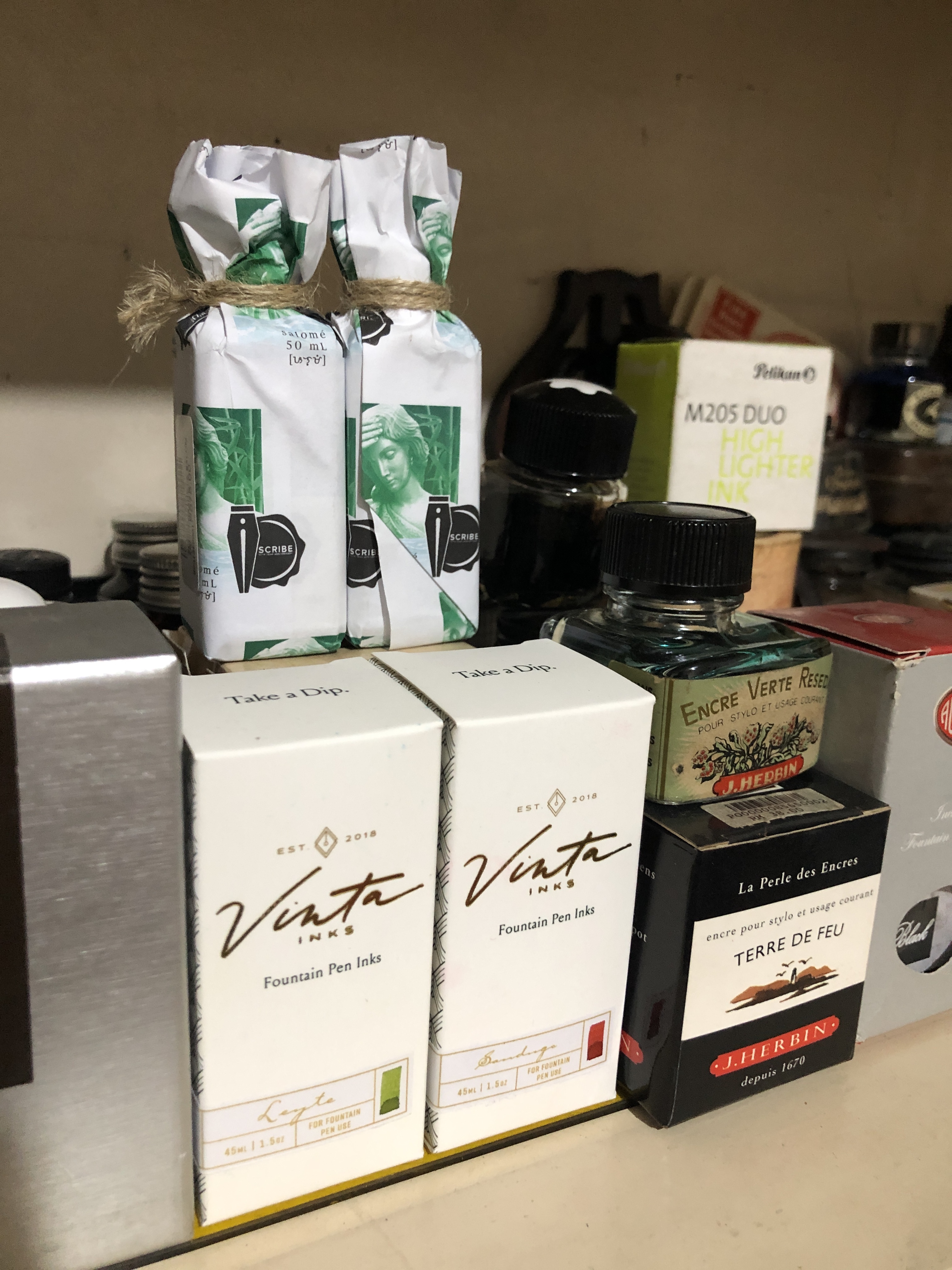
The best news of all is that some pretty fantastic (and fantastically pretty) inks are now being made locally—designed, blended, manufactured, and distributed by Filipinos. Two brands in particular stand out: Troublemaker Inks (troublemakerinks.com), concocted by two young Cebu-based guys and bearing such names as Bantayan Turquoise and Luneta Twilight Pink, and Vinta Inks (inksbyvinta.com), launched just last week by Everything Calligraphy, in such varieties as Sandugo 1565 and Leyte 1944. “We hope to export our proudly Philippine-made inks soon,” says EC’s Jillian Joyce Tan.

And well we should. Pinoys love color, and short of carrying and wielding a brush, we can’t have more fun with color on paper than with these new inks—sheening, shimmering, splendid. (With many thanks to Chiyo-chan Sakamoto, Nicole Angelique Sanchez, Lorraine Marie Nepomuceno, and Troublemaker Inks for the images.)


Flotsam & Jetsam No. 47: Fountain Pen Day Nov. 5-6 at SM Aura

I1Ptaxz.jpg

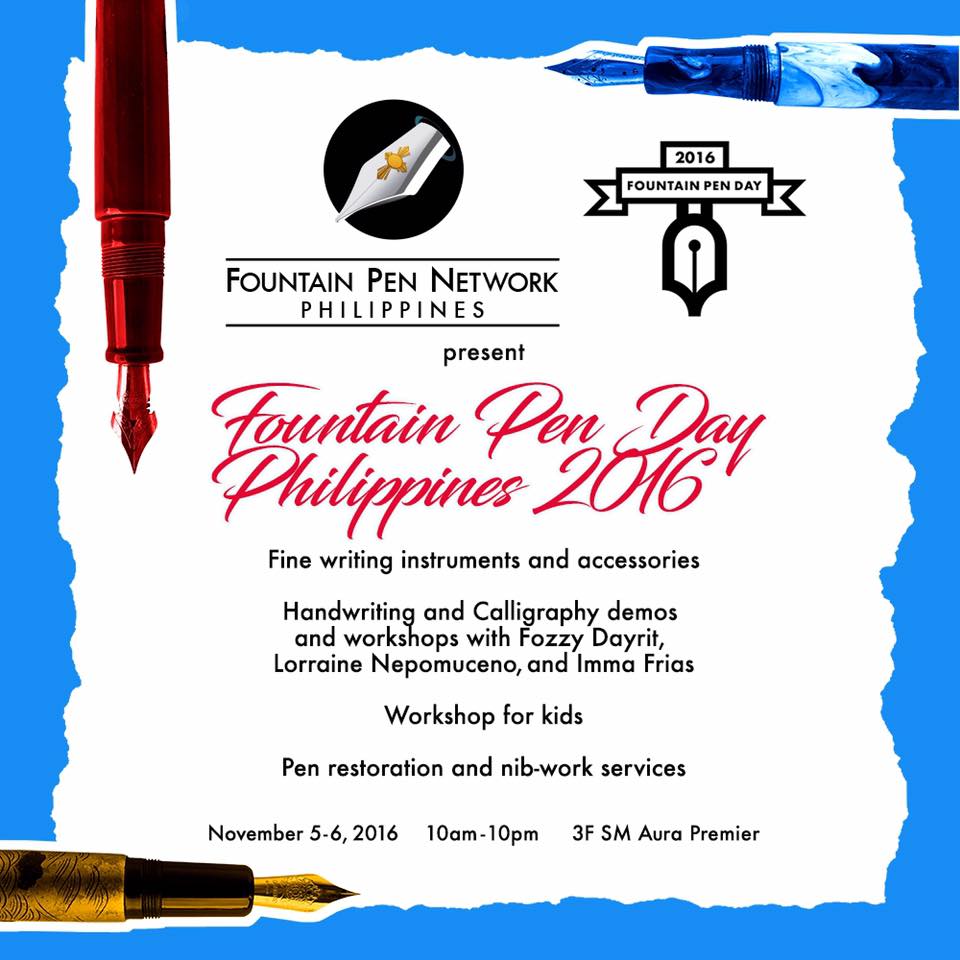
 IN CELEBRATION of Fountain Pen Day—marked globally every first Friday of November—Manila’s foremost dealers of pens and inks will set up shop on November 5 and 6 at SM Aura Premier in Bonifacio Global City near Toby’s Estate on the 3rd floor.

Scribe Writing Essentials, Pen Grafik, Everything Calligraphy, Faber Castell, National Book Store, and Lamy will be showcasing some of the finest brands of pens and inks from Europe, the United States, and Asia.

Handwriting workshops have also been lined up over the weekend. Kids wanting to discover the joy of handwriting can sign up for demonstrations guided by children who themselves use fountain pens for writing and illustration. Local pen restorers and nibmeisters will be present to tune, repair, and appraise pens. Pen lovers wishing to learn more about both vintage and modern pens can pick the brains of seasoned collectors, and students of the ornamental word can interact with expert calligraphers.  An art exhibit will feature works rendered in pen and ink by some of the country’s best artists. (Some of my best vintage pens will be on display, as will those of other FPN-P members.)

9461223955_cfe9b4d40b_o.jpg

Fountain Pen Day was started in 2012 by American pen collector Cary Yeager. In the Philippines, the Fountain Pen Network-Philippines (www.fpn-p.org) organizes this festival. With over 2,000 members in its Facebook group, FPN-P is a diverse community bound by a shared love for the written word in an increasingly digital age. Its members include writers, lawyers, doctors, teachers, artists, tech professionals, civil servants, and students.

Fountain Pen Day Philippines 2016 is also made possible by the support of SM Aura Premier, PNB Savings Bank and Asia Brewery. For more updates on Fountain Pen Day, go to Instagram and follow @fountainpenday and @fpnph, or interact using hashtag #fpdph2016.

Penman No. 173: Lines and Letters

IMG_8288

Penman for Monday, November 2, 2015

IT’S BEEN a while since I’ve written about my favorite pastime (aside from my weekly poker binges and my foot-massage-and-movie dates with Beng), so indulge me this break from the headaches of literature and politics and let me talk about those obscure objects of my writerly desire—pens and all things appurtenant thereto, as my lawyer friends would say.

We have, not incidentally, a good many lawyers among our members at the Fountain Pen Network-Philippines (FPN-P), which isn’t surprising, given how lawyers have traditionally used pens in their work, and at least in taking their bar examinations. Those pen-wielding members of the Philippine bar include Undersecretaries Albert Muyot, Ronnie Geron, and Rey Cruz; SEC Chairperson Tess Herbosa and SEC lawyer Joanne Ranada; pro-gun advocate Ticky Tabujara; former ACCRA lawyer Elsa Divinagracia; and Aboitiz lawyer Anthony Goquingco. While he hasn’t formally signed up with FPN-P, Supreme Court Justice Marvic Leonen, an avid pen user, has turned up at a meeting or two.

We also have a sizeable representation of doctors—among others, Novartis executive Aileeen Dualan, surgeons Jojo Hosaka, Joy Grace Jerusalem, and Leo Ona III, Healthway Medical head Eleanor Bengco-Tan, barrio doctors Edrie Alcanzare and Jim Lopez, Dagupan-based rehab specialist Hazel Gazmen, company physician Kristine Arabaca, and new Med graduate Mark del Rosario. Predictably, there’s a special thread in our forum devoted to providing specimens of our doctors’ handwriting—the more unreadable, the more impressive.

Alongside these professionals come teachers, writers, artists, businessmen, bankers, students, and all manner of writing enthusiast, drawn to the group if not by pens then by inks, papers, calligraphy, or drawing. What started out in my front yard in Diliman seven years ago with less than 20 people has grown to over 500 members on our dedicated website at http://www.fpn-p.org/, and more than 2,000 on our Facebook page (being FB-averse, I stay out of that group, but you’re welcome to sign up there if FB’s your thing).

Once or twice a month, we get together—typically for a long Saturday lunch in a Makati or Ortigas restaurant—to play with our pens and to doodle away in wild abandon. While we may talk politics in the corners of the meeting and devote some attention to tangential interests like watches and knives (you’d be surprised how many pen people have one or the other or even both as secondary hobbies), the focus is clearly on fountain pens, inks, and papers.

Whatever for? There’s no better way I can explain it than group therapy. As I’ve said in this column many times, it’s the sheer tactile pleasure of laying down lines and letters on a page, of watching the ink spread through the paper’s fibers, creating networks of meaning, or otherwise an impression of beauty, an entirely handmade beauty at that. This is what you can’t get from a ballpoint or a rollerball—a soft or shaped nib that can create breathtaking line variations from from extra-fine to triple-broad, that can be so sensitive to the touch that the merest tremor can betray some deep-seated emotion. With every stroke of the pen, another worldly care is banished, another rampant anxiety quelled. There’s nothing more intimate yet more revealing than that stroke, the physical commitment of thought to paper.

Fountain pen collectors (among other creatures infected by the same virus of compulsive acquisition) often speak of their “grail” pen, that one elusive, near-unattainable pen that calls to them in their dreams and shimmers like a mirage on the horizon of their consciousness. That pen could be as simple as a Parker 51 that they recall their father used, or as weighty as the Montblanc 149 favored by Supreme Court Justices, or as uncommon as a custom-made Nakaya or Hakase epitomizing the finest of Japanese craftsmanship.

Over the past 30 years of immersing myself in the hobby, I’ve had many such “grail” pens cross my fevered brain, and have actually had the good fortune of realizing most of them—a 1938 Parker Vacumatic Oversize in burgundy, a Parker “Big Red” Duofold from 1926, a Montblanc Agatha Christie from 1993, and, most recently, a Montblanc Ernest Hemingway from 1992. Almost as interesting as the pens themselves, each of these pens has a story behind it, a near-mythical chase across decades and continents.

Unlike many collectors, I don’t keep my best pens in a case, under lock and key. I rotate them for daily use, praying that I’ll never lose one, although that’s almost a statistical certainty. It isn’t ostentation that impels me to do this, but rather an acute and growing awareness of time passing—of the sense that, at my age, I probably have another ten good years left, and what a waste they would be if I let my happiest acquisitions moulder away in some dark drawer, never having kissed paper.

If all this talk of pens makes you want to reach for one—whether in memory of a long-forgotten practice or in anticipation of a novel experience—then join us this Saturday, November 7, at the Cinema VIP Lounge of Century City Mall on Kalayaan Avenue in Makati as we celebrate International Fountain Pen Day (yes, such a day exists) around the theme of “Celebrating Analog Writing in a Digital Age.”

Open to the general public, the day’s events will include a pen-and-ink art exhibit, a calligraphy workshop, a sketching session, as well as an introduction to fountain pens for children. Guests may also avail themselves of services such as vintage pen restoration, appraisals, and nib tuning.

For supporting this project, FPN-P would like to thank Manila’s leading purveyors of quality writing instruments such as Everything Calligraphy, Faber‐Castell, Lamy, Parker, Scribe Writing Essentials, Sheaffer and Wahl‐Eversharp/PenGrafik. Our special thanks go as well to Asia Brewery for their assistance.

Entrance is free, so take those leaky old pens out of your grandfather’s desk drawer and bring them to us for a cleaning and a good chat. But I warn you: fountain pen use can be highly addictive, and leave your fingers stained in the most wonderful colors.

Penman No. 44: Pen Boys’ Weekend

Chito and JPPenman for Monday, April 29, 2013

AS IF two trips up to Baguio in early April weren’t enough, I went up a third time later this month. But while my previous sorties had to do with literature—high-minded work, you might say—this third one was purely for fun… and, well, okay, some education of the esoteric kind. That education, I hope, properly qualifies this piece for the Arts & Culture section, particularly as it has to do with my favorite subject of discussion, fountain pens—that’s right, those inky instruments of insistent individuality.

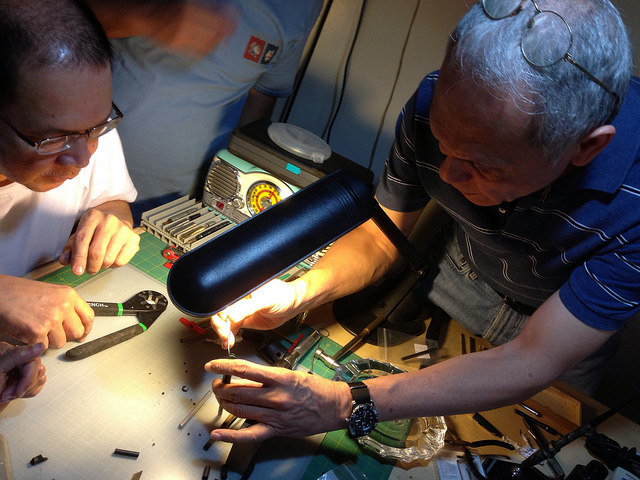
The members of our five-year-old pen club, the Fountain Pen Network-Philippines or FPN-P, had long planned to hold a vintage-pen-repair workshop in Baguio, and this month it finally happened. Why Baguio? Because that’s where our host—the Bali-based Fil-Am pest exterminator (seriously, that’s what he does for a living) Butch Palma—keeps house when he’s in the Philippines, with a veritable pen repair shop and laboratory in the basement. After some hemming and hawing, seven diehards signed up for the workshop: the onetime mechanic, nurse, and now banker JP Reinoso, our local “nibmeister” or master of nib repair and modification; the retired pharmaceuticals executive Chito Limson; the lawyer and DepEd Undersecretary Albert Muyot; the UP engineering major Jonathan Isip, our resident geek and IT specialist; the UP Special Ed grad student Cesar Salazar, who’s had as rich and varied a business background as any; and the two Butches, Dalisay and Palma.

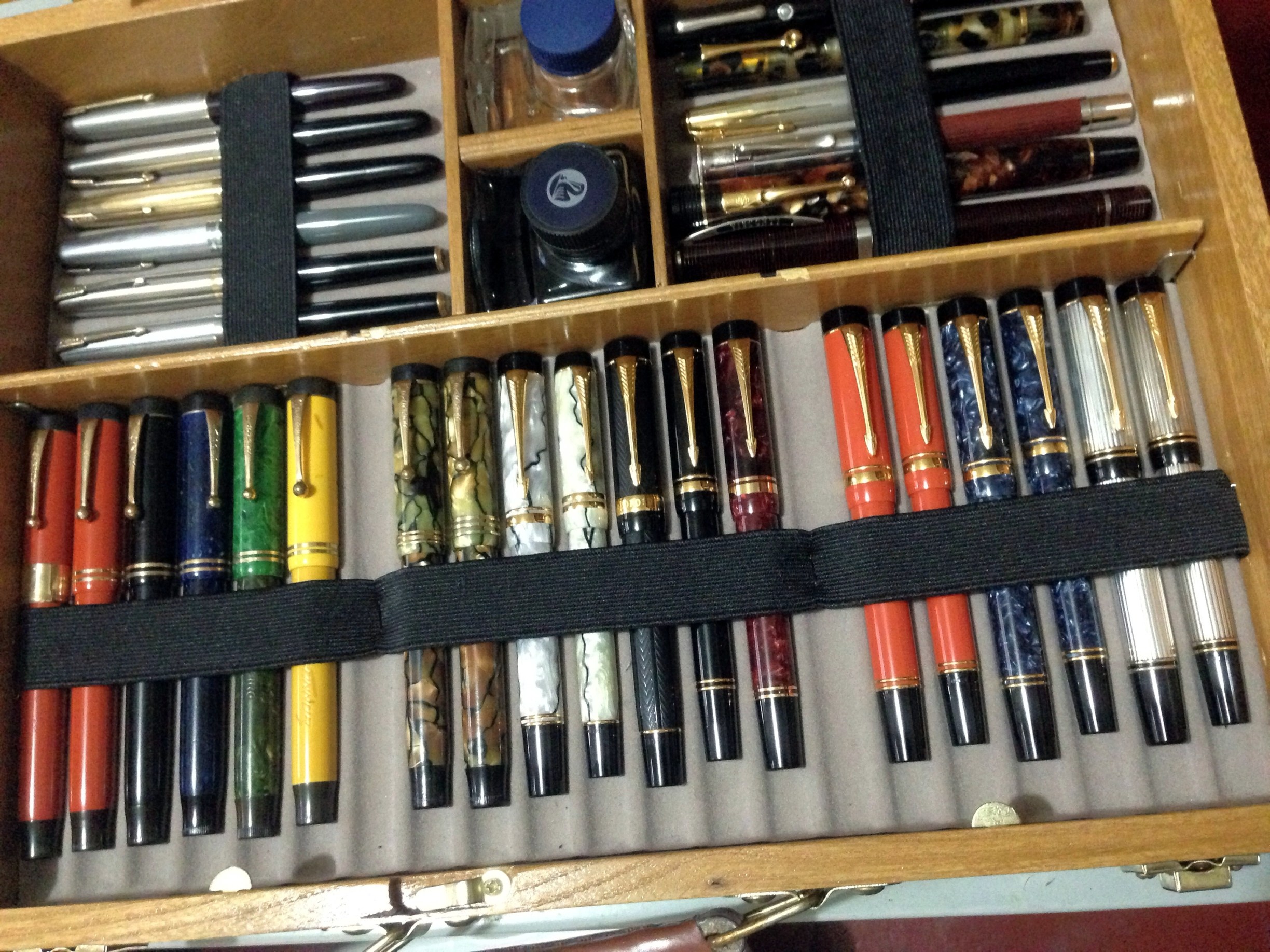
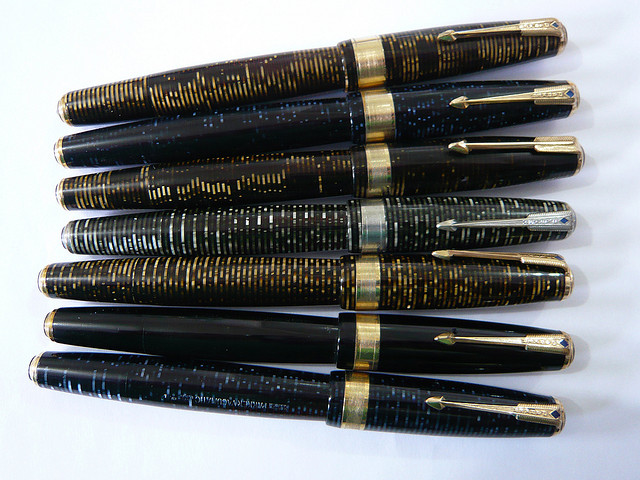
In FPN-P, my tocayo and I are known as the vintage-pen guys, since our collections (about 200 pens for me, and double that for The Other Butch, or TOB as he’s affectionately called in the group) lean heavily toward prewar pens. I have about 60 Parker Vacumatics—fabulous pens and eye candy, with colorful shimmering stripes—and have learned to repair them myself; TOB also likes Vacs, Sheaffers, and gold pens, and is far more advanced and experienced at repair than the rest of us. But what’s even more impressive about TOB is his armory of pen-repair tools, including a mean-looking heat gun and Dremel drill, maintained and arranged as carefully as a conscientious dentist might treat his picks and forceps. (The comparison isn’t as fanciful as it may seem; the dental pick is one of a pen repairman’s most constant friends.)

Fountain-pen repair is a lot like vintage-car restoration. You want the final product to come out all spiffy and shiny, but there’s a lot of work to do—often insanely complicated work—under the hood. You don’t need just the skills, which no one really teaches; you also need the parts, supplies, and tools, which can be as arcane as they come, such as an inner-cap puller for Parker pens, sac protectors for Sheaffer Touchdowns, lever boxes for hard-rubber Watermans, and rubber sacs and diaphragms of many sizes. These aren’t things you can pick up at True Value; they have to be sourced online, and then painstakingly practiced with, inevitably at the cost of a priceless pen or two.

And when a repair newbie’s eagerness outstrips his skills or his patience, disaster happens. Thirty years ago, as I was just getting hooked on pens, I found a rare, mustard-colored Parker 51 Vacumatic in a thrift shop in Michigan for 25 cents—not bad for a pen worth at least 1,000 times more—and promptly cracked the barrel with a twist of the pliers. (Memo to self: heat the barrel with a hair dryer before attempting disassembly, to let the plastic expand.)

Vacumatics

You would’ve thought that—dozens of fixed Vacumatics later—I would be a master at this, and maybe I thought so, too. But at TOB’s workshop, I made another dumb newbie mistake: using a tool I didn’t know without reading or following instructions. The tool in point was TOB’s heat gun, which sends out a blast of hot air like some kind of light saber. I was kidding my tocayo about his having a heat gun instead of a hair dryer because—well, if you see his shiny, saintly pate, you’ll understand why—and then I turned the heat gun on a 1940 Vacumatic that I was going to use to demonstrate my graduate-level skills to the nervous newbies. But, alas, before I could say “This is how…”, the heat gun vaporized a chunk of the pen’s barrel, and there in a smoky wisp went another of George S. Parker’s creations, having survived for over 70 years before some dumb monkey with a PhD zapped it to pen heaven.

Happily the rest of our weekend’s forays into the art of reviving dead writing instruments went much less dramatically, with positive results. Taking a break from headaches in primary education, Usec Albert (one of three Usecs in FPN-P, big fountain pens being a lawyer’s weapons of choice) learned how to replace a “jewel” or an ornament in the butt of a ca. 1960s Parker 61, Chito repaired the 1940s Vac of San Beda Prof. Pidoy Velez (threatening to bill him P8,000 per hour for the three-hour service), JP showed me how to breathe life back into a 1930s Touchdown, and TOB put together a pretty 1938-ish blue Esterbrook using a cap and barrel rummaged from my parts bin (and I found a black Vac barrel from his, to replace the one I ruined), so in the end, everything worked out just fine for the pen boys. (And just to get this straight, at least a third of FPN-P’s more than 300 registered members are female, some of them—the amazingly talented Ms. Leigh Reyes instantly comes to mind—blessed not only with formidable pen collections but with divine calligraphic skills as well.)

We didn’t do too badly as amateur pen repairmen go, but we were glad to be reminded that for truly difficult jobs and truly valuable pens, there are pros we can always tap around the world for their unique expertise. For the longest time, the bible of pen repairmen was the late Frank Dubiel’s “Da Book,” but a new generation of more scientifically savvy restorers has taken over. The legendary Richard Binder (who lent his name to the word “binderized,” to mean exquisitely finetuned and smoothened nibs) has himself retired, but nibmeisters John Mottishaw and Greg Minuskin can still refashion a perfect nib from a sorry scrap of gold, and out in Nebraska, Danny Fudge still services my Vacs and Duofolds when I can’t bear to break them myself. Ron Zorn in upstate New York has a backlog of at least six months, but he’s almost the only one who can properly put back a broken pen together—not with superglue or epoxy, but with a solvent weld that takes months to cure. (Can anyone here in Manila do these things? Beyond the simple repairs we did, the short and plain answer is no; Montblanc does do basic repairs in its service center in Rustan’s Makati, and sends on the tougher jobs to Hong Kong and Gemany.)

Is it worth it? That depends on how much you value your pens. If it’s a P500 Schneider or Inoxcrom, replacing it might be cheaper than attempting a fix; if it’s your grandfather’s Wahl Doric or Waterman Patrician, a $30 solution from Danny Fudge (plus postage, of course) will be a bargain. As far as I’m concerned, and as far as I can help it, every old pen deserves a second chance, if only because they’ll never be made again the way they were back in the 1920s. (That’s not entirely true: companies like Conway Stewart have come out with splendid revisions of the old classics, but these pens could cost you more than an iPhone.)

Boys being boys, and with our precious cargo back in their leather cases, we gathered around the table over scotch and coffee, and babbled into the wee hours about a host of manly subjects: cars and carburetors, terabytes and audio formats, Paul Simon and the Beatles, swords and light sabers, Malcolm Gladwell and Jared Diamond. Now and then some new words and brilliant ideas slipped into the conversation: hadoken, innumeracy, dyscalculia; now and then wives and women were mentioned, but not too often. And every five minutes or so, the talk drifted back to pens, about how gorgeous but oh how expensive the prewar Omas Extra Lucens was, about how Sheaffer Vac-Fills use a bewildering range of rod sizes, and, yes, how quickly vintage celluloid can melt in the wrong hands.

Such was our pen boys’ weekend, and—as I’m sure our wives appreciated—there are worse things men can spend their weekends on and weekends with than leaky Vacumatics.