Qwertyman No. 46: The Writer as Liberator

Qwertyman for Monday, June 19, 2023
AS PART of its Independence Day celebration, the J. Amado Araneta Foundation asked me to give a talk on “The Writer as Liberator” last Saturday, and today being Jose Rizal’s birthday, I’m very happy to share that talk in full (a shorter version appeared as my Qwertyman column in the Star):

When I was first asked to talk about “The Writer as Liberator,” the first thought that went through my mind was probably the thought that’s now going through yours, which was that of the writer as political revolutionary or dissident, in the mold of Jose Rizal, Marcelo H. del Pilar, Lorraine Hansberry, Alexander Solzhenitsyn, Nadine Gordimer, Wole Soyinka, and so many others of their caliber and stature.

That presumption, of course, is certainly valid and reasonable. Indeed, human history is fraught with examples of writers who fought colonialism, slavery, racial prejudice, and feudal and capitalist oppression and exploitation in India, South Africa, and the United States, particularly the American South, among many if not most other countries in the world. Wherever evil has reared its head, writers have arisen to call it out by name in all its forms—overweening pride among the ancient Greeks, blind ambition in Shakespeare’s time, lust and greed everywhere down the ages. 

The Philippines has been no exception. Decades before Rizal, Francisco Baltazar or Balagtas employed allegory in Florante at Laura to depict suffering and denounce injustice. Rizal and the whole Propaganda Movement followed, in a story of resistance and revolution that many of us already know. It’s a high climactic point that we could talk about all day but I won’t, because I’d rather talk about other things that most of us don’t know about writers and liberation. 

Again, to deal with the obvious, writers of all kinds have been at the forefront of political and social change. They included poets, playwrights, novelists, journalists, screenwriters, and today we would have to count bloggers and comic book script writers.

Our heroes and champions of freedom were poets—Rizal’s Mi Ultimo Adios and Bonifacio’s Pag-Ibig sa Tinubuang Lupa spring to mind, but they were also followed by the likes of Claro M. Recto, Francisco “Soc” Rodrigo, Carlos P. Garcia, and Diosdado Macapagal. These men—sadly, our political and even our cultural life was dominated then by the patriarchy—came from a generation when there was a very thin line between journalism and creative writing, when an opinion column could appear in verse, and when senators were expected to be literate and eloquent.

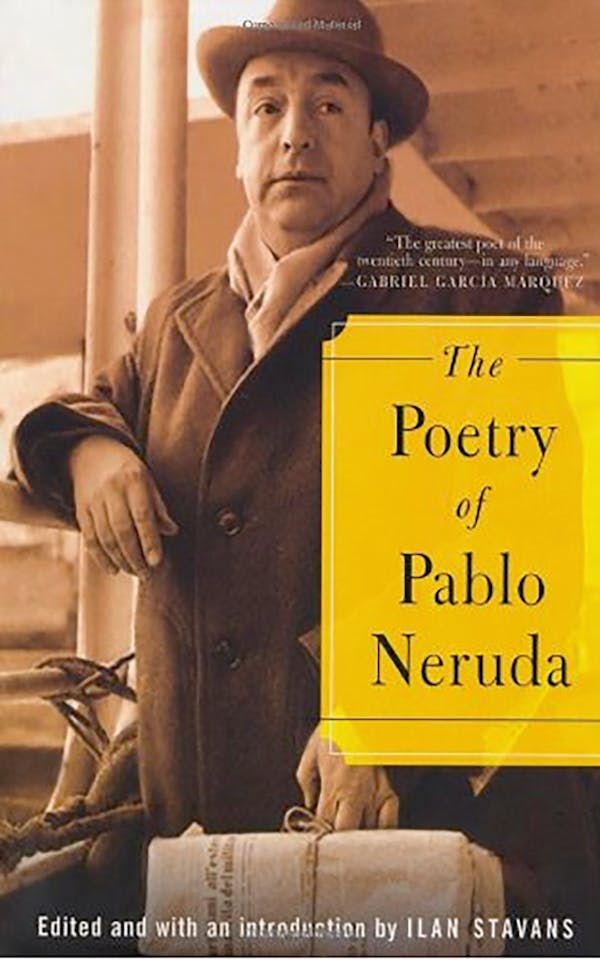
As I mentioned earlier, this was true of many countries around the world where people were fighting for freedom and justice. In South America, Simon Bolivar—who was known as The Liberator or El Libertador—led the fight for independence from Spain of what are now his native Venezuela, Colombia, Bolivia, Peru, Ecuador, and Panama, but he was also a poet, alongside the Cuban Jose Marti, among others. The Chilean poet and Nobel Prize winner Pablo Neruda wrote a poem in tribute to Bolivar, titled “A Song for Bolivar,” which I will read to you:

Our Father thou art in Heaven,
in water, in air
in all our silent and broad latitude
everything bears your name, Father in our dwelling:
your name raises sweetness in sugar cane
Bolívar tin has a Bolívar gleam
the Bolívar bird flies over the Bolívar volcano
the potato, the saltpeter, the special shadows,
the brooks, the phosphorous stone veins
everything comes from your extinguished life
your legacy was rivers, plains, bell towers
your legacy is our daily bread, oh Father.

The line “everything comes from your extinguished life” might as well have applied go Neruda himself, who was murdered by the fascist Pinochet government he opposed. Many writers have died for what they have written—and again we go back to Rizal—but others fought, lived on, and even succeeded in their struggles for national liberation. Two of the most prominent were Ho Chi Minh and Mao Zedong, who led long and ferocious wars against both local and foreign oppressors.

Imprisoned in China during the war, Ho Chi Minh wrote this poem in 1943 upon reading a book called the Anthology of a Thousand Poets:

The ancients liked to sing about natural beauty:
Snow and flowers, moon and wind, mists, mountains and rivers.
Today we should make poems including iron and steel,
And the poet should also know how to lead an attack.

In 1950, shortly after the Communists took over in China, Mao wrote this poem in reply to another poet named Liu Yazi:

The night was long and dawn came slow to the Crimson Land.

For a century demons and monsters whirled in a wild dance,

And the five hundred million people were disunited.

Now the rooster has crowed and all under heaven is bright,

Here is music from all our peoples, even from Yutian,

And the poet is inspired as never before. 

Note how, in these two poems, Ho and Mao locate the poet at the center of a collective struggle. This idea is developed even more strongly by Jose Ma. Sison—who by the way was an English major in UP—in his poem from the 196os titled “The Guerilla is Like a Poet”:

The guerilla is like a poet 
Keen to the rustle of leaves 
The break of twigs 
The ripples of the river 
The smell of fire 
And the ashes of departure. 

The guerilla is like a poet. 
He has merged with the trees 
The bushes and the rocks 
Ambiguous but precise 
Well-versed on the law of motion 
And master of myriad images. 

The guerilla is like a poet. 
Enrhymed with nature 
The subtle rhythm of the greenery 
The inner silence, the outer innocence 
The steel tensile in-grace 
That ensnares the enemy. 

The guerilla is like a poet. 
He moves with the green brown multitude 
In bush burning with red flowers 
That crown and hearten all 
Swarming the terrain as a flood 
Marching at last against the stronghold. 

An endless movement of strength 
Behold the protracted theme: 
The people’s epic, the people’s war. 

Given the aesthetics of the Philippine Left at that time, you could actually reverse this proposition to read “The poet is like a guerilla,” which Emman Lacaba certainly was, as was Ma. Lorena Barros, whose poem “Sampaguita” follows:

This morning Little Comrade

gave me a flower’s bud

I look at it now

remembering you, Felix,

dear friend and comrade

and all the brave sons and daughters

of our suffering land

whose death

makes our blades sharper

gives our bullets

surer aim.

How like this pure white bud

are our martyrs

fiercely fragrant with love

for our country and people!

With what radiance they should still have unfolded!

But sadness should not be

their monument.  

Whipped and lashed desperately

by bombed-raised storms

has not our Asian land

continued to bloom?

Look how bravely our ranks

bloom into each gap.

With the same intense purity and fragrance

we are learning to overcome.

Decades later, her namesake Kerima Lorena Tariman would write “Pagkilos,” a poem that celebrates motion in both nature and society:

Ang lahat ng bagay ay tila kitikiti,
Palagiang kumikilos at hindi mapakali.
Ang paggalaw ay kakambal ng bawat bagay,
Likas na kaugnay at hindi maihihiwalay.

Ang mga bagay-bagay ay kay hirap isipin,
Kung walang paggalaw, kung kaya, gayundin,
Ang paggalaw mismo ay di natin matatanto,
Kung wala ang mga bagay dito sa mundo.

Sa daigdig, halimbawa, nagpapahinga man ang pagod,
Matikas man ang estatwa at patay-malisya ang tuod,
Sila’y hindi naliligtas sa paggalaw ng planeta,
Ang pag-ikid at pag-inog ang palagiang sistema.

Kung kaya ang masa na akala mo’y walang imik,
Kapag natutong lumaban ay nagiging matinik!
May mga kasama man na natitigil sa pagkilos,
Ang rebolusyon sa daigdig ay hindi natatapos!

A, lahat ng bagay ay saklaw ng ating kilusan,
Katotohanan ito na di maaaring iwasan.
Kung kaya’t habang tayo ay may lakas at talino,
Sa pagkilos natin ialay ang ating bawat segundo!

Tragically, both Lorenas—and Emman Lacaba before them—would be killed in the struggle that they took on, and be hallowed as revolutionary martyrs.

Now, all this may sound like an open invitation for our favorite red-taggers to call all poets rebels, and all rebels communists. That would be ridiculous. Most poets are still happy and perfectly within their rights to write about the moon and the stars and undying love. Some rebel-poets were proud and self-admitted communists, at a time when the word was invested with a sheen of holiness. But the abject failure of communism to set up a truly free and egalitarian society and its appropriation in both China and Russia by new and autocratic elites has shed much of that romantic mystique, and it is supremely ironic that those writers and artists now fighting for civil liberties in both countries are considered enemies of the state.

“The Writer as Liberator” was an easier concept to deal with when we had a foreign occupier like Spain, America, or Japan. Today, our oppressors are internal, lodged within our society, and within our hearts and minds. The liberation we need today is from our worst selves, which is often the hardest enemy to face. Bad leadership has enabled and encouraged that side of us that accepts extrajudicial killing and unjust imprisonment as normal. 

The minds of so many of our people remain shackled by ignorance, falsehood, prejudice, superstition, fear, and a crippling dependency on the old and familiar, however self-destructive they may be. In an increasingly polarized and intolerant world, people everywhere face racial violence and discrimination, gender inequality, economic exploitation, and political repression.

The writers who will battle this chimera have many weapons at their disposal—not just books and the traditional press but social media, a universe of communication unto itself that Rizal and his contemporaries never dreamed of. Journalists fight with the truth, creative writers fight with the truth dressed up as artistic lies. 

I have often said that the best antidote to fake news is true fiction. By this I mean that it often takes artistry and good storytelling, more than a mere recitation of facts, to show people what is true.

Long before there were newspapers, writers gave voice to their people’s hopes and fears through what today would be called fiction: through myths, legends, tales, epics. These stories transported people from the crushing routine of their everyday lives to the realm of the gods, to a romantic past cloaked in the mists of fable and fancy. Indeed, these stories came even earlier than literacy itself, transmitted orally from one generation to the next. Creation myths validated and gave meaning to a tribe’s or a people’s existence; tragic drama reminded them of the consequences of our moral choices. 

When I started my Qwertyman column in the Philippine Star and began writing what I called “editorial fiction,” a columnist in another newspaper immediately cried “Foul!”, claiming that fiction cannot possibly be taken as opinion. I responded that all fiction is opinion, if you know how to read it closely enough. Like the mirror Perseus used to kill Medusa, we employ fiction to deal with truths we cannot bear to face.


I am under no illusion that the next revolution, whatever it may be against or when, will be sparked by a novel or a poem. Very likely, it will be a viral video that will ignite that flame. I pray it will not be violent, but rather a comprehensive conversion of our people’s minds and spirits for the good. But there will always be a place for the writer in the offices, kitchens, and workshops of democracy, on the bunkbeds where we lie dreaming of justice and prosperity for all. 

Let me close with a short poem that I wrote last year, titled “Freedom Is When”:

Freedom is when 

We don’t think about it

But it’s there like air

We seek only in its absence

When we’re gasping for breath.

Freedom is when

We can choose whom to love

Or whom or what to believe 

Without any fear

Of punishment or death.

Freedom is when

We can sleep without guilt

And dream without ghosts

Waking up to the aroma

Of steaming rice and stewed fish.

Ang kalayaan ay kung

Hindi natin ito iniisip

Tulad ng hangin

Hanggat ito’y mawala

At tayo’y maghingalo.

Ang kalayaan ay kung

Malaya tayong pumili

Ng iibigin, o paniniwalaan

Nang walang katatakutang

Parusa o kamatayan.

Ang kalayaan ay kung

Mahimbing tayong makakatulog

At managinip nang di minimulto

Hanggang tayo’y pukawin ng halimuyak

Ng bagong saing na kanin at pinangat.
Hindsight No. 18: Wisdom from Suffering

Hindsight for Monday, May 16, 2022

(Image from tunedinparents.com)

THERE’S A line I remember from a college course in Greek drama—specifically the play Agamemnon by Aeschylus—where Zeus memorably explains why the gods bring pain and torment to humans, when they could just as easily shower them with joyful blessings: “Justice inclines her scales so that wisdom comes at the price of suffering.” Man suffers, so he will learn.

I kept going back to that line this past week as I tried to comprehend the enormity of what had just happened: by what appeared to be a huge majority, our people had chosen a dictator’s son to lead this country for the next six years. Despite reports of massive vote-buying and irregularities at the polling stations, I wasn’t even contesting the overall results—I was never much of a conspiracist—but asking myself how and why the masses of our people keep making poor choices at the ballot box, voting against their own strategic interests. (Am I being presumptuous to sit in judgment of our average voter? Yes, and I make no apologies, having lived through martial law, all three EDSAs, Garci, tokhang, and Covid.)

Did we not suffer enough over the Marcos years and from the plunder and repression enabled by martial law to have learned that unbridled authoritarianism is a curse on everyone, both despot and citizen alike? Clearly not, or we would not be here today, facing the restoration of that rapacious regime. And it will be because—going by the moral logic that informed the Athenian stage—we have brought it upon ourselves, by casting more votes for the very same people whose greed we continue to pay for, and will pay yet more for, all over again.

In that case, should we flog ourselves over that seeming poverty of collective wisdom? Shall we call ourselves stupid and even hopeless, to have gained the freedom to vote, only to squander it for the benefit of those who took it away in the first place?

Of course, the right to vote never came with any assurance of voting wisely and responsibly, with democratic values foremostly in mind. For those whose lives have never changed regardless of administration, it can simply be another source of easy income. For others, it can be a form of personal revenge for injustices suffered daily, for the sharp tongues and heavy hands of otherwise pious employers. Still others might simply want, for once in their lives, to be part of what they think is the winning side. 

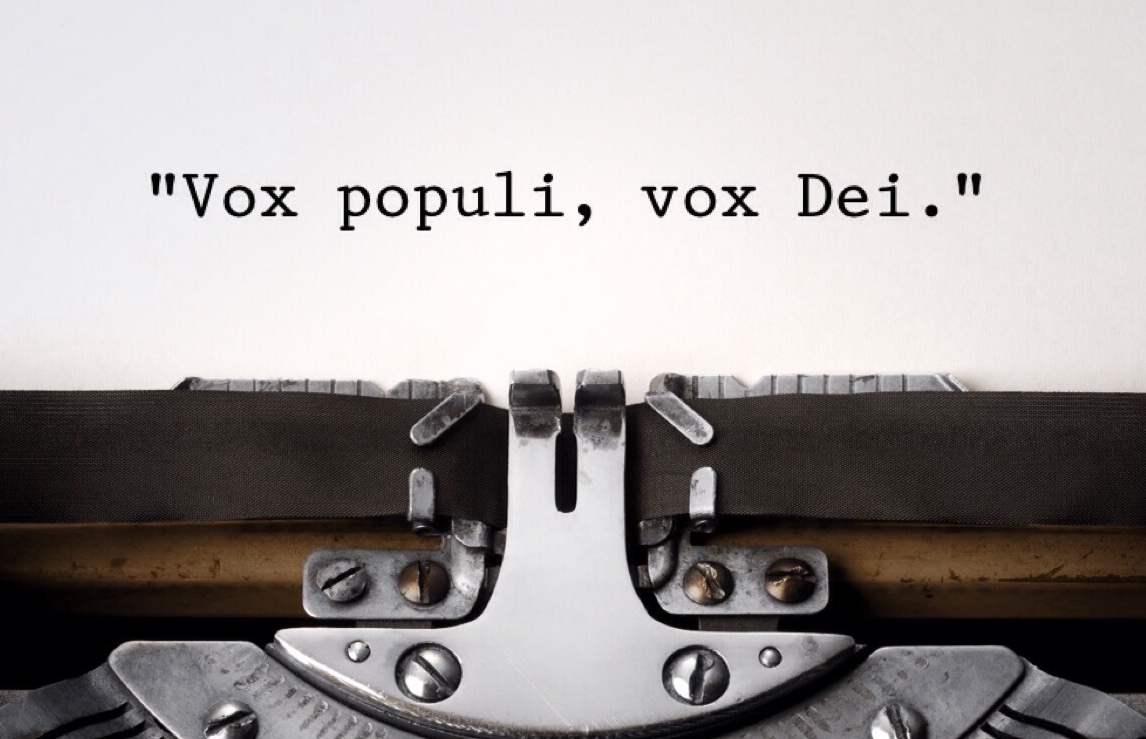
From these “winners,” we can expect a barrage of gloating and taunting, which has already begun. The cynical will remind us that we were wrong to have even hoped and tried; this was all foreordained by the numbers, which are the only thing elections are ever about. Some will even trot out that hoary quote, “Vox populi, vox Dei,” to stamp divine approval upon this outcome. In other words, we were all just exercising our free will, our freedom of choice, which after all is central to democracy. Only sore losers cry.

But then again, free will has never guaranteed critical intelligence. Which leads me—not being a political scientist—to ask these questions of those who might know better:

What if that “freedom” had been subverted and compromised by massive and deliberate disinformation? Was it still a free citizen who willfully cast a ballot for someone provably inimical to democracy, or a wound-up robot executing a series of plotted motions? Can we blame the desperate and the misled? Can we still call it a “free, fair, and clean election” if the fraud already started many years before, in the distortion of history and the rehabilitation of unpunished convicts? 

If and when voters elect a buffoon and a bully president—like they did with Donald Trump, among other such demagogues we know—does that validate buffoonery and bullying, and make them acceptable? Does it wipe the slate clean, erase all liabilities, and establish a new norm for political behavior? Most simply—as millions of us must have been thinking these past few months—if the president refuses to pay his lawful taxes, can we be morally compelled to pay ours? 

Vox populi, vox Dei—if this was God speaking, what was he saying? This is what I’m hearing: “By your own choice, I am giving you this man to be your president—so you will learn.”

I wonder how much more suffering we shall have to endure for our people—especially the generations post-martial law—to learn that voting has personal consequences, that the Marcoses do not represent “moving on” but sliding back into the dismal past, and that this election was their best chance in ages of creating a true “golden era” of humane, honest, and progressive governance, instead of the tinsel fantasy they’d been sold. How and when can we value the truth once more?

Again, Aeschylus—writing half a millennium before Christ—throws us a line from Prometheus Bound, spoken by the hapless girl-turned-cow Io. Hounded by a gadfly, Io is in constant pain, and tells Prometheus her tale of woe; but she insists, at the end of her story, that she wants to know her future, however difficult it might be: “If you can say what still remains to be endured, tell me; and do not out of pity comfort me with lies. I count false words the foulest plague of all.” This campaign saw innumerable “false words” rain down on our electorate, not just words of spite but also of artificial sweetness. 

I am angry and dismayed, but not without hope. In Io’s case, despite her terrible travails, she learns that her future is much brighter than she would have expected—she will be restored to human form, and would count among her descendants the great hero Hercules. 

We can yet be the progenitors of our best selves as Filipinos. We just need to endure, to learn, and to endure some more.

Penman No. 380: Commemorating the FQS

JTorres1.jpg

Penman for Monday, February 3, 2019


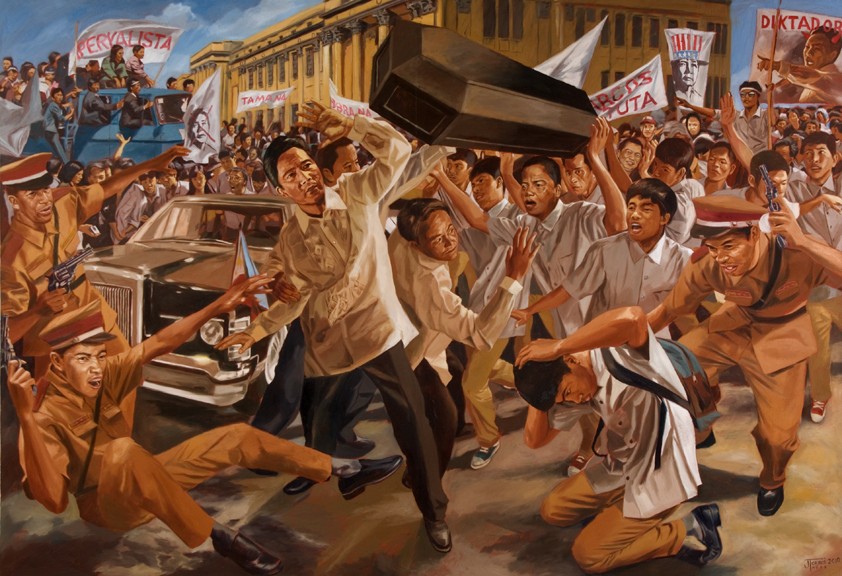
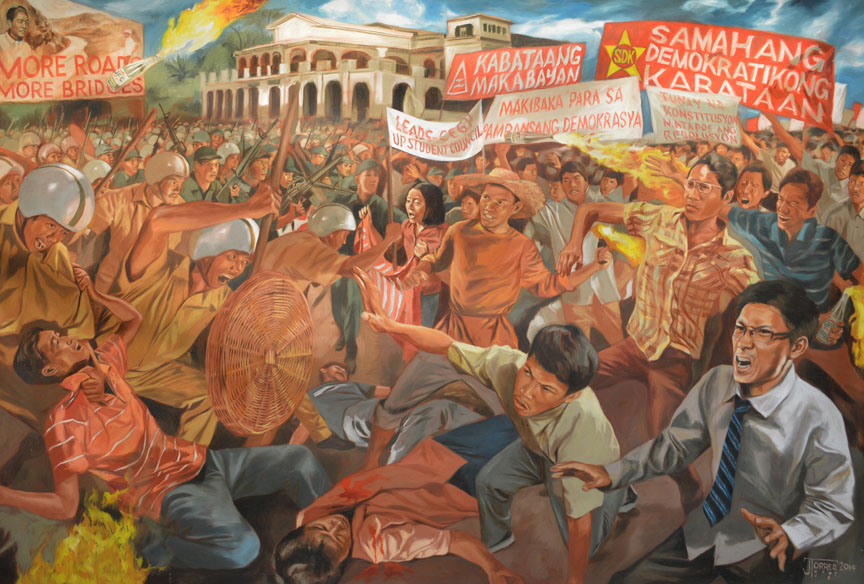
STARTING LAST January 26 and until early this month, some members of a generation of Filipinos now in their 60s and 70s would have commemorated—or at least noted in one way or another—the 50th anniversary of what came to be called the First Quarter Storm, or the FQS. It was a tumultuous season at the very start of the 1970s, a period that would see deepening disenchantment with the Marcos regime, the rise of student activism, and the subsequent declaration of martial law in 1972. For those of us who were part of that generation, it was also the abrupt abbreviation of our carefree youth and our hastened transformation into missionaries of a kind, idealists fired up by the notion of becoming the Rizals, Bonifacios, and Gabriela Silangs of our time.

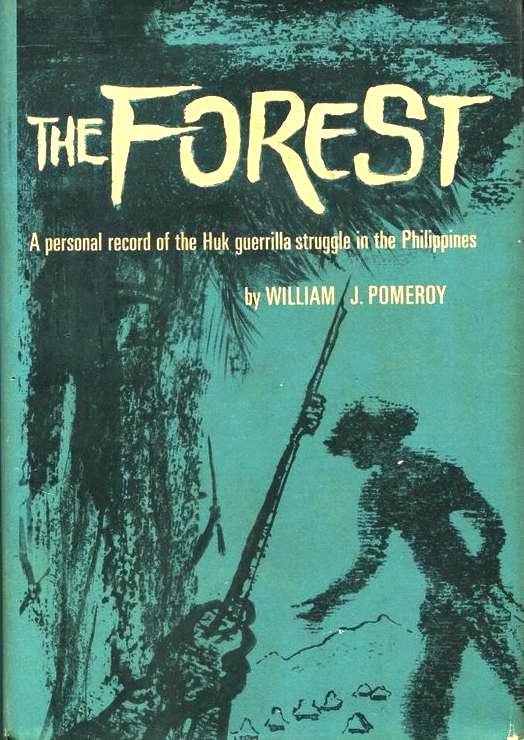
It was a political but—as with all politics—also a cultural awakening. We began by reading—not Marx or Mao, but Renato Constantino and, a bit later, Jose Ma. Sison. For me, it was William Pomeroy’s The Forest—a lyrical account of an American GI’s unlikely entry into the struggle of the postwar Huks—that sparked my fascination with rebels and revolutions. I was only in high school when I read it, but I swore that, in my own way, I was going to make a change in society.

8398741572.jpg

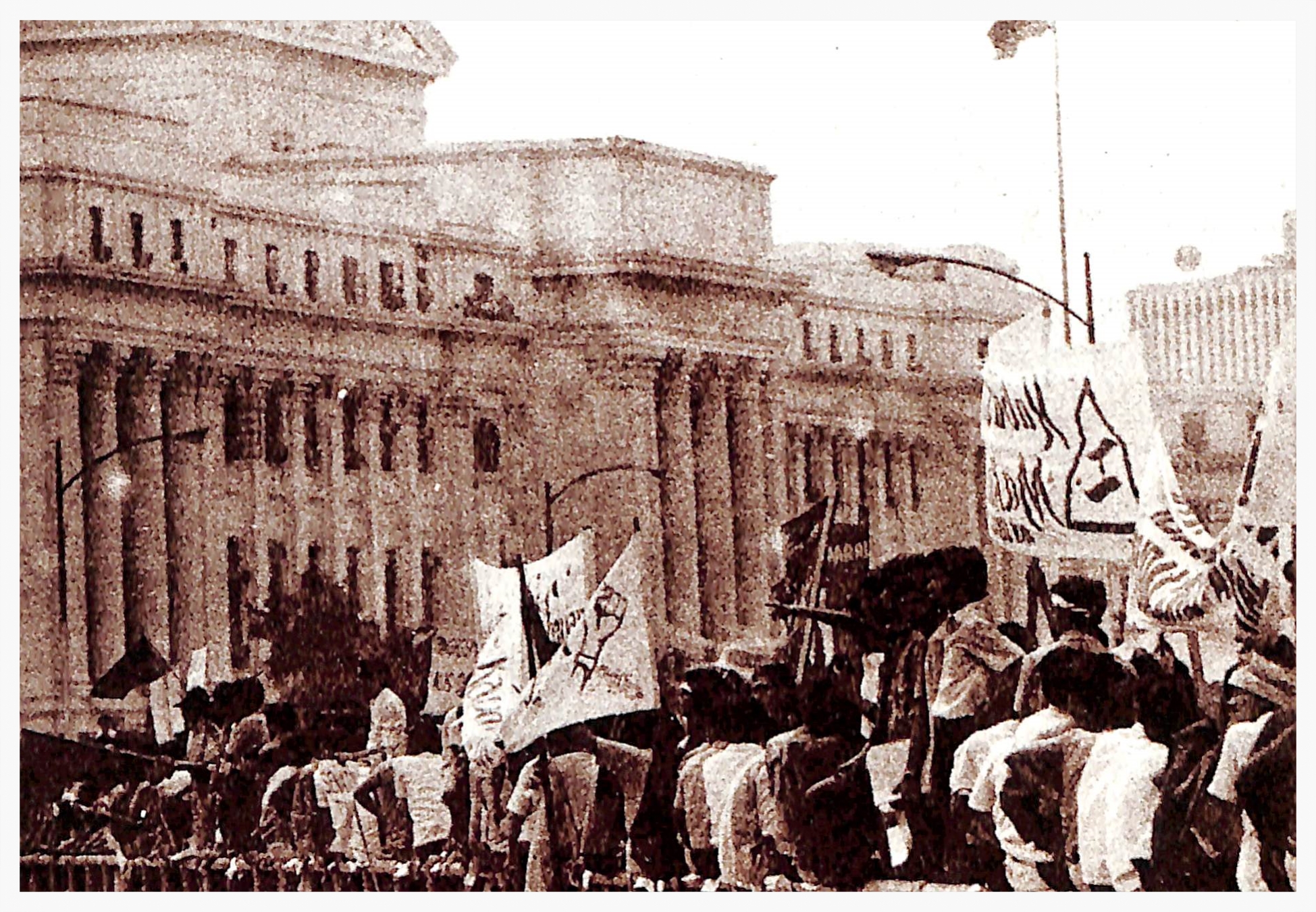
I didn’t even have to wait to get to college for that opportunity. On January 26, 1970, I joined the throngs of uniformed students who gathered in Manila to protest against Ferdinand Marcos, who was delivering the SONA at the old Senate building. I can’t recall now what the specific issues were, but we had a sense that there were very large causes involved of which Marcos was only a part. The Vietnam War was still raging and for many young people, “Make love, not war” was the answer; we had watched Woodstock as a movie on the big screen, we had memorized the Beatles, and Mao’s China was still shrouded in mystery. We were somewhere between dreaming of becoming hippies or becoming bomb-throwers.

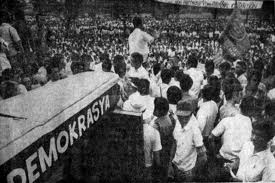
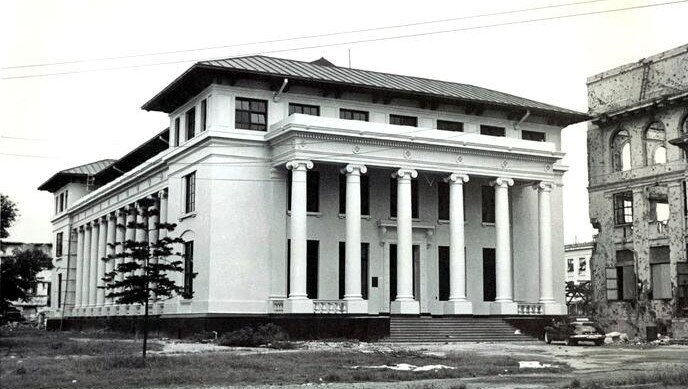
Indeed, on that day—a Monday, according to the calendar, so we were all skipping our classes—I still counted myself a moderate, marching under the banner of Ed Jopson’s National Union of Students of the Philippines. We filed out of our assembly grounds on the UST campus toward the Luneta, where large crowds had already gathered, some sporting the streamers of more vocal militants like the KM and SDK—whom, at that point, I held in both suspicion and awe. I was too far to listen to the speeches being made by the likes of Gary Olivar, whom my high-school English teacher had held up for me as a bright young man worth emulating. When things started flying through the air, beginning with the mock coffin someone had brought along to exemplify the death of democracy, and the police began wielding their truncheons, I scampered for the life of me, muttering oaths under my breath directed at both the police and the radicals for spoiling what had been a very nice day. I had just turned 16 barely a week earlier, and I was too young to die or even just to get my head bashed in.

image09.jpg

jopson-addressing-the-jan-26-crowd.jpg

As it happened, I did get radicalized; before that year was over, I was a freshman at UP, where I joined the Nationalist Corps and later the SDK. Within just three more years I would become part of the Diliman Commune, witness the killings of Francis Sontillano and Sonny Mesina (both of them my fellow scholars at the Philippine Science High School), drop out of UP to work as a newspaper reporter, lose my job under martial law, and be imprisoned in Fort Bonifacio for seven months. I grew up even faster than I thought I would; shortly after my release, I met and married my wife Beng (with so many people dying around us, we couldn’t wait too long), and I became a father at 20.

IMG_3148.JPG

That’s what a few books and the FQS all led to—a quick but bracing immersion in youthful rebellion and forced maturity, from which I learned quite a bit about myself and about other people, indeed about human nature itself, beyond providing material for the obligatory semi-autobiographical first novel. Today, as a retired professor, I’m often asked (and will be again, this week) about what all of that meant, and I say that it was about taking charge of your own life and taking your people’s interests to heart, and not just yours.

What I once disavowed as my vulnerable and wishy-washy liberal core turned out to be me at my most honest and perhaps my strongest. I still seek and fight for freedom from any kind of despotism, whether from the Right or the Left (and these days, when both extremes have cohabited, when the mouthpieces of the old Left now sing the praises of the Right, you have to trust your own compass to point northward). I commemorate the FQS not by boxing it in the past and putting it away, but by hoping that a new generation of Filipinos, made curious by books and refusing to accept easy answers, will see themselves as part of a larger struggle to be human, and to be free.

JTorres2.jpg

(Paintings by Juanito Torres, courtesy of Jack Teotico)


Penman No. 325: Free to Think, Free to Speak

IMG_0438.jpg

Penman for Monday, October 29, 2018


I’VE BEEN seeing frothy messages on the Internet calling for the University of the Philippines to be shut down because it seems to be producing nothing more than anti-government critics and rebels (and, uhm, five out the seven new National Artists announced last week).

It’s no big secret that rebellion and resistance are coded into UP’s DNA, because it has always encouraged critical thinking, which in turn encourages—at least for a while, until complacency sets in—an attitude of dissent, of anti-authoritarianism, of rejection of the status quo. That’s how knowledge happens, as every scientist since Galileo has affirmed. Learning to lead requires critical thinking; learning to follow demands nothing more than blind conformity.

Apply that to the political sphere, and not surprisingly, UP has for the past century been a crucible of protest, against both internal and external forces seeking to influence its constituents’ thoughts and actions. Those protests and their causes have ranged from tuition fees, uniforms, and substandard facilities to unfair dismissals, Malacañang interference, foreign control of our destiny, and the overhaul of Philippine society itself.

UPPrep1950.jpg

In 1928, a law prescribed the wearing of uniforms by students in all public schools, including UP. The uniform for men was a white suit (khaki on rainy days); for women, a white blouse and dress reaching three inches below the knees. UP students opposed the measure, and President Rafael Palma supported them.

In 1933, the first student protest against a tuition fee increase, from P30 to P50 per semester, took place at the College of Education in the form of a boycott led by, among others, Fe Palma—the daughter of the President.

The resistance got more serious when it came to political interference in UP affairs. In the early ‘30s, in a tussle over differing positions on Philippine independence, then Senate President Manuel Quezon punished Palma—and the entire University—by removing UP’s lump-sum allotment. Quezon was a notorious meddler in UP matters, often coming to Padre Faura from Malacañang when he was President astride a white horse. A young UP law student even attacked Quezon for his “frivolity,” accusing Quezon of throwing lavish parties in Malacañang while the country suffered under the Americans. The student’s name was Ferdinand Marcos.

This didn’t stop with Quezon. When President Quirino demanded courtesy resignations from all government officials, UP President Bienvenido Gonzalez refused to tender his, to protect UP’s autonomy.

In the 1950s, at the height of McCarthyism, the Congressional Committee on Anti-Filipino Activities conducted a witch-hunt for communists in UP; the committee was led by Cong. Leonardo Perez, himself a former Collegianeditor. A throng of 3,000 students led by Heherson Alvarez and Reynato Puno marched to Congress in protest.

Diosdado Macapagal made few friends in UP when, upon assuming office in 1962, he announced that his choice for next UP President was Carlos P. Romulo, practically bypassing the Board of Regents. Macapagal got his way.

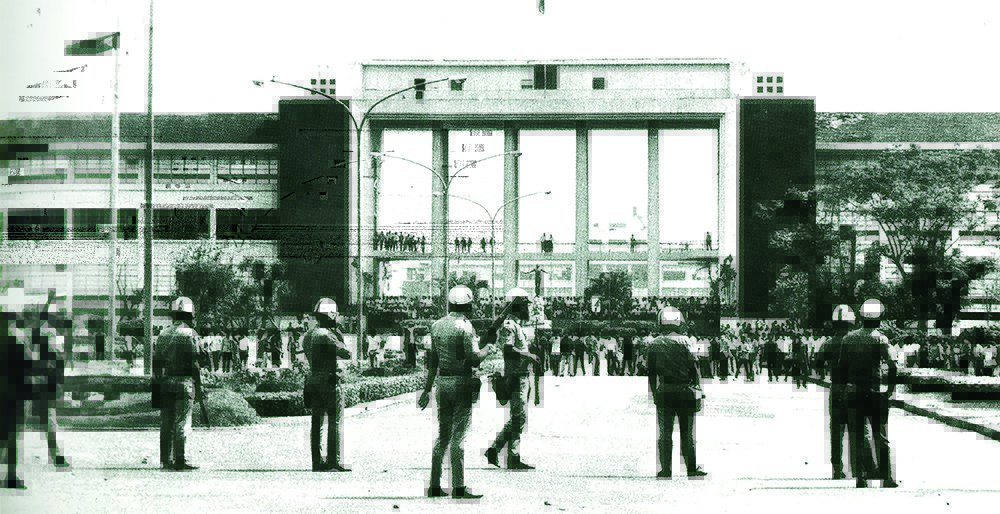
About Macapagal’s successor Marcos, I can only say that as a 17-year-old participant in the Diliman Commune, I carried but never got to throw a Molotov cocktail—but I would have if I had to, firm in the belief that the military had no right to drive their armored vehicles onto UP grounds.

fred-dilimancommune-universityforthepeople.jpg

True, since the 1940s, many of the leaders of the Communist Party of the Philippines have come from UP, from the fascinating Lava brothers to the English major Joma Sison. But UP has also bred Presidents Laurel, Roxas, Macapagal, Marcos, and Macapagal-Arroyo. Ramon Magsaysay and Fidel Ramos both spent time in UP before moving elsewhere. We can add hundreds of senators, congressmen, Supreme Court Justices, Cabinet secretaries, and icons of industry, the arts, the sciences and the professions to this list.

In other words, UP has attracted all kinds—communists and socialists, yes, but also capitalists, ultraconservative Catholics and born-again Christians, Rizalist cultists, military agents, the Ananda Marga, and Muslim separatists. Our 300,000 alumni can count saints as well as scoundrels, Jedi Masters and Sith Lords, democrats and demagogues.

And the same thing can be said of top global universities like Cambridge, which in the 1930s was home to what came to be known as the “Cambridge Five,” led by the top Soviet spy Kim Philby. There’s a Communist Party of Canada Club at the University of Toronto, alongside an American Culture Club and a Chinese Christian Fellowship. Even Wharton has a Marx Café, an underground club of Marxist enthusiasts.

When you think about it, apprehensions about UP in 2018 are no more tenable than the charges laid against freethinkers on campus back in the 1940s. And we actually do a lot more than rebel—look into our breakthroughs in research on www.up.edu.ph, which has helped boost our ranking to the top of Philippine universities.

For me, the true heart of UP lies neither in the Right nor the Left, but in that great liberal middle—“liberal” with a small “L”—whose members value the freedom to think, to speak, to study, and to teach, subscribing neither to State propaganda nor to Party doctrine, but trusting their own reason and education to illumine the way forward.

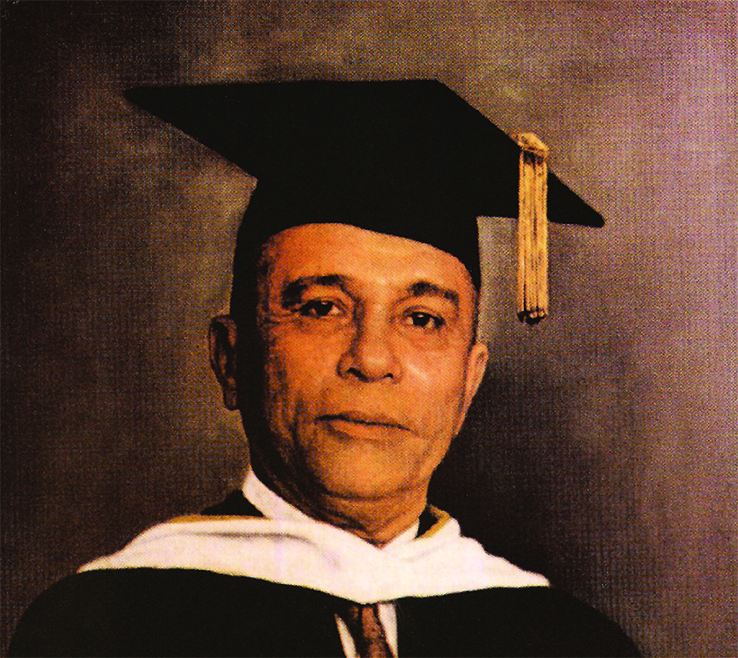
In its editorial of April 14, 1962, the Philippine Collegian wrote this about outgoing President Vicente Sinco, a visionary who fathered what came to be known as the General Education program and who fought to maintain UP’s secular character:

“Dr. Sinco is one of the most liberal of UP presidents. He has stood for intellectual freedom, for the autonomy of the mind…. This particular achievement of Dr. Sinco in… protecting the freedom of intelligence from the infringements of lies, orthodoxy, and mediocrity is a challenge to anyone in the future who will occupy the office.”

TR.jpg