Qwertyman No. 153: Our Literary Fathers

Qwertyman for Monday, July 7, 2025

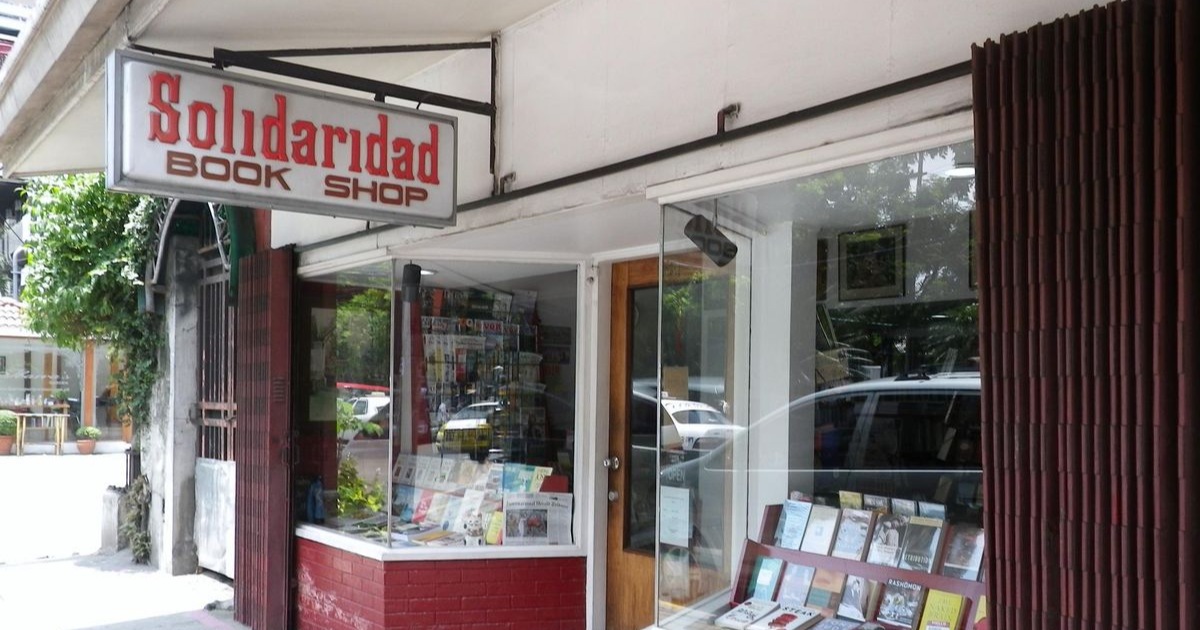
THE RECENT announcement of the impending sale of the Solidaridad bookshop in Ermita owned and run by the family of the late National Artist F. Sionil Jose understandably triggered a wave of nostalgia for the place, the old man, his dear wife Tessie, and for a bygone era when people strolled into book stores over their lunch break or after work to browse and pick up an Updike, a Le Guin, or a Garcia Marquez—and, of course, a Sionil Jose, and get it signed by the man himself if he was luckily around. Five decades ago, as a writer for the National Economic and Development Authority just a couple of blocks away on the same street, that browser would have been me, for whom Solidaridad and the equally legendary Erehwon nearby were a godsend, an unlisted perk. 

Indeed Solidaridad and FSJ (or Manong Frankie, as we his juniors called him) were inseparably conjoined in the public’s imagination of a man who was not only our most productive and best-known novelist but also an indefatigable purveyor of great literature and critical if occasionally controversial thinking, through his journal Solidarity and his long-running column “Hindsight,” this very space I was honored to have inherited.

Like many others—even those with whom he had quarreled fiercely—I was deeply saddened when Manong Frankie passed away three years ago. It was particularly bittersweet for me because we had become quite close in his last years, after having been somewhat estranged for the longest time. 

He had taken me under his wing on a writers’ conference in Bali in 1983, in a group of young, aspiring writers finding their way in a broadening literary world. But shortly after, in an interview with National Public Radio in America where I had gone to study, I offered my rather injudicious opinion of his prose—not mine alone—which he must have gotten wind of and found disparaging, because he gave me the cold shoulder afterwards. Like other younger writers, I would bristle at his hectoring moods—which I would better understand as I myself got older—during which he lamented the seeming alienation of the Filipino writer from his or her own social and political reality. 

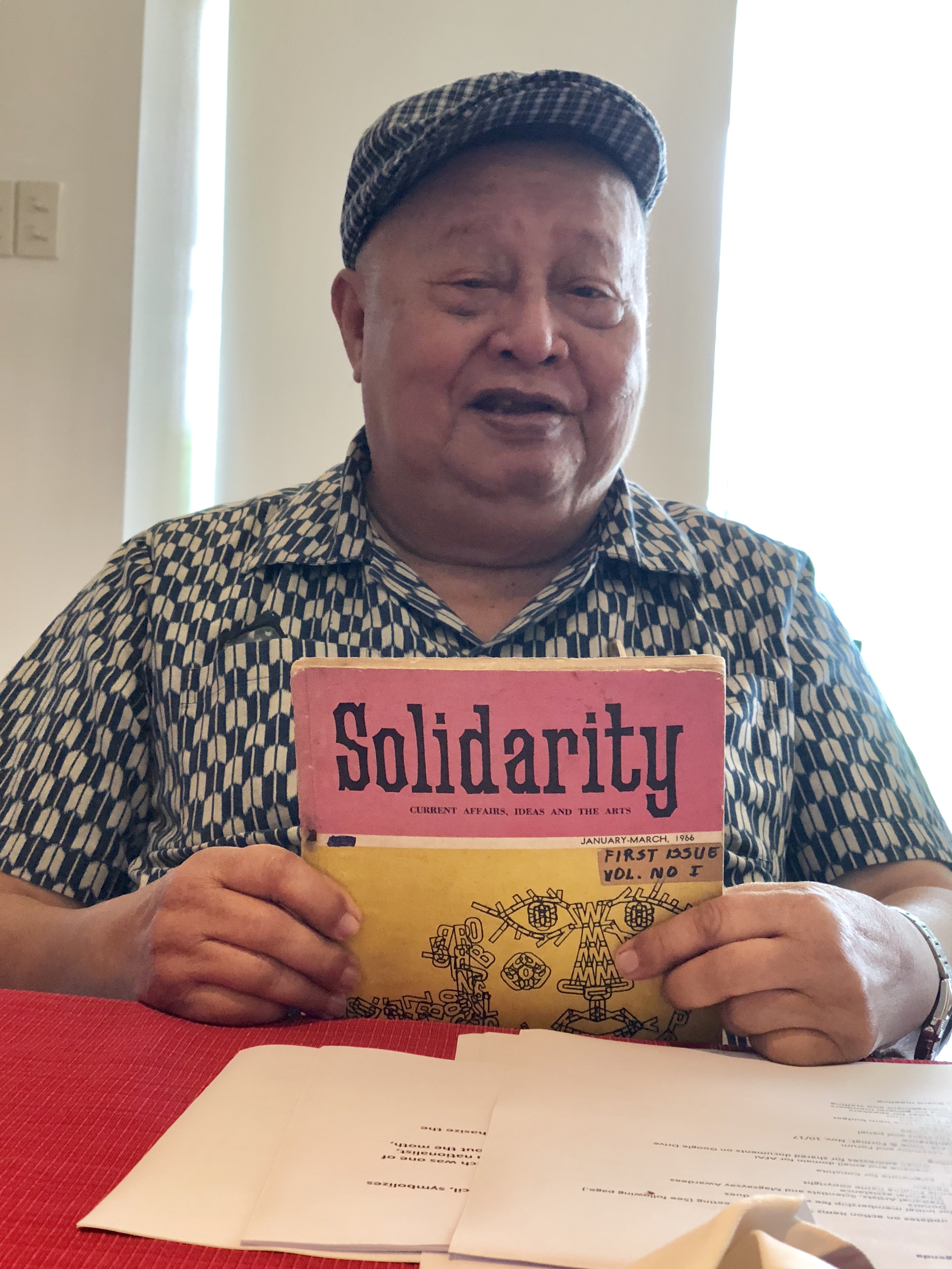
It was a concern we happened to share, and he began to know and appreciate me as someone who eschewed academic snobbery as much as he did, having transitioned to fiction from a background in journalism rather than the writers’ workshop system that he was deeply dubious of. In other words, we had more in common than each of us thought, and our work in the Akademyang Filipino brought us closer together. At one time I gifted him with the very first issue of Solidarity—Vol. I, No. 1—which I had found, and which he had not seen for ages; he was happy. After my speech at the Palancas in 2017, he came up to shake my hand.

Ironically, this happened at a time when FSJ, ever strongly opinionated, turned off many of his readers with his pro-Duterte sentiments, his putdowns of Nobel prizewinner Maria Ressa and others he thought undeserving of their fame, and his acerbic loathing of certain families he considered oligarchs despite their long having been supplanted by new and far more ravenous overlords. I did not share these views, and he knew that, but I think we had quietly decided that our friendship was more important than our politics. Shortly before he died, he sent me a brief letter that will be a cherished secret to keep until I myself pass on.

I didn’t learn writing from Manong Frankie; rather, I observed and admired his persistence and perseverance, literally writing to the last on what turned out to be his deathbed. I enjoyed his stories more than his novels, but in the end my own preferences don’t matter. He left a sprawling, robust, and indelible body of work that for many readers here and overseas will define Philippine literature in English for the latter 20th century. He led what our mutual friend the novelist Charlson Ong called “a well-managed life,” building a legacy partly through Solidaridad, Solidarity, and Philippine PEN which he led for a long time, apart of course from his work, and making sure he was heard when he spoke. 

His passing reminded me of the other members of his generation—his seniors and juniors by a decade or so—whom my generation in turn looked up to and at the same time, in that perpetual cycle of revolt and renewal, sought to depose. Nick Joaquin we adored as much for his prose as for his prodigious drinking (and seriously, for putting as much of his heart and craft into his journalism as into his fiction). NVM Gonzalez, who happened to have been born in Romblon (and not in Mindoro as many think) several kilometers away and forty years ahead of me, had that common touch many citified writers lost. Edilberto Tiempo I owe for urging me to return to school and devote my life to studying and writing rather than to bureaucratic servitude. 

Bienvenido Santos, twinkly-eyed and gently smiling, was my favorite of them all in terms of the quietude but also the emotional resonance of his stories, so graceful and yet so powerful. If I were to think of a literary father, it would have been Franz Arcellana, whose work may have been so vastly different from mine and yet, as my mentor in school, was the one I sought to please, slipping my story drafts under his office door and praying for his approval. Gregorio Brillantes, the youngest of them and perhaps more properly belonging to the next generation along with Gemino Abad, has been my writing hero for his superlative technique and unfailing sense of character. All these men (and women as well, for whom a separate story should be told) have taught me and my peers much, not just about the craft of writing but just as importantly the writing life, this vocation of books and words we have ddevote ourselves to for the bliss and yet also often the anguish of finding meaning in life through language.

Manong Frankie has passed on and soon so will his fabled bookshop, but his words, as well as ours, now have a life of their own.

Qwertyman No. 122: On Writing as a Profession

Qwertyman for Monday, December 2, 2024

FOLLOWING THROUGH on last week’s piece about the challenges faced by creative writers trying to make a living in this country, let me share some further thoughts on that topic that I wove into my Rizal Lecture last week at the annual congress of Philippine PEN. My talk was titled “The Living Is in the Writing: Notes on the Profession of  Writing in the Philippines.”

Our writers of old made a profession of writing, often by working as journalists, speechwriters, and PR people at the same time that they wrote poems, stories, novels, and essays on the side. Some also taught, and of course some writing comes with that territory, but with teaching you get paid for your classroom hours than for your word count. (To which I should also add, so much of the writing that our literature professors do today is understandable only to themselves.)

Our best and most prolific writers lived by the word and died by it. The two who probably best exemplified this kind of commitment to writing—and nothing but writing—were Nick Joaquin and his good friend Frankie Sionil Jose. Both were journalists and fictionists (in Joaquin’s case, a poet and playwright as well). We can say the same for Carmen Guerrero Nakpil and Kerima Polotan, as well as for Gregorio Brillantes, Jose Lacaba, Ricky Lee, Alfred Yuson, Cristina Pantoja-Hidalgo, and Charlson Ong, among others. 

These were all writers whom you never heard to claim, as has been recent practice, that “I am a poet!” or “I am a fictionist!” They were all just writers, for whom the practice of words was one natural and seamless continuum, and a profession they mastered just as well as we expect doctors, engineers, mechanics, and lawyers to do. This was also when journalists could be poets who could also be politicians and even reformers, revolutionaries, and heroes.

This was paralleled in other arts such as painting, where artists such as Juan Luna, Fernando Amorsolo, and Botong Francisco routinely accepted commissions to support themselves and any other personal undertakings. (Of course, this was well within the old Western tradition of writers and artists having wealthy patrons to help keep them alive and productive.)

But then came a time when, for some reason, creative and professional writing began to diverge, as creative writing withdrew from the popular sphere and became lodged in academia, where it largely remains today. Professional writing, or writing for, money, came to be seen as the work of hacks, devoid of art and honor. Even George Orwell urged writers to take on non-literary jobs such as banking and insurance—which incidentally T.S. Eliot and Wallace Stevens did, respectively—rather than what he called “semi-creative jobs” like teaching and journalism, which he felt was beneath them. (Orwell himself worked as a dishwasher in Paris, where he wryly observed that “nothing unusual for a waiter to wash his face in the water in which clean crockery was rinsing. But the customers saw nothing of this.”)

An attitude of condescension soon emerged among poets and fictionists who looked down on journalists as a lesser breed—something I have always warned my students against, having been a journalist who had to turn in a story, any story, by 2 pm every day on pain of losing my job. Never knock journalists. Let’s not forget that when it comes to facing real dangers brought on by one’s written word, poets and fictionists have it easy. The last Filipino novelist who was shot for what he wrote was Jose Rizal; the only writers dying today are our journalists and broadcasters in the hinterlands offending the local poobahs. Governors and generals read newspapers, not novels; they are impervious to metaphor.

Professional writers, on the other hand, saw creative writers as artsy dilettantes enchanted by fancy words and phrases that no one else understood and very few people paid for. Creative writers took it as a given that they were wedded to a life of monastic penury, unless they had another skill or job like teaching, doctoring or lawyering, or marrying into wealth. It even became a badge of honor of sorts to languish in financial distress while reaping all manner of writing honors, in the misguided notion that starving artists produced the finest and most honest work. 

The fact is, both are two sides of the same coin, which is the currency of public persuasion through words and language. One is an artist, the master of design; the other is the artisan or craftsman, the master of execution. Both can reside in the same person, unless you’re foolish enough to disdain one or the other. You can produce great art, if you have the talent, the discipline, and the hubris for it; but you can also live off your artistic skills, if you have the talent, the discipline, and the humility for it. 

(That said, I have to report that in my forty years of teaching creative writing, some of the students who find it hardest to switch to fiction are journalists, who just can’t let go of the gritty and often linear reality they’ve been accustomed to; poets come next, those who feel preciousness in every word and turn of phrase, so much that they can’t move from one page to the next without agonizing, or, going the other way, without drowning us in verbiage.)

This was why, more than twenty years ago, I designed and began teaching an undergraduate course at the University of the Philippines called “CW198—Professional Writing.” Mainly intended for Creative Writing and English majors who had very little idea of their career options after college aside from teaching, the course syllabus includes everything from business letters, news, interviews, and features to brochures, scripts, speeches, editing, publishing, and professional ethics. The first thing I tell them on Day One is this: “There is writing that you do for yourself, and writing that you do for others. Don’t ever get the two mixed up.”

Penman No. 436: A New Blooming at Milflores

Penman for Sunday, March 6, 2022

CHAIRMAN MAO’S dictum about letting “a hundred flowers bloom, a thousand schools of thought contend” must have been on the mind of former activist, writer, retired UN official, and later gentleman-farmer and entrepreneur Antonio “Tony” Hidalgo when he founded Milflores Publishing in 1999 to publish books that would “meet the needs and wants of the Filipino masses.” His wife, the celebrated author Cristina Pantoja “Jing” Hidalgo, could not have been more pleased. Aside from building a lovely heritage home in San Miguel, Bulacan with a cock farm for Tony behind it, the Hidalgos were eager to do their part for Philippine literature beyond teaching and writing. 

Milflores would go on to publish 80 titles on such varied subjects as suburban living, cockfighting, and 20th-century masculinity, on top of the usual fiction. It was beginning to make a mark as a small but quality press—and then Tony sadly and suddenly died in 2011, leaving a devastated Jing to carry on with distributing their titles. Busy with her own professional life, Jing soldiered on as far as she could, until 2020 when a white knight entered the picture in the form of Andrea Pasion-Flores, who had been her student (and mine) at UP many years earlier. 

Since graduation, Drea—a fine fictionist in her own right—moved on to become a lawyer, then executive director of the National Book Development Board, then our first international literary agent, and until 2020 general manager of Anvil Publishing. Post-Amvil, Drea was looking for fresh challenges and opportunities, and she found it in Milflores. Her husband Javi, also a lawyer, put her up to it: “Javi and I thought about starting a new publishing company, which might’ve been cheaper. But Javi gave me the idea of buying Milflores. First, because of the name—it fits with ours. Second, it already had some goodwill that would be a shame if it were forgotten. Third, it wouldn’t hurt to ask Jing if she had any plans for it. In a heartbeat, she said yes.”

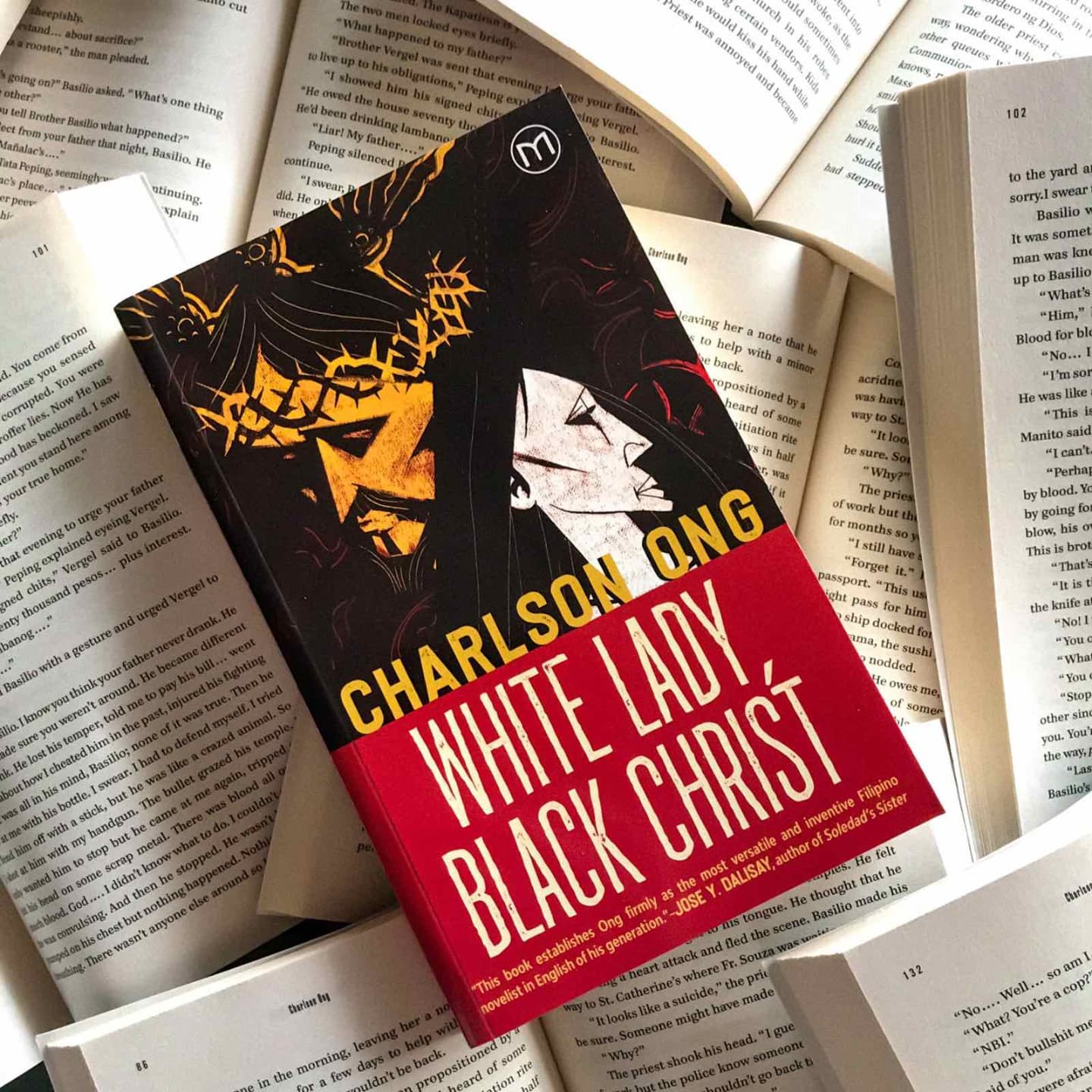
Since that takeover, Milflores has already come out with an impressive list of titles that herald a new blooming for both the company and Philippine literary publishing as a whole. Against all the odds thrown her way by the pandemic, the tenacious Drea managed to secure publishing rights from top-drawer Filipino authors such as Charlson Ong, whose wild and wacky novel White Lady, Black Christ became Milflores’ flagship offering in May 2021. As Charlson’s agent, Drea had already sold an earlier novel of his to a Malaysian publisher, so this was a natural follow-through.

This was followed by a new edition of Nick Joaquin’s Rizal in Saga. Drea had also sold NJ to Penguin Classics. “I wanted this book more than anything because, as Ambeth Ocampo said, the book went out of print the moment it was published because the government gave it out as a souvenir during the centennial of Rizal’s death in 1996, and was never reprinted.” Drea pulled out all the stops, and went for a hardcover edition. “If I was to deserve this book, there would be no cutting corners. I had to make people realize the value of this book. It had to be an object to be desired. And, as Ambeth told me, we both made sure it came out well because we both felt NJ deserved no less. When I die and go to book heaven, I want to hear Nick and Rizal tell me, I did well by them, haha!”

Simeon “Jun” Dumdum’s Why Keanu Reeves Is Lonely and Why the World Goes on as It Does, a small collection of poetry, was another risk worth taking. “Knowing I wouldn’t be raking in millions with this book, why did I want it? Because anyone who reads his poetry will be uplifted. It’s a book to treasure, really. Jun Dumdum was so game with whatever we did with it, even if we said we’d like the book to be neon pink and green. He was onboard! I like those kind of writers.”

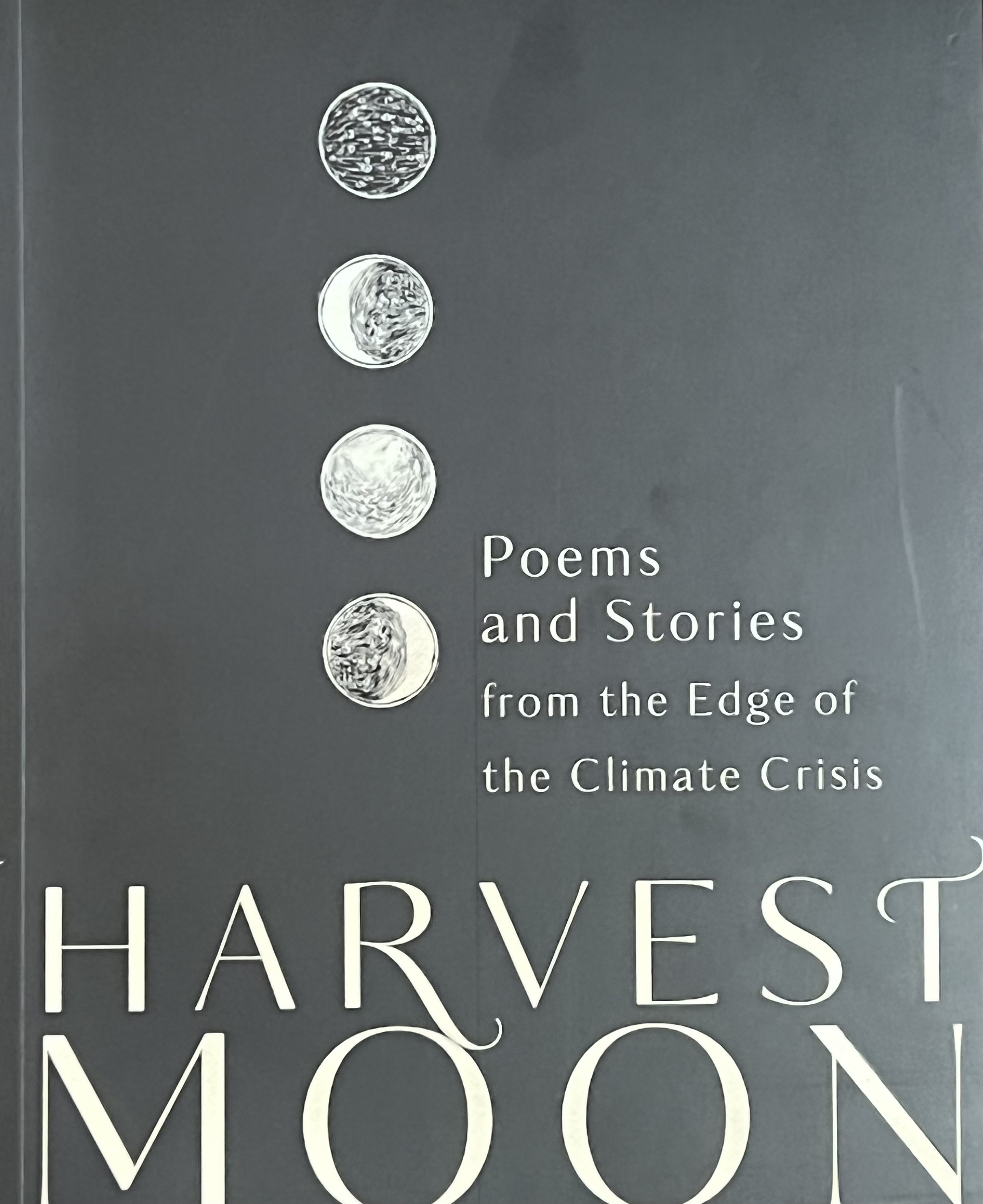
Writer and noted bookseller Padma Perez brought Milflores its biggest book yet, Harvest Moon: Poems and Stories from the Edge of the Climate Crisis, co-published with the Institute for Climate and Sustainable Cities (ICSC). Most books with a political agenda tend to be preachy and off-putting, but Harvest Moon is unique in its concept and execution. Twenty-four writers from around the world were given evocative photographs as prompts, with the further stipulation that they were to avoid buzz words and phrases such as “sustainability” and “climate change.” The result is visually and textually moving, investing the project with deep personal insight. This book is being sold at a deep discount, thanks to a subsidy from ICSC.

Drea Pasion-Flores has followed these up with other provocative projects, including many more in the pipeline. Robby Kwan Laurel’s Ongpin Stories is a timely reprint; former Sen. Rodolfo Biazon’s biography by Eric Ramos is a gripping narrative of a man who rose from doing other people’s laundry and selling in the market to become a general and senator, and one of the heroes of EDSA 1; David Guerrero’s The Crap Ideas Book is an inspirational book on creativity; the bedridden Nick Carbo’s new book of poems, Epithalamion, is, says Drea, his “shot at immortality.”

Milflores also has something lined up for younger readers: Kat Martin’s debut novel At Home with Crazy is the story of a 14-year-old girl dealing with the stress of living with a mother with a mental illness. Internist-oncologist William Liangco’s Even Ducks Get Liver Cancer and Other Essays is a hilarious romp through the travails of med school in a charity hospital. Drea will also publish two graphic nonfiction books by the feminist Swedish graphic illustrator Liv Stromquist and a cookbook by artist and cancer-fighter Robert Alejandro.

“I have big dreams for Milflores,” says Drea. “I want to try to bring a Philippine company out there, not just here. I’m guessing it’s not going to be the next Coca-Cola Company. It’s going to take time and lots of good books, but I have no doubt I can get there—or somewhere close to it.” (More information at milflorespublishing.com)