Qwertyman No. 129: The Punishment Theory

Qwertyman for Monday, January 20, 2025

LOS ANGELES is burning as we speak, with raging fires consuming an area larger than the whole of San Francisco—or, in our terms, about seven times the size of Makati. I’m sure you’ve been just as horrified—and, let’s admit it, mesmerized—by the TV coverage showing huge swaths of what used to be thriving California communities crumbling in flames. 

Particularly compelling for onlookers is the awareness that many of those homes belong to Hollywood’s elite—people with millions of followers on social media but who, in their moments of personal distress (as in their divorces and run-ins with the law), often find it difficult to generate genuine sympathy. Not necessarily meaning to be unkind, pedestrians like us like to see the mighty (or their houses) falling; misery is a great democratizer. Even as the mansions of the rich go up in smoke, our first urge is to think that (a) they can always afford to build a new one, followed by (b) they’re just being punished for something they did wrong.

Indeed the “punishment theory” for the Great LA Fire has gained a lot of traction in social media, both within and outside the US. In Middle Eastern media, the fire was quickly seen as divine retribution for America’s support to Israel’s destruction of Gaza. As one Qatari journalist wrote, “The American aid squandered by the occupation [i.e., by Israel] in its Gaza war amounted to about $60 billion. The damage caused by the recent US fires has reached about $150 billion. Trump said a few days ago that he will bring hell upon the region, yet hell has arrived in the heart of the US, with hundreds of thousands of Americans displaced and thousands of homes and mansions lost. I trust in the vengeance and in the victory of the One and Only Almighty God.”

Not at all, said others—the fire had nothing to do with Israel but with Los Angeles, indeed California, itself. Again invoking the Almighty, Christian evangelicals rushed to proclaim the disaster “God’s punishment” for liberal licentiousness and its adherence to the false religion of “wokeness.” For being the land of hippies, Democrats, legalized marijuana, and Hollywood, California was now being chastised by an angry God. (Don’t believe it? Check Genesis 19:24-25Amos 4:6-11—sayeth the FB and Reddit faithful. I myself suspect that if God was fair and a keen follower of American politics, he would’ve swept Mar-a-Lago away in a tsunami or a hurricane. But then I believe in an indifferent God who doesn’t take sides in wars or football games.)

Whatever, there seems to be a palpable compulsion here to go and punish the wicked, who have only themselves to blame for their calamities. Never mind that the fire has ravaged both Democrats and Republicans, blacks and whites, Christians and Muslims, Asians and Europeans, rich and poor. To those outside looking in, it’s the “other” whose tragedy we celebrate, with the innocents as collateral damage.

The word often trotted out in these situations is that old German standby, “Schadenfreude,” meaning the delight we take in the misfortunes of others. It’s all over social media when you read about the LA fires, almost to the point of gleefulness over a kind of divine justice befalling the deserving (most notably, that of a fellow named Keith Wasserman—an Elon Musk fan and Cybertruck owner who had railed against paying higher taxes, and was now begging for private firemen to save his home). 

Of course, there’s nothing like crisis to bring out both the best and the worst in people, from heroes to heels. Harder to read and more difficult to assess than these extremes is the slow and steady burn—rather than the raging inferno—in our societies.

All this talk of retribution leads me to an odd and totally unscientific theory about people. I wonder if, in fact, there’s a more proactive form of Schadenfreude that goes well beyond a smug snicker at the missteps of the perceived elite to an active courtship of their downfall.

I’m speaking not as a political scientist or sociologist, neither of which I am, but as a sometime playwright who likes to look into the darkest and strangest of human motivations. That’s normally the job of psychologists, for whom I have a healthy respect, but if psychologists could put all their patients together in a room and find a way to make sense of their nightlong chatter, then we playwrights and fictionists would be out of business.

Here’s how it goes: 

We get bad laws like the pork-laden GAA because we elect bad lawmakers. And we elect bad lawmakers because we fancy that voting for people we think we know (like entertainers and dynasts) makes us matter. With the vote being the only utterance left to the voiceless citizen, choosing the familiar becomes an act of assertion, of participation in national affairs. “He may be a lousy leader, but I put him there.” Call it the revenge of the bobotante, a term we Pinoys coined for supposedly ignorant or forgetful voters. My theory is, they’re more cunning and deliberate than we think.

Many MAGA voters didn’t so much vote for Trump the man as for the grievances they bore that he had the smarts to amplify and articulate. A convicted felon, habitual liar, bully, and egomaniac, Trump was after all the very antithesis of the righteous and virtuous leadership that evangelicals especially like to uphold (not that they don’t have their own crooks and pervs in their uppermost echelons). If they were true to themselves, even his most ardent supporters would have acknowledged—and looked past—his monstrously obvious character flaws.

They voted for him nonetheless, because—on top of the price of gas and groceries—he embraced and legitimized their consternation and disgust with a world gone far beyond their comfort zone, peopled by neighbors who don’t speak English, who have sex with the same pronouns, who kill their babies, and who run races against runners with different genitals (and go to their bathrooms). How could Donald J. Trump be worse than these? 

Today DJT takes his oath as America’s 47th, as Los Angeles continues to burn. I wonder who is being punished for what.
Penman No. 261: High and Low in La La Land

IMG_2365

Penman for Monday, July 24, 2017


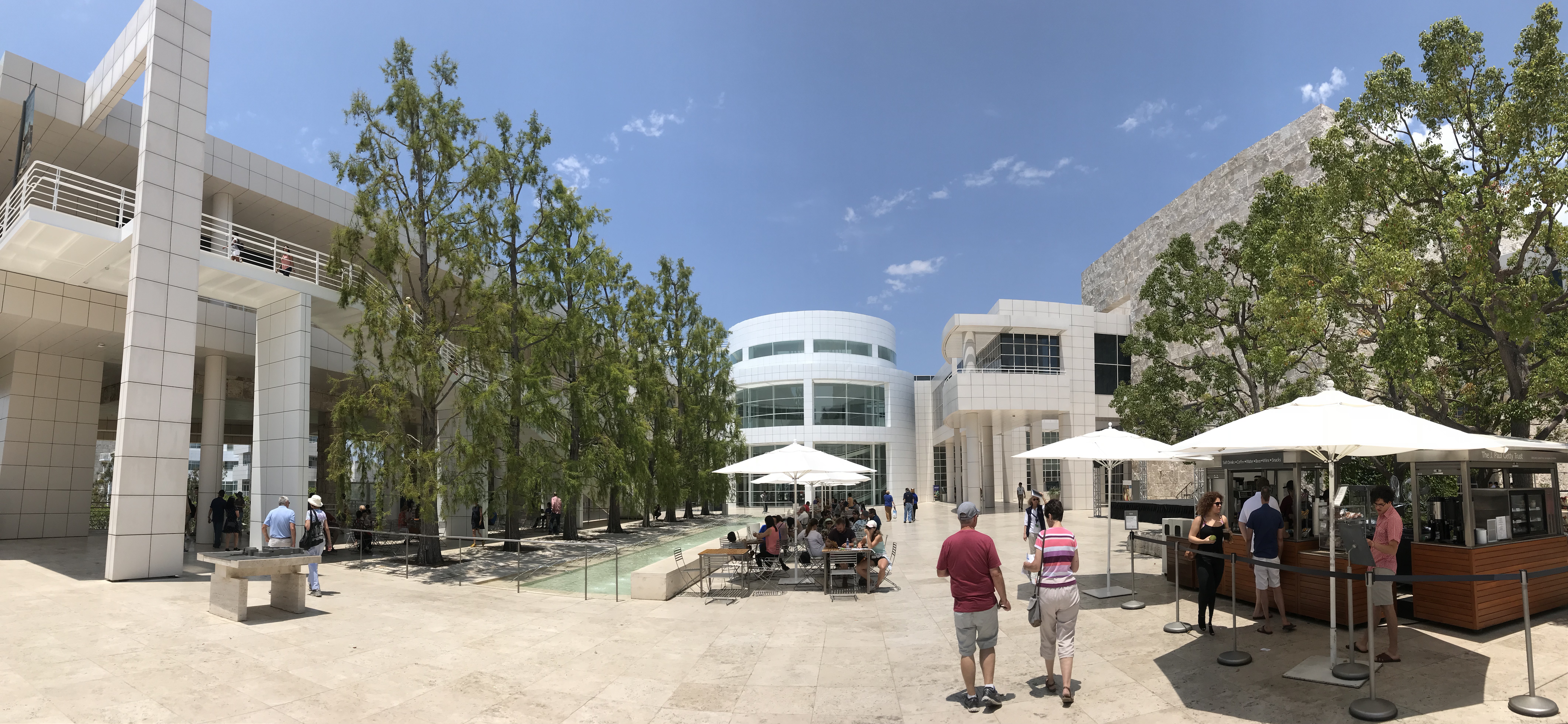
BENG AND I have been fortunate to have visited many of the world’s major art museums—the Louvre, the Prado, the Met, the Tate, and the Art Institute of Chicago, among others—so I was glad for the chance to visit another great one, the Getty, in Los Angeles last week. we were on our way to visit our daughter Demi in San Diego, but decided to stop over in LA for a few days for Beng to meet up with old schoolmates and for me to finally take a longer look at La La Land. In all these years that I’ve been going to the US and passing through LAX, I’d never actually stopped in LA long enough to do the tourist thing and look up at the HOLLYWOOD sign or march down the Walk of Fame near the TCL Chinese Theater.

So when the chance presented itself through Beng’s friend Rose, we dropped off our bags at Rose’s place in West Covina and rode out to do some sightseeing—but first, of the highbrow kind. The Getty and the newer Broad Museum have been on my to-do list, but we had time this time for just the Getty—and I would quickly realize that “just the Getty” was the silliest thing to say.

IMG_2382.jpg

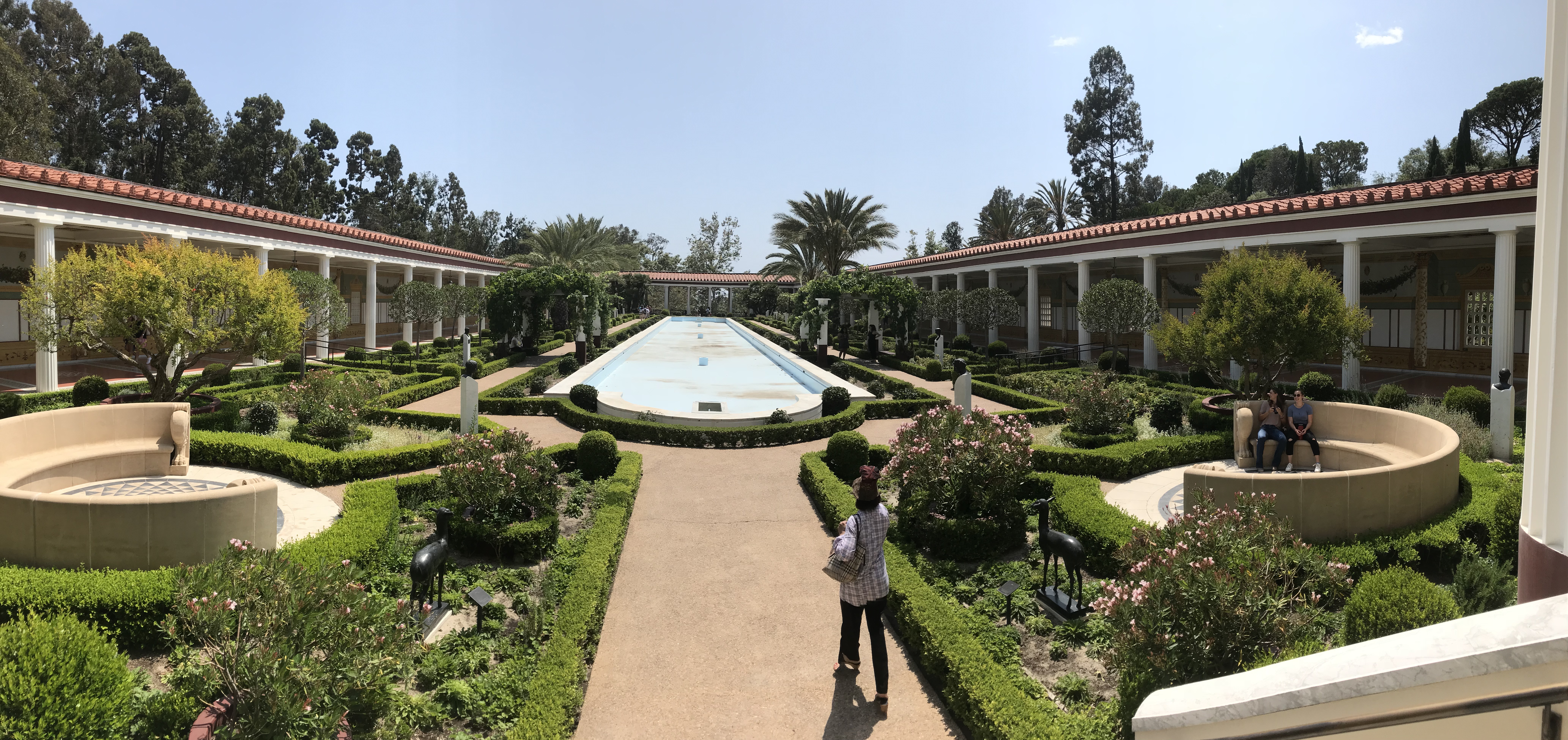
“The J. Paul Getty Museum” is actually two places in LA all at once—the Getty Center, a complex on a hilltop in the Brentwood area, and the Getty Villa in Pacific Palisades, which houses the Getty’s Greek, Roman, and Etruscan collections.

images.jpeg

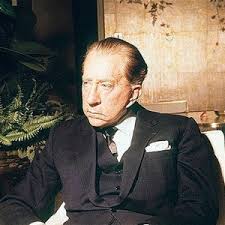
But before we go any further, a word on the benefactor of these palaces of art, Jean Paul Getty (1892-1976), once the world’s richest man, thanks to his daring and foresight in buying a 60-year lease on Saudi oil. Despite his fabulous wealth, he was notoriously stingy, reportedly begrudging his fifth wife the medical expenses for their son who later died, and installing a pay phone at his English villa. When his grandson and namesake JP III was kidnapped in 1973, he dickered and paid only as much ransom as could be tax-deductible, and gave the rest as a loan to his son.

How such miserly men join the ranks of the world’s greatest philanthropists will remain a mystery for psychologists to plumb, but I’ll take it as a form of restitution. Getty had the villa, which fronts his home, built in the early 1970s to house his overflowing collection, but ironically he never saw it, dying in England. The Center, about a 20-minute drive down the beach and reachable by a funicular tram, opened in 1997. Remarkably, entrance to both venues is free; you just have to pay for the parking.

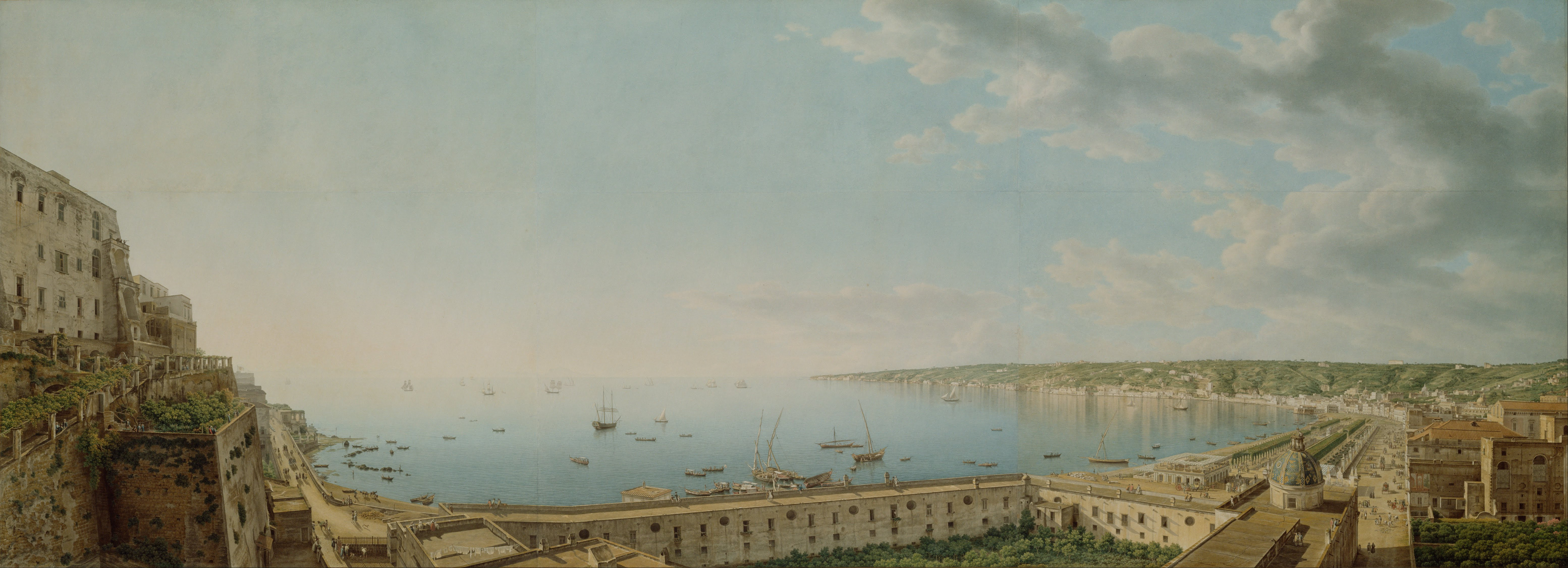
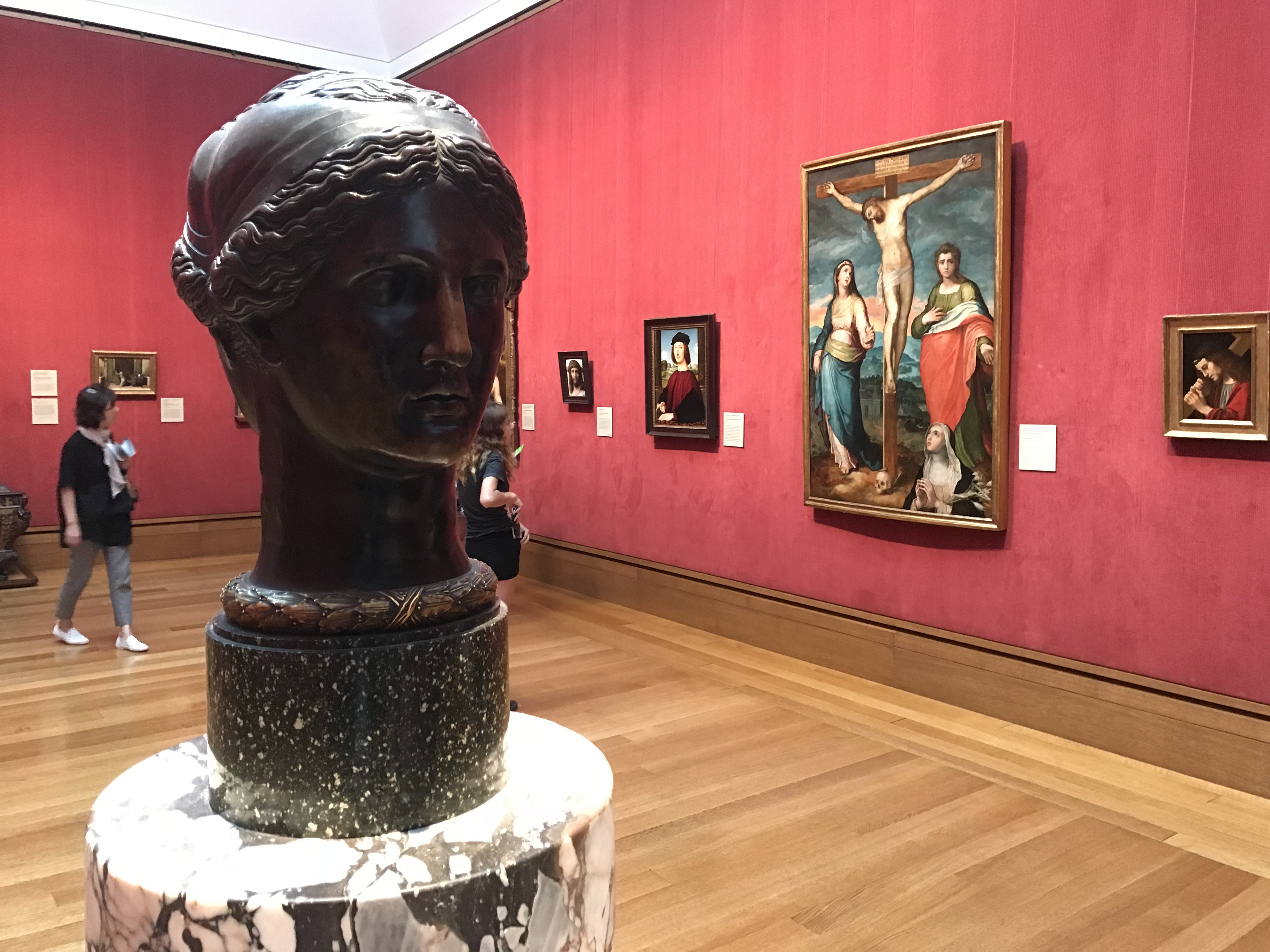
While I prefer modern art—from the utter simplicity of a fish by Brancusi or the melancholy of Hopper’s “Nighthawks”—I never fail to be awed and amazed by the workmanship and luminosity of the earlier masters. The Getty Center’s exhibits of Renaissance and Neoclassical art did not fail to impress. Most stunning of all for me was the work of an artist I’d never even heard of—Giovanni Battista Lusieri (1755-1821), whose A View of the Bay of Naples, Looking Southwest from the Pizzofalcone towards Capo di Posilippo, a monumental landscape with an equally kilometric name, displays an uncanny awareness of both the largeness and the smallness of things. True to her art-restorer self, Beng came to within half an inch of many masterpieces, scrutinizing the restorer’s technique, until the guard had to shoo her away.

giovanni_battista_lusieri_28italian_-_a_view_of_the_bay_of_naples2c_looking_southwest_from_the_pizzofalcone_toward_capo_di_posilippo_-_google_art_project

The villa, on the other hand, was as much to be visited as an artwork in itself as the pieces it contained. I was mesmerized by the beauty and delicacy of Roman glass, and by the almost contemporary pixilation of the mosaics, but like Mt. Vesuvius towering over Herculaneum—the villa’s inspiration—Getty’s shadow hovered over everything. Not surprisingly, he’s buried somewhere on the premises.

IMG_2388.jpg

We left LA for San Diego the next day, but not before indulging my small wish to cruise down Hollywood Boulevard for an encounter with the stars—at least those at one’s feet. While we never got to meet the likes of Gal Gadot or Emma Stone (not even Vin Diesel or Dwayne Johnson), we did spot several Spider-Men and lesser icons strutting on the street, ever ready for the next selfie. I had the feeling that I was going to meet a galaxy of these superheroes in San Diego, where Comic-con was due to open in a few days. (And with any luck I hope to be able to report on and from that event next week, as I did last year.)

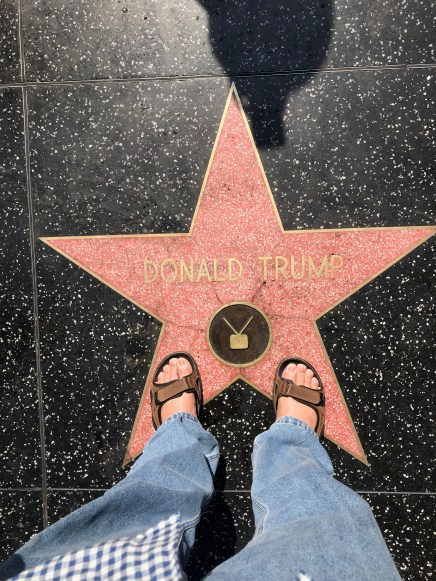
 My readers will understand if I admit that, back in Hollywood, I planted my feet on the star of a reality-TV host named Donald Trump; it was, after all, a sidewalk, with all the stars meant to be stepped on—some, perhaps, more so than others.

IMG_2436.jpg

(Photo of J. Paul Getty from Celebrity Net Worth; Lusieri painting from Wikimedia.)


Penman No. 209: Coming: An American Museum of Philippine Art

OnglaoStudy1.jpg

Penman for Monday, July 25, 2016


AS YOU read this, I’ll be winging home with my wife Beng from California where we’ve spent the past two weeks engaged in a pioneering project that should bring the best of Philippine art to a broader American audience, if ongoing plans work out over the next few years.

Have you heard of the American Museum of Philippine Art? Probably not, since it’s still something of a pipe dream, but some people on both sides of the Pacific are blowing very hard on their pipes to make it happen. Those people include businessman Raffy Benitez, president of the Quezon City-based Erehwon Arts Center, and University of the Philippines professor and art expert Dr. Reuben Cañete, who developed the idea late last year after Erehwon’s successful involvement in a binational mural project at Chicago’s Field Museum sponsored by the John D. and Catherine T. MacArthur Foundation through Dr. Almira Astudillo-Gilles, a Chicago based Fil-Am writer and cultural advocate.

I reported on that project in this column last November 25, noting the warm response received by the participating Filipino and Filipino-American artists for their works—two murals, one at Erehwon and another at the Field—depicting the flows of Philippine culture and history from pre-Hispanic times to the present.

That positive experience encouraged Raffy and Reuben to conceive of a bigger and more enduring project that would bring Philippine art even closer to Americans—not just the huge and broadly dispersed Filipino community in the US, but the American public at large. Raffy and Reuben noted that the Mexicans and the Chinese, among other immigrant groups in America, both had their art museums, but that Filipinos—among the largest and fastest-growing minorities in America—did not.

Reuben recalled the long tradition of Filipino artists going over to the US to study and to work—such as Guillermo Tolentino, Victorio Edades, and Alfonso de Ossorio, among others—and observed that while strong cultural ties remained between the two countries, the connection was overwhelmingly one-way, with Philippine art (and music and literature, for that matter) being little known and appreciated in the US.

“In this age of globalization, art is now a global commodity that is exhibited and collected by various international venues, such as Art Basel Miami. Philippine Art, both in its historical as well as contemporary manifestations, must now be aggressively promoted in the United States, which is a major area of collection and promotion of global art,” Dr. Cañete would say in a concept paper on AMPA.

Karlota I. Contreras-Koterbay, a prizewinning Fil-Am sculptor and Director of the Slocumb Galleries at East Tennessee State University, agrees, writing that “There is a rich and dynamic art practice by Filipino-Americans in the US. However, there is a huge discrepancy in the visibility and recognition with regards to the idea and form of ‘Philippine Art’.

“The Philippines is the second highest Asian country whose citizens migrate to the US. The Filipinos have a long, complex history of immigration and residency in America, yet ‘Philippine Art’ is not as accessible nor recognizable in popular culture nor in the global art world. This statement does not claim that there is lack of talent nor creativity; on the contrary, there are thriving communities of artists, art groups and cultural workers who are making a difference in their respective locales, as well as receiving recognitions for their work in the field of arts.”

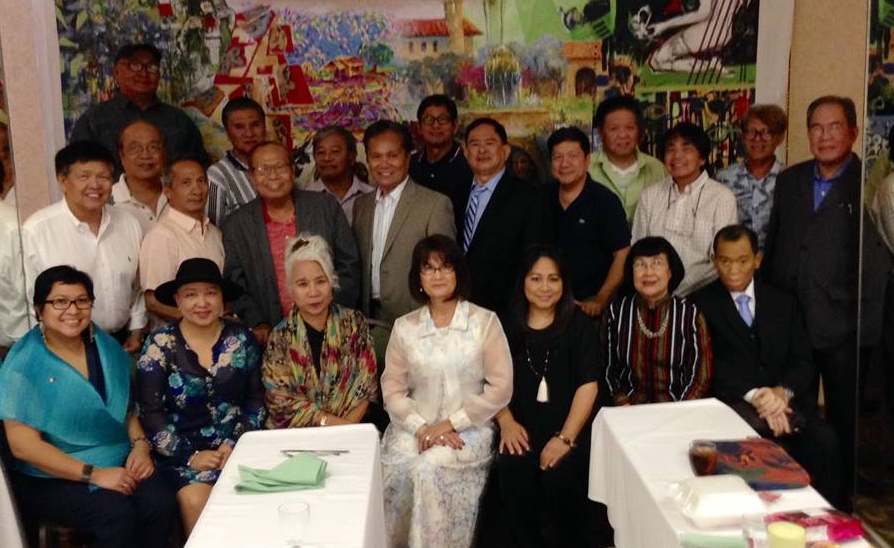
To take the first steps toward turning vision into reality, Raffy, Reuben, Beng, and I flew to LA to meet up with some prominent Filipino-American community leaders and artists to set up a foundation that would start the spadework on the museum. The American Museum of Philippine Art Foundation, Inc. (AMPAFI) was formally launched July 12 at the Holiday Inn in Diamond Bar, California, in a day-long meeting attended by a couple of dozen participants from all over the US.

Raffy Benitez will serve as chairman and president, and Reuben and I are joining him on the board, but we know that this project can’t be run from Manila, so the directors will also include art curator Karlota Contreras-Koterbay, physician Jose Botor Regullano, and engineer Ricardo Real Almonte. The officers include Fil-Am standouts Rafael Maniago, Art Zamora, Sal Budz Floriano, Rosie Vinluan Muñoz, Connie Buenaventura, Daniel Gutierrez Bassig, Dennis Martinez, Bobby Halili, Jess Española, Jun Sison, Ninette Tenza Umali, Ernan Ebreo, and Bernadette Escalona-Cooper. During the launch, a group of Fil-Am Artists headed by Paeng Maniago also rolled out a mural that they had executed to celebrate the occasion.

AMPAFIFound.jpg

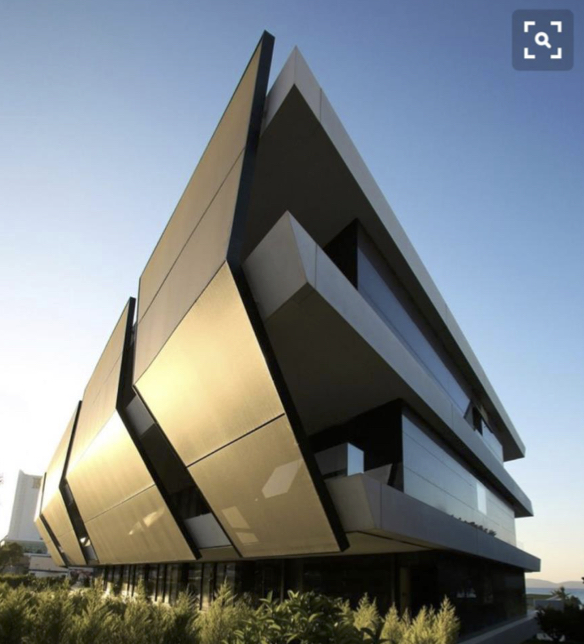
We all realize that this project will take many years, enormous resources, and tremendous effort and optimism to realize. (Being Filipinos, we expect a lot of naysaying, and I’ve been Raffy’s chief buzzkiller whenever I think someone needs to pull his feet back to earth, but I have to admire the man’s guts and what he’s done at Erehwon, which you can preview here: http://erehwonartfoundation.org.) The museum as Raffy and Reuben envisage it is a mini-CCP, with enough spaces for exhibitions and performances (and even classes in Pinoy cooking), and the renowned architect Conrado Onglao was motivated and generous enough to contribute a prospective design for the building. That may be years down the road, but in the meanwhile, AMPAFI is taking early and doable steps toward building a countrywide arts community—a virtual museum, as it were—in cooperation with other groups such as Bernadette Escalona-Cooper’s Silicon Valley-based Global Artists’ Creative Collaboration for Empowerment (GACCE), whose leaders also attended the launch.

Karlota reports that “Our first two official projects are: ‘Nandito N Ako’ by 11 emerging Filipinx artists from the School of Art Institute of Chicago (SAIC) and possible community mural headed by NY-based artist Art Zamora with the Phil-Am organization and ETSU organized by Slocumb Galleries in the Northeast. This will be early October 2016 in time for Filipino Heritage Month. Also on the same month on the West Coast is the proposed Indie Film Showing in LA by special committee on fundraising head Ernan Ebreo. Both are curated programming for awareness campaign and fundraising efforts.”

(Wait a minute, did I read “Filipinx?” Indeed I did—and this trip was the first time I encountered the term myself, which seems to be gaining currency among young Fil-Ams, who define “Filipinx”—which I’ve heard pronounced as “Filipinics”—as an effort “to make the community more inclusive—we changed the O in ‘Filipino’ to an X to remain gender-neutral and recognize all genders that exist in the Filipinx community. There’s apparently been a lot of debate on this issue, which we’ll deal with some other time.)

The AMPA website is up at http://www.ampafi.org. Contributions and donations are, of course, very welcome, but more than that, we need goodwill, prayers, and strength of spirit to see this vision through. Mabuhay at salamat sa lahat!

AMPALogo2.jpg