Qwertyman No. 176: Remembering CAB (1929-2025)

Qwertyman for Monday, December 15, 2025

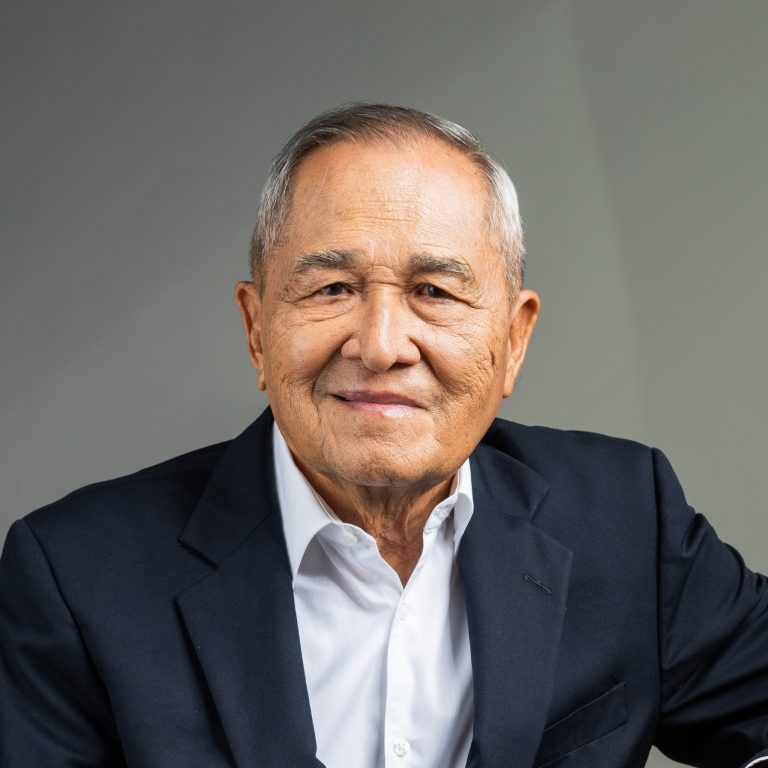
THE DEATH last week at the age of 95 of Cesar Augusto Buenaventura—known to his friends and associates as CAB—marked the passing of yet another member of that golden generation of Filipinos who lived through the Second World War and almost literally built and shaped Philippine industry and society in its aftermath. An engineer by training, CAB was also a management pioneer, a business leader, a civil libertarian, and a valued adviser to presidents. (As a former member of the UP Board of Regents, CAB would often text me for news about goings-on in Diliman, concerned as ever with the state of Philippine higher education and of UP’s role in it.)

I had the privilege of writing a yet-unpublished biography of the Buenaventura siblings (Cesar was followed by social worker Elisa, lawyer Chito, and banker Paeng). And while Cesar chose to self-publish his own three-volume biography a few years ago (I Have a Story to Tell), the original draft has many interesting anecdotes worth sharing with young Filipinos who barely know their economic history. Let me pull up this except you can keep in mind the next time you gas up at a Shell station, visit the UP Chapel, or see a DMCI building.

As soon as he graduated from UP in 1950, Cesar started looking for a job, and almost immediately found one with a man who would become an important influence in his life and a titan in the Philippine construction industry, David M. Consunji. Right after the war, Consunji began building houses—a skill then in high demand in the war-ravaged city—competing on the principle of “price plus quality.” David also made sure that he got the best people and paid them the best wages. And so a strapping 21-year-old named Cesar Buenaventura, fresh out of college, strode into Consunji’s office and got his first job, as Consunji himself recounts:

“In 1951, I hired my very first engineer, Cesar Buenaventura. He was then a young civil engineering graduate from UP who was waiting for the results of the board exams he had just taken. It was my brother Raul, his classmate in UP, who told him to see me because I was starting my own construction company. I thought he was very capable so I hired Cesar. 

“Soon after, we started doing our own projects, and among Cesar’s first assignments were three houses we were building in Forbes Park. Forbes was not yet a posh village then; land there was selling at just P4.00 to P6.00 per square meter. After that, Cesar and I did some more houses. I made Cesar the cost engineer and field engineer for our various other projects. He also took care of the payroll, which amounted to P15,000 to P20,000 a week.

“It was in the Laguna College project that Cesar took on greater responsibilities. While we were doing the plans, Cesar said, ‘Don’t bother hiring a structural engineer, I’ll do it. I asked him if he was sure he could do it and he said ‘Yes.’ Every time I would see him, long after the building was finished, I would tell him that it was still standing intact, even after several earthquakes, without a single crack on a wall.

“Cesar was my very first assistant, and even then, I could see that he would go far. I wanted him to stay with us, but he decided to go to the United States for graduate studies in 1952.”

(Upon returning from Lehigh University with his MS in Civil Engineering), Cesar rejoined Consunji for some work on the UP Chapel, which had been designed by a young architect named Leandro Locsin. Locsin had impressed Fr. Delaney with a small church he had designed in Victorias, and now he took on what would become one of his signature pieces, the UP Chapel. Fred Juinio served as structural engineer, with Dave Consunji as the builder. 

But armed with his Lehigh degree and eager to make full use of his new learning, Cesar could now consider more options. And the offers came. UP, for one, wanted him to teach, and was willing to pay him P400 a month. But a big petroleum company offered him P300 more, with his salary to be raised upon completing probation as an executive trainee. In 1956, Cesar went with Shell—a decision that would define the rest of his professional life.

In 1975, Cesar Buenaventura achieved what no other Filipino had up to that point by becoming president of Shell Philippines and Chief Executive Officer of the Shell Group of Companies.

Cesar’s rise to the helmsmanship of Shell also got the attention of someone in great need of executive talent: Ferdinand E. Marcos, president of the Philippines and, at that time, the country’s martial-law ruler. With the global oil crisis still hurting the Philippines in the wake of the Arab-Israeli war, Marcos put up the Philippine National Oil Company to explore for oil and develop alternative energy sources, and was scouting for the right man to head it. His eye fell on Cesar, who had just stepped up to the Shell presidency; surely such a man had the skills and the vision to head the new PNOC. Marcos had Buenaventura called to Malacañang. 

While he may have been honored to be offered the position, Cesar remembered his father’s admonition against serving in government. He went to see Marcos in the Palace. Luckily, before Marcos could make his pitch and demand Cesar’s commitment, a phone call from the First Lady, who was in New York, interrupted the conversation. Cesar used that break to gather his wits and to come up with the argument that such a move to government would be premature, coming so soon after his appointment as the first Filipino head of a major multinational company. Cesar suggested that he could serve the country’s interests better if he were able to persuade Shell to search for oil in the Philippines—which they eventually did. Marcos did not press the point, and Cesar was spared.

Yet more of Cesar’s friends would join Marcos’s Cabinet: David Consunji, as Secretary and later Minister of Public Works, Transportation, and Communication, then by Dean Fred Juinio in the same post, followed much later by Totoy Dans, when the Cabinet post was divided into two departments—Public Works, and Transportation and Communications. Consunji labored mightily to fight corruption in that notoriously graft-ridden department, only to find himself unceremoniously removed for refusing to play along. Dans followed the same straight and narrow path when took on the job in 1979, but he would later be, in Cesar’s eyes, unjustly vilified for his association with Marcos, even if he hadn’t enriched himself. 

So instead of taking what could have been a personally and politically costly detour into the Marcos government, Cesar Buenaventura managed to stay on at his beloved Shell, in a position he would hold with distinction for the next 14 years. 

Qwertyman No. 174: Doing the Doable

Qwertyman for Monday, December 1, 2025

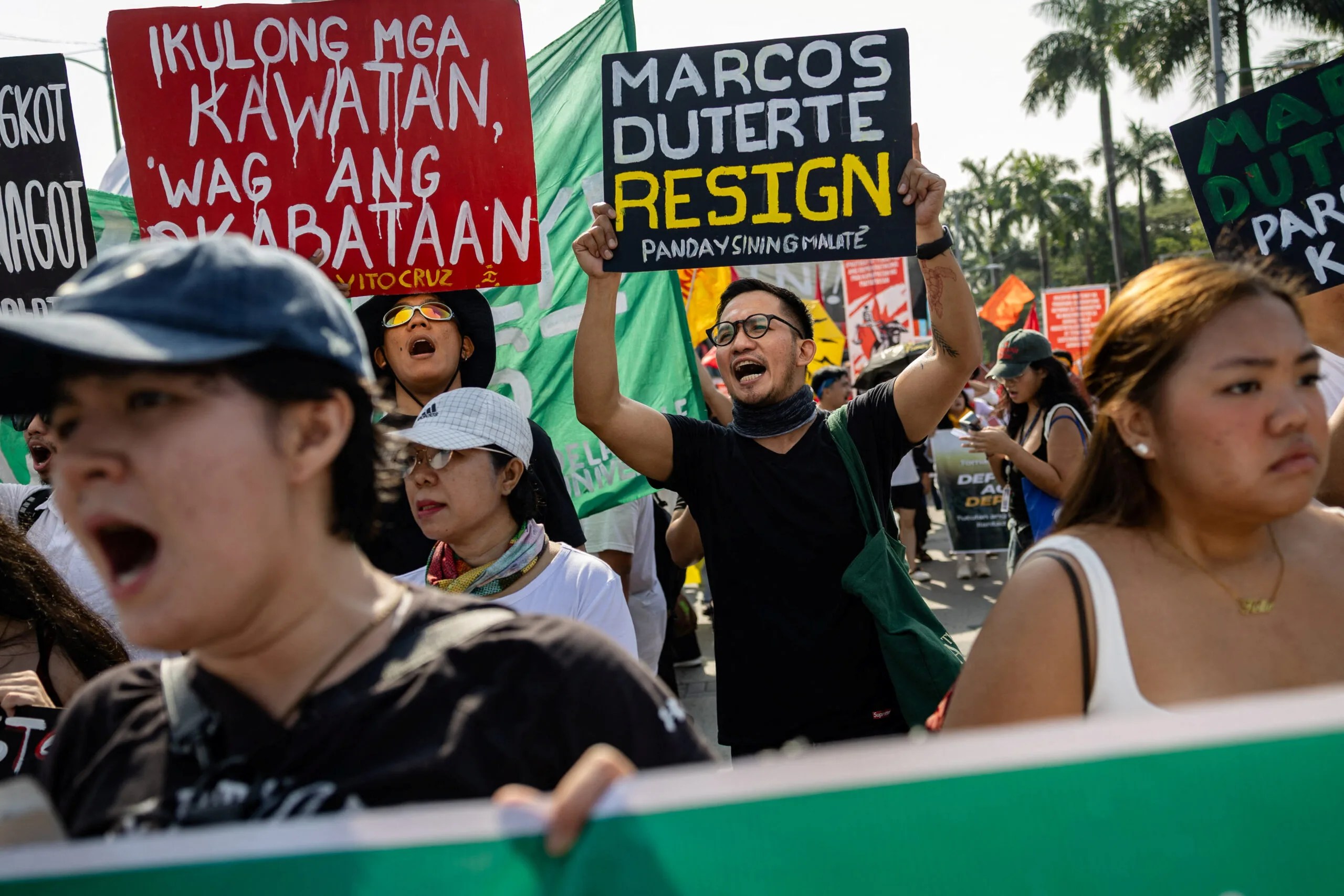
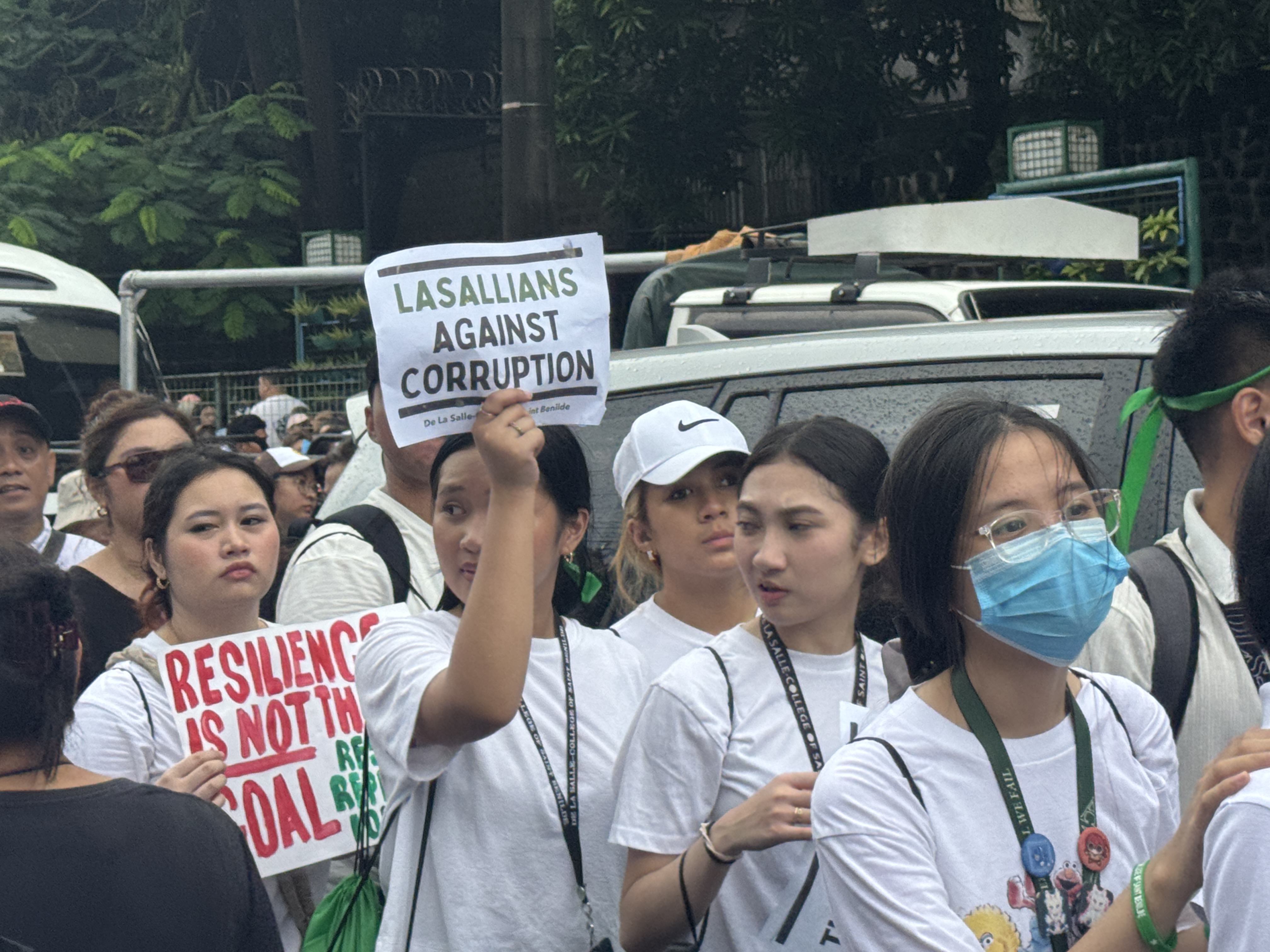
AS NOT a few placards in yesterday’s big anti-corruption march would have said, both President Bongbong Marcos and VP Sara Duterte should resign, along with everyone in public office implicated in the flood-control scandal and all the other shenanigans that have come to light over the past couple of months. 

That probably means half the government, but given the current public mood, the more the better, to give the nation a chance to rebuild itself on new foundations of moral rectitude and accountability. At least that’s the long view, supported by the Left among other parties who think that anything short of a national reset will simply paper over the problems and guarantee their comeback. 

It all sounds good, and it does make sense—except that, as we all know, it ain’t gonna happen. 

It’s about as realistic as the expectation that BBM will fall to his knees, own up to the Marcos billions, and ship all that money back to the Philippines on a FedEx plane for mass distribution, any more than VP Sara will admit to her father’s drug-fueled bloodlust, seek forgiveness of all the tokhang victims, and forsake her presidential ambitions. Let’s face it: the Marcos and Duterte dragons will be clawing at each other all the way to 2028. Meanwhile, what are we mere mortals supposed to do or to hope for? 

In the very least, we can ignore the DDS calls for BBM to step down and for Sara to take over, because there’s even less appetite for that than the Both-Resign demand. The Dutertes want to make hay of the moment, but the sun isn’t exactly shining on them. Despite their strong and well-funded social media efforts, the DDS camp seems pretty much in disarray, with Digong in jail, Sara in limbo until February (it tells me something that they approved the OVP’s 2026 budget in full—it’s for the office, not VP Sara, although she doesn’t seem to know the difference), Bato de la Rosa suddenly scarce, and their shot at a junta takeover badly misfiring. 

(The ICC’s predictable decision not to grant his interim release could in fact prove to be an ironic win. Digong at this point is useful only as emotional capital for Sara’s survival and triumph. His camp, I suspect, secretly wants him to stay in The Hague as a symbol of the Marcoses’ unforgivable perfidy. Bringing him back home will mean having to take care of a grumpy old man whose greatest ability—cursing—isn’t helping him much in his present situation; he was never a Leila de Lima, and certainly no Ninoy Aquino.)

All the players’ moves are interesting in this grand melodrama. I frankly can’t trust the Left, either, to show the way forward. Like a religion (did I hear someone say “Iglesia ni Cristo”?), the Left likes to flaunt its moral ascendancy—to “virtue-signal,” in today’s parlance—and its rock-solid grasp of the global and local situation from the Marxist standpoint. And yet it gets all tone-deaf and cross-eyed when it comes to picking its horses—ditching EDSA, but backing billionaire capitalist Manny Villar and then pseudo-nationalist and butcher Rodrigo Duterte for the presidency (should we even mention slaughtering comrades it deemed wayward in the Ahos campaign?). 

Interestingly, the INC also supported Duterte in 2016, and then BBM and Sara Duterte in 2022. While adopting some progressive liberals like Franklin Drilon, Risa Hontiveros, and more recently Bam Aquino and Kiko Pangilinan into its senatorial slate, it has also flexed its machinery behind Duterte surrogates Bong Go and Bato de la Rosa, as well as corruption-tainted Senators Joel Villanueva and Jinggoy Estrada. During its last mass rally last November 25 for “peace, transparency, and accountability,” however, it was careful to distance itself from recent calls for BBM’s resignation. In other words, the INC is the perfect straddler, the seguristathat makes sure it will survive and prosper under any administration, reportedly to secure key government appointments for its favored nominees.

That leaves us and our own wits, which—considering everyone’s else’s brain fog—might yet prove the most trustworthy.

In the realm of the doable, I want to see heads roll—as close to the top as the situation will allow. One way of looking at this, and strangely enough, is that the Filipino people aside, the party with the greatest stake in seeing this anti-corruption campaign through to the end (i.e., just short of the Palace) is PBBM himself. Having opened this Pandora’s box, he well knows that the only way he can keep his own head and hold sway over 2028 is to catch all those demons he released. I don’t know about you, but right now I’m desperate enough to let BBM finish his term in relative peace if he achieves nothing else than the herculean task of cleaning up the stables.

VP Sara’s impeachment trial should resume in February and will be a more efficient and definitive way to shut her out for good. But we have loads of senators, congressmen, department secretaries and undersecretaries, and lesser flunkies all caught up in this mess who should be held to account for their thievery. Hold the big bosses, the ultimate signatories, accountable, sure. But don’t let the second- and third-level enablers and functionaries off, because the message needs to be sent that complicity won’t pay—and that your sponsors will ditch you when things get too hot.

I want to see our courts work, overtime, to expedite the prosecution of these corruption cases. No pussyfooting, please, no Maguindanao massacre here. Let’s put a quick and decisive end to the kind of legalistic foolishness that lets a senator off the hook for a P30-million “private contribution,” with the judgment rendered by the Comelec commissioner who had previously served as that senator’s lawyer. How the heck can that be allowed to happen? What ethical universe are we in? The same goes for former Ombudsman Samuel Martires’ “forgetting” why he had kept secret his decision junking his predecessor’s carefully crafted case against Sen. Joel Villanueva. 

If the Comelec accepts Sen. Rodante Marcoleta’s ridiculous excuse that he kept millions of political donations off his report of campaign expenses because they were meant to be “secret,” then we should launch a million-people march not just against the likes of Marcoleta but also specifically against the Comelec to hound those charlatans out of office. That commissioner who couldn’t find the shame to recuse himself from his former client’s case should be impeached if he doesn’t resign.

I have no problem with people marching and screaming “Marcos, Duterte, resign!”, because we have billions of reasons to be upset with both. But I hope that doesn’t keep us from going after immediate and tangible if less-than-perfect results. Look at it this way—gut the body, and you’ve effectively chopped off the head.

(Photo from rappler.com)

Qwertyman No. 169: Chatting with Apo Lakay

Qwertyman for Monday, October 27, 2025

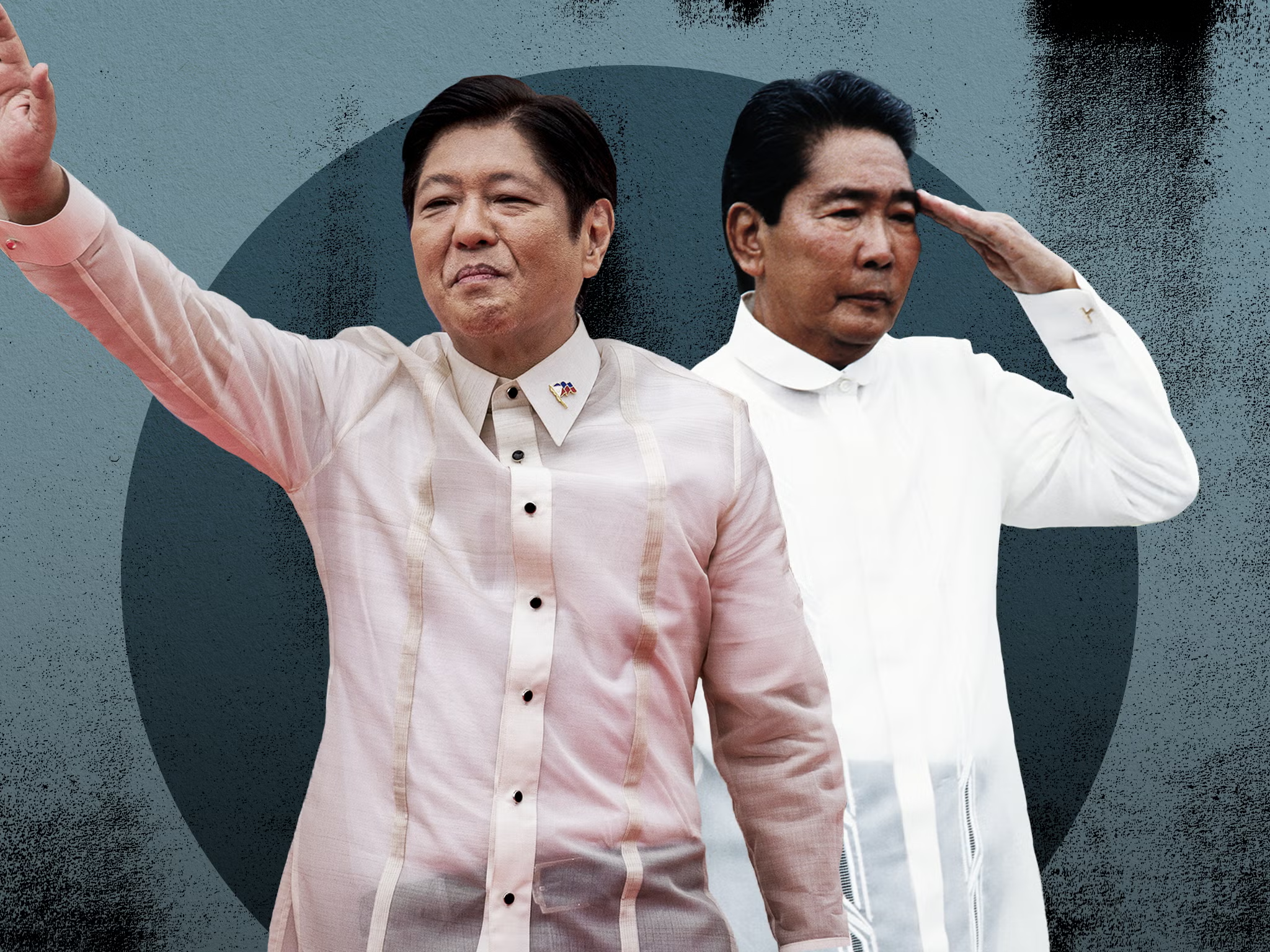
I’VE BEEN going out on a limb for the past few weeks, touting the possibility that President Bongbong Marcos—yes, the son of our martial-law dictator—might be considering doing the right thing and leaving behind his own legacy, one notably different from Apo Lakay’s. 

Comes now the news that his spokesperson Atty. Claire Castro—who can usually be counted on for ripostes that elevate the reasonableness of her boss—has been quoted as saying that BBM has been losing sleep conversing with his father (who, let’s not forget, passed on 36 years ago), presumably in search of some advice from the afterlife on contentious current events.

My first reaction was to wonder why their otherworldly tete-a-tete had to take so long, if father and son agreed on the same things. Could they possibly have been arguing? What about? Bank accounts? Sibling rivalry? Forks in the road? And if their encounters leave him sleepless, could BBM be that bothered by FM’s post-mortem perorations on statecraft and, well, craftiness?

This is where VP Sara Duterte enjoys the slight advantage, her father being at least alive and still capable of earthly conversation with Sara on such timely topics as “Your stepmother wants to sell the house in Davao” and “Now where did Pulong’s P51 billion in flood-control funds go?” The Hague may be almost 12,000 kilometers away from Manila, but flying there (on her own dime, she’s careful to insist) beats telepathy or telephony, and creates photo ops with the DDS faithful that nocturnal chit-chats with the departed can’t. (There’s a really nasty and cruel rumor going around, I have to note, that the VP actually wants PRRD to remain and rot away in the Netherlands until he expires—don’t ask me how—just before the May 2028 election, gifting her, like Cory Aquino did on Noynoy’s behalf in 2010, with a wave of sympathy votes. I don’t know if I should applaud or deplore the Pinoy’s political imagination, but there it is.)

Here in Germany, where I’ve just attended the 77th Frankfurt Book Fair where the Philippines was this year’s Guest of Honor and therefore the exotic insect under the microscope, the one inevitable question raised in my many reading and speaking events was “What do you think of the current political situation in your country, and of the fact that another Marcos is now leading it?”

It’s a question I’ve thought about a lot, with or without Frankfurt, and you’ve seen some elements of my answer to it right here in Qwertyman. Pitching these ideas to a foreign audience is a bit more challenging because you don’t have the time to present and explain the details of the context, and you certainly don’t want to lie. 

I’m not the Philippine ambassador, I said to them, so I can and will be frank, but if I seem to equivocate then it’s because the situation isn’t as simple as it looks. Yes, BBM is the dictator’s son and yes, I went to prison as a teenager for seven months—many stayed in far longer—under martial law. Yes, I campaigned for his presidential opponent, Leni Robredo, whom I still believe would have made a better president—and yet could.

But very recently, I noted, PBBM has been making moves that have surprised many, for their effects if not their intentions. Whatever he was thinking at the time, his public disclosure of the bigtime contractors likely tied to multibillion-peso scams that some politicians aided and profited from has shaken the country to its core. The public outrage and demand for justice has been so loud and widespread that it has gone far beyond infrastructure into a searing re-examination of corruption in every aspect and at every level of our government and society.

I brought in the Duterte factor, the continuing threat from his own Vice President and former ally, for whom BBM’s surrender of her father to the International Criminal Court could only be unforgivable. The flood-control scandal and its connection with the Dutertistas was, therefore, a bomb set off by BBM for his own political and personal survival, but one with many unintended consequences and casualties, including some of Marcos’ own soldiers, and still possibly he himself, should the stain reach into the Palace as it has been threatening to (with gleeful encouragement from the DDS).

I don’t know how well the Germans understood or accepted my reading—heck, I’m sure many Filipinos don’t—but when you put over a hundred Filipino creative writers and journalists together for a week, some points of consensus are bound to emerge over the breakfasts and endless cups of coffee. Among them: (1) 2028 can’t come soon enough; (2) BBM should double down on the kind of confidence-building measures that will shore up the rest of his presidency, like pursuing the anti-corruption campaign to the fullest, no matter what; (3) only an alliance between idealist (but sufficiently grounded) moderates and BBM’s best people (not to forget his resources) can hope to stop a Duterte restoration.

I’d tell that to my dad, who died almost 30 years ago and who, to be honest and as close as we were, I haven’t seen much of in my dreams. But like BBM and his papa, we’d likely be up all night. Having passed away while the country was still in the capable hands of “Steady Eddie,” when it seemed that Ramos’ vision of “Philippines 2000” was going to deliver us into a new millennium of political stability and economic growth, Tatay would probably crawl right back into his grave were he to be given a day off to witness what we’ve done since.

(Image from The Independentˆ)

Qwertyman No. 167: Stranger Than Fiction

Qwertyman for Monday, October 13, 2025

IF SEN. Alan Peter Cayetano and his cohorts in the Senate minority wanted to rile the people even more, they couldn’t have done it better than by having Cayetano challenge Sen. Tito Sotto for the Senate presidency, at the same time that he was floating his supposedly heroic idea of having all elective officials resign because the public was fed up with them.

He had to know that that was exactly the kind of antic that made people throw up at the mention of certain names—a dubious pantheon of the corrupt, the bought, and the compromised. But he did it anyway, employing his imagination to yank public attention away from the burning issue of the hour—the massive flood control scam and its ties to many lawmakers—in the direction of Mars, and the possibility of honest (never mind intelligent) politicians inhabiting that planet.

Why he did that is anyone’s guess, but mine would be that anything to stop the momentum building up at the Blue Ribbon Committee under Sen. Ping Lacson was good for the minority, many of whom were increasingly being threatened by the exposure. If Cayetano had resigned first (and forthwith!) to provide proof positive of his noble intentions, the distraction would have been worth our time, but of course that was never part of the plan. 

The plot to unseat Sotto—brazen and shameless in its purpose—was more credible and worrisome. It fizzled out but remains potent, simmering just beneath the surface. Lacson’s resignation as BRC chair was probably a concession to forestall Sotto’s, but the situation in the Senate is so volatile that it can’t take much for the leadership to switch while we’re brushing our teeth. 

All we seem to be waiting for is that point of utter desperation when the beleaguered, fighting for their political lives and possibly even their personal freedom, ignore all considerations of decency and public sensitivity, weasel their way back into the majority, and deliver the Senate to its most famous watcher from the gallery: Vice President Sara Duterte, whose fate still hangs in the balance of an impeachment vote that has yet to happen.

That vote and its implications, let’s all remember, was what triggered all of this. Premised on rampant corruption within her office, her impeachment, had it passed the Senate, would have barred her from running for the presidency in 2028 (and, for PBBM, from the resurgent Dutertes wreaking retribution on their erstwhile allies). But this isn’t really just about Sara—it’s about all those other trapos who’ve cast their lot with her, whose fortunes depend on her absolution in the Senate and ascension to the Palace. 

Former Senate President Chiz Escudero, who dragged his and the Senate’s feet in that process, has now dropped all pretensions to impartiality, calling the impeachment “unconstitutional” in a speech that would only have pleased the Vice President, a title he himself might be auditioning for. He did his part well, with what many saw to be the ill-considered assistance of the Supreme Court, to freeze the impeachment complaint. 

And there that matter sat, until PBBM—whether unwittingly or presciently—(and here we’ll go fast and loose with the idioms) shook the tree, opened a can of worms, threw mud at the wall, and unleashed the kraken by exposing the trillion-peso infrastructure scandal now rocking the country. He might have done this to suggest a link between the alleged corruption in the VP’s office and even larger acts of plunder emanating from her father’s time in Malacañang, a deft political move. But reality overtook his imagination, and now the issue’s grown far beyond that into his own administration, his own responsibilities, his own accountability. 

That said, and however we may have felt about him, PBBM has done us all a service by drawing the curtain on the systemic rot in our society and governance, for which he, Sara, and their cohorts have all been culpable, directly or administratively. By doing so he rendered himself vulnerable as well, and the VP’s forces are now zeroing in on that vulnerability to deflect attention from their own predicament. 

Thus the barrage of “Marcos resign!” calls (as opposed to the Left’s “Marcos and Duterte resign!”), which has become shorthand for BBM out, Sara in. (It was on that key point that the rumored September 21 coup plot reportedly first stumbled, with the plotters balking at the alternative.) It also explains the slew of professionally produced reels on Facebook and other social media calling for the military to depose the President—ironically, something so openly seditious that Digong Duterte’s NTF-ELCAC would have instantly pounced on them, but which BBM and his crew seem to be shrugging off, at least for now. 

What tempts our imagination in this fraught situation—where public trust in our politicians and even in the courts is hitting critical lows, and where no clear and short path to change seems visible until 2028—is the possibility of military intervention, whether by martial law or on its own volition. I’ve been assured by friends who know better that this military of ours today is much more professional in its mindset than its predecessors, and that it will abide by the Constitution. I sincerely hope they’re right, because if there’s anything that all the parties in this mess can probably agree on, it’s that boots in the streets won’t bring us any closer to a functioning democracy. 

I’m reminded in this instance of one of my favorite literary quotations, from Mark Twain who said (in so many words) that “Of course fact is stranger than fiction. Fiction, after all, has to make sense.” If you had told me three years ago that we are now relying on a dictator’s son to save us from an even worse alternative, and in the process—if almost by accident—expose corruption so foul that we are back on EDSA demanding not regime change but the rule of law, I would have called you a lousy fictionist with a runaway imagination. Yet here we are.

Qwertyman No. 164: The Great Pinoy Flash Mob

Qwertyman for Monday, September 22, 2025

AT THE Manila International Book Fair last week, a young man approached me to have his copy of my new book Windows on Writing signed, and took the opportunity to ask if there was hope for this country, as many of his fellow millennials didn’t seem to think so.

I kept my smile on, but was deeply saddened by the question. I wasn’t surprised by it, because you hear it every day, everywhere, from Pinoys young and old alike. The dramatic and sickening revelations involving massive corruption in our infrastructure programs only seem to have reinforced that sense of despair over our future.

One regular reader who must be about my age also wrote me to ask, “Where is the outrage of the youth over the corruption scandals now plaguing the country? Why are they not marching in the streets like you did at Mendiola and EDSA?”

Before responding to him—and this column is that response—I had to ask myself, is that so? Indeed I get a lot of memes about corruption in my Facebook and Viber feeds, but these come from people either my age or with the same liberal-centrist disposition. Beyond these, apart from predictable pickets by the militant Left, I haven’t come across the kind of sustained, youth-driven rebellion that challenged if not toppled repressive regimes in Hong Kong, Korea, the Arab world, and now Nepal, among other places. 

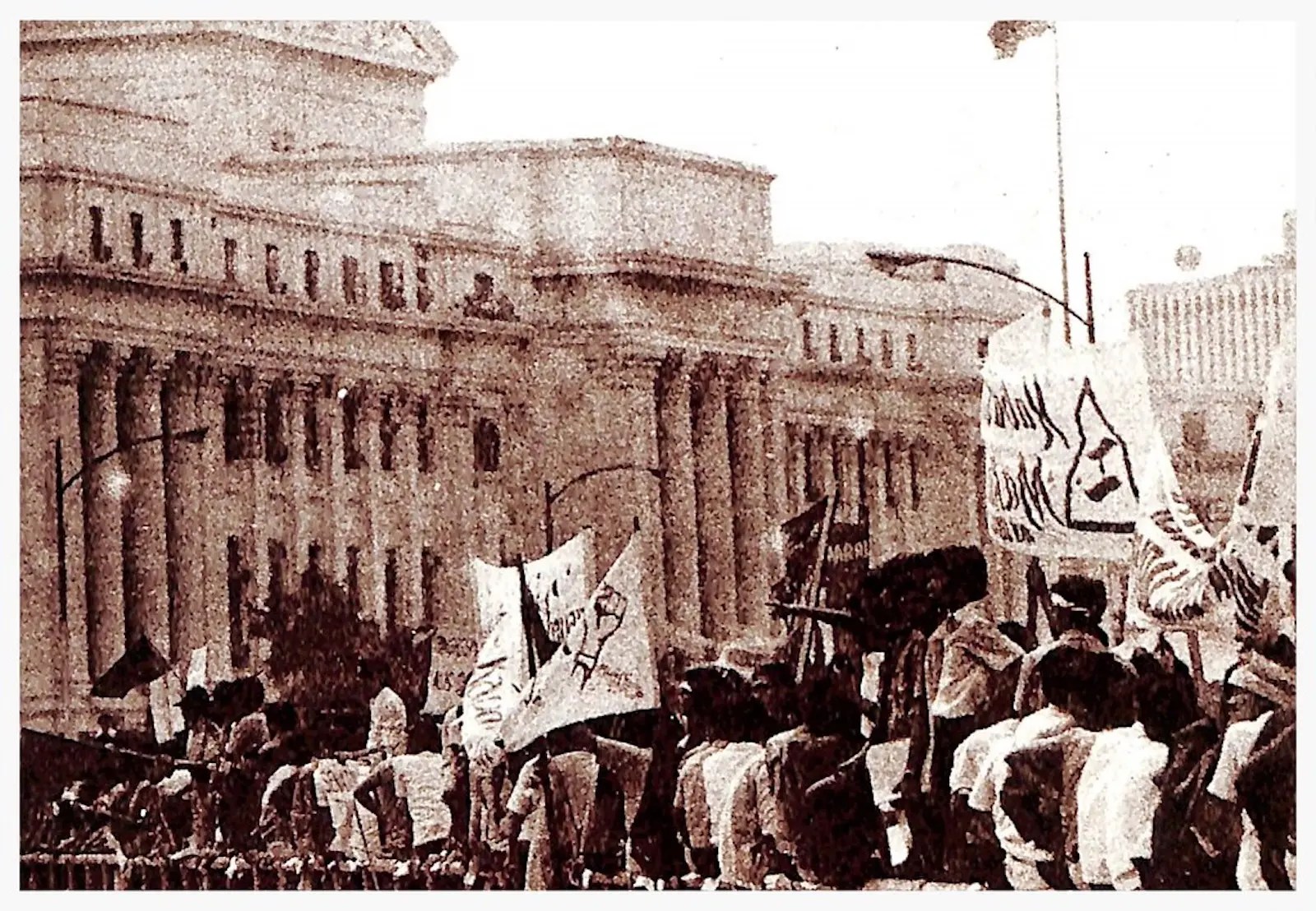
But can young Filipinos be ignorant of or indifferent to what’s going on? My gut tells me no, that surely the billions of flood control funds diverted to acquiring luxury cars, California mansions, and buxom bedmates must appall and anger the young as much as us Boomers, who grew up turning lights off and eating our plates clean. After all, it’s their future that’s being stolen from right under their noses. They have much more reason to protest today than we did in 1971, when we teenagers triggered what became the Diliman Commune over a 10-centavo-per-liter increase in the price of gas.

I’m guessing that placard-bearing street marches have fallen out of fashion with the young, except again for the radical few. Today young people wear their pain on their sleeves, and also broadcast it online. Even for political causes, it’s much easier and safer to mount a virtual demonstration, through reposts and likes, with perhaps greater effect. The crooks get named and shamed, the battle lines get drawn, and demands and expectations get laid down, all at the press of a button. And after all, wasn’t this what grizzled First Quarter Stormers like me have been asking for all these years—that the art and science of protest move past the tired clichés of red flags and raised fists?

But then I’m writing this before the September 21 protest rallies—that would have been yesterday—where, despite everything I’ve just said, I expect a huge turnout of young Filipinos, provoked beyond patience and cynicism by the revolting disclosures of massive corruption among their elders. This corruption saga—and we’re watching  just the beginning of it—could yet be the most unifying factor for Filipinos in our modern history, even more than tokhang, the West Philippine Sea, Manny Pacquiao, and Jollibee spaghetti.

For once—and maybe just this once—it doesn’t matter if you voted for BBM, Leni, Digong, or PNoy, or if you support Gaza, Charlie Kirk, same-sex marriage, or transgender bans, or if you listen to Frank Sinatra, the Eraserheads, Yoyoy Villame, or Bini. We all got screwed by the system, which is not saying that systems are neutral (they’re crafted after all by politicians and their ethics or lack thereof), but that corruption on this scale effectively achieves a democracy of the abused. It’s that Great Pinoy Flash Mob, if you will, that went out to the rallies yesterday—perhaps not entirely cohesive or coherent, taking baby steps out of factionalism into a nascent nationhood, welded by the consuming heat of their fury and indignation.

We can’t tell for now what will become of this reconstituted parliament of the streets—if it will hold together and clarify around the most basic and most urgent of its concerns, or if, as some predict and even hope, it will weaken and dissipate over arguments about objectives and tactics and a fundamental mistrust of the fellow on your left and right. We certainly don’t lack for skeptics, pessimists, and cynics who tend to see any and every move by the hero-figures in this play as futile, as it’s all been scripted and the rich and powerful will always win.

If there’s one thing that we liberals and leftists are especially good at, it’s handwringing and doomsaying to the point of paralysis, because we like to believe that we’ve scoped out the territory, researched the history, studied all the characters, plotted out all their possible moves and motives, and found a hundred smart ways to say “This won’t work.”

That “independent commission”? Not independent enough, poor choice of chairman and adviser, beholden to this and that. Forget it. That Luneta rally? DDS-infiltrated, with violence possible. PBBM? Wasn’t he the original nepo baby, and his family the topmost plunderers of them all? Shouldn’t we just have another go at a bloody revolution to take all the bastards out?

When you think about it, on a certain level, all that could be true. And then again, one can be very smugly correct and yet totally unhelpful. When people want to express their anger and see some action, you respect that emotion—or risk irrelevance, as the Left was at EDSA (which arguably and ironically the Left had laid much of the groundwork for, but then ignored as a rightist coup). For me, let that albeit imperfect ICI get to work; the “I told you so’s” can follow later; this drama needs to be played out, if the real villains are to be revealed.

The flash mobbers who went to the Luneta and EDSA yesterday weren’t being foolish; even in their rage, they held out hope, and especially for the young, their very presence was the hope, a cry for justice echoing across the generations. 

We can’t say what will happen next, but something good might yet come out of all this woefulness and despair, if we don’t listen too closely to our inner analyst. Instead of shunning the DDS, for example, I think this corruption crisis is a good opportunity to find common cause with them and even bring some of them over. The catastrophic flooding in Davao despite the billions given to the Dutertes in flood control money should be an eye-opener for their supporters—just as it should be a reminder to us that the DDS are Filipinos, too, with legitimate rights and grievances. 

If this trillion-peso corruption crisis helps us realize the substance and spirit of our nationhood, then it will have served a positive if costly purpose.

Qwertyman No. 162: Honor Among Thieves

Qwertyman for Monday, September 8, 2025

A FRATERNITY brother—even older than I am and a longtime emigrant—asked in our group chat, “Didn’t we have corruption before? Why all this outrage now?” So I had to bring him up to speed. “It’s the scale, brother. We’re talking billions, possibly even trillions of public funds being pocketed by contractors who don’t deliver the goods and put people’s lives at risk, in cahoots with politicians they’ve bought or are related to.”

I told him the story of Rudy Cuenca, the self-confessed Marcos crony and boss of the Construction and Development Corporation of the Philippines, which built some of the largest infrastructure projects under martial law, including the North and South Expressways and San Juanico Bridge, and made Rudy a very rich man. 

I happened to co-write Cuenca’s biography (Builder of Bridges: The Rudy Cuenca Story, Anvil Publishing, 2010, unfortunately long out of print), after initially refusing to do so. “Why should I write your book,” I told him at our first meeting, “when your boss put me in prison?” “I have stories to tell,” he said, and did he. It wasn’t the money—which ironically was a pittance—but the curiosity that got me on board. And just to show it wasn’t a hack job on my part, the book became a finalist for the National Book Awards for that year.

Rudy—who died two years ago—wasn’t an engineer and didn’t even finish college, but he learned the ropes of contracting doing small bridge projects under the watchful eye of US Army engineers who had him redo the job at a loss if it was substandard. Because American reparations money was involved, the Americans made sure it was well spent. 

Cuenca soon learned the other, non-technical aspects of the business. To move up, you had to pay up. I interviewed him in 2009-2010 in his modest office along EDSA near Guadalupe—any aura of big wealth and power had long been dimmed by years of exile and dealing with lawsuits—and at that time, he lamented the fact that corruption had gone over the top. A cool and down-to-earth kind of guy, he told me in so many words that (and I paraphrase) “In my time, nobody asked, but you gave. The amount was reasonable, and you dealt with just one person. Today, you’re told up front how much to pay, an outrageous sum, and you keep paying up the ladder.” 

While his statements may be self-serving and certainly liable to be interrogated, they should and do raise eyebrows:

“In the late ‘60s, we were looking for funding and supplies for the food terminal. We talked to a bunch of German suppliers, and during our discussion they asked us, why is it that the Japanese get called to work with Philippine projects? I said, you know, the Japanese have a style of business that you don’t understand—they know how to give gifts. And they don’t give gifts before, they give gifts after. But you guys are so decent, that’s why you don’t get jobs here. 

“There was already corruption at that time, but it was not rampant and as grossly done as it is done now. If before people would overprice by about 5 or 10 percent, now it’s about 30 percent. 

“You know, construction is the best source of graft. What Imelda did were seven-day wonders. I didn’t want to have anything to do with those. I was only involved with the reclamation of the area for the Cultural Center. They paid us, but her manager wanted his kickback. Imelda had her own group of contractors, and that’s where they all made money.

“But it wasn’t just then. Do you remember when Pinatubo erupted? The job then was to clear lahar. Now there’s a place in Daly City, San Francisco, that’s known as Lahar City. The people who live there are Pampangueños who earned lots of money because of the lahar. 

“Also during Ramos’ time, Ambuklao Dam was silting. As the dam silts, the ground level goes up, and the water gets smaller, so you have to desilt it. Here comes the contractor with a dredger. But instead of doing a proper sounding first, they raised everything, so that difference got factored into the job. 

“I don’t have any concrete proof of corruption in the current administration, but I think it’s safe to say that graft and corruption will always be present, especially in our government. I have heard that contractors—my brother is still a contractor himself—supposedly deliver money to a Cabinet member, who then turns it over to someone in the Palace. But nobody can say that. If you’re at the top, you have a fence, and only the closest people should be able to touch you so that you’re isolated. 

“I once told Secretary Vigilar that to reduce corruption in Public Works, they should follow a 10-year plan for big projects, meaning that you will pay the contractor 10 years after the project has been completed to your satisfaction and has been transferred to you. That way the contractor will not be as willing to pay off anyone while the project is ongoing because if he does, he’ll be liable for the quality of the work that he has done.”

When I asked him why the roads in places like Malaysia seem much better than ours, he said: “It’s simply a matter of greed. In Malaysia there’s also corruption—I’ve lived there, I should know—but the thieves there make their money by overpricing the materials. Here in the Philippines people are extraordinarily greedy. Not only do they overprice, they also steal the materials. The cement’s deficient, the gravel’s deficient. So the thing crumbles that easily.” In other words, there was honor among thieves; sure, they stole, but at least they built up to spec.

That was 15 years ago, back when the Discayas and their like were probably driving around in Toyota Corollas and buying microwaveable meals at the 7-11. 

One day Rudy got up from our interview and said he was going somewhere—to meet up with the new DPWH secretary, Rogelio “Babes” Singson, to offer some unsolicited advice on how to reduce corruption in his department. I don’t know if that meeting or that chat ever happened, but barely a month ago, in a TV interview, Singson was quoted as saying that “In my full six years at the DPWH, I spent only P182 billion for flood control. Look at the 2025 budget with this insertion—where did the P350 billion go?” 

I never thought I’d miss a Marcos crony, but I’m missing Rudy Cuenca now, as an expert witness to help us sort out this sordid mess. 

Qwertyman No. 161: Torre for Senator

Qwertyman for Monday, September 1, 2025

CAN THERE be any question that the logical next step for cashiered PNP Chief Gen. Nicolas Torre is to run for senator?

The next elections are still three years away; the newly sworn-in senators haven’t even warmed their seats. But the public disgust with the current crop—coupled with Torre’s elevation to hero status—just might create enough momentum and leave enough time for a new wave of Torre-type do-gooders to emerge and coalesce for 2028. The ongoing swell of public outrage against massive corruption in our public works could well become the trigger for a broader and more enduring coalition for good government. 

Many remain skeptical of President Bongbong Marcos’ resolve to pursue this drive to its politically torturous conclusion, but such a coalition—which can tap moderate elements from within the administration’s ranks—could force BBM’s hand, being the only viable option to a DDS resurgence in 2028. 

Let’s get this clear: BBM may not be our idea of a progressive democrat, and he’s been making the right noises not because he found religion, but because a Duterte comeback will threaten the Marcoses with more vicious punishment than they ever got from Cory Aquino. 

Still, it can only be a boon for the middle forces if he helps rather than hinders this brewing tsunami he was at least partially responsible for initiating when he publicly called out those divinely blessed contractors by name. We still don’t know what impelled him to take that extraordinary step, but now that the cat is out of the bag, there’s no pushing it back in, and the people won’t take anything less than decisive action against the greedy rich. You can feel the anger forming out there, the mob right out of Les Miserables taking to the streets, prepared to lynch the next billionaire who flaunts his or her Rolls-Royce umbrella while the poor drown in the floods. 

And the message is getting through: ostentation is in retreat, the Birkins and the Bentleys vanishing from Instagram beneath temporary covers until the wave subsides. But will it? How can it, when, trembling and fuming in their fortresses, the objects of our attention continue to manifest consternation rather than contrition? I love it when one of these clueless ingenues, in the midst of the uproar, protests that her family “owes nothing to the Filipino people, because the government paid for services (they) delivered.” 

The pretty miss obviously never heard Lady Thatcher, or even saw her meme reminding us that “The government has no money. It’s all your money.” (The full quotation, from a Conservative Party conference in Blackpool in 1983, goes thus: “Let us never forget this fundamental truth: the State has no source of money other than money which people earn themselves. If the State wishes to spend more it can do so only by borrowing your savings or by taxing you more. It is no good thinking that someone else will pay—that ‘someone else’ is you. There is no such thing as public money; there is only taxpayers’ money.”)

This brings us back to Gen. Torre, who showed the kind of resolve we’ve long hoped to see in our leaders by attempting to clean up and straighten out a national police force badly begrimed by President Duterte’s tokhang campaign and by its continuing involvement in such nefarious cases as the apparent murder and disappearance of at least 34 sabungeros

It seems odd that we civil libertarians should be supporting a general—and one who was ostensibly fired for ignoring his civilian superiors—but this was a man who went against the grain, who employed his authority for the tangible public good in ways that his predecessors (and yes, those civilian superiors) never did. Can people be blamed for thinking that one Torre is worth more than two or three Remullas when it comes to the delivery of public service?

And Torre was right in rejecting the notion of being designated an “anti-corruption czar” in charge of prosecuting corrupt contractors and their cohorts in government. It’s a trap and a setup, for the inevitable failure of which Torre will once again be the fall guy. Does anyone really believe that yet another toothless commission—on top of all the anti-graft and anti-corruption agencies we’ve seen come and go, and all the laws we already have in place—will solve this mess? 

The Senate could and should have been that commission, but it’s too laughably compromised to investigate its own, and their brethren in the Lower House. Perhaps we should begin by driving the crooks out of both Houses of Congress, and replacing them with men and women of fundamental virtue, honor, and decency: our Vico Sottos and Heidi Mendozas, among others. And yes, I would even include Baguio Mayor Benjamin Magalong in this list, despite his professed and unapologetic gratitude for President Duterte’s assistance to his city during the pandemic. His loyalty, he says, is to the people of Baguio, and I would rather believe him than all those jokers and poseurs in power who speak of corruption and even of establishing “Scam Prevention Centers” when they should be holding up a mirror to their own faces.

Hmmm, maybe that’s a good idea for our next rally against corruption—let’s bring hand mirrors, the way Hong Kong protesters carried yellow umbrellas to fight for their rights in 2014 and South Koreans lit candles to demand President Park Geun-hye’s resignation in 2016—the “Mirror Movement” to shame public officials and the filthy rich. Mga kapal-mukha, mga walanghiya. Not that we truly expect them to change, but that we expect to change them. Torre for senator!

Qwertyman No. 160: Not More Ampao

Qwertyman for Monday, August 25, 2025

IT MAY be too soon if not downright foolish to believe that President Bongbong Marcos’ recent focus on massive corruption in public works projects represents a turning point in his presidency, and is more than another political stunt designed to shore up his popularity after the disastrous results of the recent midterm election. Critics have been quick to point out the irony of a man from a family accused of shamelessly plundering the nation’s coffers and winning back the presidency to avoid restitution now manifesting his “anger” over the billions lost to crooked contractors from the same rapacious elite—even singling out a flimsy dam project in Bulacan as just so much air-filled ampao.

And yet, despite all the predictable and understandable skepticism, I’m willing to bet my low-budget house that many millions of Filipinos of all political stripes would grudgingly if not happily forgive BBM for all his perceived debts and shortcomings if he were to follow through on this initiative with unflinching resolve. Let’s not even talk about sincerity, of which only concrete action and results will bear ample proof. 

What we need and want to see is BBM employing all the powers of his office to bring the massively corrupt to justice, to ensure the full delivery of what the public paid for with its hard-earned money, and to redeem himself and the Marcos name with acts of virtue redounding to the public good. Those acts could be worth more than the many billions his parents were charged with spiriting away—some of which has been recovered, and the rest of which the courts have effectively condoned and we will never see. With three years left on his presidency, BBM might as well use the time to attempt to do what all of his predecessors miserably failed at—go against the grain of the political culture that brought him to power and, for once, uphold the public over personal interest.

As even his detractors concede, BBM has already scored highly on two counts: his departure from Rodrigo Duterte’s catastrophic “war on drugs” that claimed thousands of innocent lives, and also from Duterte’s craven submission to China’s takeover of our territory in the West Philippine Sea. Whatever his ulterior motives may have been, his banishment of former President Duterte to the International Criminal Court at the Hague was widely applauded as a definitive step forward for human rights albeit a major political risk and a clear severance of ties to his “Uniteam” running mate, VP Sara Duterte. 

These measures—and the government’s dismissal of POGOs—were enough to make self-avowed “Kakampink” influencers such as the writer behind the Juan Luna Blog declare that “So here I am—a Kakampink still rooted in my principles—saying this with guarded optimism: This version of Bongbong Marcos is not the Marcos we feared. And if he keeps choosing accountability over loyalty, and stability over revenge, then maybe—just maybe—the Philippines has a chance to move forward.” 

Even among the moderates and indeed the Left, there seems to have arisen the general consensus that for all his problematic pedigree and personal flaws, Bongbong Marcos remains infinitely better and more “presidential” than his predecessor. And I’m sure he knows it, well enough to cultivate the image of a reasonable and well-spoken leader, the kind we porma-prone Pinoys find reassuring, at ease in the company of the world’s A-listers, in crisp barongs and smart gray suits, and most recently wearing glasses that make him look more thoughtful than ever. In short, pretty much everything the old man Digong was not (which, it should be noted, may have been the very same bugoy traits that sent the Davaoeño to the Palace and continue to endear him to the DDS faithful). Whoever his stylist is, she’s earned her keep. 

That said, his administration has been far from stellar in its performance. BBM has had the benefit of good Cabinet members such as Defense Secretary Gilberto Teodoro and Transportation Secretary Vince Dizon, as well as a capable and adept spokesperson in Atty. Claire Castro. (Let’s not forget that, on paper, his father had some of the best-educated Cabinet members ever—none of whom proved strong enough to bridle that regime’s excesses.) But Filipinos cannot and should not easily forget the fiscal folly of the Maharlika Fund with which Marcos II began (and about which we have since heard almost nothing), as well as our runaway debt, the dismal state of our primary education, the lack of housing and basic social services for our poor, and yes, those infernal floods that brought up all the corruption in our infrastructure programs to the surface, so starkly that BBM had no choice but to name names and point fingers.

The question now is where all that finger-pointing will lead. Some fingers will be pointing back at the President’s own political entourage as the enablers behind the billion-peso scams that he now seems so outraged by, as if they had been hatched just yesterday behind his back. Observers have noted that Congress can’t even investigate these scams, with so many of its own members likely to be implicated as either the contractors or beneficiaries in question. And for the cherry on top of the icing, consider the absurdity of a sitting senator—whose family business profited vastly from road diversions and who himself did nothing as a Cabinet member to staunch the outflow of public money into private pockets—now filing a bill to establish the Philippine Scam Prevention Center. Good Lord. Did I just hear someone say “Regulatory capture?”

Whatever we may like or dislike him for, right now, only Bongbong Marcos can sort out this mess and let the axe fall where it may—if he’s really serious about righting historic wrongs and leaving a positive legacy behind him. There’s time enough to do it—but is the will there? In his message acknowledging Ninoy Aquino Day last week—something we didn’t really expect—BBM called the occasion “an invitation to govern with sobriety, conscience, and foresight. Our commemoration achieves meaning when the lessons of the past are reflected in our actions and in the moral architecture of (our) institutions.” I hope that lofty rhetoric has real substance to it, and not just more ampao.

Qwertyman No. 157: Rebalancing the UP-IRRI Partnership

Qwertyman for Monday, August 4, 2025


SINCE ITS establishment in 1960 by an agreement between the Ford and Rockefeller Foundations and the Philippine government, the International Rice Research Institute (IRRI) has been known around the world as a leader in agricultural research and a provider of much-needed and applicable solutions to global hunger. With so many people and economies dependent on rice, IRRI’s outputs—especially the famous “IR8” and similar high-yielding varieties—were hailed as gamechangers for billions, reportedly staving off famine in India in the 1960s and spurring “green revolutions” around Asia. The first President Marcos was a staunch supporter of IRRI, folding its “miracle rice” into his Masagana 99 program, which temporarily achieved self-sufficiency in rice but ultimately failed from bad credit and also proved environmentally destructive.

Headquartered in Laguna on the campus of the University of the Philippines Los Baños (UPLB), IRRI and its achievements became a source of pride for the Philippines, which not only hosted the institute but provided much of its manpower—the scientists in its labs and the farmers tilling its experimental plots, among other staff workers. (That sentiment, it should be noted, isn’t universally shared. A coalition of NGOs and individuals called MASIPAG, opposed to the kind of genetic engineering that IRRI and even UPLB does, sees IRRI as “a research arm of big agrochemical corporations in turning the food and environmental crisis into their businesses.”)

While that’s being debated, another issue has come up between IRRI and UP over the land that IRRI has been using, at the nominal rate of P1 a year for the past 65 years. IRRI’s lease on that land, totaling almost 280 hectares, expired last June 30. UP needs and wants some of that land back for its own use, especially with UPLB’s ambitious plans for the establishment of an Agro-Industrial and Information Technology Park in the area.

UP contends that IRRI has actually been using just around half of that property, so it would be good to put those idle hectares to more productive use, following UPLB’s comprehensive land use plan calling for more buildings for administration and research, housing, support services, engineering, and social sciences. It’s not simply getting land from IRRI (land that, let’s be clear, is really UP’s); according to UP’s Vice President for Legal Affairs Rey Acosta, in exchange for the land UPLB needs for its expansion, the UP System is offering IRRI new land to lease across its various campuses in Mindanao, Iloilo, Leyte, Cebu, Baguio, as well as its land grants in Quezon and Laguna, for both rice and non-rice crop research.

The land exchange was part of a new agreement that UP had proposed to IRRI to replace the expired lease. UP also wanted IRRI to pay more realistic rates for the land it was using. One key factor to consider was that since 1972, IRRI had fallen under the ambit of CGIAR (formerly the Consultative Group for International Agricultural Research), a global research network. CGIAR is apparently funded by contributions from many international agencies and countries including the Philippines, but exactly how it funds IRRI or what its legal status is in the Philippines is unclear to me. 

Under the IRRI charter, the Philippine Secretary of Agriculture and the UP President sit on its board of trustees as ex officio members, but the rest, including the Director General, are international experts nominated either by CGIAR or the outgoing board. It would have been at a board meeting that UP President Angelo Jimenez first brought up UP’s proposals over a year ago in anticipation of the end of IRRI’s lease—which, at the bottom line, UP is under no obligation to renew. Last June, IRRI submitted a counter-proposal ceding much less land than UPLB needed, asking for a much longer lease extension period (25 instead of 10) for much less money than UP deemed fair.

Negotiating in good faith, UP agreed to concessions such as giving IRRI almost 200 hectares for its use, and the possibility of a 25-year lease, subject to periodic reviews, if certain conditions were met. But instead of dealing with UP in the same spirit, IRRI went to court for a TRO, represented by one of the Philippines’ most influential (and must I add expensive) law firms. 

There are quarters in the Philippine academic and scientific community that will be happy to see IRRI go—MASIPAG might stand on the far extreme, but even more moderate voices have noted that much of the research that IRRI was known for can now be undertaken by the Philippine Rice Research Institute or PhilRice. Even so, UP’s leadership maintains that it continues to value its historic partnership with IRRI—based on a more balanced and lawful relationship. “We don’t want IRRI to leave,” said President Jimenez. “We would be happy for IRRI to stay but under fair and reasonable terms.” 

For the sake of not just the Philippines’ but the region’s and indeed the world’s food security, we should hope that this disagreement over how to best use that land in Los Baños doesn’t end up in a messy court case involving money, influence, and public relations. IRRI enjoys a generally positive reputation that, rightly or wrongly, most Filipinos still believe in. After 65 years, it’s time to renegotiate an agreement that will more directly and clearly benefit Philippine agriculture and education through its national university, ensure environmentally safe research, remunerate us fairly, and make IRRI the good global citizen an institution of its stature and intentions needs to be.

Qwertyman No. 156: That Bam-Kiko Thing

Qwertyman for Monday, July 28, 2025

RETURNING SENATORS Bam Aquino and Kiko Pangilinan have been getting roasted online for joining the majority bloc in the incoming Senate, thereby securing important committee chairmanships under the highly unpopular but tough-to-unseat Senate President Chiz Escudero. Despite sympathetic reactions from such opposition stalwarts as former VP and now Naga Mayor Leni Robredo and Sen. Risa Hontiveros, the two have been roundly scored for their decision.

Typical of the outcry was this much circulated post by a friend I deeply admire, the penal and judicial reformer Raymund Narag, who lamented that “They will join the majority. The same majority that excuses corruption as politics, power as protection, and self-interest as national interest. But what they forget is that we voted for them not to play the game. They forget that it was not just about committees, or positions, or so-called influence. It was about principle. We mourn the death of idealism in Philippine politics. But it’s a slow death. Not by assassination, not by defeat, but by compromise. And the executioners are the very people who once called themselves idealists.”

It’s a heavy to charge to lay at the feet of these two men—turncoatism, betrayal, the surrender of idealism, latent hypocrisy—and I can see where the disappointment and dismay are coming from. But with all due respect to my friend Raymund and to those who share his sentiments, I don’t see these dire reversals at all in the choices that Bam and Kiko made, but possibly an interesting and potentially significant maturing of our political culture, especially within the opposition.

It’s true that the Bam-Kiko decision came as a surprise, and that things would have been much clearer, the battle lines much more cleanly drawn, had they sat with Sen. Risa Hontiveros in a true and unflinching albeit tiny minority, duking it out with the majority at every turn, exposing wrongdoing right and left, and remaining unblemished by compromise to the end of their term. We could have remembered them for their impassioned speeches in defense of democracy and justice, tilting against the windmills of the Marcos-Duterte regime.

But I don’t think that’s all or what we elected these two senators for—or was it? As far as I can tell, we voted for them to get things done—the good, the right, and the best things—where they mattered, in their areas of expertise: Bam in education, and Kiko in agriculture. Granted, it may have been secondary to sending a message upstairs that these were the good guys, infinitely much better than the trapos being foisted on us by both the Marcos and Duterte factions, but it was their track record that gilded their credentials.

In case we’ve forgotten or weren’t listening too closely when they were campaigning, Bam Aquino authored 51 laws, including the Universal Access to Quality Tertiary Education Act, the Go Negosyo Act, and the Microfinance NGOs Act. He was also behind the Masustansyang Pagkain para sa Batang Pilipino Act and the No Shortchanging Act of 2016. Kiko Pangilinan, an even more seasoned lawmaker, produced over 150 laws, including the Sagip Saka Act, the Coconut Farmers and Industry Trust Fund Act, and the 105-Day Expanded Maternity Leave Law.

Their acceptance of the agriculture and education chairmanships should help ensure and strengthen their ability to pursue these progressive initiatives further—regardless of how they think about and vote on other issues of national consequence, such as the impeachment of VP Sara Duterte, the national budget, our foreign policy, and constitutional change. 

We have yet to see—as their critics already seem to have foretold—if they will cherish their chairmanships to the extent of abandoning their fundamental principles. Instead I foresee the greater likelihood of the reverse happening: of Bam and Kiko relinquishing their posts should their stay there prove morally untenable. If they were to perform well in their Senate positions, and they were then stripped of their chairmanships for their independent stances, then that still would be more emphatic than if they had never assumed the responsibilities that are also their entitlements, according to their competencies.

But in and of itself, joining the majority bloc—never a firm nor a politically or philosophically cohesive entity in our system of what Shakespeare called “vagabond flags”—should be less of a deal or an issue than it is being made out to be. This “majority,” in any case, seems such a ragtag band that it is almost certain to collapse before the end of the present term.

It probably says more about us as an electorate than about Bam and Kiko when we cast their decision as a “betrayal” of what they were presumably voted for. I’m no political scientist so the experts can explain this better than I can, but it seems to me that we’ve become used to seeing our legislature as a forced marriage of fundamentally incompatible forces—the ruling party (powerful but unintelligent, corrupt, opportunist, cynical, good-for-nothing) and the opposition (weak but progressive, smart, morally upright, idealistic, courageous, media-savvy, and effective). We see the Senate as an arena, a battleground (and often a circus), rather than an office where people are supposed to work, and work together (never mind that some of them are lazy and stupid), achieving results through compromise.

Bam and Kiko just need to prove themselves once more at their jobs and serve the Filipino to the best of their ability, so that when 2028 comes—and whatever their plans may be for that next milestone—they can have a good answer to the basic question that our voters have every right to ask: “So what have you done for me?” It’s a question that the elevated rhetoric of the progressive opposition has sadly often ignored and dearly paid for, almost as if it were beneath consideration. Bam and Kiko need a platform from which to connect corruption to the price of rice, to persistent flooding, to the failure of Filipino children to read at Grade 3. 

Of course, it can be said that that’s exactly what Risa Hontiveros has been doing all by her lonesome—without the benefit of patronage, and with just the chairmanship of the Senate Committee on Women, Children, Family Relations and Gender Equality to her name. She sponsored the passage of the Expanded Solo Parents Welfare Act, the Safe Spaces Act which protects Filipinos, especially women, from gender-based harassment in public spaces, and the Anti-Online Sexual Abuse or Exploitation of Children Law.

Taking another tack but manifesting the same tenacity, Sen. Loren Legarda has survived through many administrations in all kinds of political weather, drawing criticism for that ability, but has remained steadfast in her commitment to protecting the environment, mitigating climate change, and promoting Philippine arts and culture like no other senator nor President for that matter has. 

But for what they’ve already done and could yet do, I think Bam and Kiko deserve our trust. Let’s cut them some slack and give them a chance. We pinklawans aren’t the only voters they’re answerable to.

(Photo from rappler.com)