Qwertyman No. 157: Rebalancing the UP-IRRI Partnership

Qwertyman for Monday, August 4, 2025
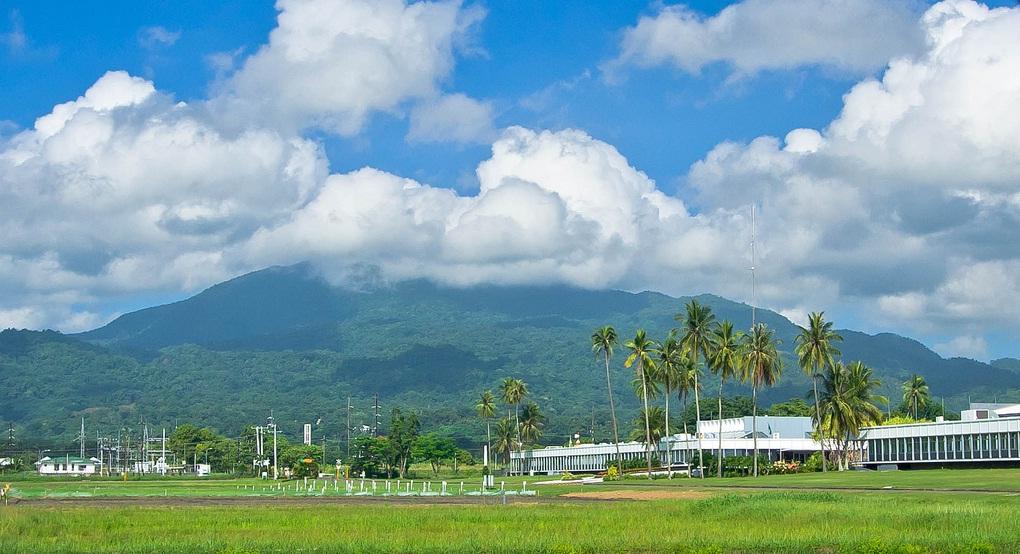
 

SINCE ITS establishment in 1960 by an agreement between the Ford and Rockefeller Foundations and the Philippine government, the International Rice Research Institute (IRRI) has been known around the world as a leader in agricultural research and a provider of much-needed and applicable solutions to global hunger. With so many people and economies dependent on rice, IRRI’s outputs—especially the famous “IR8” and similar high-yielding varieties—were hailed as gamechangers for billions, reportedly staving off famine in India in the 1960s and spurring “green revolutions” around Asia. The first President Marcos was a staunch supporter of IRRI, folding its “miracle rice” into his Masagana 99 program, which temporarily achieved self-sufficiency in rice but ultimately failed from bad credit and also proved environmentally destructive.

Headquartered in Laguna on the campus of the University of the Philippines Los Baños (UPLB), IRRI and its achievements became a source of pride for the Philippines, which not only hosted the institute but provided much of its manpower—the scientists in its labs and the farmers tilling its experimental plots, among other staff workers. (That sentiment, it should be noted, isn’t universally shared. A coalition of NGOs and individuals called MASIPAG, opposed to the kind of genetic engineering that IRRI and even UPLB does, sees IRRI as “a research arm of big agrochemical corporations in turning the food and environmental crisis into their businesses.”)

While that’s being debated, another issue has come up between IRRI and UP over the land that IRRI has been using, at the nominal rate of P1 a year for the past 65 years. IRRI’s lease on that land, totaling almost 280 hectares, expired last June 30. UP needs and wants some of that land back for its own use, especially with UPLB’s ambitious plans for the establishment of an Agro-Industrial and Information Technology Park in the area.

UP contends that IRRI has actually been using just around half of that property, so it would be good to put those idle hectares to more productive use, following UPLB’s comprehensive land use plan calling for more buildings for administration and research, housing, support services, engineering, and social sciences. It’s not simply getting land from IRRI (land that, let’s be clear, is really UP’s); according to UP’s Vice President for Legal Affairs Rey Acosta, in exchange for the land UPLB needs for its expansion, the UP System is offering IRRI new land to lease across its various campuses in Mindanao, Iloilo, Leyte, Cebu, Baguio, as well as its land grants in Quezon and Laguna, for both rice and non-rice crop research.

The land exchange was part of a new agreement that UP had proposed to IRRI to replace the expired lease. UP also wanted IRRI to pay more realistic rates for the land it was using. One key factor to consider was that since 1972, IRRI had fallen under the ambit of CGIAR (formerly the Consultative Group for International Agricultural Research), a global research network. CGIAR is apparently funded by contributions from many international agencies and countries including the Philippines, but exactly how it funds IRRI or what its legal status is in the Philippines is unclear to me. 

Under the IRRI charter, the Philippine Secretary of Agriculture and the UP President sit on its board of trustees as ex officio members, but the rest, including the Director General, are international experts nominated either by CGIAR or the outgoing board. It would have been at a board meeting that UP President Angelo Jimenez first brought up UP’s proposals over a year ago in anticipation of the end of IRRI’s lease—which, at the bottom line, UP is under no obligation to renew. Last June, IRRI submitted a counter-proposal ceding much less land than UPLB needed, asking for a much longer lease extension period (25 instead of 10) for much less money than UP deemed fair.

Negotiating in good faith, UP agreed to concessions such as giving IRRI almost 200 hectares for its use, and the possibility of a 25-year lease, subject to periodic reviews, if certain conditions were met. But instead of dealing with UP in the same spirit, IRRI went to court for a TRO, represented by one of the Philippines’ most influential (and must I add expensive) law firms. 

There are quarters in the Philippine academic and scientific community that will be happy to see IRRI go—MASIPAG might stand on the far extreme, but even more moderate voices have noted that much of the research that IRRI was known for can now be undertaken by the Philippine Rice Research Institute or PhilRice. Even so, UP’s leadership maintains that it continues to value its historic partnership with IRRI—based on a more balanced and lawful relationship. “We don’t want IRRI to leave,” said President Jimenez. “We would be happy for IRRI to stay but under fair and reasonable terms.” 

For the sake of not just the Philippines’ but the region’s and indeed the world’s food security, we should hope that this disagreement over how to best use that land in Los Baños doesn’t end up in a messy court case involving money, influence, and public relations. IRRI enjoys a generally positive reputation that, rightly or wrongly, most Filipinos still believe in. After 65 years, it’s time to renegotiate an agreement that will more directly and clearly benefit Philippine agriculture and education through its national university, ensure environmentally safe research, remunerate us fairly, and make IRRI the good global citizen an institution of its stature and intentions needs to be.

Qwertyman No. 156: That Bam-Kiko Thing

Qwertyman for Monday, July 28, 2025

RETURNING SENATORS Bam Aquino and Kiko Pangilinan have been getting roasted online for joining the majority bloc in the incoming Senate, thereby securing important committee chairmanships under the highly unpopular but tough-to-unseat Senate President Chiz Escudero. Despite sympathetic reactions from such opposition stalwarts as former VP and now Naga Mayor Leni Robredo and Sen. Risa Hontiveros, the two have been roundly scored for their decision.

Typical of the outcry was this much circulated post by a friend I deeply admire, the penal and judicial reformer Raymund Narag, who lamented that “They will join the majority. The same majority that excuses corruption as politics, power as protection, and self-interest as national interest. But what they forget is that we voted for them not to play the game. They forget that it was not just about committees, or positions, or so-called influence. It was about principle. We mourn the death of idealism in Philippine politics. But it’s a slow death. Not by assassination, not by defeat, but by compromise. And the executioners are the very people who once called themselves idealists.”

It’s a heavy to charge to lay at the feet of these two men—turncoatism, betrayal, the surrender of idealism, latent hypocrisy—and I can see where the disappointment and dismay are coming from. But with all due respect to my friend Raymund and to those who share his sentiments, I don’t see these dire reversals at all in the choices that Bam and Kiko made, but possibly an interesting and potentially significant maturing of our political culture, especially within the opposition.

It’s true that the Bam-Kiko decision came as a surprise, and that things would have been much clearer, the battle lines much more cleanly drawn, had they sat with Sen. Risa Hontiveros in a true and unflinching albeit tiny minority, duking it out with the majority at every turn, exposing wrongdoing right and left, and remaining unblemished by compromise to the end of their term. We could have remembered them for their impassioned speeches in defense of democracy and justice, tilting against the windmills of the Marcos-Duterte regime.

But I don’t think that’s all or what we elected these two senators for—or was it? As far as I can tell, we voted for them to get things done—the good, the right, and the best things—where they mattered, in their areas of expertise: Bam in education, and Kiko in agriculture. Granted, it may have been secondary to sending a message upstairs that these were the good guys, infinitely much better than the trapos being foisted on us by both the Marcos and Duterte factions, but it was their track record that gilded their credentials.

In case we’ve forgotten or weren’t listening too closely when they were campaigning, Bam Aquino authored 51 laws, including the Universal Access to Quality Tertiary Education Act, the Go Negosyo Act, and the Microfinance NGOs Act. He was also behind the Masustansyang Pagkain para sa Batang Pilipino Act and the No Shortchanging Act of 2016. Kiko Pangilinan, an even more seasoned lawmaker, produced over 150 laws, including the Sagip Saka Act, the Coconut Farmers and Industry Trust Fund Act, and the 105-Day Expanded Maternity Leave Law.

Their acceptance of the agriculture and education chairmanships should help ensure and strengthen their ability to pursue these progressive initiatives further—regardless of how they think about and vote on other issues of national consequence, such as the impeachment of VP Sara Duterte, the national budget, our foreign policy, and constitutional change. 

We have yet to see—as their critics already seem to have foretold—if they will cherish their chairmanships to the extent of abandoning their fundamental principles. Instead I foresee the greater likelihood of the reverse happening: of Bam and Kiko relinquishing their posts should their stay there prove morally untenable. If they were to perform well in their Senate positions, and they were then stripped of their chairmanships for their independent stances, then that still would be more emphatic than if they had never assumed the responsibilities that are also their entitlements, according to their competencies.

But in and of itself, joining the majority bloc—never a firm nor a politically or philosophically cohesive entity in our system of what Shakespeare called “vagabond flags”—should be less of a deal or an issue than it is being made out to be. This “majority,” in any case, seems such a ragtag band that it is almost certain to collapse before the end of the present term.

It probably says more about us as an electorate than about Bam and Kiko when we cast their decision as a “betrayal” of what they were presumably voted for. I’m no political scientist so the experts can explain this better than I can, but it seems to me that we’ve become used to seeing our legislature as a forced marriage of fundamentally incompatible forces—the ruling party (powerful but unintelligent, corrupt, opportunist, cynical, good-for-nothing) and the opposition (weak but progressive, smart, morally upright, idealistic, courageous, media-savvy, and effective). We see the Senate as an arena, a battleground (and often a circus), rather than an office where people are supposed to work, and work together (never mind that some of them are lazy and stupid), achieving results through compromise.

Bam and Kiko just need to prove themselves once more at their jobs and serve the Filipino to the best of their ability, so that when 2028 comes—and whatever their plans may be for that next milestone—they can have a good answer to the basic question that our voters have every right to ask: “So what have you done for me?” It’s a question that the elevated rhetoric of the progressive opposition has sadly often ignored and dearly paid for, almost as if it were beneath consideration. Bam and Kiko need a platform from which to connect corruption to the price of rice, to persistent flooding, to the failure of Filipino children to read at Grade 3. 

Of course, it can be said that that’s exactly what Risa Hontiveros has been doing all by her lonesome—without the benefit of patronage, and with just the chairmanship of the Senate Committee on Women, Children, Family Relations and Gender Equality to her name. She sponsored the passage of the Expanded Solo Parents Welfare Act, the Safe Spaces Act which protects Filipinos, especially women, from gender-based harassment in public spaces, and the Anti-Online Sexual Abuse or Exploitation of Children Law.

Taking another tack but manifesting the same tenacity, Sen. Loren Legarda has survived through many administrations in all kinds of political weather, drawing criticism for that ability, but has remained steadfast in her commitment to protecting the environment, mitigating climate change, and promoting Philippine arts and culture like no other senator nor President for that matter has. 

But for what they’ve already done and could yet do, I think Bam and Kiko deserve our trust. Let’s cut them some slack and give them a chance. We pinklawans aren’t the only voters they’re answerable to.

(Photo from rappler.com)

Qwertyman No. 155: Deflections and Reflections

Qwertyman for Monday, July 21, 2025

FAR BE it from me to serve as an apologist for the Marcoses, who can easily hire half of Makati and Ortigas, not to mention Madison Avenue, to front for them. 

But speaking as a curious citizen, I’ve been wondering about the recent rash of posts online drawing attention to the unfortunate death in the United States of a member of the Tantoco clan, reportedly from a drug overdose. 

The peg was that the ongoing investigation into the disappearance and presumed murder of 110 sabungeros—which reached a climax with the explosive revelations of a whistleblower and the retrieval of possible bones from Taal Lake—was a massive ploy to deflect attention from the real issue, which was First Lady Liza Araneta Marcos‘ rumored involvement in the Tantoco case. 

That death happened in March. Contrary to allegations that it was swept under the rug, or that a media blackout was imposed by the Palace, Rappler has noted on its website that “Mainstream media outlets have reported earlier on the death of the Rustan executive, who died on March 9 at the age of 44. Examples of these news items include a March 9 Manila Bulletin article, a March 10 Philstar.com article, a March 10 GMA News Online article, a March 10 Manila Times article, a March 11 Rappler article, a March 11 ABS-CBN News article, and a March 12 Daily Tribune article.” 

So why the sudden buzz? Because a newspaper columnist known to be a Duterte trumpet very recently came out with an “exposé” claiming that, according to a report supposedly released by the Beverly Hills Police Department, First Lady Liza was among those interviewed by the police after Paolo Tantoco’s death. The BHPD subsequently declared the report to have been tampered with, pointing out that the portion implicating the First Lady had been tacked on.

But the “exposé” was touted as big news in DDS-land, proof of the veracity of which was the rattled haste with which the administration (1) trotted out a “whistleblower” in the lost sabungeros case, followed by divers dramatically fishing out sacks of bones (with the Atong Ang-Gretchen Barretto angle as a saucy aside); and (2) exhumed the long-dead issue of Defense Secretary Gilberto Teodoro’s Maltese passport, which he had long surrendered. A timeline put out on YouTube by a Duterte publicist “proved” that after every iteration of the “Tantoco-FL” case, a “diversion” engineered by Malacañang immediately ensued, starting with the death itself, followed by the sensational arrest of Rodrigo Duterte and his quick deportation to the Hague for trial by the ICC.

In short, a lot of labor has gone into this conspiracy theory which would have us believe that PRRD was whisked off to the Netherlands, that the lost cockfighters were suddenly found, and that Gibo Teodoro’s loyalties are questionable—just to deflect attention from the real and the most important story (since shown to be fake) that the First Lady was somehow involved in the death of a prominent Filipino family scion. It would be the cover-up of the (21st) century for Pinoys, if true—and a mountain of poop to swallow, which many of the DDS faithful apparently have no difficulty ingesting. And not just them, either—I’ve heard the “Cover-up! Cover-up!” line being echoed by some of my liberal friends.

My own pedestrian take is, so what if FL were somehow involved in the Tantoco case, nefariously or otherwise? So what if Malacañang panicked and sought to quash the news by thinking of gimmicks to overshadow it? Rodrigo Duterte still needed to be shipped off to the Hague to face justice, and he was. The missing sabungeros, more than a hundred of them, still need to be found, and they may have been. If good results come out of shady decisions, I’m thankful they did.

But let me try on that same conspiratorial hat that seems so fetching on DDS heads. It’s a loose fit on mine, but reflecting on these matters like a true conspiracist, where do you suppose all these feeds are coming from, and why? Who stands to benefit from all this disinformation, and has the wherewithal to support a network of trolls, columnists, and “political analysts” all trying to divert public attention from what should be the biggest political story of the moment—VP Sara’s impending impeachment case—to some fake cover-up? 

The Dutertes stand to benefit, of course, but the impish fictionist in me says the hand of a larger patron can’t be discounted—particularly when you factor in the Gibo subplot, which concerns a possible presidential candidate who has been very vocal in his criticism of a northern bully. (The operatives peddling the “distraction” story, not incidentally, are the same people who keep reminding us that we asked to be bullied by filing that frivolous and unfriendly suit laying claim to our own territory.)

But of course I could be overthinking, which then again becomes any aspiring and self-respecting conspiracy theorist. I’ll get the hang of it, one of these days. 

 Maybe I’ll begin with the “traitorous” tandem of Bam and Kiko—as they’re now being made out to be even by some of their staunchest supporters—signing up with the Senate majority to worm their way into DDS hearts, so maybe one of them could be Sara’s running mate in 2028 under a broad anti-Marcos alliance. Wild? Can anything run too wild in the Pinoy’s fevered political imagination?

(Image from YouTube)

Penman No. 475: True Confessions

Penman for Sunday, July 13, 2025

AS A collector (make that a scavenger) of old books, manuscripts, and what the market generally calls “ephemera,” I inevitably come across material neither written by nor meant for kings and presidents, but rather pedestrians like myself with things to say, perhaps secrets to whisper, likely to no one but to God and posterity.

I’m talking about diaries and journals, which people of my generation used to do (and millennials are back to doing). Worse than a pack rat, I hoard other people’s memories, some in diaries that would make people turn in their graves to know I had. I come across these often as discards or stray items among people selling and buying old books, but I find them equally if not even more fascinating than published (and therefore sanitized) material.

Back then, before computers and digital journals, New Year began with the purchase of a new diary, its pristine pages waiting to be filled with birthdays, appointments, expenses—and more interestingly, interjections of love, pain, joy, and grief, life’s highest and lowest moments. 

I myself kept diaries at one time, although the entries tended to peter out around March or April, when fatigue got the better of my enthusiasm. My most interesting one has to be my martial-law diary, which I rather presumptuously began as soon as I was thrown in prison at Fort Bonifacio; I say “presumptuously” because, at seventeen, I entertained the precious thought that somehow, someday, my juvenile musings would be worth something to someone other than my mother (I had yet to find a wife then). 

When the Italian Marxist Antonio Gramsci languished in a Fascist jail in the late 1920s, presumably between a meager breakfast and gazing out into the starless night, he penned lines like “The old world is dying, and the new world struggles to be born: now is the time of monsters.” He developed his theory of hegemony and held forth on the role of intellectuals in social change, published in his seminal Prison Notebooks.

My own teenage memoirs have survived, but instead of writing about the dominance of the ruling class or about harrowing details of torture and misery—which did happen to others—I chronicled the visits of the pretty young psychologists assigned by the military to interview us; of course we assumed they were spies, but that didn’t stop us from chatting with (more like staring at) them across a table that felt much too wide.

Indeed, for most of us more interested in the personal than the political (although arguably one will always be the other), the value of diaries lies in their true confessions, in their promise of intimacy and insight—along with, let’s admit it, the wicked thrill of voyeurism.

Among the most poignant of my inadvertent discoveries has been the diary—really more a scrapbook—of a once-famous and gifted writer (whose name I’ll leave out for now as he still has family around) who was imprisoned after the War for his stridently pro-Japanese sentiments and actions. In three languages, both typewritten and handwritten, he acknowledges receipt of his beloved’s supplemental rations—beef, fish, fruits, and coffee—but no letter yet again. “Nang buksan ko kagabi ang bayong, hanap ako nang hanap…. Na naman? Wala? Namanglaw ako nang lubos. Di yata at wala ka na naming panahon.” How many times do I have to tell you, he goes on to lament, that even for important to me than sustenance for my body is sustenance for my spirit?

I once came across a whole sheaf of journals in a ditch in front of our house, which I was inspecting because it had gotten clogged with what turned out to be a plastic bag full of papers. It had been carelessly thrown there by the home’s previous occupants or whoever cleaned it out—we had just moved in. They turned out to be the personal papers of a renowned UP professor, and as guilty as I felt about peeking into her life, I read a few pages, in which she confessed her admiration for a certain man (she lived and died a spinster)—only to remind herself, with what I could almost hear was a deep sigh of regret, that she considered herself wedded to God. I read no further, and decided to turn the papers over to a friend, a former and beloved student of hers who was the closest thing to a son.

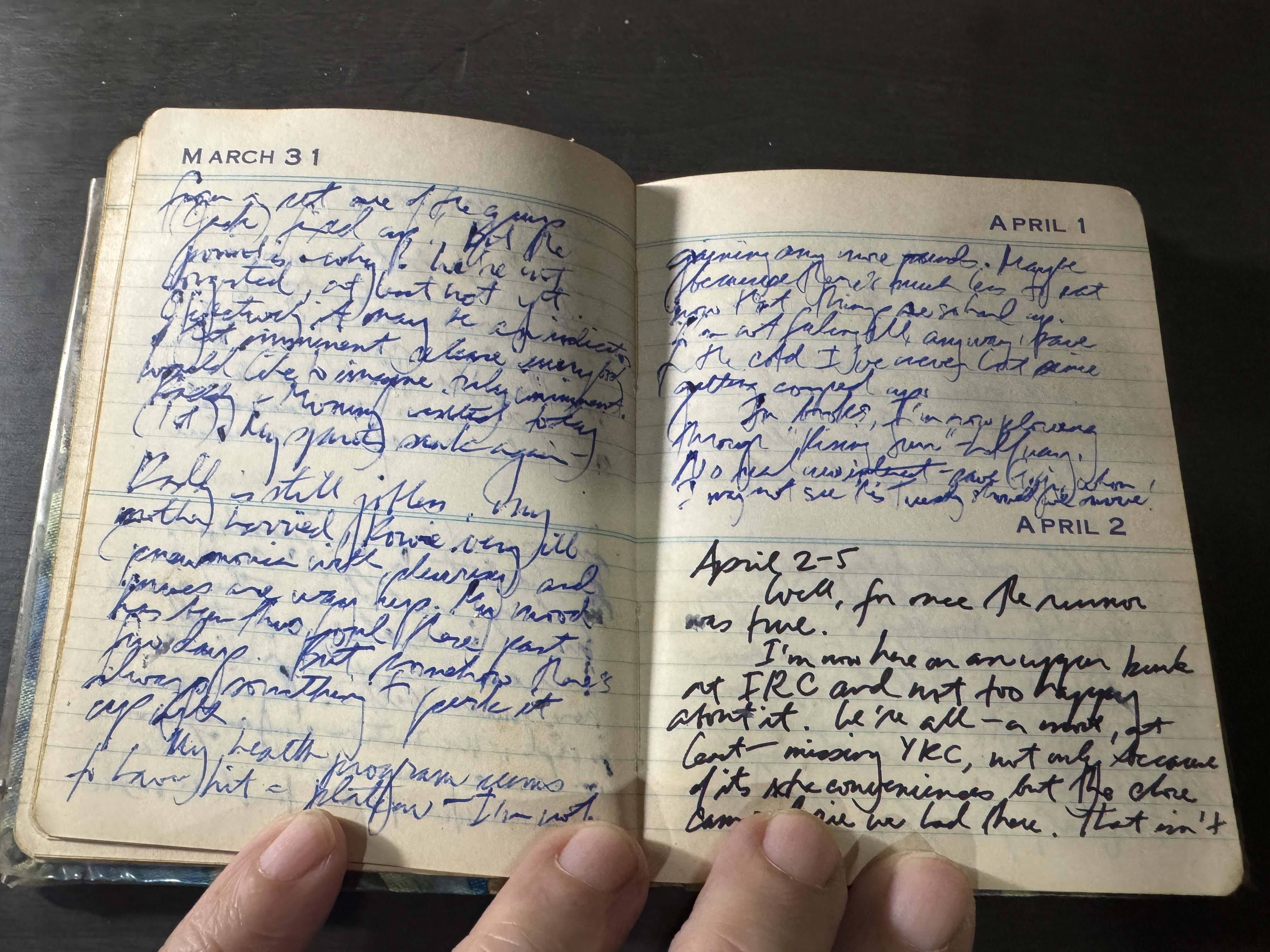
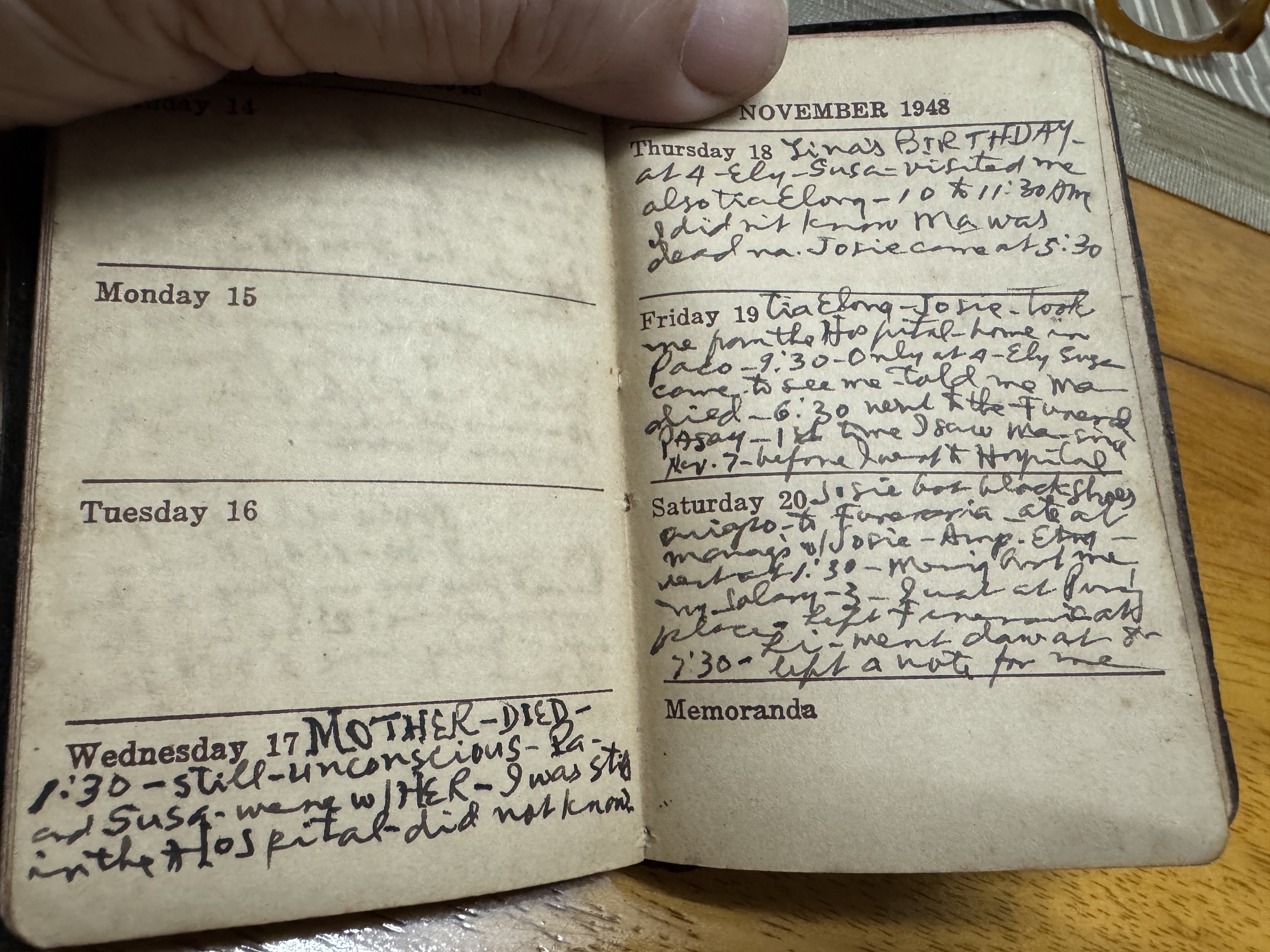
Most recently, some diaries from the late 1930s and 1940s came to me along with a medical book, and they contain nothing so revelatory, but the details of everyday life a,re always engrossing. They obviously belonged to a doctor—perhaps more than one—and while they contain medical marginalia they also carry legal notes, so the owner must have been studying to be a medico-legal person. Rather moving is the narrative in one diary of bringing a very sick mother to the hospital; I flipped a few pages and the inevitable entry appeared: “Mother died.” And there lay the stark helplessness of a doctor who could not save his own mother.

For many years now, the writer and presidential historian Manolo Quezon has been on top of an important enterprise called the Philippine Diary Project, a digitized compilation of diaries and memoirs from such notables as Jose Rizal, Ferdinand E. Marcos, Dean Worcester, and Emilio Aguinaldo all the way to the murdered activist Ericson Acosta (clearly more women need to be added to the roster).

“To me there are two holy grails,” Manolo told me. “The first is the diary of Gregorio H. Del Pilar. The diary of the American officer who led the expedition that killed him, Frederick Funston, exists but has yet to be transcribed. It was he, by all accounts, who pocketed del Pilar’s pocket diary; perhaps his papers will reveal them after a thorough search. The other is the diary of Benigno S. Aquino, Sr. The late Benito Legarda, Jr. told me that it was shown to him by one of the sisters of Ninoy, and that, in Spanish, it began, “I have been summoned to a meeting in Malacañan by the commanding general of the Japanese Military Administration…” The thing is, the last sister who had it, lost her memory and her children have not found the diary since.”

He adds that “A large portion of the Marcos diary is missing and anecdotally is said to be in the possession of a former member of his administration. For me though, what I’m seeking are diaries by Filipinos. Our own voices are woefully underrepresented. I think many were lost in Ondoy, many others have been thrown away, still more exist, but families are afraid people will take offense and so prefer to keep them secret.”

What I find from my own small collection is that whether they wrote in English or Tagalog, or used fountain pens or typewriters, our forebears recorded the smallest details such as “Auto repair 15.00” and “Won jai-alai 5-3 event.” Today we do all that with digital ink. I wonder what some digital pack rat will be remarking about us 50 years hence.

Qwertyman No. 148: Pondering the Inconceivable

Qwertyman for Monday, June 2, 2025

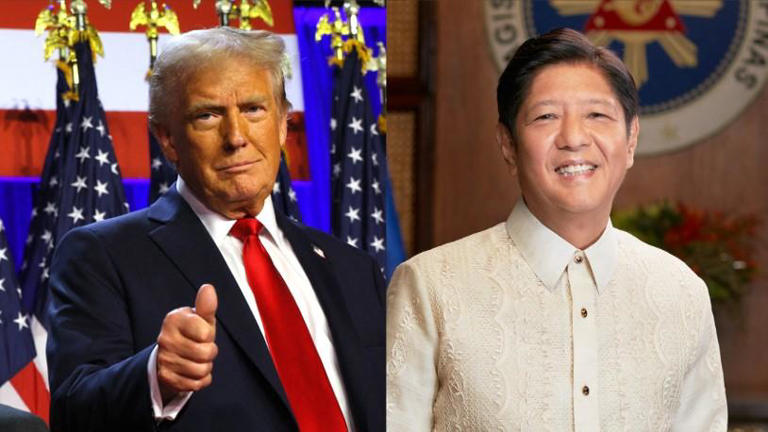
IT SOUNDS like wishful thinking at the moment, but is there even a faint possibility that—in the aftermath of the midterm elections and looking ahead to the next big one down the road—President Bongbong Marcos might be willing to back a progressive candidate to take his place? And would liberal (with a small L) forces accept his help?

Just a few years ago this idea would have been totally preposterous, the relationship between the two sides being one of utter incompatibility and mutual revulsion. Marcos (more the name and what it stood for than Junior himself) was seen as the devil incarnate, while BBM would have deemed unforgivable his family’s ignominious banishment into exile in  Hawaii.

During the May 2022 election, Leni Robredo’s partisans (myself among them) made sure our people remembered the trail of blood and misery that martial law left behind, and the Marcoses’ unpaid debts to the treasury, and to the nation itself.

His election victory was met with profound disbelief and distress; we felt unmoored and stunned for a brief spell (much like the Democrats today, reeling under Trump’s relentless barrage of idiotic but effectively discombobulating executive orders). We took refuge in the certainty that this administration would quickly self-destruct from BBM’s incompetence and from its own internal contradictions—a prediction that has now partially come true, albeit with the most unexpected ramifications.

The spectacular collapse of the “Uniteam” was predictable; it had always been a marriage of convenience, seemingly forged to install BBM as a seatwarmer for VP Sara and the eventual restoration of the Dutertes in Malacañang. No one knew that better than BBM; there was talk (as there will always be, in this country of gifted storytellers) that the Dutertes weren’t even going to let him finish his term, but find a way to ease him out earlier so Sara could do a GMA and rule for longer than six years. So, went the buzz, BBM beat her to the draw by getting her impeached in the House (for good reason) and packing her father off to the Netherlands (for even better reasons).

Now comes the tricky part, which is getting Sara impeached (and struck out of the presidency for good) in the Senate—a newly reconstituted Senate that needs only nine of its 24 members to resist, and thereby keep the Dutertean dream alive. That court will convene sometime this month, with the outcome far from predetermined, but apparently leaning, at the moment, toward acquittal. Two administration senatorial bets—Imee Marcos and Camille Villar—jumped ship, making a crucial difference; the current pro-Sara tally now runs to a comfortable 11, if both Cayetanos, both Villars, and both Estrada siblings (now you see why dynasties are a bad idea?) see a longer horizon for their political futures with Sara on top. 

However, as they say, it ain’t over till it’s over, and the same opportunism that led to this tangle could just as easily turn it around within weeks or months, however long the impeachment trial is going to take. Observers note that at the last big impeachment trial—that of the late Supreme Court Justice Renato Corona—the odds were hugely in his favor at the start, but compelling evidence eventually made it not only unreasonable but politically untenable to acquit him at the end (although notably, his faithful supporter Senator BBM survived and even prospered). A strong prosecution—and, let’s admit, some backroom wooing and strong-arming—could yet land Sara in political limbo.

And that had better happen, because as BBM well knows, if the impeachment fails, his party has no candidate from within strong enough to take on the Dutertes. His apparent anointed, House Speaker Martin Romualdez, has about as much charisma and appeal as a thawed-out tamilok. Apart from the surprise victories of Bam Aquino and Kiko Pangilinan (about which more, later), the one big takeaway from the midterms was the continued strength of the Duterte forces on a national scale, never mind their isolation in Mindanao. An unverified post-election report (again, from the Bureau of Speculation) claimed that in a survey of early votes cast by the military and police, the Duterte slate scored a perfect ten. Why? Well, didn’t PRRD fatten the military, doubling their salaries and raising their retirement benefits? And aside from the mediagenic generals and admirals, who really wants to fight China in the West Philippine Sea? (Not my opinion, folks, just passing it along.)

If and when Sara wins, BBM and the Marcoses may find themselves taking another flight out in the night for parts unknown. The “bloodbath” Sara promised won’t be at the trial, but in its aftermath.

So we return to my first question: can and will BBM find it in himself to support a progressive and acceptable candidate from the middle forces, someone like Sen. Risa Hontiveros? If he insists on fielding his own man and the center-left puts up their candidate, it won’t take a political scientist to figure that as things stand, in a three-cornered fight, Sara will win. The Marcoses will be history (again) and the progressives crushed even more.

An argument can be made for the once-unthinkable. Against all expectations, BBM has done the right thing in de-Dutertizing government, (largely) stopping tokhang, and taking a firm stance for Philippine sovereignty in the WPS. On these issues, we can unite, at least for the time being. It will not be idle thinking to suspect that Bam and Kiko won not by divine miracle but with some backhanded nudge from the administration, who needed them to shore up its Senate votes (Bam, after all, was carried by the INC—as was Marcoleta, so it evens out). BBM’s Cabinet revamp shows signs of sensitivity to expectations and keenness on delivery, if only to shore up his administration for 2028.

He’ll never publicly admit it, but if BBM is truly intent on some measure of redemption for the Marcos name and on making his own mark on the presidency, this could be his historic opportunity. He will do well to support the progressives; it will be an easier and more logical switch than for the progressives to support an anointed trapo. BBM can take a free ride on the idealism of the middle forces, who are his best buffer against both Left and Right extremes.

But then again, all this comes to you sponsored by Willy Wonka’s Chocolate Factory, makers of the Everlasting Gobstopper and other fabulous confections.

Qwertyman No. 145: The Devil on My Shoulder

Qwertyman for Monday, May 12, 2025

TODAY, ONCE again, we troop to the polling booths in the hope of making our votes matter—votes that, if the cynics are to be believed, might as well be dust in the wind. The surveys have spoken, the winners named. All that remains is for this day to be over, for the formalities to be done with, for the supposedly inevitable to play itself out. And then we’ll watch the new-old Senators of the Republic proclaimed in a ceremony that will showcase the state of our electoral mind. 

As absurd as it may seem, many Pinoys will actually be happy with the outcome—that’s what the surveys are all about, aren’t they? These are the senators we wanted—or most of us, anyway. “Most of them” is probably what you’re thinking, if you’re a regular reader of this column and agree with most of my views.

I can’t think of a more complicated election in recent times, in terms of an answer to the question of “What’s in our best interest as Filipinos, and how do we make that happen?”

The idealist in me has the simplest and probably the morally most unambiguous response: vote for the best candidates, period: the intelligent, the progressive, the principled, the proven, the humane, the hardworking, the uncompromised. Whether they win or lose, it shouldn’t matter—you’ve done your best as a responsible citizen; in a sense, you’ve won. I sorely want to believe this, and to do this today.

But persistently, impishly, like a little devil perched on my shoulder, a contrarian spirit urges me to temper my idealism with some consideration of its practical costs.

Last week in California, a Fil-Am friend asked me to explain the significance of these elections. In the US, midterms usually mean a referendum on the incumbent President’s performance, and next year will most definitely be one for the Orange Pope and his systematic dismantling of American democracy.

For us Filipinos, May 2025 isn’t that clear-cut—although it should have been, if the armies of May 2022 had remained in place, leaving us with a stark choice between the good and the bad.

But the ruling “Uniteam” alliance has since collapsed, with each side fielding its own troubled slate of aspirants, all seething with the most primal of motives: survival, revenge, profit, and opportunity.

The opposition seems to be a loose coalition of liberal, Left, and anti-administration forces. Among these, four names have consistently surged to the top in the kind of social media neighborhood I inhabit. I’ll call them my Triple A candidates, the ones I won’t have any second thoughts about, leaving me with eight more spots to fill.

It’s those eight that give me pause—not for any lack of qualified and virtuous prospects, but because there could be dire consequences for not filling up the rest of my ballot, as some have suggested, or voting for names without a prayer of winning, as a matter of principle (or, by this time, by force of habit).

It’s interesting to observe how, unlike in previous elections where voting straight for a party’s slate was the norm, various formulas and menus have emerged on social media—cafeteria or halo-halo style—to reflect this urge for some balance between the ideal and the practical in this three-cornered fight. Even opposition stalwarts, including Leni Robredo herself, have been excoriated for their previously unthinkable endorsements of certain candidates from the other side. Whatever happened to ideological purity? (It was always an illusion: note the Left’s earlier alliances with a notoriously bloodthirsty Digong Duterte and an unabashedly capitalist Manny Villar.)

I think many Filipinos understand what’s at stake in this election—not just who will compose the next Senate, but what that composition will mean. As I told my Fil-Am friend, Rodrigo Duterte may be safely imprisoned in the Netherlands, but his specter looms large and heavy over these midterms, through his proxies led by his daughter, VP Sara and their “DuterTEN” team (now more like DuterTWELVE, if you add one Marcos and one Villar). Sara was all set to be impeached for grave threats against the First Family and grand theft Piattos—which would not only have taken her out as VP but disqualified her from running for President in 2028. But that procedure—needing at least 16 votes in the Senate—got kicked down the road, after the election, leaving Sara’s fate up to the newly reconstituted Senate to seal.

So again, I told my friend, presuming that the BBM administration’s game plan here is to freeze Sara out of the presidency so it can install its own man, 2025 is really all about 2028. It’s a referendum, sure—not so much about the present President, but rather the past and maybe the future one. We’re not just—or not even—voting necessarily for the best candidates, but for senators who will push Sara out, or keep her in. Daddy Digong’s summary extradition to the ICC, while a relief for many, merely intensified that drama, raising the stakes to a matter of survival for the Dutertes.

It’s another sad and sorry spot to be in, for these elections to come down to choosing among the lesser or the least of 8, or 16, or 24 evils, against the statistical near-certainty of another wipeout for the truly good. Should I support this fairly familiar trapo, the devil I know, over that manifest idiot, just to help ensure that the latter stays out? Or, again, should I simply disregard all the surveys and scenarios, and vote from my purest and most innocent of hearts for the best people on that ballot? (Was this how the cardinals chose Pope Leo XIV, or did more pragmatic considerations come into play?)

By the time you read this, I shall have cast an early vote as a senior in my barangay. Like we often say, we are whom we vote for, and there’s a part of me that fears what I’ve become or may have to be. I need some of that Holy Spirit with me today—we all will.

Qwertyman No. 137: ICC Ex Machina

Qwertyman for Monday, March 17, 2025

IN PLAYWRITING and fiction, we call it deus ex machina—literally, the “god out of the machine”—which has come to mean a miraculously happy or fortuitous ending to a long and agonizing drama. 

You’ll find it, for example, when a virginal heroine—beleaguered by dirty old men and rapacious creditors—seems on the brink of yielding her precious virtue, tearfully praying on her knees for deliverance, when a kindly lawyer comes knocking on her door to announce that a distant uncle has passed away, leaving her his fortune. We rejoice with her—despite feeling, at the same time, that divine intervention came a bit too conveniently. This is why I admonish my students to refrain from employing deus ex machina in their stories, because in today’s hard-bitten and cynical world, nobody really believes in it anymore, and readers simply feel deprived of a more rational ending.

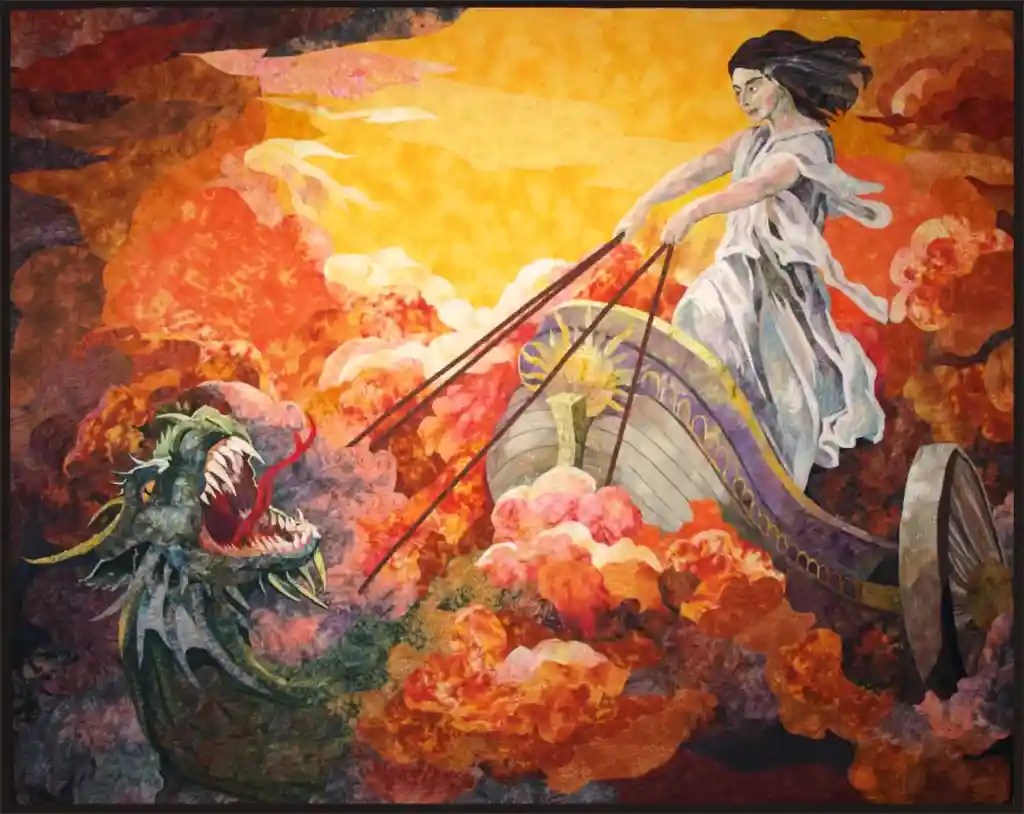
Like many things we know about drama, the idea goes back to the ancient Greeks, whose playwrights used it to great effect, Aeschylus and Euripides among them. Euripides most memorably turned to deus ex machina in Medea, where the title character—having been cheated on by her husband Jason—kills Jason’s mistress and their own two children. Guilty both of murder and infanticide, Medea seems hopeless and bound for damnation—until a machine, actually a crane shaped like a chariot drawn by dragons, emerges from behind the stage. It has been sent by Medea’s grandfather, the sun-god Helios, to pluck Medea away from her husband and from the coils of human justice and deliver her to the safety of Athens.

Was it fair of the gods to save Medea from the punishment awaiting her on earth? It’s arguable, but more than a device to resolve a messy plot, the “god out of the machine” was meant to remind the Athenian audience that a higher order of justice obtained, and that when humanity became too entangled in its own predicaments, then it was time for the gods to take over.

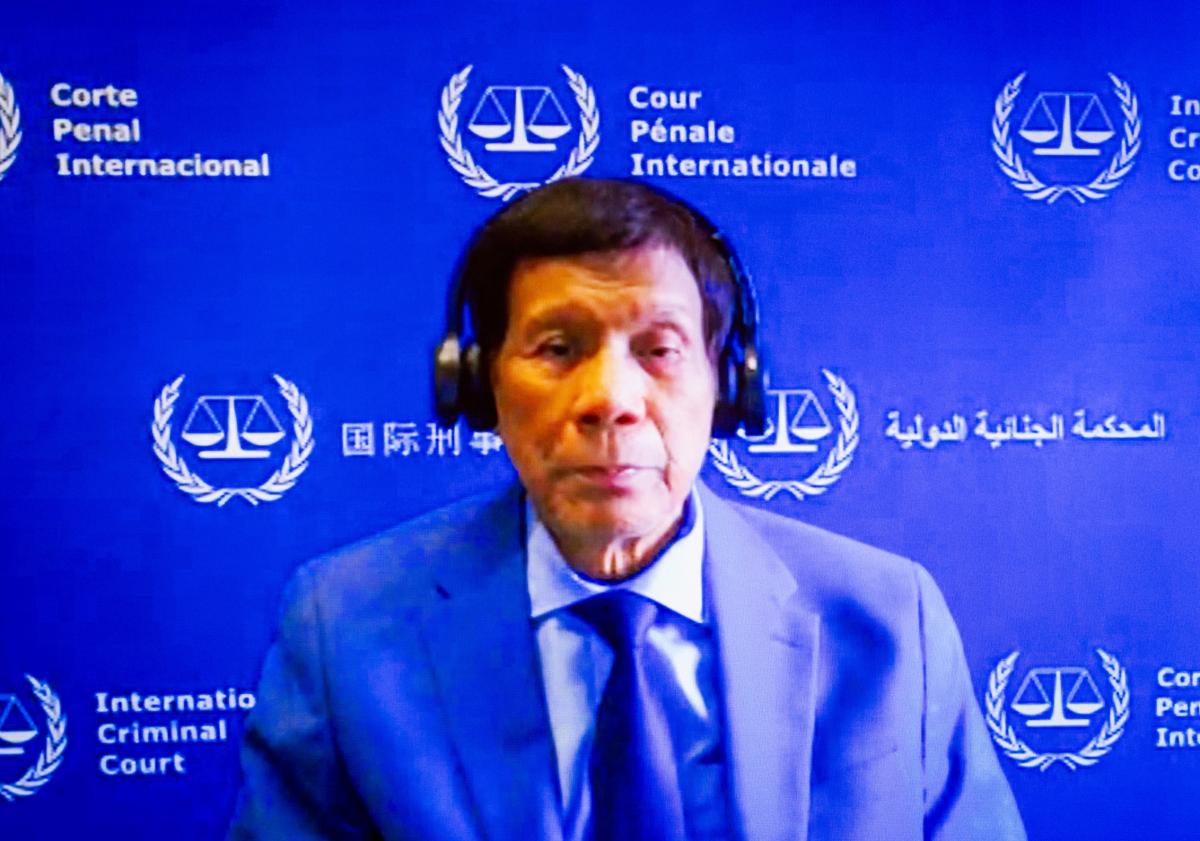
A lot of this swept through my mind last week as the drama of Rodrigo Duterte’s arrest and express delivery to the International Criminal Court at the Hague played out on TV and social media. Had the gods come out of the machine to impose divine justice? It had seemed nearly impossible a few years ago, when Digong was still flaunting his untouchability and taunting the ICC to come and get him. Well, we all know what happened since then—and they did. 

We understand just as well that the Marcos administration performed this operation not out of some abounding sense of justice or because it had suddenly acquired a conscience and realized the evil with which it had “uniteamed” to electoral victory in 2022. “We did what we had to do,” President Marcos Jr. explained on TV, with deadpan truthfulness—referring superficially to the Philippines’ obligation to honor its commitment to Interpol, but subtextually to the irresistible opportunity to cripple someone who had become a political arch-enemy, and providentially gain the support of masses of people harmed and disaffected by Duterte’s butchery.

The outswelling of that support—at least for Digong’s arrest and deportation—was spontaneous and sincere. Not since the Marcoses’ departure at EDSA had I felt such relief and exhilaration—and surely the irony would not have been lost on BBM, who knows what it was like to leave on a jetplane, kicking and dragging, for an uncertain future.

And what I say next may go against the grain of everything I have said and thought about the Marcoses, but no matter what ulterior motives may have come into play in this episode of the Duterte-ICC saga, I feel thankful for the resolve and the dispatch that BBM showed in this instance. Along with his administration’s resistance to Chinese aggression in the West Philippine Sea, this will be certain to count among his most positive achievements. 

The great difference between this drama and Medea, as an example of deus ex machina, is that the intervention of the ICC (with BBM helpfully providing the crane) isn’t going to save Duterte, but rather the people whom his presidency soaked in blood. But as with Medea, the “gods” step in when local justice proves impotent or inadequate (and did anyone really believe that Duterte would be hauled before and convicted in a Philippine court of law, when even the Maguindanao Massacre took a full decade to produce convictions for the principals?).

The question now is what next—not for The Great Punisher, for whom a prolonged trial at a cushy court will not be punishment enough, but for the Marcos administration, which suddenly finds itself with more political capital at its disposal, and yet also put itself at greater risk? Surely it must also realize that it not only has committed itself to tearing down the entire House of Duterte and confronting the many millions of voters they still represent, but that it has also set itself up for higher expectations, on pain of suffering the same ignominious fate?

In the hopeful bit of theater playing in my mind, I imagine BBM parlaying the bonus of goodwill he has earned from this maneuver into a broader if not genuine resolution to distance himself further from his predecessor and create a freer and more just society. There are clear and immediate steps he can take in this direction. The first gesture would be the release of all remaining political prisoners, followed by the abolition of the NTF-ELCAC, which no longer serves any useful purpose (not that it ever did). He can root out and punish the enablers and perpetrators of Oplan Tokhang and eliminate oppression and corruption from the mindset of Philippine law enforcement. And then he can begin reforming Philippine governance, starting with the quality of the people he seeks to bring to power—senators, congressmen, and the like.

But then that would be the ultimate deus ex machina, and we have been shaped by experience into a stubbornly disbelieving lot.

Qwertyman No. 135: Fighting the Truth

Qwertyman for Monday, March 3, 2025

BEAR WITH me as I begin this Monday’s piece with a quotation about last week’s celebration (or non-celebration, from another point of view) of the 1986 EDSA People Power uprising. It really doesn’t say anything we haven’t heard before, but I want you to read it slowly, giving it the full benefit of its sincerity and passion. If you were at EDSA as I and my family were, and no matter how distant a memory those four days in February may seem to be now, these words should still provoke even a flutter of patriotic fervor, and a wistful thought that, perhaps, the EDSA spirit does live on in these troubled times. 

“Martial law, declared by Ferdinand Marcos Sr. in 1972, left a dark legacy; countless lives were lost, freedoms were stripped away, and power was concentrated in the hands of a few. As we remember those who suffered and fought for our liberties, we must remain vigilant, especially now, when the threat of authoritarian rule once again looms over our nation. People Power was more than just a revolution; it was a testament to the collective strength of the Filipino people in demanding truth, justice, and accountability. It is also a reminder that we must remain united against any form of oppression…. Let us honor its legacy by ensuring that history is never distorted, our rights are never trampled upon, and our democracy remains intact for future generations. May the darkest times in our history never happen again.”

Just the kind of resonant exhortation you’d expect from a staunch defender of civil liberties and human rights, right? 

But would your appreciation of these words change just a bit if you knew that they were spoken not by the likes of a Leila de Lima or a Kiko Pangilinan, but by Davao City Mayor Sebastian “Baste” Duterte, whose EDSA Day message this just happened to be?

Truth? Justice? Accountability? “United against any form of oppression?” Where were these noble words when the good mayor’s dad was president, and announcing blatantly on various occasions that ““My order is shoot to kill you. I don’t care about human rights…. Let’s kill another 32 every day. Maybe we can reduce what ails this country…. I will assume full legal responsibility…. My mouth has no due process.”

That “legal responsibility,” of course, has yet to be assumed, full or otherwise. Instead, once he fell out of power, that man (and, last we heard, lawyer) who flaunted his wanton disregard of the law suddenly found religion, and the gumption to say this when his buddy Apollo Quiboloy and his cult followers were raided by the police:

“Our country has never been in a more tragic state as it is today. Rights have been trampled upon and our laws, derided…. We call on the remaining decent and patriotic members of our government not to allow themselves to be used and to be abusive and violent in enforcing illegal orders…. We call on all Filipinos, regardless of political persuasion, to offer prayers for peace and justice, and to spare our people of the unwarranted tension brought about by the reign of fear and terror by people sworn to uphold the law and protect the citizens of this country.”

It makes sense that this statement was published rather than spoken, because I can’t for the life of me imagine how The Great Punisher could say “unwarranted tension brought about by the reign of fear and terror” with a straight face and not burst out laughing—or maybe his listeners would, if they weren’t seized by, well, fear and terror.

Not to be outdone, on a recent sortie to Cebu, embattled Vice President Sara Duterte reportedly declined to answer questions about her impending impeachment trial in the Senate, preferring to leave the matter to her lawyers, but was quoted as saying that she was banking on her “loyalty to truth” to see her through. Ummm, okay…. Now can we please hear the truth, and nothing but the truth, about Mary Grace Piattos?

I suppose it’s a sign of how low the value of words like “truth,” “freedom,” and “justice’ have fallen when the very people accused of spitting them into the garbage now spout them like nobody’s business. Perhaps we shouldn’t be surprised that they’re doing this, given the success of Donald Trump at doing the very thing he says he hates, e.g. weaponizing the justice system. There must be pages of advice in the 21st century edition of Playbook for Politicians for just this kind of brazenness, maybe under the Chapter “Reversals of Fortune.” What’s surprising—and scary—is how they continue to be believed by followers such as “Ging C.” whose fervor led her to gush, on PRRD’s FB page, “By God’s favor VP Sara you will win this fight. God of truth is on your side and those people who fight the truth!” (Ooops….there’s a “for” missing there somewhere, but really, does it matter anymore?)

And lest we think only the Dutertes have mastered the art of dissimulation, let me leave you to guess who the character implicated in the following quotes is.

On Independence Day in 2018, someone posted on Facebook that “Freedom is every human being’s birthright. But to claim that right, the time always comes when we are called to fight for and defend that freedom. The Philippines and her people fought long and hard, sacrificed life, limb, treasure and more to achieve our independence 120 years ago. The call for liberty and sovereignty was answered by our heroic ancestors, sacrificing their all at the altar of honor and freedom and country.

“Today we remember, and in remembering, we consecrate that memory of all the courageous and selfless Filipino patriots—our heroes—who gave their lives for that freedom, and to whom we forever owe our status as a free, independent and sovereign nation in the community of nations. Let them long live in our minds, our hearts, in our very souls, the heroes of our great country, our beloved Philippines.”

In a speech before the Kapisanan ng mga Brodkaster sa Pilipinas last November, the guest of honor declared that “Now, more than ever, our democracy depends on an informed and vigilant citizenry…. With the 2025 elections ahead, I am committed to protecting our journalists in championing fearless and credible reporting. Together with KBP and our partners in media, we will stand firm against disinformation, ensuring that every Filipino has access to voices of truth.”

I would love to cry “Amen!” Wouldn’t you?

Qwertyman No. 128: Been There, Done That

Qwertyman for Monday, January 13, 2025

I WAS trying my best to sound sober and diplomatic in last week’s column about Donald Trump’s impending return to the presidency of the world’s most powerful country, the United States of America, due to happen next Monday. I was still vacationing with family in California then, and didn’t want to get into an argument with some Americans (and Fil-Ams) who would’ve sent me packing home the moment they heard me raising a stink about their Chosen One.

The fact is—whether out of deference to my liberalism or just because of fatigue—few people I spoke with, whether from the left or right, seemed eager to talk about Trump, and it’s something I fully understand, and even appreciate. You can only hear and make so much commentary, most or all of which, at day’s end, will amount to nothing, except for more bruised or broken friendships.

Typical was a friend’s reaction from San Francisco: “Shrinking my world in the next four years to just my family and like-minded friends. (Just text me when the war has started!)”

I remembered what it was like in 2022 when our presidential candidate—who seemed (and was) superior to the alternative on all counts except financial capability—lost, and how distraught and upset we were, convinced that, surely, massive fraud accounted for her defeat. Even then, I opined—unpopularly, for sure—that despite the ever-present likelihood as in all Philippine elections that some electoral sleight-of-hand had taken place, more Filipino voters preferred the winner for their own reasons, disinformation and all. 

We’ve been living with and under that winner for almost three years now—and, perhaps surprisingly, we’ve all survived so far; the sky hasn’t fallen—yet. I did say then, like many other observers, that BBM was facing a fork in the road: to continue down the path to perdition that his parents took, or to boldly go up the hill of redemption. “Redemption” might not necessarily mean a full-blown admission of guilt in exchange for forgiveness of sins, or even the restitution of ill-gotten wealth, although all of the above would have been ideal if well-nigh impossible. I think most of us would have been pleasantly surprised if he simply led an honest, just, and competent administration, which is what all of us have been praying for.

Almost halfway through his term, has any of that happened? Which path did BBM choose? Is it possible that he has been straddling both, or hopping from one to the other? Very interestingly, both in the US and here at home, I’ve been asked a lot of questions about BBM, and what I’ve told people is this: 

He’s made some very popular decisions, which has raised his acceptance if not approval among many; but he continues to run fast and loose with the way public money is used, seriously undermining whatever credibility he’s been building up. His positions on tokhang, China, and POGOs have generally gone over well (although criticisms persist that extrajudicial killings and political imprisonment have continued). Perhaps above all, he has politically profited immensely from his war with the Dutertes, deftly positioning himself as sober and presidential versus the theatrics and the crudity of the Dutertes, who have done themselves no favors. 

On the other hand, neither has the Marcos administration endeared itself to the people by brazenly abusing its fiscal authority with the problematic Maharlika Fund and its diversion of key departmental budgets into an election-year pork barrel for lawmakers. Just when you thought it had miraculously gotten its ethical notions right, the old wolf bares a greedy fang or two and reminds us that old habits die hard.

Which brings me back to America and its expectations of Trump 2.0. Unlike BBM who can at least claim a generation’s distance from his father, Donald Trump has only himself to be compared with, and anyone hoping to see a more sensible, more contemplative, and more compassionate Trump enter the White House after he won over the truly sensible, contemplative, and compassionate Kamala Harris is in for a rude reminder of the man America spat out in 2020. 

In the weeks before his second inauguration, the President-elect has already threatened to pressure Denmark into selling Greenland to the US, punish its closest neighbors Canada and Mexico with crippling tariffs, rename the Gulf of Mexico into the Gulf of America, and repossess the Panama Canal. As a Fil-Am friend of mine in Georgia says, “It’s like hiring a CEO to turn our ailing and cash-strapped business around, and on his first week he tells us his strategy is to buy three companies and rename our firm.” An old Turkish proverb puts it more colorfully: “When a clown moves into the palace, he doesn’t become a king. The palace becomes a circus.”

The lunacy of Trump’s ideas would be hilarious if he weren’t who he is, a man whose every fart is now taken as God’s own wisdom by his retinue of quaking sycophants. As a man incapable of accepting criticism and prone to doubling down on the certifiably wrong, President Trump will run his government as he is ruled by his ego, and for the sake of our relatives and friends in that country, we can only pray that America emerges whole and healthy enough in 2028 to find its way back to sanity and decency.

On Monday next, when the inmates officially take over the asylum in Washington, DC, we Pinoys will be watching with the smugness of people who’ve been there and done that. We have our own pot of troubles to worry about, our own idiots and idiocies to deal with—like our propensity to force people with the same surnames, grade-school diplomas, and missing morals to become Senators of the Republic. So help us God.

(Photo from msn.com)

Qwertyman No. 124: In Sin and Error Pining

Qwertyman for Monday, December 16, 2024

IT WAS at an early Christmas lunch when a friend asked if I thought that Vice President Sara Duterte would be impeached, with all the motions now on the table to that effect. I wasn’t expecting politics to be taken up over the merrymaking, but this is the Philippines where we breathe politics, so I obliged. 

I said that while I certainly believed that the VP was fit to be impeached for all the obvious financial irregularities happening under her watch, I very much doubted that it was going to happen. And why not? Because it was going to come down to the votes in the House and in the Senate, and while President BBM and his allies doubtlessly had the muscle to push the motion through, I just didn’t see why they would. And again why not? You don’t think they can come up with the evidence to find her culpable for the misuse of hundreds of millions of public money in confidential funds? They could, if they want to, I said—but again, why would they? 

Think about it this way, I said. Impeachment is political, so the facts don’t really matter much, except for propaganda purposes—especially with elections coming up in a few months. Don’t get me wrong—there are people who take the process and its reasons seriously, as we all really should, because millions going to non-people like “Mary Grace Piattos,” “Chippy McDonald,” and “Fernando Tempura” in the guise of “intelligence operations” insults our non-artificial intelligence. 

VP Sara’s refusal to explain these strange endowments paints her further into a corner—which, it seems, is exactly where she wants to be. When she says, “I’ll be at peace when I’m impeached,” and when her drumbeaters exclaim that the hearings are turning the Dutertes into “folk heroes,” then you know that she’s not going to get what she wants. 

Why would PBBM let her go? What would be in it for him? He doesn’t need a functioning Vice President—he never had one; this VP can’t point to a single memorable deed beyond publishing an expensive book. Cutting off his “Uniteam” partner and depriving her of her last official job would simply give her free rein to wreak more mayhem with no accountability to the government or the people. 

Keeping her on the official payroll—but fundamentally powerless—would be the smarter thing. It was never in Sara’s nature to do a VP Leni, and turn political Siberia into a veritable factory of good deeds. She’ll stew in the OVP, sans her confidential kitty, until she can’t take it any longer and resigns, which could easily be spun into a form of surrender or an abandonment of her sworn duties.

The other reason, of course, is that while VP Sara is drawing fire, PBBM can enjoy some peace of mind, and make benign speeches at this and that forum with a heartfelt smile. He knows that he has benefited immensely from the odious alternative the Dutertes represent in the eyes of many Filipinos, even those who staunchly opposed his candidacy in 2022. 

The Dutertes have done Marcos Jr. the priceless favor of making him and whatever he does look good by comparison—a difference he has substantively emphasized by rejecting his predecessor’s slavishly pro-China policy and (despite reports of continued EJKs under his regime) withdrawing Digong’s murderous tokhangcampaign. He has had his missteps, like that bizarrely ill-conceived Maharlika Fund, but I have been hearing murmurs of approval from otherwise progressive friends—albeit grudging and cautious—for many of his positions, an unthinkable proposition just a year ago, when the wounds of 2022 were still fresh. 

But with more than half his term yet ahead of him, there’s opportunity aplenty for unraveling and for even graver misdeeds. Even now, while we profess shock and dismay over the P500 million spent by the OVP in confidential and intelligence funds for 2023, the House has given BBM a free pass on the even more staggering P4.57 billion his office disbursed for the same purposes that year. 

And that’s why I think it’s wiser to keep the focus on the Dutertes and to keep the VP where you can see and hear her, flailing around and squealing like a stuck pig. The impeachment drama will play itself out in the New Year with more twists and turns than a telenovela, and then, for some reason, the votes will fall short, and the VP will be censured and chastised before being sent back to the pen. For what it’s worth, I don’t think impeachment is the proper penalty here; criminal prosecution, conviction, and punishment should be, but that’s a whole other game.

* * * * *

Christmas will soon be upon us—my 70th, in my case, a milestone I never expected to reach given the many young deaths that marked my generation, but one I thankfully accept as the ultimate gift and blessing, no matter the turmoil in our world today. I personally have much to cheer about and be grateful for—so why can’t I be merrier?

We associate Christmas with joy and new life, with the Christ child’s coming, but there is nothing to be jolly about where wanton greed and senseless death are concerned. 

Everything today points to a headlong dive into a global cataclysm, a World War III that may not have a clear and time-stamped beginning like the invasion of Poland or the bombing of Pearl Harbor, but a prolonged and widespread series of provocative and catastrophic events occurring all over the planet—Russian incursions into Eastern Europe, Chinese occupation of Southeast Asian waters, Israel’s pyrrhic extermination of its enemies, North Korea’s incessant saber-rattling and nuclear brinkmanship, America’s surrender of the asylum to the lunatics, and the inexorable degradation of the environment—all of which will come to a head. It will be horrific, but a side of me wonders if we need this cataclysm to remind us of our most basic values and virtues as humans, beyond ideology, religion, power, and wealth.

The other week I had a reader, a pro-Israel partisan, writing me to contend that there was no one else to blame for all the dead children in Gaza but their parents who refused to stand up to Hamas. It saddened more than infuriated me to see that this is where all our presumably educated reasoning has come to—a justification for the slaughter of innocents. I wanted to shake the man by the shoulders, across the Internet, to awaken the terrified and hungry child in him.

Our world will become yet darker and more difficult before it comes to its senses, rediscovers the value of truth, beauty, and courage, and pulls back from the brink of self-annihilation. Yes, I remain optimistic about the future of humanity, about a time when reason and justice will prevail, but I am quite sure I will not live to see this “new and glorious morn.”