Qwertyman No. 63: The Slaughter of Innocents

Penman for Monday, October 16, 2023
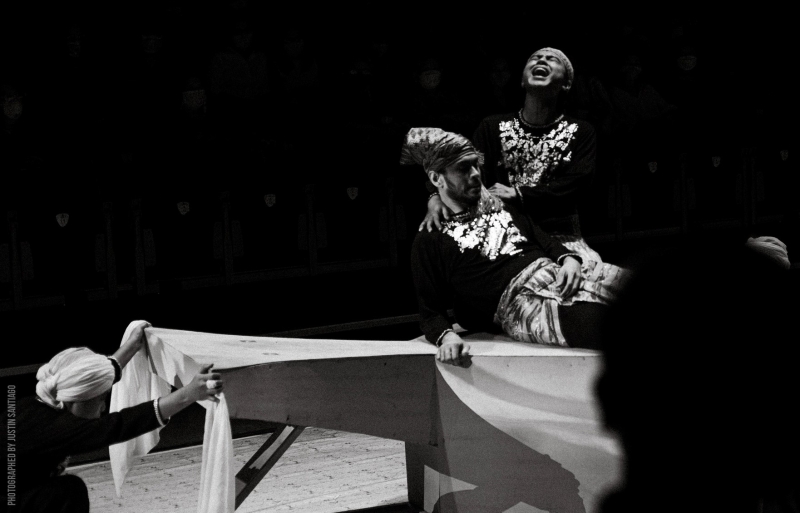
TWO SATURDAYS ago, my wife Beng and I sat enthralled as we watched a brilliant performance of the play “Anak Datu” at the CCP’s Black Box Theater. It was a play that, among other objectives, sought to trace the roots of the armed conflict in Mindanao to a series of massacres perpetrated by the military against Muslims just before and after the declaration of martial law. It began with the well-documented killings of young Tausug recruits being trained in Corregidor for an abortive invasion of Sabah in 1968 and went on to the less-known Malisbong massacre in Sultan Kudarat on September 24, 1974, in which 1,500 men were reportedly killed.

For us—and I’m sure for the packed crowd in the theater as well—it was a harrowing revelation. We had known about the troubles in Jolo and had followed the rise of the MNLF, but to most Manileños then and now, Mindanao was another country, tourist-pretty but woeful, home to exotic fruits, fabrics, and dances, but otherwise mired in poverty, corruption, and bloodshed. The play tries to break through those stereotypes even as it acknowledges the complexities of politics and culture as they apply to Mindanao, especially to people just trying to catch a breath of peace.

In pointed irony, earlier that same day on the other side of the world, Hamas militants had begun to mount an attack on Israel, eventually killing about 1,000 people and taking hundreds more hostage. In retaliation, Israel bombed the Gaza Strip and killed about as many. This nightmarish war of attrition is still continuing more than a week on, with no clear end in sight.

Like many Filipinos far from that war zone, all we could do was to mutter prayers for the dead, the displaced, and the suffering on both sides. On top of the war in Ukraine and natural disasters ravaging the planet, it seemed like the world was in the sorriest mess it had ever been since the Second World War, emerging from a pandemic only to destroy itself with more willful deliberation.

I know that some were not so generous as to seek or see a moral balance, and immediately identified with Israel, invoking the Bible, Washington, and common sense, especially with the reports and pictures of brave Filipino nurses standing their ground and being murdered by Hamas.

For certain, whatever and however long the history may be behind the legitimate grievances of Palestinians suffering under Israeli occupation, Hamas’ brutal assault on ordinary citizens will not win them any sympathy, at least in the Western media which we depend on for our news. We know that there has to be another side to the story, perhaps one just as terrifying, but we go with what we see. It could be argued that Hamas’ actions were the result of decades of oppression, like a man running amok; but this was cold premeditation, factoring in the inevitable retaliation it would provoke.

Still, with both Jews and Palestinians fighting for survival, we forget that not all Palestinians are Hamas, and that not all Israelis supported Netanyahu. The guns will drown out the voices of moderation in both camps, those who understand that there can be no real victors in these messy wars, only losers. Lives are lost, the truth is lost, our humanity is lost.

Countless posts on social media claim that the Lord has already taken a side in the conflict. But not being particularly devout, I remember only how often the Almighty’s name has been invoked to kill. The skeptic in me suspects that the Lord is, must be, indifferent, so we can use our own hearts and minds to sort things out; he will not play deus ex machina.

Nothing, not even quoted Scripture, will convince me that the slaughter of innocents in the name of God, Allah, or Yahweh is morally justified. It has happened, it happens, and will always happen because of our brutish nature, but that will be an explanation, not an excuse. The hard-nosed men in the war room will dismiss all this preciousness as so much sentimental handwringing, and raise the killer question: “If the enemy goes for your wife and daughter, won’t you go for theirs?” Revenge and retribution, an eye for an eye, will prevail over reason and compassion, often devalued as suicidal weakness.

Come to think of it, no one ever called the nuclear bombings of Hiroshima and Nagasaki—in which over 100,000 people died—“massacres.” Most of them were ordinary citizens just going about their business, with little or no say in their country’s militarist policies. Instead, conventional political and military wisdom has always insisted that these deaths were necessary for other deaths—particularly American, in a projected invasion—to be averted. One hundred thousand innocent lives wiped off the face of the earth in a literal flash, and no one in power even blinked, because of course it was justified as the lesser evil, made more acceptable by the savagery unleashed by Japanese soldiers on their captive populations.

In graduate school, I developed a keen and rather morbid interest in a genre of English Renaissance drama called “revenge tragedy” (think “Hamlet,” but there were many cruder, bloodier and frankly more entertaining examples). The object of all those plays was to show that “revengers” begin with a just cause, the victims of insufferable oppression and humiliation. But ultimately they prove little better than the beasts they seek to extinguish, wreaking havoc on the innocent. They cross a line, and lose all moral superiority.

That line is drawn somewhere in the sands of the Middle East, but  just as importantly, it also crosses our conscience. When we recall how easy it was for many Filipinos—even those who professed to be devout Christians—to condone and even applaud extrajudicial killings, thinking that society was merely ridding itself of riff-raff, we see how righteousness and evil can so comfortably cohabit.

I have no easy and firm conclusions to draw from this most recent conflagration, and I feel that we have to look beyond the intricacies of history and politics for answers. Diplomats, scholars, and zealots have tried almost all the formulas at their disposal, to no avail—with the notable exception of the two-state policy, an elusive political solution that will come with its own challenges.

It may be that only the hopelessly naïve or the naively hopeful—and I plead guilty—still imagine that any kind of just and enduring peace can be achieved in these circumstances. But before or while we condemn barbarity elsewhere, we have our own hordes of howling ghosts to confront, coming out of the Chinese pogroms under the Spanish, Bud Dajo, Samar, Corregidor, Malisbong, Mendiola, Maguindanao, and Mamasapano, among others. Let more “Anak Datus” be written, to lift and save us from Facebook’s summary judgments.

(Image from broadway world.com)
Penman No. 386: History and Hysteria

i_140h.jpg

Penman for Monday, April 27, 2020


IT MUST be part of human nature, in times of disaster or adversity, to seek some consolation or refuge in the past, more specifically in the misfortunes of others. It’s a kind of Schadenfreude across generations rather than distance, although not so much to derive pleasure as reassurance to the effect that, in time, all miseries have an end, all crises can be survived.

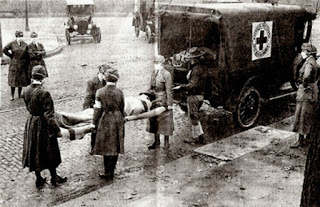
I have to admit that—interned for a month with the TV, the laptop, and my books for company—I’ve acquired a rather morbid interest in discovering what other people went through at other times, faced with the enormity of mysterious and murderous disease. We know by now how Covid-19 has brought out the best and the worst in us, stoking our deepest fears even as we marvel at the courage and generosity of a relative few. We—especially those of us in the emotionally vulnerable middle class—cringe at the possibility that desperation will lead to chaos.

History sadly provides little comfort in that respect. Awful things do happen in awful times, chiefly thievery and murder, although not always by the people you’d expect.

w980-p16x9-chevalier_roze_c3a0_la_tourette_-_1720.png

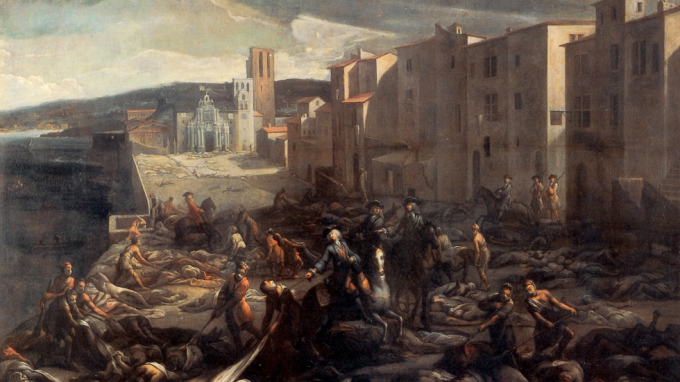
Writing about plague-hit Florence in the 1630s in Histories of a Plague Year: The Social and the Imaginary in Baroque Florence, (U. of California Press, 1989), Giulia Calvi noted that “Up to this point, the most surprising theme is how little fear contagion caused. In overcrowded houses, stinking alleys, and rooms that still held the dead, both actually and in memory, neighbors, relatives, and friends came and went—entering, stealing, taking things at random, and getting caught. They passed items from hand to hand, through windows and doors, wells and gratings; they knocked down house walls, climbed garden walls, and even lowered goods by rope from rooftops. The epidemic appeared to generate every emotion save fear of death.”

But a subtler kind of theft was also happening, with the emergence of medical amateurs, charlatans, and quacks offering all kinds of cures, from potions tried out in previous epidemics such as “simple curative roots and coral powder” to a recipe for “three black spiders, three serpents, three deaf vipers, three frogs, ten tarantulas, and fifty scorpions and other poisonous animals—alive, if possible—over a small flame like one used for soap or stew.” A thriving guild of doctors and herbalists controlled and approved the sale of these prescriptions on the street—for a fee, of course, evading which cost the offender a hefty fine.

6860258506_e43aed9186_b.jpg

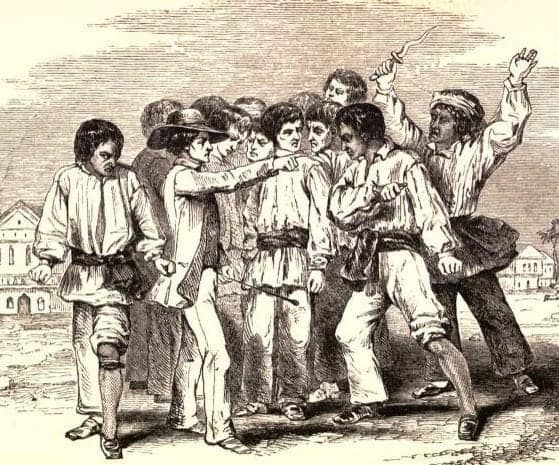
Hysteria bred by ignorance also led to wanton killing, as in 1820, when cholera and xenophobia led to the “Massacre at Manilla” of English French, Danish, Spanish, and Chinese nationals reported on in my 1822 copy of The Atheneum, a Boston-based magazine. It’s a grisly account echoed by the adventurer Paul P. de la Gironiere in his book published more than 30 years later:

“I had only resided a short time at Cavite when that terrible scourge, the cholera, broke out at Manilla, in September, 1820, and quickly ravaged the whole island. Within a few days of its first appearance the epidemic spread rapidly; the Indians succumbed by thousands; at all hours of the day and of the night the streets were crowded with the dead-carts. Next to the fright occasioned by the epidemic, quickly succeeded rage and despair. The Indians said, one to another, that the strangers poisoned the rivers and the fountains, in order to destroy the native population and possess themselves of the Philippines. On the 9th October, 1820, the anniversary of my departure from France, a dreadful massacre commenced at Manilla and at Cavite. Poor Dibard, the captain of the Cultivateur, was one of the first victims. Almost all the French who resided at Manilla were slain, and their houses pillaged and destroyed.”

1820-Cholera-Epidemic-in-Manila.jpg

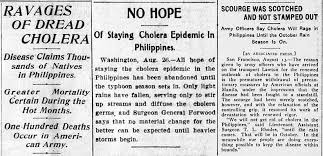
But as dramatic as these events were, the real tragedy was that the plague quietly targeted its victims, and more often chose the poor. Early in January 1900, reports of bubonic plague began coming out of Manila, such as this account in a San Francisco newspaper: “The bubonic plague is yet sporadic. There have been six cases and four deaths. Preparations are being made to establish hospitals and quarantine. Great numbers of provincial natives are coming to Manila, with whom the city is overcrowded, the increase in accommodations being inadequate. The rice necessary for foodstuffs is more expensive than at any period during the last twelve years. The plague is dangerous to the overcrowded, unfed and unwashed natives and Chinese.”

A lab report such as the one excerpted below (from The Plague: Bacteriology, Morbid Anatomy, and Histopathology, Including a Consideration of Insects as Plague Carriers by Maximilian Herzog, MD, published in Manila by the Bureau of Public Printing, 1904) may have been clinically precise, but the sadness of a child wasted by the lice (pediculi) common to her station is inescapable:

“The body of a female child, 9 to 10 years of age, well developed. Post-mortem rigidity strong…. Before the body had been opened, three pediculi were picked up from the scalp with sterile forceps and dropped first into an empty sterile test tube and later into three flasks containing 50 cubic centimeters of sterile, slightly alkaline bouillon…. Inquiries were made as to the possibility of the girl’s having been infested with pediculi from someone living in an infected district.”

We learn that disease will ravage and kill the body, but also that, in the long run, disease and even death itself can be defeated—with knowledge, understanding, and willful compassion.

Cholera.jpg

Unknown.jpeg

8095580f1b28ca178b498b13d2d50476.jpg


Penman No. 311: A Trove of Printed Delights

BigBooks

Penman for Monday, July 18, 2018


A FEW months ago, I wrote about picking up some wonderful books online that I plan to add to my retirement library—books that I’ll be poring over at leisure, for no more compelling or more urgent reason than enjoying the stories they contain, or even just the way they were printed, illustrated, and bound. I won’t be writing any papers about them (well, maybe a column or two), and I’ll leave myself the option of reselling some of them to share the fun and feel better about buying some more.

Most of these books come from the USA, chiefly from eBay, where I’ve been actively trading for more than 20 years. You’d be amazed by the Philippine treasures—not just books but paintings and other artifacts—that made their way overseas and eventually turn up on eBay. I’ve made it my personal mission (of course my wife Beng calls it my excuse) to recover these precious objects as much as I can afford on my professor’s salary—important or interesting Filipiniana, for example, such as the first US publications of Manuel Arguilla’s stories, and early editions of Carlos Bulosan’s books.

I’ve sourced books and paintings from as far away as France, Spain, and Portugal, and have successfully had them shipped to me in Manila by regular air mail. To save on shipping, however, I typically accumulate all my US purchases at our daughter Demi’s place in San Diego, California, and then have them couriered to me when they’re enough to fill a box, or wait for our next visit to Demi and her husband Jerry to cart them home.

That opportunity happened last week, on my annual vacation leave. We came too early for Comic Con this year, but I had stranger things than, well, Stranger Things in mind. I was eager to plow through and pack away about a hundred pounds of books and paintings that had been piling up at Demi’s over the past six months.

The paintings—which include a large and marvelous Gabriel Custodio seascape from 1966 that I found at a resale store in Spokane, Washington—will be worth another story, but for now, let me share some of the most interesting publications from the pile.

NoliEtc

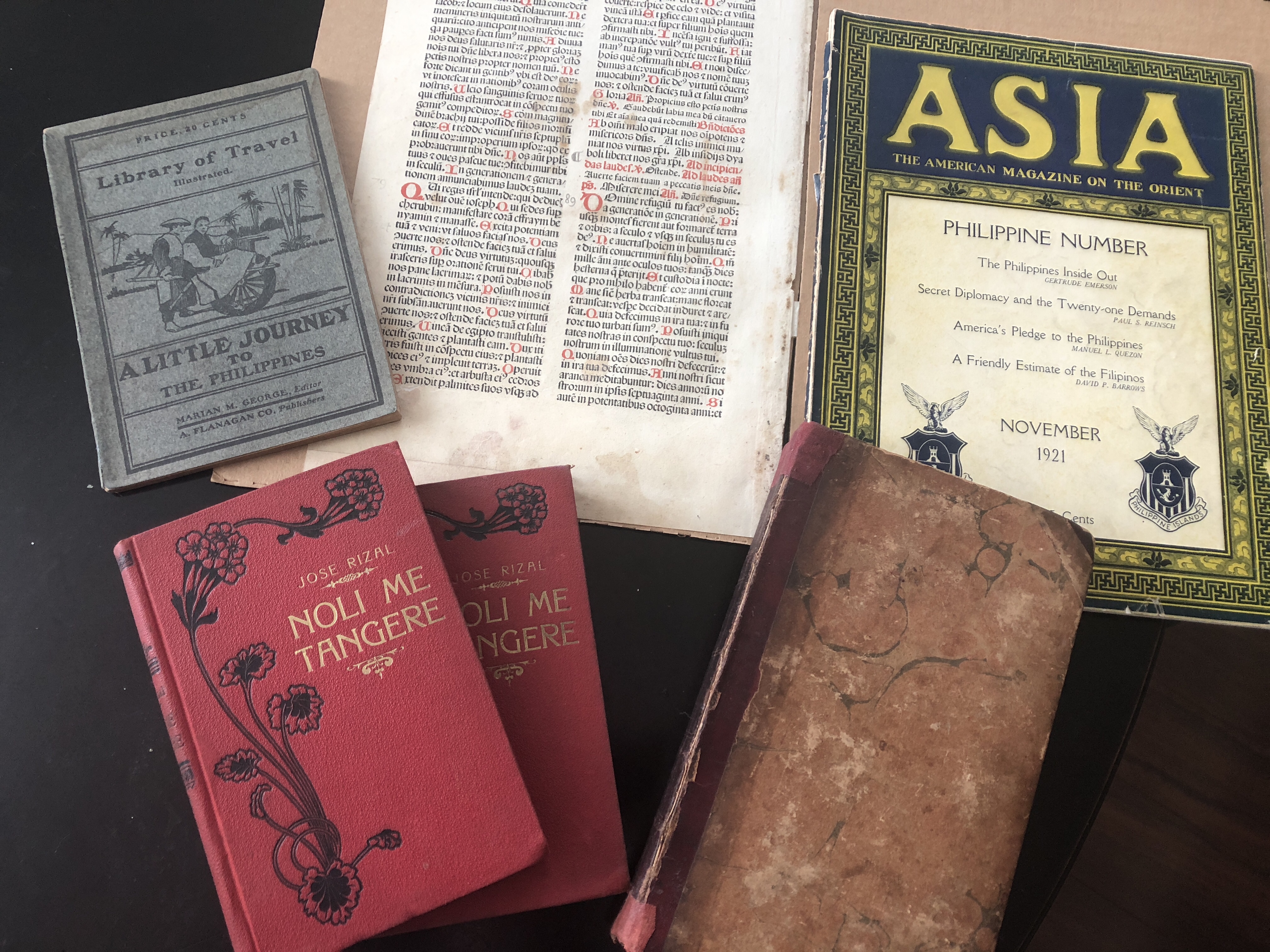
Old editions of the Noli and Fili are always desirable objects of study, and to complement the rather eccentric 1911 Fili I acquired last year, I received a two-volume 1909 Noli from Madrid (also published by Maucci in Barcelona), with annotations by Ramon Sempau. It’s interesting how, scarcely a decade after his execution, Rizal is hailed as a patriot by the Spaniards. This edition contains the Last Farewell and an account of his trial. (Another later edition in the pile, a Noli retitled and published by Norton in 11961 as The Lost Eden, is introduced by James Michener, who describes the novel as “a nineteenth-century Gothic melodrama, filled with eery churches, flashes of lightning, ominous strangers, premonitory whisperings, and almost unacceptable coincidences.”)

I try to collect old books that have something to do or say about the Philippines, but of course that becomes more difficult the farther back you go. In my office, I display a page from a German book on geography from 1578 that talks about “den Philippinischen Insuln,” and I’m sure other collectors have much earlier material. But sometimes I pick up antiquarian documents just to be able to show my students what truly old texts looked like, and in this batch is a page from a Latin breviary published in Augsburg in 1490—an example of true incunabula, or something printed roughly within 50 years of Gutenberg’s 1455 Bible.

There’s an extensive and rather grisly account of a “Massacre at Manilla” in my 1822 copy of Vol. X of The Atheneum, a Boston-based compilation of highlights from imported contemporary English magazines (the “magazine” as we know it today grew popular in England in the 1700s). The article is an unattributed eyewitness account, reported by a victim of a brutal massacre of foreigners—English French, Danish, Spanish, and Chinese, among others—following a false report that they were responsible for fomenting a cholera epidemic that had decimated the natives by giving out poisoned medicine (shades of today’s Dengvaxia hysteria). It occurred to me that I had read about this same massacre before from Paul P. de la Gironiere, who was serving as a doctor aboard a French ship in Cavite at the time, and who claims to have performed great deeds of daring in the emergency.

More congenial is A Little Journey to the Philippines (Chicago: A. Flanagan, 1900), edited by Marian M. George, filled with observations of a pleasant nature: “Our boat is anchored, and we start off with a guide for the Enchanted Lake. We pass ponds filled with fragrant pink pond lilies, and shortly begin to climb the crater of an extinct volcano.” It also remarks, perhaps presciently, that “There is no Philippine nation. Instead there are numerous governments; the people are divided into over eighty different tribes; and there are over seventy-five different languages spoken among them.”

If I had more space in my baggage and my house, I would buy tons more of these books, which remind me how we keep drifting back to the past, despite the GPS in our iPhones.