Qwertyman No. 146: A Shift in the Tide

Qwertyman for Monday, May 19, 2025
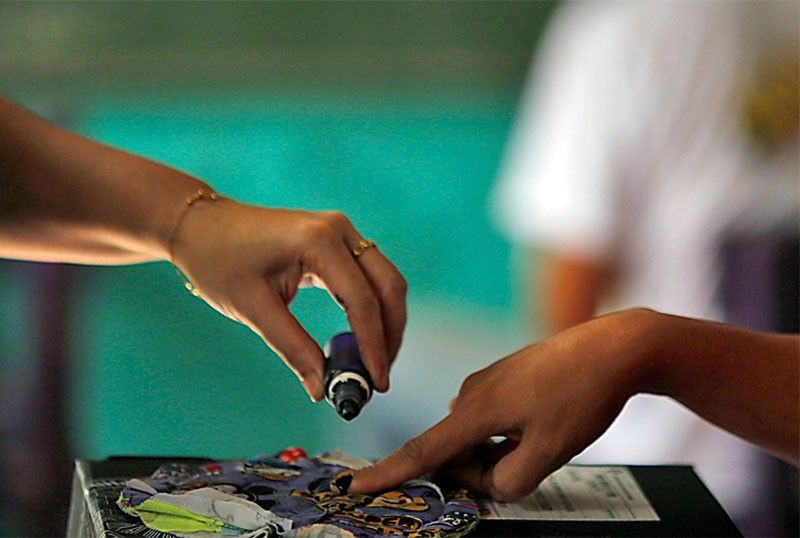
THE PUNDITS have spoken and all kinds of analyses have been made about the recently concluded midterm elections, with most observers remarking on the surprise victories of Bam Aquino and Francis Pangilinan in the Senate and of Akbayan and ML in the partylist, as well as the steep decline of the hard Left alongside the continuing strength of the pro-Duterte forces. 

Some read the results as a sharp repudiation of the administration, others as a resurgence of the “Pinklawan” moderates, and yet others as just more proof of the Pinoy voter’s kabobohan in keeping the same old names in power. What’s clear is that it was a mixed outcome, giving everyone something to either crow or complain about.

At my favorite poker haunt, where I’ve been playing with a bunch of regulars for nearly twenty years, the table talk inevitably came around to the election results. The people here—mostly young and but with many seniors, mostly men, mostly middle class and urban (you need some money to play poker)—represent for me a good cross-section of our society, perhaps statistically imperfect but more grounded in gritty reality: neither scholars nor ideologues but homeboys coming from both Manila and the far provinces, brought together by nothing grander than chasing after a straight flush and pocket aces.

Maybe to rattle their opponents or to deflect attention from the cards, these guys can talk up a storm about politics. My general strategy is to shut up and smile to keep them guessing; although they know me as a UP professor and could presume on my liberalism, I’ve decided that listening rather than arguing would yield me a truer picture of the Pinoy mind, and protect my hand.

Back in 2022—to my great dismay—that mind was overwhelmingly pro-“Uniteam.” Despite all the information floating out there about Marcosian martial law and Dutertean bloodlust, my fellow pokeristas and even the dealers loudly proclaimed that they were voting for BBM, hushing the few Kakampinks in the room. 

Last week, the atmosphere in the poker place was decidedly different, one of great amazement and relief. There was surprise–but also joy—that Bam and Kiko won. The biggest buzz revolved around Pasig City Mayor Vico Sotto, less over the win that everyone expected than his political future, which everyone agreed should include the Senate and at least the vice presidency, the only concern being his youth (not that he was too young for the job, but for the legal minimum age). No tears were shed over the loss of popular entertainers and media personalities. Not much was said about BBM and VP Sara, who seemed strangely irrelevant, despite the fact that the midterms were effectively a proxy war between them.

Now of course you could say that a gambling den is hardly representative of the Filipino people, but then gamblers are among the most hardboiled cynics you can find, not easily given to idle wonderment. (And then again, poker wouldn’t thrive without foolishly hopeful patsies like me—called “fish”—who go all-in on a pair of deuces, hoping to catch a trio. Remember Anton Chekhov’s description of gamblers as people who “go out for their daily dose of injustice.”) That a shift in the tide seemed to ripple on the surface of these poker faces was encouraging. I suspect that these dehadista sentiments were there all along—but have now been emboldened to surface, and I can see this happening all over the country: it’s okay to hope, to bet on the long shot.

It’s probably a measure of how desperate we’d become, more than anything else, that progressives all over the country are ecstatic to have won two out of 12 seats in the senatorial race, never mind that the other winners were mostly your usual crowd of trapos and Family Feud participants.

After previous wipeouts and defeats that, we were convinced, only massive fraud could have engineered, these signal victories—along with a smattering of other partylist and local wins—have now raised our hopes for a more enlightened electorate and a resurgent opposition.

The question is, who will that opposition be, and who and what will it be opposing? Frozen out of the Palace and facing impeachment, VP Sara has claimed the mantle of opposition leader in her post-election statement. That’s “opposition” in the trapo sense of the word—another faction of the same ruling elite, another version of greed and lust for power.

It should be clear by now that a real, viable, and electable opposition can come only from the middle forces that are beginning to regain their footing after the hard loss of 2022. The sad but not surprising defeat of the more radical Gabriela and Bayan Muna partylist groups—which some see as the triumph of Red-tagging—puts the burden of the fight against corruption and for good governance on Bam Aquino, Kiko Pangilinan, Risa Hontiveros & Co., because it’s something that no one else in the government, certainly not the Dutertites, have the moral authority to undertake.

For this battle, and in preparation for 2028, this opposition has to adopt and master coalition politics—or rather their supporters have to learn how to unite, to maintain focus on the big picture, and to yield ground when necessary for the greater good.

For example, as I noted in an FB comment, Luke Espiritu and Heidi Mendoza turned in good performances—but they could have been better if some of our “liberal”-minded friends didn’t junk them on single issues: Luke for supposedly being an “abortionist” and Heidi for being a “homophobe.” Until we can get beyond our enclaves and agree on broader issues, the real evil will win. Sometimes we look for perfect candidates, people who align with all our principles, check all the boxes, lead blameless lives. But everyone’s flawed—any writer from the Greek playwrights onward knows that. 

We hand-wringers can be our own worst enemies. As a recent opinion piece in the New York Times put it, “Members of the educated elite… tend to operate by analysis, not instinct, which renders them slow-footed in comparison to the Trumps of the world…. Such elites sometimes assume that if they can persuade themselves that they are morally superior, then that in itself constitutes victory; it’s all they need to do.”

We have three years to see what was really achieved in May 2025, and if, like a good pokerista, our middle forces will know how to play a weak hand from a strong position, with a single-minded audacity and resolve.

Qwertyman No. 91: 1968 Redux

Qwertyman for Monday, April 29, 2024

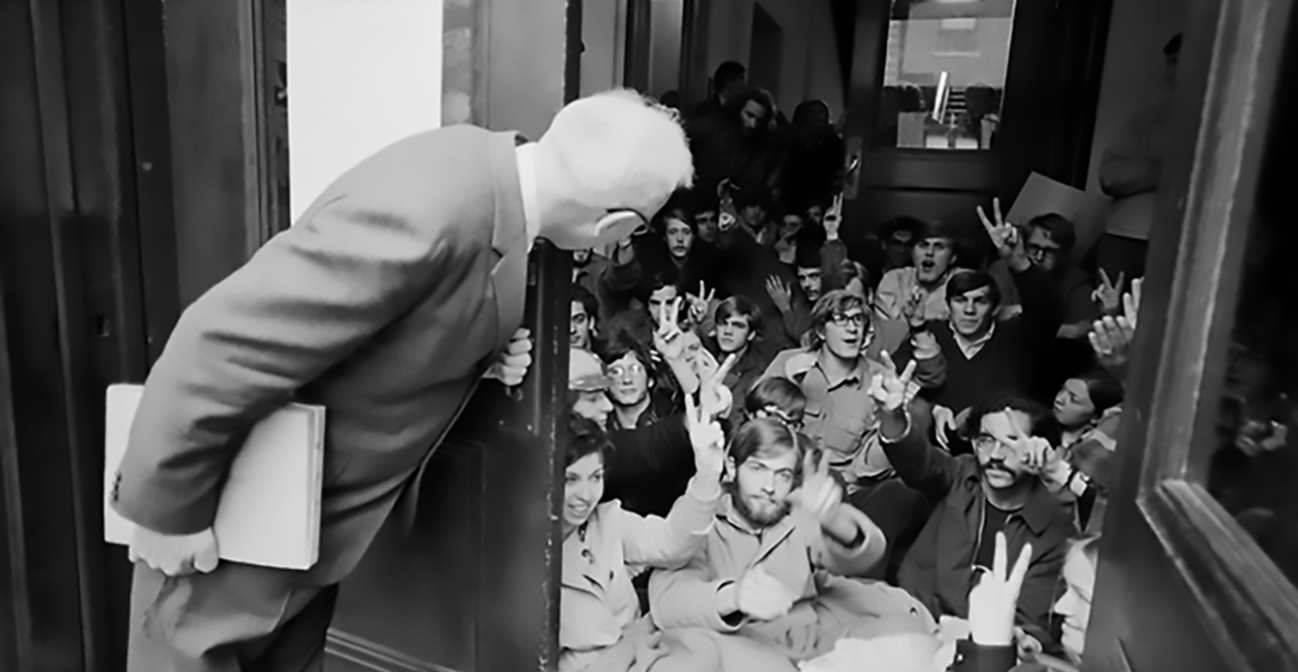
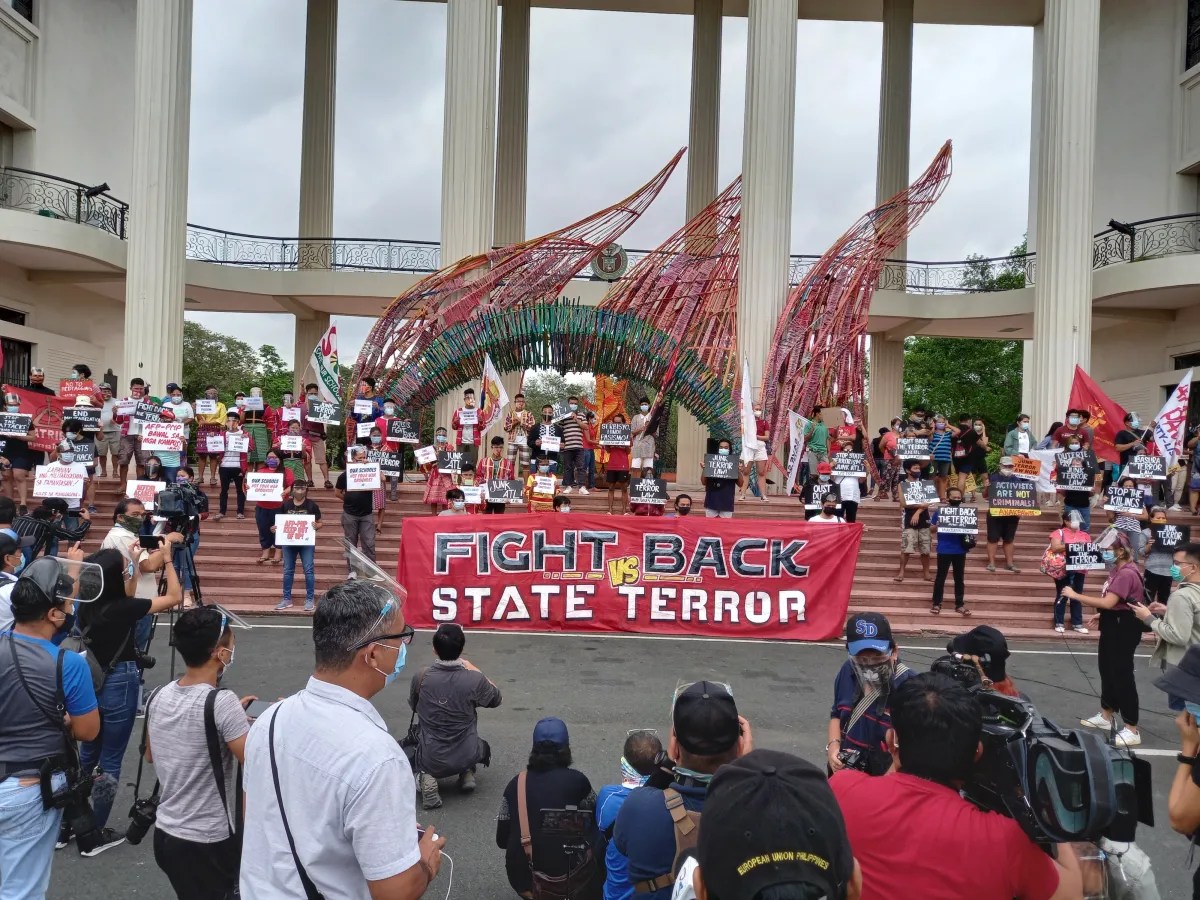
A WAVE of pro-Palestinian protests has been sweeping American college campuses, prompting academic administrators and political leaders to push back and invoke their powers—including calling in the police—to curtail the demonstrations. 

House Speaker Mike Johnson—a Trump ally and staunch supporter of Israel—probably spoke for his ilk when he told protesting students at Columbia to “Go back to class! Stop wasting your parents’ money!” He also called on Columbia University president Minouche Shafik—an Oxford Economics PhD and English baroness who also happens to have been born in Alexandria, Egypt to Muslim parents—to resign for not moving strongly enough against antisemitism on the Columbia campus, despite Shafik’s controversial suspension of pro-Palestine student groups earlier and her resort to police action, resulting in mass arrests.

The protests and the violent response to them threw me back to 1968, when the world’s streets from Chicago to Paris shook from the boots of students and workers marching against the Vietnam War, for civil rights, and for women’s liberation. In the Philippines, student organizations such as the SCAUP and the newly formed SDK took up the same causes, on top of a resurgent nationalism. I was too young to have been part of these great movements then, although we marched in high school for “student power,” whatever that meant. I would get deeply involved as the decade turned, infected by the inescapable ferment in the air; in 1973 I would realize that protest had a price when I spent seven months in martial-law prison.

I’ve tried hard to think what it would be like to be 18 and a student today, what cause would drive me to the streets and to pitch a tent on the campus grass. While we Pinoys have our sympathies, Gaza seems too distant for us to mobilize for, and certainly we don’t lack for domestic issues to be bothered by, although our level of tolerance appears to have risen over time. In 1971, a 10-centavo increase in oil prices was enough for us to trigger the Diliman Commune; today we routinely wait for Tuesday’s inevitable announcement of gas price hikes and sigh.

Perhaps time and age do bring about shifts in perspective; some leftist firebrands of my youth have now become darlings of the right, and I myself have moved much closer to the center, ironically morphing from student activist to university official at the time of my retirement.

As that administrator—at a university where protesting is practically part of the curriculum—I can appreciate the bind Dr. Shafik now finds herself in, hemmed in from both left and right, with the complexity of her thinking and the brilliance of her own achievements reduced to a single issue: how to deal with students who won’t “go back to class and stop wasting their parents’ money,” as Speaker Johnson would have it, and will instead insist on their right to self-expression, whatever the cost. Aggressiveness, audacity, and even insolence will come with the territory. Persons in authority become natural targets of one’s rejection of things as they are; the preceding two generations are to be held immediately responsible for things gone wrong. 

I recalled a time when UP students barged into Quezon Hall to interrupt a meeting of the Board of Regents to plead their cause. Some furniture was scuffed, but the president sat down with the students and discussed their demands. No one left happy, of course, but what had to be said on both sides was said. At another meeting later, someone asked if the students involved should have been sanctioned for what they did. I had to butt in to pour cold water on that notion, knowing that any punitive action would just worsen the problem. Open doors, I said, don’t shut them; this is UP—that kind of protest is what makes us UP, and our kind of engaged response is also what makes us UP.

Some will say that these outbursts are but cyclical, and that young people never learn, in repeating what their now-jaded seniors did way back when. But then the State never learns either, by responding to student protests today the way they did back in 1968, with shields and truncheons, effectively affirming everything the young suspect about elderly authority.

The Israel-Hamas war—now magnified, through many lenses, into an Israeli war on Palestinians—is a particularly thorny issue for American academia and for a public habituated to looking at the Jewish people as biblical heroes and historical victims. Gaza has turned that perception around for many, with the aggrieved now seen as the aggressors. In my column two weeks ago, I agreed with that re-evaluation, although I was careful to take the middle road and to condemn the excesses—committed for whatever reason—on both sides. 

Not surprisingly, I quickly got blowback from both my pro-Israel and pro-Palestinian friends. War is always ugly, one said, and Israel has to do what it must to save itself; the Hamas attack on October 7 was overblown by propaganda, said another, and it was something that Israel had coming. 

I still accept neither extreme; call me naïve and even Pollyannish, but I stand not with Israel nor with Palestine, but for peace and justice, which are not exclusive to one side, and can only be achieved by both working and living together. You can argue all the politics and the history you want, but there is absolutely no humane rationalization for the rape of women, the murder of children, and yes, even the killing of innocent men—not even the prospect of potentially saving more lives, the very argument behind the incineration of 200,000 Japanese in Hiroshima and Nagasaki, an act of war we all benefited from, but cannot call guiltless.

In a conflict as brutal and as polarizing as this one, “middle” never quite cuts it, and the excess of one will always be justified by the excess of the other. (To complicate my ambivalence, some issues do seem to have no middle, like Ukraine.) There have been no mass protests or demonstrations to advance my kind of moderation, and I don’t expect students, whether in Columbia or UP, to take to the streets flashing “peace” signs. 

And in mentioning that, I think I’ve put a finger on one difference between 1968 and 2024: “peaceniks” were neither pro-Saigon nor pro-Hanoi, although her critics were quick to paint Jane Fonda red; they just wanted America out of a war that was none of its business. There was an innocence to that that seems to have been lost in our hyper-informed and over-analyzed century. We feel compelled to choose with passion and precision, and are defined by our choices, from politics to sneakers.

Qwertyman No. 71: A Breakthrough for Peace

Qwertyman for Monday, December 11, 2023

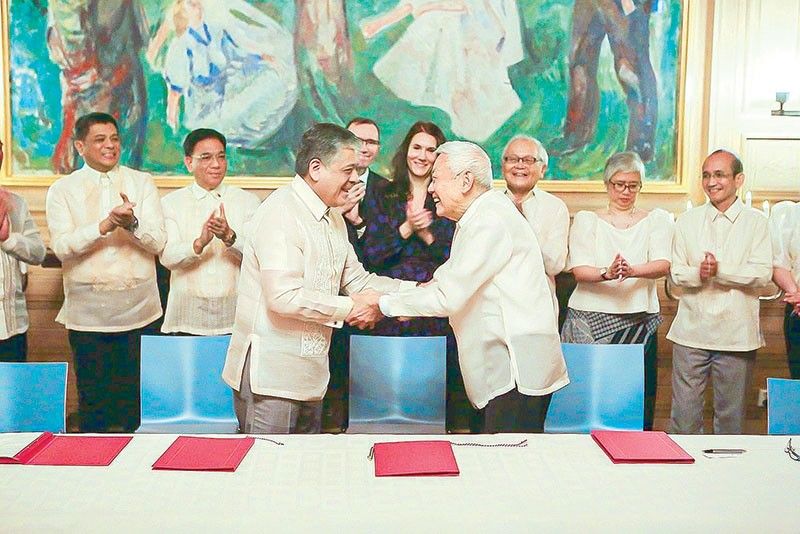
I HONESTLY didn’t know what to feel when I first read the news that a breakthrough appears imminent in peace negotiations between the Philippine government and the National Democratic Front (and behind it, the Communist Party of the Philippines), whose soldiers and partisans have been at war with each other for over half a century, in one of the world’s longest-running insurgencies.

As a student activist who fought martial law and got imprisoned for it at age 18, I didn’t expect to live past 25 because so many of my friends and comrades were giving up their lives around me in the name of freedom and justice. Instead, in a Forrest-Gumpish turn of events, I survived and even prospered for another 50 years. As I wrote in my introduction to the book SERVE (Ateneo Press, 2023), co-written with 19 other fellow stragglers from what we called the First Quarter Storm, “We celebrated our seniorhood as the ultimate victory” even as “the experience of martial law coded itself into our DNA.” That victory, of course, is a shallow one, considering that the causes we fought for remain as valid and as urgent today, and that the social cancer we sought to excise “had never left, was always there, lying cruelly in wait for a chance to ravage us again—and not only us this time, but our children and grandchildren as well.”

My reaction to the peace talks—and I would guess that of many of my peers as well—was one of joy and relief, but inevitably compounded by some doubt and apprehension. All of these responses, however disparate, have their reasons.

The joy and relief must be paramount because, however we look at it and whatever arguments may be presented by either side, the armed conflict has gone on too long, without truly positive and strategic gains to show for five decades of warfare, at the cost of innumerable lives and massive drains on our resources. This is not to say that those lives were wasted nor that everyone’s goals have been met, but that surely there must be a better way—a more humane and effective way—to resolve our differences and move forward together without having to kill yet another cadre or yet another soldier, both of them probably just farm boys looking to improve their lives. 

Ultimately and simply, it didn’t work as planned—neither the “people’s war” nor the counter-insurgency. (Curiously, they manifest a kind of symbiosis or co-dependency, with one providing the basis for the other.) The Left is as far from seizing State power as we are from achieving a FIBA championship (no matter virtue, skill, or tenacity), and the Right remains essentially as it has always been, unreformed and unrepentant in its monopoly of economic and political power. But the Right seems to have been more clever at shapeshifting, riding on and pandering to the digital consumerism of a new generation and thereby dousing its revolutionary fervor, while the Left has basically stuck to the playbook and rhetoric of 1970s Maoism.

Meanwhile, in the great section between them, the masses of our people remain largely poor and vulnerable, in desperate need of food, housing, work, and education, a significant number of them kept afloat only by the grueling sacrifices of fathers, mothers, and siblings laboring overseas. Some decline has been noted in the incidence of mass poverty in recent decades, but it has been slow and uneven; even moderate economic growth did not necessarily lead to significant poverty reduction. 

We are said to have a rising middle class—estimated by the Philippine Institute of Development Studies at 40 percent of the population—but it is a very fragile one, strongly aspirational in its longing to be rich or be like the rich, but weak in the knees, and easily crushed or co-opted. Those of us in this category spend our lives saving up for the good things and cultivating our composure, only to lose all that in one catastrophic illness or declaration of redundancy.

Politically, as well, I place myself squarely in the middle, never having trusted the Right and its compulsive greed for wealth and power and long having fallen out of love with the Left, which has shown itself to be just as capable of cynical calculation. I declare myself a liberal (with the small “L”), with all of that word’s ambiguities and contradictions. I repose my faith in no party or church or army, but trust my reason (however faulty, and with God’s grace) to lead me to the truth and to the right decisions. I draw strength from knowing, as I saw in the crowds of May 2022, that a huge wellspring of goodness and positive purpose resides in many if not most Filipinos. We cannot and will not let bad politics and bad politicians stop us from doing good, in our families, communities, and eventually our nation.

However fractured our society remains, in the very least we deserve peace, and must agree on peace, so we can banish one of the darkest specters in our national history. No more war; no more political prisoners; no more tokhang. And please, no more Leila de Limas.

But a just and lasting peace will require not only a rejection of violence as conflict resolution. It should also mean strengthening the law and the independence of the judiciary, reducing corruption, and depoliticizing the military and police. It should mean dismantling the broad and expensive State apparatus devoted solely to counter-insurgency, a factor that the National Security Council itself has declared “a dying threat” even as military budgets remain high. Deploy our soldiers to our coastal waters and boundaries, where the real dangers to our national security loom.

The irony of another President Marcos securing the peace has not escaped me, as I’m sure it will perplex others, but I grant that peacemaking will require being able to look beyond the persons for now and focus on the larger goals and processes involved; other reckonings can follow. I’m under no illusion that the GRP and the NDF will sing “Kumbaya” around a campfire and that all will be well thereafter. Neither party comes to the table with clean hands and consciences. Both come with long histories of violence, betrayal, and guilt. There will be more hope than trust to share.

But a peace agreement is not a marriage, with a pledge to love and hold hands no matter what, merely a civil agreement to live under one roof without killing each other and maybe, just maybe, have an occasional cup of coffee or a meal together. 

For this I am willing to suspend my disbelief, and wish all the parties the best of luck, with a silent prayer for this most unlikely and difficult of enterprises. Other battles and debates can follow; let’s end this one first.