Qwertyman for Monday, May 4, 2026
THIS IS a piece I dread writing, knowing that I am bound to say something over the next thousand words that will almost certainly offend, dismay, and even enrage some people who might have thought better of me otherwise. But I also feel that it will be a gross dereliction of the duty that comes with the privilege of being published on this page if I avoided commentary on one of the most painful headlines to have sprung up this past week.
I am not a political scientist, a theorist, or a coffeeshop regular with access to backroom information, so as I often do, I will draw on personal memory and experience—on the distant but insistent past—to reflect on the present.
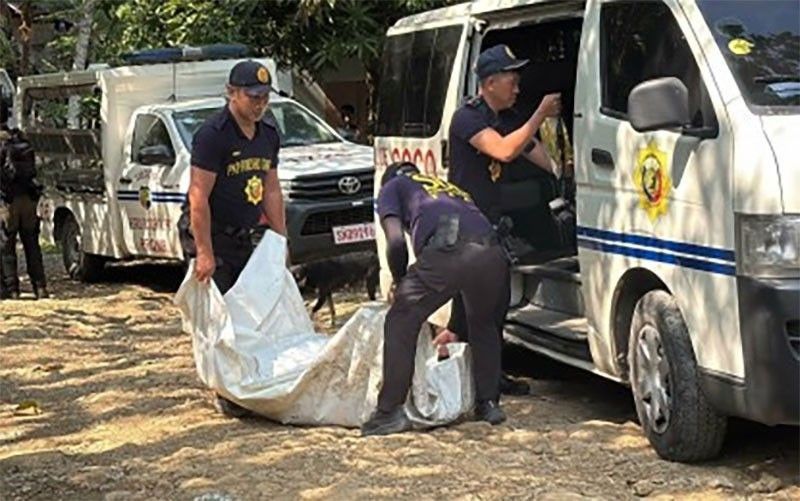
I refer, of course, to the recent deaths of 19 young Filipinos—two of them American citizens—at the hands of the Philippine military in Toboso, Negros Occidental in what the military described as an “armed encounter,” which a New People’s Army spokesman denounced as a “ruthless massacre” that included civilian students and activists embedded in the community.
It is not difficult for me to see how a bright young college student like Alyssa Alano would find herself in that far-off barangay, living with the locals and studying their way of life. I think she and her comrades knew the risks of being there and getting caught in the crossfire of a long-running war. Whether they believed or not in the armed struggle, they entered its deadly embrace. Even RJ Ledesma’s presence in a combat zone, I could understand. As an 18-year-old reporter at the Philippines Herald, I begged my editors to send me to Isabela, when we heard that a ship called the Karagatan had arrived to deliver arms to the NPA; I was certain it was a government plot (it was not) and wanted to discredit it. The desk sagely ignored me.
But one thing I can assume is that Alyssa & Co. were spurred by a genuine desire to serve the people, in that particular way, in that particular place and time. We may disagree with the methodology and certainly the results, but we can grant them the sincerity if not the nobility of their intentions.
I recall a summer back in the early 1970s when I joined a cohort of UP Nationalist Corps members—mostly city-bred teenagers—in week-long “learn from the masses” trips to the countryside in Quezon and Bulacan where we lived with the common folk and subsisted on our purposely meager rations and whatever shrimp we could catch in the leech-infested river. There were no NPAs with us, nor did anyone indoctrinate us; we were there to realize our fundamental ignorance of and disconnection from the vast majority of our impoverished people. However, I have to admit that if the purpose of these sorties was to de-romanticize life in the countryside, to steer our perceptions away from Amorsolo’s gilded sunsets, the effect (at least on me) was the exact opposite. I came away even more convinced that struggle and sacrifice in the midst of suffering were heroic. The experience only confirmed what I had read in high school, in William Pomeroy’s The Forest, detailing the arduous treks of the old Huks in the mountains: I was looking at hard reality through a soft lyrical lens.
If I had not been arrested and imprisoned here in Manila in 1973, I would very possibly have gone on to the countryside, like many of my comrades did, and been killed within two weeks because of my sheer incompetence and ineptitude at guerrilla warfare, which most college boys and girls are simply not trained to do (and then again, quite a few learned and survived).
And that perhaps was the most traumatic part of those times—receiving and viewing the horribly mangled bodies of our fallen friends, hearing the screaming at the UP Chapel over someone whose skull had been blown open: “That’s not him, that’s not him!” There was much criticism last week of someone’s use of “corned beef” to describe the Toboso dead as crassly inhuman, but I can confirm that it was a term we ourselves used—carne norte—for the bodies that came back shredded not even in hermetic body bags but in rice sacks.
Now we, too, have been caught in the crossfire, horrified by the wanton slaughter of our young but unsure of whom and what to believe in. An independent inquiry is absolutely called for, yes, to establish what happened, determine accountability, and define the rules of engagement in these circumstances. The brutality of that assault was barbaric in its execution. But exactly who are accountable, and what for?
I worry that these remarks could create more confusion than clarity. But sometimes we need to be unsettled or unmoored from our stoutest presumptions to begin to understand ourselves, and what we believe in, and why. One thing I’ve noticed about both extremes on the Left and Right is how certain they seem to be about everything, as if they had the whole universe and its rights and wrongs all figured out, and expect nothing less than absolute belief and compliance from their recruits and adherents. At one point in my life this was true of me; I could quote from Chairman Mao’s “Little Red Book” chapter and verse, and lived by its tenets (or at least tried to, inevitably failing in matters of personal discipline).
As I grew older, I began to appreciate the value of doubt, and even of skepticism. Mao may have been a brilliant revolutionary, but he also became a fat and filthy sexual predator (whose tomb I even visited twice in Beijing). The organ that generations of idealistic young people venerated turned out to be as murderous and as cynical as its professed enemies.
If I were asked to advise a granddaughter or a nephew in college how to fight for justice and freedom, and if that girl or boy seemed intent on joining the armed struggle, whether as an observer or combatant (note that the military does not distinguish between them), this is what I will probably say: “I cannot stop you from doing what you so fervently believe in, because I would have done the same thing in my time. But think about this, before you go: your time is different, and many things have changed. I know that poverty and injustice have not gone away, and may even have worsened.
“But if there is something that half a century of struggle has taught us, it is that violence, however justified, never really works; it will only be met with even greater violence, with tragic results for all. The harder battles to fight are right here—in the communities you know and can influence, for the issues that matter to them. You do not need to go far to reach the suffering and the underserved: they are around you, wherever you turn.
“Fifty years ago we may have had little choice but to go underground; today we have civil society to embrace your causes. Call me defeatist, cowardly, or myopic, or even a comfort to the enemy; but I remain alive and fighting for truth, justice, and freedom the best ways I can, which include what I’m telling you now—the strongest weapons are in your hearts and minds, not in your hands.”

