Qwertyman No. 146: A Shift in the Tide

Qwertyman for Monday, May 19, 2025
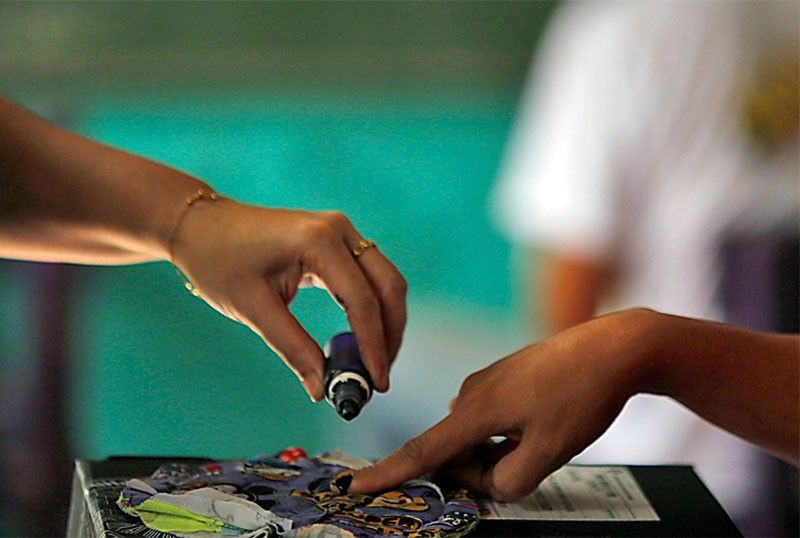
THE PUNDITS have spoken and all kinds of analyses have been made about the recently concluded midterm elections, with most observers remarking on the surprise victories of Bam Aquino and Francis Pangilinan in the Senate and of Akbayan and ML in the partylist, as well as the steep decline of the hard Left alongside the continuing strength of the pro-Duterte forces. 

Some read the results as a sharp repudiation of the administration, others as a resurgence of the “Pinklawan” moderates, and yet others as just more proof of the Pinoy voter’s kabobohan in keeping the same old names in power. What’s clear is that it was a mixed outcome, giving everyone something to either crow or complain about.

At my favorite poker haunt, where I’ve been playing with a bunch of regulars for nearly twenty years, the table talk inevitably came around to the election results. The people here—mostly young and but with many seniors, mostly men, mostly middle class and urban (you need some money to play poker)—represent for me a good cross-section of our society, perhaps statistically imperfect but more grounded in gritty reality: neither scholars nor ideologues but homeboys coming from both Manila and the far provinces, brought together by nothing grander than chasing after a straight flush and pocket aces.

Maybe to rattle their opponents or to deflect attention from the cards, these guys can talk up a storm about politics. My general strategy is to shut up and smile to keep them guessing; although they know me as a UP professor and could presume on my liberalism, I’ve decided that listening rather than arguing would yield me a truer picture of the Pinoy mind, and protect my hand.

Back in 2022—to my great dismay—that mind was overwhelmingly pro-“Uniteam.” Despite all the information floating out there about Marcosian martial law and Dutertean bloodlust, my fellow pokeristas and even the dealers loudly proclaimed that they were voting for BBM, hushing the few Kakampinks in the room. 

Last week, the atmosphere in the poker place was decidedly different, one of great amazement and relief. There was surprise–but also joy—that Bam and Kiko won. The biggest buzz revolved around Pasig City Mayor Vico Sotto, less over the win that everyone expected than his political future, which everyone agreed should include the Senate and at least the vice presidency, the only concern being his youth (not that he was too young for the job, but for the legal minimum age). No tears were shed over the loss of popular entertainers and media personalities. Not much was said about BBM and VP Sara, who seemed strangely irrelevant, despite the fact that the midterms were effectively a proxy war between them.

Now of course you could say that a gambling den is hardly representative of the Filipino people, but then gamblers are among the most hardboiled cynics you can find, not easily given to idle wonderment. (And then again, poker wouldn’t thrive without foolishly hopeful patsies like me—called “fish”—who go all-in on a pair of deuces, hoping to catch a trio. Remember Anton Chekhov’s description of gamblers as people who “go out for their daily dose of injustice.”) That a shift in the tide seemed to ripple on the surface of these poker faces was encouraging. I suspect that these dehadista sentiments were there all along—but have now been emboldened to surface, and I can see this happening all over the country: it’s okay to hope, to bet on the long shot.

It’s probably a measure of how desperate we’d become, more than anything else, that progressives all over the country are ecstatic to have won two out of 12 seats in the senatorial race, never mind that the other winners were mostly your usual crowd of trapos and Family Feud participants.

After previous wipeouts and defeats that, we were convinced, only massive fraud could have engineered, these signal victories—along with a smattering of other partylist and local wins—have now raised our hopes for a more enlightened electorate and a resurgent opposition.

The question is, who will that opposition be, and who and what will it be opposing? Frozen out of the Palace and facing impeachment, VP Sara has claimed the mantle of opposition leader in her post-election statement. That’s “opposition” in the trapo sense of the word—another faction of the same ruling elite, another version of greed and lust for power.

It should be clear by now that a real, viable, and electable opposition can come only from the middle forces that are beginning to regain their footing after the hard loss of 2022. The sad but not surprising defeat of the more radical Gabriela and Bayan Muna partylist groups—which some see as the triumph of Red-tagging—puts the burden of the fight against corruption and for good governance on Bam Aquino, Kiko Pangilinan, Risa Hontiveros & Co., because it’s something that no one else in the government, certainly not the Dutertites, have the moral authority to undertake.

For this battle, and in preparation for 2028, this opposition has to adopt and master coalition politics—or rather their supporters have to learn how to unite, to maintain focus on the big picture, and to yield ground when necessary for the greater good.

For example, as I noted in an FB comment, Luke Espiritu and Heidi Mendoza turned in good performances—but they could have been better if some of our “liberal”-minded friends didn’t junk them on single issues: Luke for supposedly being an “abortionist” and Heidi for being a “homophobe.” Until we can get beyond our enclaves and agree on broader issues, the real evil will win. Sometimes we look for perfect candidates, people who align with all our principles, check all the boxes, lead blameless lives. But everyone’s flawed—any writer from the Greek playwrights onward knows that. 

We hand-wringers can be our own worst enemies. As a recent opinion piece in the New York Times put it, “Members of the educated elite… tend to operate by analysis, not instinct, which renders them slow-footed in comparison to the Trumps of the world…. Such elites sometimes assume that if they can persuade themselves that they are morally superior, then that in itself constitutes victory; it’s all they need to do.”

We have three years to see what was really achieved in May 2025, and if, like a good pokerista, our middle forces will know how to play a weak hand from a strong position, with a single-minded audacity and resolve.

Qwertyman No. 141: Purity and Perfection

Qwertyman for Monday, April 14, 2025

LAST WEEK, former Commission on Audit Commissioner and senatorial candidate Heidi Mendoza—a staunch exponent of good governance and nemesis of crooks—drew flak from some people who would have been her natural allies on the liberal side of the political spectrum: the LGBTQ community. At issue was her expressed disagreement with same-sex marriage, as a personal belief she did not seek to impose on anyone else. That still wasn’t enough for some same-sex marriage advocates, who announced their withdrawal of their support for her candidacy.

Of course both Heidi and her detractors have a right to their opinions, but I can’t help thinking that the only people chuckling at this situation are avatars of neither good governance nor gender rights, but the enemies of both.

Heidi Mendoza hasn’t been alone in this position of being seen to have been right on many things but wrong on—well, something, but something big enough to destroy and erase whatever good they’d done before. “Being seen” is important here, because it’s a matter of perception; like beauty, “wrongness” is in the eyes of the beholder. 

Today’s social media is populated by such beholders who can’t wait to see personalities make what they deem to be mistakes, and often to point those out with all the hawkish attentiveness of dancesport judges and the ruthless certitude of Pharisees. 

I’m sure you’ve come across many more such instances of people whom you thought you knew and whose ideas you had largely agreed with, only to find them—suddenly one morning—the object of the nastiest vitriol the Internet can be capable of dishing. Once blood is spotted in the water, the sharks start circling and a feeding frenzy follows. Many comments simply echo the previous one, seeking to be even louder and crueler; little attention is paid to context and nuance.

Witness what has happened just these past few weeks:

A political scientist and commentator who had grown a substantial following for his liberal positions got skewered for comparing Mindanao to sub-Saharan Africa. Never mind his explanatory reference to a scholarly study which made that comparison based on certain criteria. In the verbal shorthand of a TV interview, the soundbite was all that mattered to many.

An expert on infectious diseases—globally recognized in that field—was savaged for opining that former President Rodrigo Duterte should have been tried by a Philippine court instead of being bundled off to The Hague. Never mind that the good doctor made it clear that he was against EJK and all the wrongs that the old man is now in the dock for. Netizens seemed to take it against him that he tried to explain how many Mindanawons felt about Duterte, and that he had worked under that administration to help stop Covid during the pandemic.

A prominent journalist and exponent of ethical journalism—also a fervent convert to evangelical Christianity—upset and lost many friends when he declared his disagreement with the idea of transgender athletes competing with their biological counterparts. (It was a view shared by a former student of mine, a lawyer and legal scholar of the same religious persuasion.) This man’s longstanding commitment to the truth and to justice seemed trivial compared to what he had to say on this one issue.

No doubt these issues are centrally important to some, the litmus test by which they judge people’s character and their “true colors.” But which color is truly “true”—the mass of blue or the spot of yellow? And what effect does single-issue politics have on the big picture?

I wonder what all those Arab-Americans who withheld their vote for Kamala Harris because she didn’t sound pro-Palestinian enough are thinking now that the man they effectively helped return to power is speaking unabashedly about Gaza as “an incredible piece of real estate.” I know that some continue to insist that they did the right thing in holding on to the one issue that mattered to them, and of course it was their right to do so. But I can’t help thinking of all those Fil-Ams who trumpeted the Orange Guy’s alleged support for the rights of the unborn, in disregard of all the pain and misery he’s causing to the born. 

Me, I’m as liberal as they come, with all of that word’s pitfalls and contradictions. I believe in civil liberties and human rights, in free speech, in freedom from censorship, in the equal application of the law for all. I also support divorce, same-sex marriage, abortion rights, transgender rights, and gun control. I stand neither with Zionists nor Hamas but for peace for the people of Israel and Palestine. I believe in and pray to God—a God who is good and just—but mistrust organized religion and both extreme Right and Left (indeed, anyone who claims to know how life should be lived) and resist doctrine of any kind, whether Church, State, or Party. If you’re my FB friend and you find any of these too reprehensible for comfort, feel free to unfriend me, or to stop reading this column. 

I have to admit that, following major upheavals like the 2022 election and the Duterte arrest, I’ve lightened my roster of Facebook friends by offloading a number of characters whose preferences I loathed. I didn’t have any qualms about that, because they were “friends” only in the shallowest Facebook sense of the word. (I find Facebook useful, but blame it for its degradation and devaluation of “friendship.”) Most had never interacted with me, and neither of us would miss the other.

But there are friends you have in real life who are arguably worth more than their politics or religion. By this I don’t mean that they fatten your bank account or make your life easier (although some might); if anything, they remind us how much more complicated people and life can be, and how ideological purity or moral perfection may ultimately be less important (and certainly more boring) than the challenge of finding some common ground and surviving together. In continuing to talk with them, we talk with ourselves and those parts of us still capable of doubt and wonder. 

So disagree as I may with her on this particular point, I’m voting for Heidi Mendoza. I suspect I stand a better chance of convincing her to support same-sex marriage than of straightening out the crooks and dimwits eager to take her place in our already benighted Senate.

Qwertyman No. 130: A Family Business

Qwertyman for Monday, January 27, 2025

“The Senate is not a family business,” posted my friend R. on Facebook, and I found myself nodding at what sounded like the patently obvious truth, which somehow seems to still elude our family-oriented countrymen.

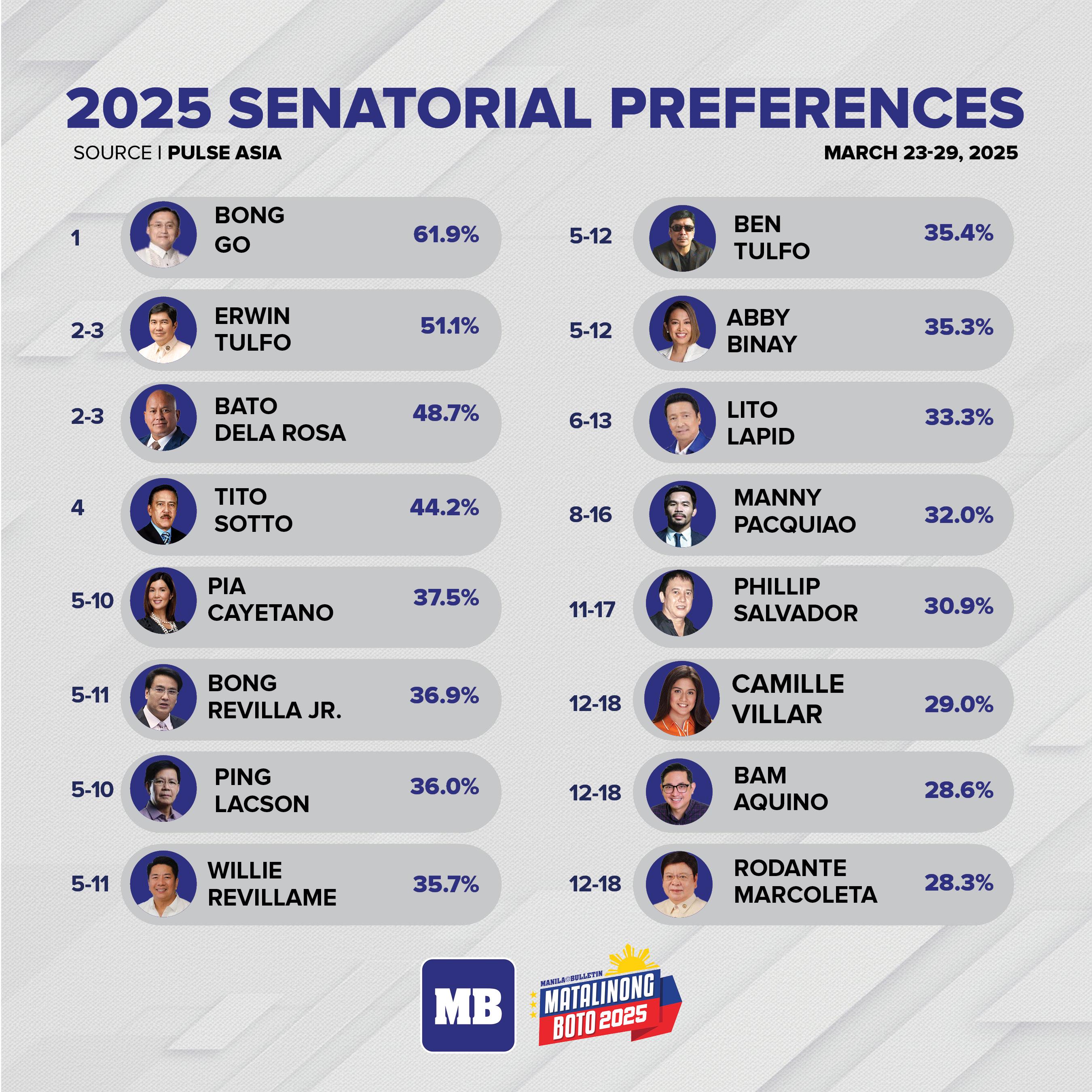
Among the loudest alarms raised by the forthcoming midterm election is the likelihood that, once again, Filipino voters will be choosing people with the same surnames to add to what has become, over the decades, a cozy nest of clans. 

It isn’t just the Senate, of course, which is infected with dynastisis. From Congress down to the Sangguniang Kabataan where fledgling politicos learn to tweet, our entire political system has been one big and long-running Family Feud. Husbands, wives, and their kids serve as senator, congressman, governor, mayor, and councilor with utter shamelessness, claiming a form of manifest destiny contestable only by another family.

It’s gotten so bad that—surprise, surprise—Sen. Robinhood Padilla, last accused of doing little on the job but preening his mustache, filed SB 2730 last July against political dynasties (already in our Constitution, but lacking an enabling law). Citing a Harvard study (which always seems to bear more weight than common sense), Padilla said that political dynasties “persist and reproduce their power over time, undermining the effectiveness of institutional reforms in the process.” 

More informatively, Padilla noted that “A dataset of Philippine local elections from 1988 to 2019 showed the number of governors with at least one relative in office (dynasty) increased by almost 39 percentage points, from 41% in 1988 to 80% in 2019. The dynasty proportion of vice governors rose from 18% in 1988 to 68% in 2019. The percentage of mayors in the dynasty increased gradually from 26% in 1988 to 53% in 2019…. Political dynasties, in effect, have exhausted resources to attain economic and political dominance while at the same time compromising political competition and undermining accountability…. It is time to break the barriers preventing the best and the brightest from serving the Filipino people.”

Tell that to the Philippine Senate which, because it has only 24 members, magnifies the prevalence and persistence of dynastisis even more. 

One of the ways the US Senate differs from ours is the way it’s composed, with two senators from each of the 50 US states, which, in their federal system, gives equal weight to giant Texas and tiny Vermont. That should make it highly unlikely for two related people to be in the Senate at the same time, right? Well, sort of. As it turns out, in US history, two pairs of brothers actually served in the Senate together. One pair I’m pretty sure you never heard of—Theodore and Dwight Foster, who simultaneously represented Rhode Island and Massachusetts at the start of the 1800s. The next pairing didn’t happen until more than 150 years later—with Edward and Robert Kennedy representing Massachusetts and New York in the 1960s. 

Our Senate puts America’s to shame in that department. 

It helps, of course, to be related to a President, or to prepare oneself to be one. By my count, there have been five Aquinos in the Senate—Ninoy, Butz, Tessie, Noynoy, and Bam; four Marcoses—Ferdinand, Imelda, Bongbong, and Imee; four Estradas—Joseph, Loi, JV, and Jinggoy; three Roxases—Manuel, Gerry, and Mar; three Osmeñas—Serging, John, and Serge; three Laurels—Jose, Sotero, and Doy; and two Magsaysays—Gene and Jun. “Cong Dadong” Macapagal never became a senator, but his daughter Gloria did. Fidel Ramos’ contribution to the Senate was his sister Letty.

To these presidential surnames we have to add those of other political families such as the Dioknos, Tañadas, Kalaws, Angaras, Guingonas, Antoninos, Rectos, Pimentels, Revillas, Villars, Cayetanos, and possibly Tulfos. The Cebu Osmeñas—John and Sergio, Jr.—once served together in the Seventh Congress in the early 1970s; the Cayetanos—Pia and Alan—followed suit in the Fourteenth, in the late 2000s, and the Villars—Cynthia and Mark—in the current Nineteenth. 

That’s not to say that some members of these political clans were not deserving or distinguished. Many certainly were—in the right hands, a family tradition of public service sets high standards and expectations. Never mind the ancient Fosters, but I don’t think America minded having Ted and Bobby Kennedy in the Senate, with Ted serving continuously for an astounding 47 years until he died.

They have no term limits in America. We imposed ours in the 1987 Constitution—a well-meaning gesture meant to democratize our legislature, but which backfired and produced exactly what it wanted to avoid. Our political families quickly learned to adjust and do a merry-go-round, ensuring further that one member or other would occupy all spots in the wheel. What developed over the years was less a revitalization of the institution with bright new talents than a pooling and coagulation of old blood. 

So rather than an anti-dynasty law which seems to have little chance of passing a House full of dynasties anyway, perhaps we should revisit term limits, so we can retain the services of truly outstanding senators (like Franklin Drilon, for example) for life, rather than punish ourselves by replacing them with inferior siblings and cousins. 

There are and have been high-performing senators whom we don’t and shouldn’t mind serving over and over again, politicians with genuine and critical advocacies they have devoted their lives to. Our political history has been fortunate to have seen the likes of such men and women as Senators Claro M. Recto, Jose Diokno, Lorenzo Tañada, Raul Manglapus, Emmanuel Pelaez, Helena Benitez, Eva Estrada Kalaw, Juan Flavier, Rene Saguisag, Miriam Defensor Santiago, and Edgardo Angara, just to speak of the departed.

Sadly our political realities preclude the truly poor from winning a Senate seat, and only extraordinary circumstances like EDSA can lift up capable and virtuous candidates of modest means such as Dr. Juan Flavier and Atty. Rene Saguisag to that exalted position. But their interests can be articulated and defended by men and women with the capacity and quality of mind and spirit to see beyond themselves. These are senators whom we expect to make laws that build a nation, rather than empower and enrich themselves and their progeny even further.

Qwertyman No. 118: A Flickering Flame

Qwertyman for Monday, November 4, 2024

TOMORROW, NOVEMBER 5 (or Wednesday, November 6, our time), American voters will choose who between Republican Donald J. Trump and Democrat Kamala Harris will lead them from the White House over the next four years.

For more than four million Filipino-Americans, the outcome will bear a direct impact on their daily lives, their choices, their standing in society, their future. For the rest of the world, including those of us here in the Philippines, the result will shape not only how we see America, but also how America sees us in the global scheme of things.

Only the foolish will think that we have no stake in this election, and that America’s position in the world will be the same regardless of who wins. For the people of Ukraine, a Trump victory might as well be his friend Putin’s; for the Taiwanese, the Filipinos, and others dependent on at least the deterrence if not the active deployment of American military power vis-à-vis Chinese expansionism in Asia, Trumpian isolationism can only invite more unbridled aggressiveness from the region’s bullies.

As I’ve often said here before, like many millions of Filipinos, my stake is more personal than that: our daughter lives and works in California, and my sister is also a US citizen, both of them contributing productively to that country’s economic and social well-being. Both are proudly voting and campaigning for the only candidate who offers real hope for the future of America and the world: Kamala Harris. To them, she represents not just the right political but also and even perhaps more importantly the right moral choice.

Of course, I totally agree. Why anyone would vote for a man who even many of his supporters admit is a convicted felon, a habitual liar, a womanizer, a pervert, a racist, a chauvinist, and a would-be dictator is beyond me. But apparently enough Americans will, enough to make all polls point to a dead heat between the two candidates, with the outcome likely to be decided by voters in a handful of so-called “battleground” states.

Among those many millions of Trumpists willing to overlook his not-insubstantial shortcomings are legions of Fil-Ams who—despite having historically voted Democrat as an ethnic minority—now find common cause with Trump’s blatantly racist anti-immigrant rhetoric (it isn’t even about illegal immigration anymore, but about immigrants from “garbage” countries in Asia, Africa, and Latin America) and his supposed “anti-abortion” stance (since diluted for political expediency). Among other single-issue MAGA voters, “the economy” remains their strongest reason for choosing Trump, despite 23 Nobel-prizewinning economists writing that Trump’s tariff-based economic plans will be disastrous for the US.

Eighty-two Nobel laureates, in fact, are on record supporting Harris, but that clearly matters little in an election driven more by primal fear than by truth and reason. As astrophysicist Neil deGrasse Tyson lamented, “How sad it must be—believing that scientists, scholars, historians, economists, and journalists have devoted their entire lives to deceiving you, while a reality TV star with decades of fraud and exhaustively documented lying is your only beacon of truth and honesty.”

My own sense is that many Trump voters won’t be voting for Trump the man, whom his sharper and more hidebound supporters—many of whom, like Sen. Ted Cruz, he has savagely maligned but who have masochistically endured his insults to ensure their own survival—will admit before God to be the lowest of the execrably low. They will be voting for the deep grievances and resentments that Trump has so craftily stoked in them, and against the idea of an “elite” and a “swamp” that Trump and his new acolyte Elon Musk, strangely enough, represent more visibly than most Democrats.

Thus the very real possibility remains that we may wake up Friday morning to the specter of Trump 2.0 and whatever it will bring. Should that happen, we can imagine the global wave of consternation and dismay that will ensue among liberals and progressives everywhere. On the other front will resound the triumphant cheers and chuckles of global despots and their minions.

All this brings me to what I suspect has been my real worry all along—not the US election, about which we can do nothing, but our own political horizon, on which familiar dangers are looming large.

At least one online pundit with an unusual point of view has lauded the recent performances of Vice President Sara Duterte and her father former President Rodrigo Duterte at their Senate hearings as a kind of resurrection—in the very least, an affirmation of their continuing political viability, if not resurgent power. 

The Dutertes mastered their fumbling inquisitors, this commentator crowed, reporting that the gallery even clapped for the senior Duterte at the end of a raucous session at which he virtually confessed to willfully causing the summary execution of suspects without ever being prosecuted. The Dutertes, he seemed to imply, remain above and beyond the law; with their cohorts in office, they are the law, or shall soon be again.

Indeed Philippine politics has become a theater where bravado, bluster, and buffoonery matter. We cannot even tell the actors from the characters any longer. Lies resound louder than the truth, and the audience rewards the best “hugot line” with wild applause.

The upcoming midterm election already promises to showcase the worst of our political predilections, with family dynasties and patently unfit candidates crowding the top of the poll rankings.

So if the Americans choose Trump over Harris, why should we be surprised? Where character, reason, and talent no longer matter, the tyrants rule with fools at their feet to keep the populace amused.

But if Kamala Harris wins, whatever it brings to America, it will mean for me that, however fragile, hope remains for good sense to prevail even in extremely fraught situations such as ours. If only for that flickering flame, I pray she wins.

(Image from newsweek.com)

Qwertyman No. 116: Dynasty

Qwertyman for Monday, October 21, 2024

“MAMA, PAPA, I wanna be a congressman!”

Senator Bebot Maybunga and Governor Kikay Maybunga looked up from their dinner plates at Mikmik, who sat at the far end of the table, to where they had deported him for a little peace of mind. Their younger son was given to wild outbursts that disrupted his parents’ serious deliberations about politics, business, and entertainment. Governor Kikay and her friends were planning for Paris Fashion Week, while Senator Bebot was thinking F1 at the Austrian Grand Prix.

“Well it’s about time Hamilton left Mercedes,” Bebot was saying while chewing at his bistek, “after all the crappy cars they built for him. A man’s got to go where he’ll do best. That’s why we joined the Federalistas, right? What’s the use of being a Progresibo if you can’t get any of your projects through? Pity our poor constituents! So we go with the Ferraris of Philippine politics—the Federalistas! And let me tell you something, honey—I’m going to be their Verstappen!”

“Who’s Fershwersh?” asked Kikay. “I want to know what really happened between Nicole Kidman and Selma Hayek. I mean, did Nicole really brush Selma off at the Balenciaga show?” She popped an overripe tomato into her mouth, savoring its sweet-sourness. “The only time I’d swat your hand away is if it was pawing someone else, like that starlet at the XYZ Awards. Don’t tell me you didn’t know she was coming on to you while you played Daddy-o!”

“I want to be a congressman!” cried Mikmik again, this time hitting his plate with his spoon four times for emphasis. Their housemaid Yeye hurriedly mopped the bistek sauce that scattered all around him.

“Stop yelling and finish your food!” said Bebot. “You can’t be a congressman if you don’t finish your food.” That had been Mikmik’s problem since early childhood—half his plate always went to the dogs, so they now had three Rottweilers and three dachshunds, despite which the boy got all puffed up like an Obemio painting. They’d sent him everywhere from the Mayo Clinic to a sanatorium in Switzerland, but all the doctors could tell the Maybungas was that Mikmik had low self-esteem, for which he tried to compensate by eating a little a lot—something called the Schlumpfegel Syndrome, which could be addressed only if the boy succeeded at something truly outstanding, after which he would then complete his meals. It was complicated—and expensive, but thankfully there was all that land that Kikay owned, which Bebot found ways to run public roads and bridges through.

“But what do you want to be a congressman for, hijo?” asked his mama, trying to play the part of the good parent, as Bebot groaned. “It’s a hard job. Look at your Kuya Pepito, he’s always out somewhere with the President, trying to make sure that everything will be okay for—well, everybody.”

“The only thing that bastard is looking out for is himself,” grumbled Bebot. “After everything I did for him, imagine, he goes to Singapore for F1 with the President and leaves me behind!”

“Don’t call him a bastard! He’s our son, he has a father and a mother!”

“Am I a bastard, Mama?” asked Mikmik. Kikay rushed over to where Mikmik sat to wrap her arms around him, as Bebot smirked. Their political enemies had spread the dastardly humor that Mikmik had actually been fathered by one of Kikay’s old flames—something Bebot himself had long suspected, for how could he possibly have spawned such an idiot, but had never pressed because he still needed Kikay’s old-family money for his higher ambitions.

“No, of course not, Mikmik! You too have a mother—and a father!”

“I wanna be a congressman!”

“But your Kuya Pepito is already congressman for the first district, hijo! When his next term ends, Mama will be congressman, because Kuya will be governor.”

“But I can be congressman for the second district, Mama—”

“No, hijo, we don’t live there—”

“But Papa has a house there! A nice house, with a swimming pool!” Bebot nearly choked on his ball of rice, as Kikay’s eyes narrowed into slits. Their political enemies had let it be known to one and all that the senator kept a mistress in the second district, but Kikay decided not to bring it up because, well, she was a firm believer in family unity, and her brothers and sisters would never have forgiven her if they lost their juicy contracts on account of some silly spat over a querida

“I know what we can do, hijo!” Kikay exclaimed, struck by a brilliant idea. “We can make you mayor! This nincompoop mayor of ours has been talking about getting his even more nincompoop wife to run against me for governor, so why not take his job? I agree, it’s about time you joined us in this noble profession!”

“Can a mayor drive a big car and go wang-wang? Because Kuya Pepito does that and it’s why I want to be a congressman!”

“Of course, hijo, you can drive a big car around town all day and go wang-wang if you like. You can even have a police escort and they’ll go wang-wang too.”

“And Papa won’t get mad and hit me over the head like he always does?”

Kikay glared at Bebot who was looking away, whistling.

“No, hijo, even senators can’t hit mayors over the head—”

“But if I’m mayor, then I can hit people over the head, right? Like a, a sheriff, right? I saw it on TV once!”

Bebot finally turned and said, “You can’t be congressman, you can’t even be mayor! The law says you have to be at least twenty-three to be mayor, and you’re only twenty-one—at best!”

“What does he mean by that, Mama? Look, Mama, Papa’s making a face at me again, like he’s going to hit me!”

Again Kikay wrapped her arms around Mikmik and flashed Bebot her meanest look. “No, baby, he won’t, and you’re going to be mayor, Mama will make sure of it. Don’t worry about your age, it’s only a birth certificate, and since when was that piece of paper a problem? Mayor Mikmik Maybunga—let’s not forget your middle name, Mikmik Macatangay Maybunga. Aren’t these people just so lucky to have us at their service?”

Qwertyman No. 102: Retaining the Fools

Qwertyman for Monday, July 15, 2024

A RECENT Rappler report on “The Philippine Senate: From statesmen to showmen” by James Patrick Cruz told us much of what we already knew, but didn’t have the exact numbers for—that political families dominate that institution, that most of them come from the big cities, that most of them are men, that older senators (above 50) outnumber young ones, and that many come from the glitzy world of entertainment and media.

Surprisingly (and why am I even using this word?), most senators are highly educated and even have advanced degrees, mostly in law. However, the study says, “the high educational background of senators has not produced ‘evidence-based policymaking.’…  Some lawmakers, for example, have used the Bible to argue against the reproductive health law in a secular setting and have relied on personal experiences in discussions on divorce.”

And not surprisingly, the academics consulted for the study concluded that “If you want better policy, we should go for better inclusion, better representation, and not just be dominated by political families.” Indeed, from the very beginning, it notes that “Political analysts have observed a decline in the quality of the Philippine Senate over the years. The shift from a chamber filled with statesmen to one dominated by entertainers and political dynasties has become evident.”

And then again we already knew all that. What the Rappler study does is provide a historical overview—quantitatively and qualitatively—of how the Philippine Senate has morphed as an institution over the decades, reflecting changes in the electorate and in Philippine society itself. It opens with resonant passages from the speeches of political leaders from a time when the word “senator” bestowed an aura of respectability and consequence upon its bearer. 

It quotes the luminous Jose W. Diokno: “There is one dream that we all Filipinos share: that our children may have a better life than we have had. To make this country, our country, a nation for our children.” Sen. Jovito R. Salonga, another legendary figure and war hero, follows with “Independence, like freedom, is never granted. It is always asserted and affirmed. Its defense is an everyday endeavor—sometimes in the field of battle, oftentimes in the contest of conflicting wills and ideas. It is a daily struggle that may never end—for as long as we live.”

It’s entirely possible—and why not?—that this kind of elevated prose can be uttered today by a senator or congressman backed up by a capable speechwriter, if not AI. The question is, will they be believed? Will the words ring true coming out of their speaker’s mouth—especially if that speaker were one of today’s, shall we say, non-traditional senators, reared more in showbiz and social media than in Demosthenes? 

“Non-traditional” applies as well to political families, which notion we can expand beyond DNA matches to communities of convenience, of shared geographical, economic, and cultural origins—the entertainers, the media stars, business moguls, the Davao boys, and so on. (There’s probably no better guide to how traditional families have ruled the Philippines than An Anarchy of Families: State and Family in the Philippines, edited by Alfred W. McCoy and published by the University of Wisconsin Press in 2009.)

It might also be that the problem lies not so much or not only in the dynastic nature of Philippine politics, as in the fact that the quality of these families has badly deteriorated. And by “quality” I don’t mean anything by way of economic or social candlepower—none of that “de buena familia” silliness. (To be sure, no family—however celebrated—has ever been perfect, coming with its fair share of black sheep, eccentrics, and outliers. Our social lore abounds with barely whispered stories of the abusive father, the spendthrift mother, the gay son—yes, in Pinoy archetype, gay is wayward—and the mad daughter.) 

I suppose we keep looking for some defining virtue, a reputation founded on academic excellence, intellectual prowess, philanthropy, moral ascendancy, and the like. How many families in the Senate and Congress today can lay claim to that kind of legacy? Today, prominent families achieve and maintain their status through their economic and political clout, through popularity or even notoriety, and even through sheer staying power, thanks to the muscle memory of many Pinoys in the voting booths.

In 1998, in my biography of the accomplished, fascinating, and resolutely revolutionary Lava brothers, I noted that “For anyone familiar with the history of the Philippines over these past one hundred years, it will not tax the truth to suggest that so much of that history has been family history. In many ways, modern Philippine history is an extended family picture album in which a few names and facial features keep recurring, with only the characters’ ages, expressions, poses, and costumes changing from page to page. Most ordinary Filipinos have lived in the shadow and by the sufferance of such dynasties as the Marcoses, the Lopezes, the Aquinos, the Laurels, and the Cojuangcos, among others—families which have ritually sired presidents and kingmakers, tycoons, rakes, sportsmen, and society belles. But none of them were like—and there may never be another Filipino family like—the Lavas.”

For those who never knew them, over the mid-20th century, five Lava brothers—Vicente, Francisco, Horacio, Jose, and Jesus—emerged from a moderately affluent landowning family from the heartland of Bulacan to become progressive intellectuals, some of them even leading the Partido Komunista ng Pilipinas. Ironically, these were no workers or peasants. Vicente, a government pensionado, held a PhD in chemistry from Columbia University; Horacio and Francisco also held advanced degrees in economics and law from Berkeley and Stanford, respectively; Jose was a lawyer-CPA whose University of the Philippines thesis was adjudged the best of his class; Jesus was a medical doctor, also graduating from UP.

Just so we know, the Lavas and their comrades were operating legally and openly right after the War, and were even elected to Congress under the Democratic Alliance in 1946—only to be expelled on trumped-up charges of fraud and terrorism, with their votes on the key parity rights issue discounted. Under threat of extermination, they went underground, followed by two decades of bloody struggle.

That’s what happened to one family with real brains and convictions, even pre-NTF-ELCAC; we expel the thinkers and retain the fools.

(Image from constitutionnet.org)

Qwertyman No. 71: A Breakthrough for Peace

Qwertyman for Monday, December 11, 2023

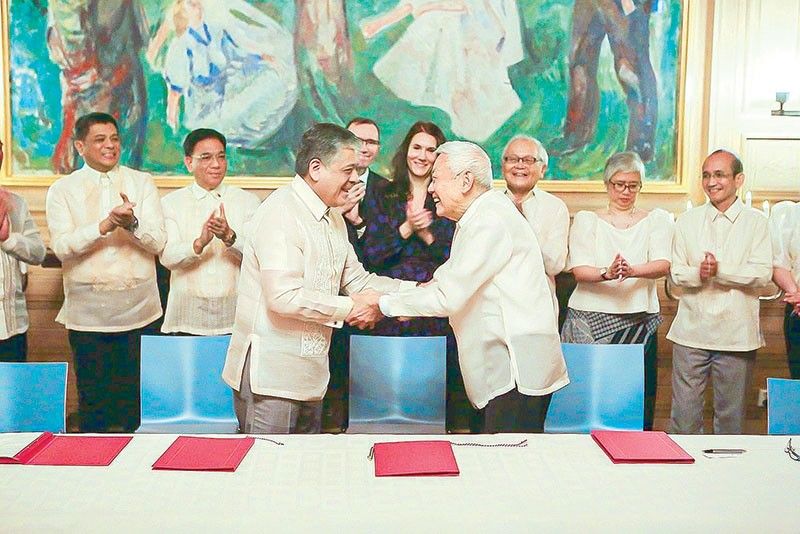
I HONESTLY didn’t know what to feel when I first read the news that a breakthrough appears imminent in peace negotiations between the Philippine government and the National Democratic Front (and behind it, the Communist Party of the Philippines), whose soldiers and partisans have been at war with each other for over half a century, in one of the world’s longest-running insurgencies.

As a student activist who fought martial law and got imprisoned for it at age 18, I didn’t expect to live past 25 because so many of my friends and comrades were giving up their lives around me in the name of freedom and justice. Instead, in a Forrest-Gumpish turn of events, I survived and even prospered for another 50 years. As I wrote in my introduction to the book SERVE (Ateneo Press, 2023), co-written with 19 other fellow stragglers from what we called the First Quarter Storm, “We celebrated our seniorhood as the ultimate victory” even as “the experience of martial law coded itself into our DNA.” That victory, of course, is a shallow one, considering that the causes we fought for remain as valid and as urgent today, and that the social cancer we sought to excise “had never left, was always there, lying cruelly in wait for a chance to ravage us again—and not only us this time, but our children and grandchildren as well.”

My reaction to the peace talks—and I would guess that of many of my peers as well—was one of joy and relief, but inevitably compounded by some doubt and apprehension. All of these responses, however disparate, have their reasons.

The joy and relief must be paramount because, however we look at it and whatever arguments may be presented by either side, the armed conflict has gone on too long, without truly positive and strategic gains to show for five decades of warfare, at the cost of innumerable lives and massive drains on our resources. This is not to say that those lives were wasted nor that everyone’s goals have been met, but that surely there must be a better way—a more humane and effective way—to resolve our differences and move forward together without having to kill yet another cadre or yet another soldier, both of them probably just farm boys looking to improve their lives. 

Ultimately and simply, it didn’t work as planned—neither the “people’s war” nor the counter-insurgency. (Curiously, they manifest a kind of symbiosis or co-dependency, with one providing the basis for the other.) The Left is as far from seizing State power as we are from achieving a FIBA championship (no matter virtue, skill, or tenacity), and the Right remains essentially as it has always been, unreformed and unrepentant in its monopoly of economic and political power. But the Right seems to have been more clever at shapeshifting, riding on and pandering to the digital consumerism of a new generation and thereby dousing its revolutionary fervor, while the Left has basically stuck to the playbook and rhetoric of 1970s Maoism.

Meanwhile, in the great section between them, the masses of our people remain largely poor and vulnerable, in desperate need of food, housing, work, and education, a significant number of them kept afloat only by the grueling sacrifices of fathers, mothers, and siblings laboring overseas. Some decline has been noted in the incidence of mass poverty in recent decades, but it has been slow and uneven; even moderate economic growth did not necessarily lead to significant poverty reduction. 

We are said to have a rising middle class—estimated by the Philippine Institute of Development Studies at 40 percent of the population—but it is a very fragile one, strongly aspirational in its longing to be rich or be like the rich, but weak in the knees, and easily crushed or co-opted. Those of us in this category spend our lives saving up for the good things and cultivating our composure, only to lose all that in one catastrophic illness or declaration of redundancy.

Politically, as well, I place myself squarely in the middle, never having trusted the Right and its compulsive greed for wealth and power and long having fallen out of love with the Left, which has shown itself to be just as capable of cynical calculation. I declare myself a liberal (with the small “L”), with all of that word’s ambiguities and contradictions. I repose my faith in no party or church or army, but trust my reason (however faulty, and with God’s grace) to lead me to the truth and to the right decisions. I draw strength from knowing, as I saw in the crowds of May 2022, that a huge wellspring of goodness and positive purpose resides in many if not most Filipinos. We cannot and will not let bad politics and bad politicians stop us from doing good, in our families, communities, and eventually our nation.

However fractured our society remains, in the very least we deserve peace, and must agree on peace, so we can banish one of the darkest specters in our national history. No more war; no more political prisoners; no more tokhang. And please, no more Leila de Limas.

But a just and lasting peace will require not only a rejection of violence as conflict resolution. It should also mean strengthening the law and the independence of the judiciary, reducing corruption, and depoliticizing the military and police. It should mean dismantling the broad and expensive State apparatus devoted solely to counter-insurgency, a factor that the National Security Council itself has declared “a dying threat” even as military budgets remain high. Deploy our soldiers to our coastal waters and boundaries, where the real dangers to our national security loom.

The irony of another President Marcos securing the peace has not escaped me, as I’m sure it will perplex others, but I grant that peacemaking will require being able to look beyond the persons for now and focus on the larger goals and processes involved; other reckonings can follow. I’m under no illusion that the GRP and the NDF will sing “Kumbaya” around a campfire and that all will be well thereafter. Neither party comes to the table with clean hands and consciences. Both come with long histories of violence, betrayal, and guilt. There will be more hope than trust to share.

But a peace agreement is not a marriage, with a pledge to love and hold hands no matter what, merely a civil agreement to live under one roof without killing each other and maybe, just maybe, have an occasional cup of coffee or a meal together. 

For this I am willing to suspend my disbelief, and wish all the parties the best of luck, with a silent prayer for this most unlikely and difficult of enterprises. Other battles and debates can follow; let’s end this one first.

Qwertyman No. 19: The Real Maria Ressa

Qwertyman for Monday, December 12, 2022

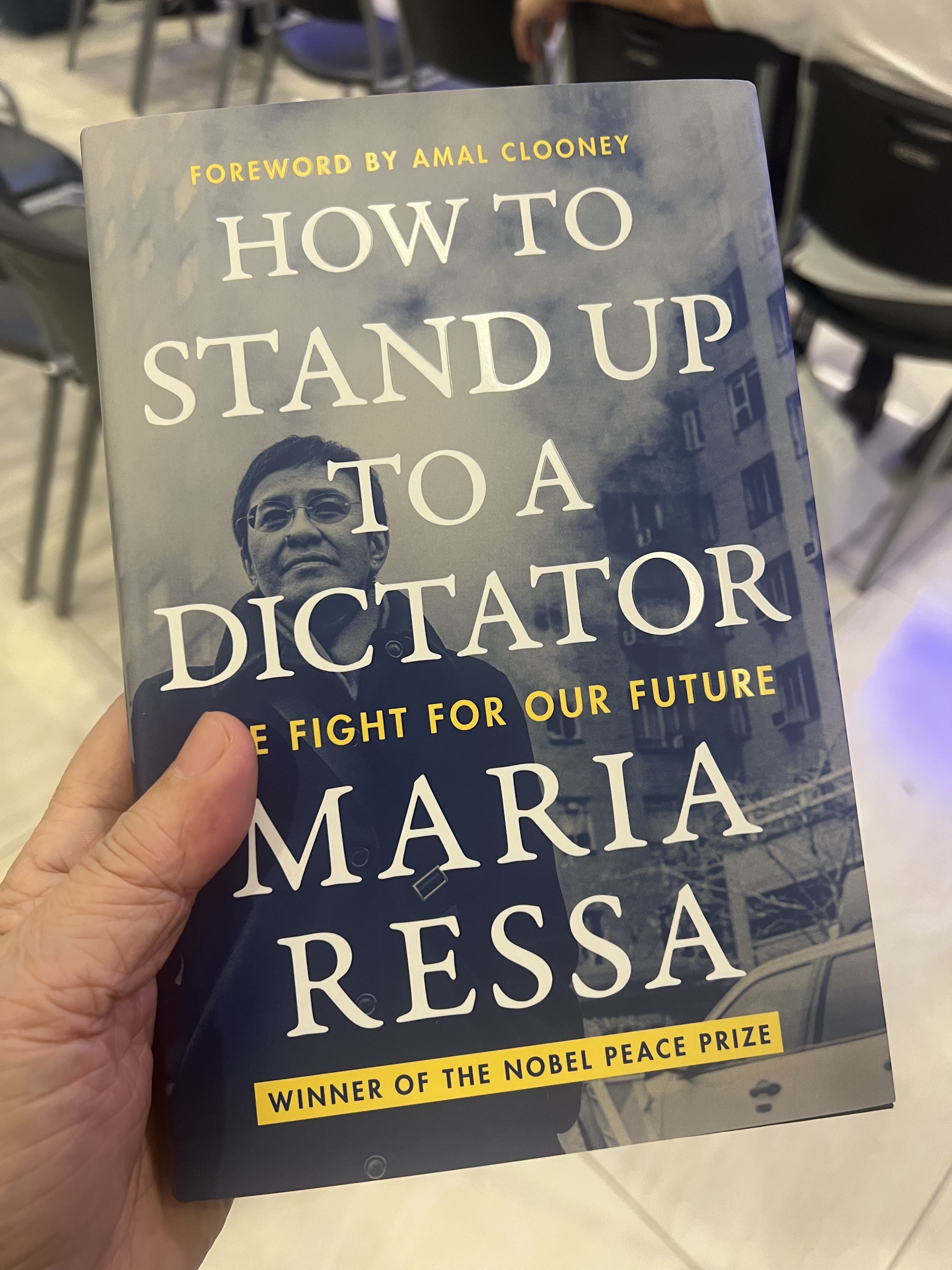
I WAS very honored to speak last Saturday at the launch of Maria Ressa’s new book, How to Stand up to a Dictator: The Fight for Our Future (Harper, 2022). I’d read an advance copy of it a couple of weeks ago, and to cut to the chase, if you’re thinking of buying a book to read for the holidays or to gift to friends, look no further. This book, for me, is among the year’s best in nonfiction.

I have to emphasize that word—nonfiction. As we all know we live in times when fiction has taken over as the most influential form of human discourse, particularly in the political arena. As a practicing fictionist, I should be happy about that, but I’m not and I can’t be, because so much of it is bad fiction, crudely written—and surprisingly, infuriatingly effective, at least with a certain kind of reader. 

Maria’s book cuts through all that. It’s undisguised, old-fashioned, in-your-face truth-telling, told in the same voice and tone we’ve become familiar with over the years of listening to her reportage over CNN. I’m sure that, like me, many of you wondered the first time you heard her: “Who was this little brown-complexioned woman speaking with an American accent?” She looked Filipino, but how come we’d never seen her before?

This was all before she rose to prominence—some would say notoriety—as the moving spirit behind Rappler, and subsequently to global fame as a Nobel Prize winner for Peace. We identified with her travails, shared her anger and sadness at the abuse she has received, and rejoiced in her victories, whether in the courts or in the larger sphere of public opinion. 

But how well do we really know Maria Ressa, and whatever drives her to be who and what she is? This book takes us to the person behind the phenomenon, and answers many questions we may have had about her and her stubborn advocacies.

The book’s title sounds like that of an instruction manual—which it is, and also is not, being part autobiography, part journalism, and part testimonial. As a manual for freedom fighters, it emphasizes the need for collaborative and collective action against seemingly insurmountable forces. Those forces now include the Internet, which, as Maria documents with both precision and profound dismay, has morphed from a medium that once held all kinds of liberative promises into a medium for mass deception and targeted assault. She draws her counsel not from some esoteric guru or academic paradigm, but from some very basic values that have informed her own life—the Honor Code she followed in school, and the Golden Rule.

“That’s what I lay out in this book,” she says, “an exploration into the values and principles not just of journalism and technology but of the collective action we need to take to win this battle for facts. This journey of discovery is intensely personal. That’s why every chapter has a micro and a macro: a personal lesson and the larger picture. You will see the simple ideas I hold on to in order to make what have—over time—become instinctive but thoughtful decisions.”

It’s this constant back-and-forth between the personal and the political—and at some point they become inextricably fused—that forms the fiber of Maria’s narrative and gives it strength. Her convictions are grounded in personal experience; they have not been paid for—as the hacks in the journalistic trade will allege, seeking to bring her down to their own level—except in the coin of personal suffering under the constant threat of imprisonment and violence.

But we learn from this book that trauma is nothing new to Maria. (We also learn that Maria Ressa wasn’t the name she was born into, but to find out her birth name, you’ll have to buy the book.) From her abrupt relocation from Manila to America at the age of ten, to her journalistic immersion in the horrors of conflict and disaster in Indonesia and Ormoc, the book chronicles Maria’s quest for truth, meaning, and purpose in her life, and that of others. She stresses the importance of remembering the past to make sense of the present, quoting TS Eliot’s phrase, “the present moment of the past.”

And so can we, she seems to suggest, even in these times of high anxiety, when we can see the vultures hovering over such once-sacrosanct treasures as our pension funds, while billions more go to feed the dogs of an increasingly untenable counter-insurgent war. The big words we have become used to tossing around—truth, freedom, reason, justice, democracy—they all come down to a personal choice to do the right thing, and the courage to do it. 

Nowhere is this matter of choice more evident than in the fact that Maria is here in the Philippines, having willfully subjected herself to our brand of justice, however imperfect it may be, instead of escaping to the safety of America or another haven, which her dual citizenship if not her celebrity can certainly afford her. She will see her own story through to the end, in the locale where it matters, among the people to whom it matters most.

I’ve often remarked, as a creative writer and professor of literature, that in this country, the writers most in danger of political persecution and retribution are really not fictionists or poets like me. Not since Rizal has a Filipino novelist been shot dead for what he wrote. For sure, we have lost many brilliant writers to the struggle for freedom and democracy—Emman Lacaba, and most recently Lorena Tariman and her husband Ericson Acosta. But they were killed by the State not for what they wrote—the State is illiterate when it comes to metaphor—but for what they allegedly did.

Rather, the most imperiled writers in the Philippines as in many other places are the journalists who speak the language of the people and of their plaints in terms too clear to ignore. They could be radio announcers like Percy Lapid, or the victims of wholesale murder in Maguindanao, or high-profile and exemplary targets such as Maria Ressa. It would have been easy for her to lash back at her critics and tormentors with the same viciousness. But, she says, “I will not become a criminal to fight a criminal. I will not become a monster to fight a monster.”

That, too, is a difficult choice, and one I am sure we are often tempted to cast aside. But Maria’s equanimity in the face of savagery shames us back into our better selves. It will be that kind of quiet resolve that we will need to survive and prevail. After all, we survived martial law. We can survive this regime—with agility, patience, and courage. But don’t take my word for it. Read Maria’s book to know that we can, and why we must.

Qwertyman No. 6: The Extraordinary Vice Mayor Koo

Qwertyman for September 12, 2022

“PAPA, PAPA! What does ‘consanguinity’ mean?” 

“Consang-what?” Vice Mayor Edison Koo was busy with his cellphone, negotiating his cut from the new bridge they were putting up in Barangay Tullahan. It annoyed him that Mayor Baloloy was going to make double, despite the fact that all the mayor did was to sign the papers while he had to meet with the contractor at a popular girlie joint in Manila—not that he minded the female company.

“Consanguinity. C-O-N-S-A-“

“I can spell it!” VM Koo knew he wasn’t the sharpest pencil in the box—he had passed the bar on his third try, after much coaching from his friends and a novena to St. Jude the Apostle—but he could still remember what “consanguinity” meant and how to spell it. He had stumbled on a question about wills, trusts, and estates that involved consanguinity in his second bar exam, which was why he had to study it extra hard for his next retake. 

“So what does it mean, Papa?” At thirteen, Lawrence was about seven years past being cute and was just being pesky at the worst possible times, but Edison had plans for the boy’s political future and wanted to impress him with his knowledge. “Consanguinity” was easier to explain than to spell, Edison thought with a triumphant smile. 

Facing a mango tree, he recited a memorized Civil Service Commission pronouncement to impress himself with his knowledge: “Under Section 79 of the Local Government Code of 1991, the prohibition against nepotic appointments extends to the appointing or recommending authority’s relatives within the fourth degree of consanguinity or affinity, such as first cousin or first cousin-in-law.” He turned to Lawrence and said, “Does that answer your question?”

“No,” said the boy, fiddling with his cellphone, “but never mind. I found it on Google. It means ‘being descended from the same ancestor.’ So if my Science teacher says we all came from apes, that’s consanguinity? All monkeys are my cousins?”

“Weeell…. If the monkey can show a valid NSO-certified birth certificate that can prove the relationship, why not?” VM Koo congratulated himself for his clever answer; the boy had to think his dad was a genius, to follow in his footsteps and inherit his musty law books. “Why are you asking, anyway? Aren’t you supposed to be going to the mall with your friends? I gave you some money—” A mall—the town’s first—had opened six months earlier, a sure sign of the place’s progress, as a consequence of which the mayor was able to acquire a new van for his wife and an SUV for himself. This was why Edison was convinced he had to run for mayor in the next election—not because Mayor Baloloy was a corrupt bastard, but because he, Edison J. Koo, Esq., was the much better, more highly qualified bastard.

“You know I don’t like hanging out with my friends, Papa,” said Lawrence. “I prefer to stay home and read books and to listen to the news about the war in Ukraine and climate change and all the things that will affect my future as a young Filipino citizen!”

Edison looked at his son more closely, looking for signs that Lawrence was gay; it was his mother’s fault, giving the kid all those books about endangered species and disappearing islands, when any healthy teenage boy should have been hanging out in malls watching the girls in shorts go by. “So what does that have to do with consanguinity?”

“Well, I came across this news report about a new law that will require public officials like you to disclose all their relatives linked to subversive organizations, up to the fourth degree of consanguinity….”

“Really? What for? Don’t those idiots have better things to do?” It infuriated the vice mayor that on top of the SALN—on which he had to very deftly dissimulate—another reporting requirement was going to be imposed on hardworking civil servants like him.

“What does ‘subversive’ mean, Papa?”

“Oh—it means someone who doesn’t like the government, people like me, and wants to bring it down!”

“You mean like Tita Rory?” Lawrence remembered her fondly for giving him books like Catcher in the Rye and The Little Prince.

Edison felt a wave of shame and guilt wash over him, which he tried not to show the boy, who picked it up anyway. Rory was his younger sister, who had been a troublemaker since high school as far as he was concerned, who never listened, who deplored and never supported his entry into politics, and who once even denounced him in the plaza as a crook. So he also publicly disowned her, calling her a madwoman, and cut off all communication, even when she left and vanished into the underground.

“Yes, like your Tita Rory!” Edison sputtered, barely able to say the name. His eyes bulged as he began to understand the import of “consanguinity.” “Dammit, even when she’s not here, she’s going to put me in trouble!” He was thinking ahead to the next mayoral race, to being accused of consorting with the enemy, and worse, of being a subversive himself, which was the most ridiculous thing, because he didn’t have a rebellious bone in his body. He even ticked off Rory once by calling Rizal stupid for having badmouthed the Spanish.

“I like the books she gave me,” said Lawrence, thinking of a little fox and a garden of roses.

“Burn them! They’re full of silly ideas that—that will turn you into a little red monster. You won’t believe in God, you’ll disobey authority, you’ll do all kinds of terrible things—” 

“Is stealing money from the people subversive, Papa? Tita Rory said—” 

“Your Tita Rory said a lot of crazy things! That’s why she’s—not here. She’s not one of us. Not anymore. I pray for her soul, but I firmly believe in the government’s anti-insurgency program! And I’ll make sure everyone knows that—that their humble servant, Vice Mayor Koo, is a staunch defender of democracy, of peace and order, and of the rule of law! You’ll be very proud of me, my son!”

Just then a text message arrived. The bridge contractor had agreed to throw in a free trip to Seoul for him and Mrs. Koo, with a “K-drama Location Tour” attached. Edison beamed. His wife loved “The Extraordinary Attorney Woo,” and although he hadn’t seen it himself—he preferred Vin Diesel movies—she was sure to love him for it, too.

Hindsight No. 19: Plot and Character

Hindsight for Monday, May 23, 2022

(Photo from philtstar.com)

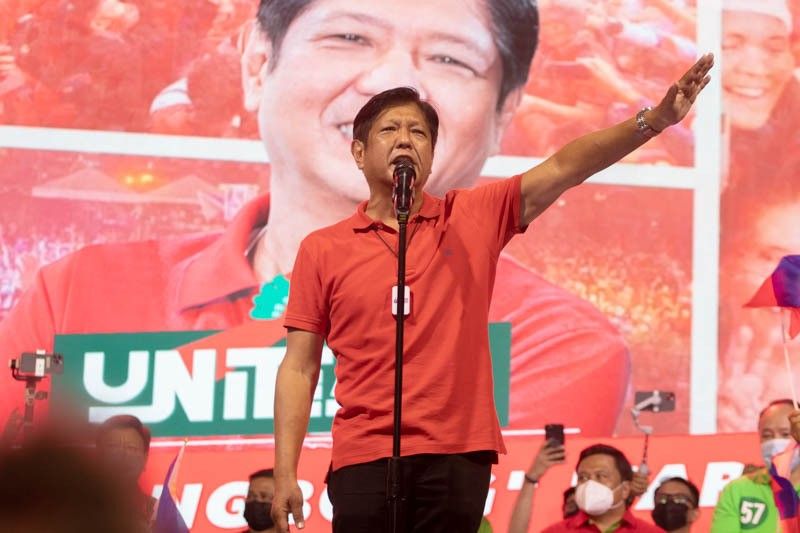
WITH THE counting all but over—setting aside some issues not likely to change the outcome—it’s clear that our people have spoken, and that, by a 2-to-1 majority, they have chosen Ferdinand Marcos Jr. to lead this country for the next six years. 

It’s no huge secret that I, among many others, voted for somebody else. Of course I’m unhappy, but what I feel doesn’t really matter much in the scheme of things. Given that the life expectancy of the Filipino male is 67.26 years, I’m already on borrowed time at 68 and would be lucky to see the end of this next administration, let alone the one after that. I’ve told my mom Emy—who voted at age 94 and who shed tears of dismay and disbelief when the results rolled in—that living for six more years to vote one more time should now be her goal. Just surviving will be her best revenge.

I wonder how it is, however, for the young people who took to the streets for Leni and Kiko, believing that they would make a difference. They did, although not in the way they expected, to ride a pink wave all the way to Malacañang. They realized, as we ourselves did ages ago, that money and machinery are always heavy favorites over hope and idealism, and that issues, ideas, and the truth itself can be made to look far less important than image and message, if you can buy the right PR consultant.

They will also have learned, as has been pointed out by other commentators from both sides, that it wasn’t all disinformation—that Marcos Jr. appealed to the genuine desperation of the poor with a promise of relief, however illusory. Since most of Leni’s young supporters were visibly middle-class, first-time voters, it was a rude but necessary awakening to the realities of class politics in this country, which politicians of all kinds—none of whom have to worry about where their next litson baka is coming from—have learned to negotiate and manipulate. 

Defeat, it’s been said, can offer more lessons than victory, and while we may have metaphorically won in some significant respects—chiefly the aggregation of “middle” forces not tied to any traditional political party into a burgeoning progressive movement—there will be much to review and refine in the years ahead. This very dissociation of the Kakampinks from the old parties and their command structures, for example, was a blast of fresh air for many volunteers, but also a liability for operators used to the old ways.

Understandably there’s been much wringing of hands and gnashing of teeth in the trenches, in the desire to meld seething resistance with grudging acceptance. I see it in both young and old activists—the young, because they’re heartbroken for the first time, and the old, because they didn’t expect to find themselves facing a Marcos all over again. The bashing and taunting they’re getting online from galleries of screeching monkeys doesn’t help. 

Being one of those old fogeys, I tend to be more subdued in my reaction to Marcos Jr.’s victory, and advise my young friends to cool down, ignore the bashers, and steel themselves for a complicated and challenging future. As someone who went through and survived martial law—I was eighteen when I was arrested and imprisoned for alleged subversion (although I was never charged or tried in court, just locked up for the state’s peace of mind)—I can offer them living proof that we can survive dictators and despots, with faith, resourcefulness, and courage. My parents survived the Second World War, and many other people have gone through worse.

I’m neither predicting nor wishing that a Marcos presidency will be bound to fail. I’d hate for the country to suffer just to prove a point. Besides, whatever I think today won’t matter one bit to what will happen. Whatever Marcos does, he will do so of his own will, by his own nature, out of his own character. What that character really is will emerge in the crucible of crisis—and crisis is the only thing the future guarantees, whoever the president happens to be. Beyond and regardless of the propaganda for and against him, Mr. Marcos Jr. will have ample opportunity to display what he would not have us glimpse in a public debate, and that revelation will do more than a million tweets calling him a thief or praising his acumen.

Speaking of character, I had an interesting discussion last week with an old friend, a renowned professor of Business Administration, who brought up the possibility of “luck or destiny” to account for the Marcos victory. He added that luck was an important factor in business, and that he would flunk a student who thought otherwise. 

I disagreed; as a teacher of creative writing, I said that I wouldn’t accept “luck or destiny” as a resolution for a student story. We’d call it deus ex machina—a helping hand—which thwarts the logic of the narrative with an artificial and improbable ending. I know: it happens in real life, but not in good fiction. As Mark Twain says in one of my favorite quotations, “Of course fact is stranger than fiction. Fiction, after all, has to make sense.” 

Whether factual or fictional, stories are really less about events—the plot—than character. The plot is simply there to enable character development. Things happen for a reason: to test and reveal our character, to show ourselves and others what kind of people we really are, with dramatic clarity and inevitability.

If you’re wondering why I strayed from the May 9 election to a mini-lecture on writing, it’s because we can look at that election and its aftermath as a long and continuing narrative that will establish our character as citizens, and as leaders. The next crises—the post-pandemic economy, China’s ambitions, a crackdown on civil liberties, getting deeper in debt—will come to try us. That’s the plot. And when that happens, Bongbong will be Bongbong, and all Filipinos—31 million of them, especially—will see exactly what they bargained for.

So if you’re still smarting, just chill, recuperate, get back to something you enjoy doing, and let this drama take its course. Like my mom Emy, endure and survive. Give Marcos Jr. a chance to achieve his “destiny,” which could yet be everyone’s best education.