Penman for Sunday, June 21, 2026
TALKING ABOUT how memory softens loss in Love in the Time of Cholera, Gabriel Garcia Marquez writes that “He was still too young to know that the heart’s memory eliminates the bad and magnifies the good, and that thanks to this artifice we manage to endure the burden of the past.”
As I’ve discovered from my friends and from people I know, father-son relationships are often fraught with conflict and tension, especially from those childhood and growing-up years when emotions are raw and expectations run high. There’s a host of theories to explain the problem—Oedipal competition, the emotional detachment of fathers, bars set too high, among others—but whatever causes the pain, it tends to linger, until we learn to relinquish our grievances to time and age.
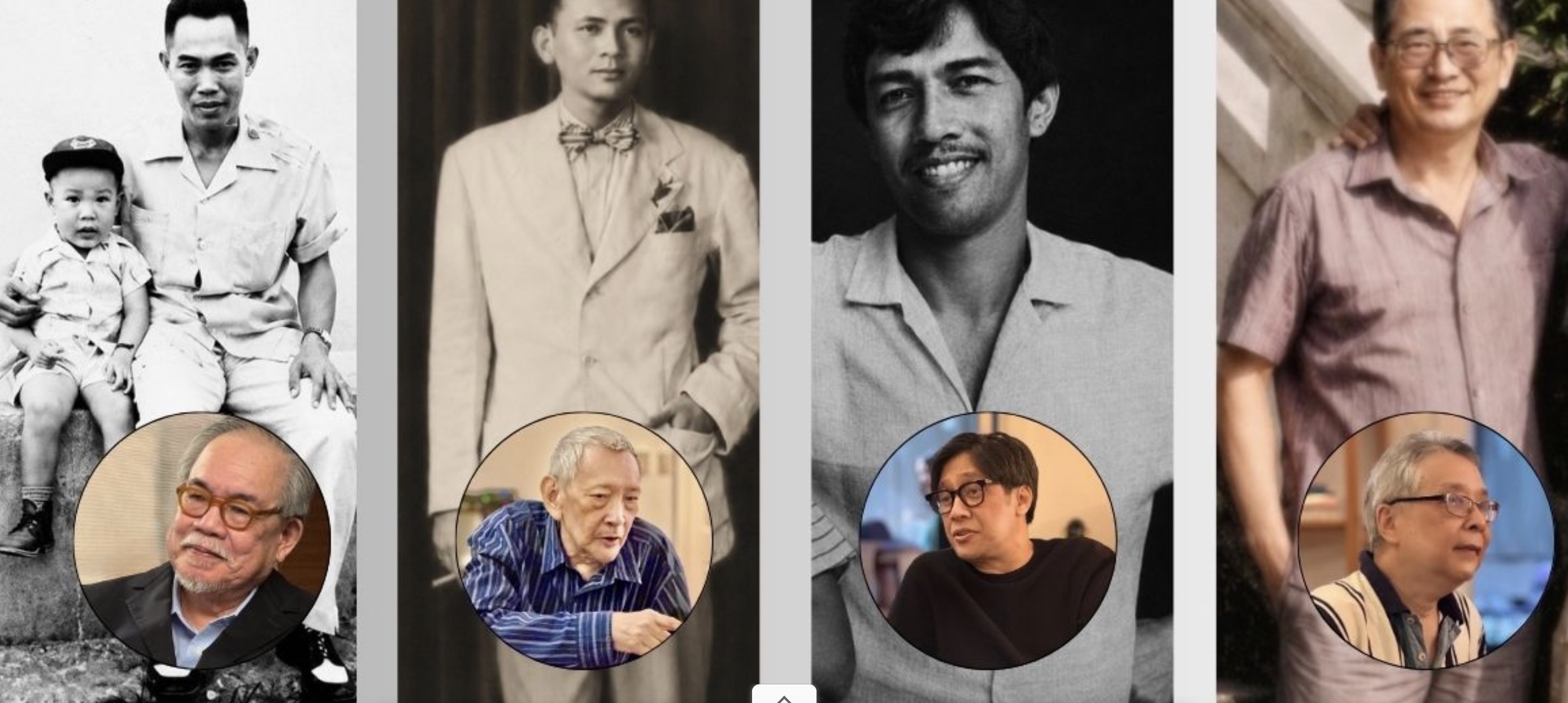
I’ve been more fortunate in my experience, but I’ve asked three writer-friends to share theirs, and to embrace the ghosts of our fathers that will stay with us for the rest of our lives.
Butch Dalisay
I’ve often written about my dad, Jose Sr., whom I grew up idolizing not just because he was intelligent, but also because he was very resourceful or maabilidad, as they say. He was well known in Romblon to have been the province’s smartest young man at that time. And he would have gone on to a law degree and a distinguished career by everyone’s reckoning, except that his family was poor. And while my mother was someone who came from a family of means in Romblon, shortly after they married and had me, the first of their five children, the family fell on hard times when he lost his job.
He worked for the Motor Vehicles Office. He worked for the Department of Public Works and Transportation as a clerk, but there were very difficult periods when my father took on jobs far beneath his competence. He did not think it beneath him to work, for example, as a barker for jeepneys just to put me and my siblings through school with the help of my mom, who was a postal employee.
I hero-worship him despite the fact that he was deeply flawed. He was a gambler, which probably explains why I’m an avid poker player to this day. I could remember the smell of the pancit that would announce a night of winnings, but more often than not, he would come home quiet early in the morning, and I kind of understood what had happened. Once he brought home a brand-new Singer typewriter to encourage the young writer in me, only to have it vanish when he couldn’t keep up with the installments.
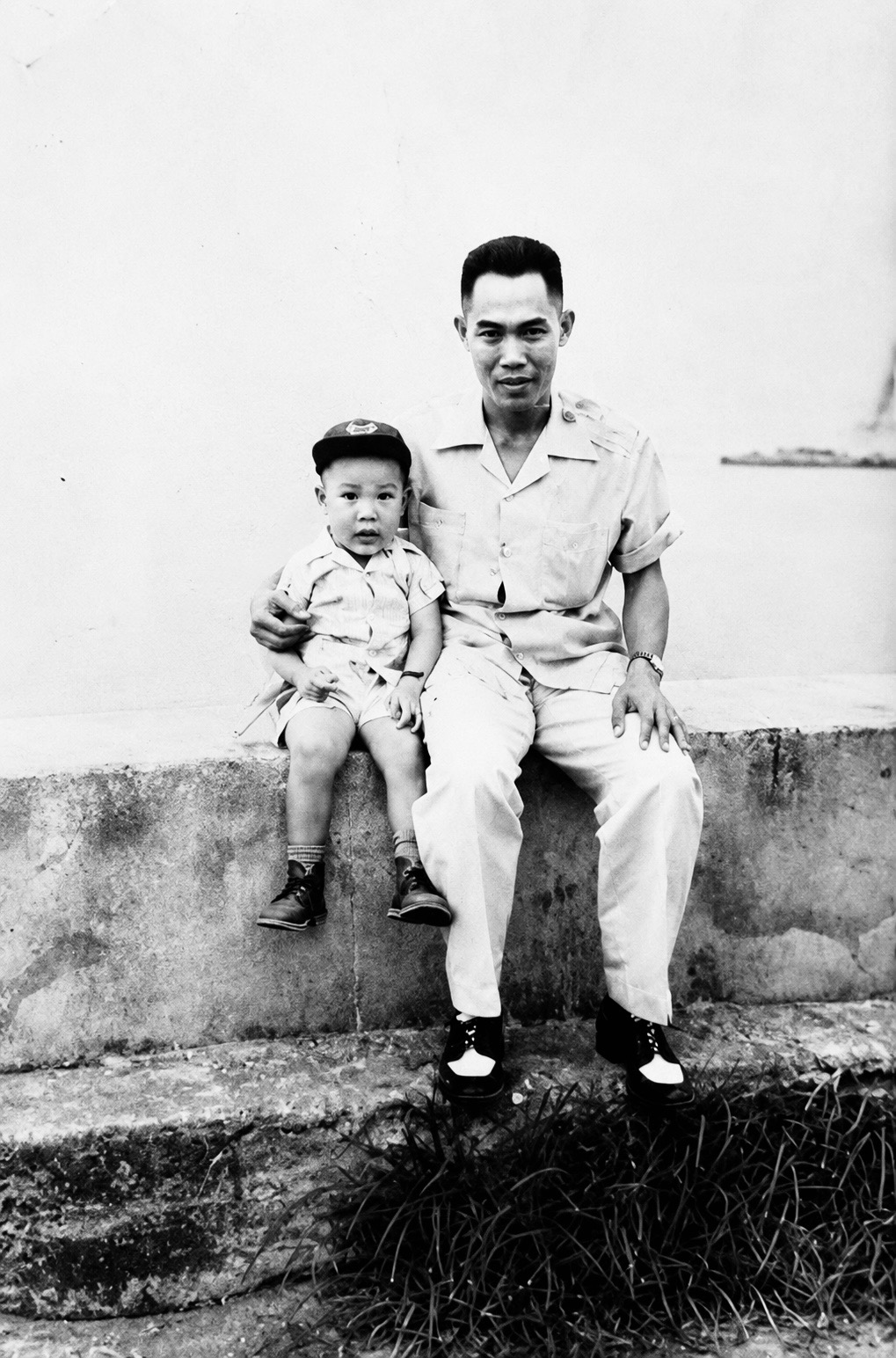
It was my father who introduced me to reading and writing. He was an excellent writer himself, and the governor of Romblon relied on him to write his speeches and to become a kind of secretary and recorder for this and that. It was a role that he would play all throughout his life, even in his old age, as a barangay official, someone who would help people in our village in San Mateo with their paperwork. He introduced me to reading because there were many things to read in the house, Time magazine and Reader’s Digest, and soon books.
He was a gentle, loving man who adored my mom Emy and took good care of us in ways more than money could. My wife Beng and our daughter Demi cherished him. When he died of an aneurysm at age 73 in 1996, I was crushed, and I treasure the times when we meet in my dreams, walking on the shore of our hometown in Romblon.
I owe him the gift of words, which I am now passing on to others.
Krip Yuson
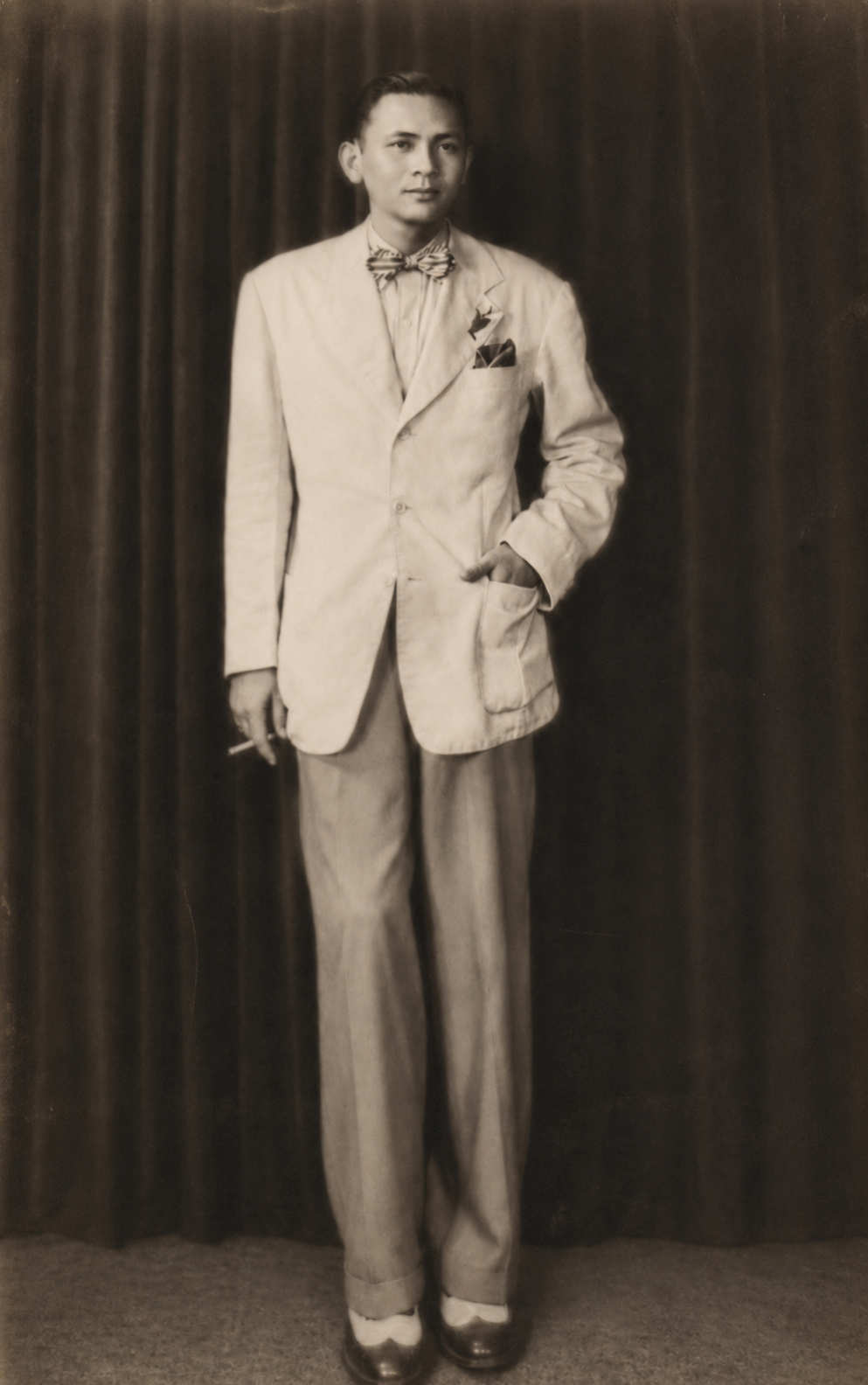
Armando Sison Yuson came from Lingayen, Pangasinan. He tried to be an Air Force pilot before World War 2, but cut out at some point. His father wrote poems in Spanish and Pangasinense, as I’ve been told by writer-friends from the region.
I can’t really share much or anything else about my dad, except that we had a falling out when I was 16, after he became too religious and wanted everyone in the family to pray the rosary every day to start the evening. I couldn’t do it after the first few days, and said so. Nothing he said could change my mind. It broke his heart, and he blamed everyone, including himself, for allowing his firstborn to enter UP after graduation from San Beda, proving his fears right that I had joined an atheist university. My doubts about faith actually began a year earlier, and were resolved when I read Robert Green Ingersoll at the UP library: “Give me the storm and tempest of thought and action, rather than the dead calm of ignorance and faith. Banish me from Eden when you will, but first let me eat of the fruit of the tree of knowledge.”
My dad (called him that because he was an Amboy) and I never became close again. As an early barkadista, I spent more time away from home. He passed away when I was 32. I tried writing a poem on him for almost a year, but gave it up. The following year, 1978, I was on my first week at the International Writing Program in Iowa City when I felt his presence in my Mayflower Apartments room as I was turning in. I recall saying out loud, “Dad, must you follow me here?”
I couldn’t sleep. A poem started in my head, a triplet of a stanza, immediately followed by another, and another. Before my memory could give out on more lines, I got up and started pounding away on my typewriter. The lines followed until I completed the poem. My first experience of automatic writing. When I checked the page in the morning, I decided there was nothing I had to revise. It became one of my most favorite and most anthologized poems. Here it is, written in 1978.
Father (from Sea Serpent, 1980)
Must everything begin and end
with tension, as with father and son,
the memory of games and sins between?
In the hospital I watched your heart
tighten its flutter across a screen, a moth
blipping from breath to breath
and finally arriving at a pinpoint
of dark, the last light a feint
that threw me off your sorry hint.
Entering your deathroom I came
upon a sad peace, bent toward time
And kissed you; you were him.
Pressed your hand and in a wild
appeal to chance thumped a child’s
blow upon your chest, a field
I wanted to revive and roam
upon some more, though the dusk of the dream
hurried me along toward half a home.
Sarge Lacuesta
My father, Amado Lacuesta, Jr. quit his high-profile job at one of the country’s pioneering investment banks to become a full-time screenwriter. I don’t know if it mattered that there were four of us kids and that I was just entering high school. But because of his life decision he showed me a life that was so rare and so special that I
felt privileged to be a part of it. I would tag along to his tapings, his shoots, and his brainstorming sessions as his semi-official sidekick. Never mind that it was a school night or that the discussion—or worse, the proceedings—were not really appropriate for
someone my age.
It’s been almost 30 years since he died of a heart attack at the age of 49. I was 26—so long ago that I don’t really remember many details of him anymore. That’s more years without him than with him, so that is fair. I am also older now than he ever would have been, and there’s a lot of disconnect between who I am now and the son that I was.
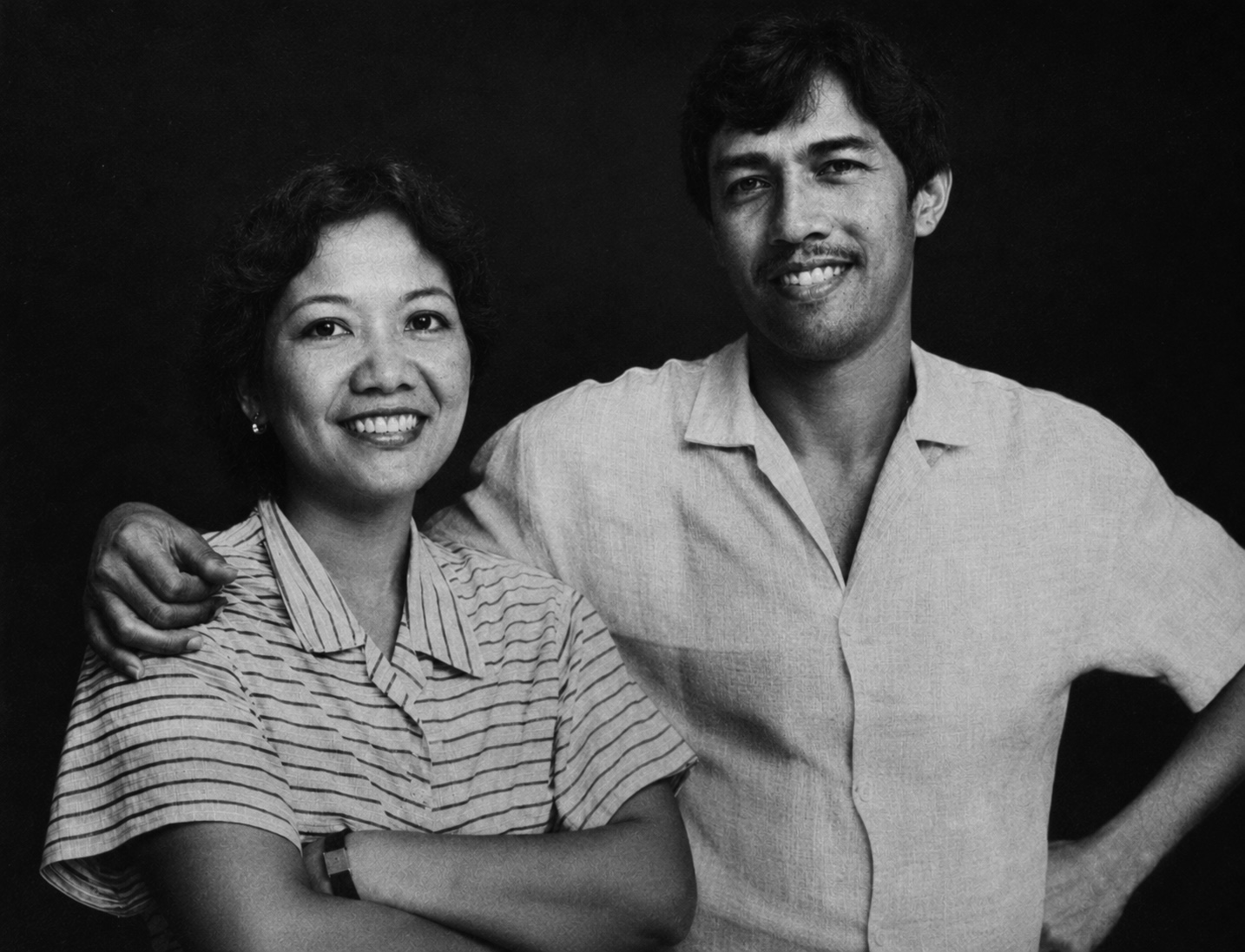
But what has rubbed off on me during our years of father-and-sonhood has stayed, for better or for worse. I am overly critical of others and blind to my own faults like he was. I remember him critiquing a writing exercise I performed for him when I was ten or eleven years old, mainly by laughing at my cliches and tired turns of phrase. I am as idealistic and often as detached from reality as he was. At EDSA, he used his own car—the only car we had—to physically block the path of the tanks that were rumored to roll into White Plains Avenue.
Now I am my own father, in every sense of the phrase: I’ve lost a large part of him, but a large part of him I can’t help but carry around.
Charlson Ong
My father Conrado was a rather laidback fellow whom I think would have been more successful in another time and place. As a second-generation Chinoy born and raised in Binondo, he ended up as a business person—and, in my recollection, a rather reluctant one. He was always too trusting of friends and spent on not a few turkeys, like real estate that disappeared after landslides and high tides. I always thought his passion lay elsewhere.
In hindsight he passed on some opportunities that might have led to bigger prospects but I guess he was never the sort who ‘bore into the money hole’ as the Chinese would have it. He perhaps never had the drive or risk taking personality, content to raise a comfortable middle class family—we were three kids, I was the youngest—with vital help from our mother. There never much issue between us, as I was youngest and when I was born in 1960, my parents were more or less settled. I know he worried for me because of my interests but never interfered with my life choices, I feel he regretted not being able to leave behind enough for me to engage my whims without having to worry about livelihood.
He loved cars and, I’d like to think, singing. He was a very good baritone who took lessons in his younger years with an operatic singer. But he had difficulty with the Italian and French lyrics and eventually gave it up. But some Sundays he would sing Chinese ditties while our mom, a piano major, accompanied. In long drives—before the time of car stereos , cartridges, cassettes, Spotify—during the 1970s and ‘80s, he would sing to himself just to stay wake driving while I pretended to sleep. But the songs embedded themselves into my psyche—romantic ditties of the 1950s and art songs of the 1930s while China waged its war of resistance against Japan and warlords. Whenever requested to sing Chinese songs, I draw on this repertoire of oldies.
He had an innate heart condition we now refer to as “athletes’ heart.” He had a health crisis as a younger man in his 30s but once it passed gave he gave in to his epicurean instincts and a two-pack-a-day smoking habit. By the 1980s he had his first heart attack but there was nothing much the technology of the time could realistically do.
In October 1987 he had his second attack. I was scheduled then for my first trip to China for the premiere of Eddie Romero’s Hari sa Hari—a co-production between the Philippines and China about the Sultan of Sulu and his embassy to the Ming emperor.
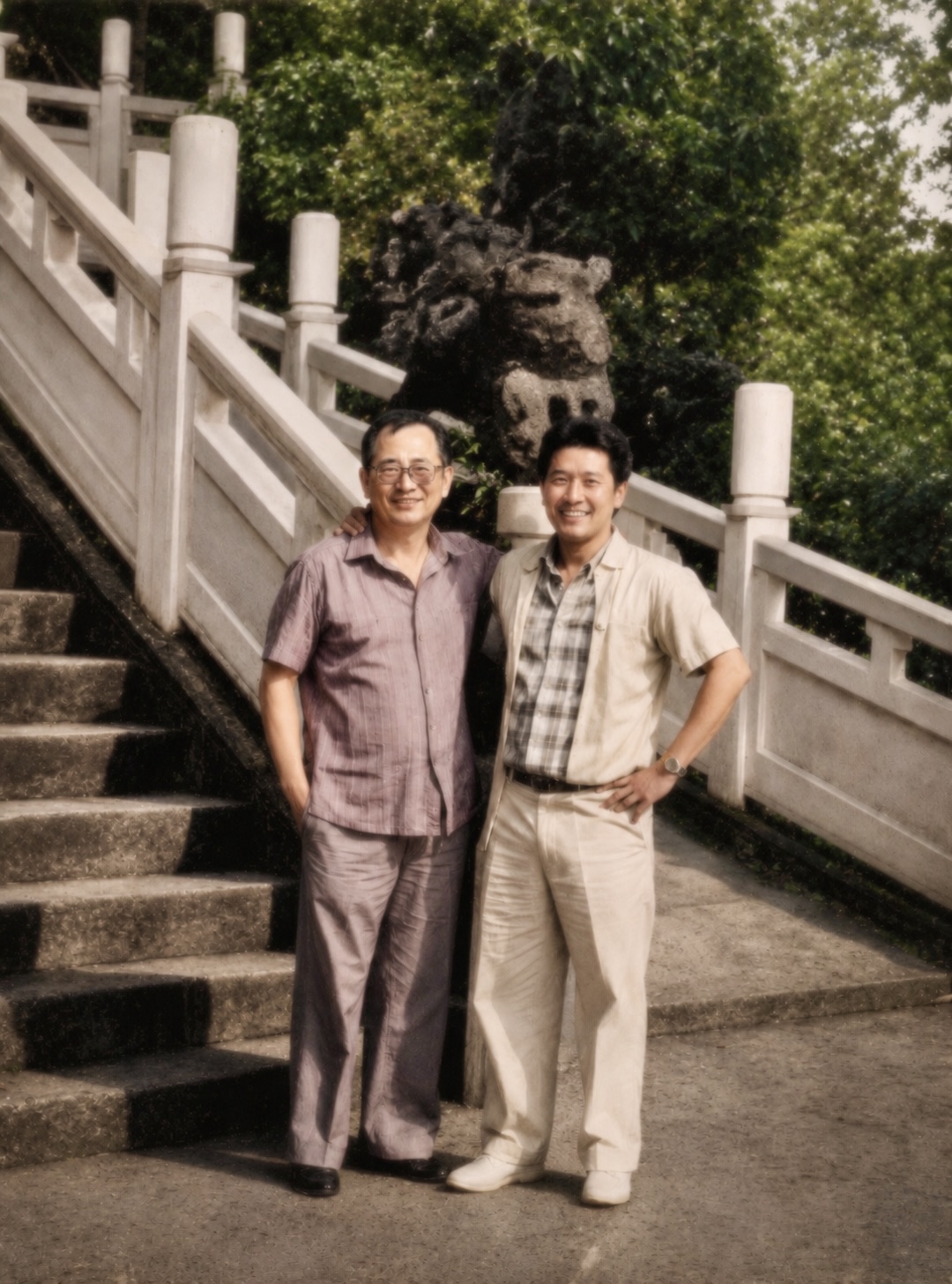
I thought my chance to go to China had passed, but my father recovered briefly and sent me on my way—I always felt he wanted me to experience the old country. But shortly after I left he suffered his third attack. This was before the the Internet, so for the week that I was in China I was blissfully unaware that he was fighting for his life.
When I returned, I had to rush to the hospital and upon arriving, I found out he had just passed away. He was 57. I did not witness his final days, but the lore remains that while he was in and out of lucidity, he had some clear moments, and when our plane landed in Manila he was supposed to have uttered—his tongue had receded by then—that ‘They have alit, my youngest is home.’ Until this day I can never recount that tale without tearing up and I was able to mourn him only through some of my later fiction. Still whenever I am bamboozled to sing, willingly or otherwise, I know that his voice is there.

