Penman No. 454: Revenge Travel, Local Edition

Penman for Sunday, September 3, 2023
WE PINOYS don’t really know what “summer” is any longer, with heavy rains falling out of the sky as much in March as they do in September, but especially with the new school calendar in place, most of us now do what used to be our summer traveling between May and August, if Facebook posts are any indication.

Many Filipinos—those who can afford it—still seem to be in “revenge travel” mode, flying off to Prague, Helsinki, Myanmar, and other parts off the usual travel charts. My wife Beng and I had a couple of dream spots halfway around the world in mind—recalling our pre-pandemic spree in 2019 when we blew a chunk of my retirement kitty on an escapade to Penang, Tokyo, England, Scotland, Singapore, the US, Turkey, and Macau—but our shrunken pesos and aching knees urged something kinder and more affordable: go local, and suffer no jetlag.

As it happened, we visited at least four places these past few months that I’d like to share with our readers looking for alternatives to the usual weekend destinations, ie, Tagaytay, Subic, Baguio, and Boracay. Some of these trips were partly for work, although I have to admit that pleasure pretty much overpowered anything else on our minds once we got there.
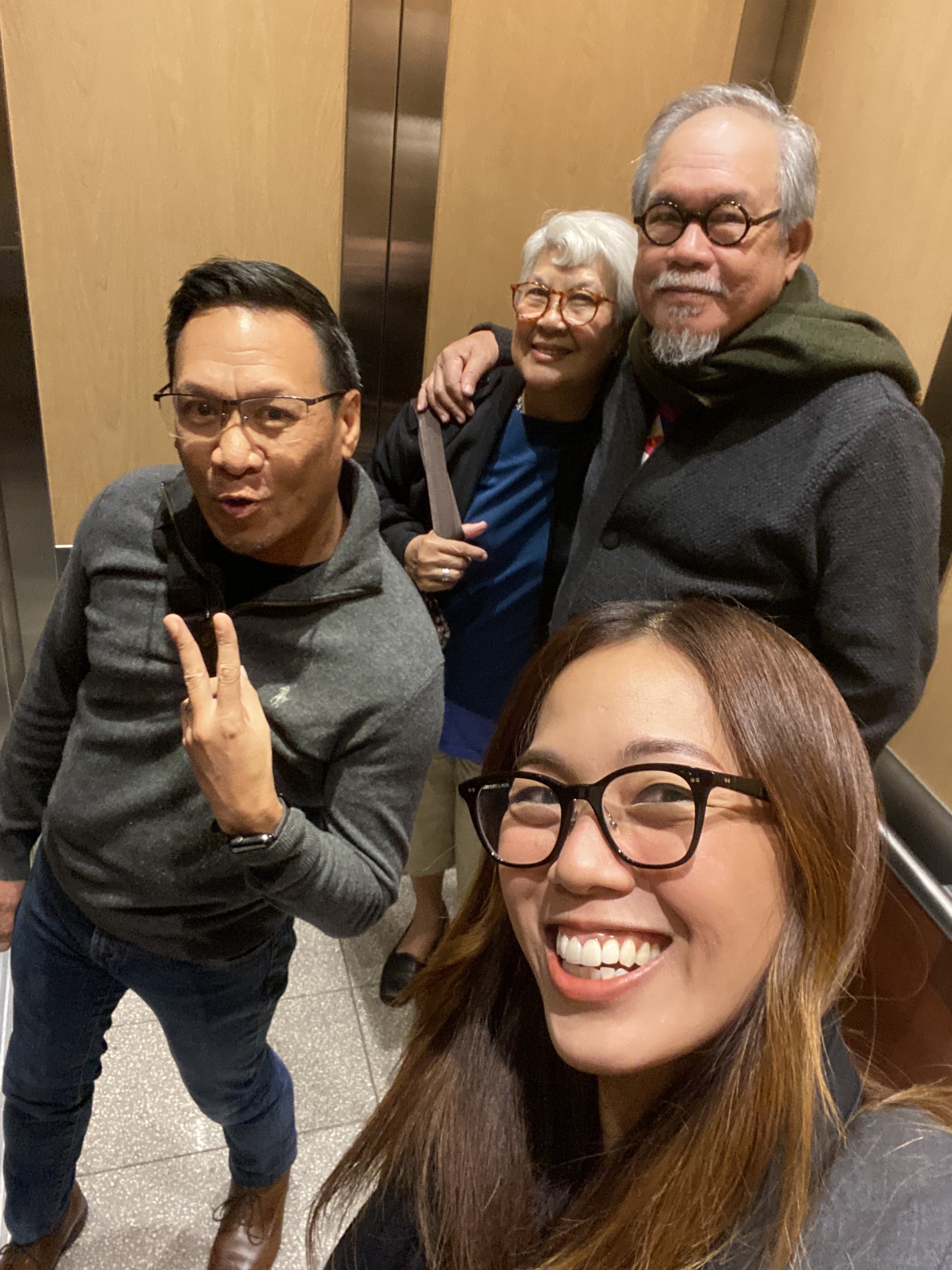
The first was a treat for the whole household—Beng, myself, my 95-year-old mom Emy, her caregiver Jaja, our housekeepers Jenny and Ara, Jenny’s husband and Beng’s assistant Sonny, and Jenny’s and Sonny’s kids Jilliane and Buboy. This is our extended family, whom we genuinely enjoy being with, so every year I promise to take them out on an overnight trip to water resort, as everyone (well, at least below 65) loves to swim. That means a wave pool, a place to cook, good and clean rooms for sleeping and showering, and not too long a ride (for my mom who gets carsick). 

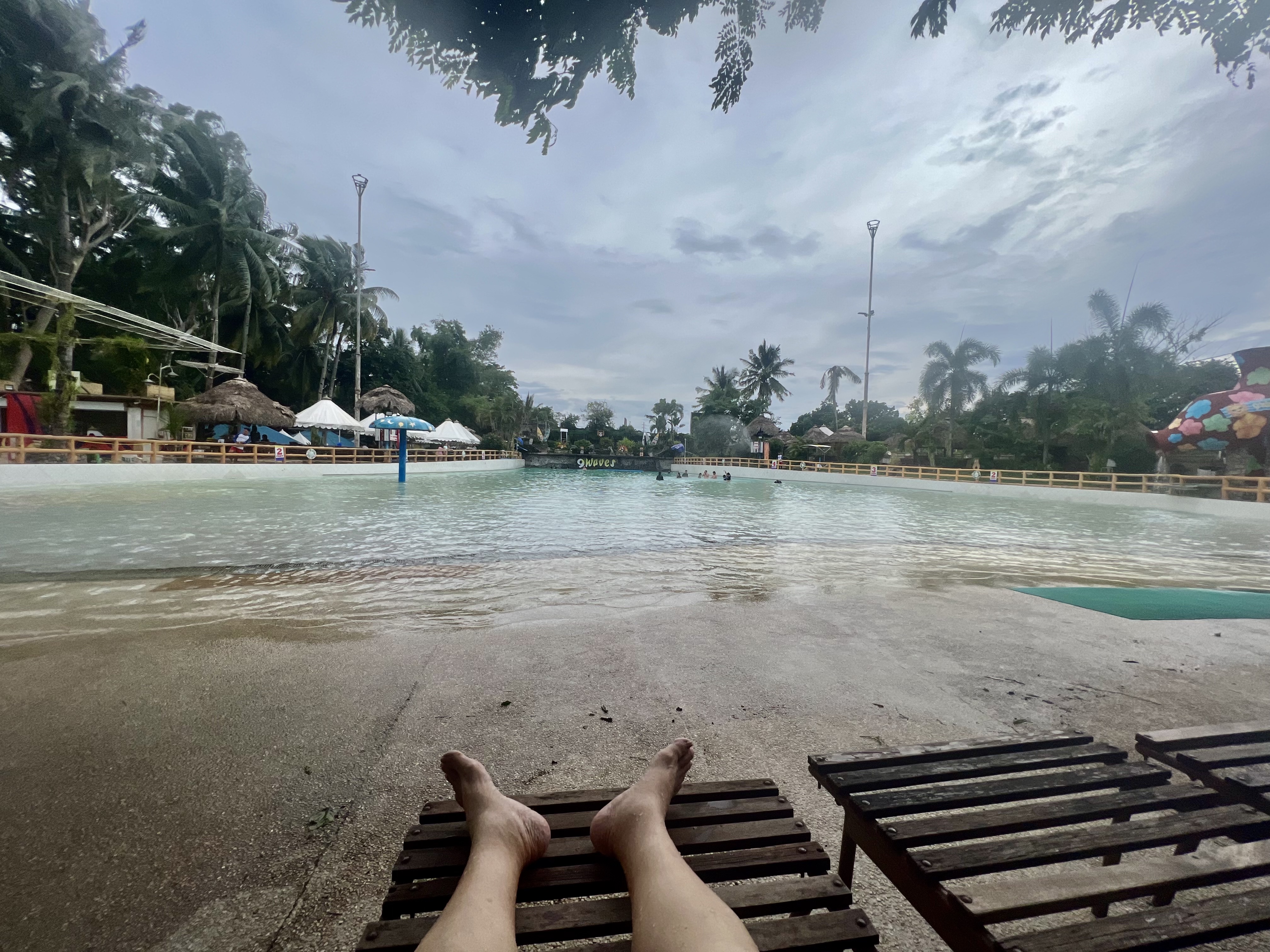
Last year it was the Villa Excellance Beach and Wave Pool Resort in Tanza, Cavite that did the trick for us—and it’s still worth a weekend for your family—but a little Googling yielded me something much closer to our home on UP Campus: the Ciudad Christhia Nine Waves Resort in San Mateo, Rizal, just a 30-minute hop away via the Commonwealth/Tumana route. The place had everything we were looking for—it’s an ideal venue as well for teambuilding seminars, if you don’t want to go too far, with very helpful staff and prices that won’t break the bank; you can do your broiling right beside the huge pool, and the cabanas were clean and cozy. While I flailed around in the knee-high water, six-year-old Buboy had a blast in the wave pool, which was all that mattered.
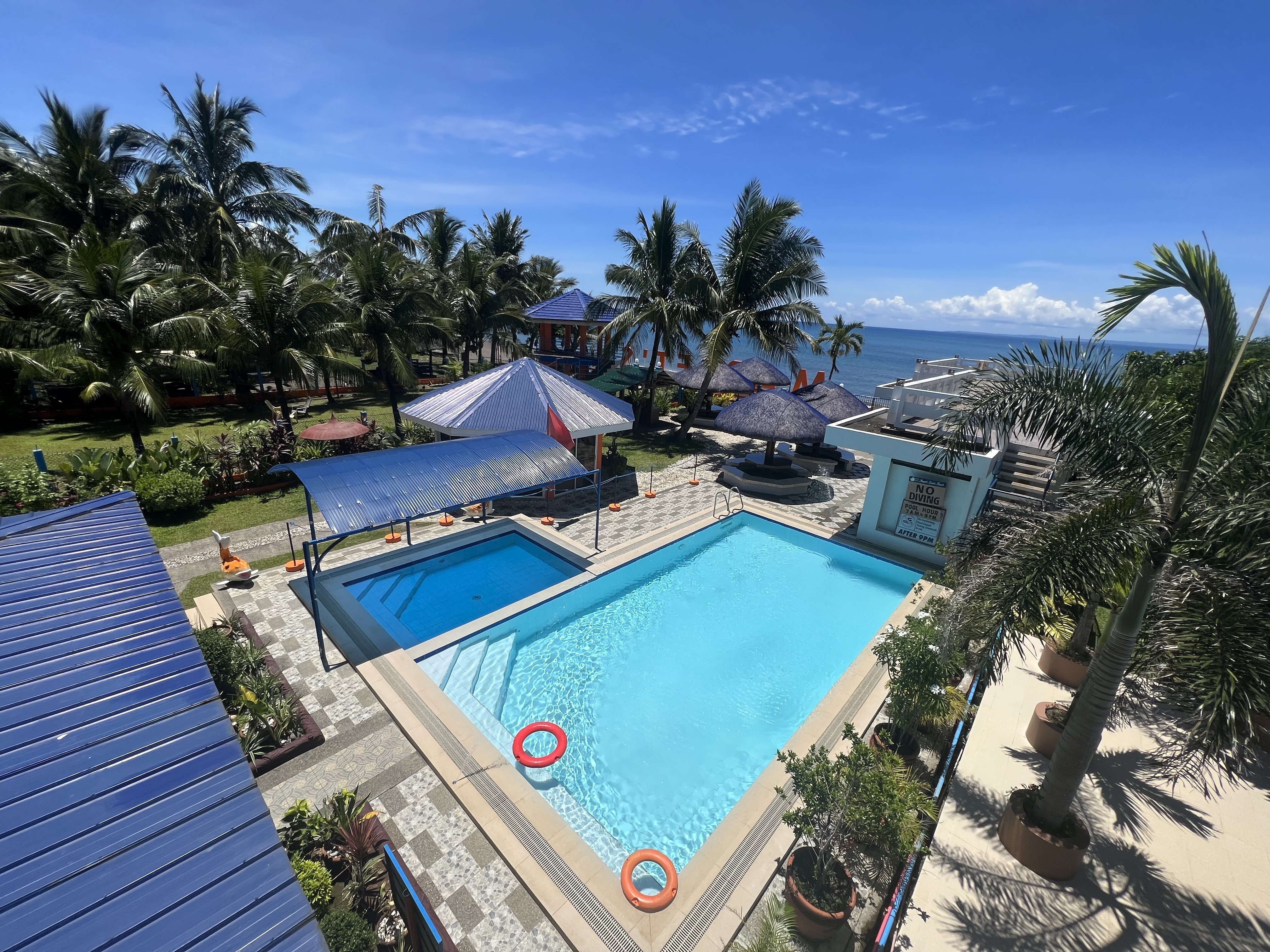
If you don’t mind driving through the mountains on a zigzag road for about three hours, then a trip to Infanta, Quezon will make the effort worth it. Facing the Pacific, but with Pagbilao Island buffering the waves in between, Infanta offers a bevy of beach resorts, of which Beng and I went to the Marpets Beach Resort, which was run by an American expat and his Filipino wife. Aside from its stretch of beach, the resort had three swimming pools, very livable quarters, and deliciously cooked food. The great thing about a roadtrip to Quezon—which is reachable via the zigzag Marilaque Highway from Marikina and also via the equally scenic though more moderate route passing Antipolo, Famy, and Real—is that the journey itself is an adventure, with much local produce to buy along the way, and breathtaking views to snap. 

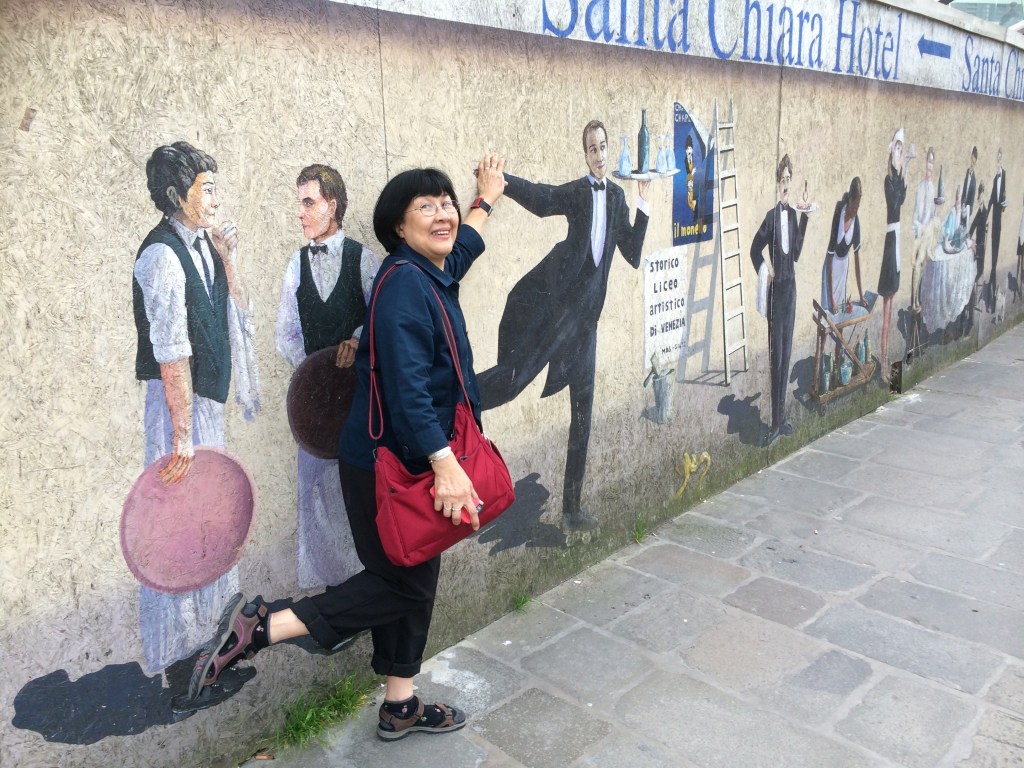
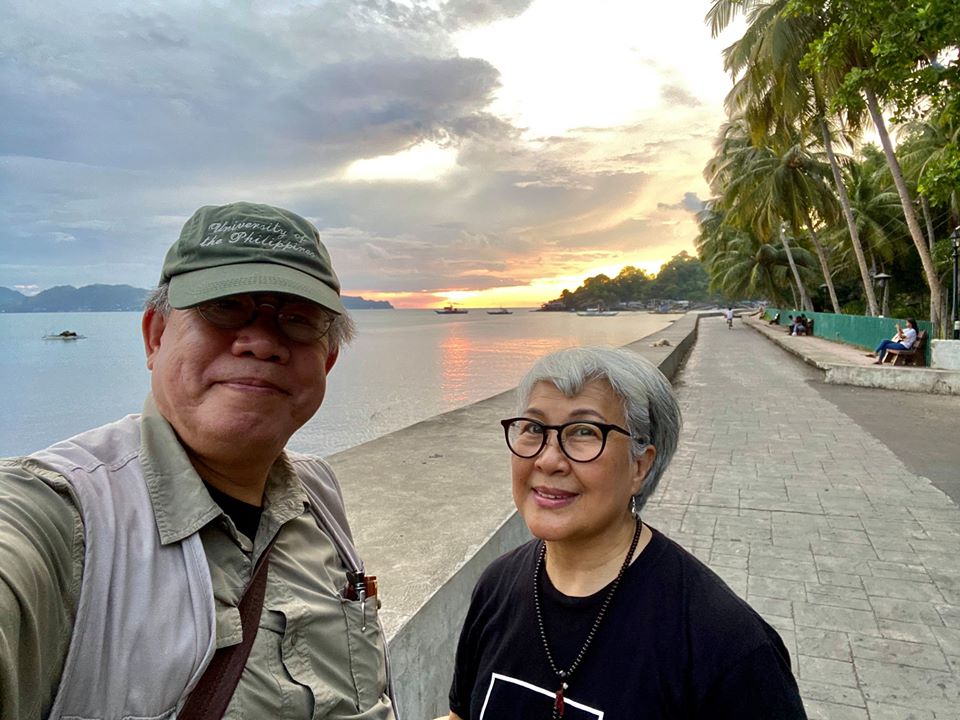
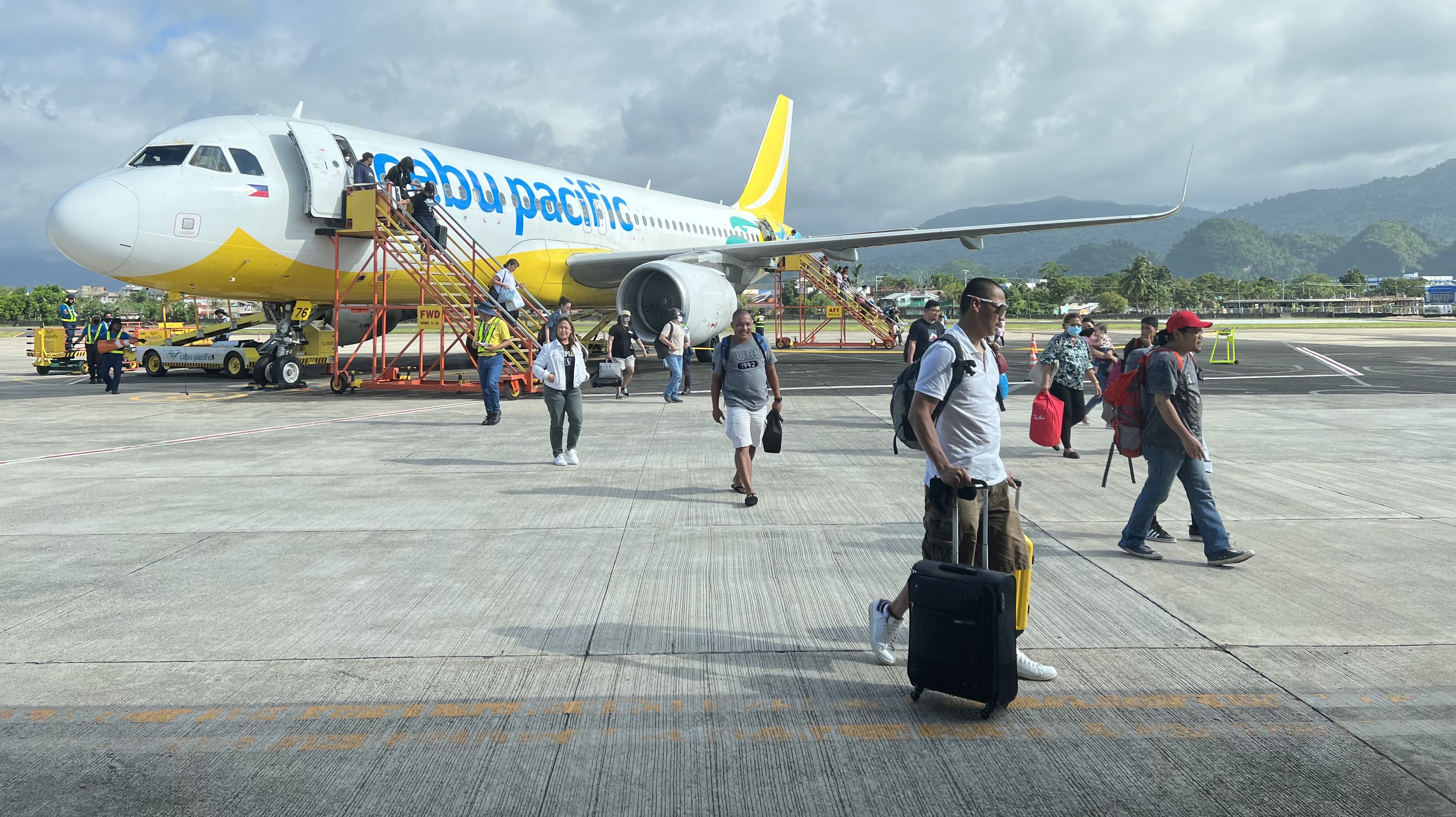
Our third destination was almost a random but providential choice. Looking for an inexpensive getaway far enough from Manila to require a plane, and with some airline credits to expend, Beng and I looked up Cebu Pacific’s destination map and settled on one spot we’d never been to—Virac, Catanduanes. We Manileños often hear of Virac only in the context of incoming typhoons, for which it’s probably unfairly used as a reference point, but if you catch it on a sunny day like we did, then you’d rather be here than busy Boracay. I found a new boutique hotel on booking.com called Happy Island Inn in San Vicente, a short tricycle ride from downtown fronting the water, and it turned out to be a winner, priced very reasonably with the friendliest front desk fellow I’ve ever met in all my travels.
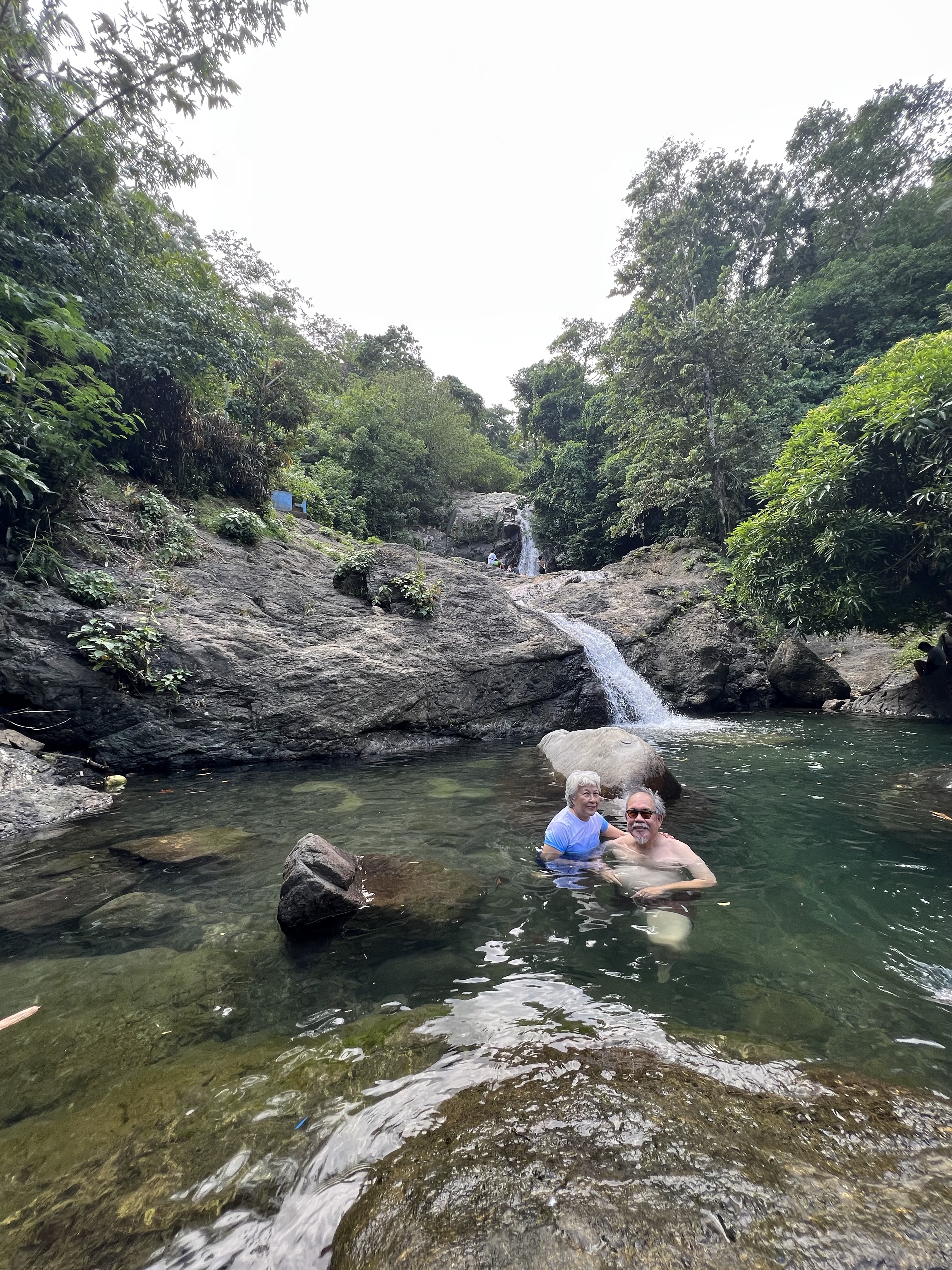
Soon we learned that nearly everything in Virac is reachable by tricycle, which we hired for a day tour that included a beachside lunch at the ritzy Twin Rocks resort, a visit to the historic Bato church, hewn out of stone and coral, and a bracing dip into the cool and clear waters of Maribina Falls (entry fee, P25 per person). We made new friends of a lovely couple, Bobby and Myette Tablizo, with whom we shared stories under a full moon. There’s a lot more to be discovered of Catanduanes up north—the island can be circled on a first-class circumferential road—but we’ll save that for next time.

My last sortie was by my lonesome and work-related, but work gets doubly hard in a place meant to transport you to blissful oblivion. This was in Panglao, Bohol, which, the last time I looked many years ago, was little more than a cluster of huts. Imagine my surprise when we stepped off the plane into a world-class airport and then, just minutes later, were wheeled into the kind of resort you find on some glossy magazine cover or on the travel channel but never thought was right in your backyard. (Well, of course there’s a whole class of Pinoys who do know about such places, and I’ve been fortunate to have been invited to a few, but my poor-boy’s jaw still can’t help dropping in the face of luxury.)
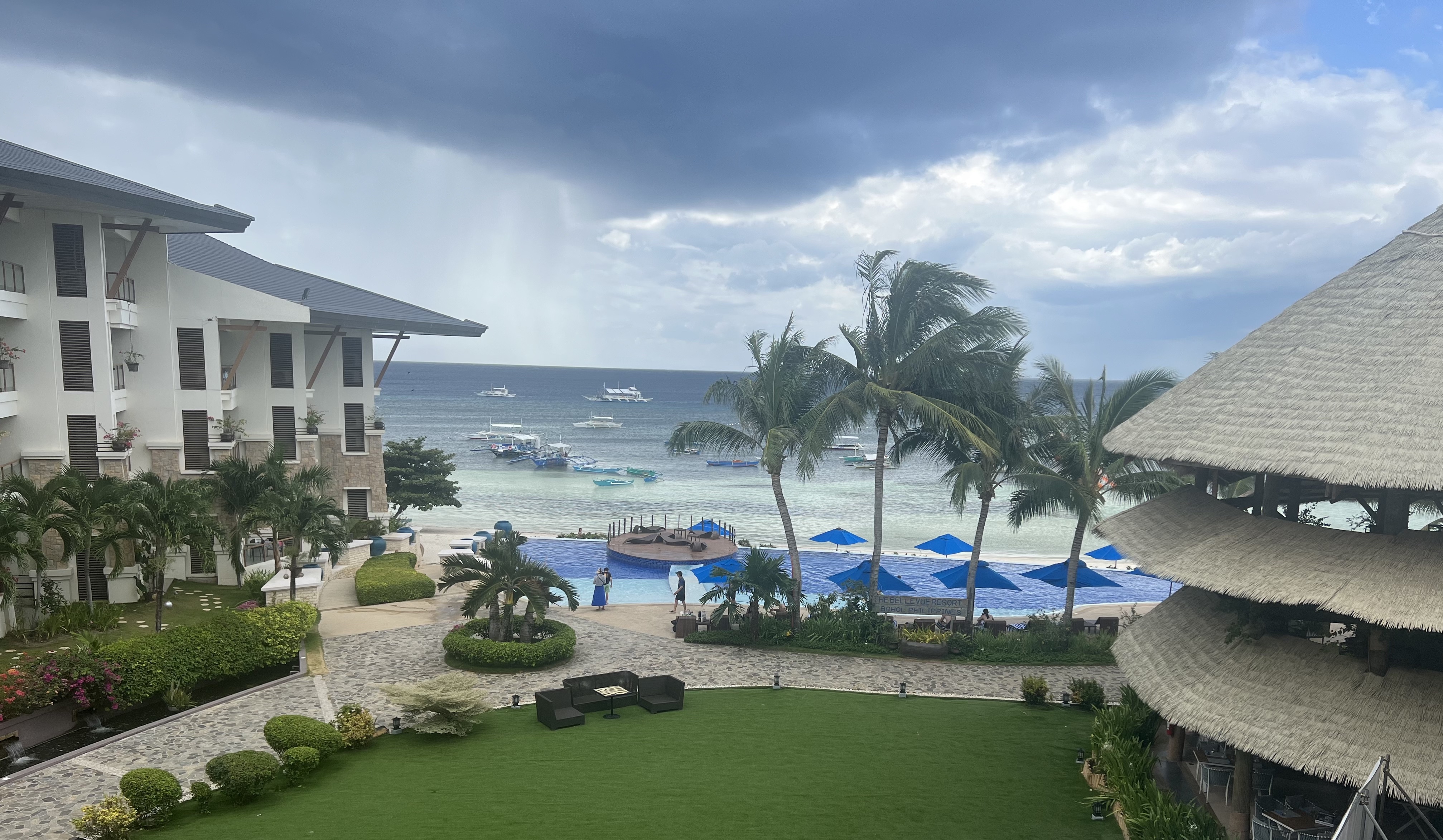
The Bellevue Resort in Panglao is one such place that will make you wish you’d studied something like plastic surgery so you could spend a few weekends here every year. The rooms are as plush and comfortable as you should expect at its price point, but it’s the waterfront that will captivate the first-time visitor, with its white-sand beach, tour boats, infinity pool, and multilevel restaurant. Breakfast or dinner beachside is an option, and a tour of the rest of Bohol can be arranged.

Of course, there’s always Bali or the south of France, but with the new travel paperwork requirements, who needs the hassle at immigration? Save yourself the travel tax and go local. It’s still more fun in the Philippines, if you know where to look.
Qwertyman No. 56: The Rule of Rules

Qwertyman for Monday, August 28, 2023

HAVE A problem? No worries—the Philippine government will make a rule to fix it (maybe). Don’t have a problem? No matter—the Philippine government will make a rule to give you one.

Some days it feels like all that government exists for is to make new rules, because, well, it’s the government, and so it has to look and sound like one. Never mind what the preamble to our Constitution states, imploring the aid of Almighty God to “establish a Government that shall embody our ideals and aspirations, promote the common good, conserve and develop our patrimony, and secure to ourselves and our posterity, the blessings of independence and democracy under the rule of law and a regime of truth, justice, freedom, love, equality, and peace.” Forget the rule of law and all that jazz; all hail the rule of rules.

Two pronouncements by our hallowed poohbahs caught our attention in recent weeks. 

The first was an order from the Vice President and Secretary of Education, DepEd Order No. 21,  directing in its implementing guidelines that all public schools must ensure that “school grounds, classrooms and all their walls and other school facilities are clean and free from unnecessary artwork, decorations, tarpaulins, and posters at all times…. Classroom walls shall remain bare and devoid of posters, decorations, or other posted materials. Classrooms should not be used to stockpile materials and should be clear of other unused items or items for disposal.”

Why? Because these were distractions to learning, explained the good secretary, presumably including in her edict the pictures of past presidents, national heroes, posters of Philippine birds and plants, TV-movie idols, Mama Mary, cellphone and softdrink advertisements, half-naked women, CPP-NPA recruitment posters, the periodic table of elements, weapons of Moroland, and the winking Jesus. 

I actually found myself agreeing with the removal of some of these popular items of wall décor, especially the pictures of politicians, which doubtlessly produce anxiety and despair in those who might contemplate them seriously. The good presidents will make you ask, “Where did all that goodness go?” The bad ones will invite only dismay and even self-loathing: “How did these jokers even make it to Malacañang? So you can still be that kind of person and become President? What on earth were we thinking?” This leads to even more profound and troublesome questions about the nature and practice of democracy, which a poorly trained and underpaid sixth-grade teacher will be hard put to answer, undermining whatever little authority she still exerts over her students. (To her credit, Sec. Sara reportedly removed her own picture from a classroom she visited.)

But Rizal, Bonifacio, Mabini, Tandang Sora, and the usual pantheon of Philippine heroes decking our classroom walls? Will removing their visages encourage students to think more deeply about their Science or Math problems, or will young minds simply drift off to Roblox, Taylor Swift, and Spongebob Squarepants? Will making our classrooms look as bare as prisons (and even prisons have calendars and pinups) lead to a spike in student attentiveness and performance? What does it say of DepEd—with all the academic resources and intelligence funds at its disposal—that directives like this are issued apparently on a whim and without prior and proper study? Where was the attention to science and education that the secretary was aiming for?

The other new rule that sent us screaming to our group chats was the imposition of new guidelines for foreign travel by the Inter-Agency Council Against Trafficking, announced by the Department of Justice, supposedly to curb the incidence of human trafficking, which we all acknowledge t0 be a serious problem. But is this a serious solution?

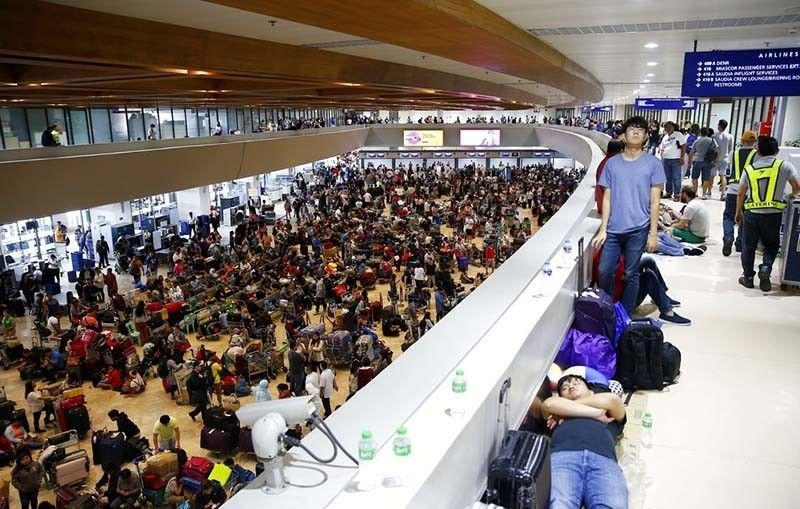
Under the new guidelines, Pinoys going abroad to see the sakura in Tokyo or to watch the New Year’s Eve ball drop in Manhattan won’t get past NAIA immigration without showing their flight and hotel bookings, proof of their financial capacity to afford their trip, and proof of employment. That’s a lot of paperwork to bring along, and if you’ve seen how long the queues can get at NAIA even without these papers in the way, you can imagine what they’re going to be like with each single document having to be scrutinized by an immigration officer. There’s an even longer list of additional requirements for people traveling under sponsorship and for OFWs—including a requirement for a child traveling with his or her parents to present a PSA-issued birth certificate, which was already a requirement for that child to have been issued a passport.

Exactly what this rigmarole adds to the reduction of trafficking is unclear to my muddled mind, because it seems to me that any good trafficker worth his or her illegal fees will be smart enough to produce the fake documents their wards will need to slip through airport security. As experience has shown, it isn’t even fake documentation but corruption and connivance that have greased the wheels of trafficking. 

Which reminds me, I received a letter some time ago from an expat Briton and a longtime Philippine resident named Thomas O’Donnell, complaining about such unnecessary requirements as the filing of annual reports by foreigners in this country. The Philippines has a reciprocity agreement with other countries such as the UK, Thomas says, but the UK doesn’t require Philippine residents there to do the same thing. So was it—like many of our other rules—just something to keep our bureaucrats occupied (or possibly, profitably occupied)? Where was the fun in the Philippines, Thomas lamented, and how was a fellow like him supposed to love it? 

Having lived here for 23 years, Thomas clearly has found other, countervailing reasons for staying on, but he has a point. Despite an anti-red tape law in the books, we still invent ways to complicate the simplest things. And answer me this: if the DepEd chief thinks that bare walls can lead to clearer thinking, shouldn’t we declutter our travel processes as well, so we can all sit in the departure lounge in peace with an hour to spare, waiting for our flight (that will likely be delayed, but that’s another story)?

Penman No. 445: Some Notes on Travel Writing

Penman for Sunday, December 4, 2022

I’M SURE you’ve noticed—with much envy in my case—how so many of your friends have been traipsing around the world these past few months on what’s been called “revenge travel,” that perfectly human impulse to flee the cage after years of imposed isolation. 

And whether you’re guzzling down a pint of beer in Munich, chasing pintxos in San Sebastian, or crossing a bridge in Kyoto, the chances are you’ll be happy with a raft of digital photographs to show for your adventures. Many will want to post about their tours on their blogs, while a much smaller group will—perhaps months later—sit down to reflect on their experience and write about it in an effort to make better sense of what they went through. 

That’s something I’ve done myself from time to time, and so I thought of sharing some notes for the prospective travel writer—not just of the usual travel feature we produce for commercial media, but of a more personal kind of travel essay, one focused as much on the traveler as on the place itself. Beyond reportage citing facts and figures, this is writing that implicates and engages the traveler, the writing persona, and makes him or her a character in the piece. 

At my age, I consider myself a fairly well-traveled person, but one of the first things I want to say about good travel writing is that it’s really not about where you’ve gone or how many countries you’ve been to. It’s not about quantity, but quality of experience, perspective, and insight. The challenge isn’t to go to what to most Filipinos would be an exotic place like Paris or Tahiti. It’s to go there and to find and to tell us something about it that millions of other visitors or tourists have never seen.  

And when I say “something others have never seen,” it’s not about looking for obscure places, new bars, strange customs, or unique souvenirs. They could all be part of a great story because they’re intrinsically interesting, and if all you want to do is a standard feature story for a magazine, that would be all right. You could even make a good and exciting living writing these travel features, because the industry travel constantly needs them and they sell. 

For many of us, that would be a dream job: fly off to faraway destinations and to first-class hotels with all your expenses paid, just to write about how wonderful the place and the experience was. In my two decades as a columnist for the Lifestyle Section of the Philippine Star, I was lucky to have had a taste of that kind of luxury, having been sent on special assignment to the US, Germany, Israel, and Malaysia, among many other places. When I traveled for academic or professional conferences, which was quite often, I wrote those up too as travel pieces.

But—putting on my creative writing teacher’s hat—I also want you to think of travel writing not just as a function of place, but rather a function of mind. I want you to realize that you don’t need to go to an African safari or to ride a gondola in Venice to be a good travel writer—or a good writer, period. I want you to be able to turn a place you may have been to a thousand times or even lived in—say, Cubao—into a travel destination, and to explore not just its surface but its culture and subcultures, its inhabitants, its range of markets, its daytime and nighttime versions.

There are always two tracks embedded in a good travel essay: the story of the place itself, and the story of the traveler. To put it another way, there is the external journey, and the internal journey. 

The external journey is the story of the journey itself—the purpose of the travel, the choice of destination, the mode of travel, observations along the journey, reaching the destination, first impressions, engagements with the local people, sights, food, experiences, and other vignettes until departure time. 

The internal journey is the story of the traveler’s life situation at the start of the travel—his or her expectations, anxieties, distractions—and then his or her reactions to the unfolding environment, his or her interactions with the place and people, and his or her terminal thoughts and feelings about the whole experience, whether explicitly stated or implied. Very often, the internal journey involves some kind of quest—a search for something beyond the place itself, or some object in it, but an answer to some personal question, which gives meaning to the visit and the encounter with the place. 

That question could be “Who am I?” or “Where do I belong?” or “What do I really want?” or “Is there hope?” As the travel progresses, the answers to these questions begin to be formed or revealed. Thus do the external and internal tracks run parallel or congruent until they bend and meet at a certain point. Indeed, it can be argued that the external track, the travelogue itself, is simply an excuse or a device to tell the personal story, which emerges as the true point of interest in the piece. 

The internal track could also be subtle and subdued, embedded in the main narrative, and palpable only upon closer reading. Nevertheless it will be there, the result of a place or an experience’s impact on a person. In the travel essay, therefore, it is the interaction between person and place and the insight that comes from it that is the real, unified story. 

As the great travel writer Pico Iyer put it, “We travel, initially, to lose ourselves; and we travel next to find ourselves. We travel to open our hearts and eyes and learn more about the world than our newspapers will accommodate. We travel to bring what little we can, in our ignorance and knowledge, to those parts of the globe whose riches are differently dispersed. And we travel, in essence, to become young fools again—to slow time down and get taken in, and fall in love once more.” 

So when you write your next travel story or travel essay, don’t just tell us about what you’re looking at, which many thousands of visitors before you have already seen. Try to look at it from another angle, or find an interesting detail that’s been paid little attention to, and reflect on what it says to you. Your perspective is as important as the place itself; it may not be shown or expressed too strongly, but it will be there and should be there, for the work to be truly yours, truly unique, and truly worth doing. Happy trails!

Penman No. 444: A San Diego Sojourn

Penman for Sunday, November 6, 2022

A FEW weeks ago, for the first time since the pandemic, my wife Beng and I took a plane out of the country, and I can’t tell you how liberating that felt after three years of being landbound. I’d had few complaints about the long lockdowns, because I’m used to working and writing in isolation, and have become much less sociable as I age. But I did miss the travel, the foreign air, the view from the other side of the ocean. 

Just before the pandemic hit, Beng and I had spent my first year in retirement (and a good chunk of my retirement kitty) gallivanting around seven countries, against the advice of family and friends who thought that we were overdoing it; perhaps we were, but now we know that the world we saw then will never be the same again, and that we ourselves—in or approaching our seventies—will never be able to do that again. And so it was with a huge sigh of relief that we boarded our flight to San Diego, where our daughter Demi has been living with her husband Jerry for the past 15 years. We’d visited San Diego often before, but probably not with this much anticipation, having been away for years. 

Sitting on the Mexican border, San Diego isn’t the first place most Filipinos would choose when they think of visiting America, unless, like us, they have personal reasons to go there. Los Angeles and San Francisco seem to be more exciting places, have large Fil-Am communities, and have long been the ports of entry for Pinoys landing on the West Coast. (Our Japan Airlines flight was that rare straight flight via Tokyo to San Diego.) But San Diego has its own charm and its own attractions, most notably Balboa Park, the San Diego Zoo, and Comic-Con, that annual extravaganza of pop culture that draws about 150,000 fans from around the galaxy. (Much to my young students’ chagrin, I’ve been to Comic-Con twice, happily ignorant of much of what I was looking at.) 

And whether you’ve lived there for decades or are just passing through, San Diego will always give you a taste of home, with dozens of Pinoy foods stores and restaurants, especially in National City and Chula Vista where you can shop at Seafood City for daing na bangus and Chocnut and at Goldilocks for your party cake while dropping packages off at LBC—or you can run to Mira Mesa for your Jollibee fix. (For me, an American sojourn would be incomplete without a trip to Arby’s and Red Lobster.)

Inevitably San Diego also has its own spotted history of East-West relations, in which Filipinos have figured; the better part of that history was celebrated last month as Filipino-American Heritage Month in the city. The worst part remains in the archives, in the memories of early immigrants such as Emeterio Reyes, who recalls that “I asked the driver if he could take me to a Catholic church. As soon as we got there, I told him to wait for me because I had a funny feeling I might not be welcome at this church. As I entered the door, a priest approached me and told me that the church was only for white people. That moment, I wanted to cry and die!” 

When Sebastian Vizcaino sailed into what he would name San Diego Bay on November 10, 1602, he found that he had “arrived at a port which must be the best to be found in all the South Sea, for, besides being protected on all sides and having good anchorage, it is in latitude 33½o. It has very good wood and water, many fish of all kinds, many of which we caught with seine and hooks. On the land there is much game, such as rabbits, hares, deer, very large quail, royal ducks, thrushes, and many other birds. On the 12th of the said month, which was the day of the glorious San Diego, the general, admiral, religious, captains, ensigns, and almost all the men went ashore. A hut was built and mass was said in celebration of the feast of Señor San Diego.”

As a major port facing the Pacific, San Diego has long been home to the US Navy’s Pacific Fleet, its base harboring over 50 ships. The naval presence defines much of San Diego’s character, and provides a good part of the reason why about 200,000 Filipino-Americans live there today. Since early in the American occupation, Filipinos have signed up with the US Navy as their passport to what they hoped would be a better life and to a bit of adventure. 

I just learned, for example, that the first Filipino to have joined the US Navy, back in 1903, was a seminarian in Manila named Potenciano Parel who snuck out of his vows to be a sailor, but not having the right papers, he used those of a friend and assumed his identity, Tomas Dolopo; the Dolopos continue to be San Diegans. Demi’s late father-in-law, Ric Ricario, joined in 1957; his eldest son, Ray, followed him into the Navy; Ray’s brother Jerry met and married Demi. And so we find ourselves now tied by blood to that long tradition, as did many thousands of others before us.

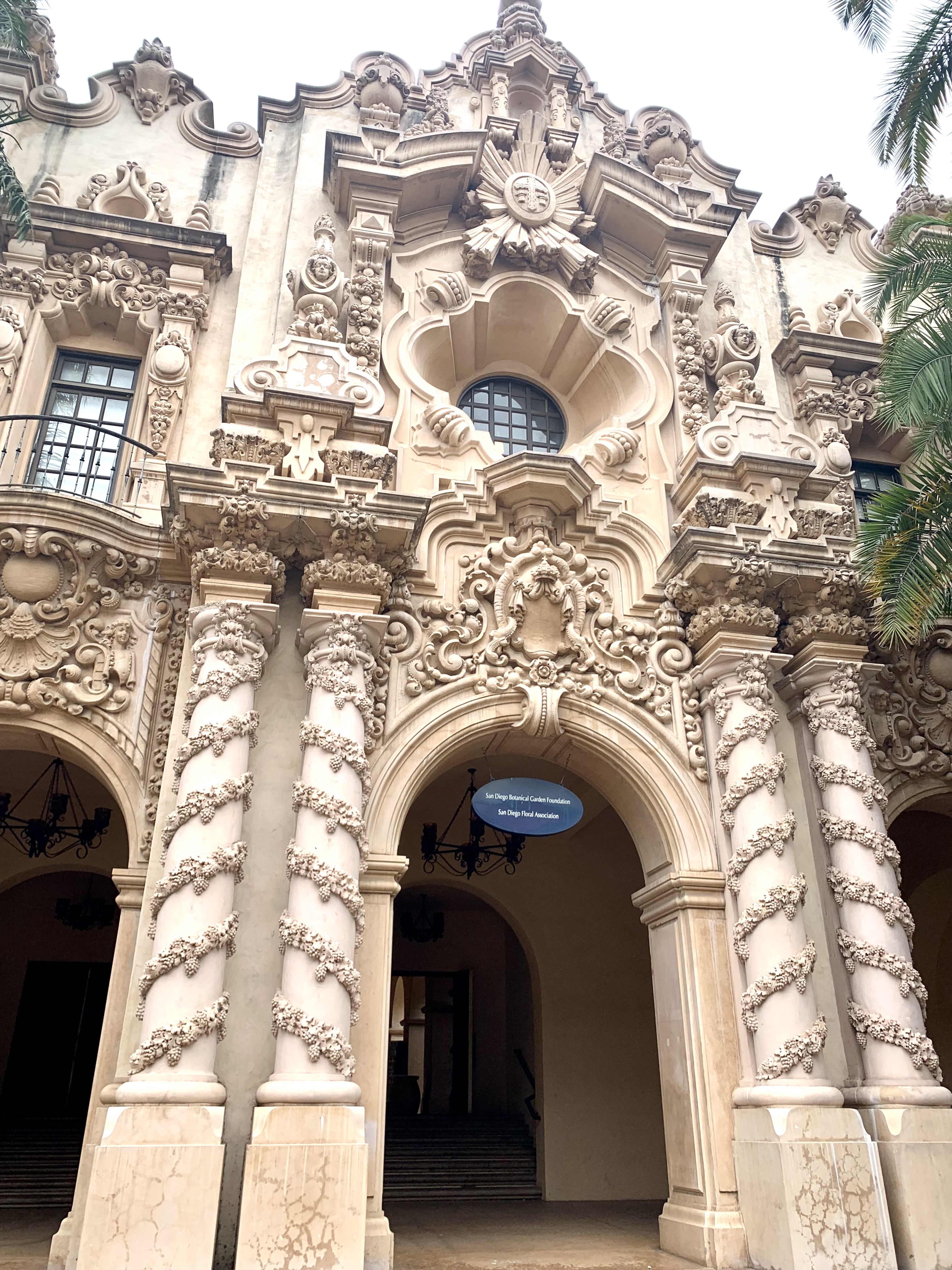
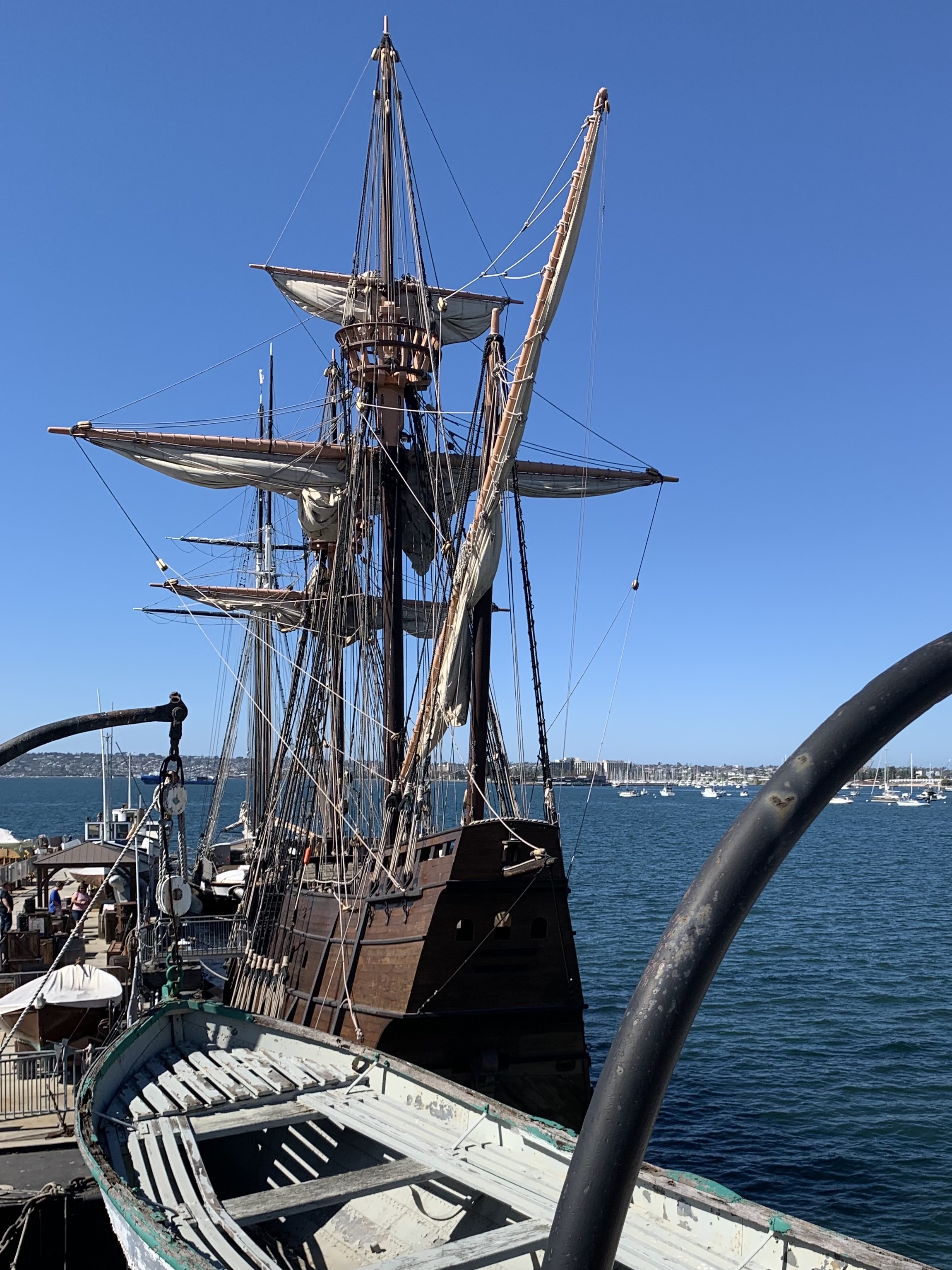
Despite having visited San Diego many times before, and having enjoyed its more popular attractions, we felt more acutely aware of history this time around. We finally stepped into the city’s Maritime Museum, a complex of many ships from various centuries that allows visitors a hands-on experience at traveling the world on water. The ships on display range from a full-size and fully functional replica of a Spanish galleon ca. 1542, the San Salvador, to the world’s oldest sailing ship, the grand, mid-1800s Star of India, to a ca. 1970s submarine that still holds the record for the deepest dive, the USS Dolphin. For just $15 for seniors and just slightly more for others, you can hop from one ship to another, and imagine what it was like to cross a tempestuous ocean with only the stars to light the way and nothing to eat but stale bread and salted pork. 

We enjoyed history of another kind by having dinner with our in-laws in a National City dive that our son-in-law Jerry chose for its unique ambience, which you can either call seedy or loaded with character. (There was a famous sailor’s bar in the area called the Trophy Lounge, Jerry told us, that used to be run by ladies from Olongapo…. But that’s another story, and San Diego has books of them, yet to be told.) La Maze is the kind of leatherbound ‘50s restaurant that the Rat Pack and other Hollywood celebrities frequented when in San Diego, and you can still order the same great steaks they had. A local band played dance music, and to the tune of “Solamente Una Vez,” I took the pretty silver-haired fox next to me to the floor and slow-dragged the night away. 
Hindsight No. 25: The Museum of Suffering

(Photo from philstar.com)

Hindsight for July 4, 2022

PEPITO FANCIED himself a museophile, a lover of places where old and fascinating objects were exhibited for the public’s delectation. Having achieved a certain level of leisure in his life, he had been able to indulge in a bit of travel, the highlights of which were invariably visits to local museums and galleries. While other tourists spent time posing before the Eiffel Tower or throwing coins into the Fontana di Trevi, Pepito preferred to wander the hallways of more obscure attractions such as the Musée de la Magie, where golden swans and painted ballerinas moved as if of their own accord, or the Museo Nazionale delle Paste Alimentari, where he could follow eight centuries of pasta-making across the globe. 

He was an omnivore, as far as interests were concerned. He could spend hours poring over Etruscan vases, Masamune katanas, deep-sea organisms, and Calder mobiles. Being something of a self-taught snob (he had a degree in civil engineering, but had never built a bridge or even a bungalow after he married into his late wife’s family), he liked to play guessing games—observing objects without reading their captions, making inspired surmises about their origins or back stories. 

Once, staring at a death mask from the Lambayeque culture of Peru, he voiced his suspicion to the docent beside him that “The red paint on this mask could have been human blood,” to which the docent replied, rather dismissively, “A lot of people say that, but there’s no proof, so it’s likely just cinnabar.” Years later, he was overjoyed to find vindication in a scientific report on analyticalscience.wiley.com that “The blood proteins serum albumin, immunoglobulin G, and immunoglobulin kappa constant were all identified, strongly indicating the presence of human blood in the red coating of the mask….” Pepito wanted to print out that page and mail it to the docent—in a real, stamped envelope, so the poor fellow could appreciate the materiality of the truth.

He could have been a docent himself, of course—one of those doddering retirees with nothing better to do than recite memorized scripts to glaze-eyed visitors about patinated silver and the importance of ruffles to Elizabethan gentlemen—but he found more pleasure in trailing them and the tour groups they shepherded around museums to pounce on an overheard mistake or to add his own little flourish. “There’s no proof that Jesus was born on the 25th of December,” he told some Japanese tourists examining an 18th-century belen. “Scholars calculate that he was actually born between 3 and 6 BC—before himself!” He expected them to chuckle with him, but their interpreter seemed annoyed at his intrusion and kept quiet.

No matter; truly, he didn’t care what others thought. They were all opinions, from small, provincial minds. He declared the present uninteresting, a jiggly kind of frame for the past, and politics the folly of idealists who kept hoping that communal inventions like government would get better, against obvious evidence to the contrary. He had long resigned himself to accepting whatever came, keeping his head low, vanishing into the woodwork, luxuriating in his connoisseurship of the strange and wonderful. People came and went, but things survived, and the most interesting of them were to be found in museums.

When he received the hand-lettered invitation to attend the soft opening of the new Museum of Suffering in San Miguel, Manila, Pepito wondered if they had made a mistake. Although he had posted his museum sorties on Facebook and had amassed 31,629 followers (he accepted no friends), he did not think of himself as a social media celebrity. But with vloggers now covering the President in the Palace, he figured he had been found out and finally recognized for his expertise on—well, anything and everything.

He took a cab to the address indicated on the card—about 45 minutes through the traffic, according to Waze—and tried to guess what the Museum of Suffering might feature. Pepito had to admit to a special attraction to the grotesque—to medieval instruments of torture (Prague, Toledo, Amsterdam), medical curiosities (Philadelphia, Boston), and even cannibalism (San Diego, Onnekop). This new museum had to be something of the sort, in a Philippine setting—exhibits of massacres, famines, imprisonment, floods, volcanic eruptions, locust infestations…. He looked at his driver and saw the crusty scab on the man’s neck, which probably began as an insect bite. 

He was met at the door of the refurbished mansion by—of course—a docent, but a woman not a year older than he was, wearing a pink dress with a Chinese collar to go with her dimpled smile. “Mr. Tanglaw? I’m so glad you could come. My name is Winnie, and I’ll be your guide for this tour…. Oh, don’t be surprised, we arranged this just for you, given your followership. This way, please.” Pepito looked around, expecting to be led to a roomful of specimens under glass, but instead an apple-green Vios appeared at the driveway and Winnie led him to the back seat before sitting in front. “Tikoy, let’s go,” she told the driver.

“Where are we going?” Pepito asked as the Vios eased into the traffic. 

“To the Museum of Suffering,” Winnie said. “That was just our meeting point.”

“Is it far?” Pepito asked after they had crossed three traffic lights, headed south.

“We’re low on gas,” Tikoy butted in, and slid behind a long queue of cars and jeepneys at a gas station. “Prices go up tomorrow, so everyone’s here. It was on the radio.” He turned the radio on and settled on a program where the hosts discussed tax evasion. 

Pepito looked at the prices per liter and saw nothing but numbers. He watched a truck driver wiping his face with a soiled towel. Winnie was explaining something about rice importation, but all he could think of was the olfactory testing game he played at the end of his tour of the Musée du Parfum Fragonard. He struggled to recall the scent of Belle de Nuit. He wanted out of this place. “Is it far?” he asked, gasping. “Is it far?”

Penman No. 434: Wanderlust in Quarantine

Penman for Sunday, January 30, 2022

(Image from the Philippine STAR)

YOU KNOW that the pandemic has gone into triple overtime when you realize that it’s been two years since you got on a plane and did something more exciting than checking your temperature and waiting for Season 9 of The Blacklist on Netflix. For a guy who splurged on visiting nine countries right after he retired in 2019—something I will forever be happy to have done when I could—this long period of immobility should feel like prison. 

In some ways, it seems like it. I’ve worn nothing but a pair of Crocs flip-flops all these months. I’ve been to Makati no more than four, five times, and to Los Baños once for a wedding. My leather shoes have gone moldy, and my blazers musty. I have a couple of shirts I put on for Zoom meetings and replace on their hangers afterwards, and I wear long pants maybe once or twice a week.

To be honest, however, I’ve found the long lockdown more than bearable. The misery and depredations of the pandemic aside (and I acknowledge my uncommon position of privilege as a retiree), I’ve been able to use the time and enforced confinement to catch up with long-standing deadlines and get some new writing done. I know how lucky I am to be alive and functioning at all, and I can’t see any fun or relief in traveling under this regime of nose swabs and quarantines.

But that hardly means that my wanderlust—and that of my fellow footloose—is gone. Where the feet can’t go, the mind travels, imagining vistas yet unseen, horizons uncrossed, gateways opening to new adventures. Before the pandemic, Beng and I had been planning on visiting St. Petersburg, which was then offering free eight-day visas online, to see its famous Hermitage; that will have to wait for kinder times. But we can always revisit the past and take consolation in happy memory of journeys completed and challenges survived.

So I went on a daydreaming binge last week, going over my digital albums, posing a question that each of us will have a different answer to: “What’s the most beautiful place in the world you’ve ever been to?” Curious as to what other people had in mind in this respect, I put out an informal survey among my FB friends, and gathered an interesting and colorful list of places that might as well be a bucket list for others seeking their post-pandemic Shangri-la.

For National Artist for Music Ramon Santos, it had to be Petra, Jordan, “where we listened to a live symphony concert at the steps of the temple facade.”

For UK-based travel writer Wendy Daw, it was remote Tetiaroa in French Polynesia, where she stayed at The Brando, described as “the world’s most luxurious eco-resort.”   (Prices begin at $3,500/night for a standard room—I think I’ll have to stay on the beach, or the canoe.)

For children’s advocate Naida Pasion, Old Bagan in Myanmar exuded “an otherworldly beauty” she couldn’t forget.

For writer Alma Miclat, following in the footsteps of Jose Rizal to Litomerice in the Czech Republic in 2019 was bittersweet, as it would be the last trip abroad she would take with her husband Mario, before the pandemic set in and before Mario passed away shortly after.

For calligrapher Lorraine Nepomuceno, Carcassonne in southern France, with its medieval citadel overlooking the countryside, was the pinnacle of her many travels. 

For writer and professor Gerry Los Baños, Florence gave off a certain frisson, an electricity in the ubiquity of its art. (I know the feeling—you hardly know where to look—having had just a day to spend in Florence with Beng, after also just a day in Venice.)

The view of Lake Como from Villa Serbelloni.

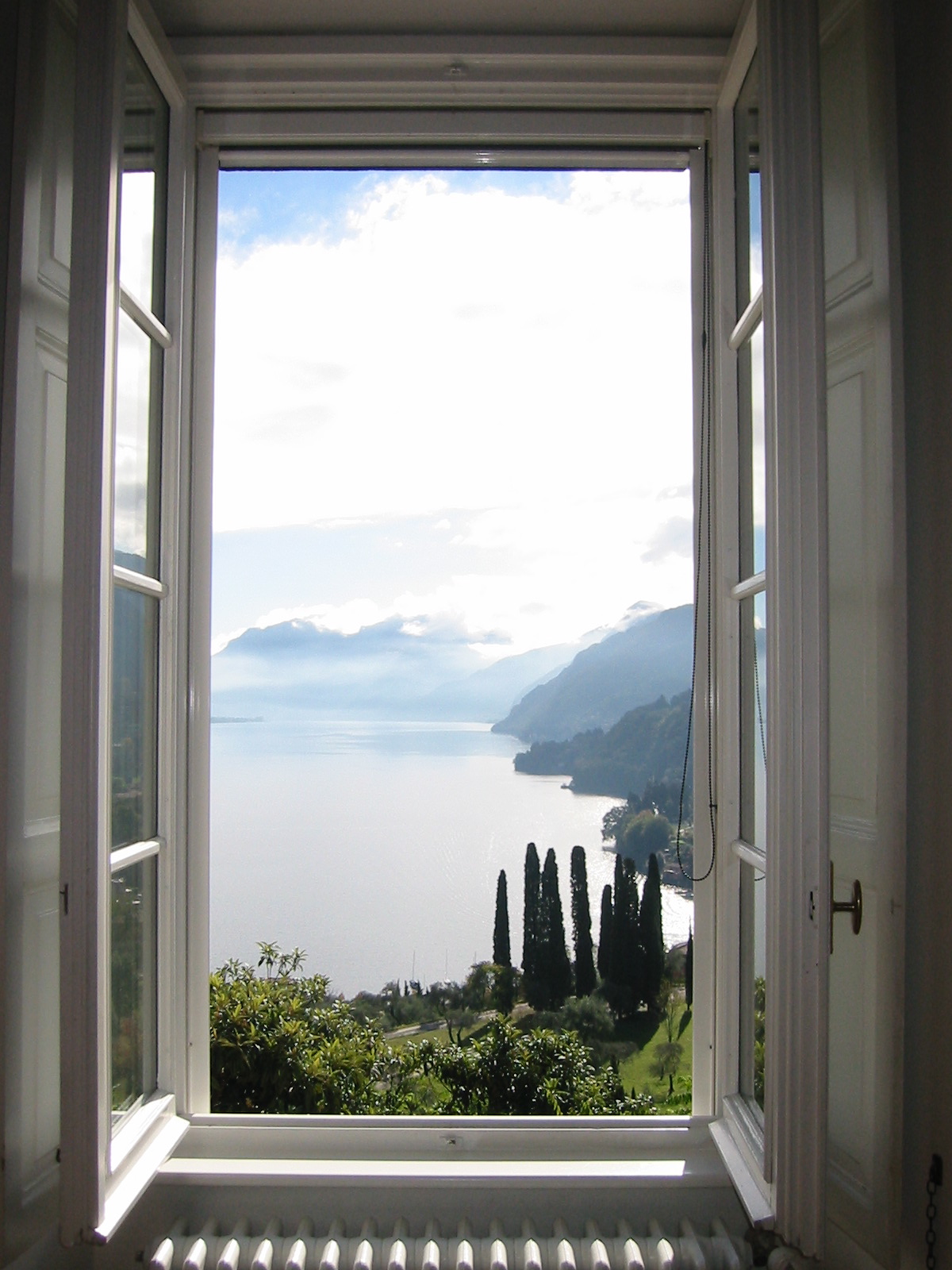
For poet Joel Toledo, Oxfam regional director Lan Mercado, and—yes!—myself, it was Bellagio in northern Italy, where I woke up every morning for a month to a breathtaking view of Lake Como, silvered by the overhanging mist. (I was on a Rockefeller writing fellowship at the Villa Serbelloni as was Joel, after Krip Yuson, the late FSJ, and many other Filipino writers, but to tell the truth I got much less writing done than I would have in our humble abode in Diliman. Beauty can overpower the senses and I spent much of my time just enjoying the scenery—but for writers and artists, that qualifies as work.)

Of course, many others preferred settings much closer to home, if not home itself. For musician and Kontra-Gapi founder Edru Abraham, nothing can take the place of the Callao Caves in his home province of Cagayan; for writer Bebang Siy, Ermita’s sunset will never lose its charm; UP professor Roli Talampas met sublimity at the summit of Mt. Pulag at daybreak.

The number and range of responses I got suggested that I had released a wave of longing from friends who understood, as I did, that the world we knew had changed forever, and that the magic we felt in those encounters with ethereal places would have to last us for the rest of our lives. 

There will be other opportunities, for sure, after the pandemic, especially for the young. But we’re happy and fortunate to have seen the past, such as it was. Every life deserves a brush with beauty—whether under a shower of cherry blossoms in Tokyo or under the stars in Antipolo—and we had ours.

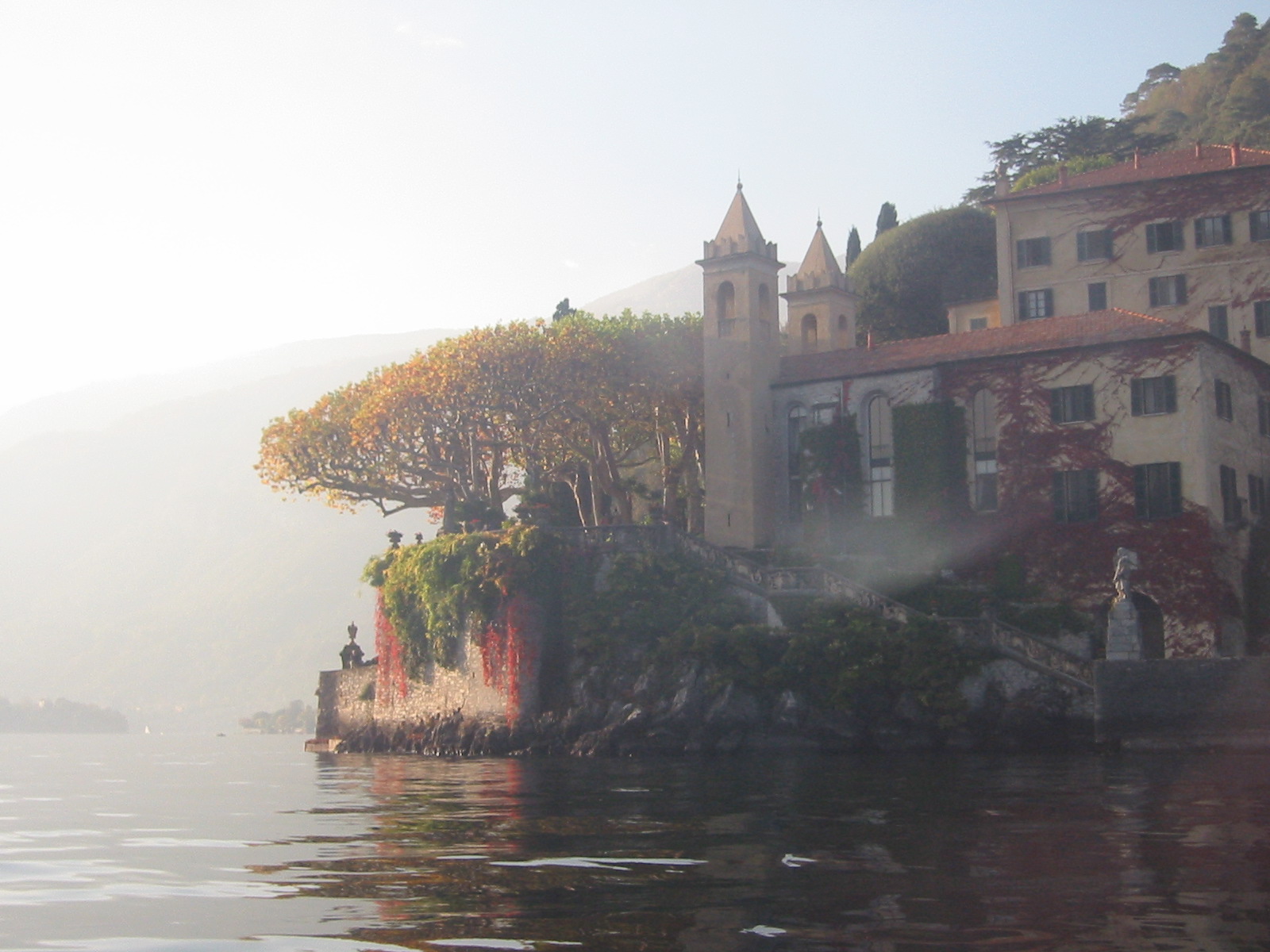
Villa Balbianello, across Lake Como.

Penman No. 388: To Fall in Love with the World, Again

Penman for Monday, May 25, 2020

THE TERRIBLE loss of lives and jobs aside, the one thing that Beng and I will miss the most in whatever “new normal” emerges out of this Covid crisis is travel, whose contours, protocols, and costs we can only begin to guess at. We are, of course, deeply grateful and relieved just to be alive and well (so far) and adequately fed (so far), lifting us up far above the lot of millions of Filipinos who cannot even venture into the next municipality for their livelihood and sustenance. 

In this light, travel and everything we associate with it—dining, entertainment, shopping, sports (even given that for Beng and me, it’s mostly just museums, flea markets, and street food)—would seem utterly frivolous. But we wouldn’t be human if we didn’t dream of frivolity and indulgence, even and especially in the most trying of times, if only to convince ourselves that tomorrow will be better and worth waking up for.

At about this time last year, Beng and I returned to Manila from a two-week romp across Scotland, London, and Norfolk, a sentimental journey that reprised, on a smaller scale, a nine-month stay in the UK twenty years earlier. I had just retired that January from 35 years of teaching, and at 65, I figured that Beng and I had maybe another ten good years to spend together, to poke our noses into the flea markets of Hell’s Kitchen, Spitalfield, Panjiayuan, Encants, and Clignancourt. We’re cheap and easy to please; I’d say the highlight of our traveling life was a one-day tour of Venice on the vaporetto, because that was all the time and the money we had, delighting simply in the magic of being together amid such breathtaking beauty, K-drama-style.

As it happened, 2019 turned out to be the busiest travel year of our lives. Starting the week after I retired, we went off on a crazy spree that would have collapsed many younger people: Penang, Tokyo, Scotland, London, Singapore, Turkey (a grueling 3,000-km overland tour), the US, Singapore again, Macau, and Singapore again, not to mention local sorties to Davao and Dipolog.

We had been debating between doing it all in one year, or phasing the trips over a couple of years. Our friends and family began worrying about the strain on our bodies and budget, despite our assurances that we were managing ourselves quite well, even if—such as when we spent a day at New York’s MoMA, redeeming a pledge to see Chagall together—we had to pause on every floor to catch our breath.

We know now that if we didn’t do it when we could, we never would. We had the happiest time together, and if we never go on another plane, we will have enough memories to last us to the end. But even as those memories please me, I grieve for the fact that we will never travel again the way we did. Even those extra security measures then, which we used to complain about—the endless X-rays, the unbuckling of belts and watches—seem carefree now. 

Wearing a mask for a 12-hour trans-Pacific flight? Dousing myself in alcohol at the hotel? Mistrusting every door handle and faucet, every driver and waiter, every open mouth and extended hand? And even if we do get to fly again, it will be a changed world we will be landing in—forbidding, even hostile, still desperate for your money but not much else.

Late last year, before anyone had ever heard or minded the word “coronavirus,” Beng and I planned our travel year—not much, we said, let’s stay at home and get back to work, but we did have two destinations on the wish list: St. Petersburg in Russia, which was offering free e-visas to Filipinos for eight-day stays, and Alicante in Spain, where a big conference in Philippine Studies was to take place in September. They will not happen now nor anytime soon, and frankly I don’t regret that as much as other kinds of less tangible but also deeper losses. 

I mourn, for example, the loss of intimacy—not the bond between two people who sleep together, which has to survive all viruses—but the more casual kind between friends at table in a restaurant or even strangers on a train, the kind that says “I’m OK, you’re OK, I won’t hurt you and you won’t hurt me”—indeed the loss of casualness itself. 

The younger folks among us can still look forward to something vaguely resembling 2019 by, say, 2024. They might even be laughing then at the memory of “that Covid thing” as they take their partner’s hand and mingle with the crowd in Seoul or San Francisco before diving into their favorite restaurant. For those of us now close to 70, that will probably not happen; even if the world forgets and relaxes once again, we could be too old by then. 

In this time of too many “never agains,” I can only thank God there was a 2019, and that we made as full use of it as we could. But life’s a long road with many unexpected turns, and if there’s anything we’ve learned from our journeys, it’s those turns off the tourist map that have led to the most wonderful discoveries. If not St. Petersburg, if not Alicante, I trust something will come up, perhaps in our own backyard, to make us fall in love with the world again, as we so badly need to do.

Penman No. 375: Delightful Turkey

Attachment-1.jpeg

Penman for Monday, November 25, 2019


AS 2019 draws to a close, it’s struck me that the year I turned 65 and retired has also been the busiest travel year of my life. Since I shut the door to my office for the last time in January—and thanks to my retirement check—my wife Beng and I have been to Penang, Tokyo, Scotland, London, Singapore, Turkey, the US, and Macau, doubling down on a pledge to keep moving while our knees can take it, which may not be for much longer. We’re also empty nesters, so with no fixed schedules and domestic responsibilities, it becomes that much easier to pack a bag and vanish for a few days. (Unfortunately this doesn’t mean that I have no work to worry about—I just carry half a dozen book projects with me all the time, on the road, in my trusty laptop and backed up to the Cloud.)

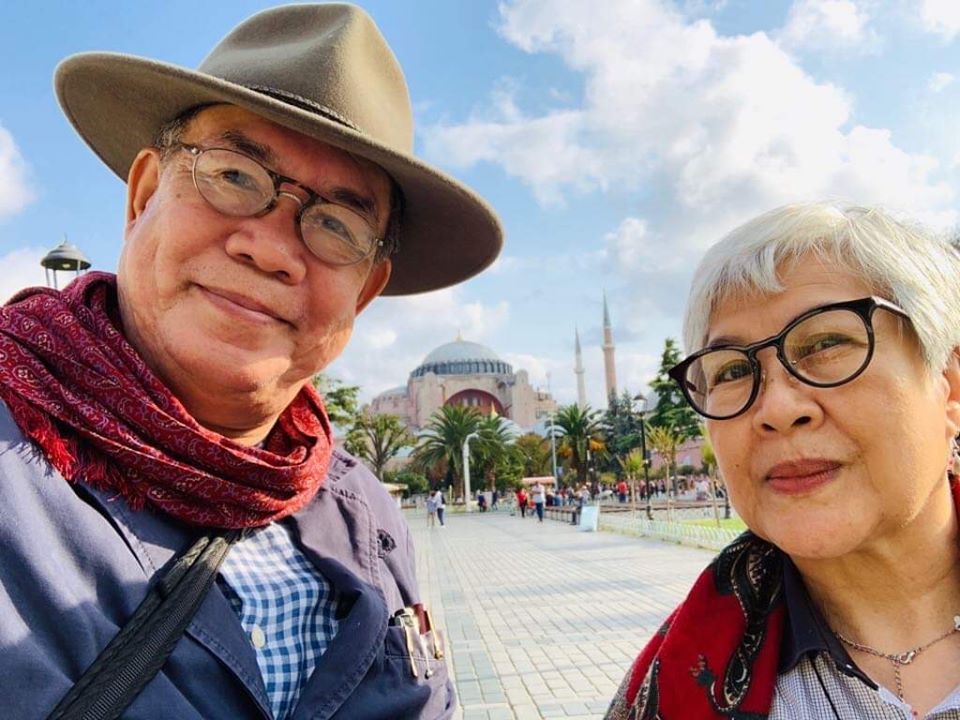
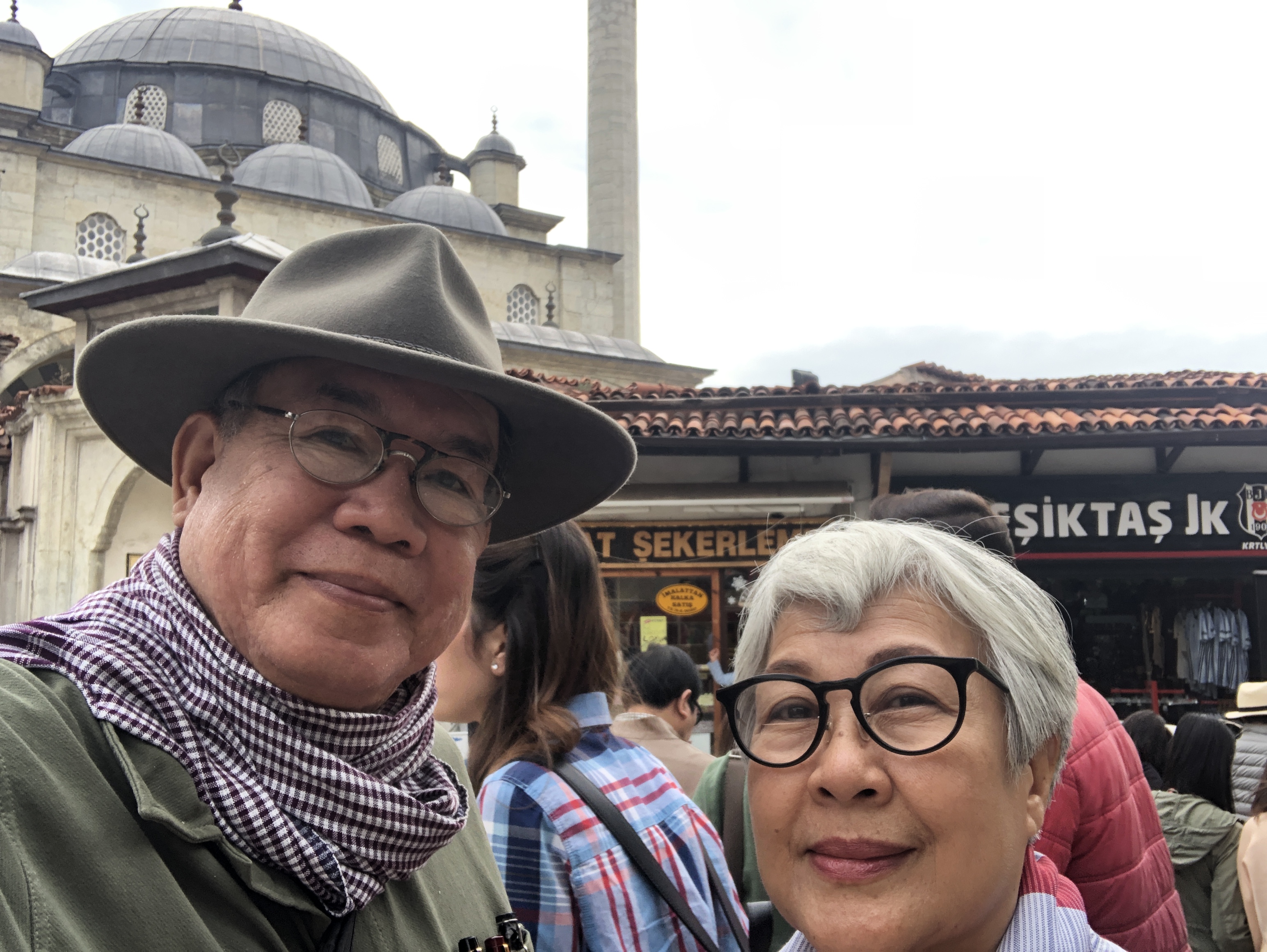
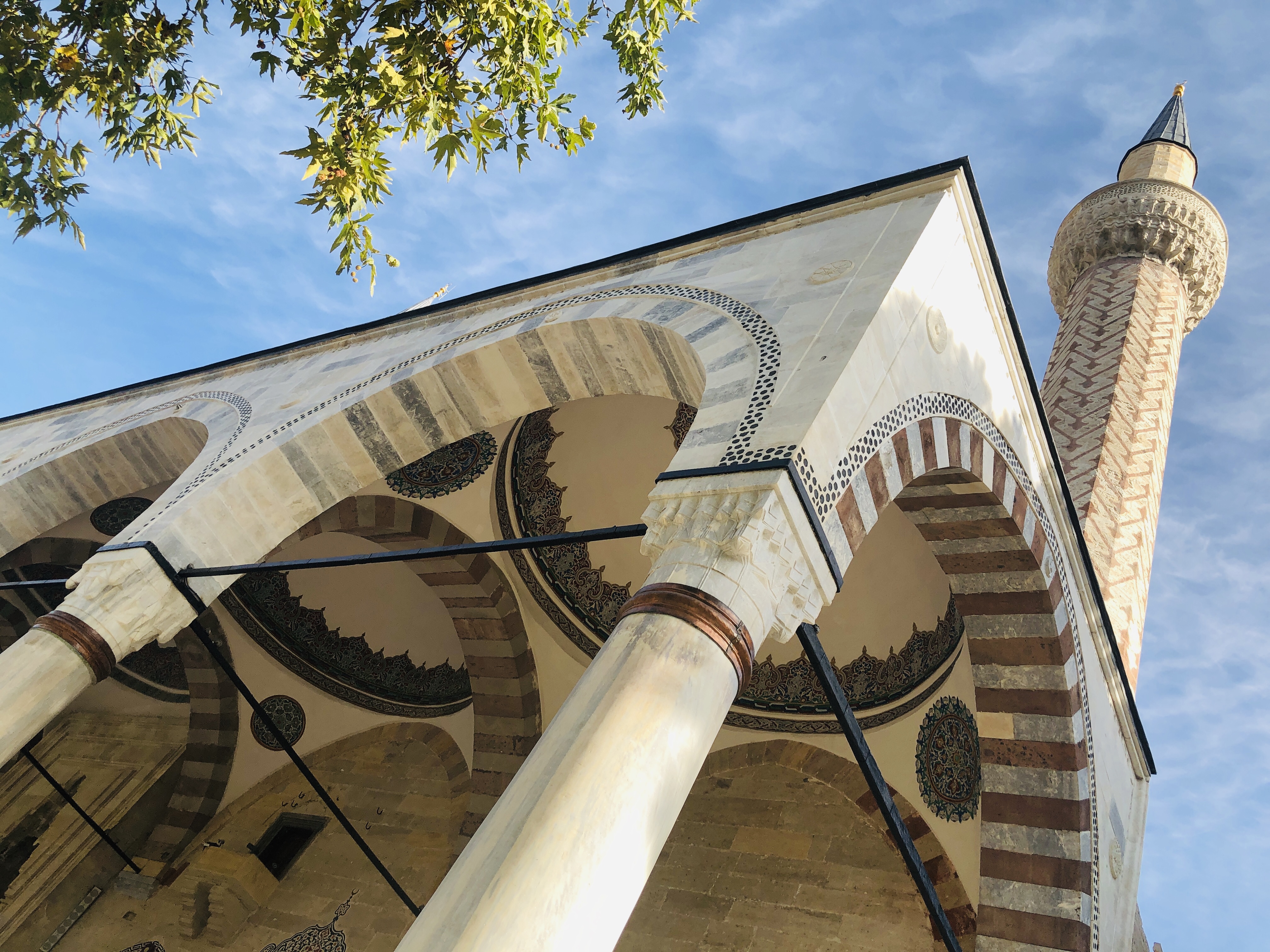
Among all those places—most of which we’d already been to before—the pick of the year has to be Turkey. Like many Pinoy seniors standing at the pre-departure area, I’d long nursed a Turkish trip on my bucket list—and it’s hardly just me: Turkey, specifically Istanbul, remains the world’s top tourist destination, attracting some 30 million visitors a year.

Why Turkey? Because why not? The very name conjures exotic adventures in a landscape swept by history and culture. Mosques, muezzins, and markets all come to mind, in a gaudy parade of images and tropes shaped as much by Hollywood as by the TV news. Indeed my earliest acquaintance with Turkey came with a movie I saw at the Leleng Theater behind Pasig’s public market as a boy in the mid-‘60s. It was titled “Topkapi” and starred Melina Mercouri, and it had to do with jewel thieves going for an emerald-encrusted dagger on exhibit in the palace of that name, and I remember how far away Turkey seemed,  in that lice-infested darkness, from the fish scales and pineapple peels of my reality. More than fifty years later, I was going to be the jewel thief, and the precious dagger was none other than Turkey itself, which I was going to see and hold for myself.

IMG_1567.jpeg

IMG_1650.jpeg

The immediate trigger for this sortie was an irresistible offer we heard about from the Makati-based Rakso Travel agency, which sells package tours to Turkey for less than $2,000 all-in—and by “all-in” they mean exactly that, inclusive of flights, hotels, all meals, tours, tips, and visas. We thought it was an amazing deal, given that the trip would cover ten days and eight nights (the extra days would be for the flights) and cover all the major cities and sites you’d like to see in that country (with the exception of Mt. Ararat on the eastern side, off-limits because of political tensions). The itinerary included Istanbul, Cannakale, Troy, Pergamon, Kusadasi, Ephesus, Cappadocia, Konya, Amasya, Safranbolu, and Istanbul again—a 3,000-kilometer romp. Rakso also took care of the visas, which are now easier and cheaper to get if you have a US visa, in which case you can receive an e-visa online.

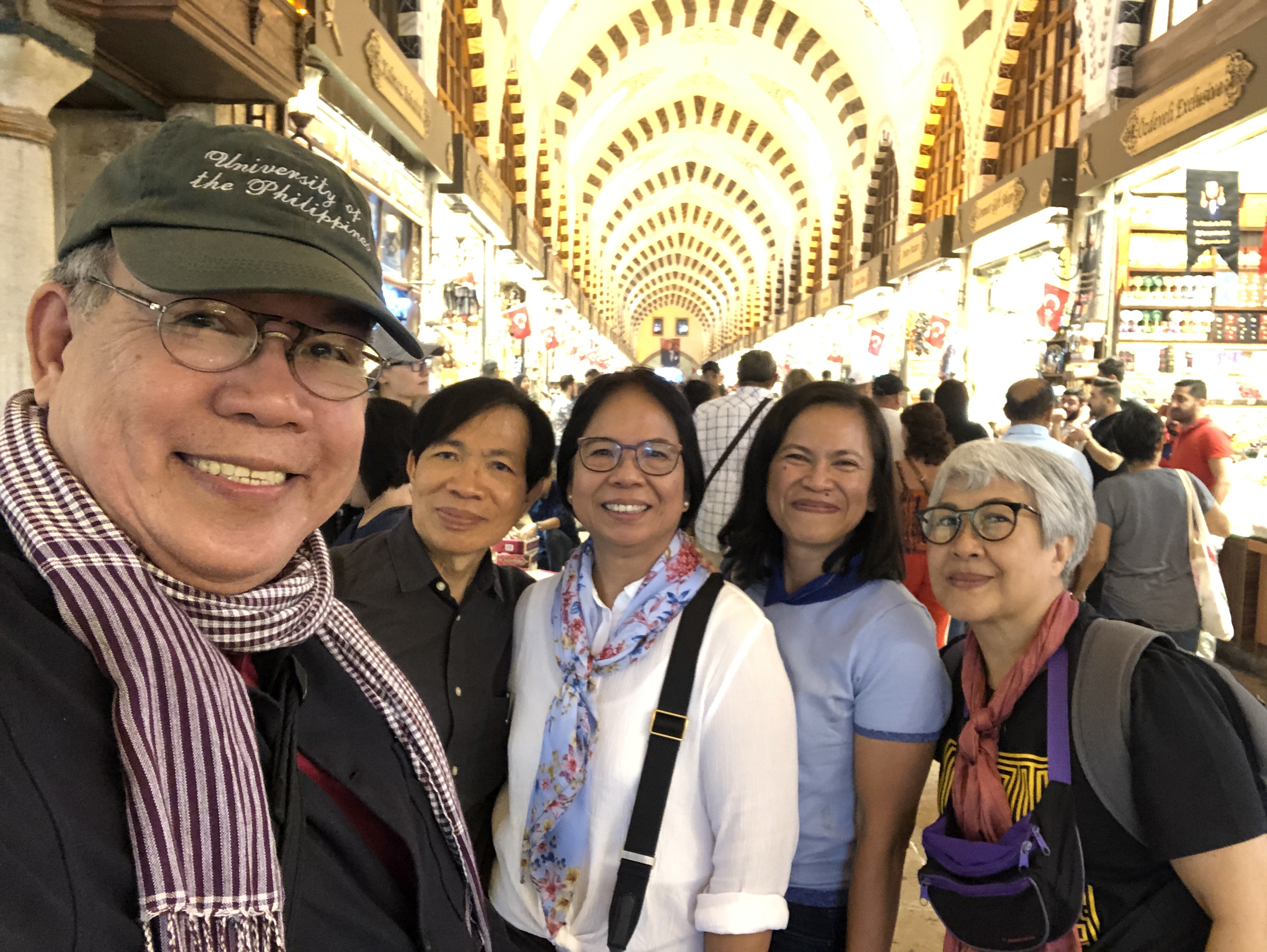
Despite being seasoned travelers, this was the first time Beng and I joined a group tour, and we were relieved to see, as we assembled at the airport, that our all-Pinoy group of 38 was composed mainly of mature professionals and bright young people eager to explore the world. The most senior member of our group was a jolly, still sprightly, and beer-loving 88-year-old we all called “Tatang,” whose very presence offered hope that we had some mileage still ahead of us.

IMG_1423.jpeg

IMG_1479.jpeg

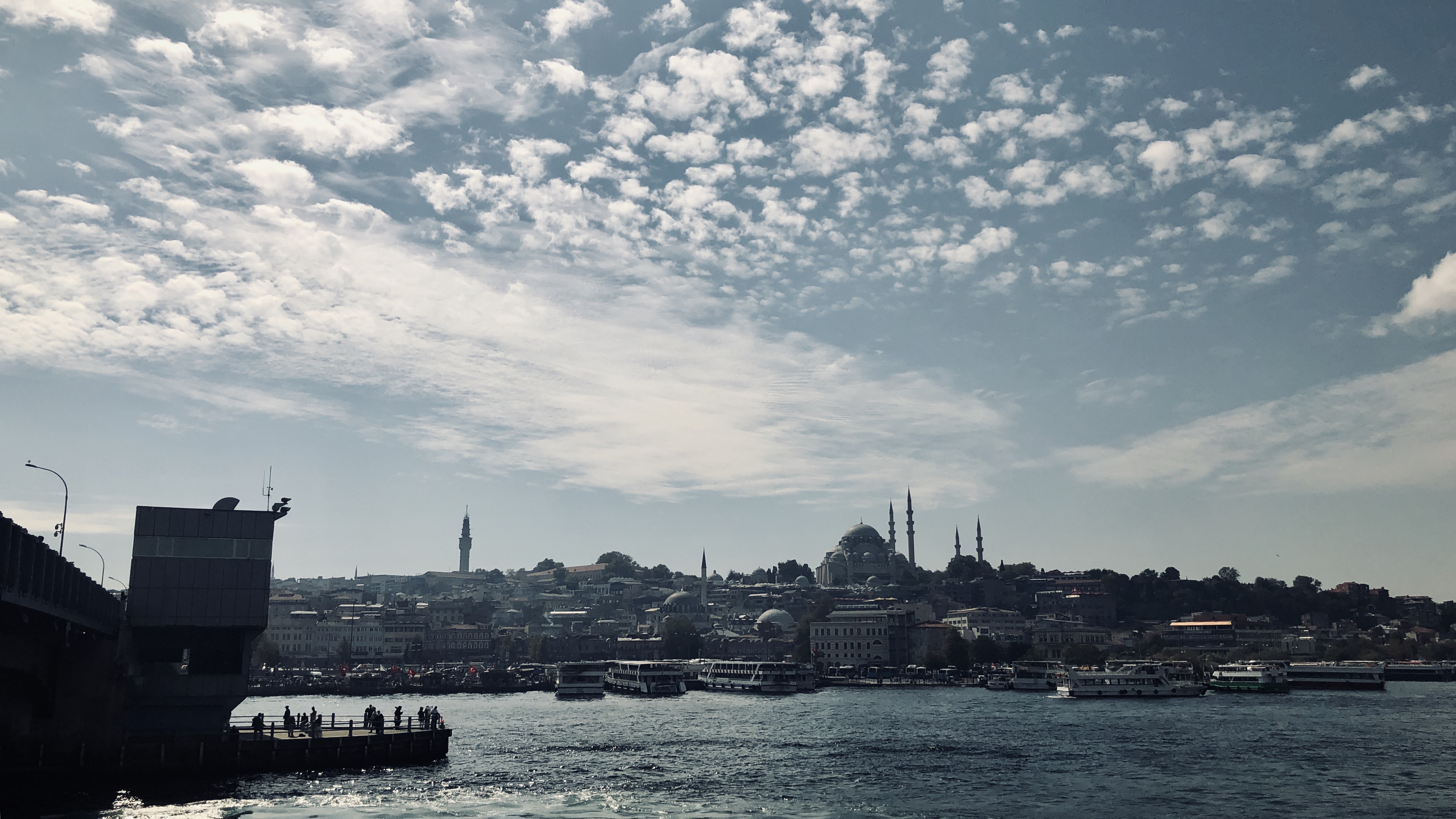
The 12-hour flight from Manila to Istanbul on Turkish Airlines was timed perfectly to arrive in Istanbul at dawn, with the city’s towers rising about the mists, heralding a whole new day of discovery and adventure. And that’s what awaited us for the next eight days, starting right off the bat after a quick breakfast with the Blue Mosque and the Hagia Sofia, two of Istanbul’s most famous landmarks.

IMG_1414.jpeg

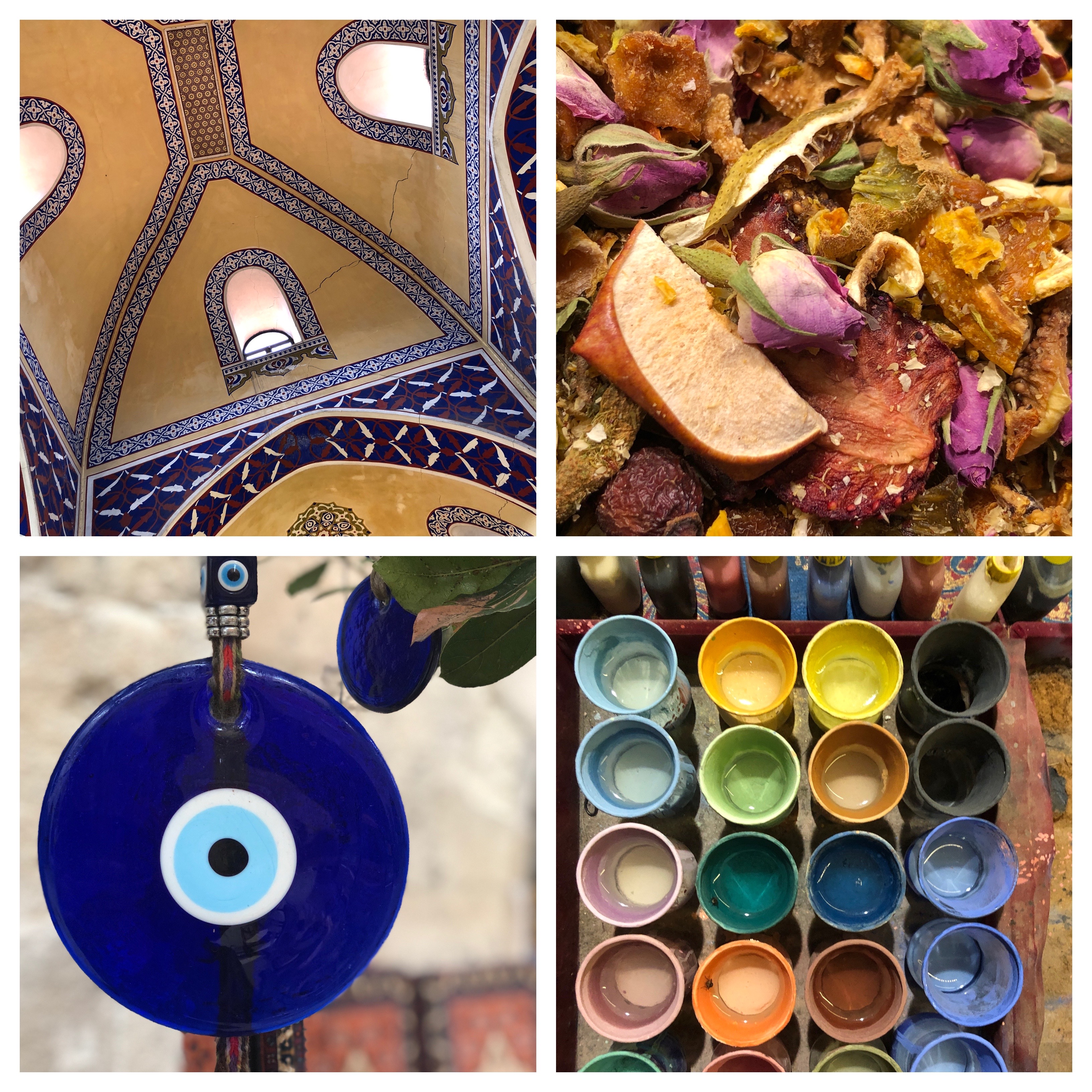
I’m not going to bore you with a blow-by-blow, scene-by-scene account of all the sites we visited; there’s often nothing more annoying than to have to leaf through someone else’s travel pictures, which also tend to look like, well, everybody else’s. There are only so many “evil eyes” (the virtual logo of Turkish tourism) you can look at, only so many Turkish delights you can nibble on.

IMG_1374.jpeg

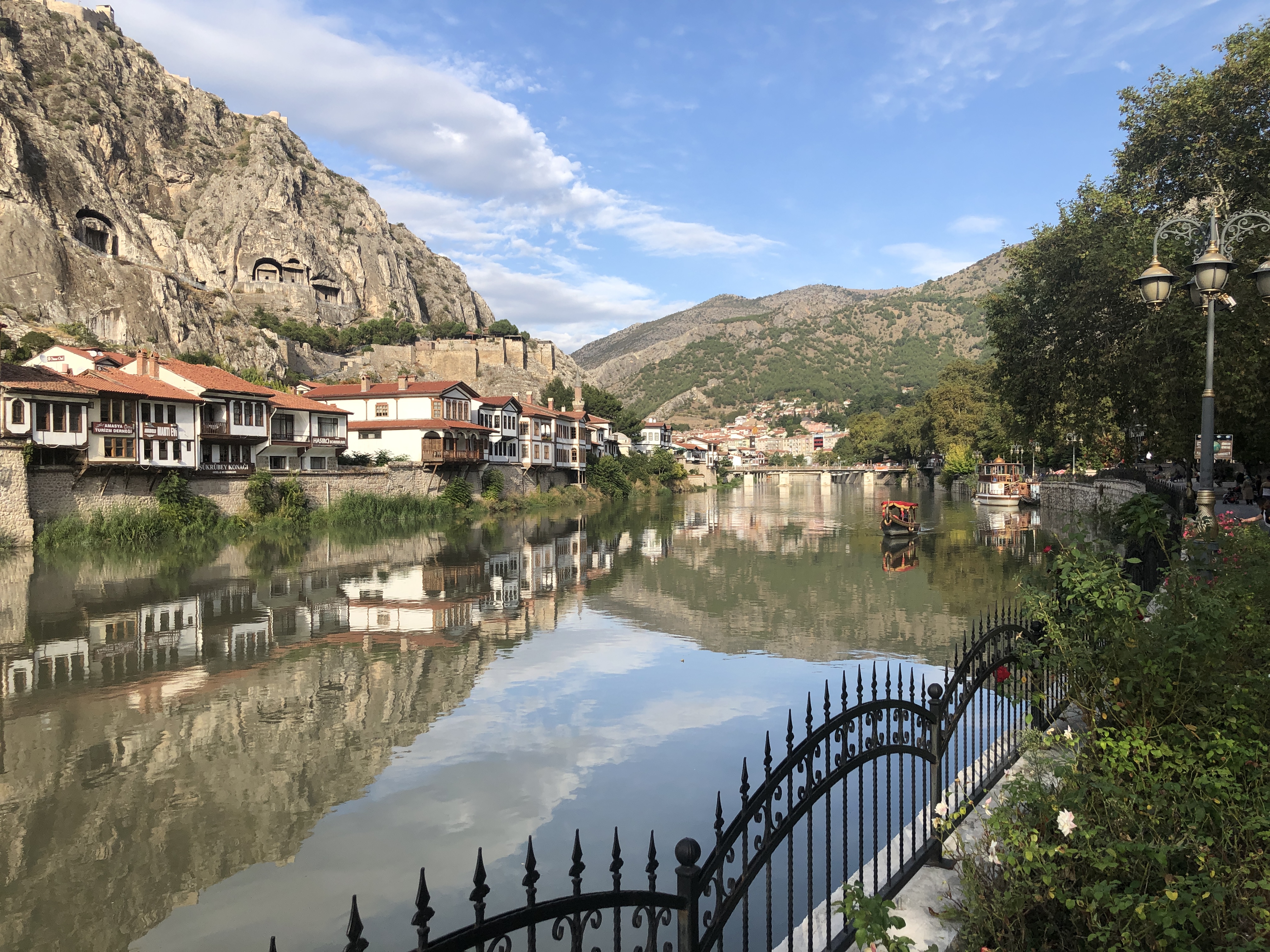
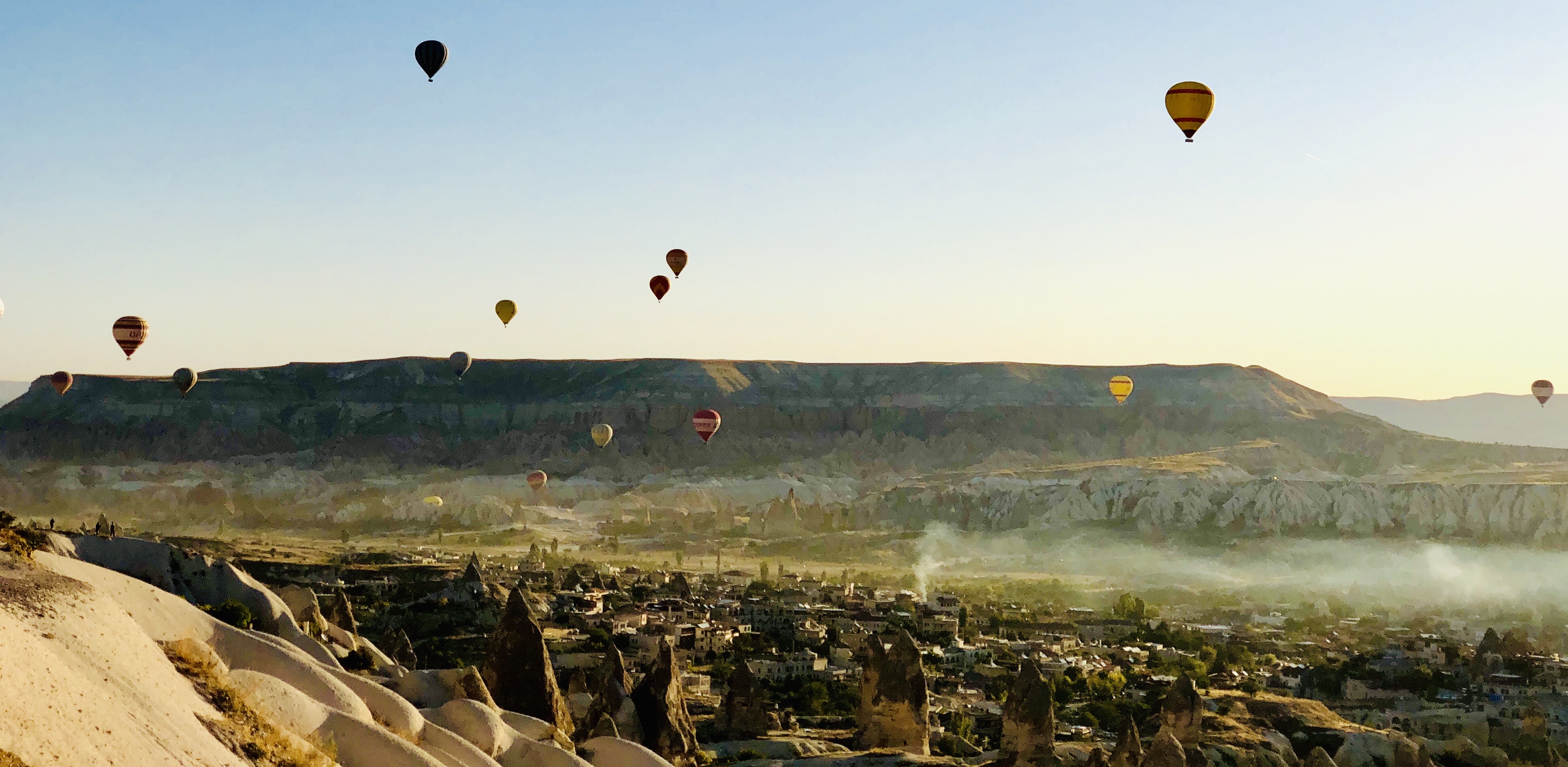
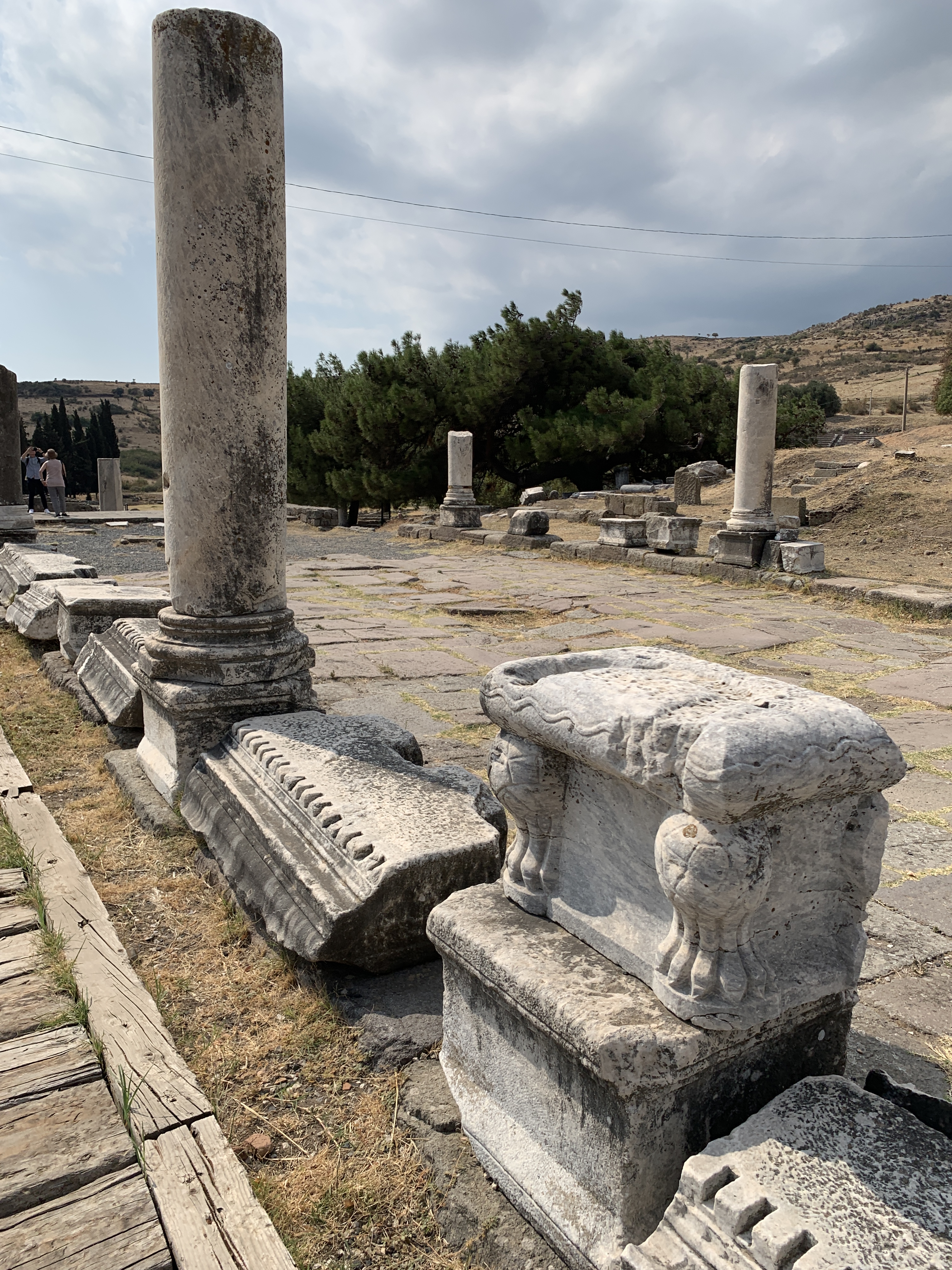
I’ll just say that aside from Istanbul itself, with its majestic domes and labyrinthine markets, the highlights of the tour for me were those on the quiet side: driving past the muted batteries of Gallipoli; standing on the ramparts of Troy, overlooking what would have been a tableau of both courage and carnage; stepping into the ancient library at Ephesus; watching dozens of multicolored balloons lift up into the early morning sky at Cappadocia; having lunch in Amasya with a waterfall cascading behind Beng’s shoulder; and stumbling into a sidestreet in Safranbolu, canopied by grapevines.

IMG_0507.jpeg

Hats off to Rakso for the package—the hotels and the food were excellent, the tours were fascinating (if fatiguing for the slow-footed), our guide was wonderful, and we emerged with three dozen new friends. I still keep two precious boxes of Turkish delights in the fridge, which our guide said would easily keep for six months; Turkey itself will surely linger longer in the memory.

IMG_1296.jpeg

Penman No. 356: Loverly London (2)

IMG_0602.jpeg

Penman for Monday, June 3, 2019


TO PUT it one way, the United Kingdom is the kind of place where the money looks too pretty to spend, especially the duotone one-pound and two-pound coins. But you better have a lot of it, and be prepared to let go—unless, like Beng and me, you thrive on the low end of things, which can come for next to nothing, if not for free.

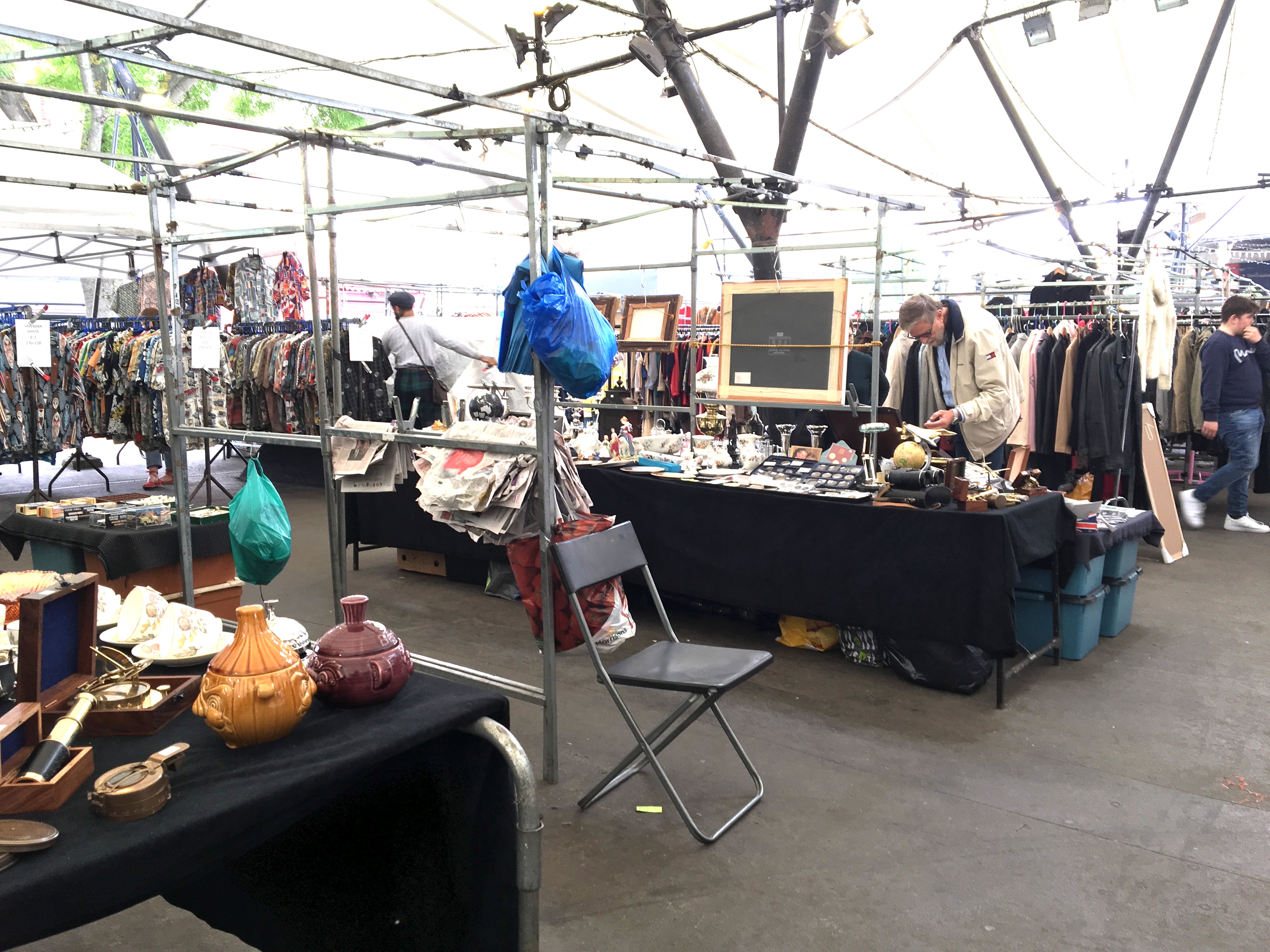
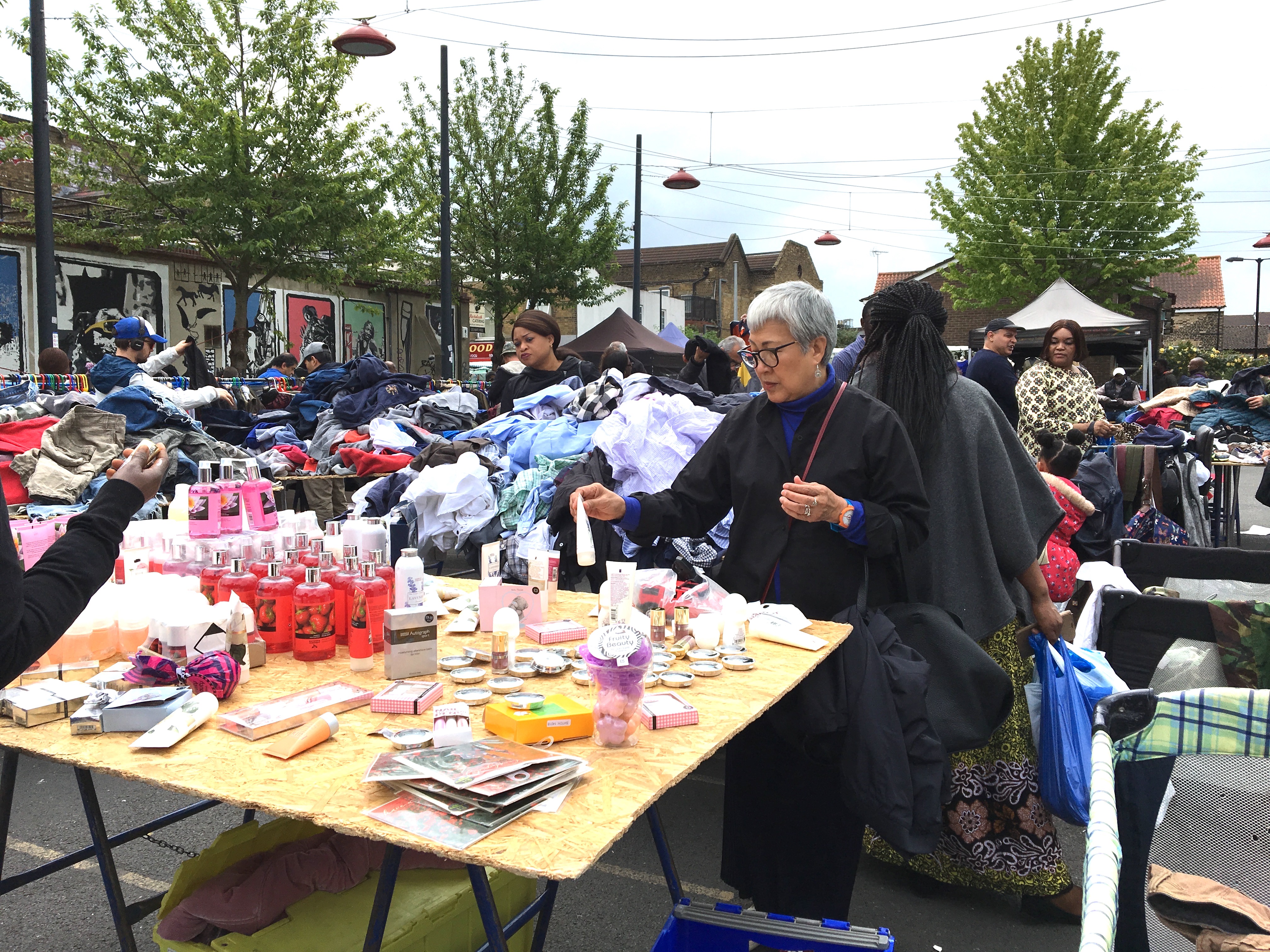
As I’ve often mentioned here, Beng and I are inveterate flea market fanatics, and one reason we travel so much isn’t to pose beside the landmarks as nearly everyone else does, but to scour the flea markets, thrift shops, and garage sales of the world for the glorious stuff others see as junk—or maybe don’t see at all. From New York’s Hell’s Kitchen, Amsterdam’s Waterlooplein, and Barcelona’s Encants to Paris’ Clignancourt, Singapore’s Sungei, and Beijing’s Panjiayuan, we’ve been there and done that.

IMG_0285.jpeg

As it happens, we’ve yet to find a city as full of flea markets as London. On the weekends, you can easily find a dozen of them hawking everything from vintage Gladstone bags and Victorian silverware to paisley shirts from the ‘60s and ancient Roman coins. Beng usually looks for little silver baubles and I, of course, look for pens, old books, and anything to do with writing.

London is also charity and thrift-shop heaven, and every square mile you’d be guaranteed to find at least one Oxfam, British Heart Foundation, Cancer Research, Norwood, Barnardo’s, or British Red Cross shop, often right next to another. Being fairly large for a Pinoy, I don’t mind saying that nearly everything I wear on top comes from some ukay-ukay or resale shop, so London’s flea markets and thrift shops are always a chance to pick up well-cut shirts and blazers for a tenth or less of what they would go for on the High Street.

IMG_0238.jpeg

And true enough, London delivered in spades. Portobello Road is every tourist’s idea of a weekend bargain paradise (thanks to the Notting Hill movie—Hugh Grant’s bookshop at #142 is now a shoe shop), but the fact is that even more interesting and affordable markets can be found at Deptford, Brick Lane, and Islington, among others.

IMG_0281.jpeg

I did have a good chat with an antiques dealer named Nicholas on Portobello Road. He came over to me when he saw me craning my neck at the awesome pile of vintage typewriters he kept in one of his stalls. Even if I had to tell him that I couldn’t possibly drag one of those beauties home in my luggage, he seemed happy to meet someone—a Filipino at that—who understood how lovely and valuable his Erikas and Bar-Lets were.

IMG_0294.jpeg

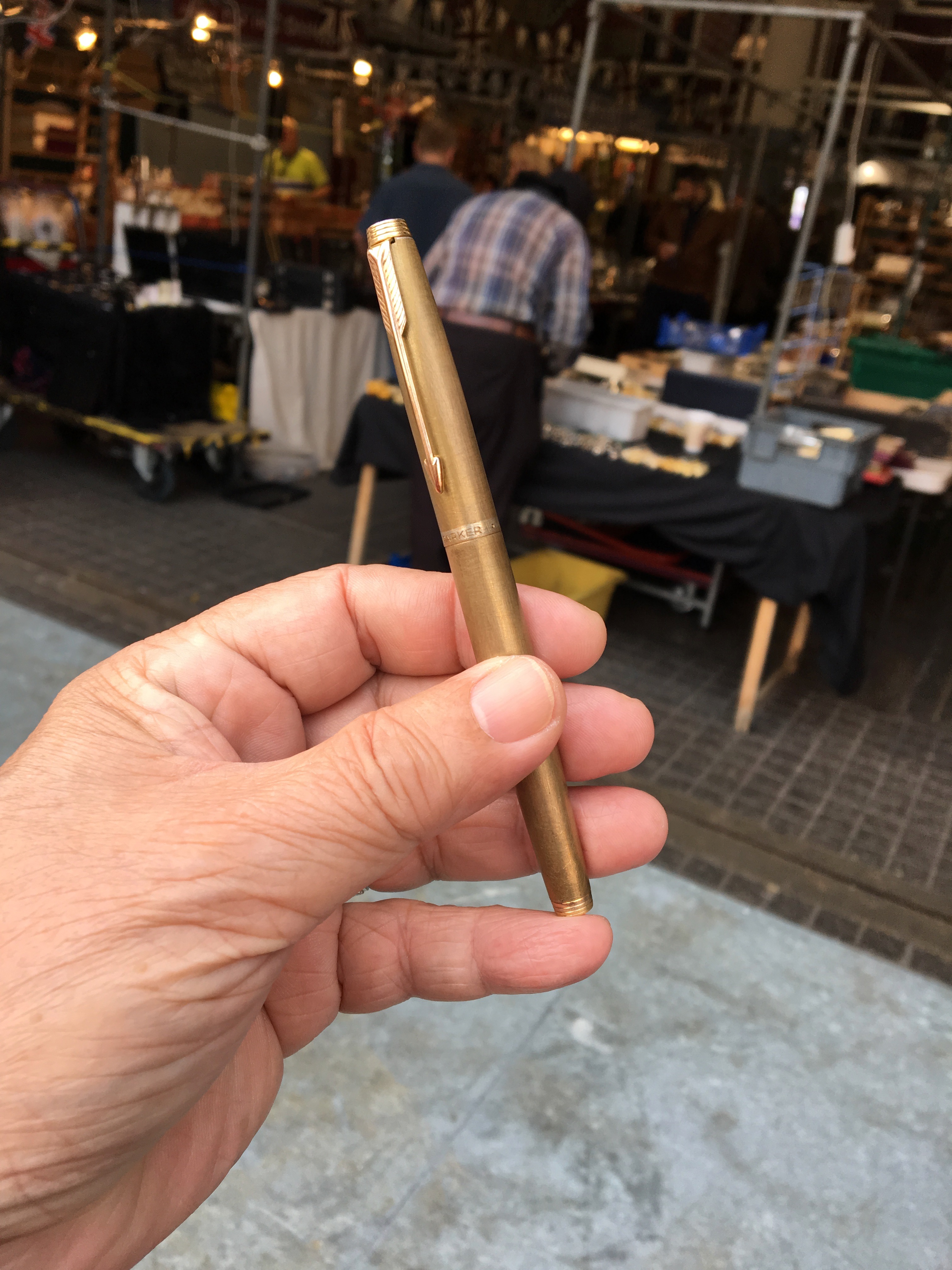
Of course I couldn’t leave London without buying a pen or two. A tip from Nicholas led me to the Jubilee Antiques Market which happens at Covent Garden every Monday. The dealers set up as early as 5 am, and we were there at 7, me scouting the stalls for tubular objects, Beng interviewing a licensed mudlark (someone who pokes around the banks of the Thames) about his finds. I came away with a prize for £25, haggled down from £30—a rare brass prototype of the iconic Parker 75.

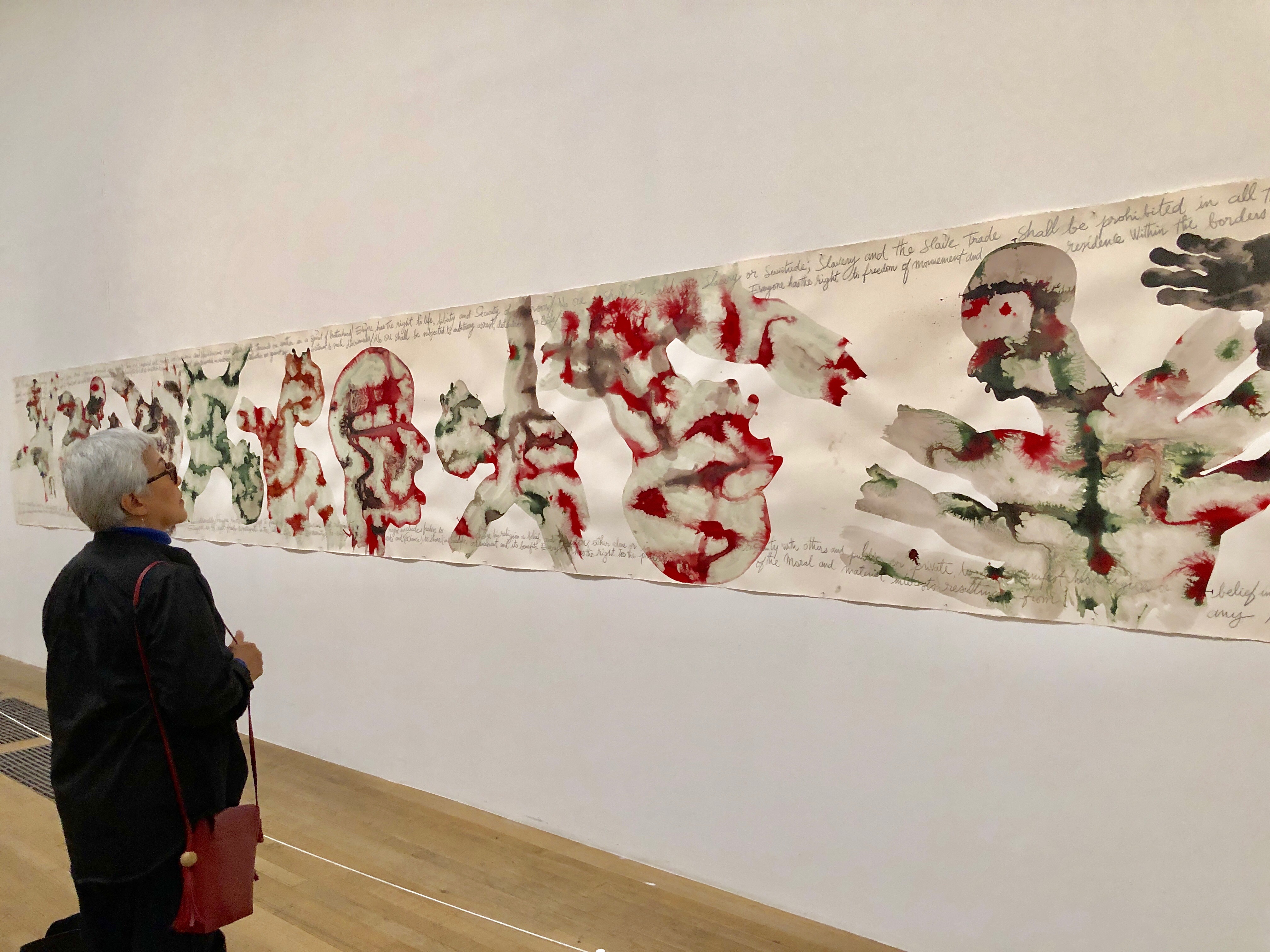
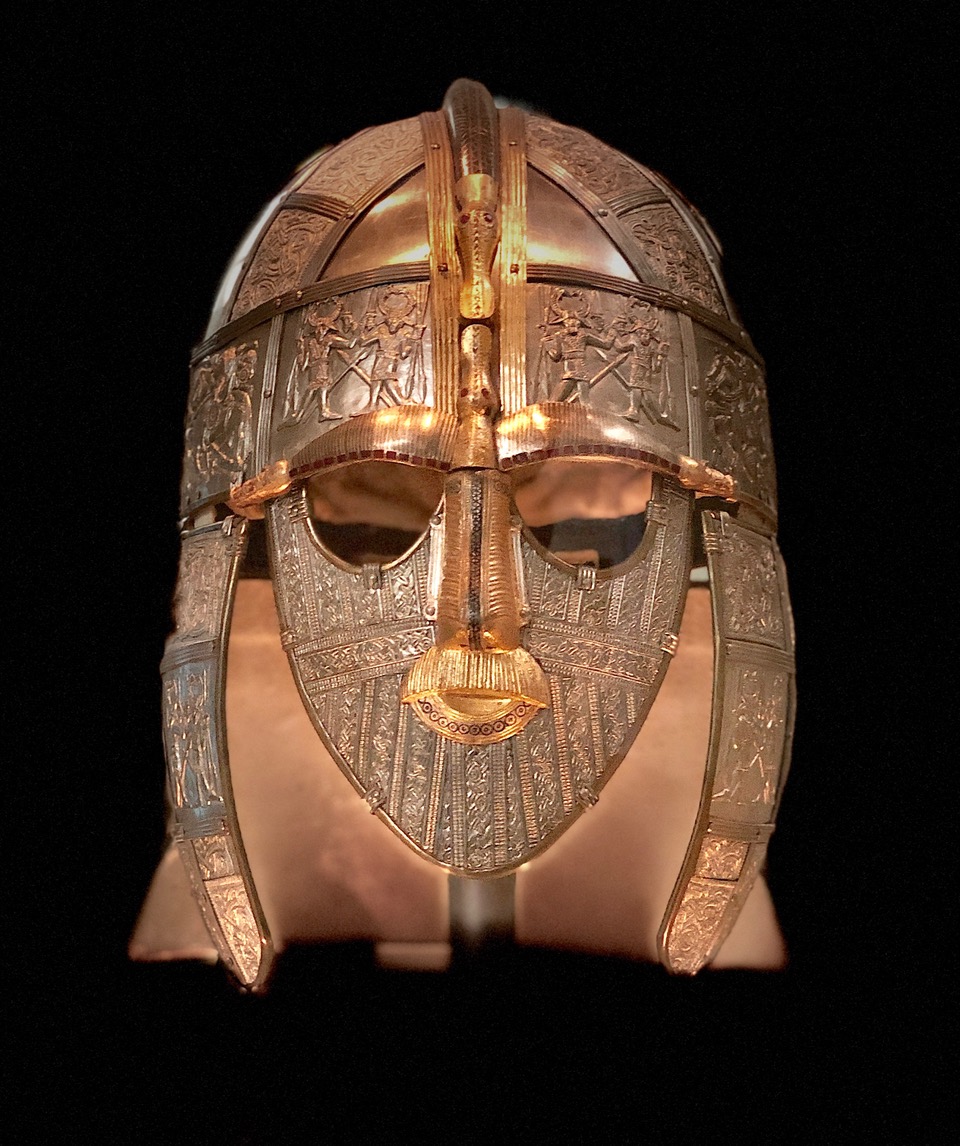
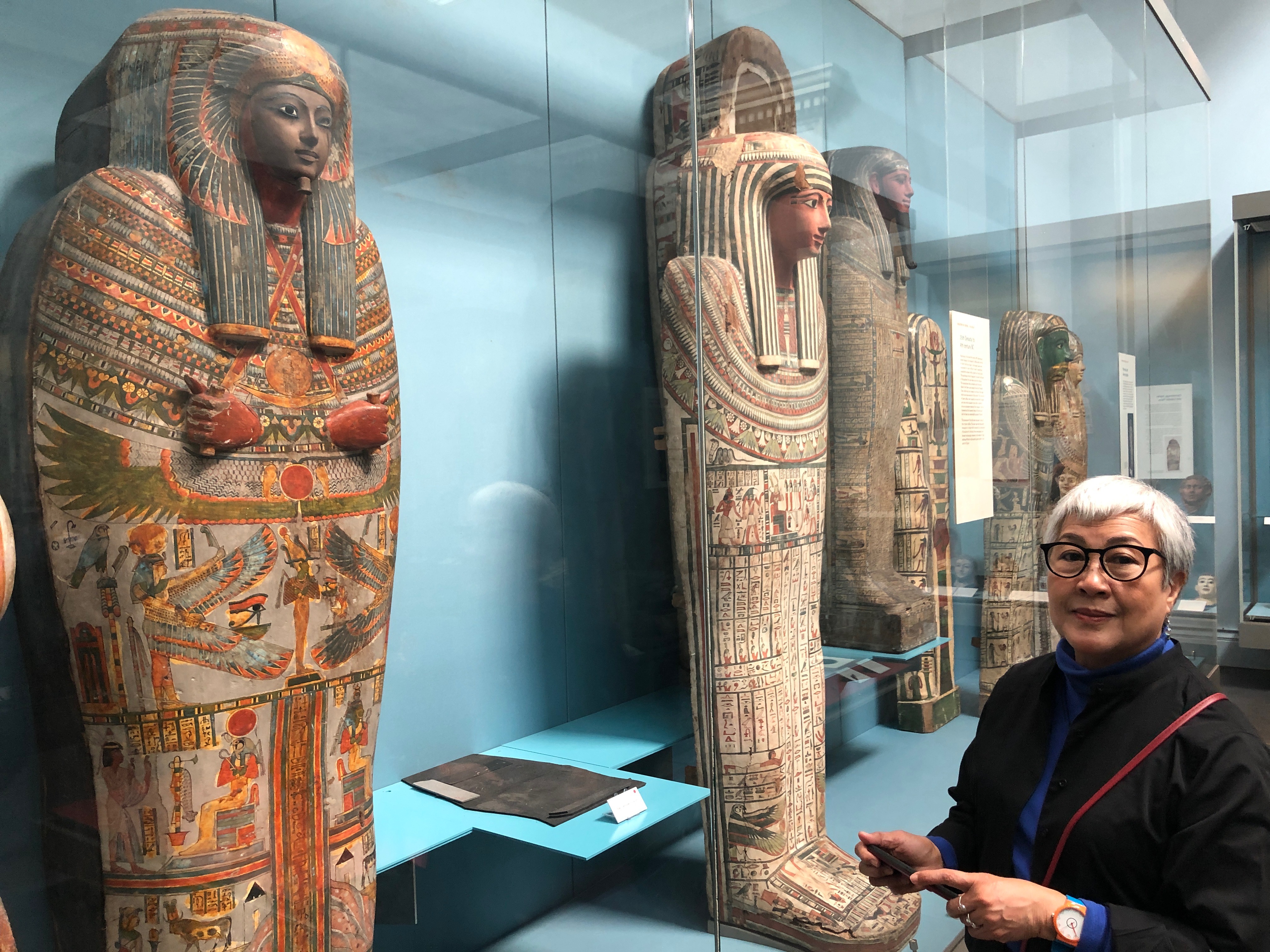
But more than markets, London is mecca for museum rats, which Beng and I also are, and while we’ve been there before and seen literally the same old things, we took in and reveled at the Sutton Hoo masks and the Egyptian mummies at the British Museum all over again, before hopping over to the Tate Modern at the South Bank for a mind-blowing exhibition of paintings from the Weimar Republic and highly inventive political art from the present. What impressed us even more were the guided tours for children at the Tate, their early exposure to the complexity of the modern mind. (Most London museums are free and open all week.)

IMG_0588.jpeg

IMG_0566.jpeg

IMG_0572.jpeg

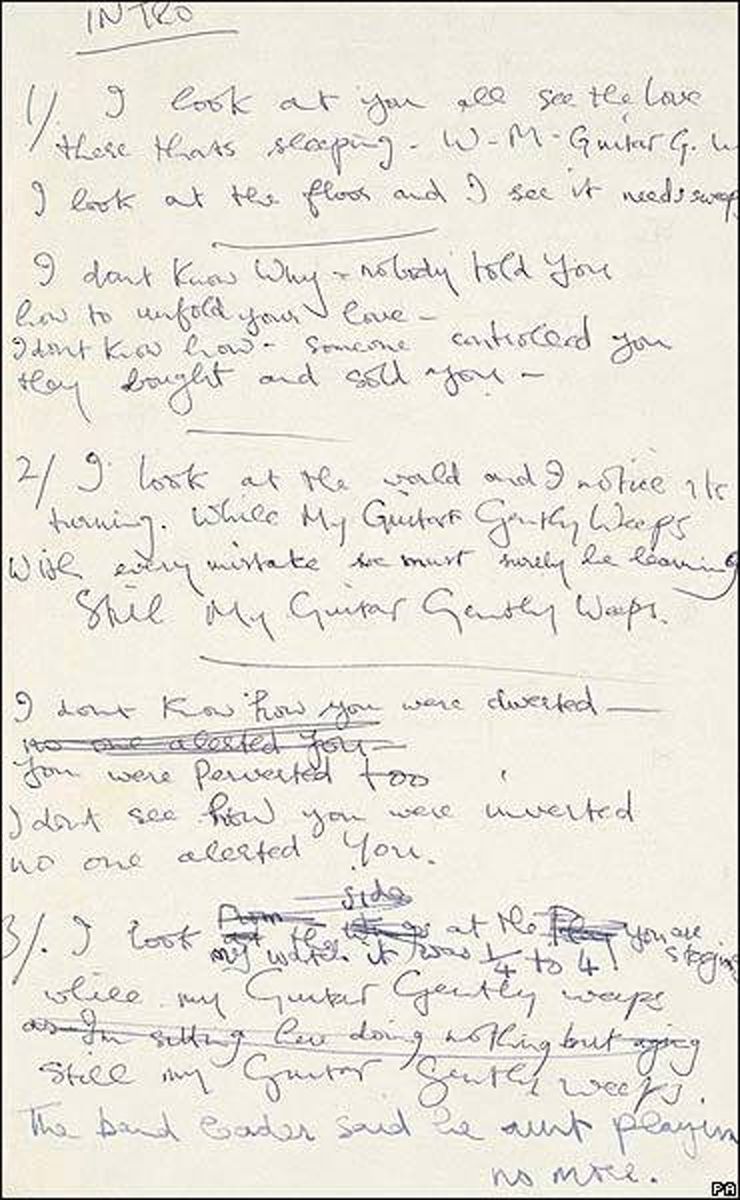
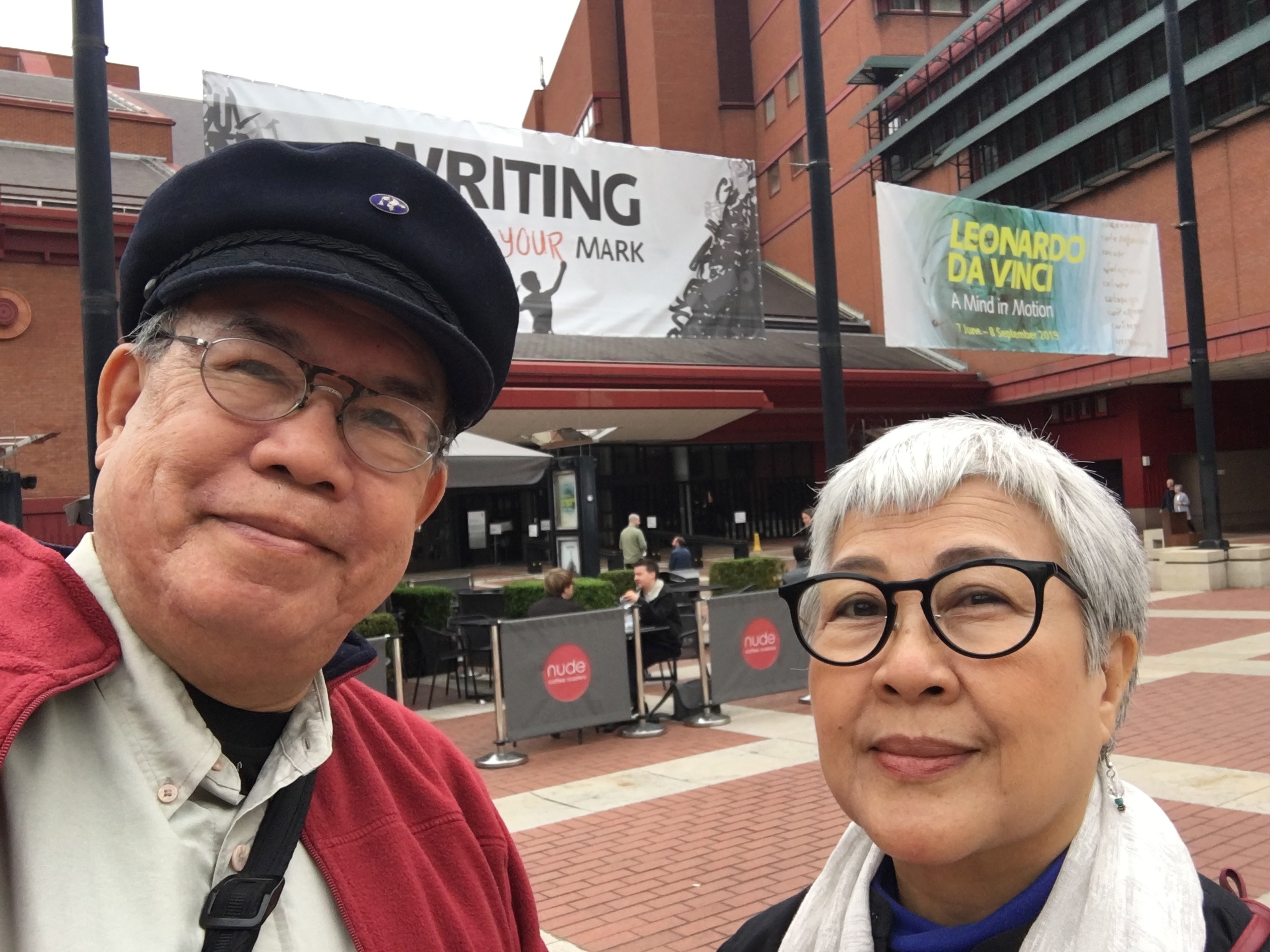
We reserved our last stop in London for a treat I had been anticipating for ages: a return to the British Library and to its exhibit of its treasures, ranging from old Bibles, the Magna Carta, and pre-modern maps to a special section on the Beatles. I was struck by how neat, orderly, and indeed unfailingly precise the ancient manuscripts were, as you might have expected of sacred texts, such as the Codex Sinaiticus, its every word hand-inscribed in the 4thcentury but looking as sharp and as fresh as this morning’s paper. Contrast that to the vigorous scrawls, scribbles, and cross-outs of modern writers—including the Beatles, who wrote letters and lyrics with a schoolboyish disregard for form and order: the draft of “Michelle” on the front of an envelope, that of “A Hard Day’s Night” on a greeting card. Elsewhere, Sylvia Plath sends a poem to a publisher in long hand.

d7bbdbf04633e0c9431f751041ddf1d6.jpg

IMG_0327.jpeg

Words, decades, and centuries come alive in London—not just in the library or museum but on the street, which makes yet another visit worth yearning for.

Penman No. 355: Loverly London (1)

IMG_0319.jpeg

Penman for Monday, May 27, 2019


I FIRST visited London 25 years ago, on my way to Scotland to take up residence at Hawthornden Castle on the fellowship that led to Penmanship and Other Stories. Since then I’ve been back a few times—very often in 1999-2000, when again I was a writing fellow at Norwich. It’s easily my favorite city in the world to visit, given its cultural vitality and the accessibility of the things that matter most to me—museums, galleries, and flea markets—and for the past two decades, Beng and I had been dreaming of returning to London to step back into our old haunts.

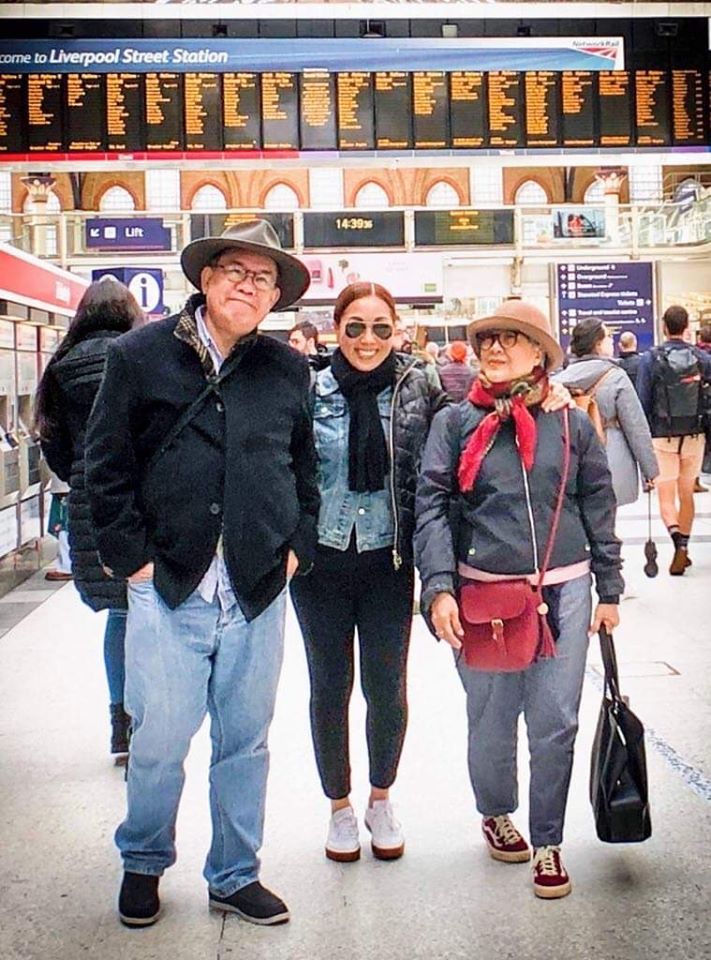
That finally came true on the heels of our recent Scotland trip with our daughter Demi and her husband Jerry; they flew back to home and work in California, so Beng and I had a full week to ourselves, and wisely we decided to just spend almost all of that time in London, except for an overnighter in nearby Chelmsford and Norwich. As with 20 years ago, we did everything by train and by Oyster card (“contactless” is a new English word you’ll learn quickly just out of Heathrow). There’s nothing like a train ride into the English countryside and its undulating greens awakened now and then by brilliant yellow swathes of rapeseed to make one understand Wordsworth and Romanticism, in the same way that Glasgow’s sooty masonry and steel sinews recall a darker, Dickensian industrial past.

9101e10824ce12963ec78a189abcd3c22e091785.jpg

Speaking of Dickens, and like many Pinoys my age, my first impression of London was shaped by Broadway’s and Hollywood’s renditions of its Victorian upside and downside, in such confections as “Oliver Twist” and “Mary Poppins” (from which the screech of my schoolboy crush, Julie Andrews, still resonates, appealing for “a room somewhere, far a-wigh from the cold night air…. Awww, wouldn’t it be loverly?”).

Well, thanks to Booking.com, Beng and I found ourselves a loverly, affordable room in a large house in the northwestern London suburb of Golders Green—a neat and quiet, multicultural neighborhood on the Tube’s Northern Line, historically Jewish but with many Turkish, Iranian, and Japanese restaurants and groceries lining the streets. And, of course, there were Filipinos everywhere, not tourists like us (you’ll find them at Harrods) but off-duty caregivers and housekeepers enjoying time together at the local KFC.

IMG_0329.jpeg

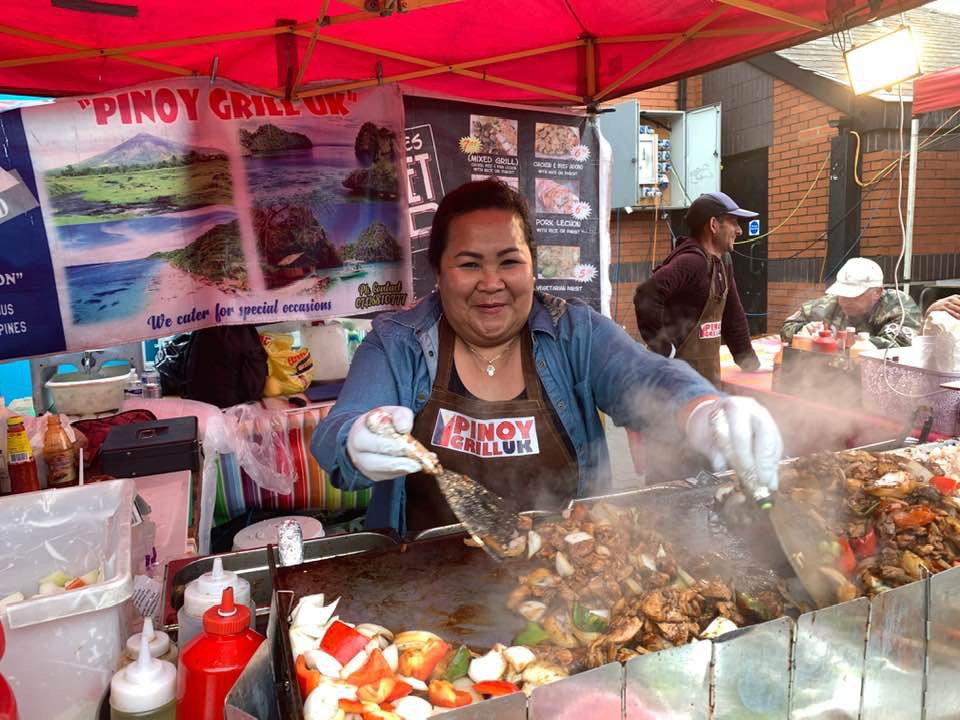
That’s where we met someone we’ll call Thelma, who has worked for the same Jewish employer for the past ten years. It just so happened that she and Beng had some mutual friends from Iloilo, where Thelma went to college. “I’m treated very well here,” Thelma said. “Every year I get a paid vacation to go home.” We spotted another unmistakably Pinay girl at the streetcorner selling suman, which we had for our next breakfast. And at the end of a long Sunday walk down Portobello Road, in a cluster of street-food stalls offering everything from vegan paella to Jamaican patties, we found Eva Caparanga’s Pinoy Grill UK, which instantly answered the question we had been asking all day, “What are we having for dinner tonight?” As she heaped our chicken adobo into a large takeout cup, Eva told us that she had been in the UK for more than 30 years, and was still working in health care, but that for the past three years she had used her days off to run her stall at the far end of the popular Portobello Market. “People ask me why I do this, and I tell them it’s so I can help family back home in Bicol. And again they ask me why I do that, and I say, well, that’s just how we Filipinos are!”

IMG_0618.JPG

The story of Filipinos in the UK and London is a long and colorful one, and I can’t count the many times they came to my succor during my tenure at Norwich and my weekend sorties to London years ago. When my feet acquired a horrible infection in Norwich, I ran to the National Health Service, only to find it staffed by kindly Pinoy nurses who got me back to walking in no time. In London, my host was the late, beloved Ed Maranan, who had ushered at the National Theatre and could sneak me into plays for free; in return, I made sure to wash the dishes at his flat on Goldhawk Road. The writer Jun Terra also brought me around once to marvel at the late Dr. Teyet Pascual’s art pieces in his Chelsea apartment.

This time, Beng and I were resolved to stay close to ground level, having neither the budget nor the inclination to splurge on the timelesss luxury that puts British-made things—whether they be suits, shoes, bags, or fountain pens—in a class all by themselves. This time, we said, we would go straight for the two things that we enjoy most in our sorties to foreign cities: flea markets and museums.

More on these next week.

IMG_0269.jpeg