Qwertyman No. 75: Trump 2.0

Qwertyman for Monday, January 8, 2024

IN MY column last week, I mentioned the “Trumpian dystopia” threatening to take over the United States and many other rightward-leaning societies and governments around the world. 

A “dystopia” is, of course, a place or a situation where everything has been turned on its head, where the bad has become good and the wrong has become right, and where the things we most feared or abhorred have become the norm. You find this in George Orwell’s 1984, where the government controls everything; younger readers and viewers will relate to Suzanne Collins’ The Hunger Games, where citizens are sacrificed for the Capitol’s entertainment. In other words, it’s social and political hell for those reared in the kind of postwar liberalism that eschews racial discrimination, authoritarianism, gender inequality, and religious intolerance, among other shibboleths.

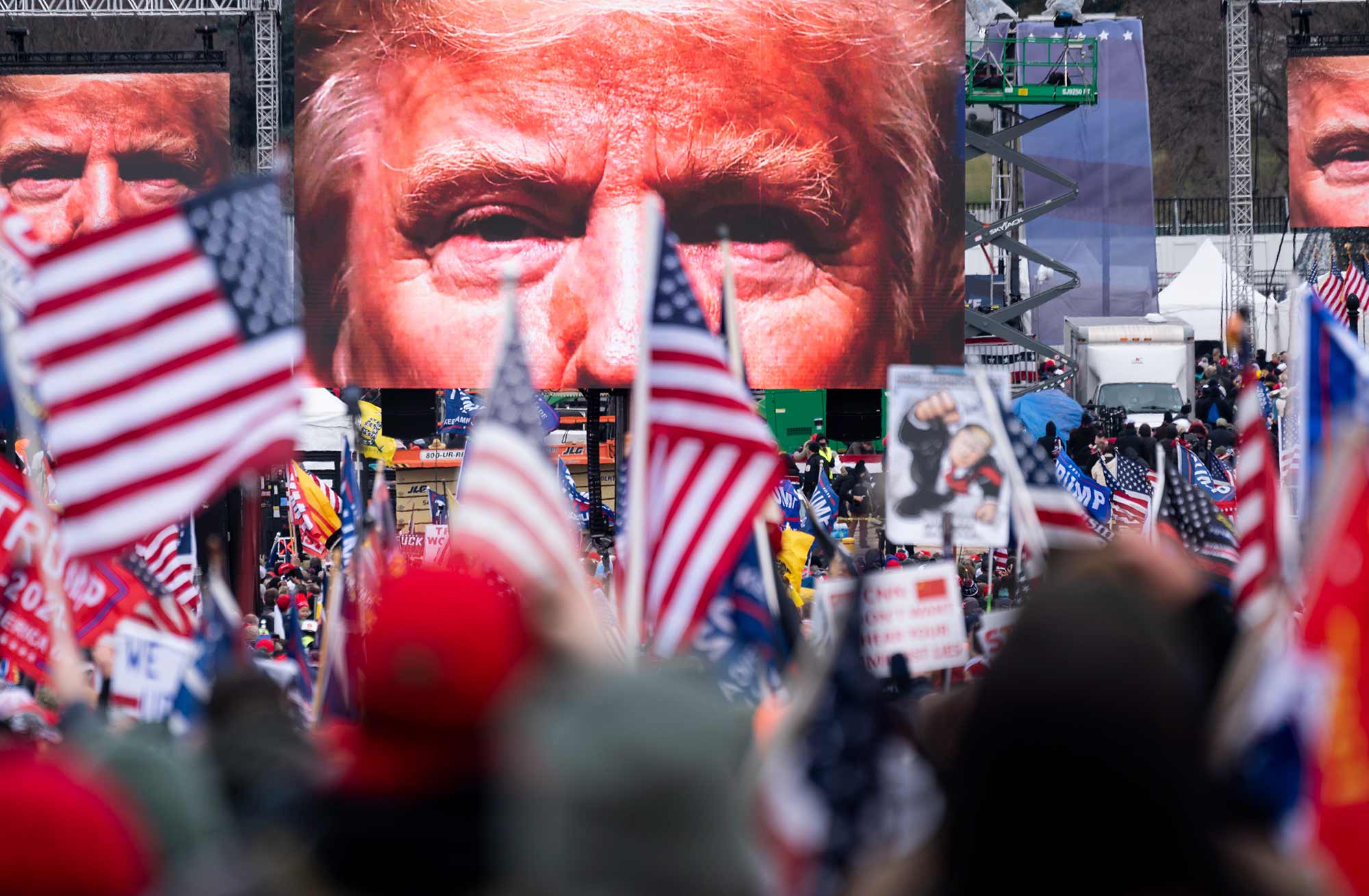
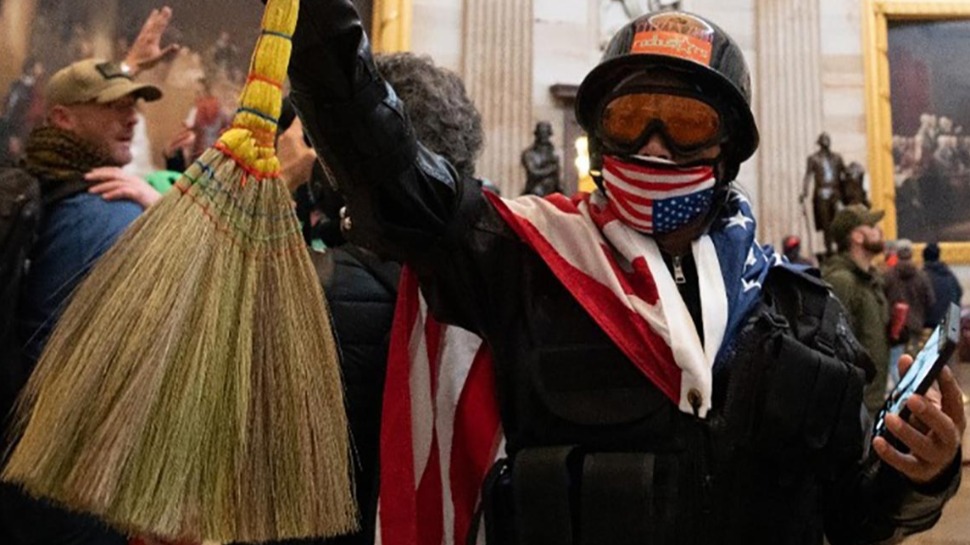
It’s hard to believe that much of America seems to be marching in lockstep toward that dystopia under a revived Donald Trump, wh0m nearly all polls see as leading the race for the US presidency, which will be at stake in November this year. On this date three years ago, he was squarely in the doghouse in the aftermath of the shockingly violent assault on Congress on January 6 by Trump partisans unwilling to accept that he had lost to Joe Biden in the election. Even his closest allies at that time distanced themselves from his apparent captaincy of that bloody caper, although many of them have returned to his kennel. 

Nearly a full presidential cycle later, he’s back in the Republican saddle, way ahead of a pack of rivals who, save one, have refused to denounce Trump for what he is: the greatest single threat to American democracy because of what he represents (leaving aside foreign tyrants like Vladimir Putin and Kim Jong-un). That, not surprisingly, is President Joe Biden’s exact description of him, so some might say it’s biased, but to remain unbiased against Donald Trump is to lie prostrate in front of a steamroller, begging to be annihilated.

It doesn’t help that the incumbent is 81 years old, palpably slow, avuncular, and whispery where Trump screams into people’s ears (to the delight of many). Their age difference—just four years—isn’t actually all that much, but beyond personalities, it’s a difference in cultures, and perhaps of understanding how politics works in this post-Facebook age, where obnoxiousness has become a virtue and regularity a liability.

Trump thrives on notoriety, parlaying the four indictments involving 91 criminal charges against him—plus the two disqualifications from state ballots—into a kind of a badge of courage, flipping prosecution into persecution. Rather than fracture his base, any attack on Trump (and any attack by him) only seems to consolidate the estimated 30-40% of hardcore Trumpers who now effectively define the Republican party, the tail wagging the dog.

Among the most repugnant (and, by Trumpian logic, among the most attractive) of his recent statements has been his denunciation of undocumented migrants as “poisoning the blood of our country,” specifically mentioning Latin America, Africa, and Asia as the sources of what in other speeches he has called rapists, terrorists, and Covid carriers.

You would think that that kind of Hitlerian rhetoric would galvanize the Hispanic and Asian-American—not to mention the African-American—communities in America against Trump, but no. If anything, his support among these groups seems to be rising, driven ironically enough by his hardline position on immigration, the very same factor that made these minorities possible to begin with.

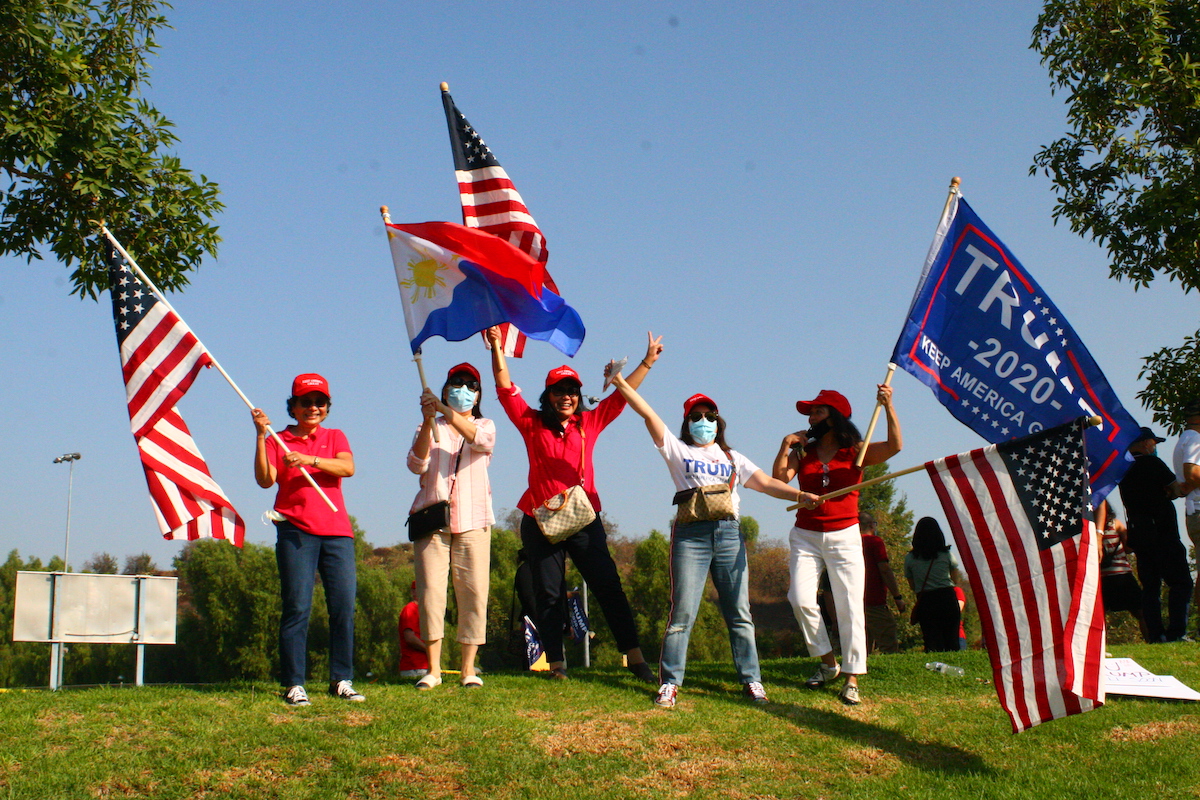
What I’m interested in is how the Filipino-American community will respond to Trump 2.0, and what that will say of us as a people, albeit as one of many minorities in America’s multiracial society.

There are now about 4 million Filipino-Americans; half of them, 2 million, are voters. (To put this in context, the US population now stands at 336 million, of whom 170 million are voters.) Historically, Filipino-American voters have leaned Democrat, with a majority of them voting for Hillary Clinton and Joe Biden in 2016 and 2020. But a very vocal (though perhaps somewhat less visible, as many people tend to reveal their preferences only in the voting booth) “Filipinos for Trump” movement exists, and if trends persist will likely gain more traction this time around.

In 2020, Filipino pro-Trumpers cited “family, religion, and faith” as the main reasons they were backing him, like many American evangelicals, despite all the evidence to the contrary in Trump’s personal behavior and speech. For many, it all came down to one issue—abortion—the right to which has now been successfully rolled back by the Supreme Court’s conservative majority. This time around, the flashpoint will likely be immigration, a global problem abetted by collapsing economies and repressive regimes. Well-settled minorities such as Filipino-Americans derive a strong sense of entitlement from all the personal sacrifices and legal processes they went through to acquire their citizenship, and feel cheated by migrants scrambling across the border. This kind of single-issue vote—a gross simplification and reduction of values into one criterion—favors demagogues like Trump, who work through two-dimensional posterization.

A more interesting—and more sinister—reading of Trump’s popularity came up in a recent guest essay in the New York Times by Matthew Schmitz, arguing in his title that “The Secret to Trump’s Appeal Isn’t Authoritarianism,” but rather that “Mr. Trump enjoys enduring support because he is perceived by many voters—often with good reason—as a pragmatic if unpredictable kind of moderate” and “a flexible-minded businessman who favors negotiation and compromise.” That logic, while fetching, predictably drew quick rebukes. One reader said: “Thanks, Mr. Schmitz, but we’re already well aware of this. Italians liked Mussolini because he ‘made the trains run on time.’ This is exactly our point. This is how dictatorships happen.”

That brought me back to our own long and continuing affair with despotism, and how sharply simplified populist sloganeering can cut through and cut down on complex reasoning—with devastating consequences for democracy, here and across the Pacific. 

(Photo from colorlines.com)

Qwertyman No. 44: Again, America

Qwertyman for Monday, June 5, 2023

I HAVE a good friend whom we’ll call Ted, a Fil-Am who retired a few years ago as a ranking officer in the US Navy. He was in town recently on some family business, and like we always do when circumstances permit, we had dinner and a good chat just before he and his wife flew back home.

Most of us have friends if not relatives in America, and all of this would be pretty routine except for one fact: I’m a flaming liberal, and Ted is a Trump Republican. Over the fifteen years or so that we’ve known each other—well before Donald Trump entered the picture—we’ve been aware of those political differences, but rather than politely skirt them in our conversation like many sane people would, we feel comfortable enough with each other to talk at length about them, and even exchange some friendly barbs.

Much of that level of comfort comes from my belief that, in his own way, Ted sincerely and deeply loves his country—and his ancestral home, the Philippines. He’s smart, curious, eager to learn and understand. In his former naval job and as a private citizen, Ted—who was born in the US but spent some of his formative years in his family’s hometown in Bicol, and speaks some of the local language aside from Filipino—has visited the Philippines as often as he can, trying his best to improve relations between the two countries on a personal level. (On this last visit, for example, he also took part in a ceremony to celebrate the commissioning of the USS Telesforo Trinidad, named after an Aklan-born Filipino petty officer who was awarded the Medal of Honor for bravely rescuing his shipmates from an explosion aboard their ship in 1915.)

Given his naval background—his dad joined the Navy in the 1970s—I’m not surprised that Ted is a Republican, like many military Fil-Ams are. (One notable exception is a mutual friend of ours, the former West Pointer, Army Ranger, and diplomat Sonny Busa, as staunch a Democrat as they come, and a key figure behind Filipino veterans’ causes in Washington.) His support for Trump despite the man’s many failings continues to mystify me, but I’m guessing that in his calculations, Ted chose to cast his lot with the man best positioned to thwart the liberal agenda. That includes items that Ted and other Republicans feel extremely uncomfortable with, such as what he calls the “celebration, beyond just acceptance” of transgender rights, and their judicial enforcement.

Perhaps with any other person, my liberal hair-trigger would have fired away at such comments with a fusillade of counter-arguments, but with Ted I find more value in listening and trying to understand a certain mindset, as different as some of its premises may be from mine. In our last conversation, what Ted had to say was profoundly disturbing. I’m paraphrasing here, but essentially it was this: “America is a mess. People can’t talk civilly to each other anymore. When I say I’m a Republican, people instantly assume I’m a racist.” To which I said that people at the top like Trump (and our own version of him here) greenlighted that kind of boorish discourse, with additional pressure brought on by right-wing militias armed with AR-15s. We talked about January 6 (which he opined was not an insurrection) and the Second Amendment (which I said seemed sacrosanct in American politics). “You have cancel culture,” he sighed, “to which the other guy responds by going bam bam bam!” He was deploring, not endorsing it, trying to get a fix on his own society’s ailments. “It’s in our DNA,” he said glumly about guns.

Thankfully Ted and I always have other things to talk about—like the Philippines, in which Ted said he feels much more relaxed than his own country. He knows how worked up I can get about politics and our own leadership (or the lack thereof), but as far as he could see on this trip, I and my fellow Filipinos (including those he met in Bicol) were just chugging along. “We’re survivors,” I said, “and we’ll do what it takes to get by from day to day.”

That brings me to another friend, “Tony,” who messaged me out of the blue the other day, obviously distraught by the Senate vote on the Maharlika Fund bill and asking if it was time for him and his family to leave the country, given how we seem to be back on the road to political plunder and economic ruin. It wasn’t just a rhetorical question; he was really thinking about it. Here’s what I said:

“Hi, Tony—If it’s a realistic option, I don’t think anyone can or should blame you for leaving or wanting to leave. We have only one life and we have to make the most of it in all ways. Politics is important, but it’s only one of many other factors that define who we are—love, art, family, and faith, among others. That said, it can have a way of complicating our lives and life choices. 

“Moving to the US has also been an option for me for some time now. Our only daughter lives in California and has been wanting to petition us. But my wife and I have been strongly reluctant to move there, although we visit almost every year and are familiar and comfortable with living in the US, where I spent five years as a grad student. We are artists, and our work is culture-bound. We feel appreciated here, within our small circle of friends. However good we may be, in America we would be marginalized; we don’t want to become an American minority and deal with all the issues that will come with it. And America has become much less inviting now, with all the intolerance and racial violence provoked by Trumpism. 

“So unless it were a matter of life and death, we’ll stay here, despite the present dispensation and many more aggravations like the Maharlika Fund to come in the years ahead, because I feel that my continued survival and success will be my best way of fighting back. Having survived martial law, we can survive this as well. Everyone’s circumstances are different, and again you should feel free to find your place where you can best live with your family and secure their future. Nothing is ever final anyway, and you can always come back. Follow your heart and conscience, and you should be all right, wherever you may go. All best!”

(Image from bu.edu)

Qwertyman No. 12: The Changing of the Colors

Qwertyman for Monday, October 24, 2022

(Image from esquiremag.ph)

PITONG STARED out the window of his Chicago apartment to the shoreline of Lake Michigan, and watched the usual Sunday crowd of families with small children in colorful tracksuits and seniors plodding nowhere at half a mile per hour on their adjustable canes. It was getting later into the fall, and the colors were exploding all over the city from Lincoln Park to Promontory Point; at the Botanic Garden in Glencoe the Japanese maples blazed a vivid red. Pitong remembered that it was at a time like this, almost twenty years earlier, when he and Marietta had arrived in the United States, and they could not believe what a transformation the seasons induced in the chlorophyll and carotenoids of leaves. 

He felt intensely drawn to his postgraduate studies, which was what they came to America for—“To explore,” as he wrote in his application, “new ideas for the energization of the Philippine economy, particularly through the deregulation of key industries, including power and telecommunications.” 

With a US-minted PhD, Pitong thought he could return to a professorship if not a deanship at a top university, or a directorship at NEDA or Foreign Affairs. So immersed did Pitong become in his anticipated future that he forgot about Marietta, who had given up a promising career in pharmaceuticals to join him as his bedmate and cook, until he began to doze off after interminable arguments online about the American capacity for policy reform. 

She snuggled up to him in the deep of winter, and he was colder than ice. In their second spring she volunteered to usher with the local symphony; by that summer she had fallen for a clarinetist, and by the fall she had found her happiness, while Pitong continued to stew in his darkening pot of theory and counter-theory, of the sticky explanations how, in the post-9/11 world, security and economic concerns were inextricably intertwined and indeed congealed in the individual consciousness.

Pitong returned home alone when he failed his dissertation defense, while Marietta began a family in California, to where her clarinetist had moved to join a new orchestra. Almost immediately, through an old friend on the Left—yes, he had had more than a passing dalliance with that crowd, although he now denied it—Pitong found himself a job in the Palace, drafting speeches for Madame President and getting close enough to hold up an umbrella for her at the slightest drizzle. He began to project some political weight and smiled at whispers to the effect that he would soon become her spokesman. When he brushed his teeth in the morning, he ended by frowning at the mirror, as if the republic were about to collapse, and elocuting in his whiny voice, trying to sound as gruff as he could, “Good morning, ladies and gentlemen of the media.” 

And then the republic did collapse, or rather Madame President did, in a scandal that whittled down her stature even more severely, and rather than desert her like those scoundrels did, Pitong made noisy pledges of allegiance to her—while secretly negotiating, on the side and through the same old comrades (the Left had influence in any government, he would realize), an accommodation with the new regime. When they laughed him out of the place, he fled the country in humiliation, hooked up with his alumni network, got a job handling loan applications in a small bank, and prayed every night that a sinkhole would devour the Palace he left behind and all of its cursed occupants.

For his own entertainment, he opened a blog under the title of “Batang Recto,” a play on the Manila street where he picked up cheap textbooks and on all the connotations of “right,” which he embraced. He took every opportunity to lambast anything that had to do with Family “A,” communists, female empowerment, abortionists (he was convinced that Marietta had purposely lost their baby, not that he wanted to care for one), drug users, hippies, Barbra Streisand, Hillary Clinton, Barack Obama (and 95% of his race), hip-hop, gun control, and climate change. 

He now proudly identified himself as an American citizen—he felt deeply insulted when someone asked if he was a “Pacific Islander,” like he paddled a dugout in his three-piece suit—and bristled when Pinoys from Pateros or Pagadian questioned his opinions on American issues like “birtherism,” as if they knew anything about American politics. But at the same time he felt perfectly free to dispense political wisdom to the islanders, because they seemed hopelessly lost in their fantasy of a liberal democratic paradise, which they failed to realize had been cooked up by a cabal in Washington since the days of Quezon and Cordell Hull to protect American economic and military interests in the Philippines for the next half-century. 

Pitong no longer relied on or believed in scholarly research to establish the truth; so much of it was produced and propagated by an academic elite intent on perpetuating its hegemony, against the challenge of intuitive thinkers like himself and a few other brave souls he had come into contact with. Together, on private networks, they reviewed and reconstructed history, and plotted a chart for human survival and development. The plan recognized the existential threats posed by liberal retardates still tied to obsolete notions like racial and gender equality, which accounted for their weakness at the core.

When a Pinoy strongman and his American counterpart became presidents of their countries, Pitong heard his angels sing. The world was clearly waking up to what he had known for many years—that there was genius latent in resentment, prejudice, and suspicion, in the politics of self-interest, the purest of human motivations. One stalwart was cheated out of re-election, but another was replaced by an even more reliable autocrat. When Russian bombs fell on Ukraine, he felt his logic justified—having denied Russia’s destiny and gone to bed with the West, Ukraine had no one else to blame for its misery but itself. Batang Recto was always right.

Pitong slept soundly on the pillow of these beliefs. He felt most virile after savaging some pink fool on his blog, and sometimes he woke up with a woman next to him, with whom he did not care to exchange names, mindful of security. When he looked out the window at the changing of the colors and at the people on the lakefront, he felt no irony, no loneliness, no remorse. He was never stronger, never surer. He tingled with anticipation at the coming of The Storm that would sweep all the liberals, tree-huggers, and Mariettas of the world away. It was the closest thing he felt to happiness.

Penman No. 261: High and Low in La La Land

IMG_2365

Penman for Monday, July 24, 2017


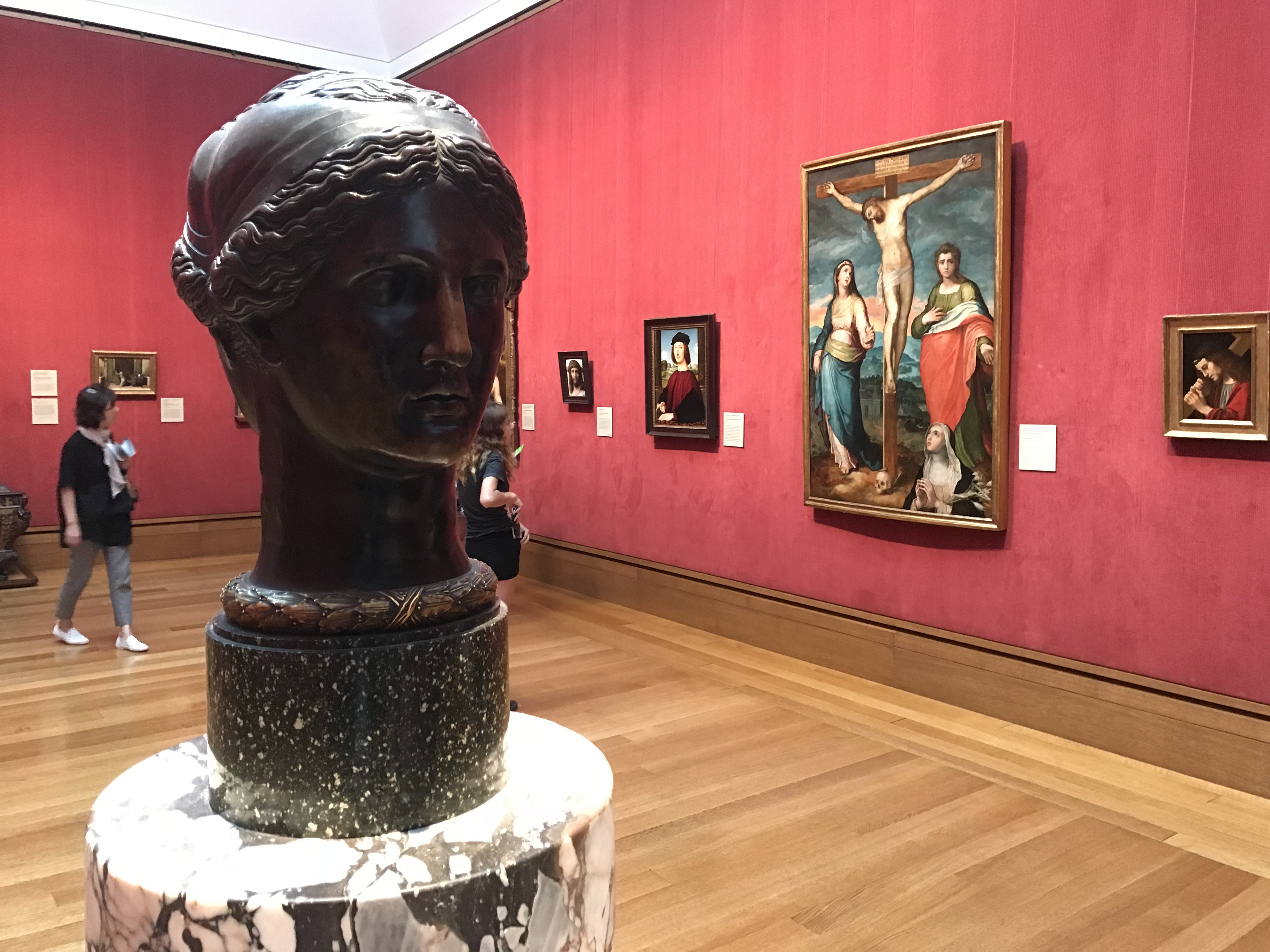
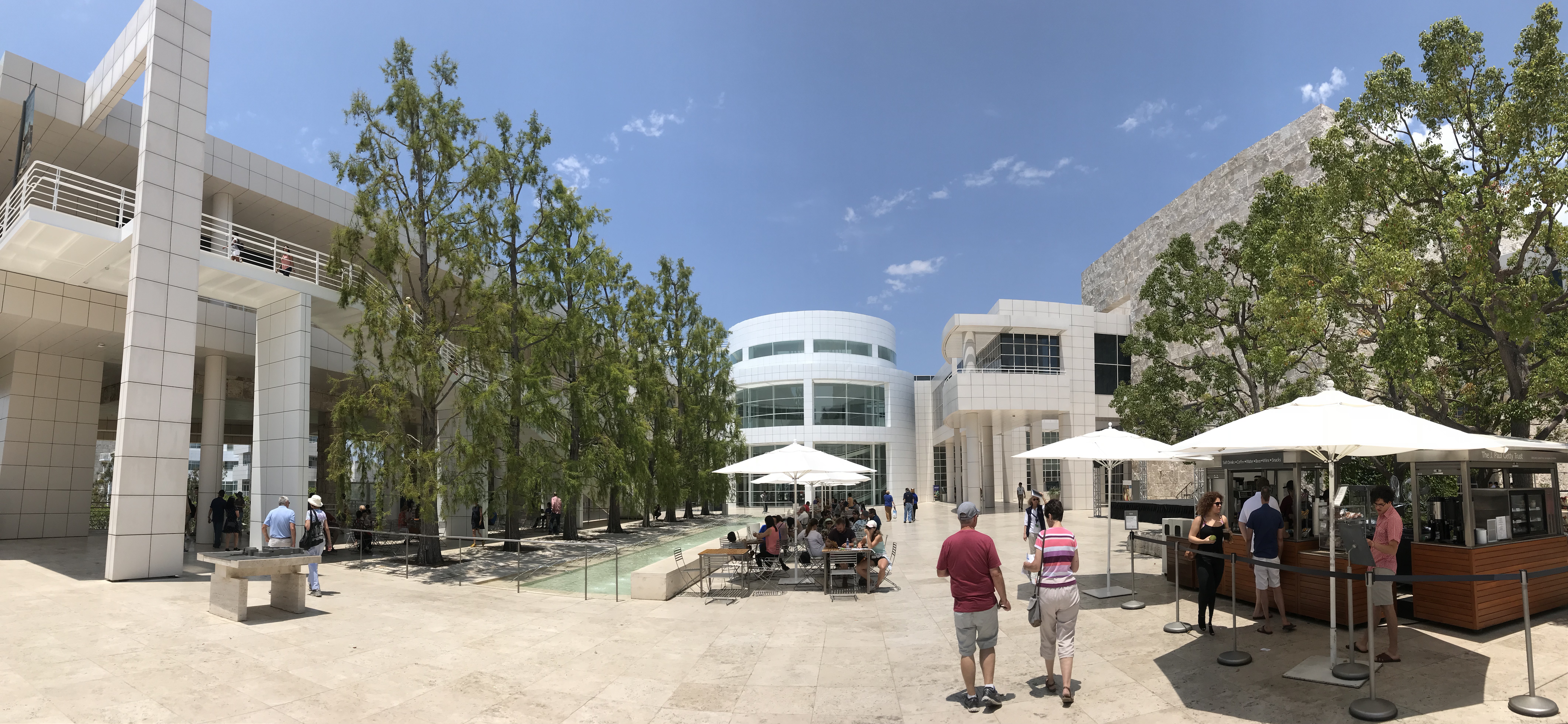
BENG AND I have been fortunate to have visited many of the world’s major art museums—the Louvre, the Prado, the Met, the Tate, and the Art Institute of Chicago, among others—so I was glad for the chance to visit another great one, the Getty, in Los Angeles last week. we were on our way to visit our daughter Demi in San Diego, but decided to stop over in LA for a few days for Beng to meet up with old schoolmates and for me to finally take a longer look at La La Land. In all these years that I’ve been going to the US and passing through LAX, I’d never actually stopped in LA long enough to do the tourist thing and look up at the HOLLYWOOD sign or march down the Walk of Fame near the TCL Chinese Theater.

So when the chance presented itself through Beng’s friend Rose, we dropped off our bags at Rose’s place in West Covina and rode out to do some sightseeing—but first, of the highbrow kind. The Getty and the newer Broad Museum have been on my to-do list, but we had time this time for just the Getty—and I would quickly realize that “just the Getty” was the silliest thing to say.

IMG_2382.jpg

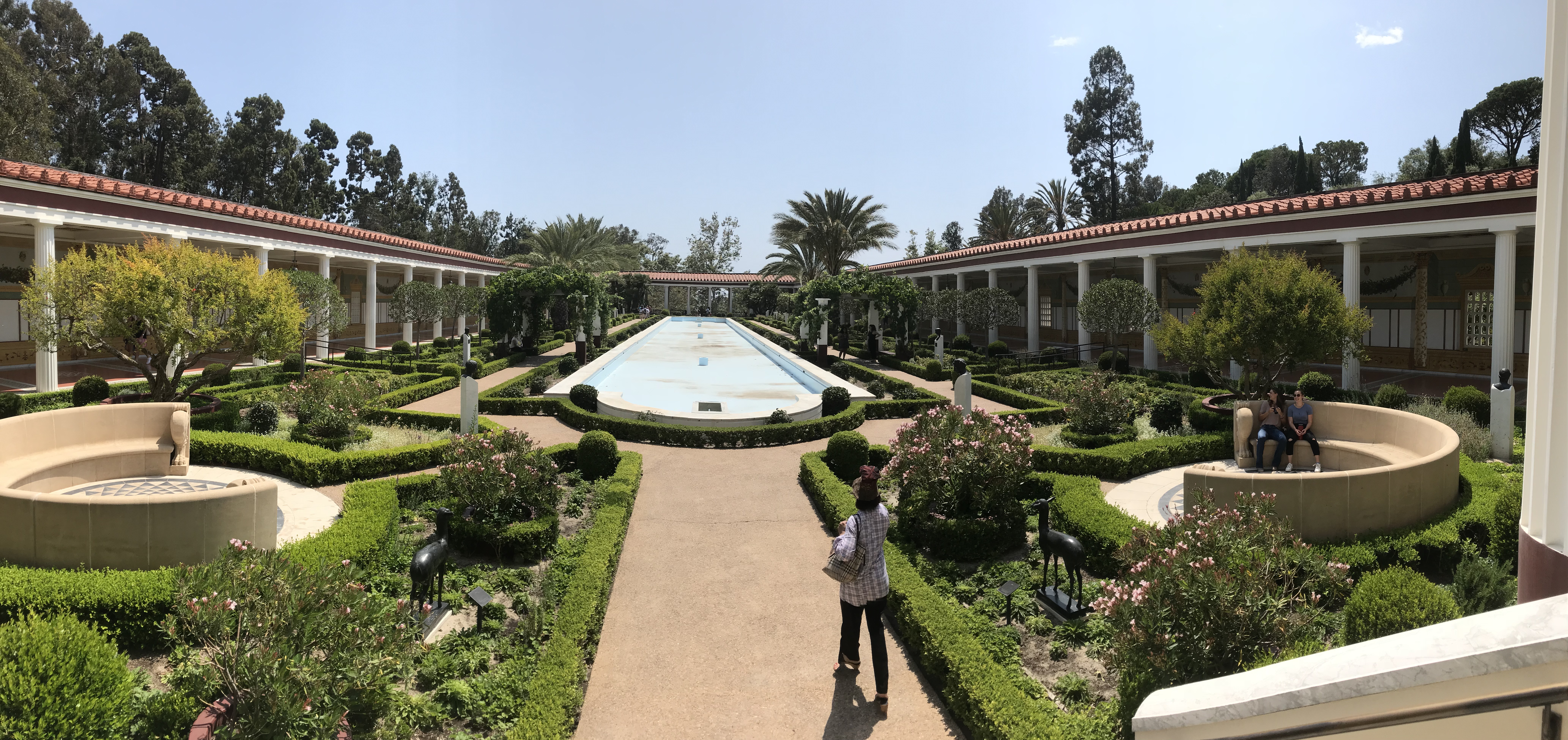
“The J. Paul Getty Museum” is actually two places in LA all at once—the Getty Center, a complex on a hilltop in the Brentwood area, and the Getty Villa in Pacific Palisades, which houses the Getty’s Greek, Roman, and Etruscan collections.

images.jpeg

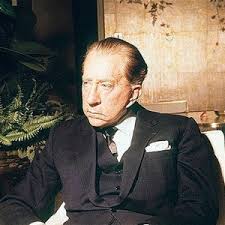
But before we go any further, a word on the benefactor of these palaces of art, Jean Paul Getty (1892-1976), once the world’s richest man, thanks to his daring and foresight in buying a 60-year lease on Saudi oil. Despite his fabulous wealth, he was notoriously stingy, reportedly begrudging his fifth wife the medical expenses for their son who later died, and installing a pay phone at his English villa. When his grandson and namesake JP III was kidnapped in 1973, he dickered and paid only as much ransom as could be tax-deductible, and gave the rest as a loan to his son.

How such miserly men join the ranks of the world’s greatest philanthropists will remain a mystery for psychologists to plumb, but I’ll take it as a form of restitution. Getty had the villa, which fronts his home, built in the early 1970s to house his overflowing collection, but ironically he never saw it, dying in England. The Center, about a 20-minute drive down the beach and reachable by a funicular tram, opened in 1997. Remarkably, entrance to both venues is free; you just have to pay for the parking.

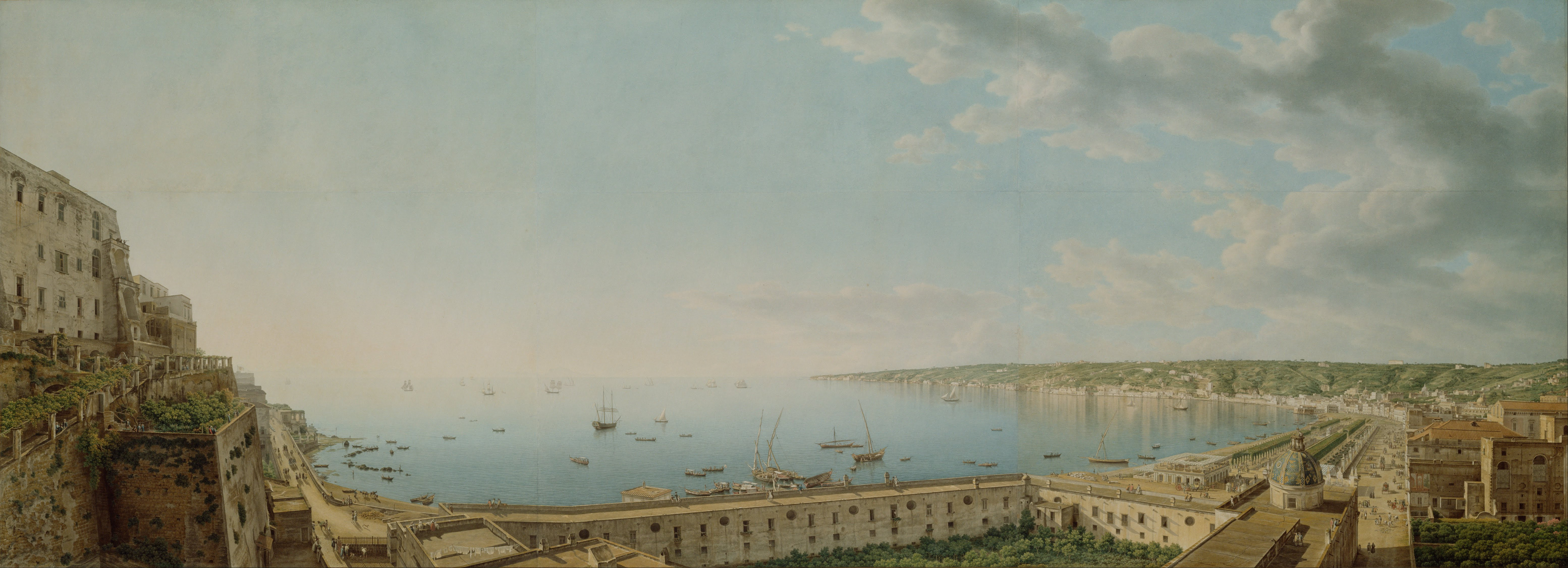
While I prefer modern art—from the utter simplicity of a fish by Brancusi or the melancholy of Hopper’s “Nighthawks”—I never fail to be awed and amazed by the workmanship and luminosity of the earlier masters. The Getty Center’s exhibits of Renaissance and Neoclassical art did not fail to impress. Most stunning of all for me was the work of an artist I’d never even heard of—Giovanni Battista Lusieri (1755-1821), whose A View of the Bay of Naples, Looking Southwest from the Pizzofalcone towards Capo di Posilippo, a monumental landscape with an equally kilometric name, displays an uncanny awareness of both the largeness and the smallness of things. True to her art-restorer self, Beng came to within half an inch of many masterpieces, scrutinizing the restorer’s technique, until the guard had to shoo her away.

giovanni_battista_lusieri_28italian_-_a_view_of_the_bay_of_naples2c_looking_southwest_from_the_pizzofalcone_toward_capo_di_posilippo_-_google_art_project

The villa, on the other hand, was as much to be visited as an artwork in itself as the pieces it contained. I was mesmerized by the beauty and delicacy of Roman glass, and by the almost contemporary pixilation of the mosaics, but like Mt. Vesuvius towering over Herculaneum—the villa’s inspiration—Getty’s shadow hovered over everything. Not surprisingly, he’s buried somewhere on the premises.

IMG_2388.jpg

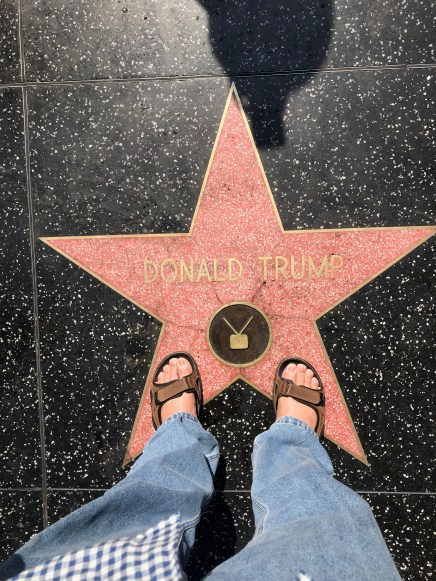
We left LA for San Diego the next day, but not before indulging my small wish to cruise down Hollywood Boulevard for an encounter with the stars—at least those at one’s feet. While we never got to meet the likes of Gal Gadot or Emma Stone (not even Vin Diesel or Dwayne Johnson), we did spot several Spider-Men and lesser icons strutting on the street, ever ready for the next selfie. I had the feeling that I was going to meet a galaxy of these superheroes in San Diego, where Comic-con was due to open in a few days. (And with any luck I hope to be able to report on and from that event next week, as I did last year.)

 My readers will understand if I admit that, back in Hollywood, I planted my feet on the star of a reality-TV host named Donald Trump; it was, after all, a sidewalk, with all the stars meant to be stepped on—some, perhaps, more so than others.

IMG_2436.jpg

(Photo of J. Paul Getty from Celebrity Net Worth; Lusieri painting from Wikimedia.)