Qwertyman No. 95: Till Divorce Do Us Part

Qwertyman for Monday, May 27, 2024

IS THERE anything about divorce—a bill legalizing which will soon be taken up in the Senate—that hasn’t already been said, or that most people don’t know? This was on my mind last week as I walked to school, wondering what my class of 20-year-old seniors thought about the issue. As young people likely to get married within the next five to ten years, they’re the ones who stand to be most affected by the outcome of the current drive to get the bill passed.

So I brought it up—we’re taking up argumentative or opinion writing, and how to handle contentious topics, and divorce was right up that alley. I didn’t tell them which side I stood on, although, knowing me to be a flaming liberal, they could have guessed that. I let them speak. Given that this was the University of the Philippines, and even factoring in the possibility that students tend to dovetail along with what they think their teachers believe, it was no big surprise that everyone who spoke up in that room did so in favor of legalizing divorce; if there was anyone in opposition, which I rather doubt, he or she chose to remain silent. 

Clearly, a majority favored the move, for the very reasons cited by the bill’s supporters. One student had a very personal take on the matter: “As the child of parents whose marriage was annulled,” she said, “I can remember all the things they had to do to get that annulment. The poor can’t afford it.” And economics aside, what did divorce offer that annulment didn’t? “The freedom to remarry!” everyone chimed in. (Correction: annulment allows for remarriage, but legal separation doesn’t.)

But—I said, just to probe a bit further—what about the argument that divorce will contribute to the break-up of marriages? “Those marriages are already broken,” said a student. 

But the Vatican opposes divorce, doesn’t it? (It’s the only other country in the world, aside from the Philippines, which doesn’t recognize divorce.) “Priests don’t get married. What do they know about marriage?”

At this point, I found it useful to introduce a fact that was news to everyone in the room. “Did you know that we used to have divorce in the Philippines?” No! Really? “Yes, a divorce law was enacted under the Americans in 1917. It was even expanded under the Japanese Occupation, and continued after the war until the Civil Code of 1950 abolished absolute divorce and replaced it with legal separation. Go on, look it up. I don’t know how many Filipinos actually availed themselves of divorce when it was legal—it would be interesting to see the statistics—but it’s not like we never had the option. It was there, but Church-supported politicians took it back.” Did the Filipino family collapse back then because of the availability of divorce? Show me the proof.

If this exchange sends chills up the spine of ultraconservatives who still think of UP as a haven of rebels, atheists, and devil worshippers, I’m happy to tell them that religion is alive and well in UP—the services in both Catholic and Protestant chapels are usually full. But so are reason and critical thinking, which to me remain the best antidotes to doctrinaire dogmatism, whether from the left or from the right. 

The Catholic Church’s steadfast resistance to legalizing divorce and my students’ apparent willingness to push back against that bulwark reminded me of a critical period back in the 1950s when UP was torn by a struggle between religious forces allied with the popular Jesuit Fr. John Delaney such as the UP Student Catholic Action and those who, like Philosophy Prof. Ricardo Pascual, believed in maintaining UP’s non-sectarian character. In the end, secularism prevailed, but at the price of Pascual and other liberal-minded professors being denounced as “communists” before the House Committee on Anti-Filipino Activities.

I’d like to think that a lot has changed since then, although sometimes things seem pretty much the same, given how the Red-tagging continues despite the sharply diminished power and influence of the CPP-NPA. One thing that has changed, at least in the public’s perception, is the presumption of moral superiority once claimed by a Church now embroiled in sexual and financial scandal. Its invocations of “divine law” or “natural law” in matters relating to homosexuality, contraception, and divorce sound almost medieval in a world that has largely moved in the opposite direction—something the conservative faithful will see as all the more reason to hold on inflexibly to their core convictions.

We can’t argue with those convictions, to which everyone has a right, but conversely, our people as secular citizens shouldn’t be subject to any religion’s doctrines when it comes to personal decisions that are no prelate’s or imam’s business. (And just for the record, I have no plans of divorcing my adorable wife, with whom I just celebrated 50 years of a typically mercurial but happily enduring marriage.)

I’ve written previously about my disaffection with organized religion, so that may provide some context; I do believe in God and in the value of faith and prayer in our lives, and in the right of others to practice their religion—for as long as they don’t insist that theirs is the only right way forward, and impose their way of life on me. If you want to stay married in mutual and lifelong misery because you believe it’s the right thing to do, fine; but don’t expect others to do the same, because their lives aren’t yours to mess up. Happiness is hard enough to find in this dystopic world we live in; let’s not make it harder for others looking for another chance at love and peace. 

I doubt that they’ll change the wedding vows—“For better or for worse, till death do us part” is always worth two people’s best shot, until worse comes to worst. But divorce should be an option better left to the individual’s God-given intelligence, conscience, and emotional honesty to sort out than to institutions more concerned with abstractions than reality. It’s ultimately a reminder of how human we are—people make mistakes, which can’t be corrected by prolonging them; we learn, we do better, and we live on. I think that’s what a just and kind Almighty would wish for his creations.

(Image from montanoflamiano.com)
Qwertyman No. 94: Artificial Intelligence

Qwertyman for Monday, May 20, 2024

DR. CHICHOY Carabuena had a problem. He wanted the school he owned and ran—the Generoso Carabuena Academy of Pedagogy in Santa Vicenta—to place higher in both national and international rankings, partly so he could raise tuition fees, and also so he could claim bragging rights among his university-president friends and drinking buddies. He had inherited the school from his grandfather; Generoso Carabuena was a banker who had collaborated with the Japanese and stolen the money they left behind to open a school for teachers, which was his wife’s dream, becoming a war hero in the process for outsmarting the enemy. 

The school had done well enough to the point that Chichoy’s dad Ramoncito could buy a Mercury Capri that he regularly drove to Manila to carouse in its nightclubs. Chichoy was the product of one of Ramoncito’s dalliances with the agreeable ladies, and it fell on him to rescue both the business and the family name from ruin and disrepute. He had been managing a carinderia for Pinoy workers in Dubai when the call came, and always wanting to become someone of substance, he returned to Sta. Vicenta to turn the daughters and sons of hog butchers and vegetable growers into teachers, like he imagined himself to be. Surely higher education wasn’t all that different from running a restaurant and coming up with the right menu at the right price for your customers. He had secretly dreamed of becoming a mayor, a congressman, or even governor, but first, he had to make a name for himself and make money.

Somewhere along the way he picked up a “Dr.” from a diploma mill and dressed the part, coming to his office even in the warmest of days in coat and tie. “More than anything else,” he would lecture his new recruits, “first impressions count, so before you even become a teacher, you have to look like a teacher, walk like a teacher, and sound like a teacher!” He had a faux marble statue made of his grandfather to greet visitors at the school entrance, and another one of Jose Rizal standing behind Generoso, as if looking on in approval. 

But lest people think he was beholden to the past, Chichoy Carabuena peppered his speeches with 21st-century mantras like “disruption,” “innovation,” “sustainability,” “customer-centric,” and, yes, “21st-century.” “The great challenge to higher education today,” he would often declaim, “is to produce graduates attuned to a global climate of disruption and innovation, mindful of evolving needs and opportunities in the marketplace of ideas while seeking sustainable and synergistic 21st-century solutions to problems rooted in our feudal and neocolonial history.”

Those speeches were written for him by his former executive assistant named Mildred, a UP graduate whom he had to fire when his wife discovered them smooching in his office—an act he vehemently insisted to be no more than a paternal gesture, much like  former President’s public bequeathal of a kiss on a married woman, a defense that gained no ground. His wife personally chose his next EA, a former SAF commando named Dogbert; making the best of the situation, Chichoy paraded Dogbert around as his bodyguard, spreading the rumor that his life was under threat from unspecified enemies determined to keep the quality of Philippine education down. “We can give them no quarter,” he declared at the last CHED event he attended. “We must resist, with all impunity, those who aim to keep our poor people shackled to the twin pillars of ignorance and idiocy!” He missed Mildred in those moments, but he felt quite pleased with his growing self-sufficiency in speechwriting, thanks to his new discovery, ChatGPT. Of course it never quite came up to his standards, so he tweaked the prose here and there, like that reference to Samson that he hoped would bring the house down.

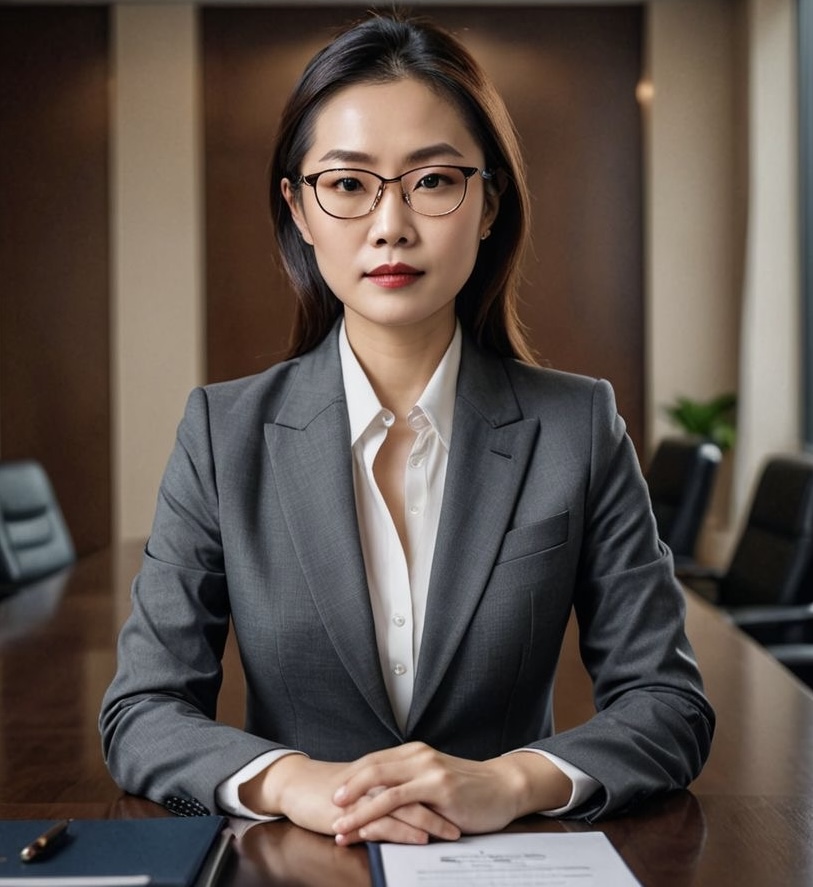
But now, reading the reports of top Philippine universities slipping in their rankings in the usual Times Higher Education and Quacquarelli-Symonds surveys, Dr. Carabuena saw an opportunity for his modest HEI to rise. “As their mystique diminishes, so our aura will grow,” he informed an indifferent Dogbert. “We just need to come up with sustainable innovations that will disrupt the status quo.” Dogbert handed him a slim folder. “Sir, someone wants to see you, to apply for the position of Academic Vice President.” It was a position that Chichoy himself had held concurrently to save on salaries, but now he felt obliged to pass it on to a real expert. He flipped the folder open and saw the picture of a cute Chinese-looking woman going by the name of “Dr. Alice Kuan.” Chichoy was mesmerized. “Send her in—and get out!”

When Dr. Alice Kuan stepped into Chichoy’s office, he felt himself enveloped in a miasma of jasmine, peonies, and five spices—everything good he remembered from his only visit to China many years ago. Her lips were lotus-pink, her skin ivory-white, and here and there dumplings suggested themselves to his imagination. “Good morning, Dr. Kuan! Please, have a seat! You’re here to apply for the AVP job?”

“Yes, Mr. President,” she said with a quarter-moon smile, “and I come with many ideas for both improving your curriculum and raising revenues through academic innovations.”

“Innovations! I like that! Like what?”

“Why artificial intelligence, of course! We could use AI to teach many of our courses, reducing costs. Also, we could bring in more foreign students from—uhm—friendly neighboring countries, while creating part-time employment opportunities for them in—uhm—online entertainment, for which we could even lease out some of your campus property. It would create a huge economic boost for Sta. Vicenta!” 

Temple bells rang in Chichoy’s mind. Not only was she fetching; she was smart! Suddenly he could see his political future brightening. He wanted to know more about this adorable avatar, and only then did he notice how patchy her resume was. 

“Your birth certificate was filed when you were…. 17?”

“Was it? I don’t remember.”

“Which elementary school did you go to?”

“I don’t remember. Maybe homeschooling?” She threw him an exasperated sigh. “Look, Dr. Carabuena, does it matter? I can have AI do a perfect resume if that’s what you want. If not, I can take my ideas to the Fontebello Institute of Technology in San Bonito just an hour away, and maybe they’ll be more receptive to disruptive innovations—”

“No, no, no! Disruptive, I like disruptive! Please, Dr. Kuan, stay in your seat! I’ll have somebody prepare your contract. Dogbert!”

(Image generated by AI.)

Qwertyman No. 93: A Century of Philippine Accountancy

Qwertyman for Monday, May 13, 2024

IN MY long life as a professional writer—aside from being a fictionist, journalist, and academic—I’ve occasionally been asked to write books for both private and public institutions and individuals, usually to commemorate an important milestone. My clients have included banks, power and energy companies, accounting firms, NGOs, business tycoons, politicians, and thinkers. 

While it’s a job, it’s also been a great learning experience for me, particularly when I’ve had to deal with topics like oil exploration, steel manufacturing, and geothermal energy. I begin to understand how things really work in our economy and society, seeing the cogs and wheels that turn industry, create jobs, and produce things people need. I meet people I never would have run into otherwise, people with interesting stories to tell about themselves and their work.

Probably the most famous of those people was Washington SyCip, the legendary founder of SGV & Co., once one of Asia’s largest and most highly respected accounting firms, whose biography Wash: Only a Bookkeeper I wrote back in 2008. When people tell me how boring the lives of accountants must be, I tell them the story of Wash, who wasn’t just an academic prodigy who graduated summa cum laude from college at 17, but who also served as a US Army codebreaker in India in the Second World War. Granted, not many accountants lead lives as colorful as Wash’s, but to suggest that there’s no drama in accountancy is certainly mistaken. 

I discovered this in my latest (and very likely my last) commissioned book, A Century of Philippine Accountancy, which will be launched this week by the Philippine Institute of Certified Public Accountants (PICPA) Foundation. The book is a compendium of both big and small stories, an institutional history that also delves into the personal struggles and triumphs of key people in the industry.

The centennial book comes a bit late, because the Philippine accounting profession formally traces its beginning to March 17, 1923, when the Sixth Philippine Legislature passed Act No 3105, “An act regulating the practice of public accounting; creating a Board of Accountancy; providing for examination, for the granting of certificates and the registration of Certified Public Accountants; for the suspension or revocation of certificates and for other purposes.” Six years later, the PICPA was established within the private sector to represent professional interests.

Of course, some form of bookkeeping was being practiced in the Philippines long before that. Given the Philippines’ vigorous trade with other countries such as China even before Spain’s arrival in 1521, there must have been some early form of record-keeping maintained by both natives of the islands and their foreign trading partners. Accounting in early China was said to have reached a peak during the Western Zhou dynasty (1100-771 BC); the Chinese developed sophisticated methods of accounting to keep track of such basics as revenues, expenditures, salaries, and grain. In Spain, regulations began to be applied regarding the accountability of companies starting with Queen Juana and her son Emperor Charles V in the 1500s. Manila’s galleon trade with Mexico, which lasted from 1565 to 1815, required meticulous bookkeeping, and archival records still exist of the cargo manifests of the galleons; these records show, for example, that audits of the ships’ cargo revealed discrepancies in capacity that suggested smuggling (whereby space meant for such necessities as water was reduced to make way for profitable goods).

Since 1923, the profession has grown in the Philippines by leaps and bounds to nearly 200,000 registered CPAs, employed in over 8,000 firms and partnerships. Based on the number of Publicly Listed Companies (PLCs) they audit, six firms dominate the industry: SGV & Co. (Ernst & Young); Isla Lipana & Co. (PricewaterhouseCoopers Philippines); R.G. Manabat & Co. (KPMG Philippines); Reyes Tacandong & Co. (RSM Philippines); Punongbayan & Araullo (Grant Thornton Philippines); and Navarro Amper & Co. (Deloitte Philippines). In keeping with the times, many local firms have affiliated themselves with large global partners to avail themselves of the latest technology and expertise. (For a bit of trivia, the first Filipino CPA was Vicente F. Fabella, the founder of what is now Jose Rizal University.)

The profession is governed by the Board of Accountancy (BOA), which administers the CPA Licensure Exam at least once a year. The BOA in turn is supervised by the Professional Regulatory Commission, along with other professional boards. The BOA and PRC work closely with the Securities and Exchange Commission (SEC), which is responsible for ensuring the integrity of the country’s financial system and its institutions.

The 1997 Asian financial crisis highlighted the importance of quality assurance and adopting international financial reporting standards in accounting. With the help of the Asian Development Bank and the World Bank, the major players in the profession—PICPA, BOA, PRC, and SEC, among others—undertook studies to reform the industry, resulting in the Philippine Accountancy Act of 2004. The SEC also initiated an Oversight Assurance Review to extend and strengthen reforms further. What the book chronicles most significantly, according to former SEC Commissioner Antonieta Fortuna-Ibe, is the Filipino CPA’s rise to global respectability and prominence, because of the industry’s relentless efforts to raise its standards and to keep pace with the latest developments in financial technology. Ibe stood at the vanguard of many basic reforms in Philippine accountancy, and was behind the push for a book to mark their centenary.

The profession will need to adapt to the ever-changing financial landscape. As SGV’s Wilson Tan puts it, “While we have yet to see how new technologies such as the Metaverse and the integration of AI into work applications will impact the accounting profession, CPAs of the future will need to likewise evolve their skills and capabilities. Foundational changes will need to be made in the curriculum to integrate learning that encompasses non-financial reporting matters, use of technology, data, and analytics, and cybersecurity, among others.”

Personal integrity, as ever, lies at the bedrock of accountancy. The BIR’s Marissa Cabreros reminds everyone that “Every CPA being asked to sign a financial statement must give weight to the purpose of their signature. If it has your signature as a CPA, we expect that you reviewed and recorded that properly. But unfortunately, sometimes lapses happen and CPAs forget what they signed for. An accountant must always have the importance and value of her signature in her heart.” Wash SyCip could not have put it any better.

Accountants and other members of the public interested in getting a copy of the book can email Lolita Tang at lolitatang@yahoo.com for more information.

Qwertyman No. 92: The Return of the Old Normal

Qwertyman for Monday, May 6, 2024

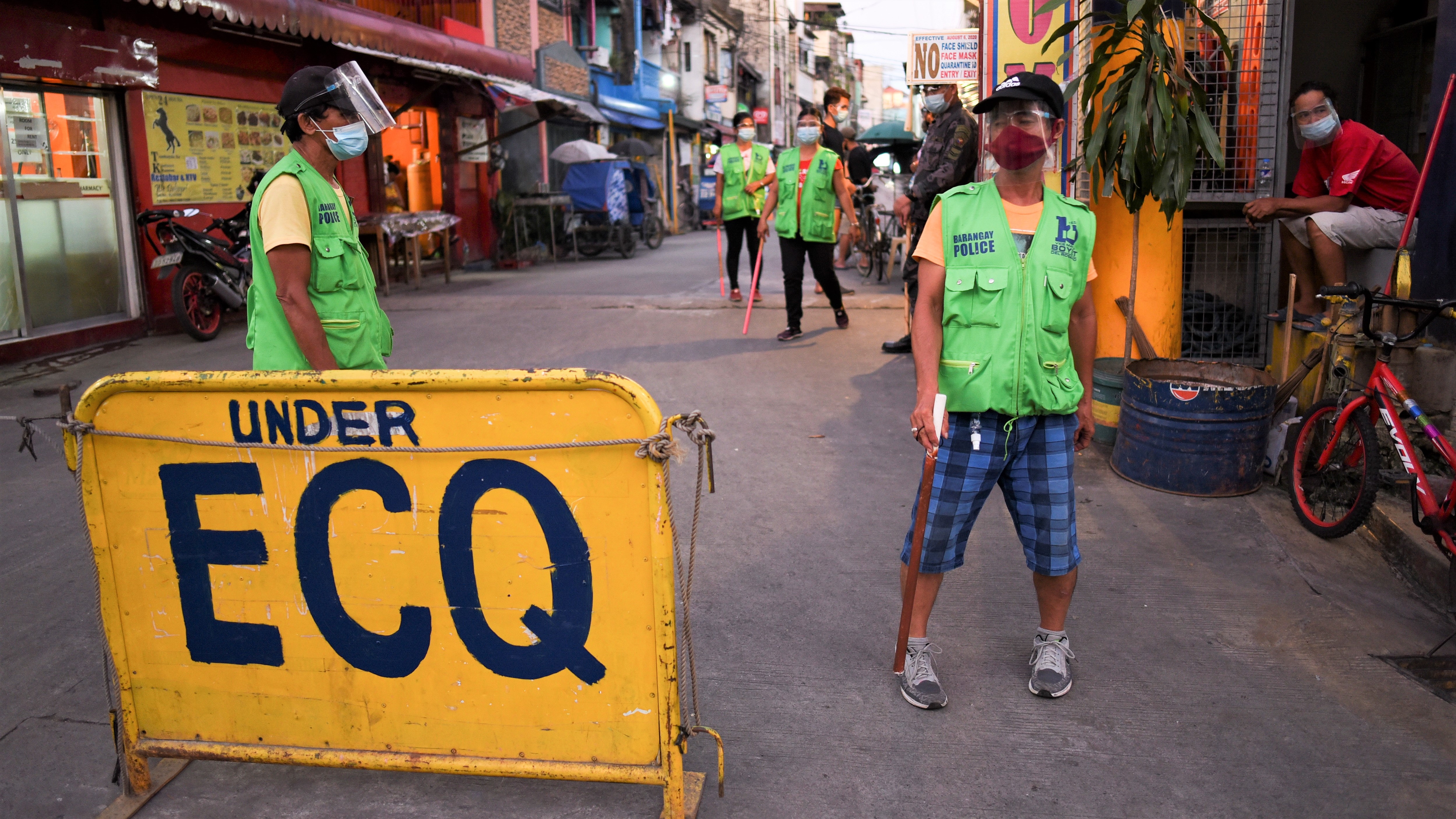
FEW WILL remember it, but yesterday, May 5, marked the first anniversary of the official end of the Covid-19 pandemic as a global health emergency, as announced by the World Health Organization. Of course it didn’t mean that Covid was over and gone—it would continue to mutate into thankfully less lethal variants—but the worst was over. It had infected more than 765 million people around the world, and killed almost 7 million of them; in the Philippines, as of last month’s latest figures, over 4 million of us caught Covid, and we lost more than 66,000 friends, family members, and neighbors to the disease.

It’s amazing what a difference a year makes. The pandemic rules had been relaxed long before May 5 last year, and much of 2023 and 0f the present year had been spent by us trying to get back to life as we knew it pre-Covid at a frenetic pace—engaging in that new term, “revenge travel,” buying new cars, building new homes, and as of last week, complaining about the infernal heat wave like it was the worst thing to have plagued us in decades (maybe it was—since Covid). For the most part, we seem to have willed Covid out of our minds, eager to replace its bitter memories with fresh and happy ones—an entirely human thing to do, to cocoon ourselves against the pain of loss. Are we in the “new normal,” or have we returned to the old?

I remember most vividly the paranoia that gripped the country during the pandemic’s early days—the first reports of people we knew dying horrible deaths in isolation, the terror following a sudden and suspicious onset of coughing and fever, the constant fear of carrying the virus home to the innocent and the infirm in one’s shoes, one’s clothes, one’s merest touch, the rapid disappearance of disinfectants and bread from the shelves, the inevitable closure of cinemas and restaurants, the anxious eyes peering above face masks and through face shields, the physical boundaries beyond which only a select few could cross—and, of course, the near-endless wailing of sirens announcing the imminence of death and dying. Unfamiliar words and phrases entered our vocabulary: co-morbidities, social distancing, quarantine, lockdown, ECQ, EECQ, RT-PCR, community pantry, antigen, remdesivir, hydroxychloroquine, Ivermectin, Sinovac (and anti-vaxx), etc.

Like many others, I lost friends to Covid, from very early on when no one knew what was really going on and what could be done to save patients who were turning up feverish and could hardly breathe. One of them was my own cardiologist, who reportedly assisted a patient whom he didn’t know carried the virus. Others were academics and senior officials returning from conferences overseas. Fortunately, no one in our families died of the disease, although many of us, myself included, later caught it at some point despite all precautions. When I did catch it, I have to admit that it was with a strange sense of relief, not only because I could now count myself a participant in a grand if horrible experience, and also because I imagined, perhaps foolishly, that I would be rewarded with some kind of immunity from further and worse infection.

Those of us who survived Covid hopefully did so with a more profound appreciation of the gift and value of life, and of the need to do good in the time we have left. But the 2022 elections only seemed to prove the power of political patronage, which became even more keenly felt during the pandemic, when local officials down to the barangays held sway over their constituents like never before. Covid sharpened the already stark contrast between rich and poor, from access to what were seen as the most effective vaccines to self-declared exemptions from certain restrictions like liquor-lubricated parties and literal hobnobbing. In the end, the virus didn’t discriminate, scything rich and poor alike, although the poor, living in cramped communities, were always more likely to fall ill and die.

What the public often failed to witness—and therefore can’t remember—were the stories of the frontliners who met Covid head-on and served as heroes behind the scenes. I’m now working with Dr. Olympia Malanyaon—a pediatric cardiologist who also served as Director of the Information, Publication, and Public Affairs Office of UP Manila—on a book she’s writing to document the efforts of UPM and of the Philippine General Hospital (which is part of UPM) to respond to the Covid crisis. The PGH, the country’s largest public hospital, was designated a Covid-referral hospital almost as soon as the pandemic broke, and its people found themselves in the vortex of an unprecedented medical and social crisis, and we want to tell their stories in this forthcoming book.

The word “hero” gets bandied around a bit too easily these days, but if there was a time for heroes to emerge, it was during the pandemic, when what used to be the most routine decisions (“Should I report for work today?”) could mean a matter of life and death. When the death toll mounted, many PGH staff resigned for fear of infecting their families, but many more stayed on, with nurses pulling 16-hour shifts and some doctors remaining on duty for as long as 30 hours.

Even utility workers recalled how pitiful the plight of the afflicted was. One said that “They had no one with them, not even when they died. They would be put into body bags, which could not be opened. Then they would be cremated the next day, without being seen by their families.” And then, the staff felt shunned by society when they went home as ordinary neighbors. “When we ordered at the fastfood, the guard shooed us away when he learned that we worked in the Covid unit,” recalled another. “I was very upset. It felt very degrading to work so hard, to line up for food when you got hungry, only to be turned away.”

Thankfully, the crisis also brought out the best in some other Filipinos, such as those who poured their time and money into community pantries that served the hardest hit. For a while back there, we saw and felt the glimmer of our inner heroes. It was a spirit that I hoped would be sustained into a broader and more enduring wave of change in 2022, but as the pandemic receded, we realized how much of the old normal yet remained.

Covid made us aware of the precariousness of our health as individuals. Looking forward to 2025, I wonder what it will take for our people to value their well-being as a society and as a nation.

(Image from Reuters/Lisa Marie David)

Penman No. 462: Exit This Gatekeeper

Penman for May 5, 2024


INDULGE ME this bit of self-reflection, which I suppose will also speak for many writers of my generation. After much thought, I have decided that I will no longer be judging literary competitions, having just completed my last one.

My first reason is that I’m 70, a good age at which to pause and plan out the rest of my life, however long or short that may be. (The life expectancy of a Filipino male today is 72, although actuarial science seems to think that if you’ve come this far, you’ll likely hang around for another ten years.)

There are just a few things I want to devote that time to—primarily, to write my own books (not books for others, so I’m also announcing that upon completion of my current commitments, I will desist from seeking or accepting book commissions—unless I fall into grave and sudden need.) I want to travel more with Beng and Demi while we can, look after Buboy’s growth, play poker all night twice a week, and enjoy my strange hobbies. I’ll teach for as long as I can—I’m enjoying my undergraduate class right now—but will limit my participation in workshops, conferences, festivals, seminars, etc. to the few I am committed to, like the UP Writers Workshop. 

Judging competitions doesn’t seem that much work (unless you’re a judge looking at over 100 stories) and of course it’s a signal honor to be asked to help pick the best of new writing. It remains a tremendous responsibility and privilege to be thankful for. You get to go up a stage, say some nice things about literature and writers, receive a modest fee, and feel somewhat useful and relevant. That’s all well and good.

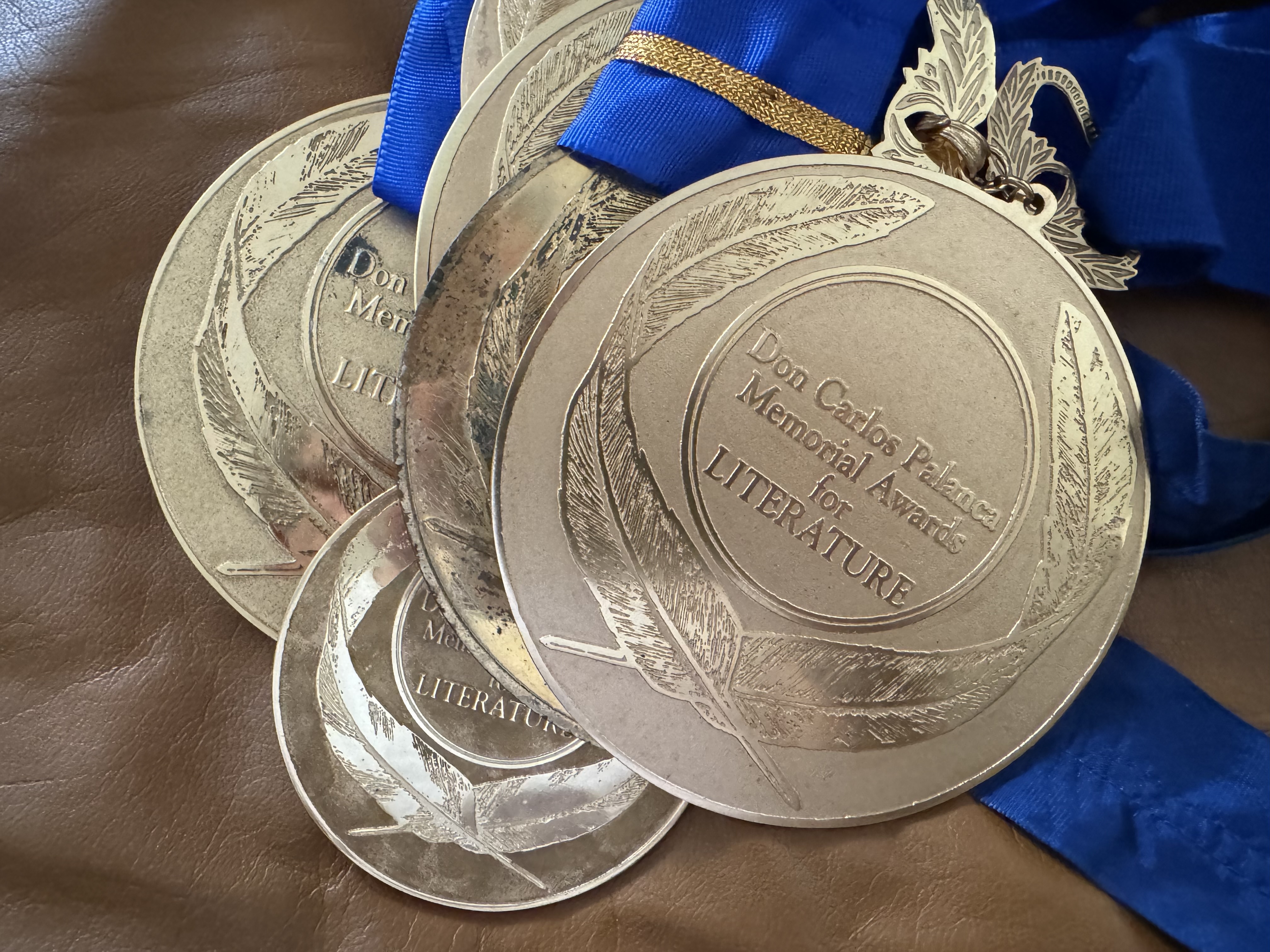
When I transitioned from being an active literary combatant (that’s how many of us felt back then, with the likes of Rene Villanueva and Ed Maranan breathing down your neck) to a judge after getting my Palanca Hall of Fame plaque in 2000—I never joined a contest after that—I felt that I had turned a corner and found a kind of inner peace. It wasn’t that I had nothing more to prove; one illusion that local literary competitions encourage in the young is that winning them is the be-all and end-all of writing, when all they are is a formal pat on the back to get you started. The true challenge for the young or beginning writer is not to win prizes but to write and publish books that will be read and appreciated by others, that hopefully will matter, that will outlive you, that for better or worse you will be remembered for and remembered by; publication is the ultimate prize, readership the ultimate validation. So I went on to write books, teach, have fun, and discover wonderful things outside of writing and literature (yes, there are such bright and shiny marvels). 

Judging competitions seemed to be a good way of keeping a foot in  the door, so I’ve been doing a lot of that, also as a kind of payback for all the people before me who took their time to recognize and reward my efforts with a prize. At some point, I realized that the foremost reason I kept joining and judging the Palancas was because I wanted to be there on Awards Night, to enjoy the company of writers I admired (the piano-playing Greg Brillantes being one of them), and to feel good about being a writer on the one night of the year that they took center stage. The great luck of Hall of Famers is that they can now attend all the Awards Nights they want without having to work for it—so I won’t.

The most important reason is that I’ve already read enough, perhaps too much, for far too long, and it’s no longer healthy for me or for those I may be judging. Our literary community certainly doesn’t lack for younger people who can do this job as well as if not better than I can.  I’m still and always delighted to see brilliant new work emerge from the pile, but it’s getting harder—more laborious, more fatiguing, and ultimately more disheartening to be asking, “ls this the best they can do? Don’t people know what a good story is anymore?” Or have I become the problem?

The word “gatekeeping” has been going around much lately, evoking the image of a surly senior (a Boomer, for sure), out of touch and out of step, insisting that his students and young writers should write like him or like Hemingway, playing favorites, and slamming the door shut on entire genres he doesn’t like or understand. That sounds a lot like me, except that I’ve never expected or driven my students to write like me; they come to my classes with their own experiences, their own material, their own talents and insights, and  the best of them have written stories that are nothing like mine, except perhaps that they’re realist, because that’s the kind of fiction I best know and teach. I’ve always been open to other forms and genres, even if I hardly write in them (I think I’ve tried everything at least once), because the world would be a terribly boring place if we all wrote about everything the same way. Think of much of the political rhetoric going around these days, no matter which flag is being waved: labels and slogans—the shorthand of groupthink—have replaced and diminished personal narrative and reasoning. (As if people will care when you die if you were “correct” all the time; they will ask if you were good and kind.) This is also why I have long resigned from anything resembling organized ideology or religion, whose avatars often seem so, so sure of themselves and of what they’re saying to the point of arrogance. 

I value the doubt and ambiguity, the constant self-questioning (what can we be capable of, despite ourselves?) that are fiction’s domain. Fiction humbles us by exposing our infirmities, but it also exalts us by offering the possibility of redemption.

In the end, what I have always looked for in a prizewinning story, aside from being exceptionally well-written (smooth and stylish when it needs to be, tough and visceral when it needs to be) is that it be moving and memorable. It should burn a hole and leave a scar in my heart, my guts, and my memory. I can enjoy clever and inventive stories as much as anyone else, but if it’s a passing amusement, like a joke, it won’t leave much behind. Some of the most memorable stories I’ve  come across weren’t even what you’d call grand in a sonorous or elaborate way. They took place in small places within relatively short periods of time, and involved ordinary people in situations that brought out their extraordinariness (by which I don’t mean some blinding heroism, but a part of them, dark or light, they didn’t even know was there).

Too many of the thousands of stories I’ve had to read over the years have been poorly written, dull, and forgettable. That’s not even a complaint, just par for the course for any kind of open literary competition here or anywhere else. People can’t be blamed for hoping and trying with their graceless prose, and I’m sure that many have nursed precious ambitions of being published and read. Not to be snarky, but the problem here really isn’t so much a lack of writing talent than of self-awareness, the kind of honesty and humility that will tell you, in your heart of hearts, that you will never be a nuclear scientist or an F-1 driver. Unfortunately, literary self-awareness can happen only when one has a sense of what truly good writing is. 

But could it possible that I myself have fallen so far behind that I can no longer recognize the new “good,” or apply the “new standards,” whatever they may be? Could my notions of “good fiction,” however liberally applied, be standing in way of some young genius’ debut?

I’ll be holding on to those notions, but now only for myself. I’m not urging my fellow seniors to do the same; we all operate on different clocks and their patience could be longer than mine. Some might say “Good riddance” and the feeling could be mutual, but I depart this task with a light and happy heart, looking forward to producing new work that will be judged by others.

Email me at jose@dalisay.ph and visit my blog at www.penmanila.ph.