Qwertyman No. 126: The Young Dodong Nemenzo (2)

Qwertyman for Monday, December 30, 2024
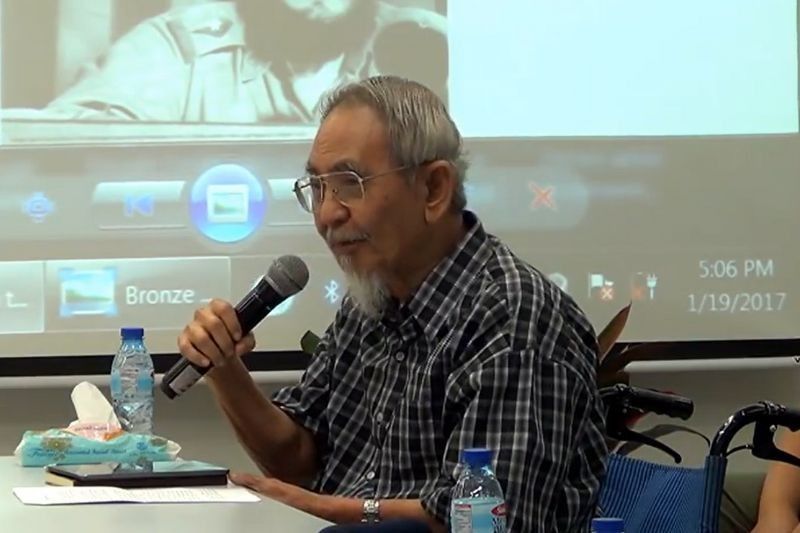
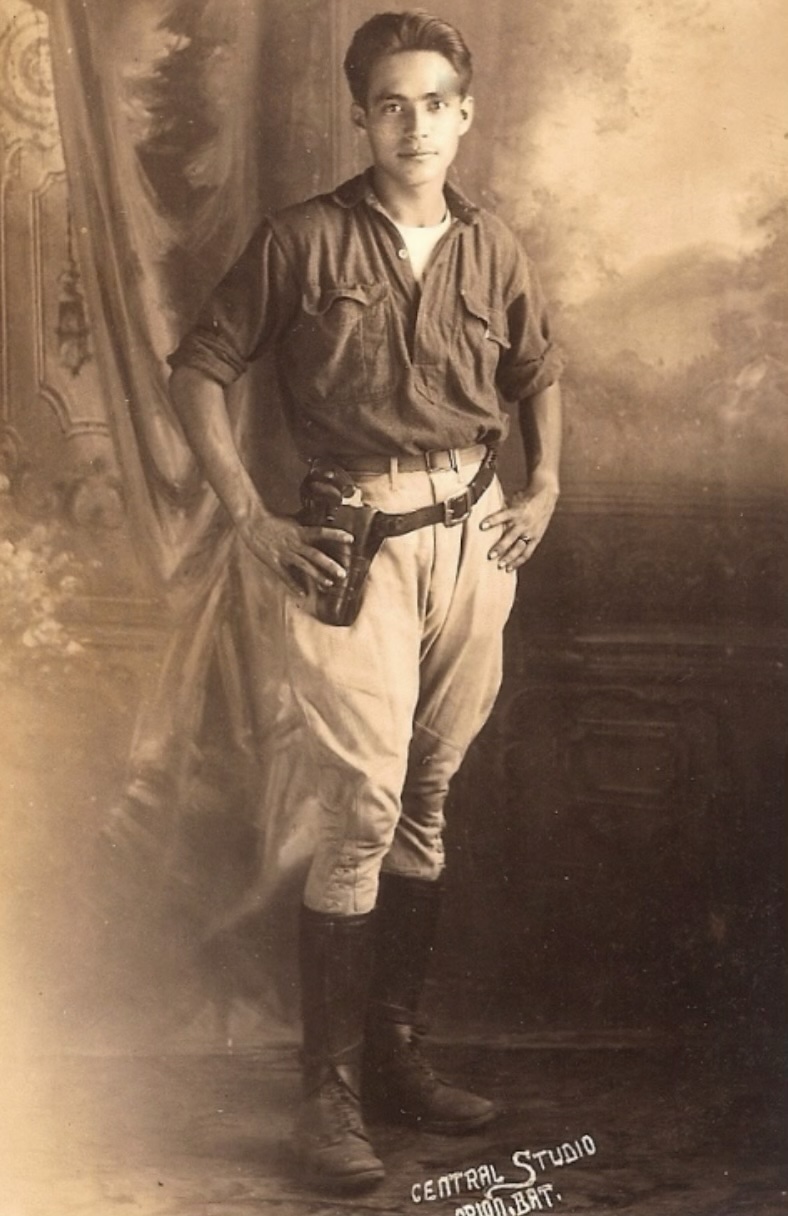
THIS WEEK I continue with excerpts from my interview with the late Francisco “Dodong” Nemenzo, on his recollections of his genesis as a young intellectual and activist at the University of the Philippines in the 1950s.

“It was all a popularity contest. Everything just seemed to be socials. Homobono ‘Bon’ Adaza, who was then the editor of the Philippine Collegian, tried to organize a socialist club with me. Bon even put out an announcement for a meeting. Bon and I were contemporaries, but he was a year older than me. I think I was a senior by then. I was living with my father on campus, since he was a professor here. We had a cottage in Area 2, then we later moved to Area 14. Our whole family was here. 

“It was because of my readings. I had already read the history of the socialist movement, and I was fascinated by that so we formed a socialist club. I think just three of us turned up for the meeting—the third was Princess. After that we were always together. We weren’t going steady yet then. We continued being friends because she was the only one who listened to my sermons on socialism. You ask her, but I don’t think she had any association with socialism before. We had just that one meeting. 

“Bon was eventually expelled from UP, but I had a hand in his election as chairman of the Student Council and editor of the Collegian twice because we were friends. The editor was elected from among the topnotchers of the exam. 

“The UPSCAns didn’t have a candidate who passed the exam, who were all frat boys. Bon landed in the top three, but he had no supporters. I bargained with the UPSCAns because they held the majority. So I used my vote in the council to push for Bon. Eventually he became editor of the Collegian

“Together with the chairman of the council and also the leader of the UPSCA, we decided to hold the first student strike. This was because for one and a half years, UP had no president, with Enrique Virata serving as acting president. It came down to a stalemate between Vicente Sinco and Gonzalo Gonzalez. Squabbling behind them were Jose P. Laurel, who represented the Senate on the Board of Regents, and Carlos P. Garcia who was supporting Gonzalez. No one could get the majority. I was on that strike. I proposed a solution arguing for the Board to take decisive action but also endorsing Salvador Lopez, whose essays I loved, for president. The UPSCANs didn’t care who won, as long as we had a president. 

“Our strike paralyzed the campus for a couple of days. It didn’t last as long as the Diliman Commune, but it was the first—and it was my first mass action. I was the one who was planning the tactics. 

“I was really looking for allies when I met this labor leader who used to be the secretary-general of the Federation of Free Farmers. [We’ll call him Hernando for this account, pending verification of the name—JD.]He claimed to be a socialist and he seemed to have read books on socialism. He was a layman. He was the one who introduced me to labor leaders such as Ignacio Lacsina and Blas Ople. They had a group of young people who revolved around Lacsina, and they met at his office in Escolta. 

“But I continued my reading. Sometimes I felt alienated because they weren’t Marxists. They were just for nationalization, and I felt more advanced than they were. There were other students there, but they were not as involved as I was. When the Suez Crisis exploded in 1957, the Americans intervened in Lebanon. We decided to picket the US embassy. We were  already using the word ‘imperialism’ then. Prominent labor leaders were there, including Hernando. When we got there, the labor attaché invited us inside to have breakfast with the US ambassador. I didn’t want to go in, but Ople and Lacsina thought they could change US policy by convincing the ambassador, so we did. I was utterly disgusted by that experience. 

“I was due then to go to US for my PhD, on a Rockefeller fellowship at Columbia University. Our demonstration took place just a few months before I was to leave. I was an instructor in UP and my college wanted me take up Public Ad, but I wanted to get out of that so I chose Political Sociology. I had become an admirer of C. Wright Mills who worked there and I wanted to work with him, only to find out that he didn’t want to handle graduate courses. 

“I already had a room at the International House in Columbia. Everything was prepared. I already had my visa. But on the day I was supposed to leave, the embassy told me that I could not leave. The consul general showed me the immigration law, which banned the entry of communists, anarchists, drug addicts, and prostitutes. 

“I think they had some earlier information about me because Lacsina later told me that Hernando was a CIA agent. He said that once, he and Blas Ople wanted to invite Hernando for a drink so they could get him drunk and then ply him with questions to extract the truth. What happened instead was that Blas got drunk first so nothing happened. Then he lashed out at Hernando and told him to his face that he was a CIA agent, and cursed him for blocking me from taking up my scholarship in the US. Looking back, I think Lacsina was right!”

Dodong Nemenzo eventually went to the University of Manchester in the UK for his PhD in Political History. He returned to serve as dean of the College of Arts and Sciences, chancellor of UP Visayas, faculty regent, and 18th president of the University of the Philippines. He married Ana Maria “Princess” Ronquillo and they had three children—one of whom, the mathematician Fidel, became chancellor of UP Diliman.


Qwertyman No. 125: The Young Dodong Nemenzo (1)

Qwertyman for Monday, December 23, 2024

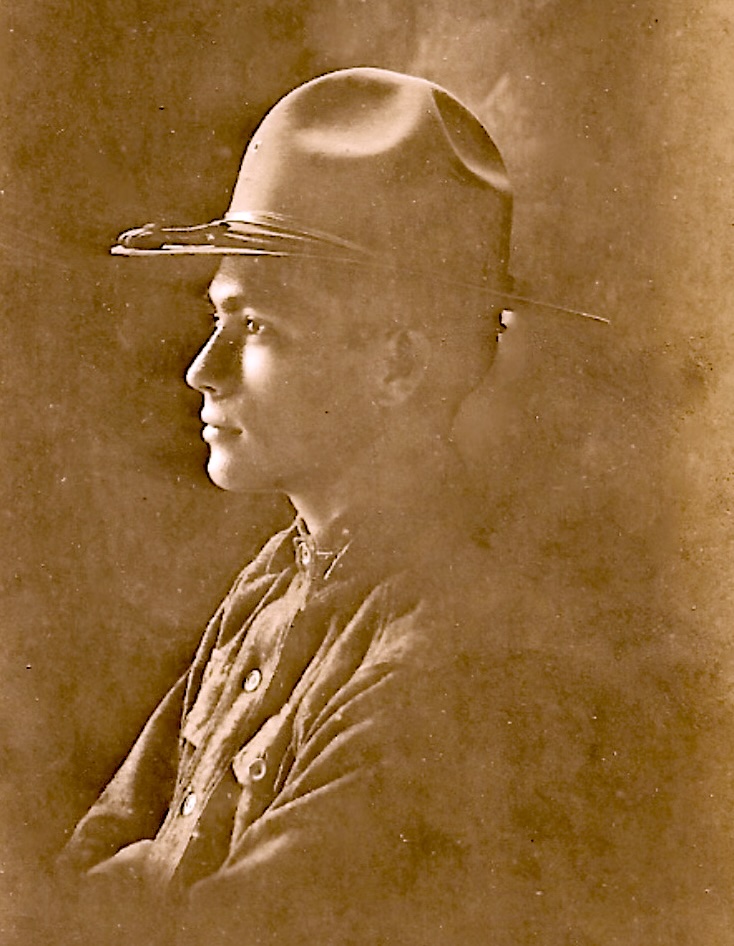
IT WAS with deep sadness that we received the news last week of the passing of Francisco “Dodong” Nemenzo, the staunch Marxist, nationalist, and former president of the University of the Philippines. My wife Beng and I are spending Christmas with our daughter in the US and being an all-UP family, we all knew Dodong and were much affected by his loss. Beng had been a student of Dodong’s at UP, and I was privileged to serve under him as his Vice President for Public Affairs twenty years ago. But long before this, I had met him as a student at the Philippine Science High School where his wife Princess taught us History; he came to pick her up in the afternoon in his Volkswagen Beetle whose door was emblazoned with the Bertrand Russell “peace” sign.

We will be missing the many memorial events that will surely be held in his honor these coming days, so I thought of recalling Dodong in a different way from what most of his colleagues and comrades will be speaking about him. More than ten years ago, I interviewed Dodong for a book I sadly have yet to finish, and he spoke with me about his life before he became the fighting ideologue everyone now remembers him to be. Let’s hear him in this abbreviated excerpt:

“We went back to Cebu after the war. Everything was still in turmoil. I enrolled at the Miraculous Medal School, a Catholic school, and completed my third and fourth grade there. By the time I reached fifth grade, Cebu Normal School was opened so I graduated from there. After sixth grade, I spent a year in the seminary in Cebu. That was my parents’ plan ever since I could remember. I was the only boy among three children, and the eldest. My parents were devout Catholics, and they considered it an honor when a member of the family became a priest or a nun. Since I was an only boy they wanted me to become a priest. I stayed there for only a year, and then I quit. That was probably the beginning of my radicalization. The seminary back then was run by Spanish or Vincentian priests who were supporters of Franco. They looked down on Filipinos and despised Rizal. 

“I went to the University of San Carlos. It was a Catholic school but my father was unhappy with the Science instruction. Our science textbook used the question-and-answer method and my father didn’t like that. He examined my notebooks every day and corrected what my teacher said. He got mad when we were taught creationism, and he lectured me on Darwin and evolution. I answered my teacher back and the principal reported me to my father for my heretical tendencies. My father decided to free me from this nonsense and transferred me to the Malayan Academy, a private non-sectarian school that had very good teachers. I finished near the bottom of my class, failing in Conduct and Tagalog. 

“I entered UP Diliman in 1953. The rule then was that you were exempted from the entrance exam if you had an average of 82, but my average was around 77 so I had to enroll in a summer institute that was like a backdoor into UP if you passed 6 units there. I didn’t know what course to take. My father didn’t want me to take up Law and wanted me to become a scientist like him, but I reckoned that if I did that, I would always be compared to him and come up short. So I chose a course called AB General. 

“The advising line was a mile long. Jose ‘Pepe’ Abueva, a friend of my father’s, passed by and saw me in the queue. He asked after me and I told him that I couldn’t think of a course I really wanted. He tried to sell me on Public Administration, but I didn’t like to serve in a bureaucracy. He said there’d be a lot of opportunities abroad, scholarships, and if I did well I could join the faculty. He had a lot of arguments, but the one that persuaded me was ‘If you join Public Ad right now, I’ll sign your Form 5 right away, and you won’t have to join this crowd.’ 

“That’s how I ended up in Public Ad. When the dean of Business Administration tried to recruit me and my (Pan Xenia fraternity) brod Gerry Sicat who was then in Foreign Service to go into Economics for our master’s, Pepe Abueva again swooped in and told me to take up an MPA instead, and to join the PA faculty immediately. So I became a faculty member in my senior year, just before my graduation, as an assistant instructor. I probably had the longest title in UP: ‘research assistant with the rank of assistant instructor, with authority to teach but no additional compensation.’ I really wanted to teach, but had no actual assignment. I only took over the classes of professors who went on leave. 

“I never joined the UP Student Catholic Action or UPSCA. Well, maybe for one year, but I was never active and then I got out of it. I joined only until I met an UPSCAn named Princess. We always met in Delaney Hall. We were together in the student council. She was representing Liberal Arts, I was representing Public Ad. I joined in 1955, my third year, along with Gerry Sicat, Manny Alba, and Jimmy Laya. I became a liberal and distanced myself from UPSCA. 

“I idolized (Philosophy professor) Ricardo Pascual. I was looking for a cause, but these liberals were just fighting for academic freedom with no purpose. It seemed empty. I was under the influence of Pascual for some time, but we had no advocacy. I joined a short course in Social Order at Ateneo on the papal encyclicals on labor. My liberalism and my growing social consciousness merged and I started reading Marx and Huberman on my own, to find out what we were fighting for. There were a couple of professors like Elmer Ordoñez and SV Epistola who according to Bill Pomeroy had already reached that level of consciousness, but when he left they became liberals, they weren’t really organized.” (To be continued)

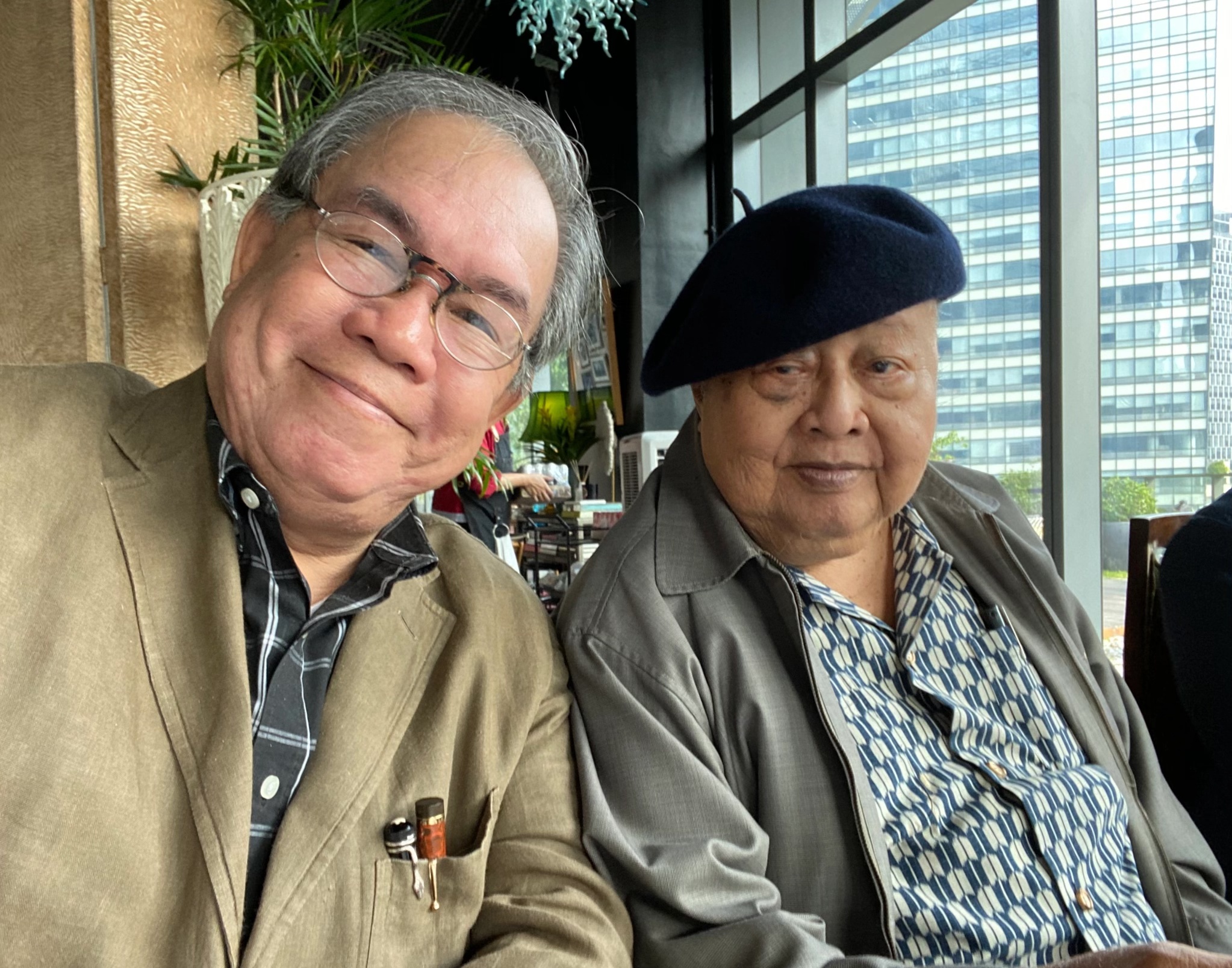
(Photograph by Rick Rocamora, used with permission)

Qwertyman No. 124: In Sin and Error Pining

Qwertyman for Monday, December 16, 2024

IT WAS at an early Christmas lunch when a friend asked if I thought that Vice President Sara Duterte would be impeached, with all the motions now on the table to that effect. I wasn’t expecting politics to be taken up over the merrymaking, but this is the Philippines where we breathe politics, so I obliged. 

I said that while I certainly believed that the VP was fit to be impeached for all the obvious financial irregularities happening under her watch, I very much doubted that it was going to happen. And why not? Because it was going to come down to the votes in the House and in the Senate, and while President BBM and his allies doubtlessly had the muscle to push the motion through, I just didn’t see why they would. And again why not? You don’t think they can come up with the evidence to find her culpable for the misuse of hundreds of millions of public money in confidential funds? They could, if they want to, I said—but again, why would they? 

Think about it this way, I said. Impeachment is political, so the facts don’t really matter much, except for propaganda purposes—especially with elections coming up in a few months. Don’t get me wrong—there are people who take the process and its reasons seriously, as we all really should, because millions going to non-people like “Mary Grace Piattos,” “Chippy McDonald,” and “Fernando Tempura” in the guise of “intelligence operations” insults our non-artificial intelligence. 

VP Sara’s refusal to explain these strange endowments paints her further into a corner—which, it seems, is exactly where she wants to be. When she says, “I’ll be at peace when I’m impeached,” and when her drumbeaters exclaim that the hearings are turning the Dutertes into “folk heroes,” then you know that she’s not going to get what she wants. 

Why would PBBM let her go? What would be in it for him? He doesn’t need a functioning Vice President—he never had one; this VP can’t point to a single memorable deed beyond publishing an expensive book. Cutting off his “Uniteam” partner and depriving her of her last official job would simply give her free rein to wreak more mayhem with no accountability to the government or the people. 

Keeping her on the official payroll—but fundamentally powerless—would be the smarter thing. It was never in Sara’s nature to do a VP Leni, and turn political Siberia into a veritable factory of good deeds. She’ll stew in the OVP, sans her confidential kitty, until she can’t take it any longer and resigns, which could easily be spun into a form of surrender or an abandonment of her sworn duties.

The other reason, of course, is that while VP Sara is drawing fire, PBBM can enjoy some peace of mind, and make benign speeches at this and that forum with a heartfelt smile. He knows that he has benefited immensely from the odious alternative the Dutertes represent in the eyes of many Filipinos, even those who staunchly opposed his candidacy in 2022. 

The Dutertes have done Marcos Jr. the priceless favor of making him and whatever he does look good by comparison—a difference he has substantively emphasized by rejecting his predecessor’s slavishly pro-China policy and (despite reports of continued EJKs under his regime) withdrawing Digong’s murderous tokhangcampaign. He has had his missteps, like that bizarrely ill-conceived Maharlika Fund, but I have been hearing murmurs of approval from otherwise progressive friends—albeit grudging and cautious—for many of his positions, an unthinkable proposition just a year ago, when the wounds of 2022 were still fresh. 

But with more than half his term yet ahead of him, there’s opportunity aplenty for unraveling and for even graver misdeeds. Even now, while we profess shock and dismay over the P500 million spent by the OVP in confidential and intelligence funds for 2023, the House has given BBM a free pass on the even more staggering P4.57 billion his office disbursed for the same purposes that year. 

And that’s why I think it’s wiser to keep the focus on the Dutertes and to keep the VP where you can see and hear her, flailing around and squealing like a stuck pig. The impeachment drama will play itself out in the New Year with more twists and turns than a telenovela, and then, for some reason, the votes will fall short, and the VP will be censured and chastised before being sent back to the pen. For what it’s worth, I don’t think impeachment is the proper penalty here; criminal prosecution, conviction, and punishment should be, but that’s a whole other game.

* * * * *

Christmas will soon be upon us—my 70th, in my case, a milestone I never expected to reach given the many young deaths that marked my generation, but one I thankfully accept as the ultimate gift and blessing, no matter the turmoil in our world today. I personally have much to cheer about and be grateful for—so why can’t I be merrier?

We associate Christmas with joy and new life, with the Christ child’s coming, but there is nothing to be jolly about where wanton greed and senseless death are concerned. 

Everything today points to a headlong dive into a global cataclysm, a World War III that may not have a clear and time-stamped beginning like the invasion of Poland or the bombing of Pearl Harbor, but a prolonged and widespread series of provocative and catastrophic events occurring all over the planet—Russian incursions into Eastern Europe, Chinese occupation of Southeast Asian waters, Israel’s pyrrhic extermination of its enemies, North Korea’s incessant saber-rattling and nuclear brinkmanship, America’s surrender of the asylum to the lunatics, and the inexorable degradation of the environment—all of which will come to a head. It will be horrific, but a side of me wonders if we need this cataclysm to remind us of our most basic values and virtues as humans, beyond ideology, religion, power, and wealth.

The other week I had a reader, a pro-Israel partisan, writing me to contend that there was no one else to blame for all the dead children in Gaza but their parents who refused to stand up to Hamas. It saddened more than infuriated me to see that this is where all our presumably educated reasoning has come to—a justification for the slaughter of innocents. I wanted to shake the man by the shoulders, across the Internet, to awaken the terrified and hungry child in him.

Our world will become yet darker and more difficult before it comes to its senses, rediscovers the value of truth, beauty, and courage, and pulls back from the brink of self-annihilation. Yes, I remain optimistic about the future of humanity, about a time when reason and justice will prevail, but I am quite sure I will not live to see this “new and glorious morn.”

Qwertyman No. 123: A Forgotten Hero

Qwertyman for Monday, December 9, 2024

A HANDSOME book—as handsome as its subject—was launched last week by the Ateneo University Press, a biography of another unsung Filipino hero who would have faded into oblivion had it not been for the efforts of an American expat in the Philippines with a deep sense of history. 

The hero was Col. Narciso L. Manzano, the highest-ranking Filipino in the US Army during the Second World War, and the man who rescued his memory is Craig Scharlin, a former English teacher, gallery owner, and biographer who served for some time as Manzano’s personal secretary fifty years ago. I had met and known Craig earlier as the author, with his wife Lilia Villanueva, of the biography of Filipino-American labor leader Philip Vera Cruz; when he asked me to help him put together what eventually became The Manzano Memoirs: The Life and Military Career of Colonel Narciso L. Manzano, I agreed, especially after hearing his story of the life of this remarkable man. 

Craig had learned that the MacArthur Library in Virginia had a 260-page handwritten autobiographical manuscript that had been written by Col. Manzano in 1948, to which were later added another memoir written in 1983 for his grandchildren; his son Jaime had also written a family history. Craig acquired copies of all these and the necessary permissions to publish them; I helped stitch the manuscripts together into a more coherent whole and edit the text.

Though born in Manila in 1899, Manzano grew up in Atimonan, Quezon before leaving at age ten for Spain where his family hailed from. He was a mestizo through and through: Filipino by birth and allegiance, Spanish by blood, and American by military service and later citizenship. After returning to Manila and studying Engineering at UST, he signed up to join the US Army, hoping to fight in the First World War, which ended too soon for him. He went to the US for further military training, and served back home as a Philippine Scout, and then as a colonel in the US Army Corps of Engineers under Gen. Douglas MacArthur.

It had been one of Manzano’s pre-war missions to map out the Bataan peninsula carefully in preparation for War Plan Orange 3, which MacArthur eventually discarded. It was in this zone that Manzano would first earn praise for his bravery. As Craig’s introduction tells it, “It was Manzano, along with his American co-commander, Lt. Col. Skerry, who led their engineers in setting the explosives to blow the bridge at Calumpit, the last and most vital bridge in Central Luzon…. When Gen. Wainwright decided the bridge had to be destroyed to halt the rapidly advancing Japanese invading forces, the Army engineers assigned this task led by Manzano were on the wrong side of the bridge, the Japanese side. Manzano requested that Skerry wait to blow it until he and his men could get across… but Wainwright had no choice: the bridge had to be blown as the Japanese were advancing too fast in order to save the entire American and Filipino forces and allow them time to retreat to Bataan…. Somehow Manzano, along with another of his American officers was able to evade the Japanese on their own and made their way with all their men to Bataan.”

Working in intelligence in Bataan, he was later captured and imprisoned in Camp O’Donnell; upon release, he was quickly assigned to develop an intelligence network in Luzon, at which he proved exceptionally capable. His wife Charo was arrested and imprisoned by the Japanese. But he pressed on, and when his network was exposed, he moved to Mindanao from where he hoped to be taken by submarine to Australia so he could properly advise MacArthur, who was getting poor intelligence. MacArthur’s lackeys scotched that plan, forcing Manzano to improvise as a guerrilla until MacArthur returned. He later moved to the US with his family, where he died in 1986, proud of his life’s work despite being embittered by the betrayals he had to suffer, and disappointed at being passed over for the generalship he had expected.

That’s not even half of the story; brimming with the candor of a man with nothing to lose, Manzano’s memoirs are full of vignettes and reflections about people at war, and Manzano can be painfully scathing in his estimations of those he felt had betrayed his country. He whittles down MacArthur and his aides for what he saw to be their foolish and costly unwillingness to listen to lifesaving intelligence (an opinion shared by historians such as Hampton Sides, who wrote that “MacArthur’s judgement, clouded by his gargantuan ego, was sometimes deeply, dangerously flawed. The men who fought under him, and the civilians who happened to get in his way, often paid a terrible price.”) Manzano was highly critical of MacArthur’s abandonment of War Plan Orange 3, and even said that he would have testified in support of Japanese Gen. Masaharu Homma had he been asked.

He not only believed President Jose P. Laurel to be a collaborator, but plotted the failed operation to assassinate him on the golf course at Wack Wack. For this alone, the book should be well worth reading; I among others have a contrary view of Laurel, but Manzano was there and we were not. Manzano has spicy opinions of other wartime and postwar personalities whom we have named streets after—again, quite an eye-opener. He reserved some of his choicest words for Ferdinand Marcos, whom he called “a poser, a phony, a fake, a war profiteer.”

In his introduction to the book, Craig Scharlin recalls his first meeting with Col. Manzano in San Francisco in 1975: The movie “Scent of a Woman” with Al Pacino had not yet come out. However, the character Pacino played in that movie, Frank, was a retired lieutenant colonel in the United States Army. As portrayed by Pacino, the character had Old-World charm, dressed impeccably, and even in his older age had ramrod-straight posture, showed strength of character and conviction, and the demeanor of an officer who had commanded other men and led them into battle. But he also carried scars of resentment and a certain sadness, a lament of unfulfilled destinies, of real battles won and others lost. And of course it was all Al Pacino—short, dark, brooding, yet still incredibly charismatic.

“That was the man I met in 1975 in a well-appointed penthouse apartment on Nob Hill in San Francisco. The only difference was that this wasn’t Al Pacino nor a fictional movie character, but the real deal—a retired US Army colonel named Narciso L. Manzano.”

Meet the rest of the man in the book, which you can order here: https://unipress.ateneo.edu/product/manzano-memoirs-life-and-military-career-colonel-narcisco-l-manzano.

Qwertyman No. 122: On Writing as a Profession

Qwertyman for Monday, December 2, 2024

FOLLOWING THROUGH on last week’s piece about the challenges faced by creative writers trying to make a living in this country, let me share some further thoughts on that topic that I wove into my Rizal Lecture last week at the annual congress of Philippine PEN. My talk was titled “The Living Is in the Writing: Notes on the Profession of  Writing in the Philippines.”

Our writers of old made a profession of writing, often by working as journalists, speechwriters, and PR people at the same time that they wrote poems, stories, novels, and essays on the side. Some also taught, and of course some writing comes with that territory, but with teaching you get paid for your classroom hours than for your word count. (To which I should also add, so much of the writing that our literature professors do today is understandable only to themselves.)

Our best and most prolific writers lived by the word and died by it. The two who probably best exemplified this kind of commitment to writing—and nothing but writing—were Nick Joaquin and his good friend Frankie Sionil Jose. Both were journalists and fictionists (in Joaquin’s case, a poet and playwright as well). We can say the same for Carmen Guerrero Nakpil and Kerima Polotan, as well as for Gregorio Brillantes, Jose Lacaba, Ricky Lee, Alfred Yuson, Cristina Pantoja-Hidalgo, and Charlson Ong, among others. 

These were all writers whom you never heard to claim, as has been recent practice, that “I am a poet!” or “I am a fictionist!” They were all just writers, for whom the practice of words was one natural and seamless continuum, and a profession they mastered just as well as we expect doctors, engineers, mechanics, and lawyers to do. This was also when journalists could be poets who could also be politicians and even reformers, revolutionaries, and heroes.

This was paralleled in other arts such as painting, where artists such as Juan Luna, Fernando Amorsolo, and Botong Francisco routinely accepted commissions to support themselves and any other personal undertakings. (Of course, this was well within the old Western tradition of writers and artists having wealthy patrons to help keep them alive and productive.)

But then came a time when, for some reason, creative and professional writing began to diverge, as creative writing withdrew from the popular sphere and became lodged in academia, where it largely remains today. Professional writing, or writing for, money, came to be seen as the work of hacks, devoid of art and honor. Even George Orwell urged writers to take on non-literary jobs such as banking and insurance—which incidentally T.S. Eliot and Wallace Stevens did, respectively—rather than what he called “semi-creative jobs” like teaching and journalism, which he felt was beneath them. (Orwell himself worked as a dishwasher in Paris, where he wryly observed that “nothing unusual for a waiter to wash his face in the water in which clean crockery was rinsing. But the customers saw nothing of this.”)

An attitude of condescension soon emerged among poets and fictionists who looked down on journalists as a lesser breed—something I have always warned my students against, having been a journalist who had to turn in a story, any story, by 2 pm every day on pain of losing my job. Never knock journalists. Let’s not forget that when it comes to facing real dangers brought on by one’s written word, poets and fictionists have it easy. The last Filipino novelist who was shot for what he wrote was Jose Rizal; the only writers dying today are our journalists and broadcasters in the hinterlands offending the local poobahs. Governors and generals read newspapers, not novels; they are impervious to metaphor.

Professional writers, on the other hand, saw creative writers as artsy dilettantes enchanted by fancy words and phrases that no one else understood and very few people paid for. Creative writers took it as a given that they were wedded to a life of monastic penury, unless they had another skill or job like teaching, doctoring or lawyering, or marrying into wealth. It even became a badge of honor of sorts to languish in financial distress while reaping all manner of writing honors, in the misguided notion that starving artists produced the finest and most honest work. 

The fact is, both are two sides of the same coin, which is the currency of public persuasion through words and language. One is an artist, the master of design; the other is the artisan or craftsman, the master of execution. Both can reside in the same person, unless you’re foolish enough to disdain one or the other. You can produce great art, if you have the talent, the discipline, and the hubris for it; but you can also live off your artistic skills, if you have the talent, the discipline, and the humility for it. 

(That said, I have to report that in my forty years of teaching creative writing, some of the students who find it hardest to switch to fiction are journalists, who just can’t let go of the gritty and often linear reality they’ve been accustomed to; poets come next, those who feel preciousness in every word and turn of phrase, so much that they can’t move from one page to the next without agonizing, or, going the other way, without drowning us in verbiage.)

This was why, more than twenty years ago, I designed and began teaching an undergraduate course at the University of the Philippines called “CW198—Professional Writing.” Mainly intended for Creative Writing and English majors who had very little idea of their career options after college aside from teaching, the course syllabus includes everything from business letters, news, interviews, and features to brochures, scripts, speeches, editing, publishing, and professional ethics. The first thing I tell them on Day One is this: “There is writing that you do for yourself, and writing that you do for others. Don’t ever get the two mixed up.”