Qwertyman No. 186: Countering the Sara Saga

Qwertyman for Monday, February 23, 2026
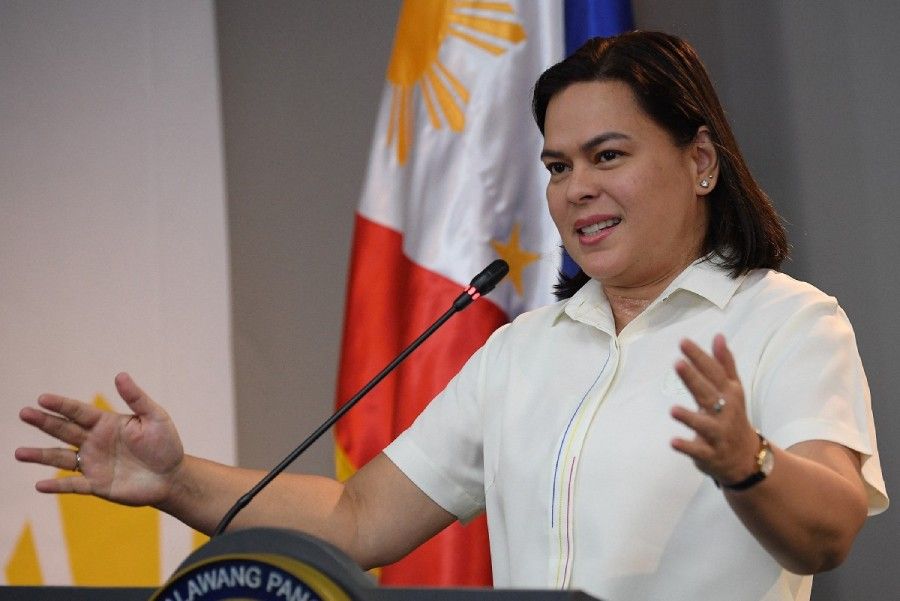
TO NO one’s great surprise—except perhaps for the “why now”—Vice President Sara Duterte publicly announced last week her plan to run for president in 2028. 

I’ll leave the more informed and more nuanced readings of this event to the professional analysts, but from my pedestrian point of view, the timing’s the thing. By throwing down the gauntlet so early, more than two years before the actual election, VP Sara is leaving no doubt as to her intentions (which we all knew, already). 

It doesn’t take a PhD in Political Science to see that, more importantly, with her impeachment being revived in the House, presumably to be raised to the Senate, she is serving notice to our notoriously opportunistic politicos that they better fall in step now—or else. The Dutertes still hold sway over vast swaths of political territory especially in the south, where pro-impeachment legislators can be easily picked off and punished in a Duterte restoration. When it comes down to a vote, the math will tell the story of who’s afraid of Sara Duterte.

The question really is, what are we progressive-minded citizens and our leaders supposed to do? 

Right now, the DDS side has one advantage over everyone else. It’s fighting for its life, with whatever power and influence it retains. With its patriarch in prison and his successor in peril for her political future, it has to go all-in on Sara’s candidacy or face even greater and perhaps permanent debilitation. That gives it a clarity of purpose that’s easier to translate to specific actions, to a tight script and playbook, than it is for the yet amorphous, once improbable, and still highly hypothetical Pinklawan-administration united front to agree on the most basic terms of coalition.

I can sense the hand of AI in fleshing out the details of the aforementioned script, but as one recent DDS post puts it, here’s the winning scenario:

“…. A story, the kind of story that does not need advertising, does not need media allies, does not need oligarch money, because it tells itself. A father who loved his country enough to die for it in a foreign prison. A daughter who loved her father enough to fly across the world to sit with him in chains. A people who loved them both enough to wait, and watch, and when the moment came.. to roar!!!

“The grandmaster played his greatest game not from the presidential palace. Not from the campaign trail. Not from a position of power and comfort.

“He played it from a cell. With nothing but his mind, his daughter, and his unbroken faith in the Filipino people.

“And when Sara Duterte raises her right hand in 2028 when the Philippines renders its verdict on everything that has happened, everything that was done to them, everything they endured and refused to surrender — Rodrigo Duterte will not be there to see it. Or maybe he will, we do not know.

“But he will have made it happen.”

I commented on this post by saying “I wonder what the AI prompt was,” because it displays the kind of verbal cadence, the dramatic buildup employing sentence fragments, the repetition for emphasis, so common to AI-assisted compositions. 

But AI or not, it does create the kind of simple but spinnable story that appeals to soft-minded and soft-hearted voters, drawing on a long and deep Pinoy tradition of melodrama that sanctifies the api, the unjustly oppressed. The day before Sara’s announcement, Digong had played his part by casting himself in a letter to the International Criminal Court as a man “old, tired, and frail,” prepared to “die in prison” with his “heart and soul (always remaining) in the Philippines.”

Those of us who know better lost no time pointing out the hypocrisy of the old man’s demand for the “respect” he never showed his political enemies and tokhang victims, and we can all go to sleep convinced of his guilt and wishing for his expectation to be realized. But the truth, in a sense, is almost irrelevant now in what will be a war of narratives, which Sara hopes to win. 

From her side of the story, her father is already lost—and therein lies his political value, as sacrificial martyr, which can only rise should he in fact perish in prison or appear even more “old, tired, and frail” closer to 2028. Her impeachment, if it happens, will also amplify her kaapihan. Her disqualification from running for public office will require another step—a separate vote in the Senate, as far as I know (do correct me if I’m wrong)—or at least a separate and possibly concurrent criminal conviction. She could also resign before impeachment, surfacing the unresolved question of whether she can still be impeached and disqualified after. Clearly, if the point is to appear at a constant disadvantage to project persecution, Sara will not want for options.

And she shouldn’t, because if we believe in her guilt as much as we do in her father’s, then the only way forward is forceful prosecution, the awa factor be damned. Criminal convictions for both will provide a definitive conclusion. But on the safe assumption that nothing in this country, including some Supreme Court decisions, is ever truly final, it remains possible that Sara Duterte will be on the ticket in 2028. 

Whatever kind of opposition emerges to contest the DDS will need a powerful counter-narrative to the Sara saga—which, I suspect, will wear thin as the evidence of criminal wrongdoing piles up against the Dutertes at the Hague and in Manila. 

An ascendant story could emerge from someone who has her own underdog story to tell—of being diminished and marginalized in Digong’s regime, but of serving nobly nonetheless—and, more significantly, of keeping herself busy all this time far from messy Manila, improving the lives of her constituents in concrete and tangible ways. 

I think we all know who that person is, and what a compelling and positive comeback story she can offer, against the vengefulness and the sordidness of the successor who turned her office into a junk-food dispensary.

Qwertyman No. 185: A Joke for World Peace

Qwertyman for Monday, February 16, 2026

U.S. President Donald Trump places a note in the Western Wall in Jerusalem May 22. (CNS photo/Jonathan Ernst, Reuters) See TRUMP-JERUSALEM-HOLY-SEPULCHER May 22, 2017.

I JUST love it when a piece of mine about the goings-on in the US gets a rise out of some MAGA expat—and you’ll be surprised how many of them have chosen to reside here, forsaking what I would have thought would have been the sweet comforts of life in Fortress America. 

A message from a guy we’ll call “Bob” reacted to my recent column on “What I Told the Fil-Ams” by suggesting that I had imbibed too much “Cali water,” referring to that state’s trenchant liberalism. I responded by sending him a joke about an American President in the Holy Land, which I hope he appreciated. (I’ve resolved that this is how I’ll deal with my critics from now on, as long as they remain friendly enough—which to his credit Bob was—kill them with kindness, or at least with corny jokes, of which I have a barrelful. I’ll save a special section for MAGA Pinoys, who keep telling me to butt out of their business but who can’t help doling out prescriptions for their ex-countrymen to find their way to the light.)

I’ve often wondered if our world can get much worse than it already is, knowing all the while that the answer can only be yes, yes, emphatically yes. Still, it comes as a rude shock every time fresh confirmation arrives of a new Marianas Trench in human greed, crassness, and stupidity. 

All by himself, Donald J. Trump accounts for more than half of every week’s lows, and I’d like to think that I’ve become immune to further aggravation by this man, only to be roundly disabused. Last week, Trump outdid himself in crudity by putting out a meme on his social network depicting Barack and Michelle Obama as monkeys. 

When called out by even his own, usually docile partymates for the patently racist post, Trump passed it off to some unnamed “assistant” who supposedly made the mistake, which Trump claimed to have been too occupied to pay close attention to. Why the President of the United States would leave his personal account open to some junior flunky is ludicrous enough; that he would expect anyone to believe his lame excuse is beyond laughable. His spokesperson derided the ensuing protest as “fake outrage” and called for renewed attention to “the things that truly matter to the American people,” as though racism, decency, and honesty no longer mattered.

But Trump isn’t even the issue here any longer; the man is irredeemably vain, vile, and vicious. (Let’s not even mention—but heck, let’s—his offensiveness to beauty and good taste, with his insistence on gilding the White House, plastering his name all over the place, and picking Kid Rock over Bad Bunny.) Like our own Rodrigo Duterte, he has long cast his lot with Darth Vader & Co., not even pretending to be good, or to be aiming for such banalities as truth, freedom, and justice. In the words of one of his chief lieutenants, Stephen Miller, the age of “international niceties” is over; the only things that count today are “strength, force, and power,” which Trump & Co. have liberally deployed—not against global bullies like Vladimir Putin, but chiefly against the American people themselves. 

But again, let’s put the Orange Man aside for a minute. The real danger is that there are tens of millions of people who think the way he does, and who probably thought that way even before he gave Trumpism a face, a voice, and a name. These are people for whom daily doses of falsehood have become the norm, and I really couldn’t care less if they believe that Satanic Democrats drink the blood of kidnapped children, except that their weirdness creeps up to the White House and into the kind of domestic and foreign policy that makes life difficult for us 8,000 miles away, and emboldens other despots.

I’m not saying here that we don’t have our own version of Trumpers to deal with (and I’m adding this paragraph for the MAGAs who’ll remind me to stick to the local, a description I expect them to extend, in MAGA logic, to Greenland). Our DDS, in many ways, offer a parallel constituency; like many MAGA members, their grievances are rooted in historical neglect and a sense of displacement in rapidly changing times. They pinned their hopes on a man who was supposed to improve their lives—but who didn’t, distracted by a megalomaniacal drive to reshape society to his grim vision. 

This is why I haven’t given up on Digong’s faithful; there’s a valid cultural dimension to their disaffection in terms of Mindanao and Manila-centrism, but their issues can be addressed by attentive and equitable governance. The corruption issues that have gutted the country have devastated them as well. Except for the shrillest and most invested in a Sara succession, I feel that many can yet be persuaded to choose responsible leadership. 

In this respect—and this may not be shared by many, given the lows to which our own politicos have fallen, with some in need of growing a spine and others a brain or at least a heart—I feel more hopeful for the Philippines in the medium term than I do for America, and I think that’s saying a lot.

Now let’s wait for the MAGA backlash; I have lots of Trump jokes lined up to brighten their day, restore their sense of humor, and maybe help bring about world peace. 

Qwertyman No. 184: What I Told the Fil-Ams

Qwertyman for Monday, February 9, 2026

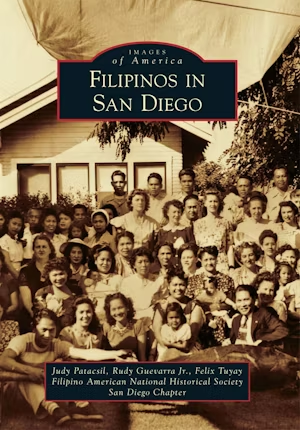
LAST WEEK, at the Executive House of the University of the Philippines where he officially resides, UP President Angelo “Jijil” Jimenez graciously hosted a delegation of about twenty Filipino-American business and community leaders from San Diego, California, led by our honorary consul there, Atty. Audie de Castro. 

I was happy and proud to have helped facilitate this visit, having some close personal and professional ties myself to San Diego. Our unica hija Demi married a San Diegan, and has happily lived there with her husband Jerry for almost 20 years now. My wife Beng and I visit her nearly every year if we can afford it. 

San Diego also happens to be where a dear friend of mine, Mrs. Julie Hill, lives in a lovely home in Rancho Sta. Fe. Julie stayed in the Philippines for some years many decades ago when her husband was the Ford Foundation representative here and fell in love with the country and its people, and despite having traveled and served all over the world, the Philippines retains a special place in Julie’s heart. The last time I dropped in on her a year ago, Julie (who’s approaching 90) announced that she was donating what came out to more than P20 million to help the poorest of UP students. Atty. De Castro helped to formalize that donation as our consul in San Diego, cementing our relationship.

Professionally, but through Julie’s recommendation, I also served as Pacific Leadership Fellow in 2014 at the University of California San Diego, where I had previously lectured on Philippine-American affairs. Beng, meanwhile, observed operations and state-of-the-art techniques at the Balboa Art Conservation Center.

In other words, we’ve established rather close ties to this sunny and vibrant city in Southern California, where many generations of Fil-Ams have taken root, mainly because of the US naval base there, where thousands of Filipino sailors recruited from the Philippines have served. That’s how Demi’s in-laws came to San Diego from Bicol, their children born as Americans but deeply mindful of their Filipino heritage.

Many of our visitors never saw the Philippines until they were grown up, and I think most were setting foot on the UP campus for the first time. So we gave them the warmest reception and the best orientation we could, and engaged them over lunch in a lively discussion.

One of them asked: “What is the Filipino dream?” My UP colleagues responded to that in various ways, coming from different technical and academic disciplines. I tried to give a pedestrian answer: “The Filipino dream is actually a fairly simple one: a roof over one’s head, food on the table, a good education for the children, peace and justice in our communities. We dream for our families. But like all seemingly simple things, achieving that dream is difficult and complicated.”

The visitors had earlier asked President Jimenez about UP’s role in national leadership, and beyond citing how many presidents, senators, and Supreme Court justices we’ve produced—which, to be honest, has also contributed to the ruination of our nation—Jijil emphasized the value his administration places on service to the Filipino people, which can manifest even from beyond our shores. He spoke of UP sharing its knowledge and resources with other SUCs, of UP assuming its responsibilities as the country’s national university—a concept perhaps alien to the American situation but entirely relevant to ours. (I was aware, of course, that UP has many internal issues and priorities of its own to sort out—it always has, regardless of administration.)

A more challenging discussion was one that I had on the side with two ladies who admitted that they represented two ends of the American p0litical spectrum, but had managed to remain friends despite their differences. Their question for me was, what did I personally think of what was happening in America?

No longer in UP spokesman mode, I could have answered as bluntly as possible, but I wanted to give them the more nuanced answer their friendship deserved. 

I began by saying that I considered myself an exemplar of American colonial education, having gone to a private elementary school in the 1960s where I learned about “heifers” and “mackinaws” long before I ever got to see real ones, and even memorized American states and their capitals, to the dismay of my future American friends when we played Trivial Pursuit. I shed off much of the mystification as a student activist in the 1970s and took a far more critical view of the American influence over our history, economy, and politics. 

But the indoctrination was so effective that I retained a fundamental affection and even admiration for many aspects of American culture and technology, and maintained a lifelong and ultimately professional interest in the US. I studied and worked for five years in the Midwestern heartland, in Michigan and Wisconsin, I taught American literature—not just in UP but in America itself, to college students who seemed surprised that I seemed to know more about their country than they did. Not just because our daughter lives there, I continue to follow American affairs keenly, starting my day with the digital editions of the New York Times and the Washington Post (the latter now sadly degraded).

What I told them was that this America was no longer the America I once thought I knew and looked up to, despite its excesses. I said I thought I understood, at least in part, where MAGA was coming from, in the neglect of the American working class and their anxieties in a rapidly changed world. At the same time, Donald Trump had ridden on those grievances to empower and aggrandize himself and the billionaire elite, trampling on the very liberties that had once defined American democracy, imposing his racist and imperialist vision of America, and endangering global peace and security. The shootings in Minnesota were profoundly shocking and depressing. I said that as much as it saddened me, with loved ones in the US, I did not plan on visiting America again until this madness had passed. If even American citizens could be dragged by masked men into vans and summarily deported to El Salvador, then I did not want to risk an encounter with the American Gestapo.

I could have added that both Americans and Filipinos, as polarized as we have become, need to find some common ground, as we share problems that cut across our differences. Bu the time was short, and we sent our guests off with a smile.

Penman No. 482: Love in Ink: The Lost Art of the Love Letter

Penman for Sunday, February 8, 2026

HAVING NO idea how Gen Z people write love letters (and if they even do), I asked AI, and this is what it told me:

“Gen Z love letters are characterized by digital-native, emotionally fluent, and, often, casual expressions that prioritize vulnerability, mental health, and boundary-setting. They frequently use lowercase, rapid-fire, multi-message formats, and ‘ily’ (informal) or ‘love ya’ to avoid excessive intensity. Common themes include a rejection of traditional, performative romance in favor of ‘soft launching’ relationships (gradually revealing a partner online) and a focus on authenticity over aesthetics.”

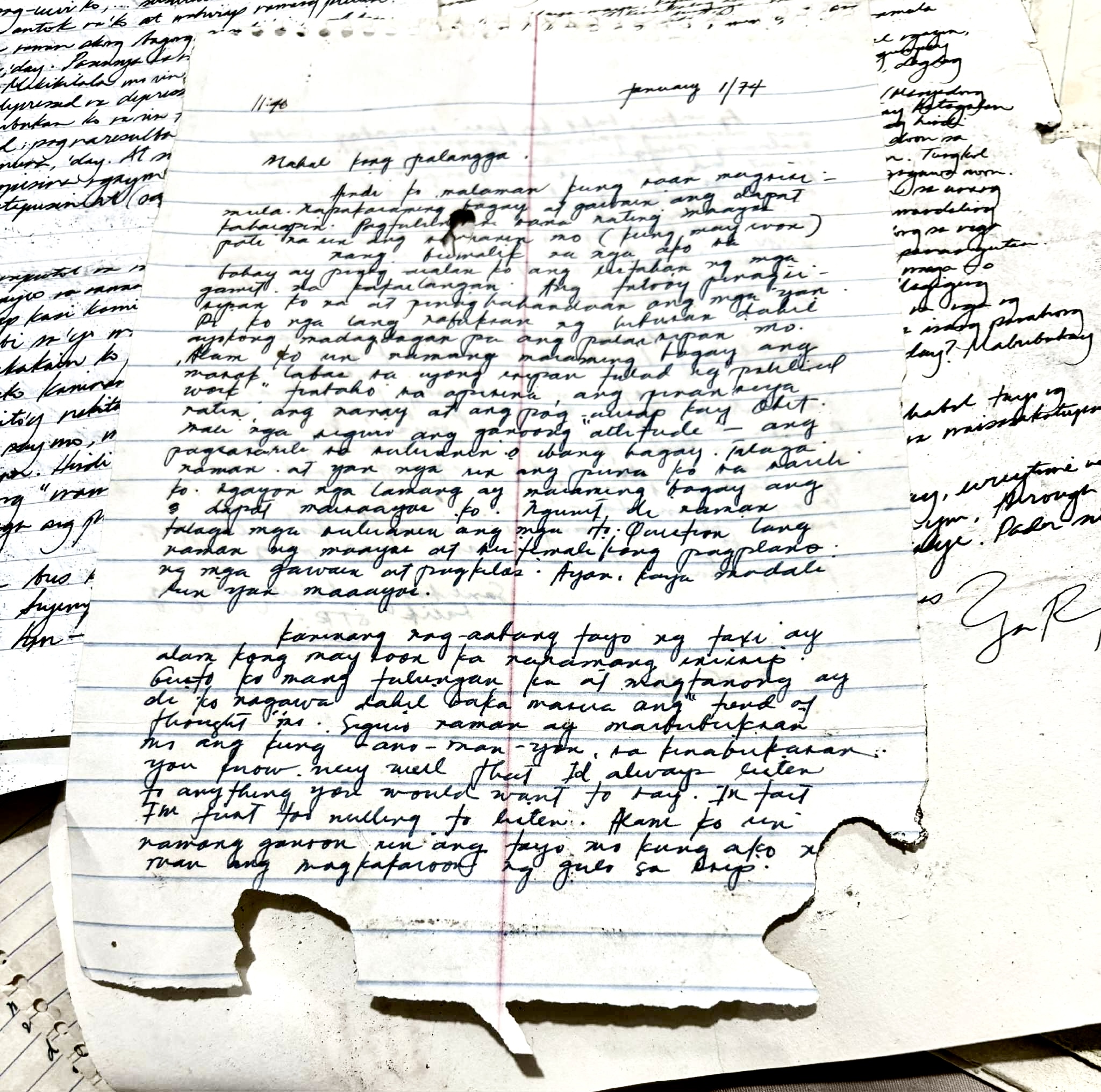
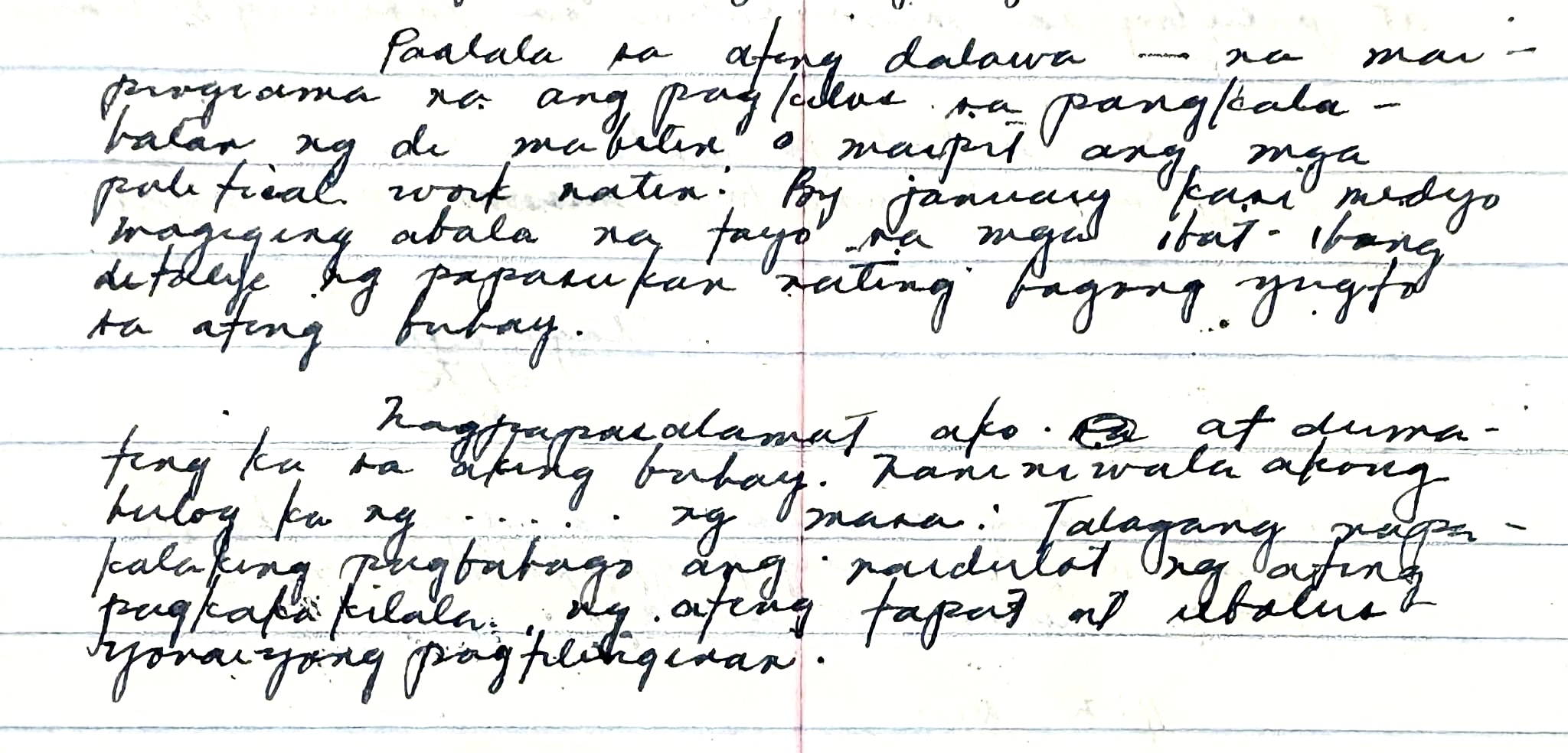
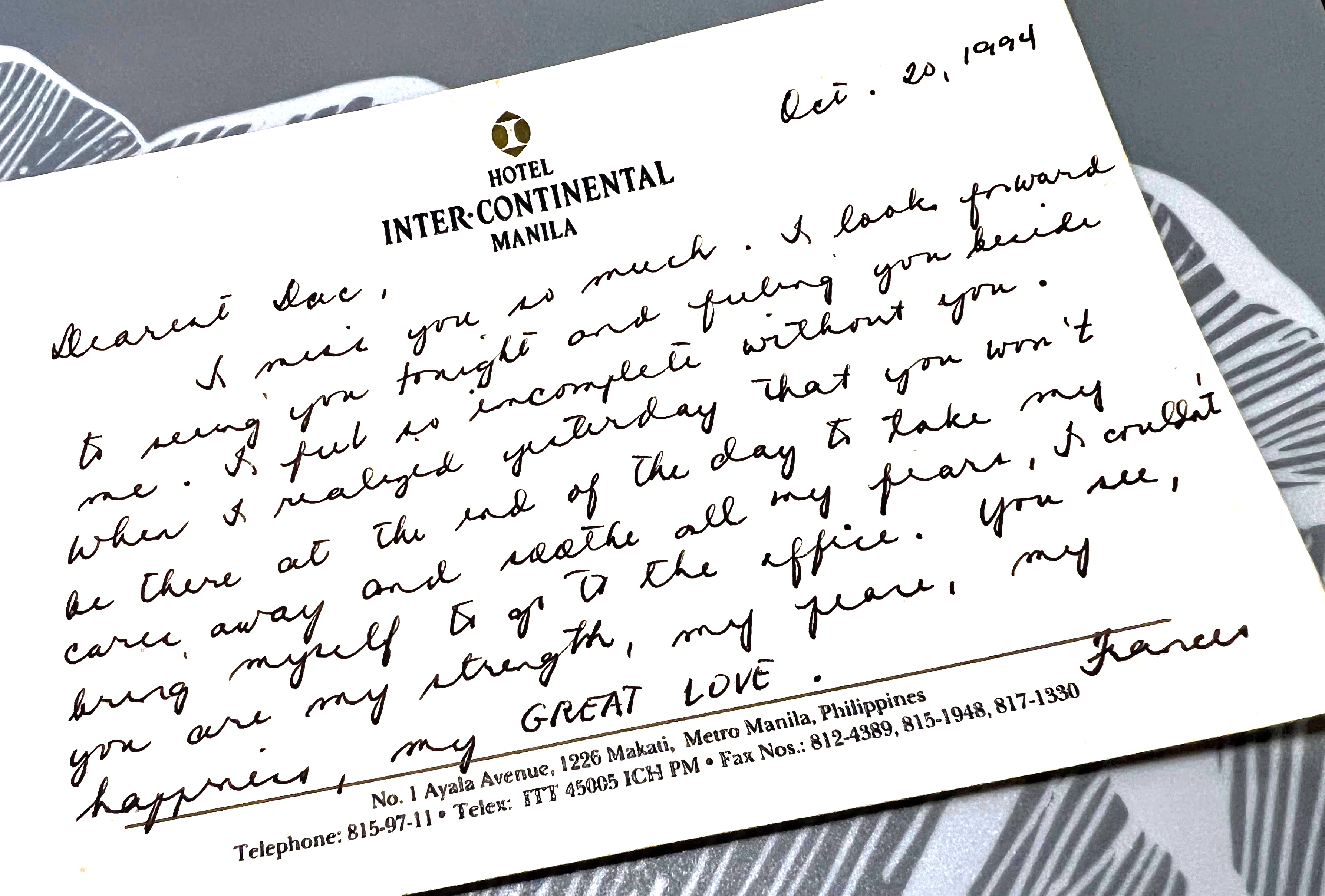
I have to confess that the answer left me feeling much relieved to be 72 years old and increasingly irrelevant. If I were young and seventeen today but with the mind and heart that I had back in 1971, I seriously doubt that I could make a significant connection to the Gen Z girl of my dreams, from whom I would have drawn derisive laughter for a long, convoluted, meandering letter asking for a first date (I will neither confirm nor deny that this actually happened). I may have lacked in “emotional fluency,” but certainly not for words, which were all I had when, in 1973, I met a pretty girl named Beng and pounded her with prose, in my crabbed, ungainly penmanship using a technical pen; within months we were married (and still are, 52 years later).

Time was when love needed to be declared in big, bold, wet letters—and I don’t mean letters as in ABC, but letters as in pages of paper filled with scribbled and impassioned professions of affection, sometimes of hurt, sometimes of longing, but always of desire for the addressee. Setting everything else aside, overtaken and overwhelmed by this most urgent need, a man or a woman sat at a desk—or kitchen table, or any hard surface on a beach or a moving vehicle—and put pen to paper to release a flood of pent-up emotion. 

It all came down to the same three-word idea: “I love you” (sometimes, or more often, with a fourth word, “but”). As with love poems, some letters were better, more unique, more persuasive than others; most, in hindsight, were likely mawkish or mediocre. But rarely—except perhaps to writers keen on grammar and style—did literary merit matter, neither to sender nor receiver; the profession of love alone was monumental enough. Because it was handwritten and signed, it was personal and deliberate, a statement of commitment impossible to deny. 

Indeed what was thought to be intimate and ephemeral sometimes became history. Little did lovers realize or perhaps care they would become famous, and that their private correspondence would become known—thankfully not to their peers but to posterity and the critical judgment of strangers. 

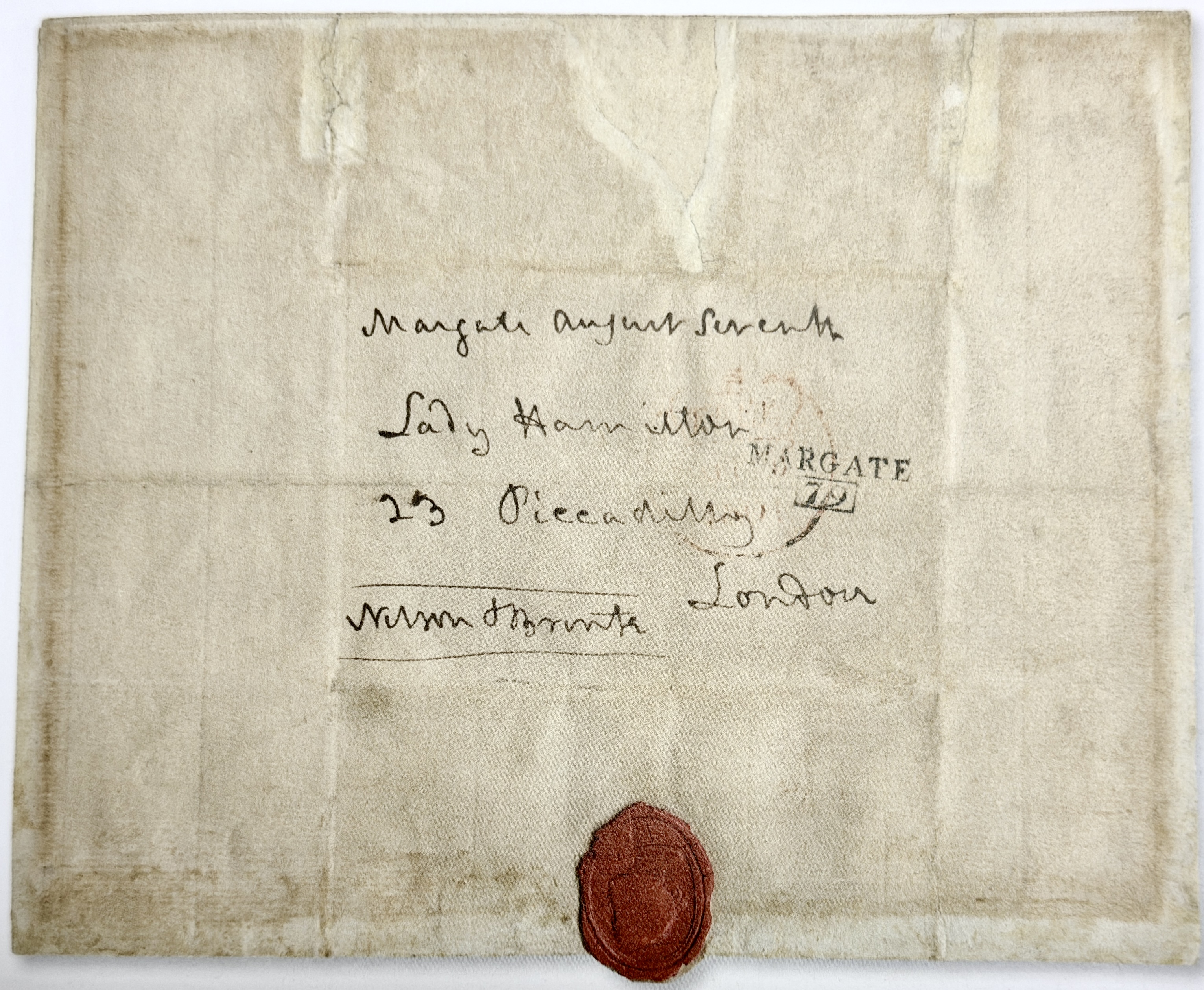
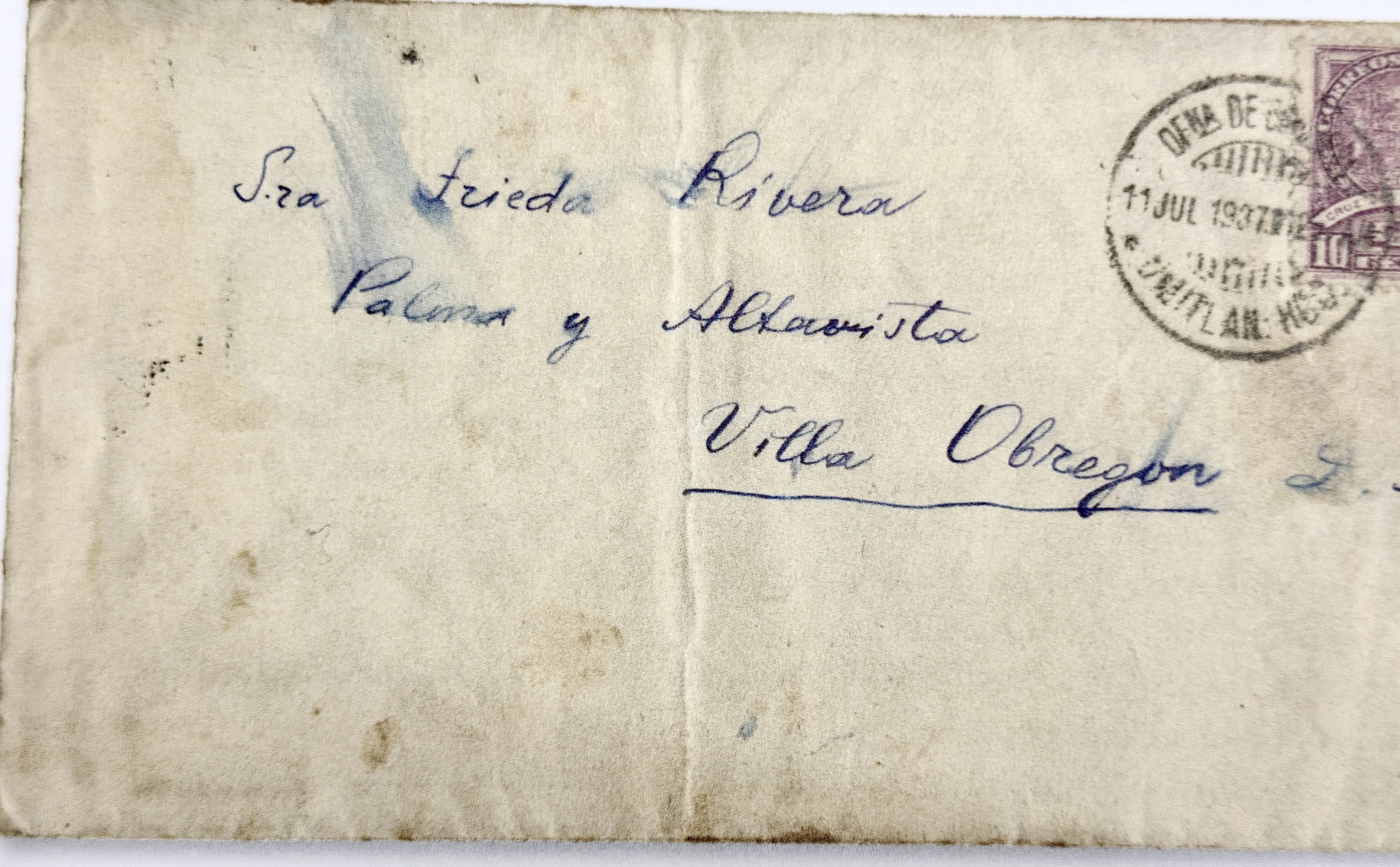
In one of the books I treasure most in my library titled The Magic of Handwriting: The Pedro Correa de Lago Collection (Taschen, 2018), two envelopes offer proof of love affairs—illicit in this case, as all the parties concerned were married to someone else—between Lord Nelson and his mistress Lady Hamilton, and between the revolutionary Leon Trotsky and artist Frida Kahlo (who had given the outcast Trotskys refuge in her home). 

This was the same free-spirited Frida who would write her husband Diego Rivera that “Nothing compares to your hands, nothing like the green-gold of your eyes. My body is filled with you for days and days. You are the mirror of the night. The violent flash of lightning. The dampness of the earth. The hollow of your armpits is my shelter. My fingers touch your blood. All my joy is to feel life spring from your flower-fountain that mine keeps to fill all the paths of my nerves which are yours.” (To be fair to Frida, Diego was far more liberal with his vagrant attentions.)

In one of literary history’s worst-kept secrets, Vita Sackville-West would write to Virginia Woolf that “I am reduced to a thing that wants Virginia… I composed a beautiful letter to you in the sleepless nightmare hours of the night, and it has all gone: I just miss you, in a quite simple desperate human way. You, with all your undumb letters, would never write so elementary a phrase as that; perhaps you wouldn’t even feel it. And yet I believe you’ll be sensible of a little gap. But you’d clothe it in so exquisite a phrase that it should lose a little of its reality…. I suppose you are accustomed to people saying these things. Damn you, spoilt creature; I shan’t make you love me any more by giving myself away like this — But oh my dear, I can’t be clever and stand-offish with you: I love you too much for that. Too truly. You have no idea how stand-offish I can be with people I don’t love. I have brought it to a fine art. But you have broken down my defenses. And I don’t really resent it.” 

Jose Rizal’s letters to Leonor Rivera were reportedly all burned, but as Ambeth Ocampo notes, two of her letters to Rizal survive, in which she uses the pseudonym “Taimis” and tells him that “I was very much surprised that you had a letter for Papa and none for me; but at first when they told me about it I did not believe it, because he did not expect that a person like you would do such a thing. But later I was convinced that you are like a newly opened rose, very flushed and fragrant at the beginning, but afterwards it begins to wither…. Truly I tell you that I’m very resentful for what you have done and for another thing that I’ll tell you later when you come.” We know how that story ended, with the both of them going their separate ways and marrying another, although Leonor was said to have pined for Pepe to the end.

Again thanks to Ambeth, I can quote Manuel L. Quezon’s 1937 letter to his wife Doña Aurora, where he engages in what today might be called “gaslighting”: 

“Darling, I am still wondering if you really think that I love you less. Please don’t doubt me, my love has never changed from the first day I have realized that I was in love with you. I have my weakness as you know, but, dear, it’s all superficial and you know also, that, except for the case of that bailarina, my weaknesses in this respect have not been serious. When you married me, you were frankly informed by me of my shortcomings. I did not want to deceive you by promising something that I could not fulfill. After we have been married you have placed [me], sometimes, in a position when I thought that it was better that I should not confess to you what I had done that might hurt your feelings, but I want you to know that whenever such a thing took place I have felt very bad about it, because nothing I dislike more than not to tell the truth and I always resented the fact that you should prefer to put me in such a situation, thus making me almost hate myself.”

That would still have been more preferable than receiving this ardent letter from a king, and falling for him: “But if you please to do the office of a true loyal mistress and friend, and to give up yourself body and heart to me, who will be, and have been, your most loyal servant, (if your rigour does not forbid me) I promise you that not only the name shall be given you, but also that I will take you for my only mistress, casting off all others besides you out of my thoughts and affections, and serve you only…. And if it does not please you to answer me in writing, appoint some place where I may have it by word of mouth, and I will go thither with all my heart. No more, for fear of tiring you.” The recipient, Anne Boleyn, lost her head in more ways than one, and the sender, Henry VIII, went on to court her successor, Jane Seymour, who wisely returned his love letter unopened—sparking his interest in her even more intensely.

The letter I found too coarse and too embarrassing (brimming with scatological detail) to even quote was written by James Joyce to his wife Nora, but the technologically adept will surely find it online.

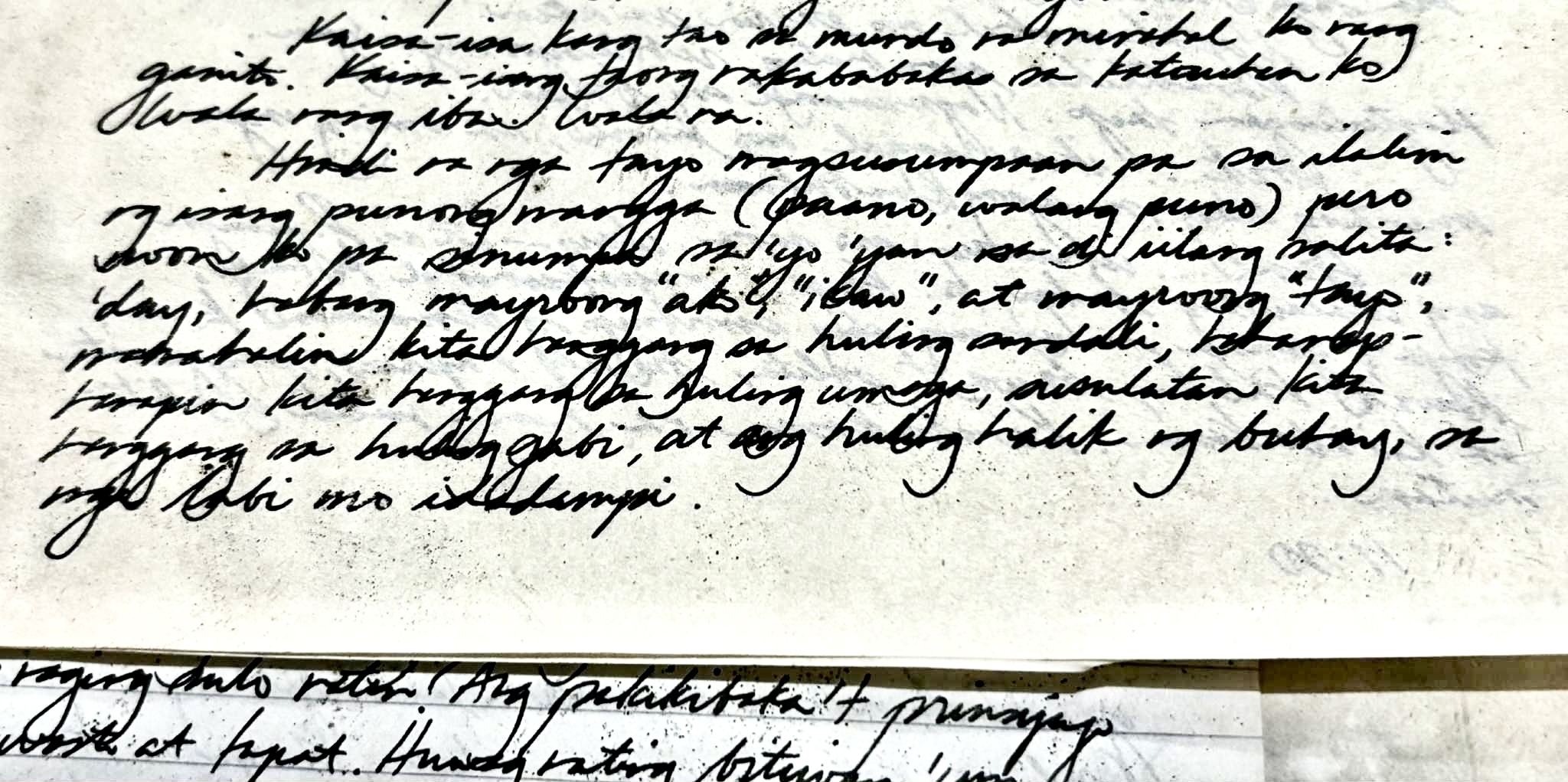
My own letters to Beng, and hers to me, are stored in a moldering box that occasionally gets lost and then resurfaces in a year or two, and when we go over them we laugh and cringe at their melodramatic prolixity, as though life itself would run out soon (as it did for many of our generation, under the cloud of martial law, and thus the urgency).

So how do the love letters that we—perhaps the last of the art’s practitioners—have written stack up against history’s and literature’s most memorable? But first, who are “we?”

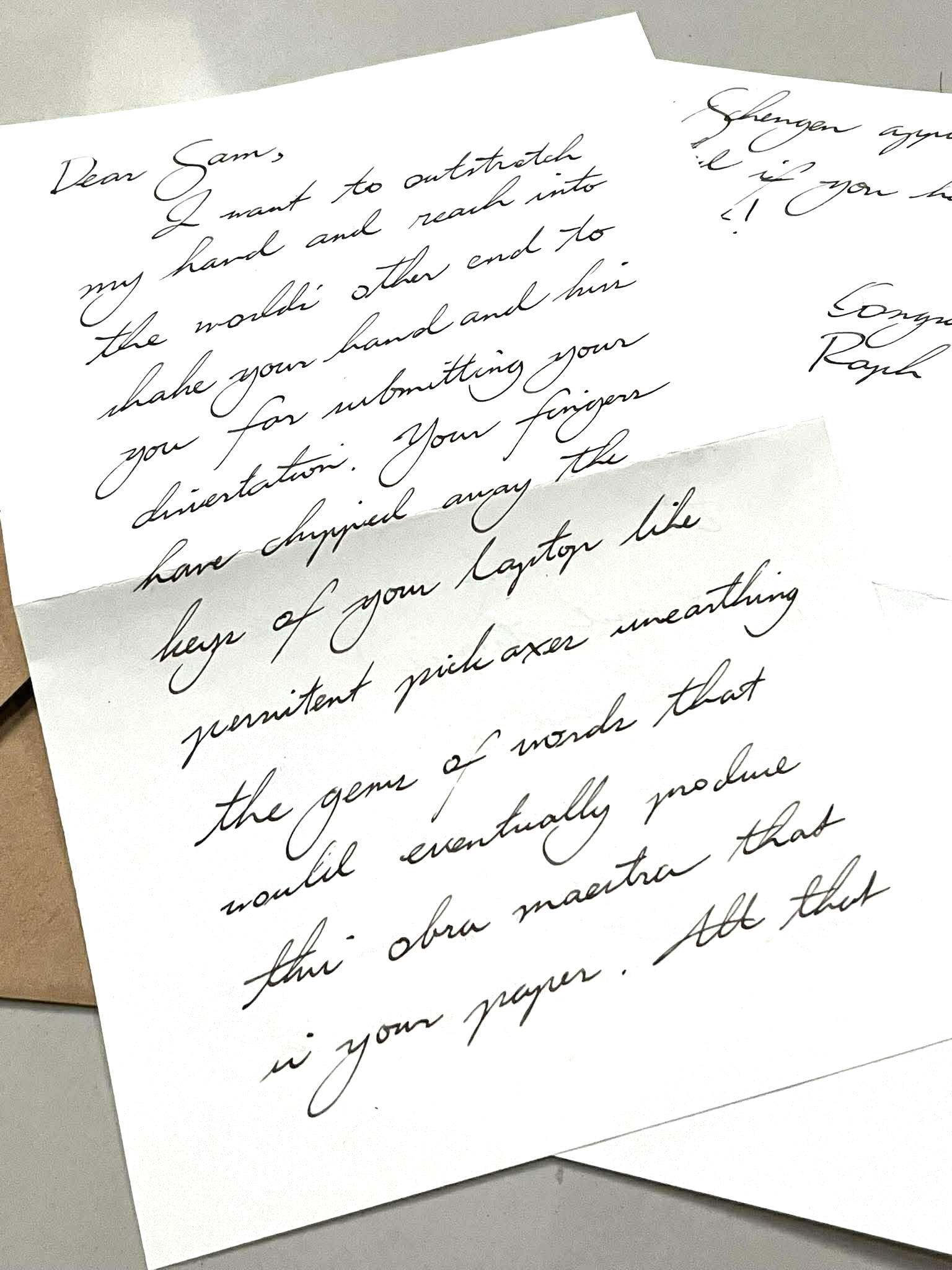
The immediate “we” are members of our Fountain Pen Network-Philippines who still value and use pens for handwritten communication, beyond signing checks and office forms. Old fogeys like me naturally fall into that category, but surprisingly, given the fountain pen’s and handwriting’s resurgence as a form of protest, if you will, against digital homogenization, many younger people, even some Gen Z’ers, have taken up the cause. Ballpoints are all right—but there’s still nothing better than a vintage fountain pen nib, which flexes with pressure and gives the inked line more character, to convey emotion. 

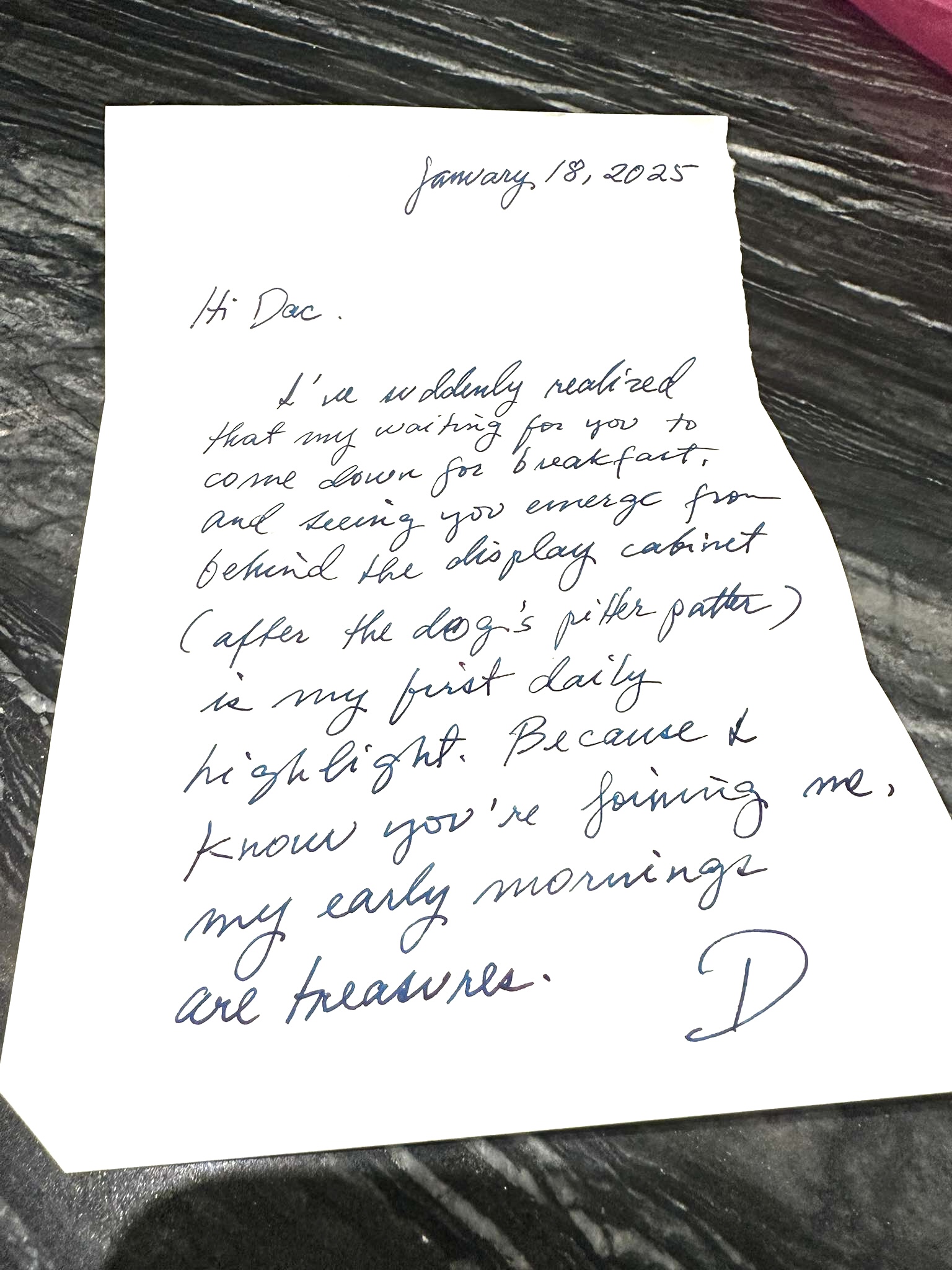
From what I’ve gathered, the best love letters people write go far beyond the often vapid promises and profuse assertions of courtship. They’re unbidden reminders and reassurances of affection, a note quietly written in the morning, a message of congratulations. This, too, is love with a deeper, more hushed voice that comes with maturity and assurance.

I should take my own advice and write Beng more love letters with my hundreds of pens, every single act of which would validate that pen’s existence and probably exorbitant purchase price. I should employ all the colors of ink stored in the dozen bottles that crowd my desk to express love in all its shades and moods, in the same spirit that Robert Graves wrote: “As green commands the variables of green, so love my loves of you.”

But sadly this old man’s fingers have become cramped from being curled too long over keyboards, and can barely finish a page of handwriting before tiring. So instead—though not quite a Gen Z’er accustomed to “lowercase, rapid-fire, multi-message formats”—I write articles like this and stories on Facebook that suggest, ever so obliquely, how central she remains to my life, albeit in Georgia 12 points and .DOCX rather than flowing script. My idle pens, dear Beng, are like the books I’ve yet to write for you, the words still forming in the opaque ink, like the colorful and wide umbrellas I keep buying to shield you with, waiting for rain. So there, and Happy Valentine’s.

Qwertyman No. 183: Lawyers for the People

Qwertyman for Monday, February 2, 2026

I MIGHT have become a lawyer in another life, given that, back in the sixties, the profession of law still carried with it a certain gravitas, a presumption of not only intellectual brilliance but a commitment to public service. The best of legal minds found themselves in the Supreme Court and the Senate, and the latter was studded with such stars as Jovito Salonga, Jose Diokno, Arturo Tolentino, and Tecla San Andres Ziga. (To Gen Z’ers unfamiliar with these names, Diokno topped both the bar and CPA exams—despite the fact that he never completed his law studies, for which the Supreme Court had to give him special dispensation, and was also too young to be given his CPA license, for which he had to wait a few years. Ziga was the first woman bar topnotcher.) 

My father studied to be a lawyer, but other priorities got in the way; his dream would be achieved by my sister Elaine and my brother Jess. As for me, activism and martial law happened, and in that environment where the law as we knew it suddenly didn’t seem to matter, I lost any urge to enter law school, and chose between English and history instead.

Thankfully, many others saw things differently, and now make up the cream of the profession, appearing on lists such as the Philippines’ Top 100 and Asia’s Top 500 Lawyers. Their skills are formidable—I’ve been told that some senior lawyers are so sharp (or so, shall we say, highly persuasive) that they can get a Supreme Court decision reversed—and their fees will certainly reflect that.

But my utmost admiration is reserved for lawyers who have devoted their careers to that portion of the Lawyer’s Oath that says: “I shall conscientiously and courageously work for justice, as well as safeguard the rights and meaningful freedoms of all persons, identities and communities. I shall ensure greater and equitable access to justice.” 

No better group of lawyers represents that than the Free Legal Assistance Group or FLAG, founded in 1974 by Diokno himself, then newly released from prison, together with Lorenzo M. Tanada, Joker P. Arroyo, Alejandro Lichauco, and Luis Mauricio, all fellow members of the Civil Liberties Union of the Philippines (CLUP), as martial law entrenched itself and civil liberties became increasingly threatened. 

In the half-century since then—documented in FLAG’s anniversary book Frontliners for Human Rights: FLAG of the People @50 (FLAG, 2025)—FLAG has worked to locate and release desaparecidos, or persons abducted by State agents, fight the death penalty, defend victims of extrajudicial killings, and contest the Anti-Terrorism law, among other key initiatives.

“From its birth, FLAG has kept faith in its philosophy of developmental legal advocacy—the adept use of the law and its processes and institutions not only to secure rights and freedoms but also to change the social structures that trigger and perpetuate injustice,” FLAG reports. “Over 50 years, FLAG has handled over 9,052 cases and assisted over 9,591 clients throughout the country. These figures are merely a fraction of the cases FLAG has handled, and the clients FLAG has served nationwide. The number of FLAG clients excludes the communities and barangays who had experienced massacres and hamletting, urban poor communities whose homes had been demolished, and landless farmers and tenant farmer associations, whose numbers are impossible to count. Overall, FLAG’s rate of success ranged from a low of 66.89% (in 1989) to a high of 79.11% in 1990. On average, FLAG has won 7 out of every 10 cases it has handled, or an impressive success rate of 72.92%.

“FLAG has always provided its legal services, free of charge. In line with its core mandate, FLAG renders free legal assistance primarily to those who cannot afford, or cannot find, competent legal services. FLAG counts clients among the urban poor, students, indigenous peoples, farmers, fishers, political prisoners, and non-unionized or non-organized workers.”

These gains have come at a huge personal cost—no less than 14 FLAG lawyers have died in the line of duty, presumably at the hands of State agents. FLAG lawyers have been Red-tagged, harassed, and put under surveillance. 

That hasn’t stopped its lawyers from pursuing their mission under its current Chairman, former Supreme Court spokesman Atty. Theodore Te. The need for their services certainly remains, with the Philippines ranking 38th out of 170 countries in the world in the 2023 Atlas of Impunity released by the Eurasia Group for “impunity,” defined as” the exercise of power without accountability, which becomes, in its starkest form, the commission of crimes without punishment.”

We can only wish Ted Te and his courageous colleagues well, as they operate in an environment more complex in many ways than martial law.

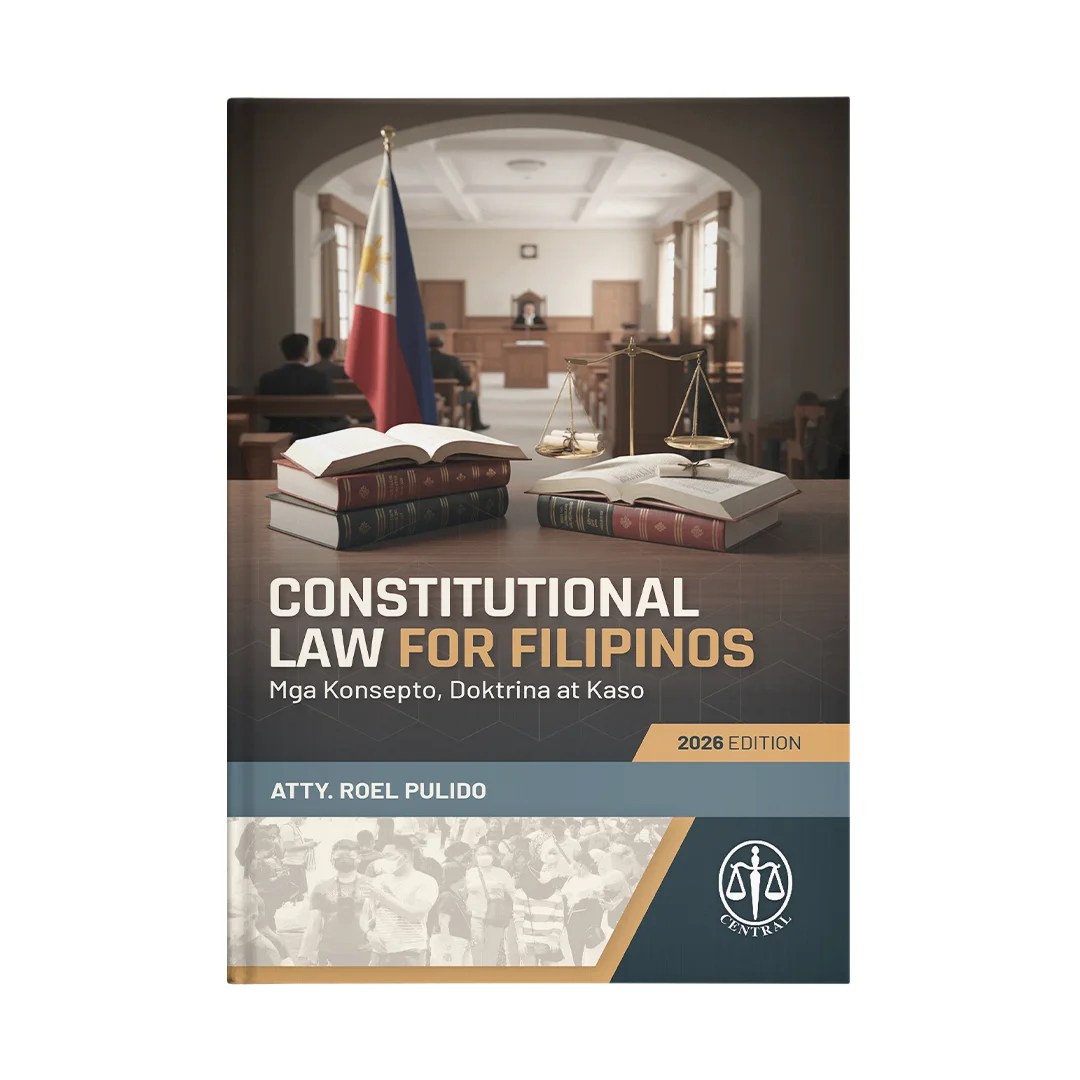
Speaking of law books, I’d like to recommend another book that was launched just recently, Constitutional Law for Filipinos: Mga Konsepto, Doktrina at Kaso (Central Books, 2026) by Atty. Roel Pulido. One of our leading environmental lawyers, Atty. Pulido teaches Constitutional and Environmental Law at Arellano University, where he also serves as Director of the Office of Legal Aid. 

“This is a project designed to be a learning aid,” says Roel. “It has a few unique features. First, It does not explain each and every Article of the Constitution. Instead, it focuses on Constitutional law concepts. Each concept is explained in simple language. Then Supreme Court rulings explaining the concepts are quoted. And in a box, I have placed a short and simple Filipino explanation of the concept. Second, the cases are quoted to explain and elaborate each concept. Instead of including all the convoluted issues in one case, it focuses only on the topic at hand. Third, the doctrine of each case cited is summarized in a sentence in both English and Filipino.”

We need more books like this that make the ideas and the language of the law more accessible to ordinary Filipinos. That’s the first requisite of legal literacy, which is also a form of empowering people. FLAG and Atty. Pulido are the kind of lawyers I would have wanted to become.