Unknown's avatar

About penmanila

A Filipino collector of old fountain pens, disused PowerBooks, '50s Hamiltons, poker bad beats, and desktop lint.

Penman No. 115: The Clarity of Prose

Penman for Monday, Sept. 22, 2014


“THE CLARITY of Things” is the title of the new short story I finished a few weeks ago, which will soon be coming out in the Australian literary journal Westerly. The phrase has been ringing in my ears and suggested this piece about the value of clarity in prose—an element whose importance seems so obvious but which still escapes many writers, especially those who remain unsure of what it is exactly they want to produce.

I was thinking of this the other day as I was reading, with much delight, an old essay by the New York-based Luis Francia on Jose Garcia Villa, which begins thus: “Loved New Yorker cartoons. Hated its poetry. ‘Prose,’ he’d sniff.” The essay (in which I happily discovered that I shared with Villa not just a first name but an aversion to French food and cheese) went on to describe Villa’s fabled workshops, where he decried, Luis recalls, “the prose or narrative mentality. Anathema to the poet’s creed. He urged us not to read fiction, to purify ourselves, our poems, and have that lyric spirit fly unfettered.” There was, Villa and Francia agreed, too much bad prose going around, passing itself off as poetry.

It’s an admirable and entirely understandable stance, coming from a consummate aesthete like Villa. I don’t think there’s a real writer alive who won’t concede that, in the hierarchy of letters, poetry sits at the topmost tier; I often remind students too eager to proclaim themselves poets that there’s nothing harder to do well and easier to do badly than poetry. I’ve published a book of what I offer to be poems and I’ve won a couple of prizes for poetry, but I wouldn’t for one minute describe myself as a poet; I am not worthy.

That said, the writing of good and great prose—whether fiction or nonfiction—poses its own challenges, heedless of poetry’s demands for complexity, compactness, and layered meanings. For me, the charm of prose is precisely in its accessibility—or at least, in its seeming accessibility—and then, like stepping into a roomful of riches, in its delivery of even more than the view from the doorway may have suggested.

At its most basic, and also at its best, prose should be unflinchingly clear, which means it should be written with certainty and precision, if not efficiency, from physical description to philosophical musing. (I keep hearing the imaginary voice—ironically, he was a chronic stammerer—of W. Somerset Maugham, one of my early models, intoning in one of his treatises on writing: “Clarity, clarity, clarity!”) A blue sky should come off as blue, or shade into its proper variant; a crowded room should suffocate the reader. Clarity does not imply a singularity or inevitability of meaning, especially in fiction, which thrives on ambiguity; I don’t have to understand what I’m seeing, not right away, but I should know what I’m looking at—a wet street, an orange jacket, an old man’s face. Witness the prudish Miss Mijares in Kerima Polotan’s “The Virgin”: “Secret, short-lived thoughts flitted through her mind in the jeepneys she took to work when a man pressed down beside her and through her dress she felt the curve of his thigh”; she wished she were “in the movies, to sink into a seat as into an embrace, in the darkness with a hundred shadowy figures about her and high on the screen, a man kissing a woman’s mouth while her own fingers stole unconsciously to her unbruised lips.”

Some works, like popular songs, are best understood right away to be fully enjoyed.

On our flight to the US earlier this month, I gorged on the onboard entertainment, and dwelt in particular on an HBO documentary on the life and work of the lyricist-composer Stephen Sondheim, who reminded his audience that the difference between the poem and the song lyric is that the listener has to get the song on the spot, whereas the poem’s meaning can be teased out at leisure. (And sometimes meaning doesn’t matter as much as the music: try figuring out “Send in the Clowns.”)

Clarity often comes with concrete objects, but can be even more valuable when dealing with abstractions—ideas, feelings, complex notions often more surely grasped by the many-fingered poem. I’ve found that the most complex notions are best served by the simplest language. Clarity and simplicity are not always the same thing, but can’t be too far apart. There’s a much-quoted passage from C. S. Lewis’ The Four Loves that illustrates how simple words—with a few exceptions like “irredeemable”—can reach at the most complex of meanings:

“To love at all is to be vulnerable. Love anything, and your heart will certainly be wrung and possibly be broken. If you want to make sure of keeping it intact, you must give your heart to no one, not even to an animal. Wrap it carefully round with hobbies and little luxuries; avoid all entanglements; lock it up safe in the casket or coffin of your selfishness. But in that casket—safe, dark, motionless, airless—it will change. It will not be broken; it will become unbreakable, impenetrable, irredeemable. The alternative to tragedy, or at least to the risk of tragedy, is damnation. The only place outside of Heaven where you can be perfectly safe from all the dangers of love is Hell.”

This also reminds us that good, clear writing begins with good, sharp thinking, which is perhaps the hardest task of all.


Penman No. 114: Still Nothing Better than Good Writing

Penman for Monday, Sept. 15, 2014


FIRST OF all, my belated thanks to those readers who sent in their responses to the editing exercises I put out in this column a few weeks ago. In no particular order, they included Ed Maranan, Adrian Laserna, Vince Mendoza, Ver del Valle, Crisma Mina, Fely Claviolo, Renz Felipe, Ronita Dacula, Louie Recillo, Jenny Llaguno, Lydia Chan, Razielle Esguerra, and Lawrence Bernabe.

I had no time to critique each response individually, so what I’ll do is to publish, below, what I thought were the best responses, and everyone can then match their answers against this list. Just take note that, as with anything having to do with language, these answers aren’t graven in stone and could accept another word here and there.

Exercise I (Wordiness)

1.  I managed to traverse the thoroughfare without jeopardizing my safety.

I crossed the road safely.

2. The people of the Philippines have a great liking for festive occasions.

Filipinos love fiestas.

3. Society as a whole, as well as the individual persons in it, should practice the virtue of honesty.

Let’s be honest.

4. In my personal opinion, it is my idea that a prohibition on pistols, revolvers and rifles should be implemented.

Ban guns.

5. His actuations produced a profound surprise in the very depths of me.

 He shocked me.

6. We have insufficient information with regard to this state of events.

We need to know more about this.

7. Let us satisfy the requirements of our bodies for nourishment.

 Let’s eat.

8. The outbreak of hostilities was within the realm of possibility.

War was imminent.

9. I give you my permission to continue doing whatever it was you were doing.

 Carry on.

10. He was a uniformed enforcer of the law.

He was a cop.

Exercise II (Modulation)

1a. (nice) Filipinos are a hardworking people who can rise above their poverty through resourcefulness and strength of spirit.

1b. (nasty) The Philippines is a nation of beggars.

2a. (neutral) The Philippine economy depends greatly on the remittances of overseas workers.

2b. (nasty) The Philippine economy would collapse without the remittances of millions of Filipinos forced to work overseas by the lack of good-paying jobs at home.

3a. (neutral) Your proposal needs improvement.

3b. (nice) Your proposal shows promise and, with some changes here and there, can rise to its full potential.

Strictly speaking, the second exercise really no longer belongs to the realm of editing, which most often involves rendering a piece of text in its simplest, clearest, and most accurate form possible, but rather to editorializing, which is the art (some would say the nefarious art) of introducing an emotional or political slant into a statement to influence the reader’s opinion. PR specialists and propagandists (including editorial writers) do this all the time. I worked years ago as an editorial writer for a now-defunct newspaper, and one of these days I’ll do a separate piece on that experience.

I was also pleased to receive a message from a reader we’ll call Mike, who works as a content editor for the Cebu-based self-publishing arm of Penguin Random House, and who started his editing career as a copywriter for the marketing department of a Japanese vehicle-exporting firm, also in Cebu. Mike shared his experience with me, and I got his permission to quote a bit from it:

“I foolishly believed back then that, since I already had significant copywriting experience, editing would be a cinch for me. Instead, I learned the hard way that writing and editing involved two completely different kinds of skill sets and mindsets; junior copy editors in the company undergo rigorous training in the Chicago Manual of Style, and I struggled at first. I’m glad that I eventually got the hang of it, but the experience was a huge eye-opener for me. I worked as a copy editor for a couple of years (editing and indexing manuscripts submitted to us by authors looking to self-publish their work), then eventually got pulled back into the Marketing Department again, but this time as a content editor in charge of our in-house copywriters. I now edit marketing and promotional copy: website content; mailer and newsletter copy; and copy for brochures, flyers, PR kits, and other marketing and promotional materials.”

I’m taking note of Mike’s message not just because it was a pleasant surprise to me to learn that Penguin Random House had a back-office in Cebu, offering jobs to editors, but also because Mike sent me a link to a provocative article on gawker.con by Hamilton Nolan, titled “Against Editors,” which reminds us that while good editing can save a badly written draft, there’s still nothing better than good writing to begin with. Nolan says:

“This is not to say that editing is not a legitimate job. It is. It is also a necessary step in the writing process. But it is not the most important role in the writing process. That would be writing, which any honest editor will tell you is much harder than editing. (An editor who will not admit this is not worth listening to.) Reporting is a difficult chore. Writing is a psychologically agonizing struggle. Editing is not easy, but not as onerous as either of the two tasks that precede it. You would never know that, though, by looking at the relative salaries of the people who do the work.

“Good editors are valuable. They are also rare. If we simply kept the good ones and dismissed the bad ones, the ranks of editors would immediately shrink to saner levels. Editors are an important part of writing—a subordinate part. Their role in the industry should be equally subordinate…. To hire a new editor instead of a new writer is to give up actual stories in favor of… some marginal improvements, somewhere, or perhaps nothing at all.”

Penman No. 113: The Discipline of Words

Penman for Monday, September 8, 2014


LET ME acknowledge, first of all, the readers who responded to last week’s column, “Exercises for the editorially minded,” where I shared some exercises that I give my class in Professional Writing to help rid my students of their wordiness and show them how to say the same thing in different ways. It was gratifying to see so many people coming out of the woodwork and professing an interest in the discipline of words. (For lack of space and to give that topic its due, I’ll save the responses to the exercises for next week.)

That’s what this business is all about, ultimately—discipline and practice, more than just loose talk, especially talking about writing. Some folks keep talking about writing all the time—about their plans for their novel or their epic poem—but they never get around to doing it. Sometimes writers—especially when they’ve had one too many drinks—have a tendency to run off at the mouth, or to pontificate endlessly on matters they know next to nothing about. I myself will gladly admit to these occasional displays of verbal excess, which are as inevitable as an old car coughing up a foulness of black smoke.

But when all the bluster is done and we retire to our fortresses of solitude, armed with a steaming cup of coffee (and, for incorrigible holdouts like my friends Krip Yuson and Jimmy Abad, a lighted cigarette), it all comes down to a date and a duel with the blinking cursor, and to the rules of engagement of writing, a code defined far more by discipline than by license, more by routine than romance. (See what I mean about running off at the mouth?) And what are those rules? To me, they all boil down to this: shut up and write.

Just recently, a friend asked how it was possible for me to be working on seven book projects all at once—a company history, the biographies of two political leaders and two business families, an oral history of the First Quarter Storm, and my third novel; these aside from my weekly column and the occasional short story and magazine article and blog entry.

I told him that I’m no genius or superman, but I do work as hard as I can, acutely aware of time passing, and of the need to tell stories (and to make a decent living from the telling) while I can. Some years ago I realized that life was too short to wait to finish one book before starting the next one. I felt inspired by something I had read about Isaac Asimov, who reputedly had a row of typewriters in one room, on each one of which a different project was afoot. Thankfully computers now make it possible to squeeze those typewriters into an iPhone (on which, not incidentally, I’m writing this column using the Notes app, while playing in a poker tournament). I also look up to the example and the work ethic of the late Nick Joaquin, whose prodigious beer drinking was matched by his copious writing. Not only was he superbly versatile, producing stories, novels, essays, poems, journalistic pieces, and commissioned biographies. He was also thoroughly professional, and no matter how much drinking or partying he did, he was known to submit his manuscript on the dot, on the appointed deadline.

We writers like to bitch about how little time we have to write what we really want to write—which for me is that novel or that story that keeps whining like some neglected waif in a corner of my mind. It’s true; real life has a way of crushing the good fiction out of you, and there are days I get up from my desk dazed after completing a book draft or grading my students’ papers and commenting on their work, dispirited by fatigue, and wishing I was working on one of my own stories instead. (I don’t forget for one minute that we gents have it easier than the ladies, who give up so much more of their life and liberty so we can pursue our happiness.) So what do I do? I stop kvetching about how unfair it is that some other guy can earn zillions more while I’m slaving away at a piece few will read and much less care about, consider myself lucky that I can work with my fingertips instead of my arms, think about my parents, and then I shut up and write.

Last week, in the midst of frantic preparations for a three-month stay in the US (where I’ll be by the time you read this), I put everything aside for a day and focused on finishing a short story I had promised to contribute to an Australian literary journal. This was a sad love story that I had begun in 1998 (I have unfinished stories in computer files going back to 1990, in a folder optimistically labeled “Ongoing”); like my characters, I lost my way in the plot, and recovered my bearings only when the Australians asked for a story and gave me a deadline.

My deadline was a Sunday; that Saturday morning I took a six-kilometer walk around the UP Oval and thought the story through; I was halfway in it, and approaching a critical turn in the plot. A line kept insinuating itself in my head: “the clarity of things,” begging to become the title. When I felt my characters beginning to speak on their own behalf without much prodding from their puppetmaster, I knew it was time to sit down and write. That afternoon until early the next morning, I wrote in a white heat, laying down over 2,500 words in what eventually became a 6,000-word story. (At this point in the tournament, I’ve just lost to someone’s pocket aces, but strangely I feel relieved, wanting instead to tell this story of a story.)

“The Clarity of Things” is the first long story I’ve finished in years, and whether or not the Australians take it, I’m happy to remind myself that I can still play with raw emotions and describe places I’ve never seen on the digital page. I enjoy the cool and calm precision of nonfiction, the seeming unimpeachability of fact; but it’s the terrific and also terrifying ambiguity of fiction that makes me want to be a writer all over again, to feel like one, and to work like one.

Penman No. 112: Exercises for the Editorially Minded

Penman for Monday, September 1, 2014


TO MY pleasant surprise, last week’s piece on what editors do drew a stream of positive responses—I never imagined that so many readers would find the thankless and dimly illuminated job of editing so fascinating—but my biggest surprise after the column came out was to realize that I’d already written not just one but two columns on editing, back in 2010. Thankfully, I didn’t repeat myself too much, and since I’ve already written dozens of pieces on, say, fiction and nonfiction, I don’t see why I can’t do a fourth one on editing, focusing this time on how an editor thinks or should think.

But before I go one step further into the trenches, let me just point out another important fact about the editor’s job. Particularly in a journalistic context, where some element of public interest is presumably involved (as opposed to literary publishing, which comes down to very personal tastes), “editing” involves much more than dotting I’s or finding better substitutes for problem words. Editing in journalism inevitably involves matters of policy—the publication’s policy in respect of the treatment of, say, political and social issues. What newspaper and magazine editors worry or should worry about are spelled out in a textbook titled Creative Editing by Bowles and Border (Wadsworth, 2000), which says, in a chapter on Situational Ethics:

“Copy editors are likely to be concerned with decisions involving the writing, editing and production processes: Is the use of profane language or obscene photographs ever justified? When? Are the implicit biases of the editor or the newspaper as a cultural institution evident in the selection of 
stories and photos? Should they be? Do certain people groups or institutions receive more play than others? Conversely, are some people groups or institutions ignored? Are headlines and captions fair and accurate? Are stories edited to eliminate bias and opinion? Are subjective words or words suggesting a viewpoint 
given thoughtful consideration?

“Managing editors and other senior editors are likely to be concerned with questions of policy: Should victims of crimes be identified? If so, when? In stories about rape? About incest? About battering? In stories involving juveniles? Should suspects in crimes be identified? If so, when? At their arrest? When they are charged? At the time
of trial? Should the cause of death be listed in obituaries involving victims of suicide or AIDS? Who in the newsroom should know the identity of confidential sources? Just the reporter? The supervising editor? The managing editor? The publisher? If a reporter pledges confidentiality to a source, are editors
bound by the same promise? How involved should newsroom employees be in writing and editing special sections that promote 
consumer products? How should corrections and clarifications be handled?”

Frankly, when I contemplate questions like these, I’m glad to be in the classroom rather than the newsroom, knowing how tricky these situations can get. It would seem that they should have clear and easy answers, but they rarely do, especially given the realities of Philippine publishing and politics—but that’s a story for another day.

Today, let’s do something more elementary—elementary enough to be among the very first exercises I give my students in CW198, Professional Writing. (I don’t care if my future students see this here, because they’ll still be hard put to cough up the answers. As all my students know, I always give open-book exams.) You might know if you have an editor lurking inside you if you can do these exercises reasonably well. Just for fun, I’ll respond to the first 10 responses emailed to me—if you don’t hear back from me, that means you were No. 11.

The first exercise has to do with the bane of Filipinos who love English too much, to the point of using 30 words where three will do, and of using a P1,000 word where a five-peso one will do. Cut. Simplify. Ruthlessly.

The second exercise is rather more advanced, and involves matters of judgment, nuance, and vocabulary—in other words, style. This is something that an editorial or opinion writer (which I was, way back when) would specialize in. I tell my students that they can express the same idea in three ways—nice, neutral, and nasty—depending on their specific purpose. I don’t mean for anyone to be nasty, of course, but just like learning karate or shooting, you never know when you might need it. Let’s have some fun!

I. Wordiness: Simplify and shorten the following sentences without changing their meaning.

  1. I managed to traverse the thoroughfare without jeopardizing my safety.
  2. The people of the Philippines have a great liking for festive occasions.
  3. Society as a whole, as well as the individual persons in it, should practice the virtue of honesty.
  4. In my personal opinion, it is my idea that a prohibition on pistols, revolvers and rifles should be implemented.
  5. His actuations produced a profound surprise in the very depths of me.
  6. We have insufficient information with regard to this state of events.
  7. Let us satisfy the requirements of our bodies for nourishment.
  8. The outbreak of hostilities was within the realm of possibility.
  9. I give you my permission to continue doing whatever it was you were doing.
  10. He was a uniformed enforcer of the law.

II. Modulation: Rewrite the following statements in the “nice-normal-nasty” modes, as required:

  1. (neutral) The Philippines is a country whose people are predominantly poor. (turn into nice and nasty)
  1. (nice) Heroic overseas workers contribute greatly to the health of the Philippine economy. (turn into neutral and nasty)
  1. (nasty) Your proposal is almost totally bereft of intelligence and originality, and is unacceptable in its present form. (turn into neutral and nice)

Penman No. 111: The Editor’s Job

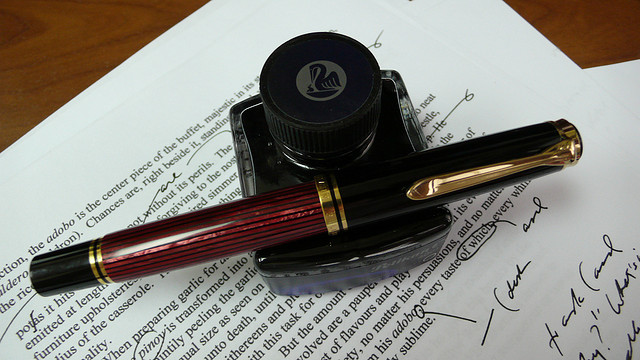
2094063835_a852a12998_zPenman for Monday, August 25, 2014


LAST WEEK I promised to write a piece on editing or editorship as a job, and here it is.

Here in the Philippines, when we say “editor,” we usually think of a newspaper editor, someone who lords it over the newsroom with a fearsome temper, wielding a pen like a saber. That’s the growly character we also often see in the movies, a 60-something guy who chews out a quivering cub reporter.

Most editors I’ve met are actually quiet, even mousy people who get their work done with a pencil in one hand and a cup of coffee in the other. Their names might not even appear on the books or the materials they edit. What they do is really an art unto itself, but there are no awards given, no National Artists designated, for editing. The editor leaves a ghostly signature behind; you’ll just know that an editor has been there by the effortlessness and the limpid clarity with which you read the prose of a certain piece.

Editors work with writers to polish drafts and to turn them into the best reading fare they could possibly be. The presumption, of course, is that every writer needs an editor—even the best ones; I certainly believe this, and as an author I expect a reputable publisher to have my manuscript gone over by another pair of eyes. Even in this newspaper, I’ve been saved many a time from woeful embarrassment by the alertness of my editors.

Editors review and revise manuscripts for several things: the accuracy of the contents, grammatical correctness, and stylistic felicity. As the intermediary between the author and the reader, the editor has to ensure that the author’s message comes through to the reader as clearly as possible, while retaining as much of the author’s style—his or her particular manner of expression, which can vary greatly from writer to writer.

Editors can employ any one of several levels or degrees of editing, as the job at hand or the terms of engagement may require: heavy, moderate, and light. Heavy editing means not even dealing with the text line by line or sentence by sentence, but by paragraphs and pages, thoroughly rewriting whole sections if clarity so demands. Moderate editing takes place at the sentence level—rewording this and that, putting this clause before that one, smoothing transitions and strengthening connections between paragraphs and topic shifts, making sure that the punctuation is perfect, and so on. Light editing might be little more than proofreading—checking for typos and misspellings, supplying missing apostrophes, questioning and resolving a word choice here and there, italicizing book titles, etc.

Literary editing is an even more special job than journalistic or technical copyediting, because it involves and requires a finely developed sensitivity to at least two things: what the author intends, and what the reader (or that larger group of potential readers, the market) expects. Creative writing deals in rich and potent ambiguities, and the literary editor must know how to achieve a balance between efficient clarity and nuanced expression.

It’s not the editor’s role to tell the author what or how to write, but a savvy editor will point out potential problems to the author—problems of interpretation, of pitch, of considerations that will sometimes go far beyond the text.

If the author is a creator, the editor is a critic—indeed, the work’s very first critic—who interrogates the text. Depending on the quality of the text, the editing can be more difficult than the writing. And eventually you’re dealing not only with the text, but with the author, who can be even more intransigent than his or her hopelessly garbled copy. Many authors—especially Filipino authors, who have had little or no previous experience with good editors—think very highly of themselves and their writing prowess, and resist the editor’s ministrations, no matter how positive and helpful they may be.

When I take on an editing job, I make it clear from the outset that while I will do everything I can to be sensitive to the client’s wants and temperament, I will literally have the final word as far as grammar and style are concerned. (I often choose to become an editor when I don’t have the time or the inclination to write the text myself; I advise prospective clients that they’ll save some time and money by getting a junior writer to prepare the draft, then getting me on board as an editor to do the final styling.) I ask people to trust me with what I’ve been trained to do, the same way I trust my editors with my copy.

In editorial mode, I’ve sometimes asked clients if they really want to come out with something they said that, in my best judgment, they might later regret, or might cause them unnecessary trouble. Sometimes people use books to settle old scores, and while there’s nothing intrinsically wrong with candor—and every truth or even half-truth contributes to historical discourse—I have to keep the client’s strategic interests in mind, and at least advise him or her of the possible pitfalls ahead. An editor can choose to play the independent and even adversarial critic, and every job needs a bit of that; but you can be sympathetic without being easy, or hard without being harsh, and I’ve found that that’s the best and fastest way to get solid work done, with a minimum of fuss and without leaving a bloody trail of crushed egos.

What do you need to become a good editor? Many editors begin and may still work on the side as writers, but paradoxically, some if not many editors may not be good writers—especially creative writers—at all. But at the very least, you need a near-impeccable command of the language, a sharp eye for detail, self-assurance, guts, and the desire and the drive to shape language to perfection.


Flotsam & Jetsam No. 43: My Midori

FOR THE past 18 months or so, I’ve been using a Midori notebook. I like it because it’s slim and can fit into my shirt or coat pocket, like a passport; it’s fountain pen-friendly, and I can always put in a new refill. I’ve had other notebooks but this is the most practical one for me, again because of its size and slimness (and that leather really ages nicely).

Penman No. 110: Witnessing the World

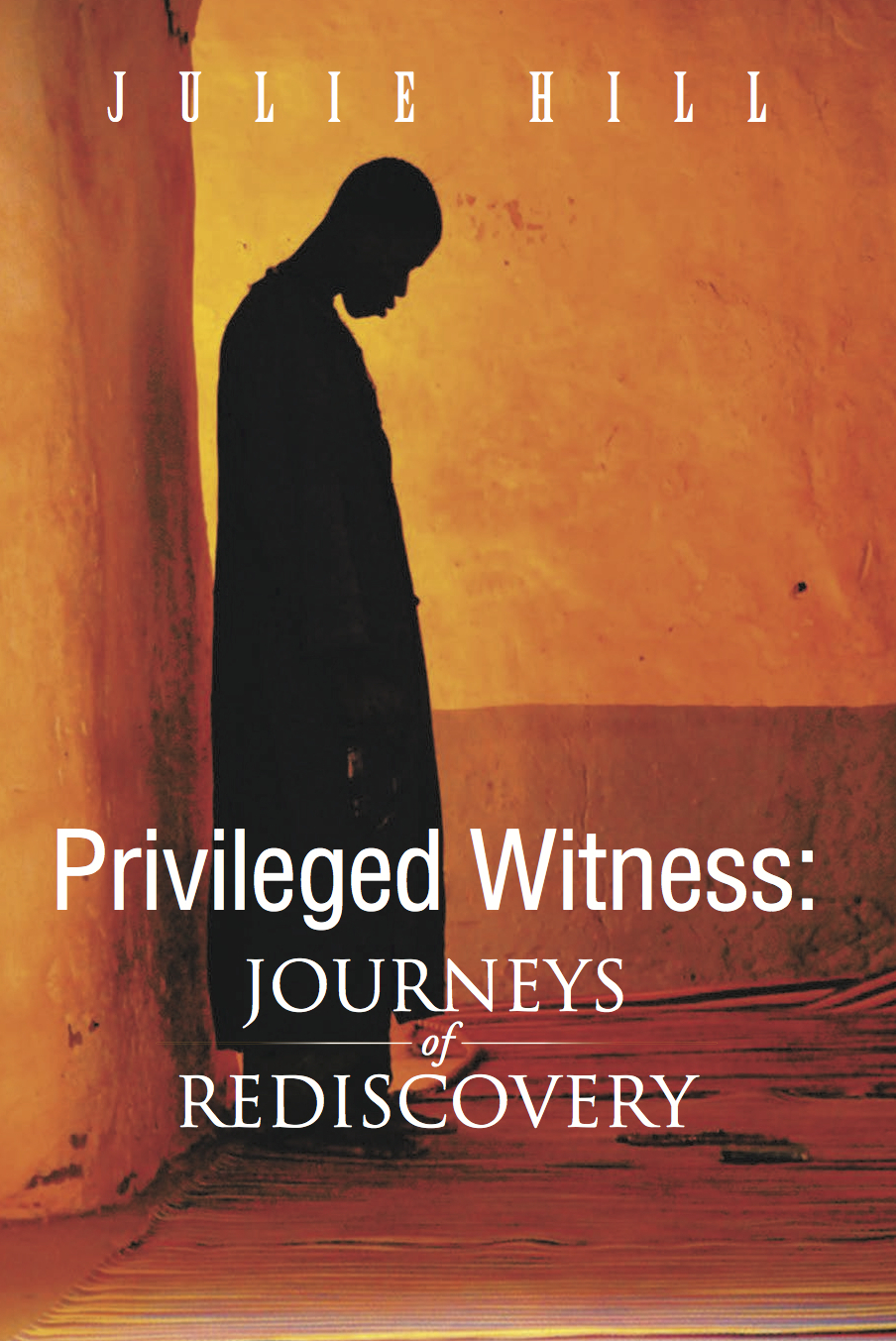
HillCoverPenman for Monday, August 18, 2014


IN MY other role as an editor rather than a writer of books, I take raw manuscripts from Iclients and friends and transform them into something publishable and popularly readable. I’ll write more about editing as a profession one of these days, because it’s an art unto itself that bears all the challenges but very little of the glamor and rewards of authorship. In the meanwhile, I’d like to talk about one of my most recent editing projects, a book about travels around the world by someone who has to be the most happily peripatetic (that’s a fancy word for “footloose”) person I know.

Julie Hill was a client before she became a friend. We were introduced to each other more than ten years ago by Jimmy Laya, who knew Julie and her late husband Arthur back from when the Hills lived in the Philippines, where Arthur represented the Ford Foundation. Then based in Southern California, Julie wanted to write a book about her life and travels with Arthur, who had just died of cancer; together, the couple had journeyed around the world, from Australia to Afghanistan, from Bangkok to Minnesota, from Samoa to China. Julie—born an Alexandrian Greek, trained in chemistry, and later a telecommunications executive—had all these stories to tell, and she needed an editor to help her tell them.

Jimmy put us together, and Julie’s first book, Promises to Keep: The Travels of Arthur and Julie Hill, came out in 2003, published by XLibris. This was followed a few years later by her second book, The Silk Road Revisited: Markets, Merchants, and Minarets (Author House, 2006). Not one to spend her widowhood moping, Julie has been actively engaged in all manner of civic pursuits, especially in her patronage of the Scripps Research Institute. Just last month, she published her third book, again with me as editor, Privileged Witness: Journeys of Rediscovery (Author House, 2014).

Julie retains a special place in her heart for the Philippines, to which she returns every now and then to visit with old friends. (In turn, Beng and I pay Julie a visit in her lovely home in Rancho Sta. Fe every time we see our daughter Demi in San Diego; Julie knows I love chocolate cake and always has a scrumptious slice of it waiting for me.)

There’s a wonderful anecdote from Julie’s first book about an encounter that she and Arthur had with then UP President Carlos P. Romulo, whom she describes as “a great raconteur.” They told each other stories about how they traveled to America, all of them being foreign graduate students, and when Julie said that she traveled by steamship, CPR asked her about, of all things, the cutlery. Julie recalls:

“’What was the cutlery like?’ asked Romulo. I was dumbfounded. Why did he take an interest in cutlery? He proceeded to tell us that he crossed the continent from Vancouver to New York on the Canadian Pacific Railway. During his journey, he systematically ‘acquired’ a set of cutlery. ‘What a better way to regale my professors at Columbia University than with cutlery embossed with my own initials: CPR!’”

In her new book, Julie takes us in hand on her journeys to around 20 countries, from Asia to Africa, to places such as Papua New Guinea, Mali, Bhutan, Botswana, and Ethiopia. She doesn’t take just the well-trodden tourist paths, but goes to the heart of the native culture, engaging with the locals to do what all good travelers (more than tourists) do: discover and reaffirm the universality of humanity. Not everyone has the ability and the resources to do the kind of traveling that Julie does, so I suggested the book title to her (taken from one of her essays), to take “privilege” in both senses of the word: as the ability to afford things, but also as the unique opportunity to see things few others could. And with that privilege comes the responsibility of witnessing and reporting.

In her introduction to the book, she writes:

“The art of adventure is the art of being bold enough to enjoy it. On a safari I must have spent hours tracking the footprints of wild animals; for other travelers the hours were too long and boring; after having seen one giraffe the others seemed all the same to them. But for me the tracking process was a fascinating adventure and locating that pride of 13 lions was an unparalleled reward, a golden joy. I could hear the muezzin in the Middle East (so much more inspiring when it is not a recording) calling the faithful to evening devotion. To me, the muezzin’s call—whether in a remote Central Asia bazaar or resounding among the tufa walls and spires of Timbuktu—is like a congregation of mountains praying.

“In my travels I have discerned a similarity among people who bear the same universal aspirations: all want their children to lead a better life and have a better future than theirs; they all cry, laugh, eat, worry, and die. We share so much, but still have to work at understanding one another…. On my travels, I have been privileged to spend time in the privacy of people’s homes and to learn of their rituals, such as the jewelry handed to the eldest daughter from generation to generation in Mali’s Djennè. An impromptu invitation at a village up in the mountains of the Caucasus brought me to a wedding, sipping vodka and dancing in a circle with other women…. Every time I was treated by my hosts as a friend, as a confessor, and I have tried to vindicate their trust by bringing their stories to life.”

In a message to her after the book was published, I told Julie that I had just watched a TV documentary about Aleppo in Syria—the subject of one of her best essays—and about the destruction that Syria’s current civil war had wrought on the ancient wonders of the place. I was almost in tears, I said, to see the Krak des Chevaliers being bombarded; without even having been there, I felt more invested in the world and in humanity, thanks to her book, for which I—in turn, as editor—was the privileged witness.

(Privileged Witness: Journeys of Rediscovery is available on Amazon.com.)


Penman No. 109: Ode to the 149

IMG_4575Penman for Monday, August 11, 2014


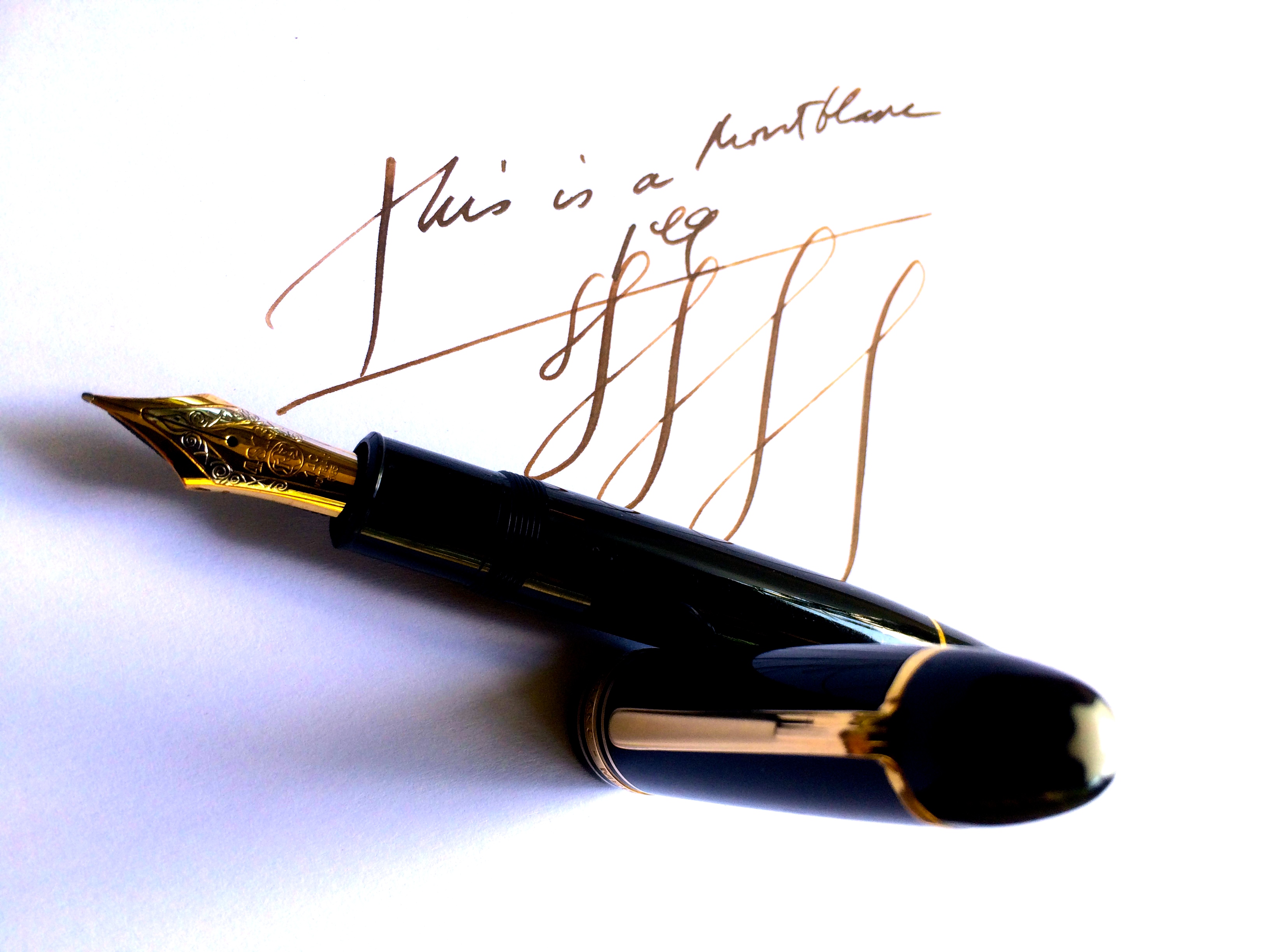
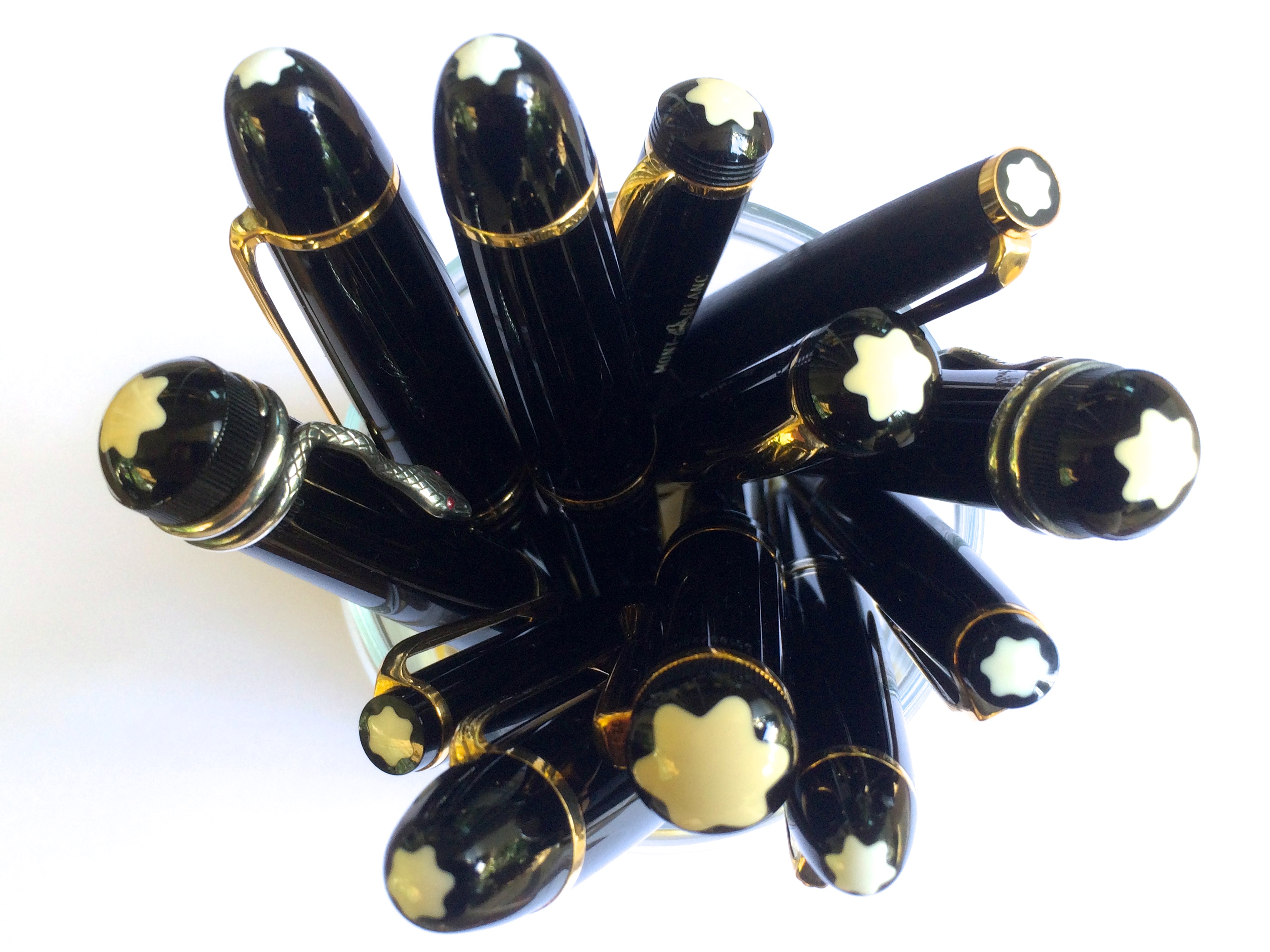
FOR THE past few decades, nothing has declared “I’m a fountain pen!” more emphatically than the Montblanc 149, also known as the Diplomat. This is the daddy of modern pens, the big kahuna, the standard by which other pens—fairly or unfairly—are measured. You’ll know a 149 when you see it. It’s as long and as fat as a cigar, which is probably why it’s been traditionally considered the quintessential man’s pen, the kind you’d find in the pockets of Supreme Court Justices, oldtime newspaper editors, and connoisseurs such as my friend the architect Toti Villalon, although fashionable but feisty ladies have been known to sport one.

You’ll also know that that big black pen is a Montblanc because of the white star (sometimes also called the “snowflake”) on top of its cap. Montblanc, which started out in Germany in 1908 as the Simplo Filler Pen Co., later chose the now-iconic white star to suggest the snow-capped peak of Mont Blanc (“white mountain”), the highest massif in the Alps. You’ll see the number 4810 on a Montblanc nib because that’s the height, in meters, of the mountain. (Montblanc, the pen or the pen company, is always spelled as one word; Mont Blanc the mountain is always two.) Some 149s also will have a white diamond—or even nothing—in lieu of the “snowflake,” which can be construed as the Star of David: not good for sales in many places in the Middle East.

The 149’s cap ring (like that of the 146, its junior sibling) will have “Meisterstuck” engraved on it; that’s German for “masterpiece.” This year, Montblanc marks the 90th anniversary of the Meisterstuck line, of which the 149—introduced in the 1950s—remains the flagship; appropriately enough, a special 149 with rose-gold trim was produced to mark the event.

If imitation is the best form of flattery, then there’s no pen more admired—because none more copied—on earth than the 149 (or, more accurately, the slightly smaller 146, but most people wouldn’t know the difference). You can almost be sure that, somewhere in Shenzhen, there are shops and families devoted to one and one thing only: the production of fake Montblancs, for sale in such places as Shanghai’s Nanjing Road or for export by the container van to countries like the Philippines, where they will be sold as cheap corporate giveaways or passed off as the real thing to unsuspecting buyers. Given this traffic, there are websites and pages just as ardently dedicated to spotting Montblanc fakes (here’s a quick tip: if your “Montblanc”’s nib says anything like “Iridium Point Germany,” it’s fake—that’s a generic steel nib employed by many Chinese makers.)

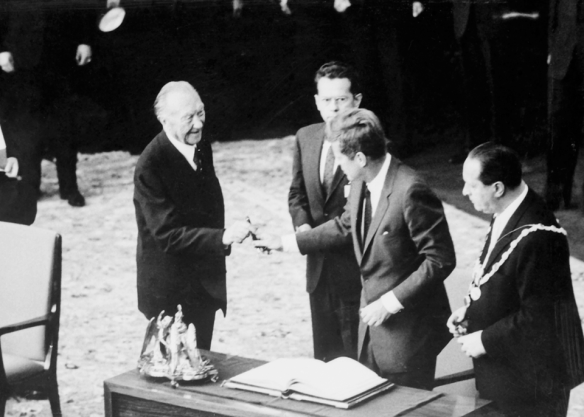
The real 149 is a classic, and deservedly so. Montblanc and the 149 gained popularity in the 1950s and the 1960s, as Americans returning from the War and from their growing contact with postwar Europe became more familiar and comfortable with things German, and with the high quality of German goods. There’s a story that when John F. Kennedy visited what was then West Germany to sign a treaty with his counterpart, Chancellor Konrad Adenauer, the German fumbled around for a pen, and JFK sprang to the rescue by offering his—a 149.

That 149, wherever it is now, should fetch a princely sum on the collectors’ market (like the big red Parker Duofold that Douglas MacArthur signed Japan’s surrender papers with). Indeed, even a new 149 (you can check it out locally at Rustan’s, the authorized dealer for the Philippines) will set most people back a few months’ wages. You can get a thousand cheap ballpoints for one 149—if a writing tool is all you’re looking for. Clearly, that’s not what 149 fanciers—yep, I’m one of them—have in mind.

Among 149 collectors, the pens to go for are not the shiny ones you can grab at the MB boutique, but the vintage ones made of celluloid from the 1950s and 1960s. The old, tricolor (gold-platinum-gold) nibs are also thought to be more desirable because they flex—the tines are soft and can spread apart, producing line variations that most modern fountain pens and certainly no ballpoints and rollerballs can.

IMG_4568

At one time or another, I’ve had maybe ten 149s in the collection, which isn’t too strange because I buy and sell pens to support the habit. I usually pick them up on eBay for a whole lot less than they’d go for in the store, which also means I assume a lot of risks that newbies would be well advised to steer clear of. I’ve kept three of these, and regularly use one. When people ask me why I go around with such a fancy and expensive pen in my pocket, I tell them that it’s because it makes me feel like a real writer, and because I’m 60, and should be able to use and enjoy what I damn well please before I croak.

Not everyone is a fan of Montblanc and of the 149. There are legions of rabid Montblanc haters who eschew the brand in the belief (somewhat justified) that many people buy Montblanc to acquire instant status, and that the company itself has encouraged this pretentiousness by marketing the 149’s plastic as “precious resin.” Detractors see this as pure hype, designed to rack up sales among ambitious junior lawyers and middle managers.

Do you think I care what they say? I’ll never be able to afford the Range Rover or the rose-gold IWC Portuguese of my big-boy fantasies, but when I make loopy figure 8s with my vintage 149—found online for next to nothing at a small auction house in Ohio—I feel like there’s justice in the universe, after all.