Penman No. 170: History Made Personal

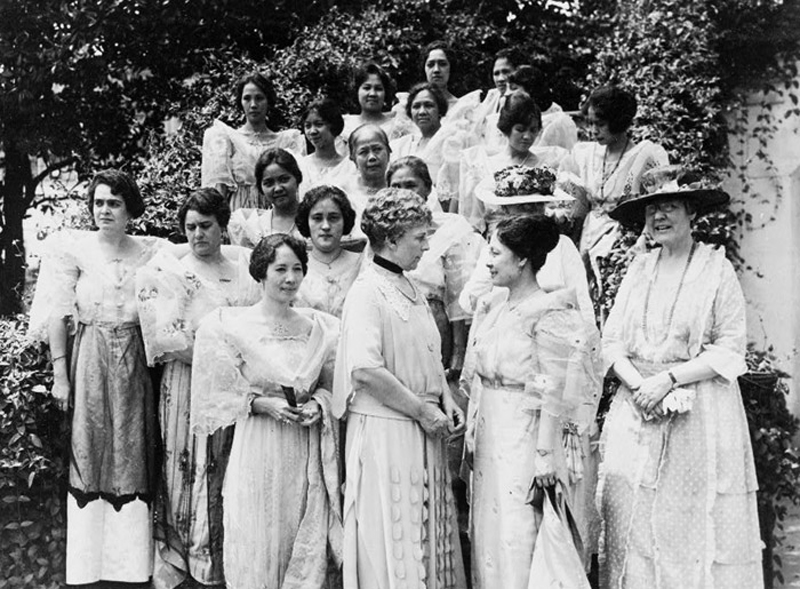
Sofia+De Veyra and+Florence Harding

Penman for Monday, October 12, 2015

THE RECENT upsurge of interest in our history occasioned by runaway success of the film “Heneral Luna” is certainly welcome. While the film and its propositions may have sparked a flurry of debates among netizens about what really happened more than a hundred years ago, the important thing—as I noted in one of those “Heneral Luna” threads online—is that we’re having this discussion at all, when not too long ago, very few people cared.

(One of the most salient comments I came across was posted by a viewer who mused that—for all our newfound admiration for the hothead general’s bravery and principled stand—had we lived in Gen. Luna’s time, or were those circumstances transposed to the present—most of us middle-class Pinoys would probably side with the general’s more pragmatic enemies, arguing business to be more important than anything else. That’s a sobering thought, especially these days when many people seem to think of “nationalism” as being too old-fashioned if not downright irrelevant in this age of globalization, conveniently forgetting that globalization benefits some nations and economies more than others.)

There have been many times when I’ve wished that I’d become a historian instead of a literary person, so I could have looked into our past more deeply and more seriously to make better sense of our present. Indeed, when I returned to the University of the Philippines as a freshman after a ten-year hiatus in 1981, I chose between declaring myself as an English or a History major (I had entered UP in 1970 as a prospective industrial engineer).

Were it not for the need to take the easier path to make up for lost time, I would have chosen History in a flash, as interested as I was in stories of “what happened.” In grade school and high school, I read more books dealing with history, biography, geography, and science than fiction; to this day, when people ask me what single book has influenced me the most, I don’t think twice about answering The Forest by William Pomeroy, a lyrical account of an American’s travails as a Huk guerrilla, which I read in high school and encouraged me to become an activist.

Mine was a generation of students who grew up on the enlightened revisionism of Teodoro Agoncillo, Hernando Abaya, and Renato Constantino. I use the word “revisionism” because the standard historical texts at that time were written by such men as Gregorio F. Zaide, a mimeographed and paperbound copy of whose book—my mother’s college textbook, for sure—was as fascinating to me as a boy as any of Edgar Rice Burroughs’ Martian chronicles. In grade school in the early ‘60s, I had yet to become aware of the important qualifications and nuances to be made to telling the story of our past, such as the fact that histories unavoidably took sides, and that it was all too easy to be seduced into taking the wrong one.

These days, I content myself with writing commissioned biographies and institutional histories—which, while they pose their own literary and scholarly challenges, do not by any means qualify me as a historian. I remain ever aware that the true study of history involves an appreciation of the grand sweep of things as much as the little details, and I have to admit that it’s the details I’m more often fascinated by, leaving it to larger minds to scope out the overarching logic or the grand design of the human narrative.

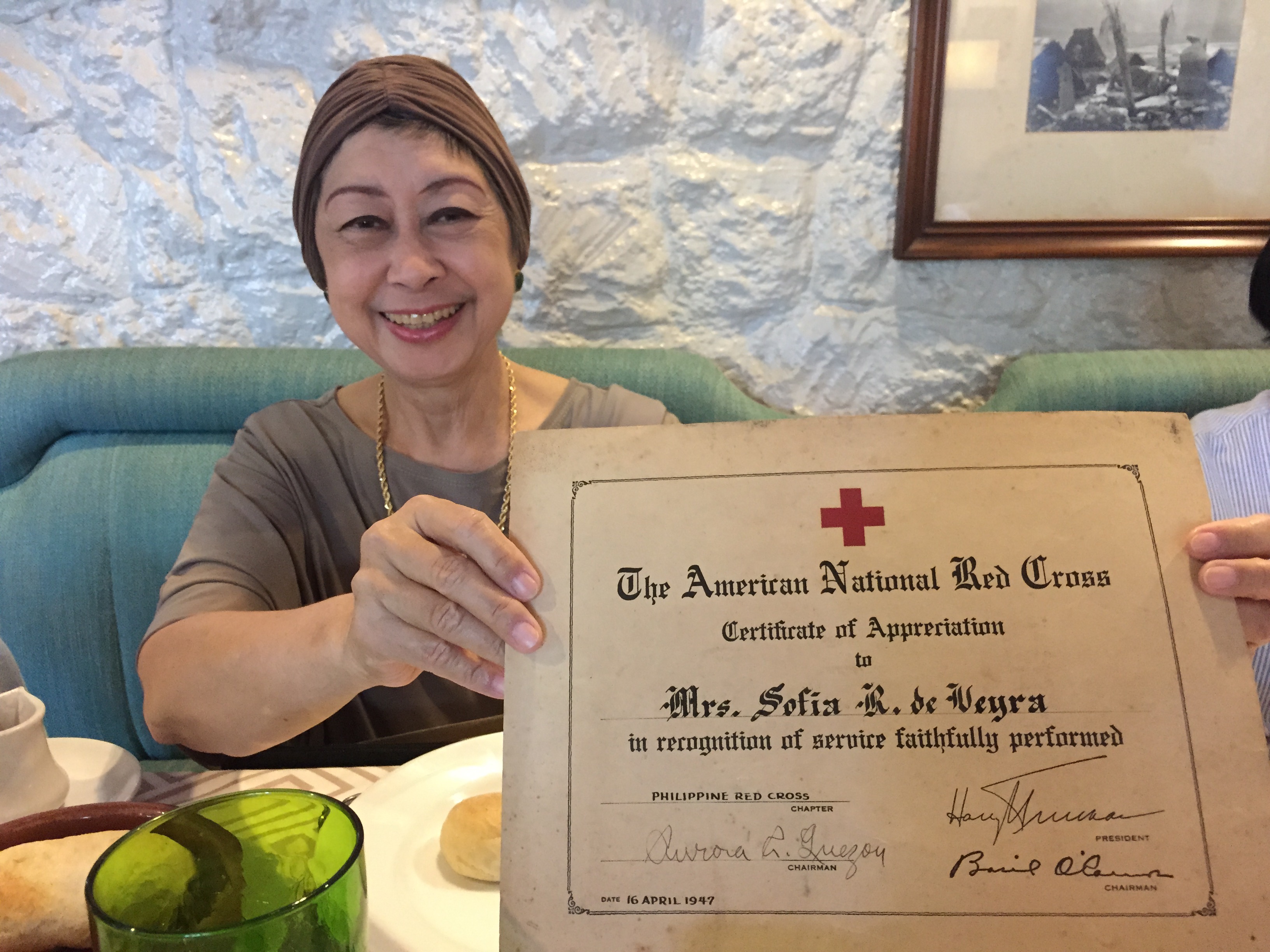
As a hopeless dabbler, hoarder, and kibitzer, I find myself irresistibly drawn to old objects and obscure information, and trade these gilded items with such fellow enthusiasts as my Washington-based friend Erwin Tiongson and his wife Titchie, who together run the Philippines on the Potomac website at popdc.wordpress.com. Erwin and Titchie were in Manila not too long ago for a vacation and a couple of lectures before the Philippine Studies Association and at the Ateneo, Erwin’s alma mater, on their most recent research into the colorful life in Washington of the remarkable Sofia de Veyra (you can read Titchie’s wonderful article on her here: http://www.positivelyfilipino.com/magazine/the-thoroughly-modern-sofia-de-veyra). My wife Beng and I had a chance to meet over lunch with the Tiongsons and with Sofia’s granddaughter Teresa “Binggay” Montilla and her aunt Rita Damian, and the look on Binggay’s face when the Tiongsons showed her pictures of her grandparents she had never seen before was priceless.

IMG_7997

Shortly afterwards, back in the US, Erwin wrote me to say that he had been able to track down an article in the May 20, 1921 issue of the Great Falls Tribune (published in Great Falls, Montana), about the protest launched by Fiipino Chinese businessmen, led by the banker Dr. Albino Z. Sycip, against a new bookkeeping law that apparently discriminated against Chinese merchants. Sycip had taken his case to the US courts, and was on his way to Washington to plead his case there. While he was in the States, on June 30, a son was born to his wife back home, a detail I recounted in a biography I wrote of the man who was that baby boy: “Albino decided to commemorate that visit by naming his new son ‘Washington.’ ‘Up to now Wash has semi-annual recurring bad dreams about what might have happened if the old man had been in Tallahassee or Vladivostok,’ the impish Alex [Wash’s brother] would write.” Erwin relayed the news item to Wash, who gratefully wrote Erwin back to say that he had never seen that article before (and another one reporting on his father’s victory in court).

More recently, Erwin and I have been exchanging clippings we’ve dig up on another outstanding Filipino, a Jesuit icon, the late Fr. Teddy Arvisu, and I’ll write up those findings one of these days (“His father wanted him to marry one of the Quezon girls,” Erwin tells me). I’d found an eloquent and impassioned speech against the rise of fascism by the young Teddy, published in a November 1940 issue of the Philippine Collegian; Teddy would become a soldier and join the Death March before achieving his dream of priesthood. At the moment, Erwin’s hot on the trail of Peyton March, the American officer who went after Gregorio del Pilar at Tirad Pass, and who lived in his last years in Washington. You better hurry, I told Erwin, as they’ll be making a “Goyong” movie soon.

Nothing of the kind of trivia that Erwin or I come across will change the big story of our past, but as avid amateurs, I’m sure we’re happy enough to help in making history more personal.

[Top image from the US Library of Congress]

Penman No. 168: A Lesson in Poetry

Penman for Monday, September 28, 2015

WE’VE BEEN talking about poetry in my Literature and Society class this past month, and it’s been an interesting journey, taking us everywhere from the Japanese haiku master Issa Kobayashi to the American modernist e. e. cummings and the Filipino early feminist Angela Manalang Gloria, with a bit of Sylvia Plath and Ricky de Ungria thrown in. There are many more important poets we could have taken up—in another class I might have discussed TS Eliot, Jose Garcia Villa, Denise Levertov, Edith Tiempo, and Pablo Neruda, among others—but this course is just a peek into poetry for non-Literature majors, so we’re taking examples that are sufficiently challenging and instructive but also fairly accessible, pieces that speak to common experience wherever in the world the poem may come from.

A few meetings ago we took up one of my personal favorites, a poem titled “The Blessing” (originally “A Blessing”) written by the late American poet James Wright in 1963. It’s not a very long poem, and pretty easy to visualize. As it opens, the persona (what we call the speaker in the poem, the “I”) is traveling on the road with a companion, bound for a city in Minnesota.

The mood is set with the descriptive line “Twilight bounds softly forth on the grass.” Two ponies emerge from the woods and greet the visitors. “They ripple tensely, they can hardly contain their happiness / That we have come. / They bow shyly as wet swans.” The persona feels a strong and strange attraction between himself and one of the ponies. “I would like to hold the slenderer one in my arms, / For she has walked over to me / And nuzzled my left hand.” The contact is electric, and the poem ends with the persona achieving a kind of apotheosis (a word I don’t use in class—let’s just say a climactic moment): “Suddenly I realize / That if I stepped out of my body I would break / Into blossom.”

It’s a lovely poem because of its consistency of tone and of its return to a Romanticism that seemed lost in an age of machines and pragmatism. (By Romanticism with the big R, we mean here an embrace of Nature as the source of all good things, and of the imagination over reason as the way to wisdom.) Indeed there’s a poignant optimism if not innocence in the poem that’s about to be shattered; in 1963, America stood on the verge of the Kennedy assassination and the escalation of the Vietnam War; the civil rights movement was rising to a crescendo. A darkening of the national mood—eventually affecting us half the world away—was imminent, if not inevitable.

That’s what I guide my students toward in the poem. It’s good to appreciate that glorious burst of ecstasy in the end, when the persona feels so in communion with Nature that he sees himself as a flower, but a couple of references earlier in the poem hint at another world—the “highway to Rochester, Minnesota” in the first line, and the “barbed wire” that the persona steps over to meet the ponies. Whatever “Rochester, Minnesota” might be (I’ve been to Minnesota but never to Rochester), it’s a city at the end of a long cross-country journey.

It’s the persona’s and his companion’s real destination, and the roadside encounter with the horses—as pleasant and as ennobling as it it—is just a stop. When the magical moment fades, the travelers will have to hit the road again, and lose themselves in the maw of the city.

At this point I pause to introduce a big word to my students, one of the few they’ll learn from me over the semester (as a rule, I hate big, showy words, and urge my students to do as much as they can with short, simple ones, but sometimes there’s nothing like a polysyllabic monster to wake people up). In this case, my word for the day was “prelapsarian,” referring to “the human state or time before the Fall,” in Christian belief.

The Christianity’s beside the point (we’re in UP, after all), but what’s important is the idea of a place of innocence we sometimes find ourselves wishing to go back to, especially when we feel overcome by the grime and the corruption of the modern world. We talk about the relationship (“dichotomy” would be another big word) between city and country, between a place we associate with sin and guile, and one we like to imagine as a refuge, a haven of peace and purity.

We then spend a bit of time on the image of the fence, which separates the road from the pasture. What are fences for, I ask? They keep some things out, and some things in, they’ll say. If Nature is as benign as the poem suggests, shouldn’t we knock all fences down? Let’s not be naïve, someone will say—not everything in Nature is so kind, and neither are many humans; we need to protect ourselves from each other. I bring in a quote from Robert Frost’s “Mending Wall”: “Good fences make good neighbors.” Do they, really?

We talk about the Pinoy penchant for building tall walls, topped by bubog and barbed wire, to ward off the presumptive manunungkit. Whatever happened to neighborly trust? We’re laughing, but when we go back to James Wright’s poem, everyone now understands why he gave it the title he did. Class is over, and we all step out to another late afrernoon in Diliman, finding our way home beneath the acacias and the bamboo.

PS / I don’t bring this up in class, because I don’t want “what really happened” muddling up anyone’s interpretation, but it’s interesting from a writing point of view to read what the poet Robert Bly noted down about a trip he took with his friend James (from the book James Wright: A Profile, quoted in english.illinois.edu):

“One day James and I were driving back to Minneapolis from a visit with Christina and Bill Duffy at their farm in Pine Island, Minnesota. Christina loved horses, had been a rider in Sweden, and continued to keep horses here. So horses were very much on both our minds. Just south of Rochester [Minnesota], James saw two ponies off to the left and said, “Let’s stop.” So we did, and climbed over the fence toward them. We stayed only a few minutes, but they glowed in the dusk, and we could see it. On the way to Minneapolis James wrote in his small spiral notebook the poem he later called ‘A Blessing.’”

[Image from mcleodcreek.farm.com]

Penman No. 166: Ernest Meets Nestor

NVMEH

Penman for Monday, September 14, 2015

A COUPLE of months ago, I wrote a piece here about the Nobel prizewinning novelist Ernest Hemingway’s brief visit to Manila in February 1941. When my friend Dr. Erwin Tiongson read that, he sent me more materials about that brief encounter between the literary titan and his local readers, including a reference to a second visit by Hemingway on May 6, presumably on his way back to the US.

(Now based in Washington, DC and a professor of economics at Georgetown, Erwin was recently in Manila himself with his journalist wife Titchie for a vacation and a series of presentations about their fascinating project of historical sleuthing, which you can find online at https://popdc.wordpress.com. I’ll be writing more next time about the Tiongsons and their meeting with Teresa “Binggay” Montilla, the granddaughter of Philippine Commissioner to Washington Jaime C. de Veyra and his remarkable wife Sofia, about whom the Tiongsons unearthed a trove of interesting historical material.)

Meanwhile, I’d like to share a bit of what Erwin sent me, taken from the American Chamber of Commerce Journal of June 1941, unbylined but attributed to the journal’s publisher and editor, Walter Robb. It’s an account of Hemingway as a man and a regular guy—41 years old, 225 pounds, black-haired and black-eyed, whose Spanish “runs along like a garrulous brook… words never fail him, nor picturesque phrases. He likes singing Basque folk songs and he and the Basques seeing him off on the clipper sang them all the way from the Manila Hotel to Cavite….”

Farther down that article, the reporter notes that “It’s easy to get Hemingway’s autograph, just ask for it and have a pen handy…. He autographed many copies of his book while he was in town. The book has been pirated at Shanghai, of course; when one of these spurious copies, no royalty to Hemingway, came along for autographing, Hemingway grinned and autographed it. He likes to use a standard typewriter in his work, which he does of mornings, but For Whom the Bell Tolls was not written that way: it was written in longhand. Hemingway uses a heavy stub fountain pen and this longhand of his, as bold as sword strokes, but honestly legible and well-spelled, flows across the paper as straight as a line.”

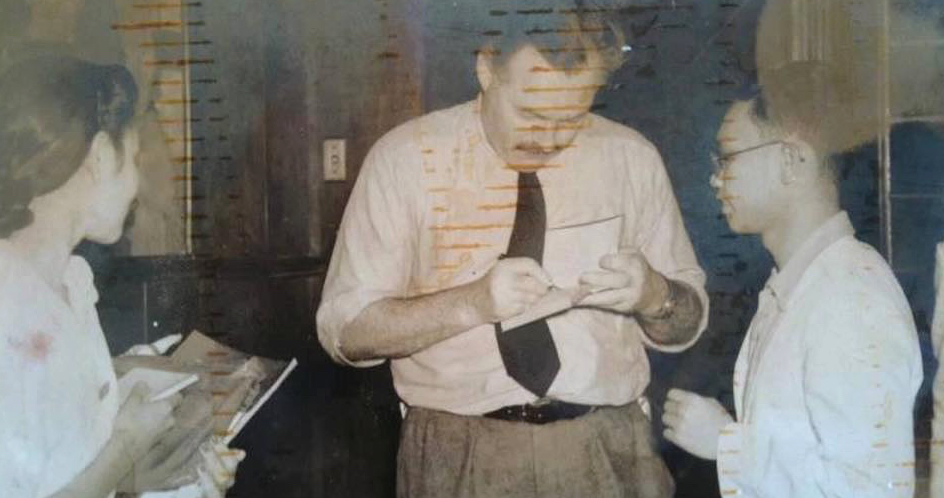
I was, of course, attracted to that passage because it particularly mentioned Hemingway’s pen, which I would have dearly loved to see; but also, it talked about Hemingway signing books, which reminded me of a photograph I adverted to in my earlier column, showing Hemingway signing a book for a young Filipino writer named Nestor Vicente Madali Gonzalez, who in early 1941 would have been no more than 25 years old. I’d seen that picture in NVM’s house in UP when he was alive, and had worried that it might have been lost when the house burned down. But after my piece came out, I was happy to hear from NVM’s youngest daughter Lakshmi that she had posted a copy of it on her Facebook page, and I hope she doesn’t mind if I repost it here—Ernest meets Nestor, you might say.

Speaking of NVM Gonzalez, the literary community marked the centenary of his birth last Tuesday, September 8, in an evening of tributes at the Executive House at the University of the Philippines in Diliman organized by Prof. Adelaida Lucero. NVM, of course, taught with UP—among many other universities here and in the United States—for many years despite the fact that he never completed his bachelor’s degree. As director of the UP Institute of Creative Writing, I was asked to say a few words at the testimonial dinner, which was attended by NVM’s widow Narita, and here’s a reconstruction of the remarks I made:

“NVM and I were born only 60 kilometers away from each other in Romblon—he on Romblon Island and I on neighboring Tablas—but also almost 40 years apart, and I never had the good fortune of being his student in UP. It’s actually my wife Beng who’s been closer to the Gonzalezes, having been Narita’s student at UP Elementary. But I had the chance to meet NVM and to enjoy his company when he returned to UP in the 1990s as International Writer-in-Residence under the auspices of what was then the UP Creative Writing Center. I had the honor of drafting his nomination as National Artist, signed by then Dean Josefina Agravante.

“Franz Arcellana was my teacher, and Bienvenido Santos and Greg Brillantes were my literary models; but it was NVM who hung out with us, whom we had fun with in our workshops in Baguio and Davao. And as advanced as he was in years, he was forward-looking and eager to learn. I remember running into him once in what was then the SM North Cyberzone, and I asked him what he was doing there. ‘I’m looking for a book on multimedia!’ he told me with that twinkle in his eyes.

“We didn’t always agree, but the one thing I can say about NVM is that he never threw his weight around, never pulled rank on us his younger associates, never thundered about how much older or more accomplished he was to suggest why he was right and we were wrong, despite his obvious seniority in age, experience, and wisdom. We appreciated that. That’s why, in the foreword to a book of essays by his friends that I edited after his death in 1999, I said that some writers are respected and admired, and others are loved. NVM was both.”

The celebration of NVM’s centenary won’t stop with that dinner—which also saw the launch, by the way, of new books on NVM: his poems, edited by Gemino Abad, and a Filipino translation of Seven Hills Away by Edgardo Maranan, published by the UP Press and the Komisyon sa Wikang Filipino, respectively. At the end of this month, the UP Department of English and Comparative Literature will hold an exhibit of photographs of and works by him. His son Myke, based in the US, is organizing a fiction-writing workshop in January, the first half to take place in Diliman and the other in Mindoro, and the UPICW will be helping Myke out with that project.

It never ceases to amaze me how a web of words (make that a Worldwide Web, these days) can bring people together across the miles and years.

[Photo courtesy of Lakshmi Gonzalez-Yokoyama]

Penman No. 164: Art Meets Anthropology

Field

Penman for Monday, August 31, 2015

FACTOR 1: For the past 45 years, the Chicago-based John D. and Catherine T. MacArthur Foundation has been giving out grants to meritorious individuals and organizations for a variety of causes that fall within its stated mission of supporting “creative people and effective institutions committed to building a more just, verdant, and peaceful world.” In the US, the individual MacArthur fellowships are known as the “genius grants.”

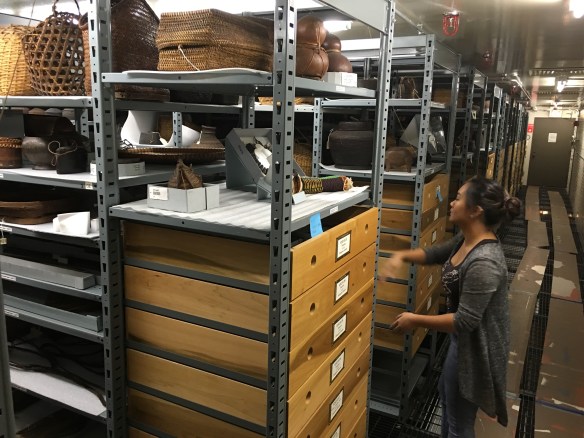
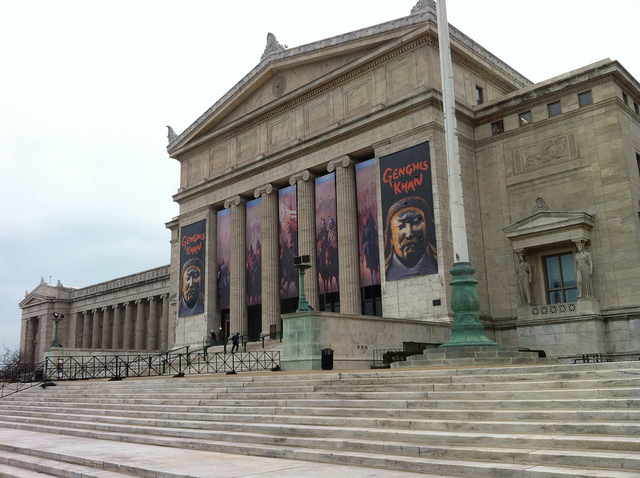
Factor 2: Chicago also happens to be the home of the 120-year-old Field Museum of Natural History, a venerable institution housing over 20 million specimens from all around the world—including an impressive collection of 10,000 Philippine artifacts, many gathered from American expeditions to the Philippines in the early 1900s, very few of which ever go on display.

Factor 3: Dr. Almira Astudillo Gilles—a Filipino-American social scientist and prizewinning writer who now lives in the Chicago area—put the MacArthur Foundation, the Field Museum, and the Philippines together in her head and hit upon the idea of seeking a grant from the foundation to fund a project that would help showcase the museum’s priceless Philippine collections before a larger global audience.

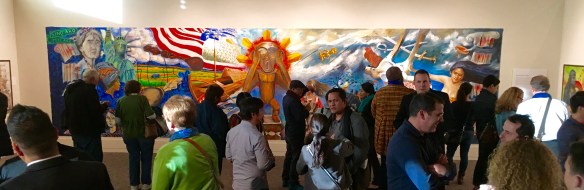
That initiative soon materialized in the form of the Art & Anthropology Project, conceived by Almi Gilles, sponsored by the two institutions, and supported in the Philippines by the Erehwon Arts Foundation. It involves bringing together five Filipino and five Filipino-American artists to work collaboratively on two huge paintings (mural-size at 7 by 28 feet, but technically not murals or wall paintings as they are free standing, on canvas)—one in the Philippines and one in Chicago—over three months from mid-August to early November.

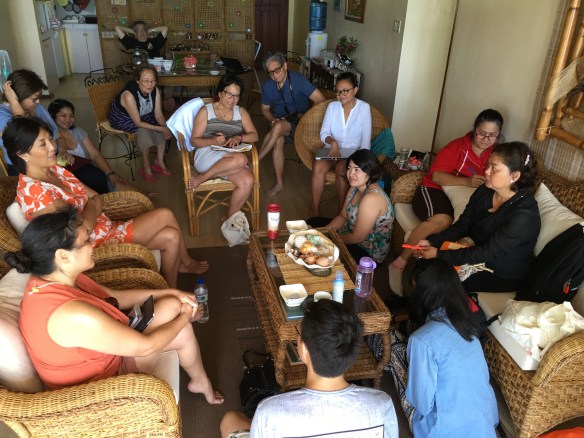
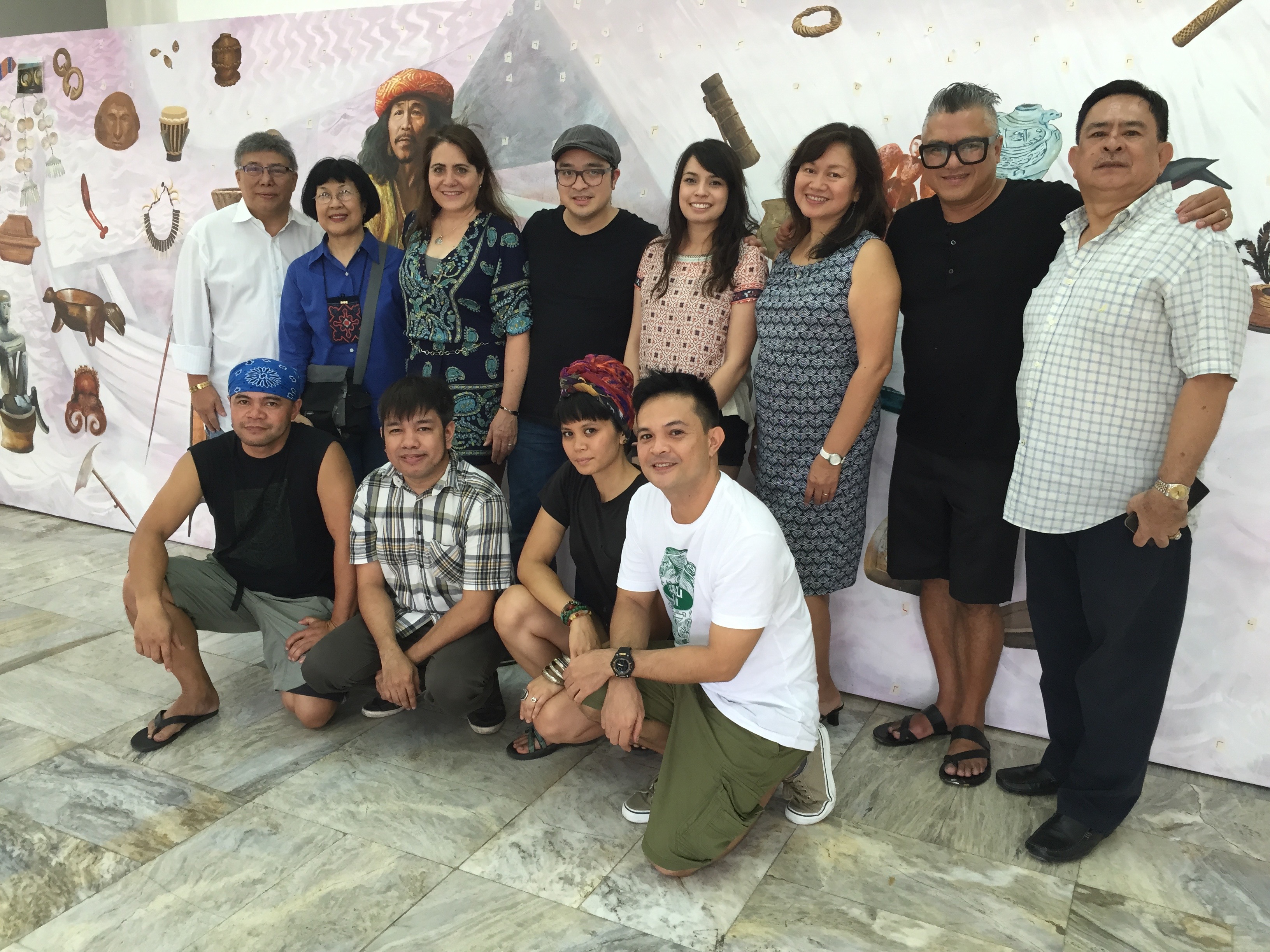
I had a chance to mingle with these artists last week, twice—the first time, on a weekend run to Baguio, during which they visited National Artist Bencab at his museum, and then at the Quezon City domicile of the Erehwon Arts Foundation (which, aside from paintings, also hosts an orchestra and a dance studio). It was good to see Almi again, whom I’d first met in Michigan about 30 years ago when she was doing her graduate work in East Lansing and I (and her brother Jun) in Ann Arbor. I introduced Almi to my wife Beng, the vice-chair and a trustee of the Erehwon Arts Foundation, and along with Erehwon heads Raffy Benitez and Boysie Villavicencio, Almi and Beng helped crystallize the Philippine phase of the project.

The ten chosen artists went through a rigorous and juried application process on both sides of the Pacific. No one—not even established and well-known artists—got a free pass. This opened the door to young, vibrant talents—most of them under 40—representing a range of artistic styles and persuasions, from the realist to the abstract. While the Fil-Am artists come from around the Midwest, the Filipinos range in their origins from Baguio and Manila to Cebu and Cotabato.This August, the five Fil-Am artists arrived in Manila to work with their homegrown counterparts at the Erehwon Center; this October, the five Pinoys will fly to Chicago to do the same. The finished paintings will be on exhibit in their respective venues, and will feature artifacts the artists have chosen from the Field collections, recontextualized in the present. This way, the project’s as much a celebration of our continuing ties as global Filipinos—arguably one of our richest cultural resources—as it is of our pre-Hispanic wealth.

The artists involved are among the best of their generation. Herewith, excerpts from their profiles:

Leonardo Aguinaldo was born in Baguio City in 1967, and currently lives in La Trinidad, Benguet. Aguinaldo’s style is highly illustrational and graphic, derived from his experiences as a printmaker. He utilizes the rubbercut and acrylic paint to achieve highly dense and detailed designs derived from his traditional Cordillera background.

Jennifer Buckler was born in Dover, Ohio in 1986. She received her BA in Art from The Ohio State University in 2009 and her MA in Art Therapy Counseling from Marylhurst University near Portland, Oregon in 2011. In 2013, Buckler joined a Chicago-based Filipino artists’ collective known as the Escolta St. Snatchers Social Club, where she has explored her Filipino roots more deeply.

Elisa Racelis Boughner was born in the United States and raised in Mexico, and studied art in America and Europe. Her work reflects the influence of each of these cultures, and of a range of painting styles from Impressionist and German Expressionist to Cubist. The result is a unique and highly personal style that brings extraordinary vibrance to often ordinary subjects.

Cesar Conde is a contemporary painter who employs Old World techniques on modern materials to paint realistic portraits. He is a Filipino-American artist based in Chicago who studied with master painters in Italy and France. He counts Caravaggio, Rembrandt, and Goya among his influences.

Florentino Impas, Jr. was born in 1970 in Danao City, Cebu, ands graduated from the Surigao del Norte School of Arts & Trade. A consistent competition finalist and winner and a member of the Portrait Society of America, Jun was a former president of Cebu Artists Inc. (CAI) as well as a former president of the Portrait Artists Society of the Philippines.

Joel Javier earned a BFA in Painting and Drawing at Murray State University in 1999, then pursued a career in studio art which led to a career in art education, receiving an MA in Art Education in 2011 from the School of the Art Institute of Chicago. Joel is currently the Education Manager at Intuit: The Center for Intuitive and Outsider Art in Chicago.

Emmanuel Garibay was born in 1962 in Kidapawan, Cotabato. With degrees in sociology, fine arts, and divinity, the many-talented Manny has mounted at least 19 solo exhibitions, and is well known for his expressionist figurative style as for the content of many of his works, which often express a keen social and political consciousness.

Trisha Oralie Martin is an interdisciplinary book and paper artist currently living, working, and teaching in Chicago. Trisha envisions her art as a catalyst that can convey important social issues across diverse communities. Inspired by her cultural heritage, her highly patterned works are pulped and printed with native Filipino designs.

Jason Moss was born in 1976 in Manila. He finished a BFA, Major in Advertising, at the University of Santo Tomas in 1997. An award-winning book illustrator, animator, and filmmaker, Jason is also a painter who has mounted 28 solo exhibitions since 1993. Jason’s work blends grotesquerie—his manifest suspicion that our world is beset by demons of one kind or other, some of them within the self.

Othoniel Neri was born in 1985 in Manila, and began drawing at a very young age. In 2003 he studied Fine Arts by mail through the International Correspondence School, and received several awards in international and local competitions. Being a figurative and portrait artist, Otho paints with a very sharp eye and a flair for detail, employing a palette of explosive colors.

The project has been a rich learning experience for the artists on both sides, so far, in terms of exchanging viewpoints, experiences, and techniques. Beng and I look forward to seeing what they’ll do in Chicago for the project’s US phase—whatever its content, surely a triumph of cultural kinship across the miles and the millennia.

IMG_8024

Penman No. 160: Hemingway in Manila

HemingwayManilaPenman for Monday, August 3, 2015

THE LAST time I thought about Ernest Hemingway, it was a few weeks ago when I was teaching his controversial 1927 short story “Hills Like White Elephants,” one of my all-time favorites for its compactness and subtlety, not to mention its grasp of human psychology.

Coincidentally, when I was giving that lecture, one of the pens in my pocket was an Ernest Hemingway—the first in a series that Montblanc called its Writers Edition pens, issued in 1993. Considered one of the “holy grails” of pen collectors, it had been generously given to me by a fellow member of the Fountain Pen Network-Philippines (www.fpn-p.org); we had a small business arrangement, but the cost of my own service was so negligible that the pen was practically a gift, most thankfully accepted.

My pen’s inscribed with Hemingway’s signature, but ironically, I don’t think Hemingway was ever much of a fountain-pen person, and being the practical, outdoorsy person he was, would probably have disdained carrying anything fancier than a Parker Jotter. He was actually known to favor pencils and typewriters—Angelina Jolie bought his 1926 Underwood as a wedding gift to Brad Pitt—and he wrote this down to explain why:

“When you start to write you get all the kick and the reader gets none. So you might as well use a typewriter because it is much easier and you enjoy it that much more. After you learn to write your whole object is to convey everything, every sensation, sight, feeling, place and emotion to the reader. To do this you have to work over what you write. If you write with a pencil you get three different sights at it to see if the reader is getting what you want him to. First when you read it over; then when it is typed you get another chance to improve it, and again in the proof. Writing it first in pencil gives you one-third more chance to improve it. That is .333 which is a damned good average for a hitter. It also keeps it fluid longer so that you can better it easier.”

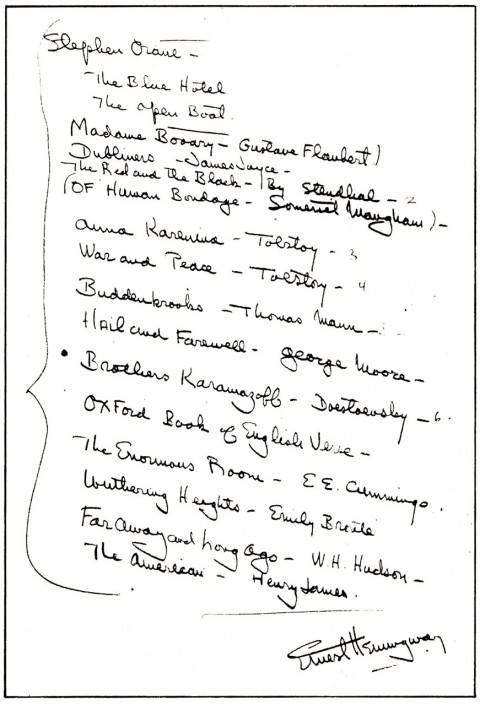
I’ve since located an online sample of Hemingway’s handwriting—likely in pencil—which has him drawing up a list of recommended readings for young writers (among them, Stephen Crane’s short stories, Madame Bovary, The Brothers Karamazov, and The Oxford Book of English Verse). It’s comforting to know that his penmanship is a lot like mine—cramped, stiff, and generally ugly.

HemNote

One of the things that I forgot to mention to my audience—a group of English teachers—was that Hemingway once visited Manila, in February 1941, with the clouds of war already hovering above Europe, where the young Ernest had served as an ambulance driver in World War I. (Ambulance driving seemed to be strangely attractive to young men who would soon make a name for themselves in the arts and letters. Aside from Hemingway, these illustrious WWI volunteers included the writers John Dos Passos, E. E. Cummings, W. Somerset Maugham, and Archibald MacLeish, the composer Maurice Ravel, and the filmmakers Jean Cocteau and Walt Disney.)

In another uncanny connection to fountain pens, Hemingway and Dos Passos served in Italy close to the factory of the Montegrappa fountain pen company, as Montegrappa continues to recall on its website: “Close to the Elmo-Montegrappa factory was situated the Villa Azzalin, which during the conflict. was converted into a field hospital. Two volunteer ambulance drivers for the Italian Red Cross at that time were the famous writers Ernest Hemingway and John Dos Passos, both of whom spent many happy hours visiting the factory and experimenting and testing various Montegrappa fountain pens, and availing themselves of the Company’s after-sales service.”

But back to Hemingway in Manila.

An article by Brown University Prof. George Monteiro in The Hemingway Review (Fall 2010) talks about Hemingway’s short 1941 visit, a stopover on his longer assignment to China as a journalist. Accompanying Hemingway then was his third wife Martha Gellhorn, herself a distinguished writer, a novelist and a war correspondent. (Annoyed by her frequent absences—she would be the only woman to land with the Allied troops on D-Day—Ernest wrote her to ask, “Are you a war correspondent, or wife in my bed?” She led a long and colorful life after her divorce from Hemingway, and tragically, like Ernest, died by her own hand at the age of 89 in 1998.)

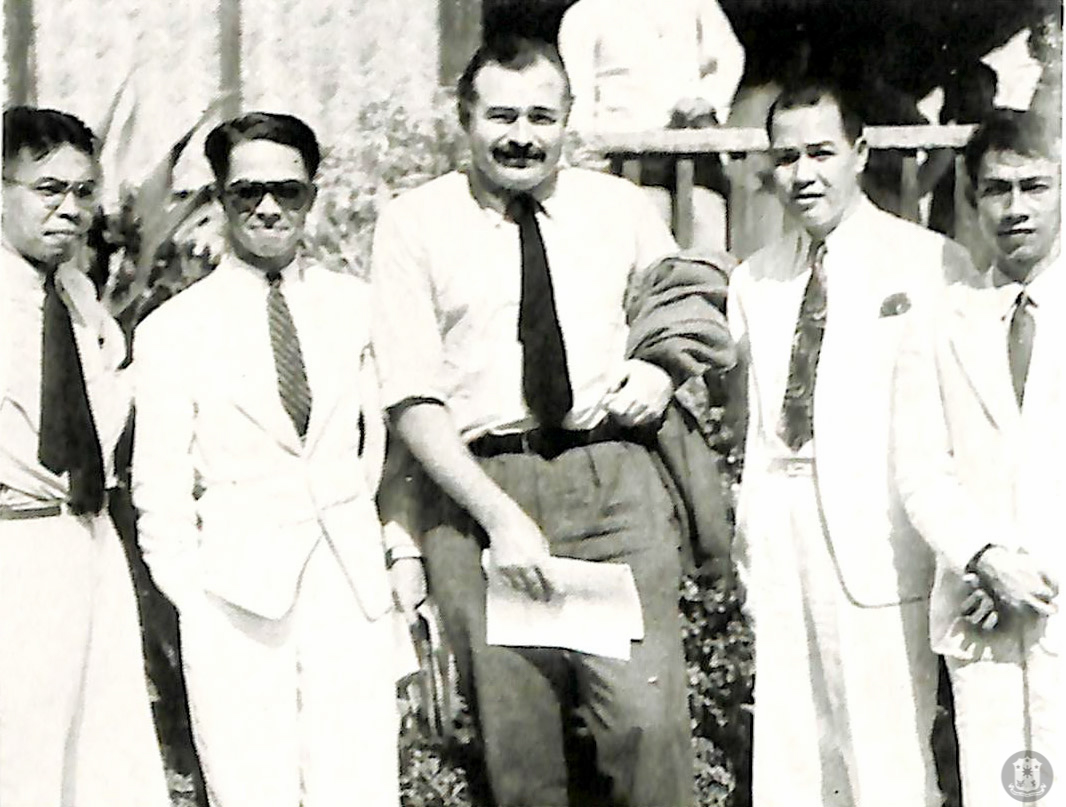
Flying to Hong Kong by Pan Am Clipper from San Francisco via Honolulu and Guam, Ernest and Martha stopped by in Manila for a few days and stayed at the Manila Hotel, and managed to meet with representatives of the Philippine Writers League, which was then led by Federico Mangahas. There’s a picture in the Flickr photo gallery maintained by Malacañang’s Presidential Museum and Library (whose Director, Edgar Ryan Faustino, just happens to be a member of FPN-P), taken from A.V.H. Hartendorp’s Philippine Magazine, showing Hemingway meeting with Filipino writers.

Seeing it reminded me of a similar picture of the big white Ernest looming over a small brown young Filipino named Nestor—a picture that NVM Gonzalez himself showed me in the 1990s, which sadly may have been lost in the fire that later razed the Gonzalez home in Diliman. Monteiro’s account mentions that Hemingway shared this bit of wisdom with his Filipino counterparts: “I think a writer’s gravest problem, always, is to write the truth and still eat regularly.”

Unfortunately I couldn’t access the rest of the Monteiro article online (you need membership access to Project MUSE), but I read enough of it to understand that brief as it was, Hemingway’s stopover created quite an impact, enough for the Manila Hotel to use a quote from the big guy as one of its taglines: “If the story’s any good, it’s like Manila Hotel.” The bayside hotel, founded in 1912, has of course hosted other luminaries such as Douglas MacArthur, John Wayne, John F. Kennedy, and the Beatles, aside from another popular postwar writer, James Michener.

As we all know, Hemingway killed himself with his favorite shotgun in July 1961, seven years after receiving the Nobel Prize for literature, in a fit of depression. It was a sad ending to a many-splendored life that we were privileged to glimpse, however briefly.

Penman No. 137: The Other Filipino Values

Penman for Monday, February 23, 2015


DURING THIS most recent US visit, I had a chance to have a chat over a few beers with Ray Ricario, the older brother of our daughter Demi’s husband Jerry, and with some of Ray’s friends. Born in the US to parents from Albay, Ray’s a retired naval officer and an entrepreneur. He and his family are registered albeit moderate Republicans—as you might expect of Filipino immigrants steeped in a proud military tradition—and Ray knows that Beng and I are passionate liberals, so we have a lively but always civil conversation going about current events in the US, the Philippines, and around the world.

More often than not we end up agreeing on more things than we disagree on, especially when it comes to strengthening ties between Filipinos and Americans, and raising the profile of the Philippines in America. I always look forward to meeting with Ray, not the least because he and his wife Lorie are unfailingly gracious hosts and we both love beer and barbecue.

Our last conversation revolved around a common concern: the preservation of Filipino values and their transmission to the next generation of Filipinos and Filipino-Americans. As the father of three children, Ray feels strongly about the need for them to have some vital cultural connection to the old country, even as they join—as they should and inevitably will—the American mainstream. The others around our table lamented how Filipino values seemed to be eroding among the Filipino-American youth, but were rightfully proud at the same time of their efforts to preserve them. One of the ways mentioned was the practice of taking the hand of one’s elder to one’s forehead in a gesture of respect—our famous and unique “mano po.”

That was fine and laudable, I said, but it also got me thinking about what other values we seek to pass on to our young, aside from the respect we expect and sometimes demand of them. I had to wonder what a young Filipino-American, told by his dad or mom to do mano to an older Filipino stranger entering the room, would be feeling at that moment of contact—would that be genuine respect, or a grudging sense of obligation, accompanied by a shudder at the external silliness of the deed?

The mano po is a wonderful tradition (even though, to be honest, you hardly see it being done anymore even in Manila), and those of us who still practice it know and understand that the value it embodies is respect for one’s elders. But how well is that value valued in such a place as America, where the native-born young—without necessarily meaning to be disrespectful or impertinent—might see things (such as authority) differently? How well can values and traditions carry over in another context—or sometimes, without the context that gave them meaning in the first place?

I suggested that perhaps “respect for elders” could itself be revisited and explained in a way that young people today (as we ourselves were, not too long ago) could better understand and accept. Having been social rebel in my own youth, I refuse to see “respect for elders” as the blind acceptance of the authority of the old; that will only ingrain resentment and resistance. I’d rather take and present it as a willingness to listen, an acceptance of the possibility (however remote it may seem to a 16-year-old) that this older person might actually have something sensible and useful to share with you. When I do the mano po, I accept you—in all my youthful arrogance—as my equal.

That brought me to other Filipino values—both of a philosophical and practical sort—that I don’t think we emphasize enough, whether in America or at home. I’d argue that principled resistance is one of them. We’ve had a long tradition of protest and rebellion against tyranny, injustice, and bondage, as our many revolutionary heroes will bear out—but instead we seem to emphasize acceptance and acquiescence, in the desire not to give offense or to create conflict. That’s why we wear our crown of thorns with misguided pride, sometimes reveling more in our capacity for suffering rather than addressing its causes.

Our table talk didn’t get this far, but I could have proposed two more—and truly practical values—to push among the young today on both sides of the Pacific.

The first is respect for food—especially in America, where so much of it goes around, and goes to waste. This can be one of the most personal and practical applications of a social conscience—don’t take or order more than what you can eat, and finish what’s on your plate. For Beng and me, that especially applies to rice, having which we always take as a privilege. If we can’t finish our meal at a restaurant, we have it wrapped up—even that half cupful of rice—and bring it home, or hand it over to some needier person on the street.

The second is cleanliness and tidiness. We Filipinos like to keep ourselves and our surroundings clean and neat, and it’s important that we do this by ourselves. Growing up as children, our day literally began by folding our mats and mosquito nets; even if we didn’t have much, we never saw poverty as an excuse for becoming slovenly. Want to promote democracy? Teach the señorito to clean up after himself; forget any thoughts of achieving national greatness if we can’t even discipline ourselves.

Knowing Ray and seeing what a wonderful family he has, I know that I’m not shouting in the wind when I bring up these notions. I wish he’d vote for Hillary, but that’s another topic for another day.

Penman No. 135: Democracy and Cultural Expression

DSC_0024Penman for Monday, February 9, 2015


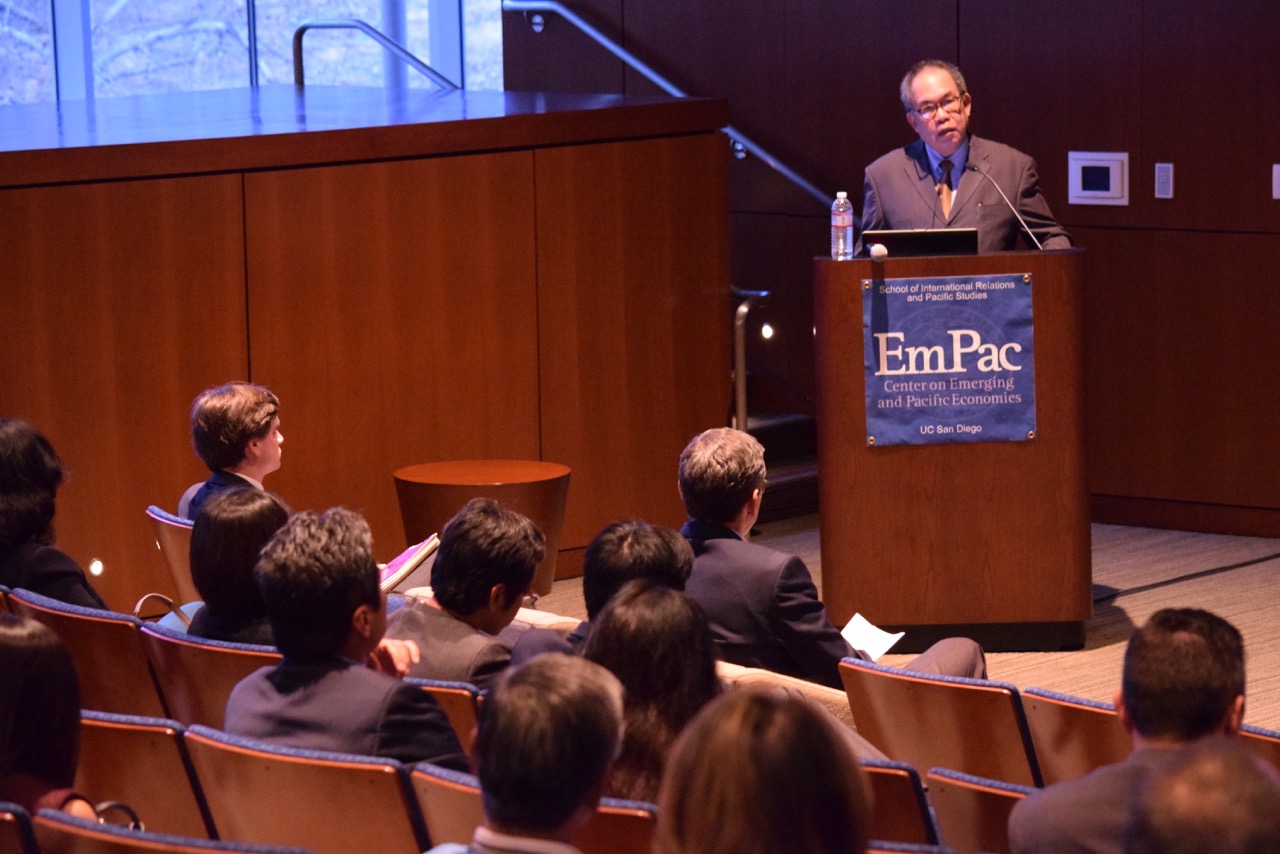
I SPENT the past two weeks as a Pacific Leadership Fellow at the School of International and Pacific Relations of the University of California, San Diego, and the highlight of my fellowship was a 40-minute talk I gave on the general topic of “Democracy and Cultural Expression: Confronting Modernization in the Philippines.” The PLF—usually a government or business leader from the Asia-Pacific region—is asked to make a public presentation to a large audience composed of academic and community representatives, to introduce and discuss major issues facing his or her society.

I felt it safer to presume that the non-Filipino members of my audience last January 28 knew very little about Philippine history and politics, so I began with a broad overview of that history, bringing things to the present and the medium-term horizon, considering both our strengths and resources—noting the robustness of our recent economic growth—but also the longstanding inequalities and structural weaknesses that continue to hold us back. Here’s a slightly edited excerpt from the rest of my talk:

We have to pause and wonder exactly what kind of democracy we have in the Philippines, and what needs to be done—particularly on the cultural front—to achieve a fuller sense of the word.

I wouldn’t go so far as to call Philippine democracy a sham, because most Filipinos enjoy fundamental rights and freedoms absent in patently undemocratic societies—freedom of expression, of association, of mobility, of enterprise; the right to vote, and a presumptive equality under the law. But that presumption is also the weakest leg our democracy stands on, undermined by gross economic and social inequalities in our society showing Philippine democracy as more a democracy of style and spirit than one of substance.

Indeed, economically and politically, the Philippines has been ruled for more than a century by an elite, a roomful of families from the landed gentry and comprador capitalists who developed their wealth and power as agents and executors of colonization, and have taken turns at governing the country well into the present.

We cannot have true democracy without achieving a better balance in our economic and social structure, and its best hope in the Philippines could be in our enlarging middle class. They may not yet have the economic and political clout of the elite, but coming from the poor and aspiring in their own way to become more prosperous, they have the most at stake in creating a new regime of opportunity and fairness.

It is the middle class that has served as the voice of Philippine democracy, primed by its education to value freedom of thought and expression. It is the middle class that stands at the vanguard of modernization, having not just the desire but also the means—through education and entrepreneurship—to change the future.

… One out of every ten Filipinos now lives and works abroad in a decades-long diaspora that has kept the Philippine economy afloat through remittances amounting to more than $25 billion in 2013. But they bring home not only money but new ideas, and I feel confident that, in the long run and for all its social costs, this diaspora will have salutary effects because that domestic helper in Milan or plumber in Bahrain will no longer be simply a domestic helper or plumber when they come home. Tourists bring home snapshots of pretty places and exotic food; foreign workers bring home real learning, lessons in survival and getting ahead, and raised expectations of their local and national leaders.

This exposure to global culture and its elevation of local aspirations will be a major force in reshaping the Filipino future. And again, it is the middle class—the dwellers of the Internet and the Ulysses of this new century—that will lead in this transformation, just as they have led the most important movements for political and social reform in our history.

… One of the bright spots of Philippine society today is the fact that civil society is very much alive, constantly on guard against governmental or corporate abuse and wrongdoing, ever ready to uphold the rights of ordinary citizens and communities, and firmly rooted in those communities. It has stood at the forefront of the movement to fight corruption, which recently came to a new climax with the explosive revelation of a billion-peso pork-barrel scam going all the way to the Senate and even possibly higher.

One of the greatest challenges of our modernization may be that of electoral reform—not just a reform of the electoral process, but a reform of the voter’s mind—not to vote for popular candidates, but to vote wisely, to see the vote as a chance to short-circuit a historical process and to lay claim to one’s equality and patrimony.

And this is where culture comes in, as an instrument of social and political reform and modernization. If we look at culture more proactively not just as a way of living but a way of thinking, then there is much room for the promotion of true democracy through cultural expression.

By cultural expression I don’t mean simply the writing of stories, poems, plays, and essays, which is what I do most days, partly as my civic duty. I mean the use of all media at our disposal—the arts, the press, the Internet, whatever can influence the Filipino mind—to forge and sustain a set of core values, of national interests that cut across family, class, and region.

Of course, we can take “cultural expression” in its more popular and familiar forms—stories, poems, plays, music, painting, and dance, among others—as gestures toward the idea of a larger, national culture. After all, with every poem or painting, the artist seeks to palpate, from an audience of citizens, a sense of what is common and what is important—or to put it both ways, what is commonly important and what is importantly common. This has always been the social value and the political mission of art—not just as a means of self-expression, but of establishing, affirming, and promoting certain commonalities of thought and feeling.

… We need nothing less than a new cultural revolution—focused on the assertion of the ordinary citizen’s rights over power and privilege, on the importance of the rule of law, and on our understanding and acceptance of what it means to be a Filipino in this globalized world. Forging that sense of national identity is crucial to securing our future, again in a world and in a part of the world where the Chinese, the Japanese, the Koreans, and the Americans seem to have very clear ideas about their roles and capabilities. In this ocean of resurgent nationalisms, we Filipinos need to redefine ourselves as more than America’s students and surrogates.

In sum, much remains to be done to lend more substance to Philippine democracy in terms of addressing age-old economic and social inequalities. But the first field of battle exists in the mind and spirit, and the first campaign in this battle, the first declaration of freedom, has to be an act of the imagination.

I prefer to see democracy as a process rather than a product; the aspiration can be as powerful as its actualization. This democracy is first formed by its assertion: by seeking democracy, we begin to achieve it, and this assertion is the task of our artists, writers, thinkers, and opinion makers, the imaginative shapers of our national identity.

Penman No. 134: Frontiers and Pioneers

IMG_6867Penman for Monday, Feb. 2, 2015


I’VE BEEN to California quite a few times over the past 30 years, on such varied missions as covering Steve Jobs and the iPod Shuffle in MacWorld 2006 and tracking Jose Rizal’s footsteps in San Francisco. Just last September, I was there again to interview a cohort of former activists from the First Quarter Storm.

California’s the kind of place that promises to never run out of surprises for the game and attentive visitor, and this time around—on this ongoing Pacific Leader Fellowship with the University of California in San Diego—I ran into more wonderful discoveries that straddled the past and the future.

My program allowed me to make specific requests for visits to places of personal interest, and after consulting with knowledgeable friends, I settled on two destinations that couldn’t be more different from each other: the old mining town of Julian, about an hour’s drive up the mountains away from downtown San Diego, and The Scripps Research Institute (TSRI), a cutting-edge facility overlooking the blue Pacific. This way I could encounter two extremes, from the museum to the laboratory, from the anciently analog to the dazzlingly digital.

I was accompanied on both visits by Mrs. Julie Hill, a good friend and old Manila hand whose life story and travels to dozens of countries I’ve been privileged to edit in three books, going on a fourth. We were graciously driven to Julian by Greg Mallinger, the coordinator of my program. I usually undertake a digital reconnaissance (meaning, I let my fingers do the walking on the keyboard) of points on my itinerary before the actual visit, but this time, I did no such thing, prepared to be surprised by whatever the place had to offer.

IMG_6837

The drive to Julian in itself proved a delight, with a view of wide valleys fringed by rolling hills dotted by huge boulders that might have been left by titanic geological upheavals but were now simply picturesque. A brief stop at Sta. Ysabel just before Julian led to a Spanish mission from 1818, recalling our own acceptance in the Philippines of the friars and their message; I had visited another California mission years ago, and had seen there a Chinese-eyed santo carved by a Filipino sculptor in the 1700s—so far, I thought, did Spain’s colonial reach extend.

Julian emerged on the road, a scenic huddle of tall-fronted houses along Main Street. It had experienced a brief boom in gold mining after the discovery of the precious metal there by a black man named Fred Coleman in the 1860s, but the miners have long since been replaced by tourists eager to sample the town’s new gold, its famous apple pie. We were met by the town’s historian, a retired engineer named David Lewis, who also operates the town’s museum (chock full of choice artifacts and very tidily maintained) with his wife.

IMG_6852

Our tour began in Julian’s windy hilltop cemetery, where David introduced us to Julian’s founding fathers and mothers—notably the Baileys who started a mine and the Robinsons who put up a hotel that still stands today—emphasizing the unusual role of African-Americans (such as the Robinsons) in the town’s development. The Julian Hotel is a living museum of 19th century charm—except that it now offers free wi-fi—and I made a mental note to bring my wife Beng there sometime, a wishful thought no doubt shared by the busloads of tourists who descend on the town every Wednesday.

IMG_6734

We met another kind of pioneer and another kind of frontier at the Scripps, an impressive complex of buildings devoted to biomedical research. Lying in La Jolla close to UCSD, the Salk Institute for Biological Studies, and the Sanford-Burnham Medical Research Institute, the Scripps is a key part of a science complex probing the frontiers of medicine and leading the laboratory fight against AIDS, Ebola, cancer, influenza, and other deadly diseases.

Our first stop might have belonged to a Hollywood props or special effects studio—a special lab where what seemed to be colorful toys in all kinds of shapes were laid out on a table. David Goodsell—a professor at TSRI and a molecular biologist who also happens to be an accomplished artist—explained that they were physical models of cells and cellular structures, created by machine through 3-D printing, and creatively colored to be used by researchers and teachers for educational purposes. Dr. Goodsell has exhibited his fabulous watercolor illustrations and published them in a book titled The Machinery of Life (Springer, 2009).

IMG_6737

As beautiful as the structures of life may emerge from Goodsell’s work, TSRI scientists don’t forget for one minute that some of them are the very carriers and agents of diseases that can cripple and kill, understanding and defeating which is a major part of the institute’s mission. (TSRI is also looking into such varied areas as deafness, memory disorders, autism, aging, and stress.) They help discover and develop new drugs to combat diseases and correct disorders.

Those drugs include Zmapp, also developed in San Diego by Mapp Biopharmaceutical. Zmapp gained prominence as the experimental drug used to successfully treat some Americans who had contracted Ebola. To better understand exactly how ZMapp worked, TSRI scientists employed electron microscopy to see how antibodies from the drug bound themselves to the Ebola virus.

IMG_6777

One of those scientists was Andrew Ward, an associate professor in his mid-30s who, when we met him in his lab, looked like he might have just stepped off the stage from playing with a grunge band. Dr. Ward heads a team of 14 scientists pulling long hours at TSRI’s electron microscopy lab, which has seven state-of-the-art electron microscopes, including a $7-million, 12-foot Titan Krios whose million-dollar camera (not part of the package) can see into the smallest corners of cells. Ebola was all over the news, so it was important to work on it, said Dr. Ward, but he emphasized how even more vital it was to lick influenza, a common disease that could kill milllions.

Stepping out of the lab, I remembered how, as a boy, I had marveled at the effects of the 1966 sci-fi classic Fantastic Voyage, in which a miniaturized medical team ventures into the bloodstream of a man. That day at TSRI, I felt like that boy again.

Penman No. 133: Revolution in the Time of Facebook

B75xPtWCIAEFJJ4Penman for Monday, January 26, 2015


I’M BACK in the US for a few weeks, to give a series of lectures on Philippine culture and politics as a Pacific Leadership Fellow with the Center on Emerging and Pacific Economies at the School of International Relations and Pacific Studies (IR/PS) of the University of California, San Diego. The PLF is a post usually reserved for senior government officials and business leaders engaged in economic and political affairs, and it’s the first time they’re bringing over someone from the humanities; some years ago, I was preceded in this fellowship by former Central Bank Governor and NCCA Chairman Jimmy Laya.

I have a major talk coming up this week on the ponderous topic of “Democracy and Cultural Expression: Confronting the Challenge of Modernization in the Philippines,” but last Wednesday, I sat down with a group of graduate students from IR/PS for a more personal chat. The general topic was “The Youth and Social Reform,” and I decided to share some of my experiences as a former student activist in the 1970s and to observe how protest movements and actions have changed since then.

I began by talking about the First Quarter Storm—our own version of Tiananmen, to use a metaphor more familiar to my audience, and the subject of my current research—my arrest and imprisonment in 1973, and the novel that I wrote about that experience. I recalled the many friends and comrades I lost, remarking on the ironic truth that “If I hadn’t been arrested that cold January evening, I probably wouldn’t be here, or be writing novels; I’d very likely have long been dead,” because I would have gone up to the hills and, being totally unprepared for the life of a guerrilla, would have made an easy target for the military. Here’s part of the rest of my short talk:

It would be nice to think that these horrors belong to the distant past, that the world has become more civilized in this new century of Facebook and social media. Indeed, authors like Steven Pinker (The Better Angels of Our Nature: Why Violence Has Declined) have argued that the world is actually a much safer place today than it was centuries ago, in terms of casualties of war and homicides, among other indices. That may be statistically true, but our street-level perception must surely be different.

It may be bright and sunny here in Southern California, but the world is full of dark and dangerous corners where bombs get strapped to ten-year-old girls who then get blown up in public places. I didn’t even need to tell you that, because it’s all over the evening news, before it all too quickly—and with much relief—gets brushed aside by the latest antics of Kim Kardashian and the latest gadgets from the Consumer Electronics Show. And why not? It seems grossly unfair in a way to be burdened by the misdeeds of others, by the ideological and ethical quandaries of a world one didn’t create, or even wanted to be a part of.

I’m not suggesting that young people today necessarily have it easier. Each generation has to confront its own demons, and those demons can be as large and as fearsome as you want them to be. You don’t have to live in Afghanistan with the Taliban or in Nigeria with the Boko Haram or in the Philippines with the Abu Sayyaf to know what terror is; you could be living in LA, New York, Columbine, or Ferguson to understand what fear or loss or danger means. In other words, we can never trivialize what other people may be going through.

But in another sense, youth and student activism today is rather different from what it was in my time, in my place. Today, people can pick their causes, instead of taking on the whole world. The starting point is the self, and what the self needs or wants, in a social and cultural climate that’s keenly focused on the here and now, with a very short attention span. Facebook promotes the self; Twitter and Instagram capture the unfolding present. We respond instantly to what we see, and do not necessarily work out of a comprehensive agenda for regime or global change. We don’t seek to save the world, but parts or aspects of it we care strongly about, whether it be whales and redwood trees or indigenous peoples or immigration reform or renewable energy.

In the Philippines, I’ve long maintained that the Communist Party lost much of the ground it had held back in the 1970s and 1980s not so much because of the success of the Philippine military on the battlefield, or even because of the collapse of the Soviet Union and its satellites, but because of the emergence of workable options for idealistic young people desiring social and political change, not necessarily by violent means. With almost 70,000 registered NGOs, Filipinos have a lot of causes to choose from.

For my generation, for all its flaws, we had only Marxism, which gave us a comprehensive world-view. Even though we felt in constant danger, that danger in itself was a comfort, an odd assurance or validation that we were on the right path, doing the right thing. It’s chilling to think that, while they may be very different in many ways, the young men and women joining ISIS today may be moved by a kindred spirit. There’s a frightening coherence and consistency to extremism, an inexorable logic strange to everyone else.

I ultimately opted out of Marxism because while we were convinced that everything was political, I came around to realizing that politics wasn’t everything. Also, as a creative writer, I could no longer abide by the need to observe the Party line.

What have I learned from all that?

First, compromise can be good and necessary. Second, I would not ask others to do what I could not do myself. Third, silence and reflection can result in better outcomes than strident shouting. Fourth, despair or cynicism is easy; hope is more difficult, and therefore the worthier challenge.

Indeed the darker aspects of life have never surprised me. It came as a deep disappointment to find comrades breaking under torture or other forms of duress, or even embracing outright betrayal for comfort and coinage—but that did not surprise me. It may have seemed very strange when I myself took up a job with the government shortly after my release from prison—but that, too, was almost inevitable, since all the old media offices had been shut down and the only real employer in town was the government. When people take the path of least resistance and adjust to new conditions to survive, I can understand that, having done it myself.

What keeps surprising me is courage, hope, goodness, and perseverance, which seem such old-fashioned notions but such necessary imperatives in these times. One no longer has to die for the things one values, but to live for them.

Even though, unlike most of my countrymen, I stopped going to church many years ago in protest of the Catholic Church’s position on many social issues, I was deeply moved, almost to tears, by the recent visit of Pope Francis to the Philippines, particularly to the areas ravaged by Typhoon Haiyan. His affection for the poor was palpable, but equally moving was the strength and faith manifested by the poor—one young woman who had lost her right arm in the storm had walked many miles to see him, and what she said with a smile stuck with me: “I am often sad, because I cannot find a job, but life cannot be all sadness all the time.”

For your generation, in your time and in your place, you will have to find your own pathways to social reform, which may have to begin, first of all, with a clarification of your own goals, although a deeper personal transformation will surely take place within the process of social engagement itself. Studying for professional success cannot ever be a bad thing; but it can only be better when all that sharpness of intellect can mean something to the lives of others.

Penman No. 131: Museums and Musicals (Part 2)

IMG_5928Penman for Monday, January 12, 2015


LAST WEEK I wrote about museums as a popular form of American entertainment and education, reporting in particular on my encounter with the MacArthur Memorial in Norfolk, Virginia. Musicals are arguably no less educational, except that they educate the heart and spirit rather than the mind.

There seems to be something fundamentally silly about people suddenly breaking into song in moments of high tension (in Bollywood, of course, they’d start shimmying and shaking), but the truth of the matter is (and the magic of the musical is) that it feels just right, and that the characters are singing exactly what we’re feeling. When Nancy sings “As Long as He Needs Me” in “Oliver” or when Tuptim and Lun Tha bewail their lot in “We Kiss in a Shadow” in “The King and I,” we absolutely understand what’s going on, and root even for the most ill-fated love.

Sometimes silliness is pure fun: who could have resisted Mary Poppins (except her famously persnickety creator, P. L. Travers) trilling “Supercalifragilisticexpialidocious”? Some songs just give you a lift to sing, like “On the Street Where You Live” from “My Fair Lady,” “Till There Was You” from “The Music Man,” and “The Impossible Dream” from “Man of La Mancha.”

And then there are those rare and very strange moments when a song from a musical just walks into your life, providing the perfect refrain for the occasion. This happened to me 40 years ago, as I waited outside the maternity ward while Beng was giving birth; at that very instant, as if on cue, a song came on over the PA system, and it was the “My Boy Bill Soliloquy” from “Carousel,” where the expectant father wonders what it would be like if the son he expects turns out to be a girl… as our Demi was.

I don’t know what it was that drew me to musicals when I was a young boy growing up in Pasig, except the long hot summer afternoons better spent in a cool dark moviehouse than under a tin roof at home. Ours was a moviegoing family, and I’d already seen “South Pacific,” “The King and I” and “West Side Story” in some theater downtown on Avenida Rizal, but the musical that got me hooked—maybe because it coincided with the onset of puberty—was “The Sound of Music.” What this chaste production full of nuns and Nazis had to do with adolescence could be answered by the doe-eyed Brigitta, aka Angela Cartwright, who was Penny in “Lost in Space”; of course I also nursed a crush on Julie Andrews, but she could’ve been my mom. I watched “The Sound of Music” six, seven times until I could recite the libretto and sing the songs by heart. (For fans of “The Sound of Music,” there’s a very interesting story about the writing of the song “Edelweiss” here: http://www.steynonline.com/6683/edelweiss.)

Prurient considerations aside, the old-fashioned Broadway musical (which we Pinoys got in the movie version) had something going for it that Westerns, thrillers, and spy movies hardly ever did: an insistent optimism, even in the darkest and direst of circumstances. “West Side Story” doesn’t end with just a death; it ends with the song “Somewhere,” and a plaintive hope for “peace and quiet and open air;” “Carousel” ends with the redemption of the likeable scoundrel Billy Bigelow, promising that “You’ll Never Walk Alone.” (Billy may have gone to heaven, but critics gave “Carousel” hell for changing the ending of the original play on which it had been based.) “Camelot” was probably the first musical I saw that didn’t come with a happy ending, but even Lerner and Loewe couldn’t possibly undo centuries of Arthurian lore.

In a time of AIDS, 9-11, tsunamis, and ISIS, the darkening of the American musical was probably inevitable if not mandatory. One of art’s most necessary functions is to provide relief to the distressed even by the mere recognition and reflection of pain, and today’s less melodic, more dissonant musicals do that, acknowledging that rainbows don’t come with pots of gold, and may not even come at all after a long day’s rain.

I watched my first live Broadway musical—Fats Waller’s “Ain’t Misbehavin’,” which was actually more of a revue—in 1980, from behind a post, the cheapest seat in the house. Since then I’ve been able to afford a few seats with a view, though not by much; as I reported in this corner a couple of years ago, my happiest hours in the musical theater came not on Broadway but in Melbourne, during a rousing Australian production of “South Pacific” that I watched from the topmost row where I sat all by my lonesome, to the amused consternation of the ushers, who urged me to move on down after the lights had dimmed. But I declined, because where I was, I could merrily sing along to “Dites-moi, Pourquois” and “There Is Nothing Like a Dame.” Having outgrown Angela Cartwright, I now rank “South Pacific” my most favorite of musicals, with “West Side Story” a close second (Beng has a soft spot for “The King and I,” and never fails to cry when Mongkut dies).

On this most recent trip to the States, we caught “Evita” (my third favorite) at the Kennedy Center in DC and a trio of shows in New York: “From Burlesque to Broadway,” a revue of an art form that I wish I’d seen at a more responsive age; “The Bandwagon,” the revival of a forgotten art-about-art opus with three showstoppers (“You and the Night and the Music,” “That’s Entertainment,” and “Dancing in the Dark”) and, finally, the Rockettes Christmas Special, classic Americana.

We stepped out of the theaters freezing in the cold but warm and dizzy with song, fortified against the inevitable anxieties and disappointments of another day.


[Images from flixster.com, childstar.com, musicalheaven,com, and amazon.com]