Qwertyman No. 121: Fame, Fortune, and the Filipino Writer

Qwertyman for Monday, November 25, 2024

CREATIVE WRITERS don’t earn much in this country, unless they lend their talents to someone else, for far less literary reasons than writing a novel or a collection of poems. A senator might need to deliver an important speech to an international audience; a taipan might be marking a milestone like a 75th birthday, and fancy having his biography written; a conglomerate might want to have its history written and published, to trumpet its accomplishments and contributions to society. 

For all these, many novelists, poets, and essayists will drop their pens and exchange their metaphors for the plainer but more remunerative prose of public relations. I know I have; I’m one of these people for whom writing isn’t just an art but a profession, a means of livelihood, a trade I’m grateful to be able to ply instead of hauling gravel or fixing carburetors. 

I’ve been writing for a living since I dropped out of college and became a newspaper reporter at eighteen, and I’ve been at it ever since, even throughout my whole other life as an academic (yes, I went back to school and got all the right degrees just so I could teach). At seventy, I’m still working on three or four simultaneous book projects for clients, with my own third novel in the back burner. (I’ve already drawn the line at seventy; after these, no more, so I can focus on my own work, and live modestly off my professor’s pension.)

I daresay, however, that most Filipino writers don’t operate like this, either because they can’t (you have to park your ego at the door and be extremely adaptable) or they won’t (for some, writing for money is selling your soul, although you can always say no to jobs and clients you don’t like, as I have). So creative writers have to keep day jobs like teaching or lawyering or newswriting and editing, and tap away at their magnum opuses on the side.

Why do they even bother? It’s not as if they’re hoping to write novels that will become bestsellers, make them millions, and get sold to Hollywood or Netflix. Ours is also a culture and society not known for buying and reading books, unlike, say, the Japanese whose faces you’ll find buried between pages on the Tokyo subway. In a country of around 115 million people, a new book will still typically be published in a first (and likely only) print run of 1,000 copies, which will probably take a year to sell out, if ever (Filipino relatives and friends also expect to be given free signed copies, which they won’t even read).

So again, what are we writing for? Perhaps thanks to Jose Rizal (who, let’s not forget, was shot for what he wrote), to be a writer still carries with it an aura of honor and fame, the suggestion of some extraordinary talent, a special way with words. We may not pay or read our writers, but w e admire them, maybe because they seem to know something most people don’t, like saying “I love you” in enchanting ways, or drafting convincing letters and papers, or even just fancy words like “somnolent” and “adumbrate.” There’s some glory to be won in writing—maybe even a little cash, if you know how to market yourself.

Last Friday, at the PICC, many of the country’s best writers got together to bask in that shared glory. In one of the highlights of the literary year, 54 authors were feted at the 72nd edition of the Carlos Palanca Memorial Awards for Literature. Begun in 1950 and faithfully and generously endowed by the Palanca family, the Palancas are the country’s longest-running and most prestigious literary competition, and for the past seven decades (almost uninterrupted except for the pandemic) have heralded the emergence of our finest writers—in English, Filipino, and more recently our other major Philippine languages.

According to the foundation that oversees the awards, this year’s competition drew in 1,823 entries in 22 categories, with 60 winning works produced by 54 writers. New winners outnumbered previous ones by 31 to 23, a good sign of new talent emerging—and not just new but young. Five winners were 20 and below, the youngest being only 14 years old (and the oldest 78). That’s quite a range, which tells us that the future of Philippine literature is safe and strong.

I myself won my first Palanca when I was 21, and of course I thought I was God’s gift to literature—until I lost for the next four years straight. I probably learned more from those losses than from my lucky win, and as I grew older the writing became more important than the winning, but the incentives—a little of both fame and fortune—that the Palancas provided never diminished in their attractiveness, especially during the martial law years when there was very little publishing going on.

You certainly don’t have to join the Palancas or win one to gain a literary reputation, and the value of such awards can easily get overblown, such as when egos get the better of writers starved for attention. Ultimately prizes don’t count nearly as much as publication, and all those honors will be meaningless until and unless one’s books are read, understood, argued about, and maybe even cherished. (With the Philippines poised to become Guest of Honor at next year’s Frankfurt Book Fair, we can expect the global readership for Filipino works to increase, and international publication will be a new goal for our writers to aspire for.)

Not everyone who writes for a living can win a Palanca, but not everyone who wins a Palanca can make a living out of writing, either. I’m blessed and thankful to have been able to do both, but at this point in my life I’ve come to realize that even more than seeking fame or fortune, a writer’s greatest mission is to tell and spread the truth, in that moving and memorable form only art can deliver.

Qwertyman N0. 117: Our Best Books Forward

Qwertyman for Monday, October 28, 2024

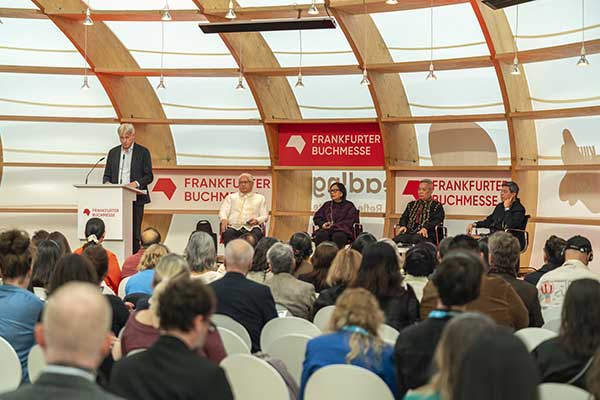
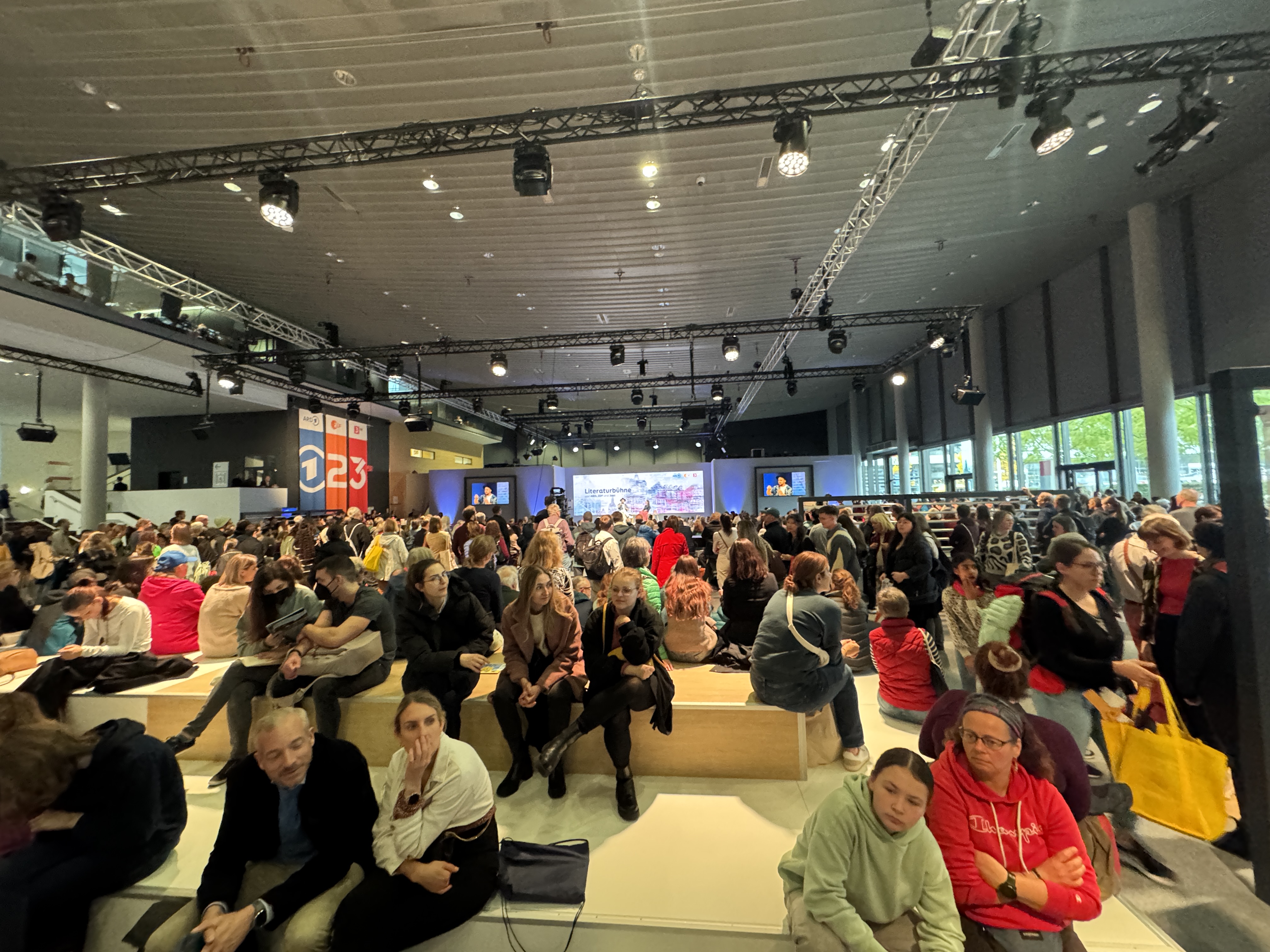
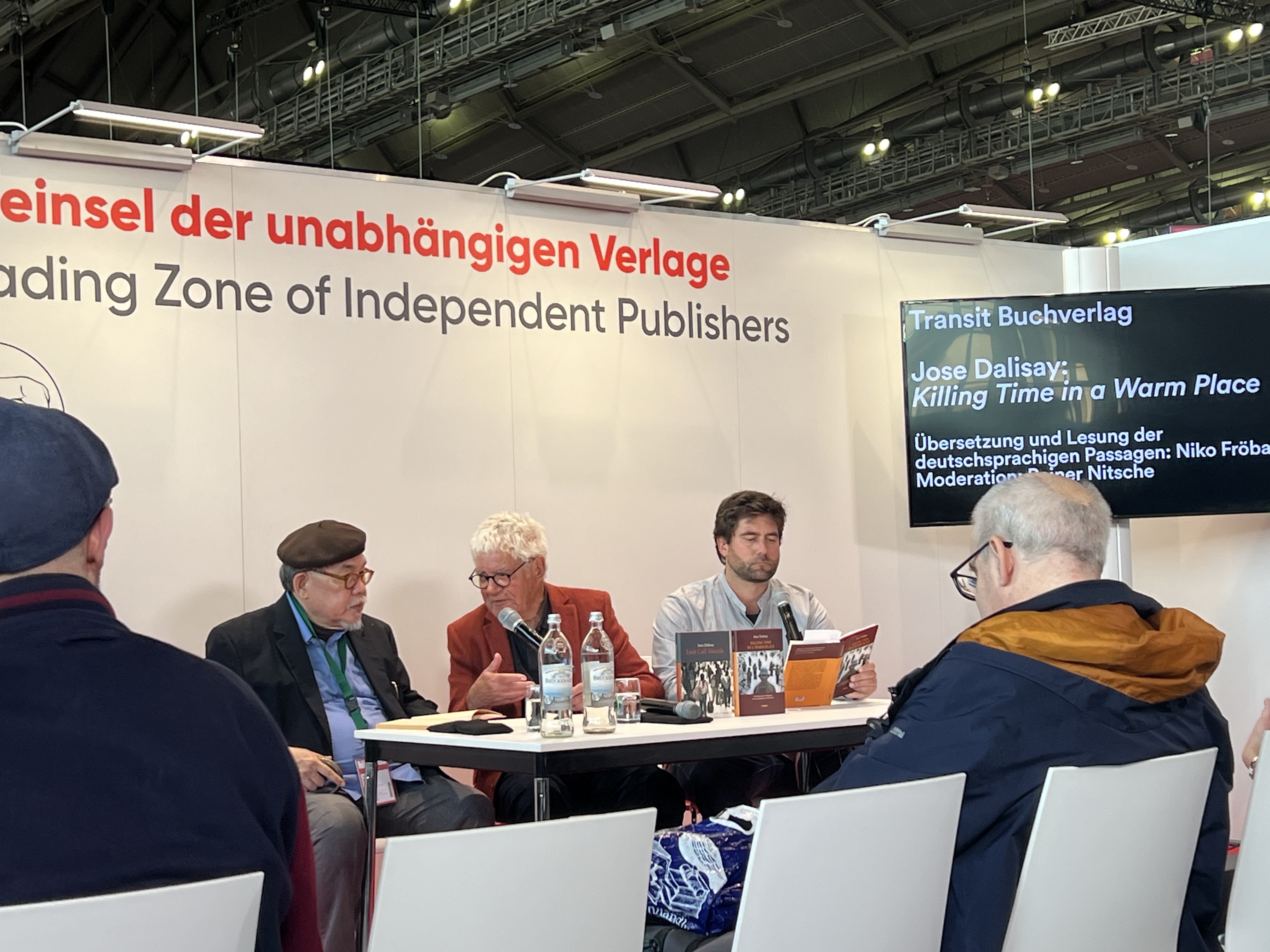
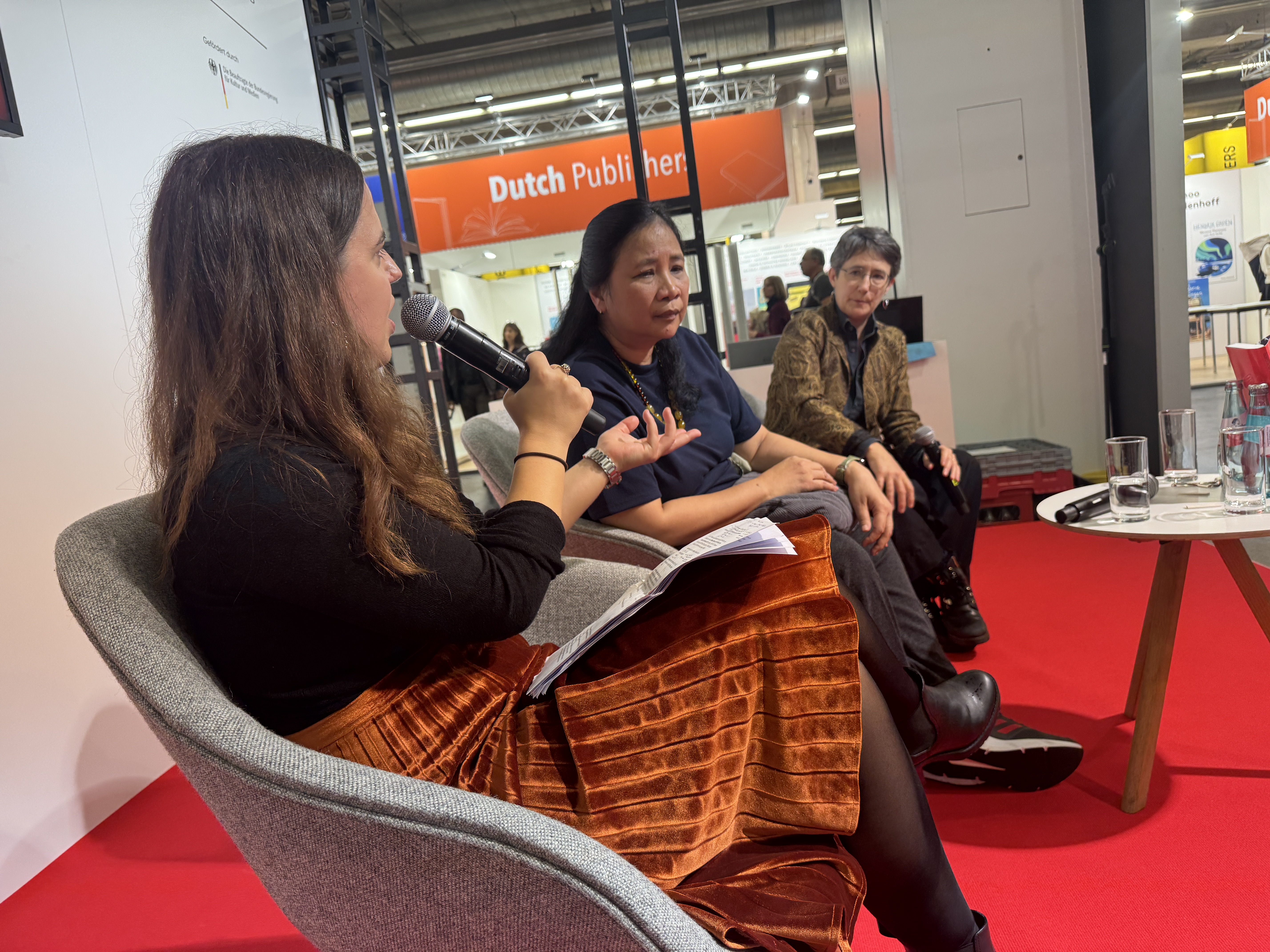
NOW ON its 76th year, the Frankfurter Buchmesse (FBM)—better known outside Germany as the Frankfurt Book Fair, the world’s oldest and largest such event—ended successfully last October 20 with a significant representation from the Philippines, which sent scores of authors, publishers, and book industry officials to the fair. All that was in preparation for FBM 2025, when the Philippines will be Guest of Honor (GOH), the country whose literature will be the focus of the fair’s attention.

You can think of the Frankfurt Book Fair as the Olympics of the global book industry, with over 200,000 participants (book industry persons and the public) representing over 100 countries. However, there are no prizes for Best Novel, Best Nonfiction Book, Best Children’s Book, and so on. Everyone is effectively in competition with everyone else, but the real rewards are in the professional and personal connections made between and among authors, publishers, agents, editors, and translators at the fair, connections that materialize into deals for translation and publication rights. Although exhibited books can be sold at the close of the fair, the FBM isn’t meant to sell books, but rights to books, for which it has become the world’s oldest and largest marketplace. This means that, through the right contacts, Filipino books can be translated into and sold in French, Turkish, Spanish, and Urdu editions, etc. and vice versa. 

Becoming GOH is a signal distinction—but it doesn’t come free. Nations vie and pay for the honor, which this year went to Italy and in 2026 will go to the Czech Republic. I’m sure that there have been and will be more criticisms of our participation in Frankfurt, chiefly of the costs of our foreign exposure vs. the local promotion of our literature, but it’s not a zero-sum game. We need both kinds of investments. We have impressive literary production from all over the country—much of it unknown even to ourselves—but we also need to share the best of it with the world, to raise their understanding of the Filipino above the stereotypes they know (Imelda’s shoes, Manny Pacquiao, DHs, cruise ship crewmen, etc.—not all of them bad, for sure, especially our OFWs, but in need of context).

If FBM 2024 was any indication, FBM 2025 will be an even more resounding success for the Philippines. All literary genres were represented this year in terms of books and panel discussions, and valuable connections were made with European publishers, translators, and agents. Philippine literature will never be the same after this. (This year’s upshot for me is that my novel Soledad’s Sister will be coming out soon in Spanish, after its versions in Italian, French, and German.)

Having followed trends in international publishing for some time, I’m particularly impressed by the way the FBM has helped to promote our new writing by young authors in literary categories that have traditionally received less attention compared to what I’ve called “the big white whale” of publishing, the novel. Approach most publishers and agents at the FBM, and what they’ll ask you is, “Where’s your novel?” For primarily commercial reasons, the novel remains the most saleable and traded commodity at book fairs. (I know many who will wince at my reference to books as commodities, but let’s be absolutely clear about this: the bottom line of book publishing and book fairs is business, not “Kumbaya”-type international peace and understanding.) 

Sadly, however, Filipinos have historically not been a novel-writing, novel-buying, and novel-reading people. In this respect, Rizal’s Noli and Fili are aberrations, familiar to us only and thankfully because of the law requiring their study. That said, our writers are masters of the short literary forms—poetry and the short story in particular. I’ve often remarked that we Pinoys are world-class sprinters, not marathoners; our world-view is not Olympian, but pedestrian, formed close-quarters at street level. 

This year, I’m told that over 70 deals were made between Filipino authors and foreign agents and publishers for the translation and publication of works that went well beyond the traditional novel, including children’s stories (another of our strongest suits) and genre and graphic fiction. These authors were young, and some had their works translated from languages other than English. If anything, this surge in translations, long overdue, is one strategic benefit that our FBM participation has enabled, and our GOH status next year should boost it even further.

According to FBM Director Juergen Boos, “I am very excited about the Philippines’ Guest of Honor presentation in 2025. The motto ‘The imagination peoples the air’ resonates with the universality of storytelling. Even though the Philippines is the world’s thirteenth largest nation with more than 109 million citizens, I believe for many of us in Europe, Philippine literature is currently still rather unknown territory. As the country steps into its role as Guest of Honor, we will learn a lot about the importance of storytelling and today’s cultural scene for Philippine civil society. With an incredible 183 different languages spoken on its 7,641 islands, the country’s diverse influences are one of the aspects I am looking forward to seeing in Frankfurt in 2025.”

I did say that there are no prizes awarded at the FBM, but I have to correct that to acknowledge the Diagram Group Prize for the Oddest Title at the FBM, given since 1978 and now voted upon by the public, and won by such books as Proceedings of the Second International Workshop on Nude Mice, The Joy of Chickens, How to Shit in the Woods: An Environmentally Sound Approach to a Lost Art, and If You Want Closure in Your Relationship, Start with Your Legs. This is not a prize to which Filipino writers have so far aspired, but who knows? Pinoy wackiness (alongside wisdom) knows no bounds.

Many thanks to the National Book Development Board, the National Commission for Culture and the Arts, the German literary organization LitProm, culture champion Sen. Loren Legarda, and our other sponsors and supporters for this great opportunity to put our best books forward on the global stage. Mabuhay!

Penman No. 467: Recovering Our Memory of the Sea

Penman for October 20, 2024

I’VE OFTEN remarked, in academic conferences, about the glaring absence of the sea in our mainstream and modern literature, beyond serving as a decorative backdrop or romantic element. I recently learned that this may not be so true of the native literatures of the Philippine South, for whose people the sea is their economic and cultural lifeblood, but for most of the rest of us, the only sea we’ll ever know is Boracay, or the Dolomite Beach.

That’s a sad thing when we consider that the Philippines—the world’s second largest archipelago after Indonesia—also has one of the world’s longest coastlines (over 36,000 kilometers), is rich in marine biodiversity, and can look back to a long, proud, and continuing seafaring tradition. Despite the alarming depletion of our marine resources due to overfishing and damage to marine ecosystems, we continue to rank high among the world’s fish producers; ironically, our fishermen are among our country’s poorest citizens. And for many decades now, the Philippines has sent out its seafarers to crew the ships of the world—over 550,000 of them last year, making up a fourth of all the world’s seaborne workers.

To go back even farther into the past, pre-Hispanic Filipinos built the balangay that helped populate Austronesia as well as the speedy warship, the caracoa; in Spanish times our ancestors built the galleons that crossed the oceans. In Moby Dick, Herman Melville referred to Filipinos aboard the whalers as “Manila men.”

Behind these figures runs a compelling human and social drama, but it’s a story largely unknown and untold to our own people, and what little we know is fading even faster as more of us leave our islands for the big cities, slowly but surely losing our personal connections to the sea. We encounter sea life only in the fish market or the seafood section of the grocery, or in tin cans; our children do not know the names of fish, which many now refuse to eat, in favor of sausages and noodles.

Thankfully, the National Historical Commission of the Philippines (NHCP) has done something critically important to fill this gap in our collective memory—by establishing a Museum of Philippine Maritime History (MPMH) that tells the story of our seafaring past. And it’s significant that this museum isn’t located in Manila, which would seem to be the logical first choice given Manila Bay and its port, but in Iloilo, which has also had a long and continuing affinity with the sea. Iloilo has historically supplied many if not most of the country’s seafarers to the global market. The city has a plethora of schools offering maritime courses, ensuring the continuity of talent.

I stumbled on the MPMH during a recent visit to Iloilo—among my favorite local destinations for all the obvious reasons (the food, the Esplanade, the heritage houses, the churches, the hospitality, the culture, and of course the people). The amazing boom it’s undergone over the past two decades under the sponsorship of former Sen. Frank Drilon and his local counterparts has dramatically transformed the city’s physical and economic landscape, but it hasn’t forgotten its past as it moves resolutely forward. 

Iloilo has long been known as the city of museums. Aside from the Museo Iloilo and any number of restored mansions, it now boasts the Museum of Philippine Economic History, which chronicles the city’s and region’s central role in sugar, shipping, and commerce; the Rosendo Mejica Museum, which celebrates Iloilo’s journalistic heritage (and I’m proud to say that my wife Beng descends from a Mejica); and the Iloilo Museum of Contemporary Art, which places Iloilo squarely in the center of cutting-edge art production.

The MPMH, which opened in January 2023 at what used to be the Old Customs House on Calle Loney and Aduana in City Proper behind Sunburst Park, walks the visitor through exhibits covering the past until the Spanish era, and the American period to modern times. One very informative section presents the variety of Philippine boats (biray, casco, vinta, batil, etc.); scale models bring some to life. Key figures in our maritime history such as Luis Yangco (1841-1907), who had a shipping empire and supported the revolution are introduced. Historical photographs, posters, and other artifacts provide vivid visual proof of how vital the maritime industry was to our economy and society. Another panel notes the many waterborne festivals we Filipinos hold throughout the country, such as the Pista ‘Y Dayat in Lingayen, Pangasinan every May, and the Bangkero Festival in Pagsanjan, Laguna every March.

It’s not a huge gallery, and one wishes there were even more artifacts on display to ponder, but in terms of curation and presentation, the MPMH can hold its own, given its present limitations, against other international museums of its kind, with crisp, clear graphics, well-chosen items, and useful and interesting detail. (I’ve had the privilege of visiting the National Maritime Museum at Greenwich in the UK and the Museo Naval in Madrid, so as global standards go, those two maritime giants would be tough to match.) The MPMH’s best come-on—which probably accounted for the hordes of students present when we came by—is that it’s absolutely free, although donations are welcome. That’s a great start, with the kids, toward recovering our memory of the sea.

Penman No. 466: Desktop Delights

Penman for Monday, September 1, 2024

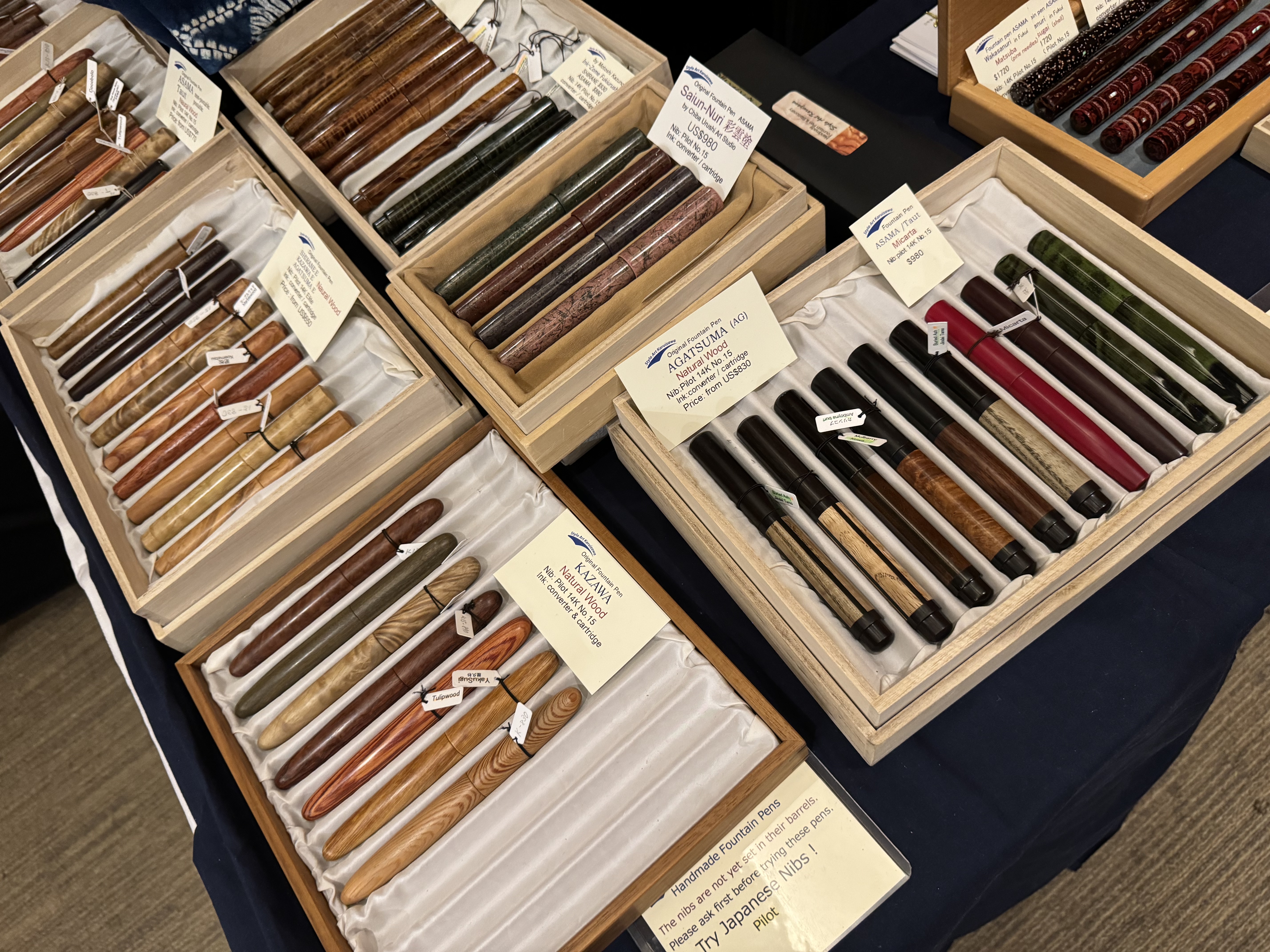
MY LONGTIME readers from way back know me as a collector of vintage fountain pens—and maybe of typewriters and antiquarian books as well. You’d think that would have kept me busy enough, but as all collectors know, it never ends with what you already have. The eye strays, new interests emerge, and whimsy soon turns into obsession, manifested in haggard looks that follow a night’s forays on eBay.

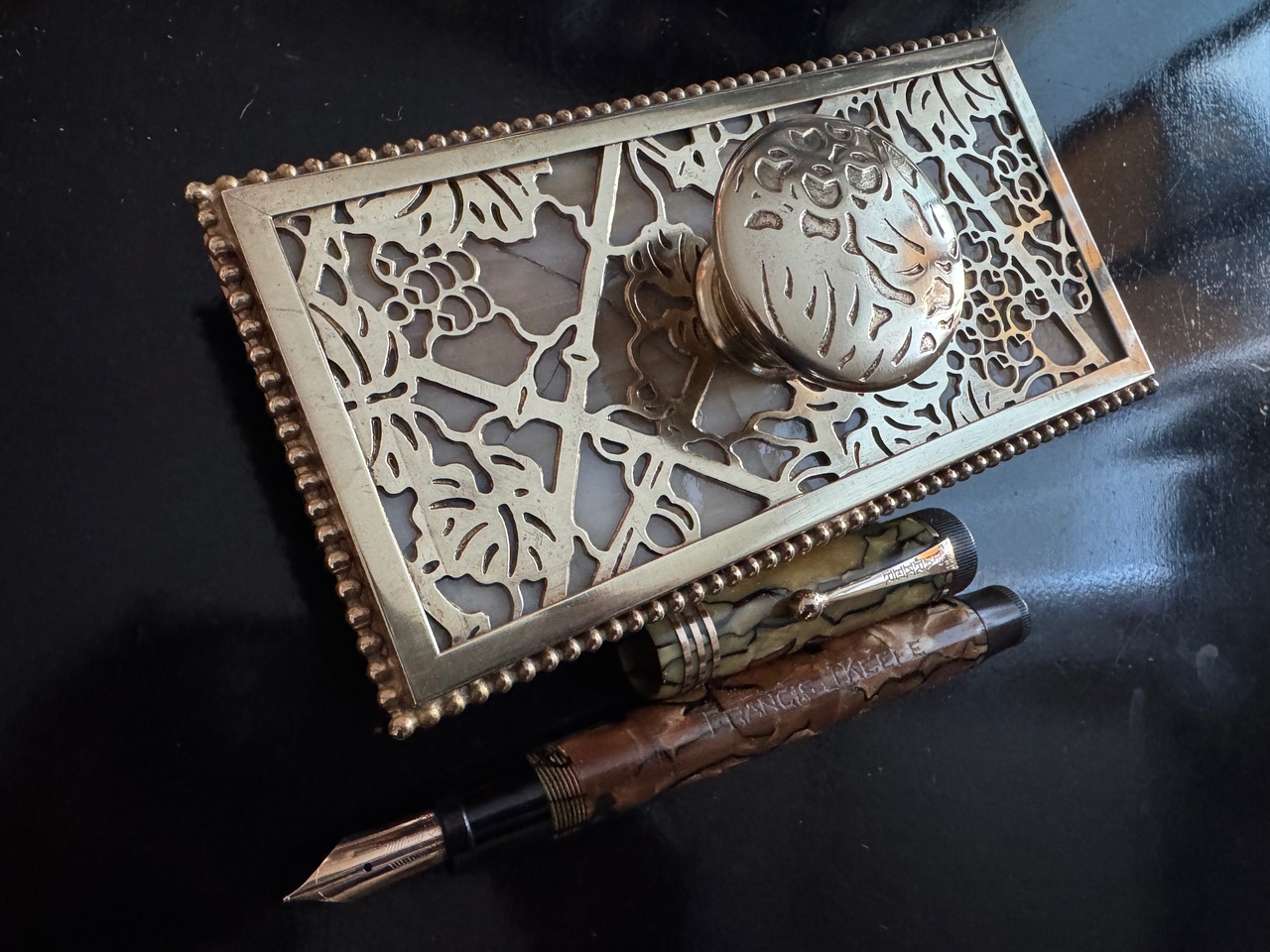
These past few months—all because of a chance encounter with a vintage brass rocker blotter at a flea market in Paris when we visited last April—I fell into the black hole of vintage writing accessories, and I still can’t see the bottom.

Of course, with my previous collections all linked to the writing trade, this was probably bound to happen. I mean, there’s more to the vintage table than pens and books, right?

If you have pens, then you have inks, ink bottles, inkwells, the aforementioned blotters (rockers and rollers), staplers, tape dispensers, pen trays, paperweights, letter holders, letter openers, etc. And let’s not forget the picture frames, gooseneck lamps, rotary phones, and steel-bladed fans that filled the rest of the acreage.

The nostalgic impulse behind this madness seems to be the recreation of our fathers’ desks, or our imagination of them. Whether boys or girls, we sat in their swivel chairs and rocked ourselves, our heads barely bobbing above the mahogany horizon. Instinctively we understood that we were in the seat of power, especially in those pre-feminist times when dads went to offices and moms stayed at home.

At least that’s how it works for me. My mythical prewar or midcentury modern (MCM in antiques parlance) desktop is now much larger and more crowded than my father’s office table ever was, but the oh what a gorgeous overflow it is of Art Nouveau, Art Deco, and Art Moderne beauties. 

Like I said, this began when Beng and I found this huge brass ink blotter at the Porte de Vanves flea market in Paris, followed by a couple of others. Now, hardly anyone uses a blotter these days, or even knows what it is, and that’s because people stopped using fountain pens, which used ink that took a long time to dry. Blotters mopped up the excess ink, which you otherwise had to blow on or wait minutes to seep fully into the paper. As life sped up after the war, ballpoints, felt tips, and rollerballs with quick-drying ink took over, and blotters took a back seat. But with the recent resurgence of interest in fountain pens and the plethora of new inks available, blotters are back in business—and their charm as art pieces rediscovered by a whole new generation.

Ink bottles have always been collected on their own quite apart from pens, from their early versions in pottery and pewter to high-end cut glass and crystal. (Some inks themselves have become rare and collectible, such as the legendary Sheaffer’s Persian Rose from the 1950s and even the modern Montblanc Carlo Collodi and the original Lamy Dark Lilac.) Beyond individual bottles, inkwells often come in pairs, on ornate brass or smooth marble or carved wooden stands; they can be glass or porcelain inserts set in brass or porcelain, with a pen rest in front. Having been meant for dip pens, today they would be mostly decorative.

Desk pens and pen sets, however, remain functional. In our fathers’ time, they were the hallmark of consequence, a signifier that pens were meant for important signatures. Here, often more than the pens, the bases—usually marble, onyx, metal, or bakelite—provide artistic value. Art Deco desk sets from the 1930s and 1940s are most impressive, as well as those with figural elements such as animals.

Trays for pens, paper clips, stamps, erasers, and such other 20th-century staples (and yes, let’s not forget the real staples and staplers) were produced in brass, wood, glass, and bakelite. Even these were turned into art pieces, and one by Tiffany could set you back a thousand dollars.

Not having that kind of money, I loiter around eBay—the world’s largest flea market—looking for these obscure objects of desire at prices I could afford, and I’ve even taken to buying and selling them both to pay my way and to share the bounty with friends. I don’t always get what I want—who would have thought that I would dream of rocker blotters and desk pen sets—but the quest itself is often worth it, the continuing discovery of treasures from the pre-computer, pre-cubicle past, when desktops were displays of taste and style and when you thought hard before putting indelible ink to paper.

Qwertyman No. 115: Why I Teach

Qwertyman for Monday, October 14, 2024

LAST OCTOBER 5, we marked World Teachers Day—not one of our most popular or noisiest holidays (it isn’t even an official one), but one that gives us pause to remember some of the most important people in our young lives. I taught for 35 years before I retired in 2019, and I still teach one writing subject every semester as professor emeritus, so I suppose I wanted to be that “VIP” in someone’s life. 

When we teach writing—and not even creative writing, but composition—to freshmen, we take young people by the hand and help them make sense out of their lives and their ideas, such as they are. The term “composition” applies as much to the writer as to the text: one composes oneself, drawing out the essentials and leaving out the dross. Creative writing pushes that process one step farther, by turning to the imagination instead of one’s limited experience for material and insight. 

The creative writing teacher’s task is not only to encourage but also to guide and to train that imagination, sparing the student from having to reinvent the wheel but affording him or her the thrill of self-discovery. 

It’s an inarguably fine and noble mission. On the other hand, and in economic terms, the teaching of creative writing is brutally inefficient. In a typical workshop class of 20 people, an instructor would be fortunate to find two or three with real talent—an aptitude for language, a maturity of insight, a stylistic flair. Among those, far fewer will have the discipline and perseverance to write and write well for life.

So why should we even persist, or expend public funds to produce boatloads of people who will probably never write the kind of line you will mumble in your half-sleep, or will cry out to the heavens in your most painful or most euphoric moment?

For one, because producing good creative writers is like mining for precious stones, where a ton of ore might have to be torn out of the earth and sifted through to produce one small jewel-grade rock, which has yet to be cut and shaped by expert hands. 

We must also persist in teaching creative writing because the production of new literature reinvigorates and replenishes our imagination as a people, our imagination of ourselves. It is that imagination, however dark, that gives us hope and makes reality endurable. The truth of numbers—of GDP and ROI and per capita income and population growth rates—is important (I’ve often remarked what a terribly innumerate society we are); but it is a limited and even sometimes deceptive truth that barely begins to tell our story. History does this, but without much latitude for pure conjecture. As in painting and the other arts, creative writers have often simply done, and done first, what critics and theorists would later describe and systematize. Creative writing is a breath of intuition caught on paper.

But I also teach creative writing in the conviction that every student—no matter the person’s background—has at least one good story to tell, and that it is our task as teachers to release that story. Most of my students may come to my classes merely to pass the time, or fulfill a requirement, or satisfy a craving for some critical attention; many may never write another story in their lives. But I want them to come out appreciating and respecting the liberative and ameliorative power of art—which is a fancy way of saying that, for those of us who will never be mistaken on the street for Brad Pitt or Superman, here we can be and do anything, for as long as we make artistic sense.

As K. Patricia Cross, professor emerita of higher education at Berkeley, reminds us, “The task of the excellent teacher is to stimulate ‘apparently ordinary’ people to unusual effort. The tough problem is not in identifying winners: it is in making winners out of ordinary people.”

Anyone can write anything, but not everyone can be a writer. By the same token, not every writer can be a teacher. People who have no problems stringing seamless paragraphs of compound-complex sentences can’t give a lecture or an exercise worth an ATM receipt. It takes a different sensibility—and, yes, another set of talents (or what I call a whole bunch of P’s—preparation, perseverance, patience, and passion)—to teach well and to endure in the classroom.

I feel passionate about teaching in UP and in this country, and in giving back to them, through my students, what they have given me. But teaching is not a word I often say in the same breath as love. I cannot honestly say that I love teaching, in the sense of wanting to do it for most of my waking hours, or missing it terribly when I’m doing something else. Teaching is one of the most exhausting jobs you can get. The job doesn’t begin or end in the classroom; it just happens there.

Every time I step into a classroom, I pause at the doorway to expel a deep sigh and collect my thoughts, wondering if I have enough to sustain a 90-minute performance. As the American novelist Gail Godwin famously said, “Good teaching is one-fourth preparation and three-fourths theatre.” Indeed I spend the last ten minutes before class writing a script in my head: I will say this; I will do this; I will bring these props and use them at some point; I will ignite an argument; I will leave them with a question that will buzz in their ears for a week. Even bad stories can be turned to great lessons; where’s the teaching point? How can I say it without crushing or diminishing the person? 

It doesn’t always work—sometimes I simply collapse into my chair and count away the minutes—but we all attempt some variation of this drill. Basically, we are saying: I will do my best to make this day worth their time and mine. It’s what they expect; it’s what I promised.

It is not love but duty that drives me to teach—although duty, perhaps, can also be a form of love; a love not of the thing itself but of some larger principle. That principle to me is service—service to country, people, university, and service to the great and truly free republic of the imagination.

“How do you know that what you’re doing matters?” I was asked once. “How can you tell if you’re making a difference?” My answer was, I don’t know, I can’t tell. But for a teacher, the only distinguished achievement that counts is the quality of one’s students. You are distinguished by their achievement, and in this sense, I have been distinguished aplenty.

Qwertyman No. 110: The Truth Shall Make You Mad

Qwertyman for Monday, September 9, 2024

I’M WRITING this on a Friday morning with no particular topic in mind, threatening to be overwhelmed by a slurry of depressing and outrageous news flooding my inbox. As a news junkie, I get my foreign news in digests from the New York Times and the Washington Post, and of course I look up all the major local news websites. You’d think that would be enough, but of course I have to open CNN and the BBC online as well—and occasionally, when I feel obliged to do so, Fox News, if only to see what those people are saying. And then I turn the TV on to CNN, BBC, Al Jazeera, and Channel News Asia for onsite reportage and commentary, especially from a non-Western perspective. 

For all my efforts, this is what I got today, which I’m sure many of you did as well:

“Ugandan Olympian Rebecca Cheptegai dies after being set on fire by boyfriend” (CNN)

“Accused Georgia school shooter Colt Gray, 14, received gun used in massacre as Christmas gift from dad” (New York Post)

“Israeli attacks in Gaza kill 35 people as polio vaccinations continue” (Al Jazeera)

“Trump says he’d create a government efficiency commission led by Elon Musk” (AP News)

“Woman testifies husband drugged her for years, recruited dozens to rape her” (Washington Post)

“What was behind the viral photo of Guo, Abalos, and Marbil?” (Rappler)

On a day like this, you have to ask yourself, “What has the world come to?” followed quickly by “Do I really want to know?” You emerge with a sense of a world gone mad, a moral universe you no longer recognize, playing by different rules for different people. Each one of those news items I mentioned above was enough to make me retch. 

While the loss of human life naturally rises to the fore of our concerns, how does one diminish the horror of being abused while unconscious over 70 times for years, or the cruel irony of vaccinating children only to bomb them afterwards? On which planet is it all right for a father to buy his young son—already known and reported to be prone to violence—an AR-14-style assault rifle for Christmas? (Answer: Not Mars but the United States, thanks to lax gun laws and even laxer parental supervision.) And speaking of that country, what do Americans think they can expect from a government run by two egomaniacs?

Let’s go to that viral snapshot, which I saw with my morning coffee, when I was still half-asleep and not too sure of what exactly I was looking at—the secretary, the escapee, and the police general seated on a sofa, all smiling into the camera, with a raft of refreshments on a table before them. 

No, I immediately thought, surely this was from the recent past, when all was still peachy between Ms. Guo and the administration. Or could it have been another of those clever AI pastiches, mounted to embarrass our honest and hard-working officials in hot pursuit of a wanted criminal? How else could you explain Alice’s sweet smile and finger gestures, and the equally benign countenances of the gentlemen beside her? Where was even the slightest trace of the loneliness and fear that were said to have driven our favorite chinita into self-exile, which would have left her haggard and despondent? 

Not having read anything else at that point, I almost made a comment on the first FB post of that image to the effect that “No, no, this can’t be true, this is all fake!” Providentially I held back, and looked for what I was sure would be a vehement denial from those concerned that the picture was ever taken. Instead, I found a story and a video of the good secretary explaining that he had no idea what Ms. Guo was doing as their “documentation” photo was being taken. Good Lord, I thought—if that wasn’t the chummiest picture I’d ever seen of captors and their captive, like something from a high-school reunion. So, okay, the smiles can be explained away—Alice was relieved that the Philippine police will now secure her from all threats; Abalos and Marfil were happy to have completed their mission. Does that call for refreshments, for a toast? Where did decorum go?

Sometimes I wonder if we read the news just to get all riled up—like poking yourself in the eye—as proof of life, or of our ability to still think and figure out right from wrong.

There’s a great article by Brett and Kay McKay on a website called artofmanliness.com titled “Is There Any Reason to Keep Up with the News?” It notes that “In The News: A User’s Guide, philosopher Alain de Botton draws on the ideas of Hegel to posit that in fact, the news in modern cultures has in some ways replaced ‘religion as our central source of guidance and our touchstone of authority.’

“Morning and evening prayers have been substituted with checking one’s news feed immediately upon rising and retiring to bed. While the faithful once sought inspiration in scripture, it’s now in the news ‘we hope to receive revelations, learn who is good and bad, fathom suffering and understand the unfolding logic of existence. And here, too, if we refuse to take part in the rituals, there could be imputations of heresy.’

“If the news represents a new kind of faith, it is surely one of our least examined. The media rarely does stories on itself—reports that might examine their actual worth and credibility.”

The article goes on to dissect our hallowed reasons for following the news—e.g., our desire for the truth and for the betterment of humanity—only to show how narrowed and pliable the truth can be, and how the news actually dehumanizes people (quoting Stalin: “The death of one person is a tragedy; the death of one million is a statistic”) rather than sharpens our humanity.

This I know: if the news is still the bringer of truth as I knew it to be, then this morning’s news has made me mad, in both senses of the word.

Qwertyman No. 108: The Owl and the Parrot

Qwertyman for Monday, August 26, 2024

The Owl and the Pussy-Cat went to sea

In a beautiful pea-green boat.

They took some honey, and plenty of money

Wrapped up in a five-pound note.

WHO’S THE English-educated Pinoy of my generation who doesn’t remember this verse by Edward Lear, a so-called “nonsense” poem which we happily recited even if, as expected, it made no sense? It had animals who had fun doing outrageously improbable things together, and we were so caught up in the magic of a pig who sells his nose-ring so the owl and pussycat could get married by a turkey that we even believed a word like “runcible” existed, even if it didn’t, at least not before the poem. After the poem—and because of the poem, first published in 1871—“runcible spoon” entered the English dictionary as “a sharp-edged fork with three broad curved prongs.” That’s why MS Word no longer flagged “runcible” as a misspelling as I typed it on my computer a few minutes ago.

That’s the power of true literature, something that gets beneath your skin and deep into your subconscious imagination, more effectively than reason or logic can, so that it becomes more real and more credible than reality itself. There’s a disarming honesty to nonsense poetry that doesn’t pretend to be anything else but. (Of course, given how students of literature have to sound deathly scholarly to earn or deserve their PhDs, a lot more nonsense has been written and published in ponderous journals about what “The Owl and the Pussy-Cat” really, really means.) 

As adult readers or reciters, we can all just enjoy the image of the owl and the pussycat dancing “by the light of the moon,” and think about how good that would be to do with our owl, our pussycat, so why can’t or don’t we? We’re amused but wistful at the same time, and that’s a complex emotion—wistfulness or “regretful longing” especially cuts backward through time and experience to make spot valuations, mostly about losses.

But let’s get back to the fun part—or maybe not so fun. 

Last week, it came to our attention that our multi-talented Vice President Sara Duterte—fresh out of her role as the “mother of Philippine education”—is apparently also an author of children’s books, having come out with one titled Isang Kaibigan (A Friend). We should all be happy when our political leaders turn to writing (presumably without the aid of a ghost writer), because it offers proof that (1) they actually think; (2) they still know their subjects, predicates, and objects, and therefore understand that people commit acts that lead to consequences; and (3) they know they won’t be in power forever, and want to be remembered in a good way for a long time.

That said, it’s a pity that most politician-authors throw away their chance at real greatness (in literature, if not in politics) by churning out some commissioned biography inflating or embellishing his or her accomplishments while leaving out the tricky ((and truly interesting) stuff. Good business for peons like me, but usually so poorly done as to be forgettable, the worst fate a book can suffer. If you think of pole vaulting, the bar was set highest at 7 meters by Winston Churchill, who became both Prime Minister and Nobel Prize winner for Literature (yes, literature). At around 5.5 meters we have genuinely talented fellows like Jeffrey (now Baron) Archer, the colorful Conservative MP who wrote popular novels, one of which sold 34 million copies (out of 320 million total for his entire oeuvre). Most others can barely hop over the bar at one meter. 

Enter VP Sara, whose maiden venture, a 16-page book, reportedly touts the virtues of friendship among people in dire straits. While it makes me wonder why the VP’s thoughts are drifting in this direction, it’s surely a worthwhile message, given all the unfriendliness in Philippine politics—even in the Philippine Senate. 

That’s where VP Sara went to ask for a P2-billion budget for her office, including a paltry item of P10 million for the printing and distribution of 200,000 copies of her book. Rather reasonably, Sen. Risa Hontiveros asked the VP what her book was about, prompting this strangely tart reply:

“This is an example of politicizing the budget hearing through the questions of a senator. Her problem is, my name is listed in the book. And we will be giving that book to the children. And those children have parents who will be voting. And my name will be spread wherever the book is given.”

I became even more curious about what was in the book, so I went online and discovered that it was the story of an owl whose nest is destroyed by a typhoon and who then finds refuge with a friendly parrot. So, okay, maybe it won’t win any PBBY book prizes for writing for children. And I’m afraid to say that with answers like that, Author Sara won’t fare too well in the writers’ workshops, where the panelists are far nastier than Sen. Risa.

But Isang Kaibigan establishes an important point, right? Friendships are important; friendships can save you; what you do for a friend in need today will be remembered tomorrow. (Never mind what the naughty wags will say about the VP being left out in a political storm—who will offer succor? Who will prove her true friends while she rebuilds her house toward 2028?) And where more pretentious authors typically load their “About the Author” pages with cloying lists of “awards won” and annoying cliches like “He divides his time between Bacolod and Berlin,” VP Sara keeps it simple and gets straight to the point: “Isa siyang kaibigan.” She’s a friend!

So what’s not to like? Well, maybe the P10 million bill, which lesser writers like me can only be envious of, having to wait years to watch our print run of 1,000 copies vanish book by painful book. VP Sara’s 200,000 guaranteed sales will surely break bestseller records, and we can gnash our teeth all we want but it still won’t answer our question, “How to be you?”

I don’t know how many millions of pounds Sir Winnie asked for and got from His Majesty’s government to print and distribute his books during the war, but it must have been a lot and the Brits must have read all of them because they certainly came through with just their blood, tears, and sweat. Sometimes, some honey and plenty of money is all an author needs to shine and be happy.

Penman No. 465: Back to the Nineties

Penman for Sunday, August 11, 2024

AMONG THIS year’s most interesting new books is one that’s neither a novel nor a political exposé, but a musical chronicle of a decade that many Filipinos now look back on with a certain nostalgia, albeit for different reasons—the 1990s.

Say “the Nineties,” and a range of responses will come to mind depending on how old you were then. For today’s seniors, the core of it was likely FVR’s infectious optimism over “Philippines 2000,” the relative stability we had gained after the anti-Cory coups and in anticipation of our centennial in 1998. For those younger but old enough to drink beer, it was the age of the Eraserheads, Clubb Dredd, the ‘70s Bistro, and Mayric’s, an explosion of OPM like we had seen back in the 1970s but with a harder and sharper edge.

It’s that latter scenario—set against the context of our transition from Cory to FVR to Erap—that’s captured in Susan Claire Agbayani’s landmark Tugtugan Pamorningan: The Philippine Music Scene 1990-1999 (University of the Philippines Press, 2024, part of the Philippine Writers Series of the UP Institute of Creative Writing). An indefatigable cultural journalist, publicist, and sometime concert producer (and also, I must proudly admit, my former student), Claire was among the very few writers who could have undertaken this job (Eric Caruncho, Jessica Zafra, and Pocholo Concepcion, all of whom she cites, would have been the others). 

Comprehensively, the book’s chapters cover bars and concerts, the music scene, personality profiles, duos and trios, pop/jazz/R&B/show bands, alternative/rock bands, the Eraserheads (yes, a chapter all to their own), Mr. and Mss. Saigon, and visiting acts, rounded out by a gallery of period pics.

As a compilation of pieces from Claire’s reportage at that time, the book revives not only the music but also the issues besetting the industry then, such as Sen. Tito Sotto’s wanting to ban the Eraserheads song “Alapaap” for supposedly promoting drug abuse. Priceless vignettes abound, such as that of Basil Valdez singing “Ama Namin” to composer George Canseco’s wife over the phone, three days before she died, and of Ely Buendia telling Nonoy Zuñiga that he had won a singing competition in school with the latter’s “Doon Lang.” We learn about Humanities teacher and all-around performer Edru Abraham’s Lebanese ancestry and how it connects him to world music.

The best scenes, I think, are the saddest ones, such as this piece on a jazz diva:

“She goes around greeting the waiters, then the manager. At last, she sits on a stool, and croons ‘Left Alone,’ the song after which the bar was named. She closes her eyes, closed them more tightly as a couple walks out in the middle of her song. The waiters laugh loudly in the background, occupied with their own concerns. Those who remain inside the bar talk not in whispers. No, they don’t know her. They don’t know Annie Brazil.”

But ultimately it’s the music, the sheer variety and vitality of it, that surges through, so innate to the Filipino and so necessary. If there were an Olympics for music, we’d make the podium in all the categories, and Tugtugan Pamorningan reminds us why. As the title implies, it’s a nightlong festival for us when the music starts. But like night itself, even the Nineties came to an end, with the 2000s bringing in MP3, iTunes, and Spotify, and somehow the smoky, small-bar intimacy that the previous decade connoted gave way to Taylor Swift mega-concerts that people actually flew out to instead of taking a taxi.

I contributed an afterword to the book, so here’s a bit more of what I had to say:

I was a bit too old by the time the ‘90s came along to experience it in the way Claire has so capably and faithfully chronicled in this book, but still young enough to imbibe its energy and its excesses. I was 36 in 1990, finishing my PhD in the States, and when I returned to Manila the following year after five years of being away, I found a radically different scene from the one I’d left just after EDSA. I had a lot to adjust to, and somehow San Miguel beer and the city’s new nightlife seemed to ease those pains, at least until the next morning. 

That was how, despite being too old to know the Eraserheads and their music, I managed to stumble once or twice into Club Dredd, Mayrics, the ‘70s Bistro, and a few other meccas mentioned here, but mostly just out of curiosity. I guess I was looking for something else, and found it on Timog Avenue with my partners-in-crime Charlson Ong and Arnold Azurin, finishing up with some coffee or a beer for the road at Sam’s Diner on Quezon Avenue at 3 am. I wasn’t even a Penguin person—I never thought of myself as being hip or cool—and I preferred hanging out with journos after work in that kebab place on Timog.

That was my life as a barfly—which was also how my newspaper column got that title—and its soundtrack consisted of Basia, Bryan Adams, and “Total Eclipse of the Heart.” I wasn’t much into bands—no one could beat the Beatles—and OPM for me meant APO and Louie Ocampo, whose songs were singable and could make me smile, which I needed a lot. It was a wild time, when I was smoking and drinking and messing around town in my white VW, courting disaster, until one day I found my way home and decided to stay there forever.

That makes the ‘90s sound like some kind of inferno, but now that I think about it, it was the last gasp of innocence before the 2000s and everything we associate with it—9/11, GMA and Erap, the Internet, the iPod, social media, K-pop, tokhang, Trump, the pandemic, the Marcos restoration, and AI—came in. There was a simple-mindedness even to our vices then; truth was truth, fake was fake, and it was easy to tell one from the other. It was rough and raw in many ways—even our 14.4K modems screeched like cats in heat when they connected—but we still got wide-eyed about the possibility of extra-terrestial menace in The X-Files, and we may even have believed that FVR’s “Philippines 2000” was going to be a better place even as we got worried sick over what Y2K would bring, so there remained a tender spot of credulity in us.

That’s all gone now, like Jacqui Magno’s voice, replaced by CGIs, deep fakes, and other synthetics produced by FaceMagic and ChatGPT. 

I can’t honestly say that I miss the ‘90s, and I feel much relieved to have survived them, but there’d be a huge hole in my life—and in the nation’s—if they didn’t happen. What’s in that hole is what’s in the music Claire writes about—and the music often gets it better than even we writers can.

Qwertyman No. 105: Pronouns and Parodies

Qwertyman for Monday, August 5, 2024

SOME DAYS, I swear, when I open my Facebook feed, I’m met by a flood of vexatious opinion certain to trigger my worst reflexes. Much as I’m tempted to respond, I rarely do, knowing that FB comments don’t really soften hearts and minds, but only make them harder. Also, I’m not the witty sort with one-liners that will go viral; my thoughts and words like to ramble and even lose their way, but at least you know it’s not AI or the “Forward” button at work.

Two topics did get me worked up a bit last week, and I’m going to use this column to write the kind of longish social-media comment no one will read. You’ll recognize both issues instantly if you haven’t been living under a rock.

The first was that picture of a seated gay “personality” (I’m never quite sure how persons become “personalities”) lecturing a waiter standing at parade-rest, reportedly for two hours, on gender sensitivity, all because he called her “Sir.” 

There’s a part of me that understands how and why that happened. Some will call this silly wokeness, but in UP, we take our students’ preferred pronouns and names seriously as a sign of respect for the person. 

But what I also know is, when I teach, I stand and my students sit. That’s not to emphasize my authority, but so they can relax, listen, and hopefully imbibe what I’m telling them. I realize that the lady said she invited the waiter to sit down, but I also understand why he declined. Staff don’t sit for a chummy chat with customers. And imagine this: if I (an old man, dirty or not) were the customer and I felt poorly served by a female employee, and I asked her to sit at my table for two hours while I educated her on the finer points of etiquette, would or should she oblige? And I hate listening to or giving long lectures. If I can’t get something across in twenty minutes max, then I’m a lousy teacher.

There’s politics which can be good and right—and people who may not be. Some of the most politically savvy people I’ve met have also been, as some would say, that part of you where the sun don’t shine. 

The other hot topic, of course, was the “Last Supper” tableau at the opening ceremonies of the Olympics in Paris, which allegedly mocked the Lord and Christianity itself by replacing Jesus and his apostles at the long table with a raft of drag queens and other presumably degenerate characters. 

I never saw so many Christians and especially Catholics (some of them my good friends) come out of the woodwork to profess their outrage at what they took to be willful sacrilege. And predictably, like wolves sniffing out red meat, many more friends from the other side piled on the “offendees” with mini-treatises on Bacchus and bacchanals, pagan elements in Christian ritual, art criticism, the French mentality and sensibility, and such other topics worthy of dissertations.

Now, as I’ve often confessed in this column (maybe losing five readers and FB friends every time I bring it up; in this context, maybe more), I’m not much of a churchgoer, and have continuing issues with the religion I was born into—and with all of organized religion for that matter, despite growing up in Catholic school. I prefer to pray on my own. I have nothing against people who stay in the fold, go to Mass regularly, post daily proverbs on Viber, and believe in the Bible as the one and only true source of, well, the truth. If their faith keeps them whole and happy—and I can see in many cases that it does—then well and good. Some may be hypocrites, but I’m sure many or most aren’t—and there are hypocrites as well (and worse) among apostates like me.

But back to Paris. What I’m not going to say is, “You shouldn’t have been offended.” If you were, you were. Even if you later changed your mind after listening to all the learned explanations (to some, I’m sure, excuses), the fact is, you saw something you didn’t like. (I just have to wonder—how many people responded directly to the tableau itself, and how many were nudged into seeing it and later objecting by another post screaming, “Hey, you have to see this! Look what they’ve done to Jesus!”? It works the same way on the right and on the left: a meme cascades swiftly down the Internet, and people react viscerally even before they can think.) 

Sure, the “Last Supper” is only a painting by one Leonardo da Vinci, that smart Italian fellow who also imagined flying machines, tanks, and other wonderful contraptions—so why not Jesus’ last meal? (I don’t think there’s an exact record in any of the four Gospels about how the scene was blocked for thirteen characters, except that Christ very likely sat in the middle for better reach, and certainly nobody knows who sat next to whom and leaned over whom. Some depictions down the centuries don’t even use a straight table but an inverted U, or have everyone reclining on mats and pillows, or sitting in a circle.) But even images and objects have symbolic meaning and power, so it’s easy to get hopping mad if someone, say, spits on a painting of your grandmother, or turns it into an unflattering cartoon. 

I do share the consternation over why a hyper-expensive and PR-conscious global enterprise like the Olympics would risk alienating half of France and a third of the world (presuming all Christians took umbrage at the Blue Guy) by—according to the charge sheet—deliberately, premeditatedly, and maliciously mounting a patently anti-Christian production for the whole planet to see. I know the French eat strange things like sheep testicles and have a law requiring skimpy trunks and head caps (yes, even if you’re bald) in public pools, but really now, mock the Last SupperSacré Dieu! (Or, excuse me, let’s use the milder sacré bleu!)

Given all of that, my only question is, where was all the outrage when that President was joking about raping captive nuns and cursing the Pope? And speaking of the Renaissance and the power of representation, remember that Pieta-like photograph of a grieving mother cradling her murdered son at the height of that same President’s tokhang campaign, that President who called Catholic bishops “gay SOBs”? Where was all the righteousness? But maybe we’re just getting started. There’ll be FB accounts I’ll be checking in on, the next time something wildly repulsive happens.

(Image from arnoldzwicky.org–Please condemn him. not me!)

Penman No. 464: A Fantasy Memoir

Penman for Sunday, July 7, 2024

THE AUTHOR calls his book a “fantasy memoir,” and if it’s a genre you’re not familiar with, you wouldn’t be alone. Or maybe that’s just because you’re a dour and straight septuagenarian like me who doesn’t go out too much, watches true-crime shows to relax, and presses his pants and shines his shoes because, well, that’s the way it should be. I later googled the term, just to see what’s out there, and much to my surprise, it does exist—a genre defined by “imagination, escapism, and dreams,” with the stipulation that these fantasies, or products of the mind, are just as valid as memory in recreating one’s life.

Thankfully, from the cover onward, Michael Gil Magnaye’s La Vie en Pose makes it purpose clear to the most casual and non-literary of readers: to have fun—while raising some very serious questions on the side about who and what we are (or pretend to be), what poses we ourselves assume, consciously or not, in our everyday lives, and how our identities are constructed by something so simple as what we wear.

La Vie en Pose is one of those rare books one can truly call “inspired,” resulting from the kind of half-crazy “What if?” lightbulb moment that strikes you over your tenth bottle of beer at 3 in the morning. Unlike many such flashes, this one stayed with Gil, took firmer shape, and turned into a virtual obsession—a first book to be completed by his 60th birthday, not just any book, not one of dry prose between the covers, but one certain to make a personal statement for the ages.

Magnaye, who works as an advisor to an international NGO, describes the book as “a fantasy memoir told in a hundred photographs of the author in costume, striking a pose around the world. Designed and photographed over a decade, these vignettes depict media celebrities, politicians, literary characters and wholly fictitious figures drawn from Magnaye’s fertile imagination. The collection offers satirical, often hilarious commentary on noteworthy personalities in pop culture, politics and history, from Game of Thrones to Bridgerton, from Jackie Onassis to Ruth Bader Ginsburg.”

Divided into eight chapters and edited by the celebrated Fil-Am writer Marivi Soliven, the book takes Gil around the world (none of this is AI—the photography took many years and plane flights to complete), posing in various locales and contexts, often in costume, to mimic or to pay homage to familiar figures and situations. The pop-culture setups will likely elicit the most laughs and smiles—Tina Turner, Maria von Trapp, and of course Barbie all get their comeuppance—and the UP Oblation poses (thankfully just backsides) show the malayong lupain that our iskolars ng bayan have reached (Gil studied and taught Humanities in UP before going to Stanford for his master’s). The levity aside, he strikes thoughtful, almost architectural, poses against spare backdrops. He draws his husband Roy, a normally reticent software engineer, into take-offs on couples (Ari and Jackie, Ennis and Jack). The effect is both riotous and reflective, a visual essay on how pop and political culture have overwhelmed us, but also how we have appropriated and domesticated them for our own purposes, if only to say, “Hey, I can be as good that!”

The poet and queer theorist J. Neil Garcia explains it better in this note he posted online about the 30thanniversary of the landmark Ladlad anthology he co-edited with Danton Remoto: “Queer creativity is itself an integral component of the equality message, and not simply a means to an end. Since the freedom of the imagination is perhaps where all freedom begins, it is clear that giving the queer artist the power or the ability to create their own texts and art works needs to be seen as a vital objective of the equality movement, one of whose primary interests must be in securing this imaginative and/or cognitive ability above all. Hence, we need to insist on the truth that queer creativity isn’t simply a tool to promote the equality message and other activist agendas; rather, queer creativity itself is part of the agenda—is part of the equality message itself (and so, queer creativity is not just a means to an end; quite crucially, as the best evidence and enactment we have of individual and collective agency, even against the harshest of odds, it is an end, in itself).”

For Gil—whom I was friends with back when he still had a girlfriend and confronting his sexuality—the book is more than a personal celebration (he launched it in UP last June 23 to mark his 60th birthday); it’s also an assertion of his rights as a queer (the preferred term these days to “gay”) person—and by extension, of all other LGBTQ+ people as well—to express themselves creatively. In his introduction, he notes that “This book is born at a fraught moment in gender politics. Some states in the US have passed legislation that attacks transgender youth for their chosen wardrobe or preferred pronouns. A drag artist in the Philippines has been jailed for performing an irreverent dance interpretation of a Catholic hymn. Such adverse events would seem to suggest that cross-dressing is an act of subversion. I would argue that cross-dressing and mimicry are strategies that drag queens, drag kings, non-binary performers, and gender benders employ to resist, challenge, navigate, and extricate themselves from systems imposed by traditional constructs. And it’s a lot of fun.”

La Vie en Pose most surely is. Copies might still be available at the UP Center for Women’s and Gender Studies.