Penman No. 38: Why I Teach Creative Writing

English Class

Penman for Monday, March 18, 2013

LAST THURSDAY, I delivered the keynote speech at a conference of creative writing teachers held at the University of the Philippines, and this was part of what I told them:

I’m going to propose an idea that will probably sound like heresy today: I teach creative writing not to promote the science or the politics of literature, but to help enlighten the mind and ennoble the spirit. These are big words, but creative writing is a big thing. It has been a big thing for a very long time, and one might even argue that it got a lot smaller when it became an academic discipline, subject to the vagaries and vicissitudes of departmental politics, and the constant and sometimes annoying need to justify its existence to those who ask, with ill-concealed derision, “Can creative writing be taught?”

Let me humor that point for a minute. No one ever asks if music can be taught, or if ballet can be taught, or if painting can be taught—and yet, in all of these artistic endeavors, a mentor-mentee relationship has been the practice if not the rule for ages. It may be that writing is a more solitary act, and indeed, until the 20th century, was something self-taught, and people like Shakespeare and Nick Joaquin wrote without the benefit of a BACW or an MFA.

But most people aren’t Shakespeare and aren’t Nick Joaquin, and we’re no longer in the 17th or even the 20th century. Genius can take care of itself; most people can’t, particularly in a time when what are seen to be the more practical necessities of life militate strongly against a young person’s decision to choose a life of art. This, I believe, is the social function of artistic education today—the preservation and promotion of art as a vital human enterprise, alongside the sciences and the professions, without which society would fail, in the absence of the self-critical mirror that the artistic imagination provides.

Those of us who teach creative writing—or music, or dance, or painting, and so on—should fight to claim our space in academia, not because we need the jobs (which of course we do), but because society needs us for its own well-being, as nurturers of our people’s imagination. Like life itself, each work of art emerges from a synthesis of method and mystery, and sometimes the happiest and most wondrous results arise from what may seem to be accident and serendipity. But as a social project, the production of art cannot be left to chance.

This is particularly significant in the context of a country and a society like ours, whose people remain in dire need of a sense of nationhood—a sense that can only be artificially defined if not distorted by politicians, but more authentically apprehended by artists. The stories, poems, essays, and plays that our students write are this generation’s understanding of who and what we are, and this has been one of the key principles of my own teaching of creative writing: to help the student find not only himself or herself, but to find himself or herself in the community of others, in the life of the nation.

Thus, this semester in my graduate fiction class, I have asked my students to write about characters decidedly unlike themselves, to explore a milieu larger than their immediate and familiar surroundings. “Write about what you know” is what we often tell them, and that’s fine for starters; but I like to push this further and to suggest, as the title of one of my books says, that the knowing is in the writing, that they will never really know their subject until they’ve written all they could about it, until they’ve stood at the edge of the unknown and made that headlong freefall into the abyss of the human condition.

In this respect, allow me to make some observations about the state of the art as I see it in our students’ work. As a writer and a teacher of creative writing, I’ve been privileged to come across the work of some of our best young writers today—in my classes, in workshops, and in literary competitions—and to note their strengths and weaknesses.

The strengths are rather obvious to me—most notably, sharp and felicitous language. It always surprises me how—at a time when it’s become customary to deplore the deterioration of the language skills of our young people—new writers keep emerging who can use English with a mastery and confidence I didn’t have at their age. I suppose that comes from an earlier and more natural affinity with English, which many Filipino writers of this post-martial law generation not only write but think and speak in—at home, at school, at work, at play.

Another hallmark of our younger writers—not only in English but in Filipino and other Philippine languages as well—is their awareness and deployment of more contemporary literary theories that have done away with the stodgy realism of old, and value freshness of approach and cleverness of idea. They write in and from the margins, employ unusual points of view, play around with their use of time, and assume a variety of voices. They cross genres, mix languages, and generally don’t seem to care or worry too much about what other people might think of their work (except for readers of their own generation), and about whom they get published by.

That’s all well and good, but let’s go to the downside of things.

The most persistent shortcoming I’ve noticed in my students’ work is their inability or unwillingness to go beyond the safe and the familiar, to push the story to the farthest limits of its dramatic possibilities. They can take risks with treatment and technique, but in terms of the human drama at the core of the piece, they fall short. In other words, they’re great at writing scenes, sketches, and setups—vignettes that define a character or a situation—but, with a few outstanding exceptions, they won’t go over the edge and take us somewhere we’ve never been. They may be technically polished and even perfect, but they are immemorable and add little to our understanding of ourselves as Filipinos. They don’t connect to a larger audience beyond the university, making what we do seem even more esoteric and irrelevant to many. We often talk in these corridors about the need to popularize science, but what about the popularization of art?

Now, I’m not making a pedestrian demand for our art to be simple and accessible, or to be held to a standard of social relevance as the measure of excellence. I firmly believe that art is intrinsically elitist, even if its aims may not be. Whether among the most common folk or the most privileged, only a few possess the sensibility and the skill to create art.

All I’m asking for is for us to encourage our students to see writing not only as a means of self-expression but as a form of engagement with the larger human community—a love letter, as it were, to the world at large, perhaps full of pain and disappointment and yet remaining open to appeal and negotiation, if not reconciliation. This, I suppose, is what I meant by “enlightenment and ennoblement”—a recognition and admission of oneself, through art, as a human being, with all of its attendant privileges and responsibilities.

That’s the challenge you and I have to pose and, ourselves, to meet: to help produce not only great art, but great art that somehow matters. By “matters”, I don’t mean that it will foment a revolution the next day or the next year, but that it will, one way or another affirm and enrich our sense of humanity and community.

The fact is that very few of our students—counting even the CW majors—will go on to become writers for life. That’s all the more reason why their brief encounters with us should be memorable ones. No matter how poorly conceived or executed, a work sincerely presented for workshop by a student still represents an act of the imagination, which deserves respectful consideration. The best students will benefit the most, taking our admonitions to heart in the same way that I can still remember what my writing teachers told me. From Mrs. Vea, my English teacher in high school: “Good writing doesn’t depend on your mood.” From Franz Arcellana: “This is good, but it needs rounding out.” From my American professor Nick Delbanco: “Don’t forget the narrative line!” What have we told our students that they will remember 40 years hence?

I have always believed that every student has at least one good story, poem, or essay in him or her—and if we draw that out of them before they move on to become lawyers, engineers, and politicians, then we shall have done our duty. If we can inspire the best of them to consider taking the same breathless gamble we took in devoting ourselves to the life of words, then we shall have gone beyond performing our teacherly duties to helping secure the future of the Filipino imagination.

Penman No. 20: Report from Lansing

Icophil

Penman for Monday, November 12, 2012


THANKS TO superstorm Sandy, which shut down nearly all public traffic on the US East Coast, my flight back to New York from Lansing, Mich. was canceled a couple of weeks ago, requiring me to stay for the last day of the International Conference on the Philippines (Icophil), where I had come to read a paper. I’d planned on leaving that Tuesday because our departure for Manila was set for Thursday, and I wanted the extra day to tie up loose ends and do some last-minute shopping with Beng, who was waiting at her sister’s in New York. But Sandy nixed all that, threatening even my flight home.

But Providence must have had other things in mind, because that last day at Icophil turned out to be a most productive one for me, in terms of making new contacts and friends and listening to provocative presentations.

Let me report, first of all, that Icophil 2012—the ninth of this once-in-four-year series—was a resounding success, with about 250 participants signing in, well over the 150 the organizers had been expecting. This means that there’s a lot of interest in the Philippines and in Philippine studies out there, not only from us Filipinos but also from foreign scholars specializing in Philippine concerns and affairs. (And if you’re wondering why, ask instead why not—given how we’re a fairly large country of more than 90 million people, living in one of Asia’s richest cultural crossroads and exporting our labor and talent to nearly every other country on the planet.) Indeed, about half or more than half of all the participants I met at Icophil weren’t based in the Philippines (from where, admittedly, going to international conferences can be quite expensive, especially without university or government support).

What were they interested in? As Icophil’s programme went, everything from archaeological digs, Pinoy boxing, and the Ati-atihan festival to the economy, indigenous peoples, peace building, and electoral reform. There’s never a dearth of subjects to be explored where the Philippines is concerned, and every door at Icophil was an invitation to a new dish at an intellectual smorgasbord. Everyone I spoke to agreed that they had a hard time choosing which session to attend, and I myself ended up walking into session rooms almost at random, imbibing whatever was on offer to get the full range of things.

I learned a lot by listening to Jay Gonzalez—who teaches political science while also serving as an assistant boxing coach at the University of San Francisco—talk about how he used boxing as an entry point to introducing his students to Filipino and Asian values and attitudes. Robert Balarbar of the National Museum explained the intricate process by which he and his team restored Botong Francisco’s “The Progress of Medicine in the Philippines,” a painting now hanging at the Philippine General Hospital. Robin Hemley of the University of Iowa undertook his own investigation of the controversy surrounding the alleged discovery of the Stone Age Tasaday tribe in Mindanao in 1971—a discovery soon denounced by critics as a hoax—and came to the tentative conclusion that the truth was probably somewhere in between the claims of both believers and naysayers. Sharon Delmendo, a professor at St. John Fisher College in New York who has written extensively about Philippine-American relations, shared the early fruits of her recent research on the “Manilaners”—Jewish refugees from Nazi persecution who found refuge in Manila under the auspices of President Manuel Quezon. Her findings were supported by film footage and interviews put together by independent Fil-Am filmmaker Sonny Izon. Speaking of film, award-winning director Nick Deocampo closed the conference with a screening of his brilliantly animated new documentary on American influences in Philippine cinema.

I’m becoming something of a recluse the older I get, but Icophil—and that extra day—reminded me of how valuable and important it was to keep in touch with fellow academics, particularly those engaged in significant and interesting research that very few other people can be expected to undertake. That’s the burden of scholars and scholarship: their concerns may seem obscure if not downright silly and useless to more practically oriented people, but their ultimate service is to help us better understand ourselves.

They don’t do our thinking for us so much as lay out possible ways of thinking about a problem or situation like migration, conservation, or resource management. I’m fairly sure that many scholars would make lousy executives (although this has been resoundingly disproved in some cases), but their insights into human and social behavior, not to mention their understanding of the physical and natural world, help politicians and businessmen make smarter decisions (unfortunately, not always more socially beneficial ones).

At Icophil, over the farewell dinner that I would have missed had I left on schedule the day before, I also had the pleasure of meeting Stephen Feldman and Mario Feir, who together run Asian Rare Books (www.asianrarebooks.net) from One McKinley Place in Global City. ARB had operated in New York City for over three decades before moving to the Philippines, where Stephen and Mario oversee an incredible, multi-thousand-volume collection of rare books. It’s accessible by appointment only, and I fully intend to avail myself of their kind invitation to visit them one of these days.

To digress a bit, I had one more reason to be rushing home to the Philippines, notwithstanding Sandy. As a shameless, diehard ‘60s liberal, I’m a big Obama fan, and wanted to see him re-elected. But I seem to have had a personal history with American presidential elections: I was in the United States on my first visit when Ronald Reagan won in 1980, and there again as a grad student when George Bush the Father won in 1988. In 2008, I was also in the US on a family visit, but left just a few days before the election, and Barack Obama won. Call it a voodoo jinx, but I knew I had to be out of there before November 6 if I wanted my guy to win. And that’s what happened—Beng and I managed to fly out of JFK on November 1, a day after the airport reopened. Barack, you owe me a big one.

Penman No. 17: Another October, Another Michigan

Penman for Monday, October 22, 2012

LIKE I mentioned last week, I’m in the US to visit family and to participate at the International Conference on the Philippines (Icophil), which is taking place Oct. 28-30 at Michigan State University in East Lansing, Michigan.

Dealing with all aspects of Philippine Studies, Icophil happens every four years, and it’s been held around the world—mainly in the US and the Philippines, but also in Australia and the Netherlands; the upcoming conference in Michigan will be the ninth. Icophil’s international reach reflects not only the global Filipino diaspora, but also the growing interest and engagement of non-Filipino scholars in Philippine affairs. While most participants still come from the Philippines, a significant number of speakers and panelists come from foreign universities.

Icophil also provides scholars an opportunity to assess the state of Philippine Studies around the world, in a roundtable organized by Prof. Belinda Aquino of the University of Hawaii at Manoa, who is Icophil’s founding chair. Convenors for this year’s conference are the eminent scholars Dr. Roger Bresnahan of MSU and Dr. Bernardita Churchill of UP.

Aside from us Filipinos, this meeting will bring together Filipinists from the US, Japan, Singapore, Thailand, Australia, France, Russia, Spain, and the Netherlands. By institutional affiliation, the confirmed Filipino participants will include Jose Buenconsejo, Marilyn Canta, and myself (UP Diliman)); Filomeno Aguilar, Jr., Czarina Saloma-Akpedonu, and Lisandro Claudio (Ateneo de Manila); Paul Dumol and Clement Camposano (University of Asia and the Pacific); Raymundo Rovillos (UP Baguio); Teresita Ang See (KAISA); Nick Deocampo (Center for New Cinema);  Genevieve L. Asenjo (DLSU); Hope Sabanpan-Yu (University of San Carlos), Kristian Cordero (Ateneo de Naga); and Prisciliano Bauzon (University of Southern Mindanao).

Icophil 2012’s keynote speaker will be an international expert on climate change, Dr. Rodel Lasco, Senior Scientist and Philippine Program Coordinator of the World Agro-Forestry Centre (ICRAF) and Affiliate Professor, UPLB School of Environmental Science and Management. A recipient of the Outstanding Young Scientist Award in 1997, Dr. Lasco has been a member of the Intergovernmental Panel on Climate Change since 1999. In 2009, he was elected to the National Academy of Science and Technology of the Philippines.

Trailers for two new and interesting documentaries will be shown: one by MSU Prof. Geri Alumit-Zeldes on the two Filipino nurses who were wrongly convicted for murdering their patients in Ann Arbor, Mich. in the mid-1970s, and another, by filmmaker Sonny Izon, about the “Manilaners”—Jewish refugees from the Nazi Holocaust who found refuge in Manila through the intercession of President Manuel Quezon. Filmmaker Nick Deocampo will also be showing a documentary on American influences on Philippine cinema.

The panel discussions cover a predictably broad range of topics, from indigenous peoples, the Pinoy diaspora, and peace-building to economic relations, modernization, and popular culture (one of my early favorites on the program: “Automats, Supper Clubs, Drive-ins, and Quarantined Carinderias: The Contradictions of Restaurant Culture in Post-War Manila” by Peter Keppy of the Netherlands Institute for War Documentation).

I expect to be ruffling a few academic feathers with my chosen topic, which just happens to be one of my recent areas of expertise: “The Commissioned Biography: Confessions of a Hired Gun.” I’ll be speaking less as an academic than a professional writer, and I’ll try to keep it light, but I’ll be dealing with some serious ethical and academic questions raised by the practice of biographical writing from a sympathetic point of view, as opposed to the independent and critical stance expected of the unpaid scholar. Aside from payment for the writer and PR for the subject, can there be anything to be gained from the commissioned biographies that have appeared in recent years on Philippine shelves? Can they be of any service to the academic historian, political scientist, and litterateur? My provisional answer is yes, but I’m going to have to prove my case.

I tacked on the official part of this trip to my annual vacation so it’s not costing UP anything, but I have another personal reason for going to Icophil. I’m a proud graduate of Michigan State’s archrival, the University of Michigan (MFA ’88), but it was MSU (the “other” Michigan) and East Lansing that hosted me for more than two months on my first visit to the US (and my first trip abroad) in 1980. I’d never been away from my home and family for so long, and it was here that my 30-year-plus relationship with America took off. I would even write about that first autumn—about a foray into the yellow forest in my backyard called Sanford Woods—in my first novel, Killing Time in a Warm Place (1992):

“Sandbar, Sandfar, Sanford. Sanford Woods. In the shock of autumn, the first of my life, I took a walk in Sanford Woods with Estoy. Estoy himself had arrived in the United States just the previous year to take a Ph.D. in Development Economics on a fellowship, and I took the train up to Michigan the first chance I got to leave the conference in New York. I had never stepped into a forest of red and gold before, and for the first few minutes I trod carefully on the layered ground, as though disturbing it would hurtle me back in a swirl of pretty leaves to prison camp. We let ourselves be taken in and covered by that new season: we watched the squirrels shimmy up the trunks, and, coming into a patch of pure, delirious yellow, I persuaded Estoy to pose for a snapshot he could send home to his wife Marie. He stood stiffly against the color, hands in his jacket pockets, and he muttered an oath about the cold, but his grin was true. On the way back we observed how fat the squirrels were. In Manila, Estoy said, they’d be roasting on a spit, if they ever got that big. I said that there probably was a law preventing people from doing that in this country.”

That fellow “Estoy” was based on a real character, a friend who passed away a few years ago, whose life was marked by both blinding brilliance and consuming darkness. I barely told his story in the novel, and it will be a moving experience for me to retrace our steps into those woods, in another October more than three decades after.

More comic is the memory of my first kitchen disasters in that new country: of how I walked miles to the nearest Asian food store, craving food from home, and then eagerly frying a panful of dilis in my dorm room, only to have people hammering on my door, asking where that awful smell was coming from; and of stashing bottles of Coke in the freezer and forgetting about them, to be greeted by a ragged waterfall of black ice upon opening the fridge.

I’ll have a thing or two to say in East Lansing, but I’m really looking forward to more private conversations with the squirrels and sugar maples of Sanford Woods.


Penman No. 15: Nerds and Nationalists

Penman for Monday, Oct. 8, 2012

THIS WEDNESDAY, the fraternity I’ve belonged to for over 40 years will be celebrating its first half-century.

I joined Alpha Sigma almost as soon as I stepped into the University of the Philippines in Diliman as a wet-eared freshman in 1970. It was one of the three things I wanted to be a part of in UP, an ambition I’d nurtured over my high school days at Philippine Science—the Philippine Collegian student newspaper, Alpha Sigma, and an activist organization (which turned out to be the Samahang Demokratiko ng Kabataan, via the Nationalist Corps).

They were indeed all of one package: I looked up to Alpha Sigma because the Collegian was then being lorded over by fraternity members like Vic Manarang and Tony Tagamolila, both editors in chief, and Gary Olivar, who wrote a column. It seemed to be the frat where all the cool and brainy guys were, but more than that, it also attracted a strong core of dedicated activists—people like the then-imprisoned Nilo Tayag (one of the original founders) and a quiet but intense young fellow named Benny Tiamzon, now reputed to be the supremo of the New People’s Army.

I can imagine how strange this must sound to many readers who think of writers and academics as deskbound people who should have better things to do than gather around a campfire like cavemen, chug beer, and thump their chests, literally and figuratively. Indeed, in this age of Facebook, NGOs, and Rotary Clubs, fraternities can be seen by people as something of an anachronism, a throwback to feudal privilege and the days of Big Men on Campus. Frankly, I can’t blame them. Just about the only thing most of us hear about frats today is when they haze poor, hopeful neophytes to a bloody pulp. And as far as I’m concerned, frats that do that deserve to be treated like the criminals they are—punished in court and summarily outlawed.

I’d be the last to deny that there’s a lot of childish and sometimes fatal stupidity you can associate with this kind of alpha-male bonding. But to be just as honest, at least back in the day when I was a 17-year-old looking up at the Oblation, there were worse choices I could have made than to join up with this happy bunch of nerds and nationalists.

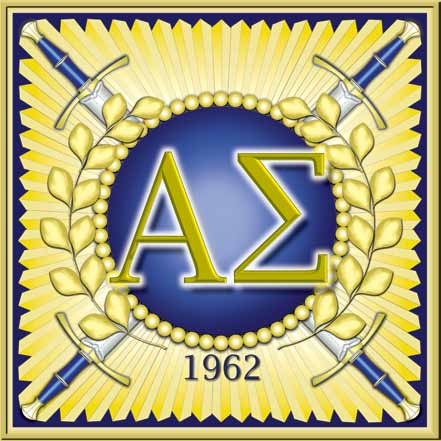
Alpha Sigma’s founders established it in UP in 1962 precisely to go against the grain of traditional fraternities, which seemed to be interested only in beating each other up, in finding cushy jobs for their alumni, and parading their cars around campus. The initials “AS” may have been suggested by the frat’s base in the College of Arts and Sciences, but they soon stood for “Advocates of Scholarship” and “Alay sa Sambayanan.”

Since then, the fraternity has produced a long line of brothers who have distinguished themselves in nearly all fields of endeavor—not just in the usual categories of business and politics, but also in the arts, in engineering, in public health, and, of course, in public service.

To name just a few, they include the likes of Smart Communications founder Doy Vea, sociologist and journalist Randy David, legal scholar and professor Raul Pangalangan, and the late playwright Boy Noriega. Dodo Banzon runs PhilHealth; over in Seattle, Oying Rimon manages the public health portfolio of the Gates Foundation. I could go on and on with this list, but you get the idea.

We have many brods in mainstream politics—Sen. Gringo Honasan, Cong. Miro Quimbo, and former GMA men Mike Defensor and Gary Olivar among the most prominent of them. But the Left can also count Alpha Sigmans among its most revered figures; aside from the aforementioned Nilo Tayag, Tony Tagamolila, and Benny Tiamzon, they include Billy Begg and Joey Calderon who, like Tony, heroically gave up their lives in the fight against the dictatorship.

Like blood brothers, we have differences, disagreements, and debates within the fraternity, which is a healthy thing. If I thought a brod was doing wrong, I’d consider it my duty and indeed the best thing I could do for him to tell him so. I’ve never believed in a culture of silence and secrets, nor in blind obedience. I do appreciate the opportunity that the fraternity has provided for people from opposite sides of the political fence to meet and to argue civilly without fear of being bashed or punished—something I wish we could do more of in our society at large. I can’t forget that on the run during martial law, many of us found shelter and succor with the brods.

And for the young men who come to UP like I did many years ago and who find their way into our brotherhood, I have a standard set of messages waiting for them. Build up both your mental and physical strength, I say, but eschew violence—it has no place in the university. Value scholarship and service; develop your talents, so you can serve the people better. Be an example for others to emulate.

When a resident brod enrolls in my class and introduces himself to me, I tell him that I will expect more from him than from his classmates, and that he had better be ready to recite on demand, because I don’t ever want it said that I gave a brod a free cut or went easy on him. That’s how we can maintain high standards of behavior and performance within the fraternity, and guarantee that it won’t decline into irrelevance.

If you’re an Alpha Sigman and would like to reconnect with 50 years of a glorious tradition of excellence and service, join us in our grand reunion this Wednesday evening, at the Shangri-La Makati. Please email me for more details.

Penman No. 10: Laurels for the Lyceum

Penman for Monday, August 27, 2012

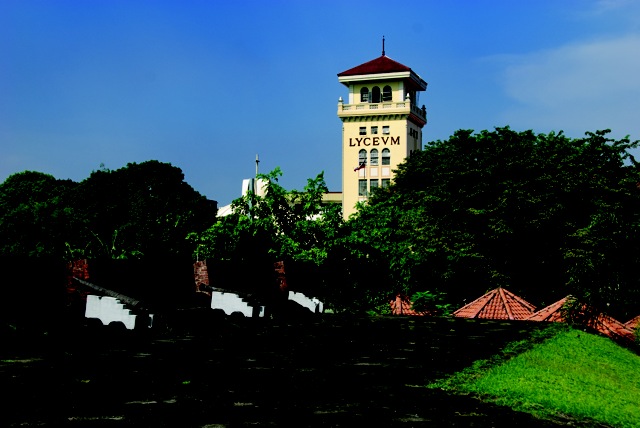
LAST JULY, a school that has done more for Philippine education and public leadership than most Filipinos realize quietly celebrated its 60th anniversary. Tucked away in a corner of old Intramuros, the Lyceum of the Philippines University—known to generations of Manileños simply as the Lyceum—may seem to outsiders to be just one of the many private colleges and universities that sprang up in the metropolis in the 20th century and managed to stagger into the 21st, dazed and confused by the challenges of globalization and the daunting economics of higher education.

Not quite. Today, the LPU is a progressive six-campus university system, with full-grown offshoots in Batangas, Laguna, and Cavite, and a law school in Makati. Its original and main campus in Manila is home to 13,500 students who are enjoying the benefit of an education anchored squarely on one foot in the classical tradition and, on the other, in new, responsive programs designed to give them an advantage in today’s economy.

I rediscovered the Lyceum in the course of writing the biography of the Lyceum’s longtime president and moving spirit, the late Sen. Sotero H. “Teroy” Laurel, the son of the school’s founder, former President Jose P. Laurel.

There’s no question that the bigger, better-known schools—UP, Ateneo, La Salle, and UST, in particular—dominate Philippine higher education and the preferences of Filipino parents and their wards. These are universities that have produced most of our presidents and heroes, big-name artists and athletes, cutting-edge scientists, business tycoons, and government leaders. They have traditionally catered to, and have also helped to form and strengthen, the Philippines’ intellectual and economic elite. And need we add that these schools, their titanic rivalries, and their alumni (both illustrious and otherwise) hog the media’s attention.

But what we don’t appreciate as much is the fact that so many more of us went to smaller schools that have also offered a good and (importantly to many) an affordable, accessible education that prepared our young people well for productive and gainful lives.

This was the vision of former President Laurel when, close to retiring from a long career in government and politics, he thought of setting up what he called “an Alexandria for the masses,” drawing its name from Aristotle’s school, the lykeion. In a book that he wrote around the same time, Laurel lamented: “How can our schools develop moral character among the young, when the schools themselves have become the centers of shocking scandals in such matters as the procurement of supplies, the selection of textbooks, or in the case of private education, the diploma mills? And where will both teachers and pupils get the inspiration for developing moral character, when they see all around them high officials who have been involved in all sorts of irregularities?

“… The truth is, the wonderful institution established by mankind, known as education, can have only one function and this is the pursuit, in the words of our Mabini, of truth, honor and justice. It can have only one sublime and overriding purpose: the recognition and dignification of the human personality.”

The “old man” Laurel, as was often called, was well positioned and prepared to assume the academic mission that his fellow Tanaueño, Mabini, had effectively bequeathed to him. He himself had a prodigious intellect, capped by a doctorate in law from Yale and honed in service with all three branches of the government—as senator, Associate Justice of the Supreme Court, and Justice Secretary—before his service as wartime president.

The Lyceum opened in July 1952 on a 1.3-hectare lot that used to be the site of the old San Juan de Dios Hospital in Intramuros, acquired for the family by Laurel’s indefatigable wife Paciencia. Teroy Laurel, who had returned from his studies in the US and who was running a law practice with his good friend and compadre Jovito “Jovy” Salonga, joined the school as his father’s executive secretary, perhaps little knowing then that the Lyceum would be the great labor and crowning glory of his own life, apart from his work in the 1971 Constitutional Convention and the Cory-era Senate.

“Jovy used to tell me that he and Teroy would go to Intramuros in the evenings to watch the construction of the school. Jovito was, I believe, the one who drew up the corporation papers, as his line was corporate law,” says Teroy’s widow Lorna.

The new Lyceum may have been a tiny school compared to its well-established neighbors, but it had one thing going for it, something that the Laurel name (the wartime charges of collaboration—eloquently disputed by Salonga, who had suffered torture under the Japanese—notwithstanding) was able to invite: prestige. As I note in my forthcoming book, “The new school had assembled the most formidable array of legal luminaries that one could put together in the Philippines at that time. These were men who would lend their names to Manila’s major streets after their time. Jose P. Laurel was the school president, the dean of the law school was Claro M. Recto, and on the Lyceum faculty were such men as Law Vice-Dean Ambrosio Padilla, Sen. Pedro Sabido, Jorge Vargas, Leon Guinto, Eusebio Lopez, Ramon Avanceña, Aguedo Agbayani, Justo Albert, Isagani Cruz, Marcos Herras, Neptali Gonzales, Roberto Concepcion, Arturo Tolentino, and Gil Puyat—men who had been or would become senators, congressmen, mayors, Cabinet secretaries, and Justices of the Supreme Court.”

Not surprisingly, the law school became one of the Lyceum’s bastions. This was accompanied by very strong programs in Journalism, Foreign Service, and Political Science, with the likes of Jose Lansang Sr., Francisco Lava, Emmanuel Yap, and Jose Ma. Sison on the faculty roster. They instructed and inspired a generation of young nationalists who included Journalism majors Satur Ocampo and Tony Zumel.

The Lyceum would go on to produce a veritable rainbow of luminaries including at least 17 ambassadors and eight Justices, three generals, three senators (Jinggoy Estrada, Ernesto Herrera, Panfilo Lacson), Speaker Sonny Belmonte, Gov. Grace Padaca and three other governors, media men Isagani Yambot, Fred Gabot, Gus Abelgas, Gerry Baja, and Deo Macalma, actor Cesar Montano, film director Joel Lamangan, Philamlife president Rodrigo de los Reyes, and education advocate Milwida Guevara, among many others.

New offerings in such areas as Hotel and Restaurant Management, Computer Science, and (in its Batangas campus) Robotics and Digital Animation and Marine Transportation keep revitalizing the traditional curriculum and assure the Lyceum’s continuing responsiveness to the times.Today, Teroy’s eldest son Bobby is on top of LPU-Manila as its president, assisted by his sister Sallie. Under the watchful eye of their mother Lorna, most of the other Laurel siblings—notably Peter, who serves as president of LPU-Batangas—are also involved in this unique family enterprise, proving themselves worthy of their father’s and grandfather’s name, and giving thousands of young Filipinos a fighting chance for a better future.


Penman No. 7: Creative Writing in Hong Kong

Penman for Monday, August 6, 2012

I WAS honored a couple of weeks ago to be invited to visit the City University of Hong Kong to conduct a workshop for their graduate writing students and to give a reading before a gathering of some of Hong Kong’s brightest writing talents, students and teachers alike.

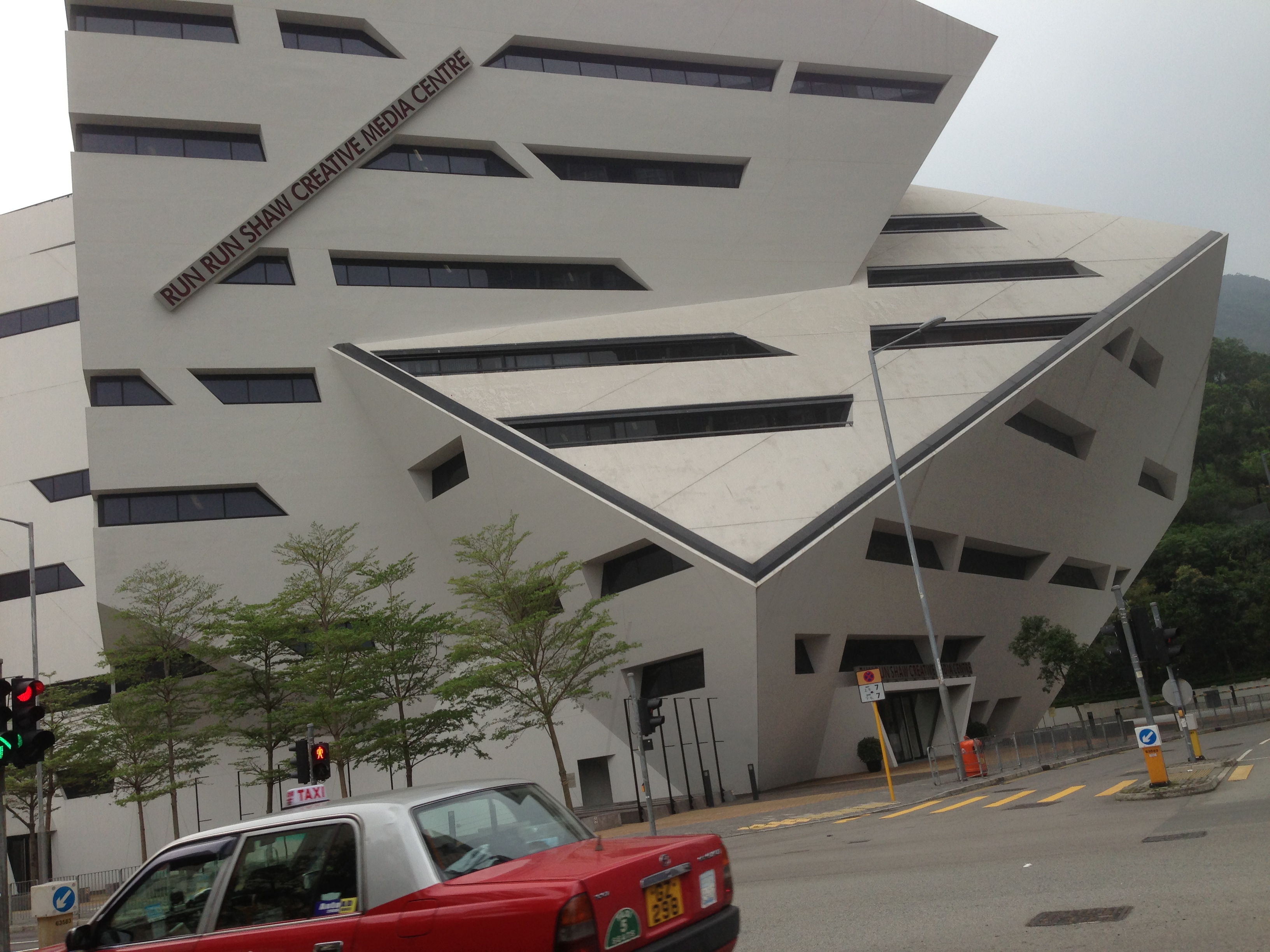
I’d been to CityU before—two years ago, I attended a literary conference there, then stayed on for the Hong Kong Literary Festival. Established only in 1984, CityU (I kept calling it CUHK, until I realized that these initials were already in use by the Chinese University of Hong Kong) has distinguished itself as one of Hong Kong’s most dynamic and modern campuses, oriented toward the world and the future. Aside from the more traditional disciplines, for example, it has a School of Creative Media which teaches everything from Animation to Computational Art and a newly opened School of Energy and Environment where students can specialize in Climate Science and Energy Technology, among others.

The focus on business and technology is hardly surprising in a place like Hong Kong. What struck me was its apparent bid to become a cultural leader in the region as well—and not just in things Chinese, but in areas dominated and nearly monopolized by Western centers of learning.

A case in point was the CityU program that brought me over—Asia’s first and, so far, only low-residency Master of Fine Arts in Creative Writing (MFA) program. Only in its third year, the program has already attracted many first-rate students and teachers from around Asia and much farther beyond.

At the program’s helm is Xu Xi, a gifted fictionist and essayist who’s the living example of hybridity—she’s Indonesian Chinese, was raised in Hong Kong, and took her MFA at the University of Massachusetts-Amherst. She teaches at Vermont College, but has taken time out to direct the writing program at CityU. Though she’s now an American citizen, Hong Kong is in Xu Xi’s blood and imagination, permeating her fiction. She’s become one of the prime movers of creative writing in the region; we were fellow finalists for the inaugural Man Asian Literary Prize in 2007, and she came over as a panelist at the Dumaguete Writers Workshop two years ago.

In setting up their program, Xu Xi and CityU were deftly capitalizing on Hong Kong’s strategic position as an entrepot attracting people from all over the world, with its large expat community and a new generation of Chinese students writing in English. CityU’s English department was built up and strengthened by the likes of language and literature expert Kingsley Bolton (who gave a wonderful lecture on how the Chinese learned and used English, when I was there) who, a few years ago, co-edited a book with Ma. Lourdes Bautista on Philippine English.

The MFA, of course, remains the global standard for advanced studies in creative writing. (In a radio interview, my fellow Distinguished Visiting Writer, the English novelist Jill Dawson, and I were asked the perennial question: “If Charles Dickens didn’t need an MFA to write his novels, why should anyone?” We answered just as predictably: “You don’t need the MFA to write a novel, but it helps you to focus on writing your novel in an age full of distractions, which Dickens didn’t have to deal with. Besides, if painting and music can be taught and learned, so can writing.”)

There are hundreds of MFA and MA Creative Writing programs around the world today—the MFA tends to be longer and more intensive, and is considered a terminal degree—causing us teachers of writing to ask in wonder and consternation: “Why do so many people want to be writers?” The MFA’s low-residency version has been a recent innovation, with Xu Xi’s Vermont College among the pioneers; there are now around 50 such programs in the US, but only CityU offers one with a distinctly Asian orientation.

Under such programs, students sign up for one-on-one distance mentoring with the program’s international teaching staff, recruited from among the world’s best writers (including our very own New York-based poet Luis Francia). Once a year, for about ten days during the Hong Kong summer, everyone gets together on the CityU campus in Kowloon Tong for a series of intensive day-long workshops with the majority of the faculty in attendance. Students are required to produce a creative thesis, a substantial body of work, and the program should be doable in two years. (Two Filipinos—Karla Delgado and Sheree Chua—are in the program; I also met students from the US, the UK, Australia, and, of course, Hong Kong and China.)

There are pluses and minuses to this kind of arrangement, but it’s clearly a boon to those who may otherwise be too busy or just don’t have the option of attending classes and workshops physically in a university, especially a foreign one. It’s less expensive than a traditional campus-based MFA—certainly less than a US or a UK degree—given that one needs to fly in to Hong Kong only occasionally. But Hong Kong being what it is, it’s by no means cheap, especially for Filipinos used to paying UP tuition fees. The costs aside, the international character of the program in terms of both its students and faculty is its strongest aspect, privileging, for once, an Asian sensibility over the usual Anglo-American bias in creative writing in English.

This was something we could’ve done at the University of the Philippines—we’ve had a 30-year lead over everyone else in the region, after all, in offering degrees in Creative Writing—but sadly we just don’t have the funds and the flexibility to attract the kind of international teaching staff you need for a program of this scale and orientation.

But thinking in terms of the region, CityU’s MFA program is a boost for Asian writing and teaching as a whole, the beginning of the reversal of a century-old paradigm where we learned to write in English only in and from the West.