Penman No. 235: High Time at the Henry

img_0634

Penman for Monday, January 23, 2017


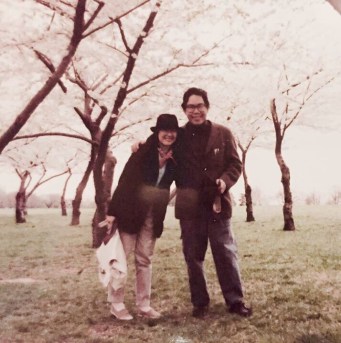
A COUPLE of weekends ago, against all odds, Beng and I celebrated our 43rd wedding anniversary and not coincidentally my 63rd birthday. It seemed like an inspired idea at the time to get hitched as I turned 20, but over the years I’ve wondered if I should have given each day its proper due, and doubled my presents that way. But I soon realized that I was never going to get or find a better gift than Beng—patient, forgiving, and gentle Beng—so January 15 has largely been a day for two.
img_0616

Around Christmas I start thinking about how and where best we can spend the day, and this year, with UP having shifted its academic calendar to begin the school term in mid-January, we could have opted, funds permitting, to fly out to some exotic destination like Penang or Pattaya (or, heck, why not Paris?).

Instead, after some Googling, we ended up in the most unlikely of romantic locales—Pasay City, at the Henry Hotel along F.B. Harrison, to be more specific, where the magic begins once the gate opens.

I’d read about the Henry somewhere before and had seen pictures of the place—a visual and sentimental journey back to the 1950s, with its stately main house and sculpted gardens, and I remember being amazed even then by the fact that such a sylvan hideaway could exist in the heart (or less kindly the armpit) of the metropolis. It was high time we checked in for a weekend staycation; the saved airfare alone would answer for the room. And being staunch northerners, we barely knew the southern sector of the city, except for visits to the Cultural Center and the Luneta area. We hadn’t even reconnoitered the cavernous Mall of Asia except again for the briefest sorties.

But again that’s not entirely true, because I had actually grown up in Pasay in the late ’50s and early ’60s, in a house on P. Manahan branching off F.B. Harrison. It was a neighborhood interlaced with catwalks, off one of which I once fell into the fetid water while showing off my brand-new cowboy outfit, which I had probably received for my fifth or sixth birthday.

That bit of unpleasantness aside, I could still remember afternoons swimming in Manila Bay and lounging on the long beach chairs by the sea wall, riding the double-decker Matorco buses up and down what was still Dewey Boulevard, and munching on foot-long hotdogs at the Brown Derby.

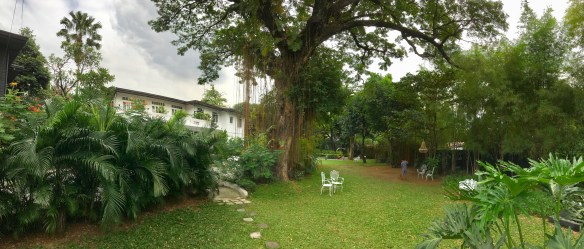
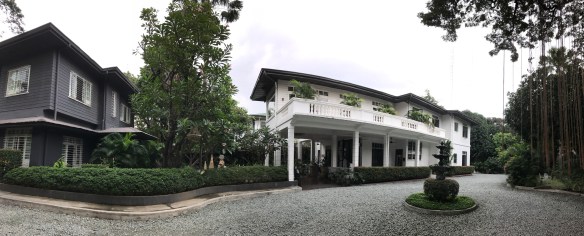
So this weekend in Pasay was something of a homecoming for me, even if all the old landmarks were gone. What’s now the Henry was already there when I was humming the Tom Dooley song, but it wasn’t a hotel yet then but a sprawling compound of large squarish but stylish wooden houses flanking a white concrete main house, amid greenery tamed and teased by Ildefonso P. Santos, who would go on to become a National Artist for Architecture.
img_0586

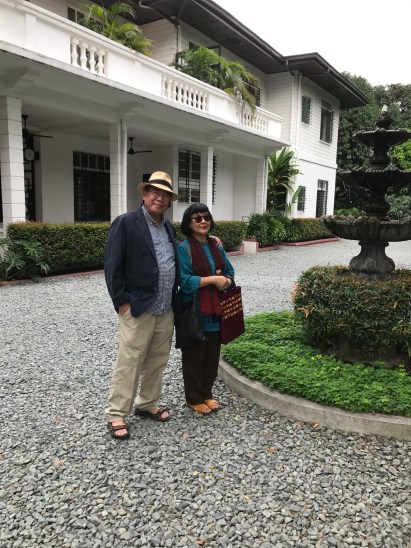
The 32-room Henry was built by its new owners out of that layout, preserving as much of the old while providing such modern amenities as wi-fi and air-conditioning. A long gravel driveway leads to a fountain and a roundabout fronting the main house, past a curtain of angel’s-hair vines; a swimming pool glows opalescent blue amid the verdure; the main house stands proud but welcoming.

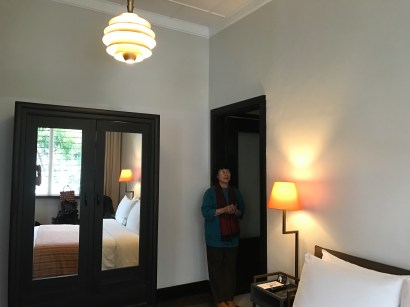
I’ll report that we had a most pleasant and restful stay, helped along by an unobtrusively efficient staff. We luxuriated in the fluffy pillows and the hot shower. It was a bonus to discover that the art gallery of an acquaintance, Albert Avellana, occupied one of the houses in the compound.
img_0594

img_0593

But our anniversary weekend wasn’t meant to be spent cooped up in a room, however charming the ambience. We’ve lately been used to taking 5-7 kilometer walks as part of our seniors’ exercise regimen, so we gamely walked for our bangus and salad breakfast to a restaurant near MOA, and walked many kilometers more within the mall itself.

Staying at the chic Henry was in a way the compleat anti-mall experience, but Beng and I have never pretended to be anything but pedestrian, so that for us was the exotic treat. The mall, like all markets, was familiar territory.

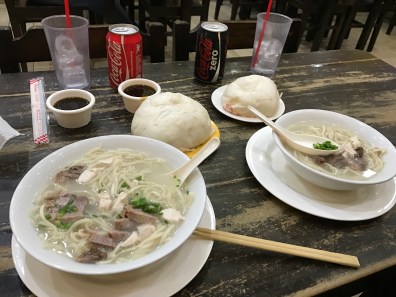
We took in a couple of action movies, buying more popcorn than we could ingest, and oohed at all the nice clothes that wouldn’t fit us. When we had lunch of ukoy and suam na halaya at the KKK restaurant, Beng loudly let the manager know that we were celebrating our 43rd, snagging us a free dessert of leche flan. Hankering for a sushi dinner, we misread Chinese for Japanese and stumbled into Masuki, which served huge bowls of my all-time favorite, Ma Mon Luk-style mami.
img_0617

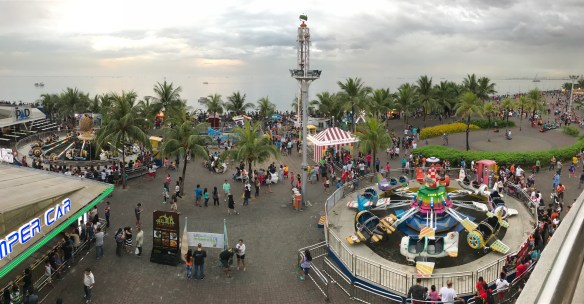
The literal highlight of our weekend had taken place earlier that afternoon. We had asked ourselves, the night before, “What kind of cheap, mindless fun haven’t we tried in a long time?” (Not that, naughty boys and girls.) We paid P150 each the next day for the answer: an eight-minute joyride up and down the MOA Eye, the big white Ferris wheel from whose apex we took selfies before tumbling out of our pod, giggling, to rejoin teeming humanity and the surefooted ordinariness of things.

img_0609

img_0612

Penman No. 213: Artisanal Delights at Salcedo

IMG_9208.JPG

Penman for August 22, 2016


LIKE MANY Manileños, my wife Beng and I had heard of the famous and fabulous Salcedo Weekend Market in Makati but had never gone there, being staunch northerners who refuse to brave the EDSA traffic, even on weekends, if we could avoid it. But curiosity and circumstance finally forced us to relent a few Saturdays ago, the circumstance being a friend’s offer of a room at a nearby hotel that she and her husband weren’t going to be using.

That sounded to us like “Staycation!” so we jumped at the chance. This same friend—she’s in the travel business and gets around—had done us a similar favor a few months earlier as a Valentines’ Day treat for a pair of arthritic lovebirds. Since the room was huge and free, Beng promptly called her sister Mimi and Mimi’s kids and granddaughter Sophie to share the day with us, the idea being to walk a couple of blocks to the Salcedo Market, pick out whatever we wanted for lunch, then lay it all out on the long table and dive in.

IMG_9209.JPG

And that’s exactly what happened. The Salcedo Market opens at 6 and closes at 2, so Beng and I decided to take a sneak peek right after breakfast, before the rest of the family arrived all the way from Tierra Pura. Sure enough, even at that hour and with a slight drizzle threatening, scores of vendors had already set up shop under canvas tents spread out on what, on weekdays, is a parking lot close to the Makati Sports Club.

As I often point out in this corner, I’m no foodie—I’m an instant-ramen and canned-sardines sort of fellow for whom a trip to a food market might be like that of a heathen to the Vatican—but I’m addicted to food shows on TV the way some people can’t get their fill of horror movies, and am always curious to see what’s out there. Beng, on the other hand, will try and eat anything short of the rotten shark that seems to be all the rage in Iceland, and she has to catch me in a good mood so I can graciously agree to step into a restaurant where they serve pizza (I hate cheese), so the Salcedo Market sortie was, for her, sheer, exultant liberation.

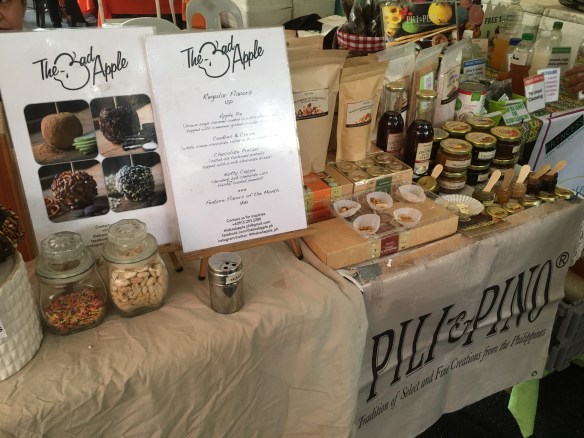
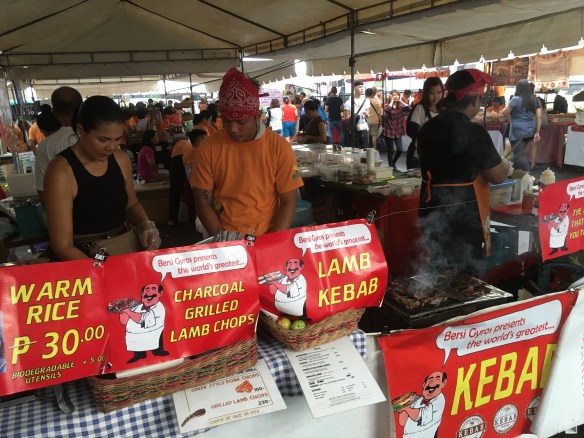
What immediately struck me, despite what I just said about my aversion for fine dining, was how many options there were for plain-food folks like me on offer—burgers, lechon, smoked fish, pancit, siopao, barbecue, and such familiar staples. What lifted them above the ordinary was the freshness and sometimes uniqueness of the ingredients—many were cooked on the spot—and the assurance that you weren’t going to make hourly runs to the bathroom later in the day. Knowing that I had a mound of work waiting for me in our hotel, I loaded up on lechon, corn on the cob, fresh jackfruit, and breadsticks to nibble on, while Beng chose the fresh Chinese lumpia. Mimi and her brood arrived, and I let the sisters drool over the fish curry, the lamb kebab, the laing with daing, the vodka tinapa, the malunggay pesto, and the other more exotic fare.

That was the Salcedo market scene for the most part—good food done well (and whether I liked it or not was irrelevant; seeing Beng’s eyes light up at the culinary pageant was well worth the trip), and home-cooked and artisanal food you just can’t order from a fastfood joint. I hate to think about what had to happen to produce my take-home kilo of tapang usa—Beng didn’t appreciate my Bambi jokes—but it was heaven on the tongue.

This was where a short walk back to the dinner table rounded out our Salcedo experience. There’s a cluster of tables in the center of the weekend market where you can gorge instantly on your selections, but given how many of us there were and how much food we’d amassed, we appreciated the luxury of a long table with complete cutlery in our lodgings just minutes away.

IMG_9222.JPG

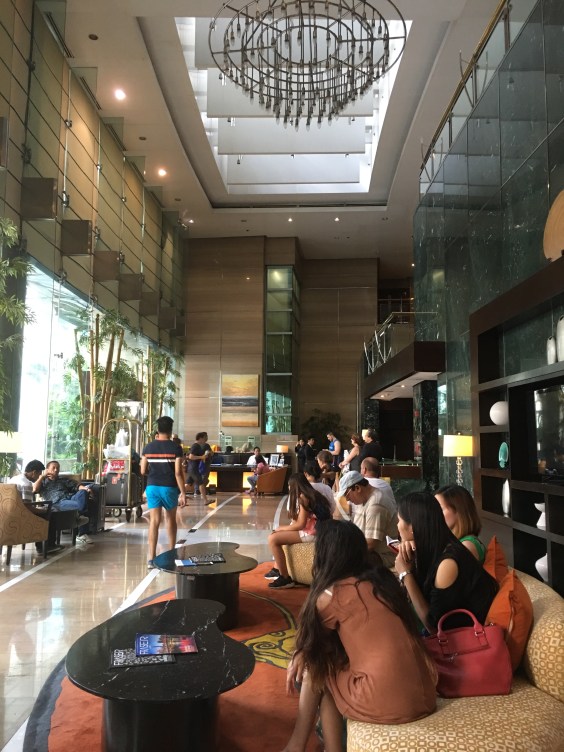
That abode, not incidentally, was Fraser Place Manila—and to call it a “hotel” frankly wouldn’t do it justice. Sometimes you just want a room, any room, to crash into for the night. Some other times, you want more than just a hotel—a place not just to stay but to actually live in, for a few days to weeks to months, maybe even years. (I’d learn from the staff that a couple upstairs checked in ten years ago—and liked the place so much they never left!)

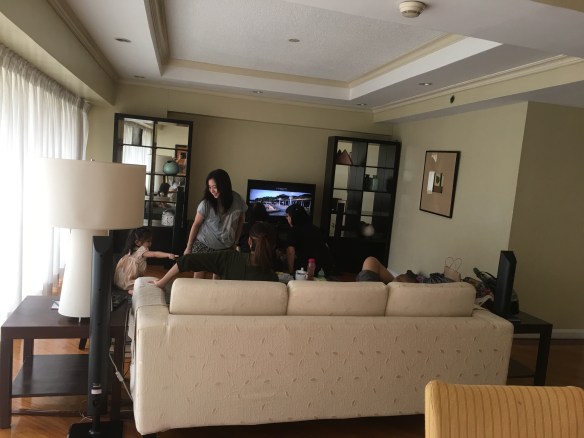
The Fraser—part of a Singapore-based global chain—calls itself a “serviced apartment,” and as soon as we stepped into our two-bedroom suite, we could see why: the 180-sqm enclave was really a virtual house, with a complete kitchen, laundry, three toilets and baths plus another john for guests, and quarters for a housekeeper or caregiver. All your needs were attended to by the staff, the wi-fi was free and strong, and aside from the Salcedo Weekend Market, a host of other restaurants and facilities could easily be accessed in the neighborhood.

But who needs restaurants when, like us, you could bring in loads of choice take-out meals and groceries? It made me smile to see a guest cross the lobby with a bag of veggies and what could have been fresh fish—as only a hotel with a full kitchen could allow. (I also heard dogs yapping faintly in the hallways—the Fraser is pet-friendly, but no cobras please.)

IMG_9221.JPG


There were a couple of downsides to consider, and it’s best to put them out front. Fraser Place Manila isn’t exactly located in what you’d call Makati’s trendiest corner. It stands across a row of office buildings, separated from them by a parking lot. It doesn’t have a penthouse bar or restaurant with a 360-degree view where you can party with your gang until the wee hours. (Cravings does operate a restaurant on the 33rd floor, beside the pool.)

But it’s these very “minuses” that guarantee peace and quiet, which Beng and I appreciated later that evening after our visitors had left and as I typed away on a book project and Beng worked on a painting for a forthcoming exhibit. It also means (of course I had to ask) that we could’ve gotten our princely suite for less than what we recently paid for a small room at an airport hotel near LAX.

Some days, Makati might as well be as far as LAX for us Dilimanians, but we’ll be sure to be back for more of Salcedo. Watch out, Bambi!


IMG_9203.JPG

Penman No. 211: From Fantasy to Reality: Comic-Con (2)

IMG_8346.jpgPenman for Monday, August 8, 2016


THE SAN Diego Convention Center’s ground-level exhibit hall covers more than half a million square feet—about the same acreage as the SMX Convention Center at the Mall of Asia—and Comic-Con occupied every inch of this territory and more, spilling over to more meeting rooms upstairs and to the adjacent hotels.

The throngs of attendees and kibitzers also fill up the streets and parks outside the venue, all the way to San Diego’s picturesque Gaslamp district, which turns into party town at night after the convention—a mammoth “Star Wars” bar scene, with throngs of costumed characters downing tequilas and exotic cocktails whipped up just for the occasion. You can have your pick of convention specials like the Katniss Kiss at Bang Bang (gin, honey, ginger, rose water), the Kryptonite Martini at Spike Africa’s (Svedka vodka, pepperoncini peppers, olive brine), or the Walking Dead at Searsucker (Hamilton’s Jamaican rum, Bacardi Light, pineapple juice, cinnamon simple syrup, Fee Brother’s bitters, fresh lime, Lemonhart 151, topped with ginger beer).

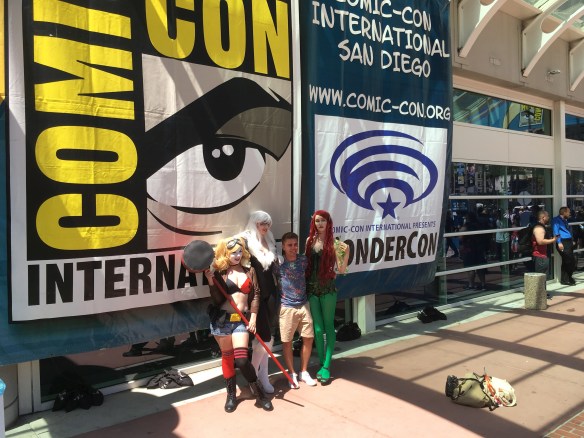
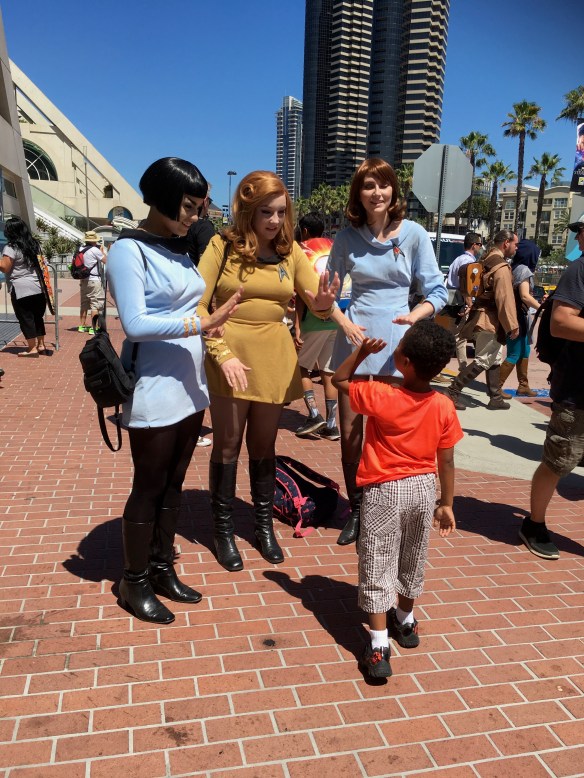
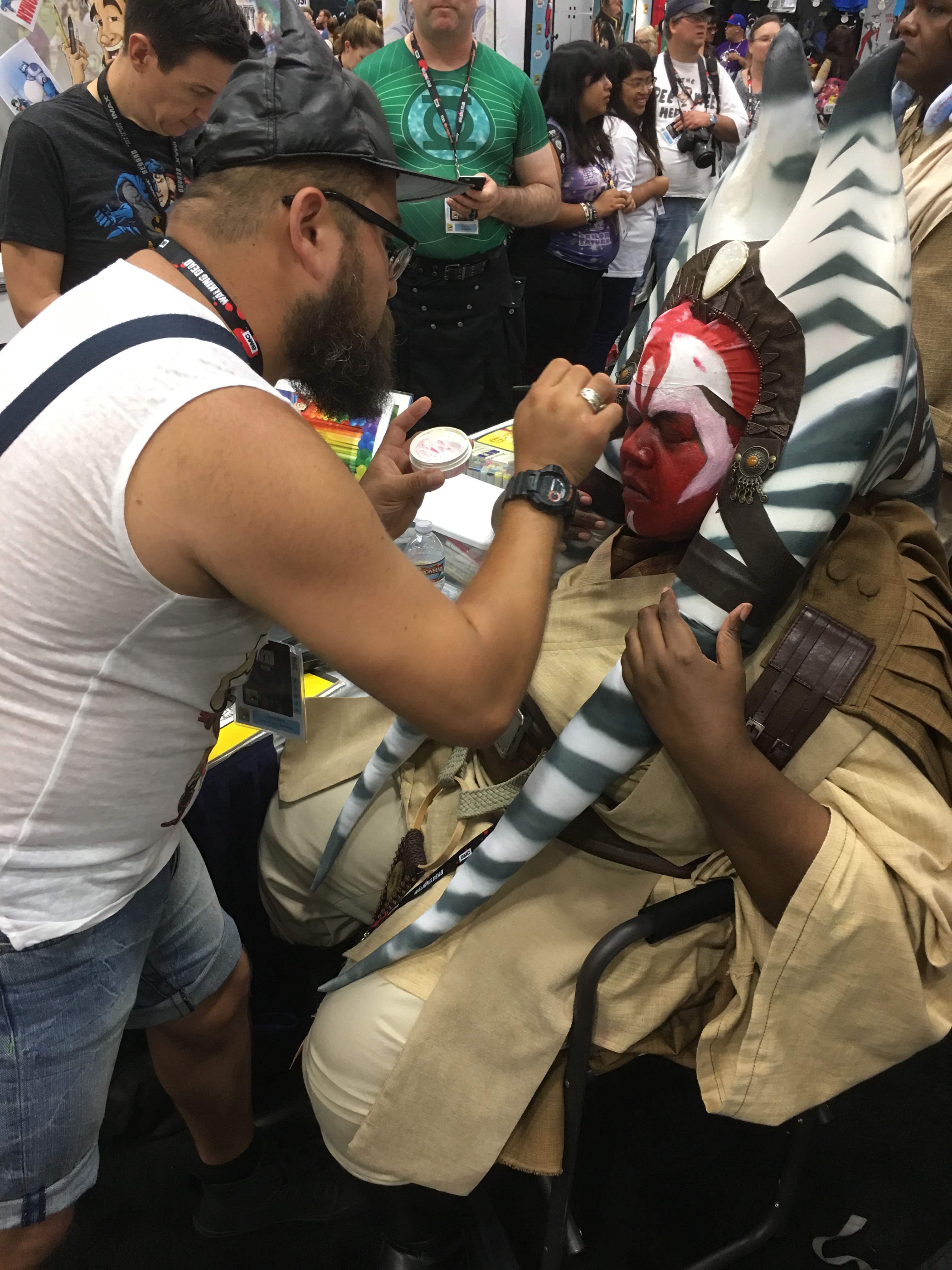
And you can choose to have that drink with Chewbacca or Captain Kirk, because Comic-Con’s strongest and most colorful attraction is, of course, cosplay, that not-too-subtle subterfuge by which anyone can be a superhero or super-villain for a day.

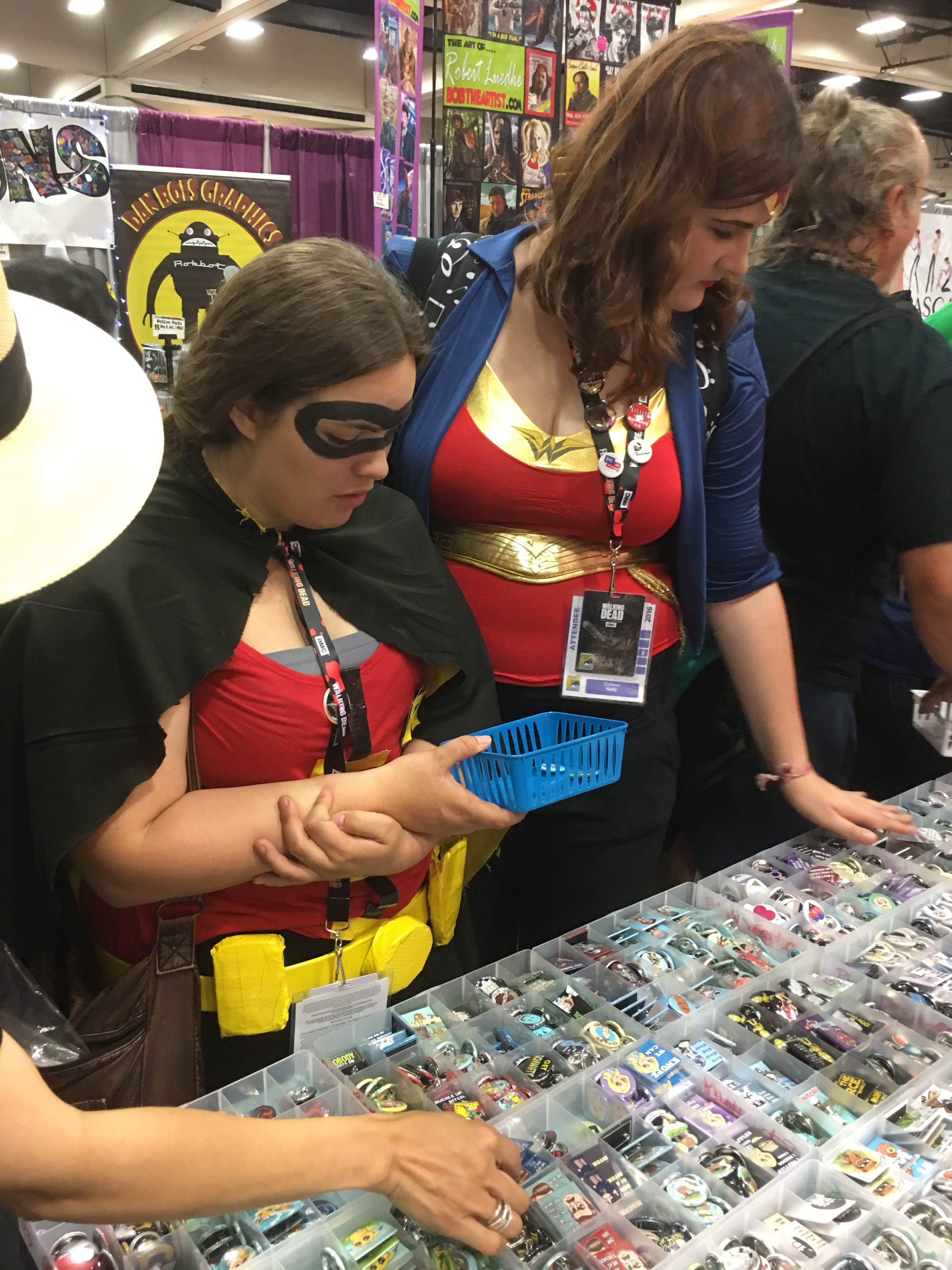
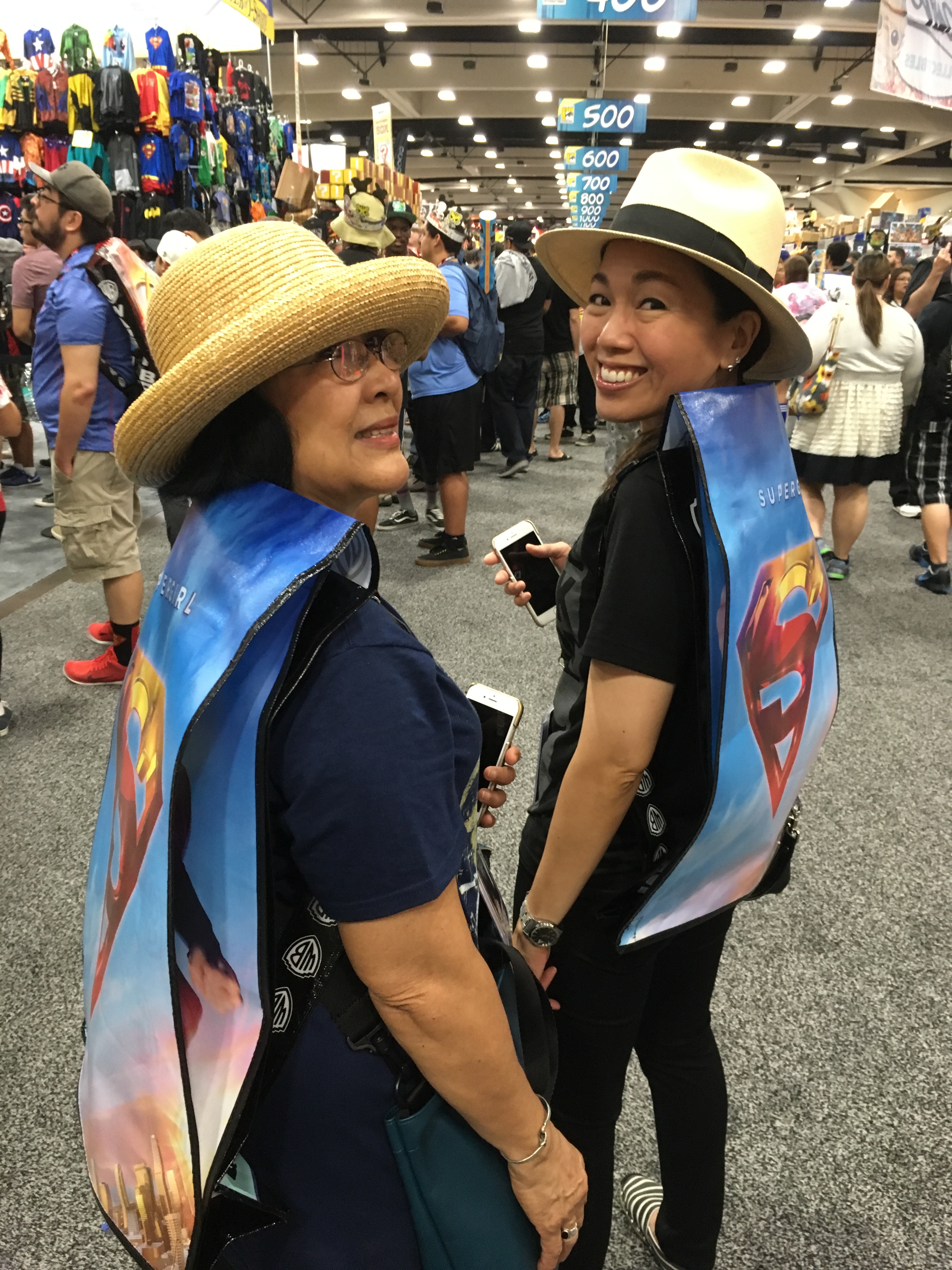
In this regard, Comic-Con 2016 more than met our expectations. There were Storm Troopers, Trekkies, Ghostbusters, and Batmen galore on the convention floor, even a Hulk, a Dumbledore, and a Silver Surfer or two. And as a couple of plus-size Supergirls demonstrated, you didn’t even need the prescribed physique to indulge your fantasy—just the costume, which the wearers had more than likely sewn up themselves, with a little help from suppliers like BuyCostumes.com (where you could be Spiderman for $44.99, or Queen Arwen for $59.99—Darth Vader will cost you more, with just the mask selling for $149.99). A day before Comic-Con opened, Demi’s nephew Matt was still busy preparing his costume and homemade weapon as the Soldier:76 character from “Overwatch,” with key components being shipped in by express courier from Hong Kong.

IMG_9059.JPG

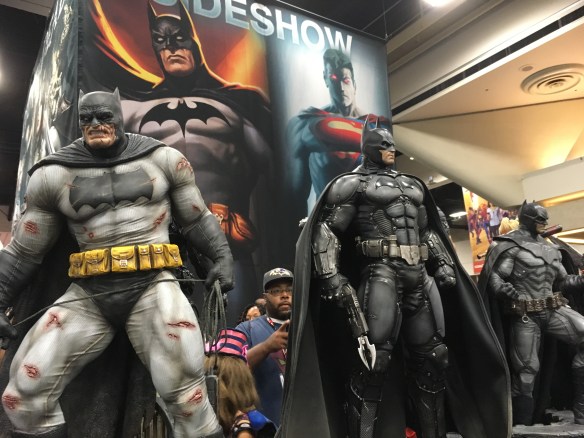
If you didn’t care to dress up as a Sith Lord but had always wanted one to park behind your bar, you could take a life-sized Darth Vader home for about $7,000, for a tenth of which you could get a silicone mask of the Ice King from “Game of Thrones.”

Comic-Con, in other words, was merchandise mania, and it wasn’t uncommon to see hardcore fans staggering out of the venue with huge boxes and bags of souvenirs. Some may have addictions that will seem very peculiar to you and me—like the people who line up at midnight for special editions of the bobble-head Funko figurines—but beyond being a passion, it’s also a business that can see a Funko character that nominally sells for $15 be worth ten times that much on eBay the morning after (more on this later).

In a corner devoted to comic-book auctions, the cover art for an August 1977 issue of Conan the Barbarian had a pre-auction estimate of $12,000—a bargain compared to $20,000 for a Watchmen page. Being oldies and cheapskates, all Beng and I could sport were our black Star Wars T-shirts, which Demi had snapped at a sale (there wasn’t much demand, predictably, for T-shirts that invited you to “Join the Dark Side!”).


It’s all about fads and fashions, and those preferences are set on a screen somewhere—the movies, TV, the Internet, the mobile phone, the vast global domain of popular culture (which is to say, still largely Hollywood). The biggest draws this year included “Game of Thrones,” “The Walking Dead,” “Wonder Woman,” “Teen Wolf,” “Snowden,” “Suicide Squad,” “Aliens” (marking its 30th anniversary), “Supergirl,” “The Flash,” “Guardians of the Galaxy,” and “Star Trek Beyond,” but there’s never a lack of fans (and merchandise) for perennials like “Superman,” “Batman,” “Star Wars,” “Harry Potter,” and “Ghostbusters.”

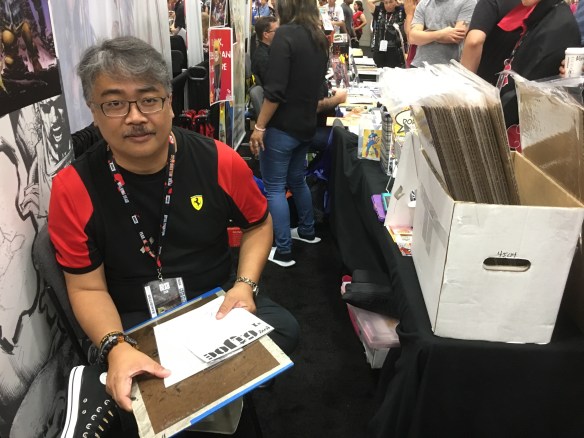
But all these blockbusters begin with a writer and an artist—a “creator,” in industry parlance, along the lines of Marvel’s legendary Stan Lee—and as another main feature of Comic-Con, these creative geniuses were gathered at the far end of the hall in the Artists’ Alley. Tipped off by my younger friends at Philmug (who were attending Comic-Con vicariously through their former chairman), I made a beeline for the booth of Whilce Portacio, one of the most accomplished Filipino-Americans in the comic-book industry.

IMG_9045.JPG

Born a Navy brat in Sangley Point, Whilce had moved to the States as a baby and had grown up in Hawaii, where his artistic talent was nurtured by supportive teachers. He came home in 1978 and studied Fine Arts at Philippine Women’s University under Ibarra de la Rosa. Not speaking Tagalog and feeling very much alone, Whilce spent the time honing his craft, and by the time he flew back to the US a few years later, he was ready for his big break—where else but at Comic-Con, which was then a much smaller event but already the place to be if you were a gifted young artist with a portfolio to show.

A Marvel editor named Carl Potts (who also had some Filipino blood) took Whilce under his wing and from there on, there was no turning back. Whilce (a shortening of William Joyce) would go on to work on Punisher, X-Factor, Uncanny X-Men, Iron Man, Wetworks, and Spawn, among many other major projects, moving up from basic inking and penciling to becoming a creator himself of such characters as Bishop in X-Men and the Pinoy superhero Grail in Wetworks.

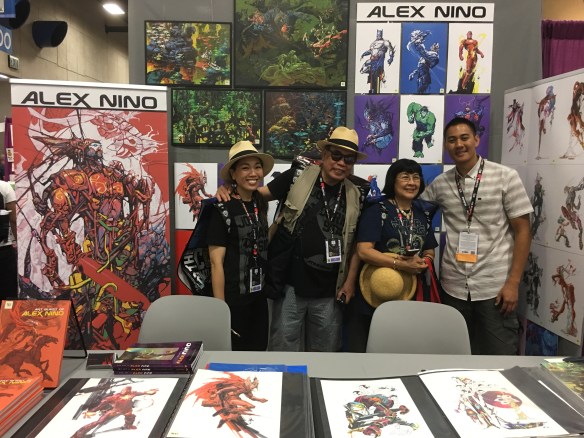
Following in the footsteps of such Filipino comics pioneers in the US as Alex Niño (who also had a booth at Comic-Con, but hadn’t checked in yet when I was there), Whilce sees himself as part of a series of waves of Filipinos who’ve excelled in the global industry. In 1995, he returned to the Philippines to set up a studio on Balete Drive, where he discovered and trained the next wave, which now includes such standouts as Leinil Yu and Philip Tan.

Indeed, another booth at Comic-Con featured the works of Philip Tan, Jay Anacleto, Stephen Segovia, and Carlo Pagulayan. While it took lucky breaks and personal contacts for people like him to succeed, Whilce says that “Today, with the Internet, young artists can introduce themselves. The bridges are now connected. The process and pipeline are now set for everybody.” (I know I promised to report on my long and very interesting interview with Whilce, but it would be a pity to summarize, so I’ll save that for another time. Better yet, come and see him in person when he flies in to Manila to grace our version of Comic-Con—the AsiaPOP Comicon, which will happen on August 26-28 at the SMX Convention Center, with tickets starting at just P550 for a one-day pass.)

IMG_9058.JPG

To cap my Comic-Con 2016 experience, and by another stroke of luck, our daughter Demi conjured a special pass to a live taping of Conan O’Brien’s show at the historic Spreckels Theater downtown (Conan has been a Comic-Con regular for some years now). Did I want to go? The featured guests were a surprise—the cast and crew of “Game of Thrones,” with Hodor, killed off in Season 6, getting the warmest applause. I’d have to admit that being a documentary and car-show freak, I’ve never been a fan of the series. But I had a great time watching Conan, the total pro, and every member of that audience left the theater with a Funko Conan Storm Trooper doll, which touts tried to buy at the door for a paltry $8.

Were they kidding? The dolls showed up on eBay the next day for as much as $300. I gave mine to Demi, which was the least her Tatay could do thank her for the treat of a lifetime.


IMG_9069.JPG

Penman No. 210: From Fantasy to Reality: Comic-Con (1)


IMG_8370.JPGPenman for Monday, August 1, 2016



IT WAS a millennial geek’s fantasy come true, except that it happened to a doddering senior with the good luck to be in the right place at the right time. As I reported last week, Beng and I were in the US last month to attend the launch of the foundation behind the prospective American Museum of Philippine Art (AMPA) in Los Angeles, and also to visit our unica hija Demi in nearby San Diego, where she’s been living and working with her husband Jerry for the past nine years.

We save up for these visits, which usually take place every year sometime in October during what used to be our semestral breaks. But with the shift in our academic calendar to the international (okay, the US) model, we timed this year’s trip for July in conjunction with the AMPA event, the sum of which was that we found ourselves in Southern California during the third week of July.

And what’s so special about that week—one marked by 90-degree-plus temperatures, water shortages, and brush fires in California’s sunbaked hinterlands? Well, as every pop-culture-savvy 30-year-old from Pandacan to Pasadena knows, it’s the time when Comics Convention International—better known as Comic-Con—takes place in San Diego, where it began 46 years ago.

So what exactly is Comic-Con, and what’s all the fuss about this annual pilgrimage attended by hordes of Earthlings, as well as presumptive superheroes and extraterrestials? It’s an exhibition, a convention, an academic conference, a parade, a pageant, a marketplace, and a film festival all at once—the world’s largest and best-known pop-cultural mecca.

IMG_8349.jpg

You might say that at 62, I had no right to be there at all, and I wouldn’t have argued, even if I’d been a staunch DC Comics fan in the ’60s who battled the Marvel masses in lunchtime chalk fights. I could easily think of half a dozen people just in my department in UP who would’ve given their right arms to be in my place, having followed every twist and turn of “Game of Thrones” and having memorized the names of every Jedi Master and Sith Lord in the Star Wars universes (the official and the expanded). These guys (and gals) take their fantasy seriously, and some of them go on from buying every issue of Batman to writing ponderous academic essays for such tomes as It Happens at Comic-Con: Ethnographic Essays on a Pop Culture Phenomenon, edited by Ben Bolling and Matthew J. Smith (Jefferson, NC: McFarland & Co., 2014).

In his foreword to that book, Matthew Pustz would recall that “When I got off the trolley in downtown San Diego, I knew just how to find it: follow the guy in the Green Lantern t-shirt. After a short walk, there it was—Comic-Con International, with the huge convention center sitting in the sun. Waiting to enter were tens of thousands of fans—all with their own strategies for making the most of what has become one of the largest popular culture events in the world. This was the summer of 2007, and I had traveled to San Diego all the way from Boston to attend something that I had dreamed about for a long time. I had attended comic book conventions before, in Chicago, Columbus, Ohio, and St. Louis. But San Diego was different, bigger, more important. This was San Diego—the Super Bowl of comic book conventions—and I was on the comic book fan’s holy pilgrimage, the trip that all fans must make at least once in their lives. This was the Gathering of the Nerd Tribes, Fanboy Woodstock.”

“Comic-Con is a fan event, but it is also a money-making extravaganza where all manner of creators, artists, and corporate owners of media products can sell and promote them to their exact target market. And this target market is one that can be virtually guaranteed to take the ‘buzz’ of Comic-Con back with them to to Iowa or Boston or Tokyo so they can ‘sell’ those products to their friends back home. Comic-Con is the ultimate merging of culture and commerce, and that makes it the perfect place to study how popular culture works in the twenty-first century.”

IMG_8380.JPG

While there are many other fantasy and pop-culture conventions—Dragon Con, for example, is a big cosplay event that takes place every year in Atlanta, Georgia on Labor Day weekend—Comic-Con is a San Diego original, run by “a nonprofit educational corporation dedicated to creating awareness of, and appreciation for, comics and related popular artforms, primarily through the presentation of conventions and events that celebrate the historic and ongoing contribution of comics to art and culture.” WonderCon, a comic-book-focused event, is held in Los Angeles.

The first Comic-Con—then known as the Golden State Comic Book Convention—was held in August 1970 at the US Grant Hotel (the grande dame of San Diego hotels, where our daughter Demi works), but it’s since moved on to the sprawling San Diego Convention Center (where Hall H alone, reserved for the biggest events, fills up its 6,000 seats) and to nearby hotels.

IMG_9048.JPG

Over its four-day run, Comic-Con 2016 was projected to draw 130,000 attendees from all over the world (and the galaxy), each of whom was also likely to spend at least $1,000 in San Diego, making it the city’s top annual grosser. Movie stars fly in to promote their projects and some celebrities like Conan O’Brien have made Comic-Con a regular item on their calendar.

Getting into Comic-Con used to be a matter of flying into San Diego and walking in through the convention door, but not anymore. According to the organizers, “Although we strive to make attending our show as easy as possible, obtaining a Comic-Con badge can require the persistence of Superman, the patience of a Watcher, the ingenuity of Tony Stark, and the readiness of Batman.” It’s hard to think of any other conference where the rules include the following:

  • All costume props and weapons must conform to state and federal law.
  • Projectile costume props and weapons must be rendered inoperable. Functional (real) arrows must have their tips removed and be bundled and zip-tied to a quiver.

Tickets to Comic-Con were sold out months ago, as were all hotel rooms in San Diego, at peak prices (“Comic-Con attendees book their rooms for next year before they leave,” Demi told us.) You don’t really buy a Comic-Con ticket but a “badge,” and to get a badge you have to pre-register online for a membership ID, with which you can then apply for a badge using a code that entitles you to a slot—well, you get the idea.

So how exactly did we get in? All I’ll say is, it pays to have a daughter in a hotel in San Diego in July. It wasn’t really in our vacation plans, but Demi decided to give a pair of seniors a special treat one morning by announcing that she could get the three of us into Comic-Con. Were we interested? You bet we were!

IMG_8362.JPG


Penman No. 204: Sojourn in Seoul (1)

IMG_8594.jpg

Penman for Monday, June 13, 2016


AS MY regular readers well know by now, I have a habit of taking off to parts unknown with my wife Beng at the slightest excuse, and one such occasion came up three weeks ago when Beng marked her birthday (her 36th, it seemed to me—as it seemed to me last year as well, and the year before). Of course I’d known for months ahead that her birthday was coming up, so as early as January, I booked us a flight to and a hotel in Seoul, for the first week of June. (That’s how Beng and I get our kicks—we jump on early-bird budget fares and commit ourselves to travel months in advance, the better to plot the year ahead.)

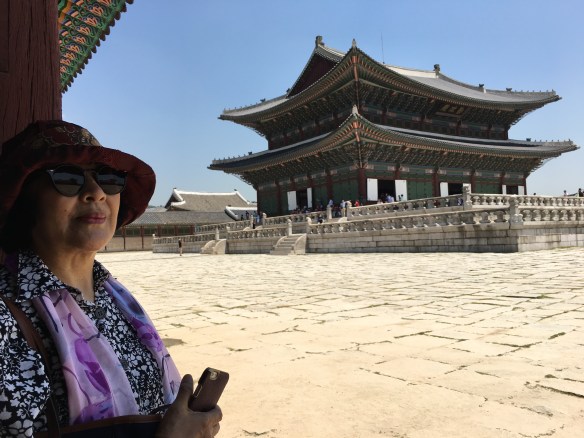
Why Seoul? Simply because Beng had never been to Korea, except for stopovers in Incheon, and I’d pledged years ago to take her everywhere I’d ever been. I visited Korea in 2007 on assignment for the STAR, to cover Hyundai’s shipbuilding and carmaking operations, and we stayed for a day or two in Seoul before moving on to Busan and Jeju, but I could hardly remember anything of Seoul except for the stately palaces and the enormous beef-barbecue dinners. I could do with another and more relaxed visit, on my own time and schedule, and Beng’s birthday in early June seemed perfectly timed, with our semester in UP just having ended.

I also suspected that a sojourn in Seoul would satisfy Beng’s yearnings to see, with her own eyes, the locales of her favorite Boys Over Flowers and the birthplace of Lee Min-ho, if not Lee Min-ho himself sauntering down an alley in Myeong-dong.

IMG_8611.jpg

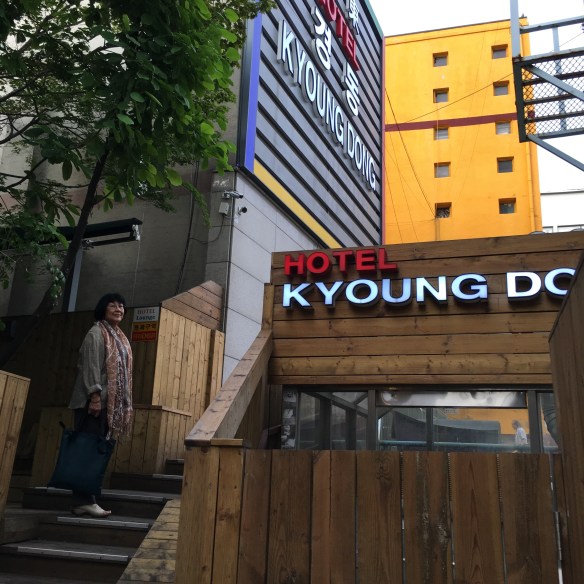
The planning was the easy part. Like I always do, I went online—to skyscanner.com for the plane fares and to booking.com and tripadvisor.com for the hotel. AirAsia had a good deal for the period, and I was able to locate a small, affordable hotel at a great location in central Seoul with four-star reviews—the Hotel Kyoung Dong in the Namdaemun/Namsan Park area.

IMG_8667.jpg

Because of the fare structure, we signed up for a six-night, Tuesday-Monday stay—a tad longer than our usual four-day getaways. But this would open, as I’ll report next week, more fruitful possibilities beyond sightseeing and shopping. This week, I’ll focus on the personal impressions of a casual tourist, hoping they’ll be of some help when you, dear reader (and dear reader’s husband/wife/partner) make your own plans for Seoul.

Yes, we Pinoys need visas for Korea, but if you’ve done a bit of traveling before or can prove you can pay for your own kimchi, then it shouldn’t be a problem (until the end of this year, and by special arrangement, BPI Gold cardholders practically get a free pass to a three-year multiple-entry visa).

It’s a four-hour flight to Seoul and ours left around 7 am, which was perfect for avoiding the horrendous traffic around NAIA and for arriving at Incheon International Airport at midday (Korean time is one hour ahead). I’d already exchanged my pesos for Korean won at the money changer in NAIA (P1,000=W25,000), so we headed straight for the express bus shuttle to downtown Seoul, a little over an hour away. Immediately Beng was struck by how clean and modern everything looked—no litter, no “informal settlements,” no traffic—and I had to give her a spiel about how it hadn’t always been like that, and how Korea had transformed itself into an economic powerhouse within a couple of generations.

Our bus dropped us off at Namdaemun Market—which was like dropping off Beng at the portals of paradise, shopping-wise. As we would realize not too long after, Namdaemun is like Greenhills multiplied by ten—and it was hardly alone, as there was also Dongdaemun to contend with, among other emporia.

IMG_8541.jpg

But first, we had to locate our hotel. I usually roam on my phone, so we would have depended on Waze or Google Maps to get us there, but for some reason, I couldn’t get online, so we had to resort to the old-fashioned way: asking for directions—which, in non-Anglophone Korea, isn’t exactly the easiest thing to do. (And as every wife knows, men would rather walk a mile the wrong way before asking for directions, which is why I always bring Beng along.)

And here we made our first pleasant discovery—that contrary to the notion that Koreans are rude, those we met were invariably kind and helpful. Amid a flurry of gestures and grunts, a parking attendant pointed us in the right direction, and an old man took over on the other side of the street and delivered us to our hotel’s doorstep. On the super-efficient Seoul Metro (the arrival of whose trains are heralded by a trumpet flourish you might hear at the Kentucky Derby), we would routinely see younger commuters yielding their seats to their elders, including us (haplessly incontrovertible proof of our visible age).

The last time I was in Korea, everything had been briskly orchestrated by our hosts, with nary a moment for exploring on our own, but now, with a long, lazy week stretching out ahead of us, we had hours to fill with markets and museums, parks and palaces, porcelain-cheeked nymphets in baby-doll dresses (and sometimes even more smartly coiffed young men), impeccably good food, and streetside bargains that gratified our pedestrian desires.

Beng and I didn’t sign up for any tours, nor did we venture out too far from the heart of the city. This vagabond pair of seniors decided that they would go as far as their subway tickets and their feet would carry them, spend an hour on a park bench just enjoying the scenery while munching on a slice of sweet green melon or a cob of corn (each for 1,000 won, or 40 pesos), and save our energy for the flea markets that, truth to tell and next to the museums, are always our prime targets wherever we go, and Seoul has half a dozen of them on the weekends.

IMG_8639.jpg

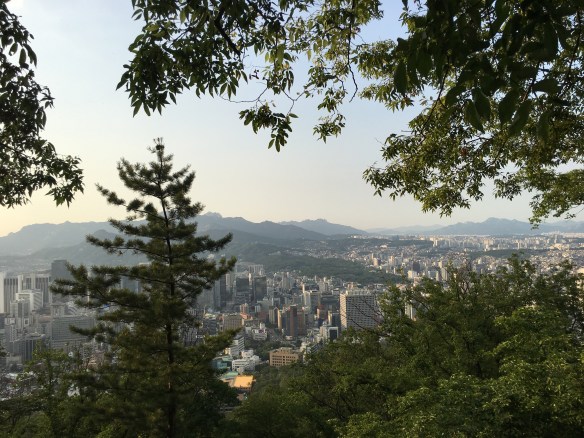
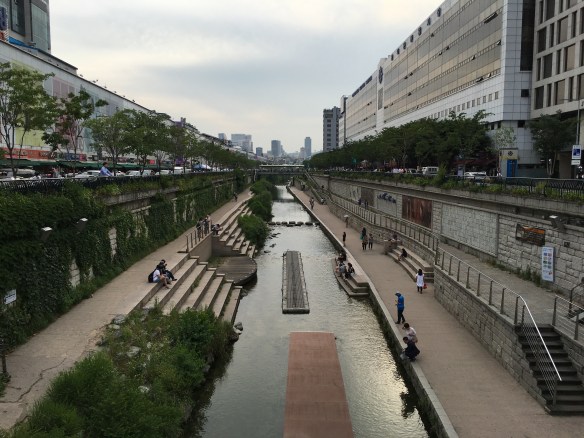
This, Beng and I acknowledged with a sigh and a smile, was tourism senior-style, punctuated by Zantac instead of ziplines, by moisturizer instead of, well, moisture. Some of our happiest moments were the quietest ones—watching the sunset from the peak of Namsan Hill, and the ducks and the carp at Cheonggyecheon Stream.

This brings up one of our small but vital complaints: as wonderful as the city was, Seoul can be hilly in parts, making for long, punishing climbs. Somehow, that doesn’t seem to deter the posses of ajummas—bag-toting Korean matrons sporting broad-brimmed visors—from marching to the markets for their daily dose of retail therapy, or perhaps even just the company of the similarly disposed. Had we lived there, we might have done the same.

Next week, I’ll report on less geriatric topics: culture, literature, and community.


Penman No. 200: Memoirs of a Teenage Maoist

e13-644.jpg

Penman for Monday, May 23, 2016


A SMALL item in the foreign news caught my eye last week: a note that the 50th anniversary of China’s Cultural Revolution had gone unnoticed—in China itself, with no parades or ceremonies to mark the historic event. For those of us too young to remember, the Cultural Revolution was launched by Chairman Mao Zedong on May 16, 1966, to consolidate his power and purge his rivals within the Communist Party in the guise of doing away with old ways of thinking. To fight the old, Mao rallied the young—millions of “Red Guards” who turned on their parents, teachers, and superiors, feeling suddenly empowered to reject authority and traditional learning and to see themselves as the vanguards of a new age.

Over the decade that the Cultural Revolution ran its course until Mao’s death in 1976, many millions died—from executions and from famine. While Mao’s legacy would live on, there’s firm consensus both within and outside China that the Cultural Revolution was an unmitigated man-made disaster, something the Party itself in 1981 blamed for “the most serious setback and loss for the Party, the country and the people since the founding of China.”

What did this have to do with us and with me? Well, to put it as simply as I can, I was a teenage Maoist, and for a while back there, I and quite a number of like-minded comrades saw ourselves as the local chapter of the Red Guards. Call it madness, but we saw Mao as a demigod, and looked to his China as a beacon of hope and a model for other countries like ours—also beset by centuries of feudalism and colonial rule—to follow.

How did that happen? I had joined the student activist movement and had gone to my first demonstrations in high school, and as soon as I entered college in 1970, I signed up with the Nationalist Corps. It wasn’t a communist organization, but it was a short step from reading Renato Constantino to reading Mao. Mao’s teachings (in contrast to the heavy-duty theorizing of Marx and Lenin) were attractive in their seeming simplicity, in their pithiness, in their rosy optimism. It was chicken congee for the soul.

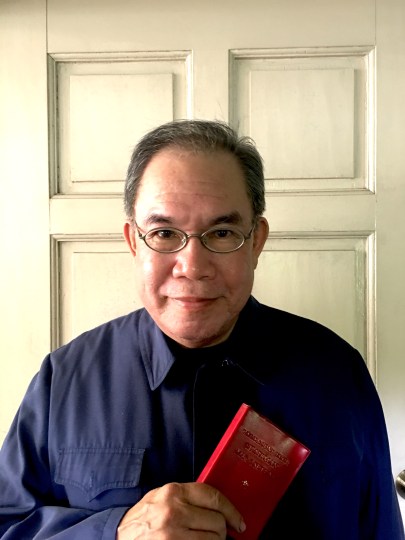
Until today, you’ll hear 60-somethings from my cadre recite gems, chapter and verse, from Mao’s Quotations (better known as the LRB, or the Little Red Book) like “A revolution is not a dinner party, “Political power grows out of the barrel of a gun,” “Dare to struggle, dare to win,” “Wherever there is struggle there is sacrifice, and death is a common occurrence…. All men must die, but death can vary in its significance.” Among my favorites—music to my 17-year-old ears—was “The world is yours, as well as ours, but in the last analysis, it is yours. You young people, full of vigor and vitality, are in the bloom of life, like the sun at eight or nine in the morning. Our hope is placed on you. The world belongs to you.”

It wasn’t too different from what Rizal or the Desiderata said, especially about the youth as the fair hope of the fatherland, but I think what drew us to Mao at that point and to his brand of Marxism was his emphasis on classes and class analysis, his awareness of society as one divided between rich and poor (with the rich collaborating with foreign powers to keep themselves in place), and the fact (or the fantasy) that in China, things were actually going according to the socialist plan. Very few of us had ever been to China then (famously, of course, three senior activists would get stranded there—Eric Baculinao, Chito Sta. Romana, and Jimi FlorCruz), but we accepted it as an article of faith that Chairman Mao was doing right by his own people.

In Manila, we did our best to copy the flag-waving strokes of Peking Opera (eg, “Taking Tiger Mountain by Strategy”), learned about obscure heroes like Norman Bethune, and wore the LRB like a talisman in the breast pockets of our army fatigue jackets. (Procured from US military surplus stores in Dau, it was the closest we could get to the Mao—actually the Sun Yat-sen—jackets that the Red Guards adopted as a uniform, with the red star on the matching cap; but we at least wore genuine “Ho Chi Minh” sandals fashioned out of rubber tires.) At dawn, we tuned our transistor radios to the faint and crackly signal of Radio Peking, for our regular dose of socialist top tunes like the “Internationale,” “Sailing the Seas Depends Upon the Helmsman,” and “The East Is Red”—plus, of course, the daily rundown of the news from the global war on US imperialism. An enterprising fellow even then, I corresponded with a Hong Kong bookseller who seemed only too happy to mail me copies of the Peking Review, even if I had no money to pay him.

Only years later did the failings of Mao’s experiment and the horrors of the Cultural Revolution emerge, revealed not so much by Western propaganda as by the Chinese themselves, who had suffered the most from its excesses. It would take time—and, indeed, a personal visit to China—to appreciate this disconnect between our long-distance romance with Mao’s socialist paradise and cold reality.

It was in July 1987 when I was finally able to set foot on hallowed ground—Tiananmen Square in Beijing, where I was doing a cultural exchange visit along with writer-friends Krip Yuson, Ricky de Ungria, Eric Gamalinda, and Timmy Lim. We had been assigned a translator and a minder, whom we’ll call Chang—a tall wisp of a man who spoke decent English and who was working, he said, on a translation of a biography of Elvis Presley in his spare time. (Had he ever listened to Elvis? No. We sent him a cassette of Elvis from Manila.)

Standing just meters away from Mao’s mausoleum—there seemed to be thousands of Chinese visitors waiting in line to go in—I asked Chang if he could help me see Chairman Mao. “What you want to do that for?” he asked incredulously. “He killed my grandfather in the Cultural Revolution!” Ooops—I tried to say that I was sorry to hear about his angkong, but I had to tell him that I was once a Mao fanboy and just had to meet the man, even his current state of embalmed repose. Chang still didn’t seem ready to believe me, so I sang him the first few lines of the “Helmsman” song: “Sailing the seas depends upon the helmsman, life and growth depend on the sun, rain and dewdrops nourish the crops, making revolution depends on Mao Tsetung Thought!” Chang shushed me up before a crowd could gather: “Okay, okay, I bring you inside, but hurry, okay?”

And so I filed past my fallen idol, awash in conflicting emotions; frankly Mao’s waxen face did little to exude revolutionary vitality, and in just two more years that same square would be bathed in fresh young blood.

I would return to China many times since then as both tourist and writer, and at one point I would chance upon a Mao jacket in a backstreet shop in Shanghai—you’ll never find them in the glitzy stores—and some days I wear it to remind me of what people today will surely say was a youthful folly. Sometimes I’ll stick a most unproletarian Montblanc into the breast pocket, but then again, it’s where the real Chinese revolution led—the freedom to shop for baubles on Nanjing Road.

IMG_8493.jpg

[Image from chineseposters.net]

Penman No. 195: In the Afterglow

IMG_8194.jpeg

Penman for Sunday, April 10, 2016


AS MANY of you know by now, in the early hours of April 1st, a Friday, the UP Faculty Center went up in smoke. I was playing poker at my usual haunt, the Metro Card Club in Pasig, when I got a flurry of text messages from Krip Yuson, who had just heard of the fire on Facebook. Distraught, Krip sent me pictures of the unfolding scene—flames were billowing out of the FC’s upper floors, and it was clear that nothing and no one could possibly survive such a catastrophic event. I thanked Krip for the heads-up, put my cards down, and drove off to UP to see the fire for myself.

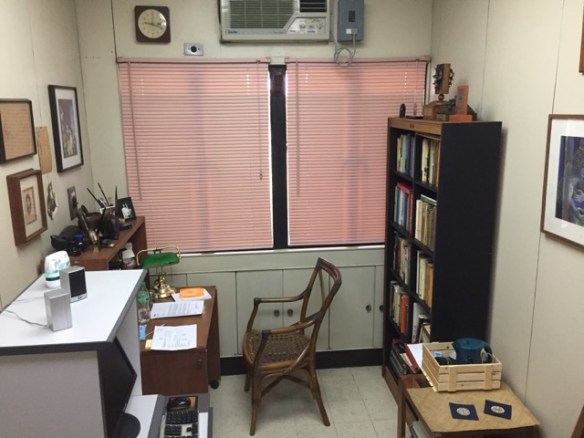
We live on campus, in a faculty bungalow on Juan Luna Street, a ten-minute walk from the FC, so UP was literally home for me. But I also held office at the FC, in the English Department, and the FC had been my official address for over 30 years since I began teaching in 1984. As I drove to Diliman I thought of my room, FC 1036, which I had had to myself since I came home from graduate school in 1991; before that, I’d shared FC 1012 with the late Angelito Santos and Ernie Bitonio, who became a lawyer and labor official.

Anyone who’s studied at UP Diliman would have gone through the FC at one point or another, and the place was rife with tales not only of intellectual and political adventure, but also of mischief of a baser, if more entertaining, nature. My favorite one, possibly apocryphal, had to do with an eminent lady professor going out on the window ledge and hanging on for dear life to spy on a neighbor whom she suspected of having an assignation with a student. Another hand-me-down scene involved two feuding scholars—one delivering a professorial chair lecture in CM Recto Hall while her nemesis handed out a vitriolic flyer at the door to anyone coming in.

It’s funny how the tragic can provoke the comic—and the professorial life certainly doesn’t lack for evidence of human frailty and folly—but it’s as good a response as any to personal loss, which was what the FC fire was really about. True, we lost a campus landmark and an academic institution. But buildings can be rebuilt—and the half-century-old FC was long overdue, anyway, for a massive renovation.

The FC’s subdivision into departments and then into individual rooms and cubicles guaranteed that each little corner would become treasured (and jealously guarded) personal space—not just mini-offices but mini-libraries and mini-galleries, showcases of both tradition and individual talent. Aside from the usual family pictures and diplomas (of which I actually saw precious few on display, perhaps in tacit admission of the silliness of flaunting one’s PhD in a boatload of them), shelves full of precious books and walls hung with choice art described the typical FC room, and each room’s state of order or chaos indelibly imprinted the tenant’s character on the visitor’s mind.

In UP, with historically low salaries and precious few incentives, a room of one’s own is an earned privilege. Professors are kings, and their offices are their castles and citadels, open to students and colleagues but impregnable to the unwelcome (except during martial law, when the military marched into the FC willy-nilly in search of Redheads). During the Diliman Commune in 1971, we’d renamed the place “Amado Guerrero Hall,” after the nom de guerre of Joma Sison, who had been an instructor with the English department.

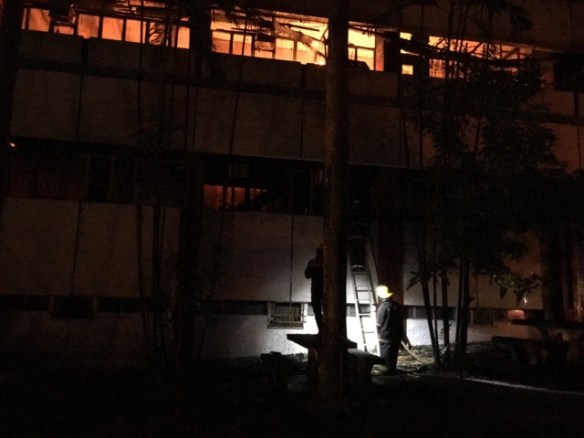
Once aflame with revolution, now it was literally on fire, and three hours after the fire began, I watched as an eerie orange glow illuminated its interior. The text messages had shown tongues of fire curling out the windows, but the blaze had mellowed down a bit when I got there. Had I arrived at its peak, I would have been too excited to feel pain, but its muted state invited contemplation, which invited melancholy. I stood outside the building facing our department, facing my corridor, and understood that very little, if anything, would survive. (And of course the scene was not without its black—or should I say its blackened—humor; I overheard an exhausted fireman asking, “Does anyone have a cigarette?” I can’t write this account without thanking the dozens of firemen from all over who battled that inferno—you all deserved a good puff afterward.)

As my fellow FC denizens would do in the coming days, I began taking stock of what I was losing even as I watched: a Joya nude (one of two that Beng had saved from her days at Fine Arts; thankfully we had given one to our daughter Demi); a large giclée print of lilies gifted to us by Jaime Zobel; two paintings we had bought from a young Jason Moss; a National Book Award trophy by Agnes Arellano in the shape of a typewriter, my favorite among all my illustrious paperweights; my TOYM trophy by Napoleon Abueva, which, meaning no disrespect, did double duty as a hat rack; two of Beng’s serene waterscapes, which I had commandeered from her exhibitions; and a drypoint portrait that I had made myself (in another life as a printmaker) of her whom I was yet courting.

There were the books: among many others, a first edition of Without Seeing the Dawn, signed by its first owner, the novelist Zoilo Galang; a signed copy of Villa Magdalena by Bienvenido Santos; more first editions of NVM Gonzalez, Nick Joaquin, and F. Sionil Jose; and a copy of Ninoy Aquino’s prison testament, which Cory Aquino had signed and gifted to me in thanks for some speeches I had happily done for her pro bono.

And then of course there were my own books and papers—file copies of nearly all my books, and assorted publications, including 20 copies of the first printing of Penmanship, whose special paper I treasured and therefore hoarded; and my only copy of my dissertation. Luckily I had left only one of my fountain pens in the office, a Conklin desk set from around 1925, and a handsome crystal inkwell from Barcelona. Most of these could be replaced, but not the letters of friends and students over 30 years, nor the cane chair handmade by my late father-in-law, on which I took many a siesta.

IMG_6542.jpeg

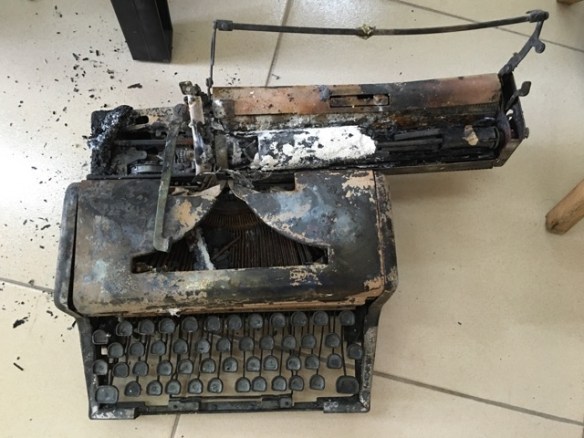
In the end, I found myself mumbling, “It’s all just things,” but of course it wasn’t. Men don’t grieve well, and over the next few days I grew increasingly sullen and irritable. Last Monday I joined a supervised foray into the burnt-out premises, just to see what we could recover. Almost everything we knew and owned had turned to mounds of char, which remained warm and smoky beneath our booted feet. From my blighted corner I picked up a ceramic mug that had lost its bottom. I also rescued a porcelain guan yin that belonged to Jing Hidalgo, and the ravaged hulk of a Royal typewriter I had given Isabel Mooney two decades earlier. We staggered out with our loot, laughing, and then the desolation hit us.

IMG_8243.jpeg

My grandmother Mamay used to sing us a lullaby which Ilonggos will recognize, about how life and sweet things will simply drift up and away in bitter smoke, and that weekend some of that life and some of that sweetness rose up into the air.

“We Pinoys are disaster-proof,” I tweeted at some point, mindful of how small our plaints seemed compared to a Yolanda. I do believe that, and we literary types have probably used up all our phoenix metaphors in the fire’s afterglow. But I’ve also always believed in proper goodbyes, so before we haul in the new furniture into the inevitable new FC, here’s mine, to ash-covered memory.

(If you want to tour the aftermath of the FC fire with me, see the video here.)

Penman No. 190: A Makati Staycation

IMG_7988

Penman for Monday, March 7, 2016


THE WORD “staycation” must have been invented for people like my wife Beng and me, who now and then like to laze around in a hotel away from home, though not too far away that we’d have to book a flight or take a long bus ride. For those who’ve been living under a rock, a “staycation” is defined as “a holiday spent in one’s home country rather than abroad, or one spent at home and involving day trips to local attractions.”

For us Pinoys, a staycation is halfway to heaven. It’s neither home nor Hawaii; usually, it means parking the car and one’s brood in a local hotel, then spending the weekend pigging out on restaurant fare and TV marathons, scouting the nearby shops, and flopping around in the pool. So it’s not free, but it won’t break the bank, either.

Of course, there will be people who—for perfectly good reasons—will ask, “Why even bother? Why not just stay at home?” Yes, sure, home won’t cost you a thing, but that won’t do what a staycation does, which is to play and pretend for a blessed couple of days that you’re somewhere or someone else, like a tourist in your own country. A fancy word critics might use for the experience is “defamiliarization,” which is looking at the same old things with new eyes, producing unexpected effects.

Well, Beng and I got a pleasant dose of defamiliarization a couple of weekends ago when a friend generously passed us a staycation package that she and her husband couldn’t avail themselves of, and we found ourselves at the door of a hotel that we’d never really noticed before, in a neighborhood we’d never really lived in before.

The neighborhood, of all places, was Makati. Both steadfast northerners, Beng and I have lived in Quezon City nearly all our adult lives, and crossing Guadalupe Bridge—despite the many thousands of times we’ve done it for business and pleasure sorties to the south—still means crossing a psychological barrier. Makati was always just a place for shopping or for work, or otherwise for attending some bash at a big hotel. And I realized that until that weekend, it had probably been at least 15 years when we last slept over in Makati, thanks to our daughter Demi who was then working for a big hotel chain.

So it was about time we got a bit cozier with our southern metropolis, and off we went to the City Garden Grand Hotel at the corner of Makati and Kalayaan Avenues, a 33-storey, 300-room structure that I vaguely remembered seeing rising but had never stepped into. (An older and smaller cousin, the City Garden—minus the “grand”—was just across the street, and I almost mixed up the two.) The drive up the parking ramp was a bit steep and the elevator could have used a shot of adrenaline in its pulleys, but that would turn out to be the first and last of our complaints.

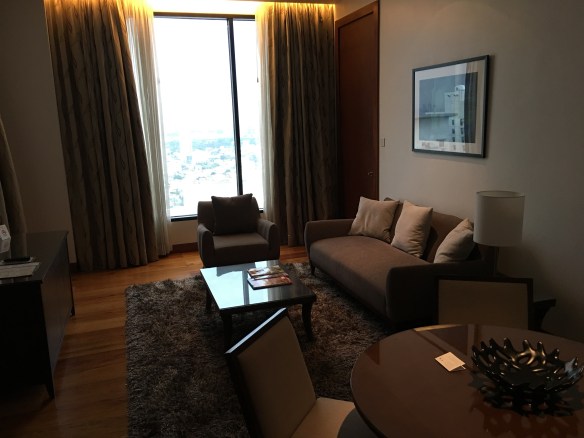
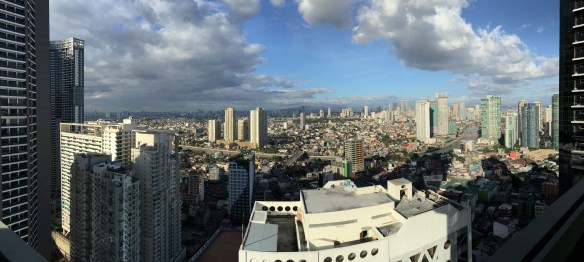
We were booked into a junior suite on the 30th floor, with a spacious living room and entertainment area (and a large sofa that could have easily slept one more) plus a bedroom with a king-size bed; the suite also contained one big bathroom and two toilets, two TVs, a full-size fridge, a microwave, and a coffeemaker—plus, let’s not forget that most essential of today’s amenities, free wi-fi. In other words, it was a hotel easily at par with its four-star counterparts in Hong Kong or Singapore in terms of creature comforts. We were on the north side of the building, so throwing our curtains open revealed a vista we weren’t used to seeing—our part of the city, stretching from the Pasig to the hills of Antipolo.

IMG_7958.jpg

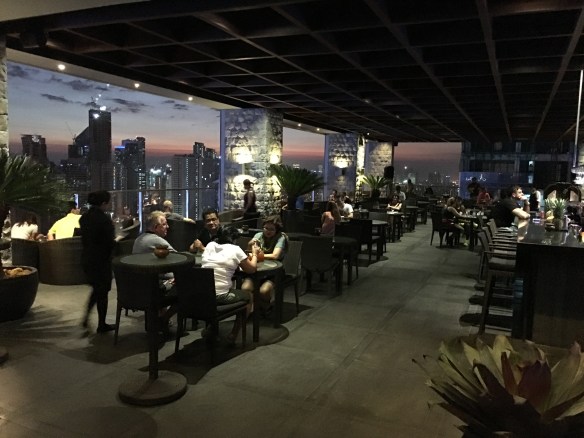
An even better view could be had just two floors up, as we soon discovered. The City Garden Grand’s piece de resistance is arguably its 32nd-floor Firefly roofdeck bar, which offers a nearly 360-degree perspective of Manila and its environs. (A terrace on the 33rd floor is used for weddings and other special events.) Looking southward at sunset, Laguna de Bay shimmered on the left and Manila Bay glowed on the right, while behind us the darkening north soon lit up like a bed of stars. With a cold beer in hand, the swimming pool bubbling in a corner of the roofdeck, a barbecue on the grill casting its savory spell, and the city twinkling at our feet, we felt utterly transported. The sense of estrangement was enhanced by the preponderance of foreigners in the hotel’s clientele—Australians, Brits, and Germans, it seemed to me, who were leveling up from backpacking.

Beng’s a huge fan of breakfast buffets, and even more than dinner, we both look forward to a hearty breakfast to start the day with, and will often judge a hotel by its breakfast buffet; we’d rather live with a smaller room than a skimpy spread. In this respect, the City Garden Grand passed with flying colors, offering a range wide enough to please everyone, from mushroom with truffles to crispy dangguit (and the menu rotated from one day to the next, providing even more variety).

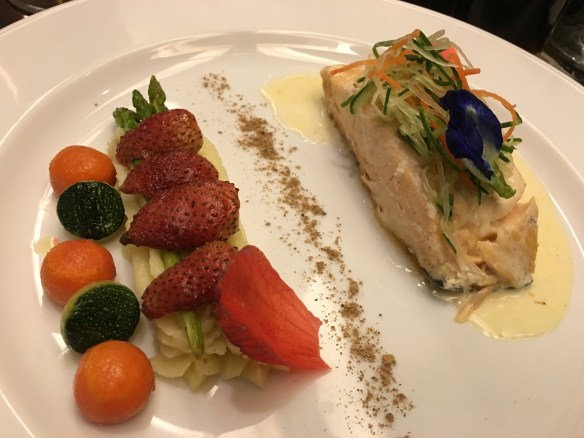
But the best was yet to come, as we were to discover at dinner. Beng and I usually prefer to go Chinese, but as a set dinner at the hotel’s Spice restaurant on the 7th floor was included in the “Love and Luck” package, we decided to give it a try, despite my well-known and admittedly strange aversion to fine dining. Dinner proved a pleasant shock to my pedestrian palate, from the organic mixed salad of shrimp toast and edible flower in strawberry vinaigrette to the broccoli and garlic soup with beetroot foam and focaccia bread to the entrée of beef wellington with bone marrow sauce (Beng’s choice) or sous vide of New Zealand salmon with brown butter asparagus (mine). (I may be a culinary philistine, but I’m addicted to food and cooking shows, so I knew at least what sous vide involved and meant—in short, scrumptious.) The dessert of deconstructed strawberry shortcake with berry coulis and chocolate marble proved too much, on top of everything—we ordered just one and happily had the other taken out.

IMG_8001.jpg

We were so impressed that we asked to see the chef, and were even more floored when he turned out to be no imported Frenchman or Swiss but an entirely homegrown 24-year-old, Ariel “Yeye” dela Umbria, a proud graduate of NCBA’s HRM program.

The surroundings of a hotel are always part of the package, and Beng and I were glad to spend the weekend exploring Century City Mall (just a couple of blocks away) and the Greenbelt-Glorietta area (a longer 20-minute walk, but good for the exercise). Of course, the entire Kalayaan-Jupiter district is a prime restaurant and entertainment zone, which we’ll revisit at greater leisure one of these days.

Meanwhile, our warmest thanks to that friend for the weekend break and for giving us more reasons to enjoy the metropolis; 30 floors up, it never looked so good.

IMG_7991


Penman No. 185: Wired for Fun

IMG_7932.jpg

Penman for Monday, February 1, 2016


SOME INTERESTING changes took place in my home-office environment over the recent Christmas break. First, as a gift to the household, especially my movie-loving mom, I got a multi-user subscription to Netflix. Second, because of Netflix, I signed up with a lifetime Virtual Private Network (VPN) service, which, among other benefits, allows users to watch US-based offerings (like Netflix, which very recently opened a limited Philippine operation, largely dispensing with the need for VPN). Third and perhaps most importantly for the long run, I ramped up our Internet connection, from the old 5 Mbps to a whopping 100 Mbps fiber-optic line that had just become available in our Diliman neighborhood. The setup then prompted me to acquire an Apple TV unit, which streams Netflix shows, among others, from the Internet to your HDTV set, completing the home-movie experience (well, throw in some popcorn and Coke for the full effect).

If you’re not too tech-savvy and if I’ve left you hopelessly confused by that exasperatingly jargon-laden paragraph, let me unpack it for you, as I’d explain it to someone like my mom. (I should add that my mother is unlike most 87-year-olds. She doesn’t have a computer, but she’s otherwise glued to four devices—her TV, her iPhone, her iPad, and her Android tablet. She loves playing vocabulary and bubble-type games, which keep her brain cells humming, on top of the 20-minute walk she takes every afternoon.)

“Home office” refers to the fact that over the past three decades, with the rise of the Internet and indeed its indispensability to modern living, more people have been able to work at home, or to bring much of their work home. I teach at the university, but most of my writing is done at home. My wife Beng also has her art-restoration studio at home. This means that we have to invest in equipment and technology that will allow us to get our work done, and done well, right where we are.

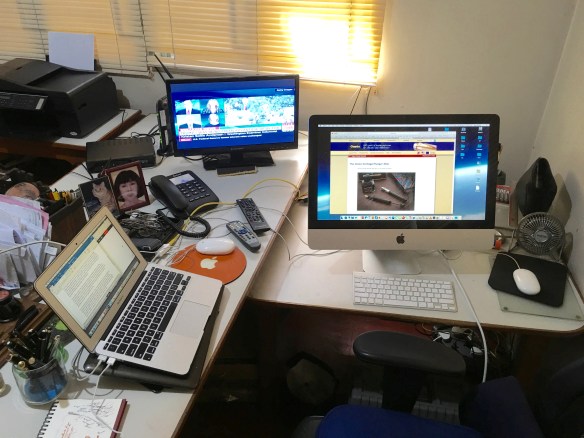
For me, that means several computers—I use a small MacBook Air as my main workhorse, portable but powerful, with a very fast processor and a large hard drive; for a backup, I have an older, larger MacBook Air, a bit slower, but good to have around just in case the main machine falters or is in repair; I also keep an iMac on another desk for when I need to see larger images, or to have fun surfing (or playing online poker) while I work. Yet another screen is almost always open at my desk: a tabletop TV, on which I keep up with the news.

All that hardware would be of little use without a fast and reliable Internet connection, and here I was lucky to be living in an area now covered by PLDTFibr, which ran a promo over the Christmas break offering a 100 Mbps service for six months (it’ll slide back down to 50 after six months, but you can’t sneeze at 50 Mbps either—and no, I’m not getting anything from the company for this plug, not even a coffee mug).

What does “100 Mbps” mean for the consumer? Webpages load in a snap, instead of crawling down the screen as some circular icon keeps spinning; you can download a 1-gigabyte software update in minutes rather than hours or overnight, as I used to be resigned to; and you can upload large files, say to DropBox or YouTube, without having to knit a doily while it loads. Is it expensive? It cost me only P500 more to level up from my old 5 Mbps service from another provider, which I had been a faithful client of for over ten years.

The best beneficiary of a fast Internet connection, however, is streaming, which is the way those who sell movies and music, like the iTunes Store and Netflix send you their material over the air—in one continuous flow, like you were watching a movie at the theater. But that’s more hopeful than achieved for most Pinoy consumers, because, as of a year ago, the Philippines had the third-slowest average Internet speed, at about 2.8 Mbps, in Asia, according to the folks at Akamai, who keep tabs on these things (No. 1 Korea averages 23.6 Mbps).

That means that your screen will very likely freeze just when things get really interesting in the movie, as your provider struggles to bring up the rest, like those guys who ran reels between theaters in the old days. (Lilia Ramos Shahani wrote a great piece on this for the Star, “Why Is Our Internet So Slow?” last August.)

And there’s nothing better to do with streaming than watch movies and TV shows from where they’re stored—the servers of US-based Netflix, for example, which we used to be able to access only through VPN. (Netflix didn’t want people in countries it didn’t serve—like the Philippines, until recently—to see Netflix shows. The Internet being what it is, some smart folks found a workaround, VPN, which tricks the Internet into thinking that you’re in Tampa, Florida instead of Tuguegarao, Cagayan.) There’s been a lot of argument over whether VPN-enabled Netflix is illegal, but it isn’t piracy—you still pay for Netflix, but are simply diverting its stream to your barong-barong. (I pay about $12 or less than P600 a month for a four-user license.)

That argument is now moot, as Netflix has officially added the Philippines to its serviced countries, albeit with a thinner menu; you’d still need to turn on your VPN to get the full US package (Netflix, however, has rethought its toleration of VPN, so that option might not last. I’m not too bothered, as I value VPN more for the PBS documentaries I like to watch on my iPhone in some traffic jam or over long, boring meetings. VPN is also good for your digital security, masking your real IP address from snoopers.)

The piece de resistance in this upgraded setup is the Apple TV, a small black box that uses wi-fi and your TV’s HDMI port to let you enjoy Netflix, YouTube, and other Internet video—even your own library of movies, music, and photos—on your big TV, instead of squinting at them on your phone or laptop. It isn’t cheap—the gadget costs a bit less than P9,000 for the basic fourth-generation model—but there are alternatives. Chromecast, a thumb-sized thingy made by Google and marketed by Globe for about P2,000, will hook you up to Google Play Movies, YouTube, Spotify, and other entertainment fare.

I’ll admit, it’s hard to think of work when you’re this wired for fun, but you can also say that this what makes all that work worth it—digital Disneyland at the click of a remote-control button.


Penman No. 184: Degrees and Diplomas

MI1107TAGAAXX_lg.jpg

Penman for Monday, January 25, 2015


IT WAS with much interest that my eye strayed last week to a story on the BBC website with the headline ‘Penguin scraps degree requirement.” The article went on to report that publishing giant Penguin Random House—presumably one of the world’s most literate employers—was no longer requiring applicants for any job in the company to show college diplomas.

“The firm wants to have a more varied intake of staff and suggests there is no clear link between holding a degree and performance in a job. This announcement follows a series of financial companies dropping academic requirements for applicants. Neil Morrison, human resources director, says they want talented staff ‘regardless of background’,” the article noted. The report went on to say that leading accounting firms such as Deloitte and Ernst & Young had also relaxed their educational requirements, with Deloitte changing its selection process so recruiters would not know what schools its applicants had attended.

It’s a novel idea that sounds fair and makes sense, but I’m sure it will take some time before Philippine businesses catch on, as obsessed as we Pinoys are with college diplomas, especially those that come from certain schools. Just scan the Sunday classifieds in any local newspaper—for jobs of any real economic and social worth, your typical non-equal-opportunity employer will demand a piece of parchment from a “Class A” university, which will count more than any previous experience you may have acquired.

Arguably, that wasn’t always the case. We baby boomers belong to a generation—probably the last one—for whom gutsiness and scrappiness was still the best way forward, rather than degrees and diplomas. Just ask any taipan how many of them have Wharton MBAs. One of them whom I happen to know, because I’ve written his family’s history—Filinvest founder Andrew Gotianun Sr.—didn’t go beyond two years of college at San Beda, and had to drop out because of his father’s unexpected demise. His wife Mercedes, Filinvest’s other dynamo (Andrew was the visionary, Mercedes the executor), graduated from UP with a BS in Pharmacy, magna cum laude—but what led to her success as a banker wasn’t college but streetsmarts. “I made friends with the owners of banks abroad and convinced them to lend me their operations manuals,” Mercedes told me, “which we then adapted to local conditions. That’s how Family Savings Bank began.”

Indeed it used to be that you could get places without a college degree, as long as you had talent and guts (you needed both—just one wouldn’t have done it). Among writers, in particular, a degree was a bonus, maybe even a demerit, in those pre-MFA (Master of Fine Arts, the writing degree of choice) days. The old conviction was that, to know how to write, you had to know how to read, and the serious would-be writer read a lot outside of school without having to be told. The real test of the writer was, well, in the writing—in the quality and the consistency of one’s craft, rather than in the number of English units one could present.

There was no finer example of this than the late National Artist NVM Gonzalez, who never finished college (he did go to National University), but who went on to a distinguished writing and academic career here and in the US. The late journalist I. P. Soliongco was another such titan in his field. My friends Pete Lacaba and Krip Yuson, both dropouts by choice, deserve honorary PhDs for all their work as far as I’m concerned—not that they would care—but more valuable is the fact that they’ve been asked to teach and to share their expertise with younger Filipinos.

My own dad Jose Sr. also dropped out of college—he was the smartest kid of his time in our province of Romblon and could have gone on to become a de campanilla lawyer, but was too poor and also perhaps too confident in his abilidad to go the full distance, and soon fathered me and my four siblings. Seeing him write as well as he did—he was a keen reader of novels and magazines—I grew up believing that I didn’t need a college degree, either, to get where I wanted, so I dropped out of UP in my freshman year to get a job as a newspaper reporter. My younger brother Jess, also a talented writer, obviously had the same impression and did exactly the same thing, dropping out of UP before landing jobs with San Miguel’s PR department and later becoming editor-in-chief of the Mindanao Cross. I went on to work with the National Economic and Development Authority for ten years, even earning a graduate UP diploma in Development Economics as a special student and working on special detail with the United Nations Development Programme, doing project studies. I began writing plays, stories, and screenplays and winning Palancas, and felt that I could have gone on for life with little more than my 21 undergraduate units in English and 30 grad units in Economics.

But one day in 1981—after attending the Silliman Writers Workshop and falling under the spell of Robert Graves—I decided to go back to school as a returning sophomore, at the age of 27. I found school exhilarating, and later quit my job to study full-time, with my wife Beng taking up the slack. To be honest, it wasn’t the fiction that roped me in, but the poetry of Sidney, Wyatt, Shakespeare, Dylan Thomas, Philip Larkin, and James Dickey, among others. Having tasted such ambrosia, I craved more, and so I went on to Michigan for an MFA and to Wisconsin for a PhD, both on fellowships, making up for lost time (BA at age 30, MFA at 34, PhD at 37). I told myself that there was nothing more that I wanted to do for the rest of my life but write, teach, and spend time with family. There was, I must say, a great material and emotional cost to these degrees, which had I known it then I might not have been willing to pay. But with the deed done, I can’t regret the fact that these degrees have allowed me to move up the job ladder and gain the respect of people who haven’t the faintest idea what I do.

I finished college not so I could get a good job, which I already had, or so I could append little letters to my name, which I hardly use outside of work. (No self-respecting writer, as far as I know, has ever flaunted his or her PhD; you’d simply be laughed out of the place.) I did it for love—for the love of knowledge, especially the kind of knowledge for which there exists no practical utility and which is therefore the purest and sweetest, and for the love of my parents, who deserved some payback for all their hard work and sacrifice.

Make no mistake: I do agree with Penguin in broadening their search for good people to those without diplomas from Harvard or Oxbridge to show. You could miss out on a Steve Jobs, a Bill Gates, or a Mark Zuckerberg that way. But you could also always drop out of college, do your thing, and go back when you have the time to finish up—like Steven Spielberg, Oprah Winfrey, and Shaquille O’Neal did. Make that “Dr. O’Neal”—Shaq even went on to pick up a doctorate in Education in 2012.

And what about my brother Jess? He went back to school, too, earning a BA in Journalism at age 49, and a Bachelor of Laws at age 55. A published author, he now practices and teaches law, completing our father’s dream. Sometimes, those degrees and diplomas do count—for all the right reasons.