Penman No. 116: The Phabletized Future

FullSizeRenderPenman for Monday, Sept. 29, 2014


HAVING WRITTEN with dead seriousness about writing for six straight columns, I hope my readers will indulge me this digression—a periodic, practically biennial, one—having to do with utter frivolity.

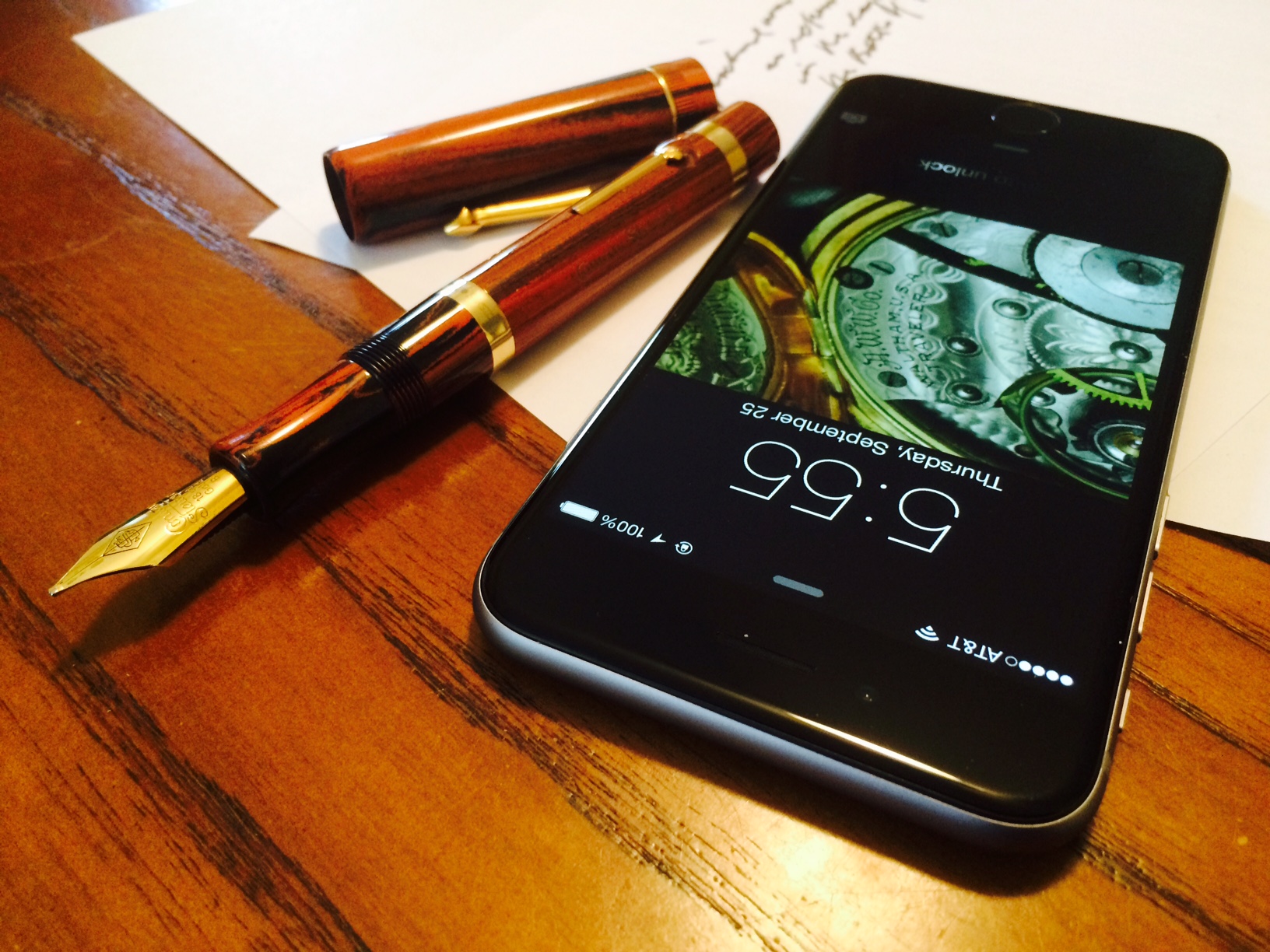
Okay, I’ll fess up: I have the new iPhone 6. Naturally. I’ve been an incorrigible Apple fanboy since the mid-1980s—practically since Apple was born—and so no one should be surprised by my prompt (I’ll say “timely”) acquisition of this new bauble, among 10 million other lunatics who snapped up the 6 and its bigger sibling, the 6+, in the gadget’s first three days of being on sale in the global market.

Like an arthritic hippie or a superannuated rebel, I should have no business, as a card-carrying senior, salivating over shiny new toys better seen on 30-somethings dashing off to work or to a dinner date. Well, maybe a little. US demographic studies from 2012 suggest that nearly one-fourth of all iPhone users are 55 and older (and a bit lower for Android and BlackBerry users), so older guys (men use it more than women, 60-40 percent) still make up a good chunk of the iPhone market. That makes sense, because these things don’t come cheap.

Along with literally millions of other people in the US and around the world, I stayed up until dawn on September 12 on the US East Coast to get my order in, and after an interminably long week during which I could only distract myself by doing honest and humorless work on my book project, a brown UPS van arrived to deliver the gadget du jour, a pristine iPhone 6 in smoke gray, 64GB, contract-free under T-Mobile. (Let’s get this out of the way: if you can’t wait for the local telcos to release the IP6 /6+ and want your US-based tita to send you one for an early Christmas, ask for a contract-free T-Mobile unit from the Apple Store—don’t get one from T-Mobile itself, or it will be network-locked.) I took my Globe nanoSIM out of the 5s and popped it into the newcomer, and voila—it was alive!

Never mind the rest of that digital drama, which can only be unremitting silliness to anyone but the most besotted geek. (And it’s only fair to say that millions of other geeks—the Android and Samsung crowd—slept soundly that night.) You can get the full specs and features of the IP6/6+ on dozens of sites online. I’ll cut to the chase with my quickie personal review, because I can just see a bunch of people asking me, “Is it worth it?”

If you’re moving from an older iPhone, the first thing you’ll notice is how thin and light it is—and yet how large. The 6 is larger than the 5/5s, and the 6+ is larger than the 6. I held and tried to like the 6+ in an Apple Store, but came away convinced that it was a cool thing to have if you’re 25, but definitely not for me. I got the 6 because, like many old guys, I prefer smaller, more discreet phones; the IP4 was perfect, but now it won’t run the newest software.

If you need an excuse to upgrade, recite this mantra: better battery, faster processor, bigger screen, thinner profile, better camera, more storage. Add them all up and you might convince yourself that it’s worth a good chunk of change. At 60, I don’t need an excuse; I’m just hopelessly curious, and the older I get, the more curious I am about what the future is going to be like, so every new gadget lets me cheat time.

After a week of playing with the new iPhone, I can say that I can best appreciate the brilliant screen, the excellent camera (I’ve done almost all of my photography with the iPhone for the past few years), and the longer battery life. I still have to get used to the slimness and the lightness of the thing; I’m using a plastic skin on it, but I keep tapping my pocket to make sure it’s still there. I’ve ordered a thick leather wallet case to lend it some heft, and then I’m sure it’ll be just fine.

I know that the so-called “bendgate” issue has come up online alleging that the big IP6+ will bend if you try hard enough (which makes me ask, who would, and why would you?). These “bend” tests are mildly interesting, but if you’re going to base your buying decisions on these, then go buy a tank, not an iPhone. I mean, how many people buy their cars based on crash tests?

What intrigues me more about the future is the new word I picked up this week: “phablet,” which the IP6+ is—a cross between phone and tablet. Frankly, all this talk of a phabletized future—where people walk around with 7- or 8-inch phones stuck to their ears—scares me. If this is the way we’re going, we might as well stick a phone into an iPad mini and call it the iPhone 9. I’ll probably hang around long enough to catch the iPhone 13, which will include telepathic commands among its features. By then, Apple and the iPhone will have gone one of two ways—the way of Godzilla, or the way of Yoda. Godzilla will have a battery life of 20 days and will be strangely reminiscent of the iPad mini; Yoda will have half the battery life but will remind some really old people of the iPhone 1.

By this time, to be fair, size will not be a problem for many people, because fashion designers (starting with Project Runway season XX) have made big pockets trendy; already, one Mafia boss (yes, the Mafia outlived Pope Francis) attributes his surviving an assassination attempt to the big iPhone he carries in his suit pocket, like a shield (it still bends, but it can stop bullets); boardrooms and Mafiosi meetings are soon full of men with bulging fronts. An ad with a digitally recycled Mae West says, “Is that an iPhone, or are you just happy to see me?”

Heck, I’m just happy to see this iPhone now.

Penman No. 112: Exercises for the Editorially Minded

Penman for Monday, September 1, 2014


TO MY pleasant surprise, last week’s piece on what editors do drew a stream of positive responses—I never imagined that so many readers would find the thankless and dimly illuminated job of editing so fascinating—but my biggest surprise after the column came out was to realize that I’d already written not just one but two columns on editing, back in 2010. Thankfully, I didn’t repeat myself too much, and since I’ve already written dozens of pieces on, say, fiction and nonfiction, I don’t see why I can’t do a fourth one on editing, focusing this time on how an editor thinks or should think.

But before I go one step further into the trenches, let me just point out another important fact about the editor’s job. Particularly in a journalistic context, where some element of public interest is presumably involved (as opposed to literary publishing, which comes down to very personal tastes), “editing” involves much more than dotting I’s or finding better substitutes for problem words. Editing in journalism inevitably involves matters of policy—the publication’s policy in respect of the treatment of, say, political and social issues. What newspaper and magazine editors worry or should worry about are spelled out in a textbook titled Creative Editing by Bowles and Border (Wadsworth, 2000), which says, in a chapter on Situational Ethics:

“Copy editors are likely to be concerned with decisions involving the writing, editing and production processes: Is the use of profane language or obscene photographs ever justified? When? Are the implicit biases of the editor or the newspaper as a cultural institution evident in the selection of 
stories and photos? Should they be? Do certain people groups or institutions receive more play than others? Conversely, are some people groups or institutions ignored? Are headlines and captions fair and accurate? Are stories edited to eliminate bias and opinion? Are subjective words or words suggesting a viewpoint 
given thoughtful consideration?

“Managing editors and other senior editors are likely to be concerned with questions of policy: Should victims of crimes be identified? If so, when? In stories about rape? About incest? About battering? In stories involving juveniles? Should suspects in crimes be identified? If so, when? At their arrest? When they are charged? At the time
of trial? Should the cause of death be listed in obituaries involving victims of suicide or AIDS? Who in the newsroom should know the identity of confidential sources? Just the reporter? The supervising editor? The managing editor? The publisher? If a reporter pledges confidentiality to a source, are editors
bound by the same promise? How involved should newsroom employees be in writing and editing special sections that promote 
consumer products? How should corrections and clarifications be handled?”

Frankly, when I contemplate questions like these, I’m glad to be in the classroom rather than the newsroom, knowing how tricky these situations can get. It would seem that they should have clear and easy answers, but they rarely do, especially given the realities of Philippine publishing and politics—but that’s a story for another day.

Today, let’s do something more elementary—elementary enough to be among the very first exercises I give my students in CW198, Professional Writing. (I don’t care if my future students see this here, because they’ll still be hard put to cough up the answers. As all my students know, I always give open-book exams.) You might know if you have an editor lurking inside you if you can do these exercises reasonably well. Just for fun, I’ll respond to the first 10 responses emailed to me—if you don’t hear back from me, that means you were No. 11.

The first exercise has to do with the bane of Filipinos who love English too much, to the point of using 30 words where three will do, and of using a P1,000 word where a five-peso one will do. Cut. Simplify. Ruthlessly.

The second exercise is rather more advanced, and involves matters of judgment, nuance, and vocabulary—in other words, style. This is something that an editorial or opinion writer (which I was, way back when) would specialize in. I tell my students that they can express the same idea in three ways—nice, neutral, and nasty—depending on their specific purpose. I don’t mean for anyone to be nasty, of course, but just like learning karate or shooting, you never know when you might need it. Let’s have some fun!

I. Wordiness: Simplify and shorten the following sentences without changing their meaning.

  1. I managed to traverse the thoroughfare without jeopardizing my safety.
  2. The people of the Philippines have a great liking for festive occasions.
  3. Society as a whole, as well as the individual persons in it, should practice the virtue of honesty.
  4. In my personal opinion, it is my idea that a prohibition on pistols, revolvers and rifles should be implemented.
  5. His actuations produced a profound surprise in the very depths of me.
  6. We have insufficient information with regard to this state of events.
  7. Let us satisfy the requirements of our bodies for nourishment.
  8. The outbreak of hostilities was within the realm of possibility.
  9. I give you my permission to continue doing whatever it was you were doing.
  10. He was a uniformed enforcer of the law.

II. Modulation: Rewrite the following statements in the “nice-normal-nasty” modes, as required:

  1. (neutral) The Philippines is a country whose people are predominantly poor. (turn into nice and nasty)
  1. (nice) Heroic overseas workers contribute greatly to the health of the Philippine economy. (turn into neutral and nasty)
  1. (nasty) Your proposal is almost totally bereft of intelligence and originality, and is unacceptable in its present form. (turn into neutral and nice)

Penman No. 109: Ode to the 149

IMG_4575Penman for Monday, August 11, 2014


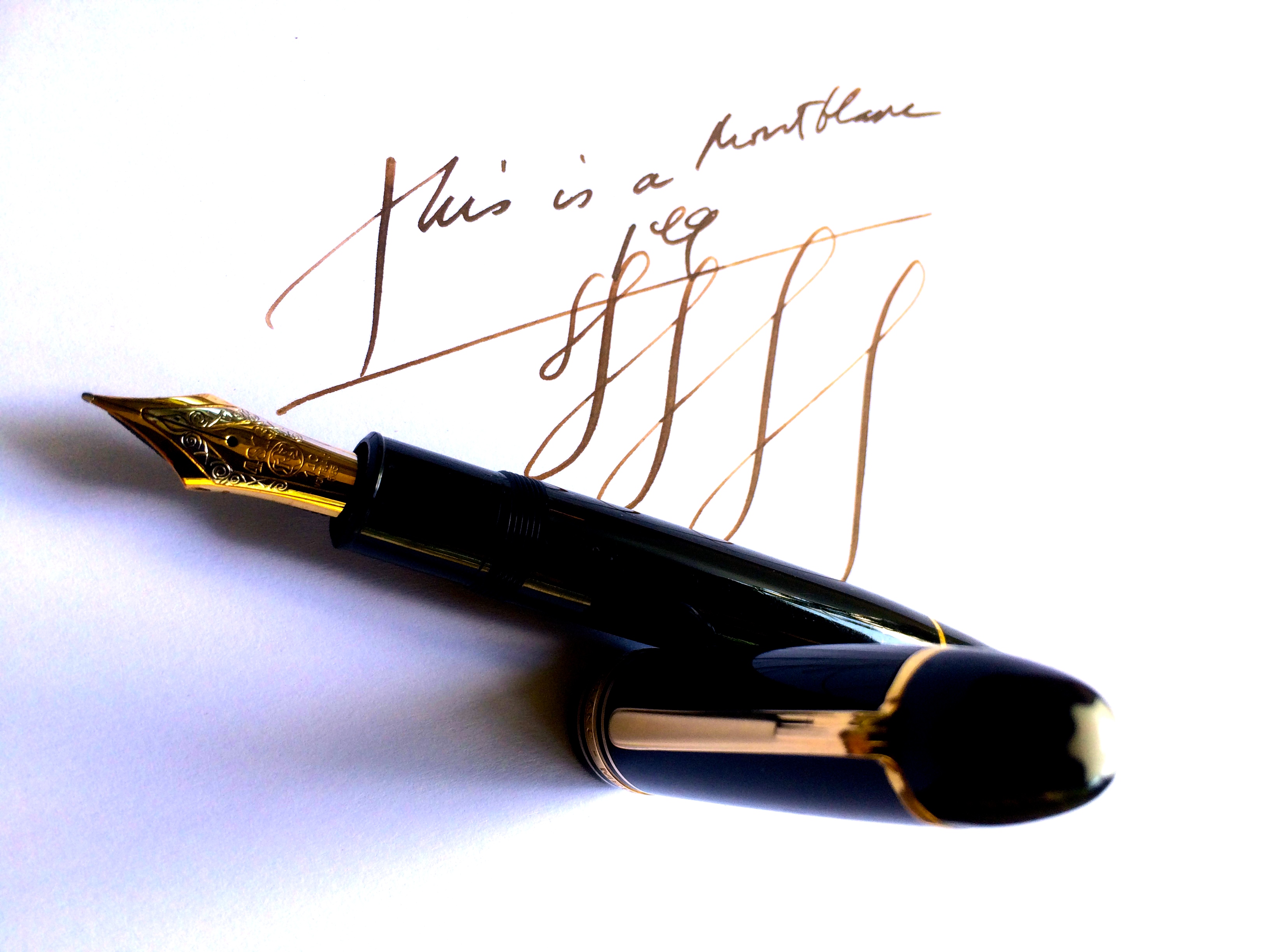
FOR THE past few decades, nothing has declared “I’m a fountain pen!” more emphatically than the Montblanc 149, also known as the Diplomat. This is the daddy of modern pens, the big kahuna, the standard by which other pens—fairly or unfairly—are measured. You’ll know a 149 when you see it. It’s as long and as fat as a cigar, which is probably why it’s been traditionally considered the quintessential man’s pen, the kind you’d find in the pockets of Supreme Court Justices, oldtime newspaper editors, and connoisseurs such as my friend the architect Toti Villalon, although fashionable but feisty ladies have been known to sport one.

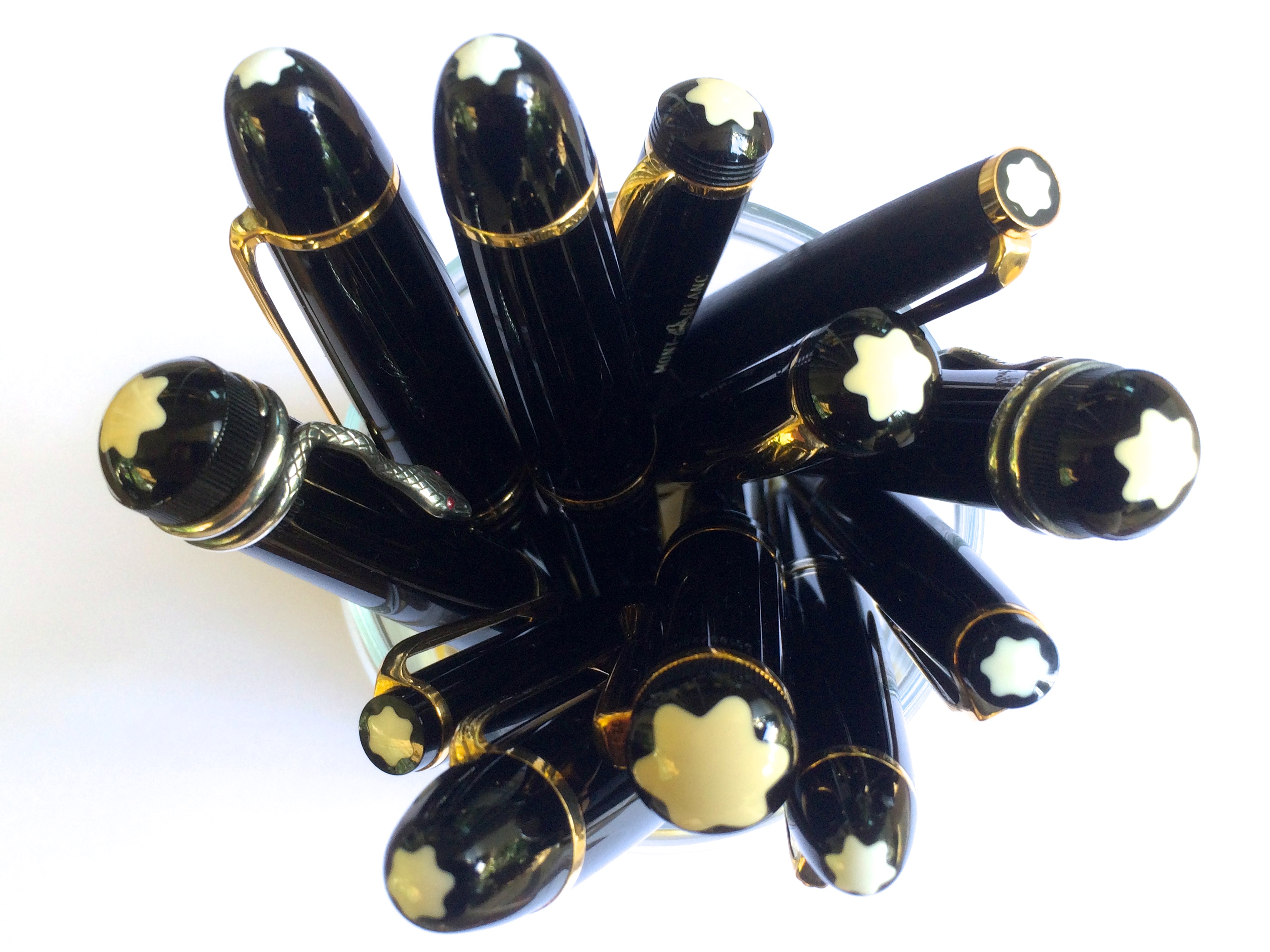
You’ll also know that that big black pen is a Montblanc because of the white star (sometimes also called the “snowflake”) on top of its cap. Montblanc, which started out in Germany in 1908 as the Simplo Filler Pen Co., later chose the now-iconic white star to suggest the snow-capped peak of Mont Blanc (“white mountain”), the highest massif in the Alps. You’ll see the number 4810 on a Montblanc nib because that’s the height, in meters, of the mountain. (Montblanc, the pen or the pen company, is always spelled as one word; Mont Blanc the mountain is always two.) Some 149s also will have a white diamond—or even nothing—in lieu of the “snowflake,” which can be construed as the Star of David: not good for sales in many places in the Middle East.

The 149’s cap ring (like that of the 146, its junior sibling) will have “Meisterstuck” engraved on it; that’s German for “masterpiece.” This year, Montblanc marks the 90th anniversary of the Meisterstuck line, of which the 149—introduced in the 1950s—remains the flagship; appropriately enough, a special 149 with rose-gold trim was produced to mark the event.

If imitation is the best form of flattery, then there’s no pen more admired—because none more copied—on earth than the 149 (or, more accurately, the slightly smaller 146, but most people wouldn’t know the difference). You can almost be sure that, somewhere in Shenzhen, there are shops and families devoted to one and one thing only: the production of fake Montblancs, for sale in such places as Shanghai’s Nanjing Road or for export by the container van to countries like the Philippines, where they will be sold as cheap corporate giveaways or passed off as the real thing to unsuspecting buyers. Given this traffic, there are websites and pages just as ardently dedicated to spotting Montblanc fakes (here’s a quick tip: if your “Montblanc”’s nib says anything like “Iridium Point Germany,” it’s fake—that’s a generic steel nib employed by many Chinese makers.)

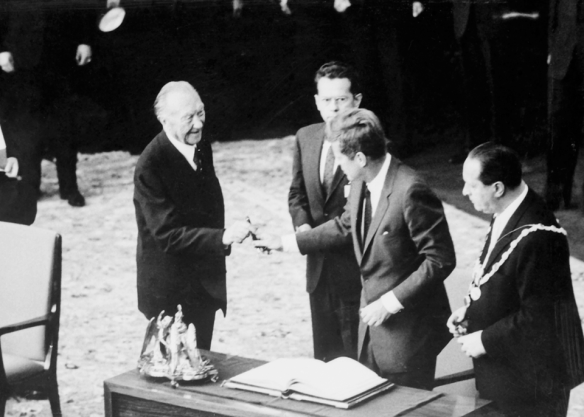
The real 149 is a classic, and deservedly so. Montblanc and the 149 gained popularity in the 1950s and the 1960s, as Americans returning from the War and from their growing contact with postwar Europe became more familiar and comfortable with things German, and with the high quality of German goods. There’s a story that when John F. Kennedy visited what was then West Germany to sign a treaty with his counterpart, Chancellor Konrad Adenauer, the German fumbled around for a pen, and JFK sprang to the rescue by offering his—a 149.

That 149, wherever it is now, should fetch a princely sum on the collectors’ market (like the big red Parker Duofold that Douglas MacArthur signed Japan’s surrender papers with). Indeed, even a new 149 (you can check it out locally at Rustan’s, the authorized dealer for the Philippines) will set most people back a few months’ wages. You can get a thousand cheap ballpoints for one 149—if a writing tool is all you’re looking for. Clearly, that’s not what 149 fanciers—yep, I’m one of them—have in mind.

Among 149 collectors, the pens to go for are not the shiny ones you can grab at the MB boutique, but the vintage ones made of celluloid from the 1950s and 1960s. The old, tricolor (gold-platinum-gold) nibs are also thought to be more desirable because they flex—the tines are soft and can spread apart, producing line variations that most modern fountain pens and certainly no ballpoints and rollerballs can.

IMG_4568

At one time or another, I’ve had maybe ten 149s in the collection, which isn’t too strange because I buy and sell pens to support the habit. I usually pick them up on eBay for a whole lot less than they’d go for in the store, which also means I assume a lot of risks that newbies would be well advised to steer clear of. I’ve kept three of these, and regularly use one. When people ask me why I go around with such a fancy and expensive pen in my pocket, I tell them that it’s because it makes me feel like a real writer, and because I’m 60, and should be able to use and enjoy what I damn well please before I croak.

Not everyone is a fan of Montblanc and of the 149. There are legions of rabid Montblanc haters who eschew the brand in the belief (somewhat justified) that many people buy Montblanc to acquire instant status, and that the company itself has encouraged this pretentiousness by marketing the 149’s plastic as “precious resin.” Detractors see this as pure hype, designed to rack up sales among ambitious junior lawyers and middle managers.

Do you think I care what they say? I’ll never be able to afford the Range Rover or the rose-gold IWC Portuguese of my big-boy fantasies, but when I make loopy figure 8s with my vintage 149—found online for next to nothing at a small auction house in Ohio—I feel like there’s justice in the universe, after all.

Penman No. 104: The Psychology of Collecting

48VacumaticsPenman for Monday, July 7, 2014


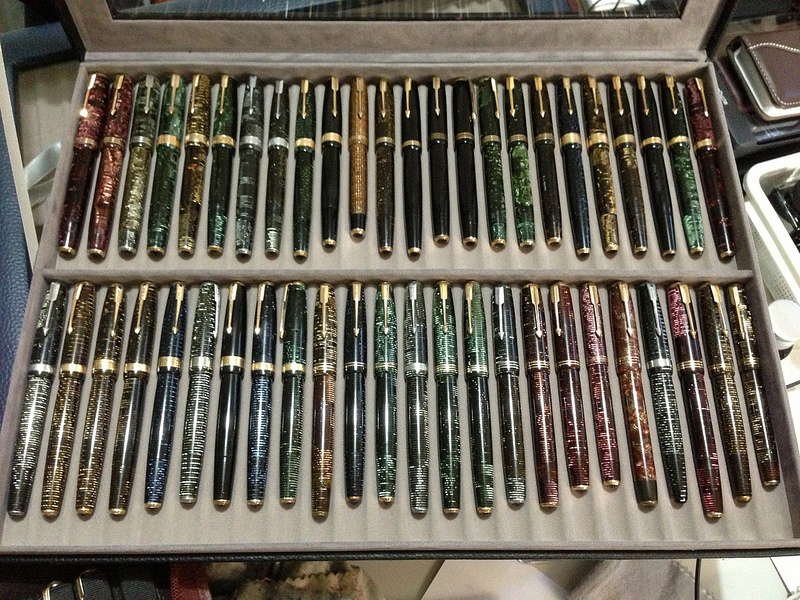
EVERY OTHER month or so, I take the 200+ contents of my fountain pen collection out of their wooden boxes and leather cases—a few of which reside in a fireproof safe—to ink, doodle with, clean, and reorganize. It’s a ritual that invariably leaves me pleased and at peace. Sometimes I reorganize the pens by age, sometimes by maker, sometimes by color or material.

Any serious collector of, well, seriously anything will recognize this behavior. And I do mean anything—I’ve met people who collect not just the usual stamps or coins or even watches and cars but barbed wire and tractor seats. (I met the tractor-seat fellow 25 years ago in a barn full of antiques in Ohio; when I expressed astonishment at his specialty, he turned around and said, with scholarly disdain at my ignorance, “There’s a fanny for every seat!”)

In the pen forums I inhabit, there’s a never-ending discussion about being either a “user” or a “collector,” the implication being that collectors are simply moneyed hoarders while users are simple, practical-minded folk who’ve never forgotten what things are for. I propose that the truth, as it often does, lies somewhere in between; many users are wannabe collectors, and most collectors have never stopped being users. It’s pointless to think of, say, a 1925 Waterman Sheraton or a 1934 Wahl Eversharp Doric as being just a pen you can write with, like a cheap ballpoint; they may have been utilitarian tools once, but somewhere along the way they crossed the line and became jewelry and art object.

At least that’s how I excuse amassing and periodically gloating over, say, my dozens of Parker Vacumatics, a 1930s-40s pen that forms the core of my collection. This was the pen I wrote my 1994 short story “Penmanship” about. (It’s a story about a story that I’ve often told, but the sum of it is that I found this 1938 Vacumatic Oversize in a pen shop in Edinburgh, paid a month’s salary for it, suffered buyer’s remorse, then decided to write a story about the pen, which won first prize in a contest that made me back my salary.) I know enough about Vacs that I can put you to sleep by mumbling mantras such as “Vac nomenclature covers a fascinating maze of models and colors—the Junior, the Major, the Standard, the Slender, the Debutante, the Oversize, the Senior, which is not to be confused with the Senior Maxima, since the Senior came out only in 1936….”

About 15 years ago it wasn’t pens but laptops—yes, Apple Macintosh Powerbooks, particularly the Duo line (the granddaddy of the MacBook Air and all those super-slim laptops people toss into their briefcases today). I had (and still have) about a dozen of these machines, which I used to take apart to upgrade the memory and hard drive (back when 240 megabytes made you king of the hill), before putting them back together again and then pressing the power button to hear that unmistakable startup chime that told me I had done everything right, so I could then step out and face the world and slay dragons and then sign memos.

So why do otherwise presumably sane people like me get our kicks by amassing strange objects most other people wouldn’t give a second look or drag into their homes even if you paid them to do it? I asked myself this question again last week as I changed out the inks (another ritual for the devotee) in my glorified Bics. Why do we take them out week after week, not to write a novel or a draft SONA but endless iterations of “I love this pen I love this pen”?

First of all, you want to be reassured that they’re still there. Collectibles have a way of walking away on little cat feet, and collectors have a sixth sense about what’s missing from the picture.

Second, you want to reassure yourself that you know why they’re there—that the objects have some aesthetic and monetary value. Perhaps that value’s known only to a very few people, which is not a bad thing, because it’s proof of your connoisseurship, of a certain esoteric form of expertise that’s taken you some time and expense to cultivate. It’s like getting a PhD in the truly little, truly fun things (and what’s a PhD these days except a lot of knowledge about very small things, hardly any of which is fun?).

You may be a total loser in nearly every other aspect of life—your face could resemble a well-worn shoe, your family may have deserted you for the coldest parts of Canada, your car could be an escapee from the junkyard—but if you know everything about tourbillons, carburetors, calibers, and (in my case) nibs, then you have good reason to face the world with pride if not arrogance; you have, after all, one of the world’s largest collection of GI Joes, or Tonkas, or Ken dolls, or whatever floats you boat.

Third, let’s go online and ask the experts. Dr. Mark McKinley, in a much-quoted piece on “The Psychology of Collecting” in The National Psychologist, goes back in time to note that “During the 1700s and 1800s there were aristocratic collectors, the landed gentry, who roamed the world in search of fossils, shells, zoological specimens, works of art and books. The collected artifacts were then kept in special rooms (‘cabinets of curiosities’) for safekeeping and private viewing. A ‘cabinet’ was, in part, a symbolic display of the collector’s power and wealth. It was these collectors who established the first museums in Europe, and to a lesser extent in America.”

Since I’m sure I don’t collect Sheaffers and Esterbrooks to show off my power and wealth, let’s see what M. Farouk Radwan (who holds an M. Sc., so who presumably knows what he’s talking about) says about the subject: “Since early years human beings used to collect food in order to feel safe and secure. Because acquiring food was a difficult process with uncertain outcomes humans learned to ease their anxieties by storing the food they needed. The same need, which is to feel secure, is the primary motivating force behind the creation of collections.

“Because life is uncertain and can easily make a person feel helpless some people use their collections to create a private comfort zone that they can control. By arranging and disarranging their collections compulsive hoarders can regain the sense of control over their lives. These actions reduce anxiety and helps those people cope with the uncertainty of the real world.”

So we go back to basic needs and instincts: food and security. McKinley puts these together: “For some, the satisfaction comes from experimenting with arranging, re-arranging, and classifying parts of a-big-world-out-there, which can serve as a means of control to elicit a comfort zone in one’s life, e.g., calming fears, erasing insecurity. The motives are not mutually exclusive, as certainly many motives can combine to create a collector—one does not eat just because of hunger.”

That’s a brilliant insight—“one does not eat just because of hunger”—and it leads to my favorite explanation of the psychology of collecting, propounded by Robert and Michele Root-Bernstein (co-authors of Sparks of Genius, the 13 Thinking Tools of the World’s Most Creative People) in “The Collection Connection to Creativity” (Psychology Today, May 2011):

“The fact is collecting exercises a number of important mental tools necessary for creative thinking. The collector learns to observe acutely, to make fine distinctions and comparisons, to recognize patterns within her collection. These patterns include not only the elements that make up the collection, but the gaps in it as well. Learning how to perceive what isn’t there is as important as knowing what is! And the collector also knows the surprise of finding something that doesn’t fit the collection pattern: Is the mismatch a fake? An exception? Something that belongs in another collection? Broken patterns are often the ones that teach us the most by challenging our preconceptions and expectations.”

Patterns, designs, mismatches, aberrations: early in 1937, just for a few months, Parker came out with a special Vacumatic, with the word “Vacumatic” etched in the gold-filled cap band. It’s one of the holy grails of Parker collectors, one of the rarest and most expensive of finds, and I have one. That should make it the crown jewel of my collection, but it isn’t; it’s the pen that made me write a story about it that’s the rarest one of all, that gives me a lifelong excuse for picking up tubes that squirt inks.

(If you like pens, join us at Fountain Pen Network-Philippines, www.fpn-p.org. We’re marking our sixth anniversary this week!)

Penman No. 101: The Digital Tourist (2)

photo 2Penman for Monday, June 16, 2014


LAST WEEK I wrote about some websites that you could check out if you’re planning to go on a trip, especially to some place you’ve never been before. Practically everything today can be planned online, from choosing destinations to booking flights and hotels and buying travel insurance. But what about when you’re already on the road?

This is where travel apps come in—“apps” being those small programs or applets (little applications) that come with your tablet or smartphone, or that can be downloaded to them. These apps can be lifesavers—literally, when you’re lost close to midnight in the bowels of a subway station in a strange city, without the foggiest idea how to get back to your hotel. Some will require an Internet connection, but many won’t, after their initial installation—and that’s when you’ll be happy and relieved that you had the foresight to install them when you could, before you even left for the airport. Whatever I’ll list here won’t be your only options—in many cases, there may even be other, better apps other will know about—but these are the ones I’ve roadtested myself, over many years of traipsing around the planet, with PDA (remember those?) or smartphone in hand. (Do note that I use an iPhone, but many of these apps gave their Android counterparts. For IOS devices, go to the App Store.)

Trip planning. If you travel often, you’ll need an all-around planner to organize your trips—remind you of your itinerary, make your bookings, check your flight status, provide weather forecasts, convert currencies, and such. Your datebook can take care of some of these things, but not all. For many years now, my reliable sidekick in this department has been an app called WorldMate, which can do all of the above, and more (it can also calculate tips).

WorldMate’s strongest feature is its flight planner and notifier, which comes in really handy when you have a string of flights to take in a mad dash from one airport, one terminal, and one gate to another. Let’s say you’re flying Delta to Detroit via Tokyo Narita, or Cathay to London via Hong Kong. As soon as you make your booking and receive it in your email, all you do is forward your confirmation email or e-ticket to trips@worldmate.com. WorldMate will automatically digest that email and reflect your itinerary on the app on your phone or tablet—and, if you’ve configured WorldMate to sync with your datebook, it’ll show up on your calendar as well. If your flight gets delayed, WorldMate will advise you of it. It will give you your terminal on arrival and departure. (WorldMate has a free basic version and a paid Gold version with more features.)

Flight tracking. You’re dashing to the airport in a cab, late for your flight, and you don’t even know which terminal or gate it will be leaving from (and if you’re really unlucky, you’ll be in Madrid, where Terminal 4 is several kilometers away from Terminal 2, and Terminal 4S takes another 20 minutes to get to); you’re praying like mad that your flight’s delayed. At this point, your friend is an app called FlightBoard, which tracks scheduled flights—arrivals and departures—at airports all over the world in real time. A similar app called FlightAware allows you to track all the flights between two airports for a given day, and to zero in on a particular one; if it’s up in the air somewhere over Siberia, it will show exactly where it’s supposed to be on a global map, much like you’d see on those onboard monitors. Both FlightBoard and FlightAware are free. (These apps are also good for when you’re meeting someone in Arrivals.)

photo 3

Getting around. Once you’ve reached your destination, there are two things you’ll almost certainly need to get around: a city map, and a local transport (subway and bus) guide. Many airports will give you free city maps on arrival, and they’re fun to spread out on the table over breakfast to plan the day, but they’re a hassle to unfold at streetcorners and in the middle of the plaza to locate where you are and where you’re going (and at that instant, you might as well wear a T-shirt saying, “I’m a lost tourist—please, victimize me!”).

A good map stored in your digital device—without needing to go online, as you would with Google Maps—can save you a lot of anxiety, if not a lot of footsteps. On our recent sortie around Europe, I was glad to be guided by one invaluable resource: Ulmon maps of Barcelona, Venice, Florence, and Paris. All of these maps were free, and could be blown up to the level of individual streets and even alleys; if you feel lost, you could input the name of the nearest street, and it will locate your neighborhood in relation to popular landmarks. Clicking on the name of a hotel will give you rates; public transport stops are also indicated.

Speaking of public transport, nearly all the major cities of the world have some kind of subway or metro rail line, and this gives me an opportunity to introduce my favorite travel app of all time—and I mean that almost literally, because I’ve been using it in its various incarnations since 1999, or 15 years, an eternity in digital time. It’s called Metro, and it’ a guide to the world’s subways, metros, and bus lines. I first used Metro on my Palm Pilot when I was navigating around London, and the app—though regularly updated—has remained essentially the same. You choose a city (say Paris), and decide that, from your hotel on Avenue Foch, you want to go to the weekend flea market at the Porte de Clignancourt. You input “Avenue Foch” and “Clignancourt” and tap an icon, and Metro will yield the information that the shortest subway route will take 16 stops involving one change (at Barbes-Roucheouart—thankfully, you don’t need to know how to pronounce these names), for approximately 33 minutes total. Each subway stop is identified, as well as the direction of the train you should be taking. The best thing about Metro? It’s absolutely free, and works offline.

photo 1

This list of apps could go on, but as travel is complicated enough, let’s keep it simple: for as long as you have these apps (WorldMate, FlightBoard, Ulmon Maps, and Metro), your next trip will be much less of a headache, and you can enjoy the view out the window rather than wonder and worry over where your train is going.

(Let me just add, before I forget: these apps will be totally useless if your phone or tablet is dead; I always travel with a universal adaptor, an extension cord, and a power bank for extra juice. If you blow air into my pants, I could go on a spacewalk.)