Hindsight No. 16: The Long Game

Hindsight for Monday, May 2, 2022

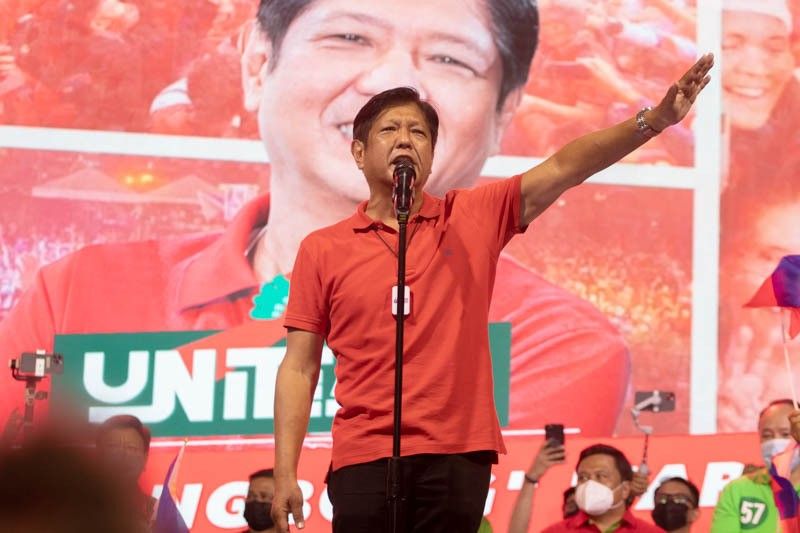
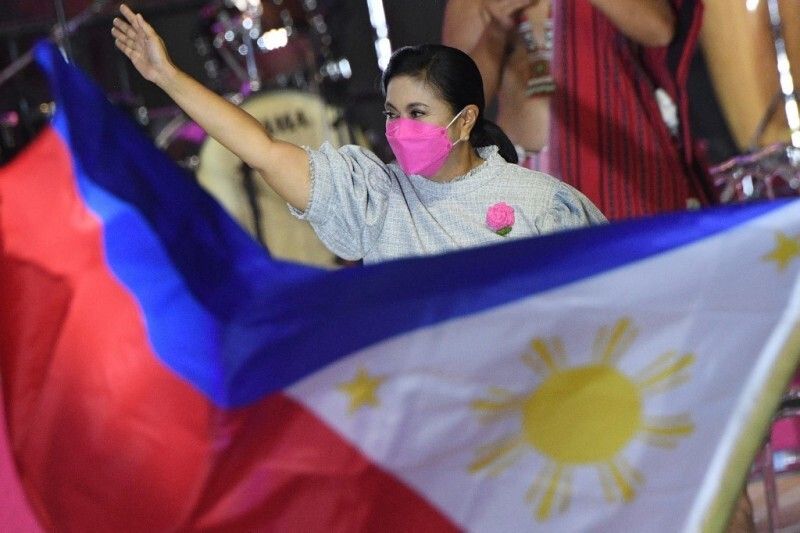
(Photo from philstar.com)

NOT SO long ago, before the groundswell of popular support grew into a towering pink wave behind the presidential candidacy of Vice President Leni Robredo, it seemed like she had embarked on a quixotic quest. For a moment back there, even her running was in doubt, spurred on only by the encouragement and faith of a coalition of upright citizens seeking a way out of the darkness of the past six years. 

In front of her was ranged a phalanx of formidable and even monstrous adversaries, flush with money, dizzy with power, armed with the most sophisticated weaponry on the market—data science and mass communications in the service of disinformation. The surveys declared her candidacy dead from the get-go, her campaign futile; her ceiling was this low, and she was bumping her head against it. For her enemies, it was enough to brand her a “woman” to render her incapable: “As a woman,” said the trolls, “she cannot be trusted with the responsibilities of the presidency. She is weak, and she cannot think for herself. She will always be subject to manipulation.”

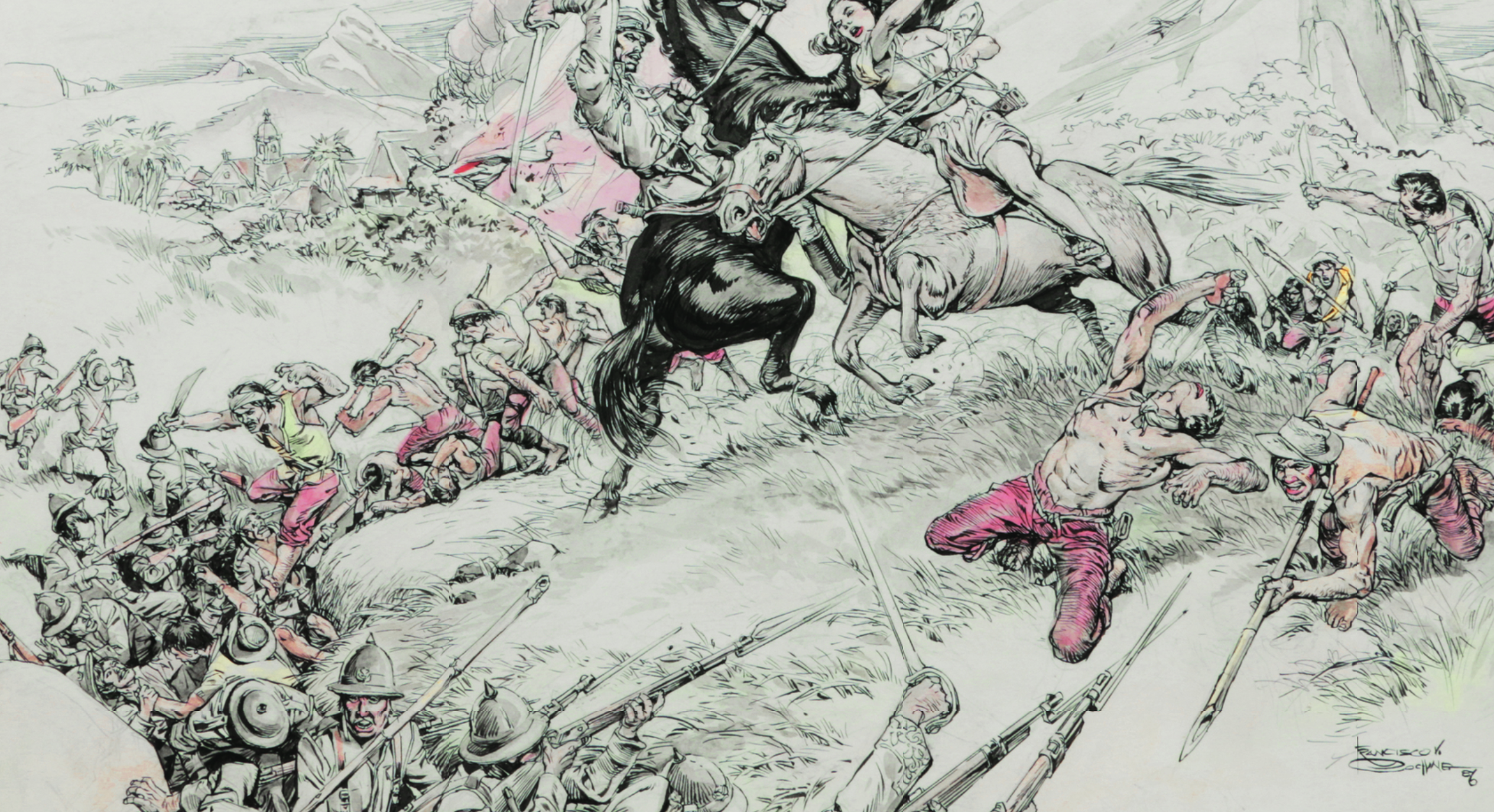
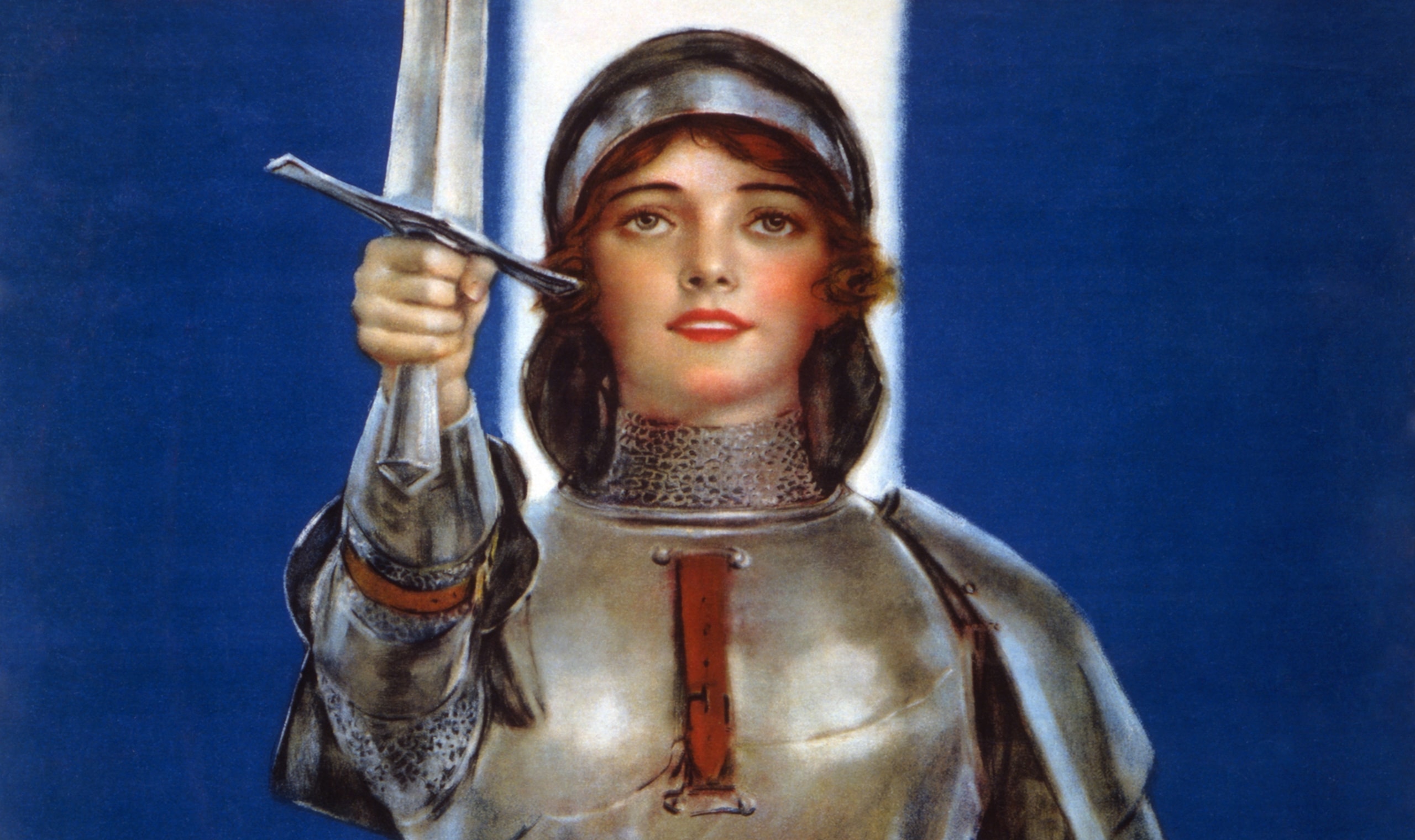
It is not difficult to find parallels in history and myth for Robredo’s crusade. The foremost image that comes to mind is that of an armor-clad Joan of Arc, riding off to battle against those who had turned their backs on France to support the English. There is a long, long list of women who took up the sword to fight for freedom and justice. In 1521, after her husband fell in combat, Maria Pacheco took charge of the defense of the Spanish city of Toledo in a popular uprising against the monarchy; later that century, Guaitipan or La Gaitana led Colombia’s indigenous people against the invading Spanish; the 17th century is replete with accounts of women going into battle dressed as a man, so they could join the armies. And of course we cannot forget our own La Generala, Gabriela Silang, who fought the Spanish after her husband Diego was assassinated in 1763.

(Illustration by Francisco V. Coching)

But many if not most of these stories end with defeat and death for the heroine, as it did for Joan of Arc and Gabriela Silang. They are immolated, hung, imprisoned, abused, punished in the most horrific ways for the temerity to rise above their lot as mothers, wives, daughters, and servants. It would seem as though the lesson after all is not to rebel or resist, or otherwise be punished.

But martyr or not, the effect has only been to inspire emulation all the more. That Joan of Arc died at the stake at age 19 makes us, in our senior years, ask if we have achieved something even barely comparable—to live, and live on after death, as a symbol of resistance to tyranny.

If Leni wins on May 9, it will be a historic and hard-won triumph, but one that will be immediately fraught with danger, as she will now have to fend off a spiteful and tenacious many-headed hydra that will not slink into the shadows. Her enemies will hound her every day of her presidency, bark at every move she makes, make it extremely difficult for her to govern properly, so they can substantiate their portrayal of her alleged inefficacy.

If her adversary musters more votes, she will have lost a battle, but not the war this has become. Mind that just having celebrated her 57th birthday, Leni Robredo will only be 63 in 2028—younger than even Marcos Jr. is today. If she loses this election, it will not be the end, but only the start of the next stage of a protracted campaign to bring us back to good and honest governance. 

Six years may seem a long time, but it doesn’t feel like it was that long ago when Rodrigo R. Duterte came to power. These past six years have been among the most difficult and dismaying we have had to endure, not only because of the pandemic but also because of an equally devastating malignancy at the heart of government—leadership by fear, terror, and impunity; the patronage and enrichment of friends; the repression of dissent; and the subornation and corruption of the uniformed and civil service. 

In another six years, should the Marcos forces now prevail and if they stay true to form, they will have unraveled and self-destructed. We will not be surprised, but their followers will be, when the promised manna never rains, when the Palace is ruled by incompetence, indecision, and intrigue, when No. 2 chafes at her humble station, when China attacks and the First Family rushes off to Paraguay with half the treasury (nothing is too absurd in politics today), when citizens cry out for simple answers to urgent questions and are told, “The President is busy,” in a dull echo of his excuses for avoiding the debates. 

But guess what—here we are; we endured, we survived, and we fight on. The ones behind us are even much younger and stronger, and more knowledgeable about the intricacies of digital and house-to-house persuasion. “Pink” is already being demonized as some mutation of the Reds and Yellows, but it will not fade away. Unless they are outlawed, or painted over by the newly reconstituted Kabataang Barangay, the “Kulay Rosas ang Bukas” murals will stay on as reminders of what could have been and could yet be. There may not be an EDSA IV—having once lost to peaceful protest, they will not hesitate to arrest and fire at the slightest signs of a new uprising—but the Internet will not be muted, nor will the mounting clamor of the disappointed poor.

The Marcos forces have waited almost forty years for this moment. What would six more years be to a resurgent opposition? We can play the long game.

And then again, we Filipinos just might surprise ourselves next Monday, and decide that the opportunity for change, for a real “moving on,” is not to be delayed but to be claimed at once. That will be sweet victory for the woman they made the mistake of calling “incapable.”

Hindsight 14: Weaponizing the Youth

Hindsight for Monday, April 18, 2022

ONE OF the most troubling episodes of the war now raging in Ukraine happened a couple of weeks ago not in Kyiv or the eastern region—where ghastly atrocities have taken place—but in Penza, a city in western Russia. A 55-year-old teacher named Irina Gen was arrested after a student reportedly taped her remarks criticizing the Russian invasion; the student’s parents got the tape, and turned it in to the authorities, who went after Ms. Gen. She now faces up to ten years in prison for violating the newly minted law against “spreading fake news” about Russia. Earlier, in the city of Korsakov, students also filmed their English teacher Marina Dubrova, 57, for denouncing the war; she was arrested, fined, and disciplined.

That the Russian state is punishing its critics is nothing new. It’s reprehensible, but you expect nothing less from the place and the party that invented the gulag, that frozen desert of concentration camps where millions suffered and died over decades of political strife and repression, mainly under Joseph Stalin. 

What I found particularly alarming was the role of students as informants, a virtual extension of the secret police that are the staple of repressive societies. This, too, is nothing new. Throughout modern history, despots have drawn on their nations’ youth to lend a semblance of energy and idealism to their authoritarianism, ensure a steady stream of cadres, and at worst, provide ample cannon fodder.

In Russia, the Komsomol rose up in 1918 to prepare people between 14 and 28 for membership in the Communist Party. Four years later, the Young Pioneers took in members between 9 and 14, and just to make sure no one who could walk and talk was left out, the Little Octobrists were organized in 1923 for the 7-9 crowd. 

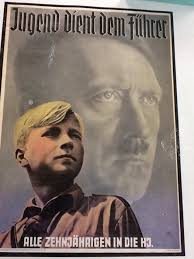
The Hitler Youth was preceded and prepared for by youth organizations that formed around themes like religion and traditional politics, and it was easy to reorient them toward Nazism. An all-male organization matched by the League of German Girls, the Hitler Youth focused on sports, military training, and political indoctrination, but they soon had to go far beyond marching in the streets and smashing Jewish storefronts. Running short of men, the Germans set up a division composed of Hitler Youth members 17 years and under, the 12th SS-Panzer Division Hitlerjugend. It went into battle for the first time on D-Day in June 1944; after a month, it had lost 60 percent of its strength to death and injury.

Chairman Mao relied on China’s teenage cadres—the Red Guards—to unleash the Cultural Revolution in 1966 against the so-called “Four Olds” (old customs, culture, habits, and ideas, which came to be personified in elderly scholars and teachers who were beaten to death or sent off to prison camps for “re-education”). 

Under Ferdinand Marcos Sr.’s martial law, the Kabataang Barangay was created by Presidential Decree 684 in 1975 to give the Filipino youth “a definite role and affording them ample opportunity to express their views.” That sounds innocuous enough, and indeed the KB would go on to engage in skills training, sports, sanitation, food production, crime prevention, and disaster relief, among other civic concerns, under the leadership of presidential daughter Imee. 

At the same time it was clearly designed to offset leftist youth organizations like the Kabataang Makabayan and the Samahang Demokratiko ng Kabataan by drawing on the same membership pool and diverting their energies elsewhere—more specifically, into becoming the bearers and defenders of the New Society’s notions. (Full disclosure: I was an SDK member, but my younger siblings were KB.)

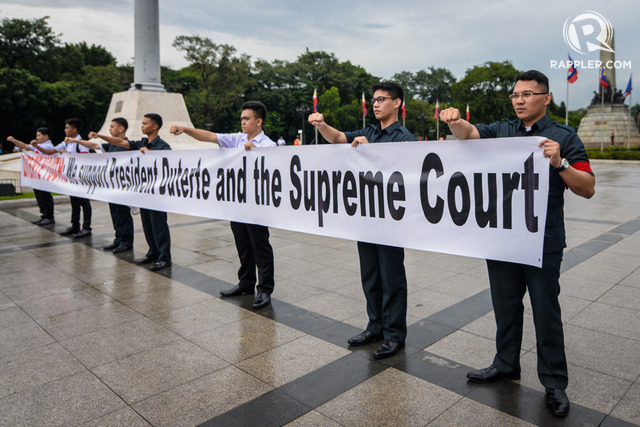
I would never have thought that the “Duterte Youth” meant something else, but it does; evidently, it’s just shorthand for “Duty to Energize the Republic through the Enlightenment of the Youth Sectoral Party-list Organization.” Organized in 2016 to support the Davao mayor’s presidential campaign and later his policies as President, the Duterte Youth have affected quasi-military black uniforms and fist salutes. Its leader, Ronald Cardema, reportedly brushed off comparisons with the Hitler Youth by pointing out that the Germans had no patent on the “youth” name, which he was therefore free to use. (Uhmm… okay.)

Adjudged too old to represent the youth in Congress (his wife Ducielle took over his slot), Cardema was appointed to head the National Youth Commission instead, from which perch he then directed “all pro-government youth leaders of our country… to report to the National Youth Commission all government scholars who are known in your area as anti-government youth leaders allied with the leftist CPP-NPA-NDF.”

I acknowledge how Pollyannish it would be to expect young people and even children to be shielded from the harsh and often cruel realities of today’s world. The war in Ukraine, the Taliban in Afghanistan, and the pandemic are just the latest iterations of conflicts and crises that have turned 12-year-old boys into executioners in Sierra Leone and child miners in Bolivia, Madagascar, and, yes, the Philippines. 

Their enlistment in political causes—of whatever orientation—is another form of maltreatment or abuse for which we have yet no name, but few governments or anti-government rebels will let them be. Their minds are soft and malleable, their fears obvious and manipulable, their rewards simple and cheap. With the right incentives and punishments, it can be easier to turn them into monsters or machines than to safeguard their innocence. They can be weaponized.

I’ve mentioned this in another column, but there’s a scene in the classic movie Cabaret, set in the Nazi period, where a handsome and bright-faced boy in a brown uniform begins to sing what seems to be an uplifting song about “the sun on the meadow.” But as it progresses we realize that it’s a fascist anthem which is picked up by ordinary folk with chilling alacrity. Watch this on Youtube (“Tomorrow Belongs to Me”) and then look at your son or nephew, or the children playing across the street. If you want, you could vote to have them marching and singing a similar tune in a couple of years.

(Photo from Rappler.com)

Hindsight No. 13: The Imperfect Good

Hindsight for Monday, April 11, 2022

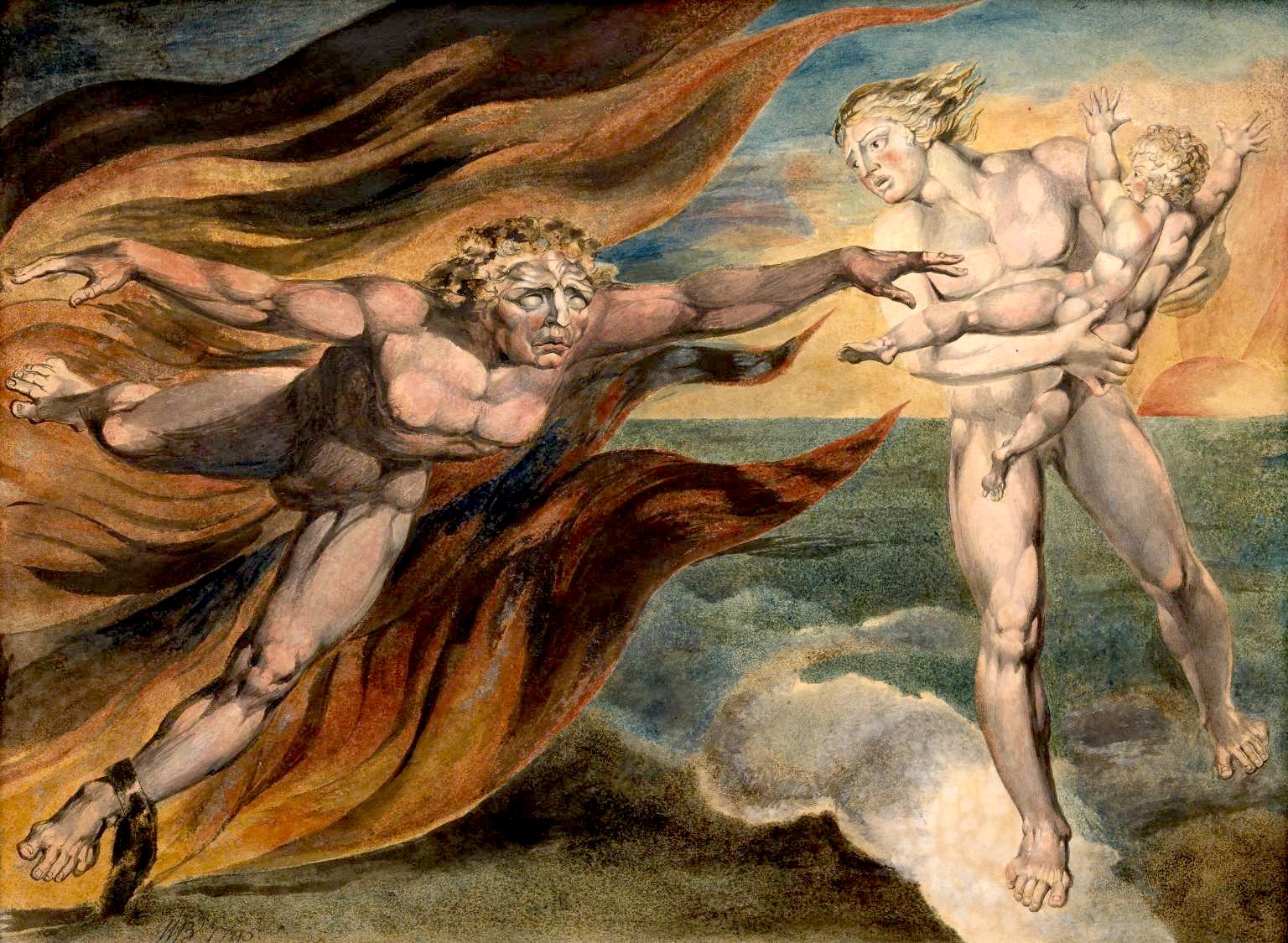
The Good and Evil Angels 1795-?c. 1805 William Blake

I’VE RECENTLY come across a number of posts online by people complaining about the “self-righteousness” of campaigners for a certain candidate to explain why they might, or will, vote for the other guy—yep, the tax evader, debate dodger, academic cipher, political under-performer, and, if the surveys are to be believed, our next President. 

Now, I can understand their irritation. Nobody likes to be told they’re wrong to their faces, or have the truth shoved down their throats. 

I can just hear someone muttering: “How can you be so sure of your manok? Don’t you know she’s an airhead, lost in space, a Bar flunker, an unwitting decoy for the (choose your color—Reds or Yellows)? There may not be much I can say for my bet—and okay, I’ll admit I don’t really know or care what he thinks because he’s not telling—but I prefer him to your insufferable assumption that you and your 137,000 friends are torchbearers for the good, the right, and the just. (And you’re such a hypocrite, because I know what you pay your maids, which isn’t more than what I pay mine, but at least I don’t pretend to be some crusading reformer.) To be honest, it’s you I can’t stand, not since you put on that silly all-pink wardrobe and plastered your gate and walls with pink posters. But guess what—you’ll lose! All the polls say so, and I can’t wait to see you crying your eyes out on May 10.”

Whichever side of the political fence you’re on, I’ll bet my favorite socks (which I haven’t worn for the past two years) that you know someone on the other side who’s thought of or verbalized what I just wrote. The forthcoming election has become a test not just of friendships, but of how far some of us are willing to pretend that all politicians are the same, all opinions are equal and should be equally respected, XXX number of people can’t be wrong, and that whoever wins, democracy will, as well.

This presumes a parity of political, financial, and moral power that just doesn’t exist and probably never did, at least in this country. The playing field is far from even. It’s been horribly distorted by disinformation, vote-buying, intimidation, and who else knows what can happen between now and May 9 (and the days of the vote count, after). The dizzying game of musical chairs that preceded the final submission of candidacies to the Comelec last October (resulting, ridiculously, in the ruling party being frozen out of serious contention for the top two slots) was but a preview of the seeming unpredictability of Elections Ver. 2022. I say “seeming” because there may be outfits like the former Cambridge Analytica that will presume to be able to game everything out and bring a method to the madness that will ensure victory for their clients.

What we know is that this will be the first presidential election, at least in recent memory, where the presumptive frontrunner refuses to be questioned about important issues, faces legal liabilities that would crush anyone less powerful, campaigns on little more than a vapid slogan, ignores China’s encroachment into Philippine territory, claims to know next to nothing about his parents’ excesses, and takes no responsibility for them. Even more alarmingly, his lead in the polls suggests that these issues don’t matter to many voters, thanks to miseducation and disinformation. 

So, no, not all politicians are the same, and not even all elections are the same. But for all its surface complications, May 9 truly and inevitably comes down to a simple choice: that between good and evil—between those who stand for truth, freedom, justice, and the public interest and those who side with falsehood, dictatorship, oppression, and corruption. If you can’t distinguish between the two, or refuse to, or prefer to obfuscate the matter by repackaging it into, say, a war between families or between winners and losers, then you have a problem. 

This isn’t just self-righteousness; it’s righteousness, period. You can’t justify preferring evil because of some perceived shortcoming in the good. It’s in the nature of things that “the good” will forever be imperfect, forever a work-in-progress. It can be clumsy, patchy, plodding, long drawn out, and sometimes, if not often, it will lose skirmishes and battles to the enemy; fighting for it can be wearying and dispiriting. On the other hand, evil is well thought-out, comprehensive, well-funded, and efficient; it can attract hordes to its ranks, and promise quick victory and material rewards. Evil is often more fascinating and mediagenic, from Milton’s Lucifer to Hitler and this century’s despots. But none of that will still make it the right choice. 

Commentators have pointed out that Volodymyr Zelensky, Ukraine’s embattled president, may not be the shining hero that the media has served him up to be, because he had repressed his enemies before the Russian invasion and had established links with neo-Nazi groups. Now that may well be true, although it will be hard to believe that the Zelensky that emerges out of this crisis—if he does—will be the same man he was before.

But none of that excuses Vladimir Putin’s murderous rampage, nor elevates his moral standing, nor permits us to turn our eyes away from the carnage in the smoking rubble. The “Western media” and “Big Tech”—the favorite targets of despots, denialists, and conspiracists—may have their problematic biases, but only the radically lobotomized will accept the alternative, which is the Chinese, Russian, and North Korean interpretation of what constitutes journalism, and of an Internet within a net. 

We cannot let the imperfections or even the failures of the good lead us to believe that evil is better and acceptable. You don’t even have to be saintly to be good. If you’ve led a life of poor decisions, making the right one this time could be your redemption. There are far worse and darker crimes than self-righteousness in others.

Hindsight No. 12: The Color of Danger

Hindsight for Monday, April 4, 2022

TWENTY-FIVE YEARS ago, I took on the first of what would become many biographical assignments: the life story of the Lava brothers. In many ways, they remain the most fascinating of my subjects, brilliant men with PhDs and other advanced degrees from such schools as Columbia, Berkeley, and Stanford who, despite their upper-middle-class origins, were counted among the most dangerous subversives in the 1950s and 1960s. 

Three of them—Vicente, Jose (Peping), and Jesus—became general-secretaries of the Partido Komunista ng Pilipinas. Never Party members, Horacio and Francisco (Paquito) were nationalists and civil libertarians who served in high government positions—Horacio as one of the new Central Bank’s top economists and Paquito as chief legal counsel of the Securities and Exchange Commission, which he helped organize. (A sixth brother, Pedro, also became a Party member in the US but died before the war.) 

I remembered them last week when I read the reports of bookstores being splashed with red paint and of a certain government official spewing the same substance out of her mouth. No, I’m not going to defend Vicente, Peping, and Jesus Lava against Red-tagging; they were proud communists to the end. 

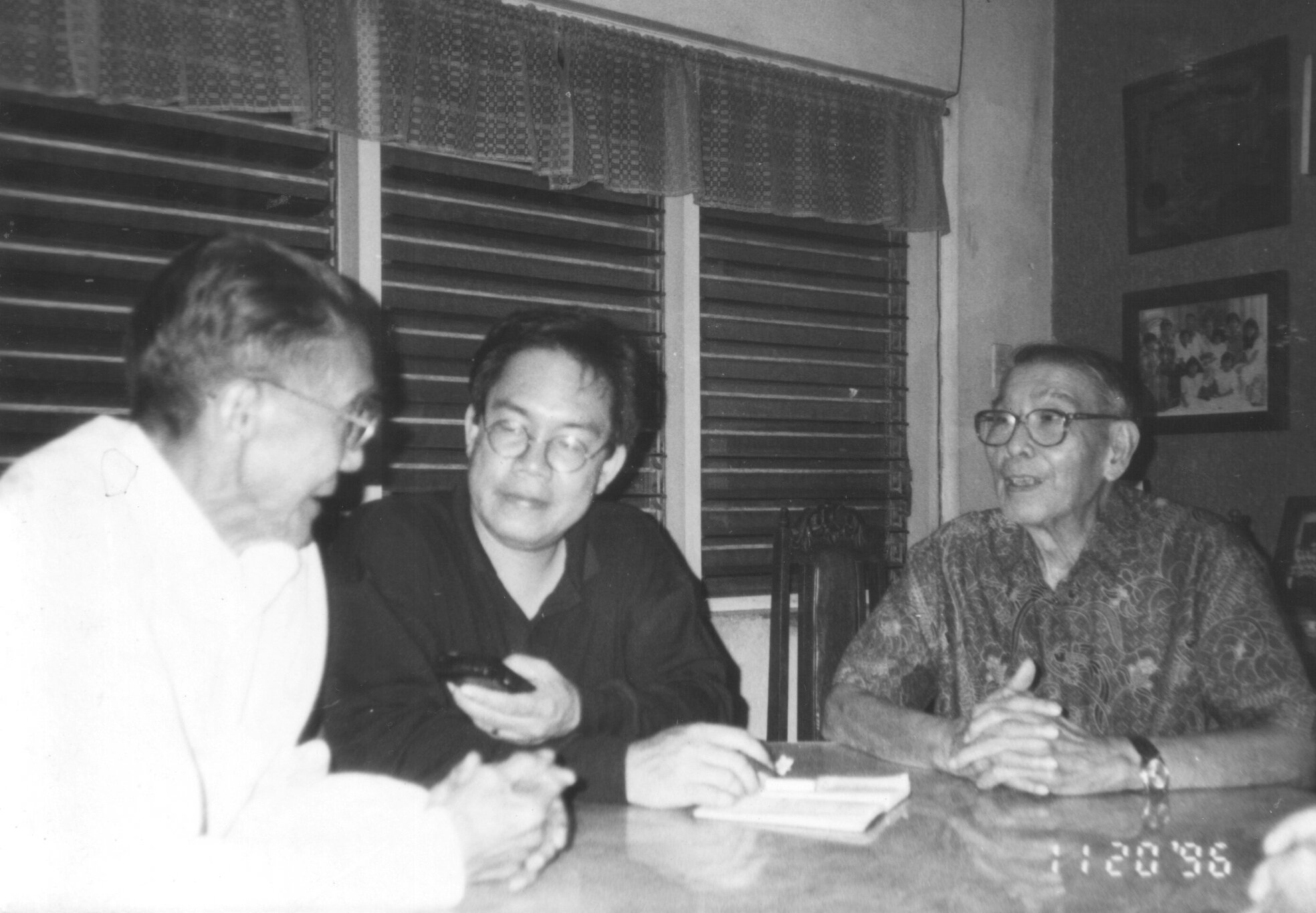
What has stuck in my mind from the many interviews I held with Peping and Jesus in their home in Mandaluyong was a moment with Peping—who, when I met him in the mid-1990s, was a frail and white-haired old man. Peping had graduated salutatorian from the UP College of Law in 1937 and his thesis, hailed by Dean Vicente Sinco as the best they had ever received, was published by the Harvard Law Journal. In his dotage, Peping seemed stiff, dour, and humorless, but as a young man he had played the banjo, with “Always” and “Five-Foot-Two” among his favorites.

At some point, I asked Peping: “Among all the figures in history, whom do you admire the most?” Without batting an eyelash, sitting ramrod-straight in his wooden chair, he answered: “Stalin and Marcos.” 

The mention of Joseph Stalin, the Soviet Union’s brutal dictator for over 30 years until his death in 1953, was disturbing but not surprising. The PKP looked up to the Soviet Union as a model, and some of its members had been trained there, although the Lavas themselves downplayed the connection, citing the Philippines’ greater affinity with the Chinese experience. Upon his release from prison in 1970, Peping had gone to Moscow, and then to Prague, where he and his wife lived for the next 20 years. Clearly, even if Stalin had long been officially repudiated in Russia, he left a deep and positive impression on Peping. 

What I didn’t expect—although it would make sense in retrospect—was his admiration for Ferdinand Marcos, whom he had never personally met. Why would Peping Lava, a hardcore Communist, admit to being a fan of yet another dictator, whose martial-law regime was responsible for the deaths of tens of thousands of so-called “enemies of the State,” many young and idealistic revolutionaries among them?

The answer might be found in the relationship that Marcos cultivated with the old Left, including a meeting between Marcos and representatives of the Movement for the Advancement of Nationalism (MAN) in 1968. Negotiations between Marcos and the PKP leadership reportedly followed, resulting in the release of Peping in 1970, and of Jesus Lava and Casto Alejandrino in 1974; Luis Taruc had been released even earlier in 1968. (The PKP had been decapitated by the arrest of Peping and many leading members in 1950, followed by the arrest of Jesus in 1964.) 

The Lavas were convinced that, despite all his liabilities and abuses, Marcos was a nationalist at heart who was aware of, and opposed to, American imperialist control over the country’s economy and politics. The Americans, not Marcos, were the main enemy. (Peping believed that the Americans were responsible for the deaths of Ramon Magsaysay, Claro M. Recto, and Ninoy Aquino.)

They were attracted by his “independent” foreign policy, especially his diplomatic overtures to China and the Soviet Union. Citing international sources, they even surmised that their release had been a precondition attached by the Soviets to rapprochement with the Philippines. Jesus Lava would contend that as of 1974, the PKP had entered a “negotiated political settlement” with the Marcos administration and had therefore been legalized. (Meanwhile, breaking away from the old PKP, Jose Ma. Sison had “re-established” the CPP in 1968, and it would be his CPP-NPA-NDF combine that Marcos would go after under martial law, as would Marcos’ successors.)

If any of this sounds familiar in light of our recent history, you win no prizes. When Rodrigo Duterte came to power in 2016, my old friends on the Left bubbled over with excitement, believing they had found a trustworthy ally who was prepared to unfriend America in favor of rosier relations with China and Russia. I was dismayed then by what I thought was fatal naivete, or miscalculated opportunism; he played them, not the other way around. 

Today, with such instrumentalities as the NTF-ELCAC and even education officials at the vanguard, going against the Reds is back in fashion. The “threat” they pose is allegedly serious enough to warrant billions in the budget for anti-subversion programs, never mind that the CPP-NPA’s military significance has been severely diminished over the past 40 years, and that we need that money for more pressing concerns. 

Never mind, too, that Russia and China—the erstwhile centers of the global Red revolution—are now universally condemned as oppressors of their own people and aggressors beyond their borders. Stalinism is back with Vladimir Putin, and Xi Jinping is trying to out-Mao Mao. (And another Marcos threatens to return to Malacañang. Peping Lava could feel right at home today.) Our government says it hates communists with a passion, and yet the best it can do is remain “neutral” in Putin’s war on Ukraine, and “realistic” in dealing with China’s encroachments on Philippine territory. 

All this leads me to conclude that the old Marxism-Leninism—which is barely recognizable in today’s Russia and China—is no more than a bogeyman, and even the government knows that. Red-tagging just happens to be a convenient cover to attack the real enemy: the liberal middle forces now at the forefront of reform and of democratic regime change. The color of danger is pink, not red. 

Hindsight No. 9: Only the Stupid

Hindsight for Monday, March 14, 2022

(Image from the diplomat.com)

MY BELATED foray into Facebook and the whole FB notion of “friends” led me to ask myself if—in these contentious times—it would be wise to apply a political filter to the many “friend requests” I receive every day, 90% of which come from total strangers.

My simple, old-fashioned liberalism said no. Keep it open. If I were confident in my beliefs, values, and principles, then I shouldn’t fear the presence of contrary ideas, which could be a springboard for a lively and high-minded discussion of alternative futures. 

Maybe I could even make fast friends from the other side, people who were equally concerned about our country’s situation and the need for capable leadership. Maybe we could even meet sometime for coffee or a few beers, engage in playful joshing about other’s politics, and end the day with a soulful rendition of “Kumbaya” around a bonfire. We could show the world the true meaning of unity, love, compassion, and all those nice words politicians can’t resist mouthing every five seconds.

It sounded good—at least in theory. Agree to disagree, turn the other cheek, and all that. Embrace the enemy, and the burrs, bumps, and other imperfections of democracy. Celebrate political diversity as a strength. Accept whatever happens in May as the sovereign will of the people, and yield gracefully to the new president’s wisdom. 

I wish I could say that that I took that high road—but I didn’t; I couldn’t. I did leave the door wide open on my first month on FB, during which I said yes to practically every request that came my way, and kept all my posts public. Soon enough, as my political preferences became obvious, I began to be cursed and trolled. Okay, par for the course—you express an opinion, you expect blowback. I tolerated it for a while, and then I asked myself—do I really want or need this, in my personal space? Were these silly comments enlightening me in any way, except to prove how much savagery you can draw from the tiniest scrap of brain? 

And so I learned the other side of Facebook that everyone else seemed to be adept at: delete, block, mute, unfriend. I began screening every “friend” request to reject dubious characters outright, including and especially those openly campaigning for candidates perpetually too busy to attend public debates. Now, I realize I’m being politically suicidal that way, by hunkering down in my hermit’s cave and refusing to participate in the time-critical mission of conversion. So please don’t do what I did, and be nice. 

But forget the trolls—that’s like talking to your toilet. So far, my toilet’s been telling me this: “Our guy will win. Look at the polls. It’s over. Only the stupid think otherwise.” I flush it all down, but it keeps floating back up. 

Seriously, going beyond paid-by-the-click trolls, I want to find an intelligent, articulate supporter of He Who Will Not Debate and ask just one question: “Why?” 

Do such people exist? They certainly do—I’ve personally known quite a few. Brilliant, eloquent, educated in the world’s best schools, well-traveled, at the top of their professions. They will claim to have been there, done that; some may even have been torchbearers and ideologues for the Left. Somewhere along the way, for reasons known only to them, they make a complete about-face, declare liberal causes dead, and cast their lot with the same people they once found repugnant. They become the gurus of the Right, the stylists of a fashionable authoritarianism they try to invest with narrative inevitability. 

Odd as it may seem, like Franco and his fascists, they will profess to be servants of God, and can be judged only by Him. They are not in it for the money, they will insist, although they live very comfortably. They affect a carapace of cynicism—they support He Who Will Not Debate, not out of love nor confidence in his admittedly mediocre talents, but because he will win, like it or not, so they are already thinking ahead to how he can be manipulated by his No. 2, their real horse. They are in it for the long game.

Sure, they’re smart, or seem to be. The only problem is, they’ve lost a fundamental sense of right and wrong. They’re beyond outrage. Proficient at turning fiction into “fact,” and inflated by their proximity to power, they mistake cleverness for conviction, and survival for salvation. In the end, they believe in nothing but themselves; they are their own echo chambers. “I don’t care what people think about what I think,” one such pundit told me, and it told me enough. 

So if and when I ask these people “Why him?”, I don’t expect a gush of praises for the fellow’s virtues, but rather a PowerPoint lecture on why he will win, regardless of everything. “Only the stupid,” they will remind me, “look at elections in terms of good and evil.” 

Even academics can over-analyze things and ignore or forget the basic question: Is it the right and the good thing to do? “Realpolitik”—a pet word of cynics—is no excuse for resignation and acceptance. 

All the scholarly explanations for Vladimir Putin’s Russo-centric world view can’t justify Russian aggression. Putin may have a right to feel threatened by a pro-NATO Ukraine, but he still doesn’t have a right to invade it and shell it to pieces. And we need to say so. As so often happens, to pose as “neutral” in this case (ostensibly because we have no dog in this fight) is to support the oppressor. We do have a dog, and it isn’t so much Ukraine itself but justice. 

So when I choose my Facebook friends, I choose people who still believe passionately in truth, freedom, and such things as the strategists of the Dark Side find foolish and irrelevant. I choose people who will restore and reinforce my faith in humanity, and who will remind me that we, too, are in this for the long fight, way beyond May 9.

“Only the stupid” may refuse to surrender in the face of looming annihilation, but I’ll take the Zelenskys of the world anytime over its Putins. 

Hindsight No. 8: Who Owes What to Whom

Hindsight for March 7, 2022

A COUPLE of weeks ago, an unattributed article in another newspaper titled “National artists owe it all to Marcos” berated five National Artists—Bencab, Virgilio Almario, Alice Reyes, Ramon Santos, and Ryan Cayabyab—for proclaiming their support for VP Leni Robredo’s presidential bid. They were, said the unnamed writer, ingrates for forgetting the fact that the National Artist Award had been created by Ferdinand Marcos, implying further that they owed their fame and fortune to Manong Ferdie, without whose patronage they would be nobodies hawking their wares at streetcorners. “Prior to his being named national artist in 2006, Cabrera was not as well known as he is today in the national art scene. Today, his paintings sell in the millions of pesos.”

That’s odd because as far as I knew, Bencab, along with the others, was already famous within and outside Philippine artistic circles well before he was proclaimed National Artist. In fact, didn’t he become one because of his impressive body of work? Or did I get it wrong? According to that article, it was the NA Award that made these people, and since Manong Ferdie established it, then, well, they were forever indebted to him for their professional success. That should go as well for such luminaries as Jose Garcia Villa, Vicente Manansala, Amado Hernandez, F. Sionil Jose, Jovita Fuentes, and Atang de la Rama, among many others. 

The article dutifully reminded the reader that “To recall, on 27 April 1972, President Ferdinand Marcos issued Proclamation 1001 creating the Order of National Artist of the Philippines, to recognize outstanding Filipino artists. Under the Marcos proclamation, a national artist is entitled to a cash award of P100,000, a handsome monthly stipend, yearly medical and hospitalization benefits, life insurance coverage, a place of honor in state functions and national cultural events, a state funeral, and burial space at the Libingan ng mga Bayani.”

Wrong. There were no such benefits under that proclamation, only the honorific title. (Go on, look it up.) The emoluments came later, in the form of the aforementioned one-time cash award and a P2,000 monthly stipend, raised much later to P10,000 and then P50,000 (on the government pay scale, equal to about Salary Grade 19, just one grade above sub-professional supervisors). Since National Artists typically get chosen in their 70s or even posthumously, that’s not much of an outlay. 

I would have been more enthralled by Manong Ferdie’s magnanimity if it had been his personal finances that paid for the package. But that was always the people’s money. And even his personal finances had a way of being traced back to some public source.

Where else did our taxes go? Why, to the recipients of the CCP International Artist Award, which I’ll bet most of us never even heard of. The book Musical Renderings of the Philippine Nation by Christi-Anne Castro (Oxford University Press, 2011) chronicles how the First Lady instituted this award—which came with an unspecified life pension for such laureates as Van Cliburn and Margot Fonteyn—in June 1973 “as a personal gift from Imelda Marcos as well as a small incentive for international performers to make the long journey to the Philippines to perform at the CCP.”

(Photo from philstar.com)

The article chides “anti-Marcos” creatives for dreaming of becoming National Artists and for accepting its conferment. But since when did the award—or any credible award for that matter—require fealty to its originator or sponsor? Were the victors at the 1936 Berlin Olympics expected to genuflect before Hitler? Should Nobel Prize winners espouse arms sales, as Alfred Nobel once did? 

I don’t dispute the claim that the Marcoses supported the arts and culture through the creation of the Cultural Center of the Philippines, the Folk Arts Theater, and the Manila Film Center, as controversial as they were (and in the case of the Film Center, as tragically ghoulish, with as many as 169 workers’ bodies reportedly entombed in the concrete). Favored artists were set for life. 

But cultural patronage is a PR expense. The art shows decorated and sanitized the regime, and made it appear to whoever cared to look that the Philippines was one big, colorful, glittery stage. For the National Artist Award to be taken seriously, they had to recognize serious artists—even those who weren’t Palace toadies, like Nick Joaquin (who accepted the award in 1976 only on condition that his friend the journalist Pete Lacaba, then in prison after being brutally tortured, be set free). After the Marcoses, the NAA was revived and expanded—the National Scientist and National Social Scientist Awards were also established—but it never quite shook off the stigma of political favoritism. Most notably, in 2009, Gloria Macapagal Arroyo played dagdag-bawas and anointed four of her personal choices NAs, prompting a suit from the real NAs and many other petitioners, which ultimately prevailed. 

If you want to get political about utang na loob, even Rodrigo Duterte acknowledges that it was Cory Aquino who jumpstarted his political career when she appointed him OIC mayor of Davao after EDSA 1 when his mother “Nanay Soling”—among the few staunch anti-Marcos activists in Davao—declined the offer. He later said in an interview that he was not going to dishonor his mother’s memory “by following the persons that she helped shut down.” But then in 2016, against widespread opposition, he allowed Ferdinand Marcos to be interred as a hero. That should have earned him a cache of pogi points with the Marcoses, who then jumped the gun on Inday Sara’s own presidential ambitions—or whatever Tatay Digong had in mind for her—by pushing Junior for No. 1. Of course, my pro-Sara friends (I do keep a handful, for our mutual entertainment) insist that Sara is going her own way and isn’t answerable to her dad. So this puzzle of who-owes-what-to-whom gets more and more difficult to figure out. Does it even matter in Pinoy politics?

And if we’re serious about debt collection, how about the P125 billion in ill-gotten Marcos wealth that the Philippine government still has forthcoming? Sounds more like the Marcoses owe it all to the Filipino people.

Hindsight No. 7: Disinformation and Democracy

Hindsight for Monday, February 28, 2022

(Image from designtaxi.com)

LAST FRIDAY—the 36th anniversary of EDSA 1—I spoke to a group of university students who wanted to know what I thought of Filipino democracy. 

I told them that at EDSA, along with millions of other Filipinos, I jumped for joy at the news that Ferdinand Marcos had fled with his family. We did not know—and might not have cared too much then—that they had brought two planeloads of gold and cash with them to Hawaii. All we wanted to hear was that they were gone, presumably for good, and that we were off to a fresh start at peace, freedom, justice, and prosperity. The darkness of the past twenty years would lift, and a new Philippines would emerge, truly democratic and firmly opposed to any form of despotism.

Today we realize what a fantasy that was, what a temporary reprieve. Under Rodrigo Duterte, if the polls are right, most of our people have once again embraced authoritarian rule, implicitly accepting its attendant excesses. The dictator’s son is back, and may even become our next President—to the delight of his supporters for whom martial law never happened; or if it did, then it was a golden age to which we will soon be returning, an age of new roads and bridges, clean streets, industrial peace, Miss Universe pageants, and eternal sunshine. 

Indeed it would be as if the past half-century between 1972 and 2022 were a confused and hazy dream, and now we were waking up where we had left off yesterday, when Ferdinand E. Marcos was poised to “save the Republic and build a New Society.” His son is making sure that we don’t miss the connection by heralding his entrance at his campaign rallies with the anthem of martial law, “May Bagong Silang.” Most of his followers today have never heard that song, or understand its chilling context, or the price we paid—in blood and in billion-dollar loans—for that “new dawn.” To them, it is a catchy jingle, in marching tempo. It comes with the smell of money and power in the air, the promise of a shower of gold for the hopeful masses. 

This, of course, is also a fantasy, but a powerful one—and I think I will be correct to surmise that many of the students I addressed, and even their teachers, fully believe it. And why not? They were never taught in school about the horrors of martial law. Instead, they were told that those were good times, that the Marcoses were good leaders who were deposed by their enemies and the CIA, that rich people don’t steal, and that the Marcos billions came from the gods, Yamashita, and anywhere but the Philippine treasury. That diet of lies has now become a catered banquet. 

The biggest enemy of democracy today—more than at any other time in our or even the world’s history—is disinformation: the willful distortion or fabrication of information to create false beliefs or impressions in the minds of people, turning bad to good, wrong to right, and vice versa. 

This is happening not only here in the Philippines, but in many other places around the world—including America, where Donald Trump has been pushing the “Big Lie” of a stolen election, despite the lack of any credible evidence. Even earlier, in what has by now become a cliché, Josef Goebbels thundered that if you repeat a lie a thousand times, it becomes the truth. 

During and after WWII, military experts engaged in what was called “psywar” or psychological warfare to weaken the enemy’s mental defenses, lower morale, and make people switch sides. This was done through radio, leaflets, newspapers, and other media available at the time.

Today the prevalence of the Internet and social media has magnified the means for disinformation by a magnitude of millions. And this is scary, because according to a recent survey, every other Pinoy can’t tell real news from fake. How can a society so prone to disinformation—to fake news—function well as a democracy?

Last month, the Akademyang Filipino (on whose Board of Trustees I serve) sponsored a forum on the topic of “Can Democracy Win in May 2022?” Most such questions are meant to be rhetorical, with obvious answers. But this time, the more I thought about it, the more I was bothered by its actual complexity. The problem, I realized, is that we no longer have a clear and common idea of what “democracy” means.

There are as many definitions of democracy as there are politicians eager to appropriate it. “Democracy” has to have been one of the most ambiguous and most abused words of the 20th century, going into the 21st. When a brutal totalitarian state like North Korea styles itself as the “Democratic People’s Republic of Korea,” you know something somewhere has gone awfully wrong. Dictators will call their actions democratic—as Ferdinand Marcos and Muammar Ghaddafi did—by asserting that they are acting on behalf of the people, a responsibility that presumably entitles them to extraordinary powers and compensations.

In my layman’s understanding, democracy is the rule and exercise of power by the people through representatives they choose by a free and fair election. It seems simple, but immediately we can see how vulnerable this definition of democracy is to interpretation and manipulation. What is a “free and fair” election? Does it simply mean an election free of vote-buying, coercion, and fraud?

If a candidate wins more than 51% of the vote without obvious coercion or cheating, then will that candidate have won a democratic election? But what if those voters had been fed provably false information? What if they willingly believed that information to be true, and voted on the basis of it? Would this still be democracy at work? 

Arguably, yes, because democracy never promised only intelligent outcomes. Elections are emotional, not rational, exercises. This disturbs me deeply, but again I have to ask myself, am I idealizing democracy as something that can be perfected? Or should I just accept that democracy, like society itself, is inherently messy, mercurial, and manipulable? 

What kind of democracy do we Filipinos have, and what kind of democracy do we want? The vote this May will help provide the answer. 

Hindsight No. 6: A Cultural Agenda

Hindsight for Monday, February 21, 2022

(Botong Francisco’s “Pista sa Angono”)

NOTABLY ABSENT from the platforms of nearly all candidates for the presidency is any mention of culture and the arts as a vital element in our quest of nationhood. Everyone has an opinion about the economy, the pandemic, corruption, peace and order, foreign relations, infrastructure, the environment, and countryside development, but you can hardly hear anyone speak—beyond the usual generalizations and platitudes—about what makes us Filipino, what it means to live as an archipelago with over 100 languages, and why and how we can be so similar in some ways and yet so different in others.

These are all matters of culture, which are often given tangible expression in the arts—the songs that make us weep, the paintings that brighten our walls, the stories that make us wonder about what’s important to us, the dances whose gestures take the place of words. At their best, culture and the arts rehumanize us, remind us of our truest, noblest, and also most vulnerable selves.

Unfortunately, we have been brought up to see them as little more than adornments, passing entertainments, intermission numbers to play in between presumably weightier and more consequential concerns. On an official level, culture has been treated as an adjunct of other ventures such as sports and tourism, culminating in beauty contests and street dances. 

The National Commission for Culture and the Arts (NCCA) and the Cultural Center of the Philippines (CCP) have had active programs for funding the arts and for sponsoring performances and exhibitions, but despite many previous initiatives, efforts to set up a formal Department of Culture to oversee a broader cultural agenda have failed, again because of the low priority accorded to the sector.

Many studies have shown, however, that the arts—transposed into the creative industries that produce cultural products covering everything from books, movies, and TV shows to music, food, advertising, and advertising—create a large economic footprint.

Citing UNCTAD figures, a report commissioned by the British Council some years ago noted that “Depending on how they are defined, the Creative Industries are estimated to represent anywhere from 3% to 12% of global GDP.”

In 2010—the last year for which I have solid figures—copyright-based industries or CBIs contributed more than P660 billion to the economy, according to the Intellectual Property Organization of the Philippines. In GDP terms, the economic contribution of CBIs climbed from less than 5 percent in 2006 to more than 7 percent in 2010. Core CBIs comprising companies in the arts, media, and advertising largely accounted for this surge. A corresponding rise in employment occurred in the sector, from 11 percent of the total number of jobs in 2006 to over 14 percent four years later. Surely these figures have risen much higher since then.

But the most important argument for a clear and strong cultural agenda remains the moral one. Culture is an essential element of national growth and development, as it helps define our national identity and our national interests. Without culture, we have nothing to stand on except our territory. Culture is a dynamic description of our commonalities and differences, without understanding which we will be moving forward blindly, guided only by the political and economic interests of our elites.

That understanding of who we are and why we think and act the way we do should be the end-goal of our education, grounded in an appreciation of our history. But as recent questions have highlighted, the DepEd’s decision to integrate Philippine history into other areas of learning effectively diluted and diffused its teaching in high school, a critical period in the formation of young minds.

For these reasons, a group of Filipino artists, writers, scholars, and cultural workers have organized the Katipunan sa Kultura at Kasaysayan (KKK) to present the leading presidential candidates with a cultural agenda for the next administration. The key items on that agenda include the promotion of a liberative, creative, and innovative culture; support for the study, appreciation, and critical interpretation of Philippine history; the promotion of cultural and creative industries, and Filipino products; the promotion of democratic education and programs to raise literacy nationwide; and serving the health and welfare interests of cultural workers. (Full disclosure: I work with National Artist Virgilio Almario in this organization.) We presented that agenda to all the leading candidates but heard back from only one, who endorsed it warmly: VP Leni Robredo. We were not surprised.

It’s not surprising, either, that those who understand Filipino culture best are those intent on exploiting its fractures and contradictions. The manipulation of public opinion and political outcomes thrives on knowing how people and groups behave, what emotional levers to pull, and which buzzwords to propagate. 

The confused and fragile state of our culture can be easily seen in how susceptible our people are to fake news. A recent SWS survey showed that 51 percent of Filipinos—every other one of us—find it difficult to tell real news from fake. The traditional sources of what most people have deemed the truth—the government, the Church, the traditional media, the schools, law enforcement, and even scientists—no longer carry the same trustworthiness they used to. Their places have been taken over by social media, cable TV, and micro-networks that can spread disinformation at lightning speed.

When I heard the New Society theme “May Bagong Silang” being played at Ferdinand Marcos Jr.’s proclamation rally, I recalled how music, theater, and art were harnessed by the martial-law regime to create spectacle, a key instrument of enthrallment and intimidation, from imperial Rome’s circuses to Nazi Germany’s torchlit parades. That’s culture at the service of dictatorship, belying Leonard Bernstein’s claim that music was one art “incapable of malice.” 

I’ve often noted, in my talks on this topic, how ironic it was that the only presidency that put culture and the arts at the forefront was Marcos Sr.’s, and today even the staunchest of Imelda’s critics will grudgingly acknowledge the value of the CCP. But there was an ulterior agenda to that, which makes it even more urgent to promote a culture that will uphold truth, reason, and justice as a basis for national unity, instead of being used as a glitzy curtain to mask wanton murder and thievery.

Hindsight No. 5: The Dropout Factor

Hindsight for Monday, February 14, 2022

(Image from thetimes.co.uk)

HOW MUCH of a factor is Ferdinand Marcos, Jr.’s being a college dropout in making people decide whether he’s worthy of being voted President or not? The anti-Marcos forces seem to think it’s a viable issue, on two counts: first, that Junior failed to complete his studies at Oxford and subsequently at Wharton, despite the extravagant resources put at his disposal; and second, that Junior and his people have repeatedly asserted that he graduated from both institutions, despite clear evidence to the contrary. 

One would think that, in a country where higher education is widely seen to be the only ticket out of poverty, Junior’s profligate ways should have turned off if not outraged large swaths of the CDE electorate that everyone now acknowledges will effectively choose our next leader.

The picture of him posing as a top-hatted dandy in front of a Rolls Royce when he should have been sticking his nose into a book in the library should be sickeningly ridiculous to anyone who has had to take three sweaty and dusty jeepney rides to school. That he or his cohorts would insist that he has a BA and an MBA from the world’s top universities without proof of an actual diploma should offend anyone who failed to finish college, despite a bright mind and high grades, for lack of money—like my father did.

But sadly I suspect that for many of Junior’s supporters, the dropout factor is a non-issue, for a number of reasons. To begin with, going by the statistics, ours is a nation of dropouts. Even well before the pandemic, according to one study, the graduation rate from college was only 61%, which means that two out of every five students fell off the rails. So Junior should be in good company. 

I myself dropped out of UP in my freshman year because I was becoming increasingly more involved with student activism, and I was also itching to get a job and earn some money. Like many dropouts who managed well enough on their own, I wore my undergraduate status for many years like a badge of honor. But there came a point when I simply longed to learn in a more structured way, so I went back to school, and graduated with my AB at age 30.

To Junior’s defenders, dropping out of Oxford is understandable. “Oxford is even harder to get into than UP!” said one online. And besides, said another, he did get a special diploma, which “is already equivalent to having a degree. UK educ system is different from PH system. Between him showing certification vs emailing Oxford, I would believe him.”

As I noted in last week’s column on “Denial and Dissonance,” the politically captive mind will fashion creative explanations for everything from the “fake” landing on the moon to Donald Trump’s “stolen victory” over Joe Biden.

A Reddit thread on the topic overwhelmingly agreed that being a dropout wasn’t the problem; rather, lying about it was. “At least Erap admitted to being a dropout, and he still became President,” said one poster.

Publicly exposed, Junior back-pedaled. His official Senate resume in 2014—digitally preserved for all time on archive.org—clearly showed him claiming a master’s degree in Business Administration from Wharton and a Bachelor of Arts in Political Science, Philosophy, and Economics from Oxford. This has since been amended to “graduate coursework” for Wharton and a “special diploma” for Oxford.

(Image from rappler.com)

But there’s another side to this college-dropout issue that’s worth thinking about: what’s a diploma really worth, anyway, and what exactly have we done with ours?

We have many thousands of college graduates working well beneath their professional capabilities as domestic helpers overseas, or in jobs that require more use of their hands than their brains. So a diploma has never guaranteed success (and as Junior’s example shows, you can get very far in life without one). 

But also, since when was a college degree a measure of intellectual ability and, even more importantly, of moral probity? What has our incumbent Palace dweller done with his law degree, beyond assuring the tokhang brigade of his full protection and threatening to defy the Supreme Court? At least Ferdinand Sr. used his to cloak his every ploy with a veneer of legality. 

In terms of intellectual caliber, Marcos had probably the most illustrious Cabinet members in our history, with PhDs from the world’s foremost universities, but even they could not rein in his regime’s excesses, and some even abetted them. The good ones left early; a few tried to draw a line; others became willing accomplices to dictatorship and plunder. As idealistic and upright as they may have been or started out, Marcos suborned many of these technocrats and forever compromised the edukado in Philippine society, turning that respected figure into a minister at the foot of a despot, his wife, and their whimsy.

Our incumbent burnished anti-intellectualism into a virtue to curry favor with the crowds, and got flunkies with LLB’s to explain away his bad behavior like auditioning comedians. You listen to their tortured spiels and you ask, was this what they went to college for?

Wealth and power hold far more charm for many of us than schooling, because we see education as but a means to those ends. To be rich is to be smart and praiseworthy enough. If the rich behave imperially, impudently, irresponsibly—well, they earned it, didn’t they? We can forgive and excuse them no end; we still think like tenants thrilled to be invited into the big house for a cup of chocolate. 

We seem surprised and suspicious when a well-educated person with an honest heart claims to love and understand us, and promises to improve our lives, because we no longer recognize real goodness and ability when we see them. So we go with the devil we know, and who cares how he fared in History or Philosophy? As Ping Lacson puts it, logic was never our strong suit: “Ayaw mong manakawan, tapos, boboto ka ng magnanakaw?” I have a PhD, and I can’t figure that one out.

Hindsight No. 4: Denial and Dissonance

Hindsight for Monday, February 7, 2022

(Image from contemplativestudies.org)

I FIRST heard the phrase “cognitive dissonance” fifty years ago in UP from my friend Jose “Oying” Rimon, then a Mass Comm major just grasping the mechanics of social behavior. Oying would go on to become a population expert and close adviser to Bill and Melinda Gates on public health, capacities in which he had many occasions to see cognitive dissonance at work in shaping people’s attitudes and responses to development policy. 

I’m not a psychologist, so I’m going to have a real one, Dr. Sam Mcleod, explain what the concept means: “Cognitive dissonance refers to a situation involving conflicting attitudes, beliefs or behaviors. This produces a feeling of mental discomfort leading to an alteration in one of the attitudes, beliefs or behaviors to reduce the discomfort and restore balance…. When there is an inconsistency between attitudes or behaviors (dissonance), something must change to eliminate the dissonance.” 

The examples that usually turn up in the literature are fairly simple: you smoke, but know that smoking is bad for you; you know you need more exercise, but put it off for tomorrow, citing the workload on your desk.

Why is this relevant to our present situation? I’ll get to that in a minute. First, let me quote from an article by Dr. Eddie Harmon-Jones in Psychology Today wondering why so many Christian Americans still voted for and supported Donald Trump despite his patently un-Christian behaviors, such as adultery. “As president, he has engaged in many actions that seem immoral. How do so many still support him? Surely they must experience dissonance over this. How do they reduce this dissonance?” (For that matter, why did so many conservative Fil-Ams vote for Trump on the excuse that he was supposedly “pro-life,” ignoring his many other moral infirmities?)

Why do people believe what they want to believe, regardless of the hard facts and figures in front of them? How do they reconcile these contradictions in their minds to feel like they’re doing the right thing and to feel better about themselves? (The science suggests that we humans have a natural impulse toward feeling good.)

This is what the psychologists call reducing or resolving dissonance—accepting or acknowledging what the more logical part of your brain is saying, but then coming up with a rationalization or justification for sticking to your original belief anyway; or, with much more effort, you find a reason to cross over to the other side. Sure, smoking is bad for me, but so is anxiety; sure, maybe vaccines work for other people, but I’m not like other people—I haven’t been sick in twenty years; sure, I lied on my tax declaration—but haven’t bigger people done much worse?

Dissonance is a shade different from denial, which is the outright rejection of proven or provable fact. Holocaust deniers will insist it never happened; other neo-Nazis will say it did, but that the Jews brought it upon themselves, or that Hitler wasn’t to blame for the genocide. 

This is the stuff that conspiracies and conspiracy theories are made of—a little truth here and a little truth there, interwoven by threads of fanciful fabrications to create some semblance of alternative logic. Spun imaginatively and cast widely enough, this web of lies can begin to acquire the sheen of truth, or what passes for it among its believers.

Are those believers stupid or crazy? Not necessarily. An interesting paper by the psychologist Andrea Kohn Maikovich argues that terrorists aren’t simply the hate-filled loonies they’re often pictured to be. Rather, recruits go through a radicalization process during which they negotiate between their personal predisposition not to commit violence and the collective pressure to do more than carry placards on the street. When the dissonance hits its peak, some leave; those who stay have found a way to convince themselves that violence is good and necessary.

Writing for the Atlantic Monthly on “The Role of Cognitive Dissonance in the Pandemic,” Elliot Aronson and Carol Tavris note that “When people feel a strong connection to a political party, leader, ideology, or belief, they are more likely to let that allegiance do their thinking for them and distort or ignore the evidence that challenges those loyalties. The social psychologist Lee Ross, in laboratory experiments designed to find ways to reduce the bitter conflict between Israelis and Palestinians, took peace proposals created by Israeli negotiators, labeled them as Palestinian proposals, and asked Israeli citizens to judge them. ‘The Israelis liked the Palestinian proposal attributed to Israel more than they liked the Israeli proposal attributed to the Palestinians,’ he told us.”

In this context, it isn’t hard to see why pro-Marcos narratives can seem so compelling to many Filipinos, despite the clear and documented evidence of ill-gotten wealth (let’s say it plainly: theft), brutality, deception, and other abuses of power during the martial law years. They’re rich and powerful—which we all want to be—so they must have done something right.

People who are already rich don’t steal; it wasn’t FM Sr. who committed martial law’s excesses, but his administrators; EDSA 1 was nothing but a CIA operation; Imelda was never imprisoned, so she can’t be guilty of any charges thrown at her; the younger Marcoses knew nothing about what was going on, and so will be different from their parents; if the Marcoses were bad, the Aquinos and Lopezes are worse; et cetera. If you feel comfortable with any of these ideas, then you’ve made your own kind of sense of the past, even if you may not even have been there.

Of course, I have my own set of stubborn core beliefs and dissonances as well. I keep holding on to the idea that Filipinos are worth dying for, only to be disappointed by the way many of us choose our leaders. I believe in democracy, but I feel frustrated when it’s gamed by people who obviously don’t care much about it. 

According to cognitive dissonance theory, something has to give: your cherished notions, or the hard truth. It seems much easier just to give up hope, but there’s no real comfort nor resolution in that, either.