Qwertyman No. 173: A Page from 1937

Qwertyman for Monday, November 24, 2025

I”M NOT a historian, although there are times I wish I were, and at an early crossroads in my youth, I actually had to choose between Literature and History for my major, settling for the former only because I thought I could finish it faster. But I’ve retained a lifelong interest in history, for the treasure trove of stories to be found in the past and for what those stories might foretell of the future. 

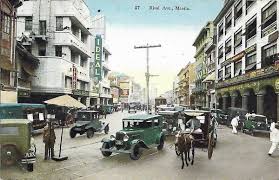
I’m particularly fascinated by the prewar period—what Filipinos of the midcentury looked back on as “peacetime” and what Carmen Guerrero Nakpil called our “fifty years in Hollywood,” which were enough to occlude much of the influence of our “three hundred fifty years in a convent” under the Spanish. It was an age of many transitions, from the jota to jazz, from the caruaje to the Chevrolet, from tradition to that liberative and all-embracing buzzword, the “modern.” Much of that went up in smoke during the Second World War, but you can still catch the ghost of this lost world on the Escolta, among other vestiges of our love-hate affair with America. (You might want to visit the Art Deco exhibition at the National Museum of Fine Arts, ongoing until May 2026; I have some items on display there.)

So entranced have I been by this time that I decided, during the pandemic, to set my third novel in it, at the birth of the Commonwealth and upon Quezon’s assumption of ultimate power, an upstairs-downstairs narrative about the comprador upper class and the world of the Manila Carnival set against the embers of the Sakdal uprising, the fuming and scheming Aguinaldistas, and the netherworld of printing-press Marxists and tranvia pickpockets. Progress has been slow because novels always take the back seat to life’s more pressing needs, but I still hope to get this done if it’s the last thing I do.

The research for the book, however, has brought its own rewards. Among my main sources for the background has been a slim volume—long out of print and now very  hard to find—titled The Radical Left on the Eve of War: A Political Memoir by James S. Allen (Quezon City: Foundation for Nationalist Studies, 1985). Allen (actually a pseudonym for Sol Auerbach) was an American scholar and journalist, an avowed Marxist who traveled to the Philippines in 1936 and 1938 with his wife Isabelle, also a member of the American Communist Party, to meet with local communists and socialists (then headed by Crisanto Evangelista and Pedro Abad Santos, respectively) and to get a sense of the Philippine situation under American rule. 

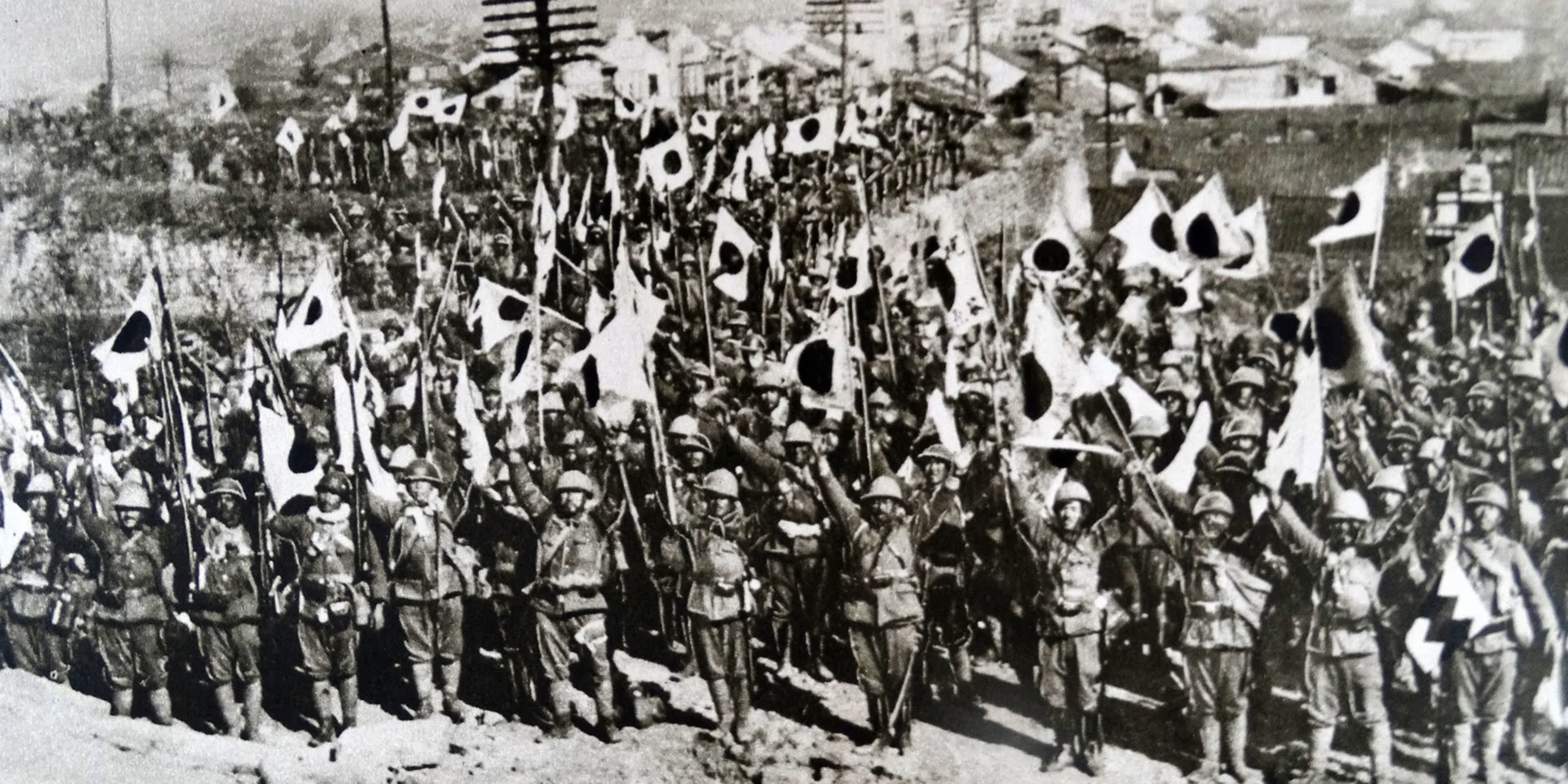
Even that early, the threat of a Japanese invasion was already looming on the horizon and causing great anxiety in the Philippines; Japan had earlier occupied Manchuria and as much as a quarter of the entirety of China by 1937. It seemed like a confrontation between Japan and the United States was inevitable, although some Filipino nationalists—fiercely anti-American—preferred to ally themselves with their fellow Asians than with prolonged white rule. At the same time, others like Pedro Abad Santos feared that the independence Quezon sought would be granted prematurely to give the US an excuse to abandon the islands and avoid confronting the Japanese. 

This is where I tell you why I’m bringing up James Allen’s memoirs this Monday—because of our present situation vis-à-vis China and (in one of history’s ironic reversals from victim to victimizer) its growing domination of the South China Sea. In Quezon, Filipinos had a leader who was deeply mistrusted and opposed by many; the United States’ willingness to defend the Philippines was in doubt; and the threat of a foreign invasion was clear and imminent. 

Allen actually sat down with Quezon for a long interview at the latter’s invitation, and was impressed by the man’s grasp of politics and his singular ambition. But the article that came out of that encounter displeased MLQ; Allen, after all, was still a communist at heart, which makes the following quotation—from a letter Allen would compose and send to his American colleagues in October 1937—even more interesting. I’ll leave it to you to observe the parallels, and to cast them against the Marcos-Duterte issues of our time.

“Filipino Marxists and radicals need to relate independence from the United States to the world crisis created by fascism. The immediate concern in the struggle for an independent and democratic Philippines is to safeguard the country against the threat of Japanese aggression. The objectives of complete independence from the United States and the internal democratic transformation must be obtained without endangering such gains as have been made or subjecting the country to new masters. The people must be awakened to the prime and pressing danger to their national existence. The United States is moving toward alignment with the democratic powers against the fascist bloc, albeit slowly and indecisively.


“Roosevelt is shifting somewhat toward the Left of Center to keep pace with his mass support from the surging labor movement and anti-fascist and anti-war popular sentiment. The national interests of the Philippines call for vigilance and precautions against Japanese aggression. This coincides with the interests of the United States in the Pacific area, and it would be folly not to take full advantage of this concurrence. In the broader perspective, the outcome of the struggle in China will be crucial for all the peoples of the Far East, and if the United States were to withdraw from the Philippines this would be a serious blow against China and encouragement to Japan’s designs upon Southeast Asia and the islands of the Pacific. The cause of Philippine independence at this time can best be served by cooperation with the United States.


“The situation also requires a change in the attitude toward Quezon, from frontal attack to critical support. Unprincipled opposition for the sake of opposition-as with some leading participants in the Popular Alliance is dangerous, for it plays into the hand of pro-Japanese elements and sentiments. Quezon certainly is not an anti-fascist, but he is not intriguing behind the scenes with Japan. The greatest opposition to his early independence plan comes from the landed proprietors, particularly the sugar barons, while it enjoys support among the people. The Popular Alliance should also support the plan, including provisions for mutually satisfactory economic, military and diplomatic collaboration after independence. Though Quezon is far from being a Cardenas or Roosevelt in his domestic policies, every effort should be made to move him away from his pro-fascist and land baron support by providing him with mass backing for such pro-labor and progressive measures as are included in his social justice program. In sum, the Popular Alliance should encourage a national democratic front devoted to the preservation of peace in the Pacific, the safeguarding of Philippine independence, and defense and extension of democracy in the country.”

Qwertyman No. 165: Conspicuous Corruption

Qwertyman for Monday, September 29, 2025

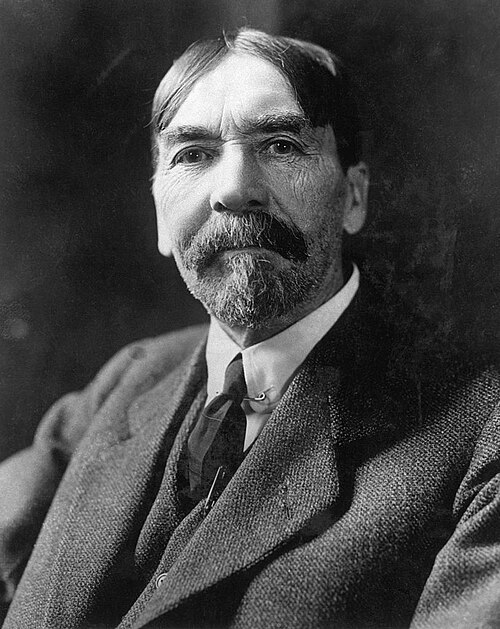
IT WAS during America’s “Gilded Age”—a period that many (not just them Yankees, but also us Pinoys) look back on with borrowed nostalgia—that an economist named Thorstein Veblen wrote a book titled The Theory of the Leisure Class: An Economic Study in the Evolution of Institutions (1899). 

Drawing on Marx, Darwin, and Adam Smith, Veblen went against the grain of neoclassical economics and its presumption of people as rational economic beings seeking utility and happiness from their labors; instead, Veblen argued, they were irrational agents who amassed wealth for social status and prestige. Writing in a scathingly satirical and literary style, Veblen roasted America’s nouveau riche—the robber barons who had built their business empires on coal, steel, and railroads (think Rockefeller, Carnegie, and Vanderbilt), and who then splurged on mansions, yachts, and such other luxurious testaments to their success.

We don’t remember Veblen much, although he cut a sharp impression among his admirers and critics alike as a dour Midwestern misanthrope, a killjoy who saw little economic value in churchgoing, in etiquette, and even in sports (of course, this was way before the MLB, NBA, and NFL). 

What we do remember are some terms that his book bequeathed to our century, most notably “the leisure class” and “conspicuous consumption,” the latter being the purchase and display of goods beyond their practical value for the purpose of manifesting one’s power and prestige—which in itself became a form of social capital, facilitating the accumulation of even more of the same. (Veblen also theorized about “conspicuous compassion” and “conspicuous waste.”)

Dr. Veblen was writing at and about the turn of the 20th century, but his observations were preceded by a history of ostentation as old as, well, Jesus. (And here, being no historian, I’ll acknowledge some help from AI.) The ancient Romans held lavish feasts and circuses to entertain the masses. Their Greek counterparts passed sumptuary laws to curb excess, limiting the gold a person could possess and the number of servants a woman could bring to a public event—which tells us exactly what they were doing. In both feudal Japan and medieval Europe, laws were imposed regulating what people could wear—to preserve social stratification, and visibly distinguish the rich from the poor. 

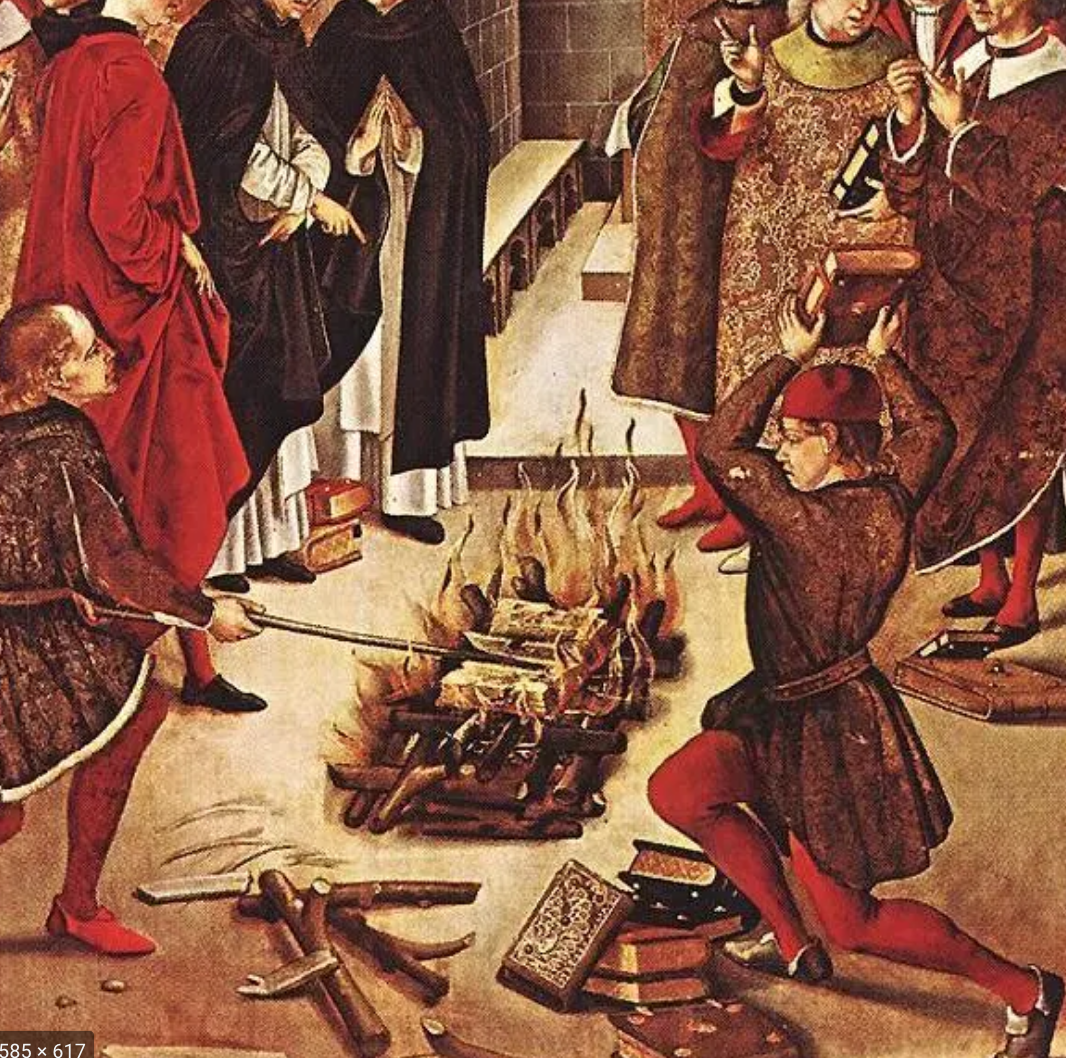
It didn’t always work—empowered by trade, Italy’s growing merchant class brazenly copied what the old nobility wore. Things got so showy that the Dominican friar Girolamo Savonarola led an anti-ostentation movement in Florence, culminating in the public burning of luxury goods, cosmetics, and elaborate clothing, a.k.a. the “bonfire of the vanities.”

I’m sure you can see by now what I’m getting at, which is the Philippines’ ripeness for its own version of “Bling Empire” and “Dubai Bling,” Netflix shows both devoured and skewered for their “grotesque opulence” and hermetic imperviousness to such inconvenient topics as Gaza, Ukraine, and Donald Trump. I have to admit to binge-watching both series, fascinated and revolted at the same time—fascinated by my revulsion, and revolted by my fascination.

This is how ostentation holds us in its thrall—by indulging our fantasies while providing extravagant proof and reason to cluck our tongues in disapproval. The logical response should be to switch channels, exit YouTube, or just turn the damned TV off. But no, we watch on, bewildered by our inability to comprehend how a Birkin bag could cost $500,000, and further, how someone could afford them, and even further, how someone could own not just one but five of them, and yet even further, how that someone could be a Filipino senator’s wife (last heard opining, with admirable sensitivity to the public temper, that “Now is not the time to attend Paris Fashion Week.”)

Unlike Veblen, who employed sardonic humor to prove his point, this is no longer even satire or damnation by exaggeration, but outsize reality. The gargantuan figures emerging from the infrastructure corruption scandal now transfixing the nation—almost a billion pesos of public money lost in the casinos, P4.7 billion worth of aircraft in one congressman’s hangar, and so on—not only boggle the mind and churn the stomach, but impoverish the imagination. We are too poor to contemplate these sums. 

And so to Veblen’s terminology, we must now add “conspicuous corruption,” as it seems that even among the corrupt—who are not anonymous to one another, needing to operate as a cozy network of thieves if they are to mutually succeed—there exists a virtual competition over who can get away with more. This doesn’t even involve or require the building of real assets such as trains, skyscrapers, and power plants, like the industrial dynasts did. Why bother, when ghost accounting will achieve as much if not more for one’s bottom line?

For now, the public outrage over the flood-control scandal may have dimmed the lights for the accused and their accomplices and beneficiaries. Facebook and Instagram accounts that once flaunted luxury limousines, exotic getaways, and designer labels have been shut down or turned private, their owners gone mute after sulky disclaimers to the effect that “We worked hard for our billions!” (But not everyone, as that high-flying congressman’s wife was reported shopping with impunity in Paris last week, oblivious to the brouhaha.)

Not incidentally, there’s more than a tinge of sexism to the recent backlash against so-called “nepo princesses”—the daughters of rich, powerful, and presumably corrupt politicians and their business cohorts. Privileged indolence, after all, is an equal-opportunity affectation, and doubtlessly their brothers aren’t wasting their time volunteering for NGOs and teaching catechism.

When they will reappear is anybody’s guess. The EDSA 4 brewing in the streets should hopefully result in decisive action against the guilty parties in this mess, and if only to appease the mob, I’m sure a few heads will roll. But I’m under no illusion that human nature will reverse course and that Thorstein Veblen’s leisure class and its blingy profligacy will vanish into oblivion anytime soon.

Me, I’m in the mood for a bonfire, and it’ll be more than croc-skin handbags I’ll want to toss into it.

Qwertyman No. 130: A Family Business

Qwertyman for Monday, January 27, 2025

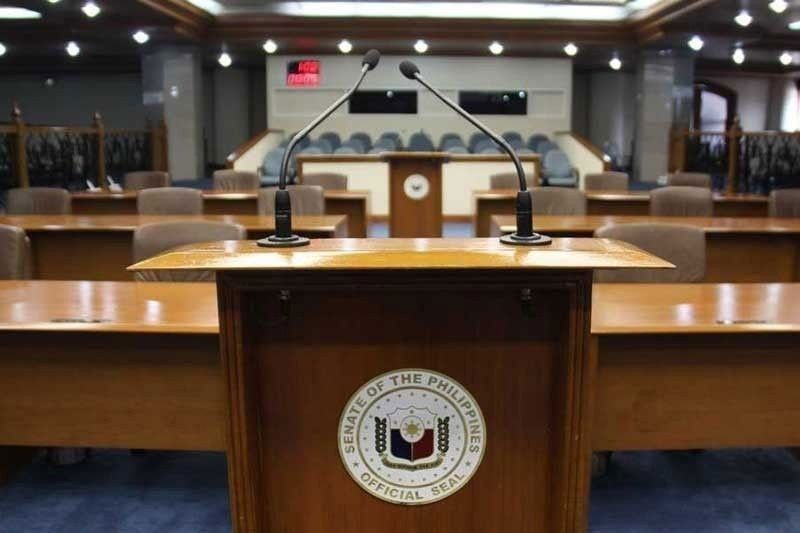
“The Senate is not a family business,” posted my friend R. on Facebook, and I found myself nodding at what sounded like the patently obvious truth, which somehow seems to still elude our family-oriented countrymen.

Among the loudest alarms raised by the forthcoming midterm election is the likelihood that, once again, Filipino voters will be choosing people with the same surnames to add to what has become, over the decades, a cozy nest of clans. 

It isn’t just the Senate, of course, which is infected with dynastisis. From Congress down to the Sangguniang Kabataan where fledgling politicos learn to tweet, our entire political system has been one big and long-running Family Feud. Husbands, wives, and their kids serve as senator, congressman, governor, mayor, and councilor with utter shamelessness, claiming a form of manifest destiny contestable only by another family.

It’s gotten so bad that—surprise, surprise—Sen. Robinhood Padilla, last accused of doing little on the job but preening his mustache, filed SB 2730 last July against political dynasties (already in our Constitution, but lacking an enabling law). Citing a Harvard study (which always seems to bear more weight than common sense), Padilla said that political dynasties “persist and reproduce their power over time, undermining the effectiveness of institutional reforms in the process.” 

More informatively, Padilla noted that “A dataset of Philippine local elections from 1988 to 2019 showed the number of governors with at least one relative in office (dynasty) increased by almost 39 percentage points, from 41% in 1988 to 80% in 2019. The dynasty proportion of vice governors rose from 18% in 1988 to 68% in 2019. The percentage of mayors in the dynasty increased gradually from 26% in 1988 to 53% in 2019…. Political dynasties, in effect, have exhausted resources to attain economic and political dominance while at the same time compromising political competition and undermining accountability…. It is time to break the barriers preventing the best and the brightest from serving the Filipino people.”

Tell that to the Philippine Senate which, because it has only 24 members, magnifies the prevalence and persistence of dynastisis even more. 

One of the ways the US Senate differs from ours is the way it’s composed, with two senators from each of the 50 US states, which, in their federal system, gives equal weight to giant Texas and tiny Vermont. That should make it highly unlikely for two related people to be in the Senate at the same time, right? Well, sort of. As it turns out, in US history, two pairs of brothers actually served in the Senate together. One pair I’m pretty sure you never heard of—Theodore and Dwight Foster, who simultaneously represented Rhode Island and Massachusetts at the start of the 1800s. The next pairing didn’t happen until more than 150 years later—with Edward and Robert Kennedy representing Massachusetts and New York in the 1960s. 

Our Senate puts America’s to shame in that department. 

It helps, of course, to be related to a President, or to prepare oneself to be one. By my count, there have been five Aquinos in the Senate—Ninoy, Butz, Tessie, Noynoy, and Bam; four Marcoses—Ferdinand, Imelda, Bongbong, and Imee; four Estradas—Joseph, Loi, JV, and Jinggoy; three Roxases—Manuel, Gerry, and Mar; three Osmeñas—Serging, John, and Serge; three Laurels—Jose, Sotero, and Doy; and two Magsaysays—Gene and Jun. “Cong Dadong” Macapagal never became a senator, but his daughter Gloria did. Fidel Ramos’ contribution to the Senate was his sister Letty.

To these presidential surnames we have to add those of other political families such as the Dioknos, Tañadas, Kalaws, Angaras, Guingonas, Antoninos, Rectos, Pimentels, Revillas, Villars, Cayetanos, and possibly Tulfos. The Cebu Osmeñas—John and Sergio, Jr.—once served together in the Seventh Congress in the early 1970s; the Cayetanos—Pia and Alan—followed suit in the Fourteenth, in the late 2000s, and the Villars—Cynthia and Mark—in the current Nineteenth. 

That’s not to say that some members of these political clans were not deserving or distinguished. Many certainly were—in the right hands, a family tradition of public service sets high standards and expectations. Never mind the ancient Fosters, but I don’t think America minded having Ted and Bobby Kennedy in the Senate, with Ted serving continuously for an astounding 47 years until he died.

They have no term limits in America. We imposed ours in the 1987 Constitution—a well-meaning gesture meant to democratize our legislature, but which backfired and produced exactly what it wanted to avoid. Our political families quickly learned to adjust and do a merry-go-round, ensuring further that one member or other would occupy all spots in the wheel. What developed over the years was less a revitalization of the institution with bright new talents than a pooling and coagulation of old blood. 

So rather than an anti-dynasty law which seems to have little chance of passing a House full of dynasties anyway, perhaps we should revisit term limits, so we can retain the services of truly outstanding senators (like Franklin Drilon, for example) for life, rather than punish ourselves by replacing them with inferior siblings and cousins. 

There are and have been high-performing senators whom we don’t and shouldn’t mind serving over and over again, politicians with genuine and critical advocacies they have devoted their lives to. Our political history has been fortunate to have seen the likes of such men and women as Senators Claro M. Recto, Jose Diokno, Lorenzo Tañada, Raul Manglapus, Emmanuel Pelaez, Helena Benitez, Eva Estrada Kalaw, Juan Flavier, Rene Saguisag, Miriam Defensor Santiago, and Edgardo Angara, just to speak of the departed.

Sadly our political realities preclude the truly poor from winning a Senate seat, and only extraordinary circumstances like EDSA can lift up capable and virtuous candidates of modest means such as Dr. Juan Flavier and Atty. Rene Saguisag to that exalted position. But their interests can be articulated and defended by men and women with the capacity and quality of mind and spirit to see beyond themselves. These are senators whom we expect to make laws that build a nation, rather than empower and enrich themselves and their progeny even further.

Qwertyman No. 129: The Punishment Theory

Qwertyman for Monday, January 20, 2025

LOS ANGELES is burning as we speak, with raging fires consuming an area larger than the whole of San Francisco—or, in our terms, about seven times the size of Makati. I’m sure you’ve been just as horrified—and, let’s admit it, mesmerized—by the TV coverage showing huge swaths of what used to be thriving California communities crumbling in flames. 

Particularly compelling for onlookers is the awareness that many of those homes belong to Hollywood’s elite—people with millions of followers on social media but who, in their moments of personal distress (as in their divorces and run-ins with the law), often find it difficult to generate genuine sympathy. Not necessarily meaning to be unkind, pedestrians like us like to see the mighty (or their houses) falling; misery is a great democratizer. Even as the mansions of the rich go up in smoke, our first urge is to think that (a) they can always afford to build a new one, followed by (b) they’re just being punished for something they did wrong.

Indeed the “punishment theory” for the Great LA Fire has gained a lot of traction in social media, both within and outside the US. In Middle Eastern media, the fire was quickly seen as divine retribution for America’s support to Israel’s destruction of Gaza. As one Qatari journalist wrote, “The American aid squandered by the occupation [i.e., by Israel] in its Gaza war amounted to about $60 billion. The damage caused by the recent US fires has reached about $150 billion. Trump said a few days ago that he will bring hell upon the region, yet hell has arrived in the heart of the US, with hundreds of thousands of Americans displaced and thousands of homes and mansions lost. I trust in the vengeance and in the victory of the One and Only Almighty God.”

Not at all, said others—the fire had nothing to do with Israel but with Los Angeles, indeed California, itself. Again invoking the Almighty, Christian evangelicals rushed to proclaim the disaster “God’s punishment” for liberal licentiousness and its adherence to the false religion of “wokeness.” For being the land of hippies, Democrats, legalized marijuana, and Hollywood, California was now being chastised by an angry God. (Don’t believe it? Check Genesis 19:24-25Amos 4:6-11—sayeth the FB and Reddit faithful. I myself suspect that if God was fair and a keen follower of American politics, he would’ve swept Mar-a-Lago away in a tsunami or a hurricane. But then I believe in an indifferent God who doesn’t take sides in wars or football games.)

Whatever, there seems to be a palpable compulsion here to go and punish the wicked, who have only themselves to blame for their calamities. Never mind that the fire has ravaged both Democrats and Republicans, blacks and whites, Christians and Muslims, Asians and Europeans, rich and poor. To those outside looking in, it’s the “other” whose tragedy we celebrate, with the innocents as collateral damage.

The word often trotted out in these situations is that old German standby, “Schadenfreude,” meaning the delight we take in the misfortunes of others. It’s all over social media when you read about the LA fires, almost to the point of gleefulness over a kind of divine justice befalling the deserving (most notably, that of a fellow named Keith Wasserman—an Elon Musk fan and Cybertruck owner who had railed against paying higher taxes, and was now begging for private firemen to save his home). 

Of course, there’s nothing like crisis to bring out both the best and the worst in people, from heroes to heels. Harder to read and more difficult to assess than these extremes is the slow and steady burn—rather than the raging inferno—in our societies.

All this talk of retribution leads me to an odd and totally unscientific theory about people. I wonder if, in fact, there’s a more proactive form of Schadenfreude that goes well beyond a smug snicker at the missteps of the perceived elite to an active courtship of their downfall.

I’m speaking not as a political scientist or sociologist, neither of which I am, but as a sometime playwright who likes to look into the darkest and strangest of human motivations. That’s normally the job of psychologists, for whom I have a healthy respect, but if psychologists could put all their patients together in a room and find a way to make sense of their nightlong chatter, then we playwrights and fictionists would be out of business.

Here’s how it goes: 

We get bad laws like the pork-laden GAA because we elect bad lawmakers. And we elect bad lawmakers because we fancy that voting for people we think we know (like entertainers and dynasts) makes us matter. With the vote being the only utterance left to the voiceless citizen, choosing the familiar becomes an act of assertion, of participation in national affairs. “He may be a lousy leader, but I put him there.” Call it the revenge of the bobotante, a term we Pinoys coined for supposedly ignorant or forgetful voters. My theory is, they’re more cunning and deliberate than we think.

Many MAGA voters didn’t so much vote for Trump the man as for the grievances they bore that he had the smarts to amplify and articulate. A convicted felon, habitual liar, bully, and egomaniac, Trump was after all the very antithesis of the righteous and virtuous leadership that evangelicals especially like to uphold (not that they don’t have their own crooks and pervs in their uppermost echelons). If they were true to themselves, even his most ardent supporters would have acknowledged—and looked past—his monstrously obvious character flaws.

They voted for him nonetheless, because—on top of the price of gas and groceries—he embraced and legitimized their consternation and disgust with a world gone far beyond their comfort zone, peopled by neighbors who don’t speak English, who have sex with the same pronouns, who kill their babies, and who run races against runners with different genitals (and go to their bathrooms). How could Donald J. Trump be worse than these? 

Today DJT takes his oath as America’s 47th, as Los Angeles continues to burn. I wonder who is being punished for what.

Qwertyman No. 127: From St. Louis to San Diego

Qwertyman for Monday, January 6, 2025

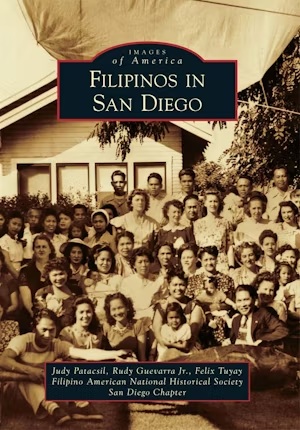
I’M WRITING this on New Year’s Day in San Diego, California, where we’ve been visiting our married daughter Demi, who’s been living and working here for the past seventeen years. It was our first Christmas in America in ten years, and our second visit since the pandemic ended. 

Last night, just before midnight on New Year’s Eve, I watched a long and fascinating documentary on cable TV on the 1904 St. Louis World’s Fair, also known as the Louisiana Purchase Exposition, which ran from April to December that year. We Filipinos recall that event for its importation of over 1,000 of our countrymen to demonstrate what “savagery” meant—specifically, through the public butchering and eating of dogs. 

That bloody sideshow raised an outcry even then among both Filipinos and Americans, a pain we still feel more than 120 years after. Lost to many of us as a result of that diversion was the magnificence of the fair in many other respects, especially in terms of advances in science and technology. Many necessities and amenities we associate with the 20th century—electrical lighting, wireless telegraphy, the X-ray machine, baby incubators, and tabletop stoves, among others—were first shown to the public at the fair. 

But the fair, above all, was meant to showcase American ascendancy in politics and culture and in military and industrial might. America had just defeated Spain and had become a global maritime power, and was eager to flex its muscle, so this triumphalism underscored the great urge at St. Louis to introduce the world to America, and America to the world.

Just a few days earlier, we came out to San Diego’s famous waterfront to watch a parade to celebrate the Holiday Bowl, a football game scheduled for the Christmas break, with floats, balloons, marching bands, and military vehicles. It was a moment of pure Americana, brimming with Christmas cheer. I did my best to keep politics out of my mind for that golden hour, but of course it was never far away—especially in San Diego, a border city that could soon find itself caught in the mass-deportation drama promised by the incoming Trump administration, which takes office in less than three weeks.

This morning we woke up to the news of at least ten people being killed and dozens more injured on the street in New Orleans by an ISIS sympathizer plowing into a crowd of New Year revelers. That could very easily have been us at the parade, and again I had to wonder if—despite all the bad press the Philippines gets, with some reason—the US was truly a safer place, given its new realities of normalized and often racist violence. 

It doesn’t even take a bearded terrorist to wreak havoc in American life; as of December 17 last year, 488 mass shootings had been recorded in the US, so often that they’ve become a news staple eliciting just about as much outrage and action as another mugging at Central Park. Anti-Asian violence—to include both physical assaults and verbal or online abuse—has been on the rise, with Southeast Asians reporting the highest number of threats, despite polls showing most Americans believing that anti-Asian-American attitudes are on the wane, post-pandemic. 

That’s not going to deter the hundreds of thousands of Pinoys who, like us, still need or want to visit America each year—mostly as tourists who just want to see Disneyland, the Golden Gate Bridge, and the Empire State Building, aside from picking apples in Michigan, tasting wine in Napa Valley, and skiing in Colorado. The magic of an America we fantasized about—growing up watching Hollywood movies, listening to American songs, reading American books, and following American idols—remains powerfully attractive, enhanced by an image we retain of America as an innocent, benign, and giving place. This might be especially true of us Boomers who learned about snow and white Christmases long before we came across the real thing.

I doubt, of course, that our forebears who stood half-naked in their tribal garb for the delectation of the crowd in St. Louis saw anything so warm and fuzzy about America. Instead they saw curiosity, pity, and revulsion. American “innocence” was always a romantic illusion; America the Beautiful can turn on a dime to become America the Ugly.

When I put all these things together in my mind, I wonder if we 21st-century Filipinos identify more ourselves today with those “savages” on exhibit or with their onlookers, particularly those Pinoys who have crossed over to become Americans—in some cases, even “more American than the Americans,” as I’ve heard it said, proud of their assimilation into a mainstream moving farther than ever to the political right. 

As a teacher of American literature and society—who also studied, taught, and worked in the Midwestern heartland for many years—one thing I always remind my Filipino students is that there’s no such thing as a single, monolithic America, and that, whatever its current majorities might say, American society is diverse and ever more diversifying. To the American right, that’s the “great replacement theory” at work, the horrifying possibility that non-whites—the carnival freaks—are taking over the country, prompting the Trumpist turnaround from “diversity, equity, and inclusion” or DEI policies. To me, diversity offers both challenge and hope.

Out of respect for my hosts and friends here in San Diego—some of whom, for their own reasons, voted for Donald Trump—I’ve held my tongue for the time being, telling myself that it’s their country and their choice, although that choice will inevitably affect our lives halfway around the world. 

Among my liberal American friends, I sense an urge to disconnect at least temporarily from political reality and to go into passive resistance while they regroup. It’s a position that I can identify and sympathize with, as we sort out our options in the Philippines of 2025. We survived martial law; you’ll survive Donald Trump, I tell them. To survive may well be our best New Year’s resolution: against the aggravations and vexations of the world we’ve come into, survival is the best revenge.

Qwertyman No. 126: The Young Dodong Nemenzo (2)

Qwertyman for Monday, December 30, 2024

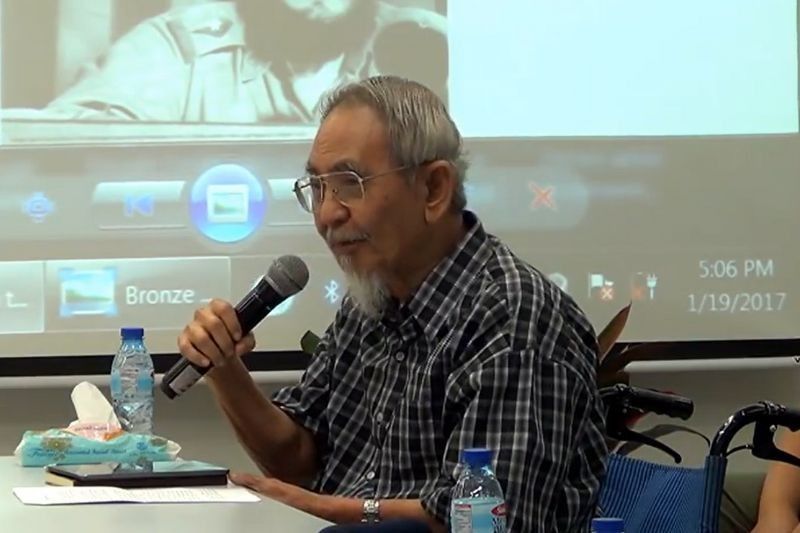
THIS WEEK I continue with excerpts from my interview with the late Francisco “Dodong” Nemenzo, on his recollections of his genesis as a young intellectual and activist at the University of the Philippines in the 1950s.

“It was all a popularity contest. Everything just seemed to be socials. Homobono ‘Bon’ Adaza, who was then the editor of the Philippine Collegian, tried to organize a socialist club with me. Bon even put out an announcement for a meeting. Bon and I were contemporaries, but he was a year older than me. I think I was a senior by then. I was living with my father on campus, since he was a professor here. We had a cottage in Area 2, then we later moved to Area 14. Our whole family was here. 

“It was because of my readings. I had already read the history of the socialist movement, and I was fascinated by that so we formed a socialist club. I think just three of us turned up for the meeting—the third was Princess. After that we were always together. We weren’t going steady yet then. We continued being friends because she was the only one who listened to my sermons on socialism. You ask her, but I don’t think she had any association with socialism before. We had just that one meeting. 

“Bon was eventually expelled from UP, but I had a hand in his election as chairman of the Student Council and editor of the Collegian twice because we were friends. The editor was elected from among the topnotchers of the exam. 

“The UPSCAns didn’t have a candidate who passed the exam, who were all frat boys. Bon landed in the top three, but he had no supporters. I bargained with the UPSCAns because they held the majority. So I used my vote in the council to push for Bon. Eventually he became editor of the Collegian

“Together with the chairman of the council and also the leader of the UPSCA, we decided to hold the first student strike. This was because for one and a half years, UP had no president, with Enrique Virata serving as acting president. It came down to a stalemate between Vicente Sinco and Gonzalo Gonzalez. Squabbling behind them were Jose P. Laurel, who represented the Senate on the Board of Regents, and Carlos P. Garcia who was supporting Gonzalez. No one could get the majority. I was on that strike. I proposed a solution arguing for the Board to take decisive action but also endorsing Salvador Lopez, whose essays I loved, for president. The UPSCANs didn’t care who won, as long as we had a president. 

“Our strike paralyzed the campus for a couple of days. It didn’t last as long as the Diliman Commune, but it was the first—and it was my first mass action. I was the one who was planning the tactics. 

“I was really looking for allies when I met this labor leader who used to be the secretary-general of the Federation of Free Farmers. [We’ll call him Hernando for this account, pending verification of the name—JD.]He claimed to be a socialist and he seemed to have read books on socialism. He was a layman. He was the one who introduced me to labor leaders such as Ignacio Lacsina and Blas Ople. They had a group of young people who revolved around Lacsina, and they met at his office in Escolta. 

“But I continued my reading. Sometimes I felt alienated because they weren’t Marxists. They were just for nationalization, and I felt more advanced than they were. There were other students there, but they were not as involved as I was. When the Suez Crisis exploded in 1957, the Americans intervened in Lebanon. We decided to picket the US embassy. We were  already using the word ‘imperialism’ then. Prominent labor leaders were there, including Hernando. When we got there, the labor attaché invited us inside to have breakfast with the US ambassador. I didn’t want to go in, but Ople and Lacsina thought they could change US policy by convincing the ambassador, so we did. I was utterly disgusted by that experience. 

“I was due then to go to US for my PhD, on a Rockefeller fellowship at Columbia University. Our demonstration took place just a few months before I was to leave. I was an instructor in UP and my college wanted me take up Public Ad, but I wanted to get out of that so I chose Political Sociology. I had become an admirer of C. Wright Mills who worked there and I wanted to work with him, only to find out that he didn’t want to handle graduate courses. 

“I already had a room at the International House in Columbia. Everything was prepared. I already had my visa. But on the day I was supposed to leave, the embassy told me that I could not leave. The consul general showed me the immigration law, which banned the entry of communists, anarchists, drug addicts, and prostitutes. 

“I think they had some earlier information about me because Lacsina later told me that Hernando was a CIA agent. He said that once, he and Blas Ople wanted to invite Hernando for a drink so they could get him drunk and then ply him with questions to extract the truth. What happened instead was that Blas got drunk first so nothing happened. Then he lashed out at Hernando and told him to his face that he was a CIA agent, and cursed him for blocking me from taking up my scholarship in the US. Looking back, I think Lacsina was right!”

Dodong Nemenzo eventually went to the University of Manchester in the UK for his PhD in Political History. He returned to serve as dean of the College of Arts and Sciences, chancellor of UP Visayas, faculty regent, and 18th president of the University of the Philippines. He married Ana Maria “Princess” Ronquillo and they had three children—one of whom, the mathematician Fidel, became chancellor of UP Diliman.

Qwertyman No. 119: The MAGAverse

Qwertyman for Monday, November 11, 2024

IT’S NEVER good to write out of rage, no matter how righteous you think your rage might be; the anger clouds your reasoning and could reduce you to incoherence. So as I’m writing this—on the afternoon of November 6, our time, and early morning in America where Donald Trump has already claimed victory in a bitterly fought election—I’m taking deep breaths and thinking of happy and pleasant things, far away from politics, before returning to the task at hand.

After the initial sting, it isn’t so much anger as sadness and consternation that stay with me, a deep sense of regret over what could have been, had the outcome been different. There are at least 15 million Filipinos who know what I’m feeling, having gone through a similar shock that May two years ago, when what we most dreaded happened.

Of course, to many Filipinos, a Trump return won’t make one bit of difference, and why should it? We have enough of our own problems to worry about. But for those like me who see the world today as a widening battleground between good and evil, November 5 was a loss not only for American Democrats, but for freedom-loving and truth-seeking people all over the planet, whose lives will eventually be affected by whatever comes out of Washington, like it or not.

On the eve of November 5, perplexed and dismayed by the statistical closeness of a fight that good sense should have blown wide open, I sent a message to friends saying that “My inner cynic almost wants Trump to win so Americans will see for themselves exactly what MAGA means over the next four years.” So I guess I got my cruel wish, except that to “America” we can now add “the rest of us.” Welcome to the MAGAverse.

But before this moment passes, let me just put this out there to those whom we should hold responsible for trusting a felon with the White House and for whatever he may do hereon.

If you didn’t vote for Harris and stayed home because of what you saw to be her lack of support for the Palestinian cause, just wait until Trump dances with Netanyahu over the graves of Palestinians in Gaza and the West Bank.

If you thought that voting for Trump was a vote for the precious life forming in an unborn fetus, start counting the bodies of the living that will pile up in Ukraine when Trump greenlights Putin to take what he wants, with America looking on.

If you’re a legal immigrant from Asia, Africa, and Latin America (one of those “garbage” countries, in Trump-speak) who went for Trump because you think he knows and cares about how hard you worked for your citizenship and sees you as his co-equal American, let’s see how well his Justice Department defends you at your next run-in with the police or with a gun-toting redneck.

If you didn’t vote for Harris because you made a fine point of her waffling on the fracking issue, wait till Trump puts climate-change deniers in charge of the Environmental Protection Agency—which he did, by the way, in 2016, when he appointed a lawyer who led 28 states in a fight against the EPA’s Clean Power Plan.

If you’re a normally bright and decent person who chose to overlook Trump’s moral flaws and lack of character because you thought he would stabilize and grow the economy, and appoint geniuses to manage the store, wait until the likes of Elon Musk play with government like he did with Twitter. 

(And never mind national security, with Trump being chummy with Putin, Kim Jong Un, and the Hungarian tyrant Orban, who just congratulated Trump for “the biggest comeback in US political history…. A much-needed victory for the world!” Who needs counterintelligence when these guys have direct access to the White House? Worry about tooth decay, when RFK Jr. pulls fluoride out of your tap water, because it was supposedly part of a Cold War communist plot to poison America.)

If you took pity on Trump because you felt that Joe Biden had “weaponized” the Department of Justice against him (on cases he had only himself to blame for, like sleeping with a porn star and paying her to shut up), wait until Trump unleashes the DOJ on his political opponents, as he has sworn to do, and anything and anyone else that gets in his way—including you. (I thought that the best endorsement for Kamala was the one from Harrison Ford: “Vote for Harris if you want to protect your right to disagree with her.”)

If this is nothing but doomsaying, what do you think Donald Trump did all throughout his campaign? He is doom, and doom won. This round goes to Darth Vader and the Dark Side.

Excepting Ukraine and Gaza, much of the world will move on like it always has, and so will we. America itself already had a foretaste of Trump in his first incarnation; they survived him and the pandemic as well. We Filipinos survived martial law, right? 

The question is, what did people learn? Or, since those who learn anything eventually die, are people fated to make the same mistakes all over again from generation to generation? There hasn’t even been enough time for the generations to roll over in America since Trump 1.0—didn’t those voters learn anything?

With our own midterm elections coming up next year, we could be telling each other the same things. I better keep my inner cynic in check.

Qwertyman No. 118: A Flickering Flame

Qwertyman for Monday, November 4, 2024

TOMORROW, NOVEMBER 5 (or Wednesday, November 6, our time), American voters will choose who between Republican Donald J. Trump and Democrat Kamala Harris will lead them from the White House over the next four years.

For more than four million Filipino-Americans, the outcome will bear a direct impact on their daily lives, their choices, their standing in society, their future. For the rest of the world, including those of us here in the Philippines, the result will shape not only how we see America, but also how America sees us in the global scheme of things.

Only the foolish will think that we have no stake in this election, and that America’s position in the world will be the same regardless of who wins. For the people of Ukraine, a Trump victory might as well be his friend Putin’s; for the Taiwanese, the Filipinos, and others dependent on at least the deterrence if not the active deployment of American military power vis-à-vis Chinese expansionism in Asia, Trumpian isolationism can only invite more unbridled aggressiveness from the region’s bullies.

As I’ve often said here before, like many millions of Filipinos, my stake is more personal than that: our daughter lives and works in California, and my sister is also a US citizen, both of them contributing productively to that country’s economic and social well-being. Both are proudly voting and campaigning for the only candidate who offers real hope for the future of America and the world: Kamala Harris. To them, she represents not just the right political but also and even perhaps more importantly the right moral choice.

Of course, I totally agree. Why anyone would vote for a man who even many of his supporters admit is a convicted felon, a habitual liar, a womanizer, a pervert, a racist, a chauvinist, and a would-be dictator is beyond me. But apparently enough Americans will, enough to make all polls point to a dead heat between the two candidates, with the outcome likely to be decided by voters in a handful of so-called “battleground” states.

Among those many millions of Trumpists willing to overlook his not-insubstantial shortcomings are legions of Fil-Ams who—despite having historically voted Democrat as an ethnic minority—now find common cause with Trump’s blatantly racist anti-immigrant rhetoric (it isn’t even about illegal immigration anymore, but about immigrants from “garbage” countries in Asia, Africa, and Latin America) and his supposed “anti-abortion” stance (since diluted for political expediency). Among other single-issue MAGA voters, “the economy” remains their strongest reason for choosing Trump, despite 23 Nobel-prizewinning economists writing that Trump’s tariff-based economic plans will be disastrous for the US.

Eighty-two Nobel laureates, in fact, are on record supporting Harris, but that clearly matters little in an election driven more by primal fear than by truth and reason. As astrophysicist Neil deGrasse Tyson lamented, “How sad it must be—believing that scientists, scholars, historians, economists, and journalists have devoted their entire lives to deceiving you, while a reality TV star with decades of fraud and exhaustively documented lying is your only beacon of truth and honesty.”

My own sense is that many Trump voters won’t be voting for Trump the man, whom his sharper and more hidebound supporters—many of whom, like Sen. Ted Cruz, he has savagely maligned but who have masochistically endured his insults to ensure their own survival—will admit before God to be the lowest of the execrably low. They will be voting for the deep grievances and resentments that Trump has so craftily stoked in them, and against the idea of an “elite” and a “swamp” that Trump and his new acolyte Elon Musk, strangely enough, represent more visibly than most Democrats.

Thus the very real possibility remains that we may wake up Friday morning to the specter of Trump 2.0 and whatever it will bring. Should that happen, we can imagine the global wave of consternation and dismay that will ensue among liberals and progressives everywhere. On the other front will resound the triumphant cheers and chuckles of global despots and their minions.

All this brings me to what I suspect has been my real worry all along—not the US election, about which we can do nothing, but our own political horizon, on which familiar dangers are looming large.

At least one online pundit with an unusual point of view has lauded the recent performances of Vice President Sara Duterte and her father former President Rodrigo Duterte at their Senate hearings as a kind of resurrection—in the very least, an affirmation of their continuing political viability, if not resurgent power. 

The Dutertes mastered their fumbling inquisitors, this commentator crowed, reporting that the gallery even clapped for the senior Duterte at the end of a raucous session at which he virtually confessed to willfully causing the summary execution of suspects without ever being prosecuted. The Dutertes, he seemed to imply, remain above and beyond the law; with their cohorts in office, they are the law, or shall soon be again.

Indeed Philippine politics has become a theater where bravado, bluster, and buffoonery matter. We cannot even tell the actors from the characters any longer. Lies resound louder than the truth, and the audience rewards the best “hugot line” with wild applause.

The upcoming midterm election already promises to showcase the worst of our political predilections, with family dynasties and patently unfit candidates crowding the top of the poll rankings.

So if the Americans choose Trump over Harris, why should we be surprised? Where character, reason, and talent no longer matter, the tyrants rule with fools at their feet to keep the populace amused.

But if Kamala Harris wins, whatever it brings to America, it will mean for me that, however fragile, hope remains for good sense to prevail even in extremely fraught situations such as ours. If only for that flickering flame, I pray she wins.

(Image from newsweek.com)

Qwertyman No. 95: Till Divorce Do Us Part

Qwertyman for Monday, May 27, 2024

IS THERE anything about divorce—a bill legalizing which will soon be taken up in the Senate—that hasn’t already been said, or that most people don’t know? This was on my mind last week as I walked to school, wondering what my class of 20-year-old seniors thought about the issue. As young people likely to get married within the next five to ten years, they’re the ones who stand to be most affected by the outcome of the current drive to get the bill passed.

So I brought it up—we’re taking up argumentative or opinion writing, and how to handle contentious topics, and divorce was right up that alley. I didn’t tell them which side I stood on, although, knowing me to be a flaming liberal, they could have guessed that. I let them speak. Given that this was the University of the Philippines, and even factoring in the possibility that students tend to dovetail along with what they think their teachers believe, it was no big surprise that everyone who spoke up in that room did so in favor of legalizing divorce; if there was anyone in opposition, which I rather doubt, he or she chose to remain silent. 

Clearly, a majority favored the move, for the very reasons cited by the bill’s supporters. One student had a very personal take on the matter: “As the child of parents whose marriage was annulled,” she said, “I can remember all the things they had to do to get that annulment. The poor can’t afford it.” And economics aside, what did divorce offer that annulment didn’t? “The freedom to remarry!” everyone chimed in. (Correction: annulment allows for remarriage, but legal separation doesn’t.)

But—I said, just to probe a bit further—what about the argument that divorce will contribute to the break-up of marriages? “Those marriages are already broken,” said a student. 

But the Vatican opposes divorce, doesn’t it? (It’s the only other country in the world, aside from the Philippines, which doesn’t recognize divorce.) “Priests don’t get married. What do they know about marriage?”

At this point, I found it useful to introduce a fact that was news to everyone in the room. “Did you know that we used to have divorce in the Philippines?” No! Really? “Yes, a divorce law was enacted under the Americans in 1917. It was even expanded under the Japanese Occupation, and continued after the war until the Civil Code of 1950 abolished absolute divorce and replaced it with legal separation. Go on, look it up. I don’t know how many Filipinos actually availed themselves of divorce when it was legal—it would be interesting to see the statistics—but it’s not like we never had the option. It was there, but Church-supported politicians took it back.” Did the Filipino family collapse back then because of the availability of divorce? Show me the proof.

If this exchange sends chills up the spine of ultraconservatives who still think of UP as a haven of rebels, atheists, and devil worshippers, I’m happy to tell them that religion is alive and well in UP—the services in both Catholic and Protestant chapels are usually full. But so are reason and critical thinking, which to me remain the best antidotes to doctrinaire dogmatism, whether from the left or from the right. 

The Catholic Church’s steadfast resistance to legalizing divorce and my students’ apparent willingness to push back against that bulwark reminded me of a critical period back in the 1950s when UP was torn by a struggle between religious forces allied with the popular Jesuit Fr. John Delaney such as the UP Student Catholic Action and those who, like Philosophy Prof. Ricardo Pascual, believed in maintaining UP’s non-sectarian character. In the end, secularism prevailed, but at the price of Pascual and other liberal-minded professors being denounced as “communists” before the House Committee on Anti-Filipino Activities.

I’d like to think that a lot has changed since then, although sometimes things seem pretty much the same, given how the Red-tagging continues despite the sharply diminished power and influence of the CPP-NPA. One thing that has changed, at least in the public’s perception, is the presumption of moral superiority once claimed by a Church now embroiled in sexual and financial scandal. Its invocations of “divine law” or “natural law” in matters relating to homosexuality, contraception, and divorce sound almost medieval in a world that has largely moved in the opposite direction—something the conservative faithful will see as all the more reason to hold on inflexibly to their core convictions.

We can’t argue with those convictions, to which everyone has a right, but conversely, our people as secular citizens shouldn’t be subject to any religion’s doctrines when it comes to personal decisions that are no prelate’s or imam’s business. (And just for the record, I have no plans of divorcing my adorable wife, with whom I just celebrated 50 years of a typically mercurial but happily enduring marriage.)

I’ve written previously about my disaffection with organized religion, so that may provide some context; I do believe in God and in the value of faith and prayer in our lives, and in the right of others to practice their religion—for as long as they don’t insist that theirs is the only right way forward, and impose their way of life on me. If you want to stay married in mutual and lifelong misery because you believe it’s the right thing to do, fine; but don’t expect others to do the same, because their lives aren’t yours to mess up. Happiness is hard enough to find in this dystopic world we live in; let’s not make it harder for others looking for another chance at love and peace. 

I doubt that they’ll change the wedding vows—“For better or for worse, till death do us part” is always worth two people’s best shot, until worse comes to worst. But divorce should be an option better left to the individual’s God-given intelligence, conscience, and emotional honesty to sort out than to institutions more concerned with abstractions than reality. It’s ultimately a reminder of how human we are—people make mistakes, which can’t be corrected by prolonging them; we learn, we do better, and we live on. I think that’s what a just and kind Almighty would wish for his creations.

(Image from montanoflamiano.com)

Qwertyman No. 44: Again, America

Qwertyman for Monday, June 5, 2023

I HAVE a good friend whom we’ll call Ted, a Fil-Am who retired a few years ago as a ranking officer in the US Navy. He was in town recently on some family business, and like we always do when circumstances permit, we had dinner and a good chat just before he and his wife flew back home.

Most of us have friends if not relatives in America, and all of this would be pretty routine except for one fact: I’m a flaming liberal, and Ted is a Trump Republican. Over the fifteen years or so that we’ve known each other—well before Donald Trump entered the picture—we’ve been aware of those political differences, but rather than politely skirt them in our conversation like many sane people would, we feel comfortable enough with each other to talk at length about them, and even exchange some friendly barbs.

Much of that level of comfort comes from my belief that, in his own way, Ted sincerely and deeply loves his country—and his ancestral home, the Philippines. He’s smart, curious, eager to learn and understand. In his former naval job and as a private citizen, Ted—who was born in the US but spent some of his formative years in his family’s hometown in Bicol, and speaks some of the local language aside from Filipino—has visited the Philippines as often as he can, trying his best to improve relations between the two countries on a personal level. (On this last visit, for example, he also took part in a ceremony to celebrate the commissioning of the USS Telesforo Trinidad, named after an Aklan-born Filipino petty officer who was awarded the Medal of Honor for bravely rescuing his shipmates from an explosion aboard their ship in 1915.)

Given his naval background—his dad joined the Navy in the 1970s—I’m not surprised that Ted is a Republican, like many military Fil-Ams are. (One notable exception is a mutual friend of ours, the former West Pointer, Army Ranger, and diplomat Sonny Busa, as staunch a Democrat as they come, and a key figure behind Filipino veterans’ causes in Washington.) His support for Trump despite the man’s many failings continues to mystify me, but I’m guessing that in his calculations, Ted chose to cast his lot with the man best positioned to thwart the liberal agenda. That includes items that Ted and other Republicans feel extremely uncomfortable with, such as what he calls the “celebration, beyond just acceptance” of transgender rights, and their judicial enforcement.

Perhaps with any other person, my liberal hair-trigger would have fired away at such comments with a fusillade of counter-arguments, but with Ted I find more value in listening and trying to understand a certain mindset, as different as some of its premises may be from mine. In our last conversation, what Ted had to say was profoundly disturbing. I’m paraphrasing here, but essentially it was this: “America is a mess. People can’t talk civilly to each other anymore. When I say I’m a Republican, people instantly assume I’m a racist.” To which I said that people at the top like Trump (and our own version of him here) greenlighted that kind of boorish discourse, with additional pressure brought on by right-wing militias armed with AR-15s. We talked about January 6 (which he opined was not an insurrection) and the Second Amendment (which I said seemed sacrosanct in American politics). “You have cancel culture,” he sighed, “to which the other guy responds by going bam bam bam!” He was deploring, not endorsing it, trying to get a fix on his own society’s ailments. “It’s in our DNA,” he said glumly about guns.

Thankfully Ted and I always have other things to talk about—like the Philippines, in which Ted said he feels much more relaxed than his own country. He knows how worked up I can get about politics and our own leadership (or the lack thereof), but as far as he could see on this trip, I and my fellow Filipinos (including those he met in Bicol) were just chugging along. “We’re survivors,” I said, “and we’ll do what it takes to get by from day to day.”

That brings me to another friend, “Tony,” who messaged me out of the blue the other day, obviously distraught by the Senate vote on the Maharlika Fund bill and asking if it was time for him and his family to leave the country, given how we seem to be back on the road to political plunder and economic ruin. It wasn’t just a rhetorical question; he was really thinking about it. Here’s what I said:

“Hi, Tony—If it’s a realistic option, I don’t think anyone can or should blame you for leaving or wanting to leave. We have only one life and we have to make the most of it in all ways. Politics is important, but it’s only one of many other factors that define who we are—love, art, family, and faith, among others. That said, it can have a way of complicating our lives and life choices. 

“Moving to the US has also been an option for me for some time now. Our only daughter lives in California and has been wanting to petition us. But my wife and I have been strongly reluctant to move there, although we visit almost every year and are familiar and comfortable with living in the US, where I spent five years as a grad student. We are artists, and our work is culture-bound. We feel appreciated here, within our small circle of friends. However good we may be, in America we would be marginalized; we don’t want to become an American minority and deal with all the issues that will come with it. And America has become much less inviting now, with all the intolerance and racial violence provoked by Trumpism. 

“So unless it were a matter of life and death, we’ll stay here, despite the present dispensation and many more aggravations like the Maharlika Fund to come in the years ahead, because I feel that my continued survival and success will be my best way of fighting back. Having survived martial law, we can survive this as well. Everyone’s circumstances are different, and again you should feel free to find your place where you can best live with your family and secure their future. Nothing is ever final anyway, and you can always come back. Follow your heart and conscience, and you should be all right, wherever you may go. All best!”

(Image from bu.edu)