Qwertyman No. 131: A Relentless Questioner

Qwertyman for Monday, February 3, 2025
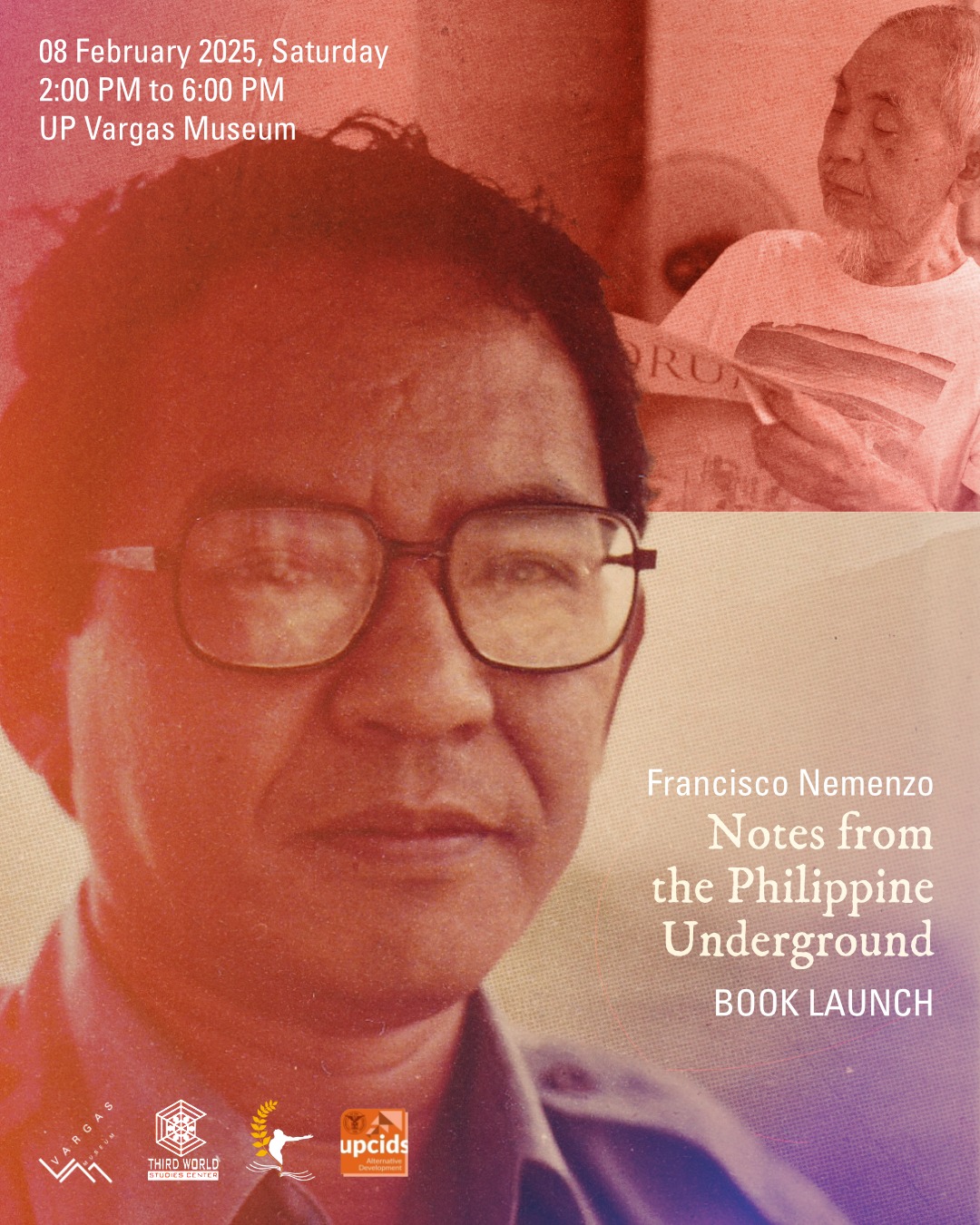
I DON’T know if there’s a Marxist heaven, but if there is, then Dr. Francisco “Dodong” Nemenzo, who passed away recently, must be smiling up there because of the forthcoming launch of his book Notes from the Philippine Underground (UP Press, 2025).

It’s too bad that Dodong won’t be around to see the book and sign copies for his legions of friends and comrades—many of them like my wife Beng, who remember him as a dashing and persuasively articulate professor of Western Thought, despite the Cebuano-accented English he was sometimes laughed at for by the ignorant. He never became my teacher in college, and oddly enough—because I was out of UP Diliman for most of the time he was teaching there—I never really got to know him closely as an activist and ideologue.

I did know him as a boss—he took me in as his Vice President for Public Affairs when he was UP President—and in that capacity I learned to respect and admire him as a man who held firm to his principles while finding practical and effective solutions to UP’s problems. This was especially true of our campaign to revise the outdated UP Charter, which eventually succeeded under President Emerlinda Roman, but which he tenaciously pursued despite the insults of spiteful politicians. 

Throughout his adult life and to the last, Nemenzo remained a professed and unapologetic Marxist—a word that would seem Jurassic in these post-Soviet and Trumpian times, but which he saw and lived in a different light. 

As the preface to his book by Prof. Patricio “Jojo Abinales” explains, “Dodong’s engagement with Marxist theory wasn’t an academic exercise. For him, Marxism was a living, breathing framework—a summons to connect theory to the existing conditions of everyday life. He wasn’t content to theorize from a distance; with a scientific mind, he dug into the realities of Philippine society, always interrogating its dominant ideas, structures, and contradictions. His writings speak to this dual commitment: the rigor of his analysis is matched by an acute sensitivity to the concrete lives of real people whose struggles he sought to illuminate. He distrusted all dogma, and sought to validate all received knowledge.

“Francisco ‘Dodong’ Nemenzo’s life and work resist easy categorization. He was a Marxist thinker, a revolutionary activist, an inspiring academic leader, and a mentor to generations of scholars and radicals. But more than any of these roles, he was a relentless questioner of the world as he found it—and a passionate believer in its potential to be different, if not better.”

Indeed the book shows how sharp, even scathing, Dodong could be in his opinions of how his idea of Marxism remains relevant and useful despite how it has been misused by many of its adherents and misunderstood by its opponents. 

He writes: “We must struggle against their misconception of Marxist theory and practice (e.g., equating Marxism with Stalinism and totalitarianism) and point out that humanism is inherent in the Marxist worldview. Going through the basic documents of Filipino social democratic groups, it is obvious that, even as they try to distance themselves from Marxism, their analysis of present conditions and their historical roots is almost entirely based on a Marxist framework.” 

He acknowledges the flaws and failures of Marxist parties caught up in internal conflicts (Dodong himself was once ordered to be executed by the party he belonged to, ostensibly for treason): “Can people be blamed for suspecting that communists are motivated by cynical calculations of what would bring them tactical advantages? Their loud and monotonous protestations ring hollow in the absence of inner-party democracy. The authoritarian and repressive character of the regimes their comrades established wherever they gained the upper hand reinforced this impression. This stigma they must shake off; otherwise they would remain at the periphery in the continuing struggle for democracy.”

He is not without wry humor. Reflecting on the ultimate folly of a revolution being led by a highly secretive, centralized, and “conspiratorial” party, he notes: “This is difficult to implement in the Philippine cultural milieu. A code of silence—what the Russians call konspiratsiya and the Mafiosi call omerta—is impossible among people who take rumor-mongering as a favorite sport. Our irrepressible transparency is a weakness from one point of view but a virtue from another. Our legendary incapacity to keep secrets is probably the best guarantee that no conspiratorial group can stay in power long enough to consolidate a dictatorship.”

Even for those disinclined or even hostile toward the Left, Notes from the Philippine Underground offers many valuable insights from one of that movement’s “OGs,” in today’s youth-speak. Nemenzo may be highly critical but he remains ultimately hopeful that positive and deep social change will happen, if the Left learns from its mistakes and finds new ways to engage society. Listen:

“There have been many pseudo-united fronts put up by the vanguard party. They consist of party-led mass organizations that simply echo the party line. None ever grew into a genuine united front, although they did attract a few prominent individuals who had no organizational base whatsoever. Other organized groups are often suspicious of the party and wary of being reduced into instruments for policies they do not accept.

“But I know of only three attempts at seriously establishing a real united front in this country: in the immediate postwar period, in the late 1960s, and very recently. They all collapsed because of sectarian methods of work. Sectarianism is the blight of all united front efforts everywhere….

“The Philippine movement has never been able to solve this dilemma. At the very moment when united front structures are set up, rivalries emerged. And intoxicated by short-term successes in expanding their mass organizations, the sectarians eventually prevailed.”

Pluralism, he suggests, is key: “Pluralism is a bourgeois liberal doctrine that ought to be preserved and enriched in the socialist revolution. It is not incompatible with socialism. The tension that arises through political competition would serve as a constant reminder that the party must earn the allegiance of the masses. Of course, no state would tolerate an opposition party that resorts to violent methods and solicits support from foreign powers. But this should never be an excuse for suppressing any opposition.”

Surely there will be blowback from those holding different views; expect the usual howl from UP bashers and red-taggers. But when that happens, even from the grave—or Marxist heaven—Dodong Nemenzo will have sparked the kind of discussion we direly need to find our way forward as a nation.

Qwertyman No. 108: The Owl and the Parrot

Qwertyman for Monday, August 26, 2024

The Owl and the Pussy-Cat went to sea

In a beautiful pea-green boat.

They took some honey, and plenty of money

Wrapped up in a five-pound note.

WHO’S THE English-educated Pinoy of my generation who doesn’t remember this verse by Edward Lear, a so-called “nonsense” poem which we happily recited even if, as expected, it made no sense? It had animals who had fun doing outrageously improbable things together, and we were so caught up in the magic of a pig who sells his nose-ring so the owl and pussycat could get married by a turkey that we even believed a word like “runcible” existed, even if it didn’t, at least not before the poem. After the poem—and because of the poem, first published in 1871—“runcible spoon” entered the English dictionary as “a sharp-edged fork with three broad curved prongs.” That’s why MS Word no longer flagged “runcible” as a misspelling as I typed it on my computer a few minutes ago.

That’s the power of true literature, something that gets beneath your skin and deep into your subconscious imagination, more effectively than reason or logic can, so that it becomes more real and more credible than reality itself. There’s a disarming honesty to nonsense poetry that doesn’t pretend to be anything else but. (Of course, given how students of literature have to sound deathly scholarly to earn or deserve their PhDs, a lot more nonsense has been written and published in ponderous journals about what “The Owl and the Pussy-Cat” really, really means.) 

As adult readers or reciters, we can all just enjoy the image of the owl and the pussycat dancing “by the light of the moon,” and think about how good that would be to do with our owl, our pussycat, so why can’t or don’t we? We’re amused but wistful at the same time, and that’s a complex emotion—wistfulness or “regretful longing” especially cuts backward through time and experience to make spot valuations, mostly about losses.

But let’s get back to the fun part—or maybe not so fun. 

Last week, it came to our attention that our multi-talented Vice President Sara Duterte—fresh out of her role as the “mother of Philippine education”—is apparently also an author of children’s books, having come out with one titled Isang Kaibigan (A Friend). We should all be happy when our political leaders turn to writing (presumably without the aid of a ghost writer), because it offers proof that (1) they actually think; (2) they still know their subjects, predicates, and objects, and therefore understand that people commit acts that lead to consequences; and (3) they know they won’t be in power forever, and want to be remembered in a good way for a long time.

That said, it’s a pity that most politician-authors throw away their chance at real greatness (in literature, if not in politics) by churning out some commissioned biography inflating or embellishing his or her accomplishments while leaving out the tricky ((and truly interesting) stuff. Good business for peons like me, but usually so poorly done as to be forgettable, the worst fate a book can suffer. If you think of pole vaulting, the bar was set highest at 7 meters by Winston Churchill, who became both Prime Minister and Nobel Prize winner for Literature (yes, literature). At around 5.5 meters we have genuinely talented fellows like Jeffrey (now Baron) Archer, the colorful Conservative MP who wrote popular novels, one of which sold 34 million copies (out of 320 million total for his entire oeuvre). Most others can barely hop over the bar at one meter. 

Enter VP Sara, whose maiden venture, a 16-page book, reportedly touts the virtues of friendship among people in dire straits. While it makes me wonder why the VP’s thoughts are drifting in this direction, it’s surely a worthwhile message, given all the unfriendliness in Philippine politics—even in the Philippine Senate. 

That’s where VP Sara went to ask for a P2-billion budget for her office, including a paltry item of P10 million for the printing and distribution of 200,000 copies of her book. Rather reasonably, Sen. Risa Hontiveros asked the VP what her book was about, prompting this strangely tart reply:

“This is an example of politicizing the budget hearing through the questions of a senator. Her problem is, my name is listed in the book. And we will be giving that book to the children. And those children have parents who will be voting. And my name will be spread wherever the book is given.”

I became even more curious about what was in the book, so I went online and discovered that it was the story of an owl whose nest is destroyed by a typhoon and who then finds refuge with a friendly parrot. So, okay, maybe it won’t win any PBBY book prizes for writing for children. And I’m afraid to say that with answers like that, Author Sara won’t fare too well in the writers’ workshops, where the panelists are far nastier than Sen. Risa.

But Isang Kaibigan establishes an important point, right? Friendships are important; friendships can save you; what you do for a friend in need today will be remembered tomorrow. (Never mind what the naughty wags will say about the VP being left out in a political storm—who will offer succor? Who will prove her true friends while she rebuilds her house toward 2028?) And where more pretentious authors typically load their “About the Author” pages with cloying lists of “awards won” and annoying cliches like “He divides his time between Bacolod and Berlin,” VP Sara keeps it simple and gets straight to the point: “Isa siyang kaibigan.” She’s a friend!

So what’s not to like? Well, maybe the P10 million bill, which lesser writers like me can only be envious of, having to wait years to watch our print run of 1,000 copies vanish book by painful book. VP Sara’s 200,000 guaranteed sales will surely break bestseller records, and we can gnash our teeth all we want but it still won’t answer our question, “How to be you?”

I don’t know how many millions of pounds Sir Winnie asked for and got from His Majesty’s government to print and distribute his books during the war, but it must have been a lot and the Brits must have read all of them because they certainly came through with just their blood, tears, and sweat. Sometimes, some honey and plenty of money is all an author needs to shine and be happy.

Penman No. 463: Masters of the Old and New

Penman for Sunday, June 10, 2024

THE WORK of two outstanding Filipino artists drew my attention last month, in events that could be considered retrospectives of remarkable if somewhat divergent careers. 

The first was the exhibition “Looking Back” mounted by Fernando Modesto at the Galerie Hans Brumann in Makati, running until June 30, which gathers some of the painter’s best work over the past five decades, many of them from the private collection of the longtime Manila resident Brumann himself. That Brumann—now 83, and also a renowned artist and jeweler—was letting go of these pieces struck me much less as a disposal of worthy objects than a bequeathal, an opportunity to share the best of Modesto with other collectors. Laid low by a stroke some years ago, “Mode” as his friends know him remains mentally as sprightly and mischievous as ever; and he has striven and managed to produce new work despite his condition, taking off from the Mode we knew.

That Mode was irrepressibly bright, witty, and playful. In contrast to the somber and even dismal realism of many of his contemporaries from the 1970s onwards, Mode made light of things, opening up a world of freedom and delight in an oppressive universe. 

The playfulness, at one point, was literal. In 2018, writing in Frieze magazine, Cristina Sanchez-Kozyreva reported on the Ateneo Art Gallery’s recreation of an early Modesto installation from 1974 titled Dyolens(Marbles) that involved laying out thousands of marbles on the floor for visitors to kick around. That was about the time I first met him during my days as a printmaker in Ermita; Mode had already gained fame—or notoriety if you will—for his depictions of pendant penises, which even then were clearly meant not to offend but to make one smile.

The Brumann exhibit documents Mode’s progression from tongue-in-cheek wit to transcendent wisdom, opening a door into a world we can only hope to inhabit, where angels reach for a shimmering sun (or are they playing volleyball?) in an iridescent haze, or float face-up in a cosmic pool. His most recent work such as King of the Islands II (2021) retains that rare equanimity in the cool blue gaze of its subject.

If Fernando Modesto is a master of the modern, the second painter who caught my eye reminded me of how much richness remains to be discovered in our artistic past. May 24 saw the launching of Matayog na Puno: The Life and Art of Hugo C. Yonzon, Jr. (published by Onyx Owl, 248 pages), on the centennial birthdate of Yonzon. Authored by Hugo’s son Boboy and the late Neal Cruz, the book chronicles the life and work of a man for whom art was both a passion and a living. Hugo’s career harkened back to a time when the line between fine and commercial art was blurry and perhaps not all that important, for as long as the artist gave the work his all. 

Yonzon had to leave school early to take a job—just the first of one or many—and he would go on to become much more of a journeyman, one viscerally engaged in the trade, than an aesthete or academic. “Yonzon was always invited to the various sessions held by the Saturday Group and other weekday groups that tried to establish their name and weight in the art scene,” says the book. “But he never stayed long nor drew enough on-the-spot sketches; although he had an eye for women, nude sketching did not interest him. He would rather banter and drink a cup of coffee, then return promptly to his favorite themes in his perpetually makeshift studio.”

He was friends with some of the best artists and illustrators of his time, including Mauro “Malang” Santos and Larry Alcala. Having worked as an illustrator and as an art director for an advertising agency, Hugo wielded an extremely versatile brush, adjusting his style and treatment to the client’s needs. It got to the point that visitors to his one-man show became confused, seeing so many different styles on display, but that range was a great part of the reason for Hugo’s popularity. 

But he kept returning to his favorite themes—the pastoral, the folk, the heroic, the visual representation of what he imagined Filipinos at their best and most essential to be. This appealed to the sensibilities of patrons such as First Lady Imelda Marcos, who generously supported Yonzon. Hugo was tireless in his painting and gave his friends huge discounts to the point that his wife Betty felt compelled to manage his financial affairs.

His lifestyle was appropriately flamboyant. “Dad was a loud but chic dresser,” recalls his eldest daughter Minnie. “When psychedelic colors and prints were in vogue, his long-sleeved shirts were in paisleys and reds and greens. Why, he even painted the air scoop of our brand-new Beetle in paisley!”

The life depicted in the book is fascinating, full of struggle and drama, but ultimately it is the art that imprints itself in our consciousness—one full of vigor, color, inventiveness, and variety, celebratory in every way of the near-mythic Filipino. The writer and art critic Lisa Nakpil would say that Yonzon, who died in 1994, was the “underrated master of heroic Filipino iconography,” and this book clearly shows us why.

Qwertyman No. 57: An Invitation to SERVE

Qwertyman for Monday, September 4, 2023

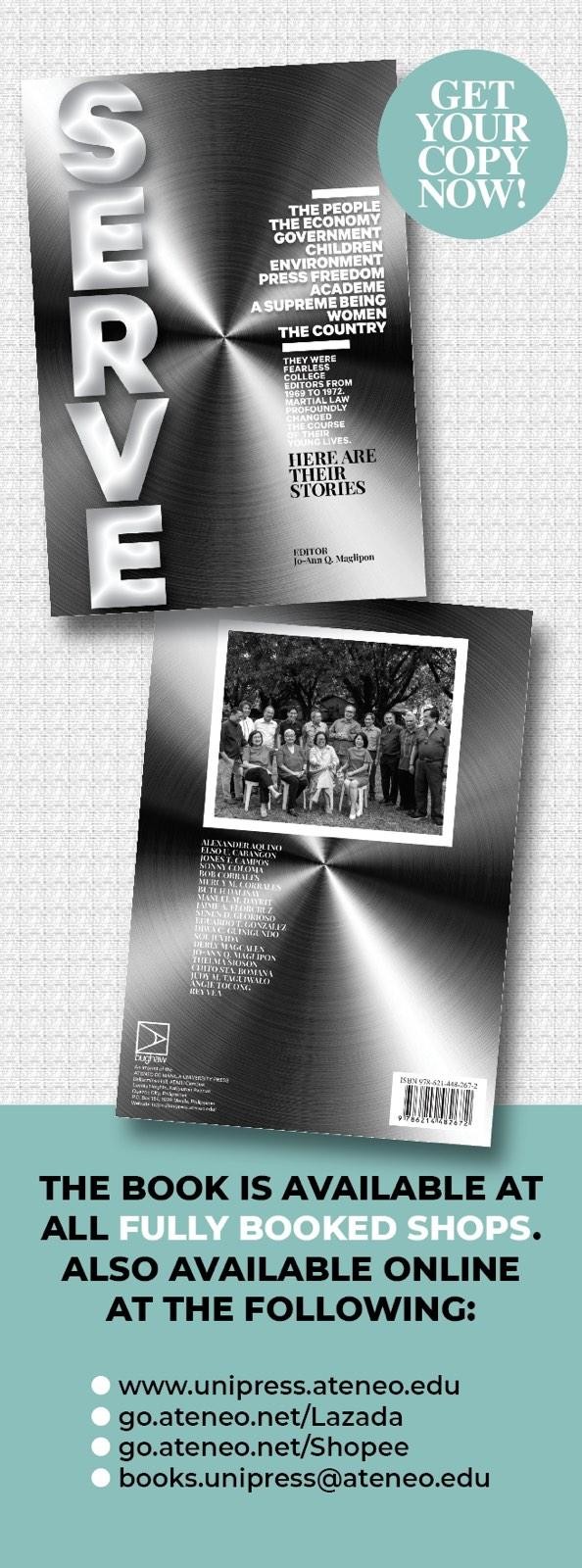
AT 5 PM next Saturday, the 9th of September, a new book will be launched at Fully Booked in BGC. Published by the Ateneo de Manila University Press and simply titled SERVE, the book has 19 authors—yes, I’m one of them—and one editor, the much-respected Jo-Ann Maglipon. What connects all is that they were college editors during the first Quarter Storm of the early 1970s, and survived to go on to distinguished careers in media, education, business, and public service. The book dwells much less on martial law—a previous volume titled Not on Our Watch: Martial Law Really Happened, We Were There that came out in 2012 dealt with that—than with its aftermath, and the afterlife that the activists of our generation were fortunate to have, given how many of our comrades gave up their lives to the cause of justice and freedom.

What did these activists do after martial law? What are they thinking now? Some of the names in this book will be familiar to the contemporary reader, who may not even have known of their activist background (reg-taggers, pay close attention).

Some of us—like Jimi FlorCruz, Sol Juvida, and Thelma Sioson San Juan—remained journalists all their working lives, stationed in very different places and capacities but bound by a commonality of interest in the truth. Others like Sonny Coloma, Manolet Dayrit, Ed Gonzalez, Diwa Guinigundo, the late Chito Sta. Romana, and Judy Taguiwalo took the path of government service, finding themselves in a position to effect real change, although sometimes under very difficult if not adversarial circumstances. Yet others including Angie Castillo, the late Jones Campos, Mercy Corrales, and Senen Glorioso found fulfillment in entrepreneurial and corporate work, applying their progressive values to management. For Elso Cabangon, Bob Corrales, and Diwa Guinigundo, their circuitous journey led to a re-encounter with their spirituality, and to embracing their faith as their personal advocacy. Like many veterans of the First Quarter Storm, Alex and Edna Aquino were able to build new and productive lives overseas, without yielding their investment in Philippine concerns. Quite a few of us—Derly Fernandez, Ed Gonzalez, Judy Taguiwalo, Rey Vea, and myself—chose to pursue our activism in academia, if only to ensure the transmission of critical inquiry to another generation. 

The authors were under no compulsion to conform to an ideological standard, except to extol the spirit of service to the people, the overarching theme of their youth and now their continuing commitment, indeed their legacy. There’s pathos in these accounts, but also humor and, inevitably, irony, perhaps the defining tone of our postmodern age: Thelma Sioson San Juan finds herself seated across Deng Xiaoping’s granddaughter at a Ferragamo show in Beijing’s Forbidden City; Manolet Dayrit learns of his appointment as Secretary of Health on a visit to President Gloria Macapagal-Arroyo in Malacañang; Ed Gonzalez becomes president of the Development Academy of the Philippines under President Joseph Estrada, but then joins EDSA 2; Sonny Coloma looks out the window of his Malacañang office to where students like him had demonstrated against Marcos.

With most of the writers here now in their seventies or inching close to it, we could have been chronicling the joys of grandparenting, journeys to far-off places, exotic menus, succulents and bromeliads, and homeopathic remedies for the aches of aging. Having retired from the formal workplace, we thought we had settled into a privileged and imperturbable kind of peace, earned over decades of political, economic, and spiritual struggle. 

We celebrated our seniorhood as the ultimate victory, for a generation that did not expect to live beyond thirty, and not because of some acquired disease but because of the throbbing cancer at the core of our society that claimed many of our peers in the prime of their youth. We may have thought for a while that we had defeated and expunged that cancer, only to realize that it had never left, was always there, lying cruelly in wait for a chance to ravage us again—and not only us this time, but our children and grandchildren as well.

And so—albeit no longer lean and shaggy-haired, perhaps benignly forgetful of car keys and personal anniversaries—we gather again at the barricades we put up against a fascist dictatorship fifty years ago, of which our memories remain surprisingly and painfully sharp. They say that the old remember distant things more clearly than what happened yesterday, and we offer proof of that. The experience of martial law coded itself into our DNA, and even the few among us who surrendered their souls to Mephistopheles cannot shake away that indelible past—one we bear with pride, and they with guilt and shame.

This time our barricades consist not of desks and chairs but of memory itself and, more formidably, of hope, courage, and a continuing faith in the good. Beyond memoirs, more than recollections of our youthful selves, we now present the stories of the lives we built and the paths we took after martial law, along with our reflections on how time and experience have reshaped us, clarified our values, and strengthened our resolve to serve our people in multifarious ways. 

Our view of politics inevitably evolved over time as the world itself changed over the past five decades. These essays and stories cover a wide range of themes and treatments, and demonstrate how “serve the people” has grown and evolved with its advocates, taking multifarious forms from working in civil society and practicing good governance to promoting artistic expression, academic freedom, and insightful journalism. We wish to prove that even the worst of times and the worst of leaders are not only survivable but can be changed, so that whatever lies ahead, the better Filipinos in us will prevail.

Given the number of authors and their families and friends, we expect a full house at the launch, so you might want to wait and get your copy of the book from Fully Booked or from AdMU Press’ online channels. However the book finds its way to you, it will be worth your while.

Penman No. 452: A Cultural Treasure Chest

Penman for July 9, 2023

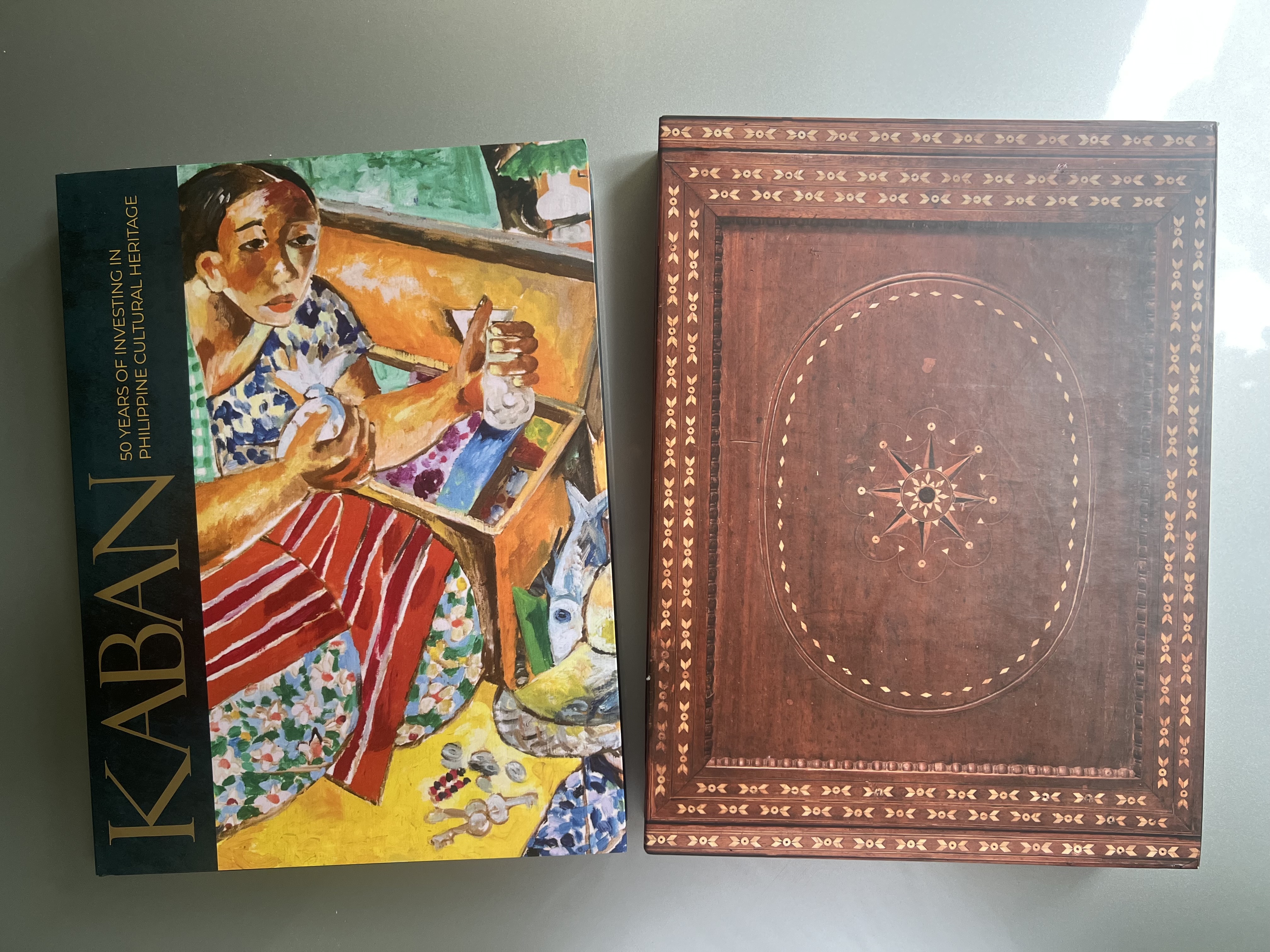
A NEW book launched last month by the Bangko Sentral ng Pilipinas once again brings up how unlikely—and yet in a way also how logical—it is for a nation’s central bank to be the repository and protector of the country’s cultural heritage. 

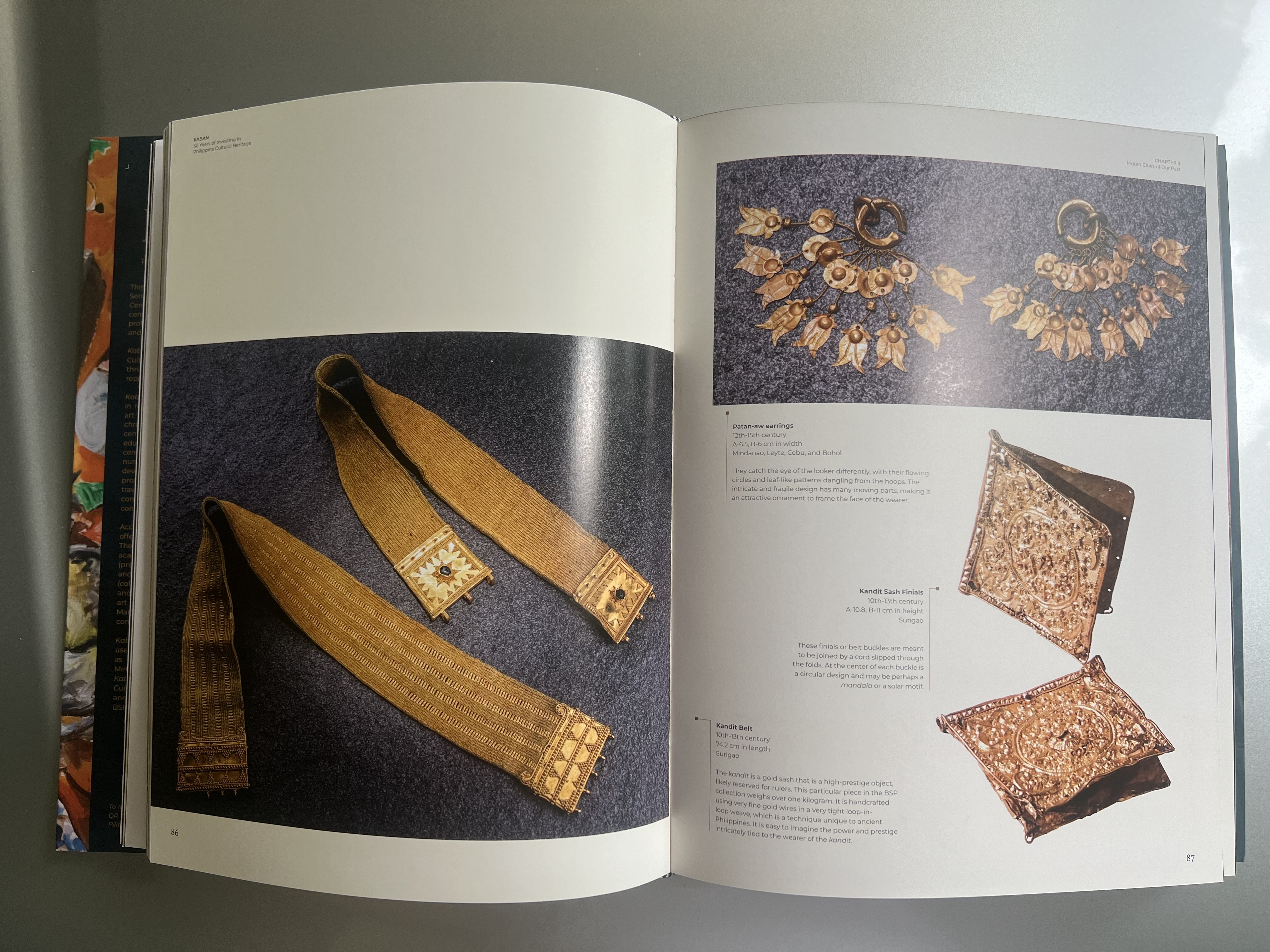
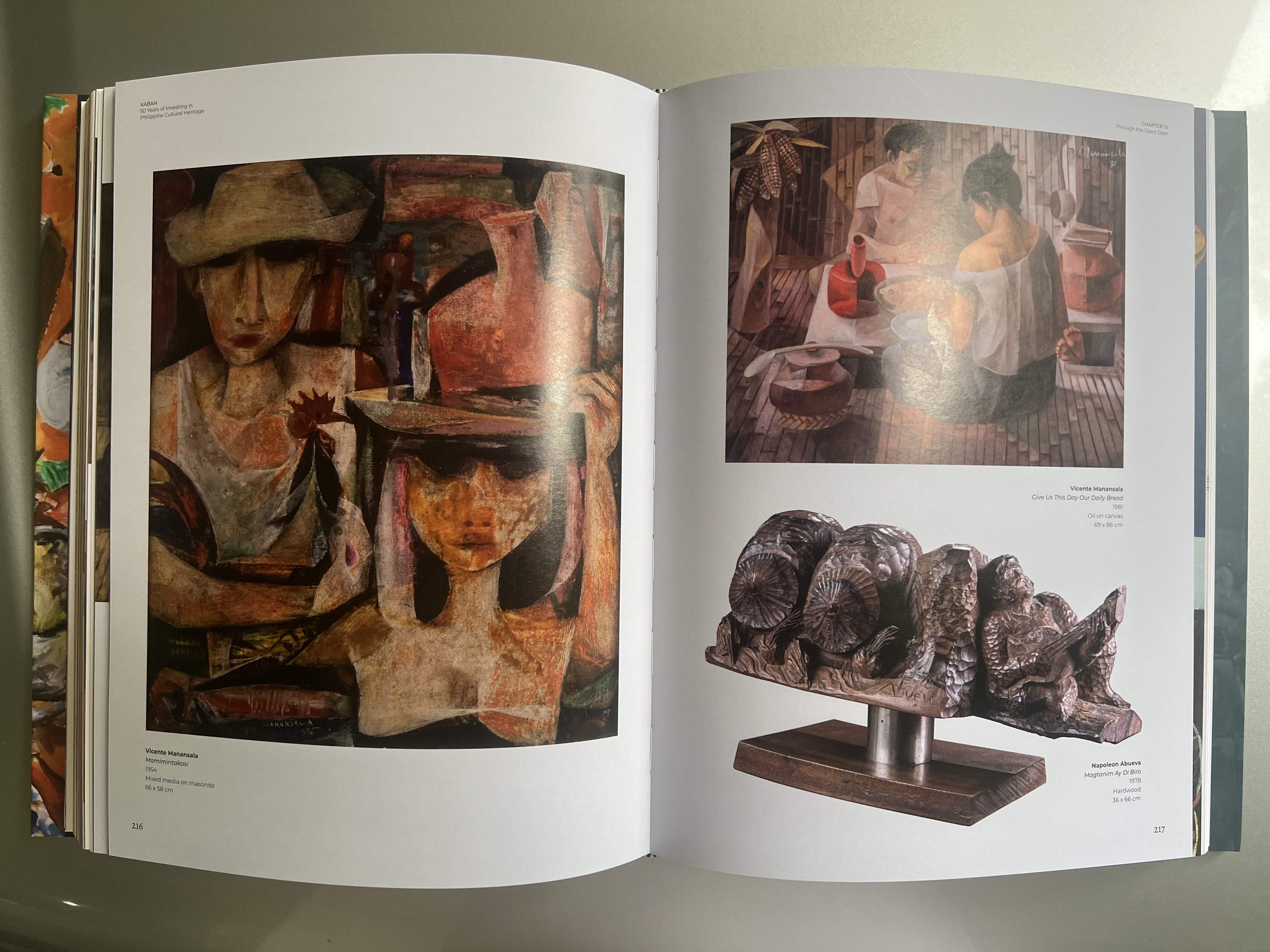
Simply titled Kaban (treasure chest), the sumptuous 340-page book offers a guided tour of the BSP’s fabled cultural collections, from pre-Hispanic gold to contemporary art, with each section curated by experts in the field. The book’s writers include Portia Placino, Victor Paz, Dino Carlo Santos, Clarissa Chikiamco, Tessa Ma. Guazon, and Patrick Flores; I contributed a preface, from which I quote some excerpts below. 

Banks represent resources, stability, and continuity, and central banks even more so, for the financial sector. They will often purchase art for décor, and perhaps even for investment; but they will not routinely spend vast amounts on the acquisition, storage, and exhibition of valuable cultural artifacts, as the BSP (and its predecessor, the Central Bank) has done.

Only inspired and visionary leadership can achieve this fusion between the seeming banality of money and the transcendence of art. The Central Bank and BSP have had the good fortune of being led at various times by men who embodied this integration—among them, the CB’s founding father Miguel Cuaderno, a lawyer with a passion for history, culture, and art.

Decades later, Cuaderno was followed at the Central Bank by Jaime Laya—a banker, accountant, writer, collector, and cultural administrator. It was under Gov. Laya that the Central Bank embarked on its most ambitious acquisitions and began to be known for minding more than the nation’s money, but its cultural heritage as well.

Cuaderno and Laya were supported by the likes of Benito Legarda, at one time the Central Bank’s head of research, who was not only an economist but also an avid numismatist and historian who initiated the Money Museum, which became the base for the bank’s later forays into other areas of culture.

The release of Kaban—following a series of other beautifully produced books about the precious objects in its collection—highlights the value accorded by the BSP to the idea of wealth: its generation, propagation, and preservation, which is, after all, the core business of banks. But this isn’t just flaunting wealth for wealth’s sake, an exercise in ostentation and in investment by the numbers. 

The BSP collection is imbued with historical and cultural value, and the objects in its catalogues—from ancient coinage and currency to contemporary art and furniture—are physical embodiments of the things and notions we hold dear, our sensibilities and aspirations as a people, the heritage and the legacy we want to pass on down the generations. It is another bank, a cultural bank, but one whose elements have been carefully chosen and curated to reflect our finest traditions and brightest memories.

It’s interesting and important to note that the BSP is not alone in this extracurricular preoccupation. Beyond the Philippines—where many other banks and financial institutions have been known for their impressive art collections and generous support for culture—banks around the world have associated themselves with art, amassing stupendous collections and employing art to project a positive and more humane image of what most people might otherwise see as cold and soulless financial corporations. Indeed, Professor Arnold Witte of the University of Amsterdam calls banks “the new Medici,” referring to the Renaissance’s most important patron of the arts, Lorenzo de Medici, not incidentally himself a banker. 

Among the world’s most important art collections held by banks, that of the Banco de España in Madrid goes back to the late 15th century and forward all the way to contemporary sculpture and photography. The Swiss UBS holds 35,000 pieces of modern art. JP Morgan Chase, the Bank of America, the Royal Bank of Canada, the European Central Bank, and the Societe Generale have also been leaders in the field. 

Central banks have also been known for their art collections, although their origins, sourcing, and contents vary. According to a report by the Official Monetary and Financial Institutions Forum, “In the US, the Federal Reserve’s fine arts program was established in 1975 by Chair Arthur Burns in response to a White House directive encouraging federal partnership with the arts. Unlike other collections, the Fed relies on donations of artwork or outside funds to purchase works of art. 

“Most European central banks’ art collections consist mainly of paintings, but this is not a global trend. In Colombia, Costa Rica and the Philippines for example, the central banks are also home to museums with exhibits ranging from archaeological treasures to medieval goldwork and pottery.

“The central banks of Colombia, Austria and South Africa, among others, host catalogues of their collections on their websites. The Central Bank of Iran’s website hosts a video documentary on the Crown Jewels collection. Many other central banks including Greece, Hungary, the Netherlands and the Philippines have physical catalogues of their collections, though these have not been digitalized.” It quoted then Governor Amando Tetangco as saying that “The BSP ensures that outstanding examples of Filipino genius in its gold, art, and numismatic collections are shared with the people through exhibits, books, CDs, social media, and provincial lectures.”

This puts the BSP in the fine company of other central banks that have recognized the special relationship between monetary and cultural wealth, and the importance of preserving heritage for the future. If, as Benjamin Franklin once said, “An investment in knowledge yields the best interest,” then an investment in cultural heritage cannot yield any less, as it shows us at our best, for all time.

The arts, indeed, are another treasure trove of spiritual resources needing constant care and replenishment. This long, historic, and mutually beneficial partnership between our central bank and the arts sector makes that reality physically manifest, and we can only hope that it will continue even more strongly in the decades to come.

Tastefully photographed and designed by Willie de Vera and produced by Bloombooks (the publishing arm of Erehwon Arts Corporation), Kaban is a treasure on its own, and is available for sale to the public at the BSP.

Penman No. 448: Designing for the Eye and Mind

Penman for Sunday, March 5, 2023

I DON’T normally review books—even books sent to me with a request to be reviewed, which I apologetically ask authors not to do, unless they’re willing to wait a year or two. That’s because I prefer to enjoy books rather than to critique them, which sounds too much like the kind of work I happily retired from. But every now and then, along comes a book I simply can’t ignore, because it’s just too important or maybe just too beautiful to be put aside.

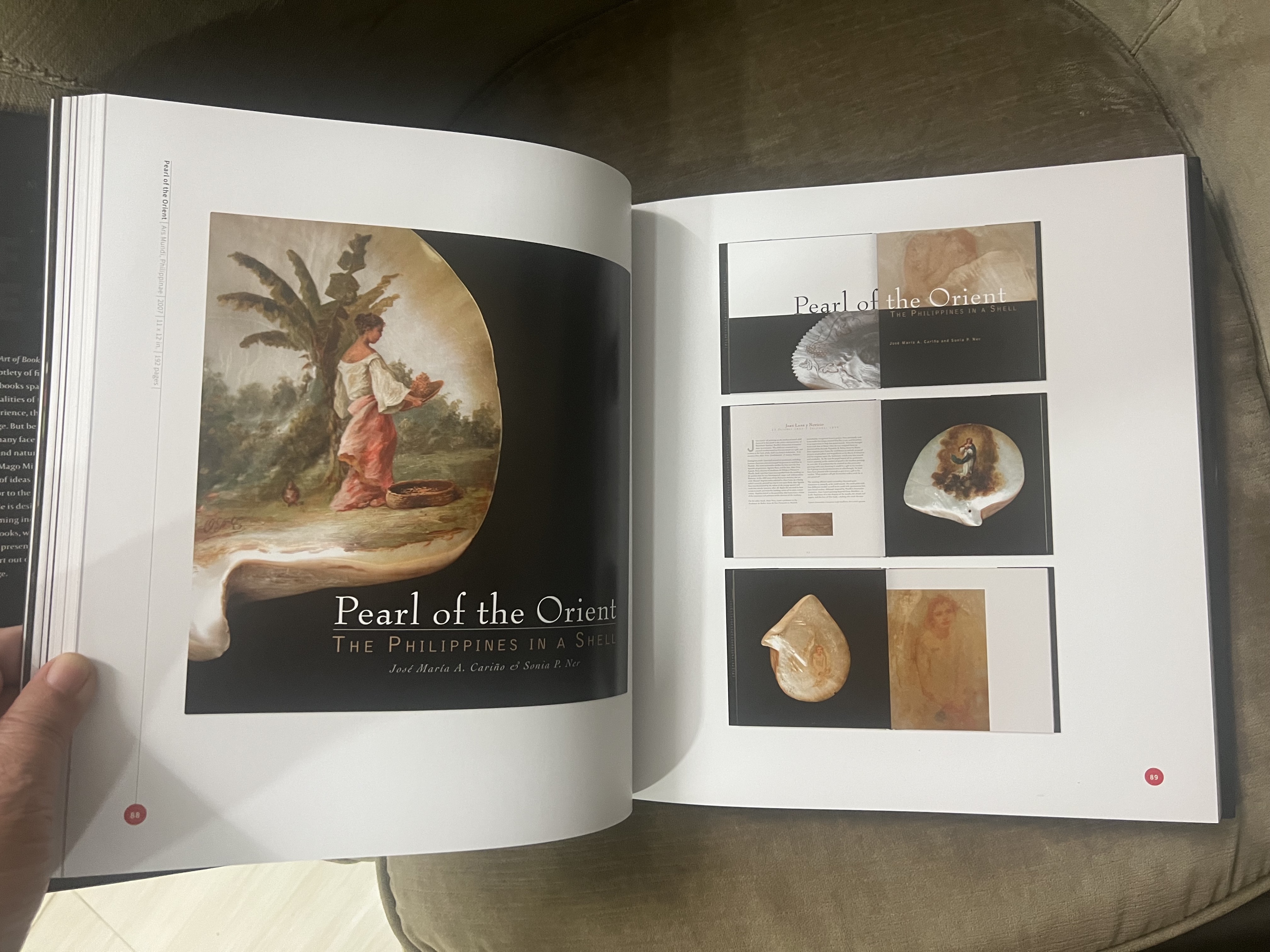
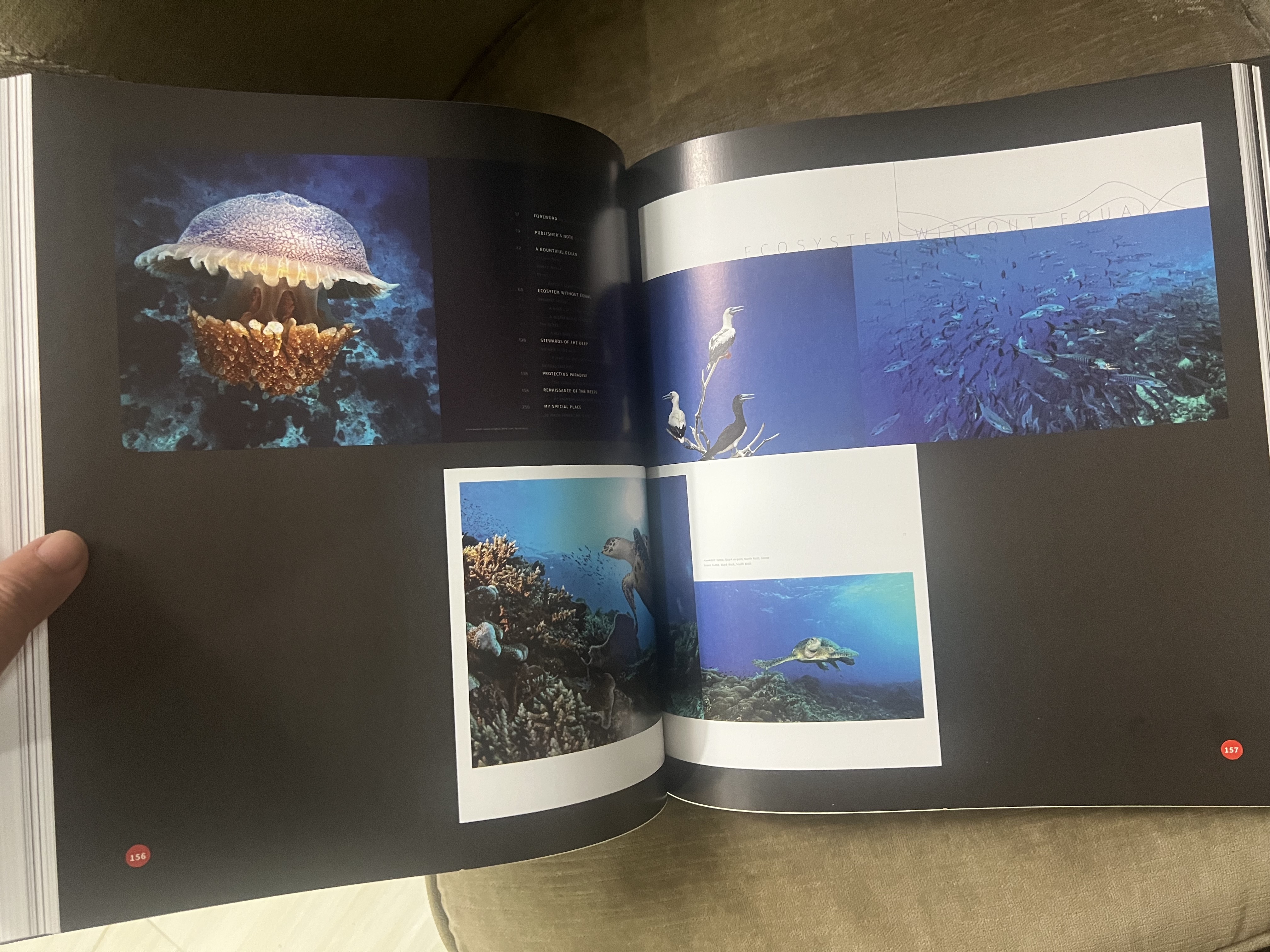
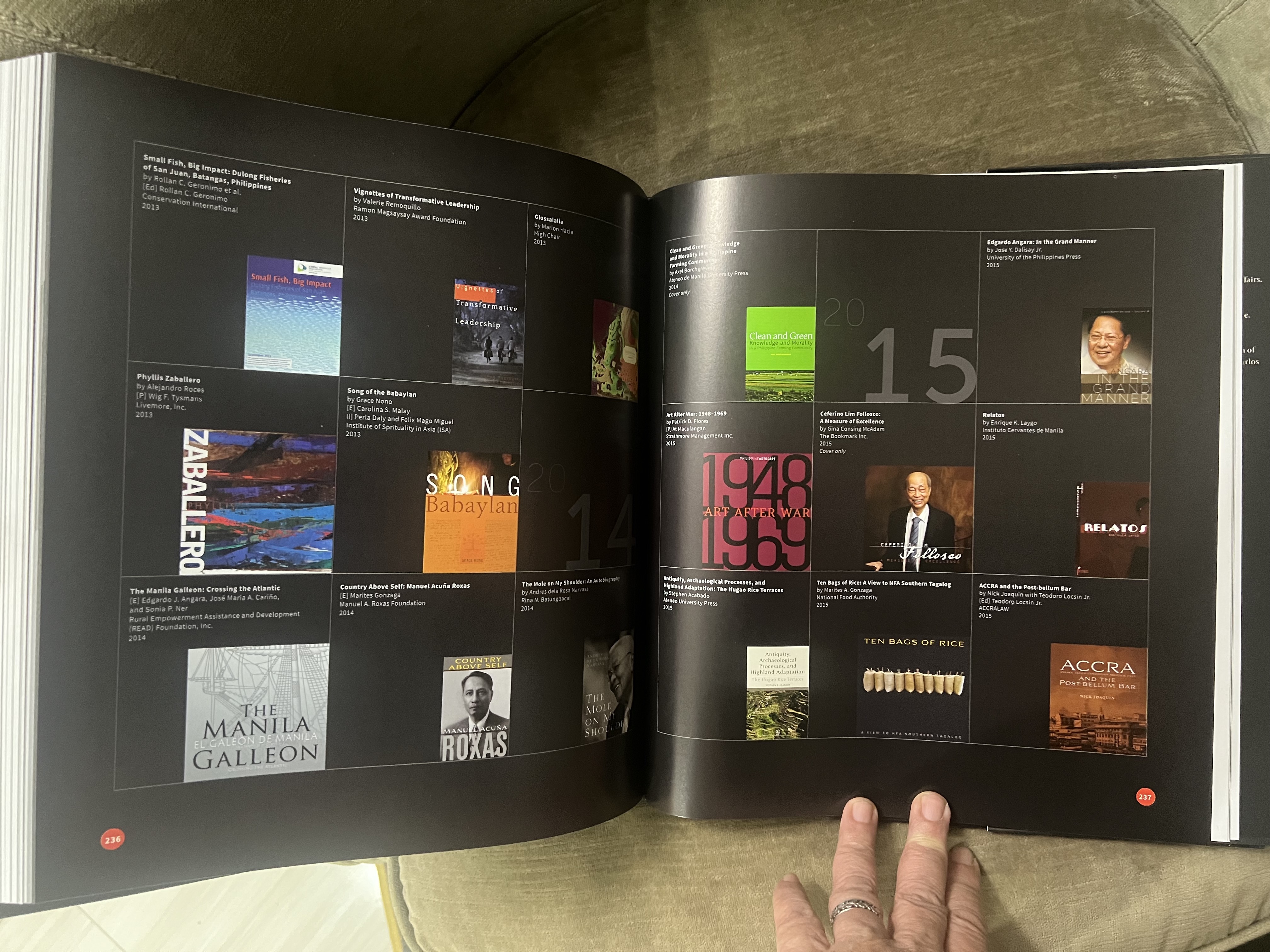
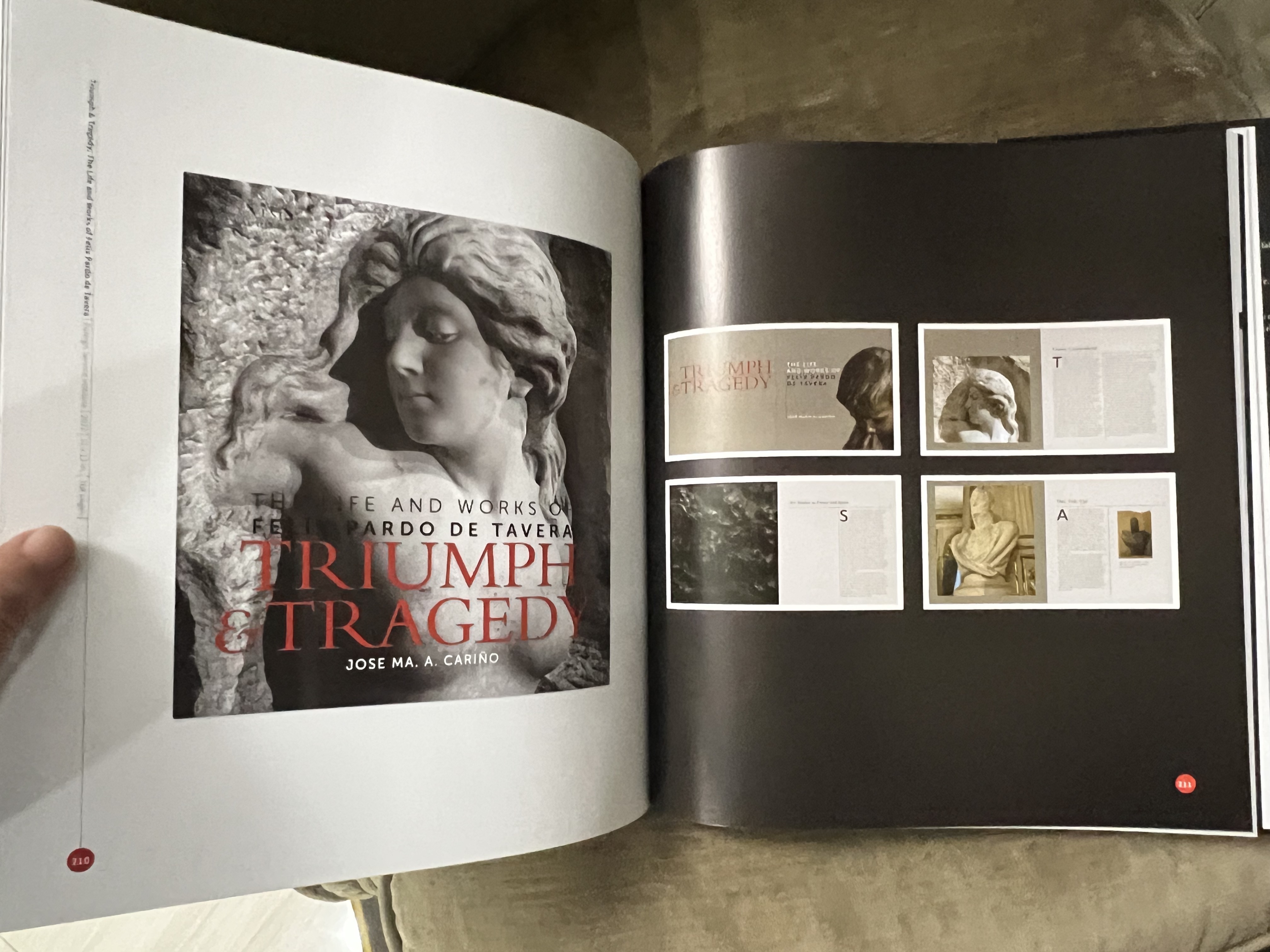
One such book—both important and beautiful—was dropped off at my doorstep last week, and as soon as I opened it, I knew I had to share my knowledge of its existence with fellow enthusiasts of art and design. The book was Felix Mago Miguel: The Art of Book Design, written by Felix’s wife Amelia F. Zubiri-Miguel, edited by Ambassador Jose Ma. Cariño, and published by the Foreign Service Institute.

One of the most talented and prolific Filipino book designers of our time, Felix has designed more than 130 books over the past 20 years, and I’ve been fortunate to have authored and edited a good number of those, including several coffee-table books and the biographies of Edgardo J. Angara and Leonides S. Virata. This hefty 264-page book is a biography, treatise, and catalogue all in one, a fine embodiment and example of its own subject, sumptuously produced not just to showcase Felix’s work but also to discuss his theory and experience of book design.

Ours has always been a country of gifted authors with endless stories to tell, but only recently has enough attention been paid to the proper design, production, and marketing of our books. The growth of Philippine publishing and the opening of foreign markets to Philippine material has spurred some of that interest as a matter of economic necessity, but the general appreciation of book design remains low. 

As an author myself, I’ve always been fussy about how my books look; I didn’t work that hard just to come out with an ugly book with my name on it. But sadly not all authors or publishers share that worry. As Felix himself laments, we Pinoys have a famous fear of spaces—horror vacui—and tend to cram our pages with as much text as we can, as if wide margins (and better readability) were a waste of precious paper.

Coffee-table books, which are Felix’s particular area of expertise, present both special challenges and opportunities. Being typically meant for promotional rather than commercial purposes, CTBs have large budgets that will allow for better production. But a poorly thought-out or executed design can render those millions useless. I’ve groaned at obviously expensive book projects ruined by gaudy or overly busy covers, barely readable type, narrow margins, and bad paper. (One of my biggest pet peeves is printing text over a photograph for that artsy effect, rendering it illegible.)

Felix’s background as a painter (and as a graduate of the Philippine High School for the Arts and the UP College of Fine Arts) allows him to see a book project not just as a technical challenge but also an intellectual exercise—a process of understanding what the book really wants to say, and translating that into a visual language.

“A book project is always like a thesis, a problem to be solved, an experience to be fleshed out,” he says. “Everything for me begins with figuring out what the book is trying to say and how best to say it. I do my best to learn the narrative, reading to understand it, absorbing its contents. If there are visuals already, I go through them, looking for the narrative that I just read among the photos and illustrations. Doing these things enables me to better feel the book and the direction it will go. My goal is to find the personality of the book, to figure out who is talking and to decide on what kind of experience is best—to design the book in such a way that, as Rita Jacobs says, it may be the only way that it can be presented.”

He designs as much for the mind as for the eye. As Amelia puts it, “Though people may say that a designer’s job is all simply a matter of art, my years of seeing Felix working have told me that it is not. At the end of the day, he always ends up more knowledgeable, better informed, and wiser with insights not just from the manuscripts but from the totality of the discussions and the time he had spent with his clients, which is probably the best bonus and priceless privilege that comes with the job, because at the end of every project, a really beautiful book needs to be more than just pretty to look at.”

Felix adds: “As designers, we become builders of experience. We may not have the privilege of letting our audience touch the skin or the sinews of what they are looking at, but if we did well in our work, what one designed becomes an exhilarating, unforgettable experience. Not only do we introduce the authors and their voices, but through a well-designed book, readers may experience the same things vicariously. What is separated by time and space is connected through emotions. And a book that touches your soul is indeed an experience to be cherished.

“After learning the technical aspects of design—the use of typography, colors, spaces, photos and illustrations, pages, covers, and printing—I realized, I have a new medium. And just like in painting, the medium is not the end of the painting; it is just part of it, because more importantly, there is a story to be told and that story is the priority of the design. My role is to ensure that this invisible visual force will allow the story to be told.”

And tell the story Felix does, in an inimitably pleasing and tasteful style that more than does justice to his material. I look forward to our next project together, whatever that may be—a writer can only write better knowing how superbly his work will look in a capable designer’s hands. 

Penman No. 265: Photography as Propaganda

Empire.jpg

Penman for Monday, August 21, 2017


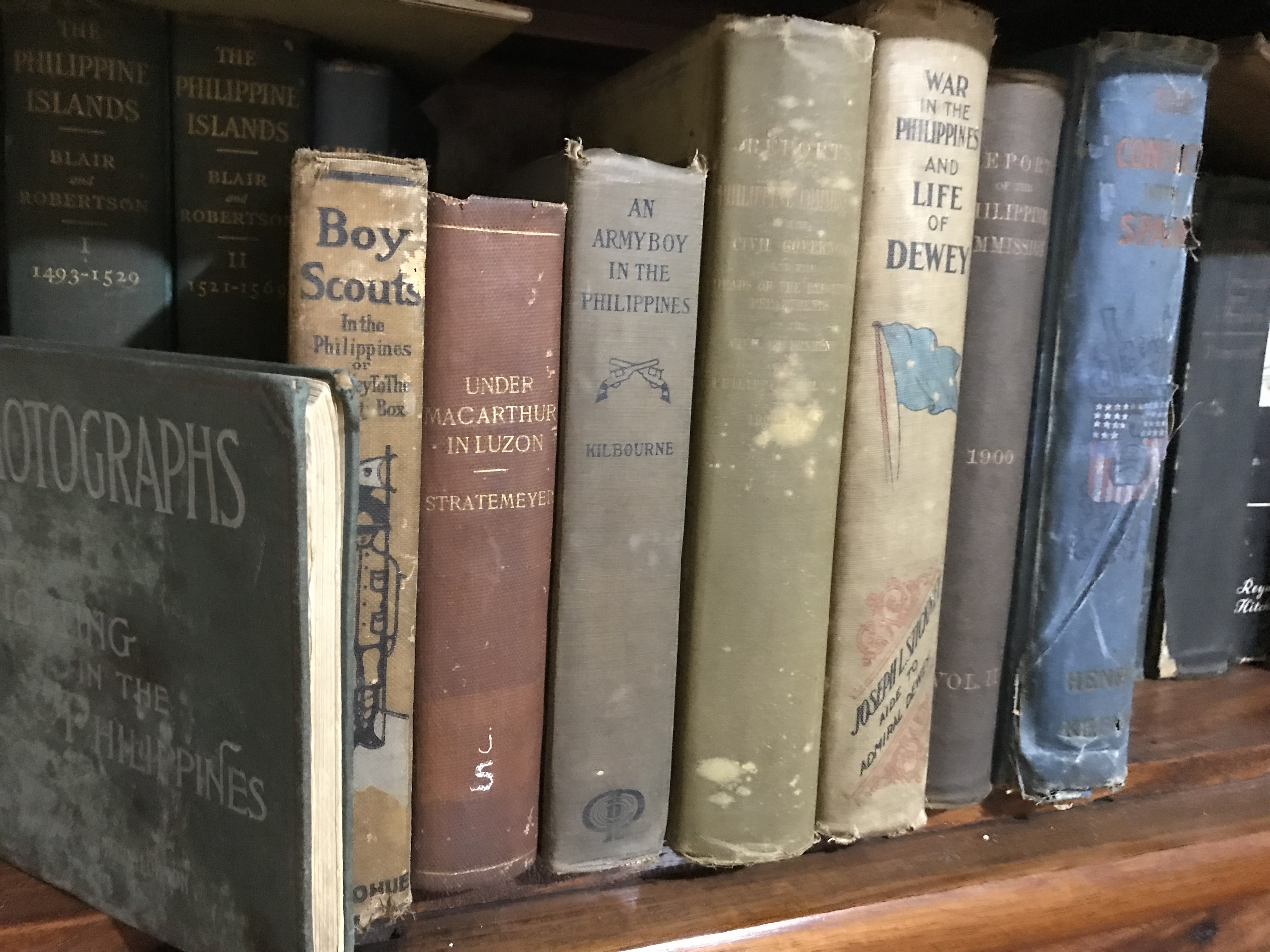
I HAVE a cabinet in my home office where I keep shelves of my most valued books—first editions, signed copies, antiquarian volumes, and such. One shelf is occupied by a special mini-collection of books from the turn of the 20th century, from the late 1800s to the early 1900s, most of them having to do with what we’ve come to call the Philippine-American War. Bearing titles like War in the Philippines and Life of Dewey, Under MacArthur in Luzon, and An Army Boy in the Philippines, the books purport to chronicle—“celebrate” might be the better term—the occupation of the Philippines by the United States from 1898 onward.

I picked up many of these books more than 20 years ago when I was a graduate student in the American Midwest and on the prowl for Philippine-related material in used bookstores and flea markets. When eBay came along, I found many more, and was pleased to secure a few, often for less than $20 plus shipping.

While old, these books weren’t necessarily rare, because they must have been printed in the high tens or hundreds of thousands as a form of patriotic propaganda that straddled journalism and popular entertainment. Often written in a triumphal tone and exulting in the victory of America—then a rising naval and imperial power—over decrepit Spain, they blended into travelogues exploring the US’ new possessions—Cuba, Puerto Rico, Hawaii, and the Philippines—turning a military project into a story of adventure in exotic lands.

Shelf.jpg

These stories—and their accompanying illustrations—were very much on my mind last week when Beng and I attended a fascinating lecture at Ateneo de Manila University by an expert who had made that dark period (which few Americans and, sadly, just as few Filipinos seem to remember) part of her academic specialty. Dr. Nerissa Balce was in Manila to read from and talk about her book Body Parts of Empire: Visual Abjection, Filipino Images, and the American Archive (AdMU Press, 2017; U of Michigan Press, 2016), and we thought it was a good opportunity to catch up with and learn from an old friend (she married my Trivial Pursuit antagonist, the poet Fidelito Cortes).

After working as a journalist in Manila, Nerissa went to the University of California-Berkeley for a PhD in Ethnic Studies, took a postdoc at the University of Oregon, and taught at the University of Massachusetts-Amherst before joining the State University of New York-Stony Brook’s Department of Asian and Asian American Studies.

Through photographs and a refreshingly lucid lecture shorn of much of the academic jargon that often renders these presentations impenetrable to many listeners—even fellow professors like me—Nerissa showed how American photographers who were (to use a later term) embedded with the US military forces used their work to celebrate but then also obliquely if unintentionally criticize the violence of a colonial war. Photographs, she would argue in her book, have a life of their own, once taken and published; they may have been originally meant to depict the power of one side over another, and the abject position of the presumptive loser in the conflict, but seen or used a different way, they can convey other messages, like the subject’s insistent humanity or resistance.

I’d seen many such images in my books from that war; one of them—F. Tennyson Neely’s Fighting in the Philippines—typically portrays American soldiers towering angularly over the slack corpses of Filipino “insurgents” (as our fighters would be referred to for the longest time) as Filipino gravediggers prepare to bury their compatriots. This was what Washington wanted the American public to see: visual proof of American power and dominance. It must have been effective propaganda, especially when accompanied by narratives explaining America’s “civilizing” mission.

Soldiers.jpg

But, as Nerissa and other scholars point out, the very same photographs proved useful to those opposed to America’s imperial expansion. The Anti-Imperialist League published a collection of antiwar poems using a picture of a corpse-filled trench as its frontispiece. “The different political uses for the same photograph suggest the paradoxical power of the photographic image, and how photographs can celebrate as well as expose the violence of colonialism and war.” She goes beyond the battlefield to discuss how the empire shaped our image, and how that image, in a way, shaped the empire. Pictures of native women doing embroidery suggested a colony stabilizing into happy domesticity under a benign regime.

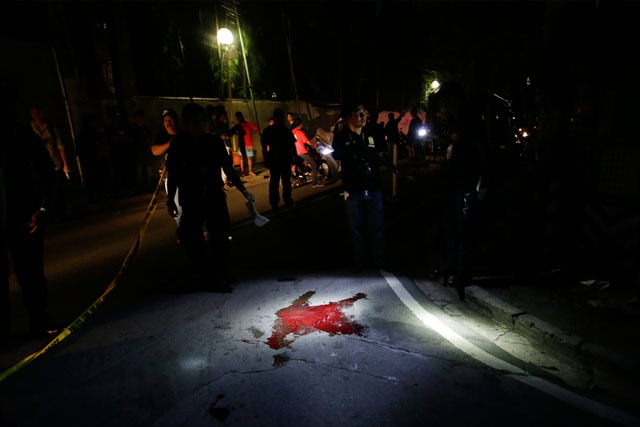
I’m not a historian, but if you want a reasonably reliable account of that period, read Brian McAllister Linn’s The Philippine War 1899-1902 (The University Press of Kansas, 2000); to see how that war was waged on the cultural front, Balce’s book makes a great companion piece. In this present time when, more than ever, pictures speak louder than words, and dead men’s bodies have begun to pile up again, we’d have to wonder what new empire is growing out of the shadows.

ph-china-drugwar.jpg

[Photo from philstar.com]