Penman No. 481: Keepers of Memory

Penman for Sunday, January 4, 2026
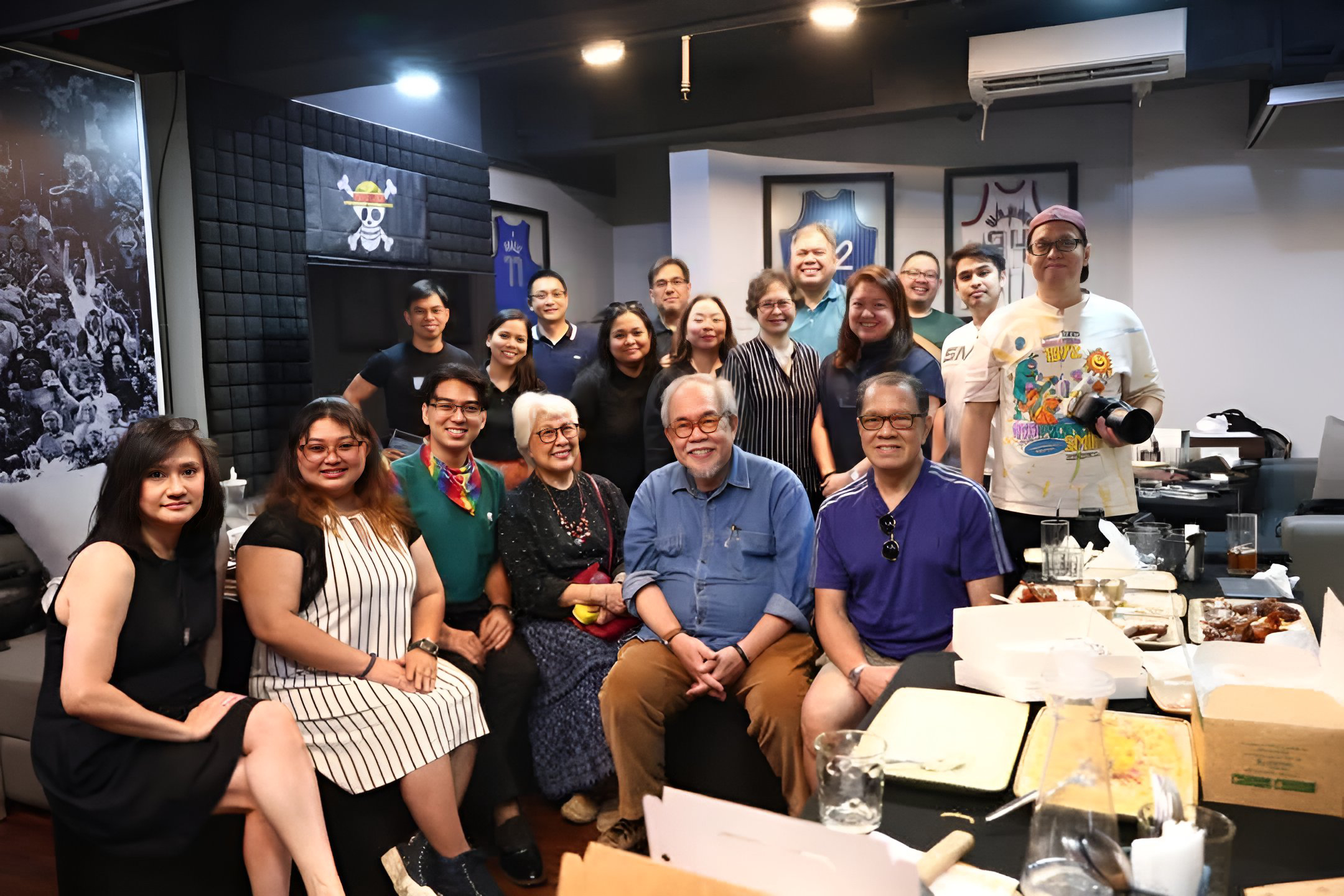
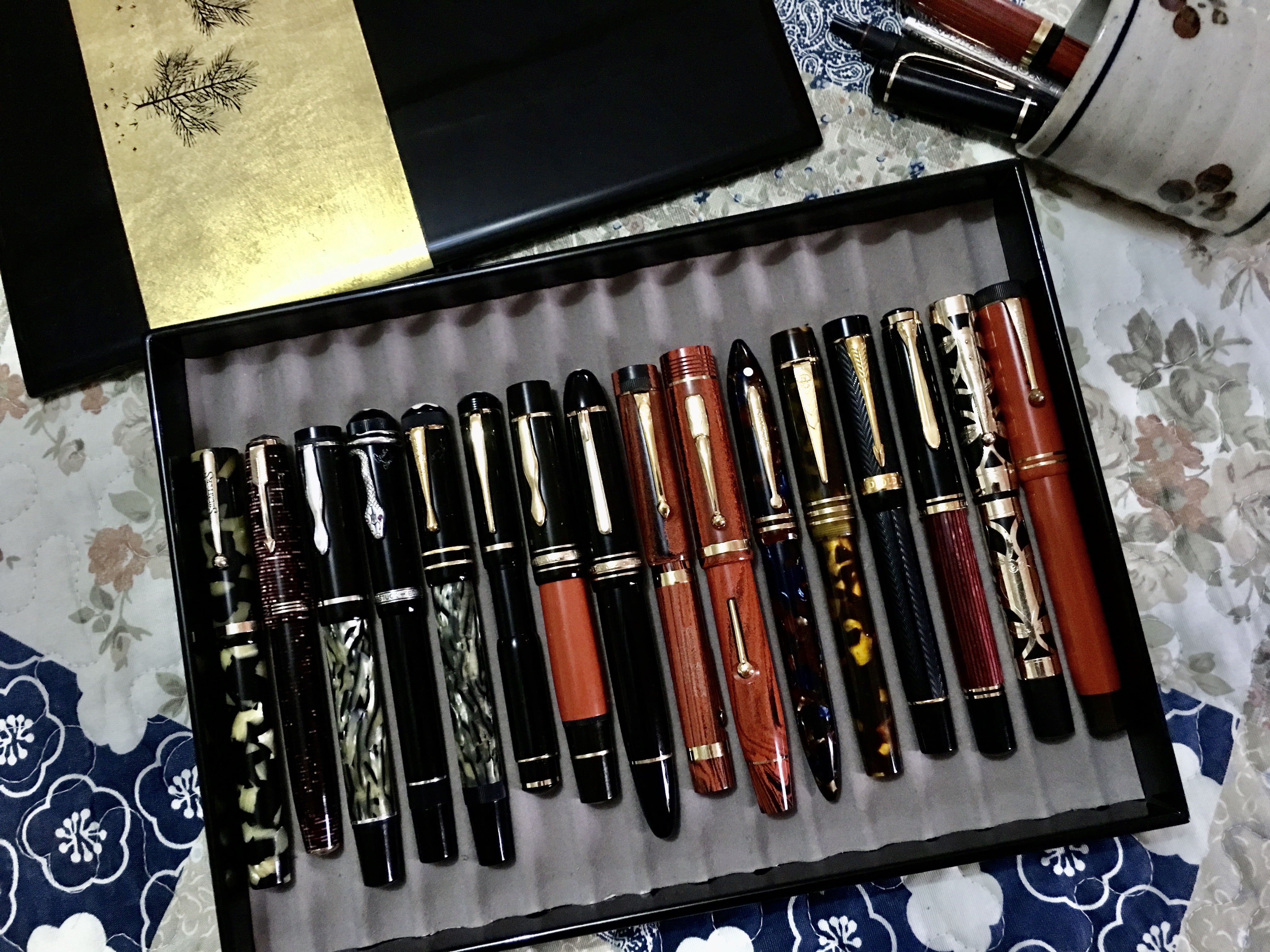
MAYBE BECAUSE of the name I chose for it, longtime followers of this column which I began more than 25 years ago will associate me with collecting vintage fountain pens, and they’d be right—partly. That’s because while I continue to collect pens with a passion, I’ve since branched out in half a dozen other directions, including typewriters, blotters, antiquarian books, midcentury paintings, canes, and even silver spoons.

It’s the kind of behavior that drives collectors’ wives crazy (although I’ll have more to say about the gender issue later), and I can only be thankful that my wife Beng has indulged me all these years. Beng collects bottles, tin cans, and pens herself, but nowhere near the intensity with which I check out eBay three times a day, scour the FB Marketplace, converse in geek-speak with fellow collectors, and subject my collections to never-ending cataloguing.

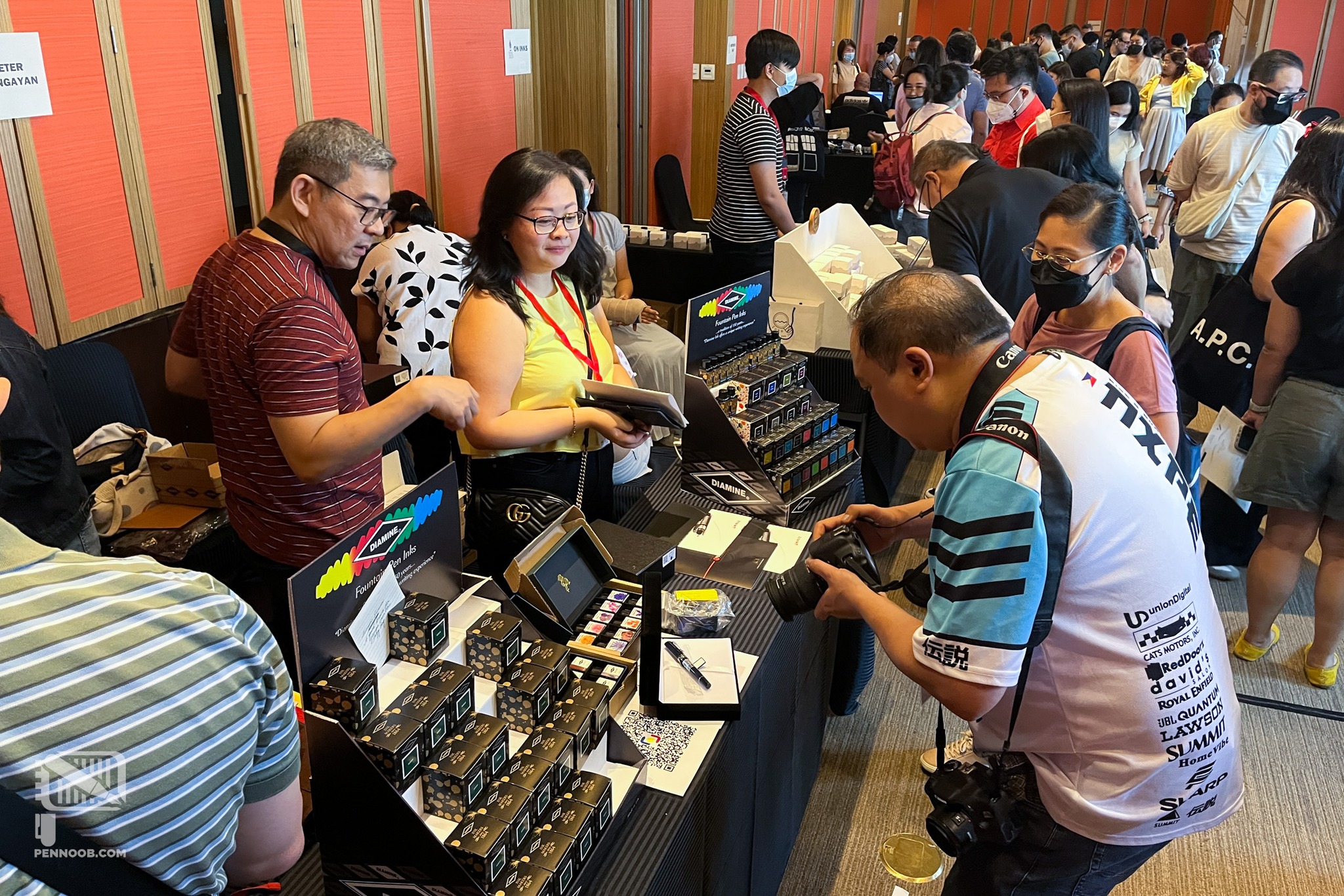
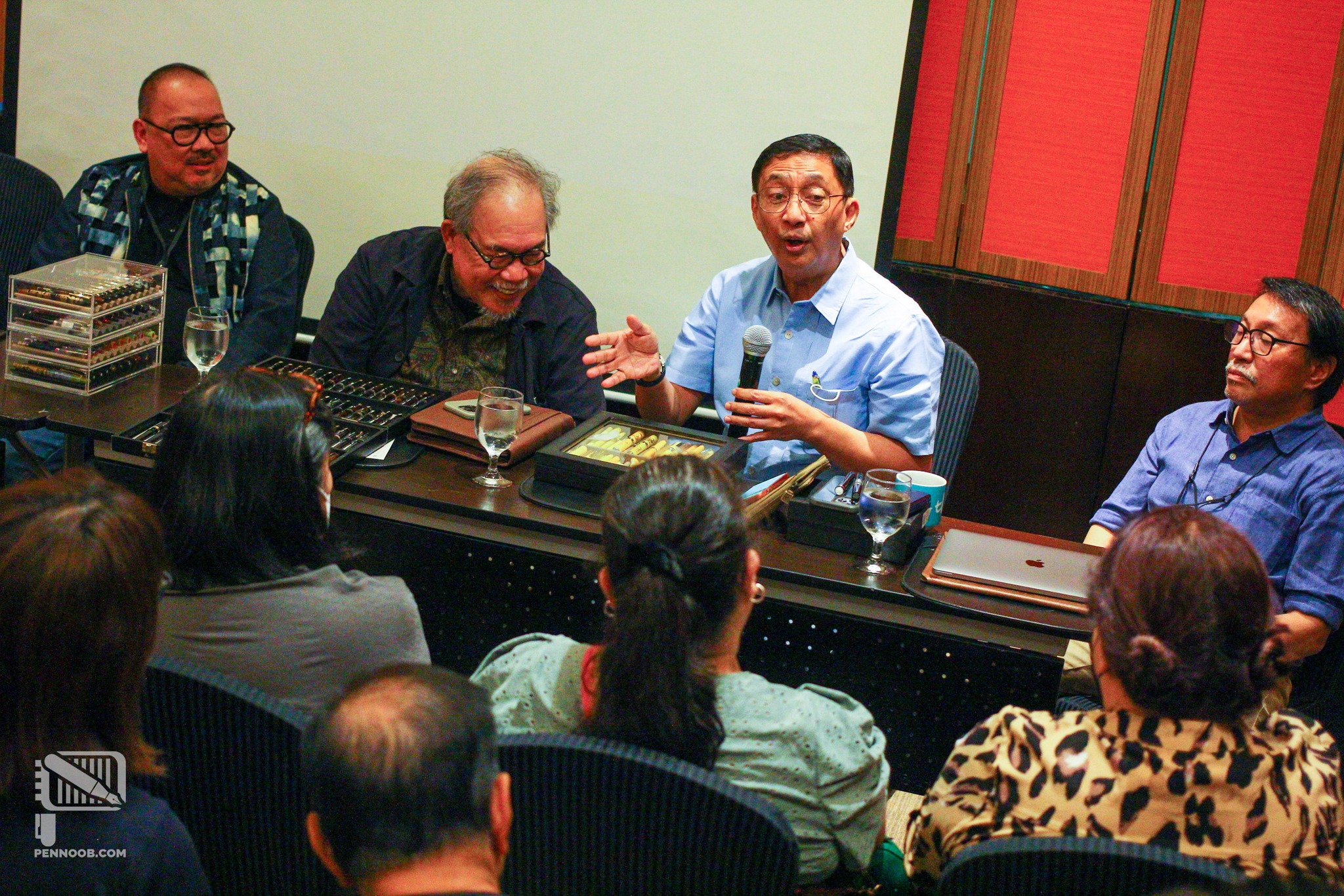
Seventeen years ago, some twenty people who must have thought they were the only ones interested in fountain pens met in our front yard in UP to form the Fountain Pen Network-Philippines. Those twenty have since grown to over 15,000 members on our FPN-P Facebook page. Unusually among hobbyist groups, and despite its explosive growth, FPN-P has remained one of the Internet’s friendliest and safest spaces, thanks to strict moderation and its openness to all kinds of pens and members, whether they come in with P100 pens from Temu or six-figure Montblancs (yes, there are Rolexes in pendom, although pens are far more pocket-friendly than watches). 

One natural offshoot of FPN-P’s expansion has been the emergence of sub-interest groups, among which is the “PlumaLuma” group, which began as one devoted to vintage pens and desk accessories, but which soon evolved into “PlumaLuma Atbp.” as it became clear that pens weren’t our only obsession. 

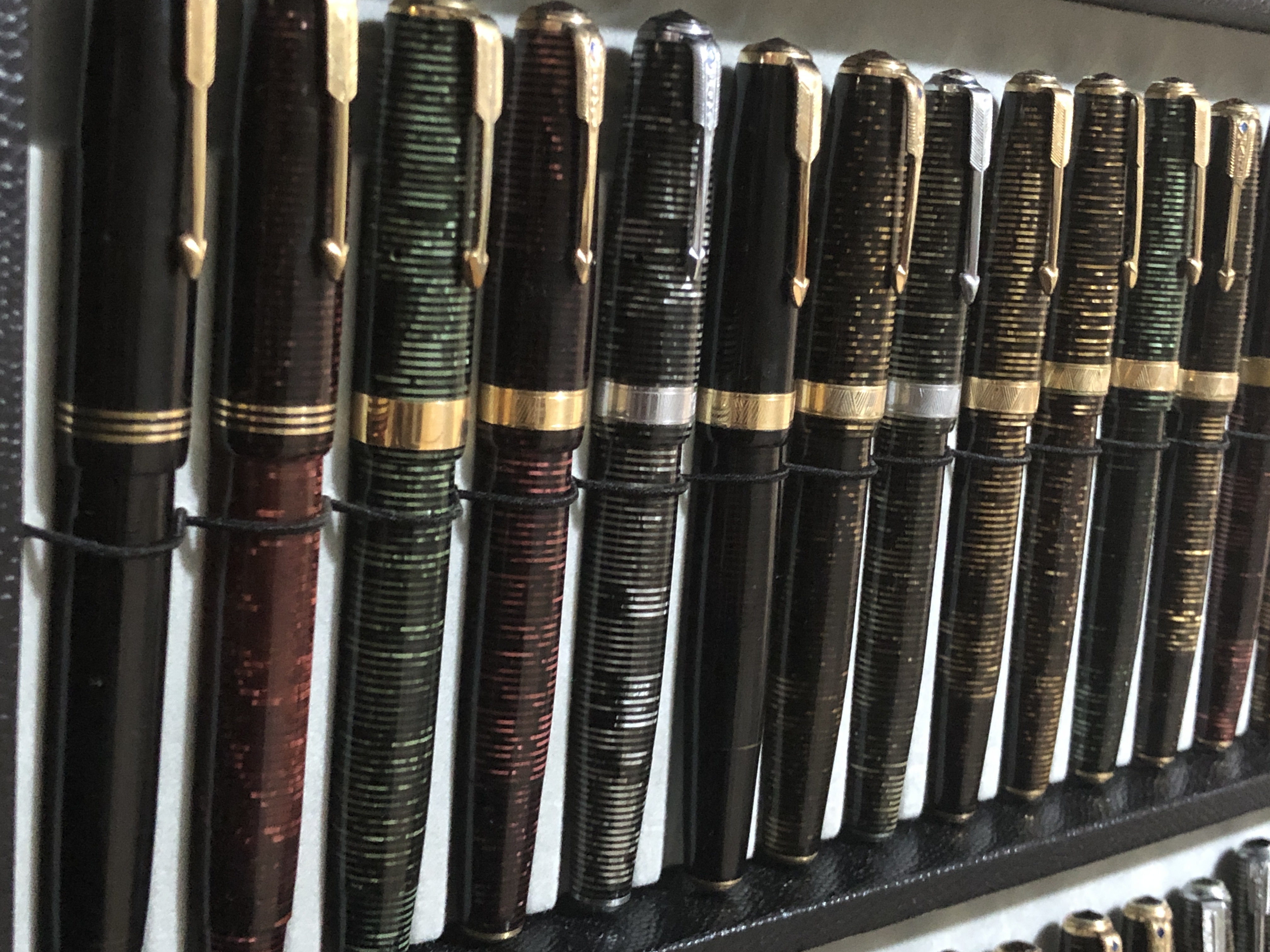
Some collectors maintain a clear and strict focus, like watches, santos, and tea sets. Others branch out into tangential areas (like other writing instruments and books and ephemera for me). The latter far outnumber the former, as collectors soon realize that one is never enough—not just of an object, but of collectibles. There are also “completists” who must have every single item known to have existed, catalogued and off-catalogue, in every collecting band (among my vintage Parker pens, for example, I have about 80 “Vacumatics” from the 1930s and 1940s—still far short of the hundreds of variants made).

Any serious collector in any field will tell you that a good collection takes more than money—although money surely matters in the rarefied realms. What’s just as important is connoisseurship—knowing what to want and why, and understanding the market. For budget-challenged collectors like me, knowledge and determination help balance out the odds, allowing me to buy low, sell high, and eventually trade up to the best goods without paying MSRPs. That also means taking more risks on places like eBay, but then there’s the thrill and pleasure of the hunt, which stepping into a boutique and plunking down a credit card simply can’t buy.

Those of us who collect vintage and antique items (by convention, “vintage” means at least fifty years and “antique” at least a century old) take even more risks , because what we collect could be damaged, stolen, or even fake. With the rise of auction houses and the allure of parking one’s money in some conversation-piece or status-symbol artifact, the stakes have risen even higher; there have been reports, for example, of forged master paintings sold and of “rare” coins being doctored to acquire more value at the auctions.

None of this has daunted the fatally bug-bitten collector, for whom the bar has simply risen; the Internet and the emergence of collecting groups has enlarged the competition, but at the same time it has opened more markets (I’ve bought pens and rare Filipiniana from as far as Bulgaria and Argentina). 

That explains the amazing range you’re about to see in the collections of four gentlemen I’ve picked out from PlumaLuma Atbp. who exemplify, for me, the finest in collecting and connoisseurship, being virtual walking encyclopedias of their particular specialties. (And to clarify an earlier point, PlumaLuma has many lady members with formidable pen collections—lawyer Yen Ocampo and cardiologist Abigail Te-Rosano among them—but despite what’s been said about women and shopping, they don’t seem to be anywhere near as profligate as most of these men.)

The exception to the charge of profligacy (to which I will readily confess) is Raphael “Raph” Camposagrado. Barely in his thirties, Raph trained in the UK and often travels to Europe as a software and AI consultant, imbibing Old World culture with keen devotion. He is the model of collecting focus and discipline, keeping his world-class collection of vintage fountain pens within clear numerical bounds. The one thing they have to be, aside from being old, is beautiful—as in Art Deco beautiful. No pen epitomizes that more than the 1930s Wahl Eversharp Coronet, as Raph explains:
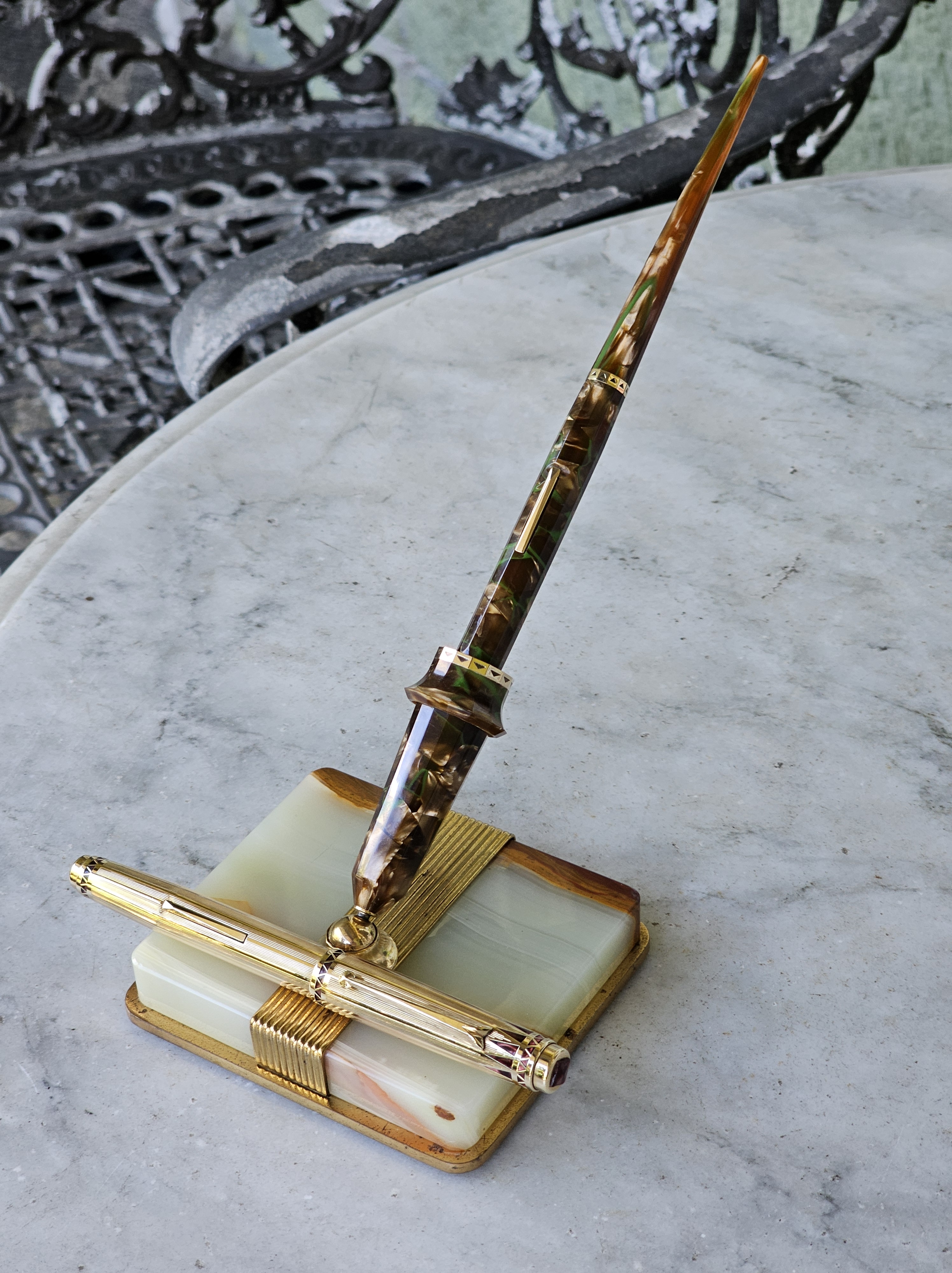
Considered the peak of Art Deco within the world of pen collecting, the Coronet is abundantly adorned with the symmetry, sharp angles, and geometric forms that enjoyers of the design movement obsess over. The cap and barrel are gold filled and strewn with longitudinal striations. Triangular red pyralin inserts and the pyramidal cap finial give a bold pop of color echoing the beams of search lights that would have streaked over 1930s Manhattanites. This particular piece is equipped with a slide adjuster that allows the user to change the stiffness of the nib from a firm writer of business letters to one with line variation for calligraphic pursuits. It even sports an ink view letting the user see if the pen is due for a refill. While modern pen making tends toward the large, gilded, and ornate, the Coronet achieves extravagance with just the right amount of restraint. It is golden without being a rococo explosion. It is diminutive and so maintains the dimensions of classic jewelry. It knows just how much to show like many other luxury pieces made in the late 1930s.”

Raph is also known for his sub-collection of exquisite desk pen sets, once the hallmark of executive success. The Wahl-Eversharp Doric sets, in particular, are visual stunners. 

“I personally scoured Ebay to build a mini collection around this model by Wahl-Eversharp called the Doric,” says Raph. “Other than the Coronet, the Doric is quintessentially Art Deco, sporting twelve facets. The marble desk base is supported by a thin chrome bed and has bracing that reminds me of a hawk’s neck and beak when viewed from the front or back. The depth of the celluloid on the various pens looks as if it were of stone as natural as the desk base itself.”

Investment consultant Alexander “Sandy” Lichauco has long been known in the collecting world as a collector of Philippine medals and tokens, having co-authored a seminal book on it with Dr. Earl H0neycutt (Philippine Medals and Tokens 1780-2024). However, dismayed by the rampant commercialism in that hobby (forgeries and malpractices abound), Sandy turned to fountain pens, amassing an amazing vintage collection in less than two years (including many Parkers that I—his budolero—wish I had). 
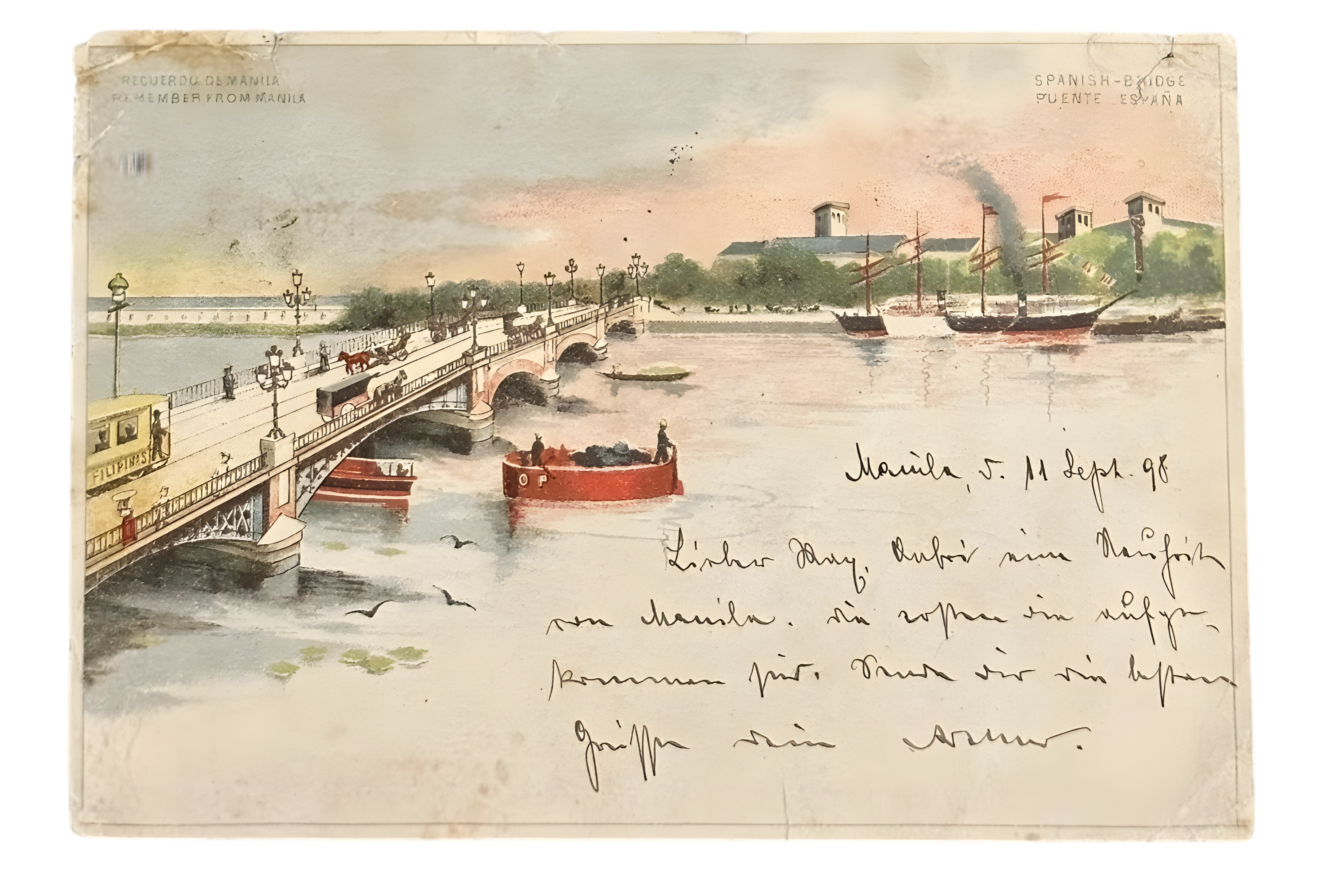
But aside from medals and pens, Sandy is also one of the country’s foremost deltiologists—that’s “postcard collector” to most of us. “I’m deep into deltiology now and have tracked down nearly 100 private mailing cards (which isn’t much compared to other collectors, but I’ve become very intentional and selective about these cards) from the turn of the century, including these two newly acquired color cards,” he says. “But the crown jewel is my 1898 Pioneer card of the Puente de España. I snagged it at a London auction, and I love the unique watercolor art. It’s postmarked and was used just three months after we gained our independence from Spain. It’s been on exhibit at the Ortigas Library since August.” 

Sandy also maintains the highly informative and interesting blog www.nineteenkopongkopong.com (and he can explain the origin of that word).

When he’s not practicing his trade as a licensed architect and project and construction manager, Melvin Lam—our newest convert to fountain pens—collects historical artifacts and documents such as the silver quill pen given as a prize to the young Jose Rizal, a letter from Andres Bonifacio to Emilio Jacinto, 1st Republic revolutionary coins and banknotes, a photograph of Rizal’s execution, the 1898 Malolos menu, revolutionary flags from the First Republic, the Murillo Velarde map, and an Ah Tay bed, among many others. 

Melvin is also an expert on the anting-anting, co-authoring the Catalogue of Philippine Silver Anting-Anting Medals. “My passion for history and culture was influenced by my father, Robert Lam, who began collecting antiques and artifacts in the 1970s. It has taken my family over 50 years to acquire our current collection. Our collection ranges from early prehistoric Philippine artifacts, items from the pre-colonial, Spanish colonial, American occupation, and Commonwealth eras, up to World War II Filipiniana items. It also includes antique anting-anting, antique santos, Philippine indigenous items, antique furniture, and Martaban jars.”

Not surprisingly, Melvin serves as president of the Bayanihan Collectors Club, known for its webinars, exhibits, auctions, and other historical celebrations, and as a board member of the Filipinas Collectibles and Antique Society (FCAS), which organizes international conventions for antiques and collectibles. 

For sheer collecting range and prowess, few can hold a candle to Augusto “Toto” Lozada Toledo, who retired from banking and insurance broking ten years ago. Never mind his 400 fountain pens (older than Toto by a few months, I have about just half that). It would be more accurate to describe Toto as a collector of collections, which comprise, aside from pens, mainly bottles (vintage and modern, soft drinks, medicines, ink, liquor, perfumes, pomades, insulators, Avon figurals, milk and baby bottles, and kitchen glassware) and Batman (action figures, vehicles, Lego sets, and comics). 

Ask Toto about the history of Parker Quink (no, not invented by a Filipino as the urban legend has it), and you’ll get a half-hour lecture on Quisumbing Ink and Quesada ink, aside from Quink itself—with all the right props, of course. 
A coffee fan, Toto also collects old brewing equipment, coffee cups, used (!) coffee bags, and Starbucks prepaid cards. From his banking and insurance background, he collects old passbooks and checks, vintage fire extinguishers and alarms, metal coin banks, prewar insurance policies, and Zuellig ephemera. (I’m leaving out a lot here, but you get the idea.)

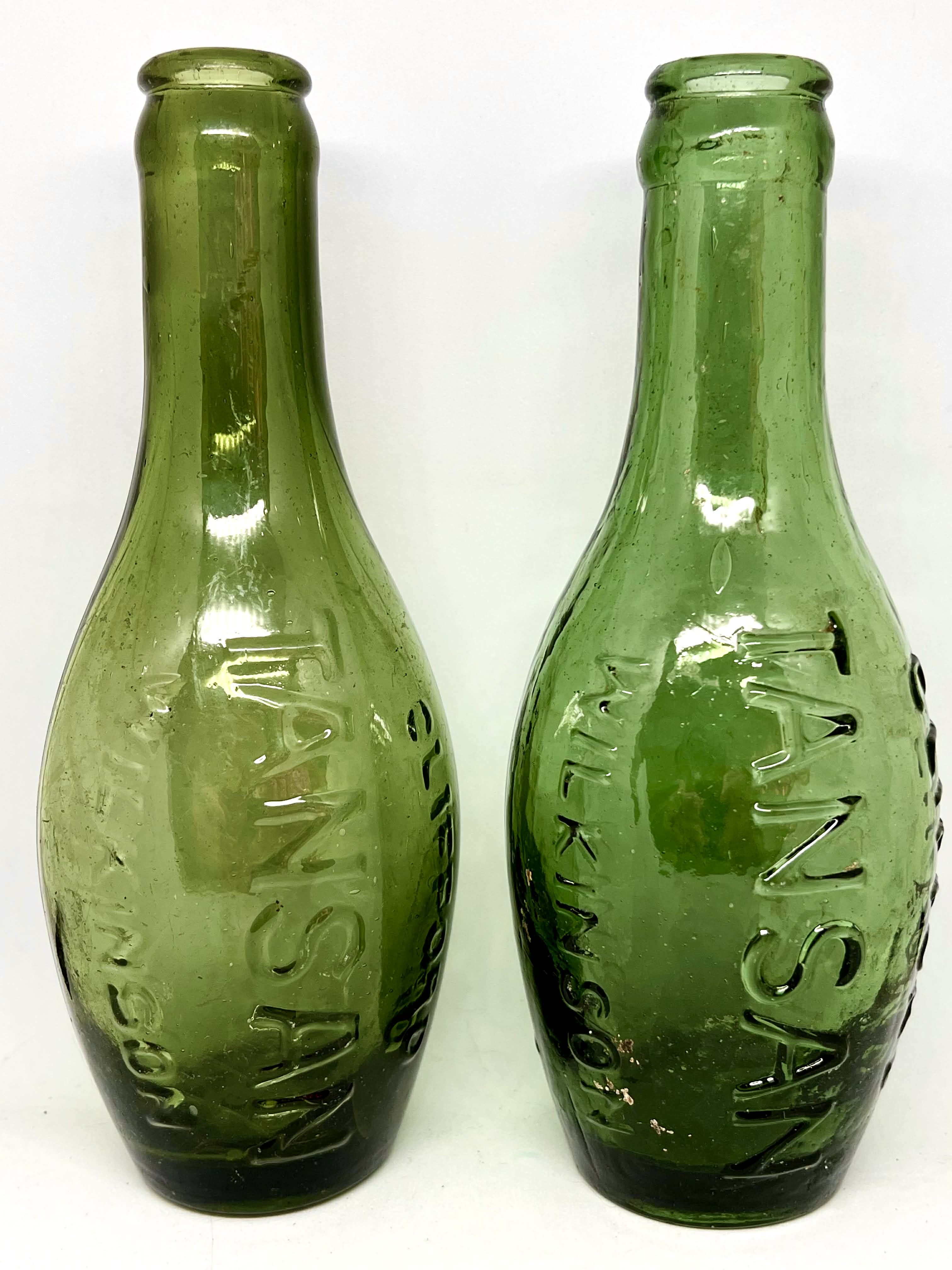
“My main collection is vintage glass bottles—maybe 3,000 specimens—of Philippine products, because of my interest in Philippine history, and how bottles provide clues of their provenance, their makers, their likely users (who actually drank from them), art work (for bottles with paper labels), and the evolution of their logos, which are often tied in to changes in corporate history and ownership,” Toto explains. “The next largest collection is Batman objects—some 2,000 action figures alone. As a seven-year old boy, I read the 1939 issue of Detective Comics No. 27, featuring the debut of Batman, and have always been fascinated by his mental and physical skills that did not originate from alien powers but from his individual training and intellectual prowess. 

“The coffee collection comes from a lifelong affair with the brew. The banking and insurance collection comes from a 40-year career in these professions. My first fountain pen was a Wearever Pennant (still with me), that my father gave me as Grade 1 student in 1960. Briefly interrupted by the emergence of Bic ballpens in the 1960’s era, I picked up the collecting in the late 1970s. The others are a result of my interest in the Art Deco aesthetic, my career with the Zuellig Group, my love for Philippine history, and my longing for a return to the mid-century era. It’s always difficult to choose favorite pieces, but for bottles, it would be the Tansan Aerated Water because of the actual etymology of its name, and the (misplaced) brand association with the crown metal cap. The bottle is also very much a part of the American colonial era (strictly recommended for the US military), and was exclusively distributed by F. E. Zuellig, Inc. I also count the San Miguel Beer bottles, from its ceramic containers (from Germany), dark green bottles (from Hong Kong), and the establishment of its own bottle making plant which produced the now-ubiquitous and iconic amber steinies.”

My own most recent acquisitions beyond pens have been, of all things, paper blotters and silver spoons, which began as I idly searched for items Nouveau and Deco. It didn’t help the budget that there are literally hundreds if not thousands of such baubles to be found on eBay at any given time (220,000-plus for fountain pens this very minute). Like Raph, Sandy, Melvin, and Toto, I can spend sleepless nights sighing over some obscure object of desire that might leave wives and mates suspicious, but which they will accept in resignation over more dangerous liaisons.
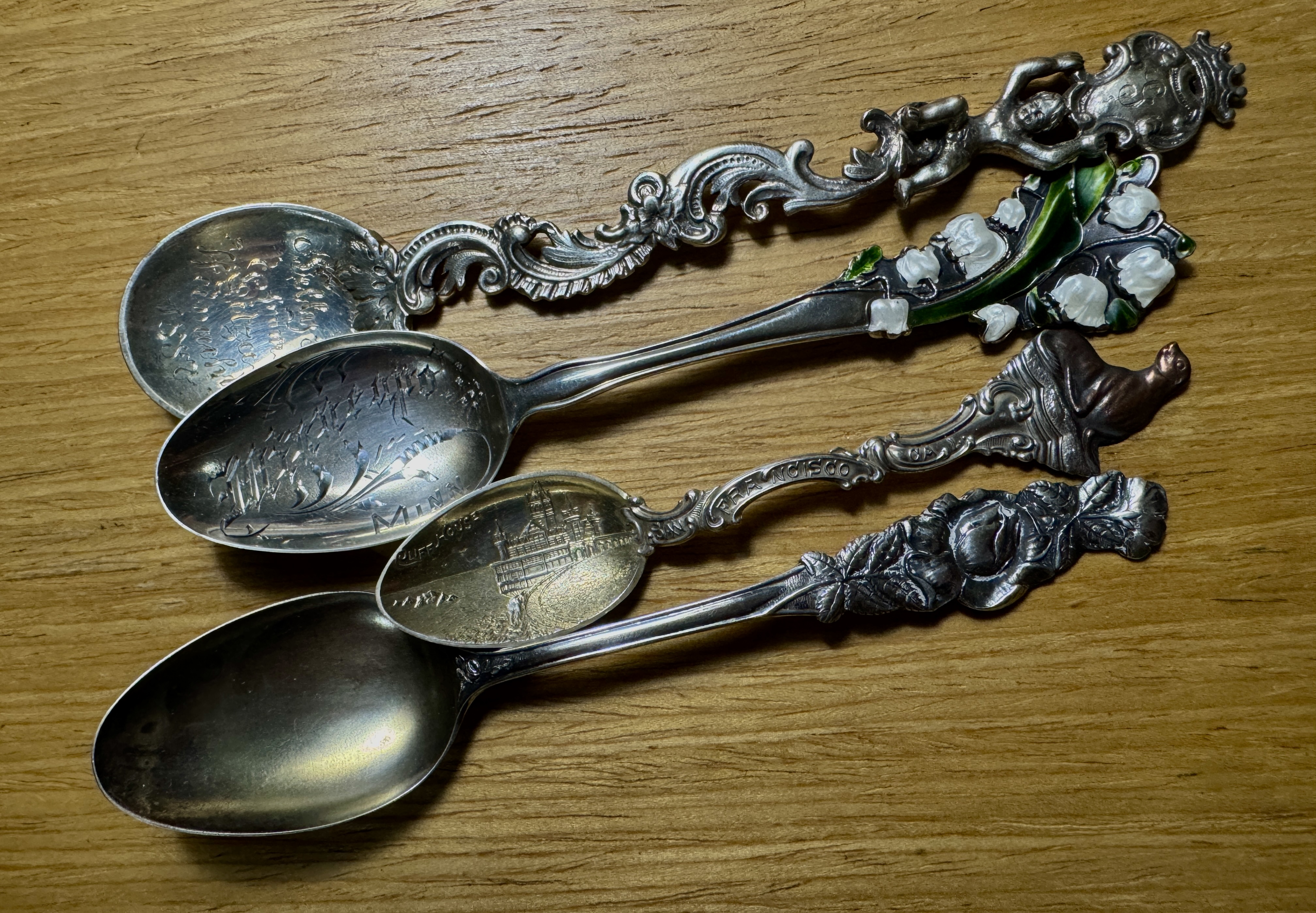
I’m well aware that there are people who would consider us insane, but let me put it this way: to a world full of ugliness and discord, we bring beauty and order in the cabinets and cases that home and organize our collectibles, and at a time when people forget things after five minutes, we keep the memories of centuries. 
Penman No. 474: Looking Back and Letting Go

Penman for Sunday, June 1, 2025

AS ANY friend who’s had the privilege of being invited to his Makati home quickly realizes, Ambeth Ocampo is more than the engaging public intellectual we all know, whose Looking Back series has made history come alive for young Filipinos. He’s also an inveterate collector of rare Filipiniana—books, ephemera, art, and historical objects—all of which come with the territory he works in. 

There have been many Filipinos of a similar bent—the legendary Alfonso Ongpin and the late Ramon Villegas come to mind, as well as the more contemporary Jimmy Laya, Melvin Lam, and Edward de los Santos, among others—but the way Ambeth has amassed his collection is noteworthy on its own, as it folds the personal almost imperceptibly into the professional. 

It comes pretty close to the classic prescription for murder—means, motive, and opportunity—all captured in his classic story of how he stumbled on and picked up Emilio Jacinto’s silver quill, a writing prize, from an antiques dealer who didn’t bother to learn what it was and let it go for its scrap value. (Having as much of Ambeth’s desire for antiquarian junk but with much less knowledge and certainly less means, I’ve often joked, between the two of us, that Ambeth’s the scholar and I’m the scavenger.)

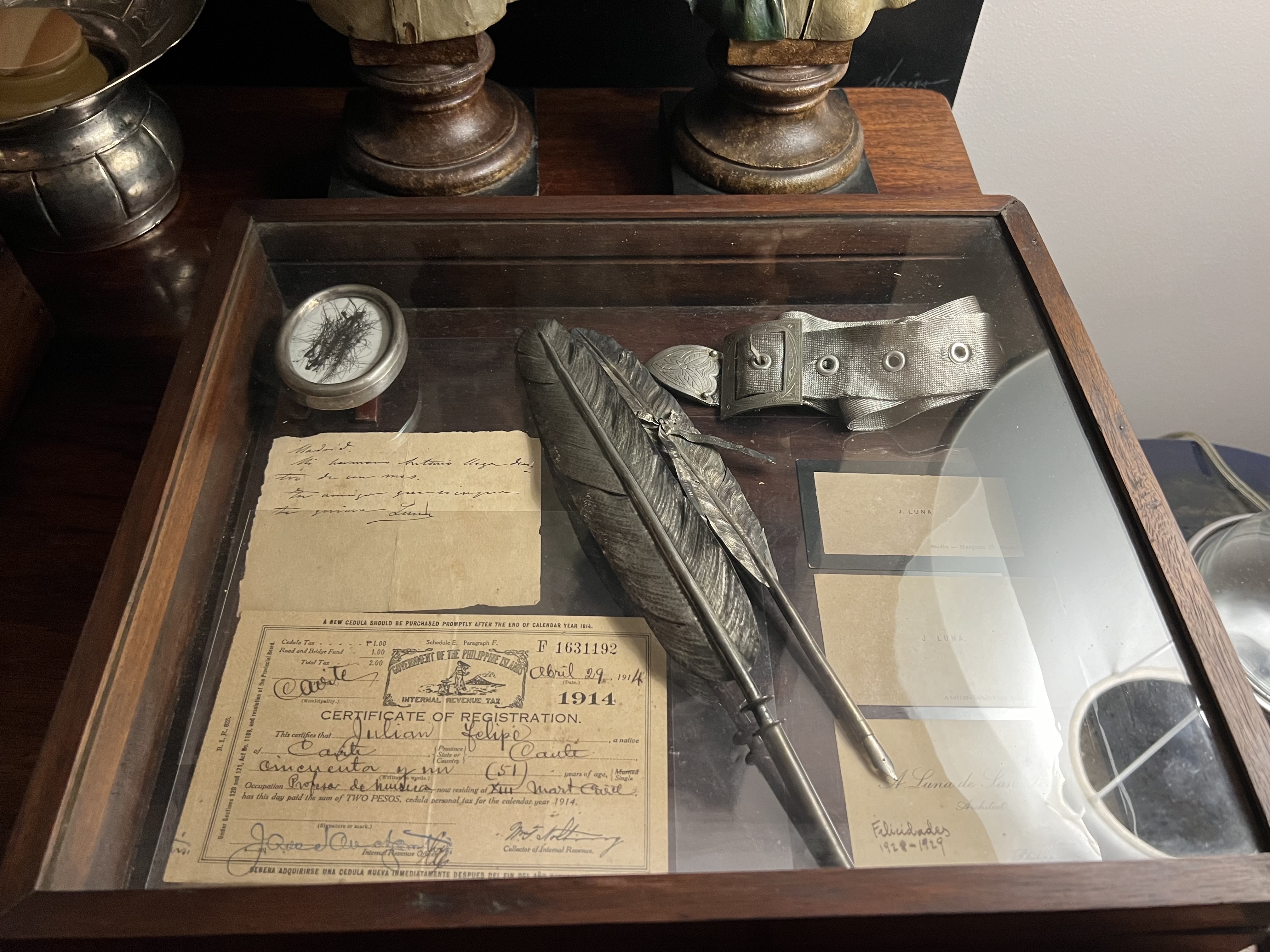
Jacinto’s quill, along with a trove of other historical treasures from Ambeth’s personal collection, will be up for auction on June 7 at Leon Gallery. They include Juan Luna’s silver belt, Felix Resurreccion Hidalgo’s walking stick, an official copy of the Malolos Constitution, Philippine maps from 1616 and 1647, and the Noceda and Sanlucar Vocabulario de la Lengua Tagala from 1860, among many others.

Knowing how precious these objects were, I had to ask Ambeth more about them, and this is what he said.

What made you think of selling these treasures now? Surely it can’t be easy letting go of them after being their caretaker all this time?

Over the years, I have come to the realization that collecting is not the hobby it used to be. As a boy I collected stamps and learned geography, history, and the culture of foreign countries in the process. I was fortunate that my father’s company had an international correspondence, so every week his secretary would send me a batch of envelopes to sort out.

I started collecting Filipiniana books in the 1980s, stocking up from the National Bookstore Quezon Boulevard branch bargain bin where I completed my Nick Joaquin essay collection because they cost one peso each. After school, I went to the Heritage Art Center in Cubao that I learned only years later was the site of the old Philippine Art Gallery. It was a ramshackle grouping of rooms upon added rooms made from old house parts that Mario Alcantara, the owner, bought from mambubulok. I had a favorite nook where I did my homework and when bored I would explore the rooms that I think gave me an eye for art and the ability to choose what I thought was good or not.

Looking back my collecting, and my life, has been the happy intersection of skill and opportunity. Napoleon once said “ability is nothing without opportunity.” I have always seen collecting as a responsibility. Collecting significant Filipiniana is not a hobby. It is not an investment. Collecting is a responsibility, the collector a steward who preserves the collection for the next generation. 

The objects I put at auction have enriched my life in many ways and I think they will enrich the life of their next steward. Some of the lots like the Malolos Republic one-peso banknote and the printed copy of the Malolos Constitution have been tucked away in a drawer. If I drop dead tomorrow these might be carelessly thrown away as trash. They should go where they are better appreciated. Collectors de-accessioning keeps the market alive and buzzing.

Let’s get this out of the way: it’s none of our business, but what will you do with the money?


Since I am not a dealer the material reward does not really factor in the equation. I have sold other things before at cost or even at a loss, just thinking that my gain was the enjoyment I got chasing after them and acquiring them. What will I do with the proceeds? When I started selling my rare Filipiniana I thought that instead of having shelves of books, maybe I should just sell and use the proceeds to buy one or two incunabula or samples of early Philippine printing from 1593-1640. Instead of caring for a whole library I will just care for half a dozen very important books.

How did you start out as a collector of historical objects? How and where did you find them? Aside from Jacinto’s pen, what was your most serendipitous find?

Collecting historical objects came naturally from my work as a historian. I would find things in used bookstores and when supply was still plentiful in the Ermita antique shops. One of the serendipitous finds was the cedula or residence certificate of a certain Julian Felipe, a musician from Cavite. It was in a heap of old papers, initially priced at one hundred pesos. I haggled it down to fifty, paid, and ran away. 

Another time my favorite antique dealer brought a “European painting” of a Virgin and Child to my home. I looked at it and knew it was Philippine. When I opened the frame to inspect the painting, hidden under the frame was the signature of the Filipino master Mariano Asuncion (1802-1855). The silver belt of Juan Luna and the bank draft in his name were acquired from Mario Alcantara. It came with the famous trove of paintings inherited by Grace Luna de San Pedro that are now in the National Museum. While everyone was going wild over the paintings, I spent many afternoons browsing the boxes of memorabilia that included the bloodied uniform Antonio Luna wore when he was assassinated, the palettes and brushes of Juan Luna, the memorabilia, some architectural plans of Andres Luna de San Pedro, and much more. I offered to buy the palettes and brushes and the painter’s smock but Mario said these were destined for the National Museum. There was also the last letter Juan Luna wrote to his son from Hong Kong, written a day before his death, not only was this letter significant, Luna did a watercolor of Hong Kong Harbor on the first page of the double-sided letter. All I could afford was the silver belt that came with Luna’s black suit that Mario said was also destined for the National Museum. Unfortunately, the Heritage Art Center burned down and with it all these memorabilia.

Do you or can you separate the collector from the scholar? Did the collecting happen naturally as a consequence of the scholarship?

The collecting grew and was enriched by my research and scholarship. If I had a PhD in Math I probably would not have recognized these odds and ends now considered treasures. I have been divesting over the years. A large part of my Filipiniana collection was donated to the Center for Kapampangan Studies, Holy Angel, Pampanga. All I keep at home are the books I need for work for teaching, lecturing, and writing, but now that I am retired from Ateneo (but still employed on a post-retirement appointment) it is easier to let go. 

The full catalog of Leon Gallery’s Spectacular Mid-Year auction can be accessed on its website at https://leon-gallery.com

Penman No. 470: A Collector’s Christmas

Penman for Sunday, January 5, 2025

MY WIFE Beng and I in San Diego, California for our first Christmas in the US in ten years, visiting our daughter Demi and her husband Jerry. San Diego’s one of those perennially pleasant places where the weather seems to be perfect almost all year round. You don’t come here for a white Christmas—although there’s snow up in the mountains not too far from town. It’s still sunny and warm enough in late December for people to be going around in T-shirts and shorts in the daytime, but for us Pinoys who love to freeze, sweaters and jackets are de rigueur.

We’ve been coming here for twenty years now, and while San Diego is chockfull of attractions—this is, after all, where Comic-Con happens every July (been there, done that twice) and where the waterfront boasts a flotilla of historic ships from a life-size Spanish galleon to the USS Midway—I have to admit that the collector in me loves San Diego for its antique malls, flea markets, and thrift shops, of which scores can be found in the city and its suburbs. I’ve found many a prize piece in these places—such as a working gold-plated 1930s Hamilton “Curvex” watch in a basket marked “Any item $5”—which, for me, beats walking into a boutique and plunking down your credit card to pay full price.

I guess I’m a cheapskate at heart, which is why everywhere Beng and I have gone around the world, flea markets and thrift shops—aside from museums—are at the top of our to-do list. The thrill is even less in the purchase itself than in finding something old, beautiful, potentially valuable—and at a bargain. 

Collectors everywhere know the feeling—that tingle in your bones and at your fingertips when you step into a shop and scan the territory, and notice something in the hazy distance that seems to look like your obscure object of desire. As a collector of vintage fountain pens, I naturally gravitate toward small tubular shapes in black, silver, or gold—which was how, last March, I spotted and bagged a gold “safety” French-made pen from the early 1900s, sitting all by its lonesome at a table at the Porte de Vanves flea market in Paris, a 40-euro find for something easily worth five times as much. 

Everyone has his or her strategy, but mine has always been to do a quick march down and around the street or aisle, just to see what’s out there and to catch obvious standouts, before taking a more leisurely and more probing walk back, peering into corners and at the details of particular pieces. It pays to come early—flea markets open as early as 5 am—and we’ve been lucky to bag early-bird bargains at cock’s crow in a barn in Ohio and the flea market at Covent Garden in London.

Unfortunately, flea markets of this sort have yet to become a regular feature of Filipino life, unless we count the Bangkal used-goods market in Makati and the plethora of Japan-surplus stores that have sprung up around the country. 

Fortunately, there’s a global flea market that’s accessible to nearly everyone and which doesn’t even require you to fly overseas and deal with visas, airfares, and airports. That market is eBay, which I like to call the great equalizer, since anyone with an Internet connection and a bank account can tap into the millions of items that eBay has online at any given second.

To my great wonderment and not a little horror, I realized as I was writing this that I’ve been on eBay for 27 years now, having signed up with the website just three months after it changed its name to eBay from Auction Web in September 1997. My first buy was a 1950s Pelikan 140 fountain pen from Germany, and since then I’ve made almost 2,000 purchases covering all my collecting passions, from pens, typewriters, and Apple computers to antiquarian books, paintings, and clothes. (Clothes? Yes! If you’re a rather large man like me who has difficulty finding his size in local stores, you’ll have lots more choices on eBay for less as long as you’re sure of your shirt, blazer, pants, shoe, and hat sizes.) 

Shipping each item to Manila directly from the US or the UK (another eBay paradise) will be too costly, so what I and other experienced collectors do is to open an account with a forwarder like ShippingCart or Johnny Air Cargo, which gives you a local address, wait until the items pile up, and then ship them in a box to Manila. (Check with each shipper’s website for their specific insurance and customs policies.) I generally get my goods within two weeks of shipping them out.

I began by mentioning that we were in San Diego because this ties in with another twist to the Pinoy collector’s and shopper’s strategy: if you know you’re going to be in the US and will be staying with a relative or friend, you can have your eBay or Amazon items shipped to that address over, say, the preceding month, and bring everything home with you in the second suitcase you’re entitled to, saving a ton on air freight costs. 

This time around, to give you an idea of what my Christmas loot has been, I’ll be filling up a suitcase (or more likely my carry-on) with some small things of little commercial value but of great interest to hopeless hoarders like me. They’ll include:

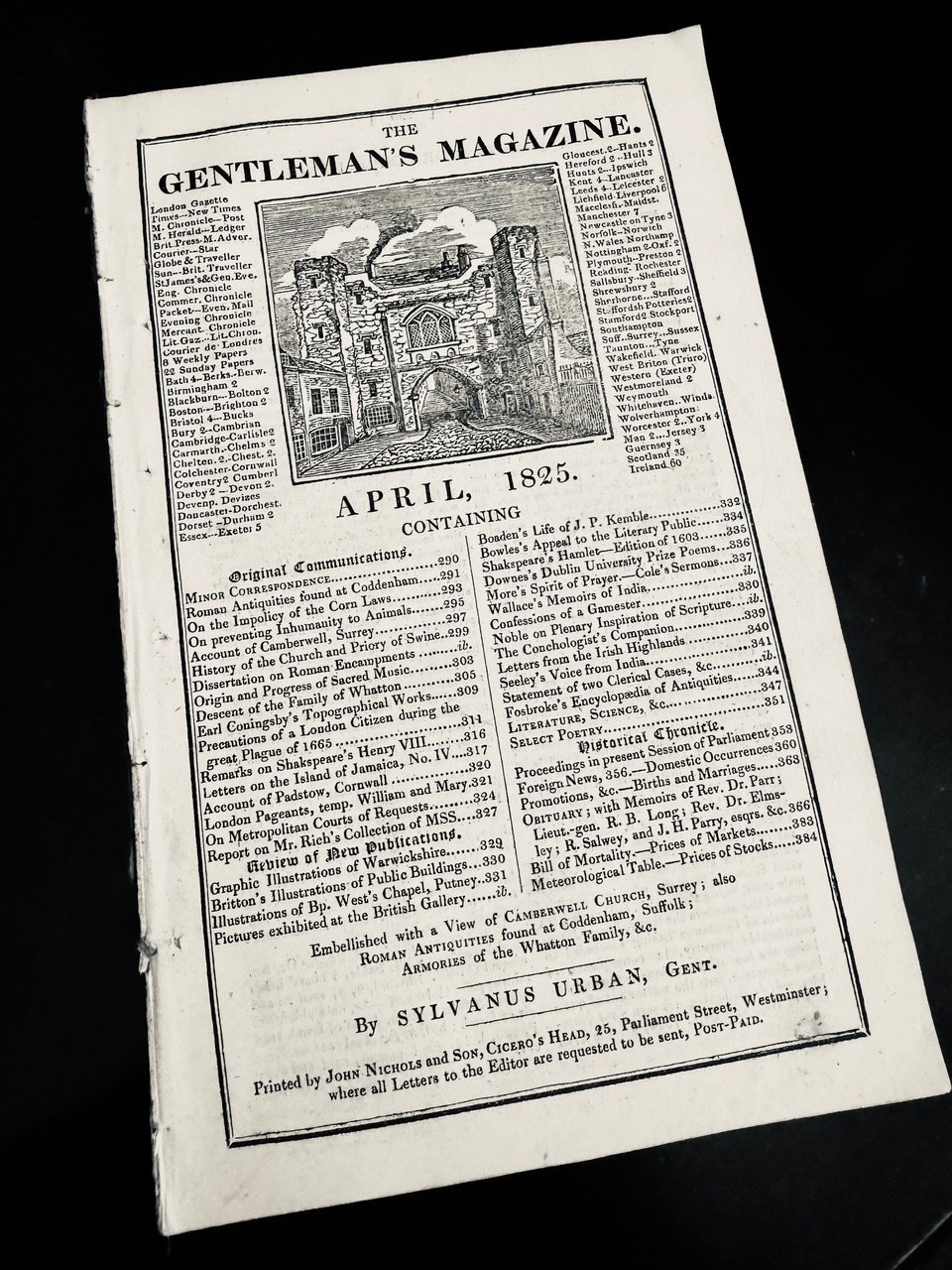
– A copy of The Gentleman’s Magazine from April 1825, in which an article predicts that “It appears that Spain is likely to lose her possessions in the Eastern, as well as the Western world” because of rebellions and crimes in the Philippines as well as at home, including “ravages committed (in Catalonia) by wolves within the last twelve or fifteen months…. The last was a young girl who, on the 18th instant, was almost entirely devoured by the wolves” (which, according to the monks, were “animated by the souls of defunct Constitutionalists”);

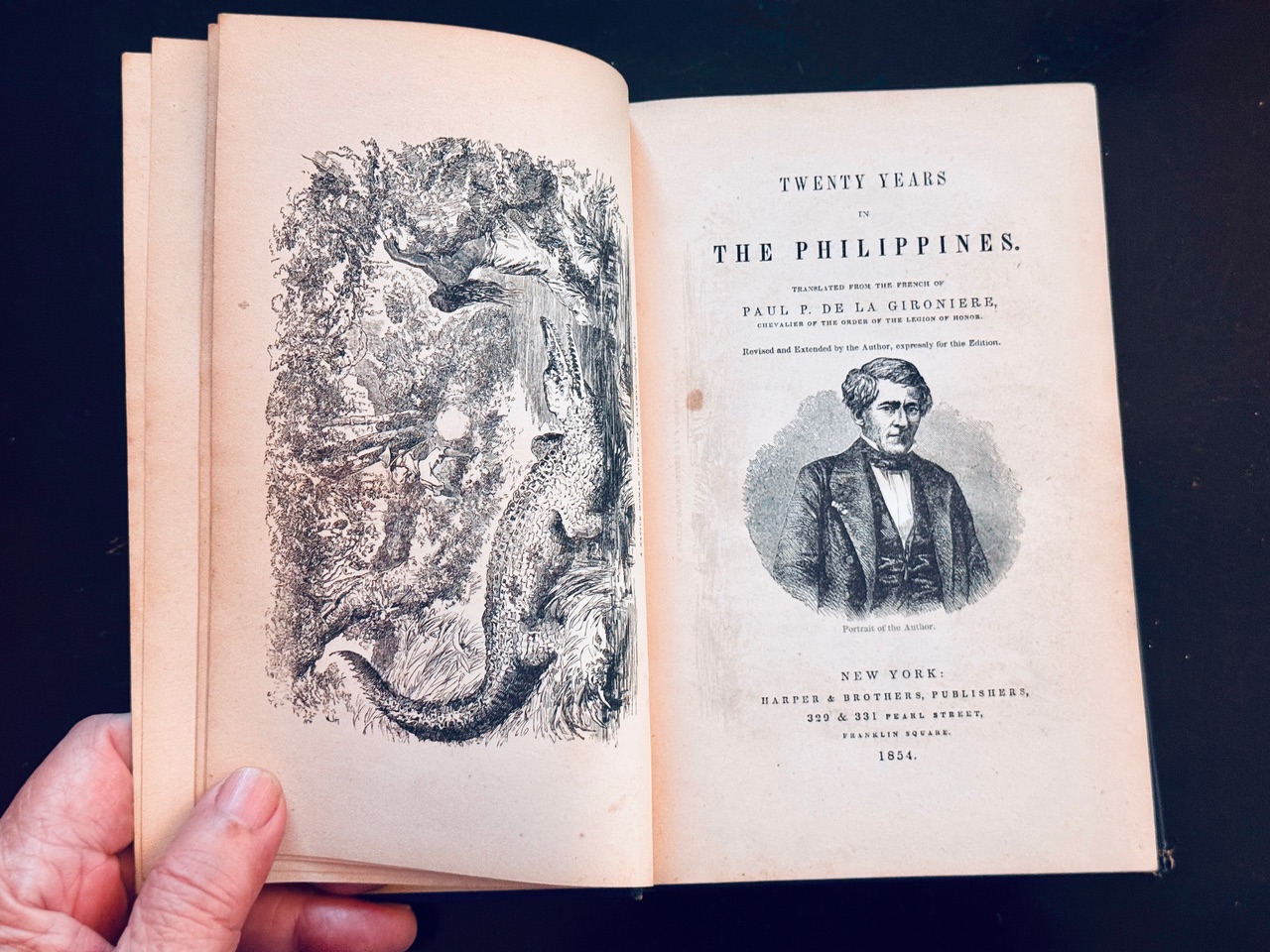
– A first American edition of Paul Proust de la Gironiere’s Twenty Years in the Philippine Islands, published in New York in 1854;

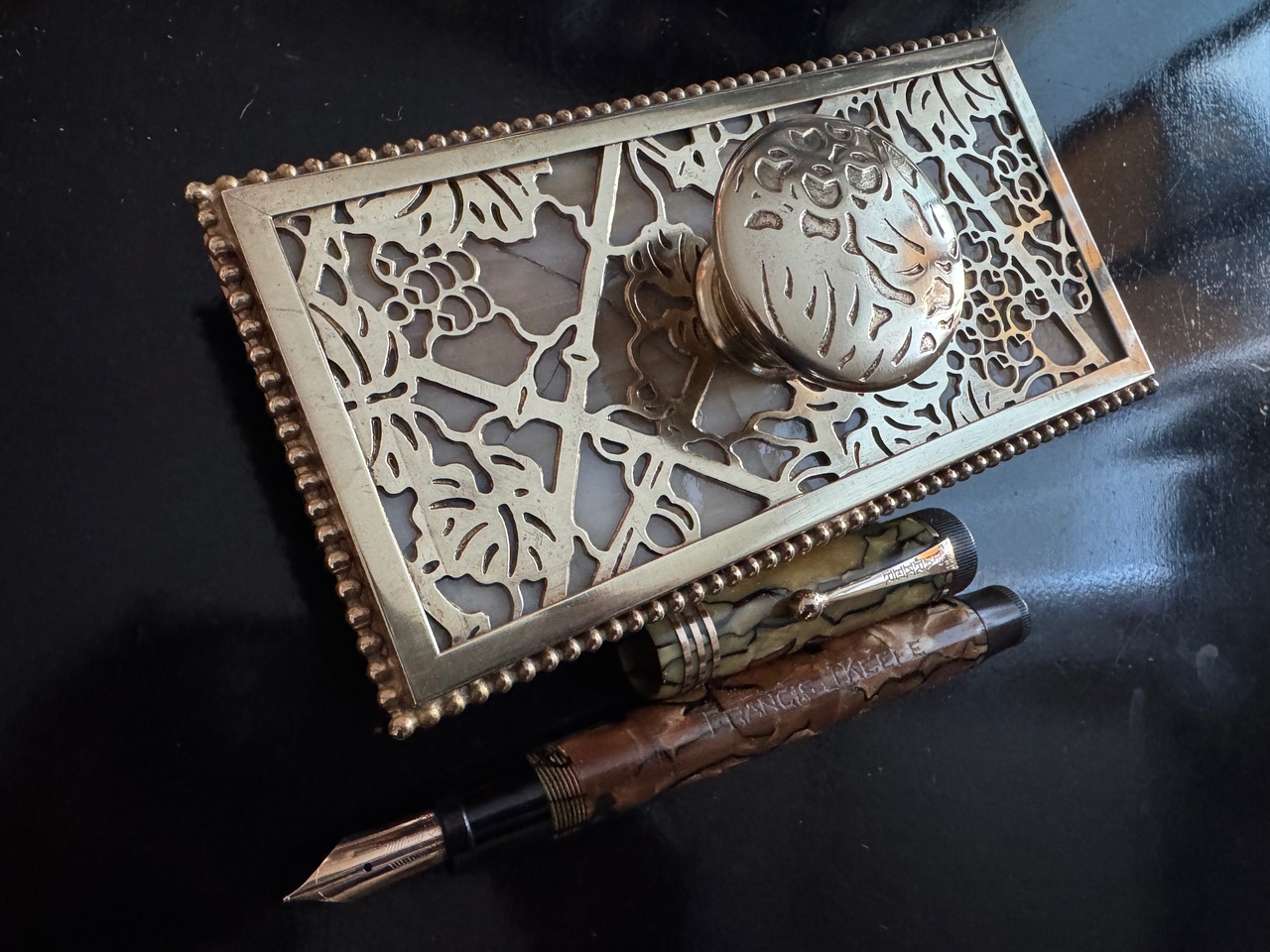
– A lovely Art Nouveau rocker ink blotter from around 1915, once used to mop up excess ink from fountain pens; and

– A Parker Duofold Senior fountain pen in pearl and black from around 1929, once owned by a “Francis J. Keefe” whose identity will be another mystery to explore.

If Christmas was this bountiful, I can only imagine what the New Year will be like.

Penman No. 449: Sharing the Joy of Pens

Penman for April 2, 2023

With the successful holding of the 2023 Manila Pen Show last March 18 and 19 at the Holiday Inn Makati, the Philippines firmly established itself as Southeast Asia’s Pen Central—the largest and liveliest marketplace of items and ideas related to one of the world’s fastest-growing hobbies: collecting fountain pens and other writing peripherals (inks, papers, and cases). 

The last MPS in 2019, just before the pandemic, had brought in 700 visitors. This year, that number was eclipsed on just the first day, and by closing time Sunday, over 2,000 pen lovers—from hardcore and advanced collectors picking up $2,000 Nakayas to eager newbies thrilled to get sub-P200 Wing Sungs—had showed up. The turnout wasn’t totally surprising, considering that Fountain Pen Network-Philippines (FPN-P), the pen show hosts and organizers, now counts more than 12,000 members on its Facebook page.

Aside from the country’s leading purveyors of writing paraphernalia—familiar names such as Scribe, Everything Calligraphy, Pengrafik, Stationer Extraordinaire, Leather Library, Leather Luxe, Shibui, Gav N Sav, JumpBid, and Kasama—foreign sellers from Singapore, Malaysia, and Japan such as Aesthetic Bay, Pen Gallery, Straits Pens, Musubi, and Toyooka Craft flew in just for the show. Nearly all the sellers reported robust sales at all price points.

As a longtime pen collector and co-founder of FPN-P, I’m proud of how the hobby has taken off in this country over the past decade, and also frankly amazed by how different our demographics are from the rest of the world. Fountain pen collecting, especially in the West, has long been the domain of predominantly old white men, inclined like I am toward vintage pens and high-end, limited-edition modern pens. 

FPN-P’s profile is distinctly different: mostly young professionals between 20 and 40, with far more women than men, happy to purchase the entire color range of inexpensive Chinese-made Jinhao 82s (and inks to match) but just as savvy about the latest Montblanc release, keen on using and enjoying their pens rather than keeping them in boxes. As the MPS attendance showed, ours is an exuberant, generous, and democratic community, with little sense of entitlement or competition, dedicated to sharing the joy of pens, of expressing your individuality and artistry with the ink on your nib, of doing something personal and authentic in this age of artificial intelligence.

A highlight of MPS 2023 was a panel discussion devoted to the topic of “Curating a Fountain Pen Collection,” and I was privileged to share the table with fellow collectors Reggie Reginaldo, Amanda Gorospe, Jun Castro, Ronnie Geron, and Raffy Aquino. Each of us said a few words about how and why we put our collections together, given that each of us had a different focus: inexpensive pens, high-end pens, vintage pens, yellow pens, and so on.

Before talking about my passion for vintage pens (i.e., pens at least 50 years old, in many cases a hundred years old), I tried to explain what “curation” was all about. Here’s part of what I said:

Every collection begins as most love affairs do—with fleeting glimpses of the loved one, then seemingly chance encounters, then long chats over coffee before the steep and blissful freefall into a dizzying madness. 

For a moment, happiness and contentment reign. And then sadly follow the inevitable regrets, the disaffections, the “It’s not you, it’s me’s,” the parting with the old object of desire and its replacement by a new flame.

Today we’ll try to introduce some sense into this seeming cycle of bliss and despair. Curation means bringing some method into the madness, finding the inner logic that threads many disparate elements together.

The word “curation” is rooted in the Latin curare, “to take care of,” or to treat an illness, and here clearly the illness is in the collector, whom curation treats by providing guideposts to follow and guardrails against excess.

There are several kinds of collectors:

  1. Those who want anything and everything, although they might be more properly called accumulators (this describes 90 percent of us at the beginning);
  2. Those who want everything of a kind (this applies to my fetish for Parker Vacumatics);
  3. Those who want the best or the most impressive of everything (this implies having the budget to go with your taste);
  4. Those who want some very specific things, for personal or even idiosyncratic reasons; and
  5. Those who get only what they need or can afford—perhaps the rarest of all collectors, the practical and disciplined kind.

Vintage collecting relies heavily on connoisseurship—on knowing the field and knowing what to look for. Surprisingly, it often involves less money than buying new pens. Of course there’s a cost to factor in for restoration and repairs, but even so few vintage pens reach the stratosphere of the thousands of dollars you would pay for a shiny new Montblanc.

You can collect based on brand, material, filling system, size, and of course price. For vintage you can add age and scarcity. Good working or repairable condition is presumed, although vintage collectors should always be on the lookout for cheap parts pens. 

Every quest for collectibles also involves what we might call “unicorns”—ultra-rare or one-of-a-kind pieces that exhibit some distinguishing hallmark of quality or technical innovation. These could be prototypes, custom jobs, or things in almost mint condition despite their age.

It also helps to know what you don’t like, or no longer like. For example, I generally don’t go for small and light pens, nor for blingy or too colorful pens. My pens are “lolo” pens—staid, conservative, almost severe, corny to most young collectors today.

Culling or cutting down is a good exercise, financially and mentally. I built up my collection over the years by selling five good pens to get one better pen. I have also sold very good pens that I once lusted after, but no longer spoke to me.

Curation, ultimately, is about knowing yourself. At a certain point in your collecting life, you have to take stock of your collection and ask yourself, “What do these objects say about me?” Is this the self-image I want to project, the one I’m happiest with? 

My answer to my own question is, I’m an old guy who likes old things, because they offer physical proof of life after death. We die, but our words—and the wording—go on. A vintage pen is an old guy lucky enough to find a new home. I’m happy to give him a shower and a warm bed, and all the ink he wants to drink.

Penman No. 430: Rizal’s Typewriter

Penman for Monday, December 20, 2021

NOW THAT I have your attention, let me backtrack quickly and clarify that title: I’m talking about a typewriter that Jose Rizal or the Katipunan could have used, had they been tech-savvy enough and infected with 19th-century FOMO.

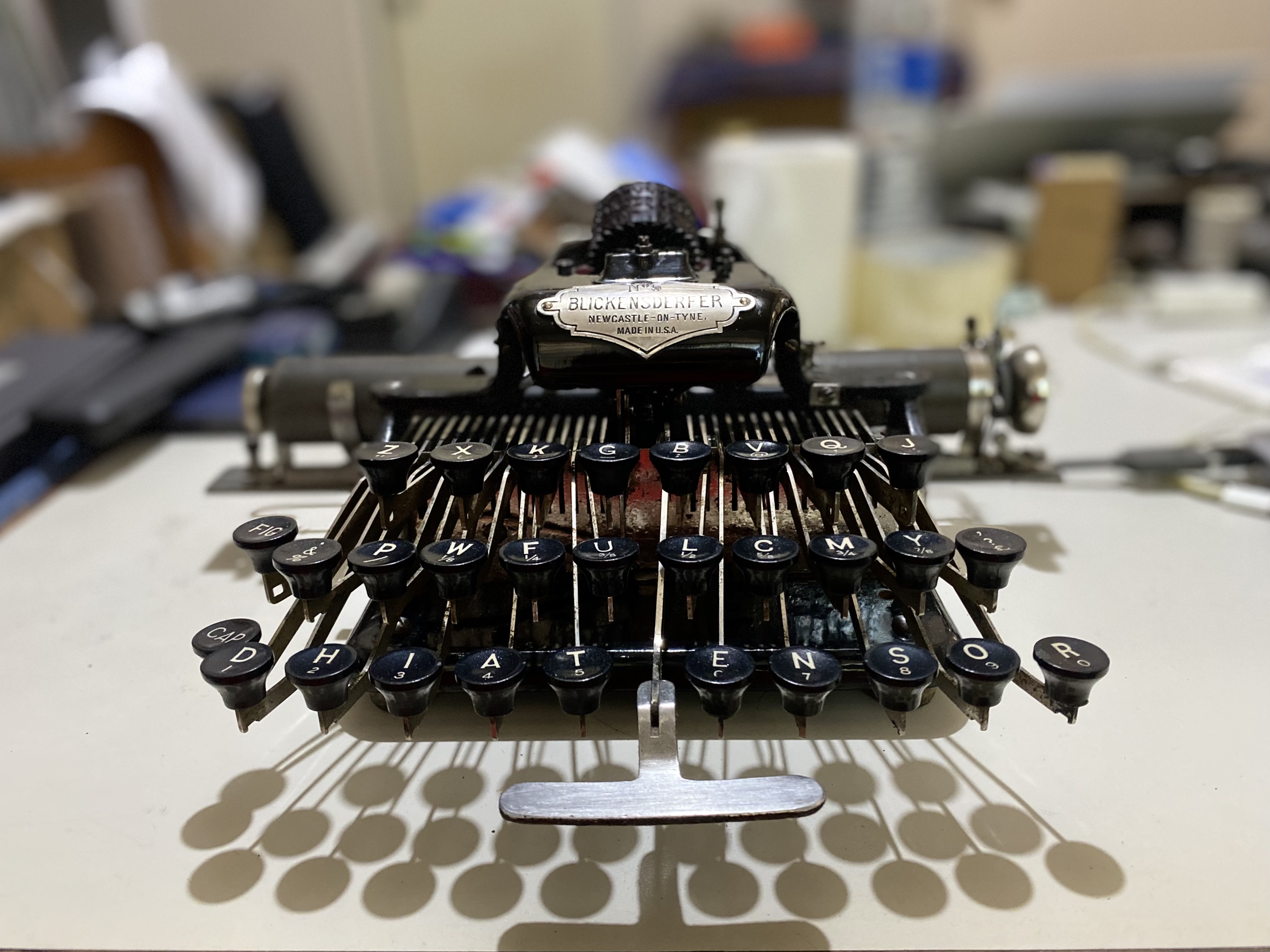
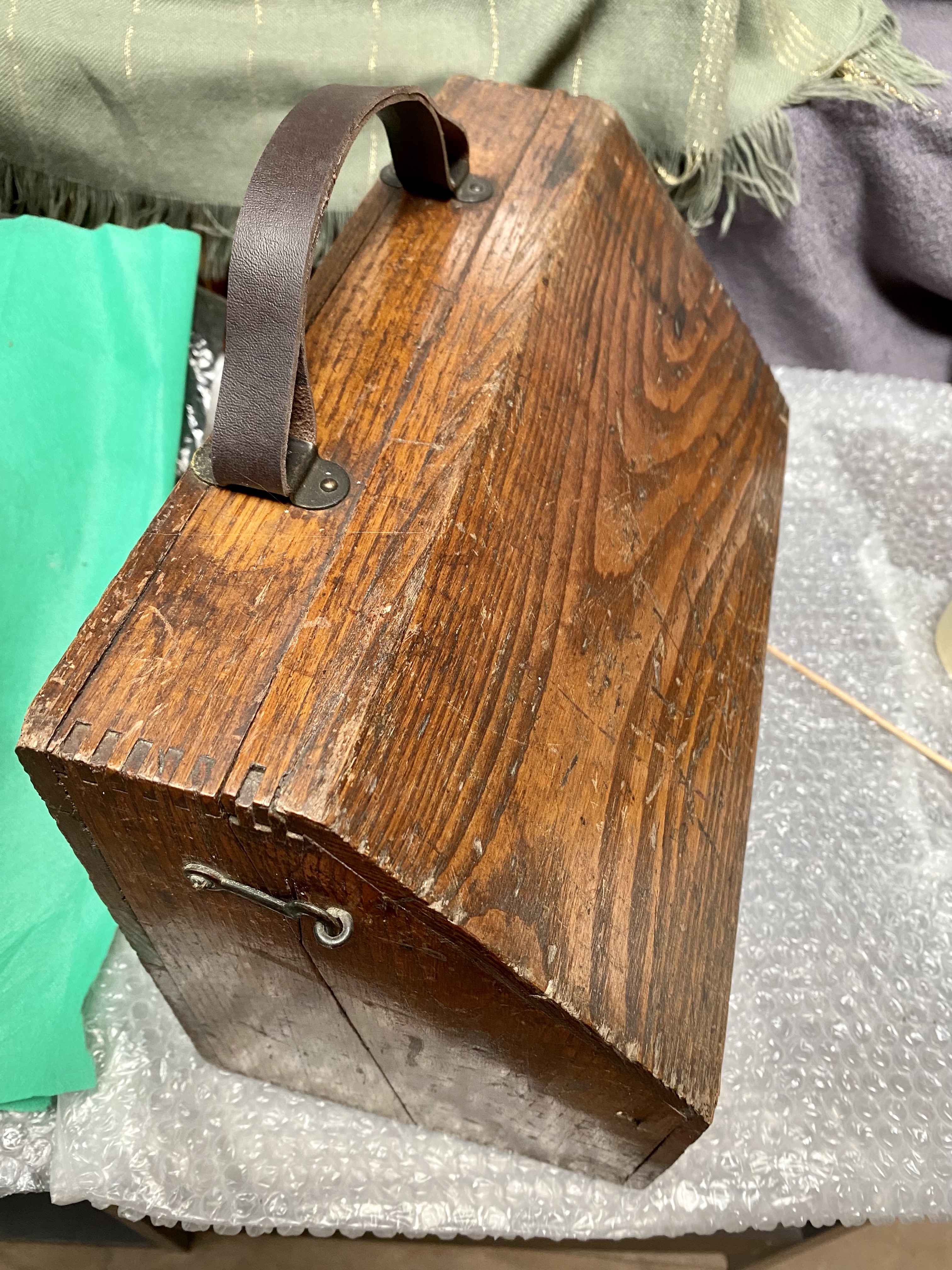
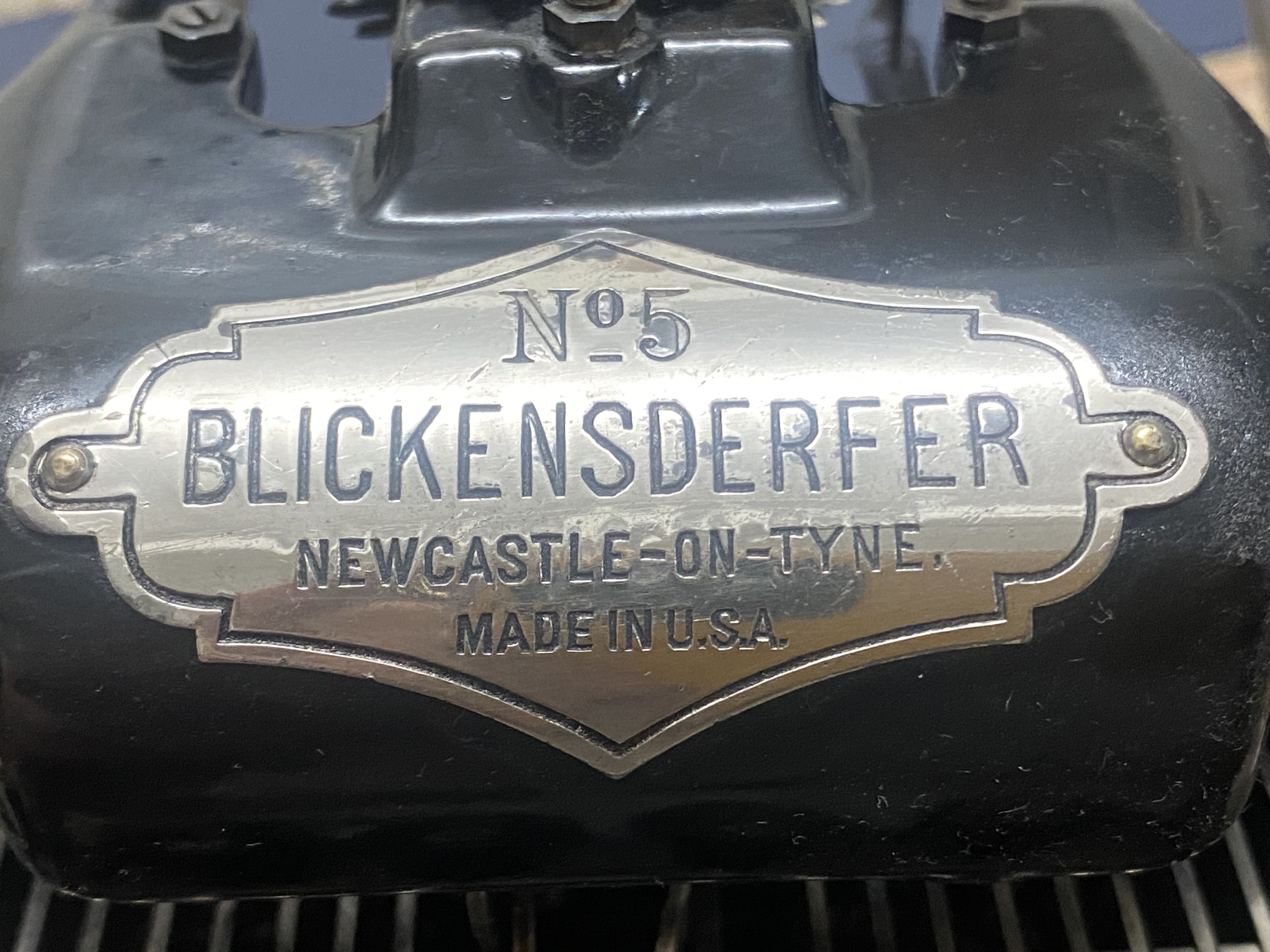
Early this month, a box I had been eagerly awaiting arrived from England, where I had found the machine on—where else?—eBay, selling for a reasonable price (“reasonable,” that is, to oddball collectors like me). Inside the box was a wooden case, visibly old, with a latch on each side. I undid both latches and the case opened to reveal what I expected to see: “an antique Blickensderfer No. 5 typewriter with spare typewheel in original oak case,” according to the ad I saw. But the first thing that struck me wasn’t the machine itself—it was the fragrance of oak, still embedded in the wood after more than a century.

Why did I even want the Blick, as the typewriter invented by the American George Canfield Blickensderfer came to be known? By the time the first Blick was patented in 1891, the typewriter had been on the market for about 17 years (many prototypes preceded the Sholes and Glidden, but were never mass-produced, except for the sci-fi-worthy Hansen Writing Ball, ca. 1870). But most were big and bulky, and—surprise—wrote on the other side of the typist, who couldn’t see what he or she was typing. 

The Blick No. 5 was the first typewriter that could truly be called a portable, with a keyboard and a front-facing platen or paper roller, much like its modern counterpart. Think of it as the MacBook Air of its time. It looked like an insect with a big head and spindly legs, and even more strikingly, it employed what its inventor called the “scientific” DHIATENSOR keyboard—those bottom-row letters supposedly figuring in 85 percent of the words in English. QWERTY had already established itself as the standard layout early on, and later Blicks would use it, but I preferred the quirkiness of DHIATENSOR.

The Blick No. 5 was given its public debut at the 1893 at the World’s Columbian Exposition in Chicago, a monumental event meant to showcase such novelties as a moving walkway, AC electricity, and the Ferris wheel. The small, lightweight typewriter became a hit, helped along by the fact that it sold at a third of the 100 dollars that most other typewriters cost at the time.

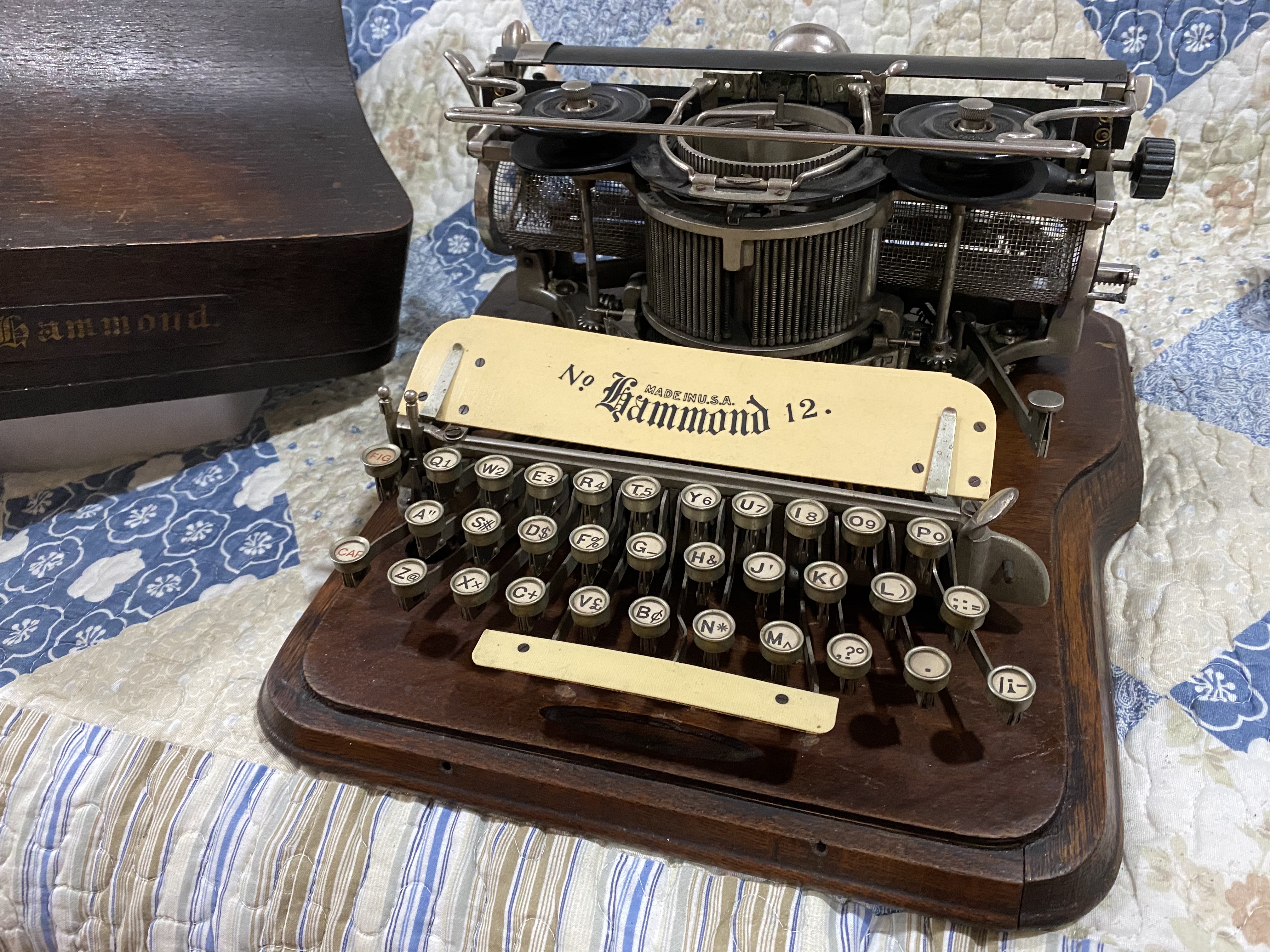
So I wanted one in my collection for historical purposes; prior to this, my earliest machine was a larger and grander-looking Hammond 12 from around 1905. That Hammond got to me, also in its original wooden case and all the way from Ohio, luckily in one piece. 

That’s the trouble with collecting any machine with scores of tiny parts a hundred years old—iron corrodes, rubber shrinks, wood warps, paint fades; screws come off, joints get fused solid, whole sections vanish, and often all you have left is a rusty lump of metal better tossed into the garbage. 

Most Blicks and other old typewriters you can find on eBay will manifest at least a few of these problems. Missing parts—obscure and ancient—can be hard to find; thankfully a global network of typewriter enthusiasts exists to offer help and advice online. Reviving a machine with frozen typebars is another major chore; but again expert repairmen still remain to come to the rescue. (Among them is our own Quiapo-based Gerald Cha, whom I’ve written about, through whose hands all my machines pass for the requisite CLA—cleaning, lubrication, and adjustment.) Shipping is yet another potentially harrowing complication—fragile, valuable, and irreplaceable machines can be turned into scrap with one drop of a poorly padded box.

It was a miracle that the Blickensderfer turned up at my doorstep whole, complete, and needing just a bit of lubrication. When Gerald typed out its first few letters in script, it was as though a mute singer had found her voice after a century.

But one more ritual had to be performed: dating the machine to the year it was manufactured (mine was an English model, made in America but sold out of Newcastle-on-Tyne). For this, typewriter collectors have an online resource to fall back on: typewriterdatabase.com, which has been painstakingly crowdsourcing and cataloguing the serial numbers of hundreds of brands of typewriters. I first had to locate the number on my Blick; it was there on the upper right of the bottom of the frame—68403. A quick check yielded the year it was made: 1896. More than liking the Blick, I now stood in awe of it.

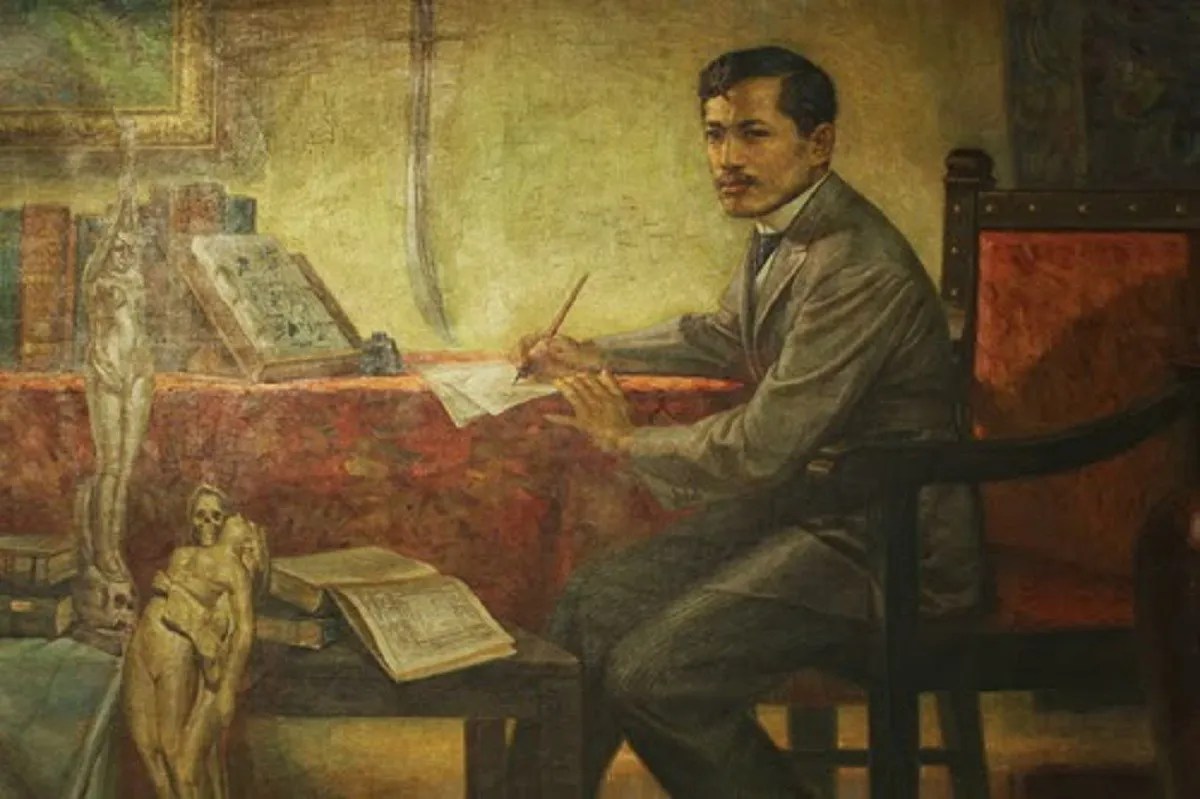
I’d like to fantasize that some of these machines made their way to Manila and figured, somehow or other, in the Revolution, although I do have to admit that the standard image of Rizal poised to write “Mi Ultimo Adios” with a quill pen in hand is much more appealing than him pecking away at a keyboard. 

(Image from joserizal.com)

I asked Ambeth Ocampo about it, and he said that while he hadn’t come across any connection between Rizal and a typewriter, our hero surely would have encountered it in his many travels abroad. Rio Almario seems to recall having seen a copy of the Katipunan’s Kartilya in typescript, but we can’t be certain when that was made. With the Americans came the Remingtons—and it’s no small coincidence that the same company made the firearms that subdued us and the typewriters we began writing in English on. I can only stare at my Blickensderfer No. 5 and wonder what stories sailed across its paper horizon.

Penman No. 424: The Analog Revival

Penman for Monday, September 27, 2021

TWO YEARS ago, just before the Covid pandemic turned the world upside down, another and much less noticed reversal took place. Ending a 33-year trend, vinyl records outsold CDs—1.24 million records toting up $224 million in global sales, according to Music Times. You’d think that grandparents the world over had launched a conspiracy to buy out the remaining stock of Mantovani, The Lettermen, and the Ray Conniff Singers, but no—70 percent of the buyers were millennials under 35.

Audiophile Eric Teel says that “Music lovers have long treated vinyl with a kind of mysticism, using terminology like ‘warmth’ to describe a special intangible quality that some say eludes digital recording technology. Getting the most out of a vinyl record requires more effort than the simple huff of warm breath and a wipe on the t-shirt that many of us (shouldn’t, but do) give a CD to wipe off fingerprints before sticking it in a player.” In other words, there’s the sound, and there’s the ritual of choosing, cleaning, and playing the record—all before putting one’s feet up on a stool and sipping coffee.

Even earlier, in 2014, someone named Alex Lenkei wrote an essay on medium.com about another kind of hole he had fallen into—manual typewriters. Explaining why he found his way back to typewriters in the age of the Internet, Alex said:

“Like people, no two typewriters are the same. Each one feels distinctly different and has a different history of grade school assignments, covert love letters, prose and poetry, government propaganda, and wartime memos. The coldness of the keys under your fingers feels like the only truth in the world and the smell of metal and grease when you dig your nose into the typebars, the cavity of the machine, feels like the home of a serious writer.

“A typewriter is a miraculous tool for disconnecting in a time when we are all constantly connected to our smartphones or tablets. When I’m sitting down at a computer, I don’t know what I’m going to do next; I can get distracted very easily. In today’s increasingly connected world, production and focus in writing are being sacrificed for Facebook updates, tweets, and blog posts. There are a thousand distractions. But with a typewriter, I know I’m writing.”

The third analog instrument that’s made a comeback is—you guessed it—the fountain pen. According to the Washington Post, “In the 1990s, high-end, limited-edition pens took off…. The recession of 2008 dried up the ink on those for a while. The current fountain pen revival, penfolk agree, has been driven by an unlikely group: millennials. Yes, a generation that wasn’t taught cursive and whose members do most of their writing on a keyboard or smartphone screen has breathed new life into the old-fashioned fountain pen.

“’There’s less writing now, but when they do write, they want a good experience….’ That means premium pen, nice paper, unusual ink—stuff that looks good on Instagram…. A lot of the pens are used for keeping something called a dot journal or a bullet journal, which is basically a fancy to-do list.”

It’s obvious from these testimonials what’s been happening, aside from the fact of genuine oldtimers like me hanging on to their tools and toys: a whole new generation has reached far into the past for a new experience unavailable in the digital world—something tactile, something hands-on, something requiring more personal investment than a keystroke or tapping on “Play.” 

That’s nowhere more evident than in our local pen fanciers group, Fountain Pen Network-Philippines (fpn-p.org), which since its establishment in 2008 now counts over 11,000 members online. I’d say at least 70 percent of active members are below 40. The group’s original focus was fountain pen collecting, especially vintage pens, and old guys like me were happy just to ogle our pen-filled boxes and occasionally write some lines with black or blue-black Quink.

Our newest and younger members are clearly more excited by swatching colorful inks that shimmer and sheen, by learning calligraphy and journaling, and by just getting together as a community to enjoy a newfound passion. In other words, it’s not so much the object but the experience that matters most, asserting oneself in a digitized universe.

I also help moderate the Filipino Typewriter Collectors group on FB, and we’ve passed more than 1,000 members in less than a year. As with pens, most of our members are young, artistically inclined, expressive, and fascinated by using old tech to do 21st-century tasks. Again, I’m the crusty hardware guy who appreciates the machines as artifacts (having written books with them ages ago), while our newbies can still be thrilled by the clatter of keys on a platen and by the words they can form on a blank sheet of paper.

I grew up with vinyl, but came relatively late to the collecting party. We have a small, private Viber group that exchanges tips on where to find certain LPs cheap. We’re not learned enough to consider ourselves audiophiles fussing over “curve” and “coloration”; we just want to relive our youth by listening to the Beatles, Brasil ’66, and Marianne Faithfull. What’s surprising is, we have some teenage members who are discovering this music for the first time on vinyl, and liking it. Suddenly, their lolos and titos are cool again. There’s hope for the future yet!

Penman No. 368: Scavenging a Smith-Corona

IMG_9518.JPGPenman for Monday, August 26, 2019
 

I HAD the privilege of being mentioned last week in the column of my historian-friend and fellow connoisseur of all things older than ourselves, Ambeth Ocampo, for having facilitated his acquisition of a 1962 Ferrari-red typewriter sporting a rare cursive typeface. Ambeth and I had run into each other at the recent Philippine Readers and Writers Festival in Makati, where we had separate events but both attended the visiting Gina Apostol’s talk on her new novel Insurrecto. Strangely enough, the last time we met was also in last year’s PRWF, where we realized to our mutual amusement that we were both carrying Agatha Christie fountain pens. (For the record, he has also been a lifelong penman.)

Occasionally—like I suppose his legions of fans do—I email him for his professional opinion of my recent antiquarian pickups, like a French book from 1706 about the Jesuits in “Nouvelle Philippines,” which got me all excited until Ambeth burst my bubble by telling me that “Nouvelle Philippines” didn’t exactly mean Manila or even Mindanao but a group of little islands out there in the stormy Pacific. That’s why I always hasten to explain that he’s the scholar and I’m the scavenger, although the things that he himself has scavenged—like Emilio Jacinto’s silver quill pen—are pretty fabulous.

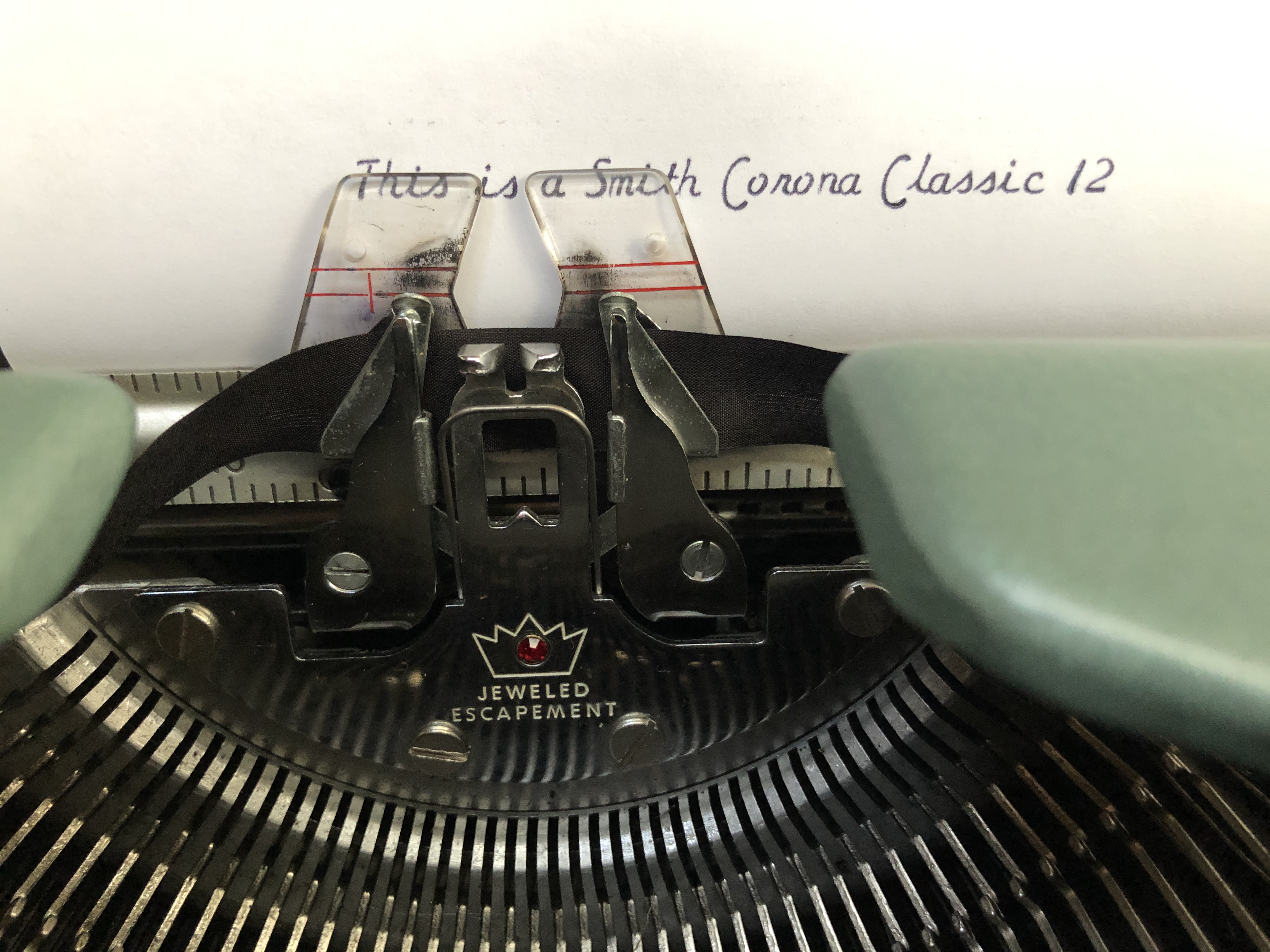
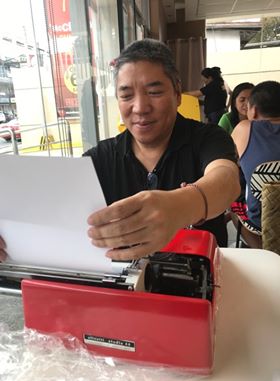
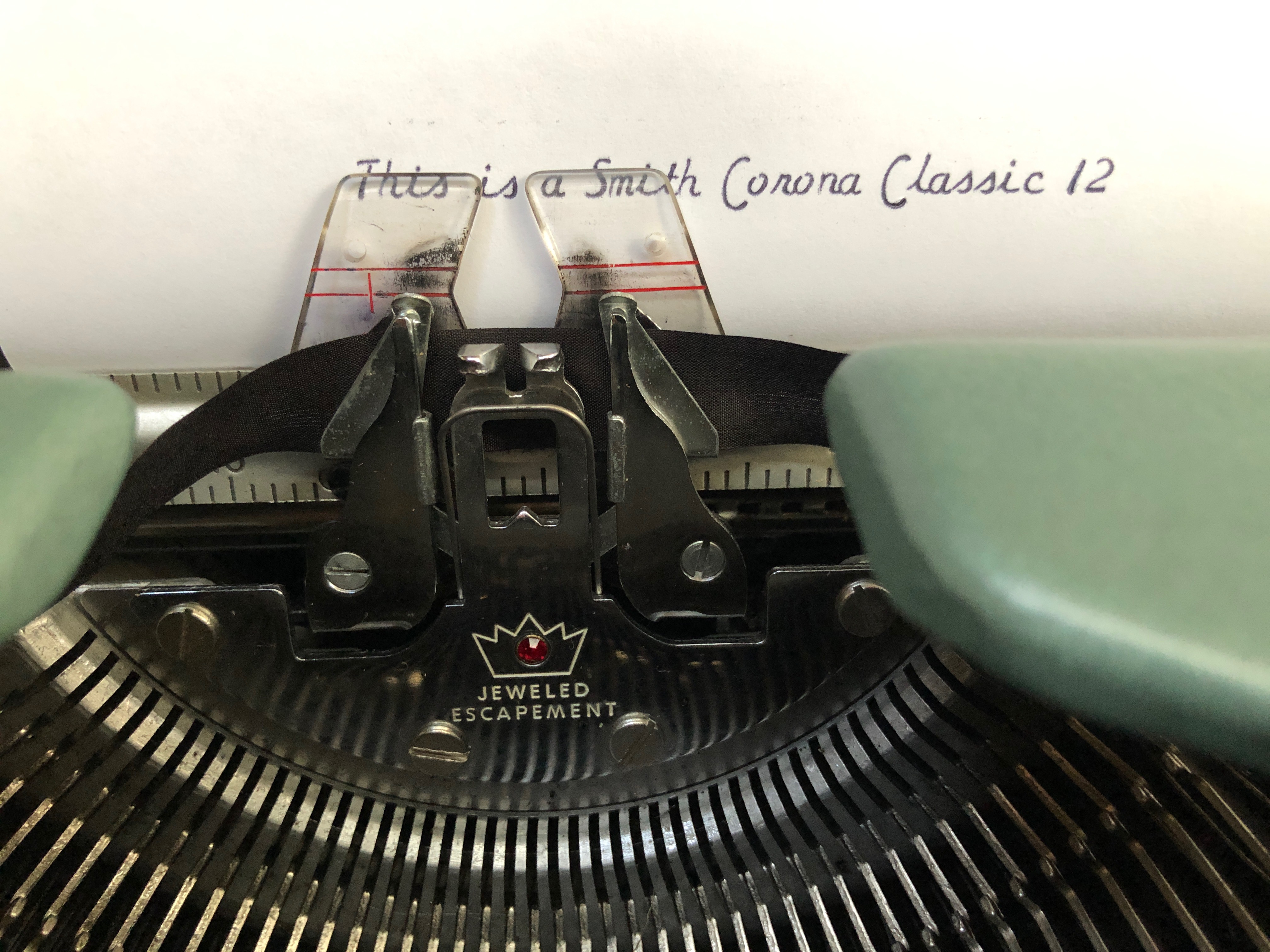
At the PRWF, he asked me if I knew of any cursive (or “script”) typewriters for sale; I said I did not, but would ask a collector-friend, Dennis Pinpin, if he had any. I have about two dozen typewriters (yegads) in my stable, and only one of them has script (that’s it up there, an SCM Classic 12), but Dennis has over a hundred, so he had to have one or two to spare. Indeed, when I asked Dennis, he did—a 1980s Olympia Traveller de Luxe, a sturdy German workhorse on which I had begun my first novel back in graduate school, and an older, fire-red Olivetti Studio. Which one should I get, Ambeth asked me. The Olivetti, I said, will likely have softer keys. The two gents met in a burger joint, had an enjoyable conversation, and a red machine crossed the table for what I knew was a bargain, Dennis being a soft touch for serious writers interested in having some fun with noisy old contraptions.

68253810_2592140314151181_4481874673470013440_n.jpg

But that wasn’t the end of my typewriter week. Like all true collectors, I keep telling myself “Okay, that was the last one,” knowing perfectly well that I’m lying through my teeth. For a couple of days midweek, I got all worked up about acquiring a 1920s Remington that had belonged to a Bulakeño associate of Jose Rizal; I had an agreement with the seller on the price and meeting place, only to be later told that some mysterious stranger had bought it from under my nose. (Ambeth, was that you?) I was beside myself with dismay and disgust, muttering oaths about palabra de honor, but then (like many of you would do, fess up) I sought to soothe my injured feelings by looking for something else to buy. I got lucky over the weekend on a sortie to Bangkal, picking up two lovely paintings by minor masters for the same coin I would have handed over for the typewriter.

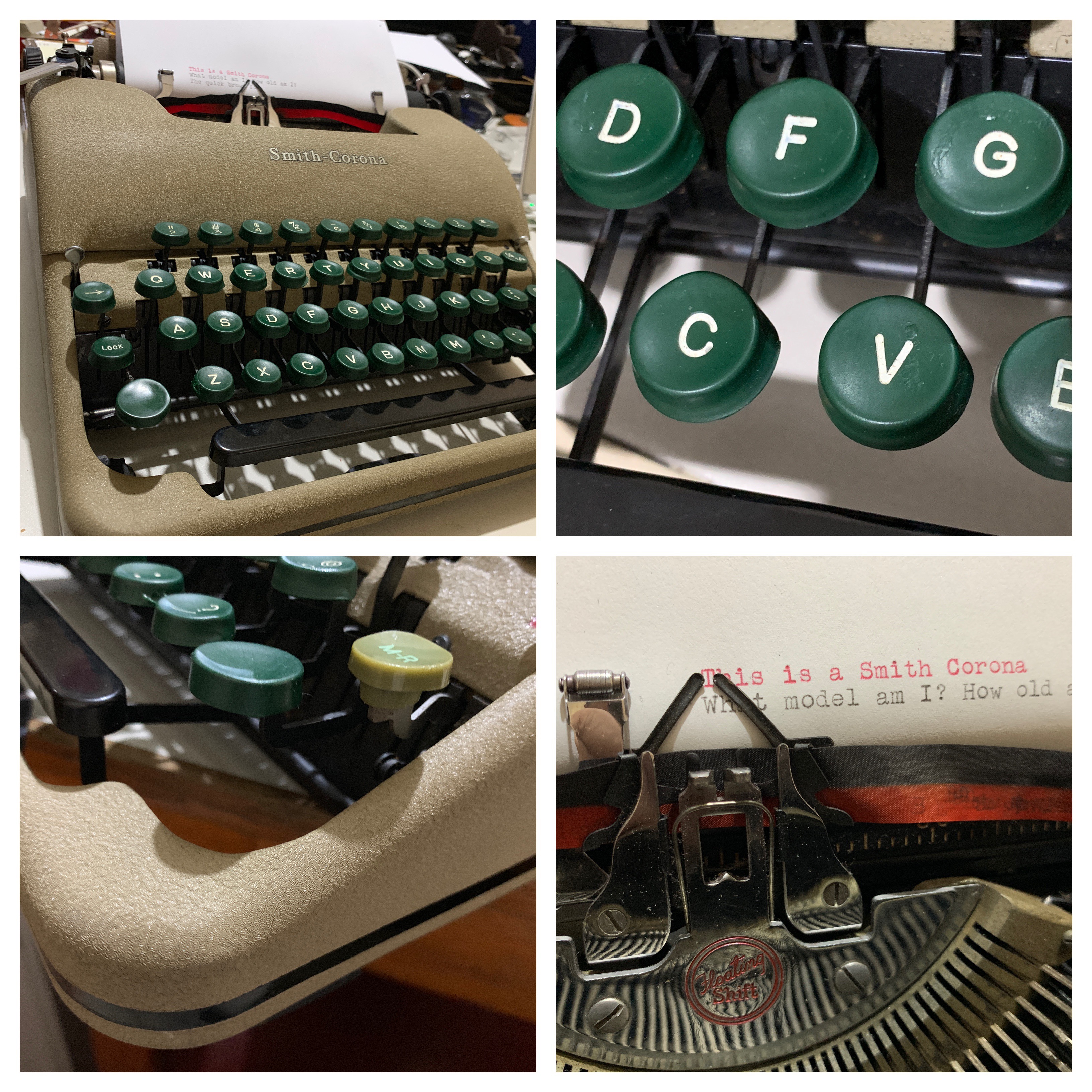
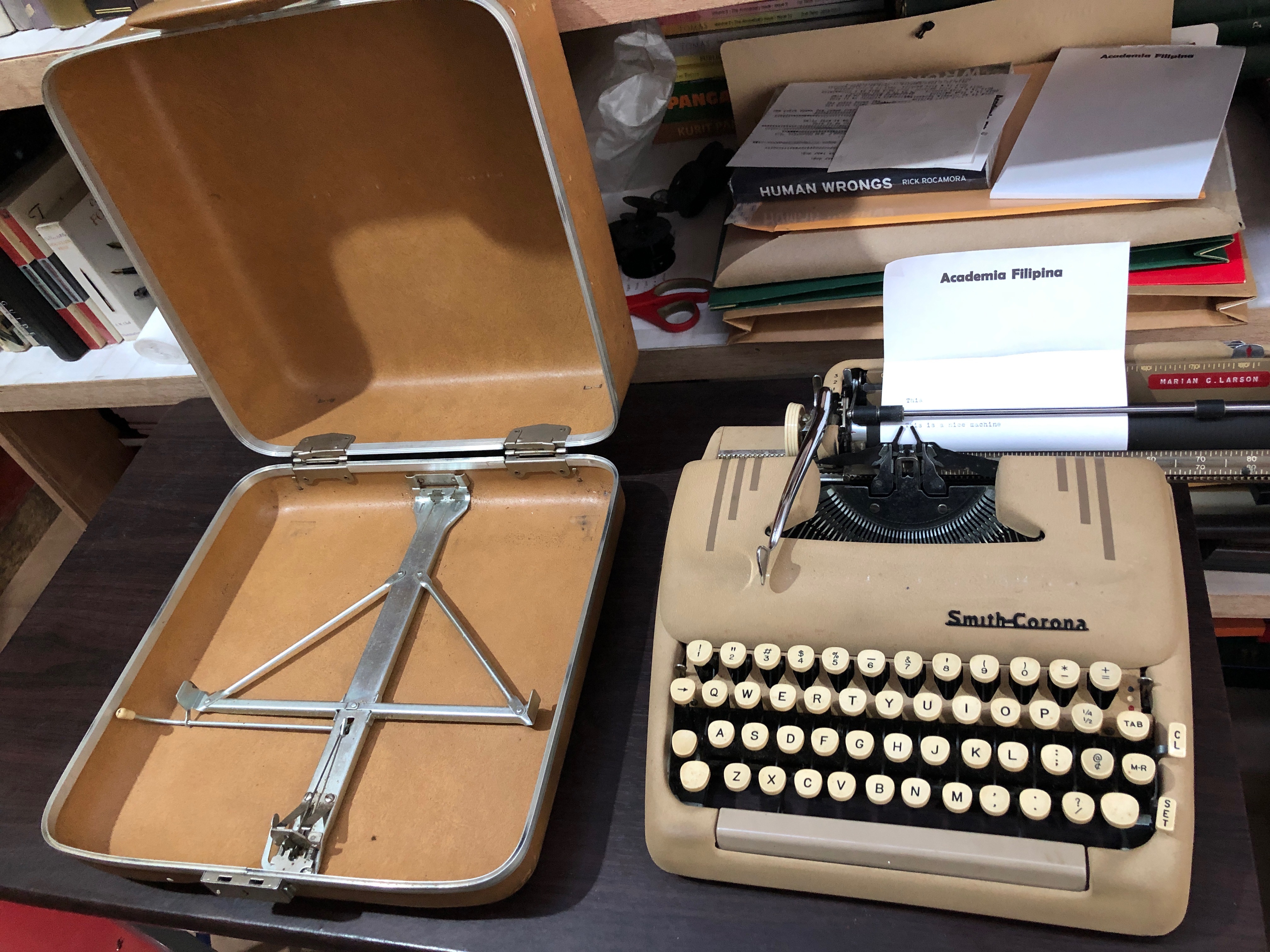
And it still didn’t end there, because—idly scanning the online ads while desperately finishing another corporate history (which puts the butter on my bread, and allows me the folly of these pursuits)—my eyes fell on a bright, clean-faced Smith Corona in a crinkle-paint finish they used to call “Desert Sand,” being offered by a seller not too far from me for the price of, shall we say, a couple of dinner-and-movie dates with Beng (sorry, Beng!). I PM’ed the seller, who said the machine had been reserved by someone else. Drat, I thought, but nobly messaged back that I respected dibs, and that if that deal fell through, then I was next in line.

The next day I got a message that the other fellow had failed to show up, and that the Smith Corona was mine to take: destiny! Now I should admit that this was going to be my sixth Smith Corona, the typewriter equivalent of either gluttony or a very unimaginative diet, but as all true collectors know (I really should have an official True Collectors T-shirt made), redundancy is never a problem, except to spouses (and thankfully Beng prefers redundancy in my collectibles to redundancy in spouses). I drove out and picked up the machine, which was being sold out of a Japan-surplus stall in Tandang Sora.

IMG_0230.jpg

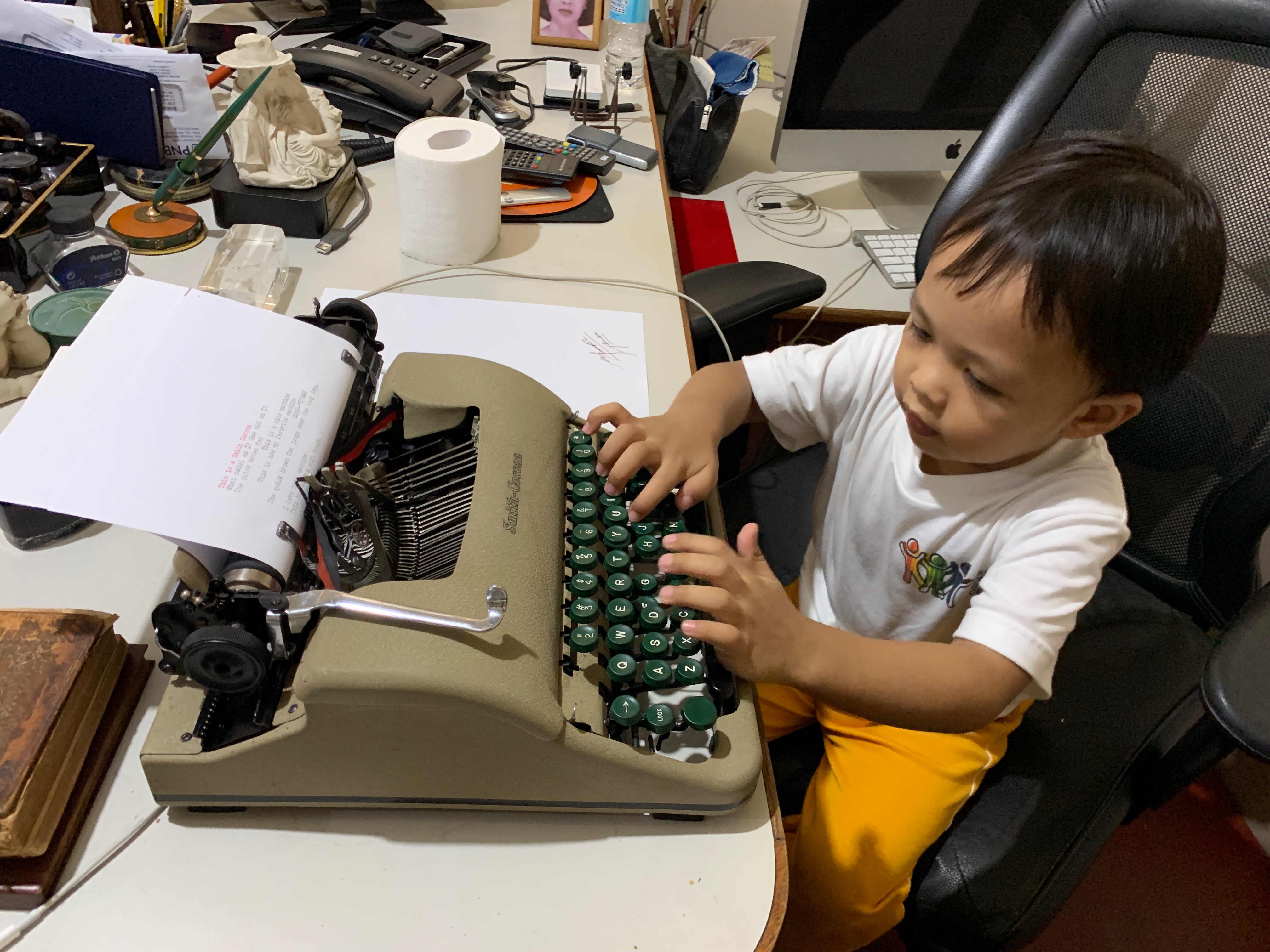
Back home I gently opened the case, and began drooling at the sight of a near-pristine Smith Corona Standard, whose serial number marked it as having been made in 1941; it had obviously never seen any action, like firing off a desperate message from a bunker in Bataan or Okinawa. After I had wiped and oiled it, the soft clatter of keys striking the platen, probably for the first time in decades, filled the air in my home office like Debussy’s Reverie. (That’s our apu-apuhan Buboy below, trying out the new toy.) How do these beauties, I would later tweet, find their way to ugly old me? I imagined Ambeth across the city, pecking away at his Olivetti, maybe wondering if Rizal had ever used a Hammond or a Blickensderfer.

IMG_0241.jpeg

(Photo of Ambeth Ocampo courtesy of Dennis Pinpin.)


Penman No. 360: Mechanical Murmurs

IMG_0241.jpeg

Penman for Monday, July 1, 2019


I’M SURE no more than a handful of us knew about it, but last June 23 was National Typewriter Day—in America, where Christopher Latham Sholes was granted a patent for the new writing machine in 1868. While Sholes had been preceded by many others touting ideas for some kind of mechanical writing, it was he—along with Samuel Soule and Carlos Glidden—who put the first commercially viable typewriter together (in Milwaukee, famous for Harley-Davidson motorcycles, Miller, Pabst, and Schlitz beer, and Briggs and Stratton engines, and briefly my home 30 years ago).

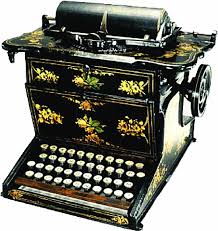
The typewriter would go on from that first Sholes and Glidden machine to revolutionize writing, industry, and communication over most of the 20thcentury, and bring forth names like Remington, Smith-Corona, Underwood, Royal, Olympia, Olivetti, and Hermes, among many others. (Remington, a gun maker, bought out Sholes even before his invention came out.) But few of its descendants would show the charm of that first typewriter (then spelled as two words—and would later refer to the person typing, or the typist, as well), its glossy black front and top bedecked with colorful flowers.

Unknown.jpeg

The Sholes and Glidden came out on the market in July 1874, and it must have been such a hit that not even a year later—writing from Hartford, Conn. on March 19, 1875—a man who signed as “Saml. L. Clemens” would claim that it was causing him too much trouble:

“GENTLEMEN: Please do not use my name in any way. Please do not even divulge the fact that I own a machine. I have entirely stopped using the Type-Writer, for the reason that I never could type a letter with it to anybody without receiving a request by return mail that I would not only describe the machine, but state what progress I had made in the use of it, etc. etc. I don’t like to write letters, and so I don’t want people to know I own this curiosity-breeding little joker. Yours truly, SAML. L. CLEMENS”

Unknown.jpeg

(The writer, of course, was better known as Mark Twain, whose tongue-in-cheek endorsements must have been much in demand, because almost 30 years later we find him scribbling again from New York, on Oct. 1, 1903, this time on behalf of Conklin fountain pens and their famous “crescent” fillers, which prevented pens from rolling off the table: “Dear Sirs: I prefer it to ten other fountain pens, because it carries its filler in its own stomach, and I cannot mislay even by art or intention. Also, I prefer it because it is a profanity saver; it cannot roll off the desk.”)

It’s probably safe to assume that hundreds of millions of typewriters must have been manufactured since Sholes and Glidden made their debut, spanning all shapes, sizes, and functions, from steel behemoths to plastic cuties, from manual to electric to electronic, offering all manner of type from all-caps to cursive. Of course, word processors and computers effectively buried typewriters and the industry behind them from the 1980s onwards—except for pockets of enthusiasts and personal users, such as the online Antique Typewriter Collectors group to which I and a few other Filipinos belong. (And many thanks to my friend Dennis Pinpin for his post reminding me of National Typewriter Day.)

IMG_9481.jpeg

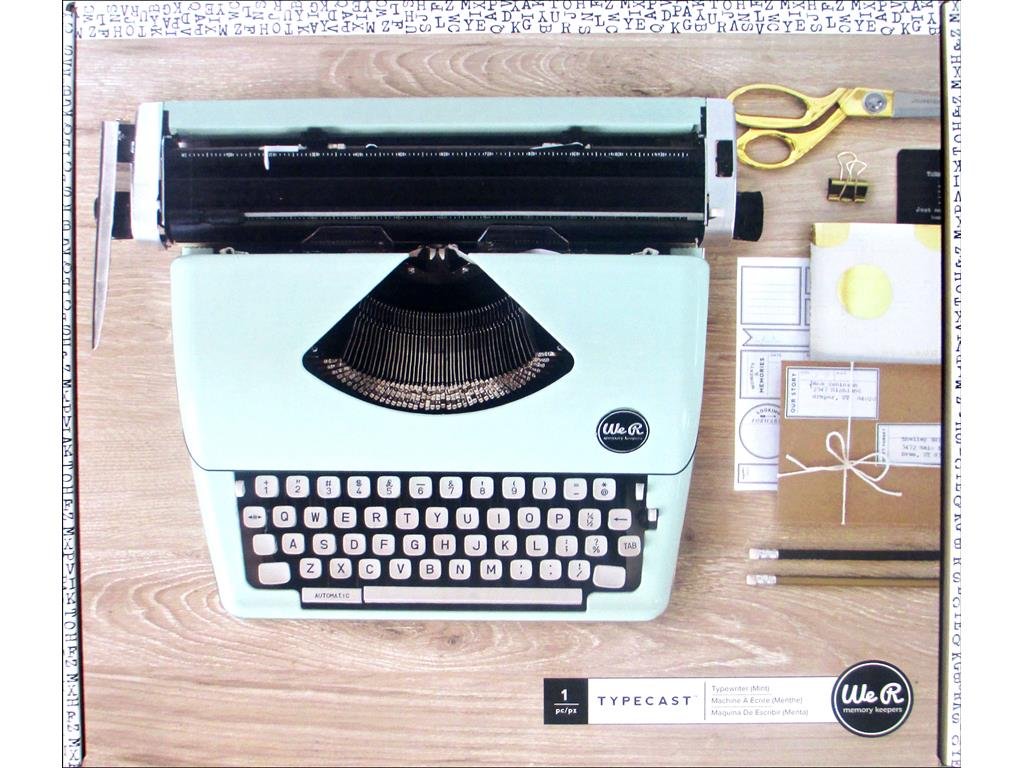
Eight years ago I wrote a requiem for the typewriter—prematurely, as it turned out—when the Indian manufacturer Godrej and Boyce, which was still making 12,000 machines a year in 2009 mainly for the Indian government, announced that it was closing shop. But lately a new manual typewriter (made, where else, but in China) , has been popping up online under the “We R Memory Keepers” brand; one or two young people I know have picked it up—attracted, no doubt, by its cuddly retro profile and its pastel colors—but I have to hasten to add that based on the expert opinion of my ATC friends, your money would be far better spent on a vintage Olympia or Smith-Corona, given the flimsiness of the WRMK’s construction. In other words, you can’t keep memories with shoddy engineering.

71qf+SpfUaL._SL1024_.jpg

But why even keep using typewriters when computers are so much more available and convenient? For some collectors and enthusiasts, it’s the very isolation of the machine and of the typing itself—removed from email, Facebook, and all such distractions—that recommends it for more thoughtful writing, especially for poems, novels, and personal correspondence. As a professional writer and editor working on half a dozen books at a time, I can’t afford to be that romantic; I love my fountain pens and typewriters, but do all my serious work on my Macs, and typically turn to my Olympia Traveller or my Olivetti 32 to fill out forms and address envelopes.

IMG_0205.jpeg

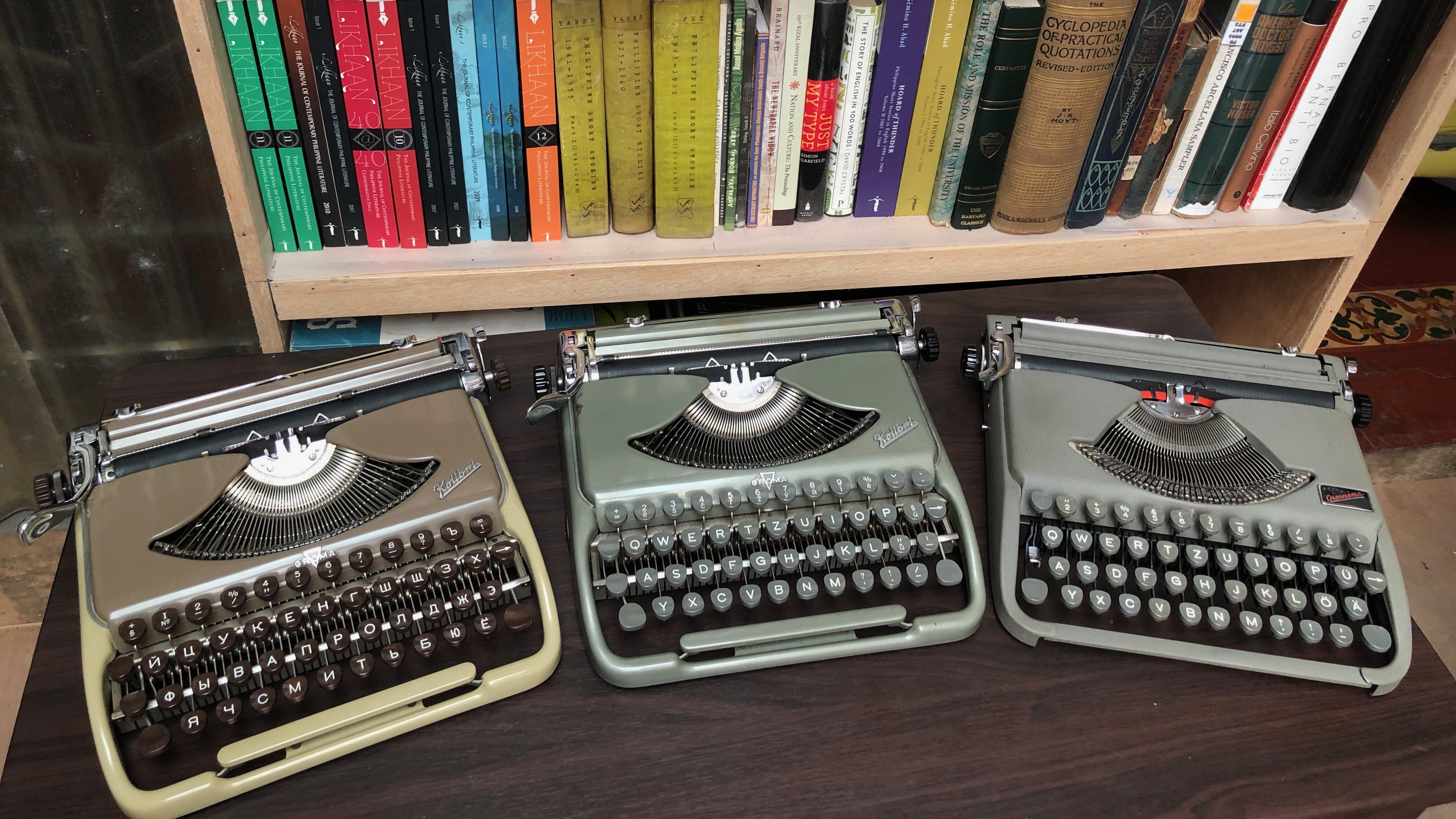
But then again what have I amassed over 20 typewriters for (don’t say it—one friend has 70, another a hundred), if not for the romance of hearing a mechanical murmur from the past? As with my Parker Vacumatics from the 1930s, I have to wonder what secrets my typers wrote—especially my current pet, an impossibly thin, all-steel Groma Gromina made in East Germany around 1955.

Sometimes I type a line—a nonsense line, anything—just to hear that reassuring “ding!” at the end of it. Can we say, thereby, that life has no meaning—or that the meaning is in the gesture itself?

IMG_9518.jpeg


Penman No. 359: Retrieval and Repatriation

arts3-pineda-paguia-buenventura-custodio_2019-06-23_16-53-03.jpg

Penman for Monday, June 24, 2019


CHATTING WITH a friend about my growing collections of old books and paintings the other day, it struck me how so many of my Philippine-related items were sourced abroad, mainly from the US, Spain, and the UK. In other words, these materials left the country one way or the other ages ago, and are only now being repatriated by those like me who pick up other people’s throwaways with a gleeful passion. And beyond just wanting to acquire some new old thing, we collect with a special mission—to find, retrieve, and restore valuable or at least interesting pieces of Filipiniana, so they can be enjoyed by another generation of Filipinos.

I have friends who have the kind of checkbooks and connections that allow them to score and bring home stray Lunas and Hidalgos from some obscure Spanish estate or farmhouse. I’m glad that players like them exist to compete with the high rollers at Sotheby’s and Christie’s, but I’m clearly not in that league, so I look for far more plebeian objects: books written by Filipinos or about the Philippines, and paintings by Filipino artists.

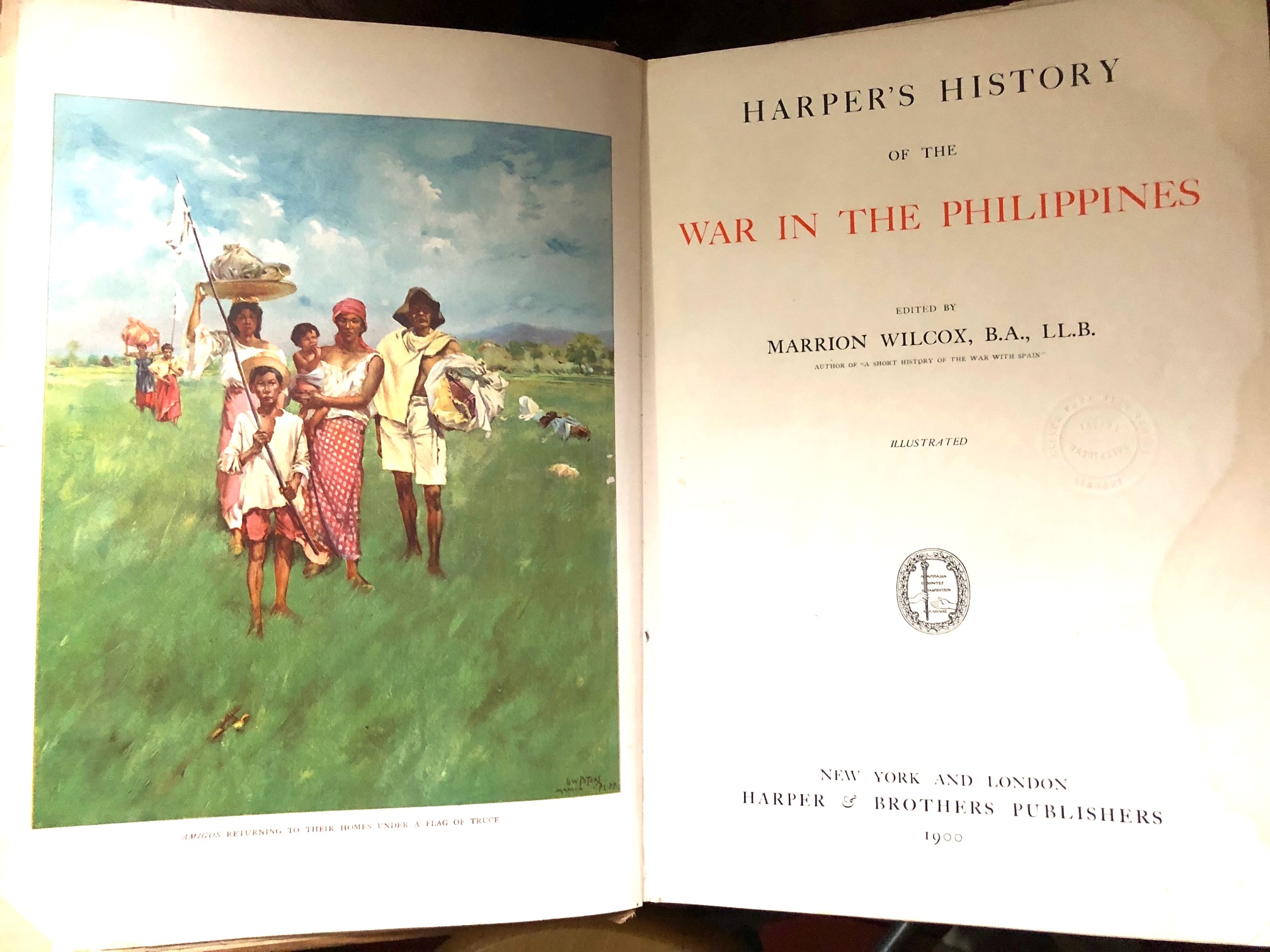
The books are far more plentiful than the paintings, of course. At the turn of the 20th century, following the American occupation of these islands, there was great publishing interest in accounts of America’s first imperialist adventure, as well as in depictions of life in the new colony. Easily the most available antiquarian books you can find on the Philippines will have to do with that period, sporting triumphal titles such as the large two-volume Our Islands and Their People (1899), War in the Philippines and Life and Glorious Deeds of Admiral Dewey (1899), and Under MacArthur in Luzon or Last Battles in the Philippines (1901). My best acquisition in this department is the huge, elephant-folio-sized Harper’s History of the War in the Philippines (1900), which has superb illustrations, but quite frankly, as a Filipino reader, I find the propagandistic prose barely tolerable, with only my indulgent humor to carry me through passages deploring our “numerous piracies and cannibalistic feasts.”

IMG_6451_2.jpeg

I’ve had more fun and a deeper sense of satisfaction tracking down the foreign publications of our literary masters like Carlos Bulosan, Manuel Arguilla, Jose Garcia Villa, Nick Joaquin, and Bienvenido Santos. Like many writers of their generation, they saw publishing in America as a form of validation, and while we may argue today that we needn’t look to New York for approval, you can’t deny that surge of pride when you see those names in, say, a 1953 issue of Partisan Review alongside the best of the West.

It was, in fact, my discovery of an issue of Story magazine from the early 1930s some 30 years ago, when I was a graduate student in the American Midwest, that fired up this enthusiasm for retrieval and repatriation. That issue contained the Baguio-based Sinai Hamada’s iconic story “Tanabata’s Wife,” and I had the pleasure of presenting his family with that copy years later. I would stumble on the odd book about Dewey and his exploits at antique malls for 50 cents, and bring that home. In Edinburgh years later, I found a postcard of Filipino women, and turned that into a story titled “We Global Men.” Sometimes you just have to look very closely; scanning some antique documents being sold online, I spotted a reference in a 1578 travel book to “von der Spanier mache in den Philippinischen Insuln,”and was able to pick that up for a few euros.

Most delightful have been the paintings that I’ve come across on eBay and other auction sites—among them, a purplish treescape by the great Jorge Pineda from 1937; a patriotically themed harvest scene by P. T. Paguia from 1945; a moonlit near-monochrome by Cesar Buenaventura from 1956; and a Cavite seascape by Gabriel Custodio from 1965. Probably brought over to the US by American servicemen or by tourists looking for souvenirs, and less regarded by their next owners, these artworks turn up like flotsam on the shores of eBay (or shopgoodwill.com, where the Custodio appeared, being sold out of a Goodwill store in Spokane). And how do I know they’re not fake? The answer is, I don’t, not until I actually have and see them, but then I’m a poker player, and quite used to going all-in on a solid hunch. (The Pineda was a tricky gamble, but it’s the original frame from the period—with the seal of the well-known but long-defunct frameshop in New York—that provided the validation).

I’m not the only person on the hunt for these lost treasures, so they don’t necessarily come dirt-cheap, and shipping poses special challenges, but holding them in your hands after they’ve crossed decades and thousands of miles brings a matchless thrill. Like Filipinos themselves—the Ulysses of this age, global wanderers who inevitably come home—these pieces best belong where they are loved.


Penman No. 358: A Feast for Book Lovers (2)

IMG_0731.jpg

Penman for Monday, June 17, 2019


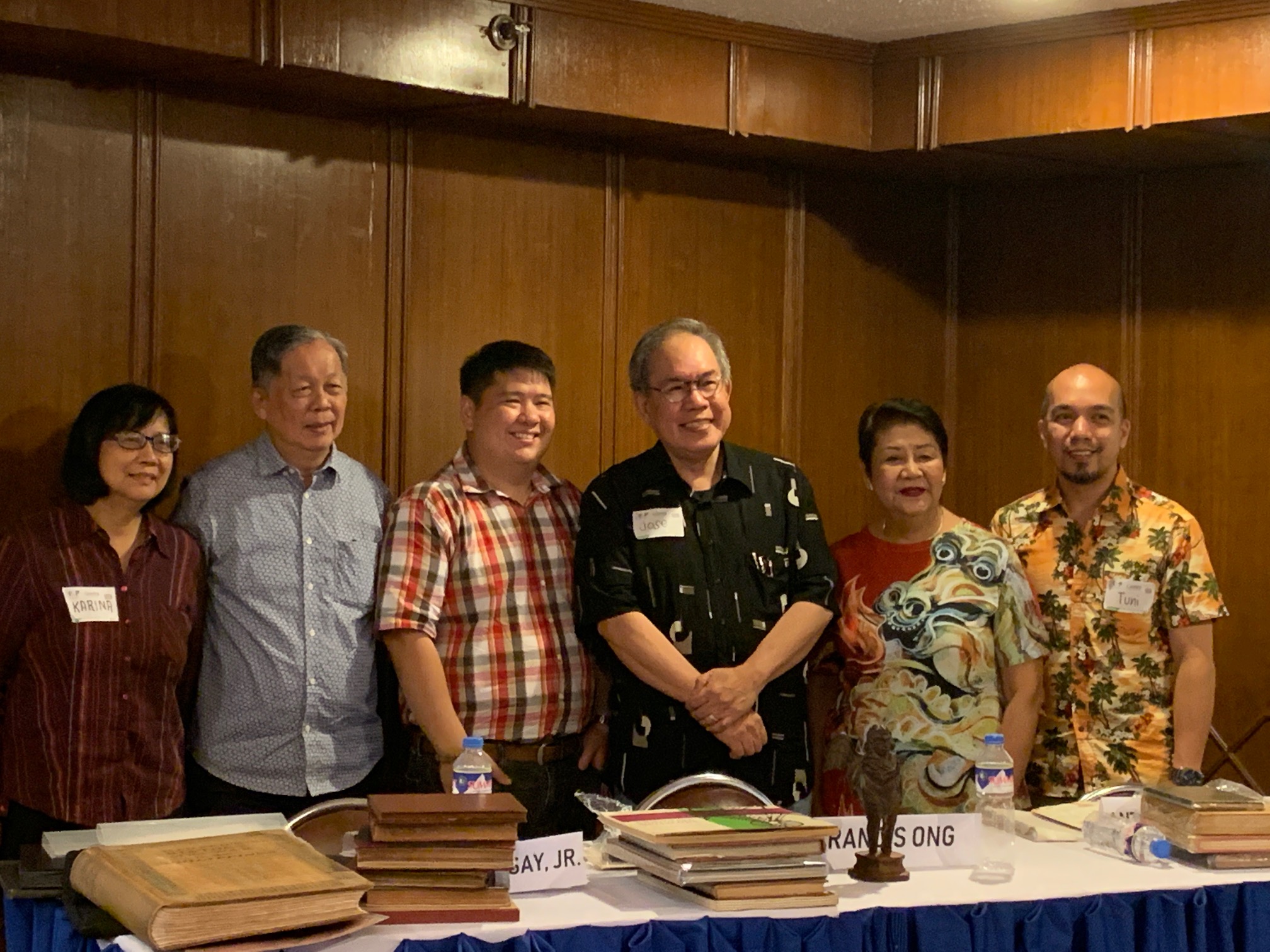
LAST SATURDAY, at the 10thPhilippine International Literary Festival sponsored by the National Book Development Board, I joined a panel discussion on “Advanced and Antiquarian Book Collecting,” and since most of you weren’t there to hear me and my fellow panelists Anthony John Balisi and Francis Ong, I’d like to share part of what I said.

As most of my readers know, I’ve long been a collector of fountain pens, especially vintage ones going back to the early 20thcentury. I still have a couple of hundred pens in the collection, which I’ve begun trimming down for the inevitable day when our only daughter will have to deal with all the junk her weird papa left behind. Well, she’s going to have to deal with a lot more than pens, because over the past few years or so, I’ve also begun to amass collections of midcentury paintings, typewriters, and, yes, old books.

I’ll talk about those other afflictions some other time—although I’m sure you see a pattern somewhere there. To focus on book collecting, let’s start with the basic proposition that people buy books to read, usually for education or entertainment. That’s how all book collectors begin: as readers who enjoy the word on the page. But collectors are excited by more than what books contain or mean; they enjoy the book itself as a cultural artifact (and yes, as a tradeable commodity), as a physical manifestation of ideas, and as a work of art and technology in itself.

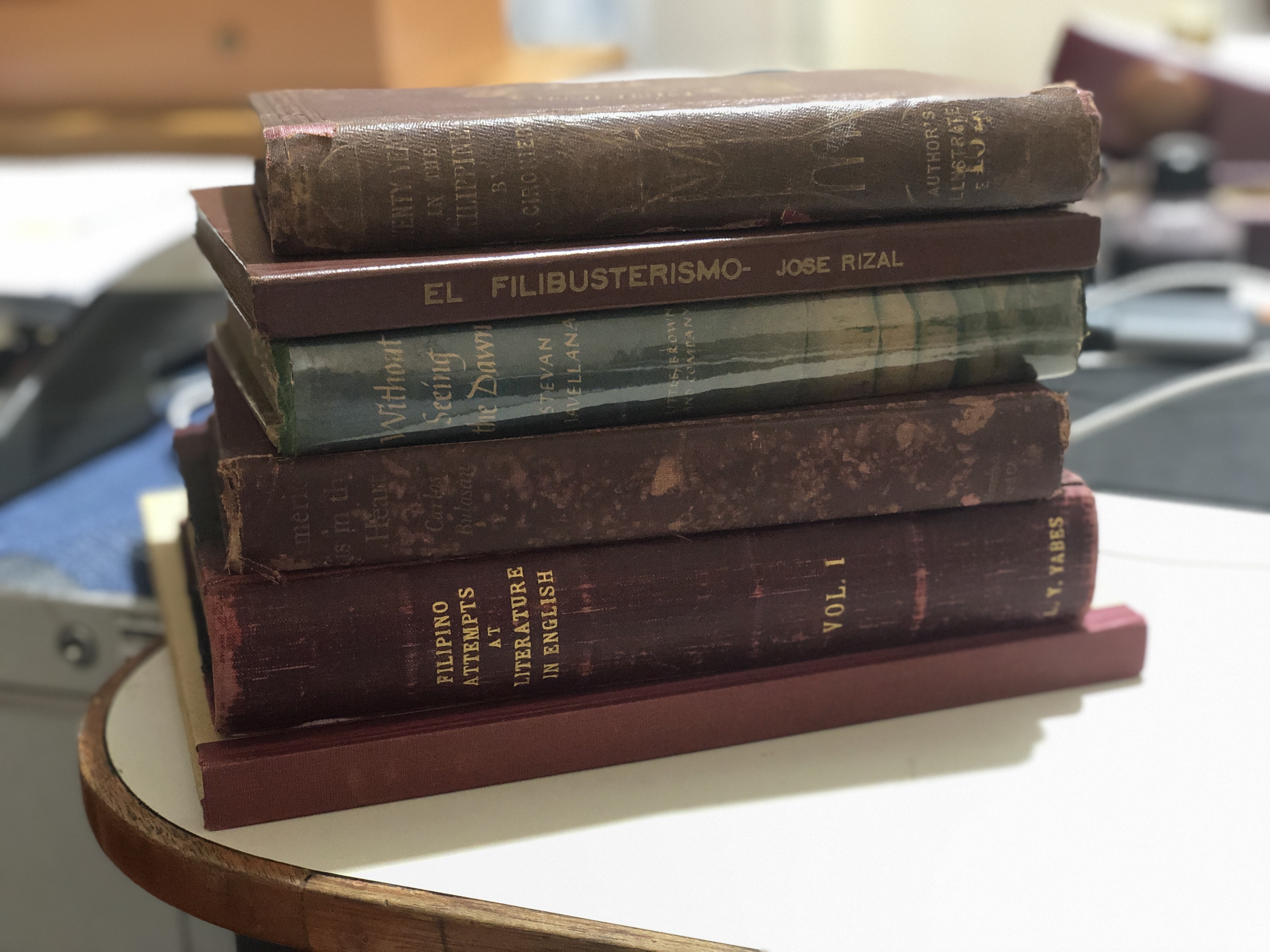
Book publishing has a long and fascinating history, and important books—like the Gutenberg Bible (1455), our own Doctrina Christiana (1593), and Jose Rizal’s Noli Me Tangere (1887) and El Filibusterismo (1891)—are much sought after. Because of the sheer number of books published since Gutenberg, collectors tend to focus on specific areas like art, religion, history, geography, cooking, horticulture, and such.

I’m not even going to pretend that I’ve read or can read many of the books in my library; some are in languages like Latin or old French and Spanish, and while I can guess at some meanings with the help of a dictionary, I’d be better off with a readily available translation. So why do I buy and keep these books? Why even go for, say, first editions when cheap copies of modern editions abound?

It’s because I feel like I’m saving many of these books from oblivion, and that it’s important for future generations to see and appreciate these texts in their original state. In fact, many items in my collection began as props for teaching; you can’t imagine how surprised and thrilled my literature students are when I show them an actual copy of The Gentleman’s Magazine from 1773 when we discuss what the early colonists in America must have been reading, or a 1935 issue of The Prairie Schooner where a story by Manuel Arguilla titled “Midsummer” appeared. It’s what I’ve been calling “the materiality of literature,” its occurrence as a phenomenon as physical and as necessary as the Internet and satellite TV today. Like I told a historian-friend who couldn’t figure out why I was obsessed with finding original texts of easily accessible books, “The object is the object.”

Most of my books these days come from eBay, which gives me access to a global trove of books, many of them obscure and unappreciated where they are. I’ve gotten choice books from as far as Portugal and Guatemala this way. But some of my most remarkable finds have been local pickups—like books signed by Amado V. Hernandez and Atang de la Rama, delivered to me in Intramuros by a seller on a bicycle, or a signed first edition of Carlos Bulosan’s America Is in the Heart, which I bought in Jollibee Philcoa.

For show-and-tell last Saturday, I was happy to share some of these best finds:

  1. An Abridgement of the Notable Works of Polidore Vergil by Thomas Langley. Published in London in 1551, it’s the oldest volume in my collection—found, of all places, in olx.ph, and picked up by me from its seller in Cubao one dark Christmas Eve. (And how does a 470-year-old English book of essays end up in Cubao? Via Paris, where the seller’s mother worked as an OFW, and was gifted by her client with the book.)
  2. El Filibusterismo by Jose Rizal, in the second edition published by Chofre in Manila in 1900. Another local pickup, found online.
  3. America Is in the Heart by Carlos Bulosan, another copy of the 1946 first edition, second printing, gifted to me by Greg Brillantes to replace the copy I gave my daughter as a wedding present.
  4. Without Seeing the Dawn by Stevan Javellana, a 1947 first edition, signed by its first owner Zoilo Galang, our first Filipino novelist in English, found in Megamall.
  5. Doctrina Christiana, a facsimile edition published by the Library of Congress in 1947, very soon after this oldest of Philippine books joined the LOC collection, my copy signed by its donor and benefactor, Lessing J. Rosenwald, found on eBay.
  6. Filipino Attempts at Literature in English, a one-of-its-kind compilation put together by a young Leopoldo Yabes in the 1930s, who gifted it to poet Jimmy Abad, who passed it on to me for restoration. (This book, like many others, will be bequeathed to the University of the Philippines.)

If these precious books survive me—and they will—then my mad chase for them will make final and total sense.

IMG_2193.JPG