Qwertyman No. 132: A False Horizon

Qwertyman for Monday, February 10, 2025

I DON’T know why, but like the proverbial bad penny that keeps turning up (English teachers: note the British idiom), every few years, some Filipino school announces its adoption of an “English-only” language policy on its campus, ostensibly in the service of a sublime objective such as “global competitiveness” or “global competence.”

This time around, it’s the Pamantasan ng Cabuyao that’s enforcing the rule. PNC president Librado Dimaunahan has issued a memo declaring that “In line with our vision of developing globally competitive and world class students, the Pamantasan ng Cabuyao (University of Cabuyao) is now an English-speaking campus starting Feb. 03, 2025…. All transactions and engagements with officers, students, employees, and workers should be communicated in English, whether written or otherwise. For strict compliance.” What he wanted to create was no less than “a strong English-speaking environment.” 

A few years ago, it was Cavite State University which required its students, teachers and staff to speak exclusively in English or face punishments like getting your ID confiscated and having to sing the CvSU hymn (in English, of course). Filipino could be used only by maintenance workers—and by others, but only in the restrooms and cafeteria.

I’m not going to add to the brickbats that these ideas have already received, not unreasonably. But I will add my two cents’ worth (my, where do these “brickbats” and “two cents” come from?) to the conversation, as a lifelong user and teacher of the language.

I have a PhD in English—something I don’t often bring up because it sounds so pompous and presumptuous—earned in America where, to my smug satisfaction and my classmates’ consternation, my professor would single out my prose for, among others, its perfect punctuation. I was the only one in our graduate literature class who could explain the difference between parataxis and hypotaxis (no, nothing to do with Yellow Cabs and Uber). Was that global competitiveness? I guess so. Was I proud of my English language skills? Of course. Did it make me or the Philippines any richer? Not a dollar more. Is this what a national language policy should be about? Heck, no.

I’ve done well in English not because I was forced to, but because I love the language, and languages in general. I should have loved Spanish—discovering its beauty too late, when I had to read and translate Federico Garcia Lorca for a grad-school exam—but I didn’t, because we had been forced by our curriculum to take so many units of it (24, in my mother’s time). I started on German and French in high school and college and am picking German up again on Duolingo, in preparation for the forthcoming Frankfurt Book Fair. (I write plays and screenplays in Filipino, despite being born in Romblon.)

What I’ve realized from studying these languages and from a lifetime of writing, speaking, and using English is that in our country of over a hundred languages, English can’t be taught and learned well by exclusively using English. I’m learning German on Duolingo using English.

I don’t mind saying that when I teach creative writing or literature in English, I pause when my students can’t seem to understand what the text is saying—and then we pursue the same line of inquiry in Filipino, and everybody goes “Ah!” It makes simple teaching sense. You can’t get more out of a student—in English—if he or she can’t understand or even recognize the problem, in English. 

And just to be clear, these are questions of comprehension and interpretation that even native speakers of English would have a hard time with. (How do I know? I taught the American short story to American undergraduates in Wisconsin.) These are questions like “So what’s John Updike saying about the position of the rebel or nonconformist in society at the end of his story ‘A&P’?” That’s best answerable if you also discuss as we do what America was like in the 1960s, with Vietnam, Woodstock, the civil rights movement, and the moon landing in the background. (I always tell my students that we’re not studying American literature and history to become Americans, but to become better and wiser Filipinos.) 

Boomers like me like to recall that in many private schools of our time, students were fined five centavos for every instance they were caught using Filipino. Some may find that quaint or even charming, but if you think anyone learned and loved English because of these stupid rules, think again. Students learn good English from good teachers who don’t teach English as a grammar rulebook but as a road map or even a cheat sheet to an adventure.

English is best learned along the way of learning something else—like how the world works, in science and literature—as a key to unlocking knowledge and meaning. English proficiency all by itself is a non-goal, a false horizon that can delude people into believing that they’ve arrived. Arrived where? What for?

All the English in the world isn’t going to turn the Philippines into an economic powerhouse—which Japan, China, Russia, and Germany managed to become without a mandatory word of English in their curricula from decades back. Better English could make us become more employable as waiters, domestic helpers, and seamen—and I’m not downplaying this, because the language does give us an advantage in those markets—but these jobs, noble as they are, aren’t what universities were made for.

All the English in the world isn’t going to drive a moral spine up the backs of our leaders. Intolerable as it was, one president’s foul mouth and boorish manners may not be far worse than a General Appropriations Act legitimizing the wholesale thievery of people’s money in perfectly edited English. 

We can speak all we want with an American accent—only to realize that, in Trump’s America, where one of his appointees has declared pointblank that “It takes a competent white man to get things done right,” the color of your skin still matters more than whether you can pronounce “Adirondack” or “tortoise” correctly. Trump’s maniacal edicts and pronouncements—cutting foreign aid, expelling Palestinians so he can turn Gaza into an American beach resort, and turning the FBI and the DOJ into his personal security force and loyalty police—have all been made in his lazy, slurring English, each word delivering chaos and disaster with as much consequence as Hitler’s Nuremberg rants.

More shameful than lack of proficiency in English is lack of proficiency in one’s own language, which I see in the children of parents anxious to “globalize” their kids without mooring them first in their own culture. Those children will be maimed for life, insulated from and unable to communicate with or relate to their common countrymen. We need our own languages to understand ourselves.

Teach good values and good citizenship. Even if that student’s English turns out less than stellar, our country can’t be worse off.

Qwertyman No. 77: Taylor Swift 101

Qwertyman for Monday, January 22, 2024

THERE WAS a lot of snickering around the local Internet a couple of weeks ago when the University of the Philippines announced that it was going to offer a course on the American megastar Taylor Swift. “Why???” seemed to be the most common hair-trigger response, expressing consternation over the need or rationale for such a course. “This is where your taxes go,” lamented another netizen.

The clear suggestion was that spending a semester—that’s 16 weeks—on a pop phenomenon like Taylor Swift was a grandiose and frivolous waste of teaching time and people’s money, scarce resources better allocated to studying worthier topics like, say, Gomburza, the South China Sea, endemic species, and sovereign wealth funds. (Not incidentally, all these other topics are already covered in other UP courses, so no one need worry that they’re being sacrificed for in-depth analyses of “Cruel Summer” or “You Need to Calm Down.”)

Before we go any further, I have to declare that I’m no Swiftie, as her adoring fans call themselves, and I had to look up and listen to those two titles I just mentioned. At my age, my idea of a diva I’d pay good money to listen to is Barbra Streisand, Laura Fygi, Lisa Ono, and Dionne Warwick, none of them below 60. I have to admit that the only Swift song I was aware of before she exploded into global stardom was “You Belong with Me,” which my then-teener niece Eia used to bounce her head to (an effect that, I’ve since discovered, many Swift pieces tend to induce). 

Still, my instinctive reaction to the announcement of the UP Swift course wasn’t “Why?” but what I suppose is the academic’s default of “Why not?” When I looked into how the course was going to be taught by its instructor—Cherish Aileen Brillon, a mass communications specialist who had previously published a paper on, among others, “Darna and Intellectual Property Rights”—I could see that this wasn’t going to be just party time for 15 kids listening through Taylor Swift’s ten albums (yes, I counted) over a semester, but serious study connecting material from the singer’s songs and of course from her life as a 21st century celebrity to our reception of her and whatever she represents, as Filipinos. 

The course—an elective under the BA Broadcast and Media Studies program of the Colle of Mass Communication—will focus on “the conception, construction, and the performance of Taylor Swift as a celebrity and how she can be used to explain our and, of course, media’s relationship with class, politics, gender, race, and fantasies of success and mobility…. Gender should be part of the discussion because Taylor is a woman operating in a highly patriarchal and misogynist entertainment industry,” Brillon told the STAR in an earlier interview. “Transnationality is also a large part of the discussion,” she added, defining the term as a “media-driven flow of goods, products and services from various nations” in this globalized age. “Celebrities have always been transnational anyway. The class will look into the transnationality of Taylor and how Filipinos are appropriating their relationships with celebrities.” 

If you know anything about what’s being taken up in universities worldwide today as media and cultural studies, that mouthful I quoted above is heavy-duty academic work of the kind I myself may not be too keen to undertake, but the results of which I’d be deeply interested to find out. And that because there’s nothing more pervasive and influential in our world today than the media, which includes the Internet, TV, radio, and newspapers, plus all the advertising, the tweets, the Facebook feeds, the Spotify music, and the Amazons, Lazadas, Shopees, and eBays you find in them. How the media draws our attention and often subliminally persuades us into buying certain products and ideas can’t be worthier of academic research and investigation. 

And it’s not as if this hasn’t been done before. New York University, Stanford, Arizona State University, the Berklee College of Music, Rice University, UC Berkeley, the University of Florida, the University of Delaware, and Brigham Young University are among the American universities offering Taylor Swift courses from different approaches ranging from the music itself to social psychology, marketing, and literature.

So, okay, they’re Americans—why us Filipinos? Because the singer has a huge Pinoy fan base, despite the slight that local Swifties felt when she left the Philippines out of her 2024 Southeast Asian “Eras” tour, for which well-heeled Pinoys then rushed online to book expensive ticket packages for her shows in Singapore. (She’s been here twice before, in 2011 and 2014.)

But never mind Taylor Swift. Back in 1995, scholars attending the first International Conference on Elvis Presley at the University of Mississippi’s Center for the Study of Southern Culture got academia “all shook up,” according to reports, with papers bearing titles like “A Revolutionary Sexual Personae: Elvis Presley and the Acquiescence of Black Rhythms,” which discussed sensuality and spirituality in Elvis’s acts.

And then, of course, there are all the college courses on Frank Sinatra at Suffolk University, and on the Beatles at MIT and Oxford, among many other places. At Carnegie Mellon University, flautist and Prof. Stephen Schultz alternates teaching 18th-century Baroque music with a class on the Beatles; guess which class attracts 200 students a semester.

I’m sure that, despite these precedents and rationales, there will remain many skeptics who’ll still believe that all this academic mumbo-jumbo is just an excuse for both professor and student to kill an hour and a half doing nothing but nodding their heads to pop tunes and chatting about which song’s lyrics were cooler. (Don’t be too surprised, but that’s also basically what happens when we discuss poetry and fiction, sans the rhythmic nodding.)

But then you could be talking about Taylor Swift and her songs—or you could be talking about how Adolf Hitler and his deadly message were packaged and sold to the German people, not to mention Donald Trump and other despots closer to our time and place. This is what media and cultural studies are ultimately about—the power of media and other cultural forces to shape our minds, our purchases, our votes, and therefore our history. 

Perhaps our students can even learn more from a semester of Taylor Swift, BTS, and Justin Bieber than the Shakespeare they’ll merely turn to AI to write papers on. Like I told one naysayer, “We keep studying history, religion, law, etc., and yet we seem to learn nothing—just look at how a former human rights lawyer suddenly justifies EJKs.” So there may yet be more to Taylor Swift 101 than meets the eye. As another Swift—Jonathan—put it, “Vision is the art of seeing what is invisible to others.”

(Image from Sky News)

Qwertyman No. 42: Life Lessons for the College Student

Qwertyman for May 22, 2023

TWO YEARS ago, well before I began writing this column, I was asked to share some thoughts with fellow teachers of General Education—that special recipe of college courses in various disciplines meant to give incoming students a basic but challenging introduction to the issues of life and society. Instead of giving a lecture, I decided to come up with a list of 12 “life lessons” that I thought every undergrad should learn, one way or another, over their four years in college. I’d like to share them here as well, with further notes from me in parentheses, to reach a larger audience—and yes, even well beyond college. Here goes:

1. You don’t have to understand everything right away. In any case, you can’t. Some things in life will forever remain mysteries—some of them wonderful, some of them perplexing. Staying curious is what matters to the lifelong learner. (Aside from being usually obnoxious and insufferably arrogant, know-it-alls never learn that they can’t possibly know everything.)

2. Engagement helps—and by engagement, I mean investing yourself, putting in your time, effort, and maybe even money behind some belief or idea or activity that means something to you. Sometimes engagement is the best way of knowing, learning, and finally understanding. (Talk is cheap; get off your butt and actually do something. Remember the “community pantry”? That was because somebody took charge of an idea and put it into action.)

3. Not everything has to have practical value—at least not yet, or maybe ever. Value can mean more than utility or money. Delight and discovery are their own rewards. (All art involves finding beauty in the abstract; even sport is the quest of abstract perfection. Of course both art and sport have ironically become big business, and their best practitioners deserve every reward, but just as ironically, their greatest feats are driven by love and passion, not money.)

4. You are not the center of the universe. Not everything has to do with you. However, every connection you can make to the world around you leaves a mark that you were here—and that, in your own way, you mattered. (Know the difference between history and Instagram.)

5. Learn to see time in years and centuries, not seconds or hours. If you want to foretell the future, look back to the past. We may seem to be headed for the future, but in fact we will all inevitably be part of the past. How will you want to be remembered? (Repeat: Know the difference between history and Instagram.)

6. Intelligence, cleverness, knowledge, and wisdom are very different things. Knowledge without values is worthless and even dangerous. The middling student who has a sense of good and bad and right and wrong is worthier than the summa cum laude who doesn’t. (The people who have methodically impoverished and destroyed this country are no idiots; they are experts at what they do, or can hire whatever expertise they need.)

7. The first thought that comes to your mind may not be the best one. Pause and think before you speak or write, especially in these days of Facebook and Twitter. Speech but also silence can require courage and good judgment. (Live and write as if there were no “delete” or “unsend” buttons at your fingertips.)

8. Learn to love something larger than yourself, your family, and your prized possessions. “Nation,” “freedom,” “justice,” and “equality” are very attractive ideas, but you have to learn to bring these big words down to earth, in concrete forms, actions, and decisions. Can you accept that you are your housekeeper’s equal as a human being? (Good citizenship is always personal. Bad leadership is no excuse; be the example to your family, friends, and community.)

9. Be prepared to take risks and to make mistakes—and even to fail. You can learn more from failure than from over-performance. Everybody—even the very best of us—will fail sometime, and it will be good to believe that we are all entitled to at least one big mistake in our lives. (Being humbled by failure is always a good starting point; as we like to say in Diliman, you have nowhere to go but up!)

10. Be prepared to change your mind. As you grow and learn, some things will become more simple, and others more complex. You are not a fixed entity; you are changing all the time, and you can change faster than the world around you. (In my twenties, I thought I had the world all figured out in black and white, and would have been prepared to die for my causes. I’m glad I didn’t—I needed more time to learn that the world is mostly shades of gray, and that “compromise” is not necessarily a bad word.)

11. Technology can be deceptive. It can lead us to believe that the world is changing very fast and for the better. That may be true for some of us and for the way we live. But for many others left behind, the world is no better than it was a hundred years ago. (Technology, even artificial intelligence, is amoral. It’s only as good as the person who uses it, and his or her intentions.)

12. Competition is good, but cooperation is often better—and necessary. Poems are written by solitary genius, but bridges, cathedrals, and nations are built by many minds and hands. The best way to deal with loneliness is to find meaning in the many—to learn from and to contribute to the experience of others. (And I’m not talking here just about networking online; indeed nothing has made us lonelier in this century than the Internet. Share a cup of coffee, and learn to listen—their causes could be more urgent than yours, and you might even have the answer.)

Qwertyman No. 38: Getting into UP

Qwertyman for Monday, April 24, 2023

(For this week, let me offer a little family drama about my favorite school, this being exam season, and before I get the usual calls from anxious friends.)

“HEY, UPCAT is back, they’re holding UPCAT live again!” Marides waved the newspaper in her husband Bong’s face. Bong was watching a car show on TV where they found old cars in barns and turned a bucket of rust into a gleaming, raging roadster. Somehow it gave him hope that, down the road when he became a senior and ached all over, they could ply him full of oils and sealants and make him go like a teenager again.

“What UPCAT?” At least the question proved he was listening. Marides had that godawful habit of intruding on his most blissful moments with some real-world problem, and then getting on his case when he ignored her. Twenty-five years of marriage, four kids, and she still didn’t know when to leave him be. 

“UPCAT—the University of the Philippines College Admission Test, the same one I took and passed thirty years ago, which led to me representing UP and meeting and beating you in an inter-collegiate debate, remember? After which you got my number and asked me out and proposed to me three months later, remember?”

Bong hated it when Marides reminded him of that first encounter and its outcome, which became a given of sorts in their household—she was smarter than him, she had all the better arguments, and who knows what she could have become—a corporate genius, a Supreme Court justice—if he hadn’t saddled her with babies and insisted on working for the both of them. He was good with the money, she had to grant him that, because he was the agreeable type who made all the right connections and who could hustle his way out of a guilty verdict if he had to, as he more than once had to. 

“So what if UPCAT’s back?” he asked for the sake of asking. On the TV, two mechanics were staring at a big hole where a Corvette’s engine should have been.

“Dondon is in his senior year. He’s supposed to be taking it soon. We need to make sure his papers are in order. Where’s that boy? Dondon! Come out for a minute, will you?” 

A teenager with frizzy hair and a phone glued to his ear straggled out of his room and deposited himself in the nearest chair, across the room from his parents, still mumbling on his phone.

“You know UPCAT is happening, right? Have you filed your application yet?”

“Yes, Ma—mumble mumble….”

“Will you please put that phone down while your parents are talking to you? Bong, could you teach your son some manners—”

Bong: “Mumble mumble….”

“I’m serious! You two listen to me—our family’s reputation is on the line!”

“What reputation, Ma?” Dondon grudgingly put his phone aside, and Bong yawned and stretched his arms to acknowledge that he was in for a long spell.

“The one I started, by passing the UPCAT, getting into UP, and serving the people any way I could!”

“But, Ma, all you ever did was to bear us babies, and look what we became—Ate Glo is divorced in the States, all Kuya Jeff does is drive Papa around, and Kuya Milo thinks more tattoos will make him a better rocker. And all of them passed the UPCAT because you told them to!”

“Well—that was my service—to them, and to our people. I give you the opportunity, and what you make of it, well, that’s your business….” Marides started sobbing, and Dondon ran across the room to embrace her.

“Aw, Ma, that’s not what I meant. I just wanted you to see that getting into UP doesn’t guarantee anything.”

“That’s what I’ve been saying all these years!” Bong added. “We’ve been sending our kids to a school for communists, and they don’t even make good communists anymore!”

“No, they don’t,” Marides shot back, “because those communists took the top five places in the bar exams!” She sniffled and Dondon handed her a box of tissues.

“Don’t cry, Ma. It’s all right, it’s all okay. Applications are done online now and my school sent all my papers in last week. I just didn’t tell you both because—well, Papa wanted to explore other options—”

“Other options? Like what?”

“Like sending him abroad to a school of his choice. We have the money—”

“What, you’ll be sending my baby, our bunso, away for the next four years?”

“Or he can pick any other school here he wants to! UP’s not the only good school for engineering or science in this country—”

“I don’t want to be an engineer, Pa….”

“What? You’re a science high school scholar! You have to be an engineer—or a chemist, a physicist, do something with numbers, you don’t have a choice!”

“I never did, Pa, you and Ma chose my high school for me, I just took the exam. Maybe I should have just failed it.”

“So what the hell do you want to do with your life? Who’s going to take over the business when I’m gone?”

“Maybe you should trust Kuya Jeff more. Keep him in the backseat with you. Me, I want to draw, to paint, to design, do something creative. I know I’m good—you’ve seen my sketches, you just haven’t paid much attention to them.”

“We just want you to be happy, son,” said Marides. “We’ll support whatever you decide—won’t we, Bong?”

“Uhm—yes, okay, sure, if it makes you happy, but will you stop crying? I’ll make sure Dondon gets into UP, even if he fails the UPCAT—”

“Pa!”

“I’ll call an old friend of mine, you know me, I know all the right people. He used to be a VP in Quezon Hall, I’m sure he can pull a few strings and get you in—”

“Pa, that’s not how I want to get into UP, that’s not what UP’s about—”

“Oh, you mean that guy who now writes a column about funny things like fountain pens and his wife Weng for a newspaper? Forget it. Chuchay called him last year to ask for the same favor, but he said sorry, no, he won’t do anything of the sort, that it’s just not done in UP!”

“Why, that useless jerk! Doesn’t he know how things work in this country? I’m sure UP’s just as full of jokers and crooks as Customs, Congress, the Palace, you name it! Don’t half the people in those places come from UP?”

“Maybe, Pa—but that’s why I want to go there, because it still has people like your friend who won’t let me in unless I pass the UPCAT! Don’t worry, Ma—I’ll do my best, I promise.”

“Oooh, my son’s going to be the next Amorsolo!” Starts singing: “UP naming mahal, pamantasang hirang….”

“I have a friend who owns a gallery….” Bong began.

Penman No. 415: Stay Curious!

Penman for Monday, June 7, 2021

OVER THE past month, I was asked to speak to two groups—one an assembly of teachers, and the other of students—to share my ideas about college education, and specifically the kind of liberal, interdisciplinary education being offered at the University of the Philippines and other progressive universities.

Rather than talk about curricula and theories of education—never my strong suit—I opted to look back on my 36 years of teaching and on my own experience as a student to figure out what I truly learned from that crucial period in every young person’s life, beyond the books we read. Some of these realizations came long after college—which was all right, since one of the things that college should teach us is that education is a lifelong process that goes beyond degrees earned and seminars attended.

So I came up with a 12-point wish list of what I as a teacher want my students learn—whether in my classes or outside of them, at school and in life. 

I phrased these 12 statements as simply as possible, without too many elaborations, because I didn’t want to sound like a research paper. Rather, I wanted my listeners to think of these statements as provocations, things to keep at the back of their minds, and for the students to remember four or five years hence when they graduate from college. Here goes:

1. You don’t have to understand everything right away. In any case, you can’t. Some things in life will forever remain mysteries—some of them wonderful, some of them perplexing. Staying curious is what matters to the lifelong learner. Boredom is often just the absence of curiosity.

2. Engagement helps—and by engagement, I mean investing yourself, putting in your time, effort, and maybe even money behind some belief or idea or activity that means something to you. Sometimes engagement is the best way of knowing, learning, and finally understanding. 

3. Not everything has to have practical value—at least not yet, or maybe ever. Value can mean more than utility or money. Delight and discovery are their own rewards.

4. You are not the center of the universe. Not everything has to do with you. However, every connection you can make to the world around you leaves a mark that you were here—and that, in your own way, you mattered.

5. Learn to see time in years and centuries, not seconds or hours. If you want to foretell the future, look back to the past. We may seem to be headed for the future, but in fact we will all inevitably be part of the past. How will you want to be remembered?

6. Intelligence, cleverness, knowledge, and wisdom are very different things. Knowledge without values is worthless and even dangerous. The middling student who has a sense of good and bad and right and wrong is worthier than the summa cum laude who doesn’t.

7. The first thought that comes to your mind may not be the best one. Pause and think before you speak or write, especially in these days of Facebook and Twitter. Speech but also silence can require courage and good judgment.

8. Learn to love something larger than yourself, your family, and your prized possessions. “Nation,” “freedom,” “justice,” and “equality” are very attractive ideas, but you have to learn to bring these big words down to earth, in concrete forms, actions, and decisions. Can you accept that you are your housekeeper’s equal as a human being? 

9. Be prepared to take risks and to make mistakes—and even to fail. You can learn more from failure than from over-performance. Everybody—even the very best of us—will fail sometime, and it will be good to believe that we are all entitled to at least one big mistake in our lives.

10. Be prepared to change your mind. As you grow and learn, some things will become more simple, and others more complex. You are not a fixed entity; you are changing all the time, and you can change faster than the world around you. 

11. Technology can be deceptive. It can lead us to believe that the world is changing very fast and for the better. That may be true for some of us and for the way we live. But for many others left behind, the world is no better than it was a hundred years ago.

12. Competition is good, but cooperation or even compromise is often better—and necessary. Poems are written by solitary genius, but bridges, cathedrals, and nations are built by many minds and hands. The best way to deal with loneliness is to find meaning in the many—to learn from and to contribute to the experience of others.

With that, I wished the students the best on their next adventures in college, and just as Steve Jobs told us to “Stay hungry, stay foolish!”, I urged them to stay curious, so they will always enjoy learning, inside or outside of school.

Penman No. 184: Degrees and Diplomas

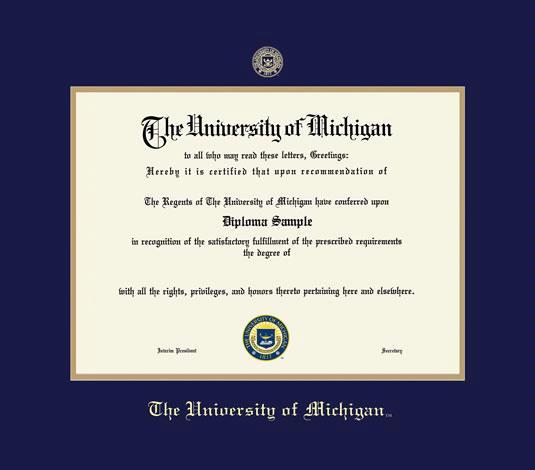
MI1107TAGAAXX_lg.jpg

Penman for Monday, January 25, 2015


IT WAS with much interest that my eye strayed last week to a story on the BBC website with the headline ‘Penguin scraps degree requirement.” The article went on to report that publishing giant Penguin Random House—presumably one of the world’s most literate employers—was no longer requiring applicants for any job in the company to show college diplomas.

“The firm wants to have a more varied intake of staff and suggests there is no clear link between holding a degree and performance in a job. This announcement follows a series of financial companies dropping academic requirements for applicants. Neil Morrison, human resources director, says they want talented staff ‘regardless of background’,” the article noted. The report went on to say that leading accounting firms such as Deloitte and Ernst & Young had also relaxed their educational requirements, with Deloitte changing its selection process so recruiters would not know what schools its applicants had attended.

It’s a novel idea that sounds fair and makes sense, but I’m sure it will take some time before Philippine businesses catch on, as obsessed as we Pinoys are with college diplomas, especially those that come from certain schools. Just scan the Sunday classifieds in any local newspaper—for jobs of any real economic and social worth, your typical non-equal-opportunity employer will demand a piece of parchment from a “Class A” university, which will count more than any previous experience you may have acquired.

Arguably, that wasn’t always the case. We baby boomers belong to a generation—probably the last one—for whom gutsiness and scrappiness was still the best way forward, rather than degrees and diplomas. Just ask any taipan how many of them have Wharton MBAs. One of them whom I happen to know, because I’ve written his family’s history—Filinvest founder Andrew Gotianun Sr.—didn’t go beyond two years of college at San Beda, and had to drop out because of his father’s unexpected demise. His wife Mercedes, Filinvest’s other dynamo (Andrew was the visionary, Mercedes the executor), graduated from UP with a BS in Pharmacy, magna cum laude—but what led to her success as a banker wasn’t college but streetsmarts. “I made friends with the owners of banks abroad and convinced them to lend me their operations manuals,” Mercedes told me, “which we then adapted to local conditions. That’s how Family Savings Bank began.”

Indeed it used to be that you could get places without a college degree, as long as you had talent and guts (you needed both—just one wouldn’t have done it). Among writers, in particular, a degree was a bonus, maybe even a demerit, in those pre-MFA (Master of Fine Arts, the writing degree of choice) days. The old conviction was that, to know how to write, you had to know how to read, and the serious would-be writer read a lot outside of school without having to be told. The real test of the writer was, well, in the writing—in the quality and the consistency of one’s craft, rather than in the number of English units one could present.

There was no finer example of this than the late National Artist NVM Gonzalez, who never finished college (he did go to National University), but who went on to a distinguished writing and academic career here and in the US. The late journalist I. P. Soliongco was another such titan in his field. My friends Pete Lacaba and Krip Yuson, both dropouts by choice, deserve honorary PhDs for all their work as far as I’m concerned—not that they would care—but more valuable is the fact that they’ve been asked to teach and to share their expertise with younger Filipinos.

My own dad Jose Sr. also dropped out of college—he was the smartest kid of his time in our province of Romblon and could have gone on to become a de campanilla lawyer, but was too poor and also perhaps too confident in his abilidad to go the full distance, and soon fathered me and my four siblings. Seeing him write as well as he did—he was a keen reader of novels and magazines—I grew up believing that I didn’t need a college degree, either, to get where I wanted, so I dropped out of UP in my freshman year to get a job as a newspaper reporter. My younger brother Jess, also a talented writer, obviously had the same impression and did exactly the same thing, dropping out of UP before landing jobs with San Miguel’s PR department and later becoming editor-in-chief of the Mindanao Cross. I went on to work with the National Economic and Development Authority for ten years, even earning a graduate UP diploma in Development Economics as a special student and working on special detail with the United Nations Development Programme, doing project studies. I began writing plays, stories, and screenplays and winning Palancas, and felt that I could have gone on for life with little more than my 21 undergraduate units in English and 30 grad units in Economics.

But one day in 1981—after attending the Silliman Writers Workshop and falling under the spell of Robert Graves—I decided to go back to school as a returning sophomore, at the age of 27. I found school exhilarating, and later quit my job to study full-time, with my wife Beng taking up the slack. To be honest, it wasn’t the fiction that roped me in, but the poetry of Sidney, Wyatt, Shakespeare, Dylan Thomas, Philip Larkin, and James Dickey, among others. Having tasted such ambrosia, I craved more, and so I went on to Michigan for an MFA and to Wisconsin for a PhD, both on fellowships, making up for lost time (BA at age 30, MFA at 34, PhD at 37). I told myself that there was nothing more that I wanted to do for the rest of my life but write, teach, and spend time with family. There was, I must say, a great material and emotional cost to these degrees, which had I known it then I might not have been willing to pay. But with the deed done, I can’t regret the fact that these degrees have allowed me to move up the job ladder and gain the respect of people who haven’t the faintest idea what I do.

I finished college not so I could get a good job, which I already had, or so I could append little letters to my name, which I hardly use outside of work. (No self-respecting writer, as far as I know, has ever flaunted his or her PhD; you’d simply be laughed out of the place.) I did it for love—for the love of knowledge, especially the kind of knowledge for which there exists no practical utility and which is therefore the purest and sweetest, and for the love of my parents, who deserved some payback for all their hard work and sacrifice.

Make no mistake: I do agree with Penguin in broadening their search for good people to those without diplomas from Harvard or Oxbridge to show. You could miss out on a Steve Jobs, a Bill Gates, or a Mark Zuckerberg that way. But you could also always drop out of college, do your thing, and go back when you have the time to finish up—like Steven Spielberg, Oprah Winfrey, and Shaquille O’Neal did. Make that “Dr. O’Neal”—Shaq even went on to pick up a doctorate in Education in 2012.

And what about my brother Jess? He went back to school, too, earning a BA in Journalism at age 49, and a Bachelor of Laws at age 55. A published author, he now practices and teaches law, completing our father’s dream. Sometimes, those degrees and diplomas do count—for all the right reasons.


Penman No. 161: To Be a Journalist

Image-1

Penman for Monday, August 10, 2015

I WAS very sad to hear of the recent passing of an old colleague from my first foray into journalism—Nemesio Dacanay, who was then the City Editor of the Philippines Herald, one of the pre-martial law period’s smaller but pre-eminent newspapers. A relative of his texted me about his death and interment, but I was out of town and felt bad that I couldn’t even pay my respects in person, so I’ll do it here.

Five years ago, in this column, I had to issue an apology—and I was happy to do so—having inadvertently suggested in a previous piece that “Dac” had passed on to the hereafter. As it turned out, he was still very much alive, as his daughter Christine reminded me. This time, unfortunately, the news was real.

The story of my connection to Dac and of how I got into the newspapers is something I may have told before in bits and pieces, but here it is in full. The time was early 1972, and I had just turned 18. I was already a full-time activist, having dropped out of my classes in UP, a lanky, chain-smoking lad who was already a veteran of many a Plaza Miranda march and of the Diliman Commune.

In UP, I hung out with a group of older Journalism majors who were close to graduating and who would, very shortly after, begin to make a name for themselves as reporters—people like Wilson Bailon, Rolly Fernandez, Jun Engracia, Efren Cabrera, Rod Cabrera, and Val Abelgas, among others. I had great respect and admiration for these guys, but at the same time, it annoyed me to know that they were soon going to find and land jobs, while I—technically still a freshman, with but 21 completed units to my name (3 of them good for a “5.0” in Math, the consequence of absenteeism)—was going to be left behind.

I should explain that at 18, I had no greater ambition than to become a journalist. I’d written some stories, poems, and plays, but I had no plans of becoming a creative writer, and might even have thought journalism superior to poetry (and why not?). I had been editor in chief of the school paper at Philippine Science High (following in the gargantuan footsteps of Rey Vea, Mario Taguiwalo, and Rodel Rodis), and I found that I savored the romance of printers’ ink and hot lead (that’s “lead” with a short E for you young ones, the molten metal that magically turned into letters in reverse).

As soon as I stepped into UP, at 16, I did the three things I’d put on my agenda, after enrollment: join the Nationalist Corps (and later the Samahang Demokratiko ng Kabataan, or SDK), join the Alpha Sigma Fraternity (to which high school heroes like my Physics teacher Vic Manarang and firebrand Gary Olivar belonged), and join the staff of the Philippine Collegian.

It was in the nationalist movement and those long nights of proofreading at Liwayway Press that my desire to become a reporter flourished. Never mind poetry and fiction; I wanted to feel and to record the ground shaking beneath my feet from the steps of a thousand marchers, to trace the arc of tear gas canisters flying across the plaza, to bear witness to what we were all convinced was the forging of a bright new future, with all the sparks and all the smoke that came with the process. To be a reporter at that time was to be in the very womb of history, and I thought nothing was more thrilling and more important than to be there on the frontlines, notebook and ballpoint in hand and a barely stifled battle cry rising up my throat: “Pierce the enemy with your pens!” (That was the slogan silkscreened on my jacket.)

As you can see, as a teenage Maoist, I had no idea of and no patience for “objective” and “dispassionate” journalism. I hadn’t even taken one formal unit of Journalism in UP (I was an Industrial Engineering major, and still plowing through my GE subjects) and had embraced the notion that journalism was and had to be a partisan activity, convinced that Malacañang had bought 90% of the Philippine press, with the notable exception of progressives like Tony Zumel, Satur Ocampo, and Rolly Fadul, and young blood like Roz Galang and Millet Martinez. We were going to be the vanguard of what we called the Second Propaganda Movement.

But I didn’t want to be stuck on campus; it was a wide-open arena beyond Diliman, so when my friends began applying for jobs with the newspapers shortly before graduation in early 1972, I tagged along, hoping to land something, anything. (I’d already written and sold a teleplay to the TV drama anthology Balintataw in 1970, when I was 16, so I didn’t lack in self-esteem.) I remember walking up to the editor of the Manila Chronicle, Amando Doronila, and boldly announcing that I wanted to apply as a reporter. “How old are you?” the man asked in all reasonableness. “Eighteen,” I said. “Come back in a few years,” he suggested, not unkindly.

It was like that, one prospect after another, until my path led to the old Philippines Herald office in Intramuros, sometime in March or April. It was must have been around one in the afternoon, because the only person in the newsroom was Nemesio “Dac” Dacanay, whose name I didn’t even know at that point. He had a groovy look about him: dark shades, a colorful, open-necked shirt, and an impish grin. I told him what I was there for, and I can’t recall how long I begged to be given a chance, but finally, if only to get rid of the pesky walk-in, he said: “Where do you live?” I said, “Quezon City.” He said, “Okay. Go back to Quezon City, then come back in three days with a story. Understood?”

I stepped out of the Herald on a floating cloud—I was positive I would deliver as directed. Over the next three days, not knowing anything about real newswriting, I walked around the Quezon Memorial, waiting for some dreadful accident to happen that I could breathlessly report on. The world remained blissfully peaceful, and the only thing that came crashing down was my dream of becoming a journalist. On the third day, I was so tired and depressed that I took a jeepney to the Delta Theater, and decided to cool off in the moviehouse. I watched the screen. The movie was so awful I can’t even remember its title. When it was over, I went home, collected my thoughts, and pulled out my typewriter.

Then I took a bus to Intramuros, and handed Dac my story—a movie review. Damn—I could hear him mutter, and I could see him sizing me up through his shades—okay ka, kid. “I’ll pass this on to Nestor,” he said, referring to the venerable Nestor Mata, who handled the features page. “He’ll take care of you.”

And so I was hired at 18 as a general assignments reporter, the greenest of greenhorns in a roomful of veterans that included editor in chief Oscar Villadolid, news editor Joe Pavia, reporter Lito Catapusan (who took me under his wing), and a deskman who moonlighted as a songwriter named George Canseco. Over the next few months, I would make the rounds of the police, sports, and City Hall beats, cramming three more years of college into a semester. Thanks to a guy who humored me named Dac, I had achieved my ambition of becoming a journalist. (By July, in a flash of activist fervor, I would resign in solidarity with striking workers, and move over to Taliba as a correspondent right up to martial law, when we all lost our jobs and the press as we knew it vanished overnight. But that’s another story.)

Penman No. 149: Advice to Freshmen

Penman for Monday, May 18, 2015

AFTER LAST week’s piece on “Why I’m not on Facebook,” I thought I should add or clarify that I’m not entirely off the grid, Web-wise. I do choose the websites or forums I frequent (and in case you’re wondering, I’ll explain the difference between forums and fora one of these days), to make sure that I deal only with things and people I’m truly interested in. For over a decade now, I’ve moderated the Philippine Macintosh Users Group (www.philmug.ph), and more recently the Fountain Pen Network-Philippines (www.fpn-p.org); now and then you’ll also find me at the Philippine Watch Club (www.philippinewatchclub.org). I keep a blog at www.penmanila.ph, and send out an occasional tweet, usually about my poker fortunes and misfortunes, from @penmanila.

It was on one of these sites—Philmug, which has grown to become one of the world’s most active Apple user groups—that I came across a thread I’m tapping for my topic today. While Philmug is the place to talk about anything and everything Apple, it’s also a community that can spark very lively discussions about such motley topics as Manny Pacquiao, Manila traffic, where to stay in Hanoi, and what SIM cards to get in Europe. One such “offline” thread that perked my interest last week was one titled “College freshman tips,” started by a young member about to enter college. Was there anything, he asked, that his elders could tell him about college life?

It’s a thread that’s grown to ten pages long the last time I looked, and predictably, many Muggers (as Philmug members call themselves) recited that age-old mantra that all college freshmen know by heart (and sophomores even better): “Party hard, study harder!”

Other suggestions were more specific:

  1. Join student organizations and socialize, but choose which ones you’ll be joining wisely. These “orgs” could become networks for life, for both friendships and professional contacts.
  2. Avoid fraternities and such groups that employ physical initiation and advocate violence. You’re in college to study—not to maim or be maimed by other people.
  3. Get out of your comfort zone, and be a little more adventurous. Make friends with people who may be totally unlike you. That’s where a lot of learning happens—in knowing about how other people live and think.
  4. Manage your resources well—your budget and time, most especially. Learn how to take care of yourself, and consider taking a student job, both to earn and to learn some professional working habits.
  5. Master the freshman basics: the campus map, how to take notes, who the best (not necessarily the easiest) teachers are.
  6. Don’t confuse a college diploma with education. A lot of learning takes place outside the classroom.
  7. Don’t believe everything you hear, even from your professors. Learn how to argue, and argue well.
  8. Never plagiarize. It’ll never be worth it.
  9. Don’t be afraid to fail. Go ask a girl out if you really like her. Failure is part of learning.
  10. Don’t try to do everything in your freshman year. You’ll find yourself being pulled in so many directions that it’s easy to lose focus. Map out a clear and unimpeded path to your sophomore year.

Some other suggestions were a bit more unusual, although no less practical. “Always sit beside a female classmate and you will never regret college life, because they are lifesavers (and your immediate supply of pens, paper, books, assignments, and exams),” proposed one member (who now just happens to be one of our smartest cops in the PNP). “They smell better than boys,” another member, a retired pharmaceuticals executive, agreed.

And what did I say? Quite a bit, but among them was, “Don’t bother playing mind games with your professor (as in ‘I’m smarter than this guy, and I’m going to prove it’). You will lose; even if you are smarter than your prof, you will lose… Learn how to argue and come across as being smart without being snarky. I’m a very gentle prof myself, but nothing makes me happier some days than to give some smartypants a dose of his own medicine.”

Now, of course, like many 16- and 17-year-olds, I didn’t follow all this sound and sage advice I’m giving and hearing.

In my freshman year in UP in 1970-71, I (1) joined a frat and got beaten black and blue; (2) joined a militant student organization and went to dozens of rallies, many of them violent; (3) joined the staff of the Philippine Collegian, the student newspaper; (3) met (and lost) my first girlfriend, and did what boys and girls do; (4) got a 1.0 in English and a 5.0 in Math (for absenteeism—I was a Philippine Science high grad and arrogantly thought that Math 17 was beneath me); (5) shifted courses, from Industrial Engineering to Journalism, I think; and (6) went up to the mountains of Quezon and Bulacan to do “mass work.” It was, to say the least, an interesting year.

Within another year or so, I would drop out and divide my time between my activism and a job as a newspaper reporter (I may have been the youngest regularly-employed newspaper reporter of my time, at 18); also at 18, I was in martial law prison; by my 20th birthday, I was married, and became a father before I turned 21.

Not surprisingly, it took me forever to get back to school and finish. I resumed my undergrad studies at age 27, and graduated with my AB in English, cum laude (you could still get honors then even with a failing mark if it wasn’t in your major—I had shifted to English by then—and if your GWA could sustain it) at age 30. I made up for lost time by finishing my Master’s by 34, and my PhD by 37. Some of us like to hurry… and then to take our time… and then to hurry again.

I suppose my ultimate advice to freshmen is just to hang in there and don’t do anything stupid like get killed before turning 20, unless you’re doing it for God and country. But don’t stay too safe, either, because the best things you’ll be learning from will be your most grievous mistakes. One of the wisest things I ever heard came from a friend, now departed, spoken over beer and stale cigarettes at 2 in the morning: “Everyone should be entitled to one big mistake.” Or, as my professor in German once put it, “Ein Fehler ist kein Fehler”—one mistake is no mistake.

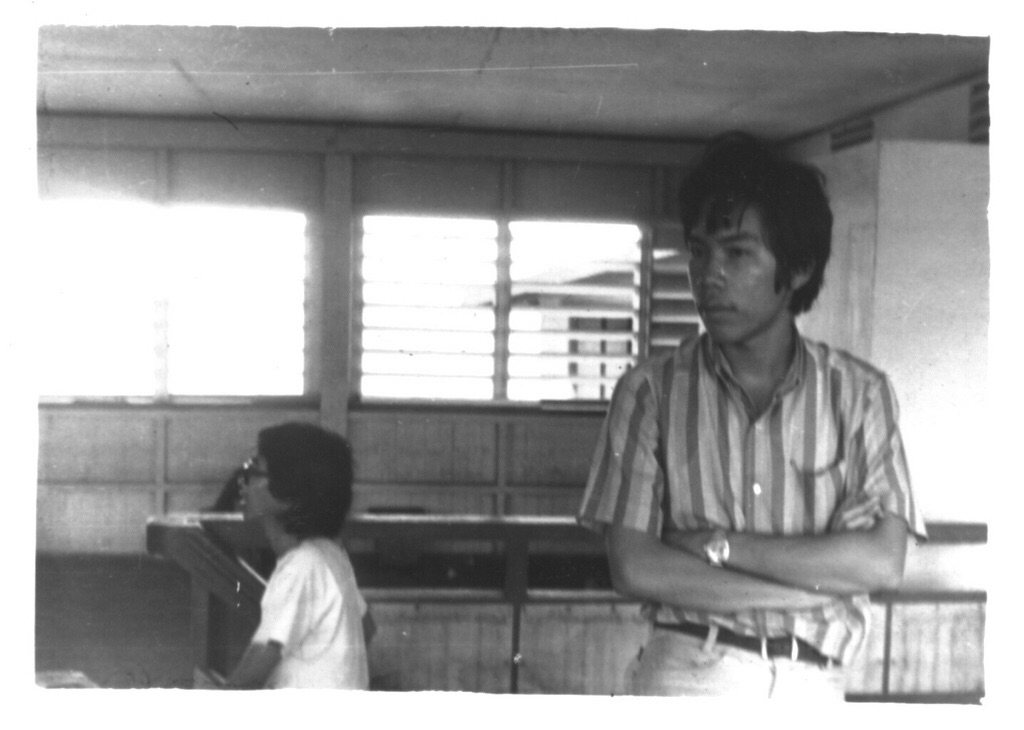
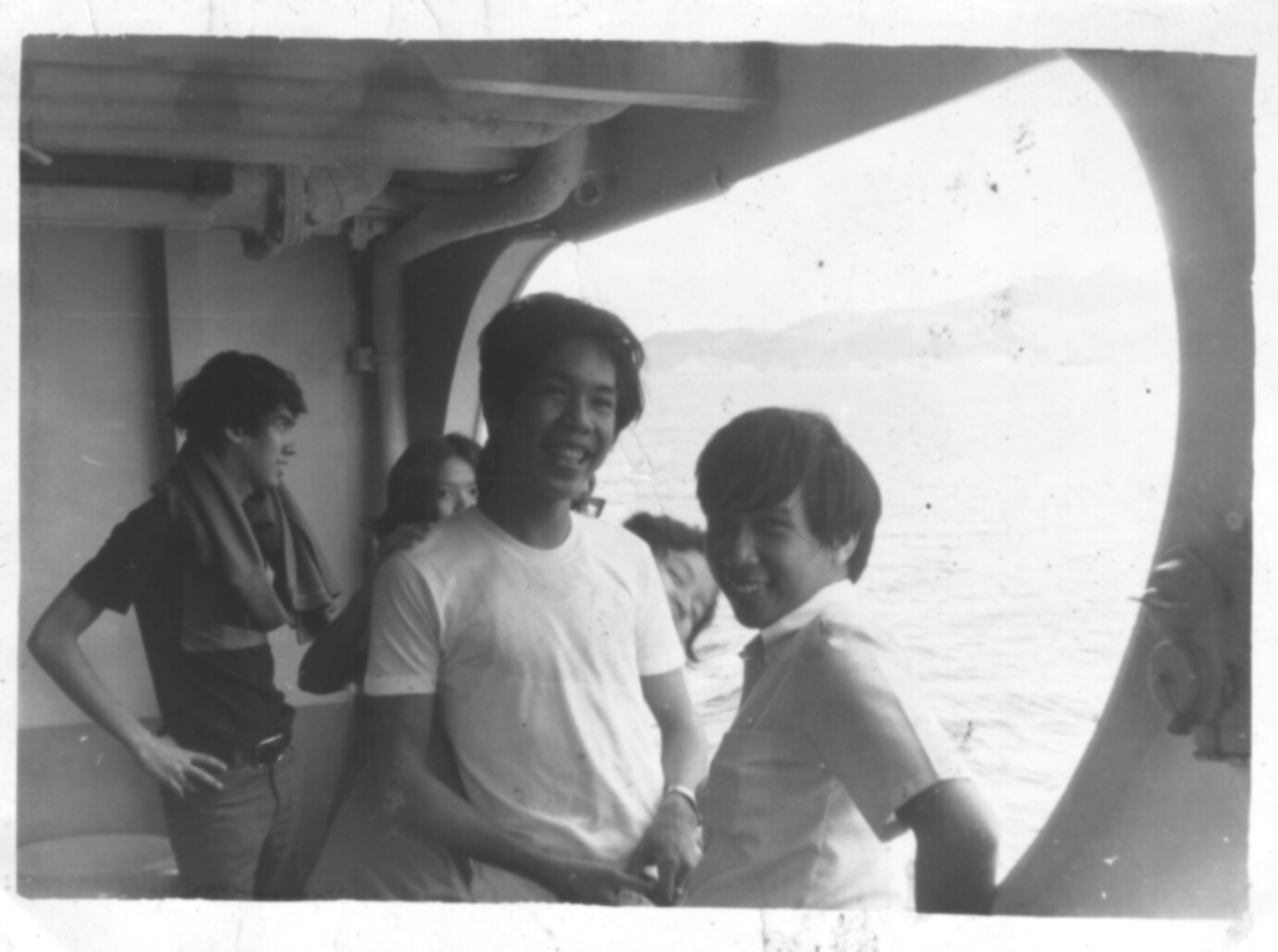
We made a few, and have survived and maybe even prospered despite and because of them. For a Thursday throwback, I posted a picture in that thread of myself as a lanky freshman, beside activist leader and fellow PSHSer Rey Vea (now president of Mapua University), on a boat to a CEGP convention in Dumaguete ca. 1970. My only question was, where did all that hair and leanness go?

1971