Qwertyman No. 118: A Flickering Flame

Qwertyman for Monday, November 4, 2024

TOMORROW, NOVEMBER 5 (or Wednesday, November 6, our time), American voters will choose who between Republican Donald J. Trump and Democrat Kamala Harris will lead them from the White House over the next four years.

For more than four million Filipino-Americans, the outcome will bear a direct impact on their daily lives, their choices, their standing in society, their future. For the rest of the world, including those of us here in the Philippines, the result will shape not only how we see America, but also how America sees us in the global scheme of things.

Only the foolish will think that we have no stake in this election, and that America’s position in the world will be the same regardless of who wins. For the people of Ukraine, a Trump victory might as well be his friend Putin’s; for the Taiwanese, the Filipinos, and others dependent on at least the deterrence if not the active deployment of American military power vis-à-vis Chinese expansionism in Asia, Trumpian isolationism can only invite more unbridled aggressiveness from the region’s bullies.

As I’ve often said here before, like many millions of Filipinos, my stake is more personal than that: our daughter lives and works in California, and my sister is also a US citizen, both of them contributing productively to that country’s economic and social well-being. Both are proudly voting and campaigning for the only candidate who offers real hope for the future of America and the world: Kamala Harris. To them, she represents not just the right political but also and even perhaps more importantly the right moral choice.

Of course, I totally agree. Why anyone would vote for a man who even many of his supporters admit is a convicted felon, a habitual liar, a womanizer, a pervert, a racist, a chauvinist, and a would-be dictator is beyond me. But apparently enough Americans will, enough to make all polls point to a dead heat between the two candidates, with the outcome likely to be decided by voters in a handful of so-called “battleground” states.

Among those many millions of Trumpists willing to overlook his not-insubstantial shortcomings are legions of Fil-Ams who—despite having historically voted Democrat as an ethnic minority—now find common cause with Trump’s blatantly racist anti-immigrant rhetoric (it isn’t even about illegal immigration anymore, but about immigrants from “garbage” countries in Asia, Africa, and Latin America) and his supposed “anti-abortion” stance (since diluted for political expediency). Among other single-issue MAGA voters, “the economy” remains their strongest reason for choosing Trump, despite 23 Nobel-prizewinning economists writing that Trump’s tariff-based economic plans will be disastrous for the US.

Eighty-two Nobel laureates, in fact, are on record supporting Harris, but that clearly matters little in an election driven more by primal fear than by truth and reason. As astrophysicist Neil deGrasse Tyson lamented, “How sad it must be—believing that scientists, scholars, historians, economists, and journalists have devoted their entire lives to deceiving you, while a reality TV star with decades of fraud and exhaustively documented lying is your only beacon of truth and honesty.”

My own sense is that many Trump voters won’t be voting for Trump the man, whom his sharper and more hidebound supporters—many of whom, like Sen. Ted Cruz, he has savagely maligned but who have masochistically endured his insults to ensure their own survival—will admit before God to be the lowest of the execrably low. They will be voting for the deep grievances and resentments that Trump has so craftily stoked in them, and against the idea of an “elite” and a “swamp” that Trump and his new acolyte Elon Musk, strangely enough, represent more visibly than most Democrats.

Thus the very real possibility remains that we may wake up Friday morning to the specter of Trump 2.0 and whatever it will bring. Should that happen, we can imagine the global wave of consternation and dismay that will ensue among liberals and progressives everywhere. On the other front will resound the triumphant cheers and chuckles of global despots and their minions.

All this brings me to what I suspect has been my real worry all along—not the US election, about which we can do nothing, but our own political horizon, on which familiar dangers are looming large.

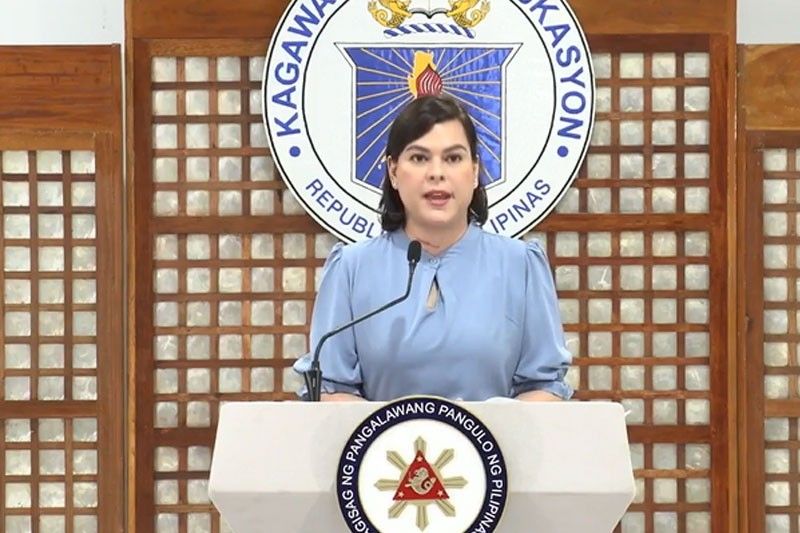
At least one online pundit with an unusual point of view has lauded the recent performances of Vice President Sara Duterte and her father former President Rodrigo Duterte at their Senate hearings as a kind of resurrection—in the very least, an affirmation of their continuing political viability, if not resurgent power. 

The Dutertes mastered their fumbling inquisitors, this commentator crowed, reporting that the gallery even clapped for the senior Duterte at the end of a raucous session at which he virtually confessed to willfully causing the summary execution of suspects without ever being prosecuted. The Dutertes, he seemed to imply, remain above and beyond the law; with their cohorts in office, they are the law, or shall soon be again.

Indeed Philippine politics has become a theater where bravado, bluster, and buffoonery matter. We cannot even tell the actors from the characters any longer. Lies resound louder than the truth, and the audience rewards the best “hugot line” with wild applause.

The upcoming midterm election already promises to showcase the worst of our political predilections, with family dynasties and patently unfit candidates crowding the top of the poll rankings.

So if the Americans choose Trump over Harris, why should we be surprised? Where character, reason, and talent no longer matter, the tyrants rule with fools at their feet to keep the populace amused.

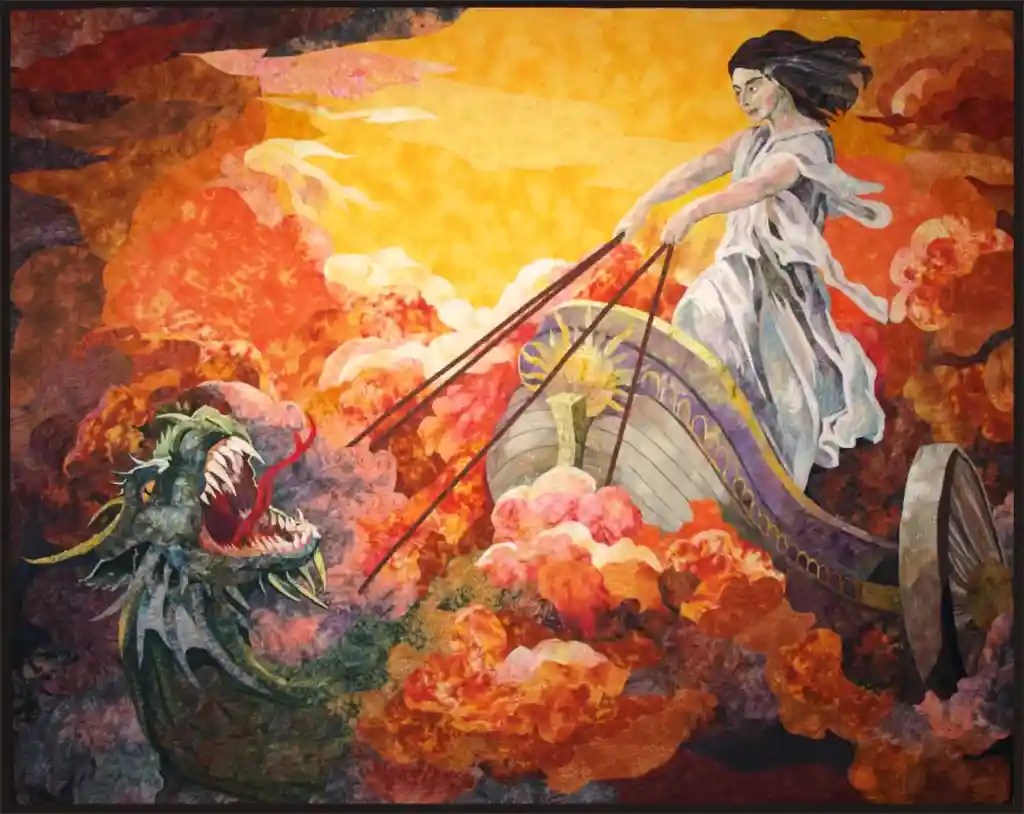
But if Kamala Harris wins, whatever it brings to America, it will mean for me that, however fragile, hope remains for good sense to prevail even in extremely fraught situations such as ours. If only for that flickering flame, I pray she wins.

(Image from newsweek.com)

Qwertyman No.112: Reversals of Fortune

Qwertyman for Monday, September 23, 2024

“ROQUE VS. Roque.” I wish I’d thought up that line, but it was Rappler—yes, that pesky news organization that’s caused many government officials past and present to choke on their soup—that used it for one of their stories on the continuing saga of Atty. Herminio “Harry” Lopez Roque.

In an article posted on September 7, 2020, Sofia Tomacruz reported how Roque had lawyered for the family of Jennifer Laude, the transgender person killed by US Marine Joseph Scott Pemberton in October 2014. On September 3, 2020, Pemberton was ordered to be released by a Philippine court, prompting Roque—still in crusader mode—to recall Laude’s death as “symbolic of the death” of Philippine sovereignty. 

A few days later, however, his current boss, President Rodrigo Duterte, granted Pemberton an absolute pardon, claiming that the convicted murderer had not been treated fairly by Philippine justice (only to add, a few moments later, that as far as drug users were concerned, “Be cruel!”). Spokesman Roque then defended the move as a presidential prerogative—and later rationalized, in his “personal opinion,” that Duterte had made the move to secure American vaccines given the ongoing pandemic. So much for Philippine sovereignty.

It wasn’t the first and certainly not the only time Harry Roque had to eat his own words.

He lawyered for the families of the victims of the 2009 Maguindanao Massacre, where 58 people were killed; eleven years later, as presidential spokesman, he said that “justice had been served” with the conviction of two Ampatuan brothers, despite the acquittal of 56 others. 

But in what has to be the most ironic of these reversals, let’s give a listen to Harry Roque ca. February 2018. Duterte’s nemesis, former Justice Secretary Leila de Lima, had just marked her first year in detention, falsely charged with involvement in the illegal drug trade in what clearly was political vendetta. (The charges would be dismissed and de Lima released—but only after almost seven years.) 

In a news briefing, Roque gloated: “Happy anniversary on your first year of detention. May you spend the rest of your life in jail!” Calling de Lima “the mother of all drug lords,” Roque claimed that “Senator de Lima’s incarceration shows that the criminal justice system in the Philippines is alive, effective and working.” 

Fast forward to September 2024. Asked to explain by a congressional probe how and why his assets in his family business rose from P125,000 in 2014 to P67.7 million just four years later, Roque refused to comply, and was cited in contempt and ordered arrested. On Facebook, he defiantly claimed to be a victim of injustice: “I am not a fugitive because I violated the law. It’s only Congress that considers me a fugitive, and I don’t care. The way I see it, if Congress cited me in contempt, I think Congress is cited in contempt by the people of the Philippines.” 

He had earlier been placed under 24-hour detention in the House, which was investigating him in connection with his ties to a notorious POGO. “I will not wish, even on my fiercest political opponents, to be deprived of their personal liberty and freedom,” he had sonorously spoken of that experience, amplifying his persecution with a reference to a rather more famous political prisoner: “Worse than hunger, said Mahatma Gandhi, is to lose your freedom.”

Let’s forget for a minute that lifetime imprisonment was exactly what Roque had wished on his fierce political opponent, Leila de Lima, who spent 2,454 days in incarceration without even being convicted (even longer than Gandhi, whose total jail time amounted to 2,338 days in colonial South Africa and India). So harrowing must have been his 24 hours in House detention that—faced with the prospect of a few more days in the guest room of an august chamber he once inhabited as a proud member—he declined to yield himself to further scrutiny, and vanished. Given his aversion to discomfort, we can be sure it will only be a matter of time before he resurfaces, perhaps leaner and sexier for the experience.

Indeed, never mind the news, which most people will forget in a week. Worry about scholarship, which, while obscure and often useless, has a way of defining you in perpetuity because of its pre-AI presumption of truthfulness. Harry Roque, I discovered, proved worthy of an academic paper titled “Turn-Taking Strategies of Secretary Harry Roque as a Presidential Spokesperson: A Conversation Analysis” by Janine Satorre Gelaga of Caraga State University, from which I quote:

“Roque had an aggressive and confrontational way of speaking, often responding to criticism or questions from the media with sarcastic comments and eye-rolling…. Roque’s conversation style did not develop understanding, let alone promote public trust…. As Geducos (2021) has put it, “Roque has been at the center of controversy for many remarks that did not sit well with the public.’”

To say the least. How the mighty have fallen, but then again, what can soldiers of fortune expect but, well, reversals of fortune? 

Qwertyman No. 111: Justice Fever

Qwertyman for Monday, September 16, 2024

A DANGEROUS outbreak of justice fever has hit the Philippines these past few weeks, threatening to make that country’s startled citizens believe that their government is intent on doing right by the people, no matter what and come what may.

In quick succession, Bamban ex-mayor Alice Guo, alleged to be a Manchurian candidate, was picked up in Indonesia and flown back to the Philippines; another on the Philippines’ most wanted list, the self-styled “Son of God” Pastor Apollo Quiboloy, emerged from his subterranean kingdom to surrender to the Pharisees, er, authorities; why, even former Palawan governor Joel Reyes, wanted for the murder of an environmental crusader and long out of sight and out of mind, turned himself in; and it should only be a matter of time before ex-Rep. Arnie Teves comes home from his extended Timorese vacation to face murder charges in Negros Oriental. (I don’t think the return of former Iloilo Mayor Jed Mabilog, hounded out of office by the former President on trumped-up charges of drug trafficking, counts in this category.)

What on earth, you might ask, is going on? Is the government running some secret—and wildly successful—“balik-fugitive” campaign? Were there possibly offers and assurances made of kid-gloves treatment, fully furnished jail cells, state-witness options, conjugal visits, and lifetime colonoscopies?

For a while back there, it seemed like the old regime hadn’t completely vanished—you know, the chummy-chummy-with-criminals vibe, which that viral photo with the chinita mayor smiling sweetly and flashing “V” signs between her two captors seemed to suggest. But justice fever is vicious when it takes hold of its victims, and by the time Pastor Apollo Quiboloy was caught in Davao, the afflicted authorities had learned their lesson, and quickly whisked him away in a C-130 to Manila. Why, President Marcos Jr. even fired the chief of the Bureau of Immigration, Norman Tansingco, over the Guo affair. Illegal POGOs were raided, and captives freed.

As if this spate of high-profile catches and prosecutions wasn’t enough, in the Senate and the House of Representatives—once safely Duterte territory—lawmakers were outdoing each other poking holes into Vice President Sara Duterte’s P2-billion budget proposal. Her friend Harry Roque was found in contempt of Congress and served a warrant of arrest for failing or refusing to account for his unexplained wealth. 

Duterte ally Sen. Bong Go also caught the fever, proclaiming in a tweet that he had always been against POGOs, seeing them as a threat to peace and order. “For the record,” he emphasized, “I really hate POGOs.” Justice fever apparently induces amnesia, because the good senator forgot that three years ago, he voted in favor of RA 11591, taxing and effectively legitimizing POGOs in the country.

All this would have been unimaginable then, but here’s something even more incredible: former President Rodrigo Duterte—who routinely ordered his supporters and the police to “shoot” drug suspects without worrying too much about the finer points of the law—seems to have woken up from a kind of coma, suddenly remembering that he was, once upon a time, a lawyer wedded to the idea that people have human rights. 

We know that because Atty. Digong, probably still in a slight daze but overcome with a resurgent sense of right and wrong, filed charges of malicious mischief against Interior Secretary Benhur Abalos, PNP chief General Rommel Marbil, and PNP Region XI chief Brigadier General Nicolas Torre III in the wake of his patron and spiritual adviser’s arrest. 

Not being a lawyer, I had to look up exactly what “malicious mischief” means. Here’s what I found online: “Malicious mischief is a crime of property damage. In order to convict someone of malicious mischief, the prosecutor must prove the damage done to the property was not accidental. A person is guilty of malicious mischief when he or she ‘knowingly or maliciously’ causes physical damage to another person’s property.”

From what I gather, malicious mischief requires a certain, uhm, finesse, a delicacy that appreciates degrees of injury, and even ironic humor. “Mischief” isn’t like the sledgehammer of bloody, first-degree murder; it’s more like a yap rather than a roar, a pinch rather than a punch. You commit malicious mischief by, say, kicking your neighbor’s dog or unpotting his daisies. It’s meant more to annoy and enrage rather than to kill. (Interestingly, under the Revised Penal  Code, “destroying or damaging statues, public monuments or paintings” and “using any poisonous or corrosive substance; or spreading any infection or contagion among cattle; or who cause damage to the property of the National Museum or National Library” also qualify as special cases of malicious mischief.)

I haven’t read the charges in their entirety, so I don’t know exactly what Atty. Digong was complaining about—I’m guessing door locks broken and, okay, egos pricked. But the mere fact of Digong the Terrible sallying forth into a court of law on a matter as grievous as upended flower pots suggests to me—as I wrote about a few weeks ago—that the man has truly undergone the kind of religious conversion that now allows him to believe in, well, judicial justice. He, too, has caught the fever, and now reposes his faith in a judicial system he once decapitated with pronouncements such as this one from April 9, 2018, referencing then Chief Justice Maria Lourdes Sereno: “I’m putting you on notice that I’m your enemy, and you have to be out of the Supreme Court!”

The only problem with this rash of righteousness and conscience is, how long will it last, and what will happen when it wears off and we return to our old jolly, reprobate selves? 

The Dutertes are easy targets, no thanks to their patriarch’s resolve to establish himself as the least presidential president in Philippine history. His successor is reaping the low-hanging fruit of that unpopularity, enjoying, no doubt, the unfolding spectacle. BBM should be warned, however, that like many afflictions, the effects of justice fever can be long-lasting. Once its victims get used to it, their delusions could linger, and they’ll keep expecting and wanting more, and more.

(Photo from dzar1026.ph)

Qwertyman No. 109: Digong’s Conversion

Qwertyman for Monday, September 2, 2024

RATHER THAN mock former President Rodrigo R. Duterte for his unflinching support for his bosom friend and spiritual adviser, the fugitive Pastor Apollo Quiboloy, I think we should praise and congratulate him for finally seeing the light and acknowledging the importance of human rights.

It must be age, or the reflection afforded by retirement, but the Digong Duterte we heard from last week in the wake of the massive police raid on Quiboloy’s lair was worlds apart from the apoplectic and coarse-tongued person we used to know. It took some time—likely aided by a sobering reversal of political fortunes—but gone is the swaggering Mussolini of the past, prone to profanity and what his apologists liked to call “hyperbole,” replaced by the pained and measured indignation of the aggrieved.

Of course, his statement could have been crafted by one of his former spokespersons, who must therefore take responsibility for the minor grammatical and stylistic infelicities in the text—but how can we even complain about language when gross human rights violations are on the table?

For those of you who missed it because you were wasting your time deploring Caloy Yulo’s filial impiety, here’s what PRRD said, in full:

“Our country has never been in a more tragic state as it is today. Rights have been trampled upon and our laws, derided.

“Early today, elements of the Philippine National Police Regional Office, led by Gen. Nicolas Torre Ill, forced their way into the Kingdom of Jesus Christ compound which resulted to (sic) a violent confrontation and the unfortunate death of one KOJC member and the requiring of (sic) immediate medical attention of many others.

“We sympathize with the members of the KoJC for having become victims of political harassment, persecution, violence and abuse of authority. This certainly puts a dark stain on the hands of those involved in today’s incident, led by no less than the top police official of the region.

“We call on the remaining decent and patriotic members of our government not to allow themselves to be used and to be abusive and violent in enforcing illegal orders.

“We call on all Filipinos, regardless of political persuasion, to offer prayers for peace and justice, and to spare our people of the unwarranted tension brought about by the reign of fear and terror by people sworn to uphold the law and protect the citizens of this country.

“Again, let us ask this administration how it can guarantee the preservation of the constitutional rights of our fellow Filipinos when even the most fundamental of these rights are being blatantly violated? (sic)

Why, minus the edits, this could have passed for something that PRRD’s arch-nemesis, former Sen. Leila de Lima, could have said a few years ago, before she went off to prison. Or it could have been mouthed by the late Chito Gascon, whose Commission on Human Rights PRRD sought to abolish for meddling in police investigations into dastardly drug deals, even getting Congress to pare its budget down to a more suitable P1,000. 

That Rodrigo Duterte could now speak so eloquently and convincingly of the need to uphold human rights is a testament to the possibility and power of redemptive conversion, which such famous miscreants as Paul of Tarsus and Ignatius of Loyola underwent. Gazing out on the horizon on the beaches of Davao (or in the Quiboloy compound, in his new job as its administrator), the former president must have felt a pang of remorse for all the lives that were needlessly lost under his administration—all because his followers in the police failed to understand, as his spokesmen were at pains to emphasize, that he was “only joking” and was given to “exaggerating” for rhetorical effect.

How in heaven’s name could they have taken him literally when he told a controversial police officer whom he assigned to a southern city in 2019, “Go there and you are free to kill everybody. Son of a b****, start killing there. The two of us will then go to jail!”

The following year, at another event in another province, PRRD was quoted by the newspapers as saying, in Filipino, “All addicts have guns. If there’s even a hint of wrongdoing, any overt act, even if you don’t see a gun, just go ahead and shoot him. You should go first, because you might be shot. Shoot him first, because he will really draw his gun on you, and you will die…. Human rights, you are preoccupied with the lives of the criminals and drug pushers. As mayor and as president, I have to protect every man, woman, and child from the dangers of drugs. The game is killing…. I say to the human rights, I don’t give a shit about you. My order is still the same. Because I am angry!”

Now, there’s every possibility that the president may have been misquoted by journalists hungry for incendiary news. But even granting that PRRD did say horrible things like that—perhaps in a fit of desperation over the fact that the drug menace he promised to eradicate in six months was still very much around toward the end of his presidency—that allegedly murderous despot is a ghost in the past. Today’s Digong is a sensitive soul with a nuanced sensibility that understands and will not countenance “abuse of authority” and “illegal orders,” especially when these are implemented by ingrates in the police force whose base pay he doubled (shame on the 2,000 cops who apparently forgot this in their brazen assault).

Indeed, if Rodrigo Roa Duterte can undergo and manifest such a miraculous conversion, then hope yet exists for the rest and the worst of us, who wallow in unproductive cynicism. Indeed it might even be that his resistance to the idea of yielding Pastor Quiboloy to the authorities stems from the deep debt of gratitude he feels toward his spiritual adviser, with whom he must have read and parsed many a Bible story. If there’s anything we Filipinos and especially the Dutertes understand and respect, it’s the value of friendship—right? Something in me already misses the old Digong, but I’ll gladly march with this new one in defense “of the constitutional rights of our fellow Filipinos.” I hope Sen. Leila can find it in her heart to forgive and forget, and link arms with Lady Justice’s latest convert.

Qwertyman No. 108: The Owl and the Parrot

Qwertyman for Monday, August 26, 2024

The Owl and the Pussy-Cat went to sea

In a beautiful pea-green boat.

They took some honey, and plenty of money

Wrapped up in a five-pound note.

WHO’S THE English-educated Pinoy of my generation who doesn’t remember this verse by Edward Lear, a so-called “nonsense” poem which we happily recited even if, as expected, it made no sense? It had animals who had fun doing outrageously improbable things together, and we were so caught up in the magic of a pig who sells his nose-ring so the owl and pussycat could get married by a turkey that we even believed a word like “runcible” existed, even if it didn’t, at least not before the poem. After the poem—and because of the poem, first published in 1871—“runcible spoon” entered the English dictionary as “a sharp-edged fork with three broad curved prongs.” That’s why MS Word no longer flagged “runcible” as a misspelling as I typed it on my computer a few minutes ago.

That’s the power of true literature, something that gets beneath your skin and deep into your subconscious imagination, more effectively than reason or logic can, so that it becomes more real and more credible than reality itself. There’s a disarming honesty to nonsense poetry that doesn’t pretend to be anything else but. (Of course, given how students of literature have to sound deathly scholarly to earn or deserve their PhDs, a lot more nonsense has been written and published in ponderous journals about what “The Owl and the Pussy-Cat” really, really means.) 

As adult readers or reciters, we can all just enjoy the image of the owl and the pussycat dancing “by the light of the moon,” and think about how good that would be to do with our owl, our pussycat, so why can’t or don’t we? We’re amused but wistful at the same time, and that’s a complex emotion—wistfulness or “regretful longing” especially cuts backward through time and experience to make spot valuations, mostly about losses.

But let’s get back to the fun part—or maybe not so fun. 

Last week, it came to our attention that our multi-talented Vice President Sara Duterte—fresh out of her role as the “mother of Philippine education”—is apparently also an author of children’s books, having come out with one titled Isang Kaibigan (A Friend). We should all be happy when our political leaders turn to writing (presumably without the aid of a ghost writer), because it offers proof that (1) they actually think; (2) they still know their subjects, predicates, and objects, and therefore understand that people commit acts that lead to consequences; and (3) they know they won’t be in power forever, and want to be remembered in a good way for a long time.

That said, it’s a pity that most politician-authors throw away their chance at real greatness (in literature, if not in politics) by churning out some commissioned biography inflating or embellishing his or her accomplishments while leaving out the tricky ((and truly interesting) stuff. Good business for peons like me, but usually so poorly done as to be forgettable, the worst fate a book can suffer. If you think of pole vaulting, the bar was set highest at 7 meters by Winston Churchill, who became both Prime Minister and Nobel Prize winner for Literature (yes, literature). At around 5.5 meters we have genuinely talented fellows like Jeffrey (now Baron) Archer, the colorful Conservative MP who wrote popular novels, one of which sold 34 million copies (out of 320 million total for his entire oeuvre). Most others can barely hop over the bar at one meter. 

Enter VP Sara, whose maiden venture, a 16-page book, reportedly touts the virtues of friendship among people in dire straits. While it makes me wonder why the VP’s thoughts are drifting in this direction, it’s surely a worthwhile message, given all the unfriendliness in Philippine politics—even in the Philippine Senate. 

That’s where VP Sara went to ask for a P2-billion budget for her office, including a paltry item of P10 million for the printing and distribution of 200,000 copies of her book. Rather reasonably, Sen. Risa Hontiveros asked the VP what her book was about, prompting this strangely tart reply:

“This is an example of politicizing the budget hearing through the questions of a senator. Her problem is, my name is listed in the book. And we will be giving that book to the children. And those children have parents who will be voting. And my name will be spread wherever the book is given.”

I became even more curious about what was in the book, so I went online and discovered that it was the story of an owl whose nest is destroyed by a typhoon and who then finds refuge with a friendly parrot. So, okay, maybe it won’t win any PBBY book prizes for writing for children. And I’m afraid to say that with answers like that, Author Sara won’t fare too well in the writers’ workshops, where the panelists are far nastier than Sen. Risa.

But Isang Kaibigan establishes an important point, right? Friendships are important; friendships can save you; what you do for a friend in need today will be remembered tomorrow. (Never mind what the naughty wags will say about the VP being left out in a political storm—who will offer succor? Who will prove her true friends while she rebuilds her house toward 2028?) And where more pretentious authors typically load their “About the Author” pages with cloying lists of “awards won” and annoying cliches like “He divides his time between Bacolod and Berlin,” VP Sara keeps it simple and gets straight to the point: “Isa siyang kaibigan.” She’s a friend!

So what’s not to like? Well, maybe the P10 million bill, which lesser writers like me can only be envious of, having to wait years to watch our print run of 1,000 copies vanish book by painful book. VP Sara’s 200,000 guaranteed sales will surely break bestseller records, and we can gnash our teeth all we want but it still won’t answer our question, “How to be you?”

I don’t know how many millions of pounds Sir Winnie asked for and got from His Majesty’s government to print and distribute his books during the war, but it must have been a lot and the Brits must have read all of them because they certainly came through with just their blood, tears, and sweat. Sometimes, some honey and plenty of money is all an author needs to shine and be happy.

Qwertyman No. 100: The Political Doghouse

Qwertyman for Monday, July 1, 2024


TO NO one’s great surprise, Vice President Sara Duterte resigned from her concurrent posts as Secretary of Education and vice-chair of that long-named (short name: red-tagging) council. Maybe because I was far away from Davao when the news came in, I heard no wailing and gnashing of teeth. A tree fell in the forest. The world moved on.

Inday Sara promised to continue to be a mother to the country’s teachers—the same people she had ordered to strip their walls bare of teaching aids. She was back in the news a week later after reportedly announcing that her father and two brothers were going to run for senator in next year’s elections. Her name was brought up as a possible “leader of the opposition.” None of these silly propositions generated the kind of groundswell she may have been hoping for, as someone once touted to be a shoo-in for the presidency who just got suckered into sliding down to No. 2 (to her Papa Digong’s boundless dismay) in a deal craftily brokered by former President Gloria Macapagal Arroyo.

To Duterte diehards—and let’s face it, there are still quite a few, although being out of office tends to lose people by the day—Sara will always be their golden girl, the victim of craven betrayal by their erstwhile “Uniteam” ally. To her non-fans, she will always be the bratty bureaucrat who demanded P650 million in confidential funds and who bragged about spending P125 million of DepEd money in the time it takes you to say “low PISA scores.”

Where she goes from here is the big question. In a touch of supreme irony, she now finds herself in almost exactly the same position as her predecessor, Leni Robredo, who was boxed out of Digong Duterte’s Cabinet and pretty much left on her own.

And there the inevitable and (for Sara) unfortunate parallels arise, because VP Leni shunned privilege, turned her exclusion into a challenge, and made the OVP a model of what a government office with meager funds could do, with honest, visionary and purpose-driven leadership. Leni became, and continues to be, beloved, as close to a saintlike figure as any elected official could aspire to be. That this quality failed to propel Robredo to the presidency says more about our electorate and political culture than about her—the dark, mutable, and serpentine side of Philippine politics that the Dutertes thrive in.

I have no doubt whatsoever that Sara Duterte will continue to be politically engaged and even run for the presidency in 2028, no matter what. In that, she will have less to worry about from Leni Robredo, who has expressed her desire to return to local politics in Naga, than from the likes of the eminent Sen. Raffy Tulfo, who topped Pulse Asia’s latest survey of presidential contenders at 35 percent against Sara’s 34 and Leni’s 11. Yes, that’s the kind of electorate we have, which can’t tell between meritocracy and mediocrity, so Sara will prosper in that environment and may even win against BBM’s anointed (Speaker Martin Romualdez scored a dismal 1 percent in the same survey).

Still, 2028 is four long years down the road, a lot of time for things to congeal and to unravel. Familia Duterte will close in and consolidate behind the name and the tough-guy brand, and in the event that all three Duterte boys make it to the Senate—an absurdity moderated only by the presence today of so many DNA matches in that august body—then Sara’s path to the Palace will have been cleared by a bulldozer. 

Of some minor interest is the fate of the two Digong acolytes in the Senate—Sens. Bong and Bato—who seem to be feeling orphaned. Both have been making the requisite pledges of fealty to the Dutertes, despite Bong Go being slammed by Davao Mayor Baste Duterte for not defending their home turf loudly enough from the lofty positions to which their patron raised them. Chastised, the two said they would support a Senate inquiry into the “excessive use of force” in the police raid against fugitive pastor Apollo Quiboloy, whom Sen. Bato had vowed to guard with his life should he appear in the Senate under subpoena—a degree of sensitivity and solicitude profoundly absent from the murderous “tokhang” campaign that both men supported.

So the Dutertes are far from dead and gone, but BBM—and let’s not forget the Kakampink forces simmering below the surface—has four more years to vaporize the Uniteam that never really was. (And then again, BBM claims that the Uniteam remains intact—nothing to worry about, folks!—because the Dutertes’ political party, the PDP, was never part of the coalition. Say that again?)

More important than preserving the fiction of the Uniteam, the opening provides Marcos with yet another opportunity to shore up his political capital—already boosted by his turnaround from his predecessor’s policies on Chinese aggression and on the war on drugs—by selecting a qualified, full-time professional for the post. Several names have been mentioned in a hypothetical shortlist, none of them apparently an expert in basic education, where most of our problems begin. And while it may be true, as Inday Sara herself noted, that you don’t have to be a teacher to be DepEd secretary, you have to understand that Philippine education needs more than mandatory toothbrushing to brighten up.

Ultimately, Sara Duterte’s resignation from her DepEd post may yet be her most valuable service to the nation, by opening the door to someone vastly more qualified to take on that critical job—unless, again, the DepEd is made to serve its other purpose as a doghouse for political strays.

Qwertyman No. 98: Panahon Not

Qwertyman for Monday, June 17, 2024

WHOEVER URGED President Marcos Jr. to issue that memo mandating all government agencies and schools to sing the new “Bagong Pilipinas” hymn and recite the accompanying pledge at flag ceremonies should be banished to the farthest reaches of Malacañang, in the archives chronicling his predecessors’ most stupid mistakes.

PBBM was already riding a cresting wave of nationalism (bordering, let’s admit it, on Sinophobia for many) because of Chinese aggression in the West Philippine Sea and scandals related to offshore gambling operations run by Chinese in the country. He also earned grudging points from even his staunchest critics and detractors for seemingly being open to investigating the human rights excesses of his iron-fisted predecessor and sanctioning the arrest of one of that man’s most notorious cronies (an unsuccessful operation that Vice President Sara Duterte found the delicacy to deplore for its “excessive use of force,” which you never heard her say about her papa’s murderous tokhang campaign). 

Bongbong Marcos, in other words, was beginning to look and sound like what Rodrigo Duterte never could: a president with a grasp of the issues and a sensitivity to public opinion. Even former Associate Justice Antonio Carpio, a prominent figure in the opposition in 2022, praised BBM for the latter’s recent foreign policy speech in Singapore, where he cited the Treaty of Washington whereby Spain ceded Philippine territory beyond what was stipulated in the Treaty of Paris. “This finally corrects the greatest misconception in Philippine history,” said Carpio, a militant advocate of Philippine territorial rights, “a watershed moment in our fight to defend our island territories and maritime zones in the West Philippine Sea.” 

No, it didn’t mean that the old pre-EDSA issues were forgiven and forgotten, nor that new ones like the dubious Maharlika fund haven’t emerged over the first two years of his tenure, on top of his wanderlust. But BBM has had the good luck—if you can call it that—of inheriting Chinese expansionism and the Duterte legacy, and the good sense to get on the right side of these thorny concerns. 

Granted, there’s no real way to know if his deviation from Digong’s Sinophilia and trigger-happiness is sincere and not just a ploy to torpedo Inday Sara’s claim to succeeding him and install his own man. At this point, it doesn’t seem to matter much; so brazen has Chinese aggression been that even Duterte’s boys in the Senate have felt compelled to wear “West Philippine Sea” T-shirts, even as their lesser allies pose as “peaceniks” who somehow saw nothing wrong with the former president waging war on his own people.

So did BBM’s team—or BBM himself—think that this was the right time to reap some of that PR dividend, consolidate his gains, and foist the “Bagong Pilipinas” brand on the country through a new song and pledge?

The implicit rationale, we can understand. It’s a page right out of his dad’s New Society playbook: use music—indeed, use culture and education—to generate team spirit, or at least some semblance of it. That’s what anthems, hymns, and fight songs are for, from the American Civil War’s “Battle Hymn of the Republic” to the quintessentially English “Jerusalem” and the Nazi “Horst Wessel Lied.” Here in the Philippines, no martial-law morning was complete without the “Bagong Lipunan” (its real title was “Bagong Pagsilang”) song playing on the radio. 

To be fair (if it’s even possible to say that, given that the regime put me in prison for seven months in 1973), it was a catchy, well-written song, with a martial (what else) rhythm; that we still remember at least the tune five decades later attests to the success of its imprinting. It resurfaced on the airwaves shortly after BBM took office in 2022, reviving apprehensions of a New Society 2.0, but it seems to have been pulled shortly after, leading me to suspect that BBM, after all, wanted to be taken on his own and move away from his father’s shadow, which would have been the smart (if nearly impossible) thing to do.

But the imposition of this “Bagong Pilipinas” hymn and pledge again invites uncomfortable parallels and comparisons with what FM Sr. did—and I don’t mean just having the martial-law anthem composed and played, but everything else that came with the New Society: the corruption, the arrests and killings, the submission of our institutions to autocratic rule. 

If you don’t want to go there, let’s talk about just the “Bagong Pilipinas” song itself—have you even heard it? I’m not a music critic, but even I can tell that it’s barely singable, with an uneven tempo, with immemorable lyrics, the constant refrain of which is “Panahon na ng pagbabago” (“It’s time for change”), probably the tritest political message there ever was. You need a trained choir and a band capable of trumpet flourishes to render the piece effectively; I can be convinced that this will work only if I see and hear the President himself and his Cabinet singing the song from memory at the Malacañang flag ceremony (and let’s add the new Senate President, who has embraced the directive).

I don’t know how many millions went to the lyricist and composer of the song, who have mysteriously remained anonymous; clearly, they weren’t the late National Artists Levi Celerio and Felipe de Leon, who worked together on the “Bagong Lipunan” hymn. Perhaps BBM’s critics should be happy that they weren’t that good because, presidential mandate or not, this hymn and its equally problematic pledge seem fated to be ignored and forgotten for their sheer unusability, superfluity, and irrelevance.

PBBM should have been advised that at a time when the nation needs to pull together against a visible external threat, we need constancy, not change, not confusion over who and what we are. We need our one and only National Anthem more than ever, and the same Pledge of Allegiance we have been reciting since our childhood years. Panahon naPanahon not.

Qwertyman No. 88: Wanted: Gentlemen

Qwertyman for Monday, April 8, 2024

A SHIPLOAD (let’s get that consonant right) of questions has been raised over the “gentleman’s agreement” alleged to have been entered into between former President Rodrigo Duterte and China’s Xi Jing Pin over the disputed Ayungin Shoal in the West Philippine Sea. China has suggested as much, complaining about the present administration’s “inaction” over what it apparently considered a done deal.

According to former Duterte spokesman (should we also call him “former human rights lawyer”?) Harry Roque, Duterte and Xi did pledge between them to “maintain the status quo” in the troubled zone, meaning, there would be no rebuilding or reinforcement of Philippine installations there—specifically referring, I suppose, to the hopelessly decrepit BRP Sierra Madre that has to be the sorriest and loneliest maritime outpost in the world. 

Chinese Coast Guard cutters have routinely tried to block Philippine vessels attempting to resupply the Sierra Madre. A month ago, four Filipino sailors were injured when they were water-cannoned by the Chinese, and their ship rammed. Our resupply ships have been running these Chinese gauntlets to reach the marines on the grounded Sierra Madre, which symbolically enforces our claim to the Spratly Islands, or that portion of it we call the Kalayaan Islands group. This was precisely the kind of situation that Duterte and Xi reportedly tried to avoid with their agreement.

Upon hearing his former colleague’s explosive revelations, former presidential counsel Salvador Panelo quickly went on the air to dismiss them as the fabrications of a publicity-seeker, assuring the public that Digong himself had denied the report. He added that his old boss would never have sold out the country that way. In fact, Panelo claimed, Duterte had brought up the Philippines’ arbitral victory against China at the Hague with Xi—a judgment Duterte had ironically threatened to toss into the wastebasket as nothing more than “a piece of paper.” Roque then went on to explain that the “gentleman’s agreement” covered not just Ayungin Shoal but the entire West Philippine Sea, enlarging its scope exponentially. If it was a lie to begin with, as Panelo suggested, well, the lie got much bigger.

This spectacle of two Duterte mouthpieces not just speaking at cross-purposes but putting each other down would be immensely entertaining if our national territory and patrimony weren’t at stake. It doesn’t really matter who between these two, uhm, gentlemen is right, or whom we end up believing. What’s clear is that either way, beyond token whimpers and some lip service to sovereignty, Duterte and his crew never did much to defend Philippine territorial and maritime rights in the WPS, debating with their local critics on the issue more than with the Chinese, even waging a vain effort to denigrate the Hague ruling and those who had fought so hard for it. 

Given the new administration’s popular pivot toward a more aggressive stance on China, we can understand if Duterte and his boys seem scrambling to be seen as having been patriots all along. Who knows, maybe they were, and maybe we poor kibitzers were just too dumb or too dense to see that. 

Remember when Duterte made that famous “wastebasket” remark in May 2016? Then-spokesman Roque tried to spin that by saying no, no, no, you have to “apply the proper construction” (his exact words) to that statement—meaning (hold your breath), “He really didn’t mean it that way. Instead, go back to his UN speech where he vowed to defend the Philippines against China. When he said ‘I’ll throw this into the wastebasket,’ he wasn’t speaking for himself, he was speaking from the point of view of the Chinese.”

Huh? Forgive me if I can’t wrap my non-lawyerly mind around this “proper construction,” let alone explain why a Philippine president should be expressing the Chinese view.

To help sort this mess out, Sen. Risa Hontiveros has called for a hearing to find out if, indeed, Duterte and Xi had, as the young ones put it, an “MU” over Ayungin and the WPS. Predictably, Panelo thinks this probe will be a “waste of time,” insisting that the reported “gentleman’s agreement” never happened. 

Another newspaper quotes an anonymous Chinese official saying, like Roque, that it did. Under the reported terms of the deal, China would allow the Philippines to resupply the BRP Sierra Madre for as long as it did not reinforce or rebuild the ship. (How the agreement supposedly applies to the entire WPS as Roque claims remains murky.)

One would think that a true, broader, and more meaningful “gentleman’s agreement” in the West Philippine Sea would involve the non-building of offensive structures and bases, the avoidance of violent confrontation, respect for our fishing rights, and freedom of navigation for all nations in international waters—all of which the Chinese have flouted with impunity. Instead—and if true—all our former president did was to ask the Chinese for permission to resupply our own aging and ailing vessel, in exchange for a promise to let it rot. Whether that’s treason or patriotism, you be the judge.

Pending further inquiry, I myself suspect that some kind of bargaining did take place, but I somehow doubt that it was a gentleman’s agreement. For that you’d need at least two gentlemen in the house.

Qwertyman No. 79: Hymns of Repentance

Qwertyman for Monday, February 5, 2024

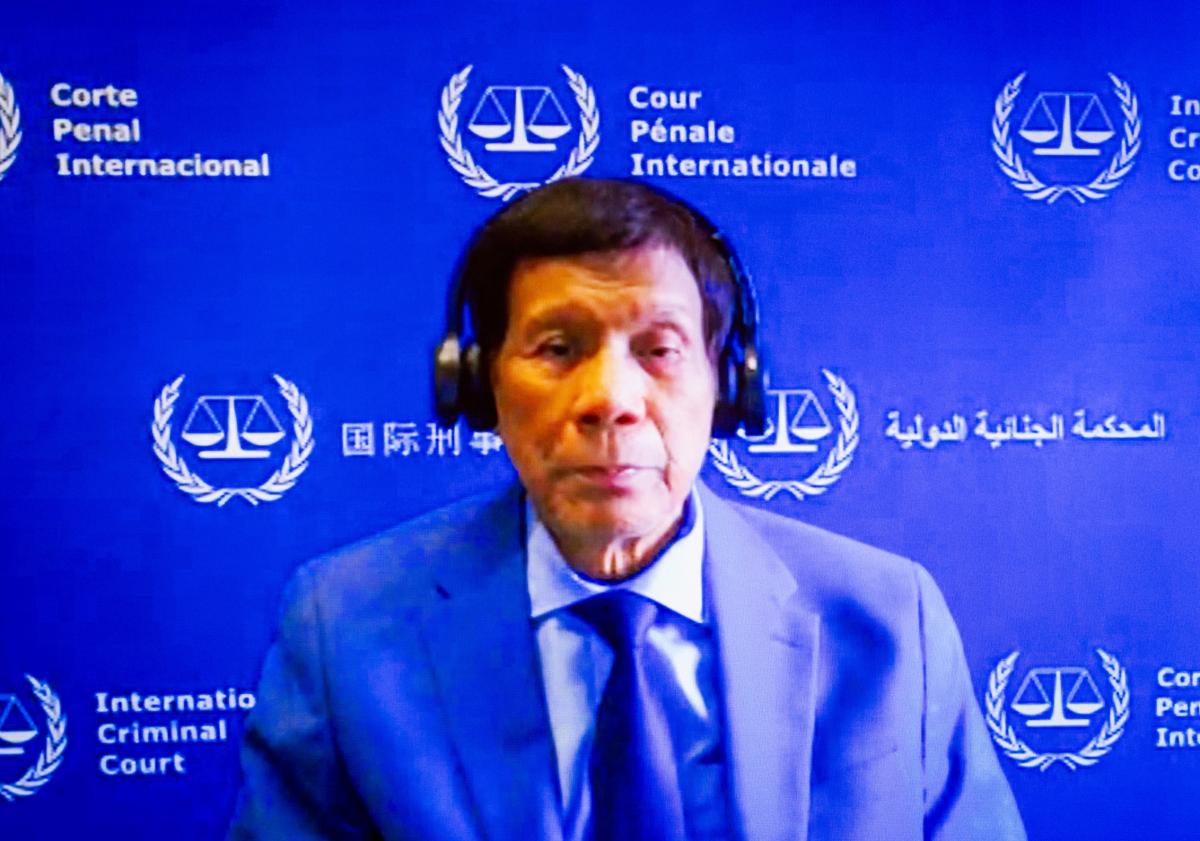
A CERTAIN senator was quoted some time ago as saying that Filipinos supporting the intentions of the International Criminal Court to probe the Duterte administration’s bloody tokhang campaign should be made to sing the national anthem 1,000 times to regain their sense of patriotism. The clear message was that, if you were in favor of an international body looking into local crimes and liabilities, you were being anti-Filipino. 

It wasn’t surprising, of course, given that the good senator was among those prominently mentioned as possible defendants in the case. In jest, he said that if he were found guilty, he would miss his grandchildren if he were incarcerated in the Hague. And just to be sure, he added that not all people in jail are guilty—he certainly wasn’t.

Without commenting on the merits or demerits of a hypothetical ICC case against officials of the previous administration—something we have enough lawyers on both sides to perorate upon—I’ll just observe that the quality of justice the senator and his likely dock mates can expect from the ICC will surely be far better than that received by the victims of summary and extrajudicial executions under the regime of tokhang. In the very least, guilty or not, they will be alive and reasonably comfortable, although they might temporarily miss the company of family and friends, as those bereaved by tokhang have come to experience for all eternity.

I was intrigued by the suggestion that repeated singing of “Lupang Hinirang” would make a better Filipino out of me, or at least make me think of the ICC as some kind of fire-breathing Godzilla threatening to incinerate the Filipino race off the face of the earth.

There are far more effective songs  for instilling love of country. Yoyoy Villame’s “Philippine Geography” will teach us more about the country we say we’re dying for than our anthem, which must have been sung hundreds of times in the halls of Congress without much palpable effect on the patriotism of some occupants. At least I’m assuming it’s regularly sung there; if not, then perhaps our senator can start a little closer to home.

(As for professing one’s innocence, oldtimers will remember Diomedes Maturan’s “Huwag Kang Manalig sa Bulong-Bulungan” (remade by Victor Wood). Even Billy Joel warbled that “Although this is a fight I can lose, the accused is an innocent man!”)

On a more serious tangent, let me swipe a page from a recent talk given by UP President Angelo A. Jimenez, himself a lawyer, at a seminar of police officials on the thorny topic of national security and human rights:

“Our police officers should be commended for the seizure of a total of P6.2 billion worth of illegal drugs in the first half of 2023. The PNP’s Intensified Cleanliness Program, aligned with the Philippine Anti-Illegal Drugs Strategy, has employed a coordinated approach among government agencies to create drug-free communities. This shows that a serious and successful war on drugs can be undertaken without any needless loss of life, for as long as we observe the law, fight corruption, and remember the need for compassion in a just society. Even drug suspects have rights—indeed, even convicted prisoners—and we maintain our moral superiority by respecting those rights, even as we dispense justice. Only then and only thus can we regain our people’s trust.

“Ours is a society that operates on leadership by example. If people see their public officials and law enforcers doing the right thing, they will follow suit. If they see the law being flouted by these very same people—such as unauthorized government SUVs using the bus lanes along EDSA—they feel entitled and emboldened to do wrong themselves. Exemplary behavior at the top will create and strengthen the moral foundation for a responsible and law-abiding citizenry. We cannot demand what we ourselves cannot supply or enforce.”

Frankly, I myself doubt that a full-blown ICC investigation will prosper under the present dispensation, which reportedly promised the senator that not a hair of his (but then, where’s the hair?) would be touched by the ICC, back when the two camps were—just to use an idiomatic expression, and meaning no malice—as thick as thieves.

Now that the knives are out between the erstwhile allies, the ICC card seems to be in play again, teasing us with the possibility of justice being done, but I’m not holding my breath. It’s just too big a risk for those in power to take, too wide a door to open—like Cha-cha for ostensibly just economic provisions. Who knows what other crimes the ICC will unearth, who else they will indict, and how far back they will go? Once you give people a taste of respect for human rights, why, they’d be at it like potato chips—they’ll keep wanting more. There’d be chaos in the streets and no, sir, we can’t have any of that, just when we need law and order.

For this reason alone, I don’t think our good-humored senator has anything to worry about, neither from the Palace nor from the Hague. He can finish his term, retire to his farm in peace, shoot the breeze (or something else) with his old boss, and have his memoirs ghost-written. Unless, of course, a certain lady succeeds in clawing her way to the top, in which case the senator—still fairly young as senior politicos go—can expect a new lease on his public life and serve afresh, perhaps in the Cabinet, where men and women of action belong, rather than in the Senate, where they’re reduced to preening and tweaking their moustaches.

Someone with far greater and indisputable jurisdiction will take over this case and pronounce ultimate judgment; he will need no rapporteur, no investigating party, no authorization, no earthly prison; his verdict will be unappealable. His brand of justice will make the ICC look like talent-show judges by comparison. Those found guilty will be killing lots of time in a very warm place. Some people better start learning and singing hymns of repentance.

Qwertyman No. 66: Beyond Reportage

Qwertyman for Monday, November 6, 2023

IT WAS probably fitting that I finished reading Patricia Evangelista’s highly acclaimed account of “murder in my country,” Some People Need Killing (Random House, 2023), over a holiday devoted to remembering the souls of the departed. I had received a pre-publication review copy from the publisher months ago under a strict embargo not to talk about it until its formal launch. As it happened, it lay under a pile of other books to be read until a flurry of posts and reviews reminded me that it was out in the open, and that the secret—not just the book, but also what it contained—could now be shared.

I can still recall the day—May 15, 2004—while we were celebrating Pahiyas in Lucban when I got the news on my phone that our representative to the English Speaking Union’s annual public speaking competition in London—a bright and pretty wisp of a teenager named Patricia Evangelista—had won the top prize. We were new to the ESU—subsequently we would produce two more global champions—and it was a grand way to announce to the world that we Filipinos could produce more than boxing heroes and beauty queens. Here was 18-year-old Patricia who could think on her feet and speak to issues of international importance, the poster child of Filipino intelligence and audacity, whose command of the English language led her to meeting no less than Prince Philip, the Duke of Edinburgh, in what amounted to a mini-coronation in recognition of her talent.

As magical as that moment was, I can only imagine how, in the months and years following, it must have begun to grate on the young Patricia to be asked to deliver her prizewinning speech in public forums over and over again, like a wind-up doll, and suffer the fate of prodigies who peak too soon. Surely that was just a beginning; surely there was more she could do—had to do—to outlive her Cinderella-like debut in London. 

I would see some of that when she enrolled in my undergraduate Fiction Writing class in UP. I knew who she was and made sure to give her no special treatment—indeed to lean even a little harder on her, knowing she had what it took—but she got a “1.0” all the same, one of the few I ever gave. I can’t claim to have taught her much how to write imaginatively—her own reading had likely primed her for that—but I can’t pretend not to be proud of what she turned out to be, my pride tempered only by fatherly concern.

Today, almost 20 years later, the sometime ingénue returns to the global stage as a hard-bitten, chain-smoking investigative reporter—a “trauma journalist,” in her own words, very possibly one of the world’s best yet again. But there is no real prize, no princely reward, for this kind of distinction, only pain and sorrow which—subdued too many times as a matter of professional discipline—exact their toll on the body and spirit. Patricia has had to suffer that to be able to tell her story as clearly as she could, unimpeded by the hand-wringing and the preachiness that often accompany such exposés of grave misconduct. 

This is not a review of the book’s explosive investigation into the thousands of extrajudicial killings that happened under the Duterte regime—that’s been done very capably by others, and is already the subject of international inquiry. The book will deserve all the journalistic accolades coming its way as an exemplar of excellent reportage. 

I will not even quote from the book, as there are simply too many quotable paragraphs to choose from. Rather, I want to note, from my privileged perspective and for the benefit of younger writers, how Patricia works with language to best serve the truth. Quite apart from its journalistic merits, Some People Need Killing is one of the best textbooks out there for what we now call “creative nonfiction,” a compound of reportage, memoir, history, and fictional technique. Indeed, beyond reportage, the book is a long personal essay in which the author is inextricably part of the story, a significant step away from the impersonal and largely mythic “objectivity” that we associate with traditional journalism.

Probing murder after ghastly murder—sometimes even coming on-scene to prevent one—Patricia is both chronicler and agent, witness perhaps not to the killing itself but to the larger crime of its planning and the exoneration of its perpetrators. Handling the most sensitive and dangerous of material, she draws on more than skill to tell her story; she demonstrates raw courage, an increasingly rare quality among journalists easily seduced and silenced by pragmatism. She names names, which surely will bear consequences both ways. 

I’ve often remarked in my lectures that the most endangered writers in this country are neither the poets nor the novelists, but the journalists who cannot hide behind metaphor and simile to tell the truth. We fictionists make artful lies which governments rarely have the intelligence or the patience to grapple with. Journalists live in the literal world inhabited as well by cops and crooks; what’s interesting is how the flimsy but oft-repeated fictions of “killed while resisting arrest,” so pervasive in this book, emerge from that reality.

Evangelista’s overarching technique is one of narrative restraint, informed by an English major’s awareness of how language and reality shape each other. She constantly parses the perversions of language—how words like disappearsalvageencounterverification, and even her own name assume different uses and meanings over time, in specific contexts. She knows—as I remind my students—that for dramatic effect, less is often more, that short sentences and blunt, single-syllable Anglo-Saxon words rather than the long, Latinate ones favored by lawyers hit closer to the gut and heart.

She is keenly aware of the power of irony—of professed liberals supporting EJK, of a morally ascendant Noynoy Aquino showing little empathy for ordinary folk, of her own journalist-grandfather affixing his signature to a petition supporting the older Marcos, and of communal complicity in the reign of terror. She uses people’s own words against them, quoting from the record. She avoids direct editorializing, or speaking in lofty generalizations like “justice” and “civil liberties,” and instead, in the best noir tradition, sees “sagging two-story tenement buildings (that) opened into dirt roads layered with garbage and last week’s rotten Happy Meal.”

After I had finished the book, I woke up at 4 am from a nightmare about running shirtless down a wet, earthen road. I was lucky. Patricia Evangelista lived through it, and I don’t even know if she’s woken up yet. Have we?

(Image from Rappler.com)