Qwertyman No. 109: Digong’s Conversion

Qwertyman for Monday, September 2, 2024

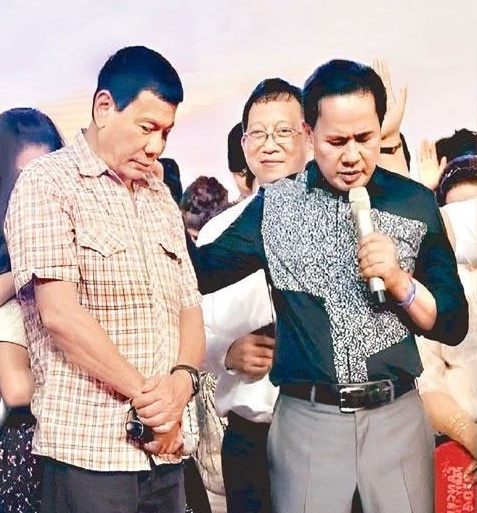
RATHER THAN mock former President Rodrigo R. Duterte for his unflinching support for his bosom friend and spiritual adviser, the fugitive Pastor Apollo Quiboloy, I think we should praise and congratulate him for finally seeing the light and acknowledging the importance of human rights.

It must be age, or the reflection afforded by retirement, but the Digong Duterte we heard from last week in the wake of the massive police raid on Quiboloy’s lair was worlds apart from the apoplectic and coarse-tongued person we used to know. It took some time—likely aided by a sobering reversal of political fortunes—but gone is the swaggering Mussolini of the past, prone to profanity and what his apologists liked to call “hyperbole,” replaced by the pained and measured indignation of the aggrieved.

Of course, his statement could have been crafted by one of his former spokespersons, who must therefore take responsibility for the minor grammatical and stylistic infelicities in the text—but how can we even complain about language when gross human rights violations are on the table?

For those of you who missed it because you were wasting your time deploring Caloy Yulo’s filial impiety, here’s what PRRD said, in full:

“Our country has never been in a more tragic state as it is today. Rights have been trampled upon and our laws, derided.

“Early today, elements of the Philippine National Police Regional Office, led by Gen. Nicolas Torre Ill, forced their way into the Kingdom of Jesus Christ compound which resulted to (sic) a violent confrontation and the unfortunate death of one KOJC member and the requiring of (sic) immediate medical attention of many others.

“We sympathize with the members of the KoJC for having become victims of political harassment, persecution, violence and abuse of authority. This certainly puts a dark stain on the hands of those involved in today’s incident, led by no less than the top police official of the region.

“We call on the remaining decent and patriotic members of our government not to allow themselves to be used and to be abusive and violent in enforcing illegal orders.

“We call on all Filipinos, regardless of political persuasion, to offer prayers for peace and justice, and to spare our people of the unwarranted tension brought about by the reign of fear and terror by people sworn to uphold the law and protect the citizens of this country.

“Again, let us ask this administration how it can guarantee the preservation of the constitutional rights of our fellow Filipinos when even the most fundamental of these rights are being blatantly violated? (sic)

Why, minus the edits, this could have passed for something that PRRD’s arch-nemesis, former Sen. Leila de Lima, could have said a few years ago, before she went off to prison. Or it could have been mouthed by the late Chito Gascon, whose Commission on Human Rights PRRD sought to abolish for meddling in police investigations into dastardly drug deals, even getting Congress to pare its budget down to a more suitable P1,000. 

That Rodrigo Duterte could now speak so eloquently and convincingly of the need to uphold human rights is a testament to the possibility and power of redemptive conversion, which such famous miscreants as Paul of Tarsus and Ignatius of Loyola underwent. Gazing out on the horizon on the beaches of Davao (or in the Quiboloy compound, in his new job as its administrator), the former president must have felt a pang of remorse for all the lives that were needlessly lost under his administration—all because his followers in the police failed to understand, as his spokesmen were at pains to emphasize, that he was “only joking” and was given to “exaggerating” for rhetorical effect.

How in heaven’s name could they have taken him literally when he told a controversial police officer whom he assigned to a southern city in 2019, “Go there and you are free to kill everybody. Son of a b****, start killing there. The two of us will then go to jail!”

The following year, at another event in another province, PRRD was quoted by the newspapers as saying, in Filipino, “All addicts have guns. If there’s even a hint of wrongdoing, any overt act, even if you don’t see a gun, just go ahead and shoot him. You should go first, because you might be shot. Shoot him first, because he will really draw his gun on you, and you will die…. Human rights, you are preoccupied with the lives of the criminals and drug pushers. As mayor and as president, I have to protect every man, woman, and child from the dangers of drugs. The game is killing…. I say to the human rights, I don’t give a shit about you. My order is still the same. Because I am angry!”

Now, there’s every possibility that the president may have been misquoted by journalists hungry for incendiary news. But even granting that PRRD did say horrible things like that—perhaps in a fit of desperation over the fact that the drug menace he promised to eradicate in six months was still very much around toward the end of his presidency—that allegedly murderous despot is a ghost in the past. Today’s Digong is a sensitive soul with a nuanced sensibility that understands and will not countenance “abuse of authority” and “illegal orders,” especially when these are implemented by ingrates in the police force whose base pay he doubled (shame on the 2,000 cops who apparently forgot this in their brazen assault).

Indeed, if Rodrigo Roa Duterte can undergo and manifest such a miraculous conversion, then hope yet exists for the rest and the worst of us, who wallow in unproductive cynicism. Indeed it might even be that his resistance to the idea of yielding Pastor Quiboloy to the authorities stems from the deep debt of gratitude he feels toward his spiritual adviser, with whom he must have read and parsed many a Bible story. If there’s anything we Filipinos and especially the Dutertes understand and respect, it’s the value of friendship—right? Something in me already misses the old Digong, but I’ll gladly march with this new one in defense “of the constitutional rights of our fellow Filipinos.” I hope Sen. Leila can find it in her heart to forgive and forget, and link arms with Lady Justice’s latest convert.

Qwertyman No. 108: The Owl and the Parrot

Qwertyman for Monday, August 26, 2024

The Owl and the Pussy-Cat went to sea

In a beautiful pea-green boat.

They took some honey, and plenty of money

Wrapped up in a five-pound note.

WHO’S THE English-educated Pinoy of my generation who doesn’t remember this verse by Edward Lear, a so-called “nonsense” poem which we happily recited even if, as expected, it made no sense? It had animals who had fun doing outrageously improbable things together, and we were so caught up in the magic of a pig who sells his nose-ring so the owl and pussycat could get married by a turkey that we even believed a word like “runcible” existed, even if it didn’t, at least not before the poem. After the poem—and because of the poem, first published in 1871—“runcible spoon” entered the English dictionary as “a sharp-edged fork with three broad curved prongs.” That’s why MS Word no longer flagged “runcible” as a misspelling as I typed it on my computer a few minutes ago.

That’s the power of true literature, something that gets beneath your skin and deep into your subconscious imagination, more effectively than reason or logic can, so that it becomes more real and more credible than reality itself. There’s a disarming honesty to nonsense poetry that doesn’t pretend to be anything else but. (Of course, given how students of literature have to sound deathly scholarly to earn or deserve their PhDs, a lot more nonsense has been written and published in ponderous journals about what “The Owl and the Pussy-Cat” really, really means.) 

As adult readers or reciters, we can all just enjoy the image of the owl and the pussycat dancing “by the light of the moon,” and think about how good that would be to do with our owl, our pussycat, so why can’t or don’t we? We’re amused but wistful at the same time, and that’s a complex emotion—wistfulness or “regretful longing” especially cuts backward through time and experience to make spot valuations, mostly about losses.

But let’s get back to the fun part—or maybe not so fun. 

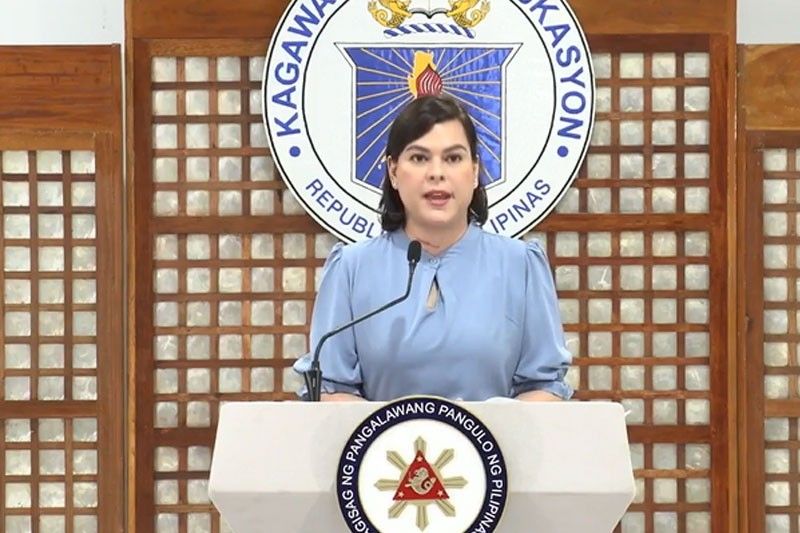
Last week, it came to our attention that our multi-talented Vice President Sara Duterte—fresh out of her role as the “mother of Philippine education”—is apparently also an author of children’s books, having come out with one titled Isang Kaibigan (A Friend). We should all be happy when our political leaders turn to writing (presumably without the aid of a ghost writer), because it offers proof that (1) they actually think; (2) they still know their subjects, predicates, and objects, and therefore understand that people commit acts that lead to consequences; and (3) they know they won’t be in power forever, and want to be remembered in a good way for a long time.

That said, it’s a pity that most politician-authors throw away their chance at real greatness (in literature, if not in politics) by churning out some commissioned biography inflating or embellishing his or her accomplishments while leaving out the tricky ((and truly interesting) stuff. Good business for peons like me, but usually so poorly done as to be forgettable, the worst fate a book can suffer. If you think of pole vaulting, the bar was set highest at 7 meters by Winston Churchill, who became both Prime Minister and Nobel Prize winner for Literature (yes, literature). At around 5.5 meters we have genuinely talented fellows like Jeffrey (now Baron) Archer, the colorful Conservative MP who wrote popular novels, one of which sold 34 million copies (out of 320 million total for his entire oeuvre). Most others can barely hop over the bar at one meter. 

Enter VP Sara, whose maiden venture, a 16-page book, reportedly touts the virtues of friendship among people in dire straits. While it makes me wonder why the VP’s thoughts are drifting in this direction, it’s surely a worthwhile message, given all the unfriendliness in Philippine politics—even in the Philippine Senate. 

That’s where VP Sara went to ask for a P2-billion budget for her office, including a paltry item of P10 million for the printing and distribution of 200,000 copies of her book. Rather reasonably, Sen. Risa Hontiveros asked the VP what her book was about, prompting this strangely tart reply:

“This is an example of politicizing the budget hearing through the questions of a senator. Her problem is, my name is listed in the book. And we will be giving that book to the children. And those children have parents who will be voting. And my name will be spread wherever the book is given.”

I became even more curious about what was in the book, so I went online and discovered that it was the story of an owl whose nest is destroyed by a typhoon and who then finds refuge with a friendly parrot. So, okay, maybe it won’t win any PBBY book prizes for writing for children. And I’m afraid to say that with answers like that, Author Sara won’t fare too well in the writers’ workshops, where the panelists are far nastier than Sen. Risa.

But Isang Kaibigan establishes an important point, right? Friendships are important; friendships can save you; what you do for a friend in need today will be remembered tomorrow. (Never mind what the naughty wags will say about the VP being left out in a political storm—who will offer succor? Who will prove her true friends while she rebuilds her house toward 2028?) And where more pretentious authors typically load their “About the Author” pages with cloying lists of “awards won” and annoying cliches like “He divides his time between Bacolod and Berlin,” VP Sara keeps it simple and gets straight to the point: “Isa siyang kaibigan.” She’s a friend!

So what’s not to like? Well, maybe the P10 million bill, which lesser writers like me can only be envious of, having to wait years to watch our print run of 1,000 copies vanish book by painful book. VP Sara’s 200,000 guaranteed sales will surely break bestseller records, and we can gnash our teeth all we want but it still won’t answer our question, “How to be you?”

I don’t know how many millions of pounds Sir Winnie asked for and got from His Majesty’s government to print and distribute his books during the war, but it must have been a lot and the Brits must have read all of them because they certainly came through with just their blood, tears, and sweat. Sometimes, some honey and plenty of money is all an author needs to shine and be happy.

Qwertyman No. 100: The Political Doghouse

Qwertyman for Monday, July 1, 2024


TO NO one’s great surprise, Vice President Sara Duterte resigned from her concurrent posts as Secretary of Education and vice-chair of that long-named (short name: red-tagging) council. Maybe because I was far away from Davao when the news came in, I heard no wailing and gnashing of teeth. A tree fell in the forest. The world moved on.

Inday Sara promised to continue to be a mother to the country’s teachers—the same people she had ordered to strip their walls bare of teaching aids. She was back in the news a week later after reportedly announcing that her father and two brothers were going to run for senator in next year’s elections. Her name was brought up as a possible “leader of the opposition.” None of these silly propositions generated the kind of groundswell she may have been hoping for, as someone once touted to be a shoo-in for the presidency who just got suckered into sliding down to No. 2 (to her Papa Digong’s boundless dismay) in a deal craftily brokered by former President Gloria Macapagal Arroyo.

To Duterte diehards—and let’s face it, there are still quite a few, although being out of office tends to lose people by the day—Sara will always be their golden girl, the victim of craven betrayal by their erstwhile “Uniteam” ally. To her non-fans, she will always be the bratty bureaucrat who demanded P650 million in confidential funds and who bragged about spending P125 million of DepEd money in the time it takes you to say “low PISA scores.”

Where she goes from here is the big question. In a touch of supreme irony, she now finds herself in almost exactly the same position as her predecessor, Leni Robredo, who was boxed out of Digong Duterte’s Cabinet and pretty much left on her own.

And there the inevitable and (for Sara) unfortunate parallels arise, because VP Leni shunned privilege, turned her exclusion into a challenge, and made the OVP a model of what a government office with meager funds could do, with honest, visionary and purpose-driven leadership. Leni became, and continues to be, beloved, as close to a saintlike figure as any elected official could aspire to be. That this quality failed to propel Robredo to the presidency says more about our electorate and political culture than about her—the dark, mutable, and serpentine side of Philippine politics that the Dutertes thrive in.

I have no doubt whatsoever that Sara Duterte will continue to be politically engaged and even run for the presidency in 2028, no matter what. In that, she will have less to worry about from Leni Robredo, who has expressed her desire to return to local politics in Naga, than from the likes of the eminent Sen. Raffy Tulfo, who topped Pulse Asia’s latest survey of presidential contenders at 35 percent against Sara’s 34 and Leni’s 11. Yes, that’s the kind of electorate we have, which can’t tell between meritocracy and mediocrity, so Sara will prosper in that environment and may even win against BBM’s anointed (Speaker Martin Romualdez scored a dismal 1 percent in the same survey).

Still, 2028 is four long years down the road, a lot of time for things to congeal and to unravel. Familia Duterte will close in and consolidate behind the name and the tough-guy brand, and in the event that all three Duterte boys make it to the Senate—an absurdity moderated only by the presence today of so many DNA matches in that august body—then Sara’s path to the Palace will have been cleared by a bulldozer. 

Of some minor interest is the fate of the two Digong acolytes in the Senate—Sens. Bong and Bato—who seem to be feeling orphaned. Both have been making the requisite pledges of fealty to the Dutertes, despite Bong Go being slammed by Davao Mayor Baste Duterte for not defending their home turf loudly enough from the lofty positions to which their patron raised them. Chastised, the two said they would support a Senate inquiry into the “excessive use of force” in the police raid against fugitive pastor Apollo Quiboloy, whom Sen. Bato had vowed to guard with his life should he appear in the Senate under subpoena—a degree of sensitivity and solicitude profoundly absent from the murderous “tokhang” campaign that both men supported.

So the Dutertes are far from dead and gone, but BBM—and let’s not forget the Kakampink forces simmering below the surface—has four more years to vaporize the Uniteam that never really was. (And then again, BBM claims that the Uniteam remains intact—nothing to worry about, folks!—because the Dutertes’ political party, the PDP, was never part of the coalition. Say that again?)

More important than preserving the fiction of the Uniteam, the opening provides Marcos with yet another opportunity to shore up his political capital—already boosted by his turnaround from his predecessor’s policies on Chinese aggression and on the war on drugs—by selecting a qualified, full-time professional for the post. Several names have been mentioned in a hypothetical shortlist, none of them apparently an expert in basic education, where most of our problems begin. And while it may be true, as Inday Sara herself noted, that you don’t have to be a teacher to be DepEd secretary, you have to understand that Philippine education needs more than mandatory toothbrushing to brighten up.

Ultimately, Sara Duterte’s resignation from her DepEd post may yet be her most valuable service to the nation, by opening the door to someone vastly more qualified to take on that critical job—unless, again, the DepEd is made to serve its other purpose as a doghouse for political strays.

Qwertyman No. 98: Panahon Not

Qwertyman for Monday, June 17, 2024

WHOEVER URGED President Marcos Jr. to issue that memo mandating all government agencies and schools to sing the new “Bagong Pilipinas” hymn and recite the accompanying pledge at flag ceremonies should be banished to the farthest reaches of Malacañang, in the archives chronicling his predecessors’ most stupid mistakes.

PBBM was already riding a cresting wave of nationalism (bordering, let’s admit it, on Sinophobia for many) because of Chinese aggression in the West Philippine Sea and scandals related to offshore gambling operations run by Chinese in the country. He also earned grudging points from even his staunchest critics and detractors for seemingly being open to investigating the human rights excesses of his iron-fisted predecessor and sanctioning the arrest of one of that man’s most notorious cronies (an unsuccessful operation that Vice President Sara Duterte found the delicacy to deplore for its “excessive use of force,” which you never heard her say about her papa’s murderous tokhang campaign). 

Bongbong Marcos, in other words, was beginning to look and sound like what Rodrigo Duterte never could: a president with a grasp of the issues and a sensitivity to public opinion. Even former Associate Justice Antonio Carpio, a prominent figure in the opposition in 2022, praised BBM for the latter’s recent foreign policy speech in Singapore, where he cited the Treaty of Washington whereby Spain ceded Philippine territory beyond what was stipulated in the Treaty of Paris. “This finally corrects the greatest misconception in Philippine history,” said Carpio, a militant advocate of Philippine territorial rights, “a watershed moment in our fight to defend our island territories and maritime zones in the West Philippine Sea.” 

No, it didn’t mean that the old pre-EDSA issues were forgiven and forgotten, nor that new ones like the dubious Maharlika fund haven’t emerged over the first two years of his tenure, on top of his wanderlust. But BBM has had the good luck—if you can call it that—of inheriting Chinese expansionism and the Duterte legacy, and the good sense to get on the right side of these thorny concerns. 

Granted, there’s no real way to know if his deviation from Digong’s Sinophilia and trigger-happiness is sincere and not just a ploy to torpedo Inday Sara’s claim to succeeding him and install his own man. At this point, it doesn’t seem to matter much; so brazen has Chinese aggression been that even Duterte’s boys in the Senate have felt compelled to wear “West Philippine Sea” T-shirts, even as their lesser allies pose as “peaceniks” who somehow saw nothing wrong with the former president waging war on his own people.

So did BBM’s team—or BBM himself—think that this was the right time to reap some of that PR dividend, consolidate his gains, and foist the “Bagong Pilipinas” brand on the country through a new song and pledge?

The implicit rationale, we can understand. It’s a page right out of his dad’s New Society playbook: use music—indeed, use culture and education—to generate team spirit, or at least some semblance of it. That’s what anthems, hymns, and fight songs are for, from the American Civil War’s “Battle Hymn of the Republic” to the quintessentially English “Jerusalem” and the Nazi “Horst Wessel Lied.” Here in the Philippines, no martial-law morning was complete without the “Bagong Lipunan” (its real title was “Bagong Pagsilang”) song playing on the radio. 

To be fair (if it’s even possible to say that, given that the regime put me in prison for seven months in 1973), it was a catchy, well-written song, with a martial (what else) rhythm; that we still remember at least the tune five decades later attests to the success of its imprinting. It resurfaced on the airwaves shortly after BBM took office in 2022, reviving apprehensions of a New Society 2.0, but it seems to have been pulled shortly after, leading me to suspect that BBM, after all, wanted to be taken on his own and move away from his father’s shadow, which would have been the smart (if nearly impossible) thing to do.

But the imposition of this “Bagong Pilipinas” hymn and pledge again invites uncomfortable parallels and comparisons with what FM Sr. did—and I don’t mean just having the martial-law anthem composed and played, but everything else that came with the New Society: the corruption, the arrests and killings, the submission of our institutions to autocratic rule. 

If you don’t want to go there, let’s talk about just the “Bagong Pilipinas” song itself—have you even heard it? I’m not a music critic, but even I can tell that it’s barely singable, with an uneven tempo, with immemorable lyrics, the constant refrain of which is “Panahon na ng pagbabago” (“It’s time for change”), probably the tritest political message there ever was. You need a trained choir and a band capable of trumpet flourishes to render the piece effectively; I can be convinced that this will work only if I see and hear the President himself and his Cabinet singing the song from memory at the Malacañang flag ceremony (and let’s add the new Senate President, who has embraced the directive).

I don’t know how many millions went to the lyricist and composer of the song, who have mysteriously remained anonymous; clearly, they weren’t the late National Artists Levi Celerio and Felipe de Leon, who worked together on the “Bagong Lipunan” hymn. Perhaps BBM’s critics should be happy that they weren’t that good because, presidential mandate or not, this hymn and its equally problematic pledge seem fated to be ignored and forgotten for their sheer unusability, superfluity, and irrelevance.

PBBM should have been advised that at a time when the nation needs to pull together against a visible external threat, we need constancy, not change, not confusion over who and what we are. We need our one and only National Anthem more than ever, and the same Pledge of Allegiance we have been reciting since our childhood years. Panahon naPanahon not.

Qwertyman No. 88: Wanted: Gentlemen

Qwertyman for Monday, April 8, 2024

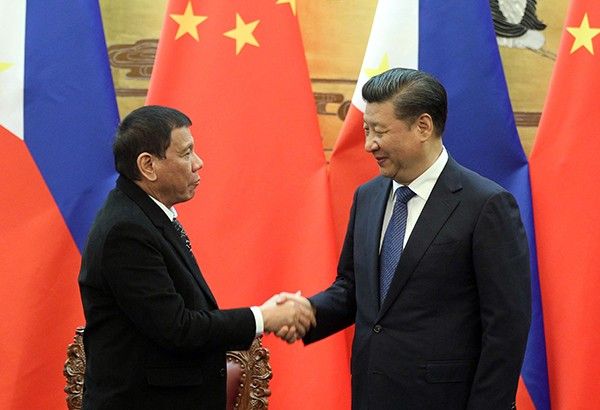
A SHIPLOAD (let’s get that consonant right) of questions has been raised over the “gentleman’s agreement” alleged to have been entered into between former President Rodrigo Duterte and China’s Xi Jing Pin over the disputed Ayungin Shoal in the West Philippine Sea. China has suggested as much, complaining about the present administration’s “inaction” over what it apparently considered a done deal.

According to former Duterte spokesman (should we also call him “former human rights lawyer”?) Harry Roque, Duterte and Xi did pledge between them to “maintain the status quo” in the troubled zone, meaning, there would be no rebuilding or reinforcement of Philippine installations there—specifically referring, I suppose, to the hopelessly decrepit BRP Sierra Madre that has to be the sorriest and loneliest maritime outpost in the world. 

Chinese Coast Guard cutters have routinely tried to block Philippine vessels attempting to resupply the Sierra Madre. A month ago, four Filipino sailors were injured when they were water-cannoned by the Chinese, and their ship rammed. Our resupply ships have been running these Chinese gauntlets to reach the marines on the grounded Sierra Madre, which symbolically enforces our claim to the Spratly Islands, or that portion of it we call the Kalayaan Islands group. This was precisely the kind of situation that Duterte and Xi reportedly tried to avoid with their agreement.

Upon hearing his former colleague’s explosive revelations, former presidential counsel Salvador Panelo quickly went on the air to dismiss them as the fabrications of a publicity-seeker, assuring the public that Digong himself had denied the report. He added that his old boss would never have sold out the country that way. In fact, Panelo claimed, Duterte had brought up the Philippines’ arbitral victory against China at the Hague with Xi—a judgment Duterte had ironically threatened to toss into the wastebasket as nothing more than “a piece of paper.” Roque then went on to explain that the “gentleman’s agreement” covered not just Ayungin Shoal but the entire West Philippine Sea, enlarging its scope exponentially. If it was a lie to begin with, as Panelo suggested, well, the lie got much bigger.

This spectacle of two Duterte mouthpieces not just speaking at cross-purposes but putting each other down would be immensely entertaining if our national territory and patrimony weren’t at stake. It doesn’t really matter who between these two, uhm, gentlemen is right, or whom we end up believing. What’s clear is that either way, beyond token whimpers and some lip service to sovereignty, Duterte and his crew never did much to defend Philippine territorial and maritime rights in the WPS, debating with their local critics on the issue more than with the Chinese, even waging a vain effort to denigrate the Hague ruling and those who had fought so hard for it. 

Given the new administration’s popular pivot toward a more aggressive stance on China, we can understand if Duterte and his boys seem scrambling to be seen as having been patriots all along. Who knows, maybe they were, and maybe we poor kibitzers were just too dumb or too dense to see that. 

Remember when Duterte made that famous “wastebasket” remark in May 2016? Then-spokesman Roque tried to spin that by saying no, no, no, you have to “apply the proper construction” (his exact words) to that statement—meaning (hold your breath), “He really didn’t mean it that way. Instead, go back to his UN speech where he vowed to defend the Philippines against China. When he said ‘I’ll throw this into the wastebasket,’ he wasn’t speaking for himself, he was speaking from the point of view of the Chinese.”

Huh? Forgive me if I can’t wrap my non-lawyerly mind around this “proper construction,” let alone explain why a Philippine president should be expressing the Chinese view.

To help sort this mess out, Sen. Risa Hontiveros has called for a hearing to find out if, indeed, Duterte and Xi had, as the young ones put it, an “MU” over Ayungin and the WPS. Predictably, Panelo thinks this probe will be a “waste of time,” insisting that the reported “gentleman’s agreement” never happened. 

Another newspaper quotes an anonymous Chinese official saying, like Roque, that it did. Under the reported terms of the deal, China would allow the Philippines to resupply the BRP Sierra Madre for as long as it did not reinforce or rebuild the ship. (How the agreement supposedly applies to the entire WPS as Roque claims remains murky.)

One would think that a true, broader, and more meaningful “gentleman’s agreement” in the West Philippine Sea would involve the non-building of offensive structures and bases, the avoidance of violent confrontation, respect for our fishing rights, and freedom of navigation for all nations in international waters—all of which the Chinese have flouted with impunity. Instead—and if true—all our former president did was to ask the Chinese for permission to resupply our own aging and ailing vessel, in exchange for a promise to let it rot. Whether that’s treason or patriotism, you be the judge.

Pending further inquiry, I myself suspect that some kind of bargaining did take place, but I somehow doubt that it was a gentleman’s agreement. For that you’d need at least two gentlemen in the house.

Qwertyman No. 79: Hymns of Repentance

Qwertyman for Monday, February 5, 2024

A CERTAIN senator was quoted some time ago as saying that Filipinos supporting the intentions of the International Criminal Court to probe the Duterte administration’s bloody tokhang campaign should be made to sing the national anthem 1,000 times to regain their sense of patriotism. The clear message was that, if you were in favor of an international body looking into local crimes and liabilities, you were being anti-Filipino. 

It wasn’t surprising, of course, given that the good senator was among those prominently mentioned as possible defendants in the case. In jest, he said that if he were found guilty, he would miss his grandchildren if he were incarcerated in the Hague. And just to be sure, he added that not all people in jail are guilty—he certainly wasn’t.

Without commenting on the merits or demerits of a hypothetical ICC case against officials of the previous administration—something we have enough lawyers on both sides to perorate upon—I’ll just observe that the quality of justice the senator and his likely dock mates can expect from the ICC will surely be far better than that received by the victims of summary and extrajudicial executions under the regime of tokhang. In the very least, guilty or not, they will be alive and reasonably comfortable, although they might temporarily miss the company of family and friends, as those bereaved by tokhang have come to experience for all eternity.

I was intrigued by the suggestion that repeated singing of “Lupang Hinirang” would make a better Filipino out of me, or at least make me think of the ICC as some kind of fire-breathing Godzilla threatening to incinerate the Filipino race off the face of the earth.

There are far more effective songs  for instilling love of country. Yoyoy Villame’s “Philippine Geography” will teach us more about the country we say we’re dying for than our anthem, which must have been sung hundreds of times in the halls of Congress without much palpable effect on the patriotism of some occupants. At least I’m assuming it’s regularly sung there; if not, then perhaps our senator can start a little closer to home.

(As for professing one’s innocence, oldtimers will remember Diomedes Maturan’s “Huwag Kang Manalig sa Bulong-Bulungan” (remade by Victor Wood). Even Billy Joel warbled that “Although this is a fight I can lose, the accused is an innocent man!”)

On a more serious tangent, let me swipe a page from a recent talk given by UP President Angelo A. Jimenez, himself a lawyer, at a seminar of police officials on the thorny topic of national security and human rights:

“Our police officers should be commended for the seizure of a total of P6.2 billion worth of illegal drugs in the first half of 2023. The PNP’s Intensified Cleanliness Program, aligned with the Philippine Anti-Illegal Drugs Strategy, has employed a coordinated approach among government agencies to create drug-free communities. This shows that a serious and successful war on drugs can be undertaken without any needless loss of life, for as long as we observe the law, fight corruption, and remember the need for compassion in a just society. Even drug suspects have rights—indeed, even convicted prisoners—and we maintain our moral superiority by respecting those rights, even as we dispense justice. Only then and only thus can we regain our people’s trust.

“Ours is a society that operates on leadership by example. If people see their public officials and law enforcers doing the right thing, they will follow suit. If they see the law being flouted by these very same people—such as unauthorized government SUVs using the bus lanes along EDSA—they feel entitled and emboldened to do wrong themselves. Exemplary behavior at the top will create and strengthen the moral foundation for a responsible and law-abiding citizenry. We cannot demand what we ourselves cannot supply or enforce.”

Frankly, I myself doubt that a full-blown ICC investigation will prosper under the present dispensation, which reportedly promised the senator that not a hair of his (but then, where’s the hair?) would be touched by the ICC, back when the two camps were—just to use an idiomatic expression, and meaning no malice—as thick as thieves.

Now that the knives are out between the erstwhile allies, the ICC card seems to be in play again, teasing us with the possibility of justice being done, but I’m not holding my breath. It’s just too big a risk for those in power to take, too wide a door to open—like Cha-cha for ostensibly just economic provisions. Who knows what other crimes the ICC will unearth, who else they will indict, and how far back they will go? Once you give people a taste of respect for human rights, why, they’d be at it like potato chips—they’ll keep wanting more. There’d be chaos in the streets and no, sir, we can’t have any of that, just when we need law and order.

For this reason alone, I don’t think our good-humored senator has anything to worry about, neither from the Palace nor from the Hague. He can finish his term, retire to his farm in peace, shoot the breeze (or something else) with his old boss, and have his memoirs ghost-written. Unless, of course, a certain lady succeeds in clawing her way to the top, in which case the senator—still fairly young as senior politicos go—can expect a new lease on his public life and serve afresh, perhaps in the Cabinet, where men and women of action belong, rather than in the Senate, where they’re reduced to preening and tweaking their moustaches.

Someone with far greater and indisputable jurisdiction will take over this case and pronounce ultimate judgment; he will need no rapporteur, no investigating party, no authorization, no earthly prison; his verdict will be unappealable. His brand of justice will make the ICC look like talent-show judges by comparison. Those found guilty will be killing lots of time in a very warm place. Some people better start learning and singing hymns of repentance.

Qwertyman No. 66: Beyond Reportage

Qwertyman for Monday, November 6, 2023

IT WAS probably fitting that I finished reading Patricia Evangelista’s highly acclaimed account of “murder in my country,” Some People Need Killing (Random House, 2023), over a holiday devoted to remembering the souls of the departed. I had received a pre-publication review copy from the publisher months ago under a strict embargo not to talk about it until its formal launch. As it happened, it lay under a pile of other books to be read until a flurry of posts and reviews reminded me that it was out in the open, and that the secret—not just the book, but also what it contained—could now be shared.

I can still recall the day—May 15, 2004—while we were celebrating Pahiyas in Lucban when I got the news on my phone that our representative to the English Speaking Union’s annual public speaking competition in London—a bright and pretty wisp of a teenager named Patricia Evangelista—had won the top prize. We were new to the ESU—subsequently we would produce two more global champions—and it was a grand way to announce to the world that we Filipinos could produce more than boxing heroes and beauty queens. Here was 18-year-old Patricia who could think on her feet and speak to issues of international importance, the poster child of Filipino intelligence and audacity, whose command of the English language led her to meeting no less than Prince Philip, the Duke of Edinburgh, in what amounted to a mini-coronation in recognition of her talent.

As magical as that moment was, I can only imagine how, in the months and years following, it must have begun to grate on the young Patricia to be asked to deliver her prizewinning speech in public forums over and over again, like a wind-up doll, and suffer the fate of prodigies who peak too soon. Surely that was just a beginning; surely there was more she could do—had to do—to outlive her Cinderella-like debut in London. 

I would see some of that when she enrolled in my undergraduate Fiction Writing class in UP. I knew who she was and made sure to give her no special treatment—indeed to lean even a little harder on her, knowing she had what it took—but she got a “1.0” all the same, one of the few I ever gave. I can’t claim to have taught her much how to write imaginatively—her own reading had likely primed her for that—but I can’t pretend not to be proud of what she turned out to be, my pride tempered only by fatherly concern.

Today, almost 20 years later, the sometime ingénue returns to the global stage as a hard-bitten, chain-smoking investigative reporter—a “trauma journalist,” in her own words, very possibly one of the world’s best yet again. But there is no real prize, no princely reward, for this kind of distinction, only pain and sorrow which—subdued too many times as a matter of professional discipline—exact their toll on the body and spirit. Patricia has had to suffer that to be able to tell her story as clearly as she could, unimpeded by the hand-wringing and the preachiness that often accompany such exposés of grave misconduct. 

This is not a review of the book’s explosive investigation into the thousands of extrajudicial killings that happened under the Duterte regime—that’s been done very capably by others, and is already the subject of international inquiry. The book will deserve all the journalistic accolades coming its way as an exemplar of excellent reportage. 

I will not even quote from the book, as there are simply too many quotable paragraphs to choose from. Rather, I want to note, from my privileged perspective and for the benefit of younger writers, how Patricia works with language to best serve the truth. Quite apart from its journalistic merits, Some People Need Killing is one of the best textbooks out there for what we now call “creative nonfiction,” a compound of reportage, memoir, history, and fictional technique. Indeed, beyond reportage, the book is a long personal essay in which the author is inextricably part of the story, a significant step away from the impersonal and largely mythic “objectivity” that we associate with traditional journalism.

Probing murder after ghastly murder—sometimes even coming on-scene to prevent one—Patricia is both chronicler and agent, witness perhaps not to the killing itself but to the larger crime of its planning and the exoneration of its perpetrators. Handling the most sensitive and dangerous of material, she draws on more than skill to tell her story; she demonstrates raw courage, an increasingly rare quality among journalists easily seduced and silenced by pragmatism. She names names, which surely will bear consequences both ways. 

I’ve often remarked in my lectures that the most endangered writers in this country are neither the poets nor the novelists, but the journalists who cannot hide behind metaphor and simile to tell the truth. We fictionists make artful lies which governments rarely have the intelligence or the patience to grapple with. Journalists live in the literal world inhabited as well by cops and crooks; what’s interesting is how the flimsy but oft-repeated fictions of “killed while resisting arrest,” so pervasive in this book, emerge from that reality.

Evangelista’s overarching technique is one of narrative restraint, informed by an English major’s awareness of how language and reality shape each other. She constantly parses the perversions of language—how words like disappearsalvageencounterverification, and even her own name assume different uses and meanings over time, in specific contexts. She knows—as I remind my students—that for dramatic effect, less is often more, that short sentences and blunt, single-syllable Anglo-Saxon words rather than the long, Latinate ones favored by lawyers hit closer to the gut and heart.

She is keenly aware of the power of irony—of professed liberals supporting EJK, of a morally ascendant Noynoy Aquino showing little empathy for ordinary folk, of her own journalist-grandfather affixing his signature to a petition supporting the older Marcos, and of communal complicity in the reign of terror. She uses people’s own words against them, quoting from the record. She avoids direct editorializing, or speaking in lofty generalizations like “justice” and “civil liberties,” and instead, in the best noir tradition, sees “sagging two-story tenement buildings (that) opened into dirt roads layered with garbage and last week’s rotten Happy Meal.”

After I had finished the book, I woke up at 4 am from a nightmare about running shirtless down a wet, earthen road. I was lucky. Patricia Evangelista lived through it, and I don’t even know if she’s woken up yet. Have we?

(Image from Rappler.com)

Qwertyman No. 56: The Rule of Rules

Qwertyman for Monday, August 28, 2023

HAVE A problem? No worries—the Philippine government will make a rule to fix it (maybe). Don’t have a problem? No matter—the Philippine government will make a rule to give you one.

Some days it feels like all that government exists for is to make new rules, because, well, it’s the government, and so it has to look and sound like one. Never mind what the preamble to our Constitution states, imploring the aid of Almighty God to “establish a Government that shall embody our ideals and aspirations, promote the common good, conserve and develop our patrimony, and secure to ourselves and our posterity, the blessings of independence and democracy under the rule of law and a regime of truth, justice, freedom, love, equality, and peace.” Forget the rule of law and all that jazz; all hail the rule of rules.

Two pronouncements by our hallowed poohbahs caught our attention in recent weeks. 

The first was an order from the Vice President and Secretary of Education, DepEd Order No. 21,  directing in its implementing guidelines that all public schools must ensure that “school grounds, classrooms and all their walls and other school facilities are clean and free from unnecessary artwork, decorations, tarpaulins, and posters at all times…. Classroom walls shall remain bare and devoid of posters, decorations, or other posted materials. Classrooms should not be used to stockpile materials and should be clear of other unused items or items for disposal.”

Why? Because these were distractions to learning, explained the good secretary, presumably including in her edict the pictures of past presidents, national heroes, posters of Philippine birds and plants, TV-movie idols, Mama Mary, cellphone and softdrink advertisements, half-naked women, CPP-NPA recruitment posters, the periodic table of elements, weapons of Moroland, and the winking Jesus. 

I actually found myself agreeing with the removal of some of these popular items of wall décor, especially the pictures of politicians, which doubtlessly produce anxiety and despair in those who might contemplate them seriously. The good presidents will make you ask, “Where did all that goodness go?” The bad ones will invite only dismay and even self-loathing: “How did these jokers even make it to Malacañang? So you can still be that kind of person and become President? What on earth were we thinking?” This leads to even more profound and troublesome questions about the nature and practice of democracy, which a poorly trained and underpaid sixth-grade teacher will be hard put to answer, undermining whatever little authority she still exerts over her students. (To her credit, Sec. Sara reportedly removed her own picture from a classroom she visited.)

But Rizal, Bonifacio, Mabini, Tandang Sora, and the usual pantheon of Philippine heroes decking our classroom walls? Will removing their visages encourage students to think more deeply about their Science or Math problems, or will young minds simply drift off to Roblox, Taylor Swift, and Spongebob Squarepants? Will making our classrooms look as bare as prisons (and even prisons have calendars and pinups) lead to a spike in student attentiveness and performance? What does it say of DepEd—with all the academic resources and intelligence funds at its disposal—that directives like this are issued apparently on a whim and without prior and proper study? Where was the attention to science and education that the secretary was aiming for?

The other new rule that sent us screaming to our group chats was the imposition of new guidelines for foreign travel by the Inter-Agency Council Against Trafficking, announced by the Department of Justice, supposedly to curb the incidence of human trafficking, which we all acknowledge t0 be a serious problem. But is this a serious solution?

Under the new guidelines, Pinoys going abroad to see the sakura in Tokyo or to watch the New Year’s Eve ball drop in Manhattan won’t get past NAIA immigration without showing their flight and hotel bookings, proof of their financial capacity to afford their trip, and proof of employment. That’s a lot of paperwork to bring along, and if you’ve seen how long the queues can get at NAIA even without these papers in the way, you can imagine what they’re going to be like with each single document having to be scrutinized by an immigration officer. There’s an even longer list of additional requirements for people traveling under sponsorship and for OFWs—including a requirement for a child traveling with his or her parents to present a PSA-issued birth certificate, which was already a requirement for that child to have been issued a passport.

Exactly what this rigmarole adds to the reduction of trafficking is unclear to my muddled mind, because it seems to me that any good trafficker worth his or her illegal fees will be smart enough to produce the fake documents their wards will need to slip through airport security. As experience has shown, it isn’t even fake documentation but corruption and connivance that have greased the wheels of trafficking. 

Which reminds me, I received a letter some time ago from an expat Briton and a longtime Philippine resident named Thomas O’Donnell, complaining about such unnecessary requirements as the filing of annual reports by foreigners in this country. The Philippines has a reciprocity agreement with other countries such as the UK, Thomas says, but the UK doesn’t require Philippine residents there to do the same thing. So was it—like many of our other rules—just something to keep our bureaucrats occupied (or possibly, profitably occupied)? Where was the fun in the Philippines, Thomas lamented, and how was a fellow like him supposed to love it? 

Having lived here for 23 years, Thomas clearly has found other, countervailing reasons for staying on, but he has a point. Despite an anti-red tape law in the books, we still invent ways to complicate the simplest things. And answer me this: if the DepEd chief thinks that bare walls can lead to clearer thinking, shouldn’t we declutter our travel processes as well, so we can all sit in the departure lounge in peace with an hour to spare, waiting for our flight (that will likely be delayed, but that’s another story)?

Hindsight 14: Weaponizing the Youth

Hindsight for Monday, April 18, 2022

ONE OF the most troubling episodes of the war now raging in Ukraine happened a couple of weeks ago not in Kyiv or the eastern region—where ghastly atrocities have taken place—but in Penza, a city in western Russia. A 55-year-old teacher named Irina Gen was arrested after a student reportedly taped her remarks criticizing the Russian invasion; the student’s parents got the tape, and turned it in to the authorities, who went after Ms. Gen. She now faces up to ten years in prison for violating the newly minted law against “spreading fake news” about Russia. Earlier, in the city of Korsakov, students also filmed their English teacher Marina Dubrova, 57, for denouncing the war; she was arrested, fined, and disciplined.

That the Russian state is punishing its critics is nothing new. It’s reprehensible, but you expect nothing less from the place and the party that invented the gulag, that frozen desert of concentration camps where millions suffered and died over decades of political strife and repression, mainly under Joseph Stalin. 

What I found particularly alarming was the role of students as informants, a virtual extension of the secret police that are the staple of repressive societies. This, too, is nothing new. Throughout modern history, despots have drawn on their nations’ youth to lend a semblance of energy and idealism to their authoritarianism, ensure a steady stream of cadres, and at worst, provide ample cannon fodder.

In Russia, the Komsomol rose up in 1918 to prepare people between 14 and 28 for membership in the Communist Party. Four years later, the Young Pioneers took in members between 9 and 14, and just to make sure no one who could walk and talk was left out, the Little Octobrists were organized in 1923 for the 7-9 crowd. 

The Hitler Youth was preceded and prepared for by youth organizations that formed around themes like religion and traditional politics, and it was easy to reorient them toward Nazism. An all-male organization matched by the League of German Girls, the Hitler Youth focused on sports, military training, and political indoctrination, but they soon had to go far beyond marching in the streets and smashing Jewish storefronts. Running short of men, the Germans set up a division composed of Hitler Youth members 17 years and under, the 12th SS-Panzer Division Hitlerjugend. It went into battle for the first time on D-Day in June 1944; after a month, it had lost 60 percent of its strength to death and injury.

Chairman Mao relied on China’s teenage cadres—the Red Guards—to unleash the Cultural Revolution in 1966 against the so-called “Four Olds” (old customs, culture, habits, and ideas, which came to be personified in elderly scholars and teachers who were beaten to death or sent off to prison camps for “re-education”). 

Under Ferdinand Marcos Sr.’s martial law, the Kabataang Barangay was created by Presidential Decree 684 in 1975 to give the Filipino youth “a definite role and affording them ample opportunity to express their views.” That sounds innocuous enough, and indeed the KB would go on to engage in skills training, sports, sanitation, food production, crime prevention, and disaster relief, among other civic concerns, under the leadership of presidential daughter Imee. 

At the same time it was clearly designed to offset leftist youth organizations like the Kabataang Makabayan and the Samahang Demokratiko ng Kabataan by drawing on the same membership pool and diverting their energies elsewhere—more specifically, into becoming the bearers and defenders of the New Society’s notions. (Full disclosure: I was an SDK member, but my younger siblings were KB.)

I would never have thought that the “Duterte Youth” meant something else, but it does; evidently, it’s just shorthand for “Duty to Energize the Republic through the Enlightenment of the Youth Sectoral Party-list Organization.” Organized in 2016 to support the Davao mayor’s presidential campaign and later his policies as President, the Duterte Youth have affected quasi-military black uniforms and fist salutes. Its leader, Ronald Cardema, reportedly brushed off comparisons with the Hitler Youth by pointing out that the Germans had no patent on the “youth” name, which he was therefore free to use. (Uhmm… okay.)

Adjudged too old to represent the youth in Congress (his wife Ducielle took over his slot), Cardema was appointed to head the National Youth Commission instead, from which perch he then directed “all pro-government youth leaders of our country… to report to the National Youth Commission all government scholars who are known in your area as anti-government youth leaders allied with the leftist CPP-NPA-NDF.”

I acknowledge how Pollyannish it would be to expect young people and even children to be shielded from the harsh and often cruel realities of today’s world. The war in Ukraine, the Taliban in Afghanistan, and the pandemic are just the latest iterations of conflicts and crises that have turned 12-year-old boys into executioners in Sierra Leone and child miners in Bolivia, Madagascar, and, yes, the Philippines. 

Their enlistment in political causes—of whatever orientation—is another form of maltreatment or abuse for which we have yet no name, but few governments or anti-government rebels will let them be. Their minds are soft and malleable, their fears obvious and manipulable, their rewards simple and cheap. With the right incentives and punishments, it can be easier to turn them into monsters or machines than to safeguard their innocence. They can be weaponized.

I’ve mentioned this in another column, but there’s a scene in the classic movie Cabaret, set in the Nazi period, where a handsome and bright-faced boy in a brown uniform begins to sing what seems to be an uplifting song about “the sun on the meadow.” But as it progresses we realize that it’s a fascist anthem which is picked up by ordinary folk with chilling alacrity. Watch this on Youtube (“Tomorrow Belongs to Me”) and then look at your son or nephew, or the children playing across the street. If you want, you could vote to have them marching and singing a similar tune in a couple of years.

(Photo from Rappler.com)

Hindsight No. 8: Who Owes What to Whom

Hindsight for March 7, 2022

A COUPLE of weeks ago, an unattributed article in another newspaper titled “National artists owe it all to Marcos” berated five National Artists—Bencab, Virgilio Almario, Alice Reyes, Ramon Santos, and Ryan Cayabyab—for proclaiming their support for VP Leni Robredo’s presidential bid. They were, said the unnamed writer, ingrates for forgetting the fact that the National Artist Award had been created by Ferdinand Marcos, implying further that they owed their fame and fortune to Manong Ferdie, without whose patronage they would be nobodies hawking their wares at streetcorners. “Prior to his being named national artist in 2006, Cabrera was not as well known as he is today in the national art scene. Today, his paintings sell in the millions of pesos.”

That’s odd because as far as I knew, Bencab, along with the others, was already famous within and outside Philippine artistic circles well before he was proclaimed National Artist. In fact, didn’t he become one because of his impressive body of work? Or did I get it wrong? According to that article, it was the NA Award that made these people, and since Manong Ferdie established it, then, well, they were forever indebted to him for their professional success. That should go as well for such luminaries as Jose Garcia Villa, Vicente Manansala, Amado Hernandez, F. Sionil Jose, Jovita Fuentes, and Atang de la Rama, among many others. 

The article dutifully reminded the reader that “To recall, on 27 April 1972, President Ferdinand Marcos issued Proclamation 1001 creating the Order of National Artist of the Philippines, to recognize outstanding Filipino artists. Under the Marcos proclamation, a national artist is entitled to a cash award of P100,000, a handsome monthly stipend, yearly medical and hospitalization benefits, life insurance coverage, a place of honor in state functions and national cultural events, a state funeral, and burial space at the Libingan ng mga Bayani.”

Wrong. There were no such benefits under that proclamation, only the honorific title. (Go on, look it up.) The emoluments came later, in the form of the aforementioned one-time cash award and a P2,000 monthly stipend, raised much later to P10,000 and then P50,000 (on the government pay scale, equal to about Salary Grade 19, just one grade above sub-professional supervisors). Since National Artists typically get chosen in their 70s or even posthumously, that’s not much of an outlay. 

I would have been more enthralled by Manong Ferdie’s magnanimity if it had been his personal finances that paid for the package. But that was always the people’s money. And even his personal finances had a way of being traced back to some public source.

Where else did our taxes go? Why, to the recipients of the CCP International Artist Award, which I’ll bet most of us never even heard of. The book Musical Renderings of the Philippine Nation by Christi-Anne Castro (Oxford University Press, 2011) chronicles how the First Lady instituted this award—which came with an unspecified life pension for such laureates as Van Cliburn and Margot Fonteyn—in June 1973 “as a personal gift from Imelda Marcos as well as a small incentive for international performers to make the long journey to the Philippines to perform at the CCP.”

(Photo from philstar.com)

The article chides “anti-Marcos” creatives for dreaming of becoming National Artists and for accepting its conferment. But since when did the award—or any credible award for that matter—require fealty to its originator or sponsor? Were the victors at the 1936 Berlin Olympics expected to genuflect before Hitler? Should Nobel Prize winners espouse arms sales, as Alfred Nobel once did? 

I don’t dispute the claim that the Marcoses supported the arts and culture through the creation of the Cultural Center of the Philippines, the Folk Arts Theater, and the Manila Film Center, as controversial as they were (and in the case of the Film Center, as tragically ghoulish, with as many as 169 workers’ bodies reportedly entombed in the concrete). Favored artists were set for life. 

But cultural patronage is a PR expense. The art shows decorated and sanitized the regime, and made it appear to whoever cared to look that the Philippines was one big, colorful, glittery stage. For the National Artist Award to be taken seriously, they had to recognize serious artists—even those who weren’t Palace toadies, like Nick Joaquin (who accepted the award in 1976 only on condition that his friend the journalist Pete Lacaba, then in prison after being brutally tortured, be set free). After the Marcoses, the NAA was revived and expanded—the National Scientist and National Social Scientist Awards were also established—but it never quite shook off the stigma of political favoritism. Most notably, in 2009, Gloria Macapagal Arroyo played dagdag-bawas and anointed four of her personal choices NAs, prompting a suit from the real NAs and many other petitioners, which ultimately prevailed. 

If you want to get political about utang na loob, even Rodrigo Duterte acknowledges that it was Cory Aquino who jumpstarted his political career when she appointed him OIC mayor of Davao after EDSA 1 when his mother “Nanay Soling”—among the few staunch anti-Marcos activists in Davao—declined the offer. He later said in an interview that he was not going to dishonor his mother’s memory “by following the persons that she helped shut down.” But then in 2016, against widespread opposition, he allowed Ferdinand Marcos to be interred as a hero. That should have earned him a cache of pogi points with the Marcoses, who then jumped the gun on Inday Sara’s own presidential ambitions—or whatever Tatay Digong had in mind for her—by pushing Junior for No. 1. Of course, my pro-Sara friends (I do keep a handful, for our mutual entertainment) insist that Sara is going her own way and isn’t answerable to her dad. So this puzzle of who-owes-what-to-whom gets more and more difficult to figure out. Does it even matter in Pinoy politics?

And if we’re serious about debt collection, how about the P125 billion in ill-gotten Marcos wealth that the Philippine government still has forthcoming? Sounds more like the Marcoses owe it all to the Filipino people.