Qwertyman No. 168: A Vote at the Vatican

Qwertyman for Monday, October 20, 2025

iN GERMANY right now attending the 77th Frankfurter Buchmesse or Frankfurt Book Fair as a member of the Philippine delegation, I’ve been fortunate to engage in many interesting discussions with German journalists and fellow writers from all over. But one of the most important and frankly troubling conversations was one I had with a Filipino writer now based in Italy, someone with a deep knowledge and understanding of the political situation in his home country and particularly in Mindanao.

“There are two Philippine embassies in what most of us simply call Italy,” my source explained to me. “One is in Rome, and the other, called the Philippine embassy to the Holy See, is in Vatican City, which is a sovereign city-state. Most overseas Filipinos in Italy—over 100,000 of them, mostly domestic helpers and nurses—cast their votes for Philippine elections in our embassy in Rome. Those in the Vatican—priests, nuns, and other religious workers—vote there.”

“And so?”

“This is where it gets interesting. During the most recent midterm elections, where OFWs could vote for senator, there were 23 votes cast at the Vatican for Apollo Quiboloy.”

I had to let that sink in for a moment. “Wait a minute—you’re telling me that two dozen Catholic priests, nuns, and whoever at the Vatican voted for a disgraced and now imprisoned cult leader who calls himself the Appointed Son of God and New Owner of the Universe? Are you sure?”

“I couldn’t believe it myself,” he answered, “so I double-checked that with our embassy there, and they confirmed that it was true: Pastor Quiboloy got 23 votes in the Vatican. Now, I can try to understand if some Filipino Catholics would still vote for Duterte despite everything, but Quiboloy?” He shuddered. “That shows how far we have to go, and how we can’t assume that the Dutertes are spent as a political force.”

I had to laugh at his story, but it was laughter of the nervous kind, born out of irony than mirth. “Here we are in Frankfurt,” I said, “attending the world’s largest and oldest fair devoted to books and literature, to novels and fiction of the most imaginative variety, with many of us having a hard time selling our stories, and then comes along this Quiboloy tale that seems to show that people will believe the craziest things. This is fiction, popular fiction!”

You had to see the humor in the situation—I can easily imagine a cartoon depicting a soutaned priest receiving absolution from Quiboloy garbed in, well, shiny robes befitting a New Owner of the Universe—but its implications were anything but comic. It meant that presumably sane deeply spiritual men and women, living and working at the very heart of the Catholic faith that defined their lives, had found common cause with an accused sex trafficker and abuser of minors. Sure, the accusations remain just that until they’re proven, and sure, these Vatican voters were merely exercising their democratic rights. 

But really? Quiboloy? Might the pastor’s claim of bearing “the exact DNA of the Almighty Father and the New Jerusalem” and of being “the bodily manifestation of the unseen God” have resonated with them? Could they have been enticed by his devotion to “enthroning prosperity and abundance, and (being) a trustworthy steward of the Father’s financial business on earth”? 

Whatever the reason, it’s clear that the Pinoy’s political imagination is capacious enough to combine disparate perspectives and philosophies into one noggin. Pope Leo? Sure, obey. Senator Quiboloy? Sure, support. 

All throughout my talks here in Frankfurt, I’ve been asked who and what the modern Filipino is, and my best response has been to assert that the Filipino (and the Filipino nation) continues to be a work-in-progress, a compound of various historical and cultural influences contending for primacy. An example I conveniently cite is that of a New People’s Army cadre, presumably Marxist, who remains a practicing Christian and prays to Jesus, but who also begs the indulgence of resident spirits when he passes an anthill in the forest. We’re seguristas, investing in alternative fortunes. 

That’s not to say we don’t have people who think only one way and not the other—thankfully many if not most of us still stand on some kind of principle—but the exceptions make more interesting subjects of study. In this regard, Quiboloy’s Vatican voters may have been DDS who saw no contradiction between their Catholic faith and Dutertismo (something we’ve seen and continue to see among the religious, especially in Mindanao). 

I suddenly recalled an article published on Rappler in July 2020 by Fr. Amado Picardal, CSSR, who wondered aloud why so many of his colleagues, including a university president, openly rallied behind a man who cursed God and the Pope. He wrote: “In the religious community where I was living, most supported his candidacy, and I felt like a lonely voice warning them about the dire consequences…. One confrere proudly told me to my face that he was voting for Duterte, knowing my stance. A seminarian wore a Du30 bracelet. There were three confreres who posted their photos on Facebook doing a fist bump. A contemplative nun campaigned on Facebook for him and even made her pet dog wear a Du30 collar.” Fr. Amado offered some explanations: regionalism, the Left’s deluded belief in Duterte’s progressive pretensions, his strongman appeal. 

Given these, the Vatican result makes more sense, without offering any comfort to those of us who might have been under the illusion that proximity to the Vicar of Christ and Successor to the Prince of the Apostles induced enlightenment. Being the New Owner of the Universe apparently exerts more power, even from prison, and we should be afraid, be very afraid.

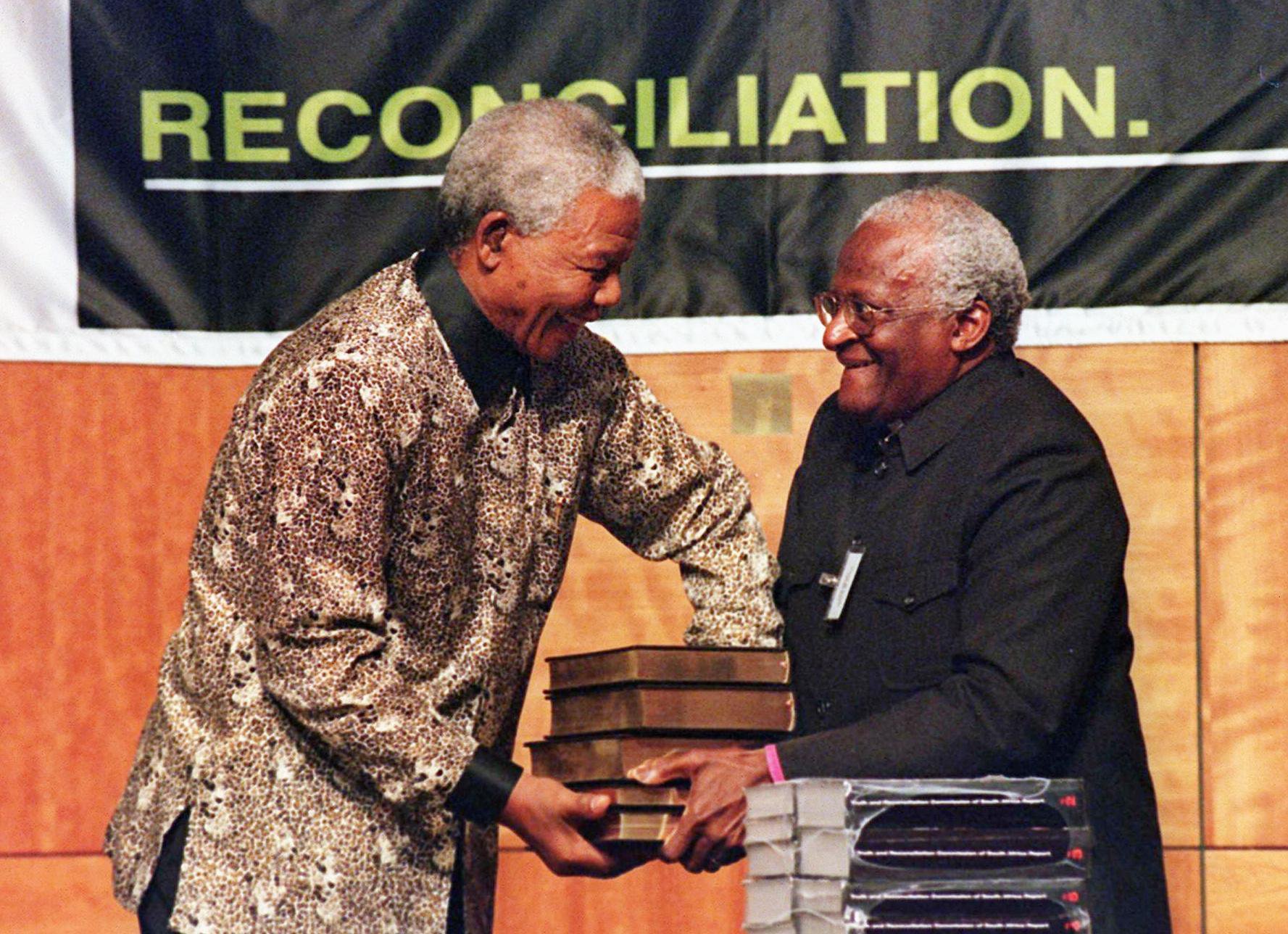
(Image from aleteia.org)

Qwertyman No. 167: Stranger Than Fiction

Qwertyman for Monday, October 13, 2025

IF SEN. Alan Peter Cayetano and his cohorts in the Senate minority wanted to rile the people even more, they couldn’t have done it better than by having Cayetano challenge Sen. Tito Sotto for the Senate presidency, at the same time that he was floating his supposedly heroic idea of having all elective officials resign because the public was fed up with them.

He had to know that that was exactly the kind of antic that made people throw up at the mention of certain names—a dubious pantheon of the corrupt, the bought, and the compromised. But he did it anyway, employing his imagination to yank public attention away from the burning issue of the hour—the massive flood control scam and its ties to many lawmakers—in the direction of Mars, and the possibility of honest (never mind intelligent) politicians inhabiting that planet.

Why he did that is anyone’s guess, but mine would be that anything to stop the momentum building up at the Blue Ribbon Committee under Sen. Ping Lacson was good for the minority, many of whom were increasingly being threatened by the exposure. If Cayetano had resigned first (and forthwith!) to provide proof positive of his noble intentions, the distraction would have been worth our time, but of course that was never part of the plan. 

The plot to unseat Sotto—brazen and shameless in its purpose—was more credible and worrisome. It fizzled out but remains potent, simmering just beneath the surface. Lacson’s resignation as BRC chair was probably a concession to forestall Sotto’s, but the situation in the Senate is so volatile that it can’t take much for the leadership to switch while we’re brushing our teeth. 

All we seem to be waiting for is that point of utter desperation when the beleaguered, fighting for their political lives and possibly even their personal freedom, ignore all considerations of decency and public sensitivity, weasel their way back into the majority, and deliver the Senate to its most famous watcher from the gallery: Vice President Sara Duterte, whose fate still hangs in the balance of an impeachment vote that has yet to happen.

That vote and its implications, let’s all remember, was what triggered all of this. Premised on rampant corruption within her office, her impeachment, had it passed the Senate, would have barred her from running for the presidency in 2028 (and, for PBBM, from the resurgent Dutertes wreaking retribution on their erstwhile allies). But this isn’t really just about Sara—it’s about all those other trapos who’ve cast their lot with her, whose fortunes depend on her absolution in the Senate and ascension to the Palace. 

Former Senate President Chiz Escudero, who dragged his and the Senate’s feet in that process, has now dropped all pretensions to impartiality, calling the impeachment “unconstitutional” in a speech that would only have pleased the Vice President, a title he himself might be auditioning for. He did his part well, with what many saw to be the ill-considered assistance of the Supreme Court, to freeze the impeachment complaint. 

And there that matter sat, until PBBM—whether unwittingly or presciently—(and here we’ll go fast and loose with the idioms) shook the tree, opened a can of worms, threw mud at the wall, and unleashed the kraken by exposing the trillion-peso infrastructure scandal now rocking the country. He might have done this to suggest a link between the alleged corruption in the VP’s office and even larger acts of plunder emanating from her father’s time in Malacañang, a deft political move. But reality overtook his imagination, and now the issue’s grown far beyond that into his own administration, his own responsibilities, his own accountability. 

That said, and however we may have felt about him, PBBM has done us all a service by drawing the curtain on the systemic rot in our society and governance, for which he, Sara, and their cohorts have all been culpable, directly or administratively. By doing so he rendered himself vulnerable as well, and the VP’s forces are now zeroing in on that vulnerability to deflect attention from their own predicament. 

Thus the barrage of “Marcos resign!” calls (as opposed to the Left’s “Marcos and Duterte resign!”), which has become shorthand for BBM out, Sara in. (It was on that key point that the rumored September 21 coup plot reportedly first stumbled, with the plotters balking at the alternative.) It also explains the slew of professionally produced reels on Facebook and other social media calling for the military to depose the President—ironically, something so openly seditious that Digong Duterte’s NTF-ELCAC would have instantly pounced on them, but which BBM and his crew seem to be shrugging off, at least for now. 

What tempts our imagination in this fraught situation—where public trust in our politicians and even in the courts is hitting critical lows, and where no clear and short path to change seems visible until 2028—is the possibility of military intervention, whether by martial law or on its own volition. I’ve been assured by friends who know better that this military of ours today is much more professional in its mindset than its predecessors, and that it will abide by the Constitution. I sincerely hope they’re right, because if there’s anything that all the parties in this mess can probably agree on, it’s that boots in the streets won’t bring us any closer to a functioning democracy. 

I’m reminded in this instance of one of my favorite literary quotations, from Mark Twain who said (in so many words) that “Of course fact is stranger than fiction. Fiction, after all, has to make sense.” If you had told me three years ago that we are now relying on a dictator’s son to save us from an even worse alternative, and in the process—if almost by accident—expose corruption so foul that we are back on EDSA demanding not regime change but the rule of law, I would have called you a lousy fictionist with a runaway imagination. Yet here we are.

Qwertyman No. 163: Redemption and Reversal

Qwertyman for Monday, September 15, 2025

“Enormity” is a word I rarely use in my writing, because I still take it in its traditional, original meaning, which is that of “a great evil, a grave crime or sin.” I would use it in the sense of “the enormity of the Holocaust, in which Adolf Hitler exterminated six million Jews” as well as in “the enormity of Israel’s genocidal assault on the people of Gaza, employing bombing and starvation to bend Palestinians to its will.”

But it has so often been misused as an alternative to “enormousness,” to mean “very large” or “very big” in relation to size, that most modern dictionaries have relented and accepted that secondary definition.

Last week, listening to Sen. Ping Lacson’s revelations about gargantuan sums of money changing hands and being blown at the casinos not by business magnates or heirs to billions but by subalterns at the Department of Public Works and Highways, I saw no inconsistency whatsoever between the word’s two meanings. It was both one and the other, wrongdoing on such a scale that made you wonder if this was still our country, if we still had laws to fall back on, and for how much longer our people would be willing to endure this kind of abuse before the dam breaks and a biblical flood of justice bursts forth to sweep away the evil in our midst.

The quoted sums were mindboggling enough: five DPWH district and assistant engineers in Bulacan accounted for almost P1 billion in casino losses, as reported by Pagcor to Lacson. A district engineer—there were 186 of them at the DPWH last year, according to the Department of Budget and Management—earns a monthly salary of almost P230,000. It’s nothing to sneeze at (my salary as a Full Professor 12 in UP was half that when I retired in 2019, and Filipino minimum wage earners still make less than P20,000 a month), and you could live very comfortably on it if you lead a prudent existence. But who needs prudence when you have tens of millions of pesos in kickbacks to play with at baccarat or roulette?

The theft isn’t even the real crime, the true enormity here; it’s what that money should have been used for, but wasn’t—the prevention of human suffering through public works projects that have instead remained unfinished or grossly substandard. Those engineers weren’t playing with cash and chips—they were playing with lives and futures, the fortunes of entire families and communities gone with a wrong turn of the dice, followed by a casual shrug and a reach for more of the endless chips. 

Forgive these murderous thoughts, but for this alone, once proven guilty, those miscreants deserve to be hanged, or banished to a prison that floods at high tide. One might add that if Digong Duterte had launched a tokhang campaign against the corrupt—but we all know why he couldn’t have—perhaps he wouldn’t be watching windmills from his window now.

Our righteous indignation aside, it’s clear that the buck should and will stop with no other than President Bongbong Marcos, who after all began all this with his surprising and explosive public revelation of the top contractors’ names. Whatever his initial or ulterior motive may have been, that’s practically been rendered moot by the massive outrage and political drama arising over the past few weeks as a result of his action and of the continuing Senate and Congressional investigations. 

In the immediate future, much will hinge on the independent commission that BBM is organizing to probe the issue and on its efficacy. In an ironic turn of history, its credibility will have to match that of the Agrava Commission, whose conclusion that Ninoy’s assassination was the result of a military conspiracy helped to eventually bring his father’s regime down.

But since irony seems to be a strong and inescapable feature of our political life, it may be the perfect time and opportunity for the dictator’s son to become his own man, to redeem his part of the family name, and to prove his doubters and detractors (this martial-law ex-prisoner among them) wrong. He can do that by finding the courage and resolve to pursue this business of weeding out systemic corruption—just beginning with our public works—to its farthest possible conclusion, no matter who or what gets in the way.

Surely PBBM would not have trumpeted this initiative against corruption if he did not expect the money trail to lead back to some of his closest associates and supporters, and even to his family—who, as no one will or should forget, have long stood accused of plunder in the billions, well before the Discayas and their company discovered the short road to riches. The Marcoses may have dodged payment for those debts through favorable court rulings predictably secured upon BBM’s presidential victory, but he cannot escape this responsibility now.

Any attempt to pause or to mute the investigations into this ugly mess will only backfire on BBM and his presidency and invite suspicions of his complicity in these scandals. His only real option is to seize the moment, press on, and do the right thing even if and until it hurts.

I can see many of my liberal cohorts grimacing at the notion that a man we once derided for his profligacy and lack of discipline could lead such a brave and sweeping reform of our society and government, and I have to admit that I too shall remain a skeptic until I see solid results coming out of these investigations. Dismissals and bans won’t be enough for the erring officials and contractors; we want jail time for the guilty and adequate restitution, we want the big fish to fry.

But I’m a great believer in the possibility and the power of redemption (think Saul of Tarsus and Ignatius of Loyola). Even in this seemingly quixotic mission of reforming government, very few people will come to the table with perfectly clean hands—or remain unsullied to the grave. Ultimately less important than their private faults is their public performance—what they did, over the course of their lifetime, to serve the public good and/or to make amends for their past misdeeds and shortcomings.

BBM may be far from the path to sainthood, but he can still employ the vast powers of his office to strengthen constitutional governance in this country, in dramatic reversal of his father’s legacy. If he fails to do that, then he will merely confirm what we have suspected all along. I pray, for once, that we were wrong.

Qwertyman No. 160: Not More Ampao

Qwertyman for Monday, August 25, 2025

IT MAY be too soon if not downright foolish to believe that President Bongbong Marcos’ recent focus on massive corruption in public works projects represents a turning point in his presidency, and is more than another political stunt designed to shore up his popularity after the disastrous results of the recent midterm election. Critics have been quick to point out the irony of a man from a family accused of shamelessly plundering the nation’s coffers and winning back the presidency to avoid restitution now manifesting his “anger” over the billions lost to crooked contractors from the same rapacious elite—even singling out a flimsy dam project in Bulacan as just so much air-filled ampao.

And yet, despite all the predictable and understandable skepticism, I’m willing to bet my low-budget house that many millions of Filipinos of all political stripes would grudgingly if not happily forgive BBM for all his perceived debts and shortcomings if he were to follow through on this initiative with unflinching resolve. Let’s not even talk about sincerity, of which only concrete action and results will bear ample proof. 

What we need and want to see is BBM employing all the powers of his office to bring the massively corrupt to justice, to ensure the full delivery of what the public paid for with its hard-earned money, and to redeem himself and the Marcos name with acts of virtue redounding to the public good. Those acts could be worth more than the many billions his parents were charged with spiriting away—some of which has been recovered, and the rest of which the courts have effectively condoned and we will never see. With three years left on his presidency, BBM might as well use the time to attempt to do what all of his predecessors miserably failed at—go against the grain of the political culture that brought him to power and, for once, uphold the public over personal interest.

As even his detractors concede, BBM has already scored highly on two counts: his departure from Rodrigo Duterte’s catastrophic “war on drugs” that claimed thousands of innocent lives, and also from Duterte’s craven submission to China’s takeover of our territory in the West Philippine Sea. Whatever his ulterior motives may have been, his banishment of former President Duterte to the International Criminal Court at the Hague was widely applauded as a definitive step forward for human rights albeit a major political risk and a clear severance of ties to his “Uniteam” running mate, VP Sara Duterte. 

These measures—and the government’s dismissal of POGOs—were enough to make self-avowed “Kakampink” influencers such as the writer behind the Juan Luna Blog declare that “So here I am—a Kakampink still rooted in my principles—saying this with guarded optimism: This version of Bongbong Marcos is not the Marcos we feared. And if he keeps choosing accountability over loyalty, and stability over revenge, then maybe—just maybe—the Philippines has a chance to move forward.” 

Even among the moderates and indeed the Left, there seems to have arisen the general consensus that for all his problematic pedigree and personal flaws, Bongbong Marcos remains infinitely better and more “presidential” than his predecessor. And I’m sure he knows it, well enough to cultivate the image of a reasonable and well-spoken leader, the kind we porma-prone Pinoys find reassuring, at ease in the company of the world’s A-listers, in crisp barongs and smart gray suits, and most recently wearing glasses that make him look more thoughtful than ever. In short, pretty much everything the old man Digong was not (which, it should be noted, may have been the very same bugoy traits that sent the Davaoeño to the Palace and continue to endear him to the DDS faithful). Whoever his stylist is, she’s earned her keep. 

That said, his administration has been far from stellar in its performance. BBM has had the benefit of good Cabinet members such as Defense Secretary Gilberto Teodoro and Transportation Secretary Vince Dizon, as well as a capable and adept spokesperson in Atty. Claire Castro. (Let’s not forget that, on paper, his father had some of the best-educated Cabinet members ever—none of whom proved strong enough to bridle that regime’s excesses.) But Filipinos cannot and should not easily forget the fiscal folly of the Maharlika Fund with which Marcos II began (and about which we have since heard almost nothing), as well as our runaway debt, the dismal state of our primary education, the lack of housing and basic social services for our poor, and yes, those infernal floods that brought up all the corruption in our infrastructure programs to the surface, so starkly that BBM had no choice but to name names and point fingers.

The question now is where all that finger-pointing will lead. Some fingers will be pointing back at the President’s own political entourage as the enablers behind the billion-peso scams that he now seems so outraged by, as if they had been hatched just yesterday behind his back. Observers have noted that Congress can’t even investigate these scams, with so many of its own members likely to be implicated as either the contractors or beneficiaries in question. And for the cherry on top of the icing, consider the absurdity of a sitting senator—whose family business profited vastly from road diversions and who himself did nothing as a Cabinet member to staunch the outflow of public money into private pockets—now filing a bill to establish the Philippine Scam Prevention Center. Good Lord. Did I just hear someone say “Regulatory capture?”

Whatever we may like or dislike him for, right now, only Bongbong Marcos can sort out this mess and let the axe fall where it may—if he’s really serious about righting historic wrongs and leaving a positive legacy behind him. There’s time enough to do it—but is the will there? In his message acknowledging Ninoy Aquino Day last week—something we didn’t really expect—BBM called the occasion “an invitation to govern with sobriety, conscience, and foresight. Our commemoration achieves meaning when the lessons of the past are reflected in our actions and in the moral architecture of (our) institutions.” I hope that lofty rhetoric has real substance to it, and not just more ampao.

Qwertyman No. 159: No Room for Nuance

Qwertyman for Monday, August 18, 2025

LIKE MANY of his friends from the University of the Philippines and the legal profession, I was extremely saddened last week by the events surrounding and following the announcement of Senior Associate Justice Marvic Leonen of the Supreme Court’s unanimous decision in the case of Duterte v. House of Representativesthat effectively stalled the impeachment process against Vice President Sara Duterte. As someone inclined to believe in the VP’s culpability, I was of course disappointed by the decision, and dismayed that it was Justice Leonen justifying it as the ponente. 

Scores of former justices, lawyers, editorialists, and activists have since weighed in to expound on the perceived infirmities of the decision, and on the damage it has wrought on both our political and judicial institutions. Not knowing any better than these sharper minds, I can’t add anything much to those arguments, except to observe that from my layman’s point of view, it does seem that Justice Leonen went well out of his way to make impeachment more difficult even for those deserving of it.

I was saddened, but not surprised, when Marvic—both the justice and the man—was pilloried in the press and social media for his role in the matter. Insinuations floated that Leonen had been “bought” by the Dutertes in exchange for a promise of being eventually appointed Chief Justice under a Sara presidency. Other critics pointed to supposed flaws in his character, even equating him with Senate President Chiz Escudero, under whose clever management the VP’s impeachment did not push through “forthwith,” but has instead been “archived” for at least the next sixth months.

I don’t mean or need to defend Marvic, who can very well speak for himself. He was and remains a friend—we worked together in UP administration, where he served as VP for Legal Affairs and then Dean of the College of Law and I served as VP for Public Affairs—although I don’t know him nearly as well as his own compañeros in the profession. One of them, a mutual friend, came out with a stinging rebuke of the decision, while attesting—like many who know the justice and his background closely—to his personal and intellectual integrity.

I know a bit of that background, having mentioned and quoted Marvic in my recent biography of Justice Conchita Carpio Morales. He was among the four justices who dissented when, in July 2016, the Court dismissed the plunder case against former President Gloria Macapagal-Arroyo for lack of evidence. His remark then was simple but damning: “The scheme is plain except to those who refuse to see.” Earlier, as UP Law dean, Marvic had served as chief negotiator for the Philippine government in talks with the MILF, leading to a comprehensive agreement. He had also led the call asking a sitting justice to resign for alleged plagiarism; instead, the Court cleared its colleague and got back at the complainants (Carpio Morales dissented). Even before that in 2004, as a young lawyer, Leonen had argued for indigenous peoples in the La Bugal case questioning the constitutionality of the Mining Act. The Court agreed with him, only to reverse itself later.

Marvic Leonen’s performance as a lawyer, a legal academic, an advocate for the oppressed, and a justice are a matter of public record—which understandably, most Filipinos likely don’t know or care about. The question that bothered me in the aftermath of the Duterte decision was, “Should one act—widely perceived to be wrong—occlude a lifetime of good and right deeds? Are we judging the decision, or judging the man?” (The flipside of this is the sudden elevation of heels to heroes, because of one popular stance taken, as in the Senate vote.)

I asked this only because of the increasingly personal nature of the attacks against Marvic—which of course in today’s environment he had coming, even from those of us who deplore the personalistic nature of our politics. The term “cancel culture” has been often brought up in this context, a phrase more likely to be used by those on the receiving side of it. 

There are pluses to this form of public outrage, in that it can be unequivocal, if sometimes crude and over-the-top. As a way of telling public personalities that “You’re wrong” or “You suck,” there’s nothing like a torrent of posts and memes deploring or ridiculing their actions, taking minutes to form a tsunami of public opinion. In propaganda, we might call this the art of posterization, of reducing complex issues and character traits to one clear image and message, of stripping out the nuances, the “but’s” and “maybe’s,” the kind of hand-wringing I’m doing now in an effort to understand why people do what they do. 

From this perspective, and to use one of this century’s most telling cliches, at the end of the day, only the public impact of your actions count. No one needs to know or to understand your personal motivations; no one owes you the benefit of the doubt. Public opinion can sway (Shakespeare famously called it “the vagabond flag”), can be savage and cruel, but as with bees in a swarm, it’s in the nature of the hive mind to congeal and to move as one, with no room nor time for demurrers. Social media assists the formation of that hive mind exponentially, in post after repost, seeking and gaining affirmation in numbers. 

On the other hand (a phrase you hardly ever hear online), the dramatist and fictionist in me—as opposed to the propagandist—likes to individuate the caricature, to tease out the nuances of characters and situations, to explore context and subtext. That viewpoint might appreciate Marvic as a person whose own brush with impeachment made him the ideal spokesman for eleven other gray justices, serving as both lightning rod and fall guy, putting his own hard-won reputation at risk. 

Duterte v. House of Representatives wasn’t and shouldn’t have been about Justice Leonen, and not even the judiciary itself, but rather about seeking justice over the gross misdeeds attributed to a high public official. To the extent that we’re not talking about the massive and blatant corruption that prompted the impeachment in the first place so much as we’re dwelling on our disappointment with a perceived champion of the public interest, then the dark side continues to win by distraction. Methinks we should refocus on the real crooks—there’s a few more to root out in the Senate, and they were never even the good guys to begin with.

Qwertyman No. 158: Other Battles to Fight

Qwertyman for Monday, August 11, 2025

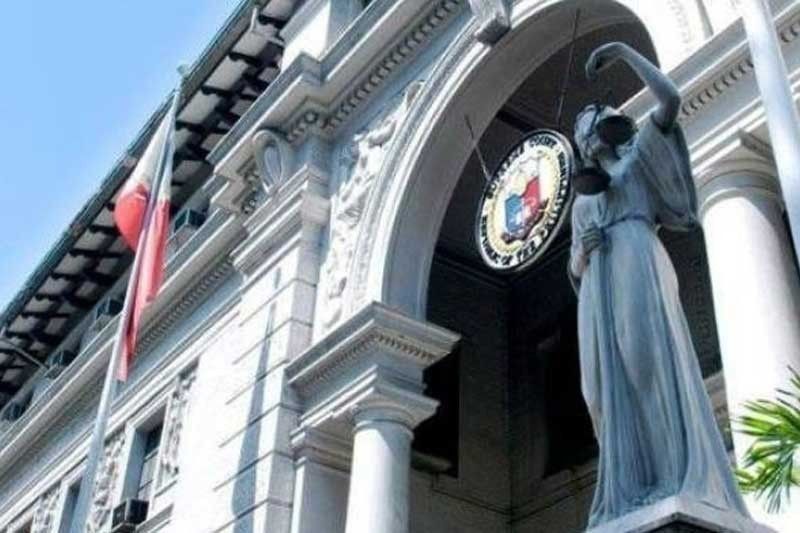
A LOT has been said this past week about the 12-0 decision of the Supreme Court on the impeachment case against Vice President Sara Duterte essentially supporting her contention that the one-year rule against bringing up new impeachment charges had been violated by the House of Representatives, and pushing back the earliest date for any resumption of such charges to February 6, 2026.

Predictably, the decision raised a storm of protest involving no less than former Justices of the Court, our top legal luminaries and lawyers’ organizations, and key media and political personalities who accused the Court of judicial overreach. On the other side were somewhat more muted voices calling for respecting the Court’s judgment—including, surprisingly or otherwise, a very sedate Sen. de la Rosa, now all flush with legal wisdom and temperance; to be fair, some of these people were hardly Duterte fans, but likely just citizens tired of all the bashing going on. (The Senate’s subsequent vote to “archive” the impeachment complaint would catch even more flak.)

However this issue is ultimately settled, one thing is clear: the Filipino public’s trust and confidence in their political institutions has hit a new low. And contrary to certain suggestions, it’s not because of journalists and gadflies like me who seem keen on tearing the house down, but because, well—it’s in the nature of the beast (or the human) for something so supposedly venerable as our Supreme Court to behave strangely in certain situations. 

The controversy stirred up by the Court in the Duterte case reminded me of a passage that I quoted in my recently published biography of retired Associate Justice and Ombudsman Conchita Carpio Morales, who has also manifested an opinion contrary to that of her current peers. The quotation comes from the former law dean and legal scholar Pacifico A. Agabin, who wrote in his book The Political Supreme Court (Quezon City: UP Press, 2012):

“The Supreme Court, like the US Supreme Court, is both an appellate and a constitutional court. Unlike most countries in Europe, we do not have a constitutional court, and so our high tribunal performs these dual functions under the Constitution. And when it decides constitutional cases, it becomes a political body, just like the executive and legislative branches. ‘Political,’ as used here, means that it acts as a legislature, according to Richard Posner, in the sense of having and exercising discretionary power as capacious as a legislature’s. According to Posner, ‘constitutional cases in the open area are aptly regarded as ‘political’ because the Constitution is about politics and because cases in the open area are not susceptible of confident evaluation on the basis of professional legal norms.’ Thus, when the court decides constitutional cases, it becomes a political organ. Like a chameleon, it changes color and assumes a different role as a political body.

“To repeat, I use the term ‘political’ here not in its partisan sense, but more in its ideological connotations. Unfortunately, there is no dividing line between the ideological and the partisan meanings, and sometimes, these blur into each other. The court itself sometimes fall into the partisan trap.

“This holds especially true in a personalistic culture like ours, where values like utang na loob and pakikisamaare embedded in the Filipino’s subconscious.”

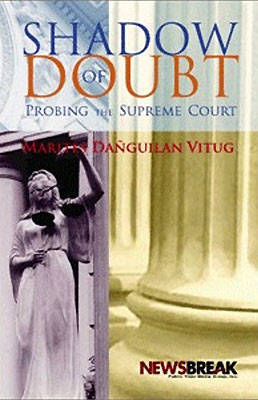
Now, that’s all still very high-minded, but another memory that’s even more disturbing comes from a book that I edited (anonymously, because I didn’t want to be saddled with a libel case—as its author inevitably was): Shadow of Doubt: Probing the Supreme Court (Newsbreak, 2010), written by my friend, the prizewinning journalist Marites Vitug. In her prologue, she recalls this incident:

“During an interview, after I asked an aspiring candidate to the Supreme Court about the unsavory realities of the appointment process, he advised me to tread carefully. The candidate, a Justice of a mid-level court, was fearful of the effects of a book that would pry into the sanctuary of the Supreme Court and ruffle the institution. 

“Over an oatmeal breakfast (mine) and coffee (his), he worried that the public may lose their confidence in the Court. He then told me the story of a staff member of a Supreme Court Justice decades ago. This man had access to confidential information and, after learning of Court decisions, immediately approached winning litigants and informed them that he could work on their cases and get favorable results. He asked for money—and, voila, delivered them the good news when the decisions were promulgated. He always had happy clients.

“The Justice I was speaking with was, at the time, working on the Court. Disturbed by the corrupt behavior of a colleague, he reported this to the Chief Justice. However, the Chief Justice took a benign, almost indifferent view. He told the young lawyer that this would soon come to an end because the erring staff member was about to leave the Court; he held a post co-terminus with that of his boss, an associate Justice. 

“It was best, the Chief Justice said, to let it pass. He feared that if the Court acted on it and the anomalies became known to the public, confidence in the ‘last bulwark of democracy’ would wane. It was paramount to keep the institution pristine in the eyes of the public, never mind if wrongdoing was gnawing the Court.

“The Justice looked back at this moment and narrated the story to impress on me how important it is to protect the institution. For him and the Chief Justice who initiated him into this misplaced patriotism, strengthening the institution meant glossing over grave offenses.”

I’m not a lawyer (something we very often hear these days, followed by some legalistic opinion), but my pedestrian sense tells me that this Court and this Senate aren’t going to dig themselves out of the hole they’ve jumped into. Pinoy officialdom never admits mistakes and apologizes, like the Japanese do; we love to brazen it out with the thickest of cheeks. 

Given that, let’s not hang our expectations on this one peg of VP Sara Duterte’s impeachment. Whether she gets impeached or not, she’ll still have to answer for the serious charges brought against her, perhaps with even more finality than her removal from office will bring. 

February 6, 2026 is less than six months away. Let the prosecutors use the time to prepare an airtight case that will secure a clear conviction, in the court of public opinion if not in the Senate tribunal—a case so compelling that it will embarrass any senator-judge who will ignore its logic (and let’s face it, there will be many), and hold him or her accountable to the people at the next election.

In the meanwhile, we have many other and far more consequential battles to fight—our bloated budget, our growing debt, the illiteracy of our youth, the hunger and homelessness of our poor. These can’t be “archived,” and the “forthwith” on these issues came and went a long time ago.

Qwertyman No. 156: That Bam-Kiko Thing

Qwertyman for Monday, July 28, 2025

RETURNING SENATORS Bam Aquino and Kiko Pangilinan have been getting roasted online for joining the majority bloc in the incoming Senate, thereby securing important committee chairmanships under the highly unpopular but tough-to-unseat Senate President Chiz Escudero. Despite sympathetic reactions from such opposition stalwarts as former VP and now Naga Mayor Leni Robredo and Sen. Risa Hontiveros, the two have been roundly scored for their decision.

Typical of the outcry was this much circulated post by a friend I deeply admire, the penal and judicial reformer Raymund Narag, who lamented that “They will join the majority. The same majority that excuses corruption as politics, power as protection, and self-interest as national interest. But what they forget is that we voted for them not to play the game. They forget that it was not just about committees, or positions, or so-called influence. It was about principle. We mourn the death of idealism in Philippine politics. But it’s a slow death. Not by assassination, not by defeat, but by compromise. And the executioners are the very people who once called themselves idealists.”

It’s a heavy to charge to lay at the feet of these two men—turncoatism, betrayal, the surrender of idealism, latent hypocrisy—and I can see where the disappointment and dismay are coming from. But with all due respect to my friend Raymund and to those who share his sentiments, I don’t see these dire reversals at all in the choices that Bam and Kiko made, but possibly an interesting and potentially significant maturing of our political culture, especially within the opposition.

It’s true that the Bam-Kiko decision came as a surprise, and that things would have been much clearer, the battle lines much more cleanly drawn, had they sat with Sen. Risa Hontiveros in a true and unflinching albeit tiny minority, duking it out with the majority at every turn, exposing wrongdoing right and left, and remaining unblemished by compromise to the end of their term. We could have remembered them for their impassioned speeches in defense of democracy and justice, tilting against the windmills of the Marcos-Duterte regime.

But I don’t think that’s all or what we elected these two senators for—or was it? As far as I can tell, we voted for them to get things done—the good, the right, and the best things—where they mattered, in their areas of expertise: Bam in education, and Kiko in agriculture. Granted, it may have been secondary to sending a message upstairs that these were the good guys, infinitely much better than the trapos being foisted on us by both the Marcos and Duterte factions, but it was their track record that gilded their credentials.

In case we’ve forgotten or weren’t listening too closely when they were campaigning, Bam Aquino authored 51 laws, including the Universal Access to Quality Tertiary Education Act, the Go Negosyo Act, and the Microfinance NGOs Act. He was also behind the Masustansyang Pagkain para sa Batang Pilipino Act and the No Shortchanging Act of 2016. Kiko Pangilinan, an even more seasoned lawmaker, produced over 150 laws, including the Sagip Saka Act, the Coconut Farmers and Industry Trust Fund Act, and the 105-Day Expanded Maternity Leave Law.

Their acceptance of the agriculture and education chairmanships should help ensure and strengthen their ability to pursue these progressive initiatives further—regardless of how they think about and vote on other issues of national consequence, such as the impeachment of VP Sara Duterte, the national budget, our foreign policy, and constitutional change. 

We have yet to see—as their critics already seem to have foretold—if they will cherish their chairmanships to the extent of abandoning their fundamental principles. Instead I foresee the greater likelihood of the reverse happening: of Bam and Kiko relinquishing their posts should their stay there prove morally untenable. If they were to perform well in their Senate positions, and they were then stripped of their chairmanships for their independent stances, then that still would be more emphatic than if they had never assumed the responsibilities that are also their entitlements, according to their competencies.

But in and of itself, joining the majority bloc—never a firm nor a politically or philosophically cohesive entity in our system of what Shakespeare called “vagabond flags”—should be less of a deal or an issue than it is being made out to be. This “majority,” in any case, seems such a ragtag band that it is almost certain to collapse before the end of the present term.

It probably says more about us as an electorate than about Bam and Kiko when we cast their decision as a “betrayal” of what they were presumably voted for. I’m no political scientist so the experts can explain this better than I can, but it seems to me that we’ve become used to seeing our legislature as a forced marriage of fundamentally incompatible forces—the ruling party (powerful but unintelligent, corrupt, opportunist, cynical, good-for-nothing) and the opposition (weak but progressive, smart, morally upright, idealistic, courageous, media-savvy, and effective). We see the Senate as an arena, a battleground (and often a circus), rather than an office where people are supposed to work, and work together (never mind that some of them are lazy and stupid), achieving results through compromise.

Bam and Kiko just need to prove themselves once more at their jobs and serve the Filipino to the best of their ability, so that when 2028 comes—and whatever their plans may be for that next milestone—they can have a good answer to the basic question that our voters have every right to ask: “So what have you done for me?” It’s a question that the elevated rhetoric of the progressive opposition has sadly often ignored and dearly paid for, almost as if it were beneath consideration. Bam and Kiko need a platform from which to connect corruption to the price of rice, to persistent flooding, to the failure of Filipino children to read at Grade 3. 

Of course, it can be said that that’s exactly what Risa Hontiveros has been doing all by her lonesome—without the benefit of patronage, and with just the chairmanship of the Senate Committee on Women, Children, Family Relations and Gender Equality to her name. She sponsored the passage of the Expanded Solo Parents Welfare Act, the Safe Spaces Act which protects Filipinos, especially women, from gender-based harassment in public spaces, and the Anti-Online Sexual Abuse or Exploitation of Children Law.

Taking another tack but manifesting the same tenacity, Sen. Loren Legarda has survived through many administrations in all kinds of political weather, drawing criticism for that ability, but has remained steadfast in her commitment to protecting the environment, mitigating climate change, and promoting Philippine arts and culture like no other senator nor President for that matter has. 

But for what they’ve already done and could yet do, I think Bam and Kiko deserve our trust. Let’s cut them some slack and give them a chance. We pinklawans aren’t the only voters they’re answerable to.

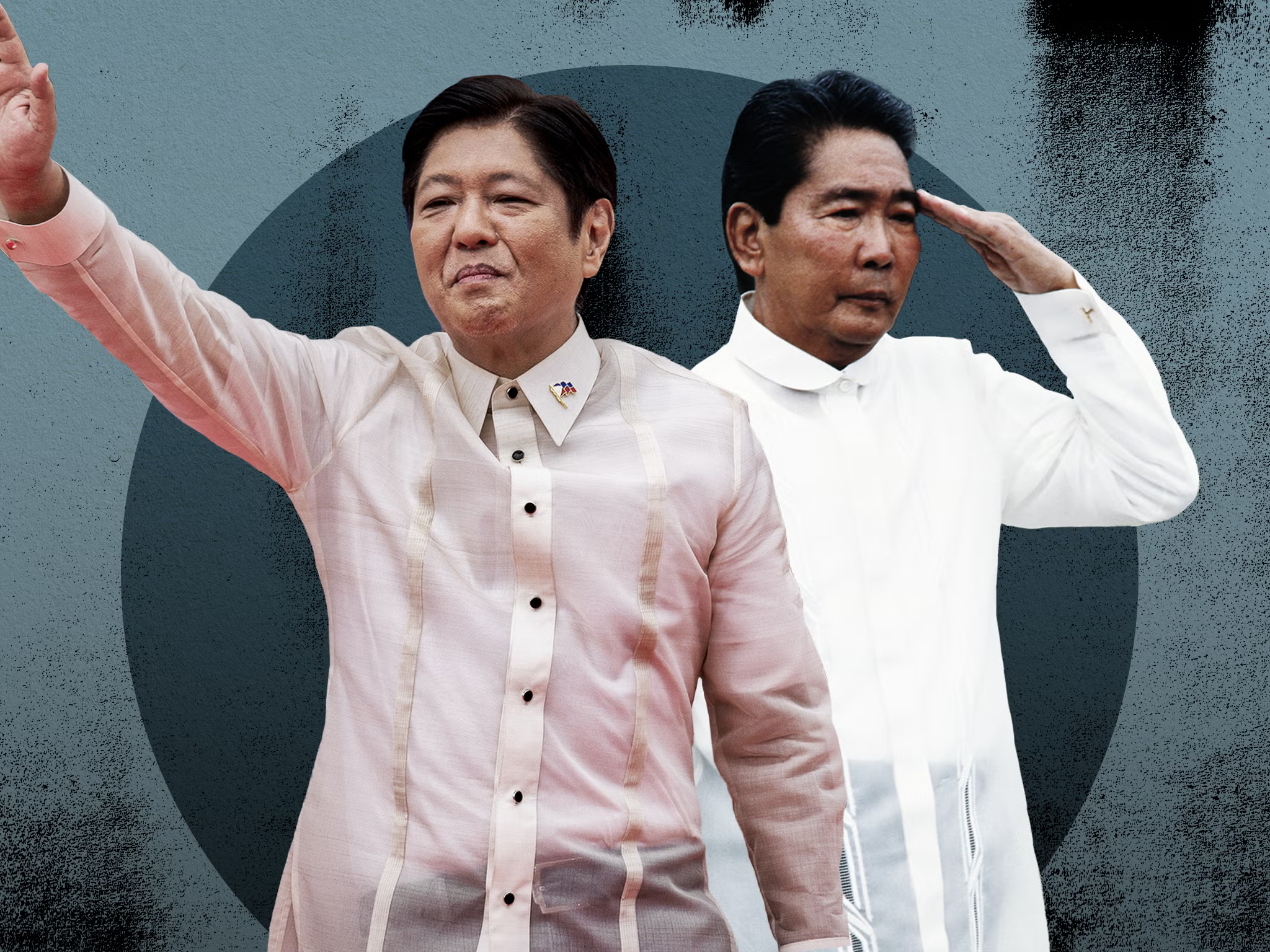
(Photo from rappler.com)

Qwertyman No. 155: Deflections and Reflections

Qwertyman for Monday, July 21, 2025

FAR BE it from me to serve as an apologist for the Marcoses, who can easily hire half of Makati and Ortigas, not to mention Madison Avenue, to front for them. 

But speaking as a curious citizen, I’ve been wondering about the recent rash of posts online drawing attention to the unfortunate death in the United States of a member of the Tantoco clan, reportedly from a drug overdose. 

The peg was that the ongoing investigation into the disappearance and presumed murder of 110 sabungeros—which reached a climax with the explosive revelations of a whistleblower and the retrieval of possible bones from Taal Lake—was a massive ploy to deflect attention from the real issue, which was First Lady Liza Araneta Marcos‘ rumored involvement in the Tantoco case. 

That death happened in March. Contrary to allegations that it was swept under the rug, or that a media blackout was imposed by the Palace, Rappler has noted on its website that “Mainstream media outlets have reported earlier on the death of the Rustan executive, who died on March 9 at the age of 44. Examples of these news items include a March 9 Manila Bulletin article, a March 10 Philstar.com article, a March 10 GMA News Online article, a March 10 Manila Times article, a March 11 Rappler article, a March 11 ABS-CBN News article, and a March 12 Daily Tribune article.” 

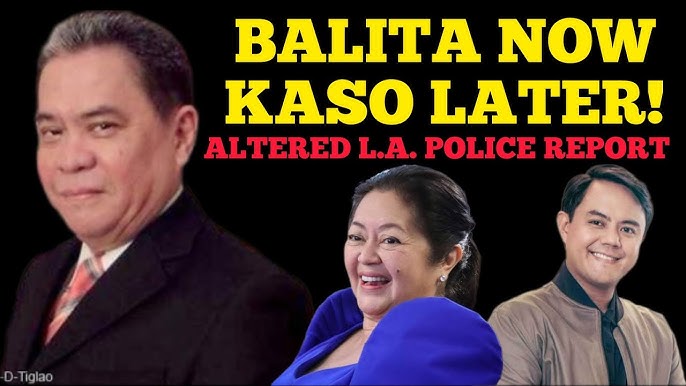
So why the sudden buzz? Because a newspaper columnist known to be a Duterte trumpet very recently came out with an “exposé” claiming that, according to a report supposedly released by the Beverly Hills Police Department, First Lady Liza was among those interviewed by the police after Paolo Tantoco’s death. The BHPD subsequently declared the report to have been tampered with, pointing out that the portion implicating the First Lady had been tacked on.

But the “exposé” was touted as big news in DDS-land, proof of the veracity of which was the rattled haste with which the administration (1) trotted out a “whistleblower” in the lost sabungeros case, followed by divers dramatically fishing out sacks of bones (with the Atong Ang-Gretchen Barretto angle as a saucy aside); and (2) exhumed the long-dead issue of Defense Secretary Gilberto Teodoro’s Maltese passport, which he had long surrendered. A timeline put out on YouTube by a Duterte publicist “proved” that after every iteration of the “Tantoco-FL” case, a “diversion” engineered by Malacañang immediately ensued, starting with the death itself, followed by the sensational arrest of Rodrigo Duterte and his quick deportation to the Hague for trial by the ICC.

In short, a lot of labor has gone into this conspiracy theory which would have us believe that PRRD was whisked off to the Netherlands, that the lost cockfighters were suddenly found, and that Gibo Teodoro’s loyalties are questionable—just to deflect attention from the real and the most important story (since shown to be fake) that the First Lady was somehow involved in the death of a prominent Filipino family scion. It would be the cover-up of the (21st) century for Pinoys, if true—and a mountain of poop to swallow, which many of the DDS faithful apparently have no difficulty ingesting. And not just them, either—I’ve heard the “Cover-up! Cover-up!” line being echoed by some of my liberal friends.

My own pedestrian take is, so what if FL were somehow involved in the Tantoco case, nefariously or otherwise? So what if Malacañang panicked and sought to quash the news by thinking of gimmicks to overshadow it? Rodrigo Duterte still needed to be shipped off to the Hague to face justice, and he was. The missing sabungeros, more than a hundred of them, still need to be found, and they may have been. If good results come out of shady decisions, I’m thankful they did.

But let me try on that same conspiratorial hat that seems so fetching on DDS heads. It’s a loose fit on mine, but reflecting on these matters like a true conspiracist, where do you suppose all these feeds are coming from, and why? Who stands to benefit from all this disinformation, and has the wherewithal to support a network of trolls, columnists, and “political analysts” all trying to divert public attention from what should be the biggest political story of the moment—VP Sara’s impending impeachment case—to some fake cover-up? 

The Dutertes stand to benefit, of course, but the impish fictionist in me says the hand of a larger patron can’t be discounted—particularly when you factor in the Gibo subplot, which concerns a possible presidential candidate who has been very vocal in his criticism of a northern bully. (The operatives peddling the “distraction” story, not incidentally, are the same people who keep reminding us that we asked to be bullied by filing that frivolous and unfriendly suit laying claim to our own territory.)

But of course I could be overthinking, which then again becomes any aspiring and self-respecting conspiracy theorist. I’ll get the hang of it, one of these days. 

 Maybe I’ll begin with the “traitorous” tandem of Bam and Kiko—as they’re now being made out to be even by some of their staunchest supporters—signing up with the Senate majority to worm their way into DDS hearts, so maybe one of them could be Sara’s running mate in 2028 under a broad anti-Marcos alliance. Wild? Can anything run too wild in the Pinoy’s fevered political imagination?

(Image from YouTube)

Qwertyman No. 154: Politics as Melodrama

Qwertyman for Monday, July 14, 2025

I’VE OFTEN argued that our most popular literary form isn’t lyric poetry, the short story, and certainly not the novel—it’s theater, and more specifically melodrama. Born in the West in the 18th century, melodrama weaves its spell on a suggestible audience through sensational and often ridiculous plots, exaggerated action, overblown emotion, and contrived solutions—all of which viewers happily lap up, and come back looking for more. When you think about it, it also happens to describe our politics, but more on that later.

I used to bring up melodrama when I taught playwriting and screenwriting, by way of analyzing how our Filipino sense of drama works. You don’t have to be a theater scholar or critic to observe that we Pinoys love drama, which to us really means melodrama, whether onstage, onscreen, or in real life.

Subtlety and silence have never been our strongest suit. We like to shout, to scream, to declare, to explain—and to explain some more. Take, for example, our preferred methods of murder. In Hamlet, the villainous Claudius pours poison into the king’s, his brother’s, ear. In The Seventh Seal, a knight faces Death on the chessboard. That may have been thrilling for fans of Shakespeare and Ingmar Bergman—but terribly dull and anesthetic for our kind of crowd.

No, sir, we Pinoys like our killings obvious, loud, and emphatic. Poison in the ear is for sissies. We prefer knives because they mean business, are as personal as personal can get, and they produce a lot of cinematic blood. And it’s never enough to stab someone, certainly not from behind, which would be a complete waste of dramatic possibilities. We like to announce that we’re killing someone, and to explain the reasons why: “Hudas ka, Raymundo, niyurakan mo ang karangalan ng aming angkan, kaya’t tanggapin mo ngayon ang mariing higanti ng hustisya—heto’ng sa iyo!” But of course Raymundo has to have his moment, and must raise that inevitable question: “Ano’ng ibig mong sabihin?” Whereupon our hero launches into another lengthy explanation, to which Raymundo offers an impassioned rebuttal, all to no avail, as he is stabbed repeatedly to the accompaniment of further oaths and recriminations.

I used to think that this kind of talkativeness and effusive gesturing was invented by us, until I went to graduate school and realized that it was all over the place in Restoration drama, where the likes of John Dryden had his characters indulge in copious speechifying in the name of love and honor before killing everyone onstage. I suppose a similar trend seized the French and Spanish theater, and thereby later ours, in the zarzuelasmoromoros, and komedyas that provided us with both entertainment and education. The noisiness carried over to radio, and then to our movies, which never quite shook off the “Ano’ng ibig mong sabihin?” habit. 

And this brings us to our politics, which is not only full of sound and fury, of unbridled verbosity, but of plot twists that strain credulity and yet which manage to keep the audience on the edge of their seats, either roaring in rage, applauding in delight, laughing deliriously, or weeping in sorrow, depending on their persuasions.

The Duterte Saga, our biggest ongoing drama, is now in its fourth act—the Sara impeachment—after the Uniteam victory, the fallout, and the Digong arrest and banishment. A professional scriptwriter could not have done better than giving the VP lines like Sara’s vengeful vows, as the media reported: “I have talked to a person. I said, if I get killed, go kill BBM (Marcos), (First Lady) Liza Araneta, and (Speaker) Martin Romualdez. No joke. No joke,” Duterte said in the profanity-laden briefing. “I said, do not stop until you kill them and then he said yes.” Threatened with impeachment for that statement and for corruption, she said, “I truly want a trial because I want a bloodbath.”

To the uninitiated listener, a madwoman was merely frothing at the mouth, but to the theater-goer, she’s puffing up her feathers, going larger than life, saying outrageous things to define her character and stake out her space like a Maori dancing the haka. Her adversary, PBBM, is playing cool and coy, pretending to be occupied with work and a disinterested party in Sara’s undoing. And yet he whisks off her precious papa in the night to Scheveningen, provoking even more outbursts from the DDS faithful.

Now comes the tearful part. Melodrama moves from Olympian thunder to cloying tenderness, so our next scene, naturally, has Sara’s mom Elizabeth declaring that her estranged husband has been reduced in detention to “skin and bones.” But it’s all right, she says bravely. “And how is my son, acting Mayor Baste?” the Davao City mayor-in-exile asks in a dry croak. “He’s okay, too,” Elizabeth assures him. “His vice mayor is your grandson!” So but for the absent patriarch, all’s well in Duterteland—sort of.

Melodramas love subplots, so let’s introduce one: selling the Duterte house. Common-law wife Honeylet puts up a sign announcing the place for sale (“It’s too painful to sleep there all by myself,” she claims), but son Baste reportedly has the sign removed. Not so fast, VP Sara chimes in; Honeylet could sell her half of it but not her dad’s. Besides, where would Digong live when he returns from the Hague, if Honeylet sold the house? (Cue for hopeful, uplifting music, which tapers off into a melancholic minor key.) “Perhaps he could live with Mama Elizabeth again,” Sara muses. 

Ah, such poignant moments. No one’s been stabbed yet—expect a lot of that to happen, metaphorically, if and when the Senate finds its balls and starts the impeachment trial of VP Sara. What’s theater without traitors? Sen. Migz Zubiri has already thrown down the gauntlet by declaring the trial “a witch-hunt.” But Senator Migz, ano’ng ibig mong sabihin?

Qwertyman No. 148: Pondering the Inconceivable

Qwertyman for Monday, June 2, 2025

IT SOUNDS like wishful thinking at the moment, but is there even a faint possibility that—in the aftermath of the midterm elections and looking ahead to the next big one down the road—President Bongbong Marcos might be willing to back a progressive candidate to take his place? And would liberal (with a small L) forces accept his help?

Just a few years ago this idea would have been totally preposterous, the relationship between the two sides being one of utter incompatibility and mutual revulsion. Marcos (more the name and what it stood for than Junior himself) was seen as the devil incarnate, while BBM would have deemed unforgivable his family’s ignominious banishment into exile in  Hawaii.

During the May 2022 election, Leni Robredo’s partisans (myself among them) made sure our people remembered the trail of blood and misery that martial law left behind, and the Marcoses’ unpaid debts to the treasury, and to the nation itself.

His election victory was met with profound disbelief and distress; we felt unmoored and stunned for a brief spell (much like the Democrats today, reeling under Trump’s relentless barrage of idiotic but effectively discombobulating executive orders). We took refuge in the certainty that this administration would quickly self-destruct from BBM’s incompetence and from its own internal contradictions—a prediction that has now partially come true, albeit with the most unexpected ramifications.

The spectacular collapse of the “Uniteam” was predictable; it had always been a marriage of convenience, seemingly forged to install BBM as a seatwarmer for VP Sara and the eventual restoration of the Dutertes in Malacañang. No one knew that better than BBM; there was talk (as there will always be, in this country of gifted storytellers) that the Dutertes weren’t even going to let him finish his term, but find a way to ease him out earlier so Sara could do a GMA and rule for longer than six years. So, went the buzz, BBM beat her to the draw by getting her impeached in the House (for good reason) and packing her father off to the Netherlands (for even better reasons).

Now comes the tricky part, which is getting Sara impeached (and struck out of the presidency for good) in the Senate—a newly reconstituted Senate that needs only nine of its 24 members to resist, and thereby keep the Dutertean dream alive. That court will convene sometime this month, with the outcome far from predetermined, but apparently leaning, at the moment, toward acquittal. Two administration senatorial bets—Imee Marcos and Camille Villar—jumped ship, making a crucial difference; the current pro-Sara tally now runs to a comfortable 11, if both Cayetanos, both Villars, and both Estrada siblings (now you see why dynasties are a bad idea?) see a longer horizon for their political futures with Sara on top. 

However, as they say, it ain’t over till it’s over, and the same opportunism that led to this tangle could just as easily turn it around within weeks or months, however long the impeachment trial is going to take. Observers note that at the last big impeachment trial—that of the late Supreme Court Justice Renato Corona—the odds were hugely in his favor at the start, but compelling evidence eventually made it not only unreasonable but politically untenable to acquit him at the end (although notably, his faithful supporter Senator BBM survived and even prospered). A strong prosecution—and, let’s admit, some backroom wooing and strong-arming—could yet land Sara in political limbo.

And that had better happen, because as BBM well knows, if the impeachment fails, his party has no candidate from within strong enough to take on the Dutertes. His apparent anointed, House Speaker Martin Romualdez, has about as much charisma and appeal as a thawed-out tamilok. Apart from the surprise victories of Bam Aquino and Kiko Pangilinan (about which more, later), the one big takeaway from the midterms was the continued strength of the Duterte forces on a national scale, never mind their isolation in Mindanao. An unverified post-election report (again, from the Bureau of Speculation) claimed that in a survey of early votes cast by the military and police, the Duterte slate scored a perfect ten. Why? Well, didn’t PRRD fatten the military, doubling their salaries and raising their retirement benefits? And aside from the mediagenic generals and admirals, who really wants to fight China in the West Philippine Sea? (Not my opinion, folks, just passing it along.)

If and when Sara wins, BBM and the Marcoses may find themselves taking another flight out in the night for parts unknown. The “bloodbath” Sara promised won’t be at the trial, but in its aftermath.

So we return to my first question: can and will BBM find it in himself to support a progressive and acceptable candidate from the middle forces, someone like Sen. Risa Hontiveros? If he insists on fielding his own man and the center-left puts up their candidate, it won’t take a political scientist to figure that as things stand, in a three-cornered fight, Sara will win. The Marcoses will be history (again) and the progressives crushed even more.

An argument can be made for the once-unthinkable. Against all expectations, BBM has done the right thing in de-Dutertizing government, (largely) stopping tokhang, and taking a firm stance for Philippine sovereignty in the WPS. On these issues, we can unite, at least for the time being. It will not be idle thinking to suspect that Bam and Kiko won not by divine miracle but with some backhanded nudge from the administration, who needed them to shore up its Senate votes (Bam, after all, was carried by the INC—as was Marcoleta, so it evens out). BBM’s Cabinet revamp shows signs of sensitivity to expectations and keenness on delivery, if only to shore up his administration for 2028.

He’ll never publicly admit it, but if BBM is truly intent on some measure of redemption for the Marcos name and on making his own mark on the presidency, this could be his historic opportunity. He will do well to support the progressives; it will be an easier and more logical switch than for the progressives to support an anointed trapo. BBM can take a free ride on the idealism of the middle forces, who are his best buffer against both Left and Right extremes.

But then again, all this comes to you sponsored by Willy Wonka’s Chocolate Factory, makers of the Everlasting Gobstopper and other fabulous confections.