Penman No. 476: Angels over Angela

Penman for Sunday, August 10, 2025
AS A collector of many things old and wonderful—vintage fountain pens and typewriters, antiquarian books, and midcentury paintings—I occasionally come across the stray and even the strange object that I simply can’t say no to.

My wife and I are inveterate junkers—as I’ve often written about, we travel the world not to visit magnificent palaces, posh boutiques, or Michelin-starred restaurants. Rather, we dive right into a city’s flea markets, resale shops, and discount stores to see what treasures could be had for a song.

But travel costs money, so the next best thing is to go to the Web for the online equivalent of flea markets, among which there’s none larger than eBay, with millions of items on sale at any given minute. Having been on eBay almost since it opened 30 years ago, and with a feedback score over 1,500 (100% positive), I practically live in it, checking out its offerings several times a day, using targeted searches for certain pens, old books, and Filipiniana. 

You’d be surprised how much Philippine material exists out there. I’ve repatriated paintings, maps, magazines, engravings, and such, feeling it my patriotic duty to bring them home. I have collector-friends scouring eBay just as diligently for Philippine medals, coins, stamps, and postcards—the results of which often turn up on our own auction sites, sometimes for millions.

Another virtual flea market that junkers like me habitually visit is the Facebook Marketplace. Facebook is full of selling groups devoted to everything from antiques, collectibles, and furniture to used clothes, fake gold bars, and broken appliances. They all end up at the Marketplace—which, frankly, was the principal reason I finally went on FB, after resisting for many years. I didn’t want to make friends and influence people—I wanted to shop for cheap gadgets like used iPhones and Apple laptops (both of which I’ve bought on FB many times) as well as the odd collectible, like the 1897 two-volume facsimile edition of Don Quixote that I picked up at a Jollibee, and a large pastel seminude by the modern Japanese master Ryohei Koiso.

But as with eBay, and because we’re right at home, nothing interests me more on FB Marketplace than Philippine material, and just this past month two outstanding discoveries reminded me why I should keep an eye out for the good, the strange, and the beautiful.

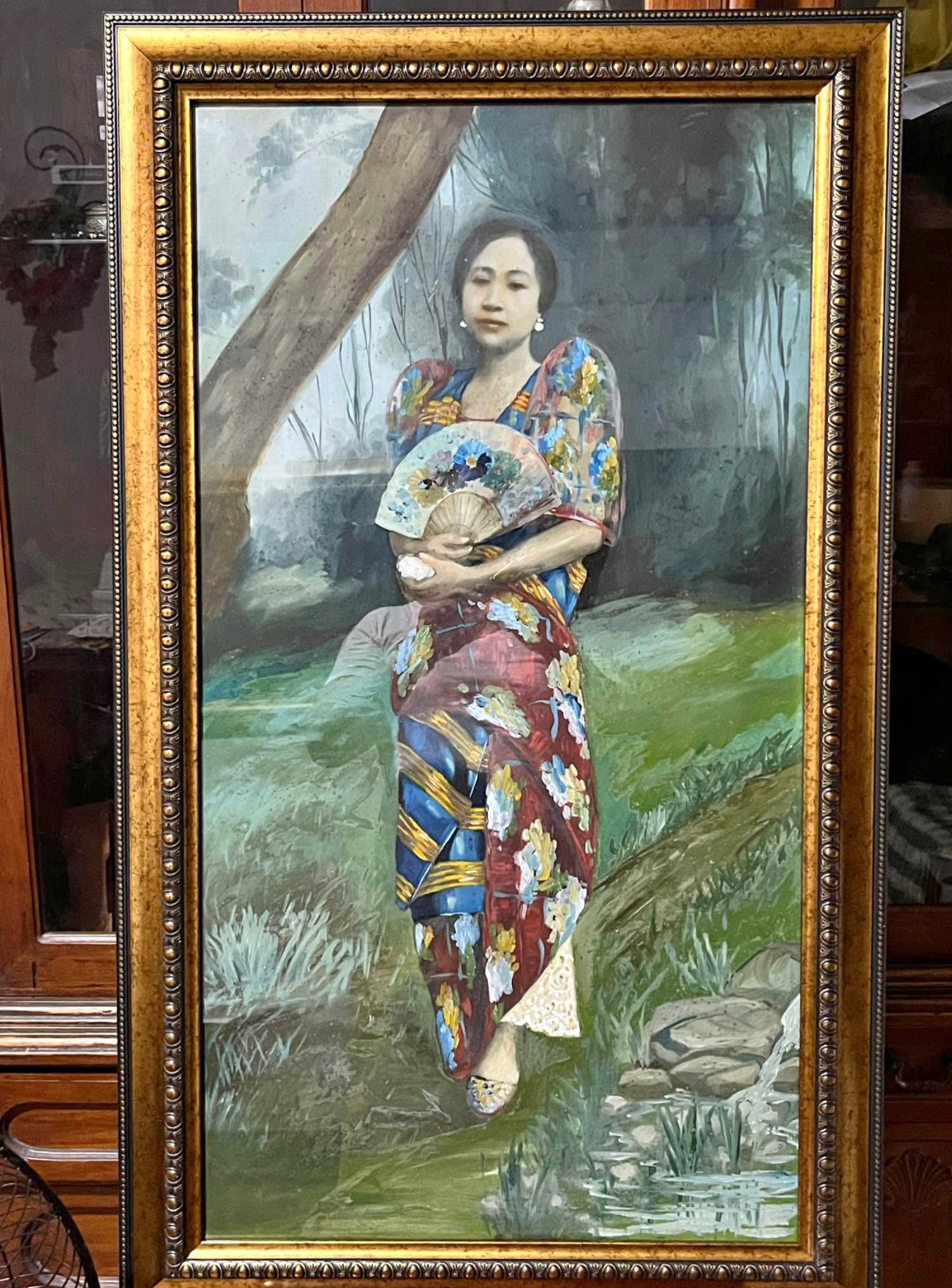
The first was a stunningly lovely picture of a Filipino woman in native dress, apparently from before the war. The dress seemed to have been colorized, but by hand and not digitally as we often find these days.
As soon as I saw that picture on FB, I knew that I had to have it (or to put it more nicely, I knew I had to get it for Beng). The seller posted it as an “acrylic on board from the 1950s,” which I wondered about but was just barely possible, with acrylic paint beginning to be used in the 1940s. (All the seller could tell me was that it had come from an old house in Sampaloc, and that he had nicknamed her Esther.)

It could have been a modern giclée print or a lithograph, but assured that it was indeed a painting under glass—the seller was highly reputable and lived just 15 minutes away from me—I took a chance and asked how much. Given a quote just in the four figures (I was expecting something significantly higher), I instantly “mined” it, as they say on the Marketplace.

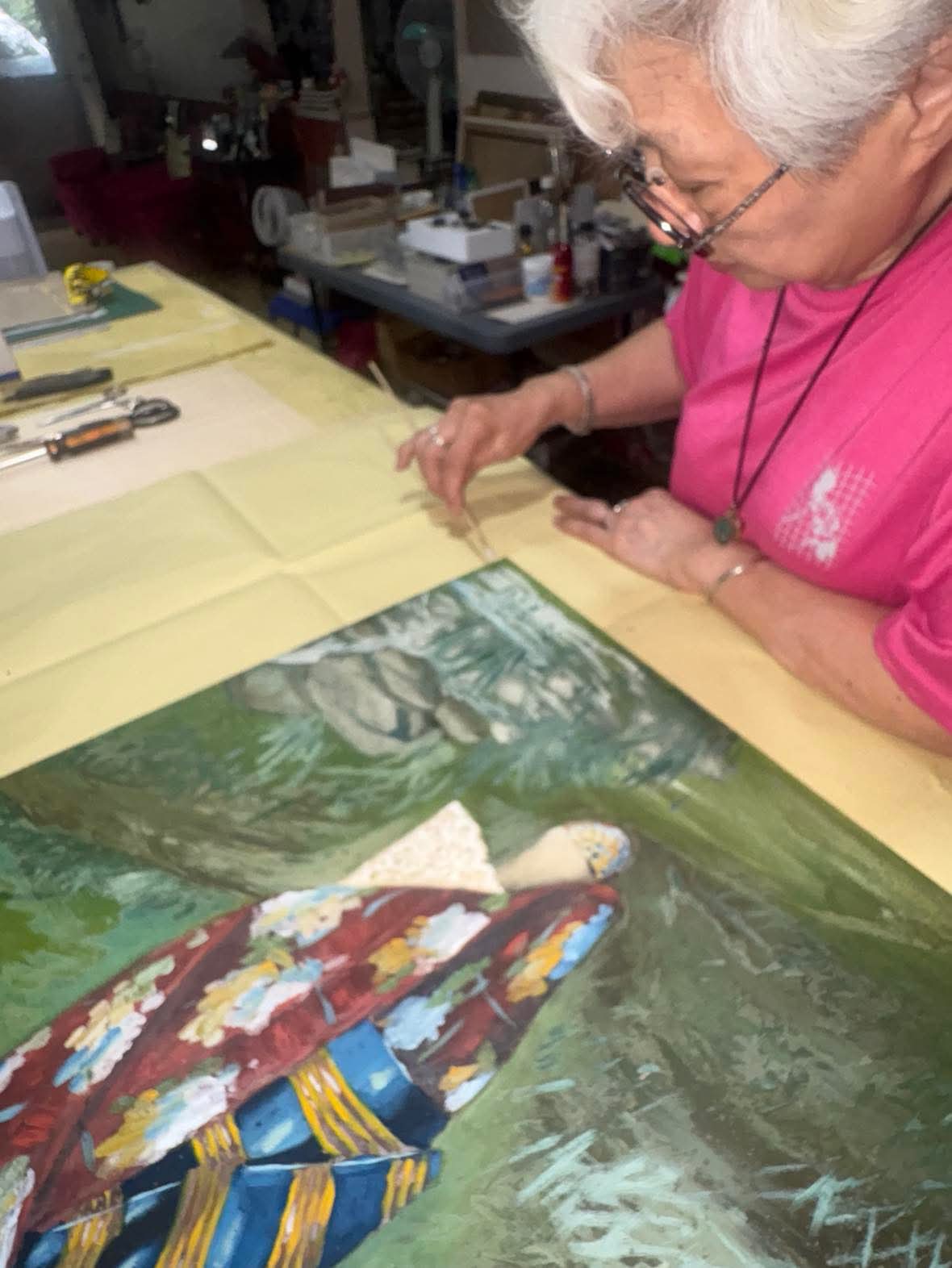
When it arrived, Beng and I couldn’t believe our luck. It was large and gorgeous, but what medium was it? The painting was under glass, and we could see the paint strokes but not discern the texture of canvas. There were some mold spots under the glass, and some adhesions (this is where it pays to be married to an art restorer who has done all the Philippine masters from Luna and Hidalgo to Amorsolo and Magsaysay-Ho). Beng looked more closely at the face of the woman and, informed by her practice, realized what it was—a foto-óleo! 

It was a new word for me, which of course I looked up. Google’s AI Overview had more to say about the technique behind the picture:

“Foto-óleo refers to a technique of hand-painting oil colors onto black and white photographs to enhance their appearance, making them more lifelike and visually appealing. This practice was popular in the Philippines during the mid-19th to mid-20th centuries, particularly in portraiture before the widespread use of color photography. According to the National Museum of the Philippines, it was a way for families, especially those of middle-class and prominent backgrounds, to signify their wealth and social standing. The National Museum of the Philippines and other institutions have collections of foto-óleos, some of which are displayed in exhibitions like ‘Larawan at Litrato: Foto-óleo and Picture Portraits in the Philippines (1891-1953)’.”

Before he let go of the picture, the seller asked me to take good care of his “Esther,” and we certainly will!
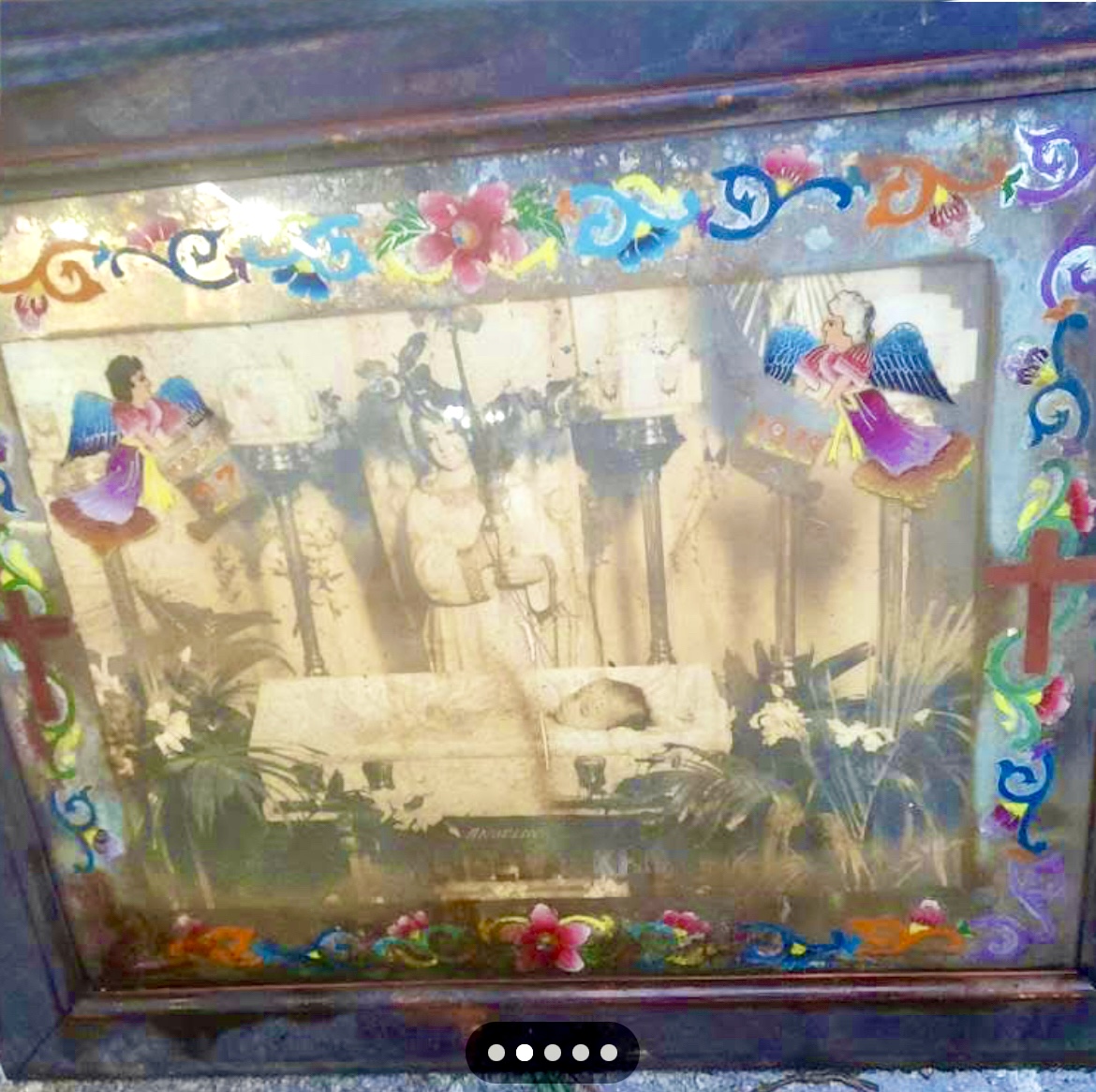
Just two days later arrived one of the most beautiful but also the saddest of my discoveries on FB Marketplace. My first reaction upon seeing it online—as might be any viewer’s—was a shudder of realization at what its subject was. But when I zoomed in on the details, I was soon taken and comforted by the care and love and the unspoken grief with which this child named Angela, whose passing on March 27, 1938 is marked, was sent off by her family.

These recuerdos de patay, as keepsake funeral pictures were then called, seemed more than a testament to the dead; they also exalted the living who cared enough to invoke the eternal watchfulness of glass-painted cherubs and angels over Angela.

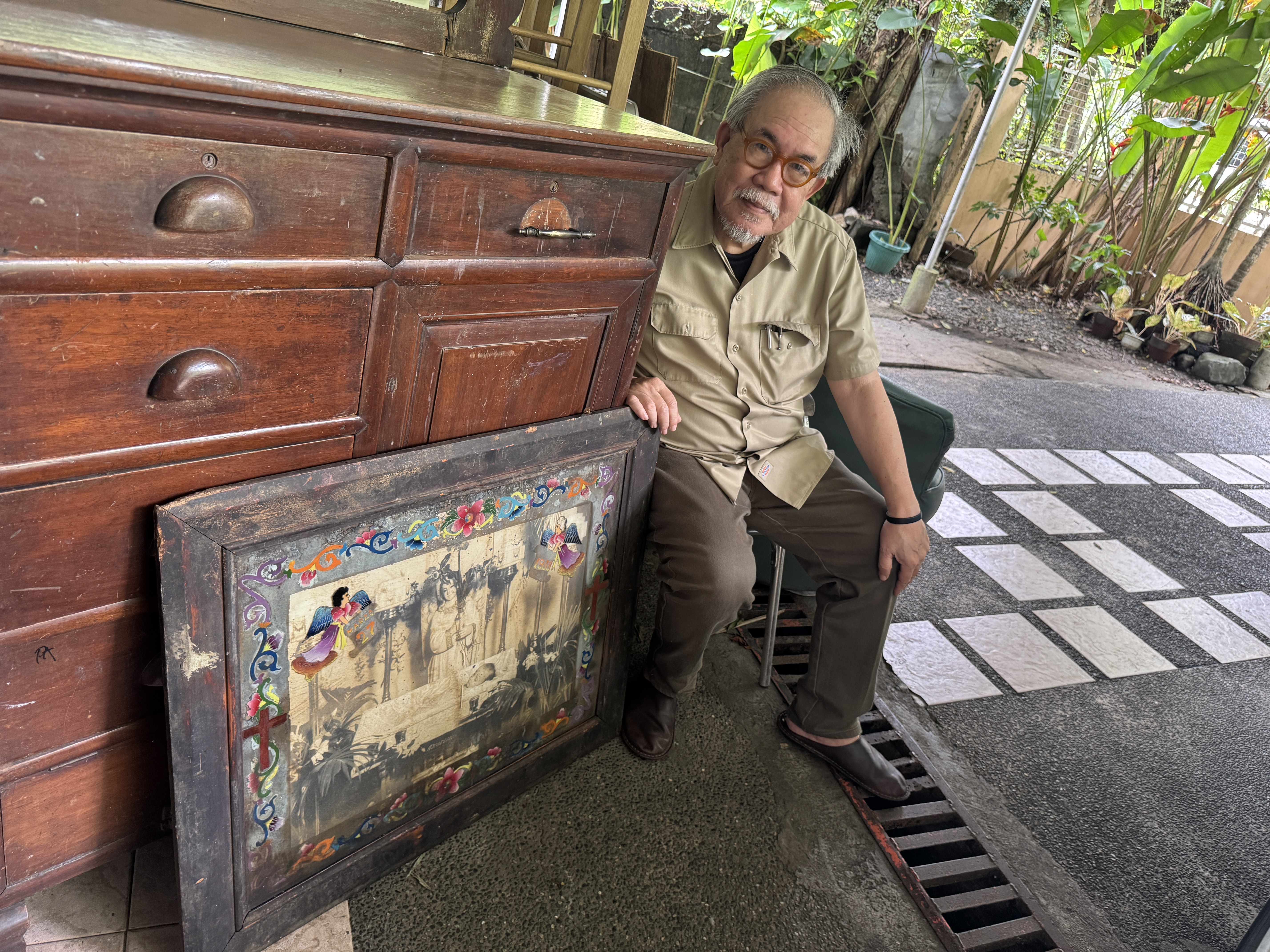
And so began for Beng the task of restoring the funeral picture of young Angela. As the picture had presumably not been taken out of its frame for over 80 years, both the photograph and the glass were full of dust and grime. Hundreds of mold or age spots pimpled the surface.

The decorative border had been painted on the glass from the inside—but as Beng established after a quick solubility test, the painter didn’t use oil or enamel but likely tempera which dissolves in water, so she will have to be very careful to make sure its surprisingly vivid colors don’t come off. The narra frame will be cleaned and retained. It may be a morbid memento to some, but as art it gives Angela another life beyond March 27, 1938.

These two finds on FB Marketplace, heavy with emotion, reminded me that collecting sometimes goes beyond fun and profit. It involves respect and even reverence for a past that left us some brilliant images to remember it by.
Penman No. 473: Taking Care of Emy

Penman for Friday, May 9, 2025

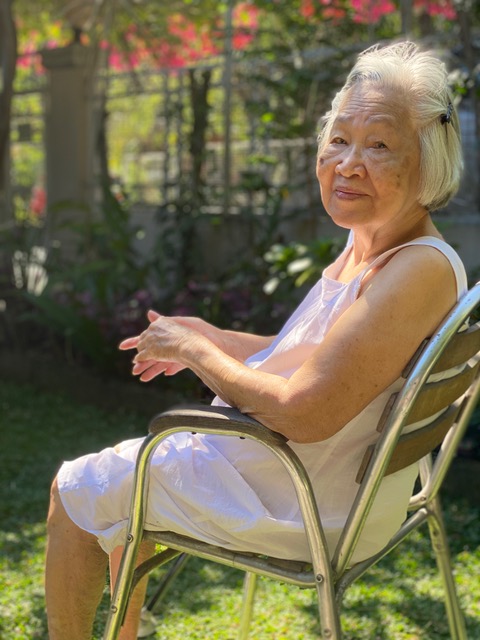
MY MOM Emy turns 97 today, May 9. Some years, her birthday coincides with Mothers’ Day, saving us a celebration. But that’s a bit deceptive, because when you have a parent this old living with you, every day is a blessing worth celebrating. 

It’s hard to believe that Mommy Emy is a lot healthier than she was a quarter-century ago, when we all feared that we were about to lose her, just a few years after our dad Joe Sr. passed away in 1996 from a ruptured aneurysm. After all, the stories usually went that way—one spouse dies, the other follows soon after, out of grief or a sense of life suddenly losing its purpose and meaning. Whatever caused it, Mom fell ill with tuberculosis, with the disease progressing so devastatingly that she was coughing blood and feeling terribly weak. Luckily, her doctor put her on a menu of cutting-edge pills that, over two years, miraculously banished the TB, well enough for her to secure a US visa to join my sister Elaine in California.

Over the next decade, she regained her strength, and even as she sorely missed our dad, indulged in a newfound zest for life—traveling with my sisters in the US, Canada, and Europe, visiting glaciers, going up the Tower of Pisa, and settling into in the quiet suburbs of Virginia just outside of DC with Elaine and her husband Eddie. She stayed there long enough to gain a green card, and we would visit her every now and then, sensing that, despite Elaine’s and Eddie’s loving care, she was pining for home. Eventually she did return to Manila, giving up her green card. “I want to die here,” she stated with finality, and that was that. 

One thing I love about my mom is her eminently practical sense. Since at least five years ago, she has written out clear instructions about what to do in case she was dying—no intubation, no extraordinary efforts to prolong her life, just as quiet and as painless a departure as could be managed. Last year we went out with her to the department store to pick out her funeral dress—a macabre chore to some, but for us, and especially for her, a cheerful excursion, with much discussion about this cut or that shade of blue (yes, she’s going in blue). 

She was born in Romblon a landlord’s youngest daughter, the apple of his eye, the only one to go to UP in Manila, from where she graduated with an Education degree. Growing up, she rode a horse on the farm and accompanied my Lolo Cosme on his trips to Manila. She remembers how easy and provident life was back then: “We would go to the beach and Papa would throw a net into the water, not far from shore, and it would come up teeming with fish, and the fish were everywhere, jumping in the air.” 

My father was a sharecropper’s grandson, too poor to finish college but with a sharp mind and a gift for words that must have swept Emy off her feet. Like many couples of their time and place, they decided to seek their fortune in Manila a few years after I was born. Their love was deep but often tested, given that there were five of us to raise. There was even a time when Dad was a barker for jeepneys, and Mom worked as postal clerk for minimum wage. Life sometimes felt like a soap opera, but we all pulled through, and often it was Emy’s internal toughness that made sure we were fed and ready for school.

Since her return from Virginia, my mom has been staying with us in UP Diliman, occasionally spending time with my three other siblings (Elaine is now in Canada). Still figure-conscious despite her age, she watches what she eats, but we indulge her every whim. It doesn’t take much to make her happy—almost daily Facetime calls from Elaine in Canada and our daughter Demi in the US, a weekly manicure, visits from her brood, and Tuesday Circle get-togethers with her group of neighborhood friends, among whom she is now most senior. 

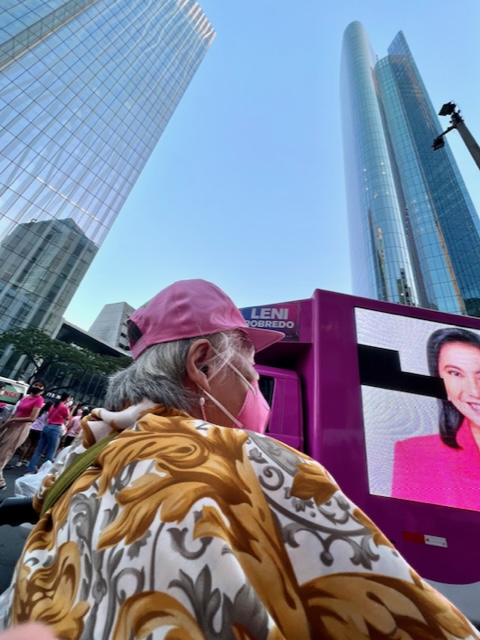
What surprises people who meet her for the first time is how strong and alert she is. She uses a cane and a walker (but only because we insist), but she takes long walks daily around the yard and just outside the house. Her steps are getting slower and harder, but she marched for Leni in 2022, in gratitude for which the VP sent her a video greeting on her 95th birthday. She reads without glasses, and plays word games on her iPad with a passion; she follows Netflix, and watches the news with tart commentary. She’s as prayerful and religious as they come, but is staunchly liberal in her politics. “All my friends are dead” is her frequent complaint, quickly balanced by “But I’m so thankful for my children!” She and Beng share long meals and laughter-filled conversations. We have no doubt that as long as she takes her maintenance meds and doesn’t suffer a bad fall, she’ll live to be a happy hundred. 

Emilia Yap Dalisay’s name will never make it to the society pages, but she’s the biggest star in our small stretch of sky, and taking care of her has been our grandest privilege. Happy birthday, Mommy Emy, and may you have as many more years to come as God’s kindness will allow.

Qwertyman No. 130: A Family Business

Qwertyman for Monday, January 27, 2025

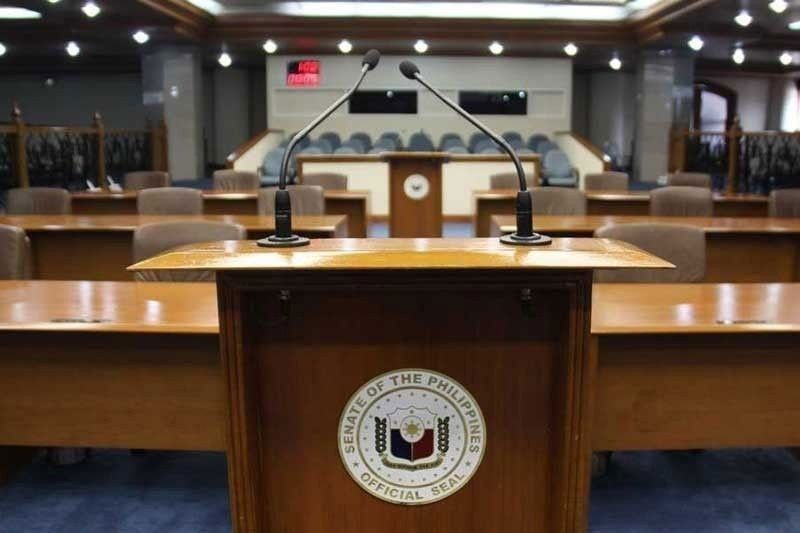
“The Senate is not a family business,” posted my friend R. on Facebook, and I found myself nodding at what sounded like the patently obvious truth, which somehow seems to still elude our family-oriented countrymen.

Among the loudest alarms raised by the forthcoming midterm election is the likelihood that, once again, Filipino voters will be choosing people with the same surnames to add to what has become, over the decades, a cozy nest of clans. 

It isn’t just the Senate, of course, which is infected with dynastisis. From Congress down to the Sangguniang Kabataan where fledgling politicos learn to tweet, our entire political system has been one big and long-running Family Feud. Husbands, wives, and their kids serve as senator, congressman, governor, mayor, and councilor with utter shamelessness, claiming a form of manifest destiny contestable only by another family.

It’s gotten so bad that—surprise, surprise—Sen. Robinhood Padilla, last accused of doing little on the job but preening his mustache, filed SB 2730 last July against political dynasties (already in our Constitution, but lacking an enabling law). Citing a Harvard study (which always seems to bear more weight than common sense), Padilla said that political dynasties “persist and reproduce their power over time, undermining the effectiveness of institutional reforms in the process.” 

More informatively, Padilla noted that “A dataset of Philippine local elections from 1988 to 2019 showed the number of governors with at least one relative in office (dynasty) increased by almost 39 percentage points, from 41% in 1988 to 80% in 2019. The dynasty proportion of vice governors rose from 18% in 1988 to 68% in 2019. The percentage of mayors in the dynasty increased gradually from 26% in 1988 to 53% in 2019…. Political dynasties, in effect, have exhausted resources to attain economic and political dominance while at the same time compromising political competition and undermining accountability…. It is time to break the barriers preventing the best and the brightest from serving the Filipino people.”

Tell that to the Philippine Senate which, because it has only 24 members, magnifies the prevalence and persistence of dynastisis even more. 

One of the ways the US Senate differs from ours is the way it’s composed, with two senators from each of the 50 US states, which, in their federal system, gives equal weight to giant Texas and tiny Vermont. That should make it highly unlikely for two related people to be in the Senate at the same time, right? Well, sort of. As it turns out, in US history, two pairs of brothers actually served in the Senate together. One pair I’m pretty sure you never heard of—Theodore and Dwight Foster, who simultaneously represented Rhode Island and Massachusetts at the start of the 1800s. The next pairing didn’t happen until more than 150 years later—with Edward and Robert Kennedy representing Massachusetts and New York in the 1960s. 

Our Senate puts America’s to shame in that department. 

It helps, of course, to be related to a President, or to prepare oneself to be one. By my count, there have been five Aquinos in the Senate—Ninoy, Butz, Tessie, Noynoy, and Bam; four Marcoses—Ferdinand, Imelda, Bongbong, and Imee; four Estradas—Joseph, Loi, JV, and Jinggoy; three Roxases—Manuel, Gerry, and Mar; three Osmeñas—Serging, John, and Serge; three Laurels—Jose, Sotero, and Doy; and two Magsaysays—Gene and Jun. “Cong Dadong” Macapagal never became a senator, but his daughter Gloria did. Fidel Ramos’ contribution to the Senate was his sister Letty.

To these presidential surnames we have to add those of other political families such as the Dioknos, Tañadas, Kalaws, Angaras, Guingonas, Antoninos, Rectos, Pimentels, Revillas, Villars, Cayetanos, and possibly Tulfos. The Cebu Osmeñas—John and Sergio, Jr.—once served together in the Seventh Congress in the early 1970s; the Cayetanos—Pia and Alan—followed suit in the Fourteenth, in the late 2000s, and the Villars—Cynthia and Mark—in the current Nineteenth. 

That’s not to say that some members of these political clans were not deserving or distinguished. Many certainly were—in the right hands, a family tradition of public service sets high standards and expectations. Never mind the ancient Fosters, but I don’t think America minded having Ted and Bobby Kennedy in the Senate, with Ted serving continuously for an astounding 47 years until he died.

They have no term limits in America. We imposed ours in the 1987 Constitution—a well-meaning gesture meant to democratize our legislature, but which backfired and produced exactly what it wanted to avoid. Our political families quickly learned to adjust and do a merry-go-round, ensuring further that one member or other would occupy all spots in the wheel. What developed over the years was less a revitalization of the institution with bright new talents than a pooling and coagulation of old blood. 

So rather than an anti-dynasty law which seems to have little chance of passing a House full of dynasties anyway, perhaps we should revisit term limits, so we can retain the services of truly outstanding senators (like Franklin Drilon, for example) for life, rather than punish ourselves by replacing them with inferior siblings and cousins. 

There are and have been high-performing senators whom we don’t and shouldn’t mind serving over and over again, politicians with genuine and critical advocacies they have devoted their lives to. Our political history has been fortunate to have seen the likes of such men and women as Senators Claro M. Recto, Jose Diokno, Lorenzo Tañada, Raul Manglapus, Emmanuel Pelaez, Helena Benitez, Eva Estrada Kalaw, Juan Flavier, Rene Saguisag, Miriam Defensor Santiago, and Edgardo Angara, just to speak of the departed.

Sadly our political realities preclude the truly poor from winning a Senate seat, and only extraordinary circumstances like EDSA can lift up capable and virtuous candidates of modest means such as Dr. Juan Flavier and Atty. Rene Saguisag to that exalted position. But their interests can be articulated and defended by men and women with the capacity and quality of mind and spirit to see beyond themselves. These are senators whom we expect to make laws that build a nation, rather than empower and enrich themselves and their progeny even further.

Qwertyman No. 106: For Our National Peace of Mind

Qwertyman for Monday, August 12, 2024

FOR A country starved for heroes, Carlos Yulo’s double-gold performance at the Olympics provided a sumptuous feast—a bacchanalian one, to use probably the newest and most notorious word in many people’s vocabulary. In one YouTube replay after another, we marveled at his seemingly magical flips and tumbles, and our eyes welled with tears when the Philippine anthem played over the stadium’s loudspeakers.

The euphoria effectively drowned out the previous week’s near-manic howls over the controversial Dionysian tableau of the opening ceremonies and the chorus proclaiming Paris as the most evil and corrupt city on the planet. Suddenly Paris acquired a golden halo; Yulo was beatified on social media as the exemplar of perseverance and tough-mindedness, and rightly so. His feat—sterling victories achieved despite overwhelming odds—was unprecedented and not likely to be equaled by another non-hyphenated Pinoy anytime soon.

But no sooner had Filipinos united in that moment of jubilation than they, almost by instinct, found cause to divide once again, this time over one’s choice of villainess in poor Caloy’s life: the bitter mother or the sexy girlfriend, behind either one of whom platoons of supporters rallied. Team Nanay exalted motherhood and filial piety above all else; Team GF cheered for the pursuit of happiness. Who will get to the podium remains to be seen.

I’m sure Caloy Yulo isn’t alone in his predicament. An assiduous journalist just has to comb through the life stories of all the 400+ gold medalists in the Paris Olympics to discover that 87.93 percent of them have problems with mothers, fathers, girlfriends, boyfriends, siblings, in-laws, best friends, neighbors, and pets. (For these, I would look most closely into places like Uzbekistan, Uganda, and, yes, Italy, where families seem to be big and noisy.) Statistically speaking, there has to be a champion shotputter or a synchronized swimmer somewhere whose miserable mama hates his shapely squeeze. (I’ve even heard someone posit over breakfast coffee that maybe EJ Obiena needed a mother/girlfriend problem to clear the bar at 6.0 meters.)

The big difference is that no one goes to town with family dramas quite like us Pinoys, especially Pinoys with social-media accounts normally given to showing off what they just ate or their OOTD. To show, at least once in a while, that there’s actually a thinking and feeling person behind the avatar (and online, feeling equals thinking), we post a strong opinion—never mind that it’s the millionth repost of someone else’s meme. We find it important—nay, obligatory—to take sides on vital issues (that do not include PISA scores, ICC probes, or jeepney modernization). We have to decide if the mother or the girlfriend is at fault; our national peace of mind depends on it. Never mind what Caloy Yulo himself thinks—this is bigger than him (like most things are).

And this is just the beginning, although it’s inextricably tied in with the next big question that 115 million Filipinos have to grapple with: what should Caloy do with all his money? (I don’t even want to think about whether he should go into showbiz or politics next—my friend Ige Ramos’ post on those prospects was probably the sanest of the past week, and one Caloy would do well to heed.)

In addition to all the lifetime supplies of ramen, litson manok, and colonoscopies that come with being a Pinoy Olympic laureate, will it be too much to offer Caloy Yulo a lifetime supply of peace? It costs nothing but our willful silence.

Seriously now, silence is a virtue, and withholding opinion can be as valuable and as helpful as giving one. It doesn’t mean you’re dumb or uncaring. On the contrary, it might mean that you know enough to understand that staying out of the fray and keeping your thoughts to yourself is the more sensible if not kinder option. But we Pinoys, the reigning world usisero and pakialamero champions, have never been known for excessive self-restraint, which manifests only when the neighbor’s wife is being beaten senseless by her husband (“Wala tayong kinalaman diyan”) or when witnesses are called to testify to their boss’ or their congressman’s misdeeds.

Sadly, social media has empowered everyone from nitwits to geniuses (and of course, everyone thinks of himself or herself as a genius, especially the nitwit) to hold forth on every conceivable subject, even and especially if the issue at hand is none of one’s bloody business. 

I say that with the ironic awareness that we opinion writers do pretty much the same thing, with some sort of official license; we even get paid for it. Indeed we may even be the ultimate pakialamero, poking our noses into all manner of secrets and scandals, particularly the government variety (or maybe not me, because I don’t hobnob with politicians or their secretaries, and so am useless when it comes to the saucy stuff). But the difference is that having to write 1,000 words instead of a ten-word tweet, we actually have to stop to think about how we feel, to contextualize, and perhaps even to decide that we have nothing truly important or useful or even amusing to say about the matter, and so should move on to something else.

At least Caloy can rest assured that given the nature of the beast, this tempest will blow over soon. (Is anyone still posting about the Last Supper? That’s so last-week!) And before too long, he can rightfully enjoy the pommel horse in his P32-million condo. Wait—it does have a pommel horse, right? If not, it should! What do you think?

(Photo from rappler.com)

Qwertyman No. 102: Retaining the Fools

Qwertyman for Monday, July 15, 2024

A RECENT Rappler report on “The Philippine Senate: From statesmen to showmen” by James Patrick Cruz told us much of what we already knew, but didn’t have the exact numbers for—that political families dominate that institution, that most of them come from the big cities, that most of them are men, that older senators (above 50) outnumber young ones, and that many come from the glitzy world of entertainment and media.

Surprisingly (and why am I even using this word?), most senators are highly educated and even have advanced degrees, mostly in law. However, the study says, “the high educational background of senators has not produced ‘evidence-based policymaking.’…  Some lawmakers, for example, have used the Bible to argue against the reproductive health law in a secular setting and have relied on personal experiences in discussions on divorce.”

And not surprisingly, the academics consulted for the study concluded that “If you want better policy, we should go for better inclusion, better representation, and not just be dominated by political families.” Indeed, from the very beginning, it notes that “Political analysts have observed a decline in the quality of the Philippine Senate over the years. The shift from a chamber filled with statesmen to one dominated by entertainers and political dynasties has become evident.”

And then again we already knew all that. What the Rappler study does is provide a historical overview—quantitatively and qualitatively—of how the Philippine Senate has morphed as an institution over the decades, reflecting changes in the electorate and in Philippine society itself. It opens with resonant passages from the speeches of political leaders from a time when the word “senator” bestowed an aura of respectability and consequence upon its bearer. 

It quotes the luminous Jose W. Diokno: “There is one dream that we all Filipinos share: that our children may have a better life than we have had. To make this country, our country, a nation for our children.” Sen. Jovito R. Salonga, another legendary figure and war hero, follows with “Independence, like freedom, is never granted. It is always asserted and affirmed. Its defense is an everyday endeavor—sometimes in the field of battle, oftentimes in the contest of conflicting wills and ideas. It is a daily struggle that may never end—for as long as we live.”

It’s entirely possible—and why not?—that this kind of elevated prose can be uttered today by a senator or congressman backed up by a capable speechwriter, if not AI. The question is, will they be believed? Will the words ring true coming out of their speaker’s mouth—especially if that speaker were one of today’s, shall we say, non-traditional senators, reared more in showbiz and social media than in Demosthenes? 

“Non-traditional” applies as well to political families, which notion we can expand beyond DNA matches to communities of convenience, of shared geographical, economic, and cultural origins—the entertainers, the media stars, business moguls, the Davao boys, and so on. (There’s probably no better guide to how traditional families have ruled the Philippines than An Anarchy of Families: State and Family in the Philippines, edited by Alfred W. McCoy and published by the University of Wisconsin Press in 2009.)

It might also be that the problem lies not so much or not only in the dynastic nature of Philippine politics, as in the fact that the quality of these families has badly deteriorated. And by “quality” I don’t mean anything by way of economic or social candlepower—none of that “de buena familia” silliness. (To be sure, no family—however celebrated—has ever been perfect, coming with its fair share of black sheep, eccentrics, and outliers. Our social lore abounds with barely whispered stories of the abusive father, the spendthrift mother, the gay son—yes, in Pinoy archetype, gay is wayward—and the mad daughter.) 

I suppose we keep looking for some defining virtue, a reputation founded on academic excellence, intellectual prowess, philanthropy, moral ascendancy, and the like. How many families in the Senate and Congress today can lay claim to that kind of legacy? Today, prominent families achieve and maintain their status through their economic and political clout, through popularity or even notoriety, and even through sheer staying power, thanks to the muscle memory of many Pinoys in the voting booths.

In 1998, in my biography of the accomplished, fascinating, and resolutely revolutionary Lava brothers, I noted that “For anyone familiar with the history of the Philippines over these past one hundred years, it will not tax the truth to suggest that so much of that history has been family history. In many ways, modern Philippine history is an extended family picture album in which a few names and facial features keep recurring, with only the characters’ ages, expressions, poses, and costumes changing from page to page. Most ordinary Filipinos have lived in the shadow and by the sufferance of such dynasties as the Marcoses, the Lopezes, the Aquinos, the Laurels, and the Cojuangcos, among others—families which have ritually sired presidents and kingmakers, tycoons, rakes, sportsmen, and society belles. But none of them were like—and there may never be another Filipino family like—the Lavas.”

For those who never knew them, over the mid-20th century, five Lava brothers—Vicente, Francisco, Horacio, Jose, and Jesus—emerged from a moderately affluent landowning family from the heartland of Bulacan to become progressive intellectuals, some of them even leading the Partido Komunista ng Pilipinas. Ironically, these were no workers or peasants. Vicente, a government pensionado, held a PhD in chemistry from Columbia University; Horacio and Francisco also held advanced degrees in economics and law from Berkeley and Stanford, respectively; Jose was a lawyer-CPA whose University of the Philippines thesis was adjudged the best of his class; Jesus was a medical doctor, also graduating from UP.

Just so we know, the Lavas and their comrades were operating legally and openly right after the War, and were even elected to Congress under the Democratic Alliance in 1946—only to be expelled on trumped-up charges of fraud and terrorism, with their votes on the key parity rights issue discounted. Under threat of extermination, they went underground, followed by two decades of bloody struggle.

That’s what happened to one family with real brains and convictions, even pre-NTF-ELCAC; we expel the thinkers and retain the fools.

(Image from constitutionnet.org)

Qwertyman No. 44: Again, America

Qwertyman for Monday, June 5, 2023

I HAVE a good friend whom we’ll call Ted, a Fil-Am who retired a few years ago as a ranking officer in the US Navy. He was in town recently on some family business, and like we always do when circumstances permit, we had dinner and a good chat just before he and his wife flew back home.

Most of us have friends if not relatives in America, and all of this would be pretty routine except for one fact: I’m a flaming liberal, and Ted is a Trump Republican. Over the fifteen years or so that we’ve known each other—well before Donald Trump entered the picture—we’ve been aware of those political differences, but rather than politely skirt them in our conversation like many sane people would, we feel comfortable enough with each other to talk at length about them, and even exchange some friendly barbs.

Much of that level of comfort comes from my belief that, in his own way, Ted sincerely and deeply loves his country—and his ancestral home, the Philippines. He’s smart, curious, eager to learn and understand. In his former naval job and as a private citizen, Ted—who was born in the US but spent some of his formative years in his family’s hometown in Bicol, and speaks some of the local language aside from Filipino—has visited the Philippines as often as he can, trying his best to improve relations between the two countries on a personal level. (On this last visit, for example, he also took part in a ceremony to celebrate the commissioning of the USS Telesforo Trinidad, named after an Aklan-born Filipino petty officer who was awarded the Medal of Honor for bravely rescuing his shipmates from an explosion aboard their ship in 1915.)

Given his naval background—his dad joined the Navy in the 1970s—I’m not surprised that Ted is a Republican, like many military Fil-Ams are. (One notable exception is a mutual friend of ours, the former West Pointer, Army Ranger, and diplomat Sonny Busa, as staunch a Democrat as they come, and a key figure behind Filipino veterans’ causes in Washington.) His support for Trump despite the man’s many failings continues to mystify me, but I’m guessing that in his calculations, Ted chose to cast his lot with the man best positioned to thwart the liberal agenda. That includes items that Ted and other Republicans feel extremely uncomfortable with, such as what he calls the “celebration, beyond just acceptance” of transgender rights, and their judicial enforcement.

Perhaps with any other person, my liberal hair-trigger would have fired away at such comments with a fusillade of counter-arguments, but with Ted I find more value in listening and trying to understand a certain mindset, as different as some of its premises may be from mine. In our last conversation, what Ted had to say was profoundly disturbing. I’m paraphrasing here, but essentially it was this: “America is a mess. People can’t talk civilly to each other anymore. When I say I’m a Republican, people instantly assume I’m a racist.” To which I said that people at the top like Trump (and our own version of him here) greenlighted that kind of boorish discourse, with additional pressure brought on by right-wing militias armed with AR-15s. We talked about January 6 (which he opined was not an insurrection) and the Second Amendment (which I said seemed sacrosanct in American politics). “You have cancel culture,” he sighed, “to which the other guy responds by going bam bam bam!” He was deploring, not endorsing it, trying to get a fix on his own society’s ailments. “It’s in our DNA,” he said glumly about guns.

Thankfully Ted and I always have other things to talk about—like the Philippines, in which Ted said he feels much more relaxed than his own country. He knows how worked up I can get about politics and our own leadership (or the lack thereof), but as far as he could see on this trip, I and my fellow Filipinos (including those he met in Bicol) were just chugging along. “We’re survivors,” I said, “and we’ll do what it takes to get by from day to day.”

That brings me to another friend, “Tony,” who messaged me out of the blue the other day, obviously distraught by the Senate vote on the Maharlika Fund bill and asking if it was time for him and his family to leave the country, given how we seem to be back on the road to political plunder and economic ruin. It wasn’t just a rhetorical question; he was really thinking about it. Here’s what I said:

“Hi, Tony—If it’s a realistic option, I don’t think anyone can or should blame you for leaving or wanting to leave. We have only one life and we have to make the most of it in all ways. Politics is important, but it’s only one of many other factors that define who we are—love, art, family, and faith, among others. That said, it can have a way of complicating our lives and life choices. 

“Moving to the US has also been an option for me for some time now. Our only daughter lives in California and has been wanting to petition us. But my wife and I have been strongly reluctant to move there, although we visit almost every year and are familiar and comfortable with living in the US, where I spent five years as a grad student. We are artists, and our work is culture-bound. We feel appreciated here, within our small circle of friends. However good we may be, in America we would be marginalized; we don’t want to become an American minority and deal with all the issues that will come with it. And America has become much less inviting now, with all the intolerance and racial violence provoked by Trumpism. 

“So unless it were a matter of life and death, we’ll stay here, despite the present dispensation and many more aggravations like the Maharlika Fund to come in the years ahead, because I feel that my continued survival and success will be my best way of fighting back. Having survived martial law, we can survive this as well. Everyone’s circumstances are different, and again you should feel free to find your place where you can best live with your family and secure their future. Nothing is ever final anyway, and you can always come back. Follow your heart and conscience, and you should be all right, wherever you may go. All best!”

(Image from bu.edu)

Qwertyman No. 39: My Mother Emy

Qwertyman for Monday, May 1, 2023

Pardon me if my column this week is a bit personal, because its subject is my mother Emilia, who will turn 95 next week, against all odds and through the grace of the One she prays to every night and every morning, and in the loving embrace of her five children and many grandchildren and great-grandchildren.

In this age of murderous Covid, rampant cancers, devastating disasters, and political turmoil, to reach 95 is extraordinary. To be 95 and be reasonably healthy, free of dementia (but for a few memory lapses that even I at 69 am prone to), able to walk a few hundred meters for her daily exercise, read without glasses, and comment tartly on the day’s political and entertainment news is almost superhuman. 

Like today’s children, my mom Emy can’t be removed from her iPhone and her iPad; she loves to play word games, beats my wife Beng at Scrabble, devours Netflix by the series, and has her telenovela programming graven in stone. She has daily Facetime audiences with our daughter Demi in California and my sister Elaine in Toronto. She even gave up her US green card to spend, she says, the rest of her time at home. In her “Tuesday Circle” of elderly friends, she is now the most senior, but hardly the most infirm. Best of all, she looks forward to reading my books and columns, and although I suspect that they sometimes bewilder her as much as they do my other readers, she invariably likes them because they were written by her first-born, who cannot possibly write anything badly. (This week’s surprise column, I think, will be a hit with her.)

A quarter-century ago, shortly after my father Jose Sr. died, we thought we were going to lose her as well. That’s what they say often happens—one dies, and then the other follows, in the utmost expression of devotion and sympathy. Emy was diagnosed with tuberculosis, so serious and advanced that we felt we were gathering at her deathbed, her sheets spotted with the blood she was coughing up. I had never seen her so frail and so helpless. She was missing my father terribly, and I’m sure she wouldn’t have minded leaving us to join him at that moment. 

Theirs had been a storybook, whirlwind romance. She was the youngest daughter of a landowner in Romblon, the only one in their brood of twelve whom her father had trusted to study and go to college in UP in Manila. She was her father Cosme’s pet, a girl who rode horses on his farm and who accompanied him when he took a boat to the big city to off-load his copra harvest and to buy necessities and a few baubles for his large family. It must have pained him when she decided to finish her high school in Manila (“I was walking on Padre Faura and saw UP High, and so I went in to see how I could study there,” she says) and to stay there so she could study to become a teacher.

My father Joe was the brightest boy in his school and, so the local legend goes, in the whole province. He was an eloquent writer and speaker and cut a dashing figure. The only problem was, his family was poor—his grandfather had been a sharecropper, his father a farmer. His parents had separated shortly after he was conceived—another story that deserves a telling of its own—and lived about a kilometer apart for the rest of their lives. Raised by my grandmother Crispina, Joe seemed destined for great things far beyond Romblon. He already had a girlfriend, among the town’s prettiest bachelorettes (I met her once when I was a boy, unaware of why she was looking at me a certain way.)

One day Emy and Joe met at the pier in Manila waiting for other people and other things. Some sparks must have flown, because not long after, they were together and engaged to be married. I was the first outcome of that improbable union, born in a nipa house in Alcantara, Romblon, pulled out of my mother by a midwife (whom I would meet about twenty years later, walking barefoot on the asphalt road, and whom I would rather awkwardly gift with a pack of Marlboros in token thanks for my delivery).

The decades following would be a mixture of toil and triumph, of struggle and hope. Both my parents had enrolled in law school, but the need to sustain us foiled that dream. Joe had even gone to the police academy, in the class of James Barbers. He clerked for Public Works, became a Motor Vehicles Office agent with a shiny badge, and took on all kinds of jobs to support us. My mother Emy, despite her pride as a UP Education graduate, soldiered on beside him and sold stamps as a postal clerk. We went through some very rough times, constantly moving around the city with all our worldly possessions on the back of a truck in search of more affordable lodgings. Sometimes my father would be gone for long periods, working as far away as Mindanao to be able to send us some money. 

But one thing they always held up for us was the value of education. My parents slaved and my siblings sacrificed so I could go to a private school, thinking like most Filipinos of their generation that a facility in English would be my ticket to success. It was a huge relief for all (and a good excuse to buy our first TV) when I got a full scholarship to the PSHS. So it must have felt like a stab in my mother’s heart when I announced, shortly after entering UP on the swell of activism, that not only was I not going to be a scientist (my Math grades were miserable) but that I was also dropping out of college to find work (which I did at 18, to write for the Philippines Herald). Despite everything, I wanted to follow in my father’s footsteps and gamble on my talent.

But I did come to my senses and many years later returned to school, where I remain to this day, with a lofty title my wife Beng prefers to downplay to “Chauffeur Emeritus.” Instead of following Joe to his grave, my mom Emy fought back, miraculously recovered, traveled the world, and cradled her great-grandchildren. So good things do happen to those who persevere and survive, for as long as we’re willing to give life another chance.

I honestly don’t think I’ll reach 95 myself, but I have the privilege—and the challenge—of living with someone to inspire me every day. Happy 95th, with all our love, Nanay!

Qwertyman No. 20: The Gift

Qwertyman for Monday, December 19, 2022


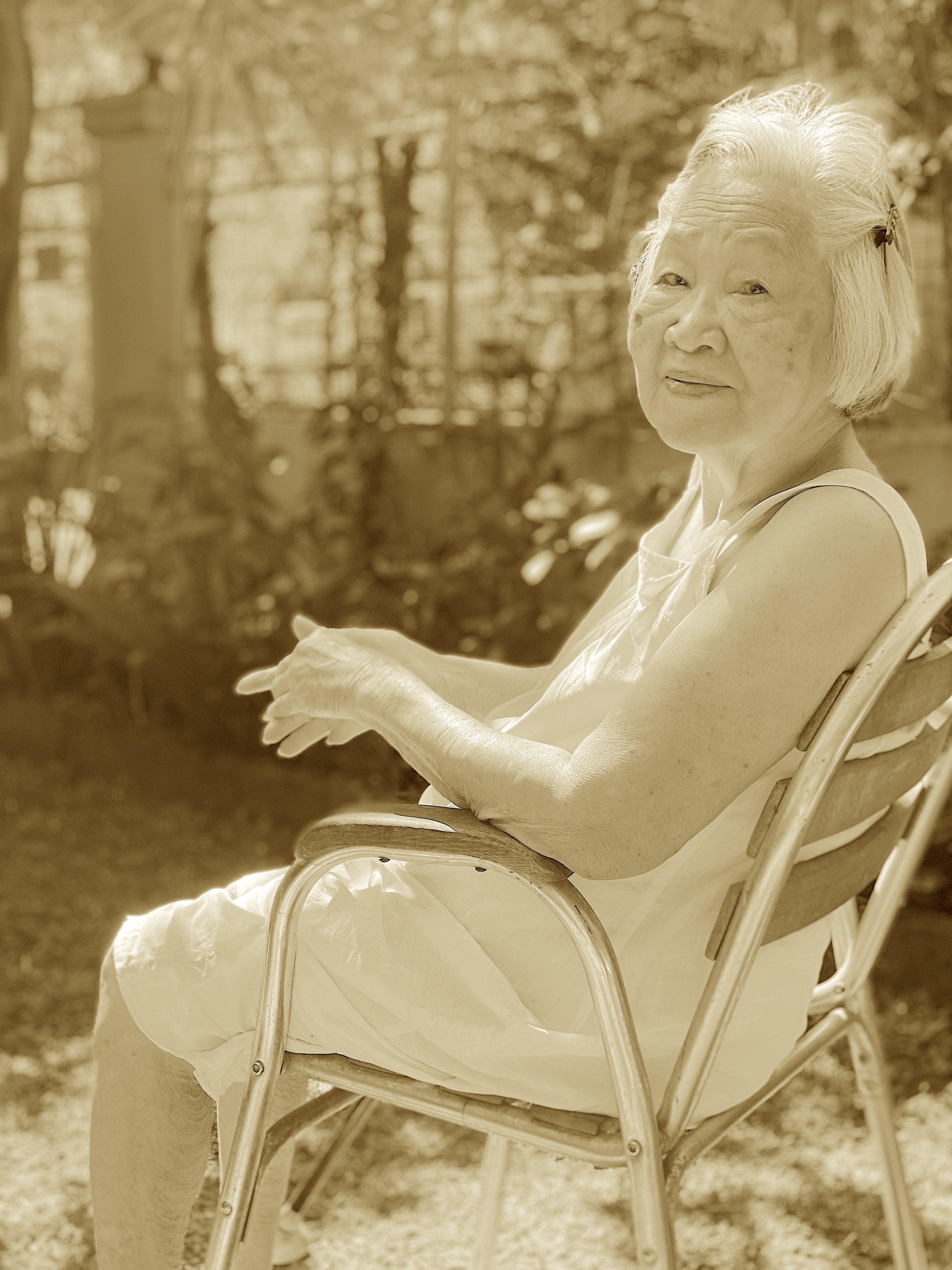
(Taking a break from politics, I wrote this Christmas story that might take a little effort to figure out, but which I hope will be worth your while. With apologies to my mom Emy for using her picture above.)

I’M NOT deaf, she wanted to shout, I can hear, I can understand what you’re saying—I’m not stupid, I’m just… lost. I don’t know who you are or what I’m doing here. You seem to be a nice man, and thank you for the chocolate and the barquillos—I don’t know how you knew I liked those—but I have to say that I don’t feel comfortable sitting here with you asking me how I am, asking all these questions about names and places I can’t recall. You’re very nice and very kind and speak to me like I know you, like I should know you, and it makes me feel very bad that I don’t have the answers you seem to be looking for. Like “the champaca near the fence of the house on Tagumpay Street.” Of course I know champaca and how nice it smells—but the house, a house, on Tagumpay Street? You say we lived there? When? Why should I have lived there, with you? 

They laughed and Jovy shrugged and said, “She’s somewhere else—again.” Laura cast her a pitying glance and said, “I wonder if there’s something we can do or say to bring her back, even just for tonight. I mean, it’s Christmas, right? Surely God can work some miracle to allow Mama to enjoy her family? It would be such a gift to the kids. Where are they, anyway? It’s past nine.”

Jovy reached for a bottle of Macallan and poured himself a shot. “They’ll come if they will. I don’t remember them talking much to her when she was still okay. Don’t see why it should be any different this time.”

Laura stared out the window at all the Christmas lights that made their gated village look like a bed of stars. From the kitchen wafted the confused but beguiling hints of vinegar, red pepper, and other pungent flavorings.

Laura liked to think of herself as the family minder, the one whose job tonight was to make sure everyone had a filling noche buena and wished each other well, like a good Filipino family, albeit with one somewhat distracted member. With the pandemic still festering and the world they knew upended, a return to some sense of order and normalcy felt overdue. In Decembers past, she and Jovy would take the children, Toby and Rina, to chilly getaways in Baguio, with Mama maddeningly singing carols from the back of the van all the way up Kennon Road.

“I’m sure the kids will come,” Laura said, adjusting a bell on the Christmas tree. “I told them they were getting special gifts from us.”

“They are? “ Jovy said, surprised. “Like what gifts?”

“Papa’s Longines and Mama’s bridal necklace,” Laura replied under her breath, as if she expected Jovy to react badly. “It’s about time we passed them on.”

“Papa’s gone so I guess the watch is okay, but have you spoken to Mama about the necklace?”

“And tell her what? She won’t even know what she’s looking at.”

“Maybe we should wait for Rina’s wedding—“

“That girl’s not getting married for another ten years, if ever. I just want us to make something special happen tonight, like families do.”

“At least you could show it to Mama. Make it look like she’s the one giving it to Rina. As if Rina will even care. You know she hates old things. She’ll probably just sell it on eBay.”

“What she does with it is her business. What’s important is that we’ve discharged our generational responsibility.”

“If you insist—“

“Leave Mama to me.”


“IT’S A VERY small watch,” Toby said, unable to mask his disappointment. He was a stockbroker who lived in his own condo and came for dinner once or twice a month to brag about his  new girlfriend, or his new bike. 

“That’s what men wore back in the ‘50s. I guess you could give it to what’s-her-name, Nikka, now,” said Jovy.

“Nikka would like Mama’s necklace more, I think. Maybe Rina and I can do a trade.”

In her corner, Mama stared as Laura opened the blue velvet box that held her necklace of white gold and tiny emeralds, sold by a prominent Escolta jeweler before the war. Rina was on her phone near the door, mumbling an apology to someone. She wasn’t even vaguely interested in the necklace that Laura was bribing her with; she’d come home for a bunny costume she needed for a New Year party. She hated being asked about marriage, and the bridal jewelry was another not-too-subtle nudge.

“I wanted to show this to you, Mama, before we—before you—give it to Rina. You remember Rina, your granddaughter? She’s almost thirty, and should get married soon!”

I don’t know this Rina you’re talking about, Mama thought. And why do you always ask me to remember, why should I remember? Isn’t it enough that I eat my porridge and drink my tea?… But—this shiny thing in the box, I know it, for some reason…. It’s very pretty, so sparkly, those little green eyes…. I know I’ve seen it, in the mirror—around my neck! It was a happy day, I was happy all in white with these green sparkles, and I was all so white and so very happy.

“Do you want to be the one to give it to Rina?” Laura said, unsure of what was passing through Mama’s mind. She noticed some agitation, some flicker of anxiety, although Mama was smiling.

“Give it? Why?”

“Because it’s Christmas, Mama. Because it makes us happy to give gifts.”

“I thought this was my gift. It makes me happy.”

Laura tried not to sound exasperated. “You don’t need it anymore, Mama. It’s time it went to Rina.”

Mama now remembered: her wedding day, the carriage, the lilies along the aisle, the choir, and her groom Miling, so blindingly handsome in his white sharkskin suit. 

She saw Rina, the girl they said was her granddaughter, still on her phone across the room. From that distance she looked virginal, almost angelic. Mama could imagine her in a white gown. Mama looked at Laura, who seemed distressed, waiting for an answer. Now that she had finally remembered something, they wanted to take it away. 

She ran the necklace through her fingers. She recalled how the clasp had pricked her thumb that morning, but she was in such bliss she hardly felt the pain. She looked at Rina, and sensed the younger woman’s deep unhappiness. It seemed so unfair.

Mama shut her eyes and shut the box and turned her face away. “I don’t know what this is for,” she told Laura. “Give it to her.”

“Thank you, Mama,” Laura said, much relieved. “And Merry Christmas.”

Mama seemed more distant than ever, lost in her thoughts. “I don’t think she even knows what Christmas is, anymore,” Laura sighed.

Qwertyman No. 18: The Excavation

Qwertyman for Monday, December 5, 2022

PRISONER Q felt his shovel bite into the soil with what sounded like a sigh of satisfaction. It had rained, and the earth was dark and soft and yielded without complaint. Beside him, his fellow inmates attacked the job with gusto, happy to be outside under an overcast sky instead of stewing in their cells and taking turns napping, because of the limited space. The mayores or cell block leaders could, of course, sleep anytime; they even had bunks to stretch out on while everyone else languished on the floor or stood up against the railings. 

As an agurang or elder, Prisoner Q enjoyed a few privileges—he got into the front of the line at mealtimes, although he ate the same sweaty rice and slurped the same dishwater soup, and now and then he got a pack of cigarettes from his mayor or (he was told) even the warden himself because he could write in English and could draft special requests or letters of appeal, but otherwise, especially to the outside world, he was just one of them, another mouth to feed at the state’s expense.

So everyone was surprised when Prisoner Q volunteered to join the excavation detail that the warden ordered to be put together for a special project in a vacant lot toward the back of the prison. It wasn’t his body they questioned—he had stayed fit over the 14 years he had been in prison, and was in better shape than when he came in—but his mind. These labor details were usually assigned to newcomers who needed to be broken in, who needed to be jerked out of the utak-laya mindset they clung to with their fingernails. It was backbreaking work, and more than one inmate had collapsed from exhaustion or sunstroke. Many assumed that Prisoner Q merely wanted a change of scenery, a change of pace to ward off buryong, the prison blues that led to slashed wrists and, worse, running amok and causing mass mayhem.

They also wondered what all the digging was for, and why the warden didn’t just bring in a backhoe to do the job. At first it had seemed like all they were digging was a ditch, but it grew bigger and deeper by the day and by the week, until it was the size and depth of a swimming pool. And still they dug on for up to ten hours a day, their meals brought down to them, with a makeshift latrine in a corner for their immediate needs. The dig turned up old beer and soft-drink bottles, ceramic shards, a scorched wristwatch, and Army-issue spoons and forks, but nothing of extraordinary value, except for a silver ring that had lost its stone. Whatever they found was laid out on the surface on a white cotton bedsheet, and now and then the warden came by to inspect and to collect the more interesting pieces, tossing the rest back into the maw of the excavation. Sometimes the warden consulted a map that he had on his phone, which no one else could see, and measured distances. Rumors began to spread that the warden was after treasure, that he had gotten hold of a wartime Japanese map that indicated the presence of at least part of Yamashita’s marvelous loot in this particular quadrant of the prison. 

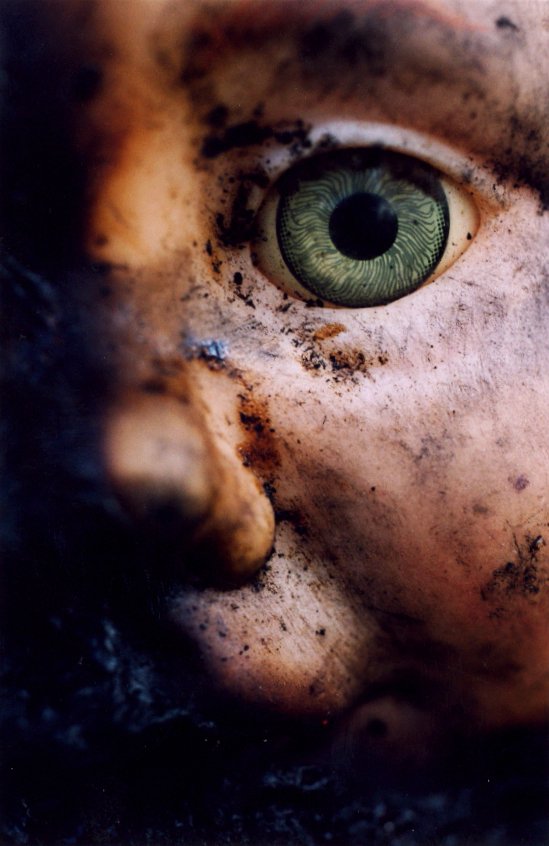
One day Prisoner Q dug up the head of a bisque doll, half of its face badly burnt. Its one good eye stared at him, and he threw it away. And then from a few inches deeper emerged the skeletons, a whole tangled mass of them, as if they had chosen to die together in some conflagration. A scrap of cloth bore a flowered print; the heel was peeling off a man’s shoe. The news of the bones’ discovery hardly caused a stir in the penitentiary, where corpses of even more recent vintage turned up all over. The warden picked through the bones like they were cattle, and pulled a thin gold ring from a finger. He ordered Prisoner Q’s gang to put the bones in the trash and to resume digging. Prisoner Q cradled the three skulls in his arms and set them down carefully on the wheelbarrow; one of them had a gaping hole on the right; another had lost its jaw. He wondered what kind of violence could have led to such a catastrophic end. He had seen terrible things done to people and to bodies in prison, and he had almost forgotten what violence meant. He felt impervious to injury.

That night, lying on his back, Prisoner Q’s thoughts drifted off to what it was like to sleep again on a soft bed with freshly ironed sheets and with a woman breathing evenly beside him, and much as he wanted to quench the thought, it grew, seemingly on its own, in his imagination. This was the utak-laya he had successfully suppressed within his first three years, making him forget the family he had forbidden from visiting him in prison; his share from the last robbery would take care of their needs for life, and last he heard they had a farm in Casiguran, facing another ocean. 

The woman lying next to him soon had a son of about six, who rode a red bicycle and was crazy about cars. When Prisoner Q offered him a car he had crafted out of a sardine can and bottlecaps, the boy turned away. Prisoner Q followed the boy to his room and saw how it overflowed with toys of all kinds—robots, guns, planes, and of course cars—and he jumped in surprise when a blue sportscar zipped between his feet and ran away, and the boy holding the remote control laughed gleefully. Then the woman came in and said, “It’s time for merienda. I made some biko and hot chocolate.” Biko, he tried to think, biko? The sticky rice clung to his palate and he could smell and taste the coconut milk in it, and he was smiling when he was shaken awake by a foot in his ribs, nudging him to get up. The dream exploded in his brain, and he tried to hold on to parts of it—that whiff of coconut, the boy’s taunts—but they came away in shreds. He wanted to lash out at the man who had woken him up, but it was just his friend Teroy, claiming his space on the floor.

That morning they dug some more, and then they ran out of earth, and hit solid adobe on which their spades were useless. No treasure could have been buried deeper than this virgin rock. The warden cursed at his misfortune and called the digging off. Prisoner Q’s grief was even greater; he was still scraping away at a hole that had opened up inside of him, and he could not stop.

Penman No. 444: A San Diego Sojourn

Penman for Sunday, November 6, 2022

A FEW weeks ago, for the first time since the pandemic, my wife Beng and I took a plane out of the country, and I can’t tell you how liberating that felt after three years of being landbound. I’d had few complaints about the long lockdowns, because I’m used to working and writing in isolation, and have become much less sociable as I age. But I did miss the travel, the foreign air, the view from the other side of the ocean. 

Just before the pandemic hit, Beng and I had spent my first year in retirement (and a good chunk of my retirement kitty) gallivanting around seven countries, against the advice of family and friends who thought that we were overdoing it; perhaps we were, but now we know that the world we saw then will never be the same again, and that we ourselves—in or approaching our seventies—will never be able to do that again. And so it was with a huge sigh of relief that we boarded our flight to San Diego, where our daughter Demi has been living with her husband Jerry for the past 15 years. We’d visited San Diego often before, but probably not with this much anticipation, having been away for years. 

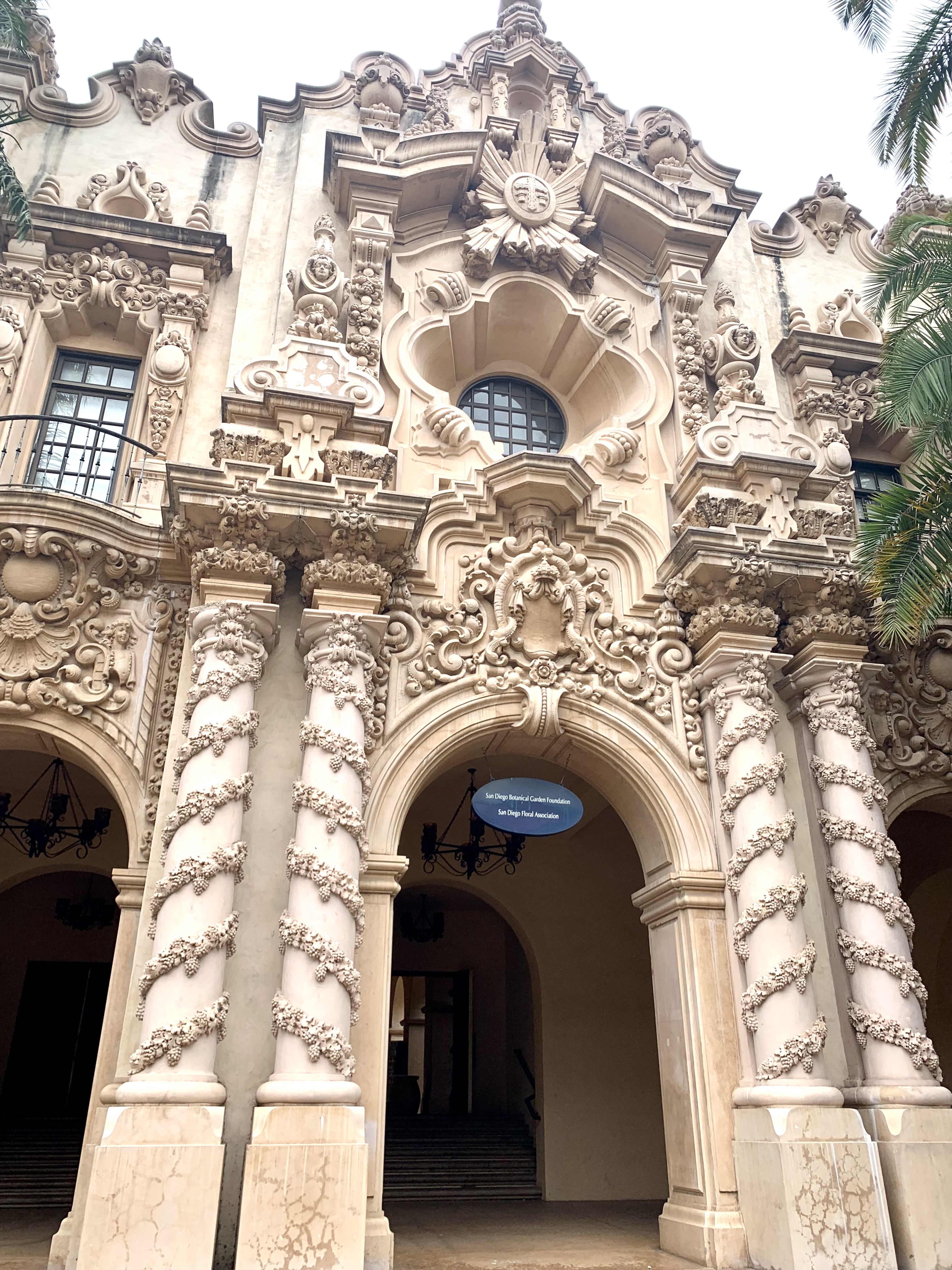
Sitting on the Mexican border, San Diego isn’t the first place most Filipinos would choose when they think of visiting America, unless, like us, they have personal reasons to go there. Los Angeles and San Francisco seem to be more exciting places, have large Fil-Am communities, and have long been the ports of entry for Pinoys landing on the West Coast. (Our Japan Airlines flight was that rare straight flight via Tokyo to San Diego.) But San Diego has its own charm and its own attractions, most notably Balboa Park, the San Diego Zoo, and Comic-Con, that annual extravaganza of pop culture that draws about 150,000 fans from around the galaxy. (Much to my young students’ chagrin, I’ve been to Comic-Con twice, happily ignorant of much of what I was looking at.) 

And whether you’ve lived there for decades or are just passing through, San Diego will always give you a taste of home, with dozens of Pinoy foods stores and restaurants, especially in National City and Chula Vista where you can shop at Seafood City for daing na bangus and Chocnut and at Goldilocks for your party cake while dropping packages off at LBC—or you can run to Mira Mesa for your Jollibee fix. (For me, an American sojourn would be incomplete without a trip to Arby’s and Red Lobster.)

Inevitably San Diego also has its own spotted history of East-West relations, in which Filipinos have figured; the better part of that history was celebrated last month as Filipino-American Heritage Month in the city. The worst part remains in the archives, in the memories of early immigrants such as Emeterio Reyes, who recalls that “I asked the driver if he could take me to a Catholic church. As soon as we got there, I told him to wait for me because I had a funny feeling I might not be welcome at this church. As I entered the door, a priest approached me and told me that the church was only for white people. That moment, I wanted to cry and die!” 

When Sebastian Vizcaino sailed into what he would name San Diego Bay on November 10, 1602, he found that he had “arrived at a port which must be the best to be found in all the South Sea, for, besides being protected on all sides and having good anchorage, it is in latitude 33½o. It has very good wood and water, many fish of all kinds, many of which we caught with seine and hooks. On the land there is much game, such as rabbits, hares, deer, very large quail, royal ducks, thrushes, and many other birds. On the 12th of the said month, which was the day of the glorious San Diego, the general, admiral, religious, captains, ensigns, and almost all the men went ashore. A hut was built and mass was said in celebration of the feast of Señor San Diego.”

As a major port facing the Pacific, San Diego has long been home to the US Navy’s Pacific Fleet, its base harboring over 50 ships. The naval presence defines much of San Diego’s character, and provides a good part of the reason why about 200,000 Filipino-Americans live there today. Since early in the American occupation, Filipinos have signed up with the US Navy as their passport to what they hoped would be a better life and to a bit of adventure. 

I just learned, for example, that the first Filipino to have joined the US Navy, back in 1903, was a seminarian in Manila named Potenciano Parel who snuck out of his vows to be a sailor, but not having the right papers, he used those of a friend and assumed his identity, Tomas Dolopo; the Dolopos continue to be San Diegans. Demi’s late father-in-law, Ric Ricario, joined in 1957; his eldest son, Ray, followed him into the Navy; Ray’s brother Jerry met and married Demi. And so we find ourselves now tied by blood to that long tradition, as did many thousands of others before us.

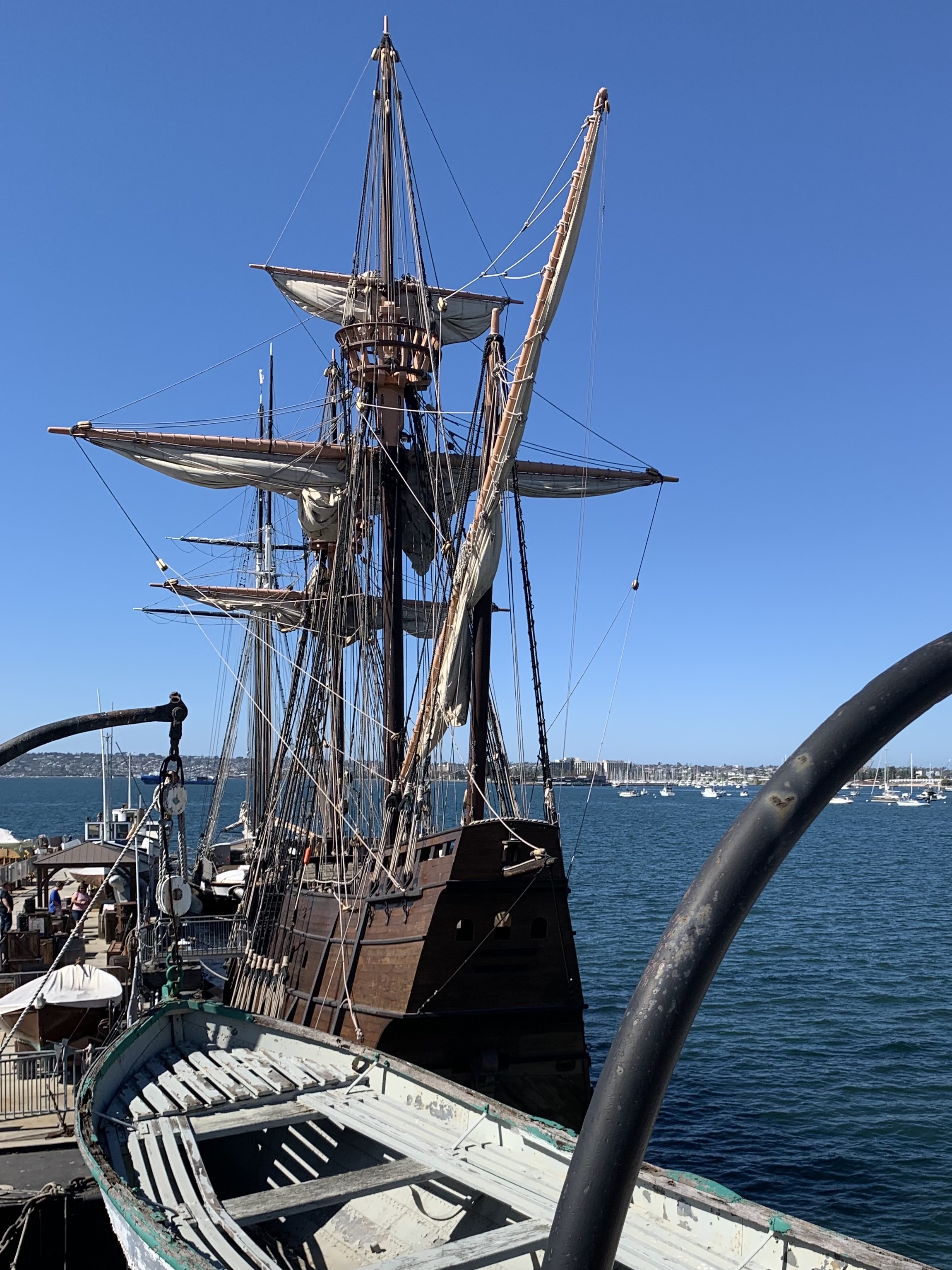
Despite having visited San Diego many times before, and having enjoyed its more popular attractions, we felt more acutely aware of history this time around. We finally stepped into the city’s Maritime Museum, a complex of many ships from various centuries that allows visitors a hands-on experience at traveling the world on water. The ships on display range from a full-size and fully functional replica of a Spanish galleon ca. 1542, the San Salvador, to the world’s oldest sailing ship, the grand, mid-1800s Star of India, to a ca. 1970s submarine that still holds the record for the deepest dive, the USS Dolphin. For just $15 for seniors and just slightly more for others, you can hop from one ship to another, and imagine what it was like to cross a tempestuous ocean with only the stars to light the way and nothing to eat but stale bread and salted pork. 

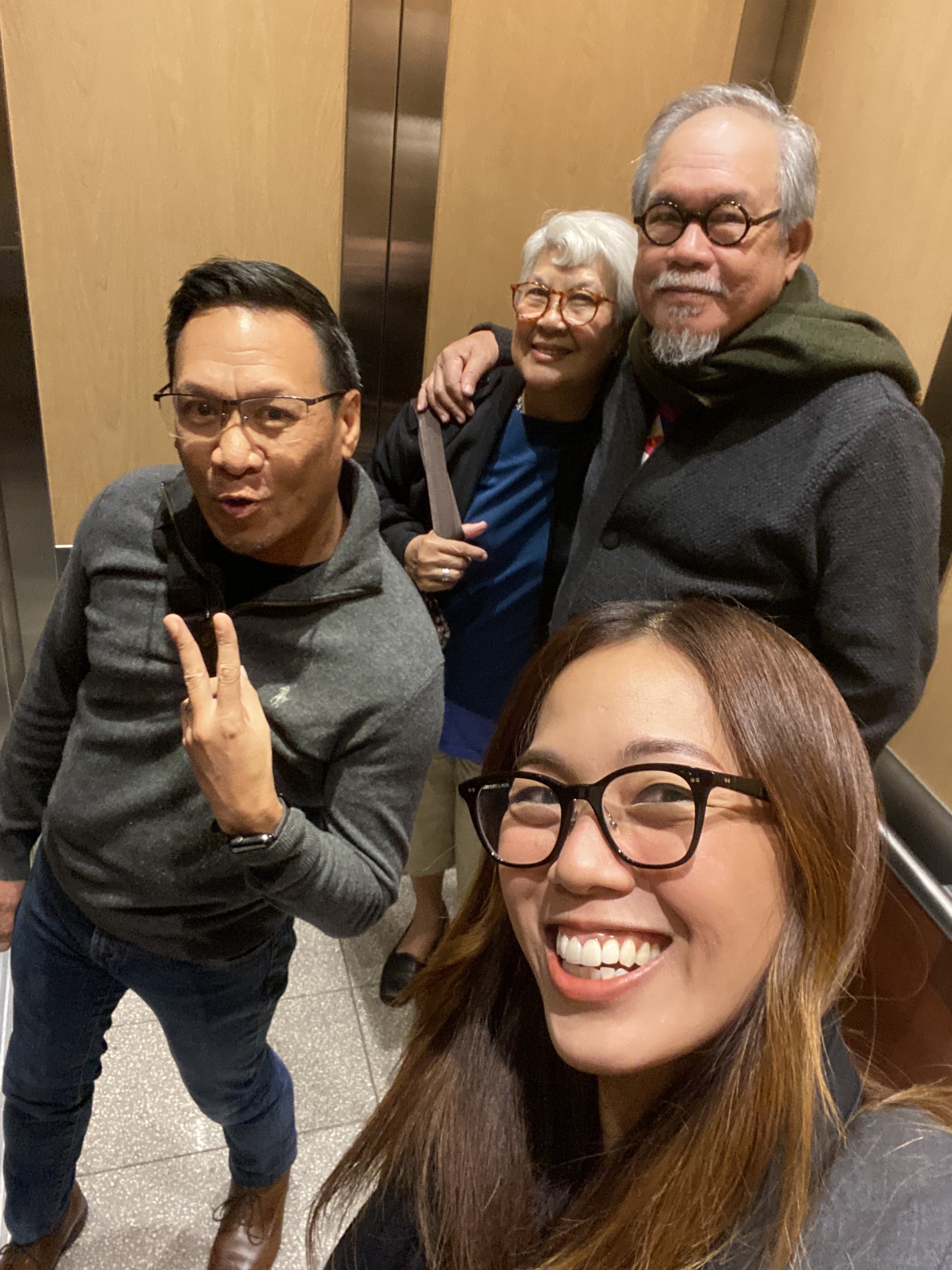
We enjoyed history of another kind by having dinner with our in-laws in a National City dive that our son-in-law Jerry chose for its unique ambience, which you can either call seedy or loaded with character. (There was a famous sailor’s bar in the area called the Trophy Lounge, Jerry told us, that used to be run by ladies from Olongapo…. But that’s another story, and San Diego has books of them, yet to be told.) La Maze is the kind of leatherbound ‘50s restaurant that the Rat Pack and other Hollywood celebrities frequented when in San Diego, and you can still order the same great steaks they had. A local band played dance music, and to the tune of “Solamente Una Vez,” I took the pretty silver-haired fox next to me to the floor and slow-dragged the night away.