Penman No. 474: Looking Back and Letting Go

Penman for Sunday, June 1, 2025
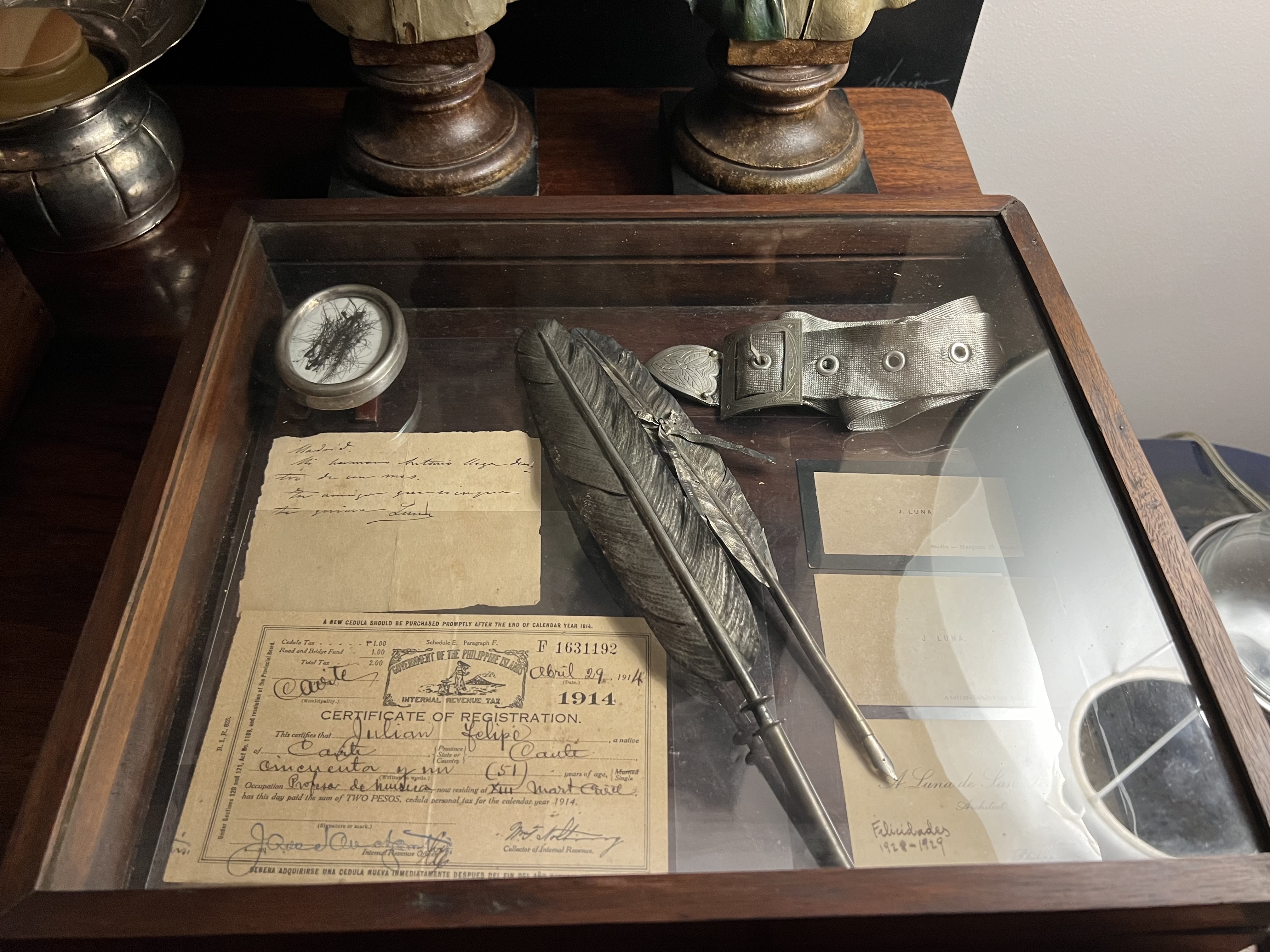
AS ANY friend who’s had the privilege of being invited to his Makati home quickly realizes, Ambeth Ocampo is more than the engaging public intellectual we all know, whose Looking Back series has made history come alive for young Filipinos. He’s also an inveterate collector of rare Filipiniana—books, ephemera, art, and historical objects—all of which come with the territory he works in. 

There have been many Filipinos of a similar bent—the legendary Alfonso Ongpin and the late Ramon Villegas come to mind, as well as the more contemporary Jimmy Laya, Melvin Lam, and Edward de los Santos, among others—but the way Ambeth has amassed his collection is noteworthy on its own, as it folds the personal almost imperceptibly into the professional. 

It comes pretty close to the classic prescription for murder—means, motive, and opportunity—all captured in his classic story of how he stumbled on and picked up Emilio Jacinto’s silver quill, a writing prize, from an antiques dealer who didn’t bother to learn what it was and let it go for its scrap value. (Having as much of Ambeth’s desire for antiquarian junk but with much less knowledge and certainly less means, I’ve often joked, between the two of us, that Ambeth’s the scholar and I’m the scavenger.)

Jacinto’s quill, along with a trove of other historical treasures from Ambeth’s personal collection, will be up for auction on June 7 at Leon Gallery. They include Juan Luna’s silver belt, Felix Resurreccion Hidalgo’s walking stick, an official copy of the Malolos Constitution, Philippine maps from 1616 and 1647, and the Noceda and Sanlucar Vocabulario de la Lengua Tagala from 1860, among many others.

Knowing how precious these objects were, I had to ask Ambeth more about them, and this is what he said.

What made you think of selling these treasures now? Surely it can’t be easy letting go of them after being their caretaker all this time?

Over the years, I have come to the realization that collecting is not the hobby it used to be. As a boy I collected stamps and learned geography, history, and the culture of foreign countries in the process. I was fortunate that my father’s company had an international correspondence, so every week his secretary would send me a batch of envelopes to sort out.

I started collecting Filipiniana books in the 1980s, stocking up from the National Bookstore Quezon Boulevard branch bargain bin where I completed my Nick Joaquin essay collection because they cost one peso each. After school, I went to the Heritage Art Center in Cubao that I learned only years later was the site of the old Philippine Art Gallery. It was a ramshackle grouping of rooms upon added rooms made from old house parts that Mario Alcantara, the owner, bought from mambubulok. I had a favorite nook where I did my homework and when bored I would explore the rooms that I think gave me an eye for art and the ability to choose what I thought was good or not.

Looking back my collecting, and my life, has been the happy intersection of skill and opportunity. Napoleon once said “ability is nothing without opportunity.” I have always seen collecting as a responsibility. Collecting significant Filipiniana is not a hobby. It is not an investment. Collecting is a responsibility, the collector a steward who preserves the collection for the next generation. 

The objects I put at auction have enriched my life in many ways and I think they will enrich the life of their next steward. Some of the lots like the Malolos Republic one-peso banknote and the printed copy of the Malolos Constitution have been tucked away in a drawer. If I drop dead tomorrow these might be carelessly thrown away as trash. They should go where they are better appreciated. Collectors de-accessioning keeps the market alive and buzzing.

Let’s get this out of the way: it’s none of our business, but what will you do with the money?


Since I am not a dealer the material reward does not really factor in the equation. I have sold other things before at cost or even at a loss, just thinking that my gain was the enjoyment I got chasing after them and acquiring them. What will I do with the proceeds? When I started selling my rare Filipiniana I thought that instead of having shelves of books, maybe I should just sell and use the proceeds to buy one or two incunabula or samples of early Philippine printing from 1593-1640. Instead of caring for a whole library I will just care for half a dozen very important books.
How did you start out as a collector of historical objects? How and where did you find them? Aside from Jacinto’s pen, what was your most serendipitous find?

Collecting historical objects came naturally from my work as a historian. I would find things in used bookstores and when supply was still plentiful in the Ermita antique shops. One of the serendipitous finds was the cedula or residence certificate of a certain Julian Felipe, a musician from Cavite. It was in a heap of old papers, initially priced at one hundred pesos. I haggled it down to fifty, paid, and ran away. 

Another time my favorite antique dealer brought a “European painting” of a Virgin and Child to my home. I looked at it and knew it was Philippine. When I opened the frame to inspect the painting, hidden under the frame was the signature of the Filipino master Mariano Asuncion (1802-1855). The silver belt of Juan Luna and the bank draft in his name were acquired from Mario Alcantara. It came with the famous trove of paintings inherited by Grace Luna de San Pedro that are now in the National Museum. While everyone was going wild over the paintings, I spent many afternoons browsing the boxes of memorabilia that included the bloodied uniform Antonio Luna wore when he was assassinated, the palettes and brushes of Juan Luna, the memorabilia, some architectural plans of Andres Luna de San Pedro, and much more. I offered to buy the palettes and brushes and the painter’s smock but Mario said these were destined for the National Museum. There was also the last letter Juan Luna wrote to his son from Hong Kong, written a day before his death, not only was this letter significant, Luna did a watercolor of Hong Kong Harbor on the first page of the double-sided letter. All I could afford was the silver belt that came with Luna’s black suit that Mario said was also destined for the National Museum. Unfortunately, the Heritage Art Center burned down and with it all these memorabilia.

Do you or can you separate the collector from the scholar? Did the collecting happen naturally as a consequence of the scholarship?

The collecting grew and was enriched by my research and scholarship. If I had a PhD in Math I probably would not have recognized these odds and ends now considered treasures. I have been divesting over the years. A large part of my Filipiniana collection was donated to the Center for Kapampangan Studies, Holy Angel, Pampanga. All I keep at home are the books I need for work for teaching, lecturing, and writing, but now that I am retired from Ateneo (but still employed on a post-retirement appointment) it is easier to let go. 

The full catalog of Leon Gallery’s Spectacular Mid-Year auction can be accessed on its website at https://leon-gallery.com

Penman No. 436: A New Blooming at Milflores

Penman for Sunday, March 6, 2022

CHAIRMAN MAO’S dictum about letting “a hundred flowers bloom, a thousand schools of thought contend” must have been on the mind of former activist, writer, retired UN official, and later gentleman-farmer and entrepreneur Antonio “Tony” Hidalgo when he founded Milflores Publishing in 1999 to publish books that would “meet the needs and wants of the Filipino masses.” His wife, the celebrated author Cristina Pantoja “Jing” Hidalgo, could not have been more pleased. Aside from building a lovely heritage home in San Miguel, Bulacan with a cock farm for Tony behind it, the Hidalgos were eager to do their part for Philippine literature beyond teaching and writing. 

Milflores would go on to publish 80 titles on such varied subjects as suburban living, cockfighting, and 20th-century masculinity, on top of the usual fiction. It was beginning to make a mark as a small but quality press—and then Tony sadly and suddenly died in 2011, leaving a devastated Jing to carry on with distributing their titles. Busy with her own professional life, Jing soldiered on as far as she could, until 2020 when a white knight entered the picture in the form of Andrea Pasion-Flores, who had been her student (and mine) at UP many years earlier. 

Since graduation, Drea—a fine fictionist in her own right—moved on to become a lawyer, then executive director of the National Book Development Board, then our first international literary agent, and until 2020 general manager of Anvil Publishing. Post-Amvil, Drea was looking for fresh challenges and opportunities, and she found it in Milflores. Her husband Javi, also a lawyer, put her up to it: “Javi and I thought about starting a new publishing company, which might’ve been cheaper. But Javi gave me the idea of buying Milflores. First, because of the name—it fits with ours. Second, it already had some goodwill that would be a shame if it were forgotten. Third, it wouldn’t hurt to ask Jing if she had any plans for it. In a heartbeat, she said yes.”

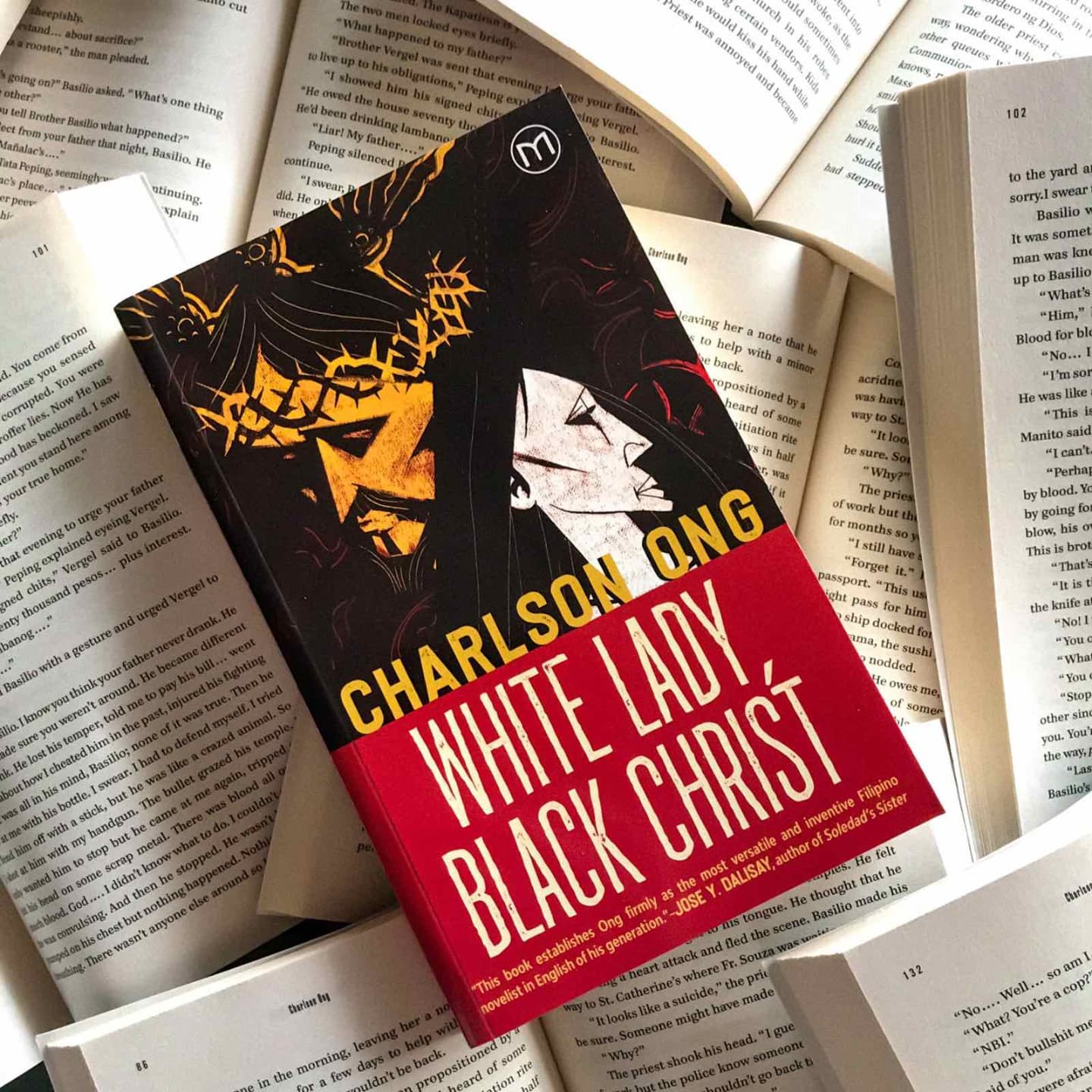
Since that takeover, Milflores has already come out with an impressive list of titles that herald a new blooming for both the company and Philippine literary publishing as a whole. Against all the odds thrown her way by the pandemic, the tenacious Drea managed to secure publishing rights from top-drawer Filipino authors such as Charlson Ong, whose wild and wacky novel White Lady, Black Christ became Milflores’ flagship offering in May 2021. As Charlson’s agent, Drea had already sold an earlier novel of his to a Malaysian publisher, so this was a natural follow-through.

This was followed by a new edition of Nick Joaquin’s Rizal in Saga. Drea had also sold NJ to Penguin Classics. “I wanted this book more than anything because, as Ambeth Ocampo said, the book went out of print the moment it was published because the government gave it out as a souvenir during the centennial of Rizal’s death in 1996, and was never reprinted.” Drea pulled out all the stops, and went for a hardcover edition. “If I was to deserve this book, there would be no cutting corners. I had to make people realize the value of this book. It had to be an object to be desired. And, as Ambeth told me, we both made sure it came out well because we both felt NJ deserved no less. When I die and go to book heaven, I want to hear Nick and Rizal tell me, I did well by them, haha!”

Simeon “Jun” Dumdum’s Why Keanu Reeves Is Lonely and Why the World Goes on as It Does, a small collection of poetry, was another risk worth taking. “Knowing I wouldn’t be raking in millions with this book, why did I want it? Because anyone who reads his poetry will be uplifted. It’s a book to treasure, really. Jun Dumdum was so game with whatever we did with it, even if we said we’d like the book to be neon pink and green. He was onboard! I like those kind of writers.”

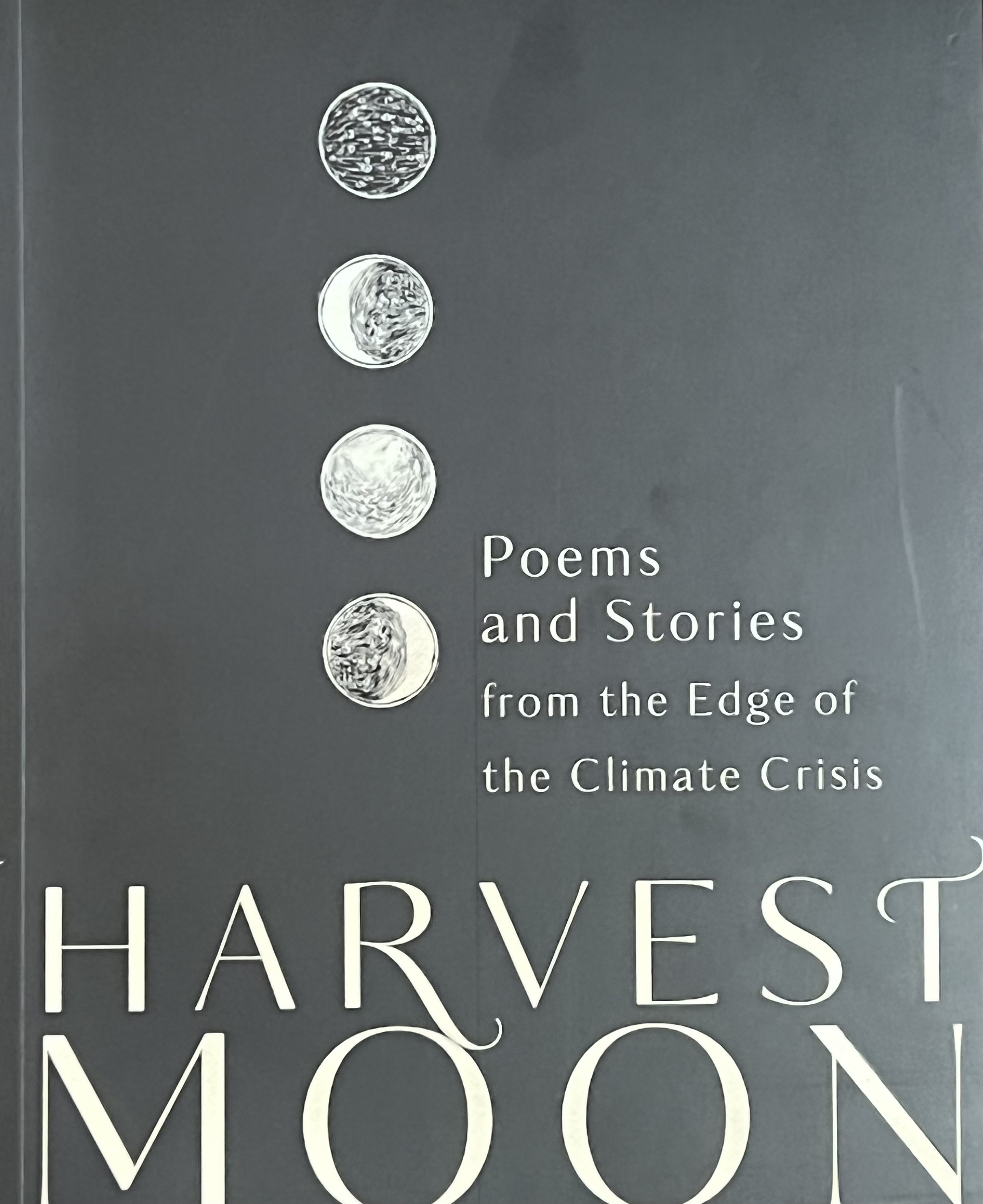
Writer and noted bookseller Padma Perez brought Milflores its biggest book yet, Harvest Moon: Poems and Stories from the Edge of the Climate Crisis, co-published with the Institute for Climate and Sustainable Cities (ICSC). Most books with a political agenda tend to be preachy and off-putting, but Harvest Moon is unique in its concept and execution. Twenty-four writers from around the world were given evocative photographs as prompts, with the further stipulation that they were to avoid buzz words and phrases such as “sustainability” and “climate change.” The result is visually and textually moving, investing the project with deep personal insight. This book is being sold at a deep discount, thanks to a subsidy from ICSC.

Drea Pasion-Flores has followed these up with other provocative projects, including many more in the pipeline. Robby Kwan Laurel’s Ongpin Stories is a timely reprint; former Sen. Rodolfo Biazon’s biography by Eric Ramos is a gripping narrative of a man who rose from doing other people’s laundry and selling in the market to become a general and senator, and one of the heroes of EDSA 1; David Guerrero’s The Crap Ideas Book is an inspirational book on creativity; the bedridden Nick Carbo’s new book of poems, Epithalamion, is, says Drea, his “shot at immortality.”

Milflores also has something lined up for younger readers: Kat Martin’s debut novel At Home with Crazy is the story of a 14-year-old girl dealing with the stress of living with a mother with a mental illness. Internist-oncologist William Liangco’s Even Ducks Get Liver Cancer and Other Essays is a hilarious romp through the travails of med school in a charity hospital. Drea will also publish two graphic nonfiction books by the feminist Swedish graphic illustrator Liv Stromquist and a cookbook by artist and cancer-fighter Robert Alejandro.

“I have big dreams for Milflores,” says Drea. “I want to try to bring a Philippine company out there, not just here. I’m guessing it’s not going to be the next Coca-Cola Company. It’s going to take time and lots of good books, but I have no doubt I can get there—or somewhere close to it.” (More information at milflorespublishing.com)

Penman No. 174: What Women Remember

4510563825_5f753e970a

Penman for Monday, 16 November 2015


I WAS very pleased and much relieved—and, as one of the convenors—immensely proud for the Philippines to have successfully hosted this year’s conference of the Asia Pacific Writers and Translators (APWT) late last month in Manila.

Among the highlights of the conference was a keynote talk given on the last day by none other than one of our foremost fictionists and critics, Dr. Cristina “Jing” Pantoja-Hidalgo, now the Director of UST’s Center for Creative Writing and Literary Studies, who spoke on a subject even her fellow Filipino writers like me know very little about or pay only minor attention to—the journals, memoirs, and autobiographies of Filipino women. I found her lecture (titled “The Subversive Memory: Women Tell What Happened”) so informative that I asked her permission to excerpt parts of it to share with my readers, so here:

Several generations are represented in the seven women who are the subject of my new book, which I called To Remember to Remember…. t today is referred to as multi- er, is available at the UST Publshing Housee so informative that I asked her permission to exce

The oldest, Paz Policarpio-Mendez, was born in a small town in the province of Nueva Ecija in 1903, and was among the first children to enter the American public school system, and one of the first women to go all the way to college in UP. But, to get there and to stay there, she had to fight her father – who did not hesitate to beat her when he objected to her behavior or her opinions. Always painfully aware of her father’s preference for his sons, she strove to win honors in school, to merit his approval. But he never gave it. Later, she married a journalist who eventually became a diplomat, and finally the Secretary of Foreign Affairs. But Paz went right on studying and teaching, while raising a family, and attending to the duties of a diplomat’s lady.

The youngest, Rica Bolipata-Santos, was born in Manila, and educated entirely in Catholic schools, until she decided to get a PhD in Creative Writing in UP. She is sister to the three famous Bolipata brothers, musical child prodigies. This doomed her to play second fiddle to them, to grow up feeling unimportant, untalented, even ugly. Kept back from developing her own musical talent (she could sing!), not deliberately or maliciously, but through neglect, she found her voice in writing and in teaching. Now she is also an academic administrator. But the biggest trial in her life has been her special child, and her memoir is the story of her struggle to cope with anger, sorrow, sometimes despair.

In between there is Solita Camara-Besa, a woman who describes herself as a battered child – this abuse by her father did not let up even after she was married, until her husband, demanded that she choose between himself and her parents. For all this, she became one of the country’s first women doctors—though again, she experienced appalling gender discrimination in the UP College of Medicine, of all places—and was part of the heroic little band of UP faculty members who kept UP and its teaching hospital, the Philippine General Hospital – running throughout World War II.

The remaining four writers who are part of the book took for granted their right to an education and to careers of their own. But they had their own battles to fight. For Gilda Cordero-Fernando (b. 1930), maker of baby bags, keeper of antique shop, fashion designer, publisher, and one of the country’s finest writers of fiction and nonfiction, the battle was against her mother and the convent school education that she felt trapped in; against her husband who resented her writing, her writer friends, and the many worlds that her numerous gifts opened up to her, but kept a mistress for most of their life together; and against conventional ideas about what constitutes accomplishment and success.

For the prize-winning poet and academic, Merlie Alunan (b. 1943), it was the battle to hold it all together when she became a single parent, seeing herself and her children through school, teaching in college, holding workshops for struggling young writers, and picking up poetry awards along the way.

Jennifer Ortuoste (b. 1968) trained as an apprentice racehorse jockey, married a professional jockey and raised her babies in the Santa Ana Racetrack. Hers is the story of a battered wife; and the story of the collapse of her marriage is told against the backdrop of the demise of the racetrack that she loved. When her marriage fell apart, she picked herself up, became a journalist, got an M.A., and is now writing prizewinning fiction and nonfiction.

Criselda Yabes (b. 1964) chose a profession, which until the generation before hers was not considered quite respectable for women—journalism. The most independent, unconventional and alienated of the seven, her story is focused on 16 months of her life, the period after she had been abandoned by her lover of seven years. And, to keep a hold on sanity, she went to Europe, first on a scholarship, then as a war correspondent in different countries, until, in a borrowed apartment in Athens, she began to write about the year she had just lived through, and so found her way home.

In life, these women broke from the mold. They would not settle for what was expected of and from them as women. They wanted different things. In writing their memoirs, they, again, transgressed. For in the Philippines, family matters are kept private, particularly matters which will make the family lose face; one’s personal memoirs inevitably include other members of the family. They may not have been flaming radicals, marching down streets, waving banners and chanting slogans, or being hauled off to jail, being tortured and even killed, as some of their sisters were. But, in their own quiet way, they were rebels….

I read the memoirs of the three older writers as variations on a theme, the theme being the education of the modern Filipino woman, and her transformation, from sheltered schoolgirl into formidable, professional woman without relinquishing the role of wife and mother. I do not claim for this narrative that it applies to all modern Filipino women, nor even all modern Filipino women of the middle class (to which all three belong). But I do believe that it is a pattern that many Filipinas aspire to, and can therefore identify with. And I suggest that in telling their own life stories, these writers are creating a different myth, to replace the older narratives about the Filipina and her role in society….

These are the narratives that we, the next generation of Filipino women writers inherited. Most of our mothers had college degrees and careers. After they married, those who lived in extended families, or could afford reliable yayas went on working, and became quite expert at juggling their several roles, what today is referred to as multitasking, and they trained their daughters to do the same.

The memoirs of the younger writers are, in a sense, their response to these narratives. I take them as signposts. They mark the latest paths taken by Filipinas and what they reveal is the distance they have travelled, but not a change of direction. Those pioneers, some of them already so bold for their time, but working in relative obscurity, had pointed the way….

What these women have done is take the personal narrative—either the full-length autobiography or the memoir—and use it to open doors previously kept firmly locked, and to explore their own thoughts and feelings about the monsters lurking in its shadowy corners. This they have done in language both precise and elegant. Thus have they contributed to the story of their country, and the place in it of Filipino women.

(Jing Hidalgo’s new book, To Remember to Remember, is available at the UST Publishing House for P400.)