Qwertyman No. 96: Not Filipino Enough

Qwertyman for Monday, June 3, 2024

IN THE current feeding frenzy over Bamban, Tarlac Mayor Alice Guo’s allegedly questionable citizenship (to which I admittedly contributed with my tongue-in-cheek take two weeks ago), a consensus appears to have formed that Mayor Guo isn’t Filipino, or isn’t Filipino enough. All kinds of “tests” of “Filipino-ness” have come up online, things that every homegrown Pinoy is supposed to know: dinuguanchismis, Dolphy, chakapeks man, etc.

The ancient Hebrews had a word for this practice, by which they distinguished friend from foe: “shibboleth,” which supposedly couldn’t be pronounced correctly by the enemy, much like the myth that “Mickey Mouse” was the password American GIs used on D-Day, because it was something only Yanks understood.

We can understand how and why these exclusionary measures serve a purpose: to protect the community from external threat. At the same time, these cultural code words help define that community by establishing a common denominator (as common as can be—not George Washington or Alexander Hamilton, but Micky Mouse). Interestingly, they say as much about the excluders as the excluded.

The larger question that needs to be asked by truly inquiring minds is this: what does it really take or mean to be Filipino? Not just “a Filipino,” a matter of citizenship or legal personality provable with birth certificates and passports, but “Filipino” in a more personal, cultural, and even psychological sense.

When we challenge Mayor Guo’s identity—is she who she claims to be?—we imply that we know ours, and feel secure in that knowledge. We think that eating balut and pinakbet, dancing the tinikling and budots, listening to the Eraserheads and April Boy Regino, putting out an open palm ahead of us and bending when we cross a busy room, and counting on our hand from one to five starting with the pinky finger make us Pinoy—and of course they do; but are they enough?

Academics (and, let’s not forget, politicians) have long wrestled with this question, given how our extensive colonial history has effectively extinguished whatever the aboriginal pre-Filipino may have been in most of us. For better or for worse, the “Filipino” we speak of and identify as today is a fairly modern construct and, to my mind, still very much a work-in-progress, as is the Filipino nation itself.

One such academic view was provided by UP Assistant Professor Jay Yacat in the Philippine Journal of Psychology in 2005, where he wrote that “The label ‘Filipino’ functions as a social category. And as such, it is important to identify its boundaries. The meaningful boundaries define the loob/labas of the concept of Filipino. Identity as Filipino was found to have three relevant components: pinagmulan (socio-political component); kinalakhan (cultural component); and kamalayan (psychological component). This supports the position that national identity is more than a political identity. It is possible to think of national identity as three kinds of relationships: relationship with the state; relationship with culture; and relationship with self and others.…

“However, the more interesting finding is that individuals and groups place differing emphases on the three dimensions…. Another important implication is… the constructed-ness of our national identity. Our notion of being Filipino is negotiated and not fixed. This means that our definitions of being Filipino have the potential to be changed depending on a variety of factors: gender, ethnicity, age, political convictions, background, upbringing among others. True, this flexibility may bring about more confusion about our national identity but on a more positive note, this could also provide maneuverable spaces for marginalized groups to participate in a national context: Chinese-Filipinos, Amerasians and other biracials in the Philippines; naturalized citizens; indigenous peoples; and non-Christian groups….

“The analysis identified two kinds of Filipino-ness. This is based on the level of identity integration into one’s loob. A more integrated sense of Filipino identity is called ‘Pilipino sa puso.’ The individual who has not fully integrated this sense of being Filipino into the self is known as ‘Pilipino sa pangalan.’ Kamalayan (psychological sense) seems to be the primary determining factor of Filipino-ness.”

That’s a lot to digest, but my clearest takeaway—which we don’t really need a professor to tell us—is that Filipino-ness can be superficial or deeply felt and understood. The degree of that understanding—of who we are, where we came from, where we want to go, how to get there, and whom we need or want to make that journey with—may yet be the ultimate gauge of how Filipino we are. 

Another suggestion I’d like to make is that to be Filipino is to be inclusive, and therefore tolerant of other ethnicities, cultures, and beliefs. We’d never have survived this far if we weren’t so, despite the regionalism that seems ineradicable in our national politics. 

The Senate is right to continue probing Mayor Guo for her suspected ties to illegal gambling and human trafficking, and for the questions hovering over her citizenship. But Filipino-Chinese cultural advocate Teresita Ang See is also right to deplore the disturbing turn of the public mood into one of a witchhunt against the Chinese among us. 

Continuing Chinese provocations in the West Philippine Sea present a clear and present danger. The Guo allegations and suggestions of “sleepers” in the country are riding on those concerns to build up a hysteria that might ultimately divide rather than unify us. They deserve to be investigated, but without losing focus on the real enemy. I’ve seen some of the vicious feedback that Ang See has received for her sober warning; none of that vitriol makes her any less a Filipino than her attackers.

Indeed, the worst damage to our security and sense of nationhood isn’t being done by Chinese spies, but by Filipinos parroting the Chinese line or selling us the story that opposition to Chinese aggression is futile and that seeking international help against it will only bring on a war we can’t win. These are the real sleepers in our midst.
Qwertyman No. 87: A French Sojourn

Qwertyman for Monday, April 1, 2024

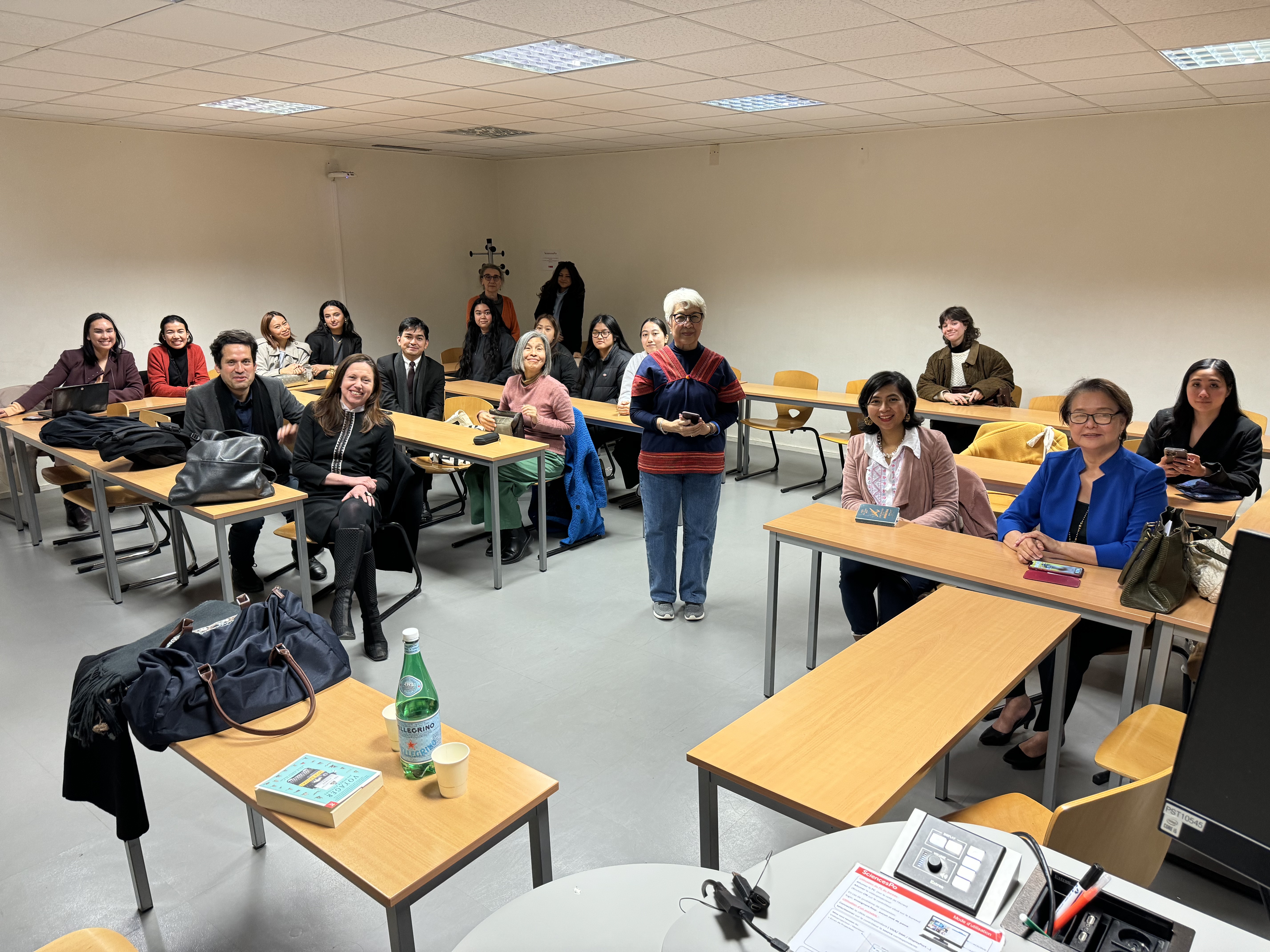
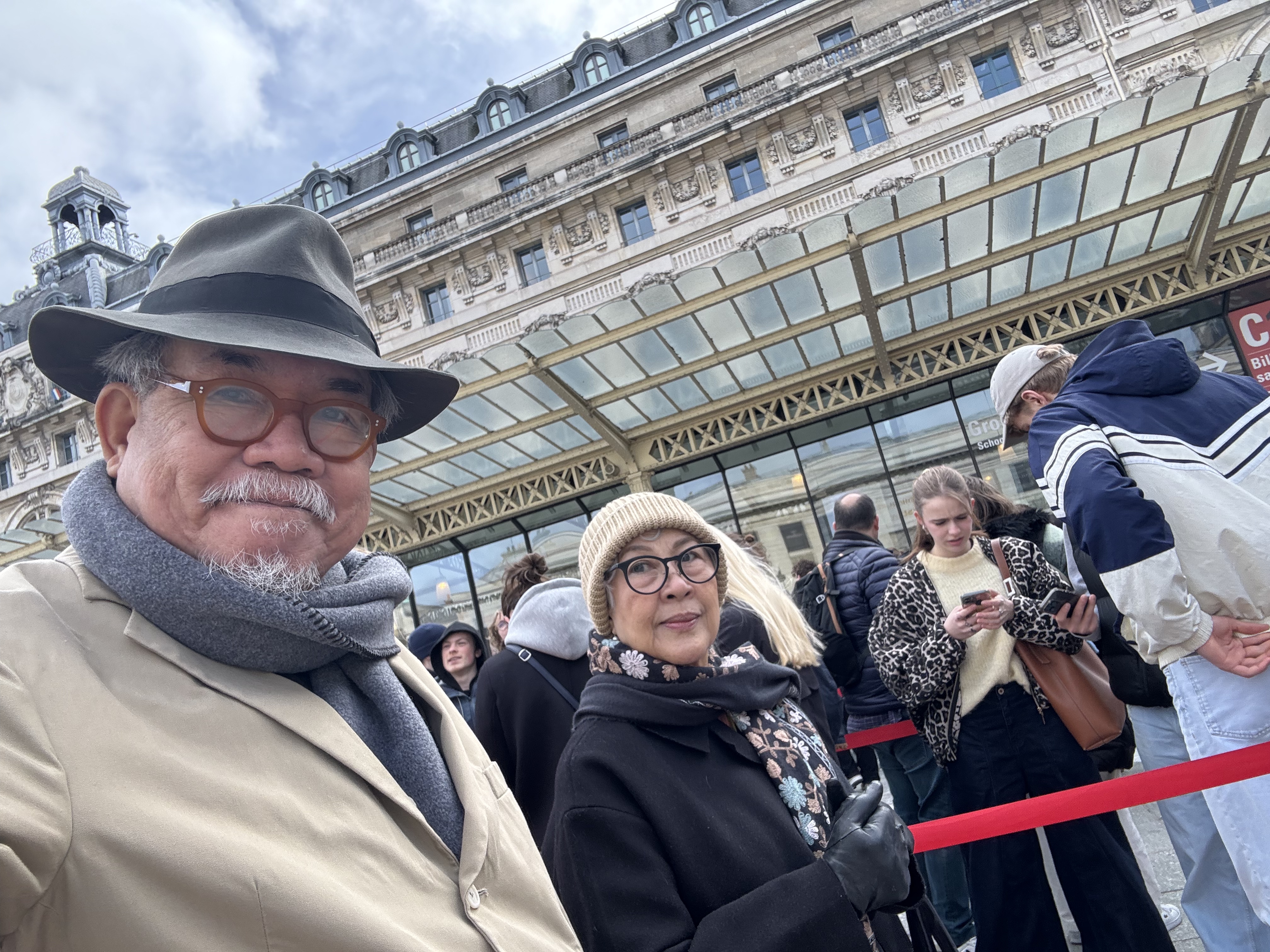
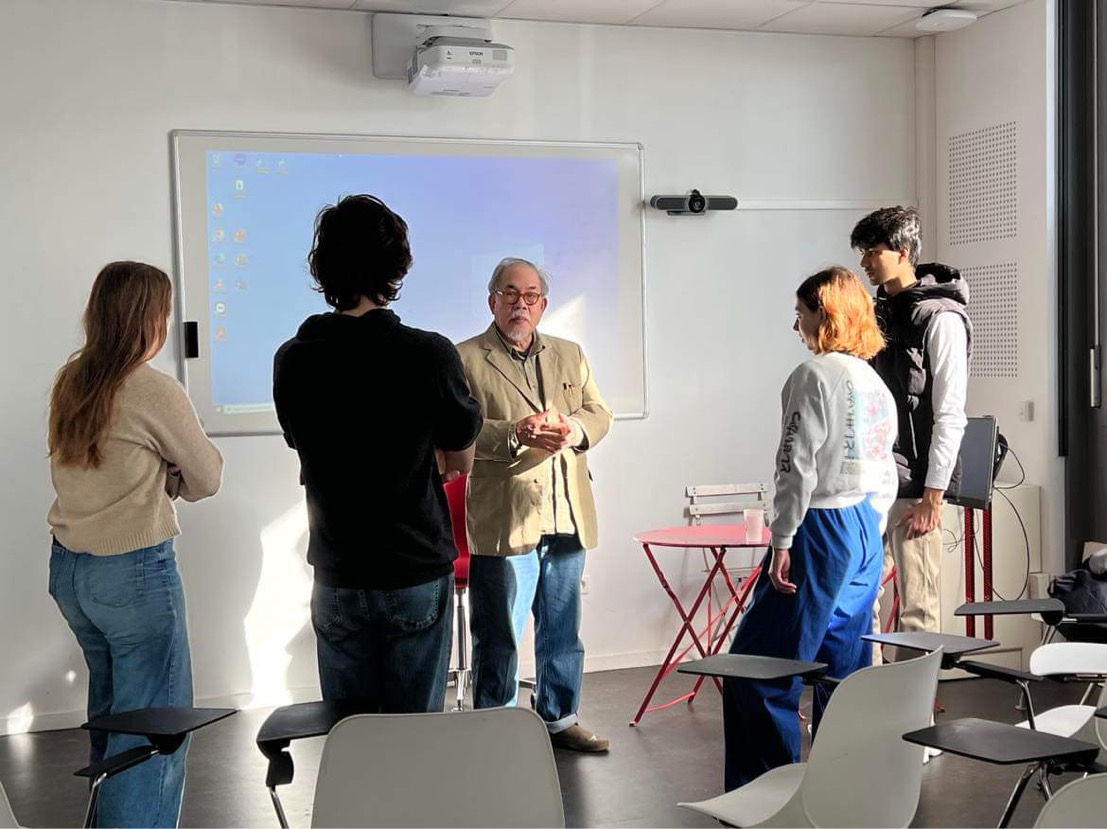
MY WIFE Beng and I were in France last week to give a series of lectures at the invitation of the Paris Institute of Political Studies, better known as SciencesPo. They don’t formally observe Holy Week in France (nor, for that matter, do many Filipinos to whom it’s simply come to mean “long weekend”). So we thought that it was the best time to come over and share some of our insights into Philippine literature, art, and politics with young French students as well as our countrymen in Paris, for whom I and fellow writer Cris Yabes, who’s based in France, gave a special reading at the Philippine embassy.

For those who’ve never heard of it—which won’t be too surprising given our Pinoy fixation on top American and British universities—SciencesPo (pronounced SEE-ansPO) is France’s leading university in the social sciences. It now has 14,000 students spread out over seven campuses across the country. Only 4,000 of those students are undergraduates; the rest are graduate students, including 350 taking their PhD. Unlike our universities, SciencesPo’s undergrads can finish in only three years, with their last year spent abroad. I was told that there are about 20 Filipino students currently enrolled at SciencesPo, and about half of its students come from overseas. As a public research university, SciencesPo is supported by the government through a private foundation, an arrangement that gives it a high degree of autonomy.

Founded in 1872, the university has served as the training ground for France’s political elite, producing five out of France’s eight presidents: Pompidou, Mitterand, Chirac, Hollande, and the incumbent Macron. Marcel Proust studied here for a year, and Christian Dior was a graduate.

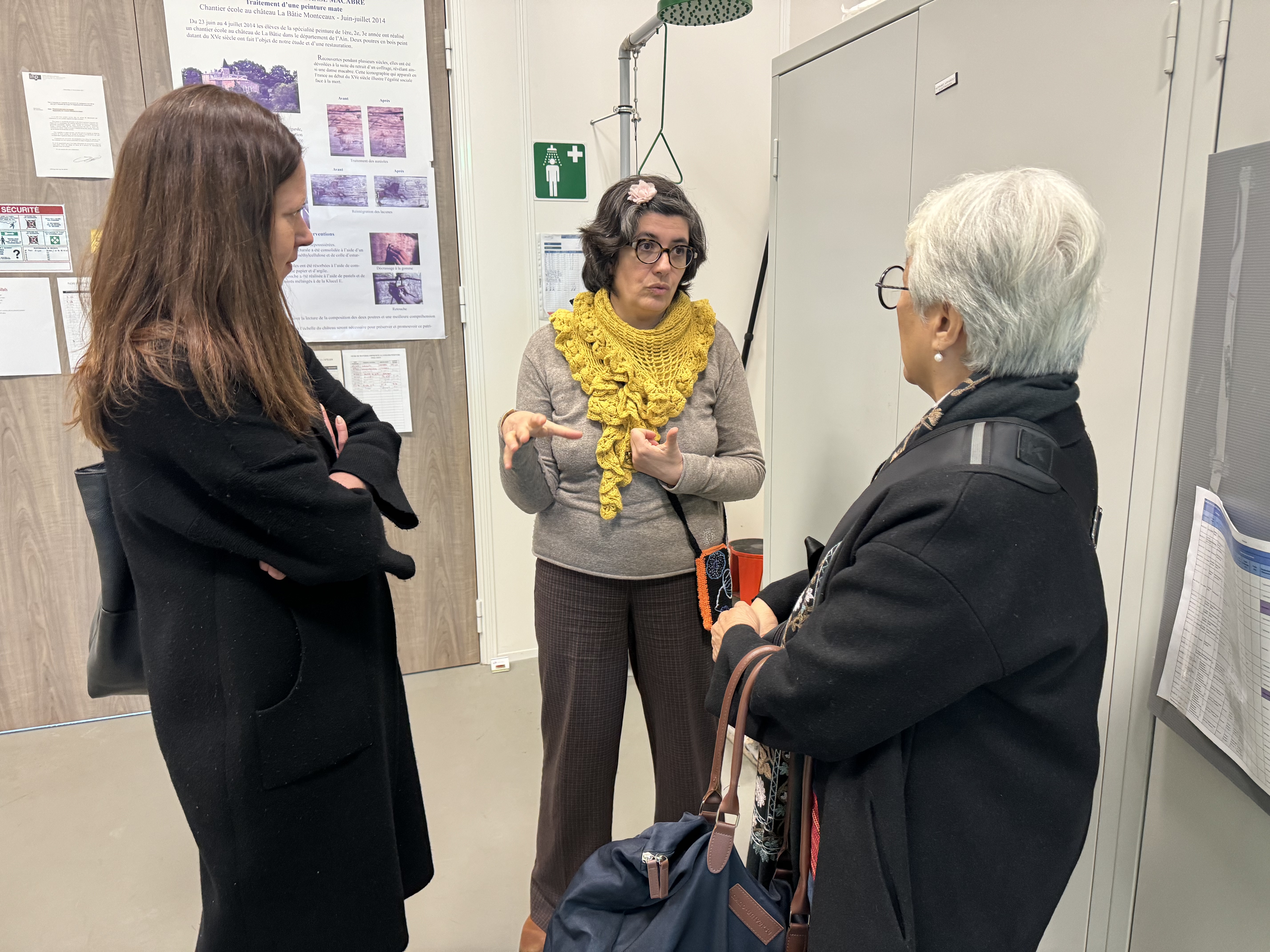
With that kind of elite status comes criticism and controversy, and SciencesPo has had its share over the years. Nevertheless, it remains high on the list of desirable universities, especially for students with plans of joining the French civil service, after further studies at the Ecole Nationale d’Administration. (At Inalco, another Fremch university, we were surprised to find eight Filipino-French students studying Filipino for their degree under Prof. Elisabeth Luquin, who studied in UP and speaks Filipino like a local.)

Beng and I gave presentations on the Philippines at SciencePo’s main campus in Paris—a sprawling complex comprising ten buildings in some of Paris’ most precious real estate—and I had an additional three sessions in Le Havre, where SciencePo’s campus focuses on Asian studies. Wherever we went, we could see signs of intellectual and political ferment; like their predecessors at the Sorbonne whom we admired for their militancy 60 years ago, SciencesPo students have protested and rallied over many causes from domestic violence to Gaza.

To be fair, these concerns have occupied much of the rest of France as well. In a country where street protests are a time-honored tradition that have a real bearing on political outcomes, differences of opinion can run deep and long, and controversy stalks nearly every issue, from the wearing of religious headgear to the extension of the retirement age. To “liberté, egalité, fraternité,” we must now add “identité,” the subject of identity so central to political discourse in many countries today, especially those with large and strong immigrant populations like America and France.

“Over the last few years, France has been torn by culture wars—a shift that was less the effect of American concepts imported into French universities, as many on France’s right claim, than of the long-term decline, beginning in the early 1980s, of class politics and alternatives to capitalism. In a post-ideological France, class struggle has been displaced onto the terrain of identity,” noted sociologist Daniel Zamora in an article for Catalyst in 2021. “Despite Macron’s professed disdain for identity politics, his alternative can scarcely be construed as anti-identitarian. Building on what we have in common, Macron argued, meant finding an answer to the question, ‘What does it mean to be French?’”

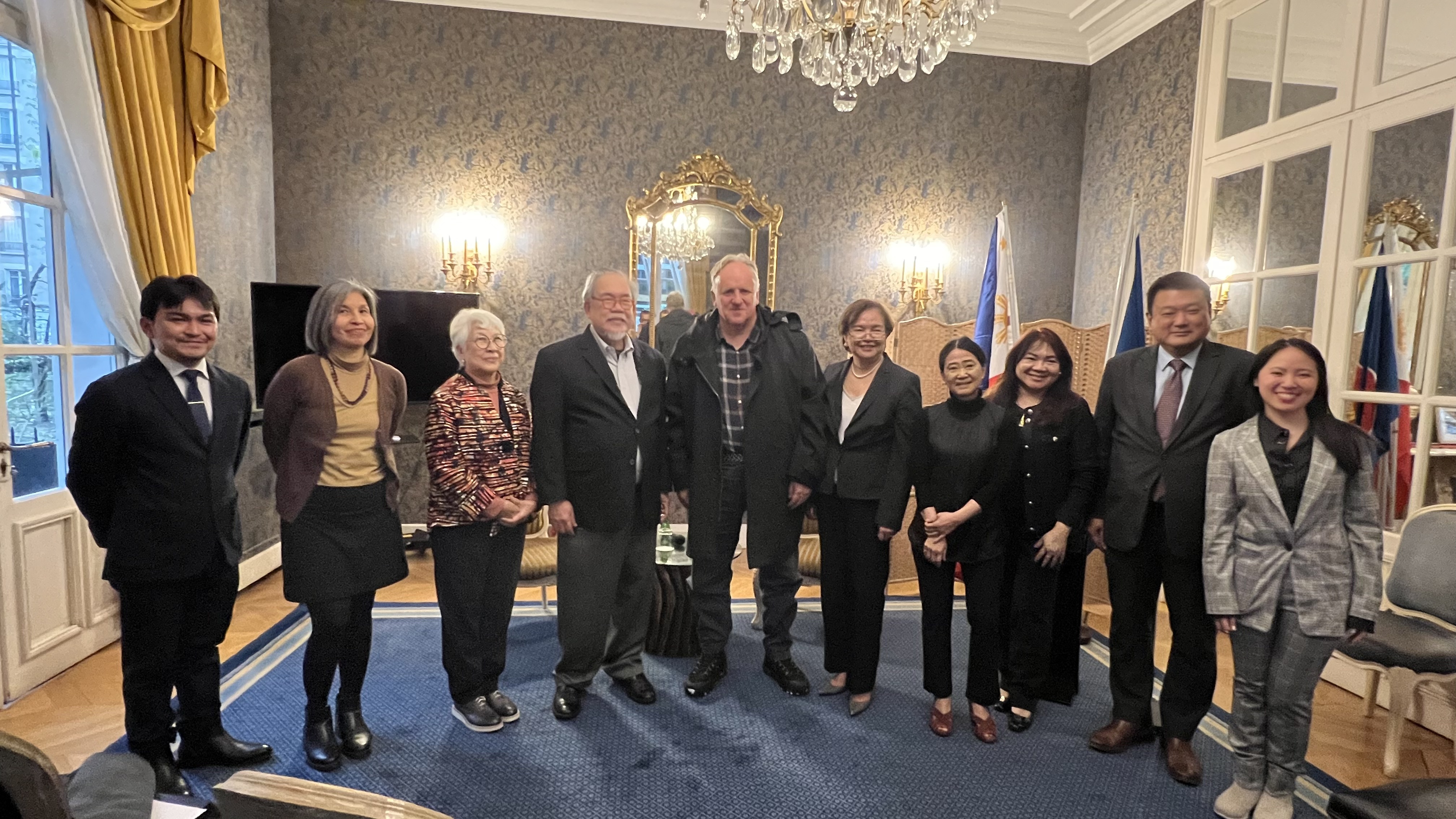
Identity, at least, was not in question when Cris Yabes and I gave our reading at the Philippine embassy, thanks to the invitation of Ambassador Junever “Jones” Mahilum-West, one of the most amiable, gracious, and artistically inclined ambassadors I’ve ever met. (She was very game as well, happy to hoist an IPA beer with my wife Beng after our talks.) To a fairly sizeable group from the Filipino community in Paris, Cris and I read pieces that had to do with our foreign relations, particularly in my case with our diaspora, which my second novel Soledad’s Sister (which has been published in French by Mercure de France) dealt with. 

In the conversations that followed, I learned that there are around 26,000 documented Filipinos in France, with perhaps just as many existing belowground, most of them domestic helpers. One of them, Zita Cabais, was a victim of human trafficking more than two decades ago, having been enticed to come to Europe with the promise of a visa and a good job. Instead she was brought to Hungary, from where she was led on foot through Europe to finally reach France, whereupon her employer confiscated her passport, effectively holding her hostage. But unlike many other DH’s, Zita fought back, sued her employer, and succeeded. Since legalized, she now works for organizations devoted to fighting human trafficking. (The path to legalization is reportedly shorter in France, but knowing the French language is a prerequisite.)

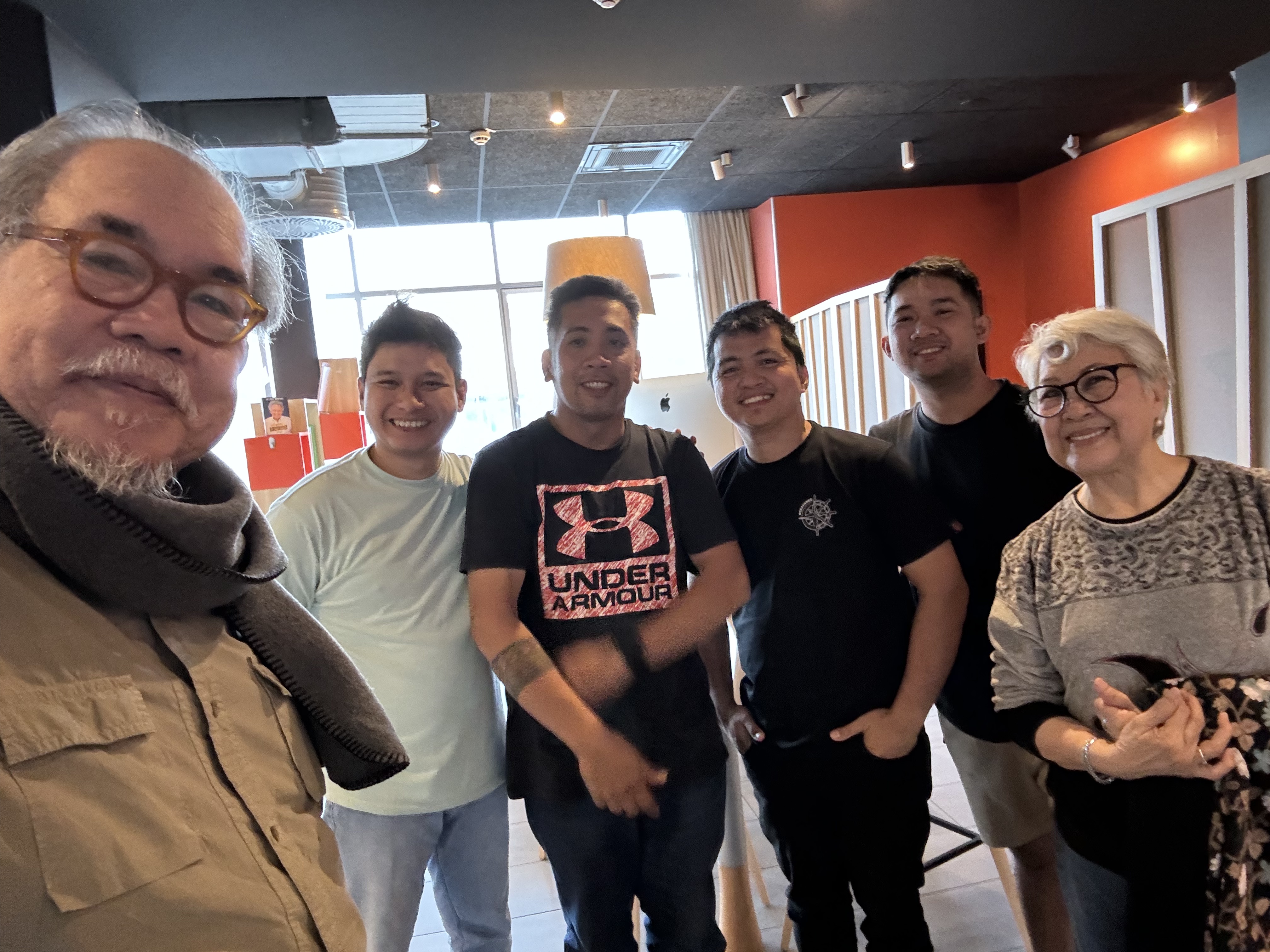
One unexpected highlight of our visit was running into a group of Filipino seamen in our hotel in Le Havre, prior to my lecture. Beng and I had just come down for breakfast when we heard the familiar chatter of Filipinos at a nearby table. We came up to them and introduced ourselves, and we had a lively conversation during which they explained that they were still waiting for their ship to dock because of the bad weather. I’d met and chatted with seamen like them before in Hamburg and in Christchurch, among other places; as a writer and as a Filipino, I take it as a pleasant obligation.

Competition, they said, was driving them to accept shorter four-month stints at sea. “We barely break even, and it’s a tough life at sea, but we have no choice, since our families depend on us.” Part of my lecture that day was going to be about our Filipino notion of the hero as martyr, of Christ-like sacrifice for the common good. I suddenly realized that it was Good Friday. We had our smiling selfies taken, and they seemed proud to stand with UP professors, but it was Beng and I who felt honored to be there with them.