Qwertyman No. 173: A Page from 1937

Qwertyman for Monday, November 24, 2025
I”M NOT a historian, although there are times I wish I were, and at an early crossroads in my youth, I actually had to choose between Literature and History for my major, settling for the former only because I thought I could finish it faster. But I’ve retained a lifelong interest in history, for the treasure trove of stories to be found in the past and for what those stories might foretell of the future. 

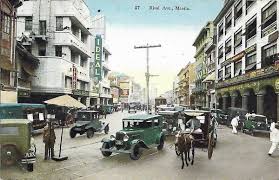
I’m particularly fascinated by the prewar period—what Filipinos of the midcentury looked back on as “peacetime” and what Carmen Guerrero Nakpil called our “fifty years in Hollywood,” which were enough to occlude much of the influence of our “three hundred fifty years in a convent” under the Spanish. It was an age of many transitions, from the jota to jazz, from the caruaje to the Chevrolet, from tradition to that liberative and all-embracing buzzword, the “modern.” Much of that went up in smoke during the Second World War, but you can still catch the ghost of this lost world on the Escolta, among other vestiges of our love-hate affair with America. (You might want to visit the Art Deco exhibition at the National Museum of Fine Arts, ongoing until May 2026; I have some items on display there.)

So entranced have I been by this time that I decided, during the pandemic, to set my third novel in it, at the birth of the Commonwealth and upon Quezon’s assumption of ultimate power, an upstairs-downstairs narrative about the comprador upper class and the world of the Manila Carnival set against the embers of the Sakdal uprising, the fuming and scheming Aguinaldistas, and the netherworld of printing-press Marxists and tranvia pickpockets. Progress has been slow because novels always take the back seat to life’s more pressing needs, but I still hope to get this done if it’s the last thing I do.

The research for the book, however, has brought its own rewards. Among my main sources for the background has been a slim volume—long out of print and now very  hard to find—titled The Radical Left on the Eve of War: A Political Memoir by James S. Allen (Quezon City: Foundation for Nationalist Studies, 1985). Allen (actually a pseudonym for Sol Auerbach) was an American scholar and journalist, an avowed Marxist who traveled to the Philippines in 1936 and 1938 with his wife Isabelle, also a member of the American Communist Party, to meet with local communists and socialists (then headed by Crisanto Evangelista and Pedro Abad Santos, respectively) and to get a sense of the Philippine situation under American rule. 

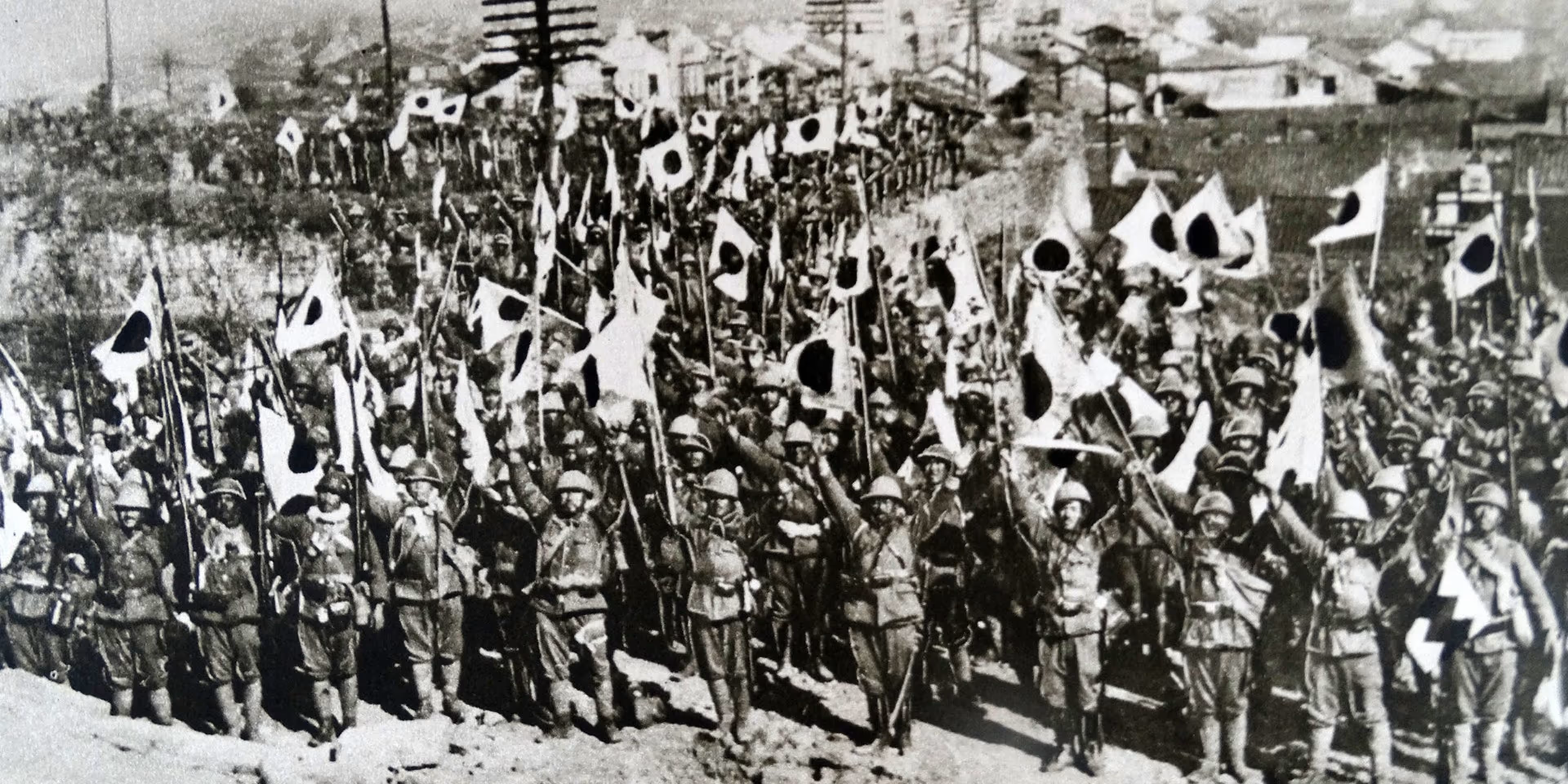
Even that early, the threat of a Japanese invasion was already looming on the horizon and causing great anxiety in the Philippines; Japan had earlier occupied Manchuria and as much as a quarter of the entirety of China by 1937. It seemed like a confrontation between Japan and the United States was inevitable, although some Filipino nationalists—fiercely anti-American—preferred to ally themselves with their fellow Asians than with prolonged white rule. At the same time, others like Pedro Abad Santos feared that the independence Quezon sought would be granted prematurely to give the US an excuse to abandon the islands and avoid confronting the Japanese. 
This is where I tell you why I’m bringing up James Allen’s memoirs this Monday—because of our present situation vis-à-vis China and (in one of history’s ironic reversals from victim to victimizer) its growing domination of the South China Sea. In Quezon, Filipinos had a leader who was deeply mistrusted and opposed by many; the United States’ willingness to defend the Philippines was in doubt; and the threat of a foreign invasion was clear and imminent. 

Allen actually sat down with Quezon for a long interview at the latter’s invitation, and was impressed by the man’s grasp of politics and his singular ambition. But the article that came out of that encounter displeased MLQ; Allen, after all, was still a communist at heart, which makes the following quotation—from a letter Allen would compose and send to his American colleagues in October 1937—even more interesting. I’ll leave it to you to observe the parallels, and to cast them against the Marcos-Duterte issues of our time.

“Filipino Marxists and radicals need to relate independence from the United States to the world crisis created by fascism. The immediate concern in the struggle for an independent and democratic Philippines is to safeguard the country against the threat of Japanese aggression. The objectives of complete independence from the United States and the internal democratic transformation must be obtained without endangering such gains as have been made or subjecting the country to new masters. The people must be awakened to the prime and pressing danger to their national existence. The United States is moving toward alignment with the democratic powers against the fascist bloc, albeit slowly and indecisively.


“Roosevelt is shifting somewhat toward the Left of Center to keep pace with his mass support from the surging labor movement and anti-fascist and anti-war popular sentiment. The national interests of the Philippines call for vigilance and precautions against Japanese aggression. This coincides with the interests of the United States in the Pacific area, and it would be folly not to take full advantage of this concurrence. In the broader perspective, the outcome of the struggle in China will be crucial for all the peoples of the Far East, and if the United States were to withdraw from the Philippines this would be a serious blow against China and encouragement to Japan’s designs upon Southeast Asia and the islands of the Pacific. The cause of Philippine independence at this time can best be served by cooperation with the United States.


“The situation also requires a change in the attitude toward Quezon, from frontal attack to critical support. Unprincipled opposition for the sake of opposition-as with some leading participants in the Popular Alliance is dangerous, for it plays into the hand of pro-Japanese elements and sentiments. Quezon certainly is not an anti-fascist, but he is not intriguing behind the scenes with Japan. The greatest opposition to his early independence plan comes from the landed proprietors, particularly the sugar barons, while it enjoys support among the people. The Popular Alliance should also support the plan, including provisions for mutually satisfactory economic, military and diplomatic collaboration after independence. Though Quezon is far from being a Cardenas or Roosevelt in his domestic policies, every effort should be made to move him away from his pro-fascist and land baron support by providing him with mass backing for such pro-labor and progressive measures as are included in his social justice program. In sum, the Popular Alliance should encourage a national democratic front devoted to the preservation of peace in the Pacific, the safeguarding of Philippine independence, and defense and extension of democracy in the country.”
Qwertyman No. 151: For Don, a Meditation

Qwertyman for Monday, June 23, 2025

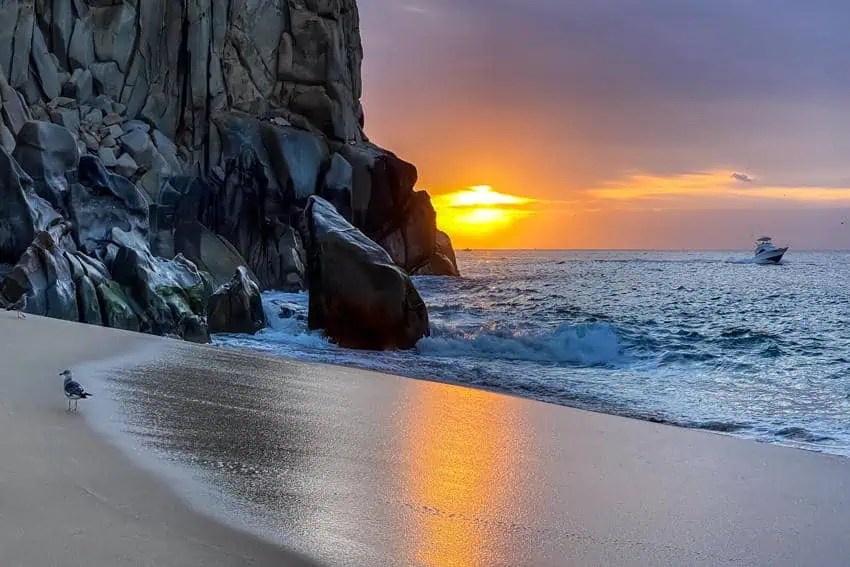
(Photo of Los Cabos by Kurt Nichols)

I WAS looking for a topic for this column last week when it occurred to me that I had been staring it in the face, in the news and in the Facebook feed that, like for many, my days begin and end with. It was the omnipresence of death, in its many forms and guises, swift and slow, painless and agonizing, arriving on whispery feet and crashing through one’s roof or window. 

“A screaming comes across the sky,” the line with which Thomas Pynchon famously begins his novel Gravity’s Rainbow, was how death and destruction came last week to hundreds in Kiev, Tehran, and Tel Aviv, in missiles and drones designed and manufactured for but one purpose: to deliver death by inexact algorithm to place-names plotted on digital maps. 

In India we marveled at the horror and the mystery of one survivor escaping a catastrophic plane crash barely a minute after take-off: a moment when most of us would have just begun to fidget with the entertainment controls, wondering whether to take in a comedy or a thriller for the next two hours and what the meal choices will be. 

In Minnesota, a MAGA gunman stalked Democratic lawmakers and their families, shooting four and killing two on a long list of intended targets—murders that a Republican senator reflexively attributed to “Marxists not getting what they want.”

Most appalling was the report of Israeli tanks firing into a crowd of Palestinians lining up for food in Gaza, an incident that led to about 60 deaths and more than 200 wounded, for which the Israelis apologized with this statement: “The IDF regrets any harm to uninvolved individuals and operates to minimize harm as much as possible to them while maintaining the safety of our troops.”

As if the news isn’t enough, every time we scroll through our social media accounts, more deaths emerge, in the now-familiar solitary-candle meme and in the garlanded portraits of the recently departed. Facebook has become our new obituary page, our book of condolences, our virtual wake. The friend or the kinsman in us takes the loss with the requisite pain and grief; the enemy with muttered thankfulness, or more rarely forgiveness; the human with relief, that we are reading and not being read about.

Death in the news is meant to outrage us, and it still does, at least for a while, especially senseless and preventable death, willful murder, and patent genocide. But sadly we can only take so much, even with the keenest of consciences; there is something in our brains, a control or shut-off valve, that says “Enough” and leads us back into the immediate and comprehensible present, back to chocolate cupcakes, Torx screwdrivers, tomorrow’s court hearing, and Lola’s birthday. This, we remind ourselves, is life, the only one we have, our chief responsibility above all others to live and to give meaning to. 

We try to make sense of death as much as we do of life, and for those of us of a certain age, that means the acceptance of its inevitability. I suspect that those of my generation who came of age under martial law and fought it, who saw dozens of our comrades die, can do that with more equanimity than most, never having expected to live beyond twenty-five; every year and decade since has been a grace note, a blessing we have been careful not to waste. We are lucky to have come this far, and can leave without regret.

The Buddhists have what they call maranasati, the practice (says Google, meat-eating me being decidedly non-tantric) of contemplating one’s own mortality to cultivate mindfulness, reduce fear of death, and appreciate the present moment. The practical Swedes have döstädning, celebrated in The Gentle Art of Swedish Death Cleaning: How to Free Yourself and Your Family from a Lifetime of Clutter by Margareta Magnusson, a Nordic Marie Kondo who advises us to downsize and clean up our mess before we croak to save some grumpy nephew the trouble of sorting out which things go to the trash and which go to the resale shop. 

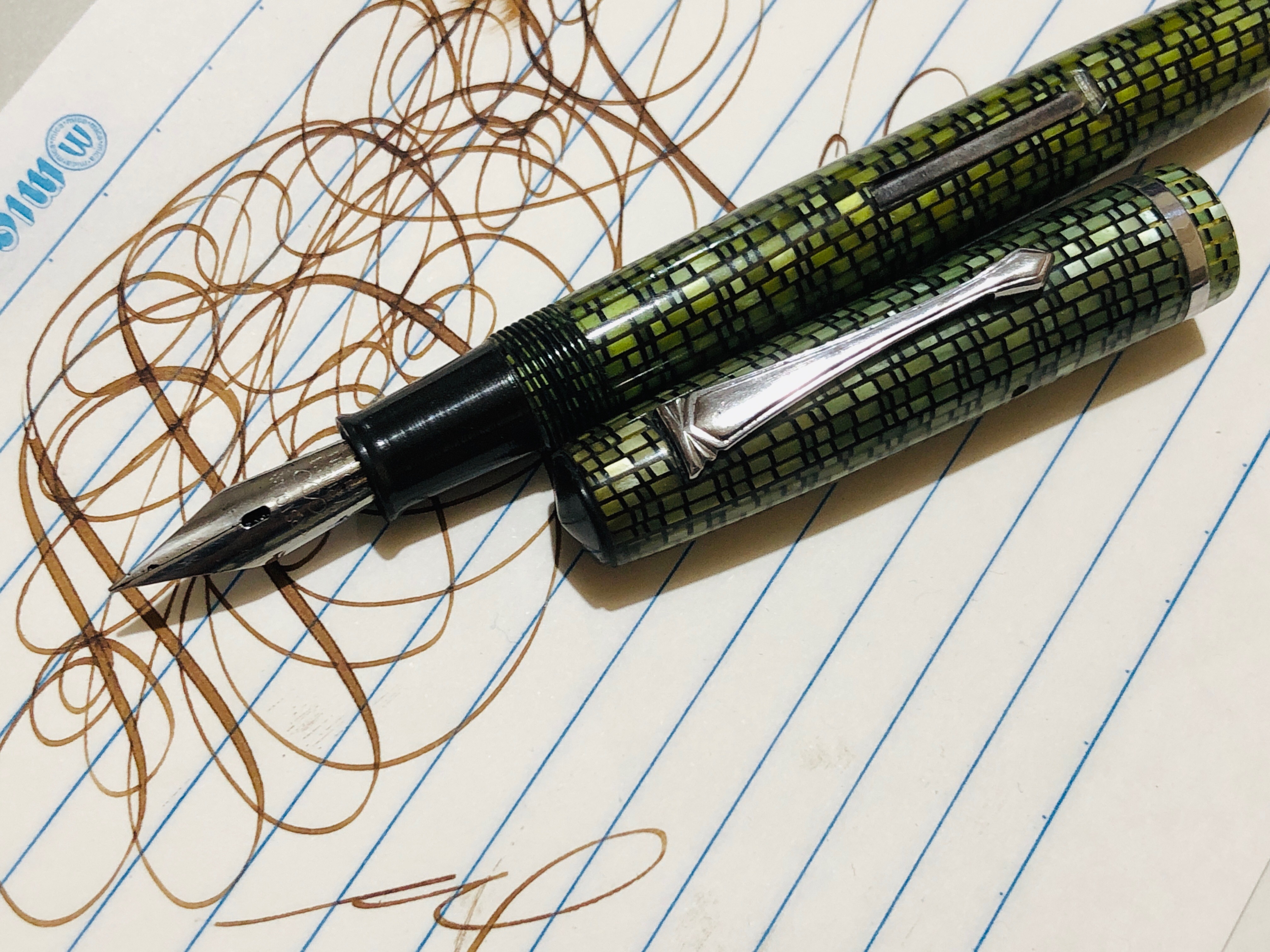
Speaking of which, my devotion to Japan-surplus stores and their wonderful bargains is tempered by the knowledge that most of these items were likely made available by the peculiarly Japanese practices of hikikomori, or withdrawing from society and living alone, and the even sadder kodokushi or “lonely death,” where the bodies and belongings of the forgotten might be found days after their passing. But then, as a collector of vintage fountain pens and antiquarian books, I am well aware that these precious objects have passed through many lives and survived their owners, and will certainly survive me, which is strangely reassuring. They offer proof of an afterlife—maybe not paradise, but the life of the people and things you leave behind.

In a way, death’s predictability (or the illusion thereof) is comforting, because we think we can therefore prepare for it, as for the coming of a friend who will lead us away by the hand, down to the smallest detail. Despite her surprisingly good health, my 97-year-old mother has written out her DNR instructions, and a year ago we made a light-hearted trip to the mall to pick out her funeral dress, in a deep, pacific blue. Well before my father died of an aneurysm almost thirty years ago—he was a chain-smoker and a candidate for early passage—I had written out a scene in my first novel where the protagonist comes home to his father’s wake, which was my way, the privilege of imaginative writers, of cushioning the real pain when it struck; when it did, I still wept like my father’s child.

I’m writing this because I’m actually not very good at dealing with death and processing grief, as detached or as flippant as I may sound about it. I avoid or don’t stay long at the wakes of friends because I tend to say the lamest things. 

Last week I lost good friend—a high-school classmate named Don Rodis, brother to lawyer Rodel and producer Girlie, whom more people know—our Philippine Science High School batch’s livewire and indefatigably perfect host, to those visiting him in San Francisco. On vacation with his family in Los Cabos in Mexico, Don was strolling on the beach when a rogue wave known by the locals as the mar de fondo caught and swept him out to sea. Despite a massive search, his body has yet to be found. We are all stunned and awash with grief, but what struck me was how pretty that beach was from all the pictures, how blue and inviting its waters. And now I’ll say a stupid thing, for Don: rather than dying from a rocket to your head, or rotting from within, or freezing alone in Yamagata, sometimes we die in beauty’s arms. 

(Don Rodis, 1954-2025, with his wife Jocelyn)

Penman No. 423: From Poetry to Treason

Penman for Monday, September 13, 2021

AS A COLLECTOR of old books and other objects of interest more ancient than me, I sometimes stumble across manuscripts and documents that turn out to be a bit more private than the usual accounts of travels to Sulu or the history of Negros sugar. I’ve found ardent and very carefully composed love letters (apparently never sent), poems to the departed, and receipts for unmentionables. Coming from a past where people wrote with physical ink on physical paper, these inadvertent mementoes of lives lived and loves lost convey emotion and meaning in a way that digital ones and zeroes never will.

Some of these discoveries have been particularly poignant. A few months ago, I wrote about finding a typewritten collection of essays written by Lyd Arguilla in the 1950s, where she stoically recounts her husband Manuel’s execution by the Japanese; tucked into that folder was a love poem she wrote in his memory after the war, in New York.

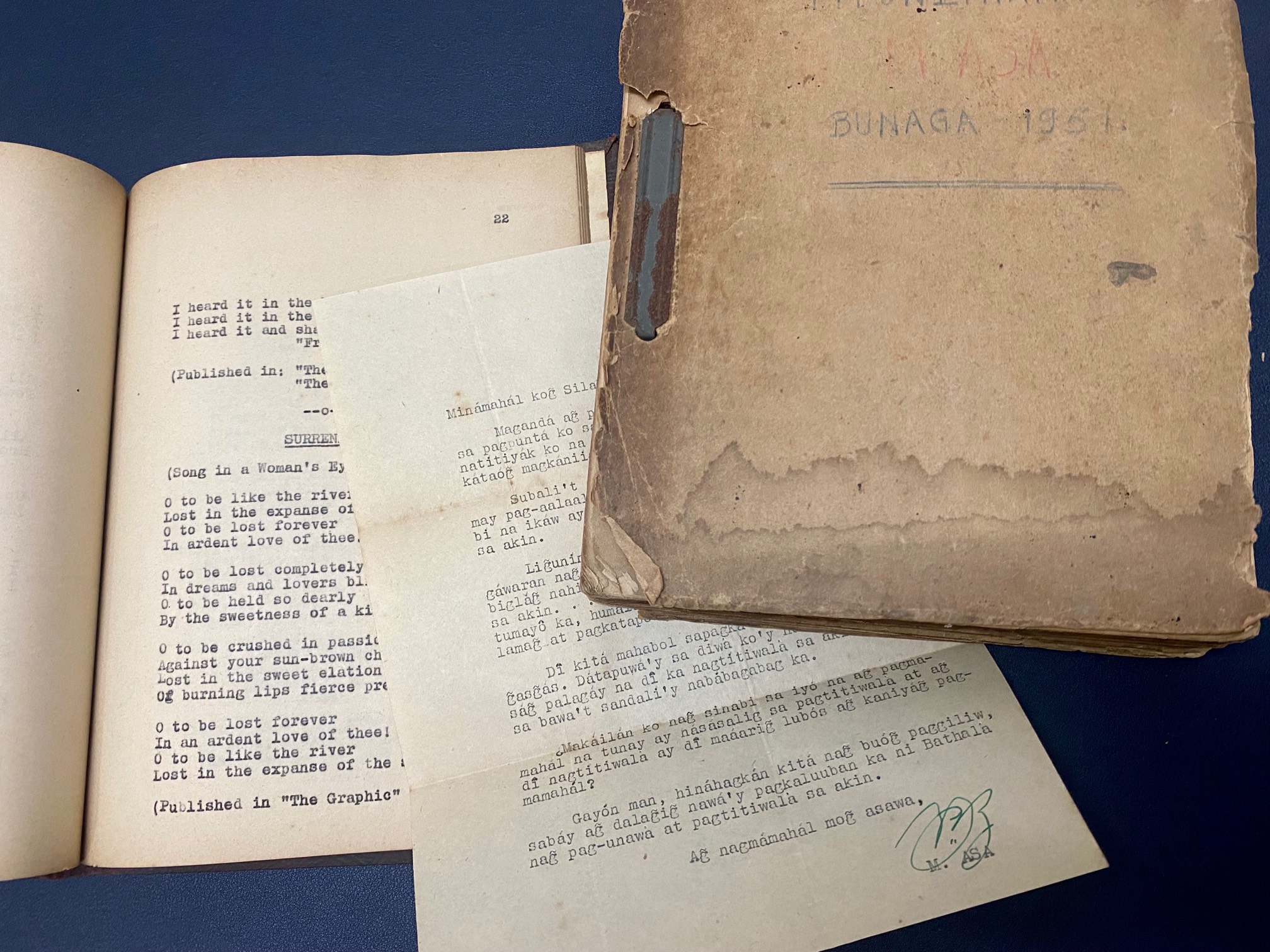
Last month, a bookseller offered me three items that had to do with one subject, from whose personal library they likely came. One was a scrapbook of sorts by this Filipino author, another a short biography—also typewritten—of the man and samples of his most popular works, and the third a published play written by his illustrious mother. The writer’s name was vaguely familiar to me: Aurelio S. Alvero, otherwise known by the pseudonym he adopted after the war, “Magtanggol Asa” (he himself spelled it “Magtanggul”), a play on his initials and on his ambition to become a lawyer—as well as being, of course, a self-descriptive epithet as the defender of hope. He was born in 1913  in Tondo to illustrious parents—Emilio Alvero, an artist and interior decorator, and Rosa Sevilla, writer, suffragette, and educator who founded the Instituto de Mujeres, a pioneering school for women in the Philippines.

Generations of Filipino schoolchildren have known him for his poem “1896,” written before the war, a favorite piece for choruses, because of its hypnotic rhythm and refrain. It begins:

The cry awoke Balintawak

And the echoes answered back…

“Freedom!”

All the four winds listened long 

To the shrieking of that song…. 

“Freedom!”

Just by this piece, no one can be faulted for thinking of Alvero as a patriotic poet—or in the very least a writer of patriotic poetry, and that he was. Indeed he was lauded by his peers and even later by scholars such as Grant Goodman and Augusto de Viana as a “brilliant” intellectual, one who could write equally well in Tagalog, English, and Spanish. He was a star student at the Ateneo and UST, winning a raft of medals for his scholastic achievements. 

But he was also described as a “complex” artist, a rather evasive and much kinder term for what his harshest critics would call him: a traitor to his people, convicted and imprisoned for wartime collaboration with the Japanese. The charges brought up against him by the postwar court were formidable: up to 22 counts of treason, from his active role in such pro-Japanese organizations as the Kalibapi and Makapili to selling war materiel to the enemy and participating in the destruction of Manila. The most outrageous offenses were damnably detailed: among them, that within one year, his trading firm—capitalized at only P15,000—earned a whopping P2,000,000 from sales to the Japanese (shades of Pharmally!), and that he personally directed the burning of a part of Pasay toward the end of the war. For these, and despite his spirited protestations, he was sentenced to life imprisonment in Bilibid, cut short by an amnesty granted by President Quirino in 1952. 

How could the same man, so gifted and so promising, turn out so badly? Even before the war, Alvero had railed against American imperialism, and—like Gen. Artemio Ricarte, among others—saw Japan as a friend and liberator. But unlike more rabid pro-Japanese Filipinos like Benigno Ramos, he opposed the atrocities of the Makapili, although he urged his countrymen to resist the Americans to the end. Complex indeed. Arguing that neither “patriot” nor “traitor” could fairly describe him, Dr. Goodman calls him “a romantic opportunist” who thought he could achieve his ideals by casting his lot with the devil.

Despite his early release from prison, the ordeal took its toll. While other writers accused of helping the Japanese like Camilo Osias lived on and even prospered, Alvero died of a heart attack in 1958 aged just 44, leaving a stain on his family’s name (his mother, Rosa Alvero, continues to be honored with a street in her name in Katipunan, Quezon City). Hardly any pictures of him can be found today, even on the Internet.

A letter from prison to his second wife, whom he called “Silahis,” reveals an inner torment that was probably the greatest cost of all. He writes:

“Makailan ko nang sinabi sa iyo na ang pagmamahal na tunay ay nasasalig sa pagtitiwala at ang di nagtitiwala ay di maaring lubos ang kaniyang pagmamahal? Gayon man, hinahagkan kita nang buong paggiliw, sabay ang dalanging nawa’y pagkaluuban ka ni Bathala ng pag-uunawa at pagtitiwala sa akin. Ang nagmamahal mong asawa, M. Asa.”

(How often have I told you that true love depends on trust, and that one who cannot trust cannot love completely? Nonetheless, I kiss you with all my heart, even as I pray that the Lord grant you trust and understanding for me. Your loving husband, M. Asa.)

Penman No. 349: Pen Hunting in Japan

JapPens.png

Penman for Monday, April 15, 2019


MOST TOURISTS visit Japan, sensibly enough, for the sushi, the sakura, and the swords. I like all of the above, and chased after all of them during our recent trip to Tokyo (a highlight was seeing a 13th-c. Masamune katana at the Tokyo National Museum). But I had one more item on my personal agenda that I couldn’t possibly leave Japan without—or at least, without looking for it.

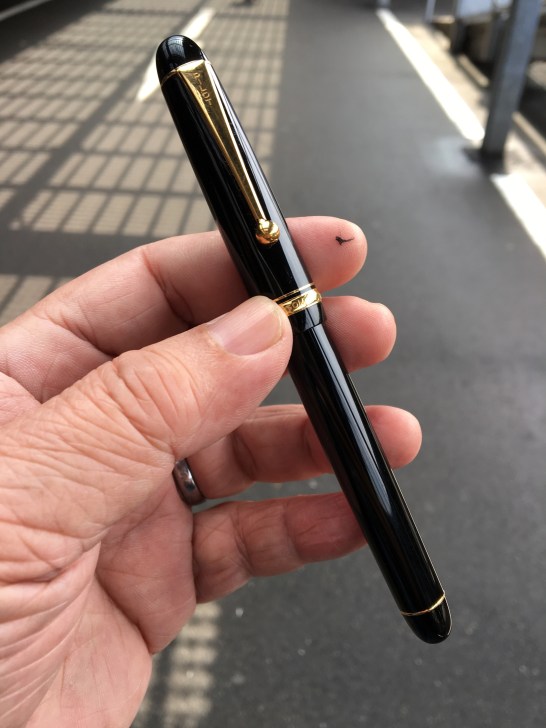
That desideratum, of course, was the fountain pen, and there’s a very good reason why fountain pens should be on the discriminating tourist’s Japanese shopping list. Just as they’ve excelled in practically all the arts and crafts, the Japanese have made some of the world’s best fountain pens, many with uniquely Japanese materials and production processes, and some very special nibs.

With fountain pens undergoing a global resurgence in both the corporate and personal spheres as instruments of individuation—a means by which you can literally leave your own signature on a stack of digitized documents, and set yourself apart from the ballpoint-clicking herd—many Filipinos now know familiar American brands like Parker, Sheaffer, and Waterman. Lawyers and doctors typically want German-made Montblancs, and might even try Pelikans, Lamys, and Faber-Castells. But a growing number of mostly young professionals have discovered the Japanese Big Three—Pilot, Sailor, and Platinum—as well as newer brands like the Taiwanese TWSBI. They’ve been helped along by the emergence of local fountain pen, ink, and stationery specialists like Scribe Writing Essentials, Everything Calligraphy, Noteworthy, and PenGrafik.

The Japanese pens I was looking for in Tokyo exist in a whole other realm of connoisseurship. These are artisanal masterpieces, the culmination of centuries of fine workmanship. I’ve often said that pens fascinate me as the perfect fusion of art and engineering, and nothing exemplifies that more than the best Japanese pens. You’d think that the Japanese would be more inclined toward brushes—and they still may be—but a fine pen is considered a personal treasure, as distinct as the swords carried by the samurai of old.

In 2002, Pilot Pen Company—one of Japan’s pen pioneers—opened a pen museum at its headquarters in Kyobashi. Beng and I made a beeline for it, walking the couple of kilometers from the Tsukiji Fish Market, only to discover to our dismay that it had closed a few years earlier. But Tokyo’s fabled pen shops are in themselves museums, and more, so armed with a 72-hour subway pass, we made the rounds of the usual suspects. (Earlier, at the Tokyo City Flea Market in Shinagawa, I had treated myself to a defective but repairable Pelikan M805, a Pilot Custom 74, and a prewar Pilot with a flexible shiro steel nib.)

IMG_9994.jpeg

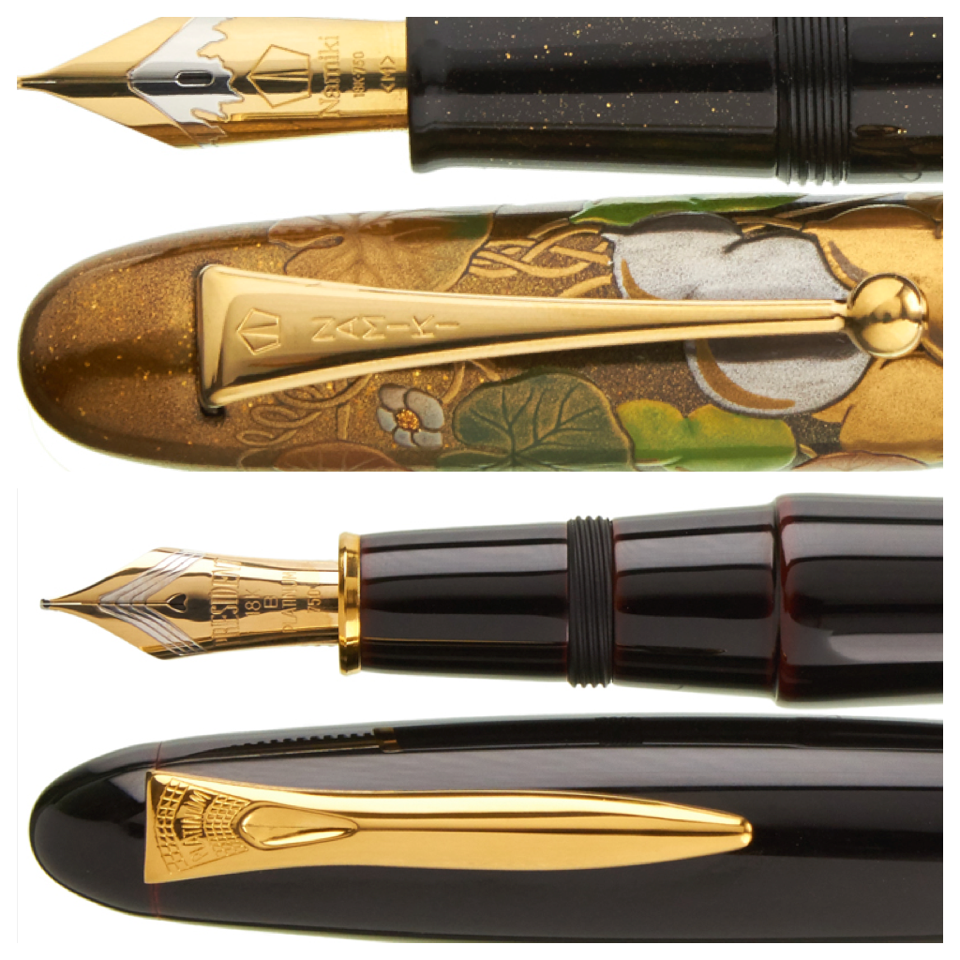
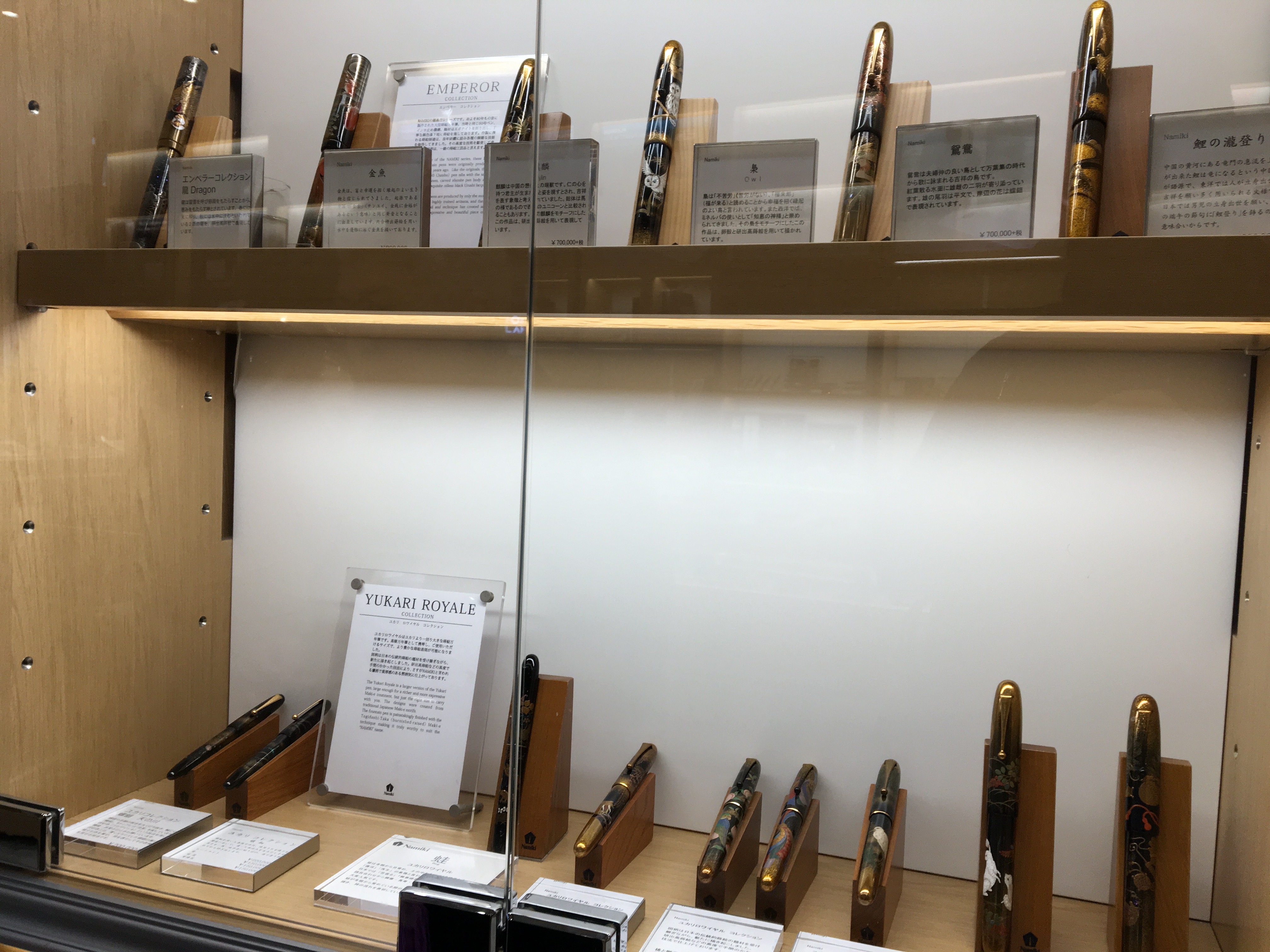
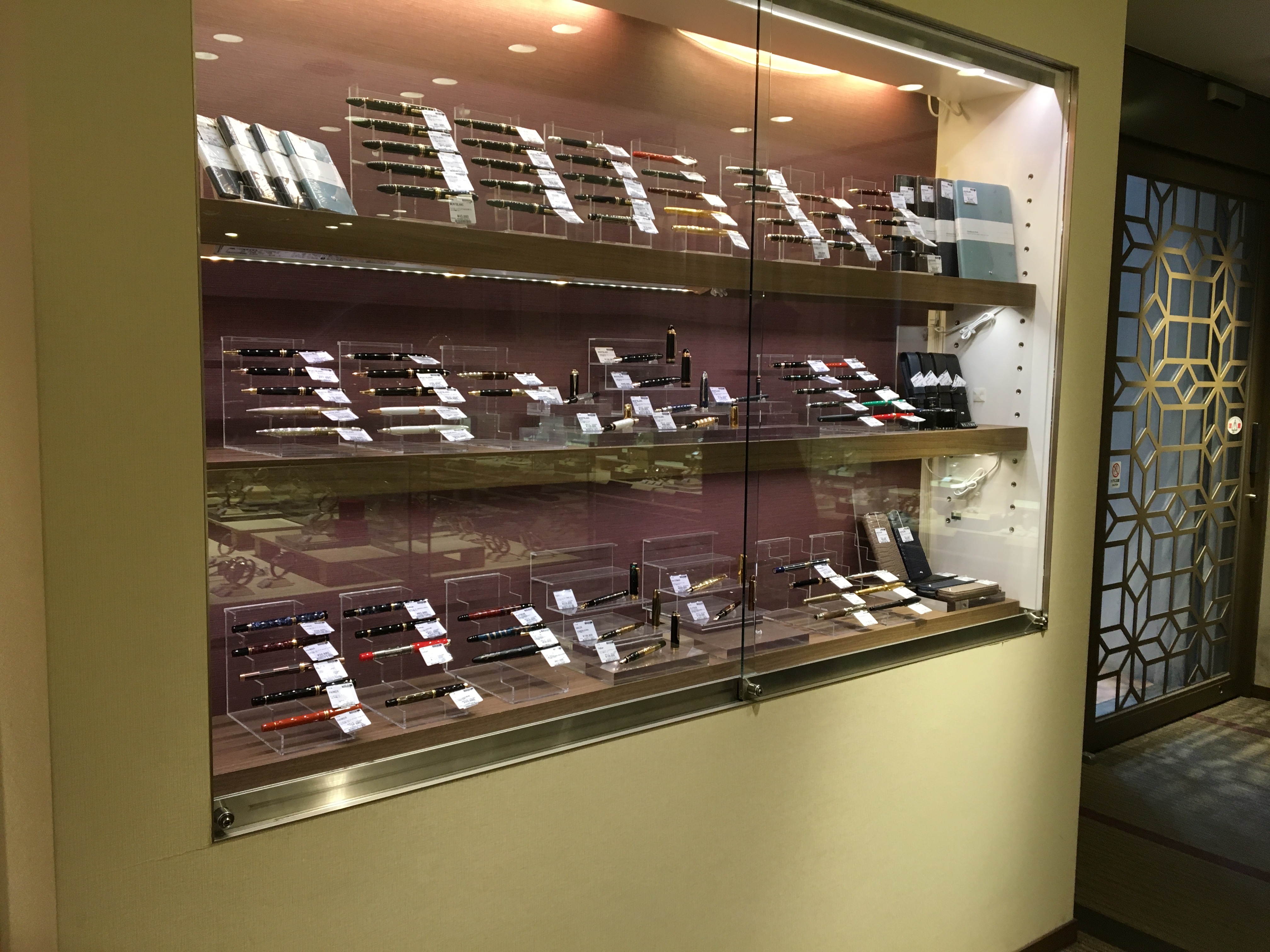
A fountain pen tourist’s first stop in Tokyo should be Itoya in Ginza. Japan’s oldest stationery store, Itoya has a whole floor devoted just to fountain pens, and not just your everyday Sheaffer either but the very finest examples of Japanese penmaking. The Japanese pride themselves in the art of maki-e (literally, “sprinkled picture”), which involves creating intricate designs with gold dust and hand painting on ebonite or hard-rubber barrels and caps, on which many layers of hard urushi lacquer are applied. In the 1920s, Pilot—then known as Namiki—partnered with Dunhill to create exquisite examples of urushi/maki-e pens, which have since sold for over $250,000. These urushi and maki-e pens—now also produced by such makers as Nakaya, Danitrio, and Hakase, aside from the Big Three—are hand-made by master craftsmen in small shops, and are typically ordered months ahead. Or you can go to Itoya (or online, to www.nibs.com or www.penchalet.com, among others) to find yours.

IMG_0039 2.jpeg

A couple of blocks away from Itoya is Eurobox, a small room on the fourth floor of an old building stocked full of vintage pens, mainly Western, very well chosen and sold at competitive prices. Another must-see is Maruzen’s large pen section at the basement of its Nihonbashi store. And no Tokyo pen visit would be complete without stepping into Kingdom Note in Shinjuku, which specializes in used but top-tier pens, both Japanese and Western. One pen store that takes and ships orders for Pilot urushi pens with special nibs like the so-called Waverley and Falcon nibs is Tokyo Pen Shop Quill in Kugahara, which unfortunately we missed because we took an express instead of a local train on our last full day in Tokyo.

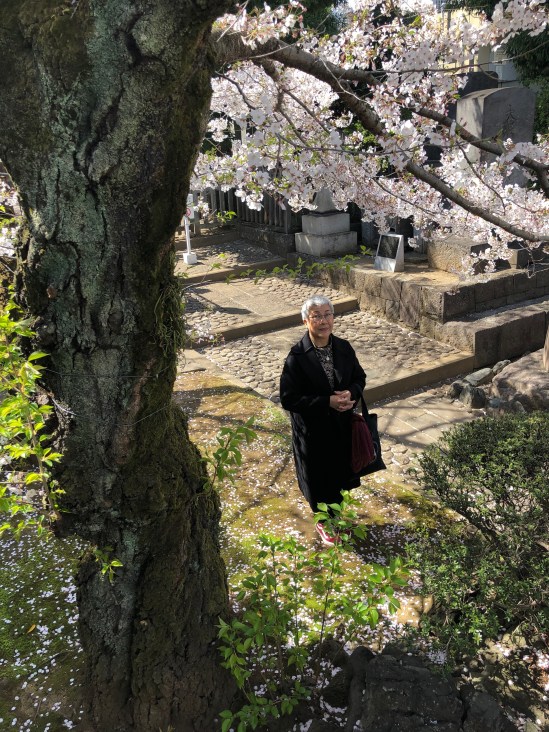
That diversion turned out to be serendipitous, because Beng and I got off on a whim at Sengakuji Station, only to realize that we were within walking distance of the graves of the famous 47 ronin who had attacked and beheaded a despotic ruler in 1702, paying for their deed with their own lives. As we paid our respects to these noble warriors under the cherry blossoms, I seemed to hear voices urging me to “Buy a big Japanese pen to fight evil overlords!”

IMG_0066.jpeg

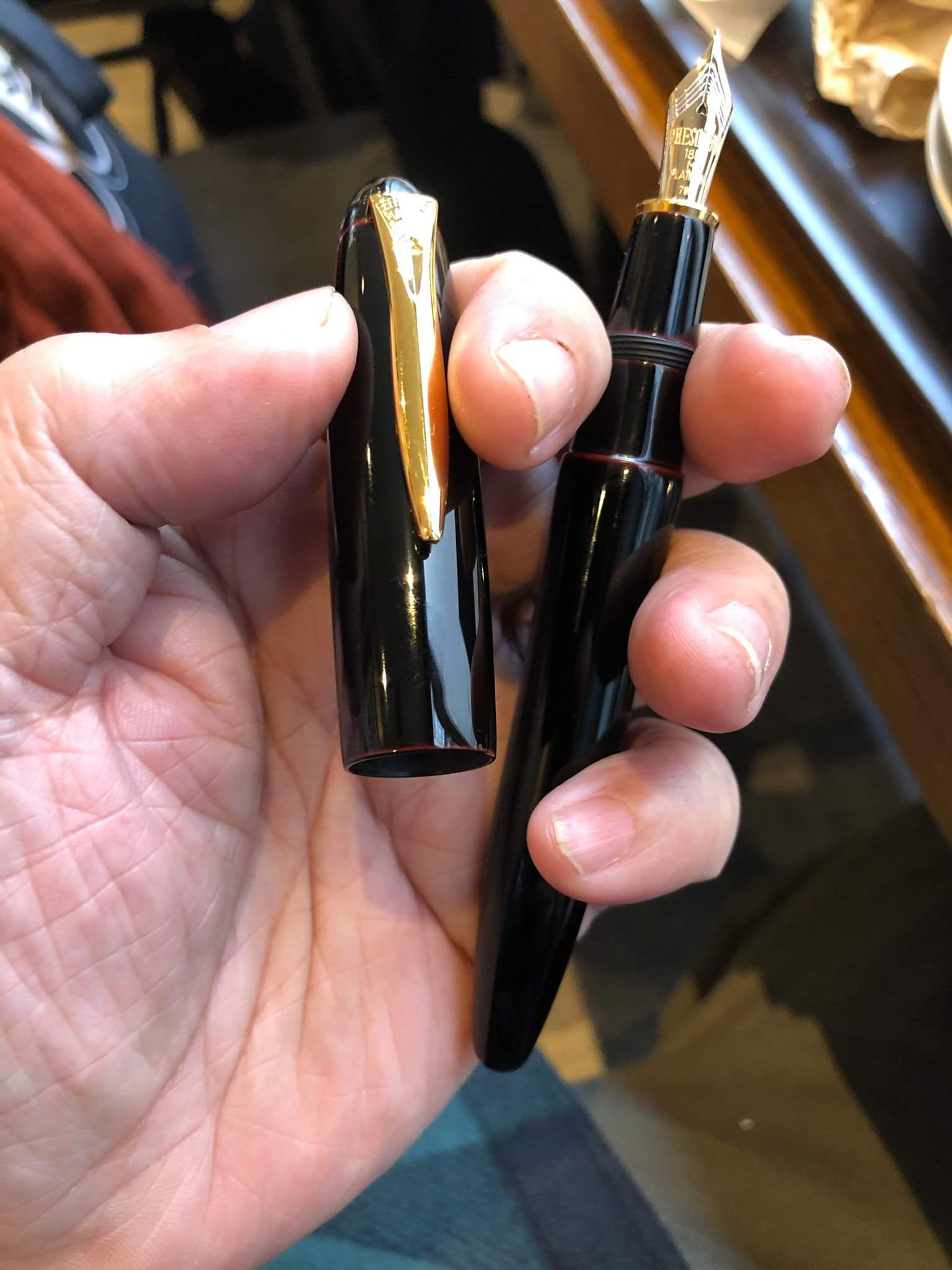
So off we went to our last pen stop, Komehyo Ginza. Komehyo is a resale chain that sells mostly high-end used goods but also some new items, including fountain pens, and this was where I found my “grail” pen, by which I was going to remember Japan this time around—a large, new, and thankfully affordable urushi Platinum Izumo pen, its deep red undertone sheening through the rich lacquer. As with many things Japanese, it’s simplicity itself, but breathtakingly elegant. Unlike some places we know, Japanese stores accord their customers extraordinarily solicitous service—you can hold and try out any pen you want for as long as you want without any dagger looks from the staff—and even Komehyo lived up to that standard, processing my 8 percent tourist rebate without any fuss (a few stores ignore it, or require you to collect it at the airport).

IMG_9988 2.jpg

As we flew home with the Izumo sitting smartly in my pocket, I munched on my 100-yen rice crackers from Daiso, and dreamed about whipping out my pen and slashing a few bile-filled throats in the name of truth, beauty, and justice.

(Top pen images from http://www.nibs.com)


Penman No. 348: Transience in Tokyo


IMG_9918.jpeg

Penman for Monday, April 8, 2019


MY WIFE Beng and I have been to Japan—on our own and together—a few times, but not until last week did we go there just to immerse ourselves for seven days in one place, not trying too hard to see or do or buy too many things. The place was Tokyo, which Beng and I last visited as a couple almost 20 years ago, a depressingly downscale sortie from which Beng can only remember living off the nearby 7-11 and slurping rice gruel with construction workers beneath a bridge. With my retirement then looming, I booked this trip last year, well in advance of the 2019 cherry-blossom season, which Beng had expressed a longing to catch. I thought it was a chance to make up for that sorry first outing and for making new memories.

Wherever we travel, Beng and I always have two sure targets in mind: museums and flea markets. The museums provide an intimate feel of the history of the place, and the flea markets—well, they a have a bit of the museum in them, bits you can actually buy and bring home. (Indeed, we often remember cities—London, Paris, Amsterdam, Barcelona, Beijing, Seoul—less for their landmarks than for their flea markets.) For this Tokyo trip, we also resolved to enjoy the cherry blossoms and to look into as many fountain-pen shops as we could.

IMG_0011.jpeg

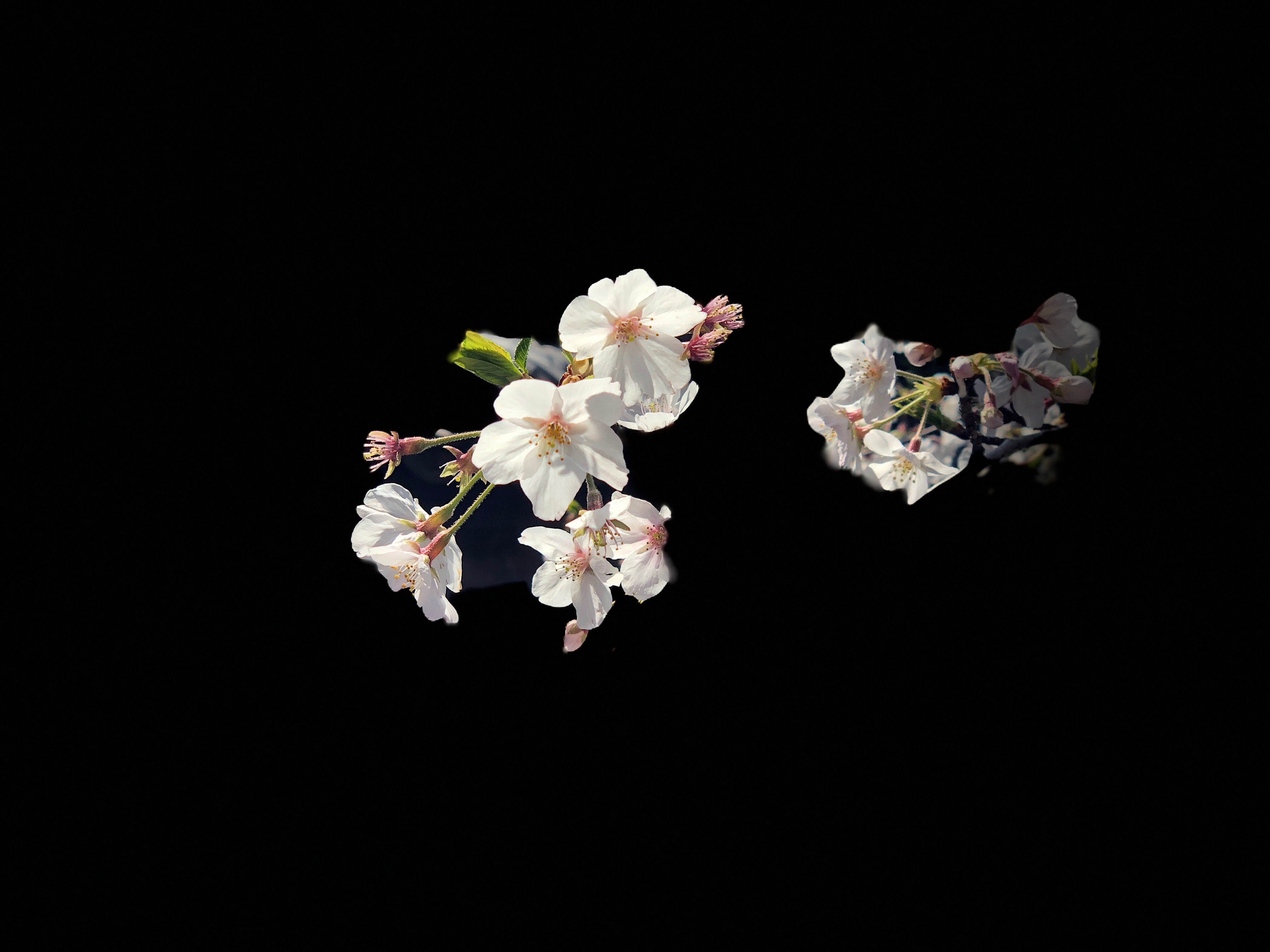
The Japanese fascination with cherry blossoms—that perennial signal and reminder of the transience of beauty and of life itself—is well known. As our friend Julie Hill puts it in her book Privileged Witness, “Cherry blossoms are a punctual miracle, a well-rehearsed event in the annual Japanese calendar. They first appear in the southern part of the archipelago, around the subtropical islands of Okinawa. As the weather gets warmer, cherry trees flower in central Japan; and in two weeks, depending on the weather, they will make their presence in Tokyo, achieving their full glory in the parks—Ueno park is a famous spot—and the gardens bordering the Imperial Palace.

“For weeks preparations have been underway in Kyoto; paper blossoms have been fluttering off lampposts and major downtown stores; newspapers and television channels have run elaborate charts of the sakura zensen—the cherry blossom—as part of the daily weather forecast. There are many varieties of trees, some occurring in the wilds of Japan, featured in gardens and parks as a cultivated tree. Others are bred as flowering trees with over-large, over-pink and over-endowed petals. The most popular are those with small pink flowers held in compact clusters.”

IMG_9876.jpeg

IMG_9971.jpeg

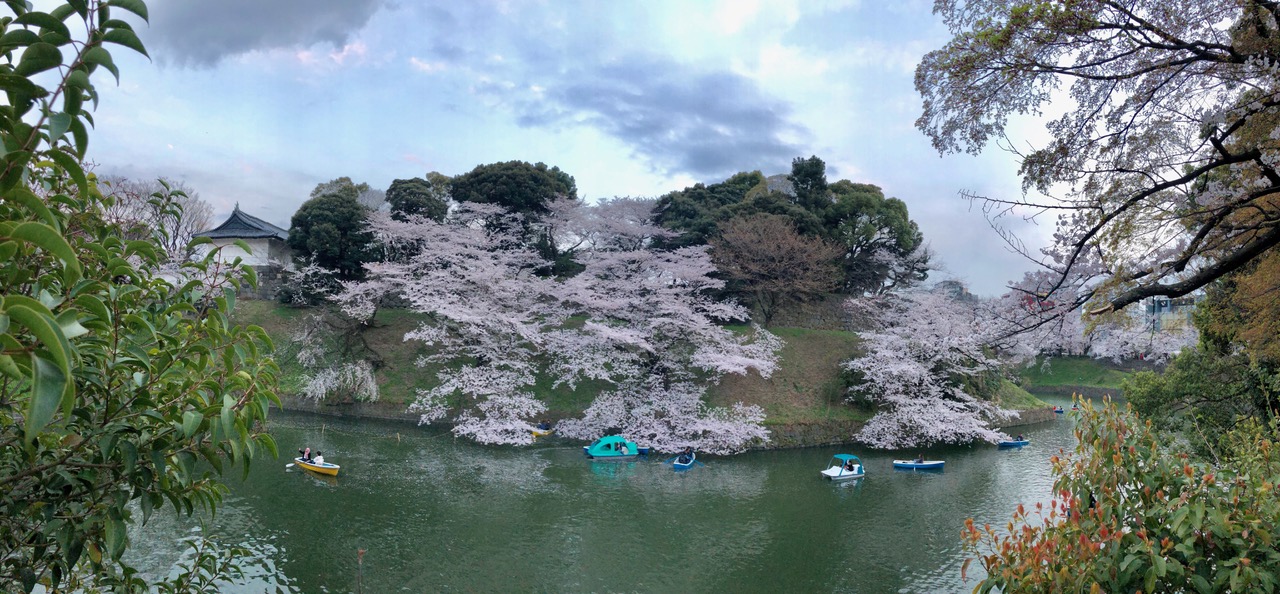
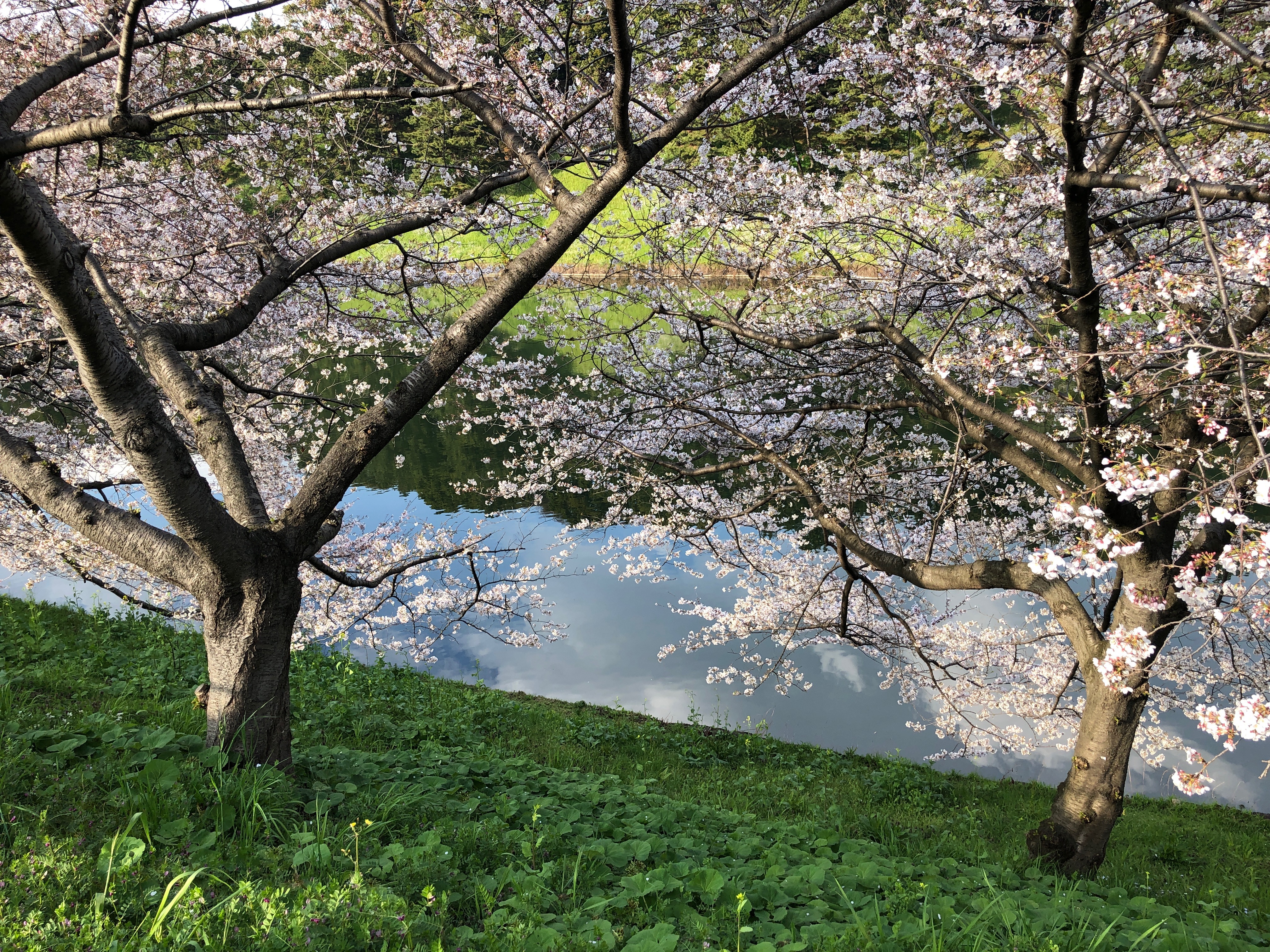
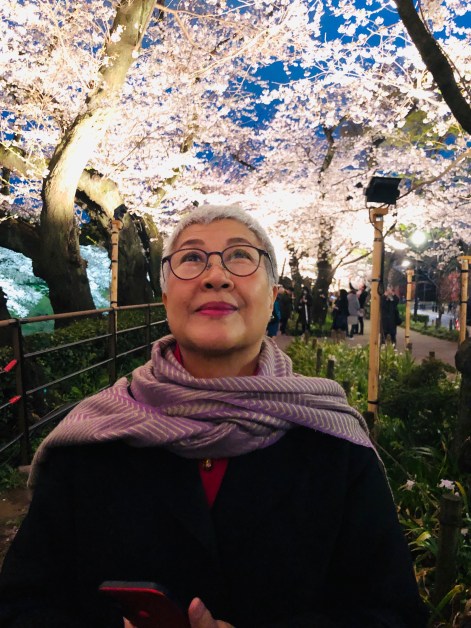
The sakura bloomed early this year—the weather in Tokyo was nippy to almost chilly—but we caught showers of them in pink and white around the Imperial Palace, along the Meguro River, and in Ueno Park. Most fortunately, we stumbled into a bank of them in Chidorigafuchi Park just as it darkened, and suddenly the trees were lit up, lending ethereal magic to the scene. The only downer with these hanami or flower-viewing walks is that you’re doing them with several hundred other people looking for exactly the same thing—that perfect pose or shot under the same trees.

IMG_9937.jpeg

A quieter time can be had exploring the sakura in context, such as you might do at the Tokyo National Museum on the far edge of Ueno Park, fittingly at the end of a long walk under the flowering cherry trees. There the blossoms figure in everything from Hiroshige’s Edo Road prints to exquisite kimono and lacquered boxes and bowls—indeed, a recurring theme that can only resonate more poignantly in these times of fleeting joys and affections.

IMG_0010 2.jpeg

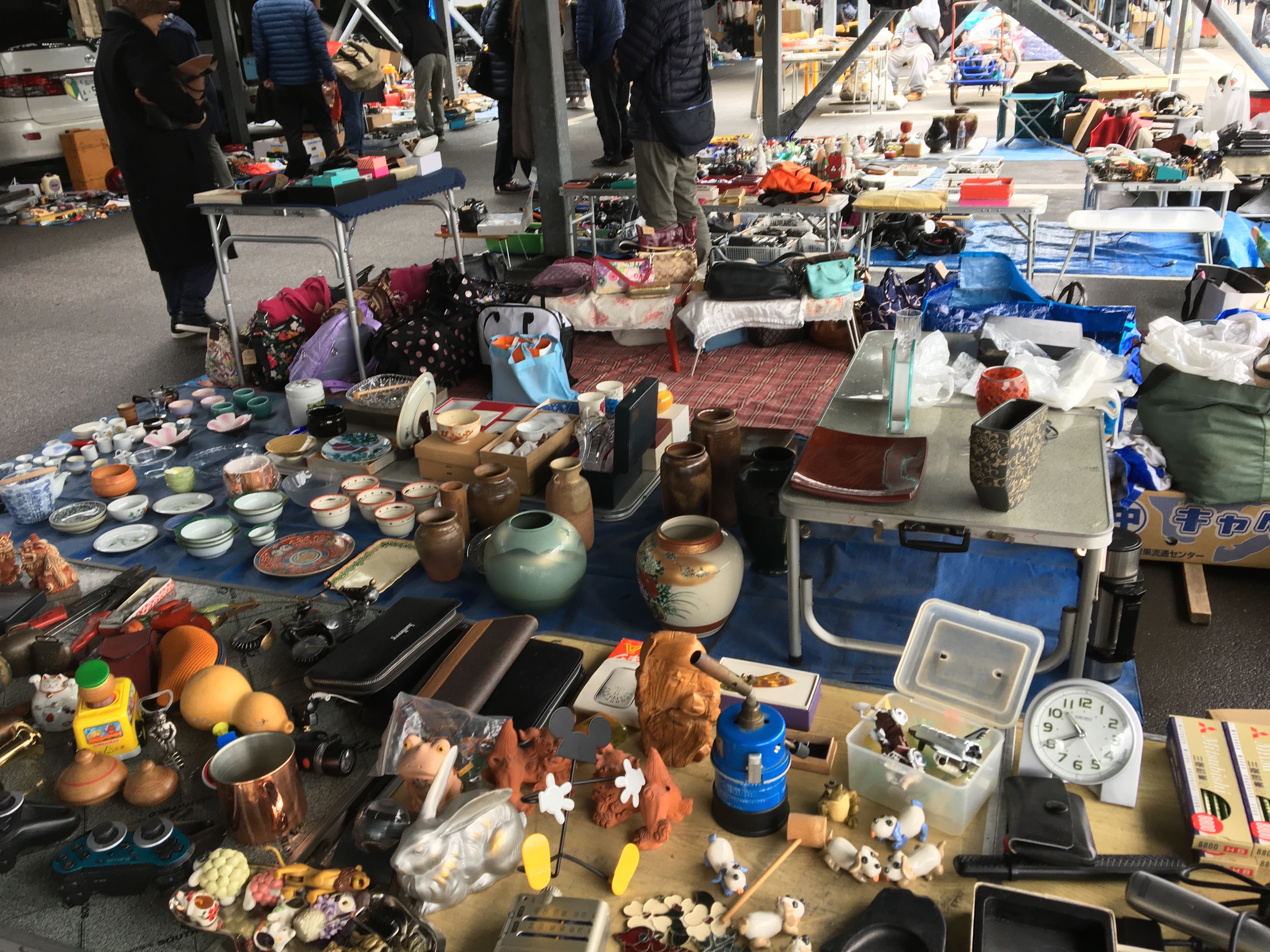
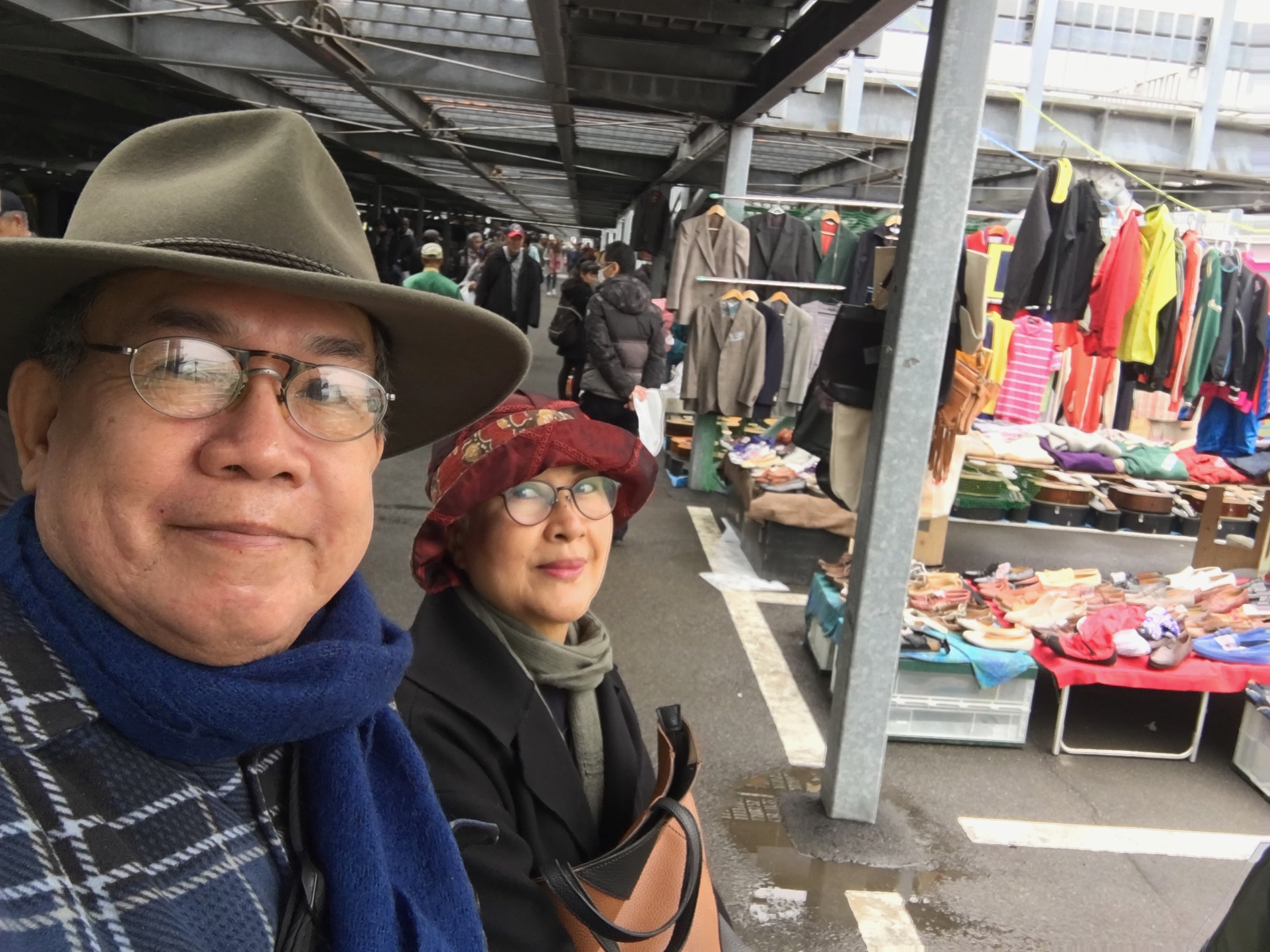
Speaking of fleeting joys, we had our fill of them at the Tokyo City Flea Market beside the Ohi Racecourse in Shinagawa, where we spent most of our Sunday morning. Beng and I are Japan surplus-shop regulars, and this was the mother of all of them, hawking everything from used clothes and vintage electronics to ceramics and scientific instruments. We walked away with a handsome thermometer/hygrometer, which Beng needs for her art restoration studio, for 100 yen (50 pesos) and a big leather bag to carry our stuff for 300 yen. My big find—adrift in a sea of bags and blouses—was a newish Pilot Custom 74 fountain pen, which normally retails for between $100 and $150, for less than P2,000.

IMG_0018.jpeg

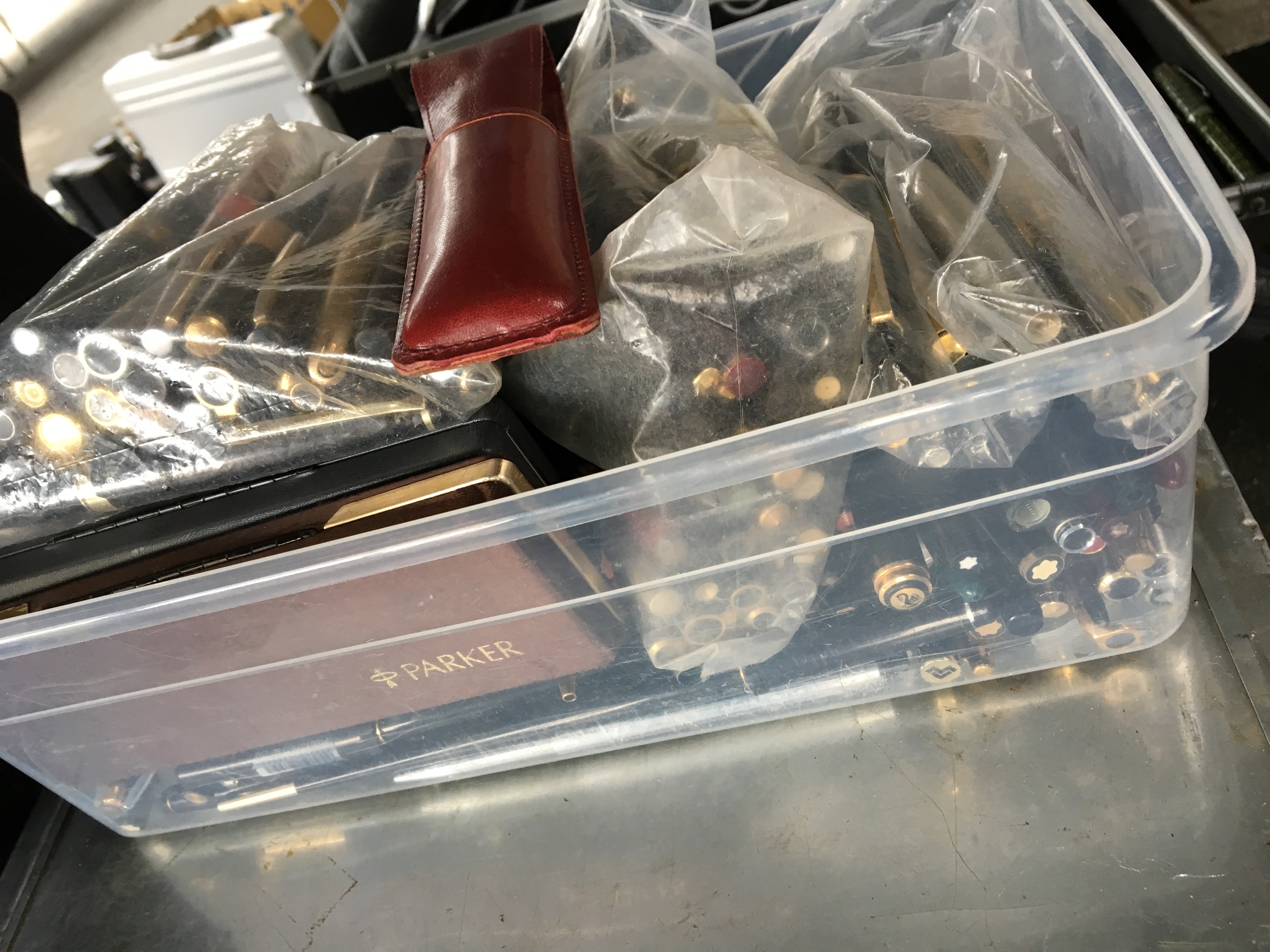
That was before I ran into the mother lode of vintage pens at one stall, where the owner had kept them in translucent plastic boxes, not thinking that anyone would be interested in them, and not thinking that a persistent Pinoy with X-ray vision would spot Montblanc stars in a galaxy of caps. It was a real treasure trove that I would have gladly sold a car for were I a younger and hungrier collector, but after much dickering, I picked out just two prize pens, about which you’ll hear more in another report on pen hunting in Tokyo.

IMG_0022.jpeg

This time around, we had chosen a better hotel, well located near the Imperial Palace, small and rather expensive but impeccably clean as Japanese hotels go. We still found ourselves subsisting on the prepackaged rice-and-fish dinners at 7-11 (actually, they’re good and cheap!), so Beng and I celebrated the day (and yes, the transience of money) with a grand dinner at a steakhouse in our neighborhood in Chiyoda. A good time was had by all.

IMG_9968.jpeg


Penman No. 297: A Witness Speaks

MarchToIndependence2jap.jpg

Penman for Monday, April 9, 2018


I WAS very honored to receive a response to my recent column-piece on “Writers in Wartime” from no less than Dr. Benito Legarda Jr., the eminent economist-historian perhaps best known by contemporary readers for his harrowing accounts of the atrocities committed by the retreating Japanese forces in Manila at the closing days of the Second World War. Titling his message “Writers Under Compulsion,” Dr. Legarda pretty much confirms what I observed, but with the kind of authority I couldn’t possibly lay claim to. A teenager during the war, he also adds a couple of personal vignettes. (Previously, Dr. Legarda and I had corresponded on another topic of mutual interest, the French adventurer Paul P. de la Gironiere, whose very colorful account of his Philippine sojourn Legarda had introduced in a 1972 edition.)

This may sound like an academic discussion, especially to young readers who know or care little about what came before them, but the question of how writers respond to the challenges (and opportunities) of authoritarian regimes is actually a very timely and practical one. Dr. Legarda ends his comments with a pointed reference to martial law, but we all know that authoritarianism didn’t end with Marcos or martial law. And it’s one thing when you’re writing at the point of a Japanese bayonet—but is it much different when you take the bayonet away and replace it with a balled fist? Here’s what a witness to war had to say:

The predicament of writers working under an authoritarian regime is brought out by Jose “Butch” Dalisay in an article, “Writers in Wartime” (Philippine Star, March 26, 2018). In this column Dalisay describes the conditions under which writers worked during the Japanese occupation.

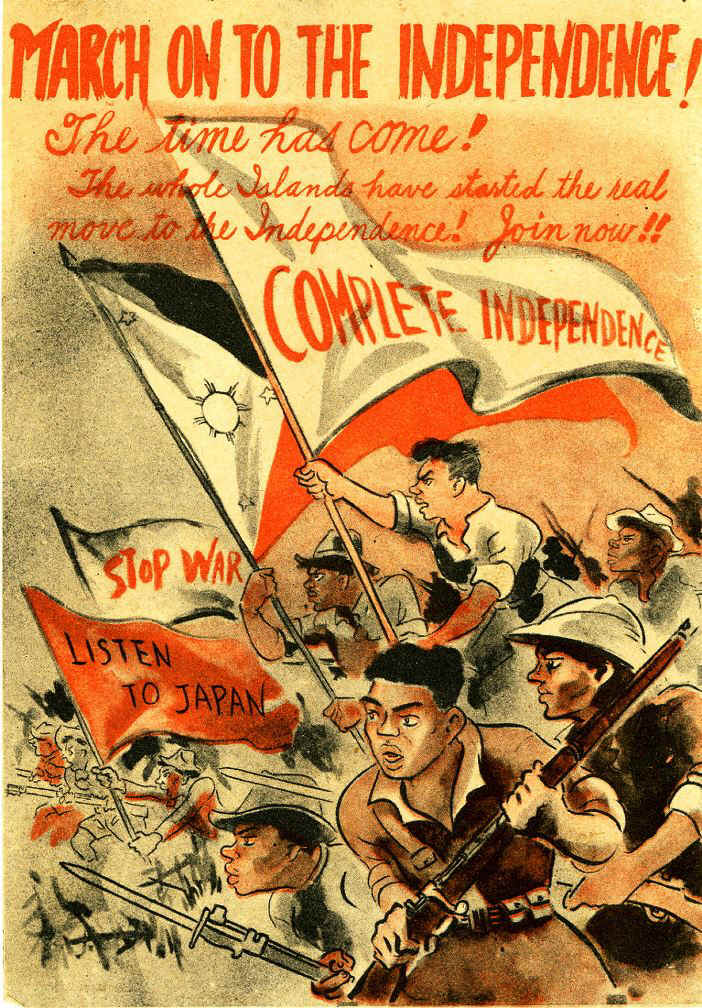
They had to toe the Japanese propaganda line of Japan as the liberator of Asian people from Western imperialism, the exemplar of nationalist governance.

Dalisay examines the December 1943 issue of the Philippine Review. How did writers comport themselves at the time? Were they cultural collaborators?

Dalisay did not know those writers himself and did not know their inner convictions but as one who lived through those times, I can say that the editor, F.B. Icasiano or “Mang Kiko,” was reportedly a collaborator and disappeared after the battle for Manila.

Other editors, all working for the Manila Shimbun Sha (the only publisher permitted), were Vicente Albano Pacis, Angel  Anden, and Jose Luna Castro—all respectable journalists who had to make a living.

It was not difficult for fiction writers like Ligaya Victorio Reyes and Estrella Alfon Rivera to avoid the propaganda line by writing Christmas stories. This was also easy with Juan Collas’ translation of Rizal’s Mi Ultimo Adiosand Jovito Salonga’s commentary on the language of the Constitution.

A friend of my youth, Isagani A. Cruz, in a different issue wrote a poem in praise of Rizal. Later, as an Associate Justice of the Supreme Court he  would be known as the most elegant prose stylist in the Court.

For the fictionists Dalisay notes the sharp and painful transition to the darkening of the times.

Not so the essayists who could not avoid mouthing the Japanese propaganda line. One was educator Camilo Osias, author of the prewar Philippine Readersseries and future Senate president, who argued for a sound eclectic choice as Japan had done in its cultural borrowings and emphasizing the precedence of the State, of social interests over the individual.

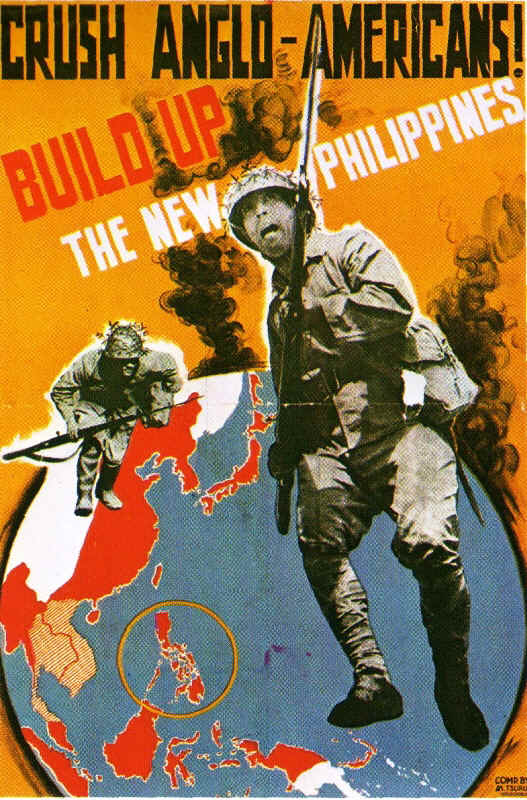
CrushAngloAmericans.jpg

Osias once escorted my mother home from a civic meeting, and at  our front steps asked my father if he was willing to send me to Japan on a scholarship. My father flatly turned him down. “I see I’m barking up the wrong tree,” he said.

Osias’ ideas were general enough to avoid being tagged propaganda; at most they might be qualified as political adjustment. Not so Luis Montilla, national librarian, who wrote fatuous praises for Japan as a guide and regenerator of true Orientalism, realizing Rizal’s supposed dream of re-Orientalizing his people.

Dalisay withholds judgment on this matter considering that it was possible for some Filipinos to regard the invading Japanese as liberators, after centuries of the white man’s rule.

But as one who lived through that time, I remember the Filipinos regarding themselves as better than the Japanese, who had cruelly ravaged Manchuria and China. They were certainly not looked on as liberators by a people who were already on the eve of full independence.

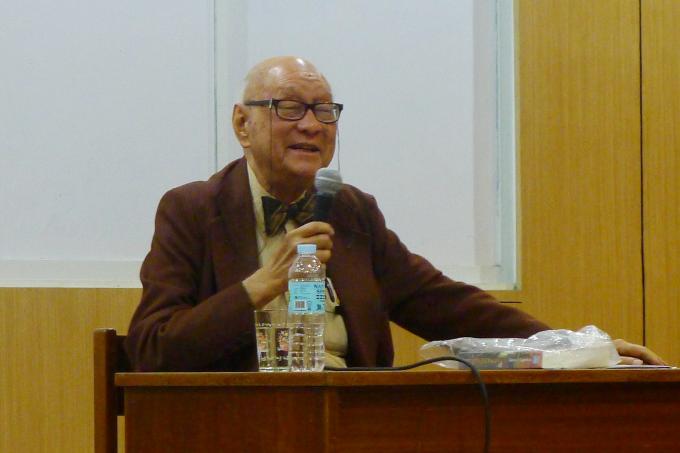
Perhaps the writer’s dilemma of the time was best expressed by a leading Filipino writer   in Spanish, Don Pedro Aunario, who told my uncle Jose “Pepito” Legarda who worked at the Shimbun Sha with him, “How fortunate you are that you don’t have to write for a living.” Yes, writing for a living under an authoritarian regime meant suppressing one’s own opinions and parroting those of the rulers. Writers would experience this again under the Marcos dictatorship. (Images above from pyswarrior.com, photo of Dr. Legarda below from ateneo.edu)

P1080143.JPG