Qwertyman No. 122: On Writing as a Profession

Qwertyman for Monday, December 2, 2024
FOLLOWING THROUGH on last week’s piece about the challenges faced by creative writers trying to make a living in this country, let me share some further thoughts on that topic that I wove into my Rizal Lecture last week at the annual congress of Philippine PEN. My talk was titled “The Living Is in the Writing: Notes on the Profession of  Writing in the Philippines.”

Our writers of old made a profession of writing, often by working as journalists, speechwriters, and PR people at the same time that they wrote poems, stories, novels, and essays on the side. Some also taught, and of course some writing comes with that territory, but with teaching you get paid for your classroom hours than for your word count. (To which I should also add, so much of the writing that our literature professors do today is understandable only to themselves.)

Our best and most prolific writers lived by the word and died by it. The two who probably best exemplified this kind of commitment to writing—and nothing but writing—were Nick Joaquin and his good friend Frankie Sionil Jose. Both were journalists and fictionists (in Joaquin’s case, a poet and playwright as well). We can say the same for Carmen Guerrero Nakpil and Kerima Polotan, as well as for Gregorio Brillantes, Jose Lacaba, Ricky Lee, Alfred Yuson, Cristina Pantoja-Hidalgo, and Charlson Ong, among others. 

These were all writers whom you never heard to claim, as has been recent practice, that “I am a poet!” or “I am a fictionist!” They were all just writers, for whom the practice of words was one natural and seamless continuum, and a profession they mastered just as well as we expect doctors, engineers, mechanics, and lawyers to do. This was also when journalists could be poets who could also be politicians and even reformers, revolutionaries, and heroes.

This was paralleled in other arts such as painting, where artists such as Juan Luna, Fernando Amorsolo, and Botong Francisco routinely accepted commissions to support themselves and any other personal undertakings. (Of course, this was well within the old Western tradition of writers and artists having wealthy patrons to help keep them alive and productive.)

But then came a time when, for some reason, creative and professional writing began to diverge, as creative writing withdrew from the popular sphere and became lodged in academia, where it largely remains today. Professional writing, or writing for, money, came to be seen as the work of hacks, devoid of art and honor. Even George Orwell urged writers to take on non-literary jobs such as banking and insurance—which incidentally T.S. Eliot and Wallace Stevens did, respectively—rather than what he called “semi-creative jobs” like teaching and journalism, which he felt was beneath them. (Orwell himself worked as a dishwasher in Paris, where he wryly observed that “nothing unusual for a waiter to wash his face in the water in which clean crockery was rinsing. But the customers saw nothing of this.”)

An attitude of condescension soon emerged among poets and fictionists who looked down on journalists as a lesser breed—something I have always warned my students against, having been a journalist who had to turn in a story, any story, by 2 pm every day on pain of losing my job. Never knock journalists. Let’s not forget that when it comes to facing real dangers brought on by one’s written word, poets and fictionists have it easy. The last Filipino novelist who was shot for what he wrote was Jose Rizal; the only writers dying today are our journalists and broadcasters in the hinterlands offending the local poobahs. Governors and generals read newspapers, not novels; they are impervious to metaphor.

Professional writers, on the other hand, saw creative writers as artsy dilettantes enchanted by fancy words and phrases that no one else understood and very few people paid for. Creative writers took it as a given that they were wedded to a life of monastic penury, unless they had another skill or job like teaching, doctoring or lawyering, or marrying into wealth. It even became a badge of honor of sorts to languish in financial distress while reaping all manner of writing honors, in the misguided notion that starving artists produced the finest and most honest work. 

The fact is, both are two sides of the same coin, which is the currency of public persuasion through words and language. One is an artist, the master of design; the other is the artisan or craftsman, the master of execution. Both can reside in the same person, unless you’re foolish enough to disdain one or the other. You can produce great art, if you have the talent, the discipline, and the hubris for it; but you can also live off your artistic skills, if you have the talent, the discipline, and the humility for it. 

(That said, I have to report that in my forty years of teaching creative writing, some of the students who find it hardest to switch to fiction are journalists, who just can’t let go of the gritty and often linear reality they’ve been accustomed to; poets come next, those who feel preciousness in every word and turn of phrase, so much that they can’t move from one page to the next without agonizing, or, going the other way, without drowning us in verbiage.)

This was why, more than twenty years ago, I designed and began teaching an undergraduate course at the University of the Philippines called “CW198—Professional Writing.” Mainly intended for Creative Writing and English majors who had very little idea of their career options after college aside from teaching, the course syllabus includes everything from business letters, news, interviews, and features to brochures, scripts, speeches, editing, publishing, and professional ethics. The first thing I tell them on Day One is this: “There is writing that you do for yourself, and writing that you do for others. Don’t ever get the two mixed up.”

Qwertyman No. 66: Beyond Reportage

Qwertyman for Monday, November 6, 2023

IT WAS probably fitting that I finished reading Patricia Evangelista’s highly acclaimed account of “murder in my country,” Some People Need Killing (Random House, 2023), over a holiday devoted to remembering the souls of the departed. I had received a pre-publication review copy from the publisher months ago under a strict embargo not to talk about it until its formal launch. As it happened, it lay under a pile of other books to be read until a flurry of posts and reviews reminded me that it was out in the open, and that the secret—not just the book, but also what it contained—could now be shared.

I can still recall the day—May 15, 2004—while we were celebrating Pahiyas in Lucban when I got the news on my phone that our representative to the English Speaking Union’s annual public speaking competition in London—a bright and pretty wisp of a teenager named Patricia Evangelista—had won the top prize. We were new to the ESU—subsequently we would produce two more global champions—and it was a grand way to announce to the world that we Filipinos could produce more than boxing heroes and beauty queens. Here was 18-year-old Patricia who could think on her feet and speak to issues of international importance, the poster child of Filipino intelligence and audacity, whose command of the English language led her to meeting no less than Prince Philip, the Duke of Edinburgh, in what amounted to a mini-coronation in recognition of her talent.

As magical as that moment was, I can only imagine how, in the months and years following, it must have begun to grate on the young Patricia to be asked to deliver her prizewinning speech in public forums over and over again, like a wind-up doll, and suffer the fate of prodigies who peak too soon. Surely that was just a beginning; surely there was more she could do—had to do—to outlive her Cinderella-like debut in London. 

I would see some of that when she enrolled in my undergraduate Fiction Writing class in UP. I knew who she was and made sure to give her no special treatment—indeed to lean even a little harder on her, knowing she had what it took—but she got a “1.0” all the same, one of the few I ever gave. I can’t claim to have taught her much how to write imaginatively—her own reading had likely primed her for that—but I can’t pretend not to be proud of what she turned out to be, my pride tempered only by fatherly concern.

Today, almost 20 years later, the sometime ingénue returns to the global stage as a hard-bitten, chain-smoking investigative reporter—a “trauma journalist,” in her own words, very possibly one of the world’s best yet again. But there is no real prize, no princely reward, for this kind of distinction, only pain and sorrow which—subdued too many times as a matter of professional discipline—exact their toll on the body and spirit. Patricia has had to suffer that to be able to tell her story as clearly as she could, unimpeded by the hand-wringing and the preachiness that often accompany such exposés of grave misconduct. 

This is not a review of the book’s explosive investigation into the thousands of extrajudicial killings that happened under the Duterte regime—that’s been done very capably by others, and is already the subject of international inquiry. The book will deserve all the journalistic accolades coming its way as an exemplar of excellent reportage. 

I will not even quote from the book, as there are simply too many quotable paragraphs to choose from. Rather, I want to note, from my privileged perspective and for the benefit of younger writers, how Patricia works with language to best serve the truth. Quite apart from its journalistic merits, Some People Need Killing is one of the best textbooks out there for what we now call “creative nonfiction,” a compound of reportage, memoir, history, and fictional technique. Indeed, beyond reportage, the book is a long personal essay in which the author is inextricably part of the story, a significant step away from the impersonal and largely mythic “objectivity” that we associate with traditional journalism.

Probing murder after ghastly murder—sometimes even coming on-scene to prevent one—Patricia is both chronicler and agent, witness perhaps not to the killing itself but to the larger crime of its planning and the exoneration of its perpetrators. Handling the most sensitive and dangerous of material, she draws on more than skill to tell her story; she demonstrates raw courage, an increasingly rare quality among journalists easily seduced and silenced by pragmatism. She names names, which surely will bear consequences both ways. 

I’ve often remarked in my lectures that the most endangered writers in this country are neither the poets nor the novelists, but the journalists who cannot hide behind metaphor and simile to tell the truth. We fictionists make artful lies which governments rarely have the intelligence or the patience to grapple with. Journalists live in the literal world inhabited as well by cops and crooks; what’s interesting is how the flimsy but oft-repeated fictions of “killed while resisting arrest,” so pervasive in this book, emerge from that reality.

Evangelista’s overarching technique is one of narrative restraint, informed by an English major’s awareness of how language and reality shape each other. She constantly parses the perversions of language—how words like disappearsalvageencounterverification, and even her own name assume different uses and meanings over time, in specific contexts. She knows—as I remind my students—that for dramatic effect, less is often more, that short sentences and blunt, single-syllable Anglo-Saxon words rather than the long, Latinate ones favored by lawyers hit closer to the gut and heart.

She is keenly aware of the power of irony—of professed liberals supporting EJK, of a morally ascendant Noynoy Aquino showing little empathy for ordinary folk, of her own journalist-grandfather affixing his signature to a petition supporting the older Marcos, and of communal complicity in the reign of terror. She uses people’s own words against them, quoting from the record. She avoids direct editorializing, or speaking in lofty generalizations like “justice” and “civil liberties,” and instead, in the best noir tradition, sees “sagging two-story tenement buildings (that) opened into dirt roads layered with garbage and last week’s rotten Happy Meal.”

After I had finished the book, I woke up at 4 am from a nightmare about running shirtless down a wet, earthen road. I was lucky. Patricia Evangelista lived through it, and I don’t even know if she’s woken up yet. Have we?

(Image from Rappler.com)

Qwertyman No. 50: Doro’s Times and Ours

Qwertyman for Monday, July 17, 2023

THE NEWS of Amando “Doro” Doronila’s recent passing in Canberra at age 95 marked the end of an era, as Doro was the last of his generation of journalists who made newspapers and their Op-Ed pages compelling reading. Whichever side of the political fence they were on, these journalists and columnists gave it all they had; many reveled in their prominence and some shamelessly parlayed their influence into all manner of profitable enterprise, back when it seemed the sensible thing to do, before the darker complicities of martial law set in.

Doro seemed to me to be above all this. His personality was, shall we say, poorly suited for TV or even radio, which was just as well, because it drew a clear line between journalists who did nothing better than think and write deeply, and those who confused their calling with show business.

I didn’t really know Doro personally. My one memorable encounter with him was when I was 18, a freshman dropout from UP who was dying to get into the newspapers, by hook or by crook. (Like some precocious teenagers, I was convinced I had the writing talent to skip journalism school. I would later pay for that hubris in tearful rewrites in the newsroom.) 

One of the doors I knocked on was that of the Manila Chronicle, which Doro was the editor of in 1972. I remember striding into its office and walking up to Doro’s desk, sucking in my stomach. He seemed puzzled to see my pimply face, which probably belonged to a messenger boy’s, except that I came empty-handed. “Yes?” What did I want? “Sir, I want to apply for a job—as a reporter,” I must have croaked, mumbling something about my writing for the Collegian and my high school paper. “How old are you?” I said that I was “going to be nineteen soon”—“soon” being about nine months away. 

I can’t recall if he looked back at me with pity or sympathy, or if he was laughing inside. I do remember him saying something like “Why don’t we talk again in a few years?” I was disappointed but not dejected; at least he didn’t throw me out of the place, or ridicule me before a roomful of the kind of people I wanted to be—hunched over typewriters, smoking up a storm, shaping tomorrow’s news, their bylines embedded crisply and imperishably on fresh paper.

Eventually, sometime that summer, and through sheer persistence, I did land a newspaper job, as a features writer and then a general-assignments reporter with the Philippines Herald, very likely the youngest fellow working full-time for the papers then. With the Herald and later Taliba  just before martial law, I met all kinds of journalists on the job, and saw how human we all were, the creatures of our noblest ambitions and pettiest grievances. One reporter I was on the police beat with loved playing cop, interrogating suspects each one of whom he was convinced was nursing a confession. Many had an enormous capacity for alcohol and the unapologetically macho bluster that came with it. Despite their gruffness, some had marshmallow hearts; two or three even took me under their wing to spare me from the usual gauntlet that rookies had to undergo. We were the peons of the profession, entry-level Hemingways and Woodwards chasing stories down the city’s tenebrous alleyways, and we loved every minute of it.

That was our world, but when I reported to the newsroom in the afternoon to file my story, I was ever aware that even above the copyeditors’ desk was another tier of men (as they mostly were) who perorated boisterously in a corner office on the day’s politics over scotch and cigars, the people whose opinions mattered and who made opinion matter. Never having worked with or for Doronila, I could only imagine him in that company, sitting sagely with his fingers crossed while allowing the thunder to roll above his head.

Today, half a century later, and finding myself just as old or even older than those titans of Philippine journalism then, I can savor the irony of having the privilege to write an Op-Ed column in times that mirror, in many ways, the early 1970s—with a Marcos in Malacañang, an opposition at bay, a scandal a week, and yet a people hard at work, striving for economic and moral deliverance. 

The great difference is that newspapers no longer have a monopoly of opinion-forming; that ground has been taken over by the Internet and social media (and elsewhere, by early-morning and late-afternoon AM radio, perhaps the hardiest of public platforms). Certainly, some Op-Ed stars remain—again on either side of the political divide—with faithful followers in need of sharper articulation and affirmation of their own sentiments. But even those readers tend to be aged or aging, people with the time and patience to read prose in paragraphs instead of bullets and memes, and who might even look for and appreciate that elusive quality called “style.” (Doronila’s no-frills prose, to be honest, was straight and guileless to the point of being starchy.) These 1,000-word pieces we produce now belong to what they call “long-form” writing, as if to write and read them were a test of endurance. 

But against the cheeky punchiness of Twitter and the ugly street brawls on Facebook, and above all stylistic considerations, I have to applaud this new generation of journalists (not all of them for sure) for their adherence to the truth and to fact-based reporting, and for holding themselves up to a higher standard of ethical behavior than their predecessors. Battling the bots and trolls of disinformation, they put their lives and well-being on the line, story by story, column by column; most are young, many are women, some even gay—the old gray men of the newsroom no longer dictate the headlines or the editorial slant. I think Doro himself would have been happy to see this, having mentored many of his successors.

And so as we grieve Amando Doronila’s demise at an age few of us can hope to approach, we can celebrate the continuity of upholding courage, virtue, and incorruptibility in Philippine journalism, with deepest thanks for the example the man set for us to follow.

(Photo by Pablo Tariman on FB)

Qwertyman No. 19: The Real Maria Ressa

Qwertyman for Monday, December 12, 2022

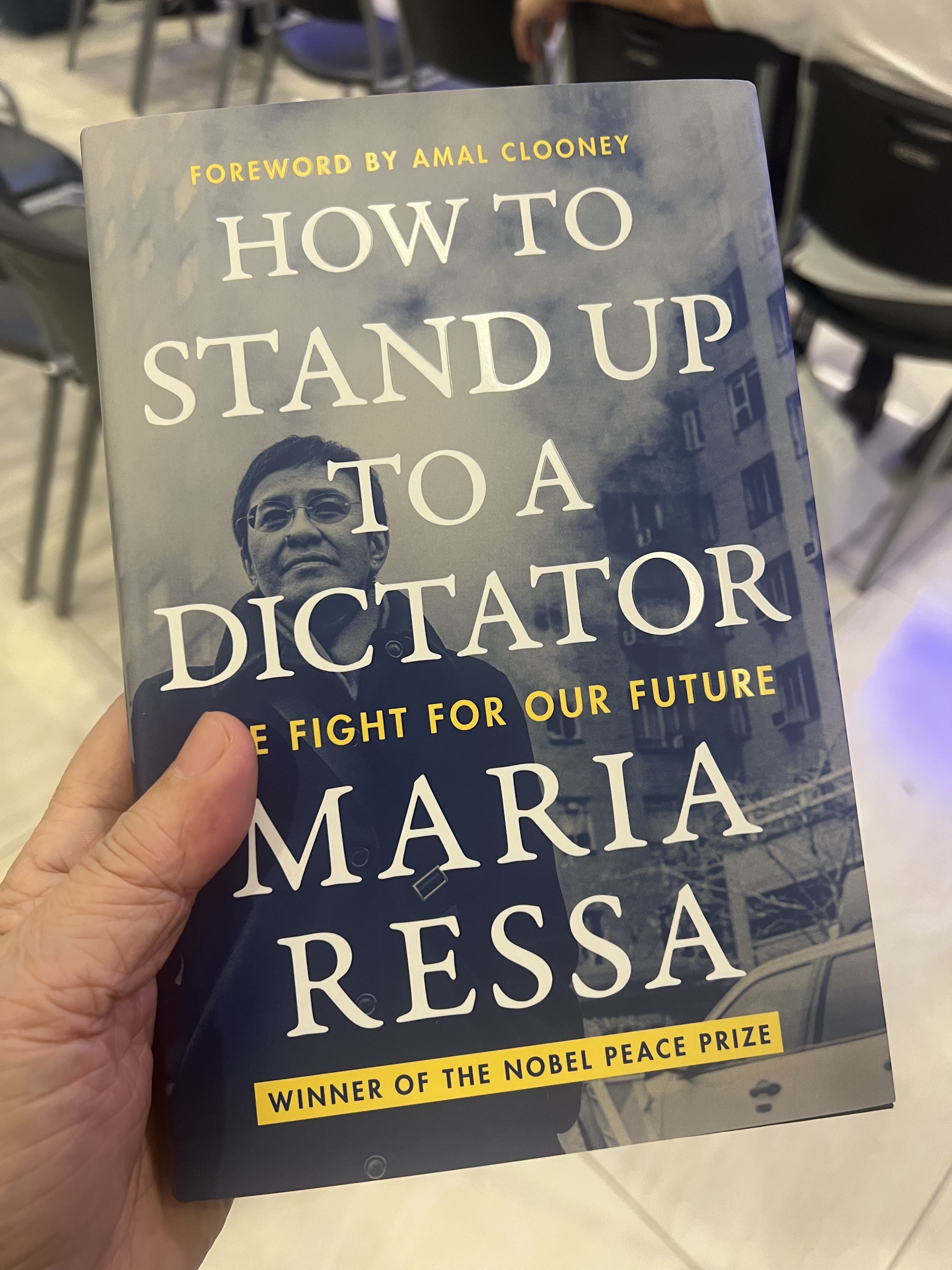
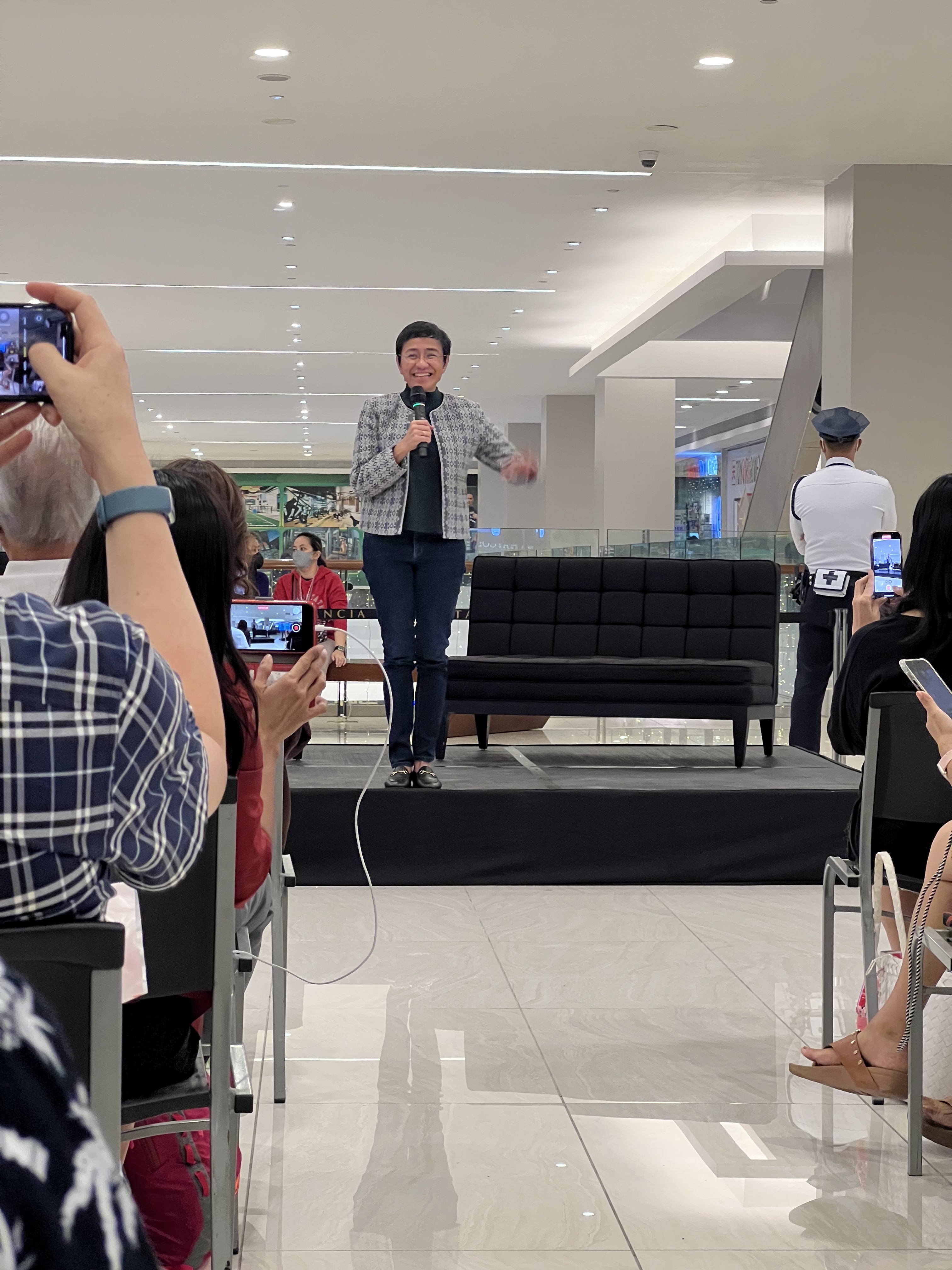
I WAS very honored to speak last Saturday at the launch of Maria Ressa’s new book, How to Stand up to a Dictator: The Fight for Our Future (Harper, 2022). I’d read an advance copy of it a couple of weeks ago, and to cut to the chase, if you’re thinking of buying a book to read for the holidays or to gift to friends, look no further. This book, for me, is among the year’s best in nonfiction.

I have to emphasize that word—nonfiction. As we all know we live in times when fiction has taken over as the most influential form of human discourse, particularly in the political arena. As a practicing fictionist, I should be happy about that, but I’m not and I can’t be, because so much of it is bad fiction, crudely written—and surprisingly, infuriatingly effective, at least with a certain kind of reader. 

Maria’s book cuts through all that. It’s undisguised, old-fashioned, in-your-face truth-telling, told in the same voice and tone we’ve become familiar with over the years of listening to her reportage over CNN. I’m sure that, like me, many of you wondered the first time you heard her: “Who was this little brown-complexioned woman speaking with an American accent?” She looked Filipino, but how come we’d never seen her before?

This was all before she rose to prominence—some would say notoriety—as the moving spirit behind Rappler, and subsequently to global fame as a Nobel Prize winner for Peace. We identified with her travails, shared her anger and sadness at the abuse she has received, and rejoiced in her victories, whether in the courts or in the larger sphere of public opinion. 

But how well do we really know Maria Ressa, and whatever drives her to be who and what she is? This book takes us to the person behind the phenomenon, and answers many questions we may have had about her and her stubborn advocacies.

The book’s title sounds like that of an instruction manual—which it is, and also is not, being part autobiography, part journalism, and part testimonial. As a manual for freedom fighters, it emphasizes the need for collaborative and collective action against seemingly insurmountable forces. Those forces now include the Internet, which, as Maria documents with both precision and profound dismay, has morphed from a medium that once held all kinds of liberative promises into a medium for mass deception and targeted assault. She draws her counsel not from some esoteric guru or academic paradigm, but from some very basic values that have informed her own life—the Honor Code she followed in school, and the Golden Rule.

“That’s what I lay out in this book,” she says, “an exploration into the values and principles not just of journalism and technology but of the collective action we need to take to win this battle for facts. This journey of discovery is intensely personal. That’s why every chapter has a micro and a macro: a personal lesson and the larger picture. You will see the simple ideas I hold on to in order to make what have—over time—become instinctive but thoughtful decisions.”

It’s this constant back-and-forth between the personal and the political—and at some point they become inextricably fused—that forms the fiber of Maria’s narrative and gives it strength. Her convictions are grounded in personal experience; they have not been paid for—as the hacks in the journalistic trade will allege, seeking to bring her down to their own level—except in the coin of personal suffering under the constant threat of imprisonment and violence.

But we learn from this book that trauma is nothing new to Maria. (We also learn that Maria Ressa wasn’t the name she was born into, but to find out her birth name, you’ll have to buy the book.) From her abrupt relocation from Manila to America at the age of ten, to her journalistic immersion in the horrors of conflict and disaster in Indonesia and Ormoc, the book chronicles Maria’s quest for truth, meaning, and purpose in her life, and that of others. She stresses the importance of remembering the past to make sense of the present, quoting TS Eliot’s phrase, “the present moment of the past.”

And so can we, she seems to suggest, even in these times of high anxiety, when we can see the vultures hovering over such once-sacrosanct treasures as our pension funds, while billions more go to feed the dogs of an increasingly untenable counter-insurgent war. The big words we have become used to tossing around—truth, freedom, reason, justice, democracy—they all come down to a personal choice to do the right thing, and the courage to do it. 

Nowhere is this matter of choice more evident than in the fact that Maria is here in the Philippines, having willfully subjected herself to our brand of justice, however imperfect it may be, instead of escaping to the safety of America or another haven, which her dual citizenship if not her celebrity can certainly afford her. She will see her own story through to the end, in the locale where it matters, among the people to whom it matters most.

I’ve often remarked, as a creative writer and professor of literature, that in this country, the writers most in danger of political persecution and retribution are really not fictionists or poets like me. Not since Rizal has a Filipino novelist been shot dead for what he wrote. For sure, we have lost many brilliant writers to the struggle for freedom and democracy—Emman Lacaba, and most recently Lorena Tariman and her husband Ericson Acosta. But they were killed by the State not for what they wrote—the State is illiterate when it comes to metaphor—but for what they allegedly did.

Rather, the most imperiled writers in the Philippines as in many other places are the journalists who speak the language of the people and of their plaints in terms too clear to ignore. They could be radio announcers like Percy Lapid, or the victims of wholesale murder in Maguindanao, or high-profile and exemplary targets such as Maria Ressa. It would have been easy for her to lash back at her critics and tormentors with the same viciousness. But, she says, “I will not become a criminal to fight a criminal. I will not become a monster to fight a monster.”

That, too, is a difficult choice, and one I am sure we are often tempted to cast aside. But Maria’s equanimity in the face of savagery shames us back into our better selves. It will be that kind of quiet resolve that we will need to survive and prevail. After all, we survived martial law. We can survive this regime—with agility, patience, and courage. But don’t take my word for it. Read Maria’s book to know that we can, and why we must.

Penman No. 416: Tips for Freelancers

Penman for Monday, June 21, 2021

A GROUP of freelancers—people who write for a living but who prefer not to be tethered to any single employer—recently asked me to share some advice on how to get the most out of their job. Even in normal times, freelance writing has never been easy. You are basically on your own, dependent on your network of contacts and on your resourcefulness to get that next assignment and get that story published. While the Internet may have opened up new opportunities, it has also intensified competition and imposed new demands. 

Having been a professional writer and editor for almost 50 years, I was happy to give them these tips:

1. Broaden your interests. If your main interest is arts and culture, learn something about science and technology. Know your history, and gain even a basic understanding of economics. Don’t be choosy. As long as the job pays fairly and will not harm you in any way, do it because it will be another learning experience and will add more value to your résumé. 

2. Expand your capabilities. Learn the basics of good photography and invest in a good camera (even a good smartphone), as it will add value to your articles and make them easier to sell. Learn to write bilingually, especially as many clients will need scripts or articles in Filipino. Expand your genres, so you can write not only features but scripts, speeches, reports, and other marketable materials. Master the language, so you can also do editing work. Learn the basics of web design. 

3. Know the market. Writing single articles can be fun, but I doubt that they will make you enough to support yourself and your family. The physical magazines have shrunk to almost nothing, and while there may be money to be made online doing nearly mechanical work, you will want something more engaging and more remunerative. In my experience, a freelance writer can make the most from writing commissioned books. 

4. Learn to market yourself. This means you have to put yourself and your name out there, meeting people from all backgrounds. You may have to attend art exhibit openings, book launches, anniversaries, and other functions to make contacts and get to know what’s going on. Get on the mailing and invitation lists of embassies. Make friends with key media people. You may even have to do a few “freebies”—free publicity—just to get known. Maintain a blog that will display both your writing and your photography—indeed, your style—so potential clients can have an idea of how you write and how you will treat their material. Write a book—that will be the best way to get yourself noticed as a writer. Ask yourself: if someone were to Google my name, what will they find? Provide a positive answer to that. 

5. Be thoroughly professional. Be mindful of appointments, contracts, deadlines, accreditation, receipts, and taxes. Treat every job, no matter how small, as your first, last, and only job. Attend meetings promptly, dress smartly, speak knowledgeably—all of these contribute to the impression your client will make of you. Digitally record all interviews, after asking prior permission; never rely on handwritten notes. Back up your files to the Cloud and to an external drive. If the job is big enough, ask for a written contract, or at least a signed conformé to your proposal. 

6. Treat your work as a business. You will get more—and also more substantial—writing jobs if you are able to issue official receipts. This means getting properly registered as a business enterprise with the SEC, the BIR, and other agencies. To get government contracts, you need to be accredited with PhilGEPS, or the Philippine Government Electronic Procurement System. These accreditation processes can be tedious and expensive; you will also have to file taxes every year and do your own bookkeeping. But if you want to write for a living for the rest of your life, it’s an investment that will pay for itself in the long run. 

7. The writing life can be full of delightful freebies. I’m not telling you to reject them outright—Lord knows your professional fees are small enough, so these can be taken as compensation in kind—but don’t lie, and don’t be a party to fraud or misrepresentation. If you can’t write honestly about a product or a service, don’t take any favors coming your way. Like they say, there’s no such thing as a free lunch—but make sure your lunch isn’t poisoned and will kill you later.

8. Maintain your integrity. As I said, don’t be too choosy and too proud, especially if you’re starting out and trying to build a name. But don’t undersell yourself, either, and try not to get exploited. I say “try,” because in practice, at some point or other, someone will exploit you, whether you’re aware of it or not. Learn to say “No” if and when you have to. Compromise is good and even often necessary, but draw a line in the sand beyond which you will not go. Money is important, but it is not everything. Other and better projects will come. Unless you are desperate, do not take on jobs that will not make you happy; at least, make them pay well for your unhappiness. 

Penman No. 395: Missing the Magazine

Penman for Monday, August 31, 2020

FEW OF us might have noticed, but one of the casualties of the Internet age has been the magazine as we knew it—the general-interest magazine, which usually came out on weekends, often as a newspaper supplement. With the decline in print-media readership and the depredations on economic and social life brought on by the coronavirus, magazines around the world have been shutting down, although of course that decline long preceded Covid. Some survive in vestigial form, or have gone online, but are nowhere near the familiar and colorful periodicals you couldn’t wait to pull out of the Sunday paper.

People my age still remember the Sunday Times Magazine, the Asia Magazine, the Mirror Magazine, and others of their kind—including, of course, the old standalone Free Press and Weekly Graphic magazines. Unlike the specialized glossies of later decades, they had something for everybody, weren’t just trying to sell you something, allotted several pages for serious literature, and were worth saving and passing along. I spent many an hour in the barbershops of Pasig thumbing through the Free Press and imbibing Nick Joaquin’s reportage on crime and politics while trying to figure out the poetry (too abstruse for my Hardy-Boys years) and gawking at the lifestyles of the rich and famous in the society and entertainment pages. 

With martial law and its aftermath, everything became either overtly political or seemingly in denial of anything gone wrong. The age of gadgets was upon us, and we devoured magazines devoted to the minutest differences between July’s and August’s cellular phone. The pretty ladies remained on the cover, of course, but largely as purveyors of dresses or some other thing; the innocence was gone—or perhaps we had simply lost ours in the interim.

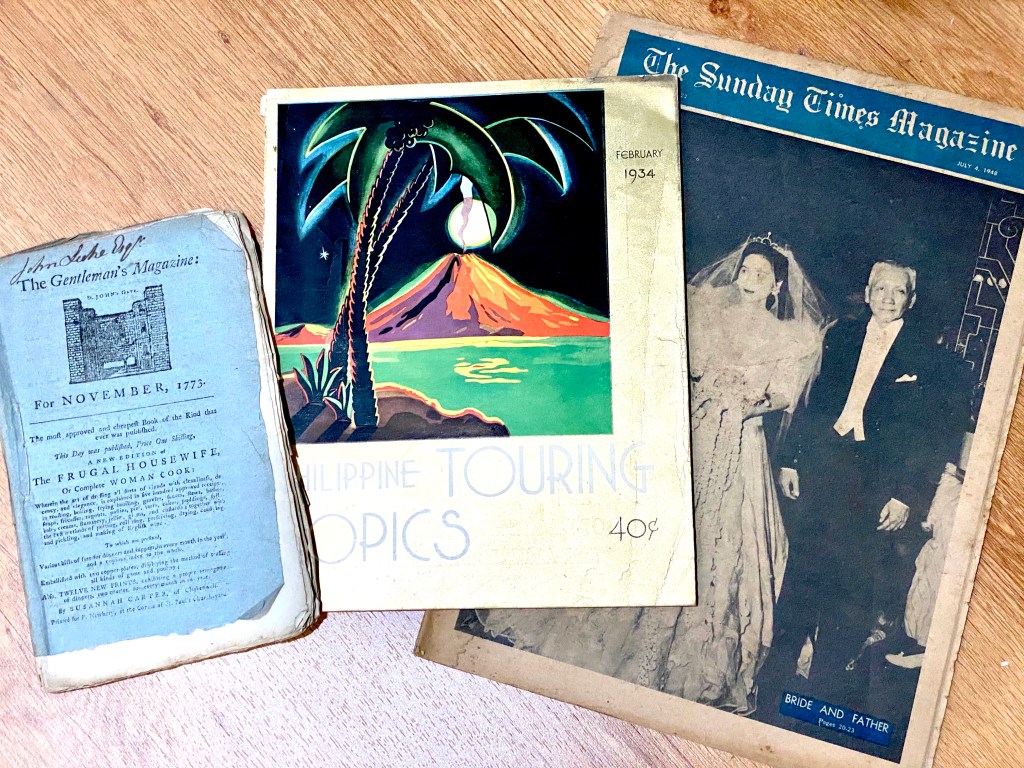
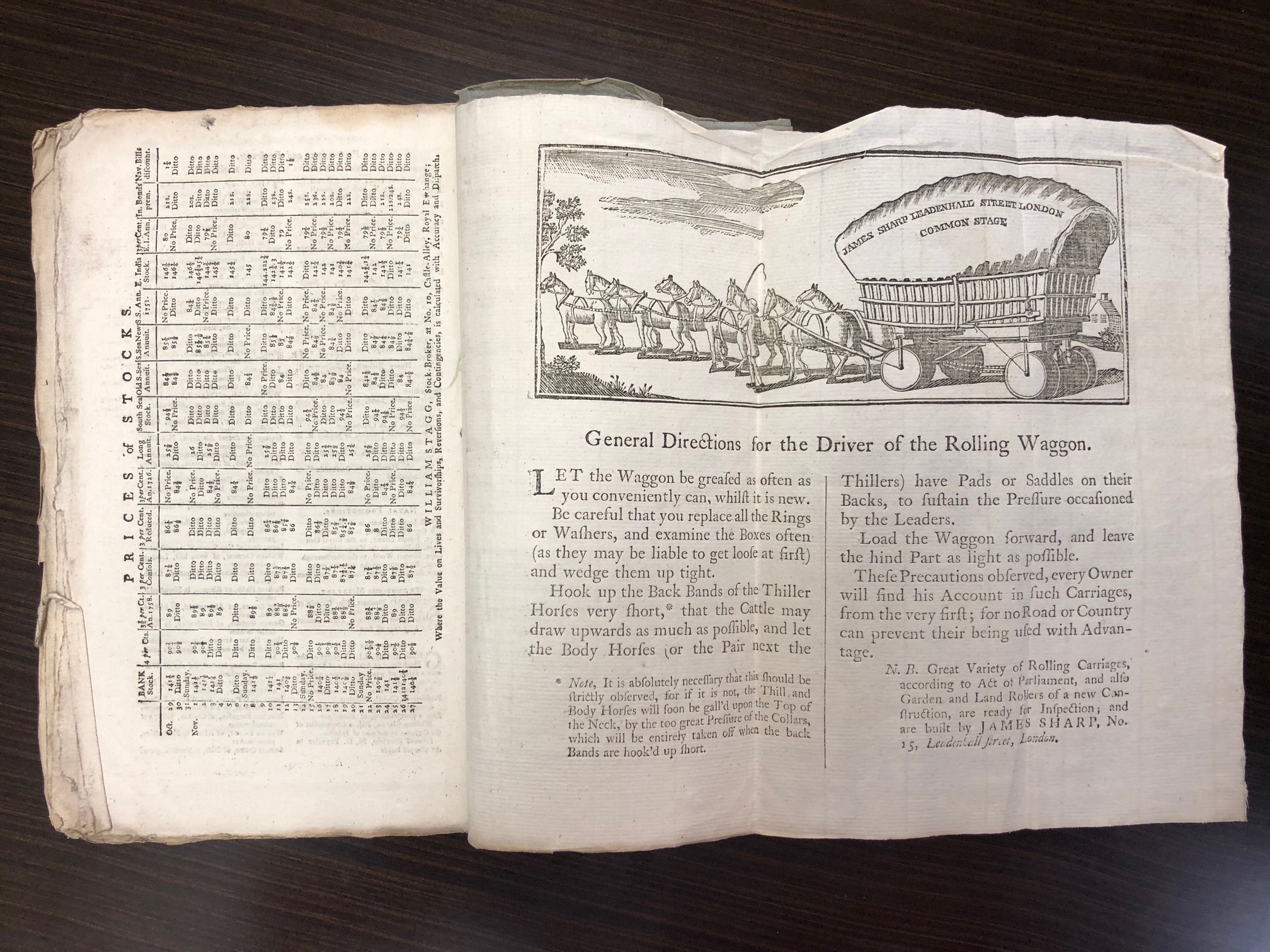
My interest in magazines became a bit more professional in graduate school when my professor in Bibliography, an old-school gentleman named Dr. Kuist, told us that he had done his dissertation on The Gentleman’s Magazine, said to be the first publication to call itself a “magazine” (from the French for “storehouse”) in 1731. Despite its title, it was no girlie mag, and contained a gamut of articles of interest to everyone (a copy I have from November 1773 features an ad for “The Frugal Housewife, or Complete Woman Cook” and articles on “Arguments in Favour of Rolling-Carriages” and “Description of a Machine for Making Experiments on Air”).

Many years ago, sometime in the early 1990s, when my passion for all things vintage began to be awakened, I spotted an ad in the Classifieds of a newspaper offering a stash of prewar magazines for a reasonable sum, and I drove off in my VW Beetle to a corner of San Juan to retrieve them—three or four milk-can boxes of them, all yellowed and crumbling—from a family that would have thrown them away otherwise. They were mainly copies of the Sunday Tribune Magazine from the 1930s, and some copies of the Sunday Times Magazine from a bit later. 

I continued to add to what had become a de facto collection—copies of the prewar Philippine Magazine and Philippine Touring Topics, among others, as well as issues of Tagalog periodicals like Lipang Kalabaw and even a 1911 issue of La Cultura Filipina. I used to put copies of these on my coffee table when I had an office in UP, to surprise and amuse my visitors with—sorry, folks, don’t have the November issue of the Tatler yet, but here’s a travel mag from 1934.

Make that February 1934, when Philippine Touring Topics contained—like most good magazines of the time—a combination of substantial articles, classy advertisements, and a gorgeous Art-Deco cover. Featured were articles on Igorot folklore, Mindanao fashions, Philippine hardwoods, the gypsies of the Sulu Sea, Philippine tobacco, a voyage from Manila to Bali, and celebrity travelers. (As usual, it was the ads I found most fascinating—for the American President Lines, the 1934 Studebaker, and Alhambra cigars.)

My greatest reward in flipping through these yellowed pages is discovering things I never knew about—things not too remote to be ancient history. In my July 4, 1948 issue of the Sunday Times Magazine, for example, is an article on the winners of that year’s Art Association of the Philippines painting competition. The top prize of P1,000 went to the “basketball-crazy” Carlos Francisco (who, says the anonymously catty commentator, is also “an amateur, not-so-good photographer, avid for picnic photos”); P750 for second prize went to Demetrio Diego; P500 for third prize went to Vicente Manansala “by a nose” over the P250 fourth prize to Cesar Legaspi; two honorable mentions—good enough for artists’ materials—went to the stragglers Diosdado Lorenzo and H. R. Ocampo. Elsewhere in the issue is an article on the all-but-forgotten winner of a 1946 contest for the Philippine Independence Hymn, won by a composition of Restie Umali. On the cover is a radiant Rosie Osmeña, being walked down the aisle by her dad the former President, with an accompanying spread on her wedding trousseau.

What’s not to like? When the Internet goes down—and someday it just might—these magazines with their pictures might just be our best chronicle of life and of the Philippines BC (Before Covid).

Penman No. 307: Minding the Magazine (2)

TwoMags.jpg

Penman for Monday, June 18, 2018


LAST WEEK, I wrote about acquiring copies of English magazines from the 1770s so my students in English and American literature could see what people in those days actually read, and what “entertainment” may have meant to them. I noted how magazines are arguably better chroniclers of everyday social life than books, especially since they also came to be profusely illustrated, and may even have sold copies more on the strength of their illustrations than their text.

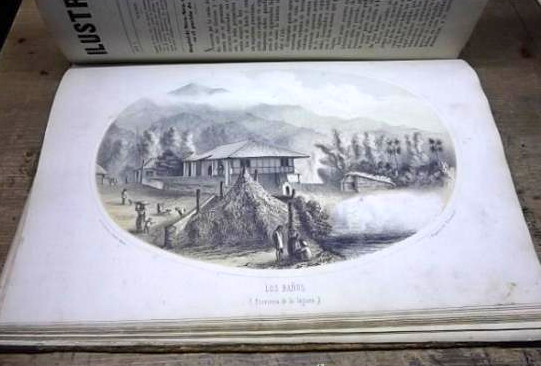
This was certainly true for Ilustracion Filipina, an illustrated magazine that came out twice a month between March 1859 and December 1860—a pitifully short life-span for such a glorious publication. Not to be confused with the similarly titled La Ilustracion Filipina, published between 1891 and 1905, Ilustracion Filipina featured exquisite lithographs depicting scenes and aspects of Filipino life, produced by such renowned artists as Baltasar Giraudier and C. W. Andrews. I have yet to be so fortunate as to find even one copy of this magazine, which was bought by subscription and lasted for no more than 44 issues. (An 1859 compilation with 14 lithographs by Andrews sold in Spain in 2013 for 1,400 euros.)
LosBanosIlustracion.png

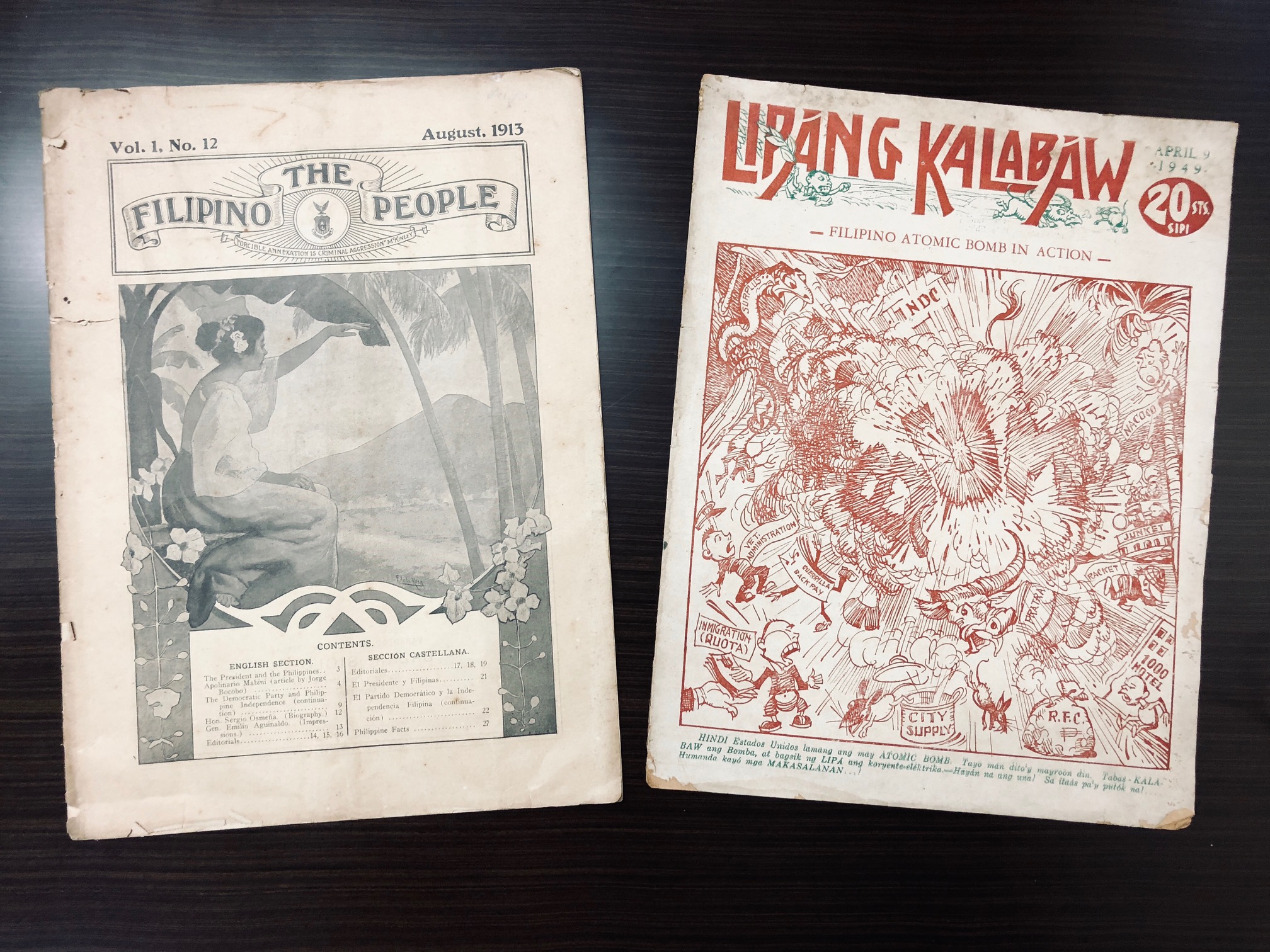
What I did come across in my near-daily trawlings of eBay a few weeks ago were issues of The Filipino People (Vol. 1, No. 12) and Lipang Kalabaw (April 9, 1949). In all these years of looking at hundreds of publications, I had not seen these two magazines.

When I got my hands on them, the older magazine proved particularly interesting, because it was published and edited in Washington, DC by none other than Resident Commissioner Manuel L. Quezon (who would have been about 35 then), “as an official medium for expressing the views of the people whose name it bears.” The magazine is “devoted solely to… the fair and truthful exposition of the relations between the Philippines and the United States, with a view to hastening the ultimate establishment of Philippine independence upon a self-governing republican basis.” Tellingly, its masthead contains a quotation from (of all people) McKinley: “Forcible annexation is criminal aggression.”

As a political magazine, it’s full of polemical articles, not very interesting today to anyone but historians, and brief biographical profiles of Apolinario Mabini, Sergio Osmeña, Emilio Aguinaldo (whose doorkeeper informs the American interviewer “If the American gentleman would be pleased to wait but a moment he would be joined by the master of the house”). It contains a Spanish section, basically a translation of the English pages. While I was hoping for a poem or a short story, the only touches of art in the magazine were a photograph of a majestically clean San Sebastian Church, and the cover (sadly only in black and white) by Fabian de la Rosa.

Lipang Kalabaw, as it turns out (and many thanks to Crispin Ponce for the source material), went through three incarnations—first as a weekly owned edited by Lope K. Santos between 1907 and 1909, with caricatures drawn by Jorge Pineda. This first version struck hard at its political targets, which struck back even harder, forcing the magazine to shut down. Santos revived it in 1922 under banner of Bagong Lipang Kalabaw, promising to be gentler in its tone—but it zeroed in on Governor-General Leonard Wood, and also closed shop after two years following a libel suit. Its third, last, and supposedly most tepid version came out in 1947. (The “lipa” refers to a big-leafed tree.)

My 1949 issue curiously has few real bylines and no editorial board, just pseudonyms like “Binatang Balo” and “Igueng Bel-Bel”—probably the smart thing to do if you were skewering President Quirino and the Congress, with jibes like “Paligsahan sa Pagnanakaw: Ngayon, sa ating Kongreso, and mga usapan ay hindi na ukol sa ‘kung sino ang magnanakaw at sino ang hindi,’ kung di ay ‘sino sa ating lahat ang nakapagnakaw ng lalong marami.’ Samakatwid, lumalalabas na ‘todos na parejo, camaron y cangrejo.’”

Perhaps this magazine deserves a fourth incarnation?

If it’s not too late to dream, one of the things I’d like to do in my impending retirement is to create and edit a magazine—even just an e-zine—I’ll call The Filipinist, devoted to antiquarian books, periodicals, paintings, sculpture, photographs, prints, maps, coins, stamps, and historical memorabilia—anything and everything having to do with the Filipino past. It won’t be for scholars (we have enough of those) but for enthusiasts, although scholars would of course be welcome to contribute their insights. I think I should be able to assemble a pretty credible team of editors and writers among like-minded friends and fellow collectors, and in the very least, The Filipinist should fill a gap in media overloaded with articles about tomorrow, technology, and the world out there. And just in case these musings become more than an idle wish, I’ve set aside the domain name for filipinist.ph, as my small personal investment in the future of the Pinoy magazine.

Penman No. 306: Minding the Magazine (1)

IMG_6689

Penman for Monday, June 11, 2018


IF YOU collect old books like I do, the chances are that you’ll be picking up more than books as you scour the Web, garage sales, and library throwaways for that elusive first edition or that childhood textbook. I’m referring, of course, to other printed matter such as magazines journals, posters, and maps, but also to manuscripts, letters, and such other ephemera as restaurant receipts, plane tickets, and school report cards (yes, I collect those, too).

Books—especially good ones—tend to exude a certain timelessness about them, maybe because they’re meant to be read beyond the present. They like to lay down general (and, authors like to think, immutable) principles of life, of art and science, of philosophy. The characters of fiction may live in the moment—whether it be in Charles Dickens’ London or William Gibson’s matrix—but the context, implicitly, is forever.

Magazines, on the other hand, are typically meant for no higher purpose than to capture the instant—this week, this month—in all its topical and pictorial variety. When I pick them up, it’s not because they’re going to reveal to me some eternal verity (although that might sometimes happen), but because they’ll show me exactly what people were wearing on June 11, 1898 or what the price of a Parker 51 was in August 1947. Newspapers, of course, can bring everything down almost literally to the very hours and minutes of what eventually becomes history, but magazines have just a bit more of a leisurely sweep, making them ideal for doctors’ and dentists’ waiting rooms, beauty parlors, and barber shops.

IMG_6723

It was in a barber shop in Pasig, back in the mid-‘60s, that I first got to read about people like Jose Garcia Villa in The Philippines Free Press while getting my head shaved for PMT. I didn’t understand his poetry then (and maybe I still don’t), but I was mighty impressed by what I remember him saying, in so many words: “There’s only one literary genius born every thousand years, and I’m sorry for everyone else, but for these thousand years, that’s me.”

The Free Pressand its literary pages became staple reading for me, but I also devoured the Graphic, the Sunday Times Magazine, Life, TIME, Newsweek, National Geographic, and whatever I could get my hands on at the public library (including, away from prying eyes, women’s magazines—and a bit later on in life, magazines with, uhm, women).

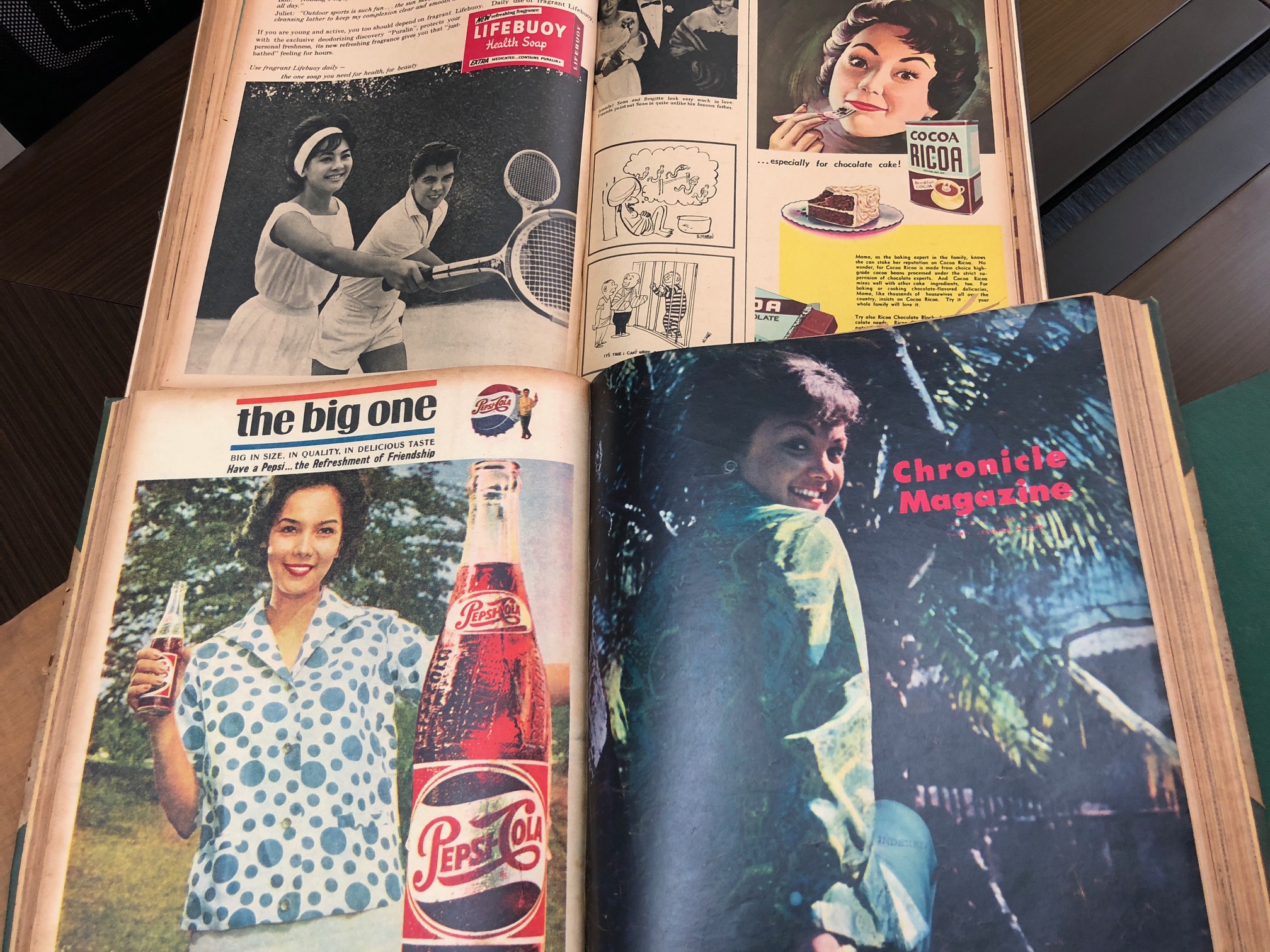
These memories came swarming back to me a couple of weeks ago as I received several bound collections of magazines from the 1960s—the Mirror Magazine, the Manila Chronicle Magazine, and Action Now, among others. They’ll join a large pile of Sunday Tribune Magazine issues from the late 1930s and 1940s that I’d acquired more than 20 years ago from a seller who was disposing boxes of them. Sadly, most of them have crumbled (this was before I became more serious about collecting and more organized). While I’ve gently turned away people offering busloads of National Geographic and LIFE (just as I routinely decline offers of family Bibles, law books, and encyclopedias), I’ve sought out samples of historically important or just plain interesting magazines to round out my collection.

One of the reasons I began my antiquarian collection was to be able to show my literature students—in real life, and not just in some Googled picture—what people were reading way back when. For example, when we discuss American literature during the time of the Benjamin Franklin, what would the literate Bostonian or Philadelphian have held in his or her hands?

IMG_6691

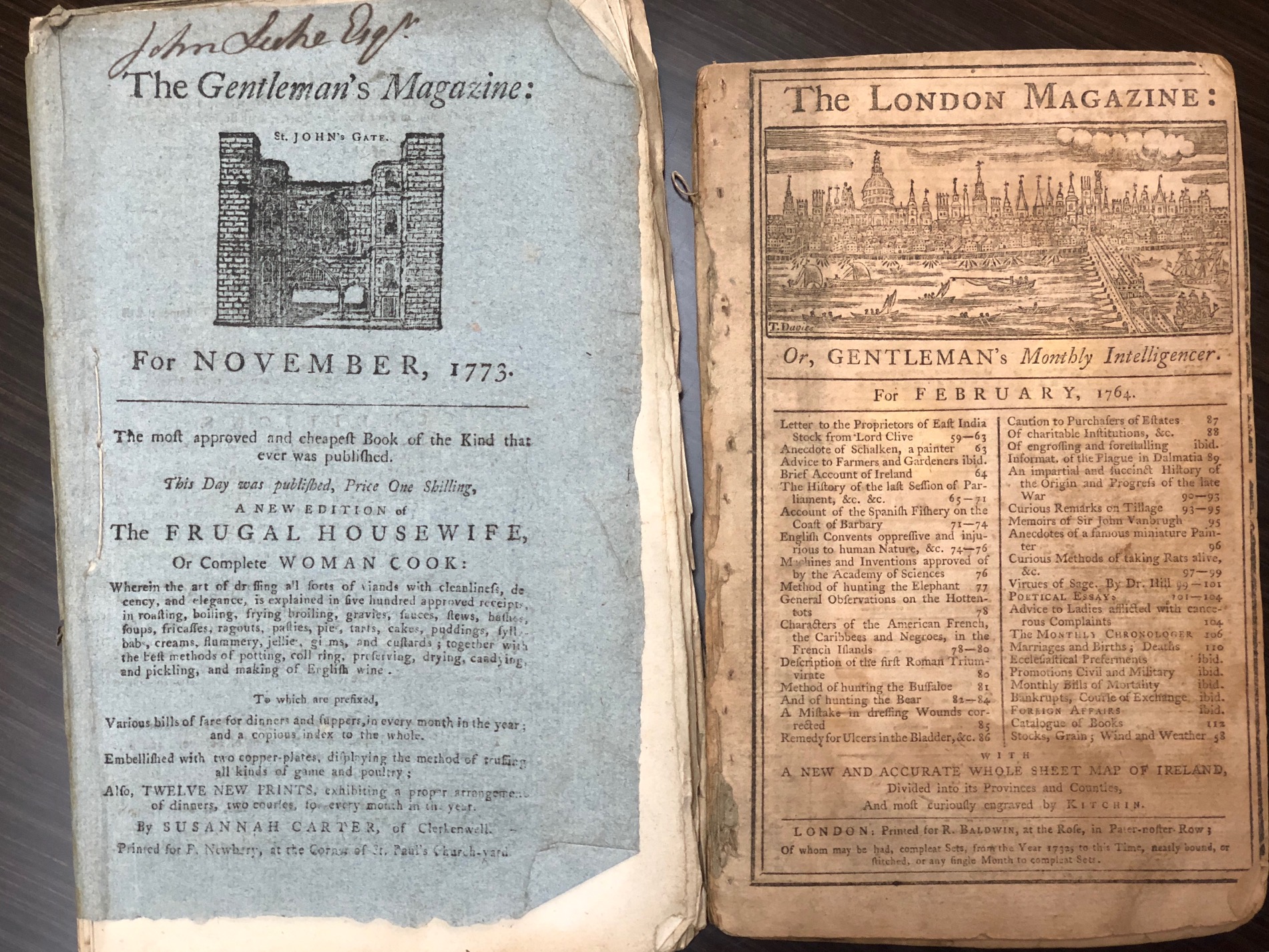
As it happens, I have the answer to that, thanks to a bit of instruction from my professor in Bibliography back in Wisconsin, Dr. James Kuist, whose type of final exam was to ask us (in those pre-Internet, pre-Google days), “If the year is 1662, and I’m a member of the Royal Society, what books would I likely have on my shelves?” Jim did his doctoral dissertation on the history of one particular publication—indeed, the very first one of its kind to call itself a magazine (derived from the French for “storehouse”)—The Gentleman’s Magazine, founded by a cobbler’s son named Edward Cave in January 1731. It became immensely popular, made Cave (also known by his pen name Sylvanus Urban) a rich man, and was published uninterrupted until 1922.

I pretty much forgot about Dr. Kuist and The Gentleman’s Magazine until recently, when I realized that there were actual copies (not reproductions) available on eBay. The issue I secured comes from November 1773, and is a special issue devoted to “The FRUGAL HOUSEWIFE, Or Complete WOMAN COOK…. including various bills of fare for dinners and suppers, in every month in the year, and a copious index to the whole.” (And before you think otherwise, The Gentleman’s Magazine did not have a centerfold or anything of the sort; it would have been, well, ungentlemanly.)

I was searching for issues ca. 1763-64, which should have had reports on the British occupation of Manila, and I do have two issues of The London Magazine, from September 1763 and February 1764. But while they have gruesome stories about Englishmen being captured and burnt by the Indians (“The blood which flowed from him almost extinguished the fire”), and other reports from the empire, they say nothing about the Philippines.

Next week, we’ll look at two Filipino magazines from August 1913 and April 1949.


Penman No. 187: Journalists and Fictionists

journalist-bw-laptop-o-e1282144424870.jpg

Penman for Monday, February 15, 2016


MY GRADUATE fiction writing workshop—CW 211—opened last month, and I was glad to see that all my 12 or so students were taking fiction with me for the first time. I don’t mind when students study with me over two or three semesters—especially the best ones you want to see through to their first book—but a fresh crop of faces is always a relief of sorts, because you can be assured that everything you say in class will be new to them.

As a first-day practice, I ask the class members to give a brief self-introduction, as a writing workshop is almost like a support group, and requires a certain degree of intimacy, so people should know each other right from the beginning. The self-intros also give me a sense of my students’ backgrounds, from which I might be able to get an idea—albeit a very tentative and imperfect one—of the kind of fiction I can expect from them.

This semester, I have several students coming from Journalism, and I told them, with a semi-serious laugh which they returned, that it was usually the journalists I had the most trouble with in Fiction class. Now why did I say that?

Let me explain, first of all, that I was a journalist myself, and still see myself as a part-time member of the press. Indeed when, in high school, I began firming up my ambition to become a writer, it wasn’t to become a novelist or a short story writer—it was to become a journalist, in the belief that there was nothing nobler and more exciting than to get the news and be the first to tell the world about it. I achieved that ambition—or at least the start of it—when I was hired as a general-assignments reporter by the Philippines Herald and later as a suburban correspondent by Taliba in 1972, as an 18-year-old dropout, but martial law put an abrupt end to that. It wouldn’t be until 20 years later, in 1993, when I was back in a newsroom, though no longer as a reporter but as an editorial writer for TODAY, and in 2001 as a copyeditor for the investigative magazine Newsbreak, about the same time that I began writing this Lifestyle column for the STAR.

That’s not much of a career as lifelong journalists go, but it’s been enough to leave me with a healthy respect for the work that journalists do, especially in comparison to that of the fictionist, which I became as well. Both are difficult, and require their own kind of discipline; neither is particularly remunerative, although journalism, if undertaken as a regular job, will at least provide a steady income, while fiction must remain a strictly part-time avocation for 99% of its practitioners in this country.

When I teach a class in Creative Writing, I always tell my CW majors that they should never feel superior to journalists, because they don’t know what it’s like to have to find, write, and turn in a story every afternoon of every working day. Creative writing students like to bitch that they don’t have enough material, enough inspiration, and enough time to finish their magnum opus (which at the end of all that whining might turn out to be profoundly underwhelming). Journalists can’t even complain about these things, because they simply don’t factor into the making and delivery of a news story. Material? That’s for you to find or create. Time? A few hours. Inspiration? Your paycheck. I’ve commiserated beerside with journalist-friends over the travails they had to suffer to get a particular story—but only after the story was sent in, and not before.

So with all this admiration and respect for journalists and their job, why do I say they give me problems as fictionists? I’m generalizing here, of course, but the answer isn’t too far from from what, ironically, is a journalist’s chief virtue: they can’t let go of the facts. They find it very difficult to switch to a make-believe mode, and even when they do, their stories are thinly-disguised newsfeatures wanting in compelling, internally driven drama. When you point out a problem in the narrative—say an unlikely turn in the plot—the journalist’s defense will invariably be, “Well, that’s what really happened!”

Unfortunately, in fiction, “It really happened” just doesn’t cut it. What’s real in fiction is what’s on the page. Real life might provide the material and the inspiration for the fictional story, but that story has to acquire a life of its own, regardless of its origins in fact. This is why I tell my students that everything they submit to the workshop is fair game for criticism, and that they can’t and shouldn’t take it personally when someone comments that “I think the mother in this story is very narrow-minded and selfish,” even if that mother was based on one’s beloved mom—it’s “the mother on the page,” as I call that character, that we’re following, believing, and either rooting for or disliking.

And the first day of fiction class is also when I trot out one of my favorite quotes, paraphrased from Mark Twain: “Of course fact is stranger than fiction; fiction, after all, has to make sense.” Just think about it: we accept incredible reports in the news that we wouldn’t buy for a minute in a short story, even in a fantasy, because we expect fiction to adhere to an internal dramatic logic, whether it’s set in a garage or in a galaxy far, far away. The factual world has no such givens; things just happen, often for no apparent reason. That’s why fiction had to be invented: to make sense of life in the raw and all of its inconsistencies, paradoxes, and mysteries. (The opinion writer aims to do that as well, but on the plane of the abstract, using words like “justice” and “freedom”, which you normally won’t find in a well-crafted story; they’d be implied.)

If it’s any comfort to the fact-loving journalist, there’s another kind of writer whom I’ve discovered to have equal difficulty transitioning to fiction: the poet, for whom every word and turn of phrase is painfully precious, and a ten-page story might as well be an epic. But that’s fodder for another time.


[Image from thenextweb.com]

Penman No. 162: To Be a Journalist (2)

Byline

Penman for Monday, August 17, 2015

LAST WEEK’S look back at my early days as a journalist brought back a flood of memories that hadn’t crossed my mind in ages, so I’ll beg my reader’s indulgence with this extended reminiscence of what it was like to be a young newspaper reporter just before martial law was declared in September 1972.

Come to think of it, that first stint in journalism didn’t last too long, from April to September of that fateful year. (I keep saying “first” because I would return to newspapering more than 20 years later in 1993, as an editorial writer and then Lifestyle columnist for the late, lamented newspaper TODAY.) To recap, I was 18, and my bosses at the Philippines Herald had taken a chance on a college dropout who barely knew a thing about professional newspapering but who seemed to be able to string sentences together decently enough—and fast.

Man, was I fast—I was so eager to impress my editors that I jumped at assignments the way a dog goes after a ball, and when my editors found out about the new boy in the room, they assigned me to fill up half of Page 5—the features page—every day. The topic was up to me. That sounded like the most wonderful thing in the world—imagine, my own corner of the newspaper, all mine to fill up!—for about three days. I took stories out of history books and turned them into features; I wrote about the latest crazes like fun houses and pool halls; and when, inevitably, I ran out of ideas, I took a bus out to Tagaytay, got off, and looked around for anything that I could weave a feature story from (I saw a drug rehab center in the distance and got a story out of that; I did the same thing in Muntinlupa another day and interviewed a Death Row convict).

Thankfully my editors pulled me out of Page 5 and designated me a general assignments reporter—meaning, I would report for work every morning and take on whatever odd assignment they tossed me. But before I could do that, and to give me some training, they had me spend a few weeks each on a specific beat—police, sports, and City Hall. On each beat, a senior Herald reporter took me under his wing, and while they may not have been too happy to babysit me, I soaked up their streetsmarts and tried not to be a nuisance (not always successfully—we were covering a MICAA basketball game when Jun Pantig saw that I was cheering for one team at courtside. “Stop cheering!” he shushed me. “You’re a reporter, you shouldn’t be taking sides!”)

Of all the beats I was assigned to, the most exciting and instructive was police. I took the graveyard shift at the old Manila Police Department headquarters and from there covered mayhem at its worst—an 18-year-old American girl who shot herself in the mouth at the Dutch Inn; a nighttime fire that razed a hospital in Dapitan (I can still recall the sickening thud of falling patients who jumped off the roof in desperation; my specific task, early that morning, was to count all the bodies in the morgues); demonstrations at the US Embassy where I could see the police preparing for an assault on the rallyists, many of whom happened to be my friends (prompting me, again, to break journalistic protocol by picking up the injured in our service jeep and bringing them to the hospital).

I grew inured to the sight and smell of blood, and I can say, today, that I had no better preparation for the kind of realist fiction that I would come to write than those weeks on the police beat, confronting death by the day (which didn’t make me feel any braver, but rather more aware and respectful of the finitude of life).

It was all very exhilarating, even in the most difficult and trying of moments; sometimes the toughest tests took place in the newsroom itself—once, for example, I was driven close to tears by having to rewrite a story half a dozen times to please an editor who, I now realize, was teaching me a valuable lesson in verbal economy.

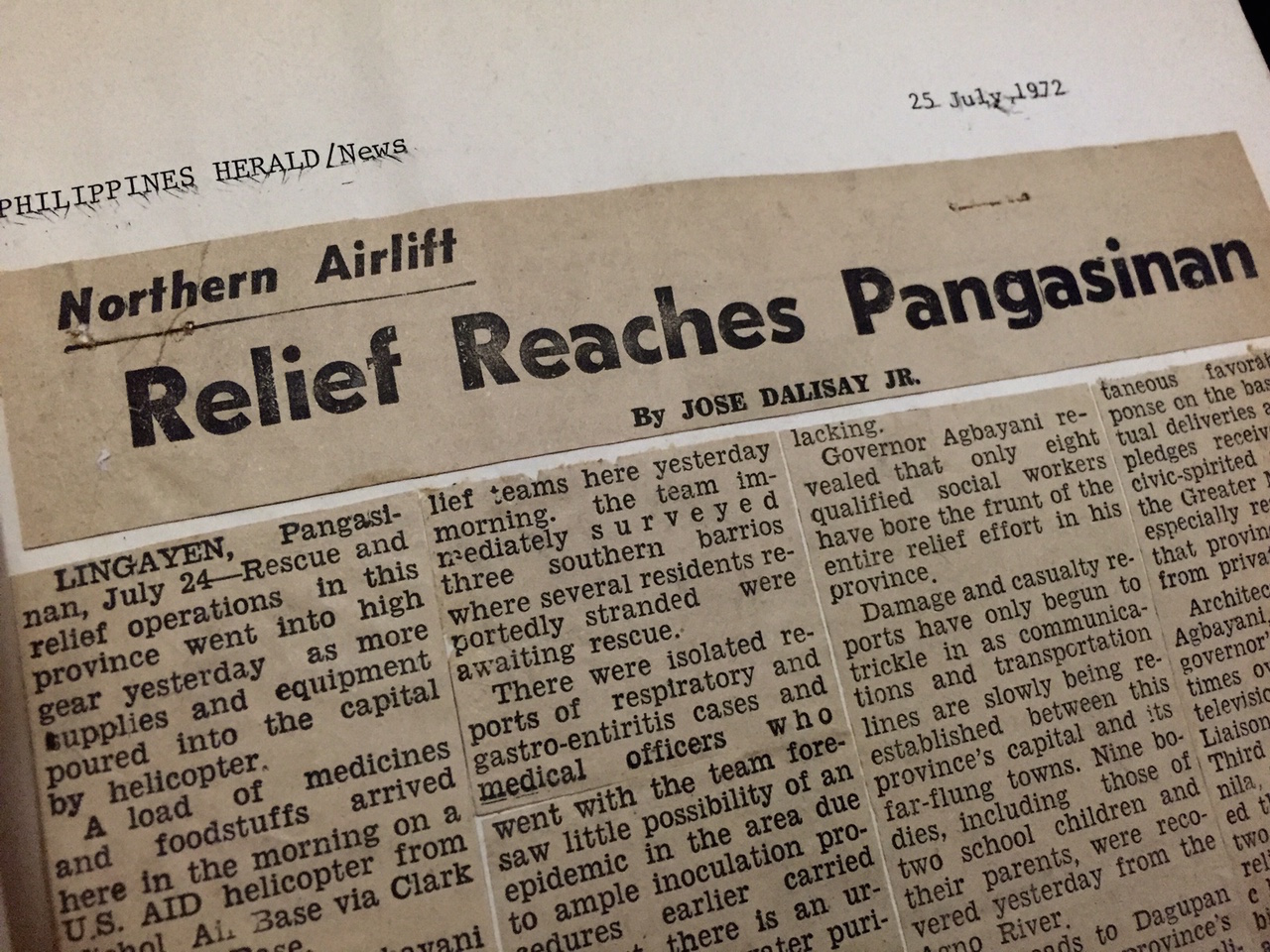
Coming off the beats as a general assignments reporter, I looked forward to and did get some assignments that no other teenager would have experienced. At the onset of the biblically catastrophic July-August floods of 1972, I was put on board an amphibious ship that sailed in the night from Manila to Lingayen Gulf, and I covered rescue operations in Pangasinan, riding rubber rafts and flying out in a US Army helicopter that dropped us off at Clark Air Base, then still busy with the Vietnam War. Also at about that time, I volunteered to go to Isabela to cover the reported landing of a shipload of arms by the CPP-NPA, convinced (wrongly—it turned out to be the MV Karagatan episode) that it was a military hoax that I could heroically unmask; sensibly, my bosses told me that I was too young—they didn’t say too foolish—to undertake the mission. Instead, I stayed in Manila, and interviewed Mrs. Marcos in Malacañang about her relief efforts in front of a mountain of Nutribuns.

Like I said last week, I soon resigned in solidarity with a union strike at the Herald, and was half-surprised when management accepted my resignation. I finagled my way to a spot at Taliba (in the Manila Times organization that it had been my dream to join one way or the other) as suburban correspondent, and it was in that capacity—albeit outside my assigned zone in Makati—that I filed, or at least called in, the last story of my brief reportorial career. It was the night of September 22, 1972, and I was on the UP campus, not as a journalist but as an off-hours activist hanging out with comrades and fraternity brothers to denounce the imminence of martial law.

I should’ve sensed something when I saw my brod Bobby Crisol, son of the Defense Undersecretary, suddenly being spirited away by his dad’s security men. Shortly after, we heard gunshots in the distance. I ran for the nearest phone and called the night desk: “I have a scoop!” I said breathlessly. “I can hear gunfire—UP is under attack!” (It later turned out that the Iglesia ni Cristo radio station was being taken over by the military.) What should have been the biggest story of my young life fizzled out with a laconic reply on the other end of the line. “So are we,” said the fellow I spoke to. “There are soldiers in the office. It’s martial law!”

Within four months, I would be in prison, still aged 18. Another year later, I would get married, on my 20th birthday. Life seemed terribly short, and I was in an awful hurry, hardly imagining I would last on to seniorhood.

Today, I tell my Creative Writing majors that they may think of themselves as God’s gift to literature, but until they’ve spent a week or two as a reporter, sniffing out a story, they should shut up and be happy they can write odes to the moonlight without an editor screaming at them for a tighter rewrite.