Qwertyman No. 95: Till Divorce Do Us Part

Qwertyman for Monday, May 27, 2024

IS THERE anything about divorce—a bill legalizing which will soon be taken up in the Senate—that hasn’t already been said, or that most people don’t know? This was on my mind last week as I walked to school, wondering what my class of 20-year-old seniors thought about the issue. As young people likely to get married within the next five to ten years, they’re the ones who stand to be most affected by the outcome of the current drive to get the bill passed.

So I brought it up—we’re taking up argumentative or opinion writing, and how to handle contentious topics, and divorce was right up that alley. I didn’t tell them which side I stood on, although, knowing me to be a flaming liberal, they could have guessed that. I let them speak. Given that this was the University of the Philippines, and even factoring in the possibility that students tend to dovetail along with what they think their teachers believe, it was no big surprise that everyone who spoke up in that room did so in favor of legalizing divorce; if there was anyone in opposition, which I rather doubt, he or she chose to remain silent. 

Clearly, a majority favored the move, for the very reasons cited by the bill’s supporters. One student had a very personal take on the matter: “As the child of parents whose marriage was annulled,” she said, “I can remember all the things they had to do to get that annulment. The poor can’t afford it.” And economics aside, what did divorce offer that annulment didn’t? “The freedom to remarry!” everyone chimed in. (Correction: annulment allows for remarriage, but legal separation doesn’t.)

But—I said, just to probe a bit further—what about the argument that divorce will contribute to the break-up of marriages? “Those marriages are already broken,” said a student. 

But the Vatican opposes divorce, doesn’t it? (It’s the only other country in the world, aside from the Philippines, which doesn’t recognize divorce.) “Priests don’t get married. What do they know about marriage?”

At this point, I found it useful to introduce a fact that was news to everyone in the room. “Did you know that we used to have divorce in the Philippines?” No! Really? “Yes, a divorce law was enacted under the Americans in 1917. It was even expanded under the Japanese Occupation, and continued after the war until the Civil Code of 1950 abolished absolute divorce and replaced it with legal separation. Go on, look it up. I don’t know how many Filipinos actually availed themselves of divorce when it was legal—it would be interesting to see the statistics—but it’s not like we never had the option. It was there, but Church-supported politicians took it back.” Did the Filipino family collapse back then because of the availability of divorce? Show me the proof.

If this exchange sends chills up the spine of ultraconservatives who still think of UP as a haven of rebels, atheists, and devil worshippers, I’m happy to tell them that religion is alive and well in UP—the services in both Catholic and Protestant chapels are usually full. But so are reason and critical thinking, which to me remain the best antidotes to doctrinaire dogmatism, whether from the left or from the right. 

The Catholic Church’s steadfast resistance to legalizing divorce and my students’ apparent willingness to push back against that bulwark reminded me of a critical period back in the 1950s when UP was torn by a struggle between religious forces allied with the popular Jesuit Fr. John Delaney such as the UP Student Catholic Action and those who, like Philosophy Prof. Ricardo Pascual, believed in maintaining UP’s non-sectarian character. In the end, secularism prevailed, but at the price of Pascual and other liberal-minded professors being denounced as “communists” before the House Committee on Anti-Filipino Activities.

I’d like to think that a lot has changed since then, although sometimes things seem pretty much the same, given how the Red-tagging continues despite the sharply diminished power and influence of the CPP-NPA. One thing that has changed, at least in the public’s perception, is the presumption of moral superiority once claimed by a Church now embroiled in sexual and financial scandal. Its invocations of “divine law” or “natural law” in matters relating to homosexuality, contraception, and divorce sound almost medieval in a world that has largely moved in the opposite direction—something the conservative faithful will see as all the more reason to hold on inflexibly to their core convictions.

We can’t argue with those convictions, to which everyone has a right, but conversely, our people as secular citizens shouldn’t be subject to any religion’s doctrines when it comes to personal decisions that are no prelate’s or imam’s business. (And just for the record, I have no plans of divorcing my adorable wife, with whom I just celebrated 50 years of a typically mercurial but happily enduring marriage.)

I’ve written previously about my disaffection with organized religion, so that may provide some context; I do believe in God and in the value of faith and prayer in our lives, and in the right of others to practice their religion—for as long as they don’t insist that theirs is the only right way forward, and impose their way of life on me. If you want to stay married in mutual and lifelong misery because you believe it’s the right thing to do, fine; but don’t expect others to do the same, because their lives aren’t yours to mess up. Happiness is hard enough to find in this dystopic world we live in; let’s not make it harder for others looking for another chance at love and peace. 

I doubt that they’ll change the wedding vows—“For better or for worse, till death do us part” is always worth two people’s best shot, until worse comes to worst. But divorce should be an option better left to the individual’s God-given intelligence, conscience, and emotional honesty to sort out than to institutions more concerned with abstractions than reality. It’s ultimately a reminder of how human we are—people make mistakes, which can’t be corrected by prolonging them; we learn, we do better, and we live on. I think that’s what a just and kind Almighty would wish for his creations.

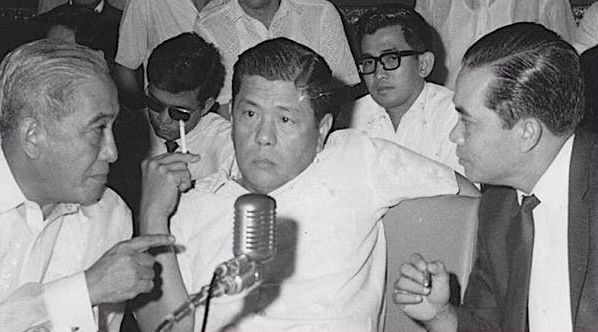
(Image from montanoflamiano.com)

Qwertyman No. 56: The Rule of Rules

Qwertyman for Monday, August 28, 2023

HAVE A problem? No worries—the Philippine government will make a rule to fix it (maybe). Don’t have a problem? No matter—the Philippine government will make a rule to give you one.

Some days it feels like all that government exists for is to make new rules, because, well, it’s the government, and so it has to look and sound like one. Never mind what the preamble to our Constitution states, imploring the aid of Almighty God to “establish a Government that shall embody our ideals and aspirations, promote the common good, conserve and develop our patrimony, and secure to ourselves and our posterity, the blessings of independence and democracy under the rule of law and a regime of truth, justice, freedom, love, equality, and peace.” Forget the rule of law and all that jazz; all hail the rule of rules.

Two pronouncements by our hallowed poohbahs caught our attention in recent weeks. 

The first was an order from the Vice President and Secretary of Education, DepEd Order No. 21,  directing in its implementing guidelines that all public schools must ensure that “school grounds, classrooms and all their walls and other school facilities are clean and free from unnecessary artwork, decorations, tarpaulins, and posters at all times…. Classroom walls shall remain bare and devoid of posters, decorations, or other posted materials. Classrooms should not be used to stockpile materials and should be clear of other unused items or items for disposal.”

Why? Because these were distractions to learning, explained the good secretary, presumably including in her edict the pictures of past presidents, national heroes, posters of Philippine birds and plants, TV-movie idols, Mama Mary, cellphone and softdrink advertisements, half-naked women, CPP-NPA recruitment posters, the periodic table of elements, weapons of Moroland, and the winking Jesus. 

I actually found myself agreeing with the removal of some of these popular items of wall décor, especially the pictures of politicians, which doubtlessly produce anxiety and despair in those who might contemplate them seriously. The good presidents will make you ask, “Where did all that goodness go?” The bad ones will invite only dismay and even self-loathing: “How did these jokers even make it to Malacañang? So you can still be that kind of person and become President? What on earth were we thinking?” This leads to even more profound and troublesome questions about the nature and practice of democracy, which a poorly trained and underpaid sixth-grade teacher will be hard put to answer, undermining whatever little authority she still exerts over her students. (To her credit, Sec. Sara reportedly removed her own picture from a classroom she visited.)

But Rizal, Bonifacio, Mabini, Tandang Sora, and the usual pantheon of Philippine heroes decking our classroom walls? Will removing their visages encourage students to think more deeply about their Science or Math problems, or will young minds simply drift off to Roblox, Taylor Swift, and Spongebob Squarepants? Will making our classrooms look as bare as prisons (and even prisons have calendars and pinups) lead to a spike in student attentiveness and performance? What does it say of DepEd—with all the academic resources and intelligence funds at its disposal—that directives like this are issued apparently on a whim and without prior and proper study? Where was the attention to science and education that the secretary was aiming for?

The other new rule that sent us screaming to our group chats was the imposition of new guidelines for foreign travel by the Inter-Agency Council Against Trafficking, announced by the Department of Justice, supposedly to curb the incidence of human trafficking, which we all acknowledge t0 be a serious problem. But is this a serious solution?

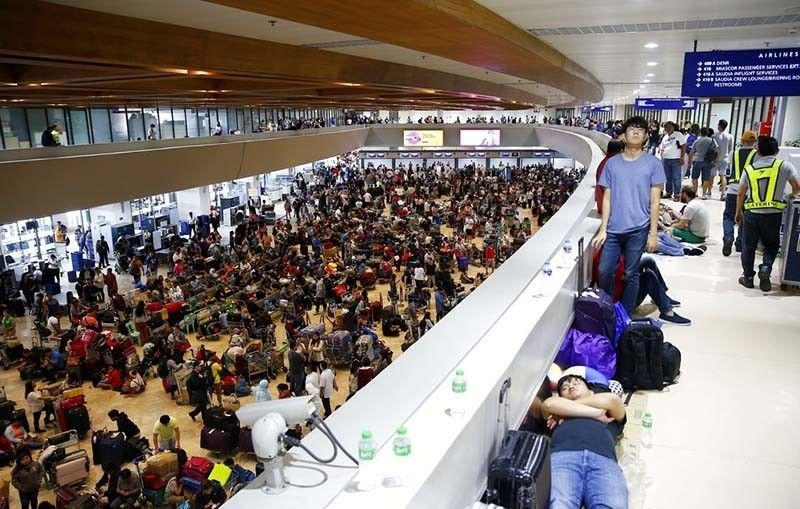
Under the new guidelines, Pinoys going abroad to see the sakura in Tokyo or to watch the New Year’s Eve ball drop in Manhattan won’t get past NAIA immigration without showing their flight and hotel bookings, proof of their financial capacity to afford their trip, and proof of employment. That’s a lot of paperwork to bring along, and if you’ve seen how long the queues can get at NAIA even without these papers in the way, you can imagine what they’re going to be like with each single document having to be scrutinized by an immigration officer. There’s an even longer list of additional requirements for people traveling under sponsorship and for OFWs—including a requirement for a child traveling with his or her parents to present a PSA-issued birth certificate, which was already a requirement for that child to have been issued a passport.

Exactly what this rigmarole adds to the reduction of trafficking is unclear to my muddled mind, because it seems to me that any good trafficker worth his or her illegal fees will be smart enough to produce the fake documents their wards will need to slip through airport security. As experience has shown, it isn’t even fake documentation but corruption and connivance that have greased the wheels of trafficking. 

Which reminds me, I received a letter some time ago from an expat Briton and a longtime Philippine resident named Thomas O’Donnell, complaining about such unnecessary requirements as the filing of annual reports by foreigners in this country. The Philippines has a reciprocity agreement with other countries such as the UK, Thomas says, but the UK doesn’t require Philippine residents there to do the same thing. So was it—like many of our other rules—just something to keep our bureaucrats occupied (or possibly, profitably occupied)? Where was the fun in the Philippines, Thomas lamented, and how was a fellow like him supposed to love it? 

Having lived here for 23 years, Thomas clearly has found other, countervailing reasons for staying on, but he has a point. Despite an anti-red tape law in the books, we still invent ways to complicate the simplest things. And answer me this: if the DepEd chief thinks that bare walls can lead to clearer thinking, shouldn’t we declutter our travel processes as well, so we can all sit in the departure lounge in peace with an hour to spare, waiting for our flight (that will likely be delayed, but that’s another story)?

Qwertyman No. 7: No Garage, No Car

Qwertyman for Monday, September 19, 2022

(Photo from philstar.com)

JHUN-JHUN COULD barely contain himself as he stepped into the house dangling a pair of shiny keys before him. His mother looked at him; his father saw the keys. Either way, his entrance spelled trouble. They saw him for just once or twice a month at most since he moved out to a rented studio in Taguig—to experience, he announced, independent living, now that he had reached the ripe old age of twenty-three. 

“Independence,” of course, had a tiny asterisk attached to it, which was the rent paid by his parents for the place, which he promised to assume as soon as he received his promotion to unit manager. That was three years ago. He had spent his bonuses on furnishing the pad with a La-Z-Boy, a 66-inch TV, bladeless fans, air purifiers, and such other man-cave must-haves as a revolving liquor dispenser and a vintage Star Wars poster. 

“To what do we owe this visit?” said his mom in her nervous, high-pitched voice. She was going to day “the pleasure of” but decided not to lie.

“Didn’t you hear it? Didn’t you hear me coming?” Jhun-Jhun said, still jingling his keys.

“I thought I heard the garbage truck arrive,” said his dad. “Yesterday it came too early and we missed it, and now it’s almost an hour late—”

“No, Dad—you mean you heard the honking? That was no garbage truck, that was me! I was trying to get your attention!”

“You’ve been doing that, son, since you were born. What honking? Did you ask your cab driver to honk so we’d go out and pay your fare?”

“Oh, no, no, no cab driver! That was me—in my car. I wanted to show you my new car! Look, Mom, Dad—it’s out there—right in front of our gate!”

More out of fear than anything, the parents rushed to the window, and saw a shiny new car in a migraine-inducing electric blue on the street. 

“Isn’t it lovely? It’s called the Riva Riviera, a 2.0-liter crossover with Bluetooth, USB, rear parking sensors, etc. And the best part of it is—you won’t believe this, Dad, Mom—I got it because, well, because your son is now a unit manager! Finally! You’ll be so proud!”

“You got a promotion—and they gave you a car? Why—congratulations, son, I’m so proud of you!” His mother sighed in relief, and he opened his arms wide to hug her.

“No kidding!” said the disbelieving dad.

“Thanks, Mom, thanks, Dad!” Then he stepped back a bit and added, “Well, they didn’t really give it to me—I mean, I earned it, I’m earning it, I’ll pay for it—over the next five years—”

“What, you bought a new car on an installment plan? Will your raise even cover the monthly payments?” His dad was turning red in the face, but his mom was turning white.

“It will! I mean—I expect another promotion in one, two years, and by the time the 60 months are over, who knows, I might even be an assistant VP!”

“But what do you need a new car for—or even an old one? You live three blocks away from your office in that expensive condo that your mother and I are paying for, which brings up the question, weren’t you supposed to pay for your place when you got a raise?”

“But, Dad—it’s not like I’m going to be in that studio forever—or that job—I mean, it’s a dynamic, disruptive world we’re living in, I could be assigned to Makati or Vertis North, who knows? Don’t worry, I’ll take care of everything when I become AVP. I’ll get electric wheelchairs for both of you, take you out to an all-you-can-eat lunch on weekends, bring you to the seawall so we can watch the sunset together—”

“I don’t want to watch the sunset, with you or with—with Juan Ponce Enrile! I’m only 56, and I’m still working like hell because instead of you contributing to the family budget, we have to contribute to yours!”

“Dad, stop it! You know I get seizures when you scream at me like that. The last time this happened, I was in the hospital for ten days—”

His mother covered her face with her hands, like she was about to cry, and Jhun-Jhun held her to console her. “Don’t cry, Mom! I’ll be all right—”

“I hope you will be, son, because we had to sell my bridal jewelry to pay for that hospital stay!”

“Have you registered your car?”

“The dealer will, soon. Why?”

His dad smirked triumphantly. “Better give them back those keys. There’s a new law that says ‘no garage, no car.’ You don’t have parking space in your condo. So where will your Revo—”

“It’s not a Revo, Dad, it’s a Riva!”

“Where will your Rover sleep? Any vehicle left on the street will be towed away on sight!”

Jhun-Jhun looked at his car, gleaming in the sunlight just outside the gate. Inside the gate, in the old driveway, was the fifteen-year-old sedan his dad had used to bring him to school, and which he still drove to work. “Well, I’m thinking—maybe I could park it here? In our driveway?”

“What? There’s space for only one car, and it’s taken.”

“Wait,” said his mother, touching his arm. “If you park your car here, does that mean you’ll come home? I’ve kept your old room exactly as you left it, you know? Oh, I’ve prayed every night for your return! And imagine the money we could save by not having to pay your rent!”

“Wait!” said his dad. “And where’s my car supposed to go?”

“Oh, let’s think about that some other time!” his wife said, shushing him. “You can give it to Torio in the province, he can use it for buying chicken feed and bringing the fryers to market. And Jhun-Jhun can drive you to work and pick you up in the afternoons, just like you used to do for him when he was a little boy. What’s important is, we can be one loving family again, together, forever—ohhh, I never thought I would live to see this day!”

Father and son looked askance at each other, like something had gone terribly wrong. Mother’s eyes had settled on the Virgin Mary at her altar.

A heavy thud and the crunch of metal broke the spell, followed by a loud horn. They rushed to the window. The garbage truck had arrived and had smashed into the Riva’s rear. Jhun-Jhun felt faint, and the keys fell out of his hand, but nobody heard the noise they made when they hit the floor.

Qwertyman No. 6: The Extraordinary Vice Mayor Koo

Qwertyman for September 12, 2022

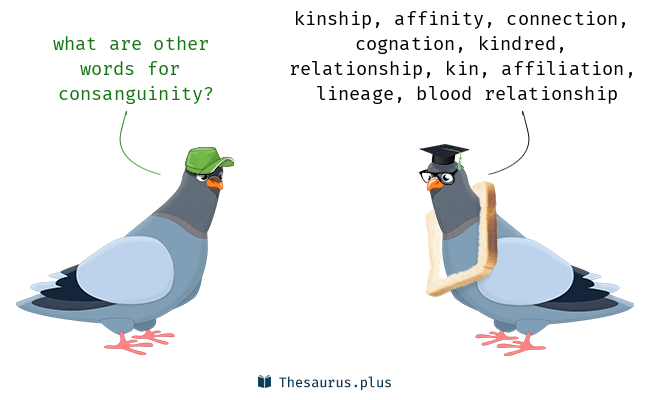
“PAPA, PAPA! What does ‘consanguinity’ mean?” 

“Consang-what?” Vice Mayor Edison Koo was busy with his cellphone, negotiating his cut from the new bridge they were putting up in Barangay Tullahan. It annoyed him that Mayor Baloloy was going to make double, despite the fact that all the mayor did was to sign the papers while he had to meet with the contractor at a popular girlie joint in Manila—not that he minded the female company.

“Consanguinity. C-O-N-S-A-“

“I can spell it!” VM Koo knew he wasn’t the sharpest pencil in the box—he had passed the bar on his third try, after much coaching from his friends and a novena to St. Jude the Apostle—but he could still remember what “consanguinity” meant and how to spell it. He had stumbled on a question about wills, trusts, and estates that involved consanguinity in his second bar exam, which was why he had to study it extra hard for his next retake. 

“So what does it mean, Papa?” At thirteen, Lawrence was about seven years past being cute and was just being pesky at the worst possible times, but Edison had plans for the boy’s political future and wanted to impress him with his knowledge. “Consanguinity” was easier to explain than to spell, Edison thought with a triumphant smile. 

Facing a mango tree, he recited a memorized Civil Service Commission pronouncement to impress himself with his knowledge: “Under Section 79 of the Local Government Code of 1991, the prohibition against nepotic appointments extends to the appointing or recommending authority’s relatives within the fourth degree of consanguinity or affinity, such as first cousin or first cousin-in-law.” He turned to Lawrence and said, “Does that answer your question?”

“No,” said the boy, fiddling with his cellphone, “but never mind. I found it on Google. It means ‘being descended from the same ancestor.’ So if my Science teacher says we all came from apes, that’s consanguinity? All monkeys are my cousins?”

“Weeell…. If the monkey can show a valid NSO-certified birth certificate that can prove the relationship, why not?” VM Koo congratulated himself for his clever answer; the boy had to think his dad was a genius, to follow in his footsteps and inherit his musty law books. “Why are you asking, anyway? Aren’t you supposed to be going to the mall with your friends? I gave you some money—” A mall—the town’s first—had opened six months earlier, a sure sign of the place’s progress, as a consequence of which the mayor was able to acquire a new van for his wife and an SUV for himself. This was why Edison was convinced he had to run for mayor in the next election—not because Mayor Baloloy was a corrupt bastard, but because he, Edison J. Koo, Esq., was the much better, more highly qualified bastard.

“You know I don’t like hanging out with my friends, Papa,” said Lawrence. “I prefer to stay home and read books and to listen to the news about the war in Ukraine and climate change and all the things that will affect my future as a young Filipino citizen!”

Edison looked at his son more closely, looking for signs that Lawrence was gay; it was his mother’s fault, giving the kid all those books about endangered species and disappearing islands, when any healthy teenage boy should have been hanging out in malls watching the girls in shorts go by. “So what does that have to do with consanguinity?”

“Well, I came across this news report about a new law that will require public officials like you to disclose all their relatives linked to subversive organizations, up to the fourth degree of consanguinity….”

“Really? What for? Don’t those idiots have better things to do?” It infuriated the vice mayor that on top of the SALN—on which he had to very deftly dissimulate—another reporting requirement was going to be imposed on hardworking civil servants like him.

“What does ‘subversive’ mean, Papa?”

“Oh—it means someone who doesn’t like the government, people like me, and wants to bring it down!”

“You mean like Tita Rory?” Lawrence remembered her fondly for giving him books like Catcher in the Rye and The Little Prince.

Edison felt a wave of shame and guilt wash over him, which he tried not to show the boy, who picked it up anyway. Rory was his younger sister, who had been a troublemaker since high school as far as he was concerned, who never listened, who deplored and never supported his entry into politics, and who once even denounced him in the plaza as a crook. So he also publicly disowned her, calling her a madwoman, and cut off all communication, even when she left and vanished into the underground.

“Yes, like your Tita Rory!” Edison sputtered, barely able to say the name. His eyes bulged as he began to understand the import of “consanguinity.” “Dammit, even when she’s not here, she’s going to put me in trouble!” He was thinking ahead to the next mayoral race, to being accused of consorting with the enemy, and worse, of being a subversive himself, which was the most ridiculous thing, because he didn’t have a rebellious bone in his body. He even ticked off Rory once by calling Rizal stupid for having badmouthed the Spanish.

“I like the books she gave me,” said Lawrence, thinking of a little fox and a garden of roses.

“Burn them! They’re full of silly ideas that—that will turn you into a little red monster. You won’t believe in God, you’ll disobey authority, you’ll do all kinds of terrible things—” 

“Is stealing money from the people subversive, Papa? Tita Rory said—” 

“Your Tita Rory said a lot of crazy things! That’s why she’s—not here. She’s not one of us. Not anymore. I pray for her soul, but I firmly believe in the government’s anti-insurgency program! And I’ll make sure everyone knows that—that their humble servant, Vice Mayor Koo, is a staunch defender of democracy, of peace and order, and of the rule of law! You’ll be very proud of me, my son!”

Just then a text message arrived. The bridge contractor had agreed to throw in a free trip to Seoul for him and Mrs. Koo, with a “K-drama Location Tour” attached. Edison beamed. His wife loved “The Extraordinary Attorney Woo,” and although he hadn’t seen it himself—he preferred Vin Diesel movies—she was sure to love him for it, too.

Qwertyman No. 4: Subversive Sisters Having Fun

Qwertyman for Monday, August 29, 2022

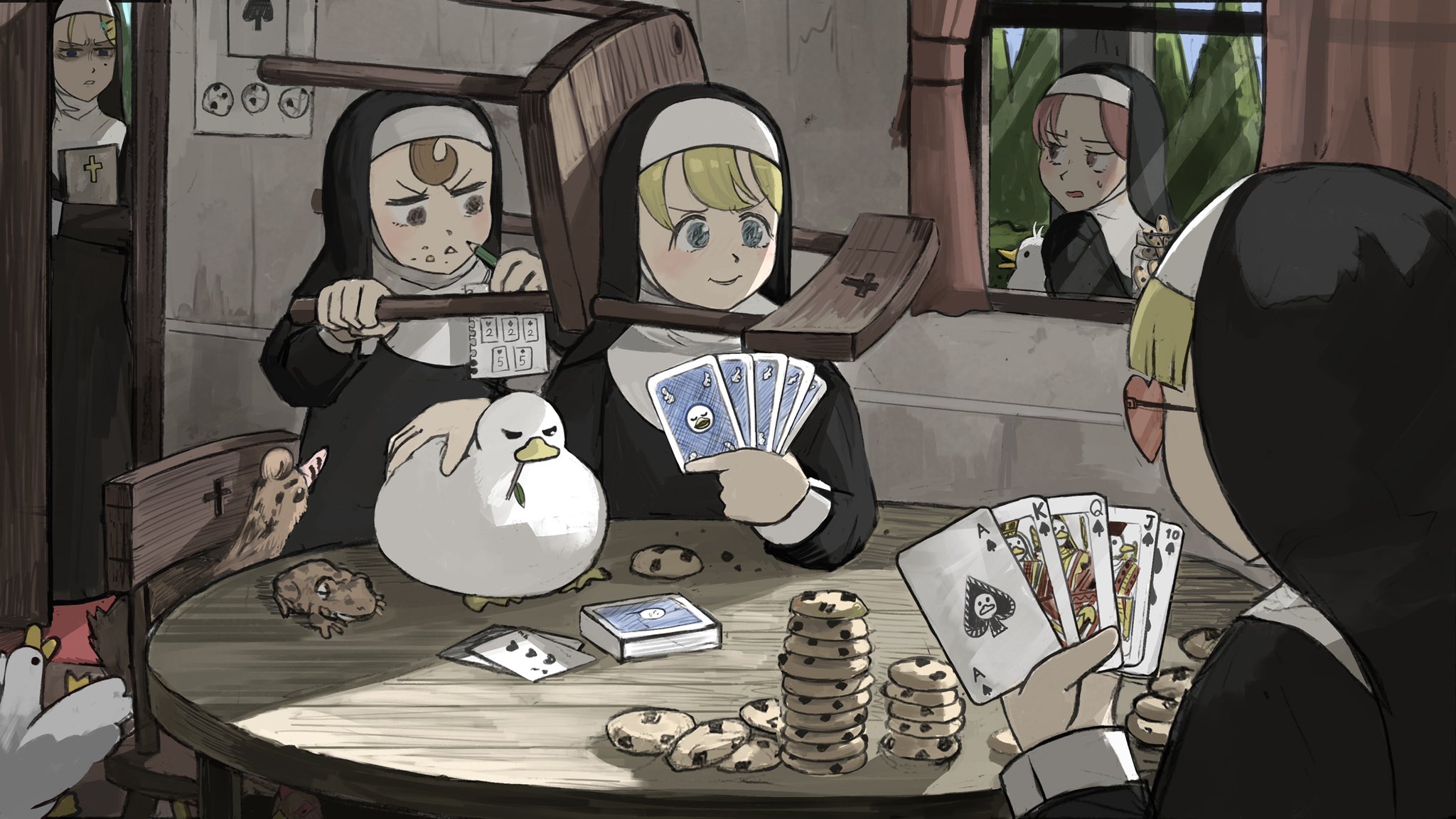
(Image from danbooru.donmai.us)

“WHY IS IT,” asked Sister Edwige as she threw a couple of green chips into the pot to call Sister Augustinha’s raise, “that every time we nuns have a little bit of fun, someone out there screams like we were indulging ourselves in some carnal revelry?”

“Sister Edwige!” said Sister Loreto, as she put her hand on her cheek, a sure tell that she had some pretty valuable cards in the hole, like a pair of jacks or an ace-king. “People might think that you—that we actually knew what you were talking about!”

“It’s no crime to know what we’re not supposed to be doing,” said Sister Edwige, who was wondering whether Sister Loreto was going to reraise, or was going to play it dumb, like she held the lowest pair. Some sisters were so transparent, which was why they chose to play Scrabble or bake muffins during their recreation hour instead of facing the likes of Sister Edwige at Texas Holdem, but with Sister Loreto, even letting on that she had a superior hand when she very possibly did not was part of the game. “Crafty” was the word for her, Edwige decided, something not necessarily malicious but with the possibility of being so.

“So are you going to call or fold?” Sister Augustinha said, annoyed that Edwige apparently didn’t feel threatened enough by her raise, and that Loreto might even move all-in.

“I’ll… just call,” Loreto said, whereupon the remaining sister, Sister Maryska, tossed her cards down, sensing imminent disaster. Acting as the dealer, Maryska drew the turn card—the king of clubs—eliciting a groan of agony from the playacting Loreto.

“Do you think it’s possible they’ll haul us off to prison and then try us for witchcraft, like they did in the old days?” asked Edwige with a chuckle.

“But whatever for?” said Maryska. In a previous life, she had been a nursery-school teacher, but had chosen to enter the order when the Virgin Mary appeared to her from a kaimito tree. “Everything we’ve done has been for the greater glory of God, hasn’t it?”

“Check!” said Sister Augustinha.

“Check!” said Sister Edwige.

“Hmmm…. Let’s make a tiny bet, shall we? Say, two hundred? Just to keep things exciting?” Sister Loreto ever so slightly pushed two even stacks of chips into the pot.

“Two hundred!” said Sister Maryska! “Why, that’s more than I can spend in a week on cookies and three-in-one coffee!”

“It’s only play money, Sister Maryska,” said Augustinha dryly. “It’s not like you or anyone here will starve to death if she makes a dumb call—which I’m not doing!” She folded her hand. “This is pretend-poker. We’re pretending that we’re escaped convicts disguised as nuns, that we stole these habits from a convent’s clothesline, and since our funds are running low and our runaway car is out of gas, we have to stake everything on a game of poker at the local bar, against the woman they know as… Madame Stolichnaya, a retired pediatric nurse and reputed mistress of the Master Demon himself, Dom Athanasius.” A shiver swept the table as Augustinha’s voice descended into a raspy whisper.

“Oooh, that’s exciting!” said Sister Maryska. “Tell us more! What did we do to become prison convicts?”

Before she joined the nunnery, Augustinha had been part of an avant-garde theater group known for its complete lack of inhibitions onstage and offstage, and it was rumored among the novices peeling potatoes in the kitchen that Augustinha had led a blissfully debauched life, complete with boyfriends, banned substances, and (dare they say it) aborted babies. That she was now one of the order’s most devout and dedicated sisters—the one who bathed lepers and tended to terminal patients—could not dispel the impression that she knew more about life than one was reasonably entitled to. 

“I fold!” said Sister Edwige, finishing the hand and letting Loreto scoop up the pot. “I think Sister Augustinha’s game is more fun. Let’s play that instead!”

“Awww, just when I was winning!” said Sister Loreto, pouting at her suddenly worthless chips. 

“Did we rob a bank?” asked Maryska. “Did someone get killed?”

Loreto said, “What do we know about robbing banks? Even if we did get some money, what would we have used it for? We made a vow of poverty—” 

“No, no,” said Edwige, “we didn’t make any vows, we’re not sisters, although we later pretend to be so. We’re villains, we like money, we like spending it on cars, houses, perfumes, vacations to Paris—” 

“Men? Did we spend on men?” asked Loreto.

“I don’t even know what it means to spend on men,” sighed Maryska. “Does that mean you—you buy them nice things, like watches and shoes and iPhones—”

“Or you can just buy them,” said Augustinha with a shrug.

“Really? For what?” said Maryska.

Edwige laughed. She had three brothers—an airline pilot, a cryptocurrency trader, and a police captain—all of whom had been left by their wives and girlfriends for various reasons. “So you can keep them as pets, snuggle up to them on rainy days, smell their body hair—”

“Ewww, I don’t even want to think about, please, please, take that thought away!” said Loreto, shaking her hands in the air. “No wonder we got caught! We had all of these impure thoughts! We robbed a bank so we could get and do all of these nasty things!”

“Technically, the bank robbery alone was enough to land us in jail. The motive doesn’t matter. We could’ve robbed a bank to give its money away to the poor. We’d still be criminals in the eyes of the law,” said Augustinha.

“It must be fun to be bad—sometimes,” said Sister Maryska, looking out into the garden, where other sisters were watering the begonias and watching the clouds turn pink.

“Do people even know what bad means anymore?” said Sister Edwige. “Or good, for that matter?”

Sister Loreto shuffled the deck of cards and said, “Let’s play another hand! And somebody close that window—I can feel a chill coming.”