Qwertyman No. 123: A Forgotten Hero

Qwertyman for Monday, December 9, 2024
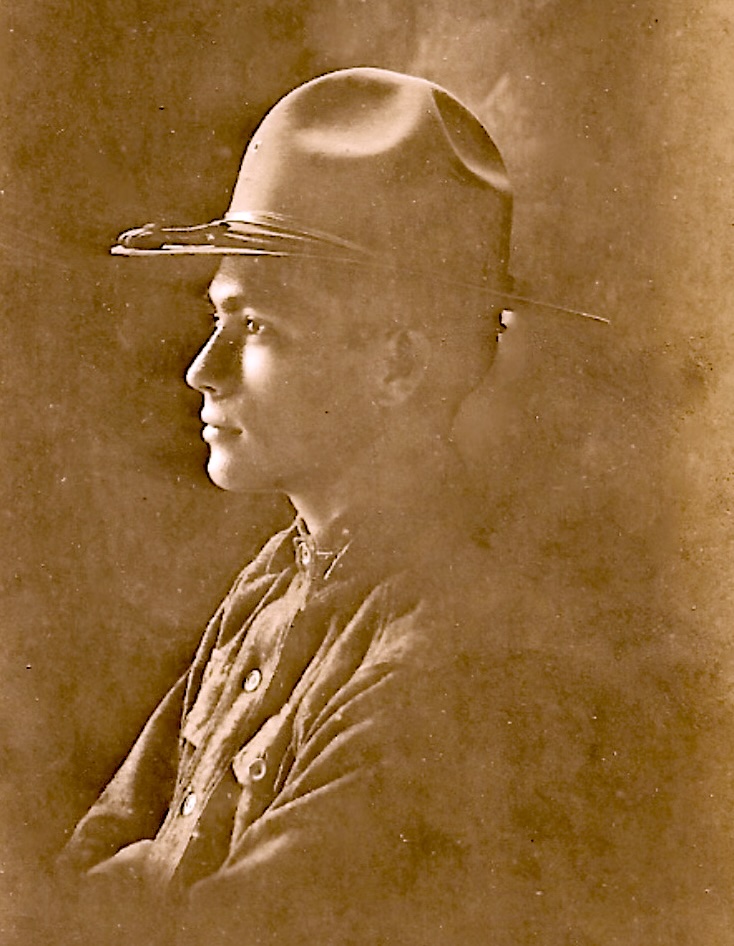
A HANDSOME book—as handsome as its subject—was launched last week by the Ateneo University Press, a biography of another unsung Filipino hero who would have faded into oblivion had it not been for the efforts of an American expat in the Philippines with a deep sense of history. 

The hero was Col. Narciso L. Manzano, the highest-ranking Filipino in the US Army during the Second World War, and the man who rescued his memory is Craig Scharlin, a former English teacher, gallery owner, and biographer who served for some time as Manzano’s personal secretary fifty years ago. I had met and known Craig earlier as the author, with his wife Lilia Villanueva, of the biography of Filipino-American labor leader Philip Vera Cruz; when he asked me to help him put together what eventually became The Manzano Memoirs: The Life and Military Career of Colonel Narciso L. Manzano, I agreed, especially after hearing his story of the life of this remarkable man. 

Craig had learned that the MacArthur Library in Virginia had a 260-page handwritten autobiographical manuscript that had been written by Col. Manzano in 1948, to which were later added another memoir written in 1983 for his grandchildren; his son Jaime had also written a family history. Craig acquired copies of all these and the necessary permissions to publish them; I helped stitch the manuscripts together into a more coherent whole and edit the text.

Though born in Manila in 1899, Manzano grew up in Atimonan, Quezon before leaving at age ten for Spain where his family hailed from. He was a mestizo through and through: Filipino by birth and allegiance, Spanish by blood, and American by military service and later citizenship. After returning to Manila and studying Engineering at UST, he signed up to join the US Army, hoping to fight in the First World War, which ended too soon for him. He went to the US for further military training, and served back home as a Philippine Scout, and then as a colonel in the US Army Corps of Engineers under Gen. Douglas MacArthur.

It had been one of Manzano’s pre-war missions to map out the Bataan peninsula carefully in preparation for War Plan Orange 3, which MacArthur eventually discarded. It was in this zone that Manzano would first earn praise for his bravery. As Craig’s introduction tells it, “It was Manzano, along with his American co-commander, Lt. Col. Skerry, who led their engineers in setting the explosives to blow the bridge at Calumpit, the last and most vital bridge in Central Luzon…. When Gen. Wainwright decided the bridge had to be destroyed to halt the rapidly advancing Japanese invading forces, the Army engineers assigned this task led by Manzano were on the wrong side of the bridge, the Japanese side. Manzano requested that Skerry wait to blow it until he and his men could get across… but Wainwright had no choice: the bridge had to be blown as the Japanese were advancing too fast in order to save the entire American and Filipino forces and allow them time to retreat to Bataan…. Somehow Manzano, along with another of his American officers was able to evade the Japanese on their own and made their way with all their men to Bataan.”
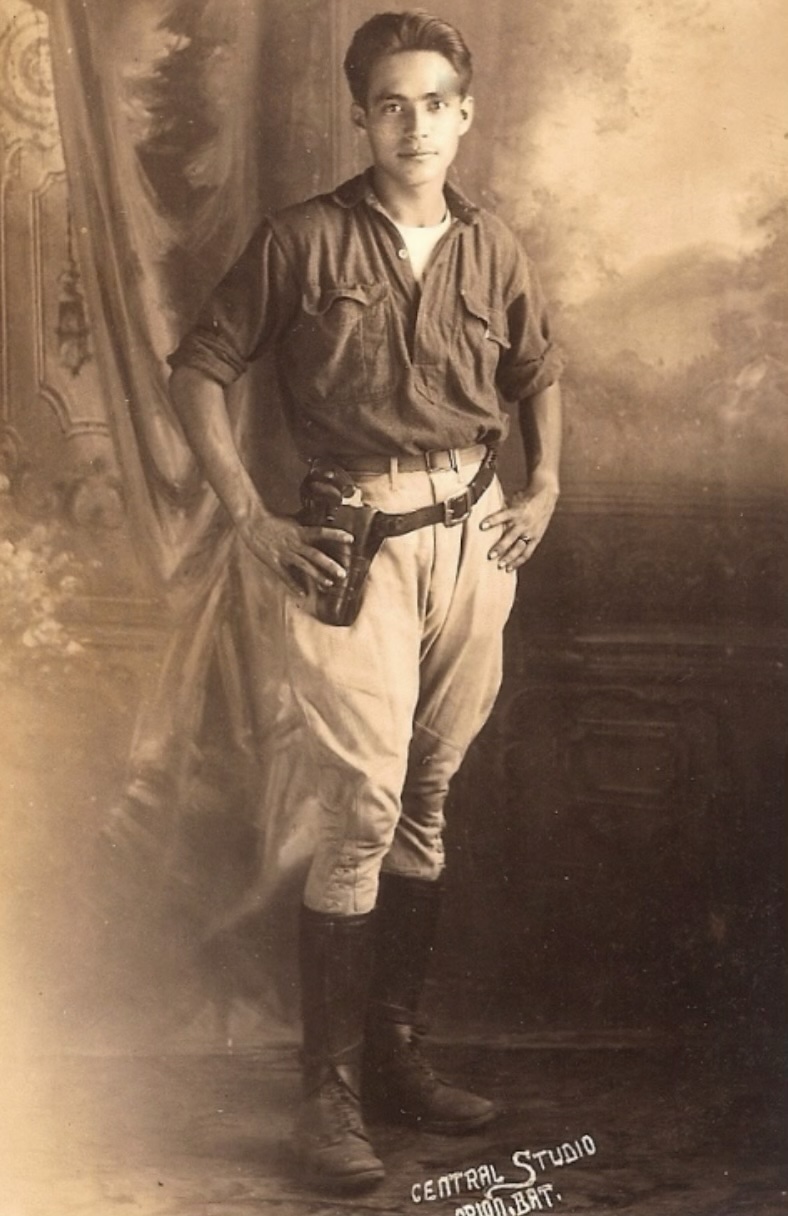
Working in intelligence in Bataan, he was later captured and imprisoned in Camp O’Donnell; upon release, he was quickly assigned to develop an intelligence network in Luzon, at which he proved exceptionally capable. His wife Charo was arrested and imprisoned by the Japanese. But he pressed on, and when his network was exposed, he moved to Mindanao from where he hoped to be taken by submarine to Australia so he could properly advise MacArthur, who was getting poor intelligence. MacArthur’s lackeys scotched that plan, forcing Manzano to improvise as a guerrilla until MacArthur returned. He later moved to the US with his family, where he died in 1986, proud of his life’s work despite being embittered by the betrayals he had to suffer, and disappointed at being passed over for the generalship he had expected.

That’s not even half of the story; brimming with the candor of a man with nothing to lose, Manzano’s memoirs are full of vignettes and reflections about people at war, and Manzano can be painfully scathing in his estimations of those he felt had betrayed his country. He whittles down MacArthur and his aides for what he saw to be their foolish and costly unwillingness to listen to lifesaving intelligence (an opinion shared by historians such as Hampton Sides, who wrote that “MacArthur’s judgement, clouded by his gargantuan ego, was sometimes deeply, dangerously flawed. The men who fought under him, and the civilians who happened to get in his way, often paid a terrible price.”) Manzano was highly critical of MacArthur’s abandonment of War Plan Orange 3, and even said that he would have testified in support of Japanese Gen. Masaharu Homma had he been asked.

He not only believed President Jose P. Laurel to be a collaborator, but plotted the failed operation to assassinate him on the golf course at Wack Wack. For this alone, the book should be well worth reading; I among others have a contrary view of Laurel, but Manzano was there and we were not. Manzano has spicy opinions of other wartime and postwar personalities whom we have named streets after—again, quite an eye-opener. He reserved some of his choicest words for Ferdinand Marcos, whom he called “a poser, a phony, a fake, a war profiteer.”

In his introduction to the book, Craig Scharlin recalls his first meeting with Col. Manzano in San Francisco in 1975: The movie “Scent of a Woman” with Al Pacino had not yet come out. However, the character Pacino played in that movie, Frank, was a retired lieutenant colonel in the United States Army. As portrayed by Pacino, the character had Old-World charm, dressed impeccably, and even in his older age had ramrod-straight posture, showed strength of character and conviction, and the demeanor of an officer who had commanded other men and led them into battle. But he also carried scars of resentment and a certain sadness, a lament of unfulfilled destinies, of real battles won and others lost. And of course it was all Al Pacino—short, dark, brooding, yet still incredibly charismatic.

“That was the man I met in 1975 in a well-appointed penthouse apartment on Nob Hill in San Francisco. The only difference was that this wasn’t Al Pacino nor a fictional movie character, but the real deal—a retired US Army colonel named Narciso L. Manzano.”

Meet the rest of the man in the book, which you can order here: https://unipress.ateneo.edu/product/manzano-memoirs-life-and-military-career-colonel-narcisco-l-manzano.
Penman No. 341: War and Remembrance


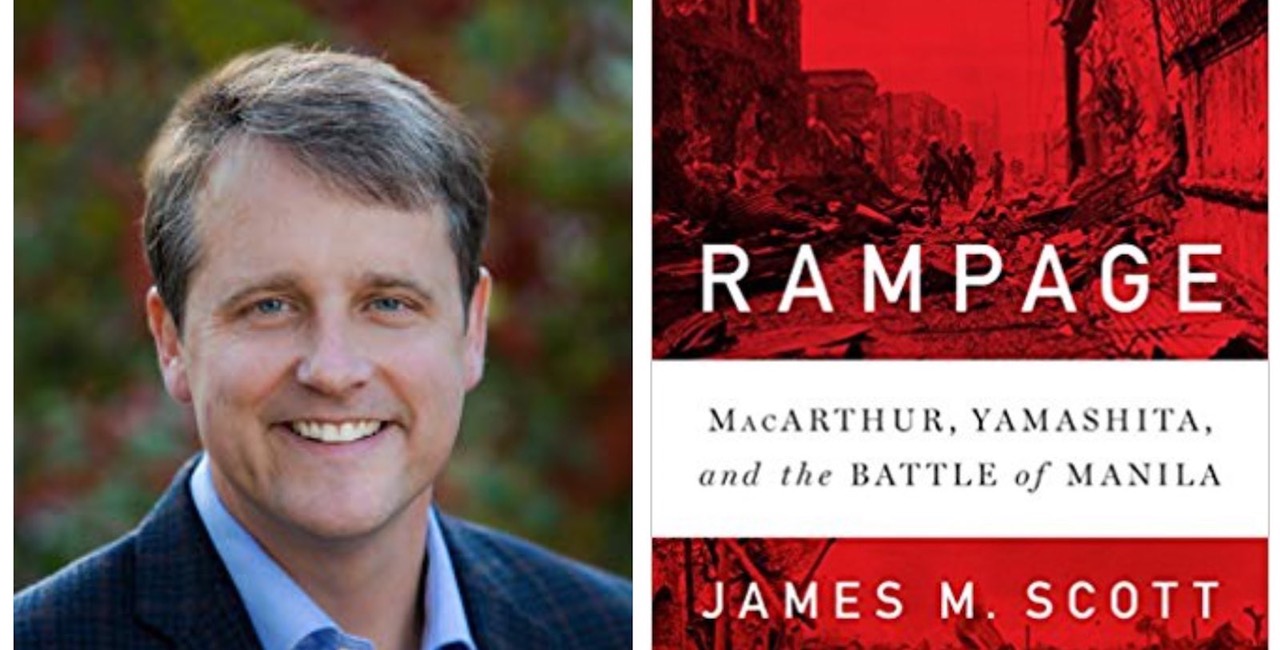
James_Scott_collage.jpegPenman for Monday, February 18, 2019


FOR FILIPINOS, February is or should be a month of remembering, beyond the commercial confections of Valentine’s Day.

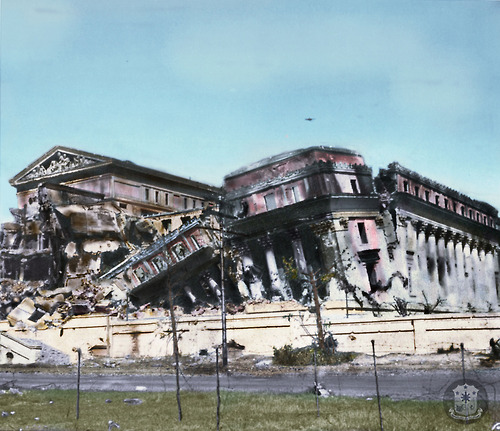
For people somewhat younger than me, February should recall the euphoria of EDSA 1986, and the forced departure of a dictatorship. For myself, the month marks the anniversary of the 1971 Diliman Commune, when we barricaded the university in symbolic resistance to what soon became the martial-law regime. For my parents’ generation, however, February can only mean the closure of the War in 1945, culminating in the bloody Battle of Manila that may have crushed the Japanese but also left 100,000 Filipinos dead in the most horrible ways and Manila thoroughly devastated.

Having been born nearly a decade after that war, I can only look back on it with both relief and, I must confess, morbid fascination, that curious wondering about what I might have done—or even if I would have survived—had I gone through that ordeal. I’ve written plays about the war, read as many books as I could, and visited war memorials, but never seem to have come around to answering how and why war can bring out both the best and the worst in us, sadly more often the latter.

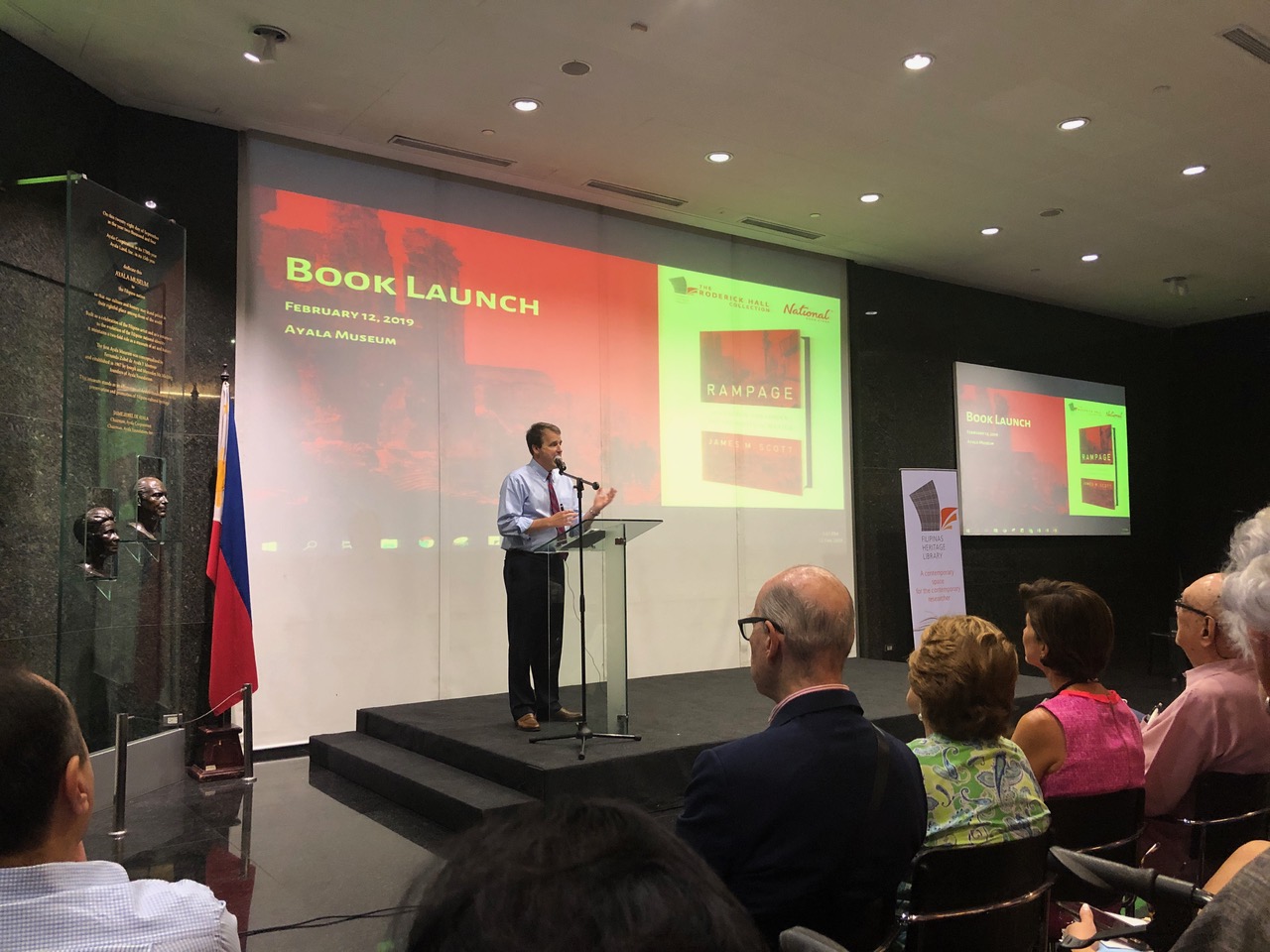
This was much on my mind last week when I attended a lecture at the Ayala Museum by the American author James M. Scott, who was in town to promote his newest book, Rampage: MacArthur, Yamashita,  and the Battle of Manila(New York: W. W. Norton, 2018, 635 pp.). James had actually been introduced to me by email before his visit by mutual friends, so I was doubly interested in meeting the war historian, whose earlier book Target Tokyo: Jimmy Doolittle and the Raid That Avenged Pearl Harborwas a 2016 Pulitzer Prize finalist.

IMG_9369.jpeg

Before a packed crowd that included survivors of the war, James brought the audience back to a time when Manila was indeed the Pearl of the Orient and Asia’s most beautiful city, with wide, tree-lined boulevards and a cosmopolitan culture to complement its charms. The war would change all that, over a few dark years of death, suffering and famine. Despite putting up their bravest front, the city’s residents and the thousands of foreigners interned at Sto. Tomas were in desperate need of food, medicines, and, of course, freedom when the Americans—led by the famous but also famously flawed Gen. Douglas MacArthur—landed in Lingayen Gulf and rolled into Manila. In command of the Japanese defenders, Gen. Tomoyuki Yamashita, the so-called Tiger of Malaya, had ordered Rear Adm. Sanji Iwabuchi to withdraw his forces—an order that Iwabuchi, a once-disgraced officer in need of redemption, had no intention of following (records would later show that the Japanese had made no plans for escape).

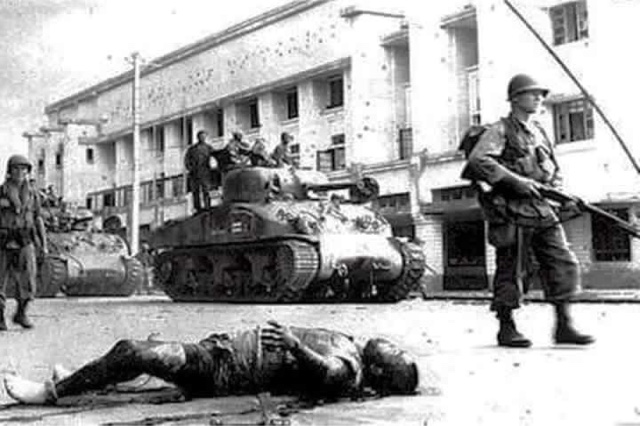
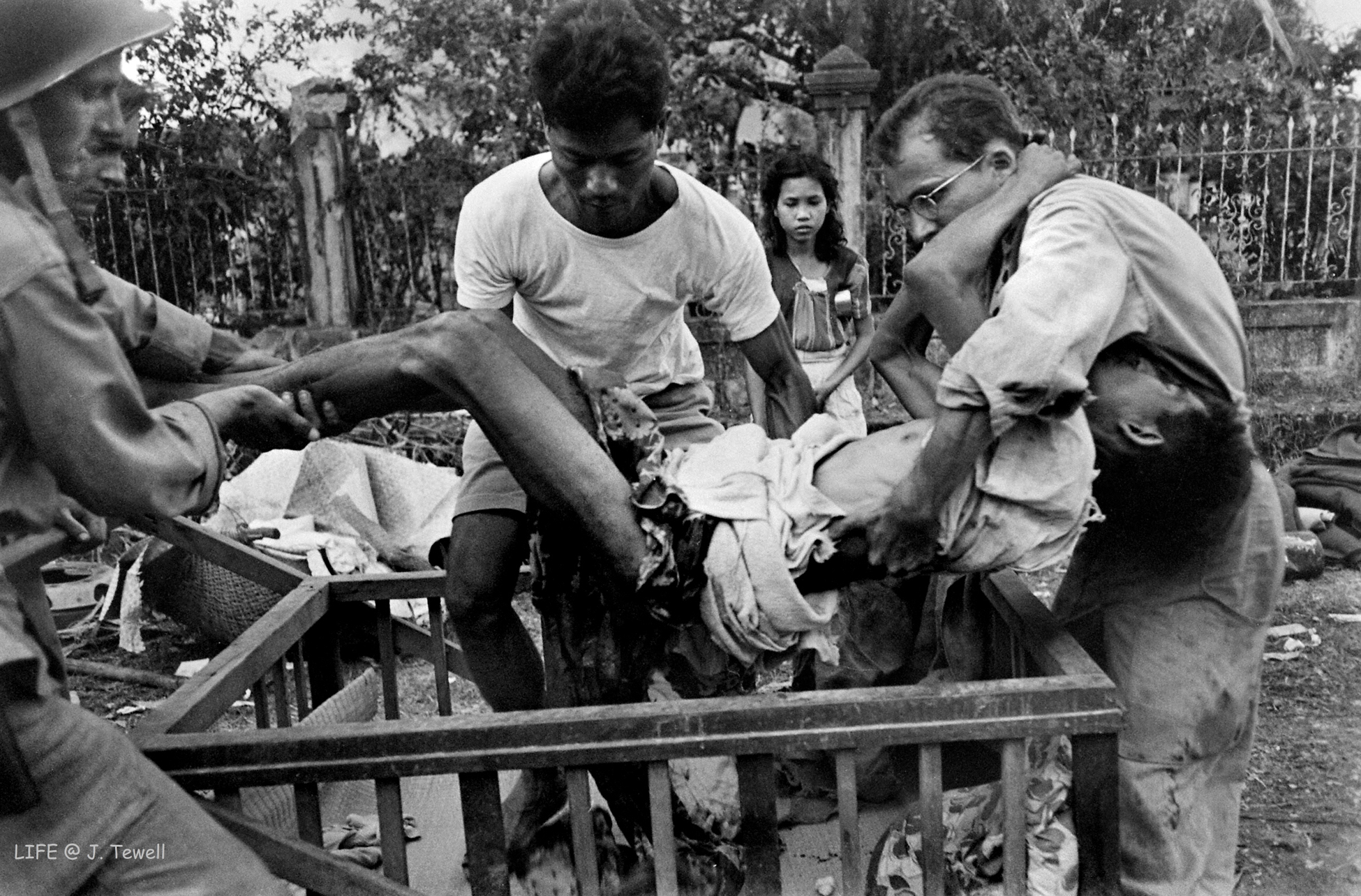
The stage was set for one of the most hard-fought and destructive battles of World War II. Instead of withdrawing, Iwabuchi directed his men to hold off the Americans with their guns, their swords, and if necessary their teeth. As the fight moved block by block south of the Pasig, the Japanese turned their retreat into wholesale slaughter; 200 Filipino men were beheaded in one house, women were raped scores of times at the Bayview Hotel, and babies were bayoneted; 41 victims were massacred in La Salle, many at the marble altar. Facing certain defeat, many Japanese committed ritual suicide—77 of them in one place over one night, with singing preceding the explosion of grenades. Iwabuchi slit his own belly. After 29 murderous days, the battle ended. Yamashita, who could have stopped his subordinate had he truly wanted to, was later tried and executed.

1LegisBldg.jpg

blogger-image--1666340230.jpg

16358751469_4a4fbdc210_o.jpg

More than 16,000 Japanese soldiers died in the battle, against only about 1,000 Americans. (Contrary to popular belief, Korean conscripts did not figure in the massacres, says Scott.) MacArthur would lament the loss of his family’s Civil War memorabilia and his son’s baby book in his Manila Hotel suite. But as Scott emphasizes, Filipino families paid the dearest price, with over 100,000 civilians dead in one month.

Drawing largely on first-person testimonies recorded soon after the events, the book is a searing account of the horrors of war; it was, says Scott, less a battlefield than a crime scene. A friend who read it told me she had to stop every once in a while to gather herself through her tears. The book takes note of subsequent judgments that the Americans bore as much responsibility for the destruction of Manila as did the Japanese, with their sustained bombardments of entrenched positions, but it’s the persistence of humanity—sustained by such organizations of war survivors as Memorare—that ultimately prevails.

Apart from many private acts of remorse, the Japanese government never formally apologized for their soldiers’ atrocities, and our own government’s recent removal of the comfort women’s statue shows how modern politics can obliterate the past better than a howitzer.

Such is the nature of today’s society—and of a generation obsessed with the present and the future—that many Filipinos can barely remember what happened five years ago, let alone 50, or 70. For some reason, our memories of conflict seem especially faint and fragile. Denial seems easier, revisionism even more attractive, so the despots who sent hundreds if not thousands to their graves and robbed us blind continue to live in mansions and be driven around in armored SUVs.

Meanwhile, we have James Scott’s anguished prose to ponder; I myself fear that if we disregard our liberties, the next Battle of Manila, we might inflict upon ourselves.

Penman No. 130: Museums and Musicals (Part 1)

Penman for Monday, January 5, 2015


IF THERE’S anything in America I keep returning to—aside from the flea markets and antique shops—it’s the two things I consider to be among the country’s prime cultural resources: its museums and its musical theater.

Both are, at heart, forms of popular entertainment. While museums are arguably more educational, the first American museums, we’re told, began as collections of curiosities that attracted entrepreneurs like the showman P. T. Barnum, who bought up bizarre objects and juxtaposed them with such live attractions as bearded ladies and exotic animals. The American musical, on the other hand, descended from burlesques and operettas imported from Europe, livened up by chorus girls and minstrel songs, until (notes theater historian Mark Lubbock) Oscar Hammerstein II and Jerome Kern came up with Show Boat in 1927 and refashioned the musical as a play unto itself, beyond the pastiche of production numbers that it had been.

I suppose I should be adding “major-league sports” to this list. The NBA is, after all, one of America’s biggest exports, with a global cultural impact that extends far beyond the ballgame itself. As a graduate student in Milwaukee, I spent whole Saturday afternoons enjoying double-headers at the baseball park, and I once cut a class in Shakespeare to watch Michael Jordan pull off a last-second three-pointer to beat the hometown Bucks (and despite being Bucks fans, we all stood up and cheered). And then there’s Hollywood, America’s mammoth fantasy machine.

But sports and movies can now be had on satellite TV and even your iPhone. Museums and musicals—I’m thinking Broadway and off-Broadway here—are still best experienced live, despite the likely availability of much of the material online or on DVD. Many Americans themselves apparently agree. A 2008 article that came out on National Public Radio reveals an interesting statistic: the total combined attendance for all major-league sports (basketball, baseball, football, and hockey) that year was estimated at around 140 million, against the estimated attendance at American museums, pegged at 850 million.

I landed in Washington, DC on my first American visit 35 years ago, and I’ve been returning to the Smithsonian Institution ever since, looking at but never tiring of the same old things: Abraham Lincoln’s hat, George Washington’s dentures, the Hope Diamond, the Space Shuttle, the giant squid. Every pilgrimage to the Smithsonian (and, in London, to the British Museum) transforms me into a wide-eyed boy, seized by the collar and shaken into speechlessness by the majesty of history.

On this last sojourn, as I reported last week, a visit to the exhibition of historic signatures at the National Archives Museum proved to be one of the highlights of our museum-hopping. But we visited other equally arresting exhibits, most notably the MacArthur Memorial Museum in Norfolk, Virginia.

I’d always been fascinated by this monumental figure—who, like many monuments, came with more than a deep fissure or two. I was born too late to appreciate him as the liberator of occupied Philippines, but I’d always nurtured a vague memory of going to the Luneta as a boy to see him, one 4th of July, a day of floats and big horses. I later suspected that memory to be false, until I confirmed, online, that MacArthur had indeed made one last sentimental journey to the Philippines in July 1961, when I was seven.

Norfolk seems an odd place for a MacArthur Memorial; it’s a Navy town, and he was an Army man through and through, and West Point—where he had served as superintendent—would have been far more logical. But his mother’s family was rooted in Norfolk, and Douglas himself would have been born there had not his father Arthur, himself an Army officer, been assigned to Little Rock, Ark., where Douglas was born in 1880.

Some things surprised me at the MacArthur museum: first of all, the discovery that it was also his and his second wife Jean’s resting place. The first thing you notice upon entering the memorial, flanked by rows of flags from various campaigns (Bataan, Corregidor, Leyte, Lingayen, and Manila are prominently cited), is the sunken crypt in which the two tombs lie side by side. Second, I was struck by the number of Philippine items and references in the place—perhaps logically so, because even Arthur himself had been a general in the forces that occupied Manila in 1898.

Third—although I should have expected this—there was absolutely no mention of Isabel Rosario “Dimples” Cooper, the Scottish-Filipino actress who became Douglas’ girlfriend in between his marriages (his first wife, Louise Cromwell Brooks, had been a socialite). A fourth discovery was of interest only to this hardcore fountain-pen collector: the famous Parker “Big Red” Duofold, already an iconic pen when MacArthur reportedly used one to sign Japan’s surrender papers with on the Missouri, turned out to be a smaller lady’s version loaned to him by Jean.

There were recordings of his speeches, and I listened closely. MacArthur spoke famously simple words. His “I shall return” pledge ranks among the most familiar of rhetorical refrains; less known but equally moving was his farewell to West Point, two years before his death in 1964: “When I cross the river, my last conscious thoughts will be of The Corps, and The Corps, and The Corps.” But the verbal simplicity came out of a complex man, one who could fearlessly take on what he saw to be the communist colossus (and be sacked for his perceived recklessness in Korea by President Truman) but who was, by many biographical accounts, a mama’s boy.

It was, all told, a most impressive exhibition, amplifying a figure already larger than life to begin with. I suppose my biggest surprise was my own continuing fascination with this Big White Man, in the way that I’ve often wondered about the postcolonial (or should that be neocolonial) chic we attach to names like “McKinley” and “Rockwell,” especially when they involve high-priced property.

Those of us who luckily came too late to experience the horrors of the Second World War can argue all day about the moral wrongs of American imperialism and the self-serving designs of America on the Pacific—and would very probably be right. But in these days of tension in the South China or West Philippine Sea, we might end up wishing a MacArthur were around to do what no pragmatic politician in Washington or Manila today would imagine doing.

Next week, the musicals.

Penman No. 124: Pinoys on the Potomac

cropped-logo-rizal-washington8Penman for Monday, Nov. 24, 2014


ERWIN TIONGSON and his wife Titchie are in their early 40s, successful professionals and the parents of young sons; they live in Fairfax, Virginia, a pleasantly wooded suburb just outside of Washington, DC. An Atenean from Nueva Vizcaya, Erwin teaches Econometrics at Georgetown University, while Titchie, a prizewinning writer, has chosen to stay at home to look after the children. Outwardly they might seem to be just another Filipino couple living the good American life, steadfastly focused on the present and the future. But their true passion inclines elsewhere, as Beng and I would discover in one of the most fascinating encounters we’ve had in our current American sojourn.

I’d first heard about Erwin from another new Fil-Am friend, Sonny Busa, a retired Marine, a former consul and instructor in international relations at West Point. (Sonny, in turn, had been introduced to me by upstate-NewYork-based Sharon Delmendo, who has done a lot of research on Philippine-American relations—so now you see how the academic circuit works.) Sonny had mentioned to me that there was a Filipino in the community who had taken it upon himself to chronicle the history of the Philippine presence in Washington and the surrounding area—more than a century of visits and residencies by Filipino politicians, diplomats, writers, artists, musicians, and other personages whose life and work, in one way or another, drew them to the American capital.

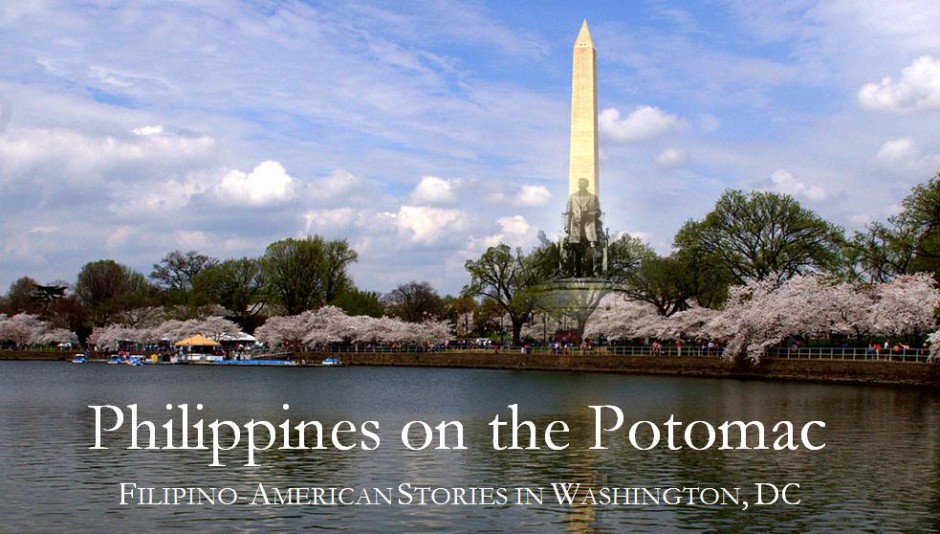
That’s how I found the website that contained all this information—a WordPress site titled “Philippines on the Potomac: Filipino-American Stories in Washington, D.C.” (https://popdc.wordpress.com). If you’ll take a minute to click on that link, you’ll discover what I did, with a child’s wonderment at the entrance of a carnival: short articles and accompanying photographs tracing the connections between Filipinos and Washington, DC.

As might be expected, the big political figures, especially those from the Commonwealth and postwar period, dominate the reportage: Manuel L. Quezon, Carlos P. Romulo, Sergio Osmeña, Manuel Roxas, and Jose Abad Santos. But cultural luminaries are also well represented: Juan Luna, Jose Garcia Villa, Juan Arellano, Enya Gonzalez, Fernando Amorsolo, and Bienvenido Santos, among others.

Quezon had served as Resident Commissioner—effectively our ambassador—in Washington until 1916, and when he went to the US on his wartime exile and died in New York in 1944, it was at the Cathedral of St. Matthew the Apostle in Washington—not too far from where our embassy now sits—where his funeral mass was held prior to his interment at Arlington (less than 20 years later, John F. Kennedy would follow the same route; MLQ’s remains were moved to the Philippines after the war, and now lie at the Quezon Memorial).

Carlos P. Romulo and his family lived in a home on Garfield Street for 16 years, CPR having served in many capacities, from aide de camp to Gen. Douglas MacArthur to Resident Commissioner, ambassador, and president of the United Nations General Assembly. (One of the website’s most remarkable images has an old sepia photograph of the Romulos superimposed exactly over the same spot in front of the present house, which has barely changed.)

The site provides a treasure trove of other historical facts—including, inevitably, tidbits of information that serious scholars might dismiss as trivia, but which enthusiasts like me can’t get enough of. The sculptor and National Artist Guillermo Tolentino, for example, once worked as a waiter in Washington, and somehow managed to meet President Woodrow Wilson and to present him with the gift of a small statue, which Wilson kept in his room until his death; Wilson later helped Tolentino get a scholarship to art school. We also learn that Juan Luna and Felipe Agoncillo went to Washington in 1899 to campaign against the Treaty of Paris, and stayed at the Arlington Hotel, where they were spied upon by the Secret Service. (All these stories are properly attributed and referenced, by the way.)

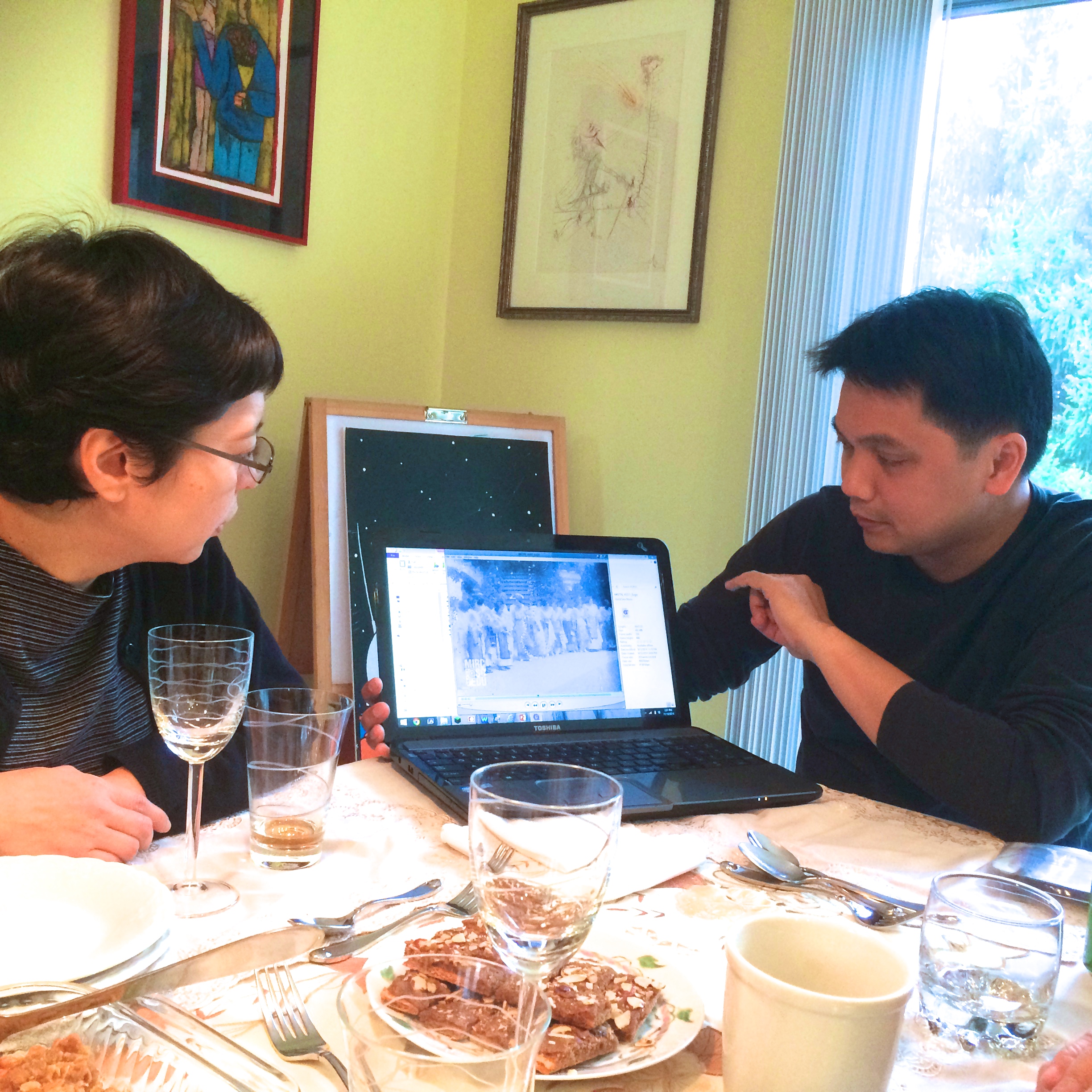
Better than just poking around the website, the Tiongsons invited us to lunch and show-and-tell, and I couldn’t wait. Learning of my current affiliation with the George Washington University, Erwin had pointed me to an article written by CPR’s granddaughter Liana relating how Romulo had coached a debating team from the University of the Philippines in an engagement with the GWU team, over this issue: “Resolved, That the Philippine Islands should be granted immediate and complete independence.” The debate took place on April 18, 1928 at GWU’s Corcoran Hall. “UP won,” said Erwin. “It was the team’s fifth victory, after defeating Stanford, California, Utah, and Colorado. The team would go on to defeat all their other opponents—a total of 14 universities, if I remember correctly.”

Tiongsons

Even more interesting were the personal stories that Erwin and Titchie shared with us (after a sumptuous lunch of home-made corned beef and baked salmon, which all by itself was well worth the Sunday visit). I can’t go too deeply into the details now, but Beng and I were thrilled to share Erwin’s elation over his most recent discovery, a book that had been inscribed by Maximo Kalaw, MLQ’s private secretary, to a “Nina Thomas”—who turned out to be the American lawyer the young Quezon had been engaged to (he broke off the engagement after being advised that marrying an American was political suicide). Erwin made contact with Nina’s heirs in Virginia; she never married, but she passed on Quezon’s monogrammed walking stick and their engagement ring to her niece.

Erwin also showed us a movie poster from 1946 of Anna and the King of Siam, featuring Rex Harrison, Irene Dunne, and a little-known actress named “Chabing”—who turned out to be Isabel Rosario “Dimples” Cooper, Douglas MacArthur’s girlfriend (not mistress) between marriages; after MacArthur left her, she resumed her film career (she was notable for having recorded the first on-screen kiss in Philippine movies in 1926), assuming the single name “Chabing,” whose filmography you can look up on IMdb.

It was also a treat to listen to a radio recording of Jose Garcia Villa, made in the 1950s, of him reading his “Lyric 17” (1942) which famously begins with “First, a poem must be magical….” Most moving was the 20-minute documentary of President Quezon’s funeral—directed by no less than the renowned director John Ford—that Erwin had magically retrieved from somewhere in the many university libraries, archives, and museums that he still haunts in search of fugitive Filipiniana. He has begun a collection of war correspondence from the early 1900s and the Second World War; one 1902 letter poignantly retained a swatch of jusi, which the wife of an American official in Iloilo wanted her folks to see.

We could have stayed there the whole day, reveling in our memories of the grand old men of Philippine letters—NVM Gonzalez, Ben Santos, Nick Joaquin, Manuel Viray; I shared my own little adventures in cultural retrieval. But Beng and I had sadly had to trundle out again into the autumn chill, warmed by our imaginations, and in my ears rang a line from Viray’s poem about his old house in Washington, on Cathedral Avenue, which the Tiongsons had also located: “A streak of light aslant / On the screen door creeps up the line of dusty books.”