Qwertyman No. 171: “Quezon” as Theater

Qwertyman for Monday, November 10, 2025
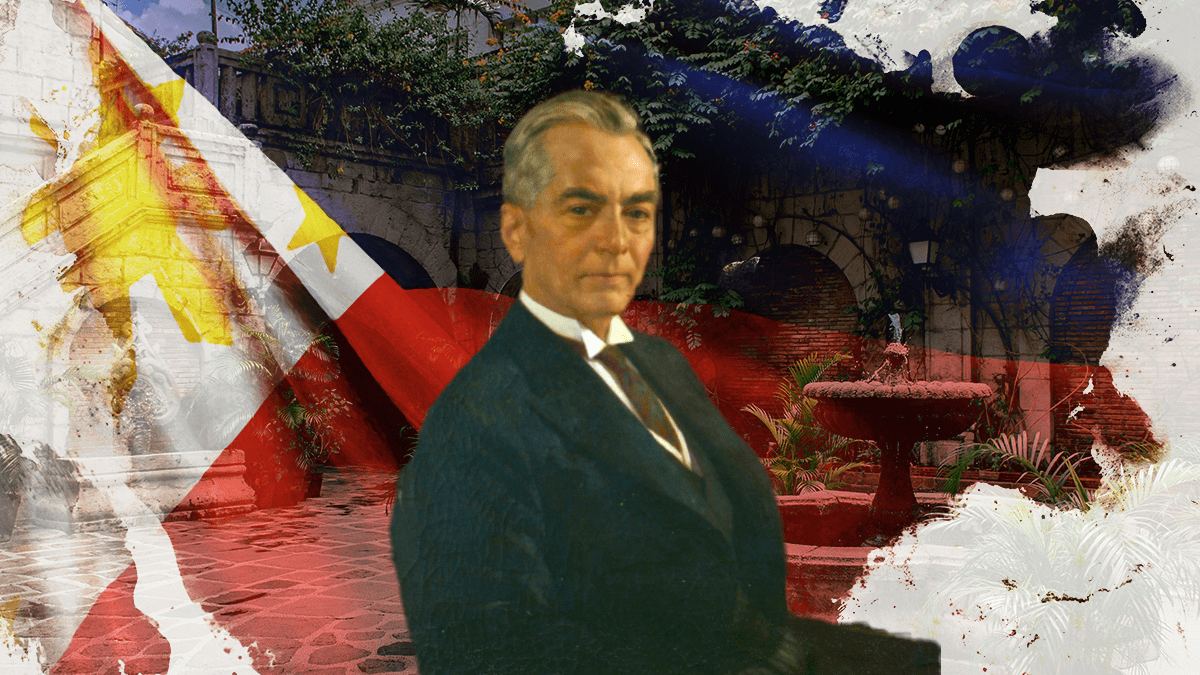
I’M COMING late to the party, having been away for a couple of weeks, but even in faraway Frankfurt, I was itching to come home to see what the brouhaha over the “Quezon” movie was all about.

Rarely does a Pinoy movie stir a hornet’s nest like this one did, and even without seeing it, I took that as a good sign for our film industry, especially big-ticket projects which sometimes leave people wondering why they were even made.

What especially piqued my interest, of course, was the reaction of Quezon family members and friends who thought the old man’s cartoonish depiction as a womanizing, scheming, and power-hungry politician despicable.

Now, my own grandfathers led pretty quiet lives, so I’m sure that if anyone called them womanizing, scheming, and power-hungry, I’d be mighty upset, too.

The difference is, unlike my lolos and going by what the historians suggest, Manuel Luis Quezon seems to have been all of the above—which isn’t to say he wasn’t much more than all those negatives put together. It was apparently that “much more” that the Quezonistas were looking for—MLQ the patriot and freedom fighter—to balance out the picture, especially since most young Filipinos know nothing of the man except as a place-name. Had that been shown, the outrage might arguably have been muted, the image softened.

But of course that wasn’t what the movie’s makers were going for. As has already been noted by dozens of reviewers before me, “Quezon” is no documentary (and let’s not forget that even documentaries can be biased—just watch Leni Riefenstahl’s adoring portrayal of Hitler and his Nazis in her bizarrely beautiful “Triumph of the Will”). From the outset, it declares that it is mixing up history with “elements of fiction,” which is just as good as using that old commercial come-on, “based on a true story.”

I’m no historian—I’ll confess to being an enthusiast—but as it so happens, I’ve been a playwright, screenwriter, biographer, and fictionist at various points of my otherwise uneventful life, so I can probably speak to these issues with some experience. I can attest, for example, having written some biographies of the rich and famous, that families and descendants can inherit myths about their patriarchs, and treat and pr0pagate them as God’s own truth. 

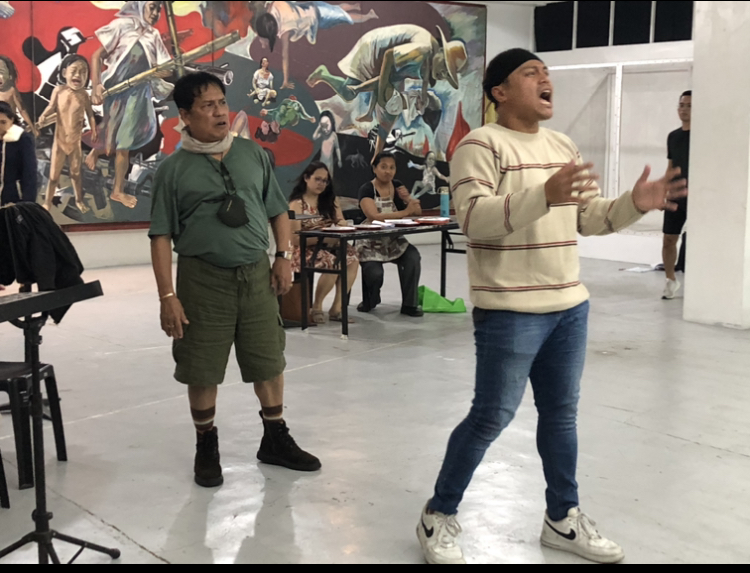
My take is, I don’t think we should receive “Quezon” as history, biography, fiction, or even film. It’s theater (captured on film), and it declares itself as such right from the beginning, as I’ll shortly explain. This may be due to the fact that the script was co-written by one or our most accomplished playwrights, Rody Vera, alongside director Jerrold Tarog. His approach was explicitly stylized and non-realistic, from the use of silent-movie title cards, ghoulish makeup, and painted backdrops in the black-and-white sequences (including that almost balletic choreography of the young MLQ rising from the floor of his prison cell) to the conception and blocking of such scenes as those of Quezon working the floor of the House and the capitalist bosses gathering round the table. (If all this seems obvious and elementary, dear reader, my apologies—in these days of TikTok, I don’t know what people are looking at anymore).

So what if the movie is theater disguised as film? Does that explain or excuse its supposed excesses and exaggerations?

Well, theater is, almost by nature, exaggeration—movements and motives get simplified and magnified, the easier to get them across. Theater is agitational—it aims to provoke emotion, to bring people to their feet, clapping in delight or screaming in rage.

And that’s what “Quezon” did, didn’t it? It got its message across, effectively and efficiently, like a train on schedule, and taking it as theater, I found it roundly entertaining. By and large, the actors carried themselves off with aplomb, from Jericho Rosales’ masterful Quezon, Romnick Sarmenta’s comic-cool Osmeña (his was actually the most difficult role to play, to my mind), Mon Confiado’s aggrieved Aguinaldo, and Karylle’s restrained Aurora. The employment of the fictional journalist Joven Hernando was what a smart scriptwriter would do, to weave the narrative threads together. (Teaser: Quezon and Aguinaldo figure in the novel I’ve been writing about prewar Manila.)

My quibbles have to do with minor complaints like (don’t be surprised) “Wrong period fountain pens again, all of them—why don’t they ever ask me?” (Quezon did hold his pen that odd way, though) and “Does every movie chess scene have to end with a checkmate?” I could have added “Why does everyone’s shirt and pants look fresh in a period movie?” but we’ll excuse those as theatrical costumes.

If there was anything I would have added to the content, it would have been a quiet moment of self-reflection, in which we realize just how Quezon sees himself. That alone might have lifted up his character from caricature.

The real Quezon seems to have been every bit as petty as the movie shows him to be, but also every bit as great, as it seems to have taken for granted.

Quezon had something of a history with the University of the Philippines, whose protesting students (one of them a young buck named Ferdinand Marcos, who accused Quezon of “frivolity” over all the dance parties in Malacañang) led him to ride into UP’s Padre Faura campus astride a white horse to either charm or intimidate them.

He had a long-running tiff with then UP President Rafael Palma over the Hare-Hawes-Cutting Act, and when Palma retired after ten hard years in the hot seat, citing a technicality, the government denied Palma the gratuity that was his due. When Palma died, however, Quezon reportedly went to his wake to deliver a eulogy worthy of the man.

You didn’t see that Quezon in the movie—and then again, maybe you did.

(Image from banknoteworld.com)

Qwertyman No. 154: Politics as Melodrama

Qwertyman for Monday, July 14, 2025

I’VE OFTEN argued that our most popular literary form isn’t lyric poetry, the short story, and certainly not the novel—it’s theater, and more specifically melodrama. Born in the West in the 18th century, melodrama weaves its spell on a suggestible audience through sensational and often ridiculous plots, exaggerated action, overblown emotion, and contrived solutions—all of which viewers happily lap up, and come back looking for more. When you think about it, it also happens to describe our politics, but more on that later.

I used to bring up melodrama when I taught playwriting and screenwriting, by way of analyzing how our Filipino sense of drama works. You don’t have to be a theater scholar or critic to observe that we Pinoys love drama, which to us really means melodrama, whether onstage, onscreen, or in real life.

Subtlety and silence have never been our strongest suit. We like to shout, to scream, to declare, to explain—and to explain some more. Take, for example, our preferred methods of murder. In Hamlet, the villainous Claudius pours poison into the king’s, his brother’s, ear. In The Seventh Seal, a knight faces Death on the chessboard. That may have been thrilling for fans of Shakespeare and Ingmar Bergman—but terribly dull and anesthetic for our kind of crowd.

No, sir, we Pinoys like our killings obvious, loud, and emphatic. Poison in the ear is for sissies. We prefer knives because they mean business, are as personal as personal can get, and they produce a lot of cinematic blood. And it’s never enough to stab someone, certainly not from behind, which would be a complete waste of dramatic possibilities. We like to announce that we’re killing someone, and to explain the reasons why: “Hudas ka, Raymundo, niyurakan mo ang karangalan ng aming angkan, kaya’t tanggapin mo ngayon ang mariing higanti ng hustisya—heto’ng sa iyo!” But of course Raymundo has to have his moment, and must raise that inevitable question: “Ano’ng ibig mong sabihin?” Whereupon our hero launches into another lengthy explanation, to which Raymundo offers an impassioned rebuttal, all to no avail, as he is stabbed repeatedly to the accompaniment of further oaths and recriminations.

I used to think that this kind of talkativeness and effusive gesturing was invented by us, until I went to graduate school and realized that it was all over the place in Restoration drama, where the likes of John Dryden had his characters indulge in copious speechifying in the name of love and honor before killing everyone onstage. I suppose a similar trend seized the French and Spanish theater, and thereby later ours, in the zarzuelasmoromoros, and komedyas that provided us with both entertainment and education. The noisiness carried over to radio, and then to our movies, which never quite shook off the “Ano’ng ibig mong sabihin?” habit. 

And this brings us to our politics, which is not only full of sound and fury, of unbridled verbosity, but of plot twists that strain credulity and yet which manage to keep the audience on the edge of their seats, either roaring in rage, applauding in delight, laughing deliriously, or weeping in sorrow, depending on their persuasions.

The Duterte Saga, our biggest ongoing drama, is now in its fourth act—the Sara impeachment—after the Uniteam victory, the fallout, and the Digong arrest and banishment. A professional scriptwriter could not have done better than giving the VP lines like Sara’s vengeful vows, as the media reported: “I have talked to a person. I said, if I get killed, go kill BBM (Marcos), (First Lady) Liza Araneta, and (Speaker) Martin Romualdez. No joke. No joke,” Duterte said in the profanity-laden briefing. “I said, do not stop until you kill them and then he said yes.” Threatened with impeachment for that statement and for corruption, she said, “I truly want a trial because I want a bloodbath.”

To the uninitiated listener, a madwoman was merely frothing at the mouth, but to the theater-goer, she’s puffing up her feathers, going larger than life, saying outrageous things to define her character and stake out her space like a Maori dancing the haka. Her adversary, PBBM, is playing cool and coy, pretending to be occupied with work and a disinterested party in Sara’s undoing. And yet he whisks off her precious papa in the night to Scheveningen, provoking even more outbursts from the DDS faithful.

Now comes the tearful part. Melodrama moves from Olympian thunder to cloying tenderness, so our next scene, naturally, has Sara’s mom Elizabeth declaring that her estranged husband has been reduced in detention to “skin and bones.” But it’s all right, she says bravely. “And how is my son, acting Mayor Baste?” the Davao City mayor-in-exile asks in a dry croak. “He’s okay, too,” Elizabeth assures him. “His vice mayor is your grandson!” So but for the absent patriarch, all’s well in Duterteland—sort of.

Melodramas love subplots, so let’s introduce one: selling the Duterte house. Common-law wife Honeylet puts up a sign announcing the place for sale (“It’s too painful to sleep there all by myself,” she claims), but son Baste reportedly has the sign removed. Not so fast, VP Sara chimes in; Honeylet could sell her half of it but not her dad’s. Besides, where would Digong live when he returns from the Hague, if Honeylet sold the house? (Cue for hopeful, uplifting music, which tapers off into a melancholic minor key.) “Perhaps he could live with Mama Elizabeth again,” Sara muses. 

Ah, such poignant moments. No one’s been stabbed yet—expect a lot of that to happen, metaphorically, if and when the Senate finds its balls and starts the impeachment trial of VP Sara. What’s theater without traitors? Sen. Migz Zubiri has already thrown down the gauntlet by declaring the trial “a witch-hunt.” But Senator Migz, ano’ng ibig mong sabihin?

Qwertyman No. 150: Let the Curtains Rise

Qwertyman for June 16, 2025

UNLIKE MANY newspaper columnists, I don’t have much of a political or business network, being a not-very-sociable recluse who prefers to play poker with a few regulars and going out on dinner dates with the wife than to clink glasses with the cognoscenti. 

But every now and then I get a seat at the table with people who seem to truly know what is going on—political operatives and operators with the inside track on where people really stand and who’s in bed with whom, and bankers who find themselves serving as confessors to clients pouring out their tales of woe (e.g., the going rate of commissions on government contracts). 

As the fly on the wall with little to contribute but my amazement and credulity, I leave such meetings often profoundly depressed but also grateful to be more of a fictionist than a journalist, a writer who fancies the eternal verities of life instead of someone who has to gulp and swallow the unreportable.

Last week, I sat down to one of these powwows with a group of eminently connected friends whose identities shall go unmentioned, and the talk of course quickly went to VP Sara Duterte’s impeachment, and to the twists and turns the process has taken from the House to the Senate and back to the House again. The consensus among these pundits—who all come from different political persuasions—was that (1) Sara was guilty as hell of something or other; (2) but the trial wouldn’t take place; and (3) even if it did, she would surely get off the hook. 

The reasoning was that, as the last elections showed, the Dutertes were still surprisingly strong, and that the old man Digong’s banishment to the ICC only galvanized his base; therefore, Sara remained a viable candidate for 2028 (barring her impeachment and perpetual disqualification). If the administration slate had done better and had a lock on the numbers, that impeachment and Sara’s future would have been moot. 

But with the tide seemingly shifting Sara’s way—remember, she doesn’t need as many senators to acquit her as those required to convict her—then it may prove opportune for some senators to straddle the fence under cover of impartiality and assure their political future under Duterte 2.0 by at least keeping the door open for the lady. A more impish conjecture had it that this “remand” maneuver—which seems to have taken everyone by surprise except its chief instigator—provides an interlude during which certain crucial negotiations can take place. “It always comes down to money,” concluded one of our cohort. It was in everyone’s best interest not to have a trial, said another, because it would open a Pandora’s box of embarrassing revelations that would make Sara’s alleged transgressions look as petty as, well, Piattos.

Finally, the little Quixote in me had to speak up, and all I could say was, “If there’s no trial, there’ll be big trouble.” Feeling a bit bolder, I added, “And it’s not even just about winning, but holding people accountable—not just Sara but the senators as well.” Cynicism, I thought, was the real enemy in matters like these; we can’t let ourselves be paralyzed by cold reality, and it’s surprising what a little hope and even folly can do to change that reality.

Exactly what I had in mind when I said “big trouble,” I have to admit I wasn’t too sure of. I know people have been talking about an “Edsa IV” (let’s put that in Roman numerals to make it look more historic). But while I like the sound of it and would probably join the angry mob marching to the Senate to the beat of “Do You Hear the People Sing,” there’s an inherent problem or two with this “Edsa IV” scenario. 

Edsas are usually aimed at shaming and shooing someone out of office, but who would we be up against this time? Certainly not BBM (about whom more, later), who’s been enjoying a free ride on the center-left’s campaign against the Dutertes. VP Sara? She’s beyond shame and will never quit. SP Chiz Escudero? It would flatter him too much to be rallied against; besides, if you counted all the needles already being stuck into his homunculus by the enraged public, he’d look like a porcupine. Also, Edsas work when they reach a turning point, like when the Army decides to go south when they’re being ordered north; no such tactical possibilities here.

So it looks like we’re going to be stuck with the notion of a trial, which I believe will happen despite all the noises to the contrary because—take note I said this—we Pinoys can’t resist putting on and watching a good show and this impeachment promises to be a blockbuster of a melodrama. One way of framing it would be to present a beleaguered princess on the dock, invoking an exiled father and suffering the wrath of a cousin who usurped the throne; or, a comely damsel is revealed to be a hissing and slithering snake-witch when sprayed with the Holy Water of Truth by the village elders. There will be ample opportunity for all players to emerge as heroes or villains in this unfolding narrative.

And then there’s BBM, whose coy “hands-off” pronouncements no one at our table would take at face value. Even as I fought off cynicism, I reminded myself how we fictionists and dramatists sometimes have to be even more cynical than the most hard-bitten journalist to do our work well. We work with human nature—not with data, like good social scientists do, which is also how and why we can make people cry and laugh like the best scholars can’t. We have to see both the best and the worst in our characters to understand them thoroughly. “Ask yourself,” I often tell my writing students, “what does your character most strongly desire? What can he or she least afford to lose? In their moments of direst need, what do they pray for? If you can answer that, then you know who they are.”

So I asked myself: what does BBM want? To survive and prosper, of course—and then again, whether he’ll admit it or not, as a character in a play, he will want redemption, if not for the family name then for himself, to be a Marcos and yet be his own man. What does Sara want? Survival as well, of course, and exoneration—and beyond that, as she has made abundantly plain, revenge for betrayal and willful injury. 

I may not know that much about politics or business, but this has moved to the realm of theater. Mark my words, those curtains will be rising soon.

(Photo by Ted Aljibe/AFP)

Qwertyman No. 137: ICC Ex Machina

Qwertyman for Monday, March 17, 2025

IN PLAYWRITING and fiction, we call it deus ex machina—literally, the “god out of the machine”—which has come to mean a miraculously happy or fortuitous ending to a long and agonizing drama. 

You’ll find it, for example, when a virginal heroine—beleaguered by dirty old men and rapacious creditors—seems on the brink of yielding her precious virtue, tearfully praying on her knees for deliverance, when a kindly lawyer comes knocking on her door to announce that a distant uncle has passed away, leaving her his fortune. We rejoice with her—despite feeling, at the same time, that divine intervention came a bit too conveniently. This is why I admonish my students to refrain from employing deus ex machina in their stories, because in today’s hard-bitten and cynical world, nobody really believes in it anymore, and readers simply feel deprived of a more rational ending.

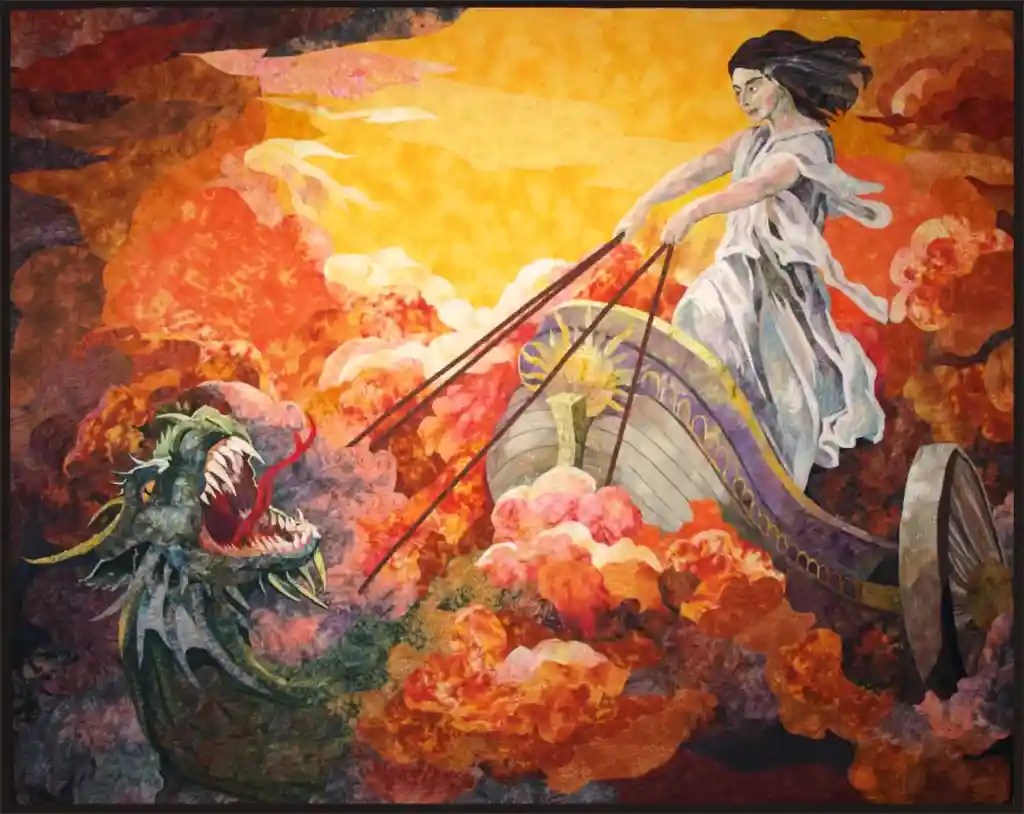
Like many things we know about drama, the idea goes back to the ancient Greeks, whose playwrights used it to great effect, Aeschylus and Euripides among them. Euripides most memorably turned to deus ex machina in Medea, where the title character—having been cheated on by her husband Jason—kills Jason’s mistress and their own two children. Guilty both of murder and infanticide, Medea seems hopeless and bound for damnation—until a machine, actually a crane shaped like a chariot drawn by dragons, emerges from behind the stage. It has been sent by Medea’s grandfather, the sun-god Helios, to pluck Medea away from her husband and from the coils of human justice and deliver her to the safety of Athens.

Was it fair of the gods to save Medea from the punishment awaiting her on earth? It’s arguable, but more than a device to resolve a messy plot, the “god out of the machine” was meant to remind the Athenian audience that a higher order of justice obtained, and that when humanity became too entangled in its own predicaments, then it was time for the gods to take over.

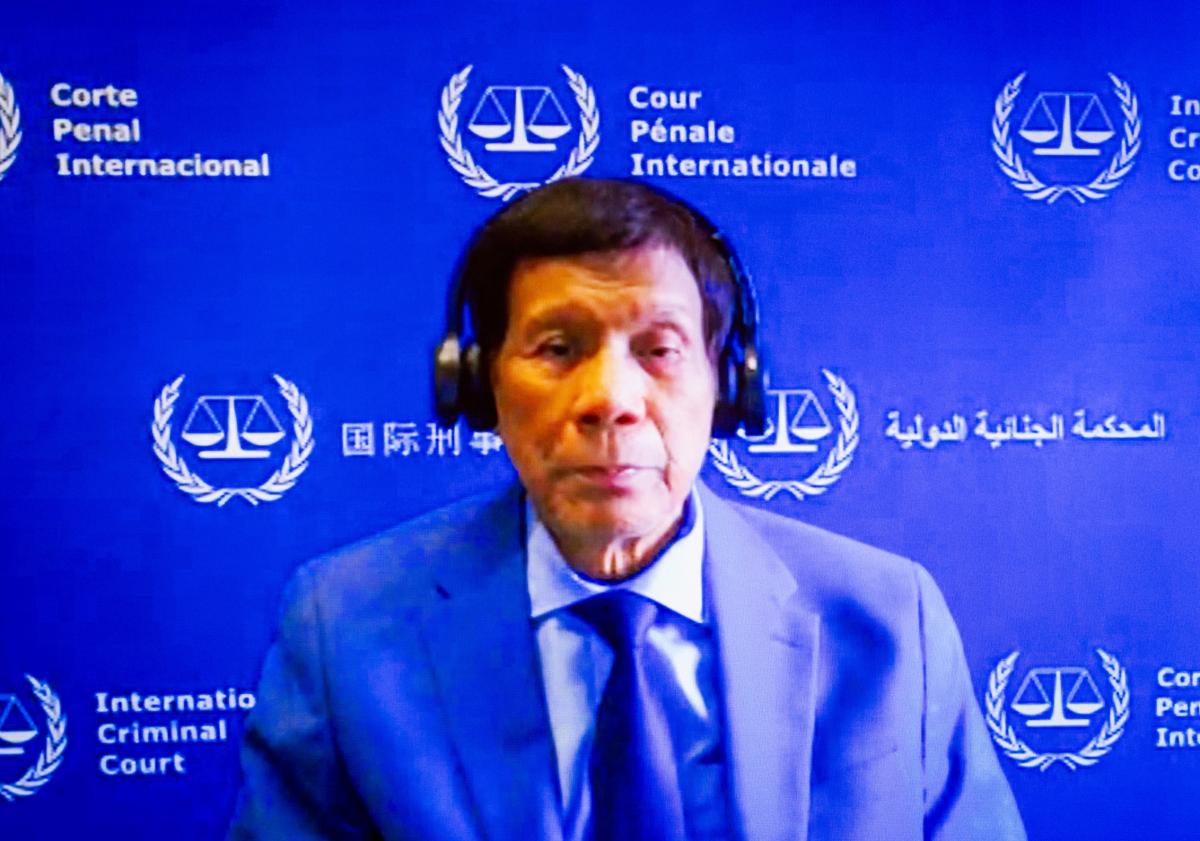
A lot of this swept through my mind last week as the drama of Rodrigo Duterte’s arrest and express delivery to the International Criminal Court at the Hague played out on TV and social media. Had the gods come out of the machine to impose divine justice? It had seemed nearly impossible a few years ago, when Digong was still flaunting his untouchability and taunting the ICC to come and get him. Well, we all know what happened since then—and they did. 

We understand just as well that the Marcos administration performed this operation not out of some abounding sense of justice or because it had suddenly acquired a conscience and realized the evil with which it had “uniteamed” to electoral victory in 2022. “We did what we had to do,” President Marcos Jr. explained on TV, with deadpan truthfulness—referring superficially to the Philippines’ obligation to honor its commitment to Interpol, but subtextually to the irresistible opportunity to cripple someone who had become a political arch-enemy, and providentially gain the support of masses of people harmed and disaffected by Duterte’s butchery.

The outswelling of that support—at least for Digong’s arrest and deportation—was spontaneous and sincere. Not since the Marcoses’ departure at EDSA had I felt such relief and exhilaration—and surely the irony would not have been lost on BBM, who knows what it was like to leave on a jetplane, kicking and dragging, for an uncertain future.

And what I say next may go against the grain of everything I have said and thought about the Marcoses, but no matter what ulterior motives may have come into play in this episode of the Duterte-ICC saga, I feel thankful for the resolve and the dispatch that BBM showed in this instance. Along with his administration’s resistance to Chinese aggression in the West Philippine Sea, this will be certain to count among his most positive achievements. 

The great difference between this drama and Medea, as an example of deus ex machina, is that the intervention of the ICC (with BBM helpfully providing the crane) isn’t going to save Duterte, but rather the people whom his presidency soaked in blood. But as with Medea, the “gods” step in when local justice proves impotent or inadequate (and did anyone really believe that Duterte would be hauled before and convicted in a Philippine court of law, when even the Maguindanao Massacre took a full decade to produce convictions for the principals?).

The question now is what next—not for The Great Punisher, for whom a prolonged trial at a cushy court will not be punishment enough, but for the Marcos administration, which suddenly finds itself with more political capital at its disposal, and yet also put itself at greater risk? Surely it must also realize that it not only has committed itself to tearing down the entire House of Duterte and confronting the many millions of voters they still represent, but that it has also set itself up for higher expectations, on pain of suffering the same ignominious fate?

In the hopeful bit of theater playing in my mind, I imagine BBM parlaying the bonus of goodwill he has earned from this maneuver into a broader if not genuine resolution to distance himself further from his predecessor and create a freer and more just society. There are clear and immediate steps he can take in this direction. The first gesture would be the release of all remaining political prisoners, followed by the abolition of the NTF-ELCAC, which no longer serves any useful purpose (not that it ever did). He can root out and punish the enablers and perpetrators of Oplan Tokhang and eliminate oppression and corruption from the mindset of Philippine law enforcement. And then he can begin reforming Philippine governance, starting with the quality of the people he seeks to bring to power—senators, congressmen, and the like.

But then that would be the ultimate deus ex machina, and we have been shaped by experience into a stubbornly disbelieving lot.

Penman No. 457: The Actor as Painter

Penman for Sunday, December 3, 2023

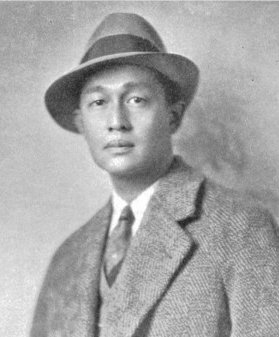
A FEW months ago, I had the good fortune of coming into ownership of four watercolors by Juan Arellano (1888-1960), the famous architect of such landmarks as the Metropolitan Theater, the Post Office Building, and the Legislative Building (now the National Museum). Less known to many was that Arellano’s first love was painting, and it was a passion he pursued throughout his life. 

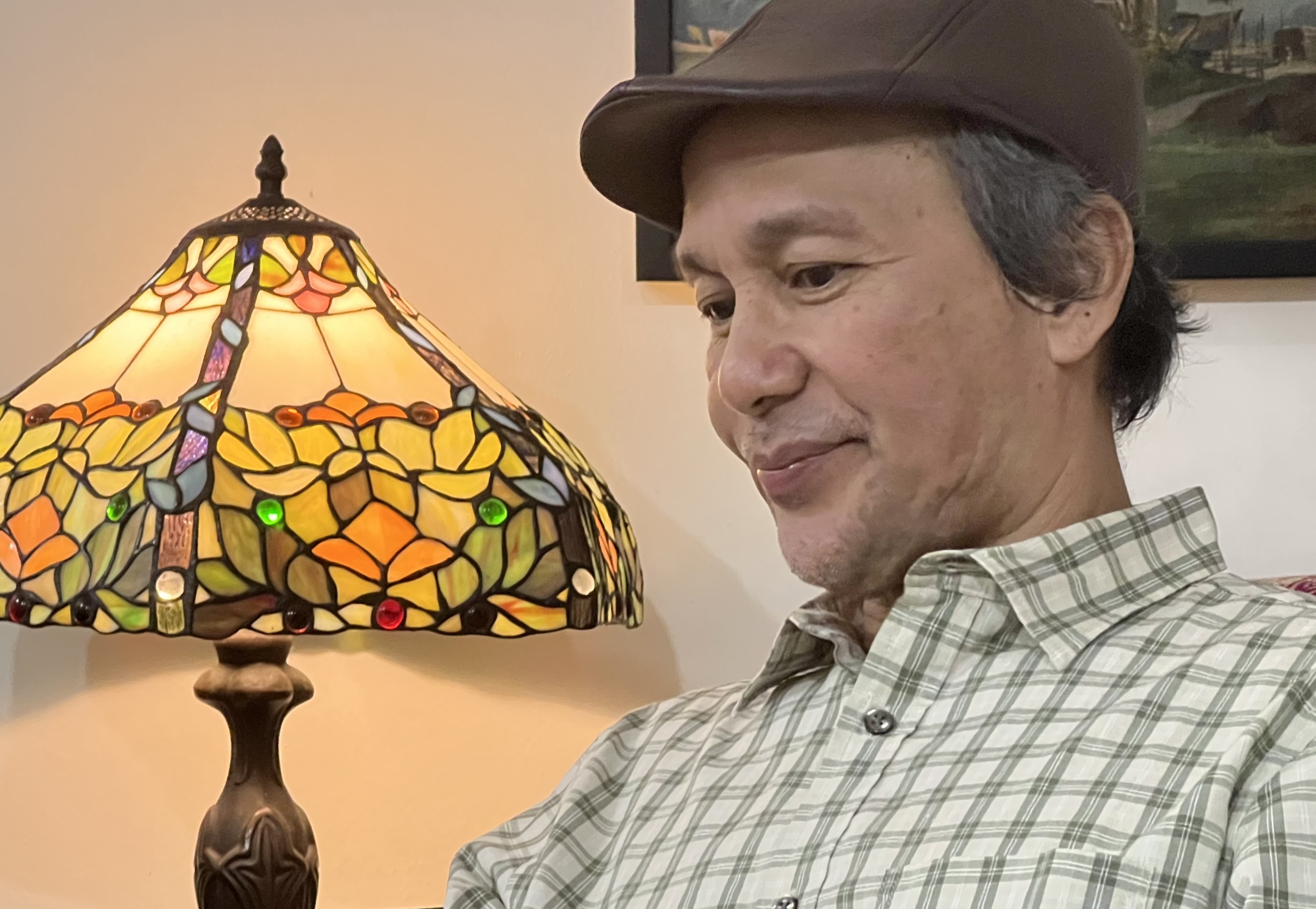
My inquiries into the background of my paintings led me to cross paths—initially online—with Juan’s grandson Raul Arellano, who turned out to be an accomplished painter in his own right. Born in Cagayan de Oro, Raul has been based for almost 30 years now in the United States, but he has recently been returning to the Philippines more often. When, one day, he messaged me to ask if we could meet up, I said yes, eager to learn what he could recall of his grandfather but also to get to know him and his art. 

I’m by no means an art critic, but my wife Beng (a professional art conservator and watercolorist) and I are museum rats and enjoy both traditional and modernist art, and peek into the local art scene when we can. There’s a lot of brilliance and energy out there to be sure, but also much safe and tiresome repetitiveness from artists who’ve settled on a commercial formula, such that their work no longer exudes emotional power. Many young painters—like their writing counterparts whom I meet at workshops and teach in school—also seem to think that the only worthy subject is death and despair, which invariably means dark canvases devoid of any suggestion of wonder and mystery, let alone delight.

When I saw Raul’s work online, even before we met, what leapt out at me was exactly what I found missing in many others—an element of metaphysical magic, fantastical but relatable, the kind of paintings you want to return to over and over again. I saw flashes of Henri Rousseau, Van Gogh, and William Blake, among others, but it was still all him—not his grandfather, for sure—trying to tell me something I hadn’t really thought much about before.

As it turned out, Raul never met his grandfather, who died five years before Raul was born in 1965 (Raul’s father was Juan’s third son Cesar). All he has of him is a self-portrait—and, of course, a passion for art that runs in the family; his cousin Carlos or “Chuckie,” the son of architect Otilio, was a formidable art patron and collector; Chuckie’s younger sister Agnes remains one of the country’s leading and most imaginative sculptors; Cesar’s brother Salvador or “Dodong” Arellano became a well-known painter of horses and game fowl in California.

Raul’s path to painting was neither straight nor easy. His first great obsession was acting, to the point of becoming a resident actor of Tanghalang Pilipino at the Cultural Center of the Philippines, playing a smoldering Tony Javier in a production of Nick Joaquin’s “Portrait of the Artist as Filipino.” “We were trained in method acting,” says Raul, “and it got to the point that I became so immersed in my character that other people on the set found it unnerving.” He would go on to act in the movies, in the crime drama Akin ang Puri(1996) directed by Toto Natividad, Batang West Side (2001) directed by Lav Diaz, and Himpapawid (2009) directed by Raymond Red. Of his performance in Himpapawid, reviewer Jude Bautista noted that “Raul Arellano as the main character is able to show the frustrations of the common man without going over the top. There is a quiet intensity in his performance.”

That intensity had been brewing in Raul the person for some time, leading to and compounded by domestic problems. In 1995, he took the opportunity to go on a film fellowship at the Art Institute of Chicago. The Midwest was too cold so he later moved to California, and quickly realized what all dreamseekers in LA wake up to: that he had to start all over again at the bottom rung of the ladder. “I swept floors. I learned how to operate a forklift. When the big steel container that you’re lifting comes crashing to the ground, you can feel the jolt running down your spine. I was in a lot of pain, but I kept on. When I left, my boss was very sorry to lose me.”

He set up a business restoring American muscle cars. “I had a Russian mechanic, but I took care of the interiors myself. I specialized in Mustangs—you could show me a Ford screw and I could tell you the year and model it came from. I had a fastback Mustang but my best sale was a Shelby Cobra.” But again another personal crisis blew up and he enrolled in a community college to study painting. He left school once he felt he had learned enough about the history, the theory, and the techniques of art to express himself. “Something in me was always wanting to come out, and I found that release in painting. I had no models or artists I looked up to. I just wanted to express myself, to work from my subconscious. I found that I could work best in a cemetery, because it was so peaceful. I still like working in the open, in plein air.”

The lure of painting proved irresistible. He worked in oils, and one of his favorite paints was lead white, popularly used in the past for its visual qualities and permanence. However, it was banned in the 1970s because of the danger of lead poisoning—a danger Raul was well aware of but embraced. “I found a stash of old paint and bought it all up. I was inhaling it every day and I could feel it doing strange things to my head.”

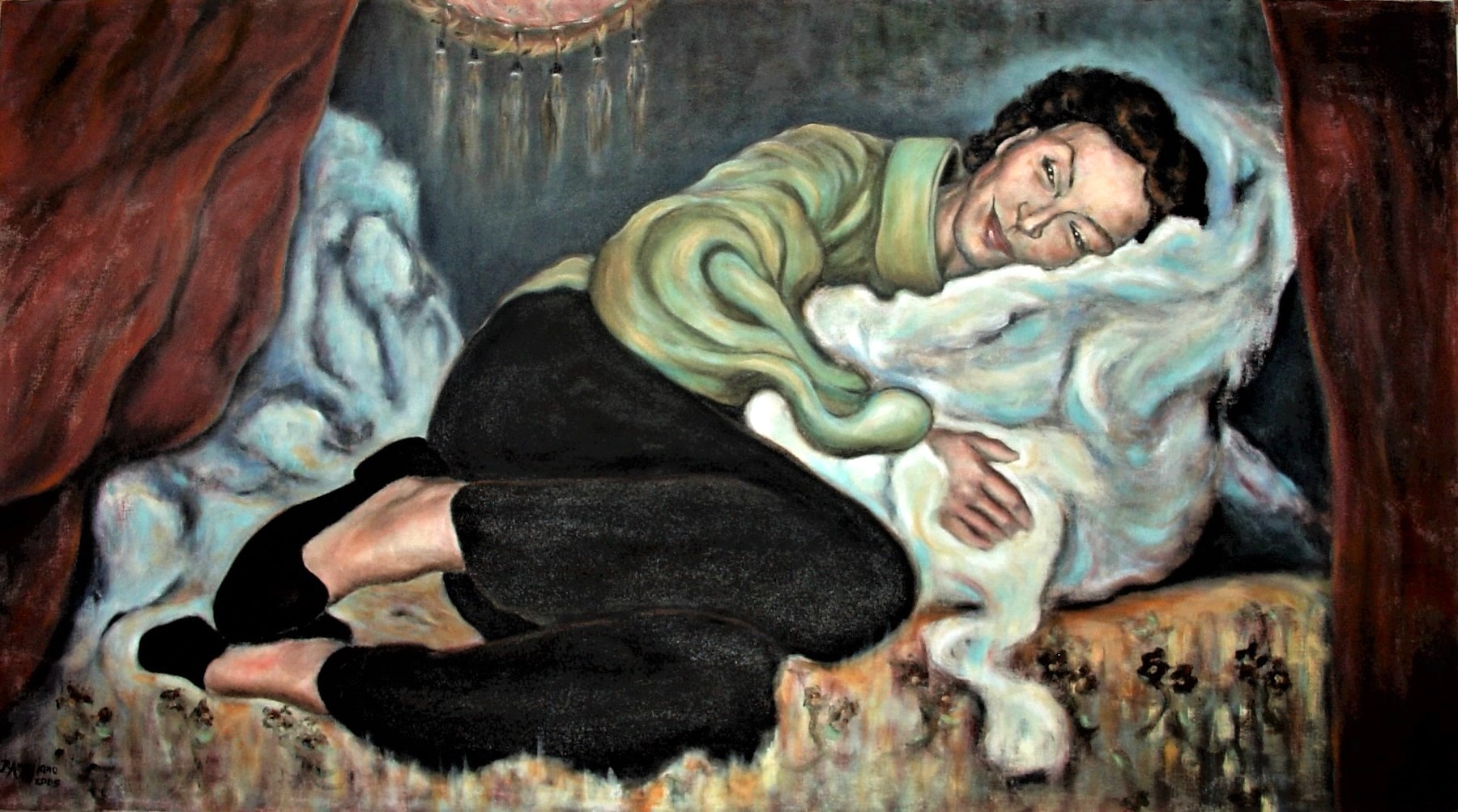
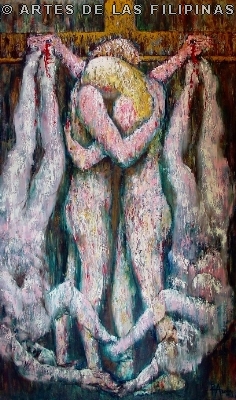
He returned to Manila every now and then and even resumed acting, but the death of a close friend shook him up badly. “I was all set to come out with an exhibit of traditional, representational paintings, but I was overcome with grief over the loss of my friend, and I just had to express that feeling in my work. So I put all my old work aside and began ‘Crucifixion.’” That work is one of his most impressive and a personal favorite, painted in 2004 at the outbreak of the war in Iraq.

(Image from artesdelasfilipinas.com)

Today Raul spends time in a small farm in Batangas, enjoying quick sketches in the sylvan scenery, and contemplating the possibility of exhibiting in his homeland. With him having gone from peace to pain, from calm to conflict and back again, one can only wonder what new work will emerge from this phase of his life. I find myself wishing for his playfulness to return, but that of course depends on what Raul Arellano is feeling inside.

(More here on Raul Arellano: https://artesdelasfilipinas.com/archives/85/the-art-and-thought-of-raul-arellano-original-)

Qwertyman No. 63: The Slaughter of Innocents

Penman for Monday, October 16, 2023

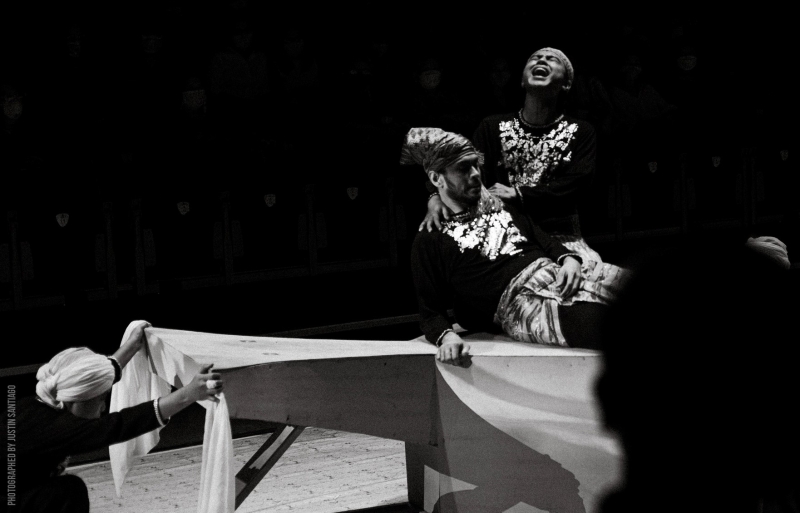
TWO SATURDAYS ago, my wife Beng and I sat enthralled as we watched a brilliant performance of the play “Anak Datu” at the CCP’s Black Box Theater. It was a play that, among other objectives, sought to trace the roots of the armed conflict in Mindanao to a series of massacres perpetrated by the military against Muslims just before and after the declaration of martial law. It began with the well-documented killings of young Tausug recruits being trained in Corregidor for an abortive invasion of Sabah in 1968 and went on to the less-known Malisbong massacre in Sultan Kudarat on September 24, 1974, in which 1,500 men were reportedly killed.

For us—and I’m sure for the packed crowd in the theater as well—it was a harrowing revelation. We had known about the troubles in Jolo and had followed the rise of the MNLF, but to most Manileños then and now, Mindanao was another country, tourist-pretty but woeful, home to exotic fruits, fabrics, and dances, but otherwise mired in poverty, corruption, and bloodshed. The play tries to break through those stereotypes even as it acknowledges the complexities of politics and culture as they apply to Mindanao, especially to people just trying to catch a breath of peace.

In pointed irony, earlier that same day on the other side of the world, Hamas militants had begun to mount an attack on Israel, eventually killing about 1,000 people and taking hundreds more hostage. In retaliation, Israel bombed the Gaza Strip and killed about as many. This nightmarish war of attrition is still continuing more than a week on, with no clear end in sight.

Like many Filipinos far from that war zone, all we could do was to mutter prayers for the dead, the displaced, and the suffering on both sides. On top of the war in Ukraine and natural disasters ravaging the planet, it seemed like the world was in the sorriest mess it had ever been since the Second World War, emerging from a pandemic only to destroy itself with more willful deliberation.

I know that some were not so generous as to seek or see a moral balance, and immediately identified with Israel, invoking the Bible, Washington, and common sense, especially with the reports and pictures of brave Filipino nurses standing their ground and being murdered by Hamas.

For certain, whatever and however long the history may be behind the legitimate grievances of Palestinians suffering under Israeli occupation, Hamas’ brutal assault on ordinary citizens will not win them any sympathy, at least in the Western media which we depend on for our news. We know that there has to be another side to the story, perhaps one just as terrifying, but we go with what we see. It could be argued that Hamas’ actions were the result of decades of oppression, like a man running amok; but this was cold premeditation, factoring in the inevitable retaliation it would provoke.

Still, with both Jews and Palestinians fighting for survival, we forget that not all Palestinians are Hamas, and that not all Israelis supported Netanyahu. The guns will drown out the voices of moderation in both camps, those who understand that there can be no real victors in these messy wars, only losers. Lives are lost, the truth is lost, our humanity is lost.

Countless posts on social media claim that the Lord has already taken a side in the conflict. But not being particularly devout, I remember only how often the Almighty’s name has been invoked to kill. The skeptic in me suspects that the Lord is, must be, indifferent, so we can use our own hearts and minds to sort things out; he will not play deus ex machina.

Nothing, not even quoted Scripture, will convince me that the slaughter of innocents in the name of God, Allah, or Yahweh is morally justified. It has happened, it happens, and will always happen because of our brutish nature, but that will be an explanation, not an excuse. The hard-nosed men in the war room will dismiss all this preciousness as so much sentimental handwringing, and raise the killer question: “If the enemy goes for your wife and daughter, won’t you go for theirs?” Revenge and retribution, an eye for an eye, will prevail over reason and compassion, often devalued as suicidal weakness.

Come to think of it, no one ever called the nuclear bombings of Hiroshima and Nagasaki—in which over 100,000 people died—“massacres.” Most of them were ordinary citizens just going about their business, with little or no say in their country’s militarist policies. Instead, conventional political and military wisdom has always insisted that these deaths were necessary for other deaths—particularly American, in a projected invasion—to be averted. One hundred thousand innocent lives wiped off the face of the earth in a literal flash, and no one in power even blinked, because of course it was justified as the lesser evil, made more acceptable by the savagery unleashed by Japanese soldiers on their captive populations.

In graduate school, I developed a keen and rather morbid interest in a genre of English Renaissance drama called “revenge tragedy” (think “Hamlet,” but there were many cruder, bloodier and frankly more entertaining examples). The object of all those plays was to show that “revengers” begin with a just cause, the victims of insufferable oppression and humiliation. But ultimately they prove little better than the beasts they seek to extinguish, wreaking havoc on the innocent. They cross a line, and lose all moral superiority.

That line is drawn somewhere in the sands of the Middle East, but  just as importantly, it also crosses our conscience. When we recall how easy it was for many Filipinos—even those who professed to be devout Christians—to condone and even applaud extrajudicial killings, thinking that society was merely ridding itself of riff-raff, we see how righteousness and evil can so comfortably cohabit.

I have no easy and firm conclusions to draw from this most recent conflagration, and I feel that we have to look beyond the intricacies of history and politics for answers. Diplomats, scholars, and zealots have tried almost all the formulas at their disposal, to no avail—with the notable exception of the two-state policy, an elusive political solution that will come with its own challenges.

It may be that only the hopelessly naïve or the naively hopeful—and I plead guilty—still imagine that any kind of just and enduring peace can be achieved in these circumstances. But before or while we condemn barbarity elsewhere, we have our own hordes of howling ghosts to confront, coming out of the Chinese pogroms under the Spanish, Bud Dajo, Samar, Corregidor, Malisbong, Mendiola, Maguindanao, and Mamasapano, among others. Let more “Anak Datus” be written, to lift and save us from Facebook’s summary judgments.

(Image from broadway world.com)

Penman No. 440: A Classic Reborn

Penman for Sunday, July 3, 2022

I’VE LONG believed that my late friend and contemporary, Bienvenido “Boy” M. Noriega, Jr., was one of our very best modern playwrights, and indeed worthy of a National Artist Award. I—and many who knew him and his work—had been hoping that he would get that distinction this year, but too much time may have passed since he left us 28 years ago for critics to recall just how good he was.

Still, there’s great news today for Boy’s fans, and for everyone eager for the return of great theater to the Philippine stage. The seminal Noriega play, “Bayan-Bayanan,” which premiered at the CCP’s Little Theater in 1975 and won that year’s Grand Prize for the Full-Length Play in the Palancas, is going to be shown again in Manila this month, rendered as a new musical, “Bayan Bayanan: Letters from Home.”

Directed by Dr. Anton Juan and produced by the Erehwon Center for the Arts with support from the Embassy of France, the updated play promises to offer fresh insights into the OFW experience, having been originally written and presented long before overseas Filipino workers came to be known as OFWs. Back in the early ‘70s, as martial law descended on the country, they were all just exiles, migrants, transients, and vagabonds, some by choice, others by the lack of it. In Europe, and specifically in Geneva where the play is set, Filipinos tended to be middle-class professionals drawn there by their work, as Boy Noriega himself was as a government economist in his early 20s attending global trade negotiations. 

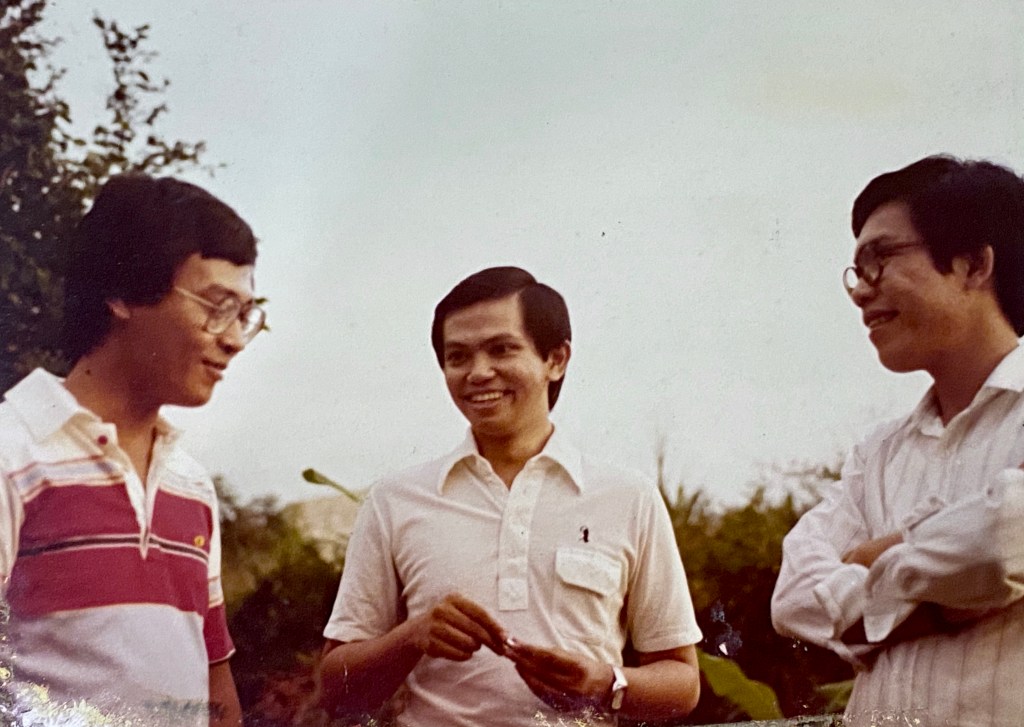
As I’ve written about before, Boy and I were very close friends—and fervid contest competitors—in those days. We were UP Alpha Sigma fraternity brothers who found ourselves working in literally the same office at NEDA Padre Faura. He was two years older than me, so I looked up to him as a mentor, and when he went to Harvard for graduate school and then began flying to all these conferences abroad, he wrote me long letters to share his exhilaration at studying our heroes like Chekhov and Ibsen (he was enrolled in Public Administration, but took side courses in Drama). When he came home, we spent many lunch hours talking about the plays we were writing or wanted to write. 

Boy announced himself to Philippine theater in the most spectacular way—by writing “Bayan-Bayanan” and having it presented at the CCP almost at the very start of his playwriting career. Immediately you knew that you were witnessing a major talent unfolding. His kind of drama was quiet, thoughtful, cumulative in its impact. Writing under martial law and being somewhat more politically engaged, I resorted to historical allegory, but Boy took the present head-on, albeit from another angle, of the young Filipino discovering the world in both geographical and emotional terms.

When I heard that Erehwon was planning to revive “Bayan-Bayanan” as a musical, I was delighted and at the same time a bit concerned how Boy’s material was going to be handled almost half a century down the road. But my worries lifted when I learned that the revival was going to be directed by none other than Anton Juan, who knows the play better than anyone else around, having directed it in Athens, London, Geneva, Paris, Chicago, and Toronto, and having himself been the kind of global traveler that Boy dwells on. “I have directed this play many times before in Europe, and each time there is always something new,” Anton says. “It grows like a pearl, takes shape in the memory and hearts of those who perform it and those who watch it: why? Because it is real. It is grounded on real characters we can identify with, in all their beauty and vulnerability, in all their strengths and their weaknesses.”

Anton Juan composed some of the new songs for the play, along with Cleofe Guangko-Casambre, who had composed for the play “‘Rizal’s Sweet Stranger;” Russ Narcies Cabico, also a theater and television actor and singer; pianist-composer Andrew Bryan Sapigao; and composer-musical arranger Jonathan Cruz.

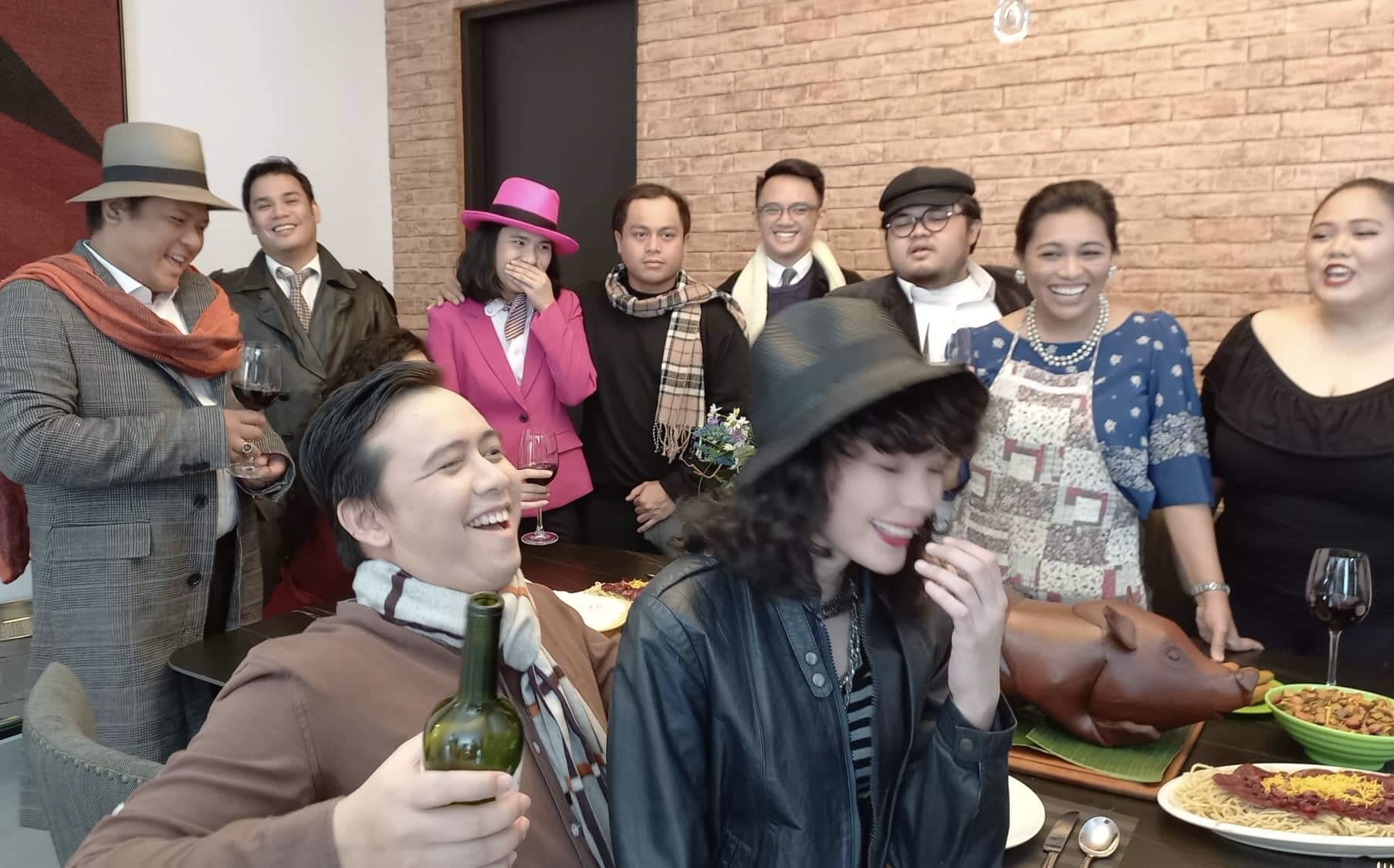
The cast comprises a mix of veterans and newcomers. Professional theater actress and singer Banaue Miclat-Janssen portrays the central character Manang, while Dino—the “Boy” in the play—is portrayed by theater actor and classically trained singer Carlo Mañalac. Supporting them are Ava Olivia Santos, Roxy Aldiosa, Carlo Angelo Falcis, Jacinta Remulla, Richard Macaroyo, Greg de Leon, and Jane Wee. Of special note is the participation of French-Filipino actress Uno Zigelbaum, through the sponsorship of the French Embassy.

The role of the Erehwon Center for the Arts (of which Anton is Creative Director) is also noteworthy. Founded by another old friend of mine, Raffy Benitez, Erehwon has established itself firmly in our country’s cultural landscape as a sponsor of painters, sculptors, musicians, dancers, and writers, who have come to see Erehwon’s Quezon City headquarters—also its performance and exhibition venue—as a haven for the arts at a time when cultural budgets everywhere have fallen. Funded largely by Raffy’s own generosity and by some other patrons, Erehwon hopes that this collaboration with the CCP and the French Embassy will lead to other significant projects that can ultimately be self-sustaining. 

The play will premiere on  the evening of July 15, followed by a 7 pm evening show on July 16 and a 3 pm matinee on July 17, at the CCP’s Tanghalang Nicanor Abelardo. Tickets are available at Ticketworld. See you there!

Penman No. 396: A Playwright for Our Time

Penman for Monday, September 14, 2020

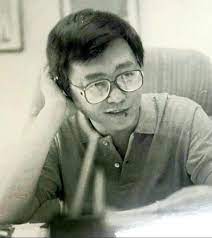
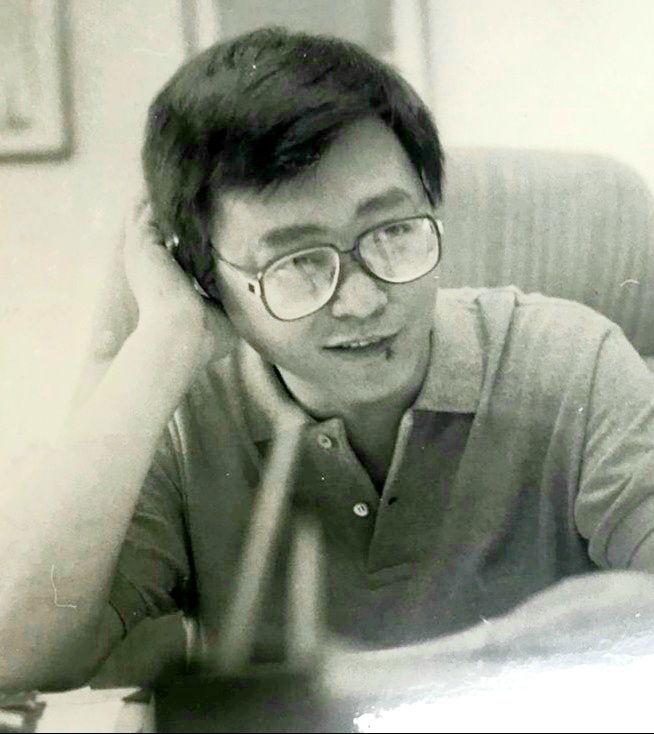
TODAY, SEPTEMBER 14, marks the 26th death anniversary of a dear friend and, for me, one of the best Filipino playwrights of his generation, Bienvenido M. Noriega Jr., or “Boy” as we knew him. 

The literary world is full of poets, fictionists, and essayists, but playwrights are few and far between, and good playwrights come even more rarely. Boy wasn’t just good—he was great, which is a word I don’t use very often with people. He understood and magnified the human condition onstage with uncommon empathy, and without the histrionics that passed for drama in lesser hands. Amazingly, his formal training wasn’t even in Literature or creative writing, but Economics, at which he professionally excelled as well.

He was a friend and mentor, one of the earliest and strongest influences on my own writing. Although just two years older than me, he was streets ahead as far as his grasp of craft and his artistic vision were concerned; while I was flailing around for material and treatment, he knew what he was doing, and generously led me along.

Boy and I met as fraternity brothers when I joined the Alpha Sigma as a UP freshman in 1971; already precocious, he would graduate that year, cum laude, with a degree in Economics, at age 18. He would go on to complete his MA in Economics within the next two years. 

I caught up with him again at the National Economic and Development Authority (NEDA) in 1973, where, fresh out of martial law prison, I had landed a writing job. Boy was already there, at 21 possibly the youngest director in government, in charge of the Policy Coordination Staff. We became “Sicat boys” working under the indulgent eye of our boss, Dr. Gerry Sicat, along with the likes of Federico “Poch” Macaranas and Aniceto “Chito” Sobrepeña. Boy and I fancied ourselves playwrights at that time—he had written a play in UP under the tutelage of Prof. Amelia Lapeña Bonifacio, and I had already written plays for PETA and “Balintataw”—and so a fierce but friendly rivalry was born.

We joined playwriting competitions with gleeful passion, eager to outdo one another. In 1976, I won first prize at the CCP playwriting contest with “Madilim ang Gabi sa Laot;” Boy won second prize with “Ramona Reyes ng Forbes Park.” That was the first and last time I would ever win over Boy, to whom I would finish second or third in the CCPs and Palancas in the years to come. It came to a point when, sick of losing out to him (and after I had watched and applauded his masterpiece, “Bayan-Bayanan”), I decided to pack up and move to another medium—the short story in English—where I felt safely out of his reach. 

But our friendship flourished, and we spent many lunches in Ermita talking about drama, writing, and all the things we wanted to do. When he was sent by NEDA to Harvard in 1979 for his MPA, and later to Columbia for further studies, he snuck out of his Economics routine and took extra classes in Theater and Film. In long, handwritten letters which I still keep, he shared his discoveries with me—about, say, the works of Ibsen and Chekhov—which I eagerly soaked up. I had dropped out of UP after my freshman year to go into the protest movement fulltime, and then to work and to marry, and I knew very little about theater and writing except from what I had imbibed at PETA and from my own limited reading. I was hungry for mentorship, for someone to tell me right from wrong and good from bad, and Boy provided that at a crucial time.

Most helpfully, Boy taught me about Chekhov and indirection, the art of saying something by saying something else. At a time when my own writing was treading history and politics, Boy grounded me by going straight to the heart of things. “You know, Butch,” he told me one day as we finished lunch, “I’ve figured out that there’s really only one thing that people are after, and that’s happiness.” That remark has stayed with me all these years.

In 1984—after I had gone back to UP to finish my long-delayed AB—I chose to write about the drama of Bienvenido M. Noriega Jr. for my baby thesis, with another mentor, Franz Arcellana, as my adviser. I recently unearthed my typewritten copy of that thesis, and it’s remarkable how fresh his words remain. I quote: “The quest for happiness is an obsessive concern with Noriega—‘personal happiness,’ he emphasizes, ‘instead of social utopia, regardless of social conditions.’ The hitch, in Noriega’s scheme of things, is that such happiness can often only be attained through love, and love is the most difficult thing in the world to manage.” A quarter-century after his death, he remains a playwright for our time.

I was on a writing fellowship at Hawthornden Castle in Scotland in September 1994, working on what became Penmanship and Other Stories, when I received news of Boy’s passing from cancer through a phone call; there was no email and no Internet at the castle then, no way to tweet my grief, as we might do these days. It saddened me deeply; he was too young to go at 42, I thought—and I felt an even more urgent need to write while I could. Four years later both of us were named to the CCP Centennial Honors List, a joyous moment we should have celebrated together.

I thought of Boy Noriega again recently when I read about the nominations being open for the next round of the National Artist Awards. I think it’s time, brother, I think it’s time.

Penman No. 131: Museums and Musicals (Part 2)

IMG_5928Penman for Monday, January 12, 2015


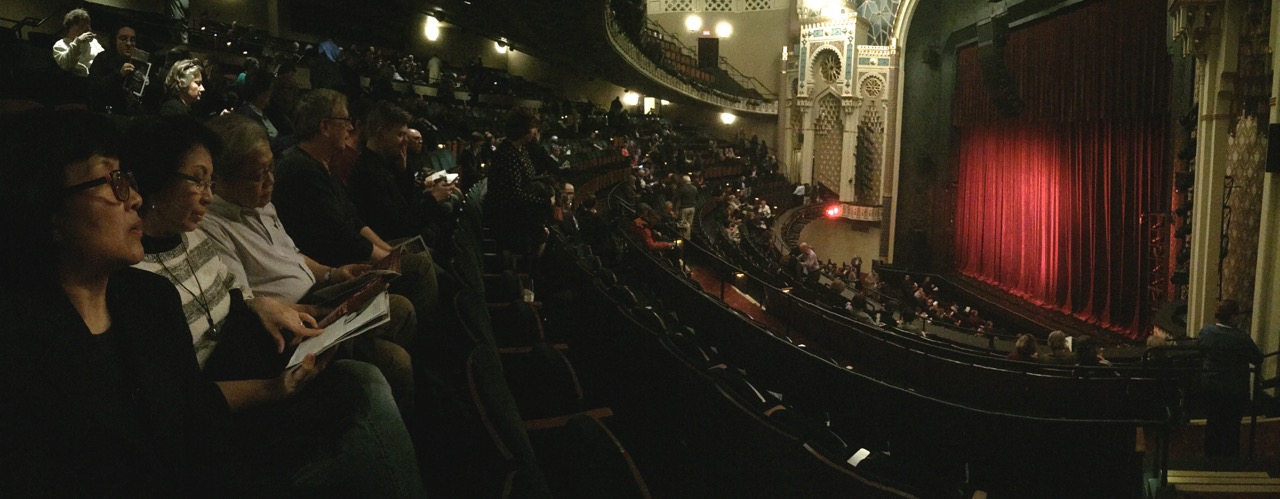
LAST WEEK I wrote about museums as a popular form of American entertainment and education, reporting in particular on my encounter with the MacArthur Memorial in Norfolk, Virginia. Musicals are arguably no less educational, except that they educate the heart and spirit rather than the mind.

There seems to be something fundamentally silly about people suddenly breaking into song in moments of high tension (in Bollywood, of course, they’d start shimmying and shaking), but the truth of the matter is (and the magic of the musical is) that it feels just right, and that the characters are singing exactly what we’re feeling. When Nancy sings “As Long as He Needs Me” in “Oliver” or when Tuptim and Lun Tha bewail their lot in “We Kiss in a Shadow” in “The King and I,” we absolutely understand what’s going on, and root even for the most ill-fated love.

Sometimes silliness is pure fun: who could have resisted Mary Poppins (except her famously persnickety creator, P. L. Travers) trilling “Supercalifragilisticexpialidocious”? Some songs just give you a lift to sing, like “On the Street Where You Live” from “My Fair Lady,” “Till There Was You” from “The Music Man,” and “The Impossible Dream” from “Man of La Mancha.”

And then there are those rare and very strange moments when a song from a musical just walks into your life, providing the perfect refrain for the occasion. This happened to me 40 years ago, as I waited outside the maternity ward while Beng was giving birth; at that very instant, as if on cue, a song came on over the PA system, and it was the “My Boy Bill Soliloquy” from “Carousel,” where the expectant father wonders what it would be like if the son he expects turns out to be a girl… as our Demi was.

I don’t know what it was that drew me to musicals when I was a young boy growing up in Pasig, except the long hot summer afternoons better spent in a cool dark moviehouse than under a tin roof at home. Ours was a moviegoing family, and I’d already seen “South Pacific,” “The King and I” and “West Side Story” in some theater downtown on Avenida Rizal, but the musical that got me hooked—maybe because it coincided with the onset of puberty—was “The Sound of Music.” What this chaste production full of nuns and Nazis had to do with adolescence could be answered by the doe-eyed Brigitta, aka Angela Cartwright, who was Penny in “Lost in Space”; of course I also nursed a crush on Julie Andrews, but she could’ve been my mom. I watched “The Sound of Music” six, seven times until I could recite the libretto and sing the songs by heart. (For fans of “The Sound of Music,” there’s a very interesting story about the writing of the song “Edelweiss” here: http://www.steynonline.com/6683/edelweiss.)

Prurient considerations aside, the old-fashioned Broadway musical (which we Pinoys got in the movie version) had something going for it that Westerns, thrillers, and spy movies hardly ever did: an insistent optimism, even in the darkest and direst of circumstances. “West Side Story” doesn’t end with just a death; it ends with the song “Somewhere,” and a plaintive hope for “peace and quiet and open air;” “Carousel” ends with the redemption of the likeable scoundrel Billy Bigelow, promising that “You’ll Never Walk Alone.” (Billy may have gone to heaven, but critics gave “Carousel” hell for changing the ending of the original play on which it had been based.) “Camelot” was probably the first musical I saw that didn’t come with a happy ending, but even Lerner and Loewe couldn’t possibly undo centuries of Arthurian lore.

In a time of AIDS, 9-11, tsunamis, and ISIS, the darkening of the American musical was probably inevitable if not mandatory. One of art’s most necessary functions is to provide relief to the distressed even by the mere recognition and reflection of pain, and today’s less melodic, more dissonant musicals do that, acknowledging that rainbows don’t come with pots of gold, and may not even come at all after a long day’s rain.

I watched my first live Broadway musical—Fats Waller’s “Ain’t Misbehavin’,” which was actually more of a revue—in 1980, from behind a post, the cheapest seat in the house. Since then I’ve been able to afford a few seats with a view, though not by much; as I reported in this corner a couple of years ago, my happiest hours in the musical theater came not on Broadway but in Melbourne, during a rousing Australian production of “South Pacific” that I watched from the topmost row where I sat all by my lonesome, to the amused consternation of the ushers, who urged me to move on down after the lights had dimmed. But I declined, because where I was, I could merrily sing along to “Dites-moi, Pourquois” and “There Is Nothing Like a Dame.” Having outgrown Angela Cartwright, I now rank “South Pacific” my most favorite of musicals, with “West Side Story” a close second (Beng has a soft spot for “The King and I,” and never fails to cry when Mongkut dies).

On this most recent trip to the States, we caught “Evita” (my third favorite) at the Kennedy Center in DC and a trio of shows in New York: “From Burlesque to Broadway,” a revue of an art form that I wish I’d seen at a more responsive age; “The Bandwagon,” the revival of a forgotten art-about-art opus with three showstoppers (“You and the Night and the Music,” “That’s Entertainment,” and “Dancing in the Dark”) and, finally, the Rockettes Christmas Special, classic Americana.

We stepped out of the theaters freezing in the cold but warm and dizzy with song, fortified against the inevitable anxieties and disappointments of another day.


[Images from flixster.com, childstar.com, musicalheaven,com, and amazon.com]