Qwertyman No. 132: A False Horizon

Qwertyman for Monday, February 10, 2025

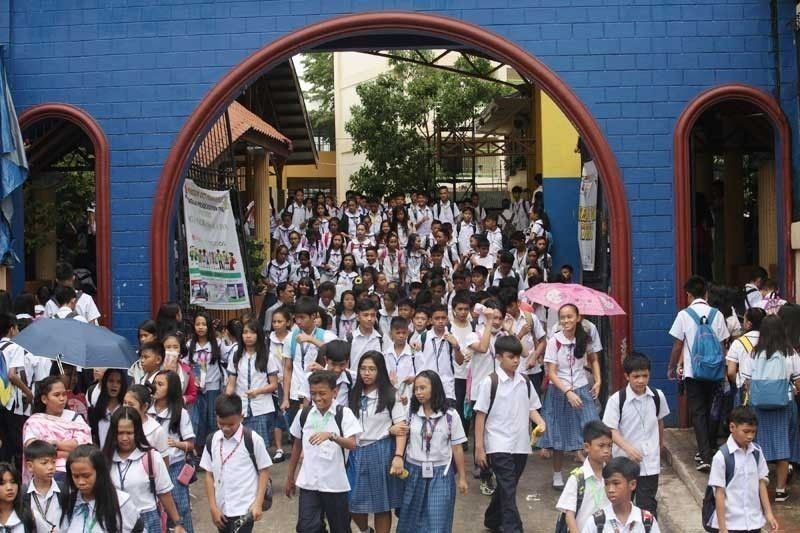
I DON’T know why, but like the proverbial bad penny that keeps turning up (English teachers: note the British idiom), every few years, some Filipino school announces its adoption of an “English-only” language policy on its campus, ostensibly in the service of a sublime objective such as “global competitiveness” or “global competence.”

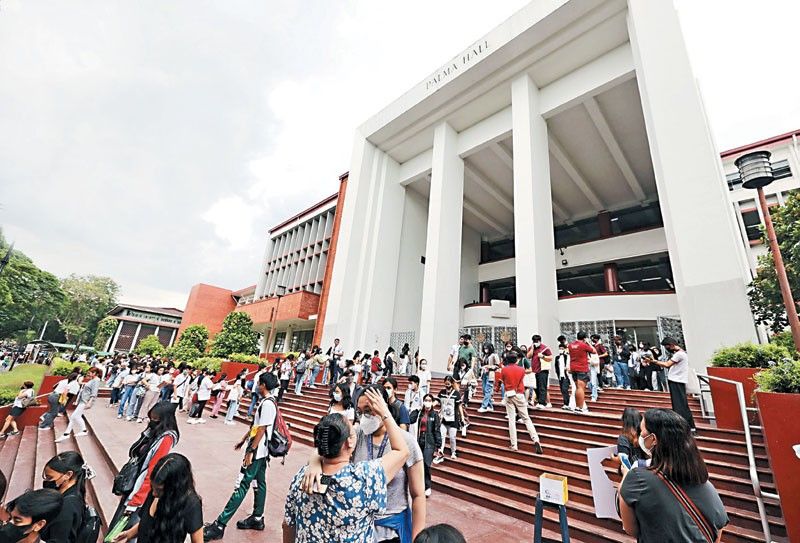
This time around, it’s the Pamantasan ng Cabuyao that’s enforcing the rule. PNC president Librado Dimaunahan has issued a memo declaring that “In line with our vision of developing globally competitive and world class students, the Pamantasan ng Cabuyao (University of Cabuyao) is now an English-speaking campus starting Feb. 03, 2025…. All transactions and engagements with officers, students, employees, and workers should be communicated in English, whether written or otherwise. For strict compliance.” What he wanted to create was no less than “a strong English-speaking environment.” 

A few years ago, it was Cavite State University which required its students, teachers and staff to speak exclusively in English or face punishments like getting your ID confiscated and having to sing the CvSU hymn (in English, of course). Filipino could be used only by maintenance workers—and by others, but only in the restrooms and cafeteria.

I’m not going to add to the brickbats that these ideas have already received, not unreasonably. But I will add my two cents’ worth (my, where do these “brickbats” and “two cents” come from?) to the conversation, as a lifelong user and teacher of the language.

I have a PhD in English—something I don’t often bring up because it sounds so pompous and presumptuous—earned in America where, to my smug satisfaction and my classmates’ consternation, my professor would single out my prose for, among others, its perfect punctuation. I was the only one in our graduate literature class who could explain the difference between parataxis and hypotaxis (no, nothing to do with Yellow Cabs and Uber). Was that global competitiveness? I guess so. Was I proud of my English language skills? Of course. Did it make me or the Philippines any richer? Not a dollar more. Is this what a national language policy should be about? Heck, no.

I’ve done well in English not because I was forced to, but because I love the language, and languages in general. I should have loved Spanish—discovering its beauty too late, when I had to read and translate Federico Garcia Lorca for a grad-school exam—but I didn’t, because we had been forced by our curriculum to take so many units of it (24, in my mother’s time). I started on German and French in high school and college and am picking German up again on Duolingo, in preparation for the forthcoming Frankfurt Book Fair. (I write plays and screenplays in Filipino, despite being born in Romblon.)

What I’ve realized from studying these languages and from a lifetime of writing, speaking, and using English is that in our country of over a hundred languages, English can’t be taught and learned well by exclusively using English. I’m learning German on Duolingo using English.

I don’t mind saying that when I teach creative writing or literature in English, I pause when my students can’t seem to understand what the text is saying—and then we pursue the same line of inquiry in Filipino, and everybody goes “Ah!” It makes simple teaching sense. You can’t get more out of a student—in English—if he or she can’t understand or even recognize the problem, in English. 

And just to be clear, these are questions of comprehension and interpretation that even native speakers of English would have a hard time with. (How do I know? I taught the American short story to American undergraduates in Wisconsin.) These are questions like “So what’s John Updike saying about the position of the rebel or nonconformist in society at the end of his story ‘A&P’?” That’s best answerable if you also discuss as we do what America was like in the 1960s, with Vietnam, Woodstock, the civil rights movement, and the moon landing in the background. (I always tell my students that we’re not studying American literature and history to become Americans, but to become better and wiser Filipinos.) 

Boomers like me like to recall that in many private schools of our time, students were fined five centavos for every instance they were caught using Filipino. Some may find that quaint or even charming, but if you think anyone learned and loved English because of these stupid rules, think again. Students learn good English from good teachers who don’t teach English as a grammar rulebook but as a road map or even a cheat sheet to an adventure.

English is best learned along the way of learning something else—like how the world works, in science and literature—as a key to unlocking knowledge and meaning. English proficiency all by itself is a non-goal, a false horizon that can delude people into believing that they’ve arrived. Arrived where? What for?

All the English in the world isn’t going to turn the Philippines into an economic powerhouse—which Japan, China, Russia, and Germany managed to become without a mandatory word of English in their curricula from decades back. Better English could make us become more employable as waiters, domestic helpers, and seamen—and I’m not downplaying this, because the language does give us an advantage in those markets—but these jobs, noble as they are, aren’t what universities were made for.

All the English in the world isn’t going to drive a moral spine up the backs of our leaders. Intolerable as it was, one president’s foul mouth and boorish manners may not be far worse than a General Appropriations Act legitimizing the wholesale thievery of people’s money in perfectly edited English. 

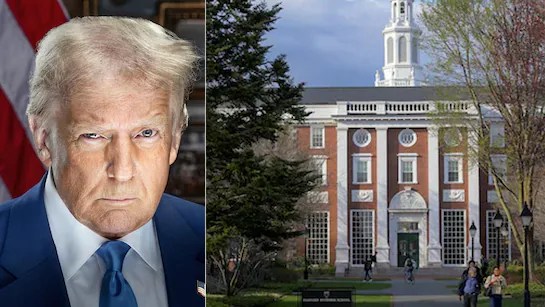
We can speak all we want with an American accent—only to realize that, in Trump’s America, where one of his appointees has declared pointblank that “It takes a competent white man to get things done right,” the color of your skin still matters more than whether you can pronounce “Adirondack” or “tortoise” correctly. Trump’s maniacal edicts and pronouncements—cutting foreign aid, expelling Palestinians so he can turn Gaza into an American beach resort, and turning the FBI and the DOJ into his personal security force and loyalty police—have all been made in his lazy, slurring English, each word delivering chaos and disaster with as much consequence as Hitler’s Nuremberg rants.

More shameful than lack of proficiency in English is lack of proficiency in one’s own language, which I see in the children of parents anxious to “globalize” their kids without mooring them first in their own culture. Those children will be maimed for life, insulated from and unable to communicate with or relate to their common countrymen. We need our own languages to understand ourselves.

Teach good values and good citizenship. Even if that student’s English turns out less than stellar, our country can’t be worse off.

Penman No. 471: A Promise to Keep

Penman for Sunday, February 9, 2025

Now and then we come across stories of foreigners who fall under the spell of the Philippines so completely that wherever else they go, the Philippines and its panoply of wonders—its mangoes, its waters, its sunsets, and above all its smiling people—stay with them, urging them to return, in spirit if not in person.

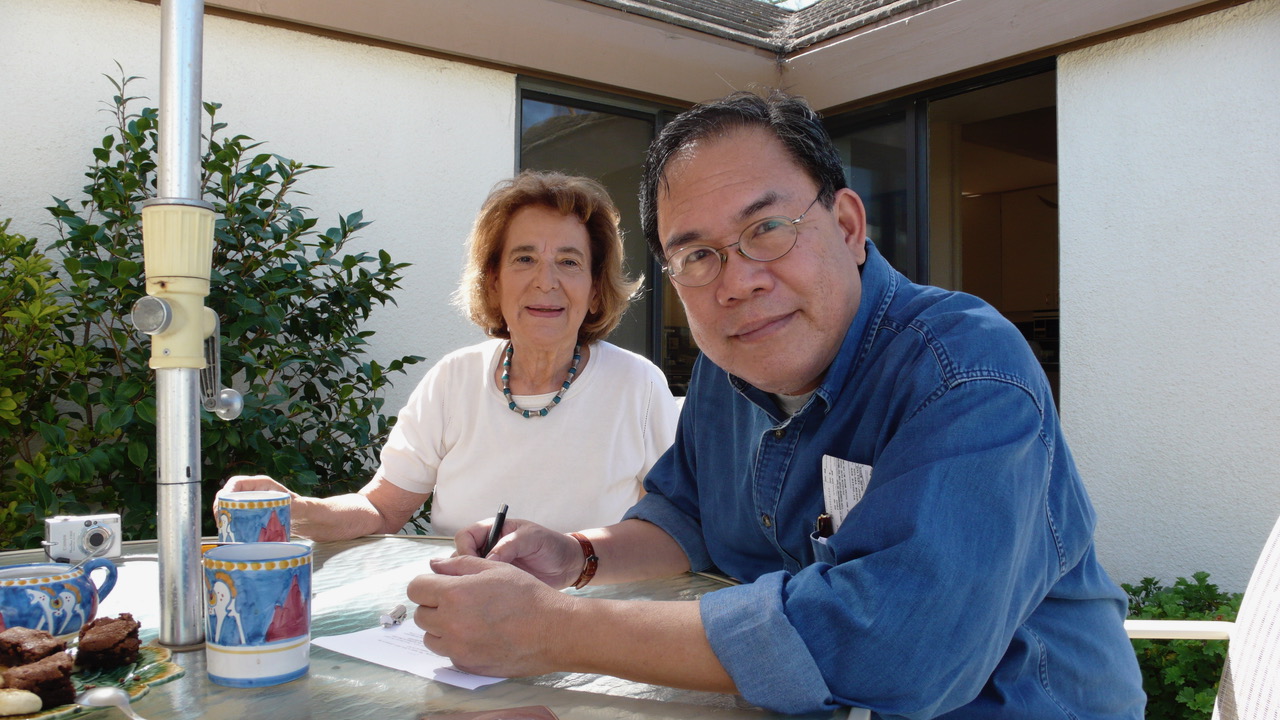
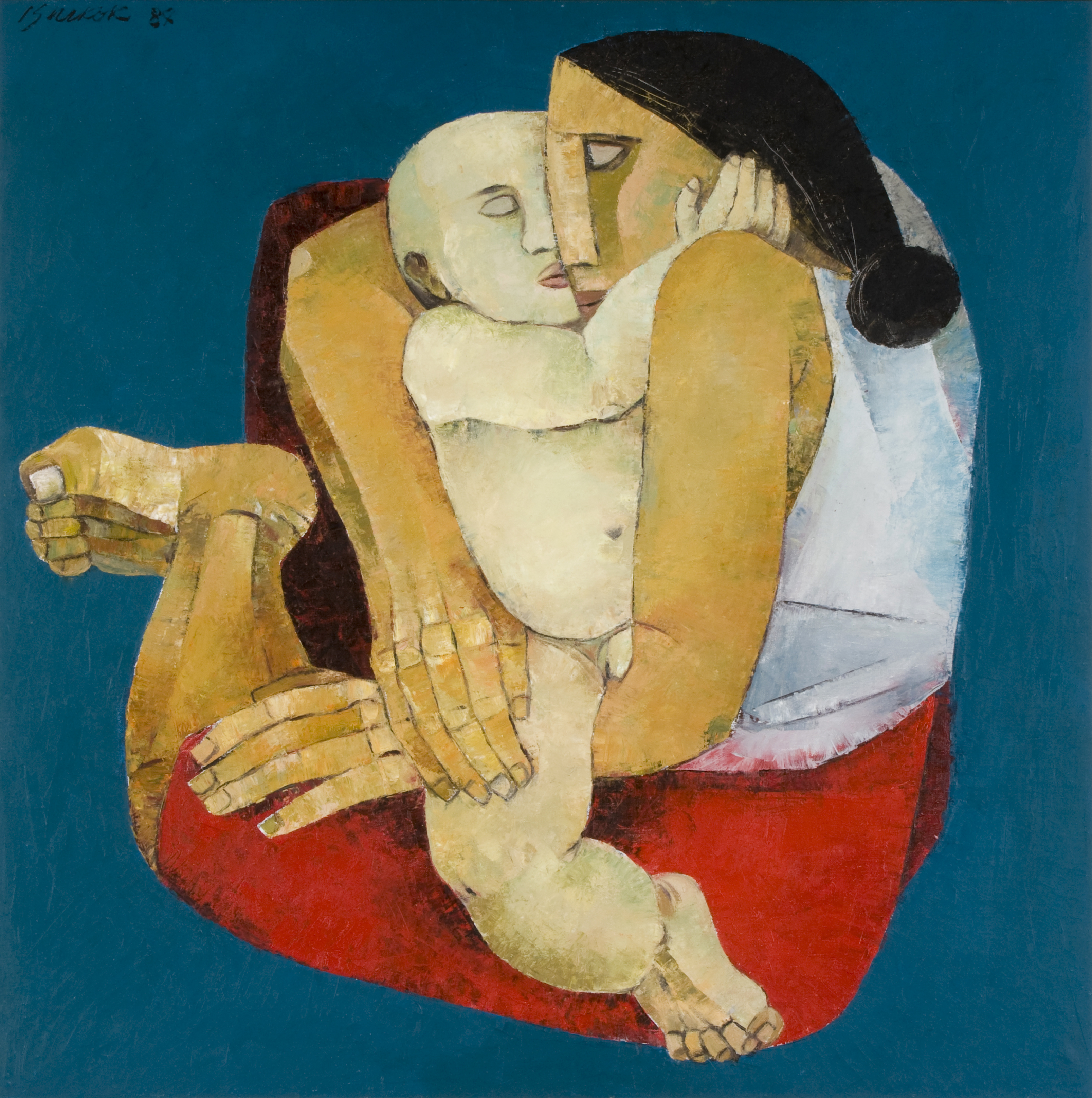
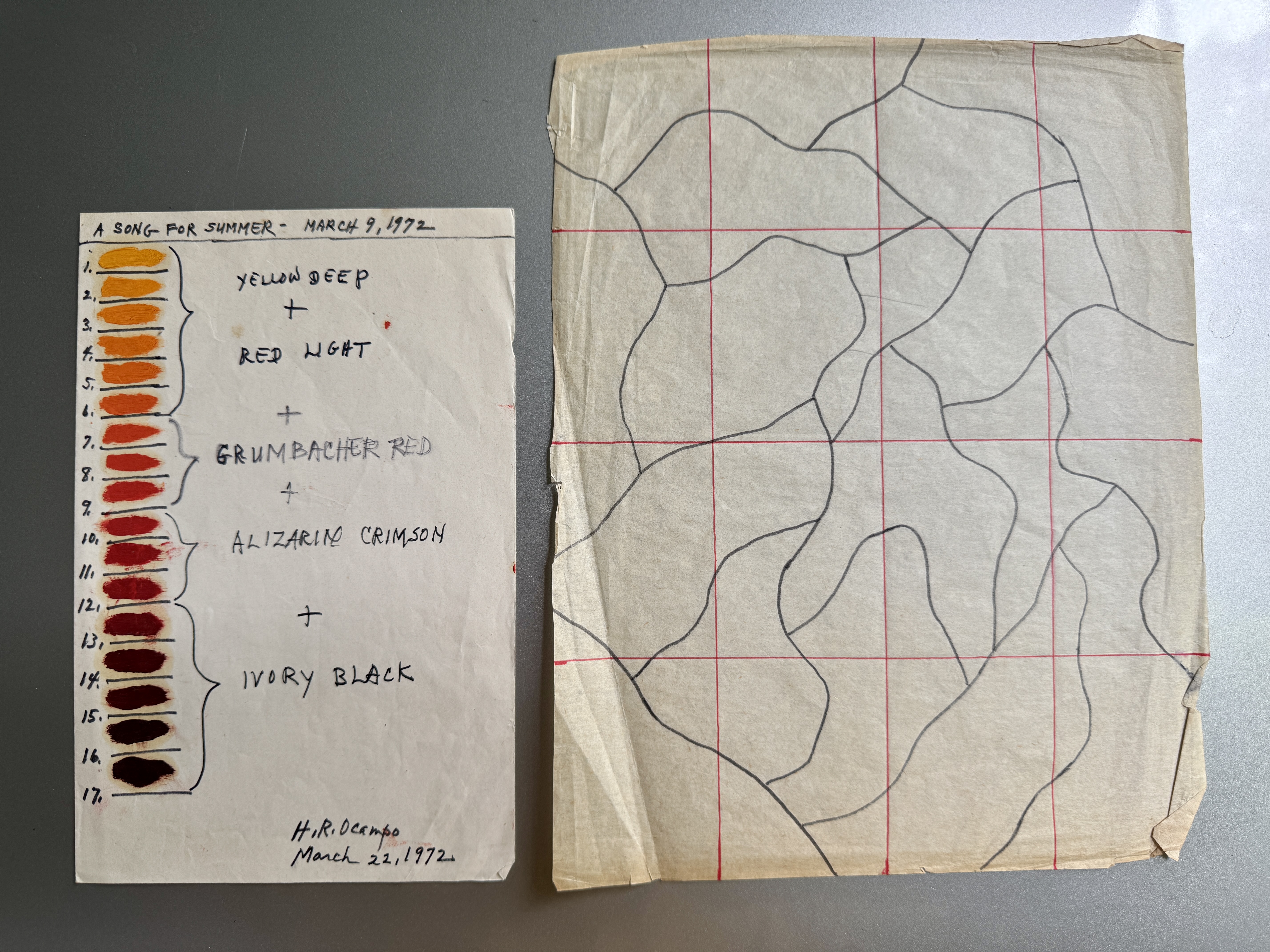
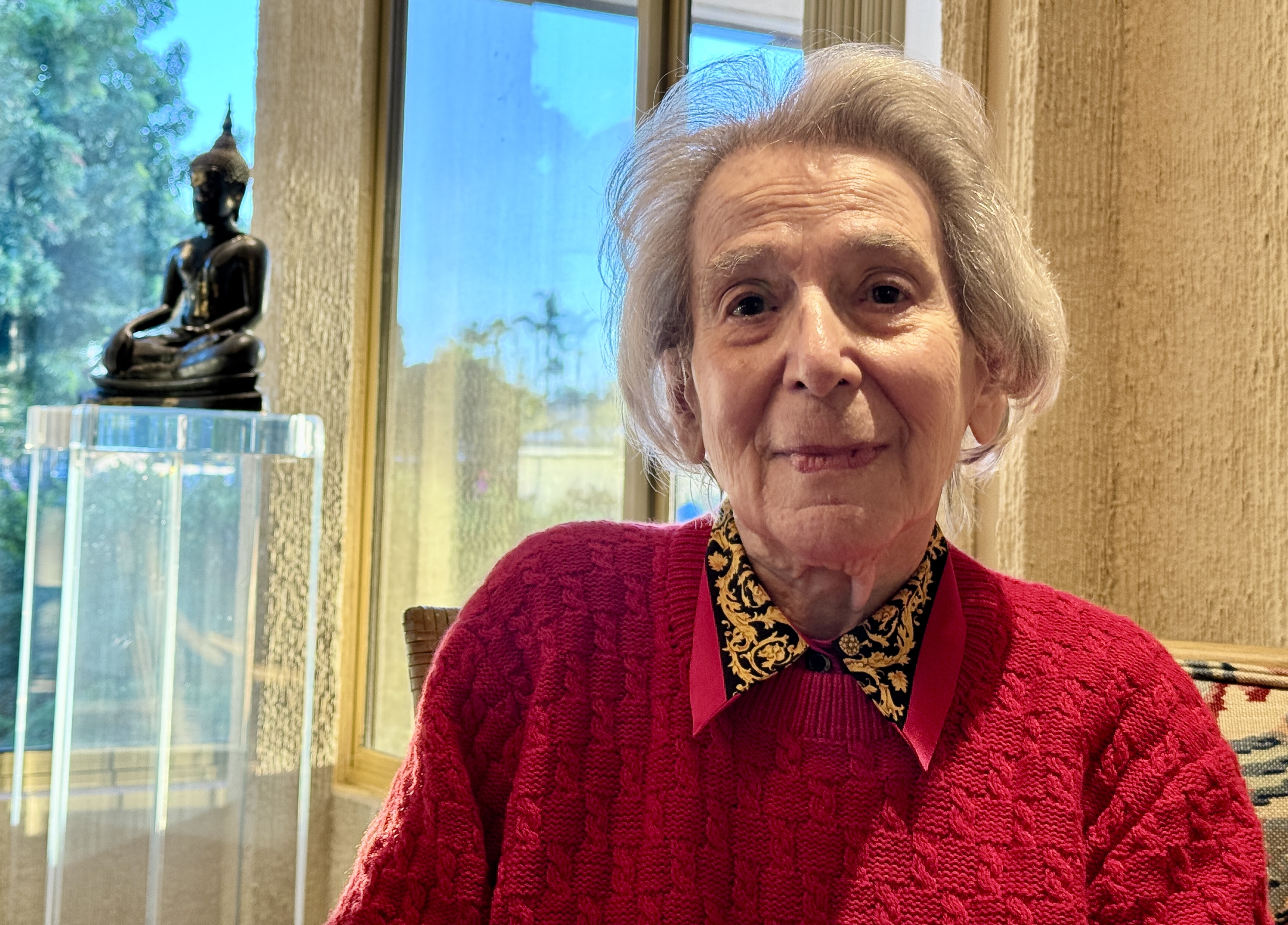
One such visitor was my good friend Julie Hill, who with her late husband Arthur first came to Manila in 1968 on a mission to help improve Philippine education, among other concerns. Almost six decades later, after having traveled the world and settled in America, Julie’s thoughts and affections remain bonded to this country and to its future. In the twilight of her life, she has decided to gift poor but bright young Filipinos with a life-changing opportunity to study at the University of the Philippines, from the forthcoming sale at auction of two paintings by National Artists HR Ocampo and Ang Kiukok.

Born in Alexandria, Egypt to Greek parents, Julie Hill went on to a fulfilling life in the United States and around the world with Arthur, who represented the Ford Foundation in the Philippines. Forced to leave Egypt when Nasser took over, Julie found a scholarship for her master’s degree in chemistry at the University of Minnesota. There she met Arthur, an Australian taking his PhD in Education and Mathematical Statistics. 

The two fell in love, married, and embarked on a lifelong adventure around the world—to Western Samoa, Thailand, Indonesia, and Afghanistan, where Arthur’s expertise in education and agricultural development was much sought after. Arthur passed away in 2002, but Julie went on to her own career as an international marketing executive for Lucent and later AT&T. Since retiring at their home in Rancho Sta. Fe, California, she has written and published five books of travel and memoirs—all of which I edited after being introduced to her by our mutual friend Jimmy Laya, turning our business connection into a long and dear friendship.

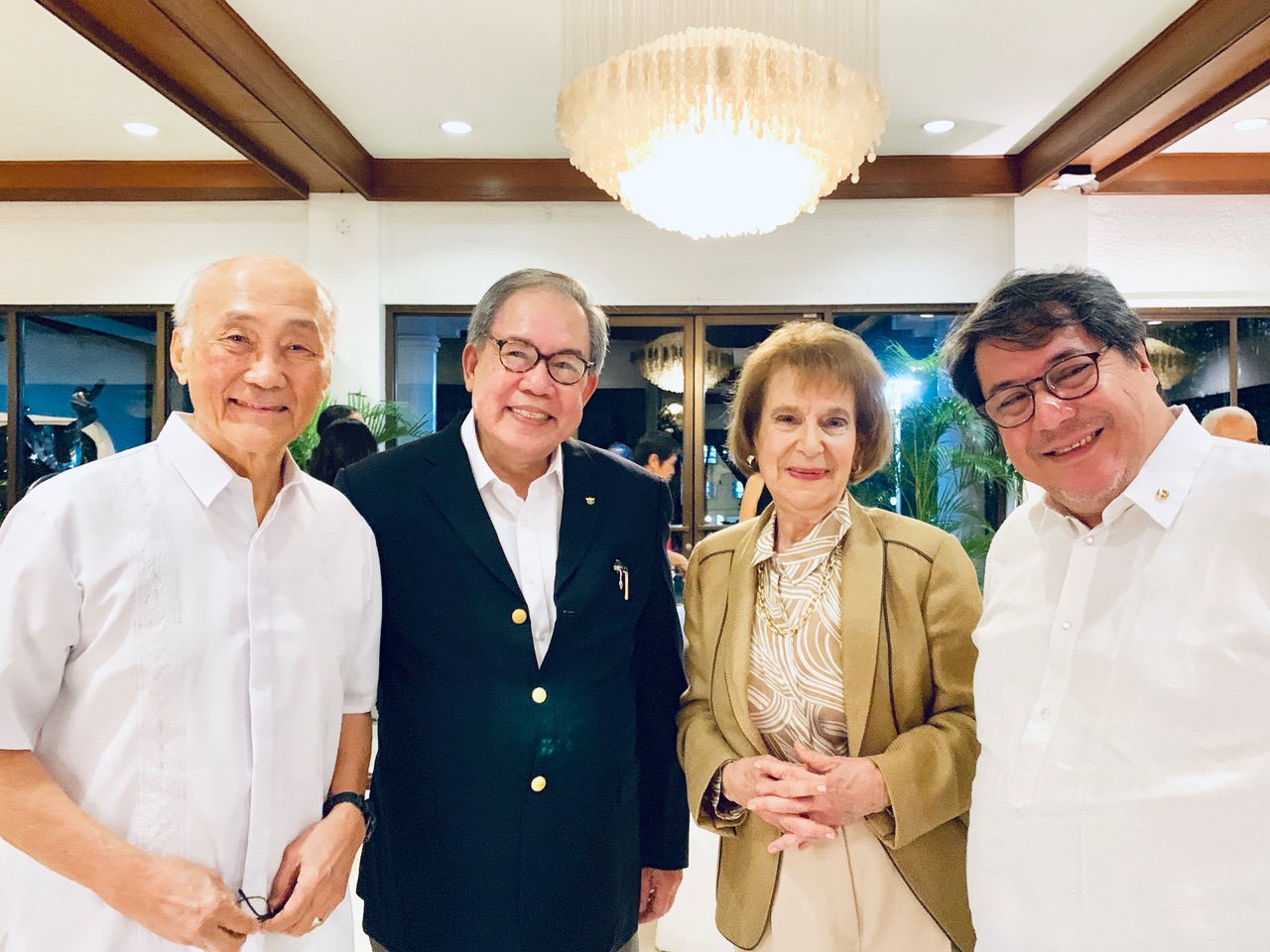
From the first of those books, A Promise to Keep (2003), come many vivid impressions of a country and society transitioning to modernity, troubled but brimming with energy and promise. Arthur got busy working with UP and the International Rice Research Institute, among others, and the Hills became good friends with the rising technocrats of the time—Cesar Virata, Gerry Sicat, and Jimmy Laya. It was Laya—who remains close to Julie—who introduced her to the local art community.

“The art scene was vibrant,” Julie would write. “Manila, a centuries-old entrepot, was rich in art and culture, and we were privileged to visit many private art collections….

“Art galleries flourished. A self-exiled painter stormed into town and set new price ceilings. The audience increased. So did the column inches devoted to art in the newspapers and magazines….

“The Luz Gallery in Makati was run by Arturo Luz, a leading painter, known for his high standards of professionalism. His gallery gained the trust of the public and the artists. The Solidaridad gallery and bookshop was located in Ermita, run by novelist Frankie Sionil Jose. Solidaridad was the middle ground between the established artists exhibiting at Luz and smaller galleries where new talent was championed. You could find superb examples of prints, drawings, miniatures, relief metal sculptures, collage, photographs, and paintings all over Manila.

“We were interested in meeting the artists and visiting their studios, but were reluctant to pay the gallery prices. If we liked the work of a particular artist, why not buy directly from him or her? This was how we searched for and found the home of Hernando Ocampo.”

“Hernando Ocampo was a pure abstract expressionist with a daring originality in his paintings. His work was unmistakably Filipino, ascribing this national character to his unique, tropical colors. A typical Ocampo painting is not unlike a honeycomb, a complex weave of color and tone with each individual cell suggesting a large, more real life form. His work is tropical and warm and suggestive of symmetry. The colors and shapes seem to dance before the eyes. His home in Maypajo was a mecca for friends, admirers, and collectors. He had an open house on Sundays. Good food and hard and soft drinks were ready for guests. Visiting Ocampo, we felt welcomed not only by the artist but also by his family. We commissioned a painting. Sketches were drawn; we followed the progress of our painting with our weekly Sunday visits, and sampled the wonderful pancit, that ubiquitous Filipino noodle dish, that was offered. We photographed the progress of his work. He completed the ‘Song of Summer’, a mastery of color in 17 different shades of red. It would hang proudly in our home in California, and continue to provide intense, pleasurable excitement, another reminder of our times in the Philippines.” (Note: Ocampo’s sketch and color guide for the painting will go with the artwork at auction.)

The Hills left Manila for Indonesia shortly after martial law, but on a return visit in the early 1980s, their old friends at the Ford Foundation presented them with another painting by another Filipino master, Ang Kiukok.Julie recalls seeing several works by accomplished Filipino painters in the foundation office, purchased back when they were far more affordable, and this may have been one of them. Like the Ocampo, it traveled with the Hills around the world all the way to Rancho Sta. Fe, where I have been visiting Julie over the years (our daughter Demi conveniently lives nearby in San Diego).

It was during our most recent visit there that Julie brought up the idea of donating her two paintings for the benefit of poor UP students. A lifelong but quiet supporter of students as far away as Mindanao and a staunch believer in the transformative power of education, Julie also honored me by anonymously (but no more) endowing the Jose Y. Dalisay Jr. Professorial Chair in Creative Writing at UP, over my embarrassed pleas to put it in her name.

This time, she wants the money to go to UP’s poorest—specifically, those exceptionally bright and mainly provincial students who, against all odds, pass the UPCAT but fail to enroll, lacking the means to afford the cost of living on a UP campus. We’ll need to work out the mechanics, but this will go much farther than professorial chairs in changing Filipino lives.

“I had a privileged education in Alexandria and was fortunate to receive a scholarship for my graduate education in America,” Julie says. “During our years in Manila, Arthur and I developed a deep affection for the people of the Philippines, and I am hoping that this donation will contribute to creating a generation of talented and hopeful Filipinos who will serve their country well.”

The Ocampo and Ang Kiukok paintings will be sold at auction by Leon Gallery on February 22. I pray that generous buyers will help Julie keep her promise to the Filipino people.

Qwertyman No. 131: A Relentless Questioner

Qwertyman for Monday, February 3, 2025

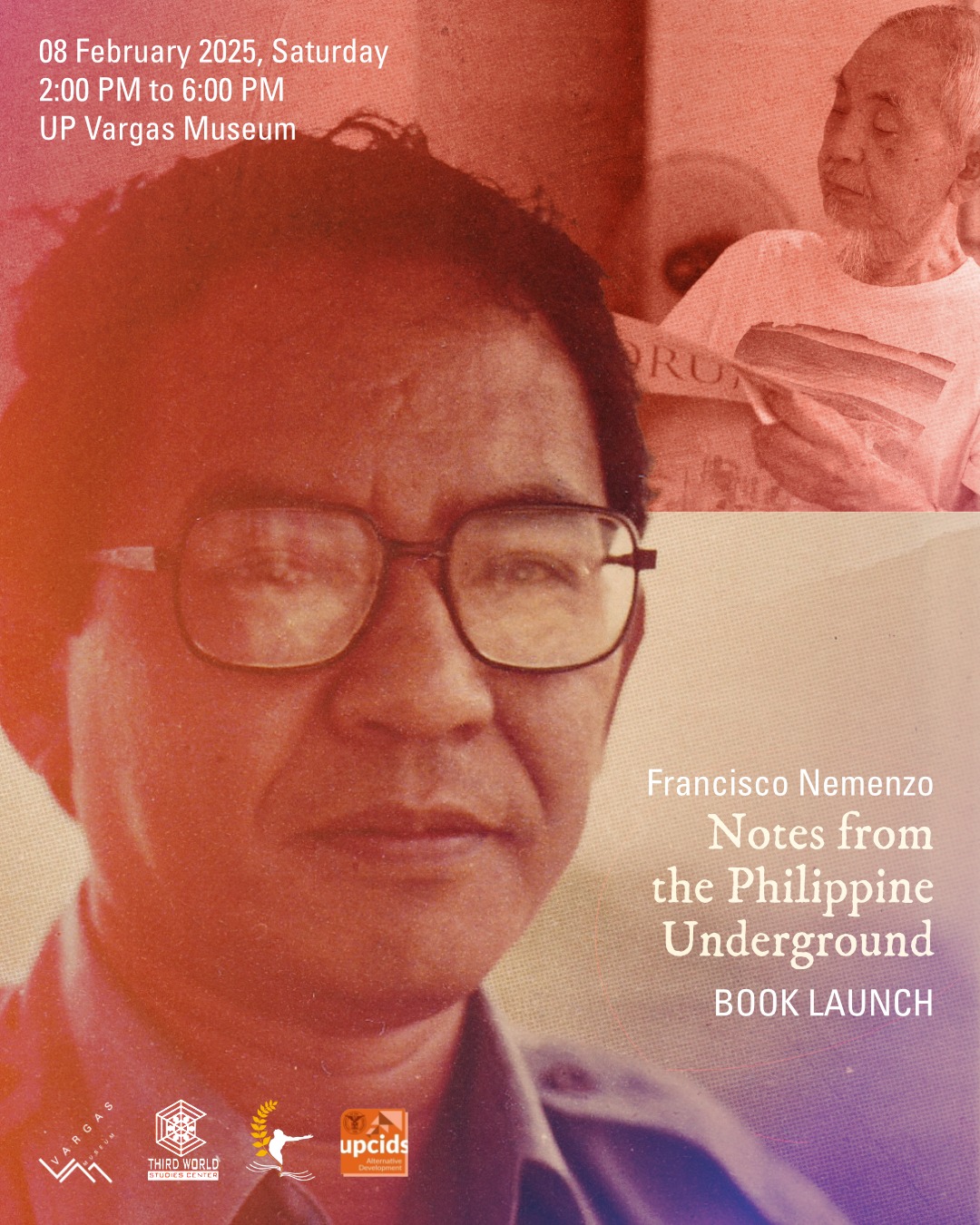
I DON’T know if there’s a Marxist heaven, but if there is, then Dr. Francisco “Dodong” Nemenzo, who passed away recently, must be smiling up there because of the forthcoming launch of his book Notes from the Philippine Underground (UP Press, 2025).

It’s too bad that Dodong won’t be around to see the book and sign copies for his legions of friends and comrades—many of them like my wife Beng, who remember him as a dashing and persuasively articulate professor of Western Thought, despite the Cebuano-accented English he was sometimes laughed at for by the ignorant. He never became my teacher in college, and oddly enough—because I was out of UP Diliman for most of the time he was teaching there—I never really got to know him closely as an activist and ideologue.

I did know him as a boss—he took me in as his Vice President for Public Affairs when he was UP President—and in that capacity I learned to respect and admire him as a man who held firm to his principles while finding practical and effective solutions to UP’s problems. This was especially true of our campaign to revise the outdated UP Charter, which eventually succeeded under President Emerlinda Roman, but which he tenaciously pursued despite the insults of spiteful politicians. 

Throughout his adult life and to the last, Nemenzo remained a professed and unapologetic Marxist—a word that would seem Jurassic in these post-Soviet and Trumpian times, but which he saw and lived in a different light. 

As the preface to his book by Prof. Patricio “Jojo Abinales” explains, “Dodong’s engagement with Marxist theory wasn’t an academic exercise. For him, Marxism was a living, breathing framework—a summons to connect theory to the existing conditions of everyday life. He wasn’t content to theorize from a distance; with a scientific mind, he dug into the realities of Philippine society, always interrogating its dominant ideas, structures, and contradictions. His writings speak to this dual commitment: the rigor of his analysis is matched by an acute sensitivity to the concrete lives of real people whose struggles he sought to illuminate. He distrusted all dogma, and sought to validate all received knowledge.

“Francisco ‘Dodong’ Nemenzo’s life and work resist easy categorization. He was a Marxist thinker, a revolutionary activist, an inspiring academic leader, and a mentor to generations of scholars and radicals. But more than any of these roles, he was a relentless questioner of the world as he found it—and a passionate believer in its potential to be different, if not better.”

Indeed the book shows how sharp, even scathing, Dodong could be in his opinions of how his idea of Marxism remains relevant and useful despite how it has been misused by many of its adherents and misunderstood by its opponents. 

He writes: “We must struggle against their misconception of Marxist theory and practice (e.g., equating Marxism with Stalinism and totalitarianism) and point out that humanism is inherent in the Marxist worldview. Going through the basic documents of Filipino social democratic groups, it is obvious that, even as they try to distance themselves from Marxism, their analysis of present conditions and their historical roots is almost entirely based on a Marxist framework.” 

He acknowledges the flaws and failures of Marxist parties caught up in internal conflicts (Dodong himself was once ordered to be executed by the party he belonged to, ostensibly for treason): “Can people be blamed for suspecting that communists are motivated by cynical calculations of what would bring them tactical advantages? Their loud and monotonous protestations ring hollow in the absence of inner-party democracy. The authoritarian and repressive character of the regimes their comrades established wherever they gained the upper hand reinforced this impression. This stigma they must shake off; otherwise they would remain at the periphery in the continuing struggle for democracy.”

He is not without wry humor. Reflecting on the ultimate folly of a revolution being led by a highly secretive, centralized, and “conspiratorial” party, he notes: “This is difficult to implement in the Philippine cultural milieu. A code of silence—what the Russians call konspiratsiya and the Mafiosi call omerta—is impossible among people who take rumor-mongering as a favorite sport. Our irrepressible transparency is a weakness from one point of view but a virtue from another. Our legendary incapacity to keep secrets is probably the best guarantee that no conspiratorial group can stay in power long enough to consolidate a dictatorship.”

Even for those disinclined or even hostile toward the Left, Notes from the Philippine Underground offers many valuable insights from one of that movement’s “OGs,” in today’s youth-speak. Nemenzo may be highly critical but he remains ultimately hopeful that positive and deep social change will happen, if the Left learns from its mistakes and finds new ways to engage society. Listen:

“There have been many pseudo-united fronts put up by the vanguard party. They consist of party-led mass organizations that simply echo the party line. None ever grew into a genuine united front, although they did attract a few prominent individuals who had no organizational base whatsoever. Other organized groups are often suspicious of the party and wary of being reduced into instruments for policies they do not accept.

“But I know of only three attempts at seriously establishing a real united front in this country: in the immediate postwar period, in the late 1960s, and very recently. They all collapsed because of sectarian methods of work. Sectarianism is the blight of all united front efforts everywhere….

“The Philippine movement has never been able to solve this dilemma. At the very moment when united front structures are set up, rivalries emerged. And intoxicated by short-term successes in expanding their mass organizations, the sectarians eventually prevailed.”

Pluralism, he suggests, is key: “Pluralism is a bourgeois liberal doctrine that ought to be preserved and enriched in the socialist revolution. It is not incompatible with socialism. The tension that arises through political competition would serve as a constant reminder that the party must earn the allegiance of the masses. Of course, no state would tolerate an opposition party that resorts to violent methods and solicits support from foreign powers. But this should never be an excuse for suppressing any opposition.”

Surely there will be blowback from those holding different views; expect the usual howl from UP bashers and red-taggers. But when that happens, even from the grave—or Marxist heaven—Dodong Nemenzo will have sparked the kind of discussion we direly need to find our way forward as a nation.

Qwertyman No. 126: The Young Dodong Nemenzo (2)

Qwertyman for Monday, December 30, 2024

THIS WEEK I continue with excerpts from my interview with the late Francisco “Dodong” Nemenzo, on his recollections of his genesis as a young intellectual and activist at the University of the Philippines in the 1950s.

“It was all a popularity contest. Everything just seemed to be socials. Homobono ‘Bon’ Adaza, who was then the editor of the Philippine Collegian, tried to organize a socialist club with me. Bon even put out an announcement for a meeting. Bon and I were contemporaries, but he was a year older than me. I think I was a senior by then. I was living with my father on campus, since he was a professor here. We had a cottage in Area 2, then we later moved to Area 14. Our whole family was here. 

“It was because of my readings. I had already read the history of the socialist movement, and I was fascinated by that so we formed a socialist club. I think just three of us turned up for the meeting—the third was Princess. After that we were always together. We weren’t going steady yet then. We continued being friends because she was the only one who listened to my sermons on socialism. You ask her, but I don’t think she had any association with socialism before. We had just that one meeting. 

“Bon was eventually expelled from UP, but I had a hand in his election as chairman of the Student Council and editor of the Collegian twice because we were friends. The editor was elected from among the topnotchers of the exam. 

“The UPSCAns didn’t have a candidate who passed the exam, who were all frat boys. Bon landed in the top three, but he had no supporters. I bargained with the UPSCAns because they held the majority. So I used my vote in the council to push for Bon. Eventually he became editor of the Collegian

“Together with the chairman of the council and also the leader of the UPSCA, we decided to hold the first student strike. This was because for one and a half years, UP had no president, with Enrique Virata serving as acting president. It came down to a stalemate between Vicente Sinco and Gonzalo Gonzalez. Squabbling behind them were Jose P. Laurel, who represented the Senate on the Board of Regents, and Carlos P. Garcia who was supporting Gonzalez. No one could get the majority. I was on that strike. I proposed a solution arguing for the Board to take decisive action but also endorsing Salvador Lopez, whose essays I loved, for president. The UPSCANs didn’t care who won, as long as we had a president. 

“Our strike paralyzed the campus for a couple of days. It didn’t last as long as the Diliman Commune, but it was the first—and it was my first mass action. I was the one who was planning the tactics. 

“I was really looking for allies when I met this labor leader who used to be the secretary-general of the Federation of Free Farmers. [We’ll call him Hernando for this account, pending verification of the name—JD.]He claimed to be a socialist and he seemed to have read books on socialism. He was a layman. He was the one who introduced me to labor leaders such as Ignacio Lacsina and Blas Ople. They had a group of young people who revolved around Lacsina, and they met at his office in Escolta. 

“But I continued my reading. Sometimes I felt alienated because they weren’t Marxists. They were just for nationalization, and I felt more advanced than they were. There were other students there, but they were not as involved as I was. When the Suez Crisis exploded in 1957, the Americans intervened in Lebanon. We decided to picket the US embassy. We were  already using the word ‘imperialism’ then. Prominent labor leaders were there, including Hernando. When we got there, the labor attaché invited us inside to have breakfast with the US ambassador. I didn’t want to go in, but Ople and Lacsina thought they could change US policy by convincing the ambassador, so we did. I was utterly disgusted by that experience. 

“I was due then to go to US for my PhD, on a Rockefeller fellowship at Columbia University. Our demonstration took place just a few months before I was to leave. I was an instructor in UP and my college wanted me take up Public Ad, but I wanted to get out of that so I chose Political Sociology. I had become an admirer of C. Wright Mills who worked there and I wanted to work with him, only to find out that he didn’t want to handle graduate courses. 

“I already had a room at the International House in Columbia. Everything was prepared. I already had my visa. But on the day I was supposed to leave, the embassy told me that I could not leave. The consul general showed me the immigration law, which banned the entry of communists, anarchists, drug addicts, and prostitutes. 

“I think they had some earlier information about me because Lacsina later told me that Hernando was a CIA agent. He said that once, he and Blas Ople wanted to invite Hernando for a drink so they could get him drunk and then ply him with questions to extract the truth. What happened instead was that Blas got drunk first so nothing happened. Then he lashed out at Hernando and told him to his face that he was a CIA agent, and cursed him for blocking me from taking up my scholarship in the US. Looking back, I think Lacsina was right!”

Dodong Nemenzo eventually went to the University of Manchester in the UK for his PhD in Political History. He returned to serve as dean of the College of Arts and Sciences, chancellor of UP Visayas, faculty regent, and 18th president of the University of the Philippines. He married Ana Maria “Princess” Ronquillo and they had three children—one of whom, the mathematician Fidel, became chancellor of UP Diliman.

Qwertyman No. 125: The Young Dodong Nemenzo (1)

Qwertyman for Monday, December 23, 2024

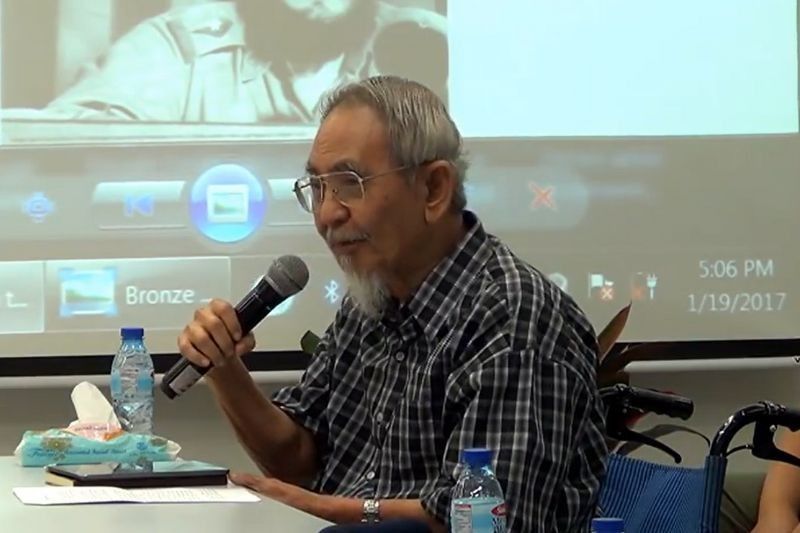
IT WAS with deep sadness that we received the news last week of the passing of Francisco “Dodong” Nemenzo, the staunch Marxist, nationalist, and former president of the University of the Philippines. My wife Beng and I are spending Christmas with our daughter in the US and being an all-UP family, we all knew Dodong and were much affected by his loss. Beng had been a student of Dodong’s at UP, and I was privileged to serve under him as his Vice President for Public Affairs twenty years ago. But long before this, I had met him as a student at the Philippine Science High School where his wife Princess taught us History; he came to pick her up in the afternoon in his Volkswagen Beetle whose door was emblazoned with the Bertrand Russell “peace” sign.

We will be missing the many memorial events that will surely be held in his honor these coming days, so I thought of recalling Dodong in a different way from what most of his colleagues and comrades will be speaking about him. More than ten years ago, I interviewed Dodong for a book I sadly have yet to finish, and he spoke with me about his life before he became the fighting ideologue everyone now remembers him to be. Let’s hear him in this abbreviated excerpt:

“We went back to Cebu after the war. Everything was still in turmoil. I enrolled at the Miraculous Medal School, a Catholic school, and completed my third and fourth grade there. By the time I reached fifth grade, Cebu Normal School was opened so I graduated from there. After sixth grade, I spent a year in the seminary in Cebu. That was my parents’ plan ever since I could remember. I was the only boy among three children, and the eldest. My parents were devout Catholics, and they considered it an honor when a member of the family became a priest or a nun. Since I was an only boy they wanted me to become a priest. I stayed there for only a year, and then I quit. That was probably the beginning of my radicalization. The seminary back then was run by Spanish or Vincentian priests who were supporters of Franco. They looked down on Filipinos and despised Rizal. 

“I went to the University of San Carlos. It was a Catholic school but my father was unhappy with the Science instruction. Our science textbook used the question-and-answer method and my father didn’t like that. He examined my notebooks every day and corrected what my teacher said. He got mad when we were taught creationism, and he lectured me on Darwin and evolution. I answered my teacher back and the principal reported me to my father for my heretical tendencies. My father decided to free me from this nonsense and transferred me to the Malayan Academy, a private non-sectarian school that had very good teachers. I finished near the bottom of my class, failing in Conduct and Tagalog. 

“I entered UP Diliman in 1953. The rule then was that you were exempted from the entrance exam if you had an average of 82, but my average was around 77 so I had to enroll in a summer institute that was like a backdoor into UP if you passed 6 units there. I didn’t know what course to take. My father didn’t want me to take up Law and wanted me to become a scientist like him, but I reckoned that if I did that, I would always be compared to him and come up short. So I chose a course called AB General. 

“The advising line was a mile long. Jose ‘Pepe’ Abueva, a friend of my father’s, passed by and saw me in the queue. He asked after me and I told him that I couldn’t think of a course I really wanted. He tried to sell me on Public Administration, but I didn’t like to serve in a bureaucracy. He said there’d be a lot of opportunities abroad, scholarships, and if I did well I could join the faculty. He had a lot of arguments, but the one that persuaded me was ‘If you join Public Ad right now, I’ll sign your Form 5 right away, and you won’t have to join this crowd.’ 

“That’s how I ended up in Public Ad. When the dean of Business Administration tried to recruit me and my (Pan Xenia fraternity) brod Gerry Sicat who was then in Foreign Service to go into Economics for our master’s, Pepe Abueva again swooped in and told me to take up an MPA instead, and to join the PA faculty immediately. So I became a faculty member in my senior year, just before my graduation, as an assistant instructor. I probably had the longest title in UP: ‘research assistant with the rank of assistant instructor, with authority to teach but no additional compensation.’ I really wanted to teach, but had no actual assignment. I only took over the classes of professors who went on leave. 

“I never joined the UP Student Catholic Action or UPSCA. Well, maybe for one year, but I was never active and then I got out of it. I joined only until I met an UPSCAn named Princess. We always met in Delaney Hall. We were together in the student council. She was representing Liberal Arts, I was representing Public Ad. I joined in 1955, my third year, along with Gerry Sicat, Manny Alba, and Jimmy Laya. I became a liberal and distanced myself from UPSCA. 

“I idolized (Philosophy professor) Ricardo Pascual. I was looking for a cause, but these liberals were just fighting for academic freedom with no purpose. It seemed empty. I was under the influence of Pascual for some time, but we had no advocacy. I joined a short course in Social Order at Ateneo on the papal encyclicals on labor. My liberalism and my growing social consciousness merged and I started reading Marx and Huberman on my own, to find out what we were fighting for. There were a couple of professors like Elmer Ordoñez and SV Epistola who according to Bill Pomeroy had already reached that level of consciousness, but when he left they became liberals, they weren’t really organized.” (To be continued)

(Photograph by Rick Rocamora, used with permission)

Qwertyman No. 124: In Sin and Error Pining

Qwertyman for Monday, December 16, 2024

IT WAS at an early Christmas lunch when a friend asked if I thought that Vice President Sara Duterte would be impeached, with all the motions now on the table to that effect. I wasn’t expecting politics to be taken up over the merrymaking, but this is the Philippines where we breathe politics, so I obliged. 

I said that while I certainly believed that the VP was fit to be impeached for all the obvious financial irregularities happening under her watch, I very much doubted that it was going to happen. And why not? Because it was going to come down to the votes in the House and in the Senate, and while President BBM and his allies doubtlessly had the muscle to push the motion through, I just didn’t see why they would. And again why not? You don’t think they can come up with the evidence to find her culpable for the misuse of hundreds of millions of public money in confidential funds? They could, if they want to, I said—but again, why would they? 

Think about it this way, I said. Impeachment is political, so the facts don’t really matter much, except for propaganda purposes—especially with elections coming up in a few months. Don’t get me wrong—there are people who take the process and its reasons seriously, as we all really should, because millions going to non-people like “Mary Grace Piattos,” “Chippy McDonald,” and “Fernando Tempura” in the guise of “intelligence operations” insults our non-artificial intelligence. 

VP Sara’s refusal to explain these strange endowments paints her further into a corner—which, it seems, is exactly where she wants to be. When she says, “I’ll be at peace when I’m impeached,” and when her drumbeaters exclaim that the hearings are turning the Dutertes into “folk heroes,” then you know that she’s not going to get what she wants. 

Why would PBBM let her go? What would be in it for him? He doesn’t need a functioning Vice President—he never had one; this VP can’t point to a single memorable deed beyond publishing an expensive book. Cutting off his “Uniteam” partner and depriving her of her last official job would simply give her free rein to wreak more mayhem with no accountability to the government or the people. 

Keeping her on the official payroll—but fundamentally powerless—would be the smarter thing. It was never in Sara’s nature to do a VP Leni, and turn political Siberia into a veritable factory of good deeds. She’ll stew in the OVP, sans her confidential kitty, until she can’t take it any longer and resigns, which could easily be spun into a form of surrender or an abandonment of her sworn duties.

The other reason, of course, is that while VP Sara is drawing fire, PBBM can enjoy some peace of mind, and make benign speeches at this and that forum with a heartfelt smile. He knows that he has benefited immensely from the odious alternative the Dutertes represent in the eyes of many Filipinos, even those who staunchly opposed his candidacy in 2022. 

The Dutertes have done Marcos Jr. the priceless favor of making him and whatever he does look good by comparison—a difference he has substantively emphasized by rejecting his predecessor’s slavishly pro-China policy and (despite reports of continued EJKs under his regime) withdrawing Digong’s murderous tokhangcampaign. He has had his missteps, like that bizarrely ill-conceived Maharlika Fund, but I have been hearing murmurs of approval from otherwise progressive friends—albeit grudging and cautious—for many of his positions, an unthinkable proposition just a year ago, when the wounds of 2022 were still fresh. 

But with more than half his term yet ahead of him, there’s opportunity aplenty for unraveling and for even graver misdeeds. Even now, while we profess shock and dismay over the P500 million spent by the OVP in confidential and intelligence funds for 2023, the House has given BBM a free pass on the even more staggering P4.57 billion his office disbursed for the same purposes that year. 

And that’s why I think it’s wiser to keep the focus on the Dutertes and to keep the VP where you can see and hear her, flailing around and squealing like a stuck pig. The impeachment drama will play itself out in the New Year with more twists and turns than a telenovela, and then, for some reason, the votes will fall short, and the VP will be censured and chastised before being sent back to the pen. For what it’s worth, I don’t think impeachment is the proper penalty here; criminal prosecution, conviction, and punishment should be, but that’s a whole other game.

* * * * *

Christmas will soon be upon us—my 70th, in my case, a milestone I never expected to reach given the many young deaths that marked my generation, but one I thankfully accept as the ultimate gift and blessing, no matter the turmoil in our world today. I personally have much to cheer about and be grateful for—so why can’t I be merrier?

We associate Christmas with joy and new life, with the Christ child’s coming, but there is nothing to be jolly about where wanton greed and senseless death are concerned. 

Everything today points to a headlong dive into a global cataclysm, a World War III that may not have a clear and time-stamped beginning like the invasion of Poland or the bombing of Pearl Harbor, but a prolonged and widespread series of provocative and catastrophic events occurring all over the planet—Russian incursions into Eastern Europe, Chinese occupation of Southeast Asian waters, Israel’s pyrrhic extermination of its enemies, North Korea’s incessant saber-rattling and nuclear brinkmanship, America’s surrender of the asylum to the lunatics, and the inexorable degradation of the environment—all of which will come to a head. It will be horrific, but a side of me wonders if we need this cataclysm to remind us of our most basic values and virtues as humans, beyond ideology, religion, power, and wealth.

The other week I had a reader, a pro-Israel partisan, writing me to contend that there was no one else to blame for all the dead children in Gaza but their parents who refused to stand up to Hamas. It saddened more than infuriated me to see that this is where all our presumably educated reasoning has come to—a justification for the slaughter of innocents. I wanted to shake the man by the shoulders, across the Internet, to awaken the terrified and hungry child in him.

Our world will become yet darker and more difficult before it comes to its senses, rediscovers the value of truth, beauty, and courage, and pulls back from the brink of self-annihilation. Yes, I remain optimistic about the future of humanity, about a time when reason and justice will prevail, but I am quite sure I will not live to see this “new and glorious morn.”

Qwertyman No. 120: Greatness of Spirit

Qwertyman for Monday, November 18, 2024

AFTER A week marked by sordid political revelations, reversals, and antics that make us despair over the future of democracy in this country and elsewhere in the world, it was refreshing and inspiring to be reminded last Saturday that goodness, reason, and justice still prevail somewhere, even against monumental odds.

Saturday was when the 2024 Ramon Magsaysay Awards were handed out to five Asian champions who made landmark contributions to their societies and the world at large  by manifesting “greatness of spirit,” the lofty benchmark established by the foundation granting the prestigious awards, often referred to as Asia’s Nobel Prize.

I was privileged to attend the award ceremonies at the Metropolitan Theater, and thereby to meet this year’s laureates. There were no Filipinos among them this time around (last year, they had peace negotiator Miriam Coronel-Ferrer), but the causes and concerns that each laureate represented would have resonated well with Filipinos on many levels.

The Thai Rural Doctors Movement (RDM), for example, addressed a problem that has plagued many developing countries around the world: the chronic lack of doctors to provide adequate medical care in the countryside. In the 1970s, idealistic young doctors joined the popular pro-democracy movement in Thailand, but a government crackdown forced them to seek refuge in the rural areas. The doctors formed close bonds with their host communities and attended to their needs. When these doctors later gained national influence, they maintained their focus on the rural poor, to the point that Thailand now has one of the best Universal Health Coverage systems in the world.

In Vietnam, Dr. Nguyen Thi Ngoc Phuong confronted a lethal legacy of the war that had nearly destroyed her country half a century earlier. Despite the passage of so much time, many Vietnamese, including newborn babies, continued to suffer from one of the war’s cruelest after-effects: the damage caused by TCDD or “Agent Orange,” one of the most toxic chemicals known, used freely by the American military to flush out their enemy. Dr. Phuong took it upon herself to discover the truth about Agent Orange, seek justice for its victims, and help the afflicted.

Indonesia’s Farwiza Farhan took on a most formidable challenge despite her relative youth: the environmental damage wrought on the Leuser Ecosystem in her home province of Aceh on the island of Sumatra. Working with fellow activists and especially local women, she founded the Forest Nature and Environment of Aceh Foundation or Yayasan Hutan Alam dan Lingkungan Aceh (HAkA), which has succeeded, among others, in gaining a court verdict that led to USD26 million in fines against a palm oil company that burned forests, and stopped a hydroelectric dam that would have threatened the elephant’s habitat. Most importantly, her organization has trained local communities to protect their environment through sustainable forest management.

Mountainous Bhutan is a country often idealized as an idyllic Shangri-la and prime tourist destination, but it is in fact a low-income country plagued by unemployment, inadequate social services, and threatened traditions and values. Taking these problems by the horns, a young Oxford-trained monk has combined his religious devotion and historical scholarship with modern management to help bring Bhutan into the 21st century. Karma Phuntsho established the Loden Foundation to promote education, practice social entrepreneurship, and document the country’s cultural heritage. Phuntsho himself has written a definitive history of Bhutan, whose next stages he and the Loden Foundation will help define.

And finally, Japan’s Miyazaki Hayao has created some of the world’s most memorable animated films through Studio Ghibli, established in 1985 and today a byword in digital animation. While animated films in the West have fed off a broad audience employing superheroes with lucrative market appeal, Miyazaki and Studio Ghibli have focused on an audience most difficult to please—children. Nevertheless, Ghibli classics such as My Neighbor Totoro have also called out to an adult fan base charmed by Miyazaki’s craft. This director has taken animation beyond entertainment and even education to enlightenment, always in an engaging manner.

That such good people exist and persist in their passions offers a bracing antidote to the creeping pessimism in which we seem to be wallowing today, an easy and perhaps fatalistic surrender to inaction, tyranny, and hopelessness. We Filipinos are no strangers to distress and despair, with millions remaining in abject poverty, left behind by any growth in our economy. Adequate healthcare remains beyond the reach of most of us, with even middle-class families left devastated by just one catastrophic illness. But neither do we lack for champions and heroes seeking to alleviate these hardships.

Instructively, for the Ramon Magsaysay laureates, their life’s mission often began with dark epiphanies. For Dr. Phuong—who would go on to head Vietnam’s largest obstetric hospital—it was her encounter as a young doctor with babies severely deformed by Agent Orange and their mothers’ anguished and then-unanswerable questions. For Farwiza Farhan, it was returning to Indonesia from her studies abroad, only to discover that the island home whose forests she had embraced as a child was now being ravaged by commercial exploitation. For rural doctors in Thailand, it was seeing poor farmers sell their daughters just so they could pay for the medical care they needed. But rather than be paralyzed by the enormity of the challenge, they decided to do something about it, rolled up their sleeves, and have yet to roll them down.

Something that stands out to me is that these Magsaysay awardees were hardly fire-breathing revolutionaries who sought sweeping changes in one convulsive action, but reformers who pursued their objectives over decades with as much patience as passion—and, of course, vision, anchored on a unquenchable faith in the attainability of a better world, starting with one’s own space and sphere. And beyond individual actions, they set up networks of influence to spread the message and the work, and ensure that whatever they began would survive them. It was never about them, and that’s greatness of spirit.

Qwertyman N0. 117: Our Best Books Forward

Qwertyman for Monday, October 28, 2024

NOW ON its 76th year, the Frankfurter Buchmesse (FBM)—better known outside Germany as the Frankfurt Book Fair, the world’s oldest and largest such event—ended successfully last October 20 with a significant representation from the Philippines, which sent scores of authors, publishers, and book industry officials to the fair. All that was in preparation for FBM 2025, when the Philippines will be Guest of Honor (GOH), the country whose literature will be the focus of the fair’s attention.

You can think of the Frankfurt Book Fair as the Olympics of the global book industry, with over 200,000 participants (book industry persons and the public) representing over 100 countries. However, there are no prizes for Best Novel, Best Nonfiction Book, Best Children’s Book, and so on. Everyone is effectively in competition with everyone else, but the real rewards are in the professional and personal connections made between and among authors, publishers, agents, editors, and translators at the fair, connections that materialize into deals for translation and publication rights. Although exhibited books can be sold at the close of the fair, the FBM isn’t meant to sell books, but rights to books, for which it has become the world’s oldest and largest marketplace. This means that, through the right contacts, Filipino books can be translated into and sold in French, Turkish, Spanish, and Urdu editions, etc. and vice versa. 

Becoming GOH is a signal distinction—but it doesn’t come free. Nations vie and pay for the honor, which this year went to Italy and in 2026 will go to the Czech Republic. I’m sure that there have been and will be more criticisms of our participation in Frankfurt, chiefly of the costs of our foreign exposure vs. the local promotion of our literature, but it’s not a zero-sum game. We need both kinds of investments. We have impressive literary production from all over the country—much of it unknown even to ourselves—but we also need to share the best of it with the world, to raise their understanding of the Filipino above the stereotypes they know (Imelda’s shoes, Manny Pacquiao, DHs, cruise ship crewmen, etc.—not all of them bad, for sure, especially our OFWs, but in need of context).

If FBM 2024 was any indication, FBM 2025 will be an even more resounding success for the Philippines. All literary genres were represented this year in terms of books and panel discussions, and valuable connections were made with European publishers, translators, and agents. Philippine literature will never be the same after this. (This year’s upshot for me is that my novel Soledad’s Sister will be coming out soon in Spanish, after its versions in Italian, French, and German.)

Having followed trends in international publishing for some time, I’m particularly impressed by the way the FBM has helped to promote our new writing by young authors in literary categories that have traditionally received less attention compared to what I’ve called “the big white whale” of publishing, the novel. Approach most publishers and agents at the FBM, and what they’ll ask you is, “Where’s your novel?” For primarily commercial reasons, the novel remains the most saleable and traded commodity at book fairs. (I know many who will wince at my reference to books as commodities, but let’s be absolutely clear about this: the bottom line of book publishing and book fairs is business, not “Kumbaya”-type international peace and understanding.) 

Sadly, however, Filipinos have historically not been a novel-writing, novel-buying, and novel-reading people. In this respect, Rizal’s Noli and Fili are aberrations, familiar to us only and thankfully because of the law requiring their study. That said, our writers are masters of the short literary forms—poetry and the short story in particular. I’ve often remarked that we Pinoys are world-class sprinters, not marathoners; our world-view is not Olympian, but pedestrian, formed close-quarters at street level. 

This year, I’m told that over 70 deals were made between Filipino authors and foreign agents and publishers for the translation and publication of works that went well beyond the traditional novel, including children’s stories (another of our strongest suits) and genre and graphic fiction. These authors were young, and some had their works translated from languages other than English. If anything, this surge in translations, long overdue, is one strategic benefit that our FBM participation has enabled, and our GOH status next year should boost it even further.

According to FBM Director Juergen Boos, “I am very excited about the Philippines’ Guest of Honor presentation in 2025. The motto ‘The imagination peoples the air’ resonates with the universality of storytelling. Even though the Philippines is the world’s thirteenth largest nation with more than 109 million citizens, I believe for many of us in Europe, Philippine literature is currently still rather unknown territory. As the country steps into its role as Guest of Honor, we will learn a lot about the importance of storytelling and today’s cultural scene for Philippine civil society. With an incredible 183 different languages spoken on its 7,641 islands, the country’s diverse influences are one of the aspects I am looking forward to seeing in Frankfurt in 2025.”

I did say that there are no prizes awarded at the FBM, but I have to correct that to acknowledge the Diagram Group Prize for the Oddest Title at the FBM, given since 1978 and now voted upon by the public, and won by such books as Proceedings of the Second International Workshop on Nude Mice, The Joy of Chickens, How to Shit in the Woods: An Environmentally Sound Approach to a Lost Art, and If You Want Closure in Your Relationship, Start with Your Legs. This is not a prize to which Filipino writers have so far aspired, but who knows? Pinoy wackiness (alongside wisdom) knows no bounds.

Many thanks to the National Book Development Board, the National Commission for Culture and the Arts, the German literary organization LitProm, culture champion Sen. Loren Legarda, and our other sponsors and supporters for this great opportunity to put our best books forward on the global stage. Mabuhay!

Penman No. 467: Recovering Our Memory of the Sea

Penman for October 20, 2024

I’VE OFTEN remarked, in academic conferences, about the glaring absence of the sea in our mainstream and modern literature, beyond serving as a decorative backdrop or romantic element. I recently learned that this may not be so true of the native literatures of the Philippine South, for whose people the sea is their economic and cultural lifeblood, but for most of the rest of us, the only sea we’ll ever know is Boracay, or the Dolomite Beach.

That’s a sad thing when we consider that the Philippines—the world’s second largest archipelago after Indonesia—also has one of the world’s longest coastlines (over 36,000 kilometers), is rich in marine biodiversity, and can look back to a long, proud, and continuing seafaring tradition. Despite the alarming depletion of our marine resources due to overfishing and damage to marine ecosystems, we continue to rank high among the world’s fish producers; ironically, our fishermen are among our country’s poorest citizens. And for many decades now, the Philippines has sent out its seafarers to crew the ships of the world—over 550,000 of them last year, making up a fourth of all the world’s seaborne workers.

To go back even farther into the past, pre-Hispanic Filipinos built the balangay that helped populate Austronesia as well as the speedy warship, the caracoa; in Spanish times our ancestors built the galleons that crossed the oceans. In Moby Dick, Herman Melville referred to Filipinos aboard the whalers as “Manila men.”

Behind these figures runs a compelling human and social drama, but it’s a story largely unknown and untold to our own people, and what little we know is fading even faster as more of us leave our islands for the big cities, slowly but surely losing our personal connections to the sea. We encounter sea life only in the fish market or the seafood section of the grocery, or in tin cans; our children do not know the names of fish, which many now refuse to eat, in favor of sausages and noodles.

Thankfully, the National Historical Commission of the Philippines (NHCP) has done something critically important to fill this gap in our collective memory—by establishing a Museum of Philippine Maritime History (MPMH) that tells the story of our seafaring past. And it’s significant that this museum isn’t located in Manila, which would seem to be the logical first choice given Manila Bay and its port, but in Iloilo, which has also had a long and continuing affinity with the sea. Iloilo has historically supplied many if not most of the country’s seafarers to the global market. The city has a plethora of schools offering maritime courses, ensuring the continuity of talent.

I stumbled on the MPMH during a recent visit to Iloilo—among my favorite local destinations for all the obvious reasons (the food, the Esplanade, the heritage houses, the churches, the hospitality, the culture, and of course the people). The amazing boom it’s undergone over the past two decades under the sponsorship of former Sen. Frank Drilon and his local counterparts has dramatically transformed the city’s physical and economic landscape, but it hasn’t forgotten its past as it moves resolutely forward. 

Iloilo has long been known as the city of museums. Aside from the Museo Iloilo and any number of restored mansions, it now boasts the Museum of Philippine Economic History, which chronicles the city’s and region’s central role in sugar, shipping, and commerce; the Rosendo Mejica Museum, which celebrates Iloilo’s journalistic heritage (and I’m proud to say that my wife Beng descends from a Mejica); and the Iloilo Museum of Contemporary Art, which places Iloilo squarely in the center of cutting-edge art production.

The MPMH, which opened in January 2023 at what used to be the Old Customs House on Calle Loney and Aduana in City Proper behind Sunburst Park, walks the visitor through exhibits covering the past until the Spanish era, and the American period to modern times. One very informative section presents the variety of Philippine boats (biray, casco, vinta, batil, etc.); scale models bring some to life. Key figures in our maritime history such as Luis Yangco (1841-1907), who had a shipping empire and supported the revolution are introduced. Historical photographs, posters, and other artifacts provide vivid visual proof of how vital the maritime industry was to our economy and society. Another panel notes the many waterborne festivals we Filipinos hold throughout the country, such as the Pista ‘Y Dayat in Lingayen, Pangasinan every May, and the Bangkero Festival in Pagsanjan, Laguna every March.

It’s not a huge gallery, and one wishes there were even more artifacts on display to ponder, but in terms of curation and presentation, the MPMH can hold its own, given its present limitations, against other international museums of its kind, with crisp, clear graphics, well-chosen items, and useful and interesting detail. (I’ve had the privilege of visiting the National Maritime Museum at Greenwich in the UK and the Museo Naval in Madrid, so as global standards go, those two maritime giants would be tough to match.) The MPMH’s best come-on—which probably accounted for the hordes of students present when we came by—is that it’s absolutely free, although donations are welcome. That’s a great start, with the kids, toward recovering our memory of the sea.

Qwertyman No. 115: Why I Teach

Qwertyman for Monday, October 14, 2024

LAST OCTOBER 5, we marked World Teachers Day—not one of our most popular or noisiest holidays (it isn’t even an official one), but one that gives us pause to remember some of the most important people in our young lives. I taught for 35 years before I retired in 2019, and I still teach one writing subject every semester as professor emeritus, so I suppose I wanted to be that “VIP” in someone’s life. 

When we teach writing—and not even creative writing, but composition—to freshmen, we take young people by the hand and help them make sense out of their lives and their ideas, such as they are. The term “composition” applies as much to the writer as to the text: one composes oneself, drawing out the essentials and leaving out the dross. Creative writing pushes that process one step farther, by turning to the imagination instead of one’s limited experience for material and insight. 

The creative writing teacher’s task is not only to encourage but also to guide and to train that imagination, sparing the student from having to reinvent the wheel but affording him or her the thrill of self-discovery. 

It’s an inarguably fine and noble mission. On the other hand, and in economic terms, the teaching of creative writing is brutally inefficient. In a typical workshop class of 20 people, an instructor would be fortunate to find two or three with real talent—an aptitude for language, a maturity of insight, a stylistic flair. Among those, far fewer will have the discipline and perseverance to write and write well for life.

So why should we even persist, or expend public funds to produce boatloads of people who will probably never write the kind of line you will mumble in your half-sleep, or will cry out to the heavens in your most painful or most euphoric moment?

For one, because producing good creative writers is like mining for precious stones, where a ton of ore might have to be torn out of the earth and sifted through to produce one small jewel-grade rock, which has yet to be cut and shaped by expert hands. 

We must also persist in teaching creative writing because the production of new literature reinvigorates and replenishes our imagination as a people, our imagination of ourselves. It is that imagination, however dark, that gives us hope and makes reality endurable. The truth of numbers—of GDP and ROI and per capita income and population growth rates—is important (I’ve often remarked what a terribly innumerate society we are); but it is a limited and even sometimes deceptive truth that barely begins to tell our story. History does this, but without much latitude for pure conjecture. As in painting and the other arts, creative writers have often simply done, and done first, what critics and theorists would later describe and systematize. Creative writing is a breath of intuition caught on paper.

But I also teach creative writing in the conviction that every student—no matter the person’s background—has at least one good story to tell, and that it is our task as teachers to release that story. Most of my students may come to my classes merely to pass the time, or fulfill a requirement, or satisfy a craving for some critical attention; many may never write another story in their lives. But I want them to come out appreciating and respecting the liberative and ameliorative power of art—which is a fancy way of saying that, for those of us who will never be mistaken on the street for Brad Pitt or Superman, here we can be and do anything, for as long as we make artistic sense.

As K. Patricia Cross, professor emerita of higher education at Berkeley, reminds us, “The task of the excellent teacher is to stimulate ‘apparently ordinary’ people to unusual effort. The tough problem is not in identifying winners: it is in making winners out of ordinary people.”

Anyone can write anything, but not everyone can be a writer. By the same token, not every writer can be a teacher. People who have no problems stringing seamless paragraphs of compound-complex sentences can’t give a lecture or an exercise worth an ATM receipt. It takes a different sensibility—and, yes, another set of talents (or what I call a whole bunch of P’s—preparation, perseverance, patience, and passion)—to teach well and to endure in the classroom.

I feel passionate about teaching in UP and in this country, and in giving back to them, through my students, what they have given me. But teaching is not a word I often say in the same breath as love. I cannot honestly say that I love teaching, in the sense of wanting to do it for most of my waking hours, or missing it terribly when I’m doing something else. Teaching is one of the most exhausting jobs you can get. The job doesn’t begin or end in the classroom; it just happens there.

Every time I step into a classroom, I pause at the doorway to expel a deep sigh and collect my thoughts, wondering if I have enough to sustain a 90-minute performance. As the American novelist Gail Godwin famously said, “Good teaching is one-fourth preparation and three-fourths theatre.” Indeed I spend the last ten minutes before class writing a script in my head: I will say this; I will do this; I will bring these props and use them at some point; I will ignite an argument; I will leave them with a question that will buzz in their ears for a week. Even bad stories can be turned to great lessons; where’s the teaching point? How can I say it without crushing or diminishing the person? 

It doesn’t always work—sometimes I simply collapse into my chair and count away the minutes—but we all attempt some variation of this drill. Basically, we are saying: I will do my best to make this day worth their time and mine. It’s what they expect; it’s what I promised.

It is not love but duty that drives me to teach—although duty, perhaps, can also be a form of love; a love not of the thing itself but of some larger principle. That principle to me is service—service to country, people, university, and service to the great and truly free republic of the imagination.

“How do you know that what you’re doing matters?” I was asked once. “How can you tell if you’re making a difference?” My answer was, I don’t know, I can’t tell. But for a teacher, the only distinguished achievement that counts is the quality of one’s students. You are distinguished by their achievement, and in this sense, I have been distinguished aplenty.