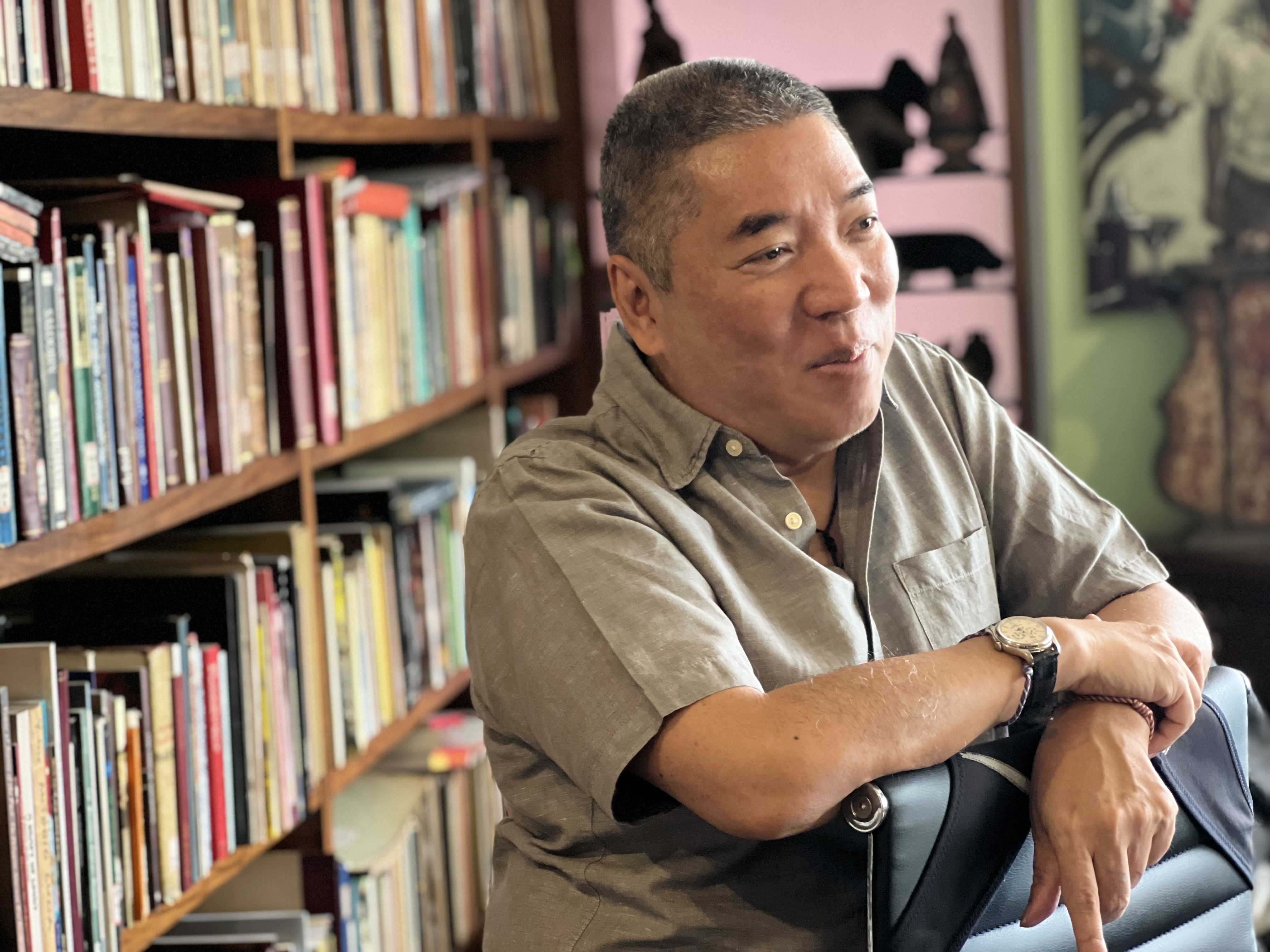
Penman No. 480: A Call to Serve (Untold Stories of Rosa Rosal)

Penman for Sunday, November 23, 2025

IT WAS with great sadness and regret that I received the news of Rosa Rosal’s passing last week—sadness, because of what everyone who knew her and her work would have seen as the end of an extraordinary life of artistry and service; and regret, because I had completed her biography fifteen years ago, and it came this close to publication before being shelved, for reasons I can no longer remember. I think Rosa said she needed to look into it a bit more, but never came around to doing so, until the months became years, and we eventually lost touch.

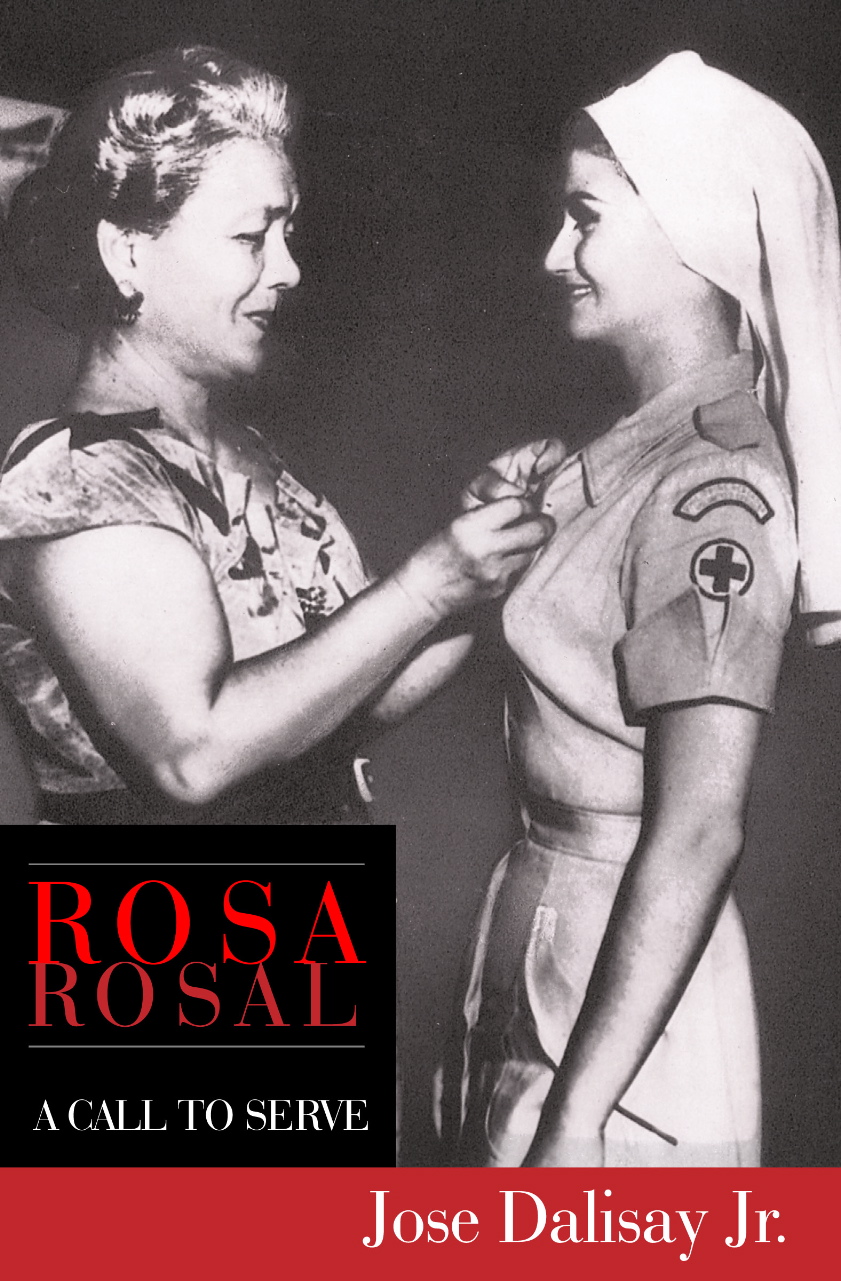
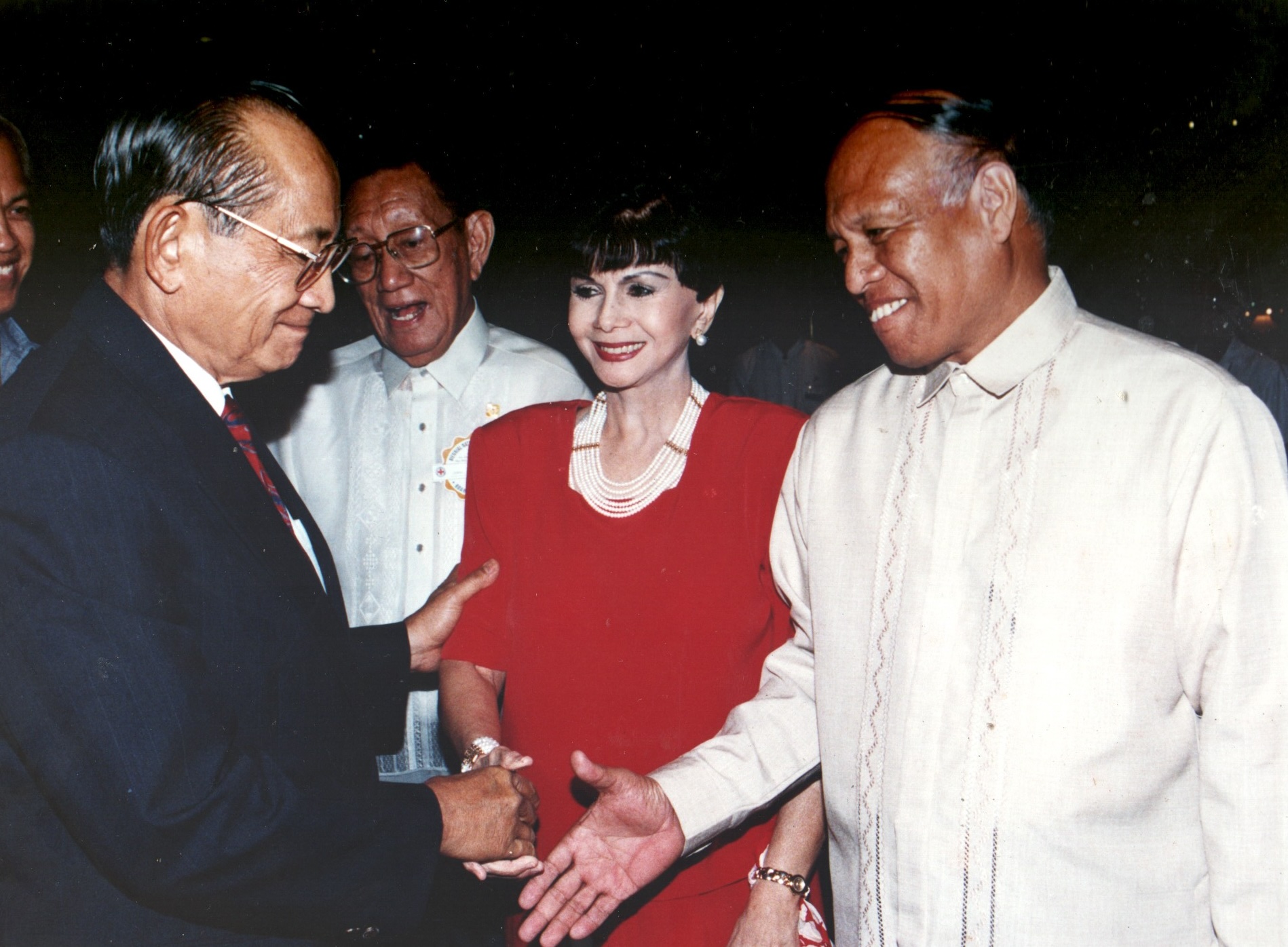
The book had been commissioned by the Philippine Red Cross, the organization to which Rosa had devoted much of her life’s work away from the cameras. Having established herself as one of the country’s biggest movie stars—and not just a star, either, but a truly talented and accomplished actress—Rosa decided to put her celebrity to good use by aligning herself with the Red Cross, its blood donation drives, and other humanitarian efforts she pursued on her public-service programs.

It’s a pity the book (Rosa herself chose the title: A Call to Serve) never came out because Rosa’s life story was a stirring and remarkable one, centered on a woman vastly different from her onscreen persona and yet filled with such drama that it would be hard to believe as a movie. Her life seemed a constant pairing of triumph and tragedy, of maintaining courage and composure in the depths of pain and despair. Toward the end—she was already in her eighties then, and prepared to face her Maker—she left everything to God, being the person of faith that she was all her life.

I recovered the manuscript from my files, hoping that with Rosa’s passing, the Red Cross and Rosa’s family might decide to revisit the project and bring it to being—we owe it to Rosa and all she did. Herewith, some excerpts from the book that might yet be:

Screenshot

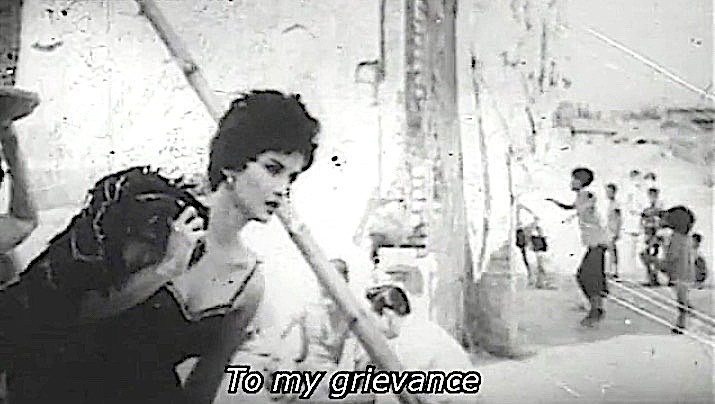
In retrospect, the opening sequence of Anak Dalita (LVN Pictures, 1956) captured what its star, Rosa Rosal, would be doing for the rest of her life: bringing comfort to the afflicted, as unlikely as her appearance and position may have been for an angel of mercy.

In that prizewinning film, set in the war-torn ruins of Manila’s Walled City, Rosa’s bargirl-character Cita steps into the frame in a black, spaghetti-strapped dress, almost ethereally beautiful and glamorous amid such squalid surroundings. It is daytime and she seems to have worked all night, but her first concern is to seek out a dying woman whose soldier-son has been stationed abroad. 

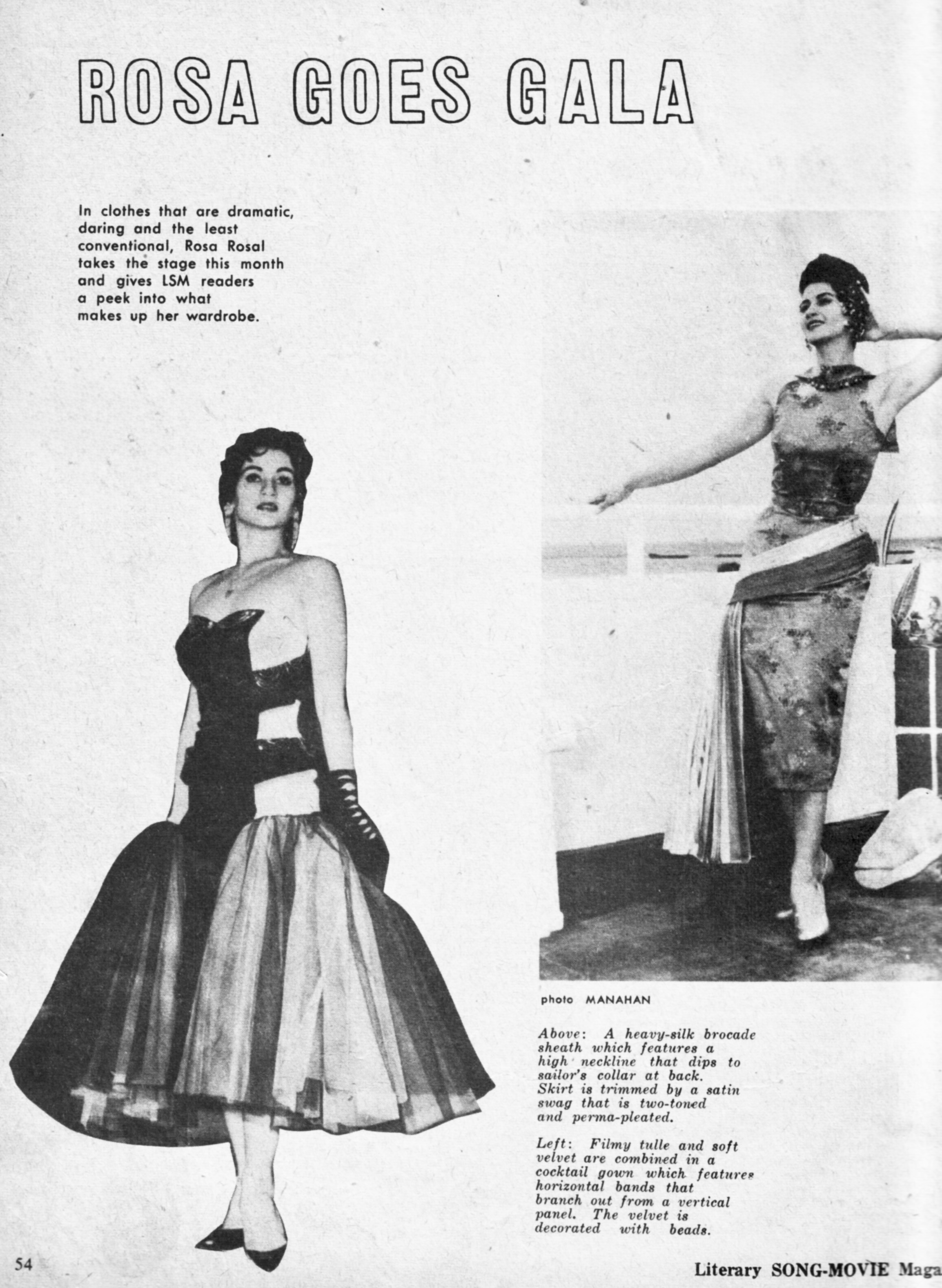
The beauty and the glamour were genuine, and vintage, vampish Rosa Rosal. But just as real, offscreen, was the compassion that animated her in a long and still continuing life of virtue and public service. Rosa Rosal was as lustrous a star as stars came, but her feet remained on bare and solid earth; over the decades, it was the star within her that shone even more brightly than her on-camera celebrity.

The woman who would be known as the Florence Nightingale of her country was, fittingly enough, born with that name. Rosal Rosal was born Florence Danon on October 16, 1931 to Julio Danon and Gloria Lansang del Barrio. 

Very little is known of Julio, a French-Egyptian-Jewish businessman. “My father died when I was very young, so I never got to know him,” Rosa says. It was her mother whom Rosa grew up with and looked up to. “She was a simple woman from Sta. Rita, Pampanga, a typical Kapampangan—a great cook, and very industrious. The wisdom she gave me is what made me who I am now. It’s a great thing that I chose to listen to her words instead of resenting her constant presence.”

When Rosa was six, Gloria remarried a Filipino named Ruperto del Barrio; they would have four more children—boy-and-girl twins, and then two more girls. “We weren’t rich, but we lived a decent life thanks to my mother and stepfather’s efforts. They bartered with people from the province. My mother was such a hard worker. She used to sand down all our furniture with is-is, a rough-textured leaf.”

The family lived in a two-story house in Sta. Cruz, Manila. Theirs was a simple, unassuming life, where time spent with one another was highly valued. “My mother made sure that the whole family ate together, so everyone could talk to each other and share stories. We spoke Tagalog in our house.”

Rosa went to the Antonio Regidor Elementary School. Early on, a lifelong trait of hers would surface here. Rosa saw herself as a “strong person,” but instead of using that strength to get ahead of others, Rosa used it to protect the weak. “When I was 10 years old, there was this girl who kept on bullying one of our other classmates. At first I tried talking to her,” Rosa recalls. “I begged her not to cause any more trouble for anyone. But she ignored my request. So one time, when the two of us were in the girls’ restroom, I dunked her face into the toilet bowl. She begged me to stop, but I made her promise not to bully anyone anymore before I did.”

On screen, Rosa continued to do what would have made most Filipino mothers faint. She seemed to think nothing of doing kissing scenes, wearing figure-hugging bathing suits, and playing the other woman. She was the character people loved to hate, but were also secretly entranced by, because she did freely what they could not.

In private, however, Rosa was anything but that kind of woman. She was deeply religious and devoted to her family, and her main objective was to give herself and her siblings a proper education. “Unlike my colleagues, I wasn’t too fond of going out and socializing. I didn’t frequent clubs or places like that. It was only later on that I formed friendships with my fellow actors, like Delia Razon. Actually most of the people that I hung out with were men, and everyone else thought of me as one of the boys. When we went out on the field I had my own accommodations, but I still preferred to sleep and hang out where the crew stayed.”

Oscar Miranda bore witness to the other Rosa: “In our neighborhood, Rosa was admired. Even when she was already a star seemingly beyond our reach, she had a nice smile and a kind word for everyone. In spite of her growing contravida image, everyone knew she was a nice girl, a good girl who was respectful and devoted to her parents, a very pious girl who heard mass every Sunday. Everyone sensed that her new image was just for show and Rosa was their star. Because the neighborhood saw her grow up, she was really one of them.”

“One time there was this girl at the PGH ER who had fallen from the top of a five-story building, and was in a coma. I returned to the hospital two days later and the girl was still there. I couldn’t help but ask around about her. I was told that the child needed a neurologist, so I talked to Dr. Vic Reyes, a good friend, and had him look at the child. The doctor said that it was a hemorrhage and that the girl needed blood. So I went to the Red Cross, got some blood for the girl and brought it back to the hospital. Even with the blood, the doctors were not sure if the child would make it. The mother was there, crying the whole time.

“When the blood was about to run out, the girl’s hands suddenly moved. Her eyes opened, and she cried out, ‘Mama!’ and the mother cried again, this time in relief. So with that experience I saw first-hand what blood can do. I realized that blood is something very precious. It can really prolong someone’s life. That’s when I decided to dedicate myself to the Red Cross,” Rosa recalls. 

Even before this, Rosa had already attended blood donations through the Red Cross. “At the time, before you were accepted as a Red Cross member, you had to undergo training. I would come home from shooting at 5 am and then go straight to the training at 7. I didn’t have a car then so I had to take a cab to the Red Cross.”

The Red Cross and its blood bank would become so important to Rosa that they would eventually become the focus of her life, well beyond the movies. “You know I don’t celebrate my real birthday. I celebrate July 4,1950, the date of the first blood donation drive that I organized. It was held in Muntinlupa. I used to personally deliver blood to hospitals in Subic. On one such delivery run, a group of Huks—Communist guerrillas—stopped me in Pampanga. They told me that the next time I passed by, I should attach a Red Cross banner to my car so they would know that it was me.”

There was a tragic background to that encounter with the Huks. She had become friends with Baby Quezon, President Manuel Quezon’s daughter. “The two of us would meet at the Army-Navy Club. One day, I had just made a personal appearance, and they were asking me to hang out with them. Normally I couldn’t say no to Baby, but my mother was waiting for me at home. On the way home, I was with Alfonso Carvajal, and we heard on the radio that Baby and her friends had been ambushed by the Huks, and they were all killed. When I got home I told my mother what happened. I realized that my love for my mother saved my life.”

Working for the Red Cross also began to change how Rosa might have wanted others to see her. “When I became a regular volunteer for the Red Cross, I requested Manny de Leon if I could veer away from contravidaroles. I was tired of playing one, anyway. So he gave me Sonny Boy, opposite Jaime de la Rosa, and I won a FAMAS award for that.”

* * * * *

Not everyone appreciated Rosa’s efforts. Some suspected her of hypocrisy, of using her social work to promote herself. One incident is embedded in Rosa’s memory. “One time a group of teachers wanted to raise money to build a school in Tondo. I was able to raise P10,000 and I gave it to them. I was about to go home from Tondo when I noticed that one of my car’s tires was flat—the tire had been slashed. A man stepped up to me and said that he was the one who did that to my car. He said that I was doing all of my volunteer work not because I wanted to help people but because I wanted to sustain my popularity as an actress. The teachers helped me fix my car and told me to ignore the man, but I was still affected, and I cried on the way home. My mother saw me and I told her what happened. She didn’t tell me to stop doing charity work. She just sat with me and comforted me.” 

Years later she would meet this man again—a girl was badly in need of a blood transfusion, and Rosa provided the help she needed. A man who identified himself as her father approached Rosa in tears, begging her forgiveness. “I was the one who slashed your tires,” he confessed. “I’m so sorry I doubted you!” Rosa wept with him, astounded by the irony of the situation.

* * * * *

That part of the country—Batangas, Cavite, Laguna—lived up to its reputation as a hotbed of rebellion and outright banditry. Steeped in poverty, people resorted to desperate acts; the comforts and glamour of Manila were another world away, and the only contact that the provincial folk had with it was through the movies—or, better yet, on those rare occasions when the movie stars themselves deigned to make a personal appearance in the boonies, usually in conjunction with a town fiesta, of which their ethereal visitation became the highlight.

And so did Rosa find herself again, another time, on another bus in Batangas, coming home from an appearance with an entourage of about 20 actors, singers, and dancers. Suddenly the bus was stopped in the middle of the road by a gang of robbers. “There were about ten of them,” Rosa remembers. “They boarded our bus and asked for our belongings. I told everyone to just comply. The thieves heard my voice and thought that I sounded familiar. To be sure, they asked me who I was, and I said I was Rosa Rosal. ‘Aren’t you the one with the Red Cross?’, one of them said. I said yes, and to everyone’s great surprise their leader ordered his gang to return what they stole. “Return everything. Don’t touch her, because she helps people like us.’ And then they left. We all cried afterwards. It was quite an experience. But I didn’t tell my mother about it.”

I wish I could share more—we’ve barely scratched the drama of her real life—but the rest will have to wait for the book. Let me end with something Rosa wrote in her preface (with a reference to her beloved grandson James, who died in an accident in 2010):

“I am ready to go anytime that He calls for me. I know that when that time comes, Jesus, my mother, and James will be there to welcome me. I can imagine the smile on their faces when God shows me the permanent home He has prepared for me. I thank Him for all the awards He has given me. I praise Him for the death of my grandson, James, as well as the 30 years of suffering of my mother. We praise God not just for the good times but also for the painful times. I have gladness and joy in my heart as I have obeyed His commandments and I answered His call to serve.”

Qwertyman No. 171: “Quezon” as Theater

Qwertyman for Monday, November 10, 2025

I’M COMING late to the party, having been away for a couple of weeks, but even in faraway Frankfurt, I was itching to come home to see what the brouhaha over the “Quezon” movie was all about.

Rarely does a Pinoy movie stir a hornet’s nest like this one did, and even without seeing it, I took that as a good sign for our film industry, especially big-ticket projects which sometimes leave people wondering why they were even made.

What especially piqued my interest, of course, was the reaction of Quezon family members and friends who thought the old man’s cartoonish depiction as a womanizing, scheming, and power-hungry politician despicable.

Now, my own grandfathers led pretty quiet lives, so I’m sure that if anyone called them womanizing, scheming, and power-hungry, I’d be mighty upset, too.

The difference is, unlike my lolos and going by what the historians suggest, Manuel Luis Quezon seems to have been all of the above—which isn’t to say he wasn’t much more than all those negatives put together. It was apparently that “much more” that the Quezonistas were looking for—MLQ the patriot and freedom fighter—to balance out the picture, especially since most young Filipinos know nothing of the man except as a place-name. Had that been shown, the outrage might arguably have been muted, the image softened.

But of course that wasn’t what the movie’s makers were going for. As has already been noted by dozens of reviewers before me, “Quezon” is no documentary (and let’s not forget that even documentaries can be biased—just watch Leni Riefenstahl’s adoring portrayal of Hitler and his Nazis in her bizarrely beautiful “Triumph of the Will”). From the outset, it declares that it is mixing up history with “elements of fiction,” which is just as good as using that old commercial come-on, “based on a true story.”

I’m no historian—I’ll confess to being an enthusiast—but as it so happens, I’ve been a playwright, screenwriter, biographer, and fictionist at various points of my otherwise uneventful life, so I can probably speak to these issues with some experience. I can attest, for example, having written some biographies of the rich and famous, that families and descendants can inherit myths about their patriarchs, and treat and pr0pagate them as God’s own truth. 

My take is, I don’t think we should receive “Quezon” as history, biography, fiction, or even film. It’s theater (captured on film), and it declares itself as such right from the beginning, as I’ll shortly explain. This may be due to the fact that the script was co-written by one or our most accomplished playwrights, Rody Vera, alongside director Jerrold Tarog. His approach was explicitly stylized and non-realistic, from the use of silent-movie title cards, ghoulish makeup, and painted backdrops in the black-and-white sequences (including that almost balletic choreography of the young MLQ rising from the floor of his prison cell) to the conception and blocking of such scenes as those of Quezon working the floor of the House and the capitalist bosses gathering round the table. (If all this seems obvious and elementary, dear reader, my apologies—in these days of TikTok, I don’t know what people are looking at anymore).

So what if the movie is theater disguised as film? Does that explain or excuse its supposed excesses and exaggerations?

Well, theater is, almost by nature, exaggeration—movements and motives get simplified and magnified, the easier to get them across. Theater is agitational—it aims to provoke emotion, to bring people to their feet, clapping in delight or screaming in rage.

And that’s what “Quezon” did, didn’t it? It got its message across, effectively and efficiently, like a train on schedule, and taking it as theater, I found it roundly entertaining. By and large, the actors carried themselves off with aplomb, from Jericho Rosales’ masterful Quezon, Romnick Sarmenta’s comic-cool Osmeña (his was actually the most difficult role to play, to my mind), Mon Confiado’s aggrieved Aguinaldo, and Karylle’s restrained Aurora. The employment of the fictional journalist Joven Hernando was what a smart scriptwriter would do, to weave the narrative threads together. (Teaser: Quezon and Aguinaldo figure in the novel I’ve been writing about prewar Manila.)

My quibbles have to do with minor complaints like (don’t be surprised) “Wrong period fountain pens again, all of them—why don’t they ever ask me?” (Quezon did hold his pen that odd way, though) and “Does every movie chess scene have to end with a checkmate?” I could have added “Why does everyone’s shirt and pants look fresh in a period movie?” but we’ll excuse those as theatrical costumes.

If there was anything I would have added to the content, it would have been a quiet moment of self-reflection, in which we realize just how Quezon sees himself. That alone might have lifted up his character from caricature.

The real Quezon seems to have been every bit as petty as the movie shows him to be, but also every bit as great, as it seems to have taken for granted.

Quezon had something of a history with the University of the Philippines, whose protesting students (one of them a young buck named Ferdinand Marcos, who accused Quezon of “frivolity” over all the dance parties in Malacañang) led him to ride into UP’s Padre Faura campus astride a white horse to either charm or intimidate them.

He had a long-running tiff with then UP President Rafael Palma over the Hare-Hawes-Cutting Act, and when Palma retired after ten hard years in the hot seat, citing a technicality, the government denied Palma the gratuity that was his due. When Palma died, however, Quezon reportedly went to his wake to deliver a eulogy worthy of the man.

You didn’t see that Quezon in the movie—and then again, maybe you did.

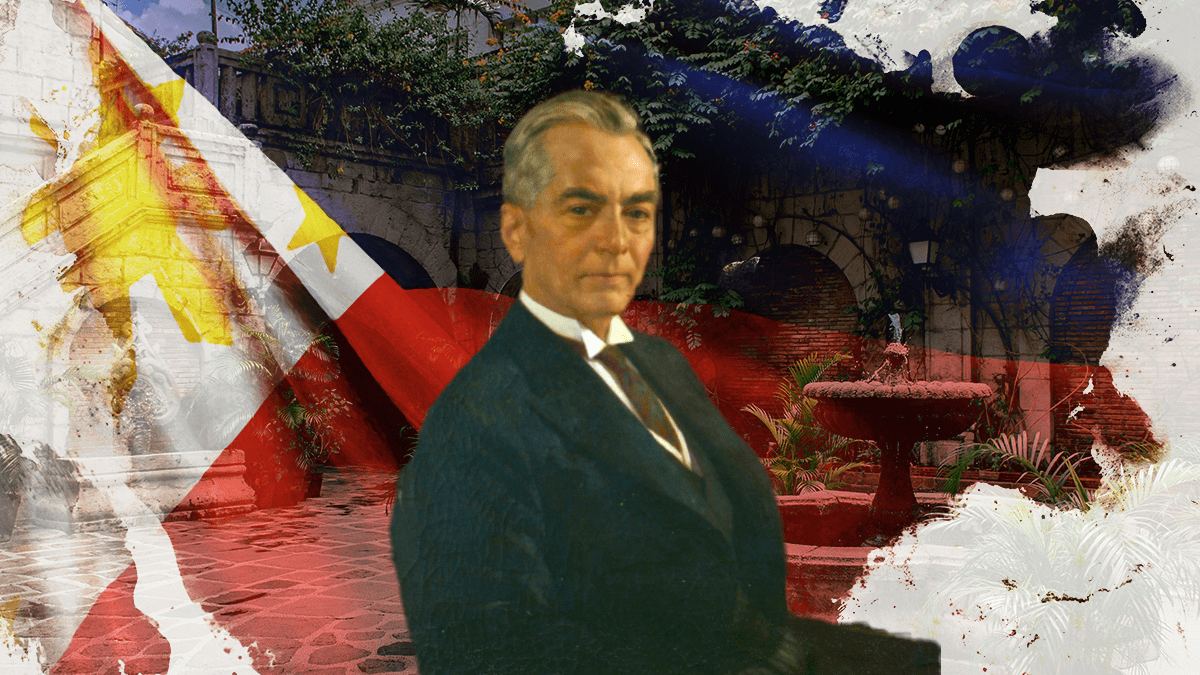
(Image from banknoteworld.com)

Penman No. 479: Postscript to Frankfurt

Penman for Sunday, November 2, 2025

IT WILLl be remembered as one of the largest, most complex, possibly most impactful—and yes, also most expensive and controversial—showcases of Filipino cultural and intellectual talent overseas, and above and beside all else, that fact alone will ensure that few things will remain the same for Philippine literature after Frankfurt 2025: it will be remembered.

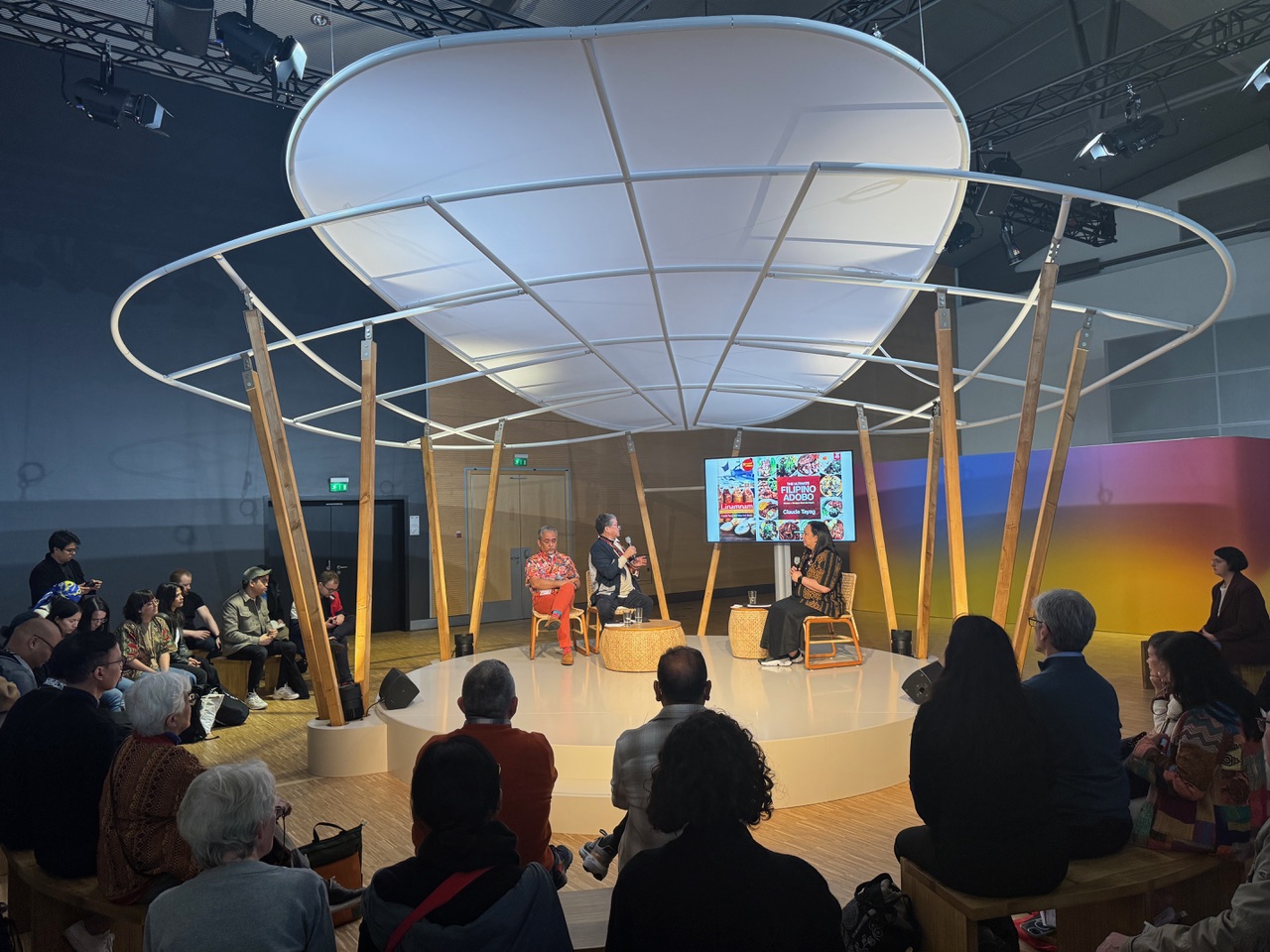
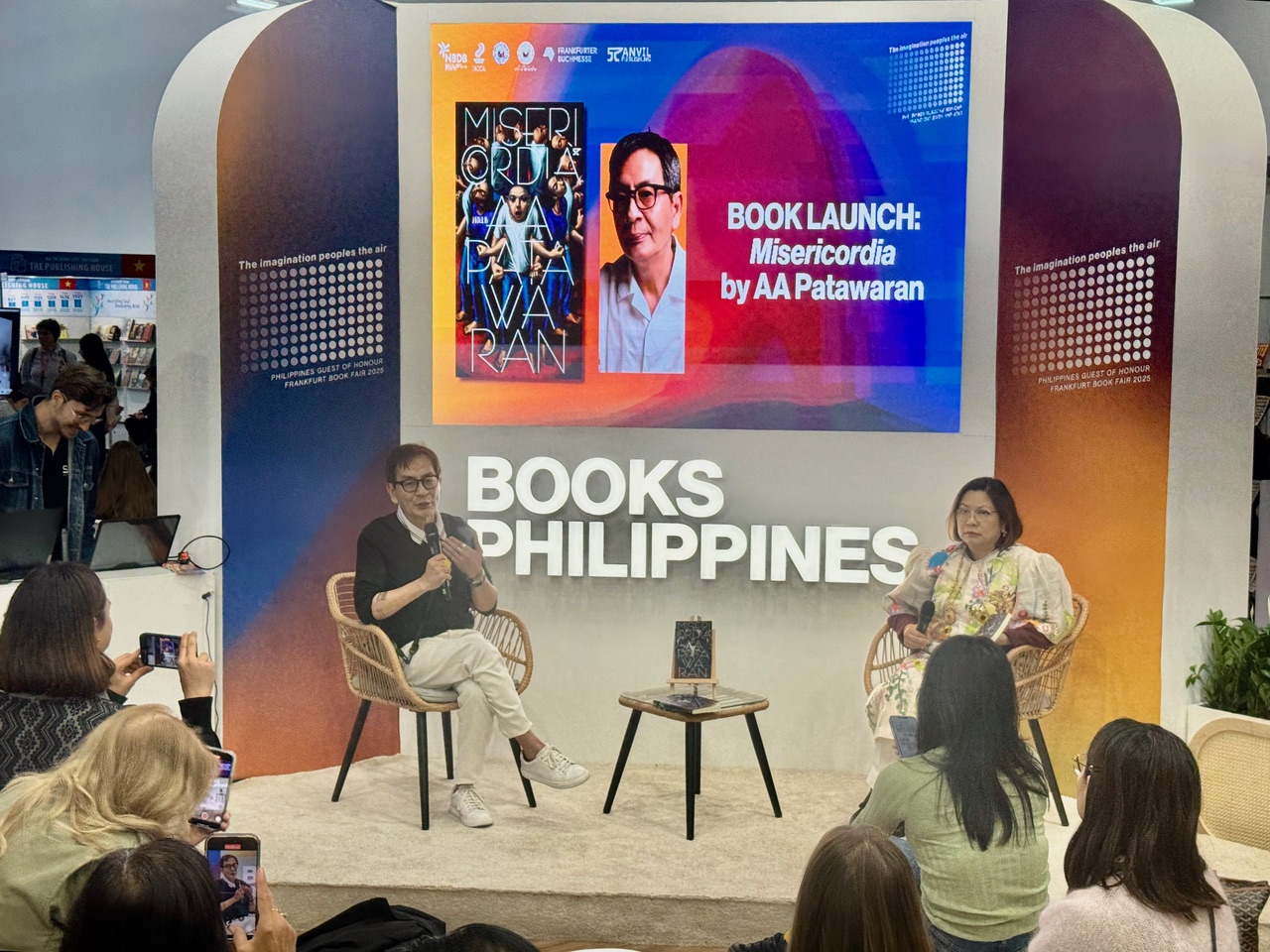
Last month—officially from October 14 to 19, but with many other related engagements  before and after—the Philippines attended the 77th Frankfurter Buchmesse or FBM, better known as the Frankfurt Book Fair, in a stellar role as its Guest of Honor or GOH. Accorded yearly to a country with the talent, the energy, and the resources to rise to the challenge, GOH status involves setting up a national stand showcasing the best of that country’s recent publications, filling up a huge national pavilion with exhibits covering not only that country’s literature but also its music, visual art, film, food, and other cultural highlights, presenting a full program of literary discussions, book launches, off-site exhibits, and lectures, and, of course, bringing over a delegation of the country’s best writers and artists. 

It’s as much a job as it is an honor. Past honorees have predictably come mainly from the West, such as France (2017), Norway (2019), Spain (2022), and Italy (2024); only once before was Asia represented, by Indonesia in 2016. Little known to many then, Sen. Loren Legarda—the chief advocate for the arts and culture in the government—had already broached the idea of pushing for the Philippines as GOH in 2015. It took ten years, with a pandemic and two changes of government intervening, but Legarda finally secured the funds—coursed through the National Commission for Culture and the Arts and the National Book Development Board—for us to serve as GOH this year, announced a year earlier.

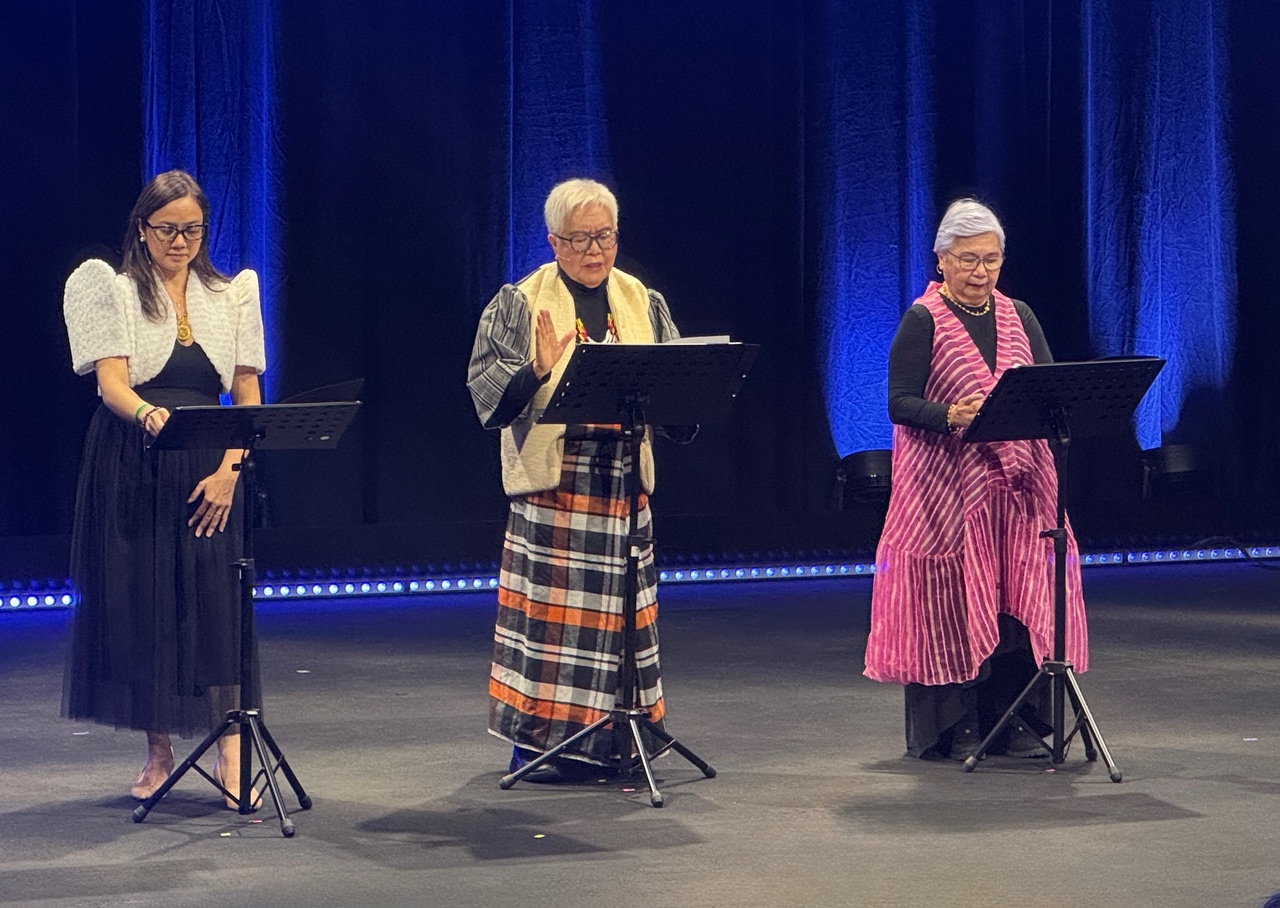
The Filipino delegates, over a hundred writers and creatives and as many publishers and journalists, took part in a program of about 150 events—talks, panel discussions, demonstrations, book launches, and performances—and ranged from Nobel Peace Prize winner and journalist Maria Ressa and National Artists Virgilio Almario, Ramon Santos, and Kidlat Tahimik to feminist humorist Bebang Siy, graphic novelist Jay Ignacio, poet Mookie Katigbak Lacuesta, and fellow STAR columnist AA Patawaran.

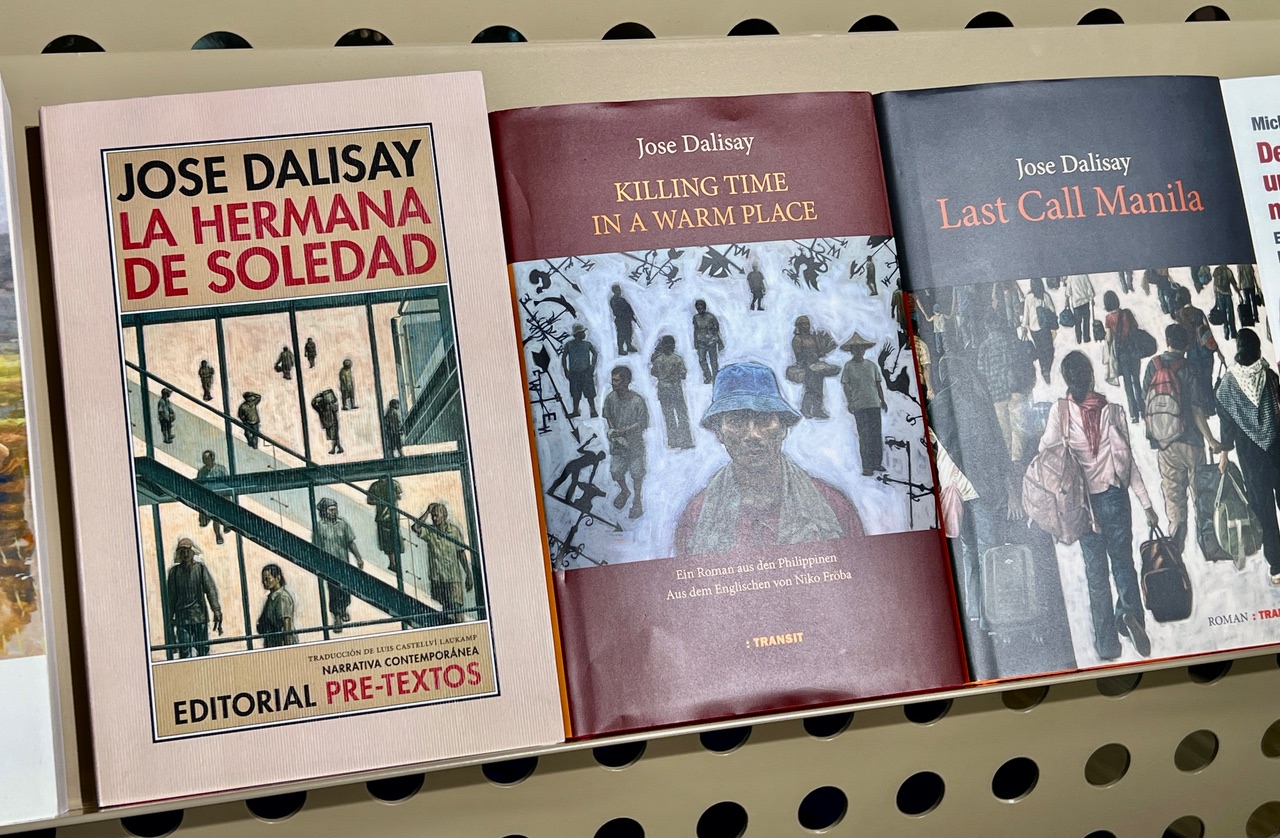
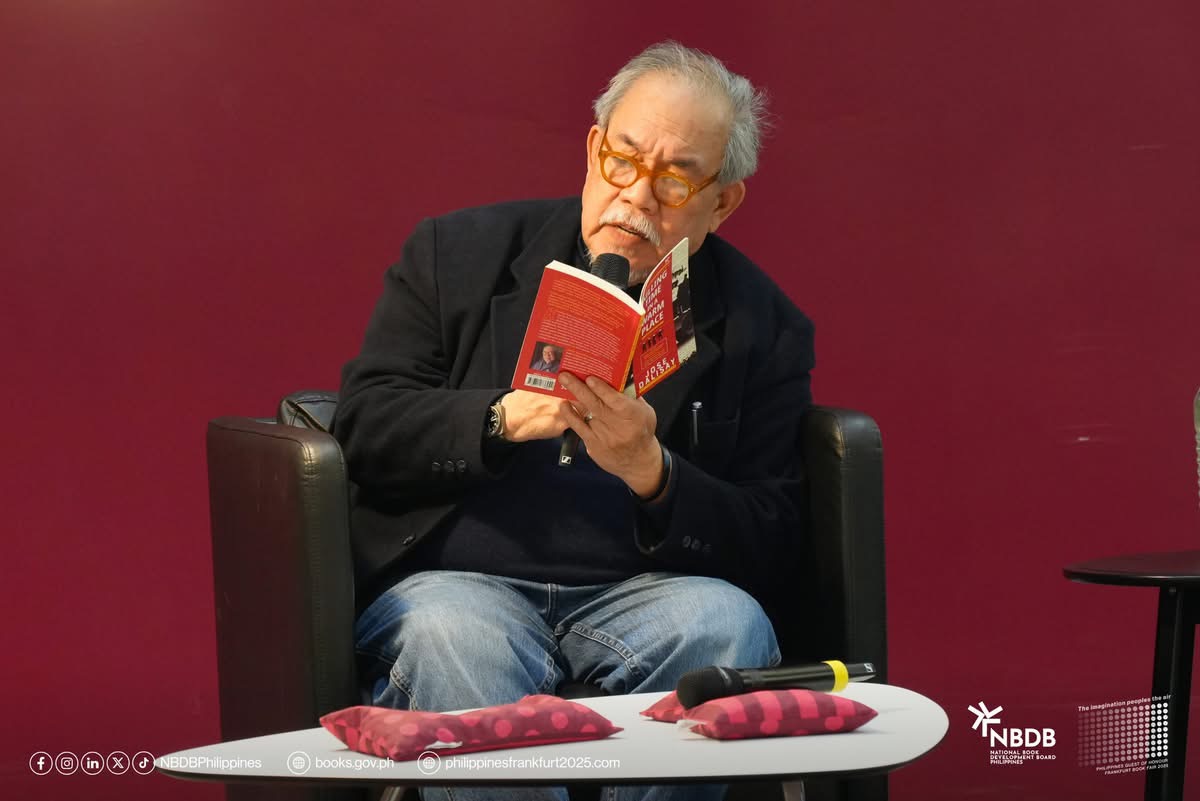
It was my third FBM, having gone for the first time in 2016 and then again last year, when the German translations of my novels Killing Time in a Warm Place and Soledad’s Sister were launched. This year, it was the Spanish translation of Soledad that was set to be launched at Frankfurt’s Instituto Cervantes. 

Those two previous exposures allowed me to appreciate our GOH role for what it was—a once-in-a-lifetime opportunity to put our best foot forward on the global stage. What began in the 1980s as a tiny booth with a few dozen books—which it still was when I first visited nine years ago—had become a full-on promotional campaign, not for the government (which did not object to outspoken critics of authoritarianism being on the delegation) and not even just for Philippine books and writers but for the Filipino people themselves. 

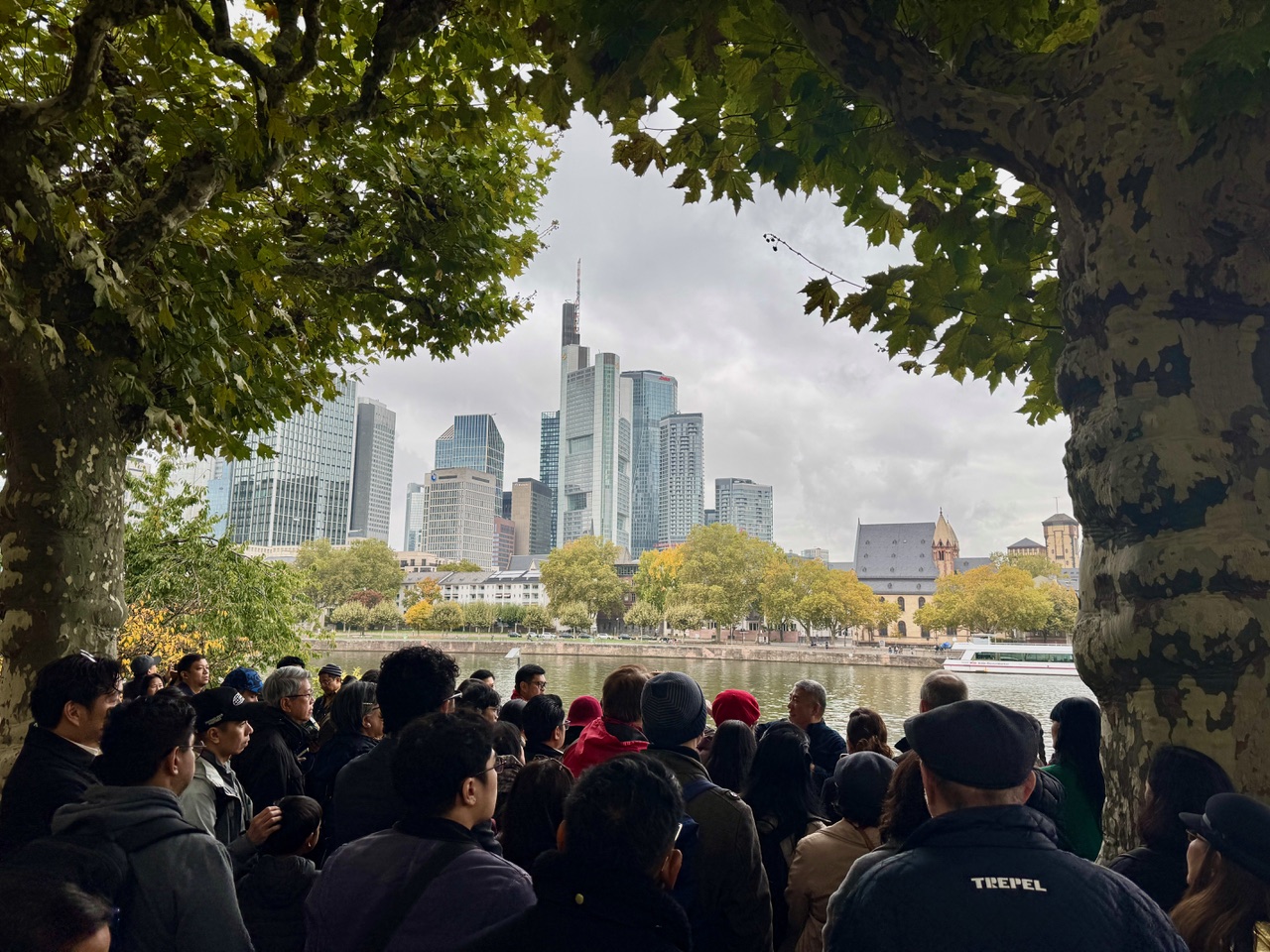
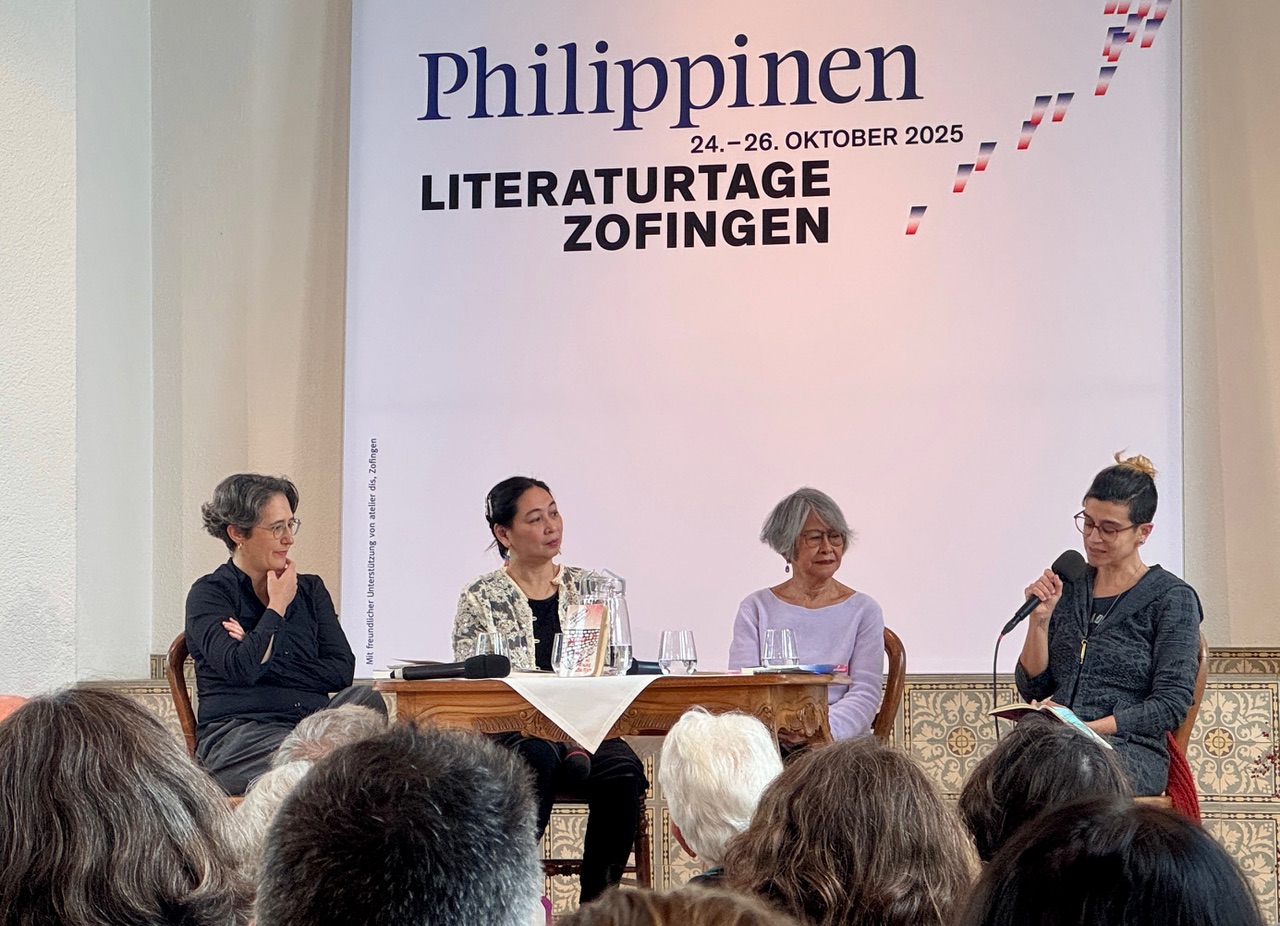
Six out of my eight events took place outside the FBM—two of them involving side-trips to Bad Berleburg in Germany and Zofingen in Switzerland—to bring us closer to local communities interested in what Filipinos were writing and thinking. Indeed my most memorable interactions were those with local Pinoys and with ordinary Germans and Swiss who asked us about everything from the current state of affairs (the resurgence of the Right in both the Philippines and Europe, Marcos and Duterte, the threat from China, the corruption scandal) to Filipino food and culture, the diaspora, the aswang, and inevitably, Jose Rizal, who completed the Noli in Germany and in whose tall and broad shadow we all worked.

Everywhere we went, in Frankfurt and beyond, the local Pinoy community embraced us, eager for news from home and proud to be represented, to hear their stories told in words they themselves could not articulate. “I’ve been living a hard life working here as a nurse in Mannheim,” Elmer Castigador Grampon told me, “and it brings tears to my eyes to see our people here, and to be seen differently.” 

A German lady accosted me on the street outside the exhibition hall and asked if I was the Filipino she had seen on TV explaining the Philippines, and we had our picture taken. A German author in his seventies, Dr. Rainer Werning, recounted how he had been in Manila during the First Quarter Storm and the Diliman Commune, had co-authored two books with Joma Sison since the late 1980s, and had described the Ahos purge in Mindanao and similar ops in other parts of the islands as the most tragic and saddest chapter in the history of the Philippine Left . A sweet and tiny Filipina-Swiss lady, Theresita Reyes Gauckler, brought trays of ube bread she had baked to our reception in Zofingen (the trays were wiped out). Multiply these connections by the hundreds of other Filipinos who participated in the FBM, and you have an idea of the positive energy generated by our visit.

From our indefatigable ambassador in Berlin, Susie Natividad, I learned about how Filipino migrant workers have to learn and pass a test in German to find jobs in Germany, a task even harder in Switzerland, where Swiss German is required. Despite these challenges, our compatriots have done us proud, as the maiden issue of Filipino Voices (The Ultimate Guide to Filipino Life in Switzerland) bears out. 

The FBM was as much a learning as it was a teaching experience for us, for which we all feel deeply grateful. By the time our group took our final bows on the stage in Zofingen—a small Swiss city that hosts writers from the GOH after the FBM as part of its own Literaturtage festival—I felt teary-eyed as well, amazed by how a few words exchanged across a room could spark the laughter of recognition that instantly defined our common humanity. 

I am under no illusion that GOH participation will dramatically expand our global literary footprint overnight, but it has created many new opportunities and openings for our younger writers to pursue in the years to come. It is a beginning and a means, not an end. The greater immediate impact will be to spur domestic literary production and publishing, to have a keener sense of readership, and to encourage the development of new forms of writing.

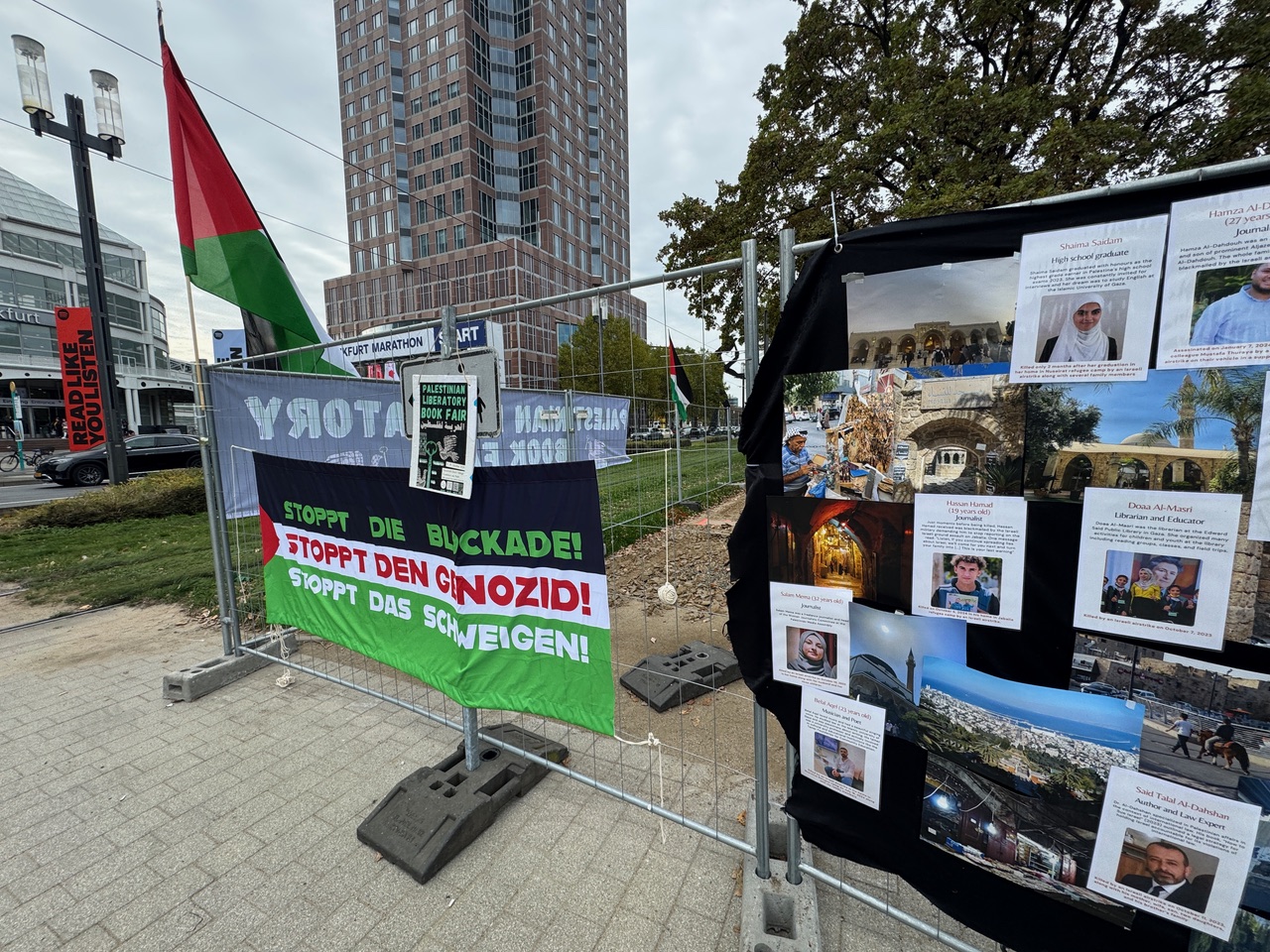
Sadly, a move to boycott the FBM by Filipino writers protesting what they saw to be Germany’s complicity with Israel’s genocidal war in Gaza has also impacted our literary community. (For the record, there were Palestinian writers—and even an Iranian. delegation—at the FBM, with whom Filipino writers interacted in a forum. There was also a Palestinian book fair across the fairgrounds.)

I have long taken it as my mission to promote an awareness of our work overseas and had opposed the boycott from the very beginning for reasons I have already given many times elsewhere. Many hurtful words have been spoken and many friendships frayed or broken, to which I will add no more, except to quote the Palestinian-Ukrainian refugee Zoya Miari, who visited the Philippine pavilion and sent our delegates this message afterward:

“I’m on my way from Frankfurt back to Zurich, and I’m filled with so much love that I can’t stop thinking about the love I felt in the Philippine Pavilion. I came back today to the Pavilion to say goodbye, not to a specific person, but to the whole community. This space became a safe space for me, one where I deeply felt a sense of belonging.

“I’m writing these words to thank you and your people for creating a space where

I, where we, felt heard and seen. That in itself is such a powerful impact. I know some people decided to stay in the Philippines to show support for the Palestinians, and I want to say that I hear and see them, and I thank them. And to those who decided to come, to resist by existing, by speaking up, by showing up, by connecting the dots, by being present and by sharing stories, I also hear you, see you, and deeply thank you.

“We all share the same intention: to stand for justice, to fight against injustice, and we’re all doing it in the best way we know how. I truly believe that the first step to changing the world is to create safe spaces where people are deeply heard and seen. When stories are heard and seen, we begin to share our vulnerabilities and showing that side of ourselves is an act of love. Through this collectiveness, this solidarity, we fight for collective liberation.”

Penman No. 477: (Almost) Working with Mike de Leon

Penman for Sunday, September 7, 2025

IT’S ALMOST criminal to admit this, given the understandable outpouring of grief and adulation that followed the announcement of film director Mike de Leon’s recent passing. But the truth is, I didn’t really know him or his work all that well. I’d seen a few of his movies—Kisapmata and Citizen Jake come to mind—but for some reason missed out on the best and most celebrated ones: Batch 81Sister Stella LKung Mangarap Ka’t Magising, and so on. I shouldn’t have, but there it is, like all the great books I never got to read, because I was busy doing something else.

From the late 1970s to the early 2000s, I was writing scripts for many directors—mostly Lino Brocka, but also Celso Ad. Castillo, Marilou Diaz Abaya, Laurice Guillen, Gil Portes, and Joel Lamangan. (Never for Ishmael Bernal, either, nor for Eddie Romero; they’re all gone now except for Laurice and Joel.) Mike de Leon was and remained a mystery—until, on December 30, 2022, from out of the blue, I got this message in my inbox (I’ll be excerpting Mike’s messages to me from hereon; he typically writes in lowercase but I’ve edited everything):

Butch,

We’ve never met but I guess we know of each other. 

I just wanted to know if you are interested in working with me on a possible screenplay that I hope I can still turn into a film even at my late age (going on 76, Stage 4 prostate cancer, but still able to function). 

I admit I have never seen any of the films you made with Lino, and the only book of yours that I have is The Lavas which I have largely forgotten. But in that anthology book, Manila Noir, I found your short story, “The Professor’s Wife” the best of the lot. 

The only thing I can say about my film idea is that it is part of my memories as a young boy during summer months in Baguio in the late 1950s. In other words, it is just about a group of rich people who play mahjong and the battalion of maids and drivers who serve them. This is probably the result of the flood of memories that are still spilling out of my mind after completing my book Last Look Back. It is no big production because it is the characters I am most interested in. A picture of the members of the idle rich when Baguio was still the exclusive enclave of the privileged elite, from which I’ve descended, of course. 

I did ask Sarge Lacuesta and he was quite interested but he is going to direct his first film for Cinemalaya. So I picked up Manila Noir again and looked for that story and found out that it was you who wrote it. 

Anyway, as I always say, suntok sa buwanBaka hindi rin matuloy because of my health but I’d like to give it a try anyway. If you think you might be interested, please email me back. 

I wrote him back to say that of course I was happy and honored to be asked to work with him:

The project sounds like something I’d be very comfortable with—a quiet family drama with an upstairs-downstairs element to it. Coincidentally, i’ve been working on a novel set in 1936 in one of those Dewey Boulevard mansions, with the Manila Carnival (and Quezon and Sakdalistas in the background). But that’s at least still another year from being done. I just wanted to say that the idea of revisiting the past to show how it has shaped the present—throwing light and shadow where they belong—is dear to me.

And now, the inevitable hitch: I’m working on three commissioned book projects at the same time, and these books will be due in 2023. I’m retired, but I’m also writing columns for the Star and teach one graduate class in UP.

I can imagine from your situation that this project is a matter of great personal significance and urgency to you—which is why I so want to be a part of it, despite my own load. At the same time, I don’t want to be a hindrance to you, especially if you want this done soonest. If you just need me to flesh out some scenes and develop some ideas and write up the sequences and dialogue as we go along, maybe we can do something together. Let the thing grow and go where it will. 

Then he sent me more notes about what he had in mind:

As you probably know by now, I like shooting a film in Baguio. I now own the former family house and I’ve restored it and maintained it well. It can still pass for an authentic American colonial house of the late 1950s. Actually, the house was built in the 1930s, but I’m not sure of the exact date until I find the papers. The original owner was an American officer named Emil Speth. He married one or two native women and was the vice-mayor of Baguio when the Japanese bombed the city on December 8, 1941. Quezon was in the mansion and I read an account that Speth asked Quezon to take shelter in his house (maybe not the same one because Speth owned many houses) because he had a bomb shelter. 

By the way, this is not an autobiographical film. It’s the mahjongistas I’m more intrigued about. I used to watch them with a fascination because it was not really gambling but a form of social intercourse with its own rituals. 

Within a few days, much to his surprise, I emailed him back with a full storyline based on what he said he wanted to do. I’ve always been a fast writer, and I guess it was one of those things I would be known in the trade for. I delivered quickly, without fuss, just needing to be paid.

He responded:

Quite surprised to get this email and story idea. I just read it quickly but I will read it more carefully in a while, when I’m wide awake. It seems too complex, the characters as well. I was thinking of more opaque characters (from the point of view of the young boy, and the viewer, they cannot explain their behavior, that is what I’m looking for). His memories are speculative and will probably remain so until his old age. By which time, most of them are dead anyway. But I’m amazed at how you put this story together. Give me a couple of days to react to it and I will jot down my own notes.

On January 9, in the New Year, began what would become a painful series of revelations:

Sorry for the late reply. I’ve not been feeling well, possibly because of the gloomy rainy weather. I can’t take my regular early morning walks around Horseshoe or Greenhills. Also, I’m kinda antsy about my scheduled PET scan next week. My doctors told me last year, after the first PET scan, that I may not live another eight months or so, but it’s been more than a year and I’m still here. Fortunately, I was able to finish my book. 

I am writing my “impressions” of what I feel the film should be or “feel.” One important thing is that I think the film should start in medias res, the family is already in Baguio, several weeks in fact. The kids are playing or doing what they usually do (perhaps a little bored) and mahjong sessions are ongoing. I don’t want to give them family names, just Tita Rita, Tito Hector, Nicky (the kid). 

I think I need to paint a more vivid picture of what life was like back then for your benefit. I’m selecting photos of my youth in Baguio and sending them to you. I would like to give the impression that the film is “almost” biographical but not entirely so. So please give me another week to put something together. So there can be nothing like a murder. Psychological violence is more interesting to me. 

Pahinga muna ako, I’m always tired. 

A couple of weeks later, he followed through:

Sorry for the long silence. I’m pondering a lot of things at the moment. I haven’t written anything but the concept keeps growing in my mind that it is becoming unfeasible. I finished reading a book on the 1950s and I started reading “Cameo” last night, and I really like the way you write. 

Don’t hold me to this but I’m thinking that “The Professor’s Wife” may be the right kind of film for me but I was wondering if it can be set in Baguio. Not in my house, of course, it’s too grand for the story. I have some very dear friends in Baguio who may help me look for the right location for the story. 

I’ve been asking myself the same question over and over, do I still want to make films? It’s not just my health but a lot of other things. 

I’m sorry if I seem very unpredictable but I feel you can understand and empathize with my situation. I thought I’d be dead by now, but I’m not. 

And then:

Sorry for the long silence. My new PET scan results are not very encouraging. Although the bone metastasis has not spread (from the prostate cancer), there is worrisome new activity in my liver that was not there before. I will have to undergo a liver biopsy, an outpatient procedure but my doctor wants to have me admitted. And if I can do this early next week, it takes a week for conclusive results to come out. 

So that kinda leaves in a kind of limbo. In many ways, I feel so vulnerable, something that I did not feel when I was first diagnosed with prostate cancer in 2016. I feel that my life has just stopped. Anyway, the story I’m most interested in now is the aborted script of my own “Unfinished Business,” or its new title “Sa Bisperas” for obvious reasons. I was beginning to make major revisions when Bongbong was elected, but now it seems very appropriate to my life—an existential film masquerading as a ghost story.

Sorry about all of this, butch. I will keep you updated. Perhaps we can co-write the revisions if you are open to that sort of thing. But in the meantime, I have to try to beat this thing.

In January 2024, a year after our first contact, he wrote me:

I hope you’re doing fine and I’m really sorry for the long silence. So much is happening in my life right now but I’m still hoping to make one more film next year, that is if my medical condition doesn’t take a turn for the worse. 

I was wondering if anyone has made a film of your short story “The Professor’s Wife”, included in Manila Noir. I’ve been thinking about it and it could be something I can still do. If it’s possible, I can option it for a certain period and pay whatever you feel is a good price. The same would go for the screenplay—that you will be paid whether I can make it or not. I think it has the potential to become a small but intimate and intense film, character-based, with a murder thrown in, like Kisapmata. 

I wrote and sent him a full storyline based on my short story, but told him that I wasn’t going to bill him for anything until the project was actually underway. Six months later, on July 10, he wrote:

There are a couple of questions I should ask you right away. The professors’  academic argument, could it be about some “obscure” historical event or incident like something set during the Japanese Occupation? Perhaps an issue of collaboration. That way, we can subtly bring in the political situation today. 

Is it still possible to shoot in UP? Or in some relatively quiet location at the teachers’ village, so I can record direct sound, and avoid dubbing. It would be wonderful to set the story in Baguio, but I don’t want to force it. 

I’m going to travel in Europe in November, perhaps for the last time. My excuse is the restoration of Sister stella which is currently being restored in Bologna. I don’t have a Schengen visa and an invitation from my friend Davide of Ritrovata may help a lot in getting me one and for my caregiver as well. 

He wrote later about visiting our home on the campus, where my story was set:

I think a visit to your place would help me tremendously. There are so many possibilities to this story and since this is the first time we’re working together, I must warn you, makulit ako. But at least this time, the germ is there, the story is there. I just want to know more about the milieu. 

It’s a noir film and a social drama at the same time, I think. As I was writing, I was thinking of Cornell Woolrich, James M. Cain, and even Patricia Highsmith’s Ripley series or the Cry of the Owl, yata. Are you familiar with the 1947 film “Out of the Past” by Jacques Tourneur? 

I will continue to write down my rambling notes and send them to you in a day or two. 

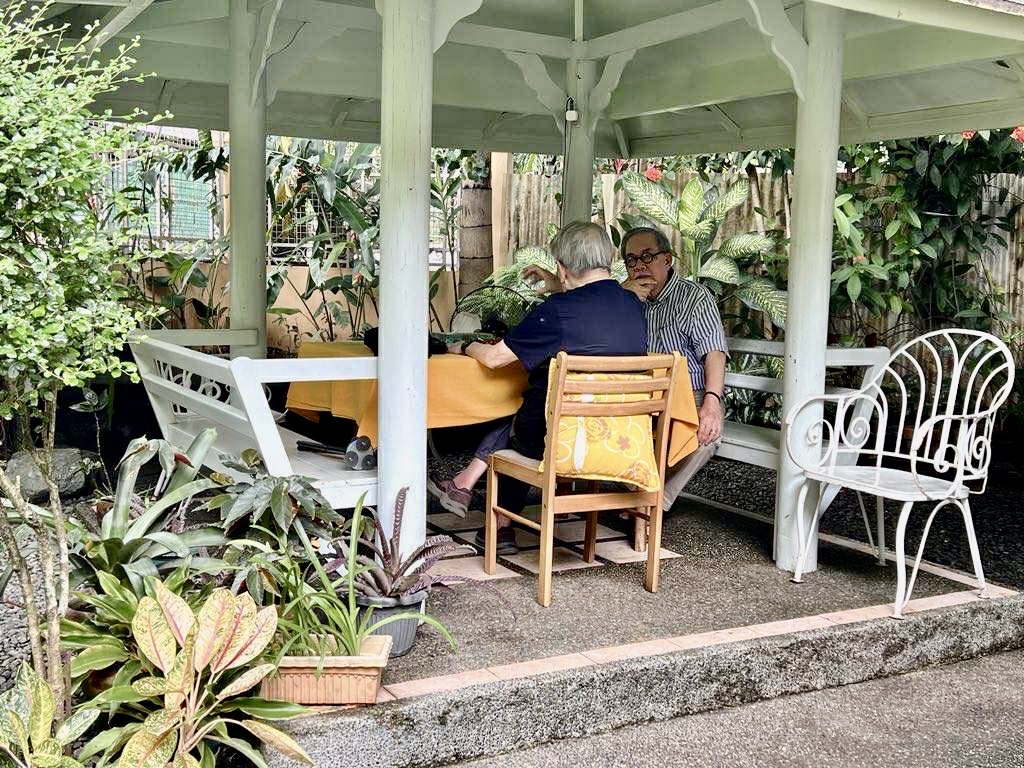
He came to the house on July 29, 2024. It was only the second—and would be the last—time for us to meet. We had a pleasant chat over a light merienda prepared by Beng in our garden gazebo in UP. I can’t recall if he even touched the food; he looked pale against his usual black shirt, but then he always seemed to be like that. We discussed the revisions I was thinking of making on my story to shade it even further. He said that he found me refreshingly easy to talk to, which I was happy to hear, but at the same time we were both aware that we were dreaming up a film neither of us would get to see. 

On October 12, 2024, I got the message I could not be surprised by. I wrote back to wish him well.

I’m sorry I have to write you this email, wherever you are. I’ve been quite sick these last two weeks. I was in the hospital for several days for a blood transfusion.

My recovery will be slow, according to my doctors. But they don’t really have to tell me that. I’ve been very weak, most probably due to a multitude of causes, foremost among them is the metastasis caused by prostate cancer. 

Needless to say, I don’t think I will be able to make a film, so you might as well know now. I even had to cancel my trip to Europe. I’m sorry that I wasted your time. I hope you understand.

Best and thank you very much

Mike

Qwertyman No. 154: Politics as Melodrama

Qwertyman for Monday, July 14, 2025

I’VE OFTEN argued that our most popular literary form isn’t lyric poetry, the short story, and certainly not the novel—it’s theater, and more specifically melodrama. Born in the West in the 18th century, melodrama weaves its spell on a suggestible audience through sensational and often ridiculous plots, exaggerated action, overblown emotion, and contrived solutions—all of which viewers happily lap up, and come back looking for more. When you think about it, it also happens to describe our politics, but more on that later.

I used to bring up melodrama when I taught playwriting and screenwriting, by way of analyzing how our Filipino sense of drama works. You don’t have to be a theater scholar or critic to observe that we Pinoys love drama, which to us really means melodrama, whether onstage, onscreen, or in real life.

Subtlety and silence have never been our strongest suit. We like to shout, to scream, to declare, to explain—and to explain some more. Take, for example, our preferred methods of murder. In Hamlet, the villainous Claudius pours poison into the king’s, his brother’s, ear. In The Seventh Seal, a knight faces Death on the chessboard. That may have been thrilling for fans of Shakespeare and Ingmar Bergman—but terribly dull and anesthetic for our kind of crowd.

No, sir, we Pinoys like our killings obvious, loud, and emphatic. Poison in the ear is for sissies. We prefer knives because they mean business, are as personal as personal can get, and they produce a lot of cinematic blood. And it’s never enough to stab someone, certainly not from behind, which would be a complete waste of dramatic possibilities. We like to announce that we’re killing someone, and to explain the reasons why: “Hudas ka, Raymundo, niyurakan mo ang karangalan ng aming angkan, kaya’t tanggapin mo ngayon ang mariing higanti ng hustisya—heto’ng sa iyo!” But of course Raymundo has to have his moment, and must raise that inevitable question: “Ano’ng ibig mong sabihin?” Whereupon our hero launches into another lengthy explanation, to which Raymundo offers an impassioned rebuttal, all to no avail, as he is stabbed repeatedly to the accompaniment of further oaths and recriminations.

I used to think that this kind of talkativeness and effusive gesturing was invented by us, until I went to graduate school and realized that it was all over the place in Restoration drama, where the likes of John Dryden had his characters indulge in copious speechifying in the name of love and honor before killing everyone onstage. I suppose a similar trend seized the French and Spanish theater, and thereby later ours, in the zarzuelasmoromoros, and komedyas that provided us with both entertainment and education. The noisiness carried over to radio, and then to our movies, which never quite shook off the “Ano’ng ibig mong sabihin?” habit. 

And this brings us to our politics, which is not only full of sound and fury, of unbridled verbosity, but of plot twists that strain credulity and yet which manage to keep the audience on the edge of their seats, either roaring in rage, applauding in delight, laughing deliriously, or weeping in sorrow, depending on their persuasions.

The Duterte Saga, our biggest ongoing drama, is now in its fourth act—the Sara impeachment—after the Uniteam victory, the fallout, and the Digong arrest and banishment. A professional scriptwriter could not have done better than giving the VP lines like Sara’s vengeful vows, as the media reported: “I have talked to a person. I said, if I get killed, go kill BBM (Marcos), (First Lady) Liza Araneta, and (Speaker) Martin Romualdez. No joke. No joke,” Duterte said in the profanity-laden briefing. “I said, do not stop until you kill them and then he said yes.” Threatened with impeachment for that statement and for corruption, she said, “I truly want a trial because I want a bloodbath.”

To the uninitiated listener, a madwoman was merely frothing at the mouth, but to the theater-goer, she’s puffing up her feathers, going larger than life, saying outrageous things to define her character and stake out her space like a Maori dancing the haka. Her adversary, PBBM, is playing cool and coy, pretending to be occupied with work and a disinterested party in Sara’s undoing. And yet he whisks off her precious papa in the night to Scheveningen, provoking even more outbursts from the DDS faithful.

Now comes the tearful part. Melodrama moves from Olympian thunder to cloying tenderness, so our next scene, naturally, has Sara’s mom Elizabeth declaring that her estranged husband has been reduced in detention to “skin and bones.” But it’s all right, she says bravely. “And how is my son, acting Mayor Baste?” the Davao City mayor-in-exile asks in a dry croak. “He’s okay, too,” Elizabeth assures him. “His vice mayor is your grandson!” So but for the absent patriarch, all’s well in Duterteland—sort of.

Melodramas love subplots, so let’s introduce one: selling the Duterte house. Common-law wife Honeylet puts up a sign announcing the place for sale (“It’s too painful to sleep there all by myself,” she claims), but son Baste reportedly has the sign removed. Not so fast, VP Sara chimes in; Honeylet could sell her half of it but not her dad’s. Besides, where would Digong live when he returns from the Hague, if Honeylet sold the house? (Cue for hopeful, uplifting music, which tapers off into a melancholic minor key.) “Perhaps he could live with Mama Elizabeth again,” Sara muses. 

Ah, such poignant moments. No one’s been stabbed yet—expect a lot of that to happen, metaphorically, if and when the Senate finds its balls and starts the impeachment trial of VP Sara. What’s theater without traitors? Sen. Migz Zubiri has already thrown down the gauntlet by declaring the trial “a witch-hunt.” But Senator Migz, ano’ng ibig mong sabihin?

Penman No. 474: Looking Back and Letting Go

Penman for Sunday, June 1, 2025

AS ANY friend who’s had the privilege of being invited to his Makati home quickly realizes, Ambeth Ocampo is more than the engaging public intellectual we all know, whose Looking Back series has made history come alive for young Filipinos. He’s also an inveterate collector of rare Filipiniana—books, ephemera, art, and historical objects—all of which come with the territory he works in. 

There have been many Filipinos of a similar bent—the legendary Alfonso Ongpin and the late Ramon Villegas come to mind, as well as the more contemporary Jimmy Laya, Melvin Lam, and Edward de los Santos, among others—but the way Ambeth has amassed his collection is noteworthy on its own, as it folds the personal almost imperceptibly into the professional. 

It comes pretty close to the classic prescription for murder—means, motive, and opportunity—all captured in his classic story of how he stumbled on and picked up Emilio Jacinto’s silver quill, a writing prize, from an antiques dealer who didn’t bother to learn what it was and let it go for its scrap value. (Having as much of Ambeth’s desire for antiquarian junk but with much less knowledge and certainly less means, I’ve often joked, between the two of us, that Ambeth’s the scholar and I’m the scavenger.)

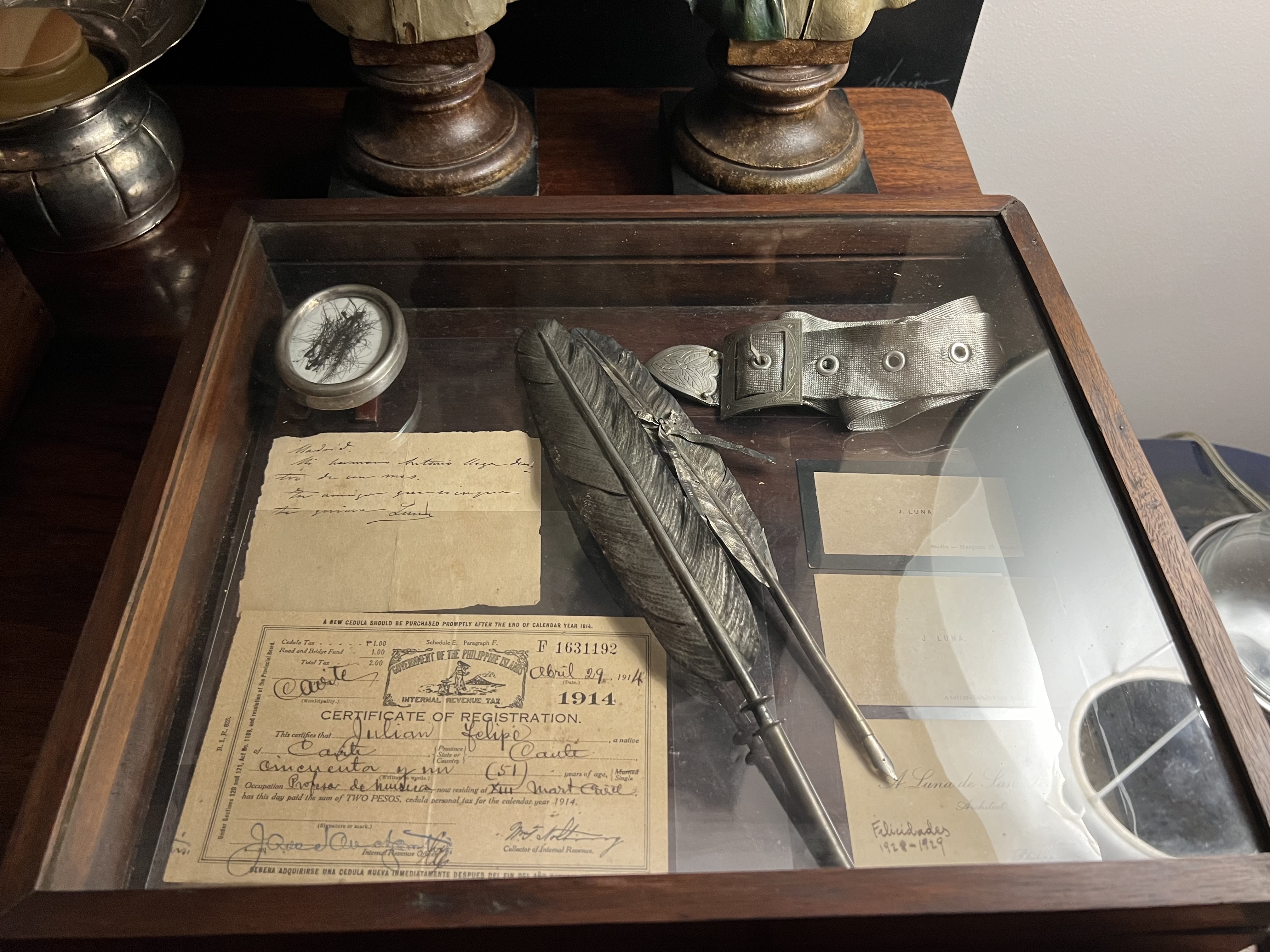
Jacinto’s quill, along with a trove of other historical treasures from Ambeth’s personal collection, will be up for auction on June 7 at Leon Gallery. They include Juan Luna’s silver belt, Felix Resurreccion Hidalgo’s walking stick, an official copy of the Malolos Constitution, Philippine maps from 1616 and 1647, and the Noceda and Sanlucar Vocabulario de la Lengua Tagala from 1860, among many others.

Knowing how precious these objects were, I had to ask Ambeth more about them, and this is what he said.

What made you think of selling these treasures now? Surely it can’t be easy letting go of them after being their caretaker all this time?

Over the years, I have come to the realization that collecting is not the hobby it used to be. As a boy I collected stamps and learned geography, history, and the culture of foreign countries in the process. I was fortunate that my father’s company had an international correspondence, so every week his secretary would send me a batch of envelopes to sort out.

I started collecting Filipiniana books in the 1980s, stocking up from the National Bookstore Quezon Boulevard branch bargain bin where I completed my Nick Joaquin essay collection because they cost one peso each. After school, I went to the Heritage Art Center in Cubao that I learned only years later was the site of the old Philippine Art Gallery. It was a ramshackle grouping of rooms upon added rooms made from old house parts that Mario Alcantara, the owner, bought from mambubulok. I had a favorite nook where I did my homework and when bored I would explore the rooms that I think gave me an eye for art and the ability to choose what I thought was good or not.

Looking back my collecting, and my life, has been the happy intersection of skill and opportunity. Napoleon once said “ability is nothing without opportunity.” I have always seen collecting as a responsibility. Collecting significant Filipiniana is not a hobby. It is not an investment. Collecting is a responsibility, the collector a steward who preserves the collection for the next generation. 

The objects I put at auction have enriched my life in many ways and I think they will enrich the life of their next steward. Some of the lots like the Malolos Republic one-peso banknote and the printed copy of the Malolos Constitution have been tucked away in a drawer. If I drop dead tomorrow these might be carelessly thrown away as trash. They should go where they are better appreciated. Collectors de-accessioning keeps the market alive and buzzing.

Let’s get this out of the way: it’s none of our business, but what will you do with the money?


Since I am not a dealer the material reward does not really factor in the equation. I have sold other things before at cost or even at a loss, just thinking that my gain was the enjoyment I got chasing after them and acquiring them. What will I do with the proceeds? When I started selling my rare Filipiniana I thought that instead of having shelves of books, maybe I should just sell and use the proceeds to buy one or two incunabula or samples of early Philippine printing from 1593-1640. Instead of caring for a whole library I will just care for half a dozen very important books.

How did you start out as a collector of historical objects? How and where did you find them? Aside from Jacinto’s pen, what was your most serendipitous find?

Collecting historical objects came naturally from my work as a historian. I would find things in used bookstores and when supply was still plentiful in the Ermita antique shops. One of the serendipitous finds was the cedula or residence certificate of a certain Julian Felipe, a musician from Cavite. It was in a heap of old papers, initially priced at one hundred pesos. I haggled it down to fifty, paid, and ran away. 

Another time my favorite antique dealer brought a “European painting” of a Virgin and Child to my home. I looked at it and knew it was Philippine. When I opened the frame to inspect the painting, hidden under the frame was the signature of the Filipino master Mariano Asuncion (1802-1855). The silver belt of Juan Luna and the bank draft in his name were acquired from Mario Alcantara. It came with the famous trove of paintings inherited by Grace Luna de San Pedro that are now in the National Museum. While everyone was going wild over the paintings, I spent many afternoons browsing the boxes of memorabilia that included the bloodied uniform Antonio Luna wore when he was assassinated, the palettes and brushes of Juan Luna, the memorabilia, some architectural plans of Andres Luna de San Pedro, and much more. I offered to buy the palettes and brushes and the painter’s smock but Mario said these were destined for the National Museum. There was also the last letter Juan Luna wrote to his son from Hong Kong, written a day before his death, not only was this letter significant, Luna did a watercolor of Hong Kong Harbor on the first page of the double-sided letter. All I could afford was the silver belt that came with Luna’s black suit that Mario said was also destined for the National Museum. Unfortunately, the Heritage Art Center burned down and with it all these memorabilia.

Do you or can you separate the collector from the scholar? Did the collecting happen naturally as a consequence of the scholarship?

The collecting grew and was enriched by my research and scholarship. If I had a PhD in Math I probably would not have recognized these odds and ends now considered treasures. I have been divesting over the years. A large part of my Filipiniana collection was donated to the Center for Kapampangan Studies, Holy Angel, Pampanga. All I keep at home are the books I need for work for teaching, lecturing, and writing, but now that I am retired from Ateneo (but still employed on a post-retirement appointment) it is easier to let go. 

The full catalog of Leon Gallery’s Spectacular Mid-Year auction can be accessed on its website at https://leon-gallery.com

Qwertyman No. 138: Dutch Entertainment

Qwertyman for Monday, March 24, 2025

AS I’VE mentioned here before, I was a prisoner once—under martial law, for more than seven months, when I was eighteen. I had been arrested without a warrant for unspecified offenses against the State, on the strength of an Arrest, Search, and Seizure Order (ASSO) issued by Defense Secretary Juan Ponce Enrile. ASSOs were literally a catch-all piece of paper, meant to capture anyone whose face the regime didn’t like. I was sleeping at home when military agents barged in, and scooped me up in front of my terrified parents.

Our prison stood on a patch of land where the upscale BGC stands now; when we looked out at night we could see the neon lights of Guadalupe flashing. We had a small library in the back, TV in the mess hall, chess, calisthenics, and rumor-mongering for entertainment. It wasn’t too bad when there were just 40 of us occupying two Army barracks in the early months of martial law, but when we grew to over 200, the harsh realities of prison life set in, and people began escaping through the barbed wire.

These recollections came back to me last week as I thought about the surprise arrest and deportation of former President Rodrigo Roa Duterte to a holding cell in the Netherlands while awaiting trial by the International Criminal Court.

By any legal reckoning, he’s going to be there for a while—he won’t be arraigned until September—so like it or not he’s going to have to adjust to his new abode over the next few months, like we had to in Bicutan.

His subalterns and supporters can make all the noise they want outside his prison, in the Philippines, and wherever in the world a DDS chapter exists, but RRD’s time ahead in Scheveningen will be largely spent in quiet and solitude.

From what we’ve seen online of his holding cell, Digong’s digs aren’t plush by any standard, but seem fairly adequate and comfortable—just spare enough to suggest to its occupant that he is in some kind of retreat, where he can ponder his worldly actions and contemplate the afterlife. Indeed the room—with its military cot and washbasin—evokes priestly economy, in stark contrast to the sybaritic excesses its previous tenants must have been accustomed to in their prime. In fairness to the incumbent, that lifestyle is something he has never been associated with; part of his popular appeal stems from his image as a man used to sleeping on hard beds and dining on the simplest fare.

There is a large flat-screen TV in the room, through which Digong can follow the news of the world and—given the way that world is going—feel upheld in his conviction that a hard fist and a knock on the head always makes things right. His heroes—Donald Trump, Vladimir Putin, and Xi Jinping (notably the same despots “quoted” by his trolls as expressing their support for him, like character references)—seem to be doing all right, keeping the world safe from the rule of law.

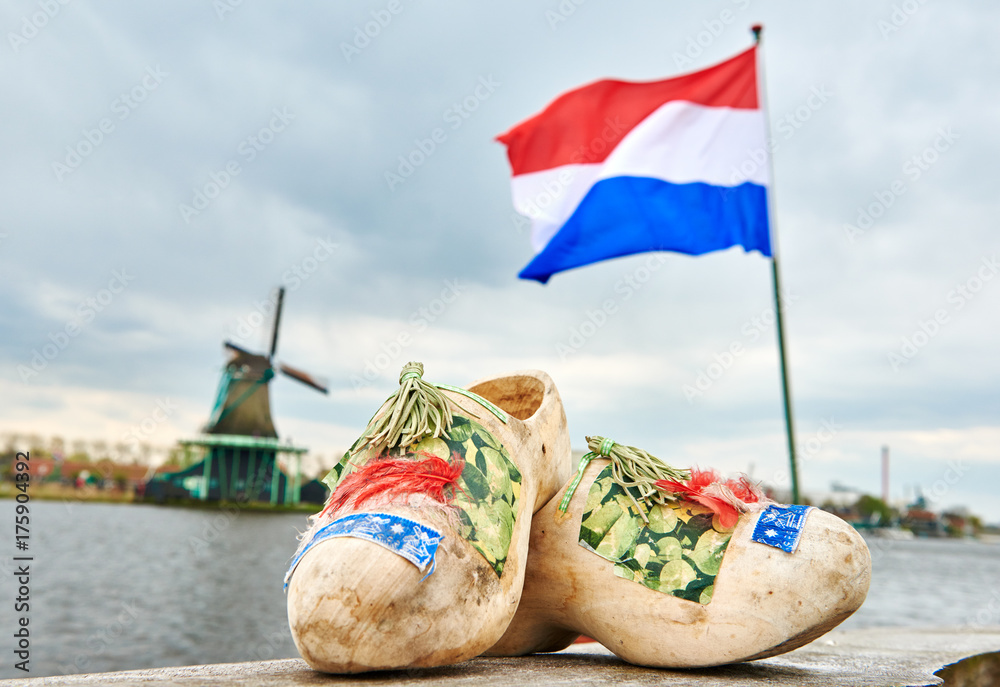
He might learn that the Dutch music industry is undergoing a boom on the strength of songs like “Anxiety” by Doechii and “Guilty” by Teddy Swims. Football, tennis, and golf are the favorite sports of the Dutch, although Digong might also be amused by a Frisian sport called klootschieten, which involves throwing a ball and sometimes drawing blood. Dutch cinema is a small industry, but The Punisher should still be thrilled by local crime classics like “Murder Story” (1989), “Gangsterboys” (2010), and “Accused” (2014).

Should RRD prefer interesting human conversation, I doubt he’s going to get it from the likes of Harry Roque, whose own tribulations must be coming out of Digong’s ears (“I want to go home, and you want to come here?”). If there are any CPP-NDF holdouts left in Utrecht, I’m sure they’ll have  a lot to talk about on a prison visit, going back to the Left’s early flirtation with their “nationalist” ally.

But truth to tell, if I were the former President, I would spend my time in Scheveningen writing my memoirs. I wrote a novel about my government-sponsored Airbnb experience, but given his bluntness, fiction probably won’t be RRD’s best suit.

I suspect Digong is a lot more articulate and maybe even more urbane than he lets on, because no Chief Executive could possibly be that vulgar and that ill-mannered without it being an act (you can imagine him rehearsing those PI’s before the SONA and turning up his collar to look even more roguish). All his life, he has presented himself to be a man of menace, projecting unforgiving brutality, steeping his hands into a cauldron of boiling blood to strike fear into his foes—but couldn’t all that have been just a show in the name of, uhm, good governance? 

The alternative narrative could go thus: In truth and deep at heart, all by his lonesome in his corner of the darkened Palace, he may have been a sensitive and tortured soul whose conscience reared and roared with every fresh report of another tokhang victim, who felt the anguish of every wife and mother like a stab to his own tender heart. He had done what he had to do for the noblest of purposes—the salvation of his suffering people from the stupor of narcotics (about which he knew something himself, but it was only to ease the pain from a motoring accident—all other uses were criminal).

RRD’s memoirs would not only be a spirited defense of his life—an apologia pro vita sua, as they used to be called—but a full, tell-all accounting of everything everyone ever did: henchmen, enemies, beneficiaries, and erstwhile allies alike. If he says he can’t get justice at the Hague, then at least he can dispense some of it from the safety of his albeit involuntary confinement.

Now that would not only be edifying but entertaining, wouldn’t it?

Qwertyman No. 127: From St. Louis to San Diego

Qwertyman for Monday, January 6, 2025

I’M WRITING this on New Year’s Day in San Diego, California, where we’ve been visiting our married daughter Demi, who’s been living and working here for the past seventeen years. It was our first Christmas in America in ten years, and our second visit since the pandemic ended. 

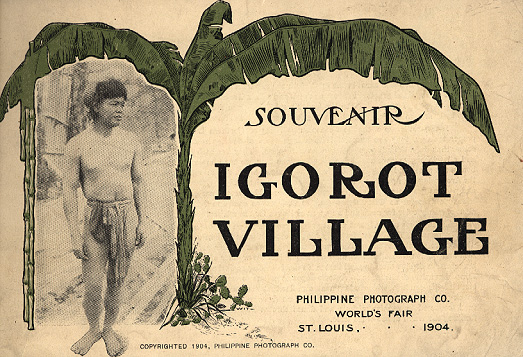
Last night, just before midnight on New Year’s Eve, I watched a long and fascinating documentary on cable TV on the 1904 St. Louis World’s Fair, also known as the Louisiana Purchase Exposition, which ran from April to December that year. We Filipinos recall that event for its importation of over 1,000 of our countrymen to demonstrate what “savagery” meant—specifically, through the public butchering and eating of dogs. 

That bloody sideshow raised an outcry even then among both Filipinos and Americans, a pain we still feel more than 120 years after. Lost to many of us as a result of that diversion was the magnificence of the fair in many other respects, especially in terms of advances in science and technology. Many necessities and amenities we associate with the 20th century—electrical lighting, wireless telegraphy, the X-ray machine, baby incubators, and tabletop stoves, among others—were first shown to the public at the fair. 

But the fair, above all, was meant to showcase American ascendancy in politics and culture and in military and industrial might. America had just defeated Spain and had become a global maritime power, and was eager to flex its muscle, so this triumphalism underscored the great urge at St. Louis to introduce the world to America, and America to the world.

Just a few days earlier, we came out to San Diego’s famous waterfront to watch a parade to celebrate the Holiday Bowl, a football game scheduled for the Christmas break, with floats, balloons, marching bands, and military vehicles. It was a moment of pure Americana, brimming with Christmas cheer. I did my best to keep politics out of my mind for that golden hour, but of course it was never far away—especially in San Diego, a border city that could soon find itself caught in the mass-deportation drama promised by the incoming Trump administration, which takes office in less than three weeks.

This morning we woke up to the news of at least ten people being killed and dozens more injured on the street in New Orleans by an ISIS sympathizer plowing into a crowd of New Year revelers. That could very easily have been us at the parade, and again I had to wonder if—despite all the bad press the Philippines gets, with some reason—the US was truly a safer place, given its new realities of normalized and often racist violence. 

It doesn’t even take a bearded terrorist to wreak havoc in American life; as of December 17 last year, 488 mass shootings had been recorded in the US, so often that they’ve become a news staple eliciting just about as much outrage and action as another mugging at Central Park. Anti-Asian violence—to include both physical assaults and verbal or online abuse—has been on the rise, with Southeast Asians reporting the highest number of threats, despite polls showing most Americans believing that anti-Asian-American attitudes are on the wane, post-pandemic. 

That’s not going to deter the hundreds of thousands of Pinoys who, like us, still need or want to visit America each year—mostly as tourists who just want to see Disneyland, the Golden Gate Bridge, and the Empire State Building, aside from picking apples in Michigan, tasting wine in Napa Valley, and skiing in Colorado. The magic of an America we fantasized about—growing up watching Hollywood movies, listening to American songs, reading American books, and following American idols—remains powerfully attractive, enhanced by an image we retain of America as an innocent, benign, and giving place. This might be especially true of us Boomers who learned about snow and white Christmases long before we came across the real thing.

I doubt, of course, that our forebears who stood half-naked in their tribal garb for the delectation of the crowd in St. Louis saw anything so warm and fuzzy about America. Instead they saw curiosity, pity, and revulsion. American “innocence” was always a romantic illusion; America the Beautiful can turn on a dime to become America the Ugly.

When I put all these things together in my mind, I wonder if we 21st-century Filipinos identify more ourselves today with those “savages” on exhibit or with their onlookers, particularly those Pinoys who have crossed over to become Americans—in some cases, even “more American than the Americans,” as I’ve heard it said, proud of their assimilation into a mainstream moving farther than ever to the political right. 

As a teacher of American literature and society—who also studied, taught, and worked in the Midwestern heartland for many years—one thing I always remind my Filipino students is that there’s no such thing as a single, monolithic America, and that, whatever its current majorities might say, American society is diverse and ever more diversifying. To the American right, that’s the “great replacement theory” at work, the horrifying possibility that non-whites—the carnival freaks—are taking over the country, prompting the Trumpist turnaround from “diversity, equity, and inclusion” or DEI policies. To me, diversity offers both challenge and hope.

Out of respect for my hosts and friends here in San Diego—some of whom, for their own reasons, voted for Donald Trump—I’ve held my tongue for the time being, telling myself that it’s their country and their choice, although that choice will inevitably affect our lives halfway around the world. 

Among my liberal American friends, I sense an urge to disconnect at least temporarily from political reality and to go into passive resistance while they regroup. It’s a position that I can identify and sympathize with, as we sort out our options in the Philippines of 2025. We survived martial law; you’ll survive Donald Trump, I tell them. To survive may well be our best New Year’s resolution: against the aggravations and vexations of the world we’ve come into, survival is the best revenge.

Penman No. 470: A Collector’s Christmas

Penman for Sunday, January 5, 2025

MY WIFE Beng and I in San Diego, California for our first Christmas in the US in ten years, visiting our daughter Demi and her husband Jerry. San Diego’s one of those perennially pleasant places where the weather seems to be perfect almost all year round. You don’t come here for a white Christmas—although there’s snow up in the mountains not too far from town. It’s still sunny and warm enough in late December for people to be going around in T-shirts and shorts in the daytime, but for us Pinoys who love to freeze, sweaters and jackets are de rigueur.

We’ve been coming here for twenty years now, and while San Diego is chockfull of attractions—this is, after all, where Comic-Con happens every July (been there, done that twice) and where the waterfront boasts a flotilla of historic ships from a life-size Spanish galleon to the USS Midway—I have to admit that the collector in me loves San Diego for its antique malls, flea markets, and thrift shops, of which scores can be found in the city and its suburbs. I’ve found many a prize piece in these places—such as a working gold-plated 1930s Hamilton “Curvex” watch in a basket marked “Any item $5”—which, for me, beats walking into a boutique and plunking down your credit card to pay full price.

I guess I’m a cheapskate at heart, which is why everywhere Beng and I have gone around the world, flea markets and thrift shops—aside from museums—are at the top of our to-do list. The thrill is even less in the purchase itself than in finding something old, beautiful, potentially valuable—and at a bargain. 

Collectors everywhere know the feeling—that tingle in your bones and at your fingertips when you step into a shop and scan the territory, and notice something in the hazy distance that seems to look like your obscure object of desire. As a collector of vintage fountain pens, I naturally gravitate toward small tubular shapes in black, silver, or gold—which was how, last March, I spotted and bagged a gold “safety” French-made pen from the early 1900s, sitting all by its lonesome at a table at the Porte de Vanves flea market in Paris, a 40-euro find for something easily worth five times as much. 

Everyone has his or her strategy, but mine has always been to do a quick march down and around the street or aisle, just to see what’s out there and to catch obvious standouts, before taking a more leisurely and more probing walk back, peering into corners and at the details of particular pieces. It pays to come early—flea markets open as early as 5 am—and we’ve been lucky to bag early-bird bargains at cock’s crow in a barn in Ohio and the flea market at Covent Garden in London.

Unfortunately, flea markets of this sort have yet to become a regular feature of Filipino life, unless we count the Bangkal used-goods market in Makati and the plethora of Japan-surplus stores that have sprung up around the country. 

Fortunately, there’s a global flea market that’s accessible to nearly everyone and which doesn’t even require you to fly overseas and deal with visas, airfares, and airports. That market is eBay, which I like to call the great equalizer, since anyone with an Internet connection and a bank account can tap into the millions of items that eBay has online at any given second.

To my great wonderment and not a little horror, I realized as I was writing this that I’ve been on eBay for 27 years now, having signed up with the website just three months after it changed its name to eBay from Auction Web in September 1997. My first buy was a 1950s Pelikan 140 fountain pen from Germany, and since then I’ve made almost 2,000 purchases covering all my collecting passions, from pens, typewriters, and Apple computers to antiquarian books, paintings, and clothes. (Clothes? Yes! If you’re a rather large man like me who has difficulty finding his size in local stores, you’ll have lots more choices on eBay for less as long as you’re sure of your shirt, blazer, pants, shoe, and hat sizes.) 

Shipping each item to Manila directly from the US or the UK (another eBay paradise) will be too costly, so what I and other experienced collectors do is to open an account with a forwarder like ShippingCart or Johnny Air Cargo, which gives you a local address, wait until the items pile up, and then ship them in a box to Manila. (Check with each shipper’s website for their specific insurance and customs policies.) I generally get my goods within two weeks of shipping them out.

I began by mentioning that we were in San Diego because this ties in with another twist to the Pinoy collector’s and shopper’s strategy: if you know you’re going to be in the US and will be staying with a relative or friend, you can have your eBay or Amazon items shipped to that address over, say, the preceding month, and bring everything home with you in the second suitcase you’re entitled to, saving a ton on air freight costs. 

This time around, to give you an idea of what my Christmas loot has been, I’ll be filling up a suitcase (or more likely my carry-on) with some small things of little commercial value but of great interest to hopeless hoarders like me. They’ll include:

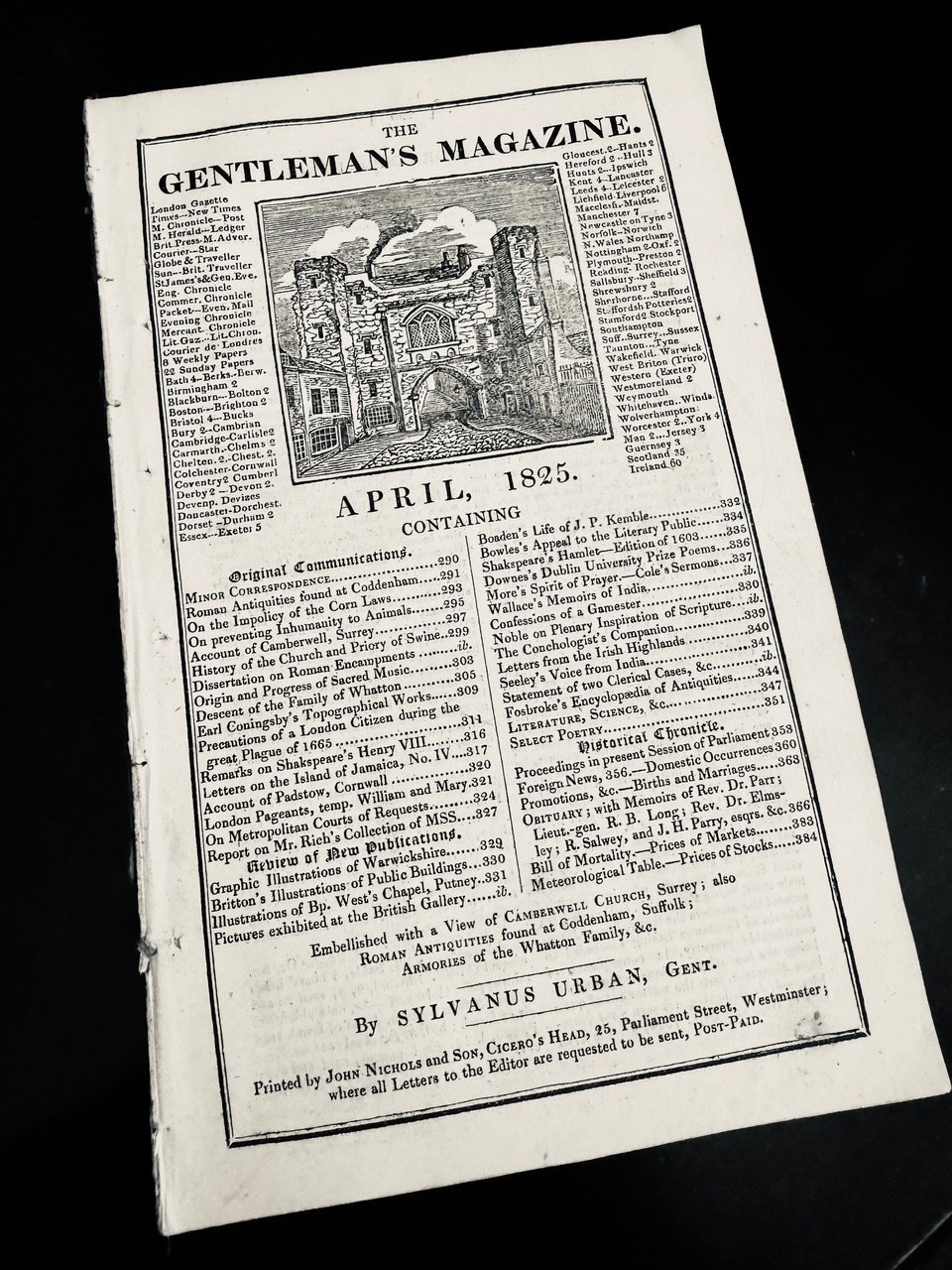
– A copy of The Gentleman’s Magazine from April 1825, in which an article predicts that “It appears that Spain is likely to lose her possessions in the Eastern, as well as the Western world” because of rebellions and crimes in the Philippines as well as at home, including “ravages committed (in Catalonia) by wolves within the last twelve or fifteen months…. The last was a young girl who, on the 18th instant, was almost entirely devoured by the wolves” (which, according to the monks, were “animated by the souls of defunct Constitutionalists”);

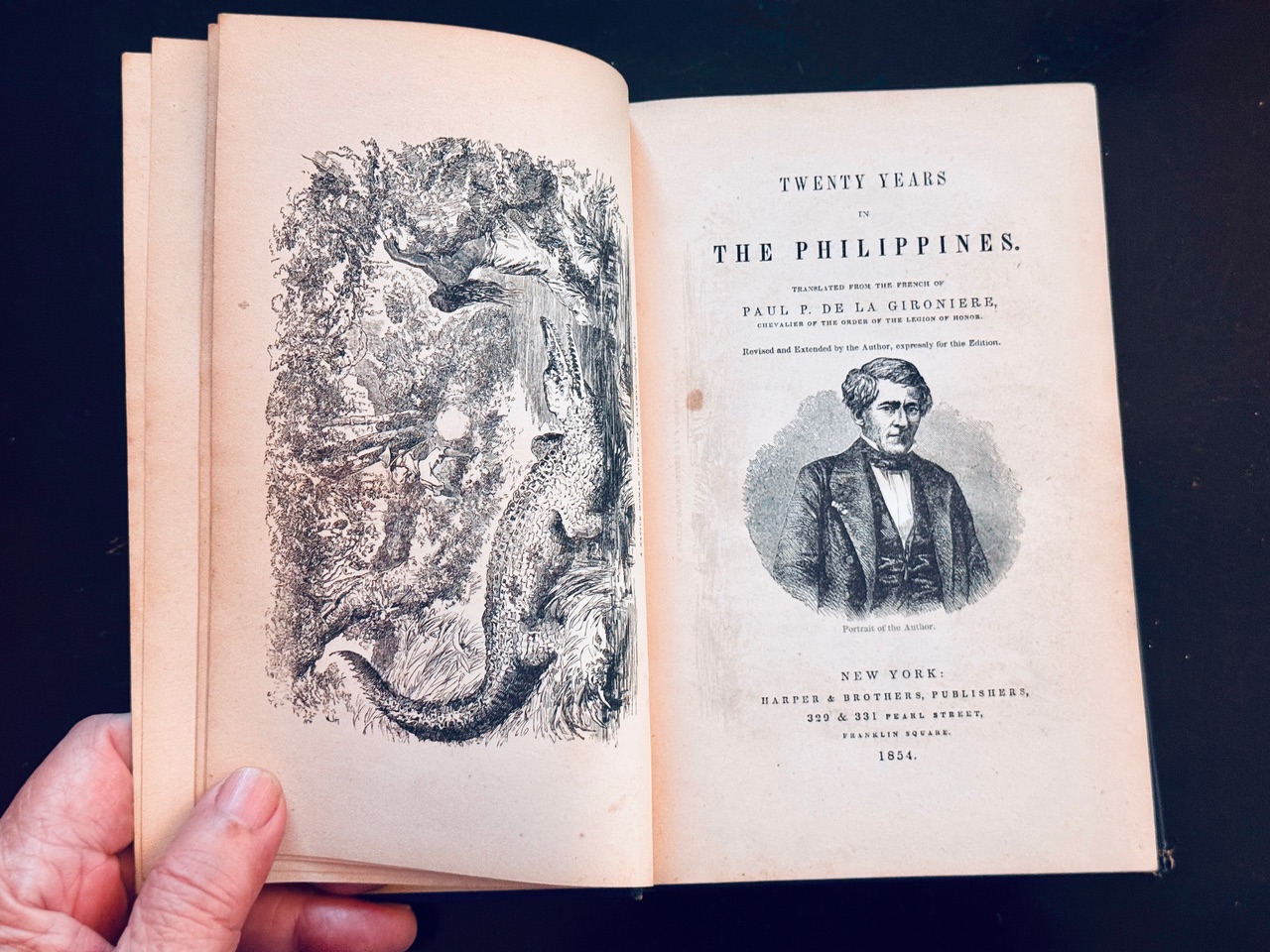
– A first American edition of Paul Proust de la Gironiere’s Twenty Years in the Philippine Islands, published in New York in 1854;

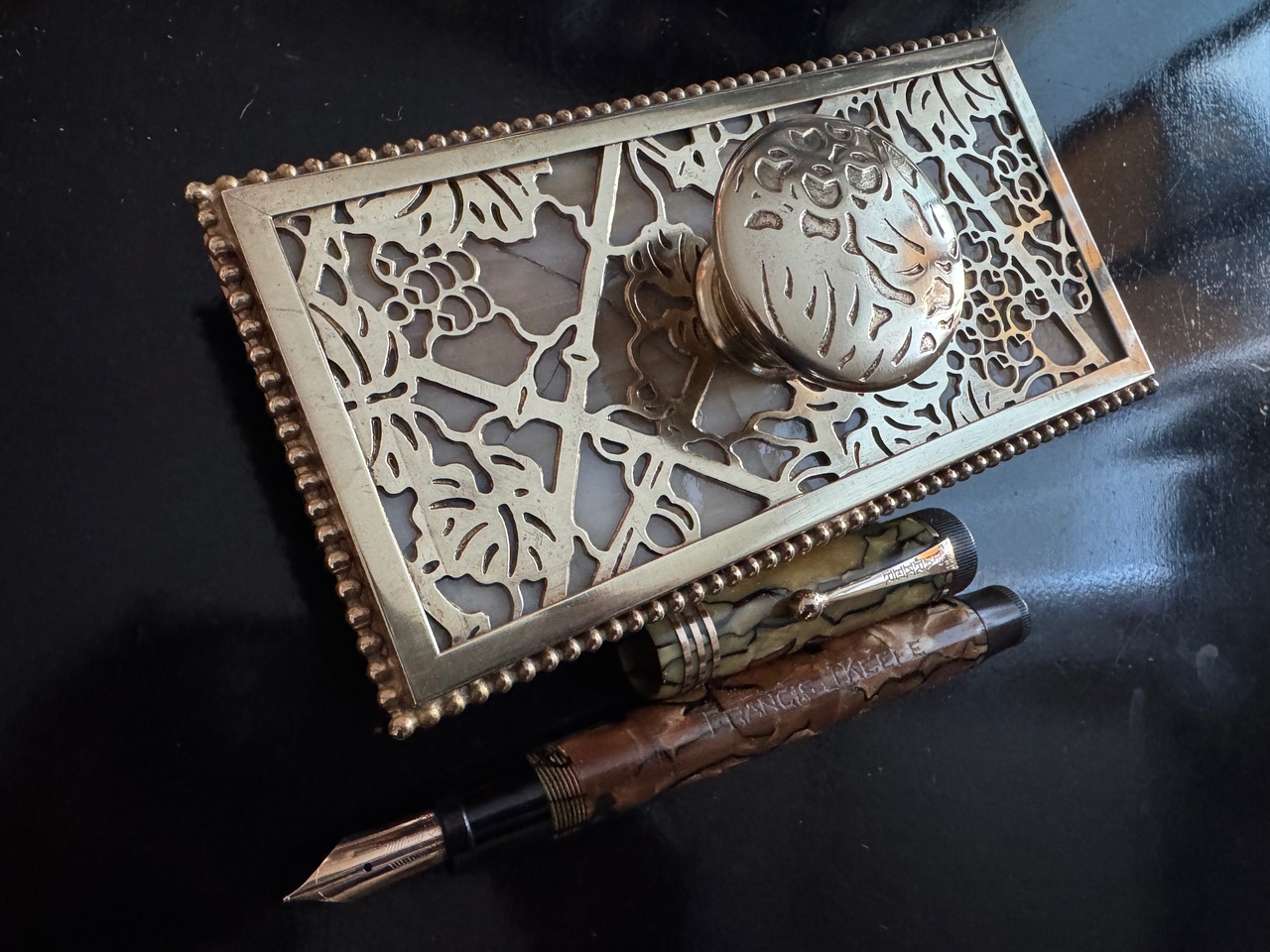
– A lovely Art Nouveau rocker ink blotter from around 1915, once used to mop up excess ink from fountain pens; and

– A Parker Duofold Senior fountain pen in pearl and black from around 1929, once owned by a “Francis J. Keefe” whose identity will be another mystery to explore.

If Christmas was this bountiful, I can only imagine what the New Year will be like.

Penman No. 468: A Game of Prompts

Penman for Sunday, November 17, 2024

I WAS in Dumaguete recently for a seminar organized by the Intellectual Property Office of the Philippines to encourage local authors and publishers to break out into the international market, following through on our participation at the Frankfurt Book Fair. I was asked to talk about “The Future of Literature,” but I chose to turn that around and talk instead about the literature of the future.

Taking off from the challenges and opportunities posed by artificial intelligence, I put forth a series of “provocations” that writers and publishers could think about. Let me share part of what I said:

My first provocation: the literature of the future, or some part of it, will be a game of prompts: not just or not mainly to copy existing writers, but to produce results that will be a hybrid of the author’s creativity in prompt-making and AI’s selectivity, drawing from its enormous stock of possible responses. This will be writing as a form of play, of co-authorship between man and machine.

Following through from this is Provocation No. 2: Expect the growth of the literature of hybridity—of more crossovers from one genre or form to another, from one language to another, from one sensibility to another. This is by no means new and has been happening for some time now, but there will be an even greater and more deliberate blurring of traditional boundaries, more experimentation.

To some extent, that will be because—and here’s Provocation No. 3, and to use this generation’s favorite trigger-word—there will be less gatekeeping. Or, if not less, then more resistance to or disregard of it. There will be more independent publishing and self-publishing to counter the influence of traditional publishing houses. But this free-for-all will also likely lead to a general decline of standards, as writers forgo the services of editors and the critical evaluations of quality- and market-minded publishers.

Provocation No. 4: The big novel will survive, simply because of the power of inertia, and because there will always be a need for something as capacious to contain and possibly comprehend the ever-growing complexity of human life. Our exposure to the international market at the Frankfurt Book Fair will also provide more impetus to the production of novels, something at which we Filipinos have not been particularly good at, historically speaking. 

On the other hand—Provocation No. 5—there will be a general shortening and simplification of form, as writing seeks to approximate the meme, or Tiktok. I don’t know exactly how this will happen, or what form it will take, but when I look at the frankly scary popularity of Lang Leav, I worry that people will see that kind of poetry as the new standard. Of course Emily Dickinson was just as short if not even shorter 150 years ago; she would have made a fine poet for our time.

Given what the world is going through, and the even bleaker future humanity faces, I propose—Provocation No. 6—that the literature of the future will be one of survival, of coping, of enduring. I have recently been advocating the need to produce a literature of hope, but that will be a difficult ask for young writers just trying to keep their heads above the water, and more understandably concerned with this life than with anything that may follow. Science fiction and fantasy will always go over the visible horizon, anticipating a distant future albeit in often dystopian terms, but for most, it will be the literature of next week.

And in that increasingly diminishing and threatening universe—Provocation No. 7—when our precious selves are all we have left to cling to, the literature of “I am,” the first-person narrative, and the politics of identity will prevail. When we no longer trust the government, business, education, our parents, the Church, and even God, and on the verge of losing control of our own petty lives, we will desperately fight to be recognized, acknowledged, and maybe even loved. We will leave nations and societies to the editorialists and social scientists; in fiction and poetry, we will seek solace and sense.

Let me just say a few words about the Frankfurt Book Fair, the 2024 edition of which I and some of us here attended last month. As you know, the Philippines will be Guest of Honor next year, which will do much to project the visibility of Philippine literature overseas. Even this year, many gains were already achieved by our writers and publishers, with dozens of deals signed for the translation and publication of our books in foreign markets.

Post-Frankfurt, Filipino writers will think of writing for the world—not necessarily in English although that’s always an option, but through translation, which will be the great equalizer. The huge surge in translation coming out of Frankfurt—not just from Filipino to English but from our other Philippine languages, including English, to other global languages—will forever change our literary culture, which has traditionally and quite unfairly favored our writers in English when it comes to recognition beyond our shores.

Also, and this may be a controversial point, I’ve long had this suspicion—and maybe Frankfurt proves it—that the rest of the world doesn’t really care about (because it doesn’t know about nor understand) the differences between Tagalog, Iluko, Bikol, and Cebuano etc. literature. When we reach foreign readers in translation, we’re all Filipino—and only Filipino—just as African or Indian literature  appear to us as cultural blocs rather than deeply variegated constructs. This has its positives and negatives, but I tend to lean on the positives, which are a reminder that our literature helps define a cohesive national experience and identity above the regional and ethnic markers otherwise so precious to us.

In one of my sessions in Frankfurt, I was asked a question, to which I replied: “I will always be more optimistic about literature than politics.” Given what has just happened in America, and what that will mean for the rest of the world, I have to believe this even more than ever.